EU lawmakers are heading into recess with a stack of political homework: whether the Socialists should challenge Roberta Metsola, what her political family is prepared to offer to keep her in office, and how each group can protect its share of Parliament’s top jobs.
The answers will start coming due when lawmakers return on Aug. 31, and negotiations intensify over the chamber’s midterm reshuffle. The presidency, 14 vice-presidencies, 26 committee chairmanships, 78 vice-chairmanships and influential coordinator posts will all be up for grabs.
The contest will test the alliances that have shaped Parliament since the 2024 election and help determine whether right-wing and far-right groups gain a larger role in running the institution.
European People’s Party leader Manfred Weber has called for a “calm summer,” insisting that “before summer, nothing will happen.” But the six-week break is unlikely to stop lawmakers from counting votes, gaming out alliances and deciding which jobs they are prepared to trade — or fight for.
Here are five assignments hanging over the chamber this summer, according to 20 MEPs, assistants and officials who spoke to POLITICO.
For the EPP: Work out the price of keeping Metsola
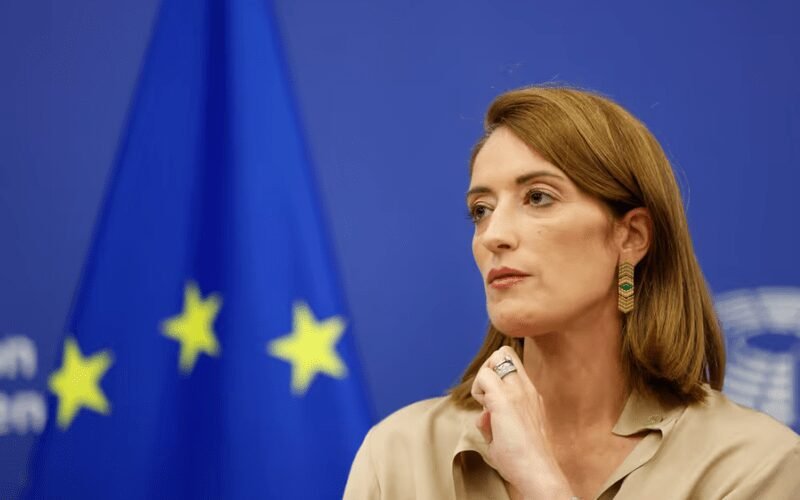
Most lawmakers assume European Parliament President Roberta Metsola will seek a third term. Although she has yet to announce her candidacy, the other groups are already planning accordingly.
The problem for the EPP is that the Socialists say the presidency should pass to them under an unpublished agreement struck with the EPP and Renew Europe at the start of the mandate.
That leaves the EPP to decide how much it is prepared to offer for Socialist support — and whether it needs that support at all.
The biggest possible prize is the Parliament secretary-generalship, currently held by Metsola’s former chief of staff Alessandro Chiocchetti, who is seen as an EPP figure. Few believe the group would surrender one of the institution’s most powerful jobs.
Other sweeteners could include extra vice-presidencies, committee chairmanships or senior administrative posts, with director-general roles also floated.
But two senior EPP lawmakers — granted anonymity to talk candidly about internal deliberations, like others in this article — separately laughed when asked what their group might offer, arguing the center-left is too weak to dictate terms.
The Socialists know Metsola could instead draw support from the right and far right, where she is widely popular.
“It seems many within the EPP are open to working formally with the far right. We need to know where President Metsola stands,” said Irish liberal MEP Barry Andrews, who chairs the development committee. “Will they get top political roles in parliament if she gets re-elected?”
Any compromise is likely to involve written commitments among the EPP, Socialists and Renew. Renew leader Valérie Hayer has argued that any candidate for president must guarantee the pro-European majority holds together — and that the EPP stops turning to the right to pass legislation.
The Socialists are likely to demand concrete promises on policy files rather than another broad cooperation pledge, after watching the agreement signed at the start of the mandate repeatedly ignored.
“Our group is willing to negotiate everything,” S&D group chair Iratxe García told POLITICO. “Negotiation will not only be about posts, but it also has to be about political commitments.”
For the Socialists: Decide whether to challenge Metsola
Under a power-sharing arrangement among the S&D group’s largest national delegations, the Parliament’s presidency is supposed to pass to Germany’s Social Democratic Party at the midpoint of the mandate.
Parliament Vice-President and former German Justice Minister Katarina Barley was regarded as the obvious candidate. But she has yet to enter the race, and the SPD is still weighing whether to contest an election Metsola would begin as the strong favorite.
Some argue the Socialists should run regardless of their chances, to show they will not surrender the presidency without a fight and strengthen their negotiating hand.
Others see little point in a symbolic challenge that could expose the group’s weakness and leave its allies free to strike separate deals.
García said the decision would come “after summer.”
For Renew and the Greens: Decide when to cut a deal
Renew and the Greens have largely stood with the Socialists as the EPP has repeatedly relied on the right and far right to advance legislation.
But that solidarity may not survive the fight over Parliament’s top jobs.
With the Socialists yet to field a candidate and little prospect of defeating Metsola, many liberals and Greens see no reason to wait before negotiating with the EPP.
“Informally Renew is saying we could support Metsola if we are treated well and there’s a rollover of positions,” said a senior Renew lawmaker. The group has “no blind loyalty,” the person added, describing Metsola as “approachable, respectable, and hardworking.”
The Greens held an initial strategy discussion in Strasbourg last week, according to two people familiar with the talks. One camp argued for an early deal with Metsola, while others said it was too soon to commit.
“They have zero chances,” one Green lawmaker said of the Socialists.
“If she is elected anyway, why not cut a deal with her and get something in return?” said another.
The incentives go beyond the presidency. The Socialists, Renew and the Greens hold positions that, under a strictly proportional allocation, would probably have gone to the Patriots for Europe or Europe of Sovereign Nations but were instead kept within the mainstream under the cordon sanitaire, the informal arrangement to keep far-right parties out of positions of power.
The Greens secured the culture and transport committee chairmanships, while the Socialists obtained two additional Parliament vice-presidencies.
Backing Metsola in exchange for preserving those gains may prove more attractive than following the Socialists into a race they expect to lose.
For the Patriots: Win a seat at the top table
The Patriots for Europe are Parliament’s third-largest group, yet they hold no vice-presidencies, committee chairmanships or vice-chairmanships.
With the far-right firewall already fraying on legislative votes, the group is now seeking a foothold in Parliament’s administration — most plausibly through one of its 14 vice-presidencies, known as the bureau.
“The bureau takes decisions that also affects the Patriots, but we don’t even have a representative in the bureau because we do not have a vice president,” the Patriots’ chief whip Marieke Ehlers told POLITICO in spring. “Each and every political group should be represented in that body.”
Weber has said his red line is handing positions of power to the far right. But the secret ballot used to elect Parliament’s vice-presidents would allow EPP lawmakers to support a Patriots candidate without a formal agreement quietly.
“If they ask for only one vice presidency, they are more likely to get it,” said a senior EPP lawmaker.
The Patriots are expected to settle on their strategy in September.
Their success will test whether the cordon sanitaire still applies to the running of Parliament.
For all political groups: Settle their leadership races
The midterm also brings the renewal of Parliament’s political group leaderships, although few incumbents appear in danger.
The most pressing contest is in the Greens, who must replace co-chair Bas Eickhout following his resignation in May. Names circulating include Danish MEP Kira Marie Peter-Hansen, Belgium’s Sara Matthieu and Parliament Vice-President Nicolae Ștefănuță, according to people familiar with the discussions.
The Greens’ decision to hold an early election in October has prompted the Socialists and Renew to consider doing the same, the three people said. Early votes would allow their leaders to enter the top-jobs negotiations with fresh mandates.
The Left is the other group where a contest could emerge. Under an agreement struck at the start of the mandate, German MEP Martin Schirdewan is due to hand the co-chairmanship to Syriza’s Konstantinos Arvanitis.
But Syriza’s electoral collapse and shrinking delegation have raised questions over whether it should still inherit the post. Italy’s Five Star Movement, now The Left’s second-largest national delegation, is pushing for a bigger role.
Elsewhere, the incumbents appear safe.
The EPP has little appetite to replace Weber after more than a decade in charge. The Socialists are expected to retain García, while Renew is likely to stick with Hayer despite grumbling about the French delegation’s grip on the group.
No major changes are expected at the top of either the European Conservatives and Reformists or the Patriots.
Most group leaders, then, head into summer secure in their own jobs — and preparing to negotiate over everybody else’s.
Source: Politico