For years, Pakistan’s claim that the Tehreek-e-Taliban Pakistan operates from sanctuaries inside Afghanistan produced a familiar exchange: Islamabad accused, Kabul denied, and each new militant attack triggered another round of recrimination.
That pattern is becoming harder to sustain. The sanctuary dispute can now be tested against a growing body of evidence rather than competing claims from Islamabad and Kabul.
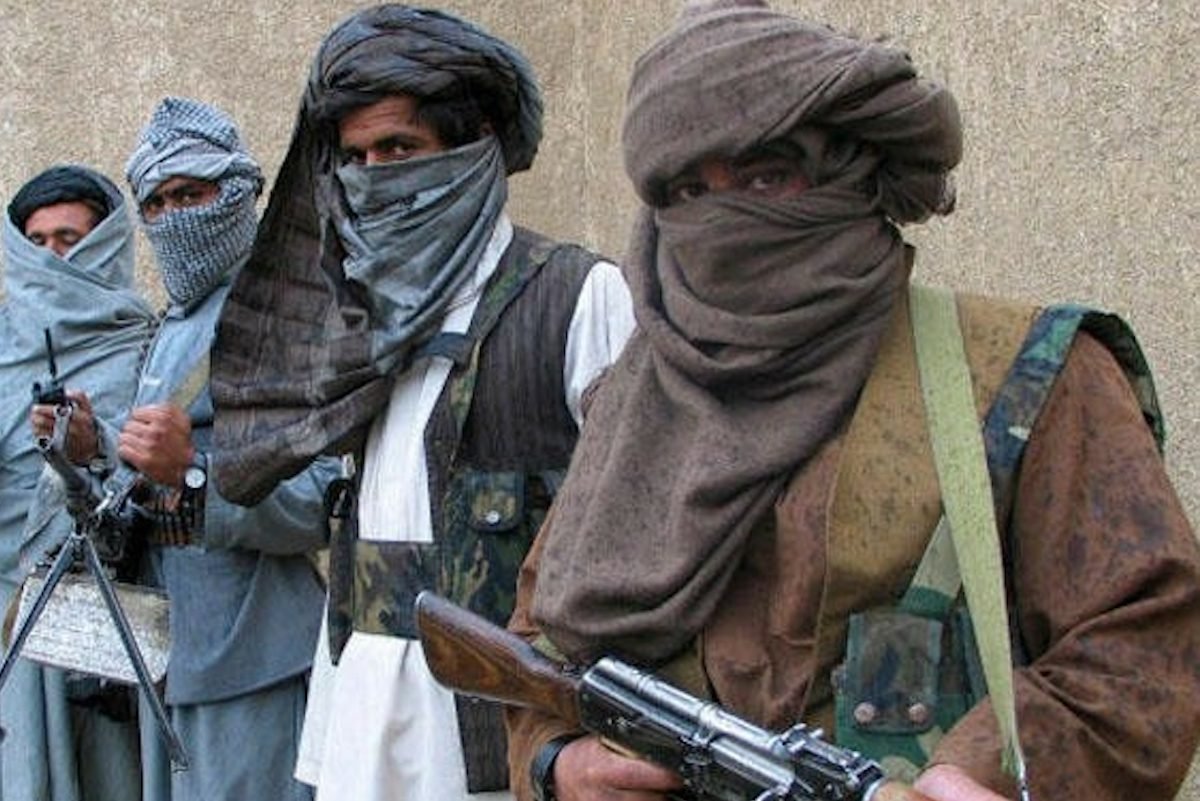
United Nations monitoring reports have documented thousands of TTP fighters inside Afghanistan, along with leadership presence, training infrastructure and support networks.
Pakistani authorities have also released records identifying Afghan nationals allegedly killed while participating in militant activity inside Pakistan. Separate UN reporting has raised concerns about weapons transfers and the TTP’s access to advanced military equipment.
None of these strands, taken alone, proves that every part of the Afghan Taliban establishment is directing TTP operations. Taken together, however, they give Pakistan’s case a level of external corroboration it previously lacked.
A December 2025 report by the UN Security Council’s Analytical Support and Sanctions Monitoring Team estimated that the TTP maintained around 6,000 fighters in Afghanistan, particularly in Khost, Kunar, Nangarhar, Paktika and Paktia provinces.
Earlier UN reporting put the number at roughly 6,000 to 6,500 and cited information about training camps involving TTP, Taliban and al-Qaeda personnel. Those findings matter because the sanctuary dispute is no longer being documented only through Pakistani intelligence assessments.
Names behind the numbers
Pakistan has also put names and places behind its broader claims. A security dossier identifies alleged militants by name and alias, along with their Afghan home districts and the locations in Pakistan where they were reportedly killed.
Among those named is Dr Obaidullah Saeed Badri, from Shahi Qala village in Logar, reportedly killed in Kurram. Noor Rahman alias Sarhadi, from Narkh district in Wardak, is listed as having been killed in Bajaur, while Ahmad Mukhlis, from Hisarak district in Nangarhar, is also recorded as killed there.
The dossier also includes alleged suicide attackers. Ehsanullah alias Khaksar, from Kandahar’s Zhari district, is listed in connection with an attack in Bannu. Janullah alias Zahid Ayyubi, from Nangarhar, is linked in the dossier to the Cadet College Wana attack, while Qari Osman alias Zubair, from Achin district in Nangarhar, is listed in connection with the G-11 Islamabad suicide bombing.
Pakistani authorities say they have identified 260 Afghan nationals allegedly involved in militant activity who were killed in Pakistan. These files should not be treated as independent proof of every individual’s militant affiliation or of the exact circumstances of each death.
Rather, their value lies elsewhere. They provide a testable set of identities and locations that can be compared against independent reporting, family records, funeral notices, militant publications and international monitoring. That makes them potentially more useful than another aggregate casualty figure.
A weapons trail accompanies the human trail. UN reporting has cited member-state information on the TTP’s access to advanced military equipment, including M4 carbines, M24 sniper rifles and M16A4 rifles fitted with advanced optics and night-vision capability.
To be sure, the presence of US-origin weapons in militant hands does not automatically prove an intentional Taliban transfer. Large quantities of military equipment remained in Afghanistan after the collapse of the former government in 2021 and have since moved through illicit markets, battlefield capture and other channels.
But UN reporting has gone beyond simply recording American-made weapons in circulation. It has also cited information about individuals allegedly linked to Taliban networks facilitating transfers to the TTP and about financial assistance reaching TTP leadership.
That strengthens the argument that Pakistan’s concern is not only about militants physically crossing the frontier. It is also about the wider ecosystem that sustains them.
Hard questions for Kabul
The most consequential question is not whether every Taliban institution directly supports the TTP. It is whether the Taliban authorities are unable or unwilling to dismantle the networks operating from territory they control.
The Afghan Taliban and TTP remain separate organizations. Their command structures, immediate objectives and internal dynamics are not identical. But their relationships are longstanding, shaped by ideological affinity, personal ties and years of battlefield cooperation.
Taliban authorities have also demonstrated a willingness to use force against Islamic State-Khorasan (ISIS-K). The comparison is imperfect, but it raises a legitimate question: why has the TTP not faced a similar armed response?
That question has become more urgent as the sanctuary dispute has moved from diplomacy into military confrontation.
On October 1, Pakistan carried out another round of strikes inside Afghanistan. Islamabad said the operation destroyed militant hideouts and killed 22 militants. Taliban authorities said nine people, including women and children, were killed. Reuters said it could not independently verify either account.
The competing casualty claims illustrate the danger of leaving the underlying dispute unresolved. Civilian harm and the legality of cross-border force deserve separate scrutiny. Yet neither issue answers the basic question of why militant networks documented by international monitors continue to operate from Afghanistan.
Pakistan also faces limits. Airstrikes cannot substitute for intelligence cooperation, border management and political engagement. Geography and decades of cross-border social ties make a purely military solution unrealistic.
But blanket denial from Kabul is becoming equally difficult to sustain. Every major attack attributed to Afghan-based militants increases pressure on Islamabad to respond across the border. Every Pakistani strike, in turn, deepens Afghan hostility and further reduces the prospects for counterterrorism cooperation.
The sanctuary dispute is therefore no longer just a contest between Pakistani accusations and Taliban denials. UN assessments, named Afghan cases and weapons reporting increasingly point to an enduring TTP infrastructure inside Afghanistan, even if the extent of direct Taliban sponsorship remains contested.
The harder question is now whether Kabul lacks the capacity to dismantle that infrastructure or the political will to do so.
Saima Afzal is a researcher specializing in South Asian security, counterterrorism and broader geopolitical dynamics across the Middle East, Afghanistan and the Indo-Pacific. She is currently a Research Scholar at Justus Liebig University, Germany.