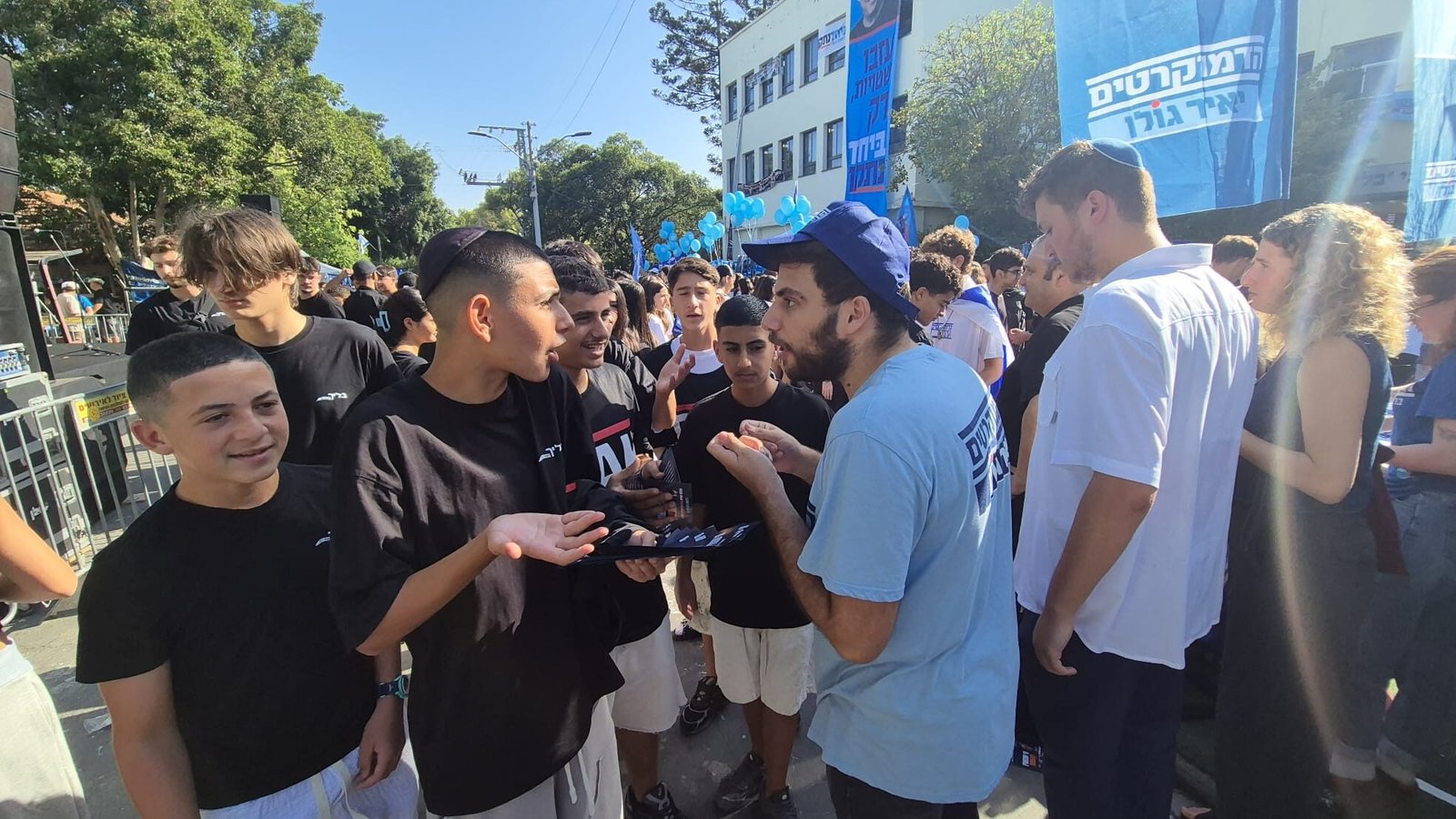
At Blich High School in Ramat Gan, teenagers campaigned for national parties, questioned politicians, and cast ballots in a decades-old civic tradition
Teenagers in black ‘RAK BNGVIR’ shirts pushed through the crowd toward National Security Minister Itamar Ben-Gvir, hundreds of phones raised for selfies. At an Otzma Yehudit stand nearby, students handed out miniature Ben-Gvir figures carrying pistols and pistol-shaped bottle openers printed with his face and the slogan “Guns save lives.” By later in the day, party flyers covered large stretches of the floor.
The scene was not a party convention or campaign rally, but a high school.
Blich High School in Ramat Gan held its traditional election exercise Thursday, bringing Israel’s national campaign inside a school of 1,793 students. Eleventh- and 12th-graders cast ballots after weeks during which politicians visited the campus, students organized party teams, read platforms, campaigned among their classmates and questioned candidates and lawmakers. Most of those voting will still be too young to participate when Israel elects its next parliament on Oct. 27.
The result gave Gadi Eisenkot’s Yashar party 32.2% of the vote, well ahead of former Prime Minister Naftali Bennett’s B’Yachad at 22.4%. Prime Minister Benjamin Netanyahu’s Likud finished third with 15.5%, followed by Ben-Gvir’s Otzma Yehudit at 9.4% and the Democrats at 7.1%. Yisrael Beitenu received 4.8%, Amcha Yisrael 3.6%, the joint Reservists-Economic Party list of Yoaz Hendel and Yaron Zelekha 2.8%, the Religious Zionism–Zehut party 1.6%, Ra’am 0.4%, and Blue and White 0.2%. Shas, United Torah Judaism and the Joint List received no votes in the displayed results.
Blich’s election has drawn national attention for decades, partly because students there anticipated the Likud’s historic 1977 victory and Yitzhak Rabin’s return to power in 1992. The exercise dates back at least to 1969, although later Blich votes have frequently diverged from the eventual national result. It is not a scientific opinion poll, and school officials describe its purpose as civic education rather than prediction.
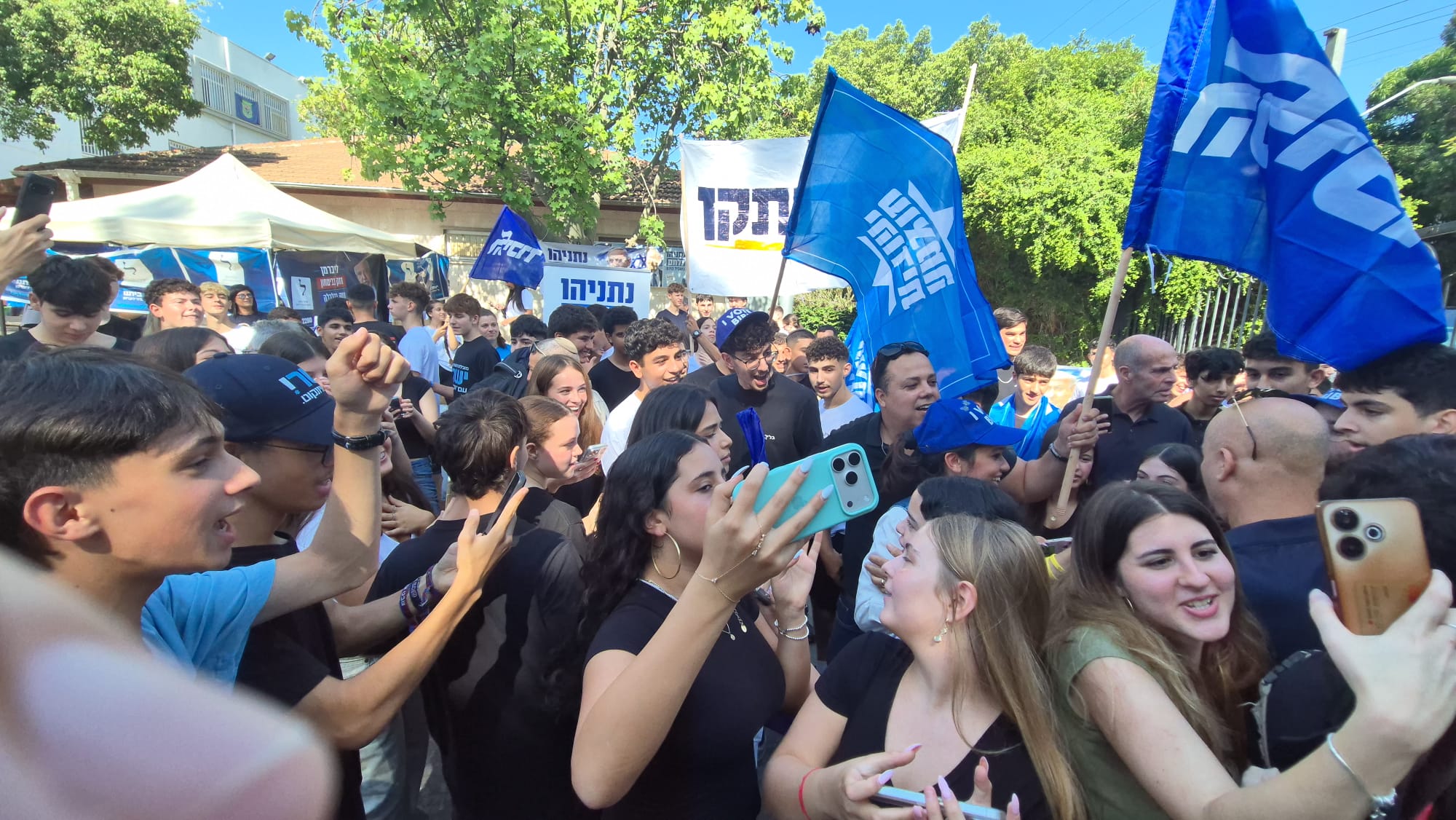
Crowd of students. (Gabriel Colodro / The Media Line)
Principal Hila Romesh, herself a Blich graduate, told The Media Line that the voting day is only the final stage of a much longer process. Politicians from across the spectrum are invited to speak. Students form groups representing parties, recruit classmates and study party platforms, while teachers discuss the election in civics, history, and other subjects. “The message is no violence, respectful discourse,” Romesh said. “It doesn’t matter, left or right, you are friends. You are friends in the same class.”
She said listening to political positions that students reject is as important as hearing those they support. “Knowledge is power,” Romesh said, adding that a high school should not simply send students out with matriculation certificates but should produce “good citizens, involved, asking questions and critical.”
Ramat Gan Mayor Carmel Shama-Hacohen described the exercise as particularly significant at a time when public confidence in democracy and state institutions has become a national issue.
The students, he told The Media Line, go through “an internal, organized, open, pluralistic process” in which everyone is given a platform and difficult questions are not avoided. “That is how we want to see our next generation,” he said.
The cordial language used by school officials was repeatedly tested throughout the day.
Ben-Gvir’s arrival produced one of its most chaotic moments. Hundreds of students surrounded the Otzma Yehudit leader as he crossed the school, many trying to photograph themselves with a politician whose short-form social media presence has made him highly recognizable among teenagers.
Student supporters had adopted “RAK BNGVIR,” or “Only Ben-Gvir,” for their black shirts, a play on the “FCK BNGVIR” shirts worn by some of his opponents at anti-government demonstrations.
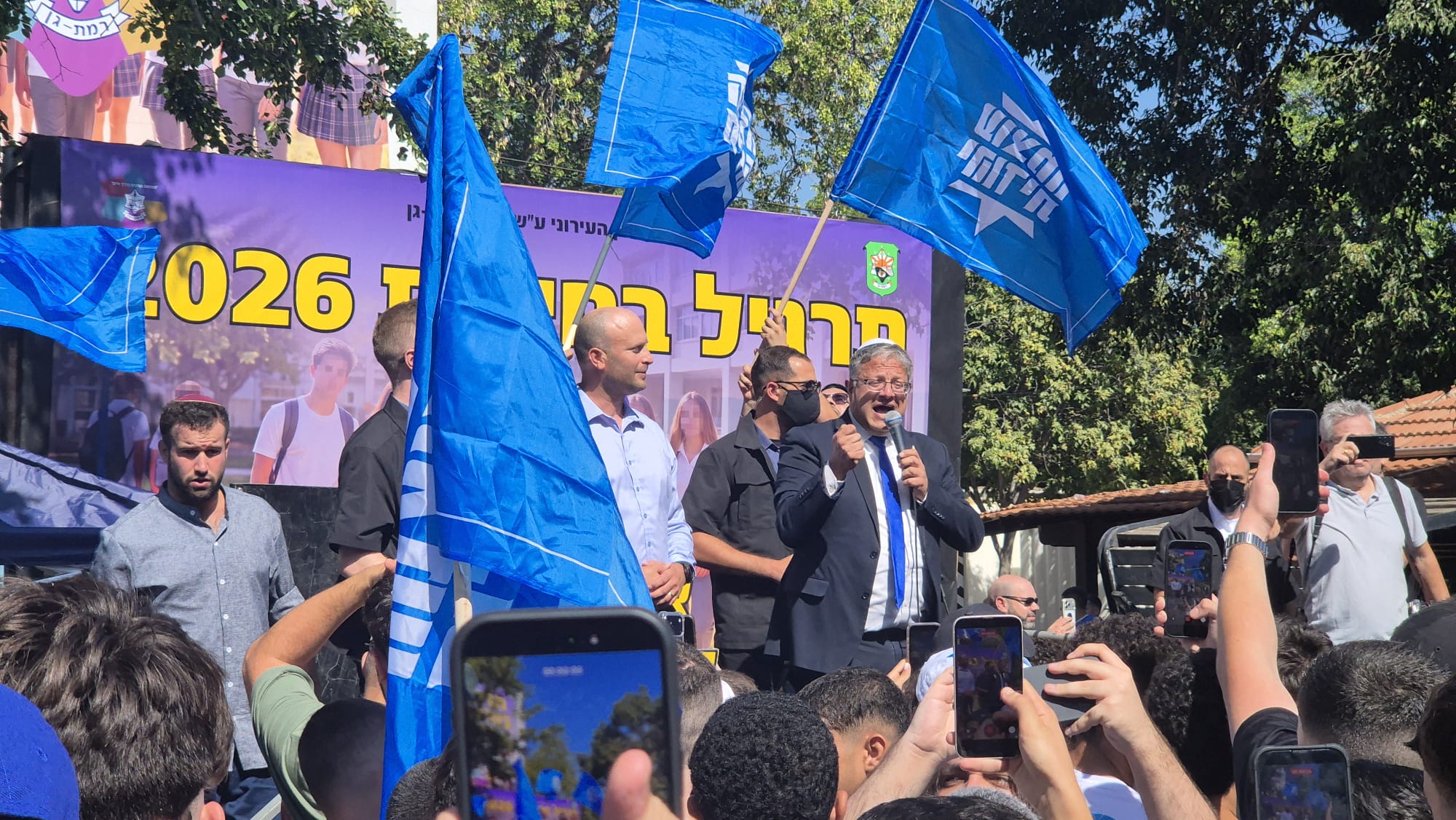
Itamar Ben-Gvir. (Gabriel Colodro /The Media Line)
Once onstage, Ben-Gvir focused heavily on his record as national security minister. He described conditions he said Palestinian security prisoners had enjoyed before he took office, including ping-pong, large quantities of food, including jam and chocolate, and said he had ended those privileges. “For 40 years, nobody touched it,” he said, arguing that previous governments, including Likud-led governments, had failed to go far enough. “You talk. I do.”
Otzma Yehudit lawmaker Yitzhak Kroizer told The Media Line that politicians should not assume students can be won over simply with slogans.
This is a smart, intelligent generation that knows what it wants
“This is a smart, intelligent generation that knows what it wants,” Kroizer said. He argued that young Israelis had become increasingly attentive to politics through major national disputes, including the fight over changes to the judiciary. Students, he said, “know very well what you said, they know very well what you did in the Knesset, and they demand results.”
Not every confrontation remained verbal. During a speech by B’Yachad lawmaker Merav Ben Ari, students associated with Otzma Yehudit threw a plastic cup toward the stage and later a black “RAK BNGVIR” shirt. Ben Ari stopped and addressed the students directly. “You are not going to throw cups,” she said before continuing her speech.
At least two female students supporting the Democrats said they had been hit in the crowd by Otzma Yehudit supporters. The Media Line did not independently establish the circumstances of those alleged incidents.
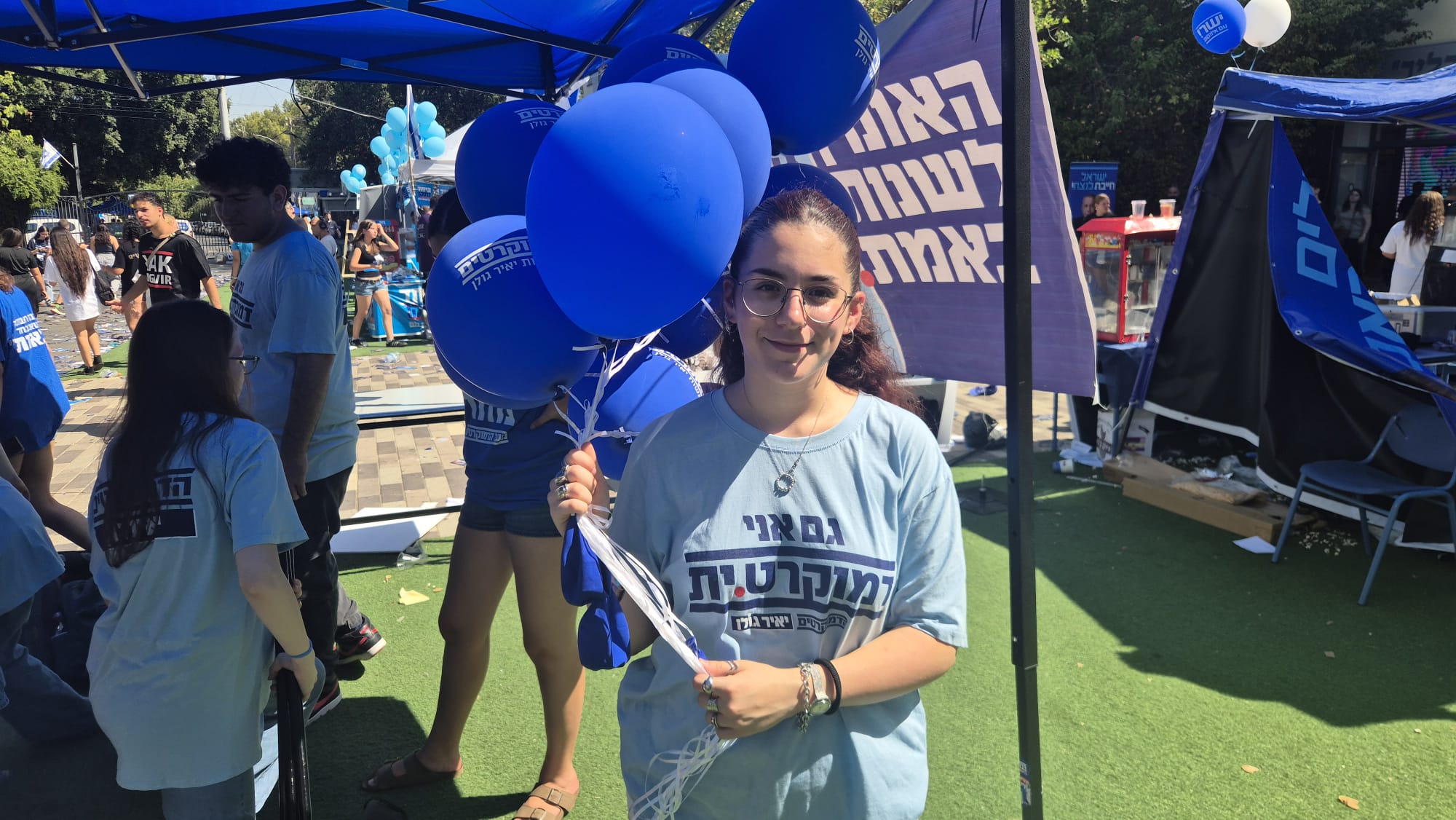
Ayala Garb – Student – Democrats. (Gabriel Colodro / The Media Line)
Ayala Garb, a 16-year-old 11th-grader campaigning for the Democrats, described the broader experience as one she believed students elsewhere should have.
“I think it is an incredibly important event,” she told The Media Line. Garb said the previous two weeks had given her opportunities she would not normally have had, including contacting political parties, organizing campaign activity and working alongside students who shared her political outlook.
Garb said she had been politically active since 2022 and that the upheavals of the past several years had made politics difficult for teenagers to treat as something belonging only to adults. She cited security, housing, and the cost of living among issues that would determine whether young Israelis could build their futures in the country.
A 16-year-old B’Yachad supporter, Eitan Tzameret, also said he had seen violence and spitting during the event and found it particularly disturbing because the day was supposed to be “a celebration of democracy.”
At the same time, Tzameret said the campaign had energized the school. “The whole school was really on its feet,” he told The Media Line. His own decision to campaign for Bennett, he added, came from concern about the country he would enter as a soldier and later as a young adult trying to afford a home.
Military service was one of the most persistent themes across otherwise sharply divided parties.
The thing that interests them most is the question of the army, of enlistment
Einat Wilf, who appeared at the stand of Hendel and Zelekha’s Reservists-Economic Party, said enlistment was the issue she heard about most from students. “The thing that interests them most is the question of the army, of enlistment, that everyone should enlist,” Wilf, currently number three on the party list, told The Media Line. She said students also raised the cost of living and Israel’s international standing. Social media mattered as well: Wilf said students repeatedly asked whether economist Yaron Zelekha, whom she described as a TikTok star among young followers, would appear.
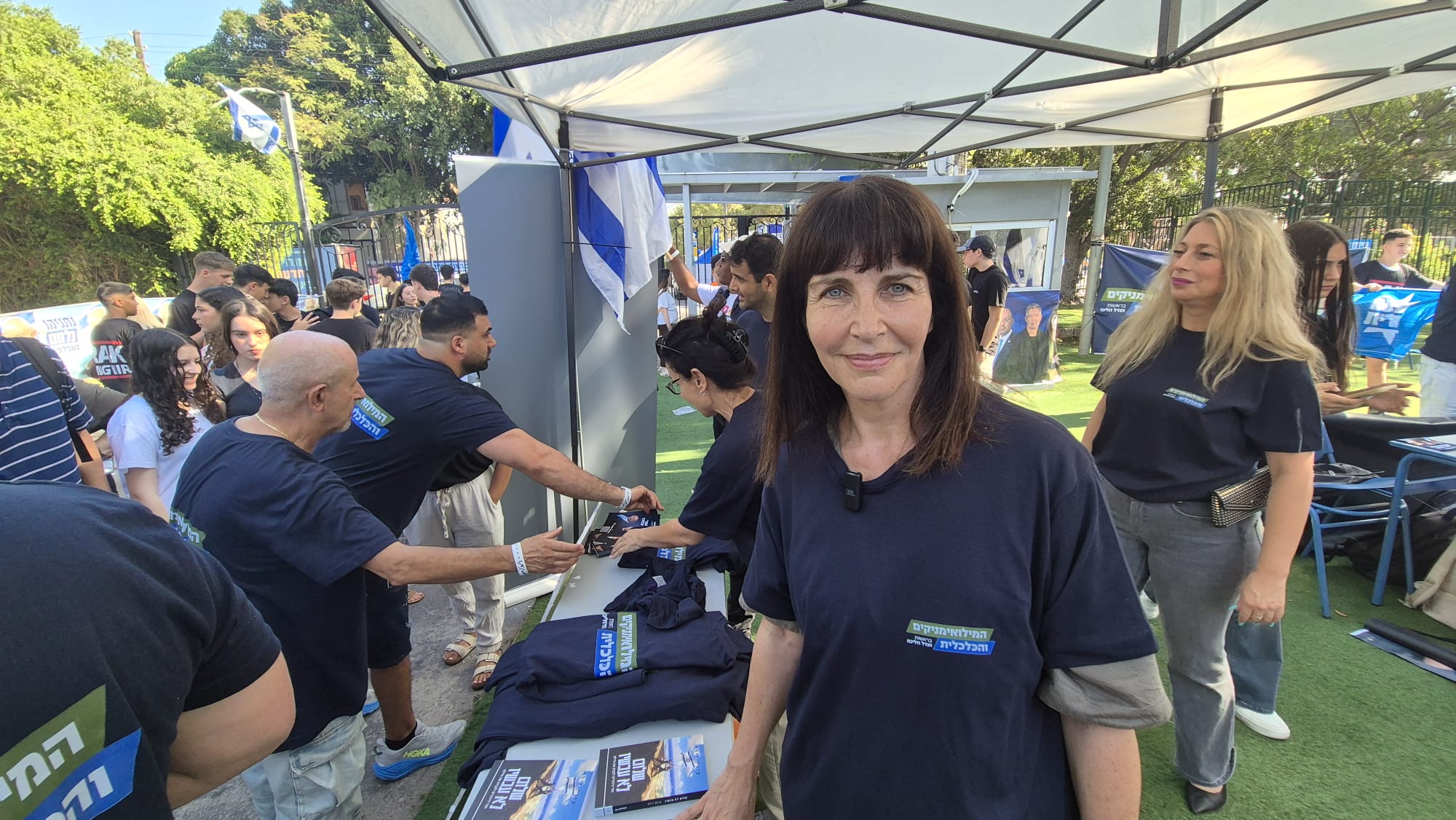
Einat Wilf. (Gabriel Colodro / The Media Line)
Mirroring the interest in military issues, Hendel invoked his own reserve service in his speech and called for a government in which military or national service would carry both obligations and benefits. He urged the students, regardless of how they eventually vote, to serve, become officers, and take responsibility for the country.
Yisrael Beitenu lawmaker Oded Forer also centered his remarks on political participation and military service but told The Media Line that Blich’s final numbers were less important than what students did before reaching the ballot box.
“Political education and civics education should be brought into schools,” Forer said. Even when the discussion is shallow or driven by headlines, he said, the exercise has value if it prompts students to read party platforms and examine positions for themselves. “If there are two more students here who opened the internet and went to read party platforms,” he said, “we did our job.”
If there are two more students here who opened the internet and went to read party platforms, we did our job
The Likud had its own stand at the school, but no candidate on Prime Minister Netanyahu’s parliamentary slate appeared at the voting-day event observed by The Media Line. Hadar Muchtar addressed the students instead. Muchtar, who had publicly sought a place in Likud’s electoral contest, later became a leader of the party’s youth campaign.
In her speech, Muchtar framed the national race as a choice between a Netanyahu-led government and one reliant on left-wing and Arab parties. She repeatedly urged students to vote when they become eligible and described them as Israel’s future political generation. After leaving the stage, Muchtar declined an interview request from The Media Line.
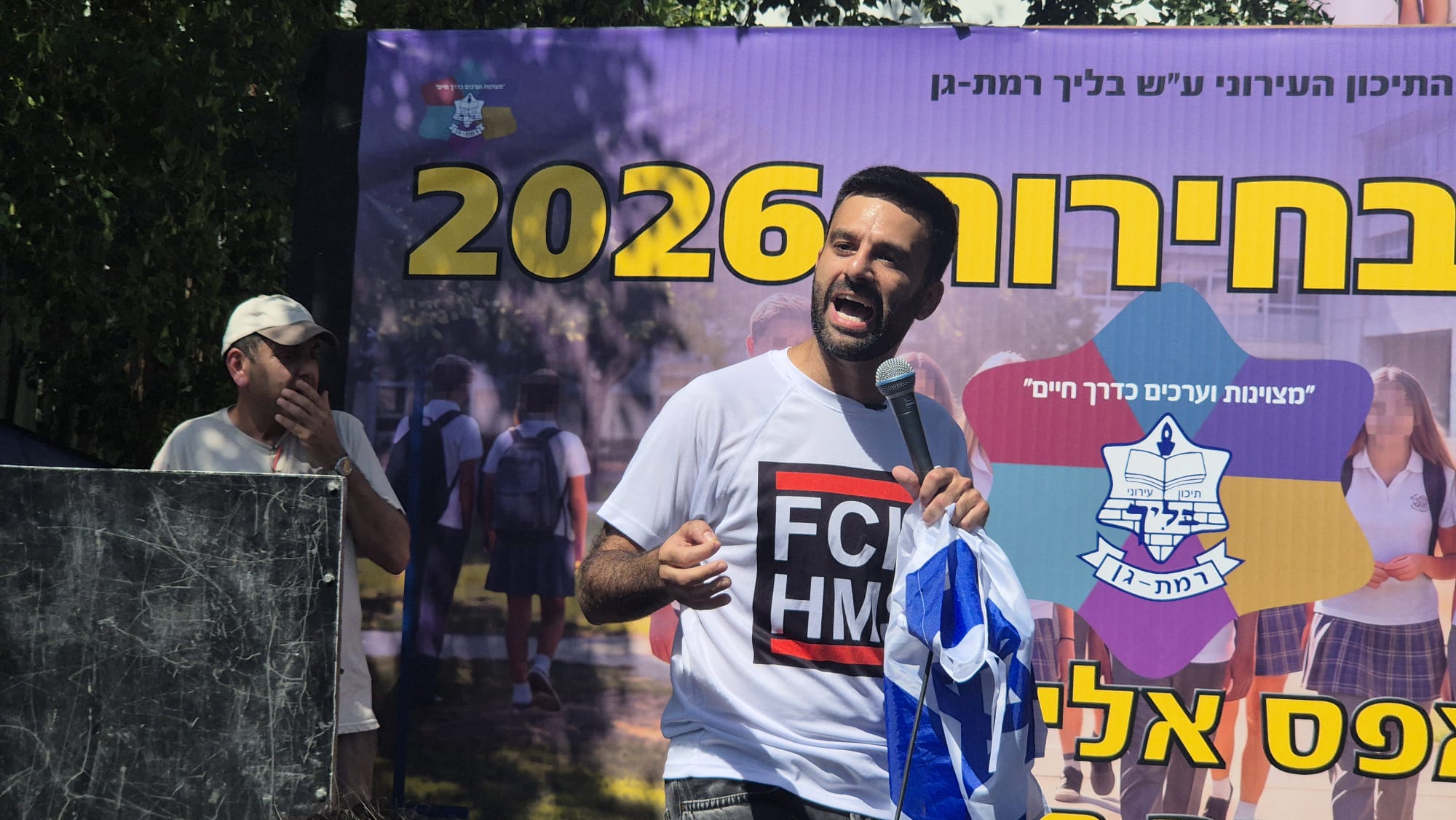
Yosef Hadad. (Gabriel Colodro / The Media Line)
Another campaign performance came from Yoseph Haddad, the Arab Israeli activist running with Ofer Winter’s Amcha Yisrael party. Haddad arrived in a shirt bearing the slogan “FCK HMS” and made the anti-Hamas message part of both his stage appearance and his interview.
He told The Media Line that the reception he received from students who disagreed with some of his politics demonstrated something important to him about Israeli political life.
“Even among the kids who do not 100% align with my political views, I’m still welcomed here with such respect and honor, and love,” Haddad said.
Even among the kids who do not 100% align with my political views, I’m still welcomed here with such respect and honor, and love
He then pointed to the different party shirts around him and argued that national security could still provide common ground across political camps. The interview ended with Haddad and a crowd of students chanting “F*ck Hamas.”
Representatives of Yashar, which ultimately won the school vote, included former minister Chili Tropper and Ramat Gan Deputy Mayor Israel Zari. Their message onstage focused on Eisenkot’s effort to position the party outside the traditional left-right confrontation and on keeping young Israelis invested in remaining in the country.
B’Yachad brought Ben Ari, Naor Shiri, and 23-year-old candidate Yonatan Shalev. Shiri, looking at the noisy stands and campaign material around him, told The Media Line that students were living through the same events as adults and were not detached from the country’s political arguments. “They are not stones sitting outside the event,” Shiri said. “They are completely inside the State of Israel, and they will influence the State of Israel.”
The vote count will mean nothing on Oct. 27. But long before they can legally cast a ballot, the students at Blich had already done the harder part—arguing, campaigning, and choosing, in full view of the politicians asking for their support.