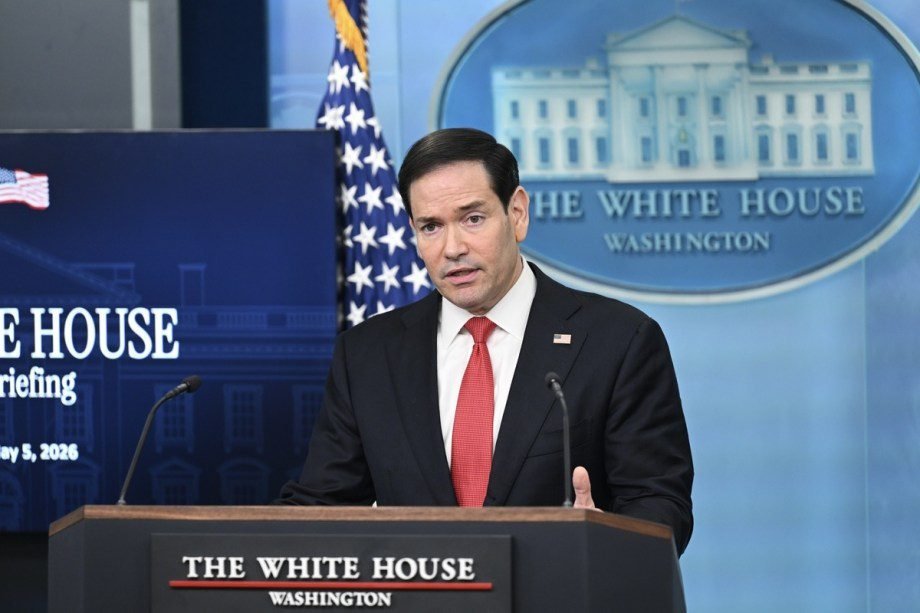
US Secretary of State Marco Rubio said Tuesday that Iran’s Supreme Leader Mojtaba Khamenei is alive and “increasingly engaging at some level,” although he has not appeared publicly after he was injured at the beginning of the war, Anadolu Agency reports.
“We haven’t seen him publicly, and I would imagine, given what’s happened to multiple leaders in that system, being very public is probably not something that’s recommended for them internally, but that said, I think there are indications out there that he is increasingly engaging at some level, although all of his communications have been in writing and through intermediaries,” Rubio told lawmakers during a hearing at the Senate Foreign Relations Committee.
He said Iran’s internal decision-making process appears to be highly centralized, saying messages from negotiators are typically relayed back to a governing council for approval before any response is issued.
“It is our view of the system as we understand it, and as it’s been expressed to us both by the intermediaries and by Iran directly, that what (Abbas) Araghchi and (Mohammad Bagher) Ghalibaf bring or take from us, they then have to run back to this council and ultimately get guidance from them, and that process oftentimes takes three to five days to get a response,” he added.
READ: Trump says talks with Iran ‘going on continuously,’ adds, ‘where they lead, one never knows’
Although Rubio and US President Donald Trump insist talks with Iran continue, Iranian media reported Tuesday that exchanges of messages between the two countries have been halted for at least several days now.
Rubio’s comments come as Washington and Tehran continue efforts to turn a fragile ceasefire into a broader agreement following months of conflict that began Feb. 28 with US-Israeli strikes on Iran.
Iranian authorities said more than 3,000 people have been killed since the start of the war, while at least 13 US service members have been killed in Iranian retaliatory attacks.
Tehran retaliated with attacks targeting Israel and US allies in the Gulf, alongside the closure of the Strait of Hormuz.
A ceasefire took effect on April 8 through Pakistani mediation, but subsequent talks in Islamabad failed to produce a lasting agreement. Efforts for a solution, however, have continued since.
READ: Iran to hold funeral ceremonies for late Supreme Leader Khamenei in 3 cities