There is a recurring temptation in American foreign policy to treat legal argument as a substitute for strategic thought. The controversy over Operation Epic Fury has yielded a remarkable specimen of this tendency.
That the United States acted outside the bounds of international law is, or should be, without dispute. The exchange has been conducted with admirable technical precision and has produced, so far, almost no light on the question that will determine whether this war was wise.
The State Department’s legal adviser published the administration’s fullest account of its legal position on April 21. The central claim that Operation Epic Fury is a continuation of an existing armed conflict with Iran is not credible.
For years, Iran has directed proxy forces against American troops, launched ballistic missiles, accelerated a nuclear program and, most recently, closed the Strait of Hormuz. Whether these accumulated acts satisfy the requirements of the UN Charter’s self-defense provisions is indeed a legal question. It is, however, not the most important question.
That the administration’s legal position is unpersuasive on its own terms is clear to most lawyers. The Rubinstein memorandum does not specify particular armed attacks that could justify a right of self-defense. Additionally, the necessity requirement calls for more than just a general pattern of hostility.
Yet the critics, in pressing these points, assume that the purpose of international legal constraints on the use of force is to produce correct outcomes, rather than to discipline the process by which states arrive at their decisions.
The Caroline doctrine emerged from a 19th-century dispute over a wooden steamboat on the Niagara River. Its application to a nuclear-threshold state that commands a network of regional proxies requires a judgment that the law cannot supply.
The international legal order they are defending was constructed by the US and its allies in the aftermath of 1945, and its authority has always depended on the US’s willingness to uphold it by force when necessary.
The real question is whether its limits, as presently understood, reflect the real distribution of threats in today’s world rather than the threat landscape perceived in San Francisco 80 years ago.
The test is whether the exception serves a sustainable order or merely convenience. What is needed now is an honest reckoning. If the existing framework is genuinely inadequate to address threats like Iran’s, the US should lead an effort to modernize it through multilateral negotiations — not circumvent it unilaterally and hope the world adjusts in its wake.
The shifting rationales that have accompanied Operation Epic Fury — self-defense, collective defense of Israel, preemption of imminent attack, historical grievance over the 1979 hostage crisis — are by any legal measure an embarrassment for Washington.
Consistency in the justification for the use of force matters because allies must be able to rely on the principles that govern American action, and adversaries must be able to calculate the limits beyond which US force will be employed.
An administration that cannot maintain a coherent account of why it went to war signals that no principle actually governs it — an invitation to the most dangerous kind of miscalculation.
The Trump administration should immediately settle on a single defensible rationale, such as the closure of the Strait of Hormuz as an act of economic warfare threatening the global order and abandon the others entirely.
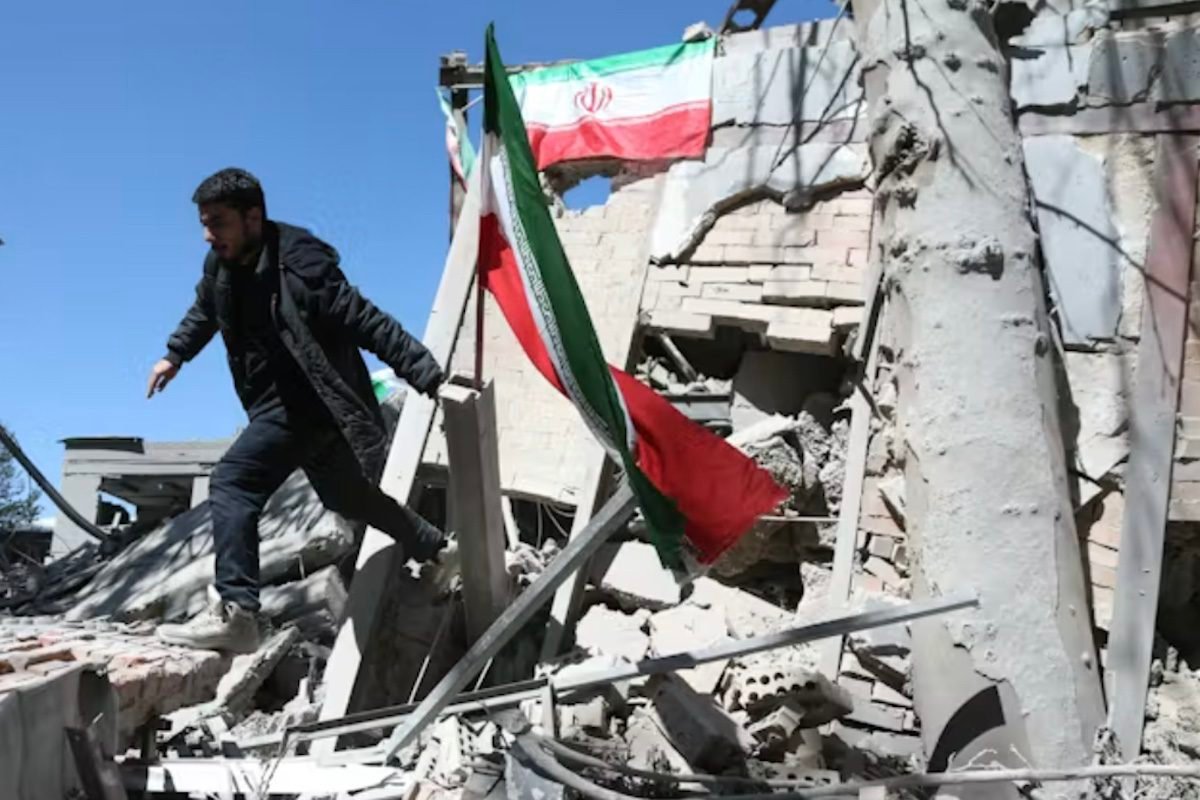
Two months after the outbreak of hostilities, the US has offered no clear account of the political order it intends to establish in the Gulf. The killing of Iran’s Supreme Leader Ali Khamenei and the targeting of Iran’s command structure were not, by themselves, a strategy.
They disrupted an existing order without a demonstrated plan for what comes next. History’s judgments on such disruptions — Iraq in 2003 is the obvious comparison — are not encouraging. Regime change is not a realistic objective; the question is whether the surviving Iranian leadership can be pressured into a negotiated settlement.
At minimum, the Trump administration must answer three questions: which faction within Iran’s remaining power structure can deliver such a settlement and through what channel; what concrete, verifiable concessions — reopening the Strait, freezing its nuclear program, ceasing proxy operations against American forces — constitute an acceptable outcome; and which regional partners, Saudi Arabia, the UAE or Turkey, are best positioned to serve as back-channel interlocutors, and at what price.
The US built the postwar international order. It has a greater stake than any other power in the norms that order embodies. But norms are sustained by the willingness to act in their defense, not by the elegance with which lawyers describe them. The responsibility to convert force into a lasting political settlement rests with statesmen —a duty lawyers cannot fulfill on their behalf.
The Trump administration must act immediately. The first step would be to designate a senior envoy who, with the help of regional stakeholders with the necessary relationships to facilitate progress, could, within 90 days, identify capable Iranian intermediaries and obtain verifiable commitments on the Strait of Hormuz, Iran’s nuclear program and its proxies.
This approach would not be aimed at regime change but at fulfilling the essential conditions to justify the existing use of force.
Eric Alter is a non-resident senior fellow at the Atlantic Council’s Middle East programs and a former UN civil servant.