Some wars are predictable. There are conflicts past and present which have been more or less expected because of economic and social conditions, a country’s history or that of its neighbours.
In today’s geopolitical landscape, one warning sign that really stands out is the buying and selling of weapons. There is good evidence that a surge in arms imports tends to increase the risk and intensity of future wars.
Building up military power does not merely prepare a country for war. It can also fuel the geopolitical tensions that make war more likely.
And there are economic effects too.
Our research shows that when a country starts buying more weapons, its stock market tends to fall. We found that increases in a country’s arms imports are associated with statistically and economically significant declines in its financial markets.
Weapons procurement also serves as a strong predictor of market movements – stronger even than the actual outbreak of a military conflict. This may be because markets are driven by surprises. And by the time a war begins, investors may already have expected it and priced it in.
Perhaps surprisingly, a large amount of information on international arms deals is openly monitored and recorded by organisations such as the UN and the Stockholm International Peace Research Institute.
Using the data they provide, investors can make gradual and proactive portfolio adjustments rather than waiting for the shock of war to send markets tumbling.
And we used the same information to examine the weapons imports and stock markets of over 72 countries (including the US, the UK, China and India) over a period of more than 50 years, from 1970 to 2023.
The conflicts we looked at included the 1982 Falklands War between the UK and Argentina, clashes between India and Pakistan in the 1990s, the invasion of Iraq and the ongoing war in Ukraine. We also accounted for a wide range of factors that could influence stock markets, including the broader economic environment.
Our evidence points to a definitive link between a country’s military build-up and the fortunes of its financial markets.
Economic power
The negative effect of arms imports on stock market valuations is not the same everywhere though. Less harm is done, for example, in autocratic countries.
This is probably because autocratic leaders are expected to fight for regime survival and to guard against the risks of a coup. As a result, any military build-up may be viewed by investors as an expected policy response in autocratic regimes.
Buying weapons is linked to a stronger negative response in stock returns in countries with a robust rule of law – like the UK or Germany – where government arms procurement tends to be more transparent and subject to greater oversight.
The relationship between acquiring weapons and a hit to the stock market is also stronger in non-Nato countries. This makes sense when you consider that Nato is a defensive alliance, so military spending among its members may raise fewer concerns.
So buying weapons carries costs that go well beyond the price paid for tanks and missiles, with a detrimental effect on a whole national economy.
This can affect the wealth of people who invest directly in stock markets or indirectly through mutual funds. Pensioners may also be exposed, since pension funds commonly invest in the stock market, meaning that decisions made in government procurement offices can ultimately affect people’s savings and retirement.
War economy
When weapons end up being used, apart from the devastating human cost, armed conflict can leave economies struggling for years after the fighting begins. One study estimates that ten years after a conflict starts, the GDP in countries involved in war is, on average, 28% lower than it would have been.
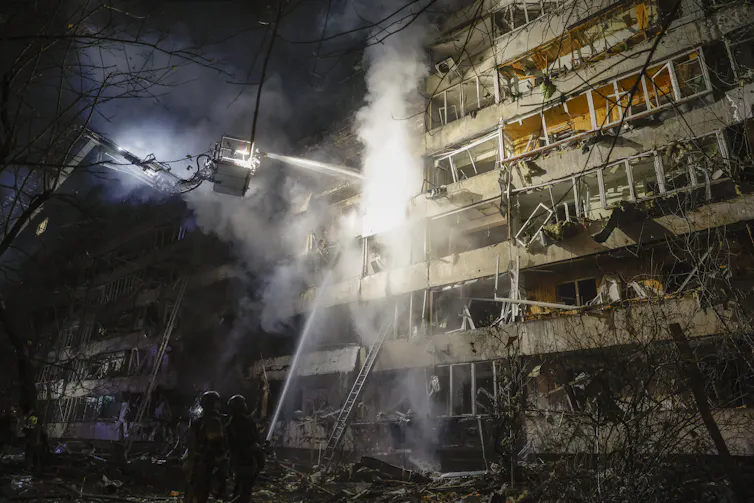
The ruinous effects of war in Ukraine.EPA/SERGEY DOLZHENKO
The economic shock can reach far beyond the countries at war. As the invasion of Ukraine in 2022 and the war in Iran have shown, conflict can send energy prices soaring, adding to inflation and widespread economic pain. Buying weapons and using them is an expensive process from start to finish.
TP-Link tries to appease Trump admin with pledge to assemble routers in US
TP-Link yesterday announced plans to assemble Wi-Fi routers in the US, as the company attempts to get the Trump administration’s approval to sell its newest routers to American consumers.
The timing is uncertain, as TP-Link’s press release said it expects US-based assembly to begin “as early as” 2027. TP-Link’s application to sell new routers in the US could be rejected by the Trump administration or remain pending long enough to push the US-based assembly to 2028.
“Pending US regulatory approval, TP-Link expects domestic assembly of its groundbreaking Wi-Fi 8 home networking product line to begin as early as next year,” the company said. TP-Link said it signed a Letter of Intent with US company Keytronic, which agreed “to become a primary domestic manufacturing partner for TP-Link, supporting assembly of the company’s advanced networking portfolio in Corinth, Mississippi.”
TP-Link can’t sell its Wi-Fi 8 routers in the US because of the Federal Communications Commission ban on consumer-grade routers produced wholly or partly in other countries. Previous TP-Link routers that were already approved for import and sale are still available.
What counts as a US router is unclear
The FCC has given exemptions to a number of prominent router makers, but TP-Link’s history as a Chinese company is making it difficult to obtain FCC clearance. Founded in China in 1996, TP-Link moved its headquarters to California in October 2024. It says that “TP-Link Systems devices sold in the US are manufactured in Vietnam and TP-Link Systems is an independent, US company that is not owned or controlled by any foreign government.”
While TP-Link assembles routers in Vietnam, most of the components are reportedly imported from China. TP-Link’s plan to assemble routers in the US will still require it to import components, but the company hopes investment in the US will help it gain the Trump administration’s favor.
While the FCC is urging router makers to move more of their operations to the US, a TP-Link official said the government has provided no clear guidance on how much US manufacturing is enough to obtain an exemption from the foreign router ban.
“There are no published guidelines that say, ‘Well, it could be 25 percent US, or it could be 15 percent US,’” TP-Link corporate affairs officer Steve Kovsky told PCMag. Kovsky said that many components “are just not available from a domestic source, and this is not a TP-Link issue. This is an issue for all manufacturers that are trying to onshore manufacturing.”
In a letter to FCC Chairman Brendan Carr and the agency’s commissioners last week, Kovsky said TP-Link is proposing “a nearly $1 billion investment in America that would result in equipping existing US factories, and ultimately building new, highly automated manufacturing facilities, to start assembling next-generation Wi-Fi 8 routers in the United States as soon as next year, creating hundreds of new jobs.”
TP-Link struggles to convince Trump admin
TP-Link’s letter said it will make the proposed investment if it receives approval to sell Wi-Fi 8 routers in the US. “This investment would build upon TP-Link’s existing US footprint, which includes a global headquarters in Irvine, Calif., and more than 700 US employees,” TP-Link told the FCC. “As part of this investment, TP-Link would begin assembling these Wi-Fi 8 devices in the United States by next year, and the devices will incorporate software and firmware developed, written, and stored in the United States by TP-Link’s US engineering organization.”
The FCC isn’t the only agency that TP-Link has to convince. The FCC process for issuing exemptions from the ban requires each router maker to first obtain a determination from the Department of Defense or Department of Homeland Security that its devices do not pose national security risks.
Router makers that received exemptions so far include Netgear, Asus, Adtran, Amazon and its Eero subsidiary, Calix, Nokia, SpaceX’s Starlink division, and others. TP-Link urged the Trump administration to ensure that its “reviewers fairly apply the same consistent review standards to TP-Link as have been applied to all other applicants.”
TP-Link’s 2024 move to the US came amid investigations into high-profile attacks linked to the Chinese government, including a botnet composed mostly of TP-Link routers. The Russian GRU also compromised TP-Link routers to steal information, US intelligence agencies said in April 2026.
TP-Link is far from the only router maker with security problems. For example, so-called AirSnitch attacks described in research this year were reported to work on routers made by Netgear, D-Link, Ubiquiti, Cisco, and those running DD-WRT and OpenWrt.
Republican AGs urge FCC to stand firm
TP-Link’s letter to the FCC last week said its application for an exemption provides “complete responses” to questions about its corporate structure and manufacturing and supply chain.
“TP-Link prioritizes the security of US consumer networking data; user data processed by TP-Link’s US products is encrypted and housed on Amazon Web Services infrastructure in Virginia,” the company said. “And of course, TP-Link does not, and will not, share customer network data with foreign governments or unauthorized third parties.”
TP-Link also faces opposition from Republican state attorneys general. The AGs from Florida, Montana, Iowa, and Nebraska sued TP-Link this month, alleging that it lied to consumers about its connections to China and the risks of its routers being exploited by Chinese state hackers.
A group of 21 Republican state AGs then sent a letter to the FCC questioning TP-Link’s claims regarding router security and the company’s independence from China. The letter urged the FCC to require remedies for “past and ongoing state-law violations” in its review of TP-Link’s application and to protect router users “from exploitation by the Chinese Communist Party.”
Michael O’Leary hits out at EU leadership, calling von der Leyen “useless”
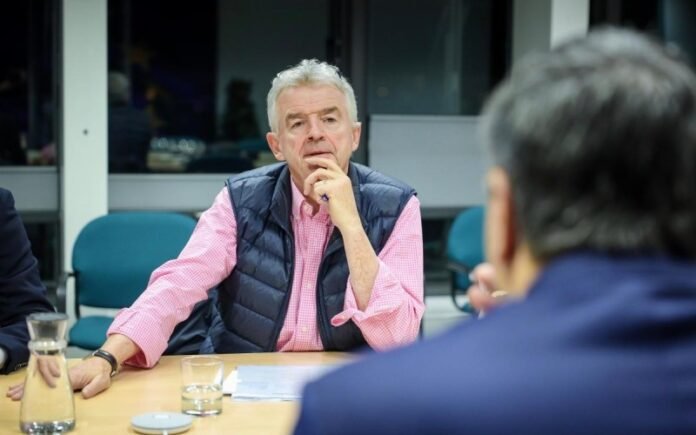
Ryanair chief executive Michael O’Leary has called European Commission President Ursula von der Leyen “useless”, accusing her of talking about competitiveness while doing nothing to deliver it.
In an interview with Euronews, O’Leary said “You have that ship of fools in the European parliament, redesigning more regulations designed to increase the cost of air travel when consumers want lower fares.”
O’Leary attacked EU environmental taxes that apply only to flights within the bloc. American, Asian and Chinese carriers are exempt, even though he says they produce more than half of Europe’s aviation emissions.
‘Tax the Americans’
“Nobody would design a stupid system like this, other than the European Parliament and Ursula von der Leyen. If you’re serious about competitiveness, tax the Americans when they land here in Europe.”
Long-haul routes, flown by European as well as American, Asian and Chinese airlines, fall under a lower UN carbon-offsetting scheme. According to air traffic body Eurocontrol, these flights make up just 6% of departures but more than half of European aviation’s CO2 emissions.
Routes such as Frankfurt–Dubai and Frankfurt–Istanbul will be brought into the carbon market while longer sectors such as Frankfurt–Tokyo will be excluded, according to the Commission proposal. Landing flights from the United States and China will be exempt.
“Ursula von der Leyen’s afraid to do anything except talk. You know, she’s useless,” O’Leary told the Europe Today programme. “Europe has a road map for being more competitive, it’s called the Draghi Report. Two years later, not one of its recommendations has been implemented and Ursula von der Leyen hides in the Berlaymont doing nothing except giving speeches.”
He called for a “fair and reasonable” levy on every flight landing in or taking off from Europe.
Former Italian prime minister Mario Draghi published the report in September 2024. It warned the EU faced a “slow agony” without radical reform and called for up to €800 billion a year in extra investment.
Last month a report by the Joint European Disruptive Initiative said the bloc has implemented 26% of the recommendations outlined by Draghi and claimed “progress is real, but it is not in sync with the pace of the world.”
‘Belgium, France and Germany are not competitive’
O’Leary was in Brussels to announce Ryanair’s winter schedule. The airline is cutting a million seats and 20 routes from Belgium after Bart De Wever’s government raised its air travel tax by €2 to €7 per ticket. That was scaled back from the initial proposal to raise it to €10 after industry pressure but it has not been enough to satisfy Ryanair.
“We’re moving aircraft to those countries who are competitive,” O’Leary said. “Belgium is not competitive. France is not competitive. Germany is hopelessly uncompetitive.”
Belgium’s new levy is still lower than in neighbouring countries. The Netherlands already charges €30.25 per departing passenger, and Germany charges €13.03 for most European flights.
The trimming of Ryanair’s winter routes follows similar strategies by Sweden’s SAS and Easyjet who have both reduced flights this year.
O’Leary warned passengers to expect higher fares. Ryanair has locked in this year’s fuel at about $67 a barrel by agreeing the price in advance, which protects it from rising oil costs. He expects that price to double next year as the protection runs out.
“We guarantee no fuel surcharges,” O’Leary said, “but there is no doubt that airfares are going to rise significantly in 2027 because of much higher oil prices.”
His warning comes as war in the Middle East pushes oil prices sharply higher. Brent crude, the international benchmark, closed at $109.86 a barrel on Friday, its highest level since May, and has since topped $110 as tanker attacks threaten supplies from the Persian Gulf.
China-Russia backing lets Pyongyang tune out Seoul’s old song
<
article id=”post-951451″>
Recent incidents involving the explosion of a North Korean landmine in the Demilitarized Zone (DMZ) and the repatriation of North Korean POWs held in Ukraine have led to a dramatic increase in North Korea-related coverage by South Korean media outlets, which had shown little interest in the North for some time.
The reason is that the South Korean government’s consistently passive and defensive responses to these issues have provoked dissatisfaction not only among conservatives but also among political moderates. Of course, there is some logic behind the ROK government’s approach.
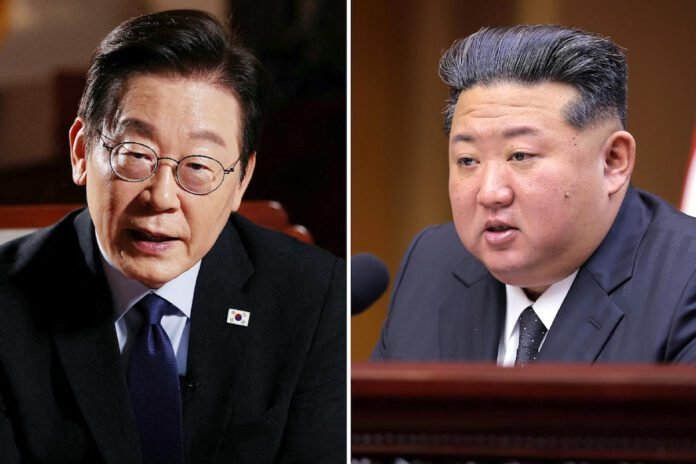
What might that logic be? Senior officials in the Lee Jae-myung administration and South Korean progressives seem to retain a strong nostalgia for the foreign policy of the Roh Moo-hyun era (2003-08), particularly the Sunshine Policy, and apparently still hope to revive a similar approach in the near future.
The so-called “Korean Peninsula Spring” of 2018-2019, in the days of the Moon Jae-in administration, can also be seen, to some extent, as an attempt to revive the Sunshine Policy. That attempt, however, ended in failure. What followed the Korean Peninsula Spring was not summer, but winter. This was no coincidence.
The reactions of progressives and the Lee Jae-myung administration to the landmine incident and the issue of North Korean prisoners of war demonstrate that they have yet to fully grasp just how much the world has changed.
Even if the South Korean government exercises patience and responds passively to North Korea’s actions, there is virtually no chance that such restraint will have a positive impact on inter-Korean relations.
I generally supported the Sunshine Policy. However, I am well aware that reviving it is no longer possible. What has changed? First and foremost, there is the growing confrontation between the United States and China, accompanied by the accelerating division of the world into rival blocs.
In the early 2000s, US-China relations were so amicable that terms such as “Chimerica” and “G2” became fashionable. Today, however, the two countries are locked in a new cold war, which is likely to continue for decades.
Since the 1950s, during the original Cold War, North Korean diplomacy has been remarkably adept at exploiting rivalries and tensions among great powers to advance its own interests.
Having once skillfully exploited the Sino-Soviet split to secure enormous amounts of foreign assistance, Pyongyang now finds itself once again in the geopolitical environment that is most familiar and advantageous to it.
During the Sunshine Policy era, however, Pyongyang faced a very different international environment. Although rivalries between states certainly existed, they were relatively mild, and neither China nor Russia saw much reason to provide North Korea with substantial support.
Having lost its reliable patrons, North Korea made considerable efforts to obtain assistance from South Korea. In particular, when progressive administrations that placed great hopes in inter-Korean national cooperation came to power in Seoul, Pyongyang could obtain massive amounts of aid with relative ease.
Of course, even at that time, inter-Korean contacts were dangerous from Pyongyang’s perspective. The North Korean authorities were particularly concerned that such contacts might expose ordinary North Koreans to South Korea’s economic prosperity, thereby generating dissatisfaction with their own political system.
Nevertheless, in the early 21st century, North Korea had few alternatives and was therefore compelled to actively pursue contacts with South Korea and seek economic assistance from the South.
Today, however, China and Russia are actively supporting North Korea, while the North Korean regime has firmly shut its doors to the outside world. Last year, North Korea admitted only Russian citizens. Even then, the number of Russian tourists who visited the country was a mere 5,100.
Foreign organizations and NGOs that left North Korea during the Covid-19 pandemic have virtually no prospect of being allowed to return.
From Pyongyang’s perspective, this approach is perfectly rational. After all, any foreigner represents a potential danger to the North Korean regime, and South Koreans are particularly dangerous.
In the past, North Korea had little choice but to tolerate the presence of South Koreans and Westerners in order to secure foreign assistance. Now, thanks to Chinese and Russian support, that necessity has disappeared.
Over the past three years, the Kim Jong Un regime has earned more than US$20 billion from arms exports to Russia. It is also receiving support from China.
Under these circumstances, it would be unwise to expect Pyongyang to respond positively to the same old tune, which has long since become outdated.
This article was originally published in Korean by the Seoul newspaper Maeil Kyongje Daily Economy. The English translation is republished with permission.
Israeli attacks kill 6 Palestinians, including 2 children, in Gaza despite ceasefire
Six Palestinians, including two children and a married couple, were killed and eleven injured in Israeli attacks in the Gaza Strip on Tuesday, in the latest violations of an effective ceasefire.
A Palestinian was killed and another injured in an Israeli strike near al-Sawarha cemetery, west of the Nuseirat refugee camp in central Gaza, medical sources told Anadolu Agency.
One Palestinian was seriously injured in an Israeli drone strike on the al-Qasasib area of the Jabalia refugee camp in the north, according to medical sources.
Another Palestinian was killed in an Israeli strike in the Zeitoun neighborhood southeast of Gaza City, medical sources told Anadolu.
A Palestinian child was also killed by Israeli army fire in the Wadi Gaza area in the central Gaza Strip, the sources said.
A medical source at Al-Shifa Hospital told Anadolu that the bodies of a married couple were brought to the hospital along with four injured Palestinians, including three women, following an Israeli airstrike on a home in western Gaza City.
Witnesses said an Israeli helicopter fired at least one missile at the family home near Al-Shifa Hospital, killing the couple and injuring others.
The strike sparked a fire in the house, which civil defense crews later extinguished, the witnesses added.
In southern Gaza, a Palestinian child was killed by Israeli gunfire in the Qizan Abu Rashwan area south of Khan Younis.
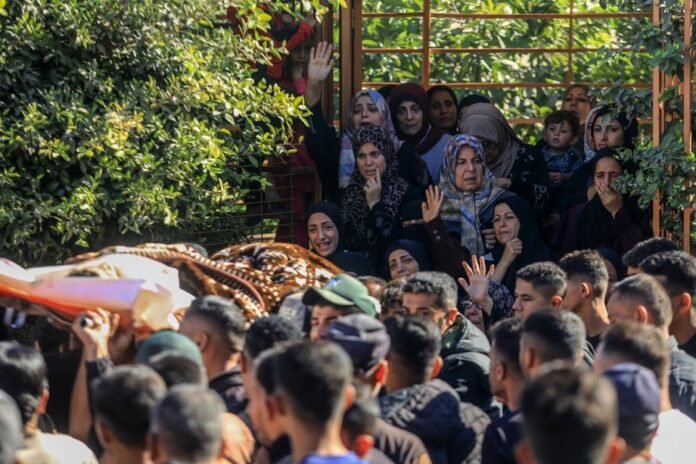
READ: Funeral ceremony for Palestinian couple killed during Israeli attack in Gaza City
Five other Palestinians, including a woman and two children, were injured by Israeli army fire in Hamad City north of Khan Younis and areas south of the city.
In eastern Gaza City, the Israeli army carried out artillery shelling and opened heavy fire from military vehicles and quadcopter drones toward Palestinian homes and tents sheltering displaced people in the Tuffah neighborhood.
The shelling and gunfire continued throughout the night, while several explosions were heard as the Israeli army demolished homes and civilian structures inside areas under its control, witnesses said.
Israeli warships also fired bullets and shells toward the northern coast of Gaza City, while military vehicles opened heavy fire toward the Sudaniya area in the northwestern Gaza Strip.
Witnesses said Israeli tanks opened heavy fire toward homes and tents sheltering displaced people in several areas of central, southern and northern Khan Younis.
The army also carried out extensive demolitions inside areas under its control east of the city, they added.
Israeli violations of the ceasefire agreement had killed 1,522 Palestinians and injured 5,421 others since Oct. 10, 2025, according to the latest figures from Gaza’s Health Ministry.
Since October 2023, Israel has killed more than 74,000 Palestinians and injured over 175,000 others during its war on Gaza, while around 90% of the enclave’s civilian infrastructure has been damaged or destroyed.
READ: Israel’s Ben-Gvir boasts of Gaza’s destruction, mocks Palestinian residents in AI-generated video
ReactOS reaches major milestone with NTFS install support
Open source Windows alternative ReactOS has reached a major milestone: The operating system can now be installed directly onto an NTFS drive partition. As reported by Phoronix, the move to NTFS clears a long-standing hurdle for the project and brings it one step closer to finally reaching beta.
Prior to this latest announcement, ReactOS required users to keep a FAT32 partition for installations. A proprietary Microsoft-developed filesystem, NTFS can trace its roots back through the Windows NT family lineage starting in 1993 with Windows NT 3.1. The variant introduced with Windows XP in 2001 remains the standard used by most Windows systems today. With ReactOS’s stated goal of reaching binary compatibility with Windows Server 2003, being confined to FAT32 partitions was a practical barrier to clear on the way to reproducing the Windows environment.
However, users looking to hop off the Windows train shouldn’t be grabbing their bags just yet. ReactOS wrote that the new driver still “lacks caching (which causes inferior performance), journaling and security support.” So while the new driver is here, even the most intrepid of OS tinkerers should tread carefully. The ReactOS team warned in its announcement on X that there are still “potentially undiscovered bugs.”
The new driver closes a gap in development of nearly a decade. Read-only NTFS support was added to ReactOS all the way back in 2016, with boot support landing on FreeLoader in 2022. That meant that ReactOS’s bootloader could read from an NTFS partition, but the OS was unable to be directly installed there.
ReactOS is a community-developed open source project that describes itself as “mostly driven by volunteers.” Development is coordinated through public channels like GitHub and the project’s forums. Those who might be interested in lending a hand to ReactOS’s development can visit the project website to learn more about how to contribute. The project’s decades-long timeline underscores the scope and difficulty of reimplementing an operating system from scratch, and why the project has remained in alpha for so long.
The ReactOS project may never be a truly viable alternative to Windows for most users, but this step forward means that at least now it can be installed on the same filesystem as the real thing.
And so France continues to smoulder. Two weeks after the first mass demonstrations in support of increased funding for French state schools, events reached a peak on Saturday October 17. Widespread destruction of small businesses, cafés, town halls and chain shops have brought the French economy even further to catastrophe.
The scenes of mass looting, along with the burning spire of the 150-year-old Limoges town hall hardly inspire confidence in the government of President Emmanuel Macron and his prime minister, Sébastien Lecornu. A sell-off of government bonds is the latest sign of economic gloom, demonstrating the market’s concerns over France’s ability to claw back control over its public finances.
It is easy to forget there is a legitimate reason for these protests: educational reform. This was also the root cause for the events of May and June 1968, which this generation of protesters have looked to emulate. Although changes to the education system were introduced in the wake of May 1968, the centre-right went onto win a majority in the June parliamentary elections in a wave of support for General Charles de Gaulle, rather than in support of the protesters’ cause.
Macron now faces similar problems to de Gaulle, with the cost of living and youth unemployment also part of the picture. When he came to power in May 2017, Macron promised major investment in education and skills. But a report by the French Cour des Comptes, an independent court which monitors public spending, concluded that this investment has had no major impact on improving access to work.
The demonstrators are rightly concerned about the cost of living and the absence of meaningful investment in schools on the margins of major cities. The irony, of course, is that the destruction of businesses in the latest, violent, demonstrations, will probably push the cost of living up, not down.
The impact on tourism, for example, will be considerable, given that some other countries, while stopping short of an outright travel ban, have warned people to exercise caution when travelling to France.
Economy in peril
In 2018, in the wake of the gilets jaunes protests, Macron reversed his previous position of balancing tax cuts with spending cuts and introduced €10 billion (£8.85 billion) worth of measures designed to mitigate the cost of living, including raising the minimum wage and removing tax on overtime payments.
Macron’s disastrous decision to call the summer 2024 parliamentary elections has caused political stalemate in the National Assembly. And, with debt of at least 115% of GDP and a deficit of 5.1% of GDP, the French economy is already deeply burdened. So Macron can ill afford to spend his way out of trouble. To make matters worse, more than 50% of French debt is held by foreign investors – and a bond sell-off is already underway following the weekend’s protests.
Under pressure: French president, Emmanuel Macron, with the prime minister, Sebastien Lecornu (left) and interior minister, Laurent Nunez (right).Abaca Press/Alamy Live News
What, then, can Macron and Lecornu actually achieve? There is little way out of this financial black hole without tax rises and major cuts to welfare. Clearly a tougher conversation on the French public finances, especially in terms of the very generous retirement packages enjoyed by many over-60s in France, is required.
What this means for the 2027 election
All the while Marine Le Pen and Jean-Luc Mélenchon, the candidates of extreme-right and extreme-left, are already campaigning ahead of the presidential election in April 2027. Macron is essentially a lame duck. He cannot stand for a further term and, in any case, would have little to no chance of winning.
But this episode won’t have helped his fragile centrist coalition. And the recent imposition of a curfew by Lecornu and the unpopular interior minister Laurent Nuñez is unlikely to endear the government to voters concerned by recent violence.
Le Pen’s party, Rassemblement National (RN), has long campaigned on the theme of law and order and she has sought to use the riots to cement her position as the only leader capable of restoring peace to the streets. Le Pen released a video message in which she sat in front of the French national flag, le drapeau tricolore, and promised that the people of France would have their chance to vote for a new era of “restored authority and security”.
Marine Le Pen addresses French voters, October 18.
By contrast, Mélenchon and his party, La France Insoumise (LFI or France Unbowed) have identified with the protests since they began. The risk is that, while being seen to sympathise with the very real concerns of the protest movement, the LFI and its leader risk being implicated in the violence playing out on news bulletins across the country and globally. Whether this will convince floating voters to back him at the 2027 presidential elections remains unclear.
The choice now appears to be between two extremes rather than the centre ground, given the collapse of the centre-right Republican party and the centre-left Socialist party following Macron’s 2017 victory.
The leading centrist candidates, Gabriel Attal and Edouard Philippe, both former prime ministers under Macron, have plummeted in the polls in recent days and their Ensemble coalition, at 15% Of the vote is a distant third compared with Mélenchon’s leftwing Nouveau Front populaire, on 24%, and Le Pen’s RN, on 34%.
For both centrist candidates the protests are likely to serve as a reminder to maintain distance from the dying Macron administration. They will also be hoping that the economic picture improves before next May, when the French people go to the polls.
Palestinian citizens face a painful choice in Israel’s election: To vote or not
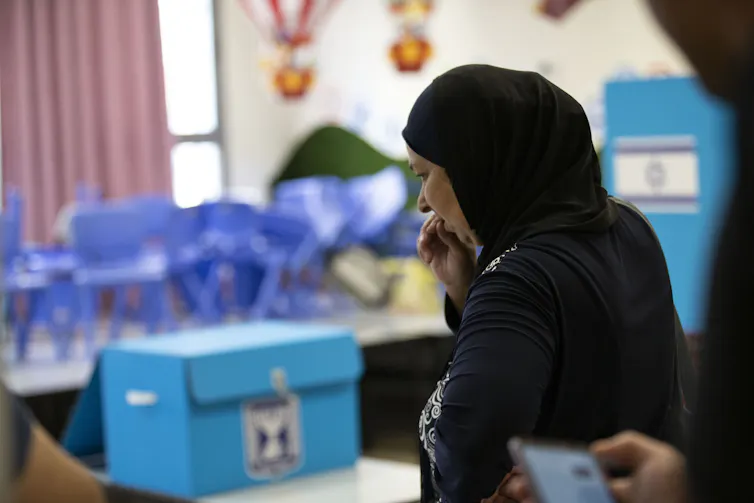
Elections are typically framed as a choice for voters. For Palestinian citizens of Israel, however, the country’s national ballots pose more of a dilemma.
Having devoted most of my academic career to studying relations between Israel and its Palestinian citizens, I see the question facing Palestinian citizens of Israel as part of a much longer struggle over survival, citizenship and political belonging.
A hurried wartime census dated Nov. 8, 1948, helped determine who would be recognized as belonging to the new state. Registration and subsequent citizenship requirements excluded anyone who was absent from their home at the time of the census. This included Palestinians who had sought temporary shelter in neighboring countries or elsewhere in what was Mandatory Palestine.
Therefore, the census did more than count residents: In most cases, Palestinians displaced by the war who were absent when it was conducted were excluded from the population register. That made it almost impossible for them to obtain citizenship and return to their homes.
For those who remained, citizenship became a form of insurance against expulsion; once they were designated as citizens of Israel, their removal became legally much more difficult.
Palestinians today constitute approximately half the population in the territory between the Jordan River and the Mediterranean Sea: Israel, Gaza and the Occupied West Bank. But fewer than one-third of them possess Israeli citizenship. Those who do – and as such can participate in its national elections – constitute roughly 17% of Israel’s citizenry.
From the creation of the Israeli state onward, Palestinian citizens have been eligible to vote, but they have faced hurdles to full participation.
Since the 1970s, Palestinian politicians’ identification with the wider Palestinian struggle has prompted attempts to disqualify candidates and parties. The Supreme Court has generally blocked such exclusions.
In Israel’s first decades, most Palestinian votes went to the Jewish-Arab Communist Party, in its various incarnations, or to Arab lists – parties affiliated with the ruling Labor movement and acting on its behalf. The 1980s saw the disappearance of these satellite lists and the emergence of alternatives to the communists. For example, the Progressive List for Peace entered parliament in 1984, combining Palestinian nationalism with Jewish-Arab cooperation. Later, in 1988, the Arab Democratic Party emerged as an exclusively Arab party.
Except for short periods in the mid-1990s and 2021-2022, Israeli parties that consider themselves Zionist generally regarded none of these independent lists as legitimate coalition partners. But Palestinian parliamentary leverage reached a high point in 1992–1995, when Yitzhak Rabin’s government relied on support from two Arab-majority parties.
They pursued two connected goals: advancing what became known as the Oslo peace process in the hope that it would lead to Palestinian statehood, and reducing discrimination in funding communities.
Their leverage helped secure significant increases in public investment for Arab communites. Similarly, the short-lived anti-Netanyahu government of 2021–2022 relied on the support of an Arab party, enabling some limited improvements on local issues.
A narrowing political arena
Today, space for such Palestinian parliamentary influence appears narrower than it has been for decades, Since the early 2010s, moreover, Arab parties have increasingly faced official and unofficial attempts to neuter their influence.
In September, Israel’s Central Elections Committee sought to disqualify both Arab electoral lists – the Joint List and the United Arab List – as well as individual candidates. In the 2022 election, these lists’ constituent parties received approximately 86% of the votes cast in Arab localities. Disqualifying both lists would have deprived the vast majority of Palestinian voters of their preferred political representation.
The Supreme Court reversed the lists’ disqualifications but signaled that a majority of its judges would uphold the exclusion of the National Democratic Assembly’s leader, Sami Abu Shehadeh, over an article he wrote immediately after the Hamas-led attacks of Oct. 7, 2023. His critics interpreted it as endorsing the massacre of Israeli civilians, though Abu Shehadeh and others vigorously denied that claim.
Rather than demand a ruling, Abu Shehadeh withdrew his candidacy, explaining that he feared a damaging precedent that would restrict Palestinian political activity more broadly.
This exclusionary atmosphere extends beyond political institutions. In the Israel Democracy Institute’s July 2026 survey, about one-third of Jewish respondents opposed Arab citizens’ right to vote. Among supporters of Prime Minister Benjamin Netanyahu’s coalition parties, the proportion was approximately 55%.
Palestinian voters have also faced intimidation and voter suppression. Practical barriers compound this pressure. Residents of unrecognized Bedouin villages, for example, face long journeys to assigned polling stations.
The costs of participation – and abstention
While many Palestinians understand that participation legitimizes electoral rules under which their choices are limited, abstention surrenders opportunities to address issues such as the rise of organized crime and violent crime in Arab communities.
And although Palestinian parties could hold the balance of who gets to form a coalition, the reality is not that simple.
The differences between Netanyahu and much of his opposition regarding Palestinians’ rights and self-determination are largely that of style rather than policy. Neither Netanyahu’s ruling coalition nor the leading opposition parties support a two-state solution or offer any other credible route to ending the occupation.
Nevertheless, the main opposition depends more heavily on a secular middle class sensitive to global opinion that is increasingly turning against Israel over the dispossession and killing of Palestinians in the West Bank and Gaza.
This may be an exceptionally low threshold of expectation, but it reflects the choices available for Palestinian voters on such issues related to Palestinians living under occupation.
Personal security at home is an even more pressing concern for many Palestinian citizens of Israel. Criminal organizations terrorize Arab communities, while killings have reached unprecedented levels under the current government – largely through state complicity.
In a May survey, more than half of Arab respondents identified violence in their communities as the principal factor negatively affecting their mood. The urgency of this crisis helps explain widespread support for Arab participation in the next government – some 77% of the Arab citizens support this arrangement, which most Zionist opposition parties reject.
Can turnout shift the balance?
For Palestinian citizens, the electoral options remain limited. The United Arab List, a party rooted in the Muslim Brotherhood, now most explicitly advocates integration into Israel’s governing institutions. Seeking acceptance by Jewish parties, it has largely set aside Palestinian national rhetoric to prioritize its constituents’ immediate needs.
The Joint List, meanwhile, brings together nationalist and communist forces seeking to make Israeli citizenship substantive through equal rights, without abandoning explicit manifestations of Palestinian national identity and solidarity with other Palestinians. Its constituent parties disagree over how far cooperation with Zionist parties should extend.
Voting for a Zionist party remains another option, but its appeal has diminished sharply over recent decades. Such a trend, however diminished, persists particularly among constituencies with close institutional ties to the state.
Palestinian voters abstain for reasons ranging from apathy to a deliberate boycott of the state established through their people’s dispossession. Recent attempts to suppress Arab representation could either mobilize citizens who feel their remaining protections slipping away or deepen their reluctance to participate in an arena so visibly stacked against them.
The outcome could shape the election, and Arab party leaders aspire to 70% turnout. Higher participation would increase Arab representation and could push marginal right-wing parties below the electoral threshold, weakening Netanyahu’s prospects of forming a government.
The hope of Arab party leaders is that, despite opposition leaders’ declarations against cooperation, a sufficiently large Arab parliamentary bloc will leave the Jewish opposition parties little choice but to seek its support to remove Netanyahu.
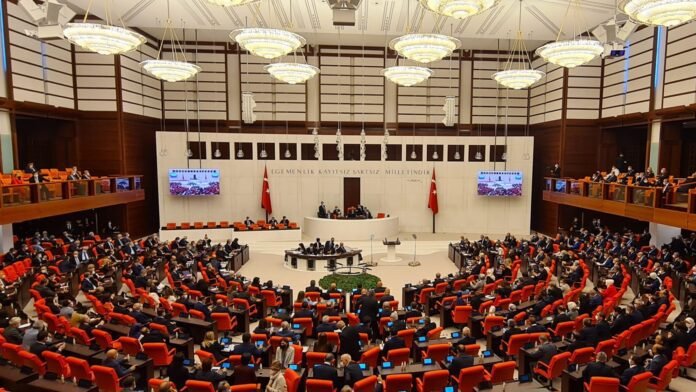
Turkey sent a trilateral defense treaty with Saudi Arabia and Pakistan to parliament Tuesday for ratification, advancing a mutual-defense commitment as Riyadh seeks help against escalating attacks by Yemen’s Iran-backed Houthi forces, three parliamentary sources told Reuters.
The Mecca Joint Defence Agreement, signed August 7 by President Recep Tayyip Erdoğan, Saudi Crown Prince Mohammed bin Salman, and Pakistani Prime Minister Shehbaz Sharif, stipulates that an armed attack on one signatory will be treated as an attack on all three. It also calls for broader military and defense-industry cooperation.
The treaty’s 16 provisions address assistance against external aggression, counterterrorism coordination, and cooperation on military technology and weapons production, according to the text submitted to lawmakers.
The document must pass Turkey’s parliamentary Foreign Affairs Commission before proceeding to the full assembly. Parliament Speaker Numan Kurtulmuş is expected to refer it to the commission after returning from Kyrgyzstan. No vote has been scheduled, and ratification would not by itself authorize Turkish troops to deploy overseas.
At emergency talks in Riyadh on October 5, ministers and military commanders from the three countries agreed to prepare forces and equipment for rapid deployment to Saudi Arabia, subject to national laws.
Turkey has condemned Houthi missile and drone attacks on Saudi infrastructure and offered to support the kingdom’s defenses. A Turkish official told Reuters that Ankara’s immediate contribution was expected to consist of military equipment, weapons systems, and intelligence sharing rather than combat troops.
Foreign Minister Hakan Fidan has described the pact as defensive and rejected sending Turkish forces into another country to conduct attacks.
The proposal comes as regional governments seek additional protection from Houthi strikes that have disrupted air travel, threatened energy facilities, and added to concerns about Red Sea shipping.
Ratification would formalize Turkey’s participation in the alliance, but any deployment of Turkish soldiers would still require separate parliamentary authorization.
Dhaka’s silence on Saudi executions puts remittances over lives
<
article id=”post-951496″>
Saudi Arabia executed two Bangladeshis on October 14 but Dhaka’s response was conspicuously restrained. Its consulate in Jeddah reportedly sought formal confirmation and the foreign ministry requested details. Officials then reassured Riyadh that bilateral relations would remain unaffected.
Public sentiment, reflected in a flood of angry and frustrated social media posts, stands in sharp contrast to the government’s muted response. The executions of Nazrul Islam Abdul Basir and Siti Akhtar, convicted of what Saudi authorities described as immoral acts inside a mosque in Mecca, have provoked widespread anger among Bangladeshis.
The alleged offense of kissing in a holy place was grave under Saudi law, and the punishment was irreversible. Yet fundamental questions remain unanswered.
What exactly happened? Did the defendants receive competent legal representation? Were interpreters provided? Could they appeal? And where were Bangladesh’s diplomats throughout the proceedings? These questions concern due process which so far has been largely absent.
Bangladesh State Minister for Foreign Affairs Shama Obaed Islam acknowledged that neither Dhaka nor its Saudi mission had received advance notice. She called the executions “unexpected” and described them as a “major lesson.” A lesson for whom?
Bangladeshis working abroad must obey local laws. But their government must also protect their legal rights. These obligations are complementary, not competing. Dhaka has emphasized the first. It has offered little clarity on the second.
On October 18, Foreign Ministry Secretary Md Nazrul Islam discussed the executions with Saudi Ambassador Abdullah Zafer bin Abiyah. Officials made a point of clarifying that the ambassador had not been summoned. They also stressed that the incident would not damage bilateral relations.
The diplomatic arrangement was revealing. Dhaka seemed more concerned with avoiding Saudi displeasure than with protecting its citizens. None of this proves Bangladeshi diplomats were absent throughout the judicial proceedings. Their involvement remains unclear. But that uncertainty is precisely the problem.
A functioning consular system should know when its nationals face capital punishment. It should know who represents them, what remedies remain available and whether their families have been informed. Saudi Arabia has the authority to enforce its laws. Bangladesh has the responsibility to protect its citizens. Neither principle cancels the other.
The sentences were reportedly imposed under ta’zir, a category of Islamic punishment involving judicial discretion rather than a fixed hadd penalty. That makes questions about proportionality and judicial reasoning especially important.
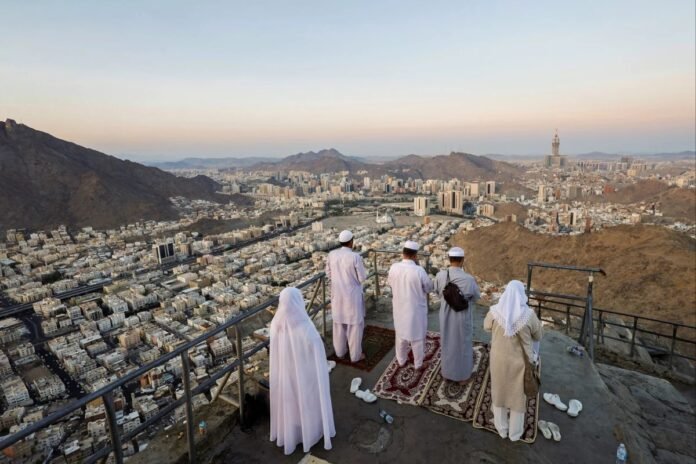
Mecca’s religious significance is undeniable. Violating the sanctity of a mosque is deeply offensive to Muslims, including Bangladeshis. But religious reverence cannot replace judicial scrutiny. Questioning a death sentence is not an attack on Islam. Bangladesh’s government should understand that distinction.
Its reluctance has an obvious economic explanation. Saudi Arabia remains Bangladesh’s largest overseas labor market. More than 752,000 Bangladeshis traveled there for employment in 2025, roughly two-thirds of the country’s overseas worker deployments.
An estimated 3.5 million Bangladeshis live and work in the kingdom. Saudi Arabia supplied $5.85 billion in remittances during FY2025-26, making it Bangladesh’s largest source. Those numbers explain Riyadh’s importance to Dhaka.
Bangladesh needs Saudi jobs. Gulf remittances support millions of households, strengthen foreign exchange reserves and help finance imports. A serious diplomatic rupture could carry substantial economic costs. But dependence should make consular protection more urgent, not less.
Bangladeshi workers build Saudi infrastructure, staff its businesses, drive its vehicles and maintain its households. Riyadh benefits from their labour. Dhaka benefits from their earnings. This is mutual dependence, even if the bargaining power is unequal.
Yet Bangladesh’s diplomacy remains heavily focused on recruitment agreements, labor quotas and remittance figures. Legal protection receives far less visible attention. Workers often arrive burdened by recruitment debts, unfamiliar with Arabic and unable to afford lawyers. Some face exploitation or detention without understanding their legal options.
Saudi labor reforms have addressed parts of the sponsorship system. They have not eliminated the vulnerability of low-paid migrants. For these workers, consular assistance can determine whether they understand the charges and exercise their rights.
The Vienna Convention on Consular Relations provides a framework for consular communication and access. Dhaka must establish whether the applicable protections were respected.
There is another contradiction. Bangladesh has been exploring participation in the proposed Mecca Pact, a Saudi-led security arrangement involving Pakistan and Türkiye.
In August, [another] State Minister for Foreign Affairs Humaiun Kobir spoke favorably about the initiative. In September, State Minister Shama said Dhaka was examining its implications, although no formal invitation had arrived. The proposed arrangement raises questions about military commitments and regional alignments. It also exposes a strange hierarchy.
Bangladesh is contemplating deeper security cooperation with Saudi Arabia while struggling to establish whether its citizens received adequate protection before being executed there. Before considering collective defense, Dhaka should demonstrate that it can defend the legal interests of individual Bangladeshis.
Military alliances and consular responsibilities are different. But both test the seriousness of a state’s commitments. Religion complicates that calculation.
Saudi Arabia’s custodianship of Mecca and Medina gives it enormous religious influence. Bangladesh’s attachment to those cities is profound. Yet religious solidarity cannot confer diplomatic immunity from criticism.
Saudi judicial decisions remain state decisions. They can be examined against standards of due process, legal representation and proportionality without questioning Islam or the sanctity of its holy places. Nor does seeking accountability constitute hostility towards Saudi Arabia.
Dhaka should now establish when the defendants were arrested, whether its mission was notified, what legal assistance was available and whether appeals were exhausted. It must also explain why the executions apparently proceeded without advance notification.
The findings should be made public, with appropriate privacy safeguards.
Beyond this case, Bangladesh needs a reliable system to identify nationals facing capital charges, provide legal assistance, arrange interpreters and maintain contact with families. These are basic functions of a state whose economy depends on migrant labor.
Successive governments have celebrated overseas Bangladeshis as “remittance warriors”. Their earnings are counted meticulously. Their protection is harder to measure. The contradiction has become impossible to ignore.
Dhaka need not threaten Riyadh or manufacture a diplomatic crisis. It must, however, establish that friendship does not require silence when citizens face execution. The issue is larger than two deaths. It concerns the value Bangladesh places on citizenship beyond its borders.
A government considering new military partnerships should first demonstrate that its existing diplomatic relationships offer meaningful protection to ordinary Bangladeshis. Bangladesh knows precisely how much its overseas workers contribute in dollars. The question is how much their lives count when those dollars are no longer at stake.
Faisal Mahmud is the managing editor of Daily Waadaa