In Ukraine, spring brings hope for new crops after the long cold winter and every year since the Russian invasion in 2022 it has brought new questions about which side might seize the initiative as confrontation on the battlefield is renewed. This year, unlike in 2024 or 2025, the springtime initiative is firmly in Ukraine’s hands.
Technological innovation, domestic Ukrainian weapons production and Russian weaknesses are all playing a part. But the starring role is being played by the landslide electoral defeat on April 12th of Hungary’s Viktor Orbán, for that has cleared the way for vital European Union funding for Ukraine’s war effort.
The special €90 billion loan that EU leaders approved in December for Ukraine was smaller than Ukraine wanted and needed, but nonetheless essential if it was to keep its war production going. Orbán initially voted in favor of the loan, despite his long-running support for Russia, but then intervened (along with Slovakia’s Robert Fico) to block it at the last minute before the loan was due to be provided, conveniently just ahead of the Hungarian election.
Orbán’s pretext was Ukraine’s supposed failure to repair a pipeline transporting Russian oil to Hungary that had been damaged by a Russian attack. But his attempt to demonize Ukraine as a military and economic threat to Hungary failed spectacularly in the election.
Now his successor-elect, Peter Magyar, who will take office in early May, has already allowed the loan to go through, a decision formalized at the European Council meeting that opened in Cyprus on April 23rd. Oil has also resumed its flow down the damaged pipeline.
The defeat of Orbán and the unblocking of the loan are both setbacks for Vladimir Putin. The key economic point about the production of weapons and other material for war is that this represents pure consumption that will not lead to new wealth or productive activity: drones, missiles and other war material are made to be destroyed, preferably while destroying the enemy. So vast amounts of finance are needed to fuel this unproductive war machine. That is what the EU loan will chiefly do.
Without the loan, Ukraine would have struggled to maintain its now-phenomenal output of drones, robotic vehicles and missiles, just as Russia would have struggled to maintain its own output of war materials without the big rise in oil prices that has resulted from Donald Trump’s war on Iran. Each side is, naturally, doing what it can to attack the other side’s weapons factories while Ukraine is also attacking Russia’s oil refineries and export facilities.
Reuters has reported that attacks by Ukraine’s drones succeeded in temporarily reducing Russia’s oil-export capacity by 40% during March. What has changed is not the fact of these attacks but rather that Ukraine can now make them in repeated waves, hitting the same port, pipeline or refinery in new attacks over several days, worsening the damage and slowing the repair process.
Last week a drone attack on an oil refinery at Tuapse on Russia’s Black Sea coast produced especially dramatic consequences, as smoke and other pollution covered the whole city for several days.
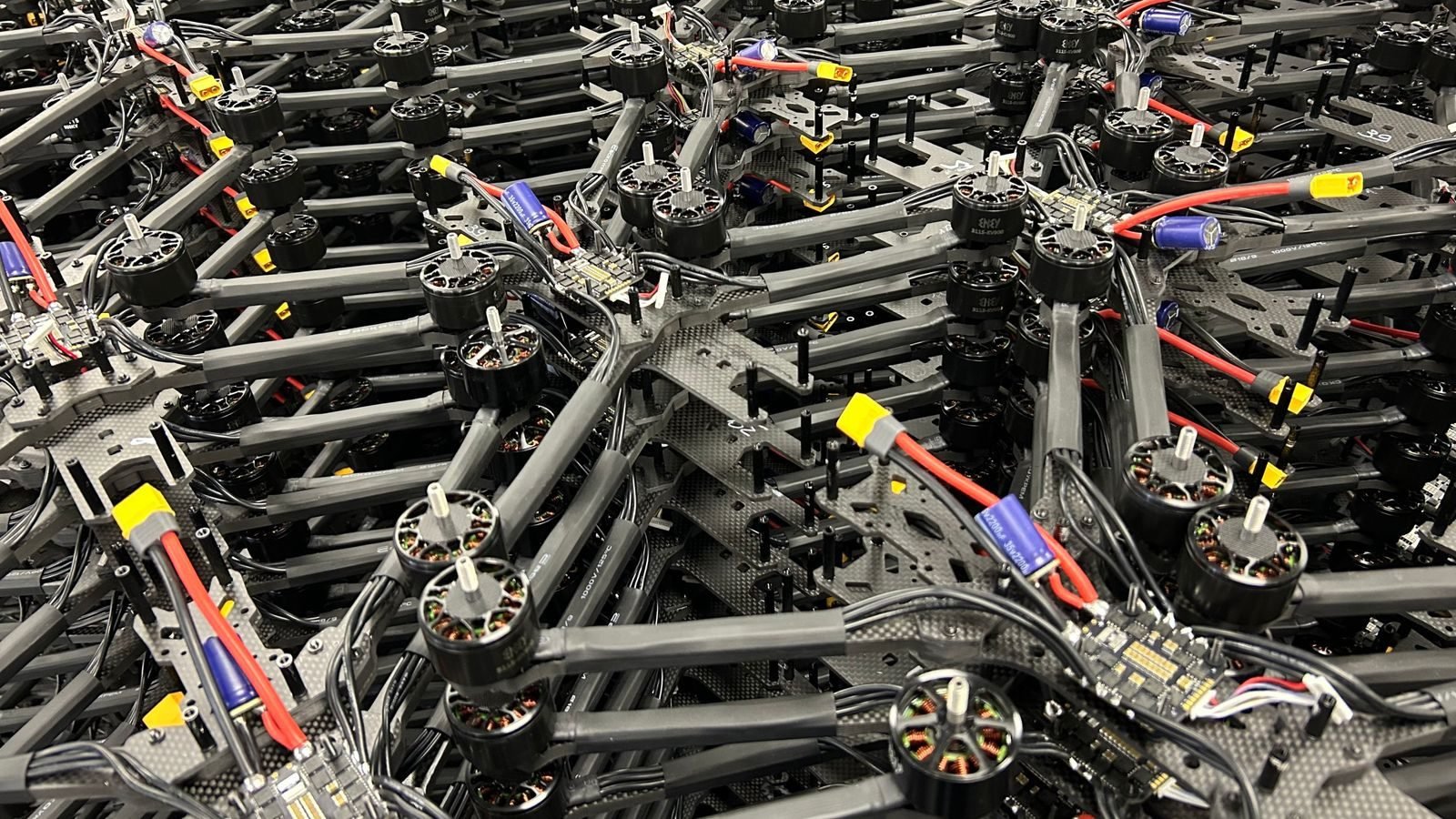
This sustained air campaign is now possible thanks to the expansion of drone production inside Ukraine and in partner factories in countries such as Denmark, but also Ukraine’s impressive pace of technological innovation. This is enabling its drones to hit targets farther away and to have a higher chance of evading Russian defenses.
At the same time, Ukraine is using more armed robotic vehicles on the battlefield to prevent Russian advances and even to regain some territory, reducing Ukraine’s own casualty rate while aiming at keeping Russia’s casualty rate higher than the rate at which it can recruit new soldiers. For all that production and innovation, funding is required.
Although the European Council did not devote much time to the question of funding Ukraine at this week’s meeting, it will need to start thinking about it again soon as the €90 billion loan covers just two years.
As the EU found last year, there are formidable legal and political obstacles to using the most obvious source of funds, the roughly €300 billion of frozen Russian central bank assets that are currently held mainly in Belgium. That is why in December the European Council resorted instead to borrowing €90 billion itself and lending the money on to Ukraine.
The defeat of Orbán in this month’s Hungarian election removes one of the political obstacles to future funding, but not all. Slovakia and the newly elected governments of Slovenia and Bulgaria are also quite pro-Putin, albeit not as aggressively obstructive as Orbán was. But the big question concerns what will happen in the French elections in April next year.
Orbán’s fall did not represent a public rejection of populism nor of right-wing policies on immigration nor even of hostility to Ukraine. The man who beat Orbán is also right-wing and has expressed skepticism about support for Ukraine even though he is not an active supporter of Putin. Magyar’s landslide reflected discontent at the failure of the incumbent, Orbán, to raise living standards after 16 years in power, at his authoritarian style and at the spread of corruption.
When Marine Le Pen’s Rassemblement Nationale tries next year to turn its current opinion poll lead into victory in France’s presidential election, it will be campaigning against an existing political system which it can describe as having failed to raise French living standards.
Orbán’s defeat may well show that obtaining support from Trump is a disadvantage and that opposing the EU is not popular, but on present evidence it does not prove that the European mood is swinging against nationalist, anti-immigrant, right-wing parties such as Rassemblement Nationale.
This makes it even more urgent to resolve any pending EU issues that might risk being blocked by a President Le Pen (if the French courts allow her to run; if not, her candidate will be her young protégé Jordan Bardella).
This includes measures to improve the single market and EU economic vitality recommended by Mario Draghi and Enrico Letta in their much-admired 2024 reports. But above all it includes the provision of adequate support to Ukraine, so that it can retain the initiative in its war with Russia and so that it will stand a good chance of joining the EU once the war is over.
It is not surprising that, once the €90 billion loan had been unblocked, President Volodymyr Zelensky decided to attend the European Council himself. His message was that Ukraine is grateful for the loan and is making progress in fighting back against Russia, but this loan must just be the beginning of an even closer relationship with the European Union, not the end.
The EU is vital for Ukraine’s survival, but it is also clear that Ukraine, with its now formidable defense industry, is equally vital for the EU’s own security.
First published in Italilan translation by La Stampa, this article also appears on Bill Emmott’s Global View. It is republished with permission.