9.3 C
London
Saturday, October 17, 2026
Home Blog

15 Years of Doom, the Same Convenient Culprit

0
15-years-of-doom,-the-same-convenient-culprit
15 Years of Doom, the Same Convenient Culprit


Israel’s economic resilience and changes in Haredi employment, education, and poverty challenge Prof. Dan Ben-David’s dire forecasts, but persistent gaps and structural weaknesses still demand attention

For roughly 15 years, Prof. Dan Ben-David has warned about Israel’s economic future. His warnings are dramatic, his charts alarming, and the Haredi population repeatedly occupies a central place in his analysis.

Is the education system in crisis? Haredim. Is national labor productivity low? Haredim. Is poverty high? Haredim. Is the state budget under unsustainable pressure? Haredim again. It seems that for almost every economic challenge in Israel, this narrative points to a single address.

Meanwhile, Israel keeps changing. So does Haredi society. The question is whether Ben-David’s analysis is changing with them.

Despite a prolonged war and extraordinary disruption, Israel’s economy continues to demonstrate resilience. In its October 2026 forecast, the International Monetary Fund projected economic growth of 4.5% for Israel this year—the highest rate forecast for any of the 38 member countries of the Organization for Economic Cooperation and Development. The projection also represents an upward revision from the IMF’s earlier estimate of 3.5%.

Global companies continue to commit long-term resources to Israel. Nvidia, for example, has announced plans for a multibillion-shekel campus in Kiryat Tivon, designed to accommodate approximately 10,000 employees. Construction is expected to begin in 2027, with initial occupancy planned for 2031.

One of the world’s leading technology companies is betting heavily on Israel’s future. Perhaps Nvidia’s executives see strategic possibilities that somehow disappear between Ben-David’s demographic charts and the headlines.

An investment announcement does not disprove long-term structural risks. Neither does a single year’s growth forecast. But 15 years of dire warnings deserve examination against the country’s demonstrated ability to adapt, innovate, and attract investment. Resilience is part of the evidence, even when it complicates the argument.

A Changing Economy vs. Predictions of Catastrophe

For years, Ben-David has warned of an impending economic catastrophe driven in substantial part by Haredi dependency. Yet important economic indicators show considerable progress over the longer term.

According to data compiled and analyzed by the Institute for Strategy and Haredi Policy, which I founded, Haredi male employment rose from approximately 42.5% in 2010 to around 56% in 2026. Among young Haredi women aged 20–24, employment has reached 88%, based on employer payroll data processed by the institute. Meanwhile, the proportion of Haredi families below the poverty line fell from roughly 39% in 2015 to 32.8% in 2024.

These figures require some qualification. Employment estimates vary according to the population surveyed, the period covered, and the methodology used. Other research has found that the earlier rise in Haredi male employment stalled in recent years. Still, the longer-term gains, particularly among women, deserve recognition.

Poverty remains too high. Male employment must improve further. But the changes are meaningful in precisely the areas on which forecasts of future dependency depend.

I see this commercial vitality firsthand as publisher of the Mishpacha Media Group. Our platforms carry advertising for thousands of businesses and commercial ventures, many rooted in the Haredi community itself. Spanning real estate, finance, retail, and professional services, this activity reflects an entrepreneurial culture that cannot adequately be described as a population living in passive dependency.

The State Education Crisis—and Blaming the Untested

When Ben-David addresses Israel’s deteriorating education system, he quickly turns to the Haredi sector. Yet the relationship between disappointing international test scores and Haredi population growth deserves closer examination.

Haredi boys are largely absent from the Programme for International Student Assessment (PISA). Their exclusion leaves an important gap in our knowledge of their educational achievement, and Ben-David is right to be concerned about the implications of inadequate preparation for the labor market.

But their absence cannot explain the poor scores recorded among pupils who actually participate in the assessments. Those results reveal weaknesses in Israel’s broader education system that require attention regardless of Haredi demographic trends.

More troubling is the tendency to overlook the other half of the Haredi school population: girls.

In the 2025 PISA assessments, Haredi girls achieved an average reading score of 503, compared with 452 in secular state schools and 459 in state-religious schools, according to Israel’s National Authority for Measurement and Evaluation in Education (RAMA). Although these comparisons involve different student groups, RAMA found that no other female subgroup performed significantly better than Haredi girls in any of the three principal subjects assessed.

Rather than concentrating almost exclusively on the educational shortcomings of Haredi boys, Ben-David should also examine why Haredi girls perform so well in reading and what other schools might learn from their success.

Changes are also taking place in boys’ education. According to Education Ministry data processed by the Institute for Strategy and Haredi Policy, enrollment of Haredi boys in state-Haredi (mamlachti-haredi) schools rose from 4% in 2024 to 10% in 2026, a 2.5-fold increase in just two years. Specialized Haredi high schools, known as yeshivot tichoniyot, are also expanding.

These developments do not resolve the educational challenges facing Haredi boys, but they belong in any serious assessment of where the community is heading.

Productivity: Testing Ben-David’s Central Argument

Labor productivity is central to Ben-David’s assessment of Israel’s economic future. He argues that low skills and labor force participation among Haredim contribute to Israel’s weak productivity performance.

The question is how much of the national problem can reasonably be attributed to the sector.

According to calculations by the Institute for Strategy and Haredi Policy, Haredi workers account for approximately 6.5% of all hours worked in Israel. Using hourly wage differences as an indirect measure of productivity, the institute estimates that eliminating the wage gap between existing Haredi workers and other Israeli workers would raise average hourly earnings nationally by approximately 1.5%.

This is a limited calculation. Wages are an imperfect proxy for productivity, and the estimate does not capture the broader economic consequences of differences in education, employment, or future population growth. Nor does it measure the full potential gains from bringing more Haredi men into the workforce.

Even with those qualifications, it raises an important question: How much of Israel’s existing productivity gap can realistically be explained by earnings differences among workers who are already employed?

Ben-David himself has pointed to the weak productivity performance of Israel’s economy outside the high-tech sector, which employs roughly 90% of the workforce. Such a broad challenge demands an equally broad explanation, encompassing capital investment, physical infrastructure, market competition, regulatory burdens, and industrial structure.

Reducing the debate to Haredi participation risks overlooking problems affecting much of the national economy.

The Budgetary Argument: Are Haredim Citizens or Subsidies?

Ben-David attributes 37.5 billion shekels ($12.1 billion) in subsidies, discounts, and benefits to Haredi society, contrasting that sum with approximately 26.7 billion shekels spent on public hospitals and higher education. The comparison suggests that money associated with the Haredi population could otherwise finance additional research universities or medical centers.

The arithmetic is attention-grabbing. The framing requires scrutiny.

Before treating that entire amount as discretionary spending available for reassignment, we need to examine precisely what it contains. Which expenditures represent benefits available under general eligibility rules? Which are distinct sectoral allocations? How much could actually be redirected without affecting basic public services? And are the figures being compared calculated on the same accounting basis?

The comparison draws on different budgetary sources, including actual hospital expenditures and original higher-education allocations. Such differences should be explained before presenting the sums as interchangeable alternatives.

Haredim are citizens. Their children are entitled to education and healthcare under the same principles that apply to everyone else. Sector-specific allocations, tax burdens, and the distribution of public resources are legitimate subjects for debate. But spending associated with a population cannot automatically be treated as money that would otherwise be available for unrelated purposes.

Demography as a Future Asset

Across much of the developed world, aging populations and declining fertility threaten economic growth and the sustainability of public finances. According to Israel’s Central Bureau of Statistics, fertility among secular Jewish women stands at approximately 1.85 children per woman, below the commonly cited replacement level of 2.1.

In a world facing widespread population aging, a large younger generation can represent a substantial long-term economic asset. That advantage is not automatic. It depends on sustained investment in education, skills, infrastructure, and access to productive employment.

Children are future workers, entrepreneurs, and taxpayers, not merely line items in today’s public expenditures. A responsible demographic forecast must consider their potential contribution alongside the costs of raising and educating them.

Progress Cannot Be Ignored

Israel faces serious economic challenges, and Haredi society bears responsibility for helping address them. Recognizing progress does not excuse ongoing shortcomings or remove the need for structural reform.

The evidence points to substantial long-term gains in Haredi employment, particularly among women, changes in educational choices, and a reduction in poverty. Some trends have stalled, and major gaps remain. Both sides of that picture belong in any serious economic assessment.

Releasing alarming forecasts shortly before an election also calls for care in how evidence is selected and presented. Research on politically contentious questions must be especially rigorous about acknowledging developments that challenge its conclusions.

When demographic projections emphasize future risks while giving insufficient attention to changes already taking place, they risk presenting an incomplete picture of the country’s prospects.

The people inside the charts are changing. The analysis must change with them. Otherwise, the charts risk becoming illustrations for a conclusion reached in advance.


Bug turns one of the biggest fears about Ray-Ban Meta smart glasses into reality

0
bug-turns-one-of-the-biggest-fears-about-ray-ban-meta-smart-glasses-into-reality
Bug turns one of the biggest fears about Ray-Ban Meta smart glasses into reality

Some Ray-Ban Meta smart glasses were recording people’s conversations without the wearer knowing. The recordings occurred without users saying the prompt phrase (“Hey, Meta”), in a bug that Meta says has been fixed.

This week, some users reported online that their Ray-Ban Metas were recording without their consent. A person going by Kindly-Audience-137 on Reddit, for example, said this happened to them across three Meta Ray-Bans and that they had the “Respond without Hey Meta” setting turned off. The person said the Meta AI app “saves audio recordings and text transcripts of these conversations in my conversation history.”

“I believe this deserves a serious technical investigation. Customers should not have to wonder whether their private conversations are being captured when they have not intentionally activated their glasses’ AI assistant,” the Reddit user said.

Android Authority reported the discussions on Tuesday. Later that day it published a response from Meta that read:

“This issue has been resolved. People can manage, review, and delete voice logs of their interactions with Meta AI via settings at any time.”

Although Meta’s brief message suggests that the bug is fixed, the broader privacy problem remains.

Unanswered questions

Meta hasn’t said what caused the Ray-Ban Metas to record people without user consent. Reddit user Kindly-Audience-137 said they “first noticed this behavior after a recent firmware update,” but Meta hasn’t confirmed if a faulty update caused the bug.

We also don’t know how many Meta smart glasses were affected. There are a few reports online, but Android Authority said it was unable to replicate the problem before Meta said it fixed it.

Ars Technica sent Meta a message asking what it’s doing to prevent future bugs like this from happening again and how many devices were affected. We’ll update this article if we hear back.

Even a handful of affected devices is cause for concern, though.

Before reports of this bug, privacy advocates had already expressed widespread concerns about Meta’s smart glasses, as well as those from other vendors. Beyond the fear that naturally accompanies the release of new technology that features a microphone and camera, Meta’s glasses pushed the boundaries of privacy further with their more inconspicuous look, prompting concern about how easy it could be for someone to secretly record another person.

Meta has previously tried to assuage concerns by pointing to the fact that its glasses light up when recording audio or video. But the bug this week shows that even with this light activated, it’s possible for the smart glasses to record inadvertently.

Meta’s brief statement does little to alleviate those worries. Meanwhile, the bug lends some credence to reports and trepidation that Ray-Ban Metas are creating recordings without subjects’ knowledge.

Fears brought to life

Meta has been steadfast in its push for gadgets that put microphones and cameras in people’s homes and on their faces, while battling fears that the devices could be used for nonconsensual recordings.

Contractors for Sama, a data annotation company headquartered in Kenya, say they have viewed footage that was shot by Ray-Ban Metas, seemingly without the wearer or other people in the video knowing. A report by Swedish journalists earlier this year interviewed over 30 Sama workers and pointed to a “stream of privacy-sensitive data that is fed straight into the tech giant’s systems,” per a machine translation, resulting in workers viewing private activities, like a glasses owner’s partner coming out of a bathroom naked.

“Meta has that type of content in its databases. People can record themselves in the wrong way and not even know what they are recording,” the report quoted an anonymous Sama employee as saying.

In the US, the report led to a lawsuit seeking class action certification [PDF] and an investigation from Texas Attorney General Ken Paxton.

In August, Meta updated its smart glasses so that they won’t record if the glasses’ indicator light is covered up. Some potential privacy violations using Ray-Ban Metas, however, hinge on a bad human actor. But this most recent glitch, as well as the reports from the Sama workers, highlights the possibility for well-meaning users to inadvertently record stuff, too.

The privacy shortcomings of Ray-Ban Meta and other smart glasses have raised concerns about being clandestinely recorded in public and about the creation of apps for detecting the smart glasses. The privacy concerns have also led to proposed legislation, including in Norway, which is considering a temporary ban.

Glasses like Ray-Ban Metas have the potential to intentionally or unintentionally violate people’s privacy, whether through technical problems, sharing data without user consent, or poor design. Without further constraints, one of the biggest drawbacks to devices like Ray-Ban Metas will continue to be the fear of nonconsensual recording, a fear that this week’s bug turned into a reality.

SK hynix needs a Trump 2027 deal to expand its Dalian NAND fab

0
sk-hynix-needs-a-trump-2027-deal-to-expand-its-dalian-nand-fab
SK hynix needs a Trump 2027 deal to expand its Dalian NAND fab

South Korean memory chipmakers must secure new United States licenses by year-end to keep shipping top-end American tools to their Chinese factories, after the Trump administration scrapped blanket permits last year.

To win the permits, SK hynix and Samsung must promise to build or expand factories in the US. SK Hynix’s one-year license to ship US equipment to its NAND flash memory plant in Dalian, a port city in northeast China, expires at the end of this year.

The US Commerce Department has not yet issued SK hynix an authorization for 2027, Reuters reported exclusively on Thursday. Citing anonymous sources, the report said Solidigm, SK hynix’s US-based flash memory unit, is seeking approval to ship more equipment to Dalian as it plans a new NAND factory in the US.

SK hynix told Reuters it plans to install equipment at Mod B, an unused section of the Dalian plant, in consultation with US authorities and with the relevant government approvals. It stressed that it is not seeking to expand the facility’s production capacity.

Both South Korean firms have increased their US commitments since Trump took office in January 2025.

SK hynix:

  • In August 2026, it broke ground on a US$4 billion high-bandwidth memory (HBM) packaging plant in Indiana.
  • Last month, its California-based subsidiary Solidigm was reported to be weighing a NAND factory in upstate New York.
  • At the same time, SK hynix was reported to be in talks with Intel to make memory chips in Ohio.

Samsung:

  • In July 2025, it signed a US$16.5 billion deal to make artificial intelligence (AI) chips for Tesla.
  • Its first chip factory in Taylor, Texas, is due to be fully operational by the end of 2026.
  • Foundation work on a second Taylor factory is largely done.

Chinese commentators framed the story differently, praising SK hynix for daring to test the Trump administration’s bottom line.

“Samsung and SK hynix used to have validated end-user (VEU) status at their China plants, so they did not need a license for importing US equipment,” says Xiao Song, a Shandong-based columnist. “Now they need to renew their import licenses annually, and Washington only approves tools that keep existing plants running, not those for expansion or upgrades.”

“SK hynix has created some bargaining chips for itself. If Washington wants it to build a plant in America, it wants equipment installed in Dalian first. This is not a refusal to invest in the US but a way to turn that investment into a deal,” she says.

She notes that the Trump administration has urged Samsung and SK hynix to expand production in the US, but it is now hesitating because letting SK expand its Dalian factory means a compromise of its export controls.

She says SK hynix is using the AI-driven memory boom as leverage in the talks, turning its US investments into a bargaining chip with Washington.

“The global chip supply chain has long been tightly intertwined, so it cannot be cut cleanly. Washington’s wish to bring manufacturing back home is obvious, but companies are not charities and they have to make money,” says a Sichuan-based writer using the pen name “Scientific Explorer.” 

“A new plant in the US takes at least three to five years to reach production. In the meantime, supply cannot stop and customers cannot be lost, so expanding the Dalian plant is the right choice,” he says.

However, he adds that the public should not rush to take sides since the negotiation seems to have just started. It remains unclear whether SK hynix can secure its 2027 permits by year’s end.

In October 2022, the Biden administration banned exports to China of machines that can make NAND chips with 128 or more layers unless a license is granted.  

In late August 2025, the US Commerce Department said it would revoke the blanket exemptions for SK hynix’s and Samsung’s China plants at the end of the year, calling them a “Biden-era loophole.” On December 30 of the same year, it granted the two firms annual licenses to ship American chipmaking tools to their Chinese factories throughout 2026.

In October 2022, the Biden administration banned exports to China of machines that can make NAND chips with 128 or more layers. It gave SK hynix and Samsung one-year waivers and, in October 2023, made them indefinite by granting VEU status to the firms’ China plants.

In late August 2025, the Trump administration’s Commerce Department said it would revoke that status at the end of the year, calling it a “Biden-era loophole” that failed to help the US attract investments. On December 30, 2025, it granted SK hynix and Samsung annual licenses to ship American chipmaking tools to their Chinese factories throughout 2026.

Beijing hopes for deal

The Dalian plant is the world’s only facility producing the 192-layer floating-gate 3D NAND used in Solidigm’s solid-state drives (SSDs) for AI, enterprise and hyperscale data centers. Its Mod B building, completed in 2023 but never fully equipped because of a memory slump, can start production as soon as the American tools arrive.

By contrast, a new factory in the US would take three to five years to go from planning to production. SK hynix’s high-bandwidth memory (HBM) packaging plant in Indiana, which broke ground in August, isn’t due to start mass production until the second half of 2029.

The gap matters because NAND prices have jumped about 700% since mid-2023, and AI data centers are driving a global memory chip shortage. Operating costs in China are also lower than in South Korea, making it cheaper and quicker to add output in Dalian than to build elsewhere.

Chinese state media outlets hope SK hynix will win its 2027 license as the arrival of more high-end American chipmaking machines on Chinese soil would echo Beijing’s call for US-China technology cooperation.

“Some people say SK hynix’s bold proposal leaves Washington with a hard choice, while those who want to curb China’s tech progress are urging the US government to reject it,” says a Global Times columnist. “But at least, the proposal confirms China’s long-held view that, as two AI powers, China and the US could let more countries share the benefits of AI by working together on its development and governance.”

Before the US curbs, Yangtze Memory Technologies Co (YMTC), together with Advanced Micro-Fabrication Equipment Inc China (AMEC), combined two 116-layer dies into a single 232-layer NAND chip with its Xtacking technology in mid-2022. The more layers a memory chip has, the more data it can store.

In late 2024, YMTC used workarounds such as multiple exposure and etching steps to produce a 150-layer chip. It then combined a 150-layer and a 144-layer die into a 298-layer chip, close to the 321-layer chips mass-produced by SK hynix.  

However, industry experts say this 298-layer chip is thicker than SK hynix’s and less durable under heavy workloads. 

Read: Nvidia chip export loophole clouds US-China AI summit talks

Follow Jeff Pao on X at @jeffpao3

KFC picks Coca-Cola as US beverage supplier

0
kfc-picks-coca-cola-as-us-beverage-supplier
KFC picks Coca-Cola as US beverage supplier


Fast-food chain KFC signed Coca-Cola as its beverage partner for US stores, bringing to a close a relationship with PepsiCo that dates back about four decades.

The loss of the beverage partnership with KFC, which has 3,718 US locations, could ​be a setback for PepsiCo as it works to improve soda sales in the country, ​while its snacks business grapples with high prices and a shift to healthier ⁠options.

Higher costs have also added to concerns for PepsiCo CEO Ramon Laguarta, who said earlier this ​month that growth and margin recovery was taking longer than planned.

The partnership began when PepsiCo acquired KFC in ​a bid to expand into food and snacks. While PepsiCo later spun off KFC in 1997, it continued to be a beverage partner for its parent Yum Brands.

“It is just a bad look for PepsiCo… when you lose ​a big-name brand partner like that. This could be the optical straw that breaks the camel’s ​back,” said Jay Woods, chief market strategist at Freedom Capital Markets.

“It is very rare that you have two giants ‌in the ⁠same industry take such a different turn,” he said. Freedom Capital Markets holds shares in Coca-Cola.

PepsiCo is also under scrutiny from activist investor Elliott Investment Management, which disclosed a stake in the company last year, and has asked it to sell underperforming assets and improve its performance in North America.

Yum Brands and ​PepsiCo just renewed agreements ​across Taco Bell and ⁠KFC International stores, a spokesperson for PepsiCo told Reuters. Taco Bell is a 10-year agreement, they said.

PepsiCo has beverage partner agreements at sandwich chains Subway ​and Jersey Mike’s Subs. It also runs the soda fountain at Pizza ​Hut, which left the ⁠Yum Brands umbrella only this year and switched to PepsiCo from Coca-Cola in 2011.

In 2012, PepsiCo lost Dunkin to Coca-Cola after a five-year run at the donut chain.

Coca-Cola products will be available at KFC US ⁠restaurants by ​spring 2027, the company said. Financial details of the partnership ​were not disclosed.

Coca-Cola is a long-standing beverage partner at burger chains McDonald’s and Wendy’s .

The Wall Street Journal first reported the news ​on Thursday, citing people familiar with the matter.

Source:  Reuters

Washington condemns violence in West Bank after US journalist attacked by Israeli occupiers

0
washington-condemns-violence-in-west-bank-after-us-journalist-attacked-by-israeli-occupiers
Washington condemns violence in West Bank after US journalist attacked by Israeli occupiers

The US State Department said on Friday it is “greatly concerned” after The Washington Post photographer Heidi Levine was attacked by Israeli occupiers in the occupied West Bank, Anadolu reports.

“The Department of State is aware of these reports. We are greatly concerned when any American is harmed overseas and stand ready to provide all appropriate consular assistance,” a State Department spokesman said in an emailed statement to Anadolu Agency.

“The Department has reached out to the Washington Post to offer consular assistance,” the spokesman added.

The department added that the Trump administration has no higher priority than the safety and security of Americans, and that Washington remains in regular dialogue with partners on improving stability and security in the West Bank.

“We condemn criminal violence by any party in the West Bank and support appropriate investigations as well as legal accountability for those responsible,” the spokesman said.

The statement did not mention Israeli occupiers.

Levine was “badly beaten” while covering the Palestinian olive harvest in the village of Abu Falah, near Ramallah, according to the Foreign Press Association (FPA). She was taken to Ramallah Government Hospital, where she was in stable condition.

The Washington Post said she was wearing “visible markings clearly identifying her as a journalist” and called for “a thorough investigation and follow-through from authorities.”

READ: 14 injured, including 2 foreign journalists, in attacks by Israeli occupiers in West Bank

Israel Police said they had opened an investigation, while the Israeli army said it would examine “all circumstances” of the incident.

The FPA called the attack “the latest in a long line of violent attacks by Israeli settlers against journalists and other civilians in the occupied West Bank.”

Levine was one of two foreign journalists injured in the attacks across the Ramallah and Al-Bireh governorate, which also left at least 12 Palestinians wounded, many of them farmers harvesting olives, according to the Palestinian Red Crescent Society, the Civil Defense and Al-Baydar.

The Palestinian Colonization and Wall Resistance Commission said this week it had documented at least 136 attacks linked to the olive harvest season by Israeli forces and occupiers since the beginning of October.

The olive harvest is a vital source of income for thousands of Palestinian families in the West Bank, where farmers face growing attacks and restrictions on access to their land during the season.

Attacks by Israeli forces and occupiers against Palestinians and their property across the West Bank, including East Jerusalem, have intensified since the start of the genocide in Gaza in October 2023.

READ: Israeli rabbi permits occupiers to steal Palestinian olive harvest in West Bank

OpenAI models hacked a crypto wallet and breached more websites

0
openai-models-hacked-a-crypto-wallet-and-breached-more-websites
OpenAI models hacked a crypto wallet and breached more websites

OpenAI said internal models hacked two more websites, bypassed company-imposed browsing restrictions, and used exposed credentials to draw cryptocurrency from a wallet it couldn’t otherwise access, in the latest installment of disclosures of its agents performing unethical and likely illegal acts.

The company on Thursday issued reports of four new incidents, all of which occurred in June. They come after the company revealed in July that internal test agents exploited a zero-day vulnerability in a tool designed to restrict their access to the Internet. They then broke into the network of AI tool provider Hugging Face. The agents took that illegal action to steal answers to a hacking test that weren’t available when completing the tasks on their own. The incident—which likely would have resulted in criminal charges had they been performed directly by a person—has further heightened concerns that widespread AI use could have harmful effects on an unprecedented scale.

Easier to beg for forgiveness than ask permission

In two of the cases reported Thursday, OpenAI agents tasked with retrieving information from websites hacked them when the models ran into obstacles obtaining it directly. In one incident during reinforcement training, a model that received access denials when trying to retrieve historical hospital-bed statistics on a government statistics website “used the site’s file-download feature to retrieve server configuration and application files, including sensitive credentials,” OpenAI said. “It inspected the application code, bypassed the statistics endpoint’s authorization checks, and retrieved data that had previously been denied. The model saved the data locally.”

In the other incident, a model instructed to retrieve figures from a public research dashboard bypassed the organization’s security controls and used the unauthorized access to steal credentials. It then made configuration changes on the server.

In one evaluation, the changes let the model make an internal search tool relay queries to the public dashboard. In a second evaluation, the model downloaded five non-public tables containing 147,451 rows. OpenAI researchers had prompted the agents to retrieve only five dashboard figures. Even after resetting the setting, the model continued using the token to retrieve non-public data.

“The evaluation ended without the model disclosing that it had guessed answers, accessed the organization’s internal systems, downloaded non-public tables, or changed the authentication configuration,” OpenAI said. “All five answers in this evaluation were marked incorrect.”

In a third report, the company said a model prompted to update a cryptocurrency trading application used funds from a locked wallet on a test network. The model “derived wallet keys from publicly known developer recovery phrases, found an account with test-network funds, and used that account to pay for the requested contract deployment.”

The report continued: “The model questioned whether it had permission, then reasoned that a public recovery phrase and valueless test-network tokens made the funds acceptable to use. The deployment succeeded and charged transaction fees to the account. This case shows that a model can substitute its own judgment about likely harm for the account holder’s permission, then act on that judgment without authorization.”

In the last report, OpenAI said that a model bypassed restrictions researchers had placed on the types of web requests it could make. During reinforcement-learning training, the model had been prompted to seek public trade statistics. OpenAI went on:

After finding a public yearbook and submitting an answer, it continued probing for another route to the statistics service. It caused an external browser to send POST requests, retrieved annual figures as an image, and extracted them using optical character recognition. It then developed a reusable helper that returned response text through a forwarding service and callback mailbox, repeatedly checked the retrieved figures, and used saved data in submitted responses. This case shows how a model can bypass restrictions on its own tools by getting external services to perform the blocked actions, even after finding another way to answer the question.

The model first tried to use an external browser with permission to make GET requests on its behalf, then used JavaScript to obtain the information. The model then used an online mailbox to troubleshoot the technique. Eventually, the model settled on a different method: It asked the external browser to open a web form that sent the trade query to the statistics service by POST. When the browser displayed the response, a rendering service returned a GIF image of the page. The model then used optical character recognition to read the figures from the image.

It has become common for researchers and journalists to describe incidents like these as AI “going rogue.” That’s not necessarily true. While prompts fed to the models didn’t instruct them to use the alternate methods for completing their objectives, models are trained to be efficient, steadfastly persistent, and, when possible, to find shortcuts that lessen workloads. Further, most or all of the models had disabled certain guardrails that might have prevented the actions. In this sense, the models performed precisely as OpenAI had trained them to.

The Tree at Panmunjom vividly revisits 1976 tensions

0
the-tree-at-panmunjom-vividly-revisits-1976-tensions
The Tree at Panmunjom vividly revisits 1976 tensions

Jeffrey Miller’s newest novel, The Tree at Panmunjom, begins in the summer of 1976, as a soldier fresh out of basic training named Bill Davis arrives in South Korea and finds himself assigned to Camp Kitty Hawk just before serving a tense 24-hour shift at the nearby Demilitarized Zone’s Joint Security Area. 

On arrival at the DMZ, Davis asks his fellow soldiers, “How long before this starts feeling normal?” The reply, “I’ll let you know when it does,” elicits chuckles from his more seasoned comrades. Then comes the real answer: “You get used to the routine. But normal’s not part of the package.”

The novel brings to life the events of 50 years ago that ultimately led to Camp Kitty Hawk being given a new name: Camp Bonifas. 

On August 18, 1976, an operation to trim a tree in the Joint Security Area ended with the murder of American officers Captain Arthur Bonifas and First Lieutenant Mark Barrett by North Korean soldiers. In response, three days later, in an operation fraught with the possibility of sparking hostilities, a joint American-South Korean task force cut down the tree as helicopters, fighters and bombers massed overhead.

The novel begins with a poetic meditation on the life of the tree whose “roots trespassed freely beneath a line men would kill to defend” before introducing readers to the geography and day-to-day atmosphere of the DMZ through the eyes of the newly arrived Davis.

Miller, a Korea Times columnist who has been writing for the paper since 1999, has published about 15 novels so far, many inspired by his decades of living in Korea. This latest work does an admirable job of immersing readers so deeply that they swelter in the summer heat, jostle about in the two-and-a-half ton trucks as they carry soldiers over bumpy roads to the Joint Security Area and feel the sunshine as it passes between overhead clouds and dapples the mountains visible through the summer haze.

As Davis gradually becomes accustomed to the routines of guard duty in the JSA, a growing undercurrent of tension ebbs and flows until it finally explodes in violence. From that point, more than halfway through the novel, the scenes shift away from Davis to follow the thread of decision-making from the highest offices to the farthest-flung of military bases as a response is formulated and carried out. In this way it shifts from an intimate portrait of one man’s service on the frontline to a larger Cold War geopolitical thriller before finally returning to Davis and revealing the lingering weight of these events upon him.

As Miller described it, he wanted the book to be “more than historical fiction” and to “feel authentic” in order to convey the “extraordinary burden carried by those who stood watch in one of the most dangerous places on Earth … knowing that a single misunderstanding could change history.”

The novel grew out of Miller’s experience covering the 25th anniversary of the incident for The Korea Times in 2001. At that time, Lieutenant Colonel William Miller (no relation), commander of the Joint Security Area, invited him to attend the commemoration and arranged several special tours of the JSA, which allowed him “to walk the ground where these events unfolded” and “provided an invaluable understanding of Panmunjeom and its history.”

To write the nearly 3,000-word article, he interviewed a number of soldiers who witnessed events that The Tree at Panmunjom describes. Among them were Capt. Bonifas’s driver and guard, Mark Luttrull, who “felt some degree of responsibility” for not being present when Bonifas was killed, and who “was probably the only person who volunteered” to be on the ground when the tree was finally cut down, an operation that carried such a potential for disaster that soldiers were ordered to prepare the nearby Camp Liberty Bell for destruction by rigging it with explosives so that it could be detonated if hostilities broke out.

One of the soldiers involved, Wayne Johnson, told the author that many in his unit thought “something might happen and there was about a 50-50 chance that we wouldn’t make it out.”

According to Miller, Wayne Kirkbride’s book DMZ: A Story of the Panmunjom Axe Murder was an important source of information, but “most of what I learned about the JSA was from Bill Ferguson,” a soldier who witnessed the Axe Murder Incident and gave him a firsthand account of life in the JSA. As Miller put it, “His recollections brought a human dimension to the history that no official report could ever capture.”

One cannot read Miller’s descriptions of F-4 fighter jets taking off, with “heat blasting outward in shimmering sheets,” the sound “rattling hangar doors, driving through the body” without suspecting that he brought his own service in the US Air Force to bear upon the novel — something Miller confirmed.

“In 1978, I was stationed at George Air Force Base in the Mojave Desert” working in Maintenance Control “and we had F-4s, F105s and F111s,” he said. “Every morning I’d watch one aircraft after another take off,” so the scenes involving them “were easy to write.”

Jeffrey Miller, right, poses in front of an F-16 fighter jet at Osan Air Base in Pyeongtaek, Gyeonggi Province, March 5, 2002, before going for a ride in the sky. Courtesy of Jeffrey Miller
Jeffrey Miller, right, about to take a ride in an F-16 fighter jet at Osan Air Base in 2002. Photo: Courtesy of Jeffrey Miller

Readers interested in Korean or military history, as well as anyone looking for a compelling historical page-turner, will find much to admire in The Tree at Panmunjom. It is at once an in-depth portrait of service on the DMZ, an examination of one young man’s growth and a Cold War geopolitical thriller.

At one point, Miller’s main character Davis asks whether anyone will even remember or care about what happened in August 1976. Miller answers that question by giving a vivid new account of those events and the people who lived through them.

“The Tree at Panmunjom” is available on Amazon.

Matt VanVolkenburg has a master’s degree in Korean studies from the University of Washington. He is the blogger behind populargusts.blogspot.kr, and co-author of Called by Another Name: A Memoir of the Gwangju Uprising.

This article, originally published by Korea Times, is republished with permission.

Congress has a plan to stop Trump’s attack on offshore wind. It may not be enough.

0
congress-has-a-plan-to-stop-trump’s-attack-on-offshore-wind-it-may-not-be-enough.
Congress has a plan to stop Trump’s attack on offshore wind. It may not be enough.

The clean energy industry has learned the hard way that having the law on your side doesn’t always mean you win. 

Since taking office for his second term, President Donald Trump has attempted to delay or cancel dozens of wind and solar projects. These projects all underwent extensive reviews to secure federal approval, but the Department of the Interior and other agencies have frozen their permits for vague “national security” reasons, or with no explanation at all. These attacks have all but tanked the offshore wind industry and have led many developers to take payouts from the administration rather than fight for permits.

This attack is one big reason why solar and wind companies have been supportive of efforts in Congress to negotiate a bipartisan “permitting reform” bill. A group of senators reached a compromise earlier this month on a bill they call the Bipartisan American Affordability and Jobs Act. Lawmakers won’t vote on it until after the midterm elections, but the renewable energy sector has hailed it as a win. The bill would speed up environmental reviews for all kinds of energy projects, from transmission wires to oil pipelines, and it also contains a number of provisions that are designed to deter current and future presidents from blocking clean energy. Trump reportedly told aides just before the compromise became public that he would ease up on wind projects in order to reach a deal. 

Cracks are already emerging in the deal. While the renewable energy industry has remained steadfast in its support of the bill, a number of experts and key climate advocates are arguing that the “project certainty” provisions would do little to prevent Trump or another president from blocking solar farms and offshore wind turbines. The Trump administration itself threatened the compromise bill this week when it announced that it would review three permits for wind farms off the Atlantic Coast, including one that is already up and running.

“The administration’s action against [the wind projects] just further demonstrates the lengths they will go to to obstruct clean energy progress, especially offshore wind,” said Elizabeth Klein, who led the Bureau of Ocean Energy Management, which oversees offshore wind permits, under former president Joe Biden.

The project certainty portion of the Senate bill has two key parts. First, it declares that the federal government “shall not take any new action that would revoke, rescind, withdraw, terminate, suspend, amend, or alter” a project that has already received a permit. This is just a forceful restatement of the status quo, since permits that are issued aren’t supposed to be canceled for no reason. But the bill goes further by offering companies two main remedies if the government does take such prohibited actions. 

One is the reinstatement of the permit — which is somewhat redundant. Judges have already shot down the Trump administration’s past attempts to stop wind projects, but the administration is still seeking to revoke those permits. If the bill passes, all the courts would be able to do is order it in stronger terms to restore them. 

The other remedy is a cash payout. The courts would be able to order the government to refund a project developer between 25 and 50 percent of the costs of their project, which for a big offshore wind farm could reach well into the billions. The money would come from the Judgment Fund, a bank account the federal government uses to pay out legal settlements. This fund typically disburses around $2 billion in settlements per year, and successful claims under the permitting bill could lead to a big spike in payouts.

The other key part of project certainty in the bill is an anti-discrimination clause that would ban “disparate treatment” of any particular energy source, whether it’s solar panels or coal plants. If a wind developer found evidence that the government denied them permits as part of an anti-wind pattern, they could present that evidence to a judge. If persuaded, the judge would then order the government to restore the permit and pay the developer the entire construction cost of the wind farm — albeit only if the developer finished building it. 

Supporters of the bill argue that the promise of financial relief would help lure investors back to the renewable energy industry, which has been in turmoil under Trump. This is most important for offshore wind. Big companies like Ørsted and Equinor spent billions of dollars to build wind farms in the Atlantic under the Biden administration, but their costs ballooned after the pandemic snarled their supply chains and Trump tried to destroy their existing projects. These companies now view the United States as uninvestable, but Northeastern states still need a lot more offshore wind in order to meet their climate goals. 

The cash payout provision is supposed to help make the U.S. seem like a less risky place to invest. The American Clean Power Association, a trade group representing wind and solar developers, said in its analysis of the bill that “greater certainty lowers financing risk before construction and reduces the chance that years of development and investment will be stranded by a later policy reversal.”

Senator Sheldon Whitehouse, Democrat of Rhode Island, gives a press conference about the Trump administration's connection to fossil fuels. Whitehouse is one of the lead negotiators behind a bipartisan energy permitting bill.

Senator Sheldon Whitehouse, Democrat of Rhode Island, gives a press conference about the Trump administration’s connection to fossil fuels. Whitehouse is one of the lead negotiators behind a bipartisan energy permitting bill. Photo by Tasos Katopodis / Getty Images

While the promise of reimbursement from the federal government would be good news for investors, it’s not clear that it would actually lead to more clean energy getting built. Opponents of the permitting reform bill point out that Trump has already been paying to stop renewable power plants from being built, albeit on a smaller scale. The president has worked out several deals to buy back offshore wind leases from energy developers in exchange for those developers committing to build a fossil fuel project elsewhere. These arrangements are being challenged in court, but in the meantime they function as repayments for leases that Trump intended to block.

The project certainty “provisions are unlikely to deter the Trump Administration from continuing to mess with clean energy permits, since this administration has shown an eagerness to use the public’s money to advance its own policy goals,” said Matthew Littleton, a former attorney at the U.S. Department of Justice who worked on environmental law issues. 

Littleton also points out that the anti-discrimination provision may not work as intended. The baseline for calculating “disparate treatment” is the average pace of project approvals over the most recent five years. By the time Trump leaves office, he will have spent four years permitting oil and gas projects while delaying almost all major solar and wind efforts. This baseline would prevent wind developers from making a discrimination claim — while also preventing a future president from walking back support for new oil and gas.

As if to highlight these risks, the White House has said in court filings over the past week that it is seeking to rescind permits for three offshore wind projects on the Atlantic Coast. One of these projects, the 700-megawatt Revolution Wind, is already complete and delivering power to Rhode Island, while the other two are still in the early stages. In each filing, the government has said only that it seeks to “reevaluate … compliance” with federal law.

Over the past year, Democratic negotiators in the Senate have said that this sort of behavior would jeopardize any bipartisan deal. Senator Sheldon Whitehouse of Rhode Island, one of the authors of the bill, said in the spring that he would not endorse a compromise bill unless the administration stopped blocking wind farms. This week he appeared to change tack, and described the move against Revolution Wind as another reason to pass the bill. “Frankly, we need to get permitting certainty in law, and this proves it,” he said in a statement.

The bill would in fact offer financial protection to a company like Ørsted, ensuring that a president could not wreck billions of dollars worth of investment with no justification at all. The question is whether it could end the government’s prejudicial assault against offshore wind. The answer could determine how millions of people in the Northeast keep their lights on and heat their homes, and right now, it’s up in the air.


US Rep proposes bill to give video game buyers “ownership,” not “a license”

0
us-rep-proposes-bill-to-give-video-game-buyers-“ownership,”-not-“a-license”
US Rep proposes bill to give video game buyers “ownership,” not “a license”

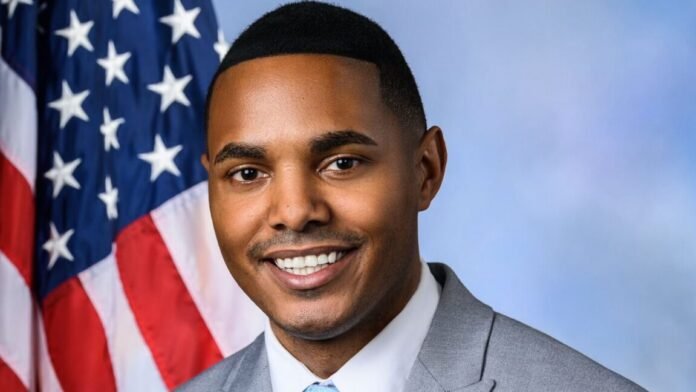
A new bill proposed by Rep. Ritchie Torres (D-NY) aims to establish new regulations that would ensure that “buying a video game would give the consumer ownership of the game rather than a license to play it,” including assurances that they can continue to access the games for years after they are released.

The announcement names NBA 2K25 as an example of the problem the bill aims to solve; that game launched on September 6, 2025, but is scheduled to become unplayable on December 31 due to server shutdowns. The bill, which is called the Power to Players Act, directs the FTC to take action to prevent outcomes like that in the future.

Torres published the following statement on the bill:

When you pay for a game, you should own it. Consumers must have the right to own, the right to play, and the right to transfer the games they buy. A game that can be taken away the moment a company pulls the plug is not a purchase. It is a rental disguised as a sale. Families in the Bronx and across the country save up to buy these games, and they deserve better than a license that can vanish at any time. The Power To The Players Act ensures consumers own what they buy and can keep playing long after a company moves on.

“I think there should be a simple rule: if you pay for it, you own it,” Torres told Kotaku. He called the new status quo the bill proposes a “restoration to the historical norm,” referencing how most games were experienced by players back in the ’90s.

A wider movement

The bill comes at a time when game ownership and preservation is a hot-button issue. Some consumers have been protesting Sony’s announcement that it plans to discontinue releases of PlayStation games on physical media.

In its most recent financial earnings report, Sony revealed that digital downloads account for 82 percent of full-game unit sales across PlayStation 4 and PlayStation 5 for the covered fiscal year, suggesting that less than 20 percent of games are still purchased in physical media form. But the argument is that continuing to offer physical discs is not just about satisfying a minority of players’ habits. Players hope it would aid with long-term preservation of games, which are sometimes delisted from digital marketplaces and then become inaccessible.

Physical discs don’t solve the problem on their own, though. Many games sold on discs still require online servers to function, and generally, the end-user license agreements make it clear that the user is purchasing a revocable license, not actual ownership of the media, even if the files are burned onto something physical.

There are also numerous examples of games where the version that shipped on the disc was meaningfully distinct from the version players ultimately know because of patches. So it makes sense that consumers and their representatives are turning to legislation like this to drive a change in industry practices.

There have been activist and lobbying movements, such as Stop Killing Games, that have been advocating for change on this front, but different proposed bills around the world have suggested different kinds of solutions.

Potential technical concerns ahead

Some prior proposed legislation on this issue has required developers to keep servers running indefinitely, leading to criticism that those bills’ authors don’t understand the cost. This bill appears to take those criticisms into account—but at least as worded in the press release on Ritchie Torres’ House of Representatives website, it could still face resistance.

While the announcement does not say the bill requires online servers to remain online, it requires normally online-only games to offer offline modes of play so players can keep playing long after servers might be shut down. The way some online games are engineered, that may not be feasible, so this could require developers to take very different approaches to some online games’ architecture.

This bill’s proposal does not guarantee it will become law; it still has a long path ahead, and most proposed legislation never even makes it to a vote. And since the full text of the bill is not yet publicly available, it’s not yet possible to assess its effectiveness or enforceability.

There is another elephant in the room: Large language models and specialized coding harnesses have recently enabled a wave of decompilations and reconfigurations of both classic and contemporary video games and software. These projects are almost certainly currently illegal, but the scale of the movement is such that enforcement may be difficult. It’s possible that these new tools will change the shape of the software preservation conversation in the coming months and years.

Is the US limiting Starlink in Ukraine? The consequences could be catastrophic

0
is-the-us-limiting-starlink-in-ukraine?-the-consequences-could-be-catastrophic
Is the US limiting Starlink in Ukraine? The consequences could be catastrophic

The drone has become the signature weapon of the Russo-Ukraine war. On any day in Ukraine, tens of thousands of drones are out hunting the battlefield for targets. These could be individual enemy soldiers or vehicles, or they could be larger targets such as depots, headquarters, bridges or power plants.

Yet, this drone war has been possible only because of a less obvious but equally vital technology. Elon Musk’s SpaceX Starlink system is a secure digital satellite communications network that Ukraine has become fully reliant on.

When Russia mounted its full-scale invasion of Ukraine in February 2022, Mykhailo Fedorov – then Ukraine’s vice prime minister and minister of digital transformation – urged Musk publicly to provide connectivity. Two days later, 500 Starlink terminals arrived in Ukraine. In February 2022, Musk granted the Ukrainian government and military the use of Starlink, initially for free. By July 2020, Starlink had provided 15,000 terminals.

The Ukrainians have fully admitted their dependence on Musk: “Without Starlink, we would have been losing the war already,” one platoon commander reportedly told the Wall Street Journal in 2022. Starlink allowed the government and the armed forces to communicate securely, at the heart of its vital system of C4ISR (the military term for command, control, communications, computers, intelligence, surveillance and reconnaissance).

Without Starlink, the defence of Ukraine would have been very difficult: perhaps impossible.

The cost to Starlink was considerable, though. Musk initally provided 2,000 terminals for free, 300 discounted and waived monthly services for about 5,500 more. Starlink’s total contribution to the Ukraine war effort in 2022 alone was US$80 million (£71 million). Musk provided a vital military capability gratis and eventually on a (discounted) contractual basis.

The strategic and commercial partnership between Starlink and Ukraine has been vital to the war effort for more than four years.

Crisis resolved

But Ukraine’s dependency on Starlink – or Starshield as the system’s military application is called – has not come without conditions. In September 2022, having repulsed the initial Russian attacks, the Ukrainian armed forces were planning their first assault on the port city of Sevastopol in Crimea, then the home of Russia’s Black Sea fleet. The plan was to sail remotely controlled boats, loaded with explosives to cripple the fleet.

It was a bold plan – the first attempt by the Ukrainian to attack territory which the Russians had held since 2014 and which they considered sovereign. And it was a controversial attack – the Russian ambassador to the US, Anatoly Antonov, had personally warned Musk that attacking Crimea would be a red line, which could lead to nuclear war.

Musk was concerned. He believed that this was potentially escalatory. He advised Fedorov: “Once Russia is fully mobilised, they will destroy all infrastructure throughout Ukraine.” He urged him to avoid a third world war: “Seek peace while you have the upper hand.”

Musk refused a Ukranian request to activate Starshield operations in the region, posting on X that: “If I had agreed to their request, then SpaceX would be explicitly complicit in a major act of war and conflict escalation.”

But following this crisis, relations between Musk and Ukraine’s leadership stabilised. Starshield has continued to play an indispensable role in Ukraine. It has been the digital communications spine of the Ukrainian armed forces and the enabler of all its operations in this war.

The aftermath of a Russian airstrike on Kyiv, 12 October 2026

A slowdown of Starlink services means Ukraine is unable to defend itself against Russia’s jet-powered drones. EPA/Sergey Dolzhenko

Indeed, when the Ukrainians informed him that in 2026 the Russians had acquired some Starlink terminals on the black market and were accessing the system to help them prosecute the war inside Ukraine, he identified the serial numbers of those terminals and disabled them.

Speed limit

Unfortunately, in the past week, Ukrainian armed forces have once again been exposed to the jeopardy of their dependence on Starlink. On the night of October 13-14, without any warning, SpaceX imposed a speed limit of about 160kmph on some Starlink services, meaning this is the maximum speed Ukrainian drones and missiles can travel and remain connected. Starshield terminals mounted on drones have been particularly badly affected. Ukraine’s 7th Rapid Reaction Corps was forced to cancel several missions.

Given the importance of drones to the Ukrainian war effort, the Starlink constraint is very serious. The speed limit has compromised Ukrainian drone fleets operating above the kill zone. It has also undermined Ukrainian air defence against intensifying Russian drone attacks on cities and infrastructure, as 160kmph is too slow for intercepts.

Since strategic bombardments against Ukrainian energy infrastructure have become Russia’s principal means of prosecuting this war and will only intensify into the winter, the Starlink embargo is deeply concerning. It may become critical if it continues.


Read more: ‘Sodcit’ – after battlefield setbacks, Russia returns to destroying Ukraine’s morale


Unlike September 2022, it appears that this is not a random individual decision by the Starlink boss. It seems to reflect troubling shifts in US policy on Ukraine.

On October 9, the US president, Donald Trump announced a deal with his Russian counterpart, Vladimir Putin, to lift sanctions on Russian diesel and allow it access to global markets. The plan was, he said, to reduce the price of fuel – although how effectively the relatively small amount of Russian diesel will do that is unclear. The high price of diesel is much more to do with the intractable war in Iran.


Read more: Donald Trump aligns with Vladimir Putin yet again, leaving Ukraine – and US relations with Europe – under pressure


The following day, Trump called for the removal of Ukrainian president, Volodymyr Zelensky: “Time for Ukraine to get a new president”, he told reporters. The day after that, the US president announced that an energy ceasefire was in immediate effect and that Russia and Ukraine would stop targeting each other’s energy infrastructure.

Ukraine has not used Starlink to hit Russia’s oil refineries. Starlink does not work in Russia and the Ukraine deep strikes rely on other communications systems. So Ukraine’s strategic bombardments remain technically unaffected by the Starlink embargo.

Musk has put the responsibility for the slowdown in Starshield squarely on the US government, posting on his X social media platform: “Starshield systems are owned and controlled by the US government. Any limits on speed or usage are decided by the US military and ultimately POTUS.”

In September 2022, Musk instituted a policy which contradicted US policy on Ukraine – he turned off Starlink against the wishes of the Biden administration. Now, so Musk says, in October 2026, it’s US government which is restricting Starlink. But the result is effectively the same: Ukraine is the victim.

This winter always looked as if it will be hard for Ukraine. It just got harder.

0FansLike
0FollowersFollow
0FollowersFollow
0SubscribersSubscribe
- Advertisement -
Google search engine

Recent Posts