13.5 C
London
Friday, October 16, 2026
Home Blog

Long After the Maui Fires, Toxic Metals Linger in Residents’ Bodies

0
long-after-the-maui-fires,-toxic-metals-linger-in-residents’-bodies
Long After the Maui Fires, Toxic Metals Linger in Residents’ Bodies


In August of 2023, a series of wildfires broke out across Maui, killing more than 100 people, destroying thousands of homes, and causing billions in damage. Noelani Ahia, who is Kanaka Maoli and co-founder of Maui Medic Healers Hui, helped mobilize nearly 600 volunteers in Lāhainā, including doctors, nurses, and therapists. 

Three years later, the housing and health crises remain acute. Maui Medic Healers Hui runs a free clinic, but Ahia wishes it had 10 more to address the community’s needs. “The fire may be out, but the catastrophe is not over by any stretch of the imagination,” she said. 

The devastation extended well beyond the lives lost and buildings destroyed. Research published last year by researchers with the University of Hawaiʻi at Mānoa’s Maui Wildfire Exposure Study, or MauiWES, found that more than 1 in 5 residents had reduced lung function.

Now, new research from the same project has found elevated levels of toxic metals in the island’s residents months after the fires, with higher exposure associated with impaired lung function. The findings offer further evidence that the health consequences of catastrophic wildfires can persist long after the flames are extinguished and the smoke clears.

“What we consider and sometimes look at as a one-time event isn’t really one-time anymore,” Alika Maunakea, who is Kanaka Maoli and co-director of MauiWES, told Grist. 

Researchers don’t yet know how much of the contamination came from the fires and how much was already present in the environment. That distinction matters as wildfires increasingly race through towns like Lāhainā and cities like Los Angeles, where burning homes, cars and infrastructure can leave contaminants that people encounter for months or years afterward.

“We have traditionally thought about wildfire exposure primarily through the lens of smoke,” Maunakea said in a press release. “But when an entire community burns, we are dealing with a much more complicated exposure environment.” Researchers must also understand what contaminants were already present, what the fire may have released, and what entered residents’ bodies, he said.

The research, which studied 1,400 adults across Maui six to 18 months after the fires, measured 24 metals in urine samples. It found that participants had higher concentrations of several metals than people in a nationwide health survey conducted before the fires. That included 2.2 times as much arsenic, 2.3 times as much barium, and 3.8 times as much manganese. Antimony, which is used in flame-retardant materials and has been previously linked to lung irritation, stomach pain, and other symptoms, was found at levels nearly 40 times higher.

Community members hold hands in a prayer circle at a ‘Lahaina Strong’ gathering on Oct. 6, 2023 in Lahaina, Hawaii.  Photo: Mario Tama/Getty Images via Grist

Because the researchers lack comparable data from before the fires, they could not determine how much of the metal exposure resulted from the disaster. Maunakea told Grist answering that question is the next step for the project, which has received a $3.6 million grant from the National Institute of Environmental Health Sciences. That work will include investigating whether and to what degree past agricultural and industrial activity contributed to the contamination.

“It’s important to realize that these are all part of settler colonialism,” Ahia said. “So what we’re looking at is confounding factors that are to the detriment of the health of our local people.”

Decades of plantation agriculture altered water systems, introduced herbicides, and displaced native plants, leaving a legacy on the islands that is still felt today. Disasters like fires and storms can compound those ongoing environmental problems. 

“If we begin the story when the fire starts, we miss the decisions that shaped the landscape and the community’s ability to respond,” said Katie Kamelamela, who is Kanaka Maoli and an assistant professor at Arizona State University based in Hawaiʻi. “Micro climate change acts on places already shaped by histories of land ownership, water diversion, development, and unequal access to resources.”

Kamelamela said true recovery must look beyond the fire. “I want recovery to be measured by whether people can remain in their communities, care for ʻāina, and pass on their knowledge and practices in place,” she said, using the Hawaiian word for land, which carries deeper meaning and relationship than property or mere place. “Rebuilding should not recreate the same conditions that left people at risk. Caring for ʻāina and caring for people need to be funded and planned together.”

Maunakea said the multitude of intersecting pressures is one reason why he wanted to pursue this research. As climate change continues to accelerate, long-standing issues facing Native Hawaiians like housing, the harms of tourism, and the legacy of plantations can amplify problems. “We worry that disasters like this that we experience on Maui, as well as the floods and other storms that we’re experiencing now, is just going to continue widening the gaps in health disparities that already exist in those populations,” he said.

Moving forward, the project will not just identify health risks but also help residents respond to them. Study participants receive their results, discuss them, and meet with health professionals. “People now know that there’s these types of potential hazards, and what to do about them is a big concern,” Maunakea said. “We still don’t have all the answers for sure, but we are taking the next steps to get a better picture and inform our community around it.”

Hot US inflation singes Asia as higher-for-longer Fed rates loom

0
hot-us-inflation-singes-asia-as-higher-for-longer-fed-rates-loom
Hot US inflation singes Asia as higher-for-longer Fed rates loom

TOKYO — An unwelcome blast of US inflation is blowing across Asia’s markets. September’s hotter-than-expected price data revived concerns that the Federal Reserve will keep rates higher for longer, threatening fresh pressure on currencies, capital flows and economic growth across the region.

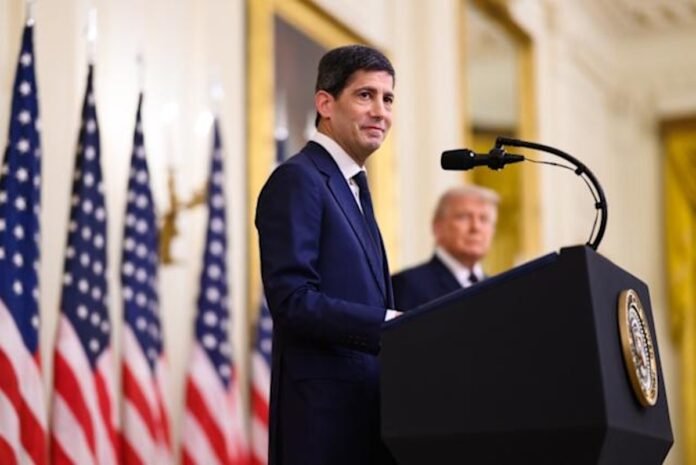
Last month’s 3.7% year-on-year increase in consumer prices didn’t just exceed forecasts. It ensured the Fed is on an even bigger collision course with both the bond market and US President Donald Trump’s White House. It’s arguably the last thing both Trump and US Federal Reserve Chairman Kevin Warsh wanted to see less than three weeks ahead of the mid-term elections.

Bad inflation news won’t help Trump’s Republican Party surprise pundits who predicted a “blue wave” for Democrats on November 3. Nor will it increase the odds that Warsh will get many nights of good sleep in the months ahead.

Warsh, after all, was hired by Trump to cut interest rates early and often. Since taking the helm in May, though, Warsh has realized the limits of a Fed chairman’s power to commandeer the thinking of a decision-making board staffed with smart people.

One policymaker standing in Warsh’s way is the man who led the Fed before him—Jerome Powell. Another — Fed Governor Lisa Cook — is a leading target of Trump’s Department of Justice. Warsh, in other words, would have his work cut out for him even if inflation wasn’t heating up in real time.

All this has Asia in a whirl. This region is on the front lines of Fed tightening cycles. It was a multi-year Fed tightening cycle that precipitated the 1997-1998 Asian financial crisis.

As the dollar surged, currency pegs in Indonesia, South Korea and Thailand became impossible to maintain. During that window, Long-Term Capital Management blew up and Russia defaulted on debt as rising US Treasury yields rocked the globe.

Years later, the Fed “taper tantrum” of 2013 shook the global system. The mere specter of the Fed draining liquidity sent US yields skyrocketing and markets everywhere into a panic. And now, the dollar’s runaway strength is upending Asia markets and fueling anxiety in capitals across the region.

The spike in 10-year Japanese government bond (JGB) yields earlier this year to 30-year highs set the stage for similar surges in the US, UK and Eurozone. Earlier this month, the 10-year US yield topped 5%, rising to the highest level since 2002, while the 30-year yield rose above 6%, the highest since 1998.

Markets are teeing off above-target inflation in virtually all major economies. And “until monetary tightening is delivered, bond markets will demand a premium for longer-term borrowing,” said Fred Neumann, chief Asia economist at HSBC.

In Bangkok this week, the International Monetary Fund spotlighted fast-growing debt levels – and how they’re a big vulnerability amid a war in the Middle East and AI-driven stock rallies running ahead of economic fundamentals.

For example, the IMF warns that a big drop in AI investment that slams asset prices could cut average global gross domestic product (GDP) growth 1.1% by 2028, including a 1.8% decline in US output.

“We now have an economy that is standing on one leg, the AI leg,” IMF Managing Director Kristalina Georgieva said in Bangkok. “What if it wobbles? What if there is disappointment and that leads to potentially a more difficult environment?”

The problem, the IMF argues, is “complacency” in safeguarding economies against a potential plunge in AI investment and stock valuations. “If there are questions about the monetization of AI, the equity investments will deplete in value, the debt may be difficult to service, and the revenue commitments in the future may not materialize,” said Jason Wu, a global markets analyst at the IMF.

In the first half of 2026 alone, global debt grew by more than $10 trillion to surpass $365 trillion, according to the Institute of International Finance. The problem is that these “high deficits” are now the “new normal,” said IIF economist Emre Tiftik.

Runaway deficit spending “has persisted despite relatively healthy labor market conditions,” Tiftik said. “Historically, fiscal deficits served as countercyclical tools, deployed during downturns to support activity. Today, large deficits have become entrenched across the economic cycle, signaling a structural shift in fiscal behavior.”

Tiftik added that “this convergence underscores the need for stronger debt management frameworks, in both mature and emerging markets. Average government borrowing costs across the G7 are now at their highest since mid-2008, while annual interest expenses are nearly 85% higher.”

Over the past year, Tiftik explained, advanced economies paid over $3.3 trillion in interest on internationally traded government bonds alone —more than estimated global spending on AI ($2.6 trillion), defense ($3.1 trillion), or clean energy ($2.3 trillion).

Not everyone thinks the IMF is right about debt worries. Gabriel Sterne, head of emerging market research at Oxford Economics, noted that “the median economy can stabilize debt by running a primary surplus of 0.1% of GDP, similar to 15 years ago.”

Sterne said that rather than fiscal-related tail risks, he thinks the grinding nature of relentless fiscal adjustment for a significant number of economies is the biggest issue. One quarter of nations have to run primary surpluses forever to stabilize debt. For corporates and consumers, that justifies long-term concerns about high tax burdens and weak public infrastructure.

The bottom line, “funding is available but expensive, further compressing room for fiscal maneuver,” Sterne added. “It’s a clear warning for Italy, Japan, South Africa, Mexico, and Colombia, which are in the long fiscal-grind category,” with debt-stabilizing primary balances above 1%. “Turkey, Spain, the UK, Belgium, France, Peru, and Canada also need to run primary surpluses indefinitely.”

The Fed’s tightening cycle is a complicating factor – and a fast-growing one. Last month, the Fed hiked rates for the first time since 2023. The quarter-point move pushed the Fed’s benchmark to between 3.75% and ‌4%. Policymakers are widely expected to move again by year-end, perhaps as soon as October 28. September’s worse-than-expected inflation data increase the odds.

In New York on Thursday, Fed Bank of Cleveland President Beth Hammack said more aggressive moves could be necessary as inflation expectations worsen. Hammack said: “What I worry about is, if you get this inflationary mindset, if you get these expectations that these price pressures become more and more persistent, it makes it much harder for monetary policy to do the work that we need to do, and we might need to move even more than if you don’t have an inflationary mindset set in.” She added that “I’m not feeling that there’s restraint coming from financial conditions at this point in time.”

On Friday, Warsh spoke at IMF-World Bank annual meetings in Bangkok, where he said he doesn’t “prejudge” interest-rate decisions, offering no preview of whether the US central bank will hike rates later this month. Warsh said: “We made very clear that we would deliver price stability.”

Yet the risk of Fed rates – and US yields – remaining higher for longer is a real one. That, along with investors growing skittish about AI, could pull the rug out from under the stock market. “AI-led equity weakness could further cap dollar upside by challenging the capital flows into US assets and wealth effects supporting resilient US growth,” said OCBC Group Research strategist Sim Moh Siong.

Trump’s chaotic war in Iran also has bond markets in a whirl as oil prices spike. While oil flows out of the Middle East are increasing, “it’s unclear if the increase is sustainable,” said Madison Cartwright, economist at Commonwealth Bank of Australia. “As long as the war is unresolved, risks of future disruption will persist.”

One thing is clear: Warsh’s arrival at Fed headquarters in May isn’t playing out the way Asia hoped. Since replacing Powell, Warsh has run notably more hawkish than Trump expected. He could still be looking for an opportunity to do Trump’s bidding and secure rate cuts. But with US inflation running close to 4% and the labor market holding up far better than expected, Warsh faces a complicated inheritance.

It’s a remarkable about-face — and it’s reshuffling Asia’s calculus at bewildering speed. Currencies across the region are on the brink, from the yen to the rupee to the rupiah, with the Philippine peso and Thai baht joining the rout.

The common thread is a runaway dollar that’s pressuring exchange rates almost everywhere, keeping governments from Tokyo to Jakarta on daily intervention watch. Iran war uncertainty is adding fuel, pushing the dollar higher and unleashing its wrecking-ball tendencies.

With US debt near $40 trillion, inflation elevated, and Trump’s tariffs, spending binges and Middle East war all in the mix, the dollar is rising anyway — defying gravity, outpacing gold and Bitcoin, even overpowering the AI trade.

That uncertainty has Tokyo engaged in a currency tug-of-war. The yen is near the psychologically charged 160 level — its weakest since July 2024. It sits just inches from 1986 lows.

All of this is tightening the vise on Prime Minister Sanae Takaichi. Since October 2025, her government has staked its economic strategy on three pillars: a weak yen, ultralow rates and fiscal loosening. That was a risky bet six months ago. With the world’s most powerful central bank now tilting hawkish, the foundation looks shakier than ever.

Jakarta is on the ropes. The rupiah is down 7% this year, moving even below the depths of the 1997-98 Asian financial crisis. President Prabowo Subianto’s government and Bank Indonesia are intervening frantically to stem capital flight from Southeast Asia’s largest economy.

The pressure coming from the US-Iran war is “materially impacting” Indonesia’s economy and external balance, said UOB Kay Hian analyst Suryaputra Wijaksana.

The political stakes couldn’t be higher, as index giant MSCI mulls whether to downgrade Jakarta stocks to “frontier” from “developing” status. The Fed’s hawkish pivot is compounding Indonesia’s pain.

India’s, too. A falling rupee is making crude oil and other critical imports — electronics, industrial inputs — significantly more expensive, boosting inflation and pushing foreign investors toward the exit. Dollar-denominated debt service is getting costlier by the day.

Nobody knows where the Warsh Fed lands six months from now — or how Trump, who’s top Fed officials or have them indicted, reacts if his chosen successor to Powell fails to deliver rate cuts. But the dollar surging amid a Fed tightening cycle wasn’t on Asia’s 2026 worry list. It is now.

Follow William Pesek on X at @WilliamPesek

The mafia isn’t keeping fentanyl out of Europe – the lack of demand is

0
the-mafia-isn’t-keeping-fentanyl-out-of-europe-–-the-lack-of-demand-is
The mafia isn’t keeping fentanyl out of Europe – the lack of demand is

Fentanyl and other synthetic opioids are still the single biggest driver of overdose deaths in the US. They were involved in around 38,000 of the roughly 70,000 deaths recorded in 2025, according to the Centers for Disease Control and Prevention.

Europe’s figures are of a different order. In 16 countries that reported data, fentanyl and its derivatives were linked to a total of around 210 drug-induced deaths in 2024, up from about 130 in 2023. Most of that rise may involve medicines rather than illicitly made fentanyl.

Other potent synthetic opioids, notably nitazenes, have driven recent peaks in deaths in several countries. In Italy, the government’s latest report on addiction counted only five fentanyl-related deaths in 2025.

This gap has prompted a striking explanation: that Italy’s mafias, wary of a drug that kills their customers and draws police attention, have chosen to keep fentanyl out.

It is a compelling story. But it does not fit what we know about drug markets or mafias. Europe’s comparatively low fentanyl numbers are better explained by something less cinematic: there is very little demand for it.

Crisis built on prescriptions

America’s fentanyl crisis was largely manufactured and a result of entrenched corruption. From the late 1990s, aggressively marketed prescription painkillers such as OxyContin were handed out widely, with their addictive potential played down. Millions of people developed opioid dependence through entirely legal channels.

When access was tightened in the 2010s, that dependence did not disappear. People turned to the illicit market: first heroin, then fentanyl, which is cheap to make, easy to smuggle and so potent that tiny amounts go a long way. Drug trafficking groups from Mexico that already supplied heroin to the US simply added a new product to their range.

Europe never had an equivalent prescription wave. Opioid painkillers are prescribed far more cautiously there, so there was no large population suddenly cut off from a legal supply and looking for a substitute.

Heroin, meanwhile, never went away. It is still Europe’s most commonly used illicit opioid, according to the EU Drugs Agency. Most of it has historically come from Afghanistan, entering Europe through the Balkans, and the market has proved resilient and stable.

Even as Afghan opium cultivation collapsed after the Taliban banned it in 2000, and then issued a second ban after returning to power in 2022, stockpiles and production elsewhere have kept supply flowing.

People who use heroin in Europe have established habits, networks and treatment services built around it. There is no obvious reason for them to switch to an unfamiliar drug, and no mass of new users being pushed towards one.

A member of the Carabinieri stands next to his motorbike.

A member of the Carabinieri, Italy’s national gendarmerie, stands guard in Naples in 2024. Anze Furlan / Shutterstock

The veto argument also rests on a picture of organised crime as one strategic group, able to weigh up a product and rule it out across a whole country. But that is not how Italian mafias work, and it is not how drug markets work.

Crime groups such as the ‘Ndrangheta are made up of families, clans and individuals who act on opportunity, shaped by local structures and contacts. They broker, invest and supply where there is money to be made.

Nobody inside one organisation can impose a marketwide ban, let alone across the different mafias and the many other organised crime groups active in Europe’s drug trade.

Nor are Italian mafias squeamish about dangerous drugs. Their central role in Europe’s cocaine trade is well documented, and has been a focus of my own research. But more crucially, their adaptation to changing markets is their distinguishing factor.

Two recent cases from Calabria, the ‘Ndrangheta’s home region, say more about where Italy’s drug economy is heading.

Police are uncovering more, and larger, cannabis plantations hidden in the region’s mountains. In early October, police found ten plantations with more than 4,500 plants in woodland around Caulonia, San Luca and Roghudi. The sites were reachable only on foot and fitted with drip irrigation and automatic timers.

Months earlier, in May, law enforcement found a clandestine cocaine refinery in the countryside of Sant’Agata del Bianco, with hydraulic presses and more than 500kg of cutting agents. The investigation points to a transnational network of South American and Italian traffickers, with its own chemist, rather than a ‘Ndrangheta operation.

Both cases point the same way. Italy’s drug economy is not a closed shop run by one or two organisations. Independent operators can set up there, process product locally and serve European demand.

The idea of a mafia that protects its customers hands criminal groups a reputation for order and restraint they have not earned. It also distracts from where the risks actually lie. Europe’s opioid market is becoming more complex and potent: new synthetic opioids such as nitazenes are already in circulation.

The answer to that is not to wait for a mafia decision. It is better drug monitoring, early-warning systems, drug-checking services and making naloxone, the opioid overdose antidote, easy to get hold of. Europe’s fentanyl story so far is a story about demand. Keeping it that way is a public health job, not a criminal one.

Starlink slowdown underscores Ukraine’s reliance on the US in the battle for the skies

0
starlink-slowdown-underscores-ukraine’s-reliance-on-the-us-in-the-battle-for-the-skies
Starlink slowdown underscores Ukraine’s reliance on the US in the battle for the skies

If Ukrainian President Volodymyr Zelenskyy needed a reminder that Ukraine’s war with Russia may well be decided in the skies by the nation with the most advanced weaponry, then it was delivered this week – seemingly by the United States.

On the night of Oct. 13-14, 2026, the guidance system Ukraine’s military uses to blunt Russia’s aerial attacks suddenly stopped working normally. The system, called Starshield, is funded by the U.S. government and run by Elon Musk’s low Earth orbit telecommunications company Starlink, part of SpaceX. Ukraine uses the system to counter strikes and to target Russian military forces and logistics in occupied Ukrainian territory. But new speed restrictions, imposed without notice remotely by code, contributed to multiple mission failures.

Zelenskyy described the move as a “big mistake.” Others, including Musk, pointed the finger at the U.S. government. Amid the blame game, the restrictions were just as suddenly removed: By Oct. 15, Starlink services had apparently been restored to full capacity.

As a scholar of geopolitics, I see the incident as a significant moment in a series of setbacks Ukraine has faced in recent months, as shifting military technologies and targeting alter the balance of power in the conflict. Technological dominance has been tilting toward Moscow of late, exposing Ukraine’s vulnerability to Russia’s relentlessly modernizing war machine. What was unexpected, though, was the power flex by computer code against Ukraine’s innovative defensive systems, apparently at the behest of the U.S. government.

A history of military innovation

The latest developments in Ukraine belong to a broader history of technological networks and geopolitics intersecting in ways that drive military innovation.

As far back as 1904, British geographer and politician Halford Mackinder observed that the new railway networks crossing Eurasia were changing the strategic geography of land power by reducing the time needed to move military forces across vast territories. His larger insight was that pioneering technological networks reconfigure how distance, mobility and military power relate to one another.

Mackinder’s land-power anxiety was compounded less than a decade later by the development of airpower. Bomb-delivering aircraft rendered countries vulnerable to attacks from above, fears made real during World War I.

This prompted the development of air defense and radar systems, which became ever more elaborate in the early Cold War. The development of hypersonic intercontinental missile technologies rendered these defenses obsolete, with the superpowers eventually accepting the dangerous condition of mutually assured destruction.

Fast-forward to today. Relatively cheap, unmanned aerial systems connected to low Earth orbit satellite networks have birthed a new frontier of difficult-to-defend-against innovations in aerial warfare.

And Russia’s war against Ukraine has dramatically accelerated this revolution. “Close the sky” was an early, unheeded plea from Zelenskyy to Ukraine’s allies to establish a no-fly zone over the country when Russia first invaded the country in February 2022.

Two men sit in the background with army boots seen in the foreground.

Relations between Presidents Volodymyr Zelenskyy and Donald Trump have deteriorated. Brendan Smialowski/AFP via Getty Images

But Ukraine did receive significant help from the U.S. in the form of satellite-based intelligence sharing. Starlink, which established its low Earth orbit internet service in May 2019, provided terminals and service to Ukraine for free after Russian strikes disrupted local internet networks.

But by late 2022, Starlink wanted payment for its services to Ukraine. The U.S. Department of Defense and the government of Poland stepped in to fund what later became distinct defense and civilian systems.

‘The battle for the sky’

A combination of networked technological systems and cheaper drones has transformed how the Russia-Ukraine war is fought. Where previously tanks and massed armed formations fought across relatively delineated front lines, now drones from either side battle in the sky.

These drones come in many different sizes and shapes. Some are low-altitude, short-range drones designed for a “kill zone” that ranges from 15 to 30 kilometers or more. Others are higher-altitude, midrange drones designed to attack behind enemy lines. Finally, there are far-range options designed to travel long distances to hit strategic targets, which have expanded from military sites to logistical hubs, warehouses and data centers.

The Ukraine war is now largely, as Zelenskyy declared this summer, a “battle for the sky.”

But that battle relies on a vast infrastructure that encompasses global supply chains running through China, funding systems that go through Washington, D.C., and Brussels, and drone assemblage factories traversing Russia and Ukraine.

There is also a vast telecommunications network that guides and controls drone systems. Parts of this are relatively localized radar towers and ground systems. But more are reliant on communication networks like Starlink, which presently comprises a constellation of 11,000 low Earth orbit satellites.

The capacity of remote pilots to steer mid- and long-range drones varies. Ukraine’s long-range drone attacks into Russia operate independently of Starlink. Most rely on internal terrain matching systems and automated target lock algorithms on their final approach.

Russia’s competitive advantage

In this battle for the sky, the pace of innovations is relentless. And since the summer, Russia has been gaining a relative advantage for two reasons. The first is Russia’s increasing production and use of ballistic missiles against Ukrainian cities, targeting energy systems, data centers, bridges and civilian apartment complexes.

Ukraine is mostly defenseless against the speed of these missiles because it lacks Patriot anti-missile systems. U.S. satellites usually provide alerts, but these too stopped a few days ago.

Secondly, Russia is increasing use of jet-powered Geran drones, based on Iranian designs, which are much faster than the previous generation and, consequently, more difficult to shoot down. Russia is also rapidly building out its own low Earth orbit system of communications called Rassvet.

A man sits in front of a bank of computer screens.

A Ukrainian soldier monitors the routes flown by Russian drones on April 1, 2026. Ivan Antypenko/Global Images Ukraine via Getty Images

More Ukrainians are dying as a result of these technological shifts. The logistical systems that keep Ukrainian front-line cities, which now includes Kyiv, functioning are being pushed to the brink.

As a result, the interference with Starshield and missile attack alerts came at a moment of intensified vulnerability and exposure for Ukrainians. In deference to a unilaterally declared “energy ceasefire” by Trump on Oct. 11, Kyiv did not attack Russian oil-refining facilities for three days. Russia, by contrast, continued its intense attacks on Ukrainian power systems. In the face of this imbalance, Zelenskyy vowed to restart Ukrainian attacks, come what may.

The implications beyond Ukraine

This latest power flex involving Starlink has wider implications, too.

SpaceX’s ongoing campaign to occupy low Earth orbit with 42,000 of its satellites is being facilitated by the Trump administration. But the power this concentrates in the hands of one corporation and person – SpaceX and Musk – has raised alarm bells.

Major countries and corporations are rushing to develop their own proprietary communications constellations. As a consequence, low Earth orbit is getting more crowded and geopolitically contested.

This latest incident underscores the potentially existential stakes for some countries of their reliance on private corporations for low Earth orbit telecommunications. No state, after all, wants its defensive systems to be at the mercy of unpredictable actors. The whole world is watching – and learning.

Israeli rabbi permits occupiers to steal Palestinian olive harvest in West Bank

0
israeli-rabbi-permits-occupiers-to-steal-palestinian-olive-harvest-in-west-bank
Israeli rabbi permits occupiers to steal Palestinian olive harvest in West Bank

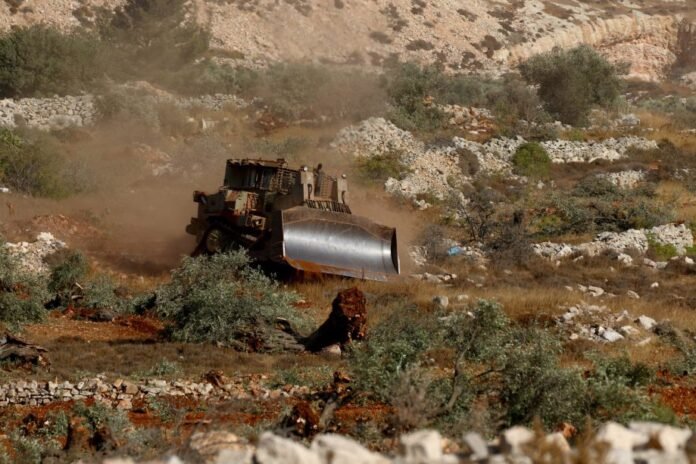
A prominent Israeli rabbi on Friday issued a religious ruling permitting Israeli occupiers to take olives from Palestinian land in the occupied West Bank, claiming that harvesting the crop “demonstrates Jewish ownership of the land,” Anadolu reports.

The ruling was issued by Rabbi Dov Lior, one of the most prominent religious authorities among Israeli occupiers in the West Bank, and was published by Israeli Channel 13.

It comes amid escalating occupier violence against Palestinians and their property, particularly farmers during the olive harvest season.

Lior claimed that Palestinians do not own their land, arguing that they had not purchased it from the “people of Israel” or from any Jewish person and describing the land as “stolen property.”

Citing Jewish religious law, he claimed that ownership of land cannot be transferred through theft and that Palestinian land therefore remains the property of the “people of Israel.”

He also argued that Palestinians planting olive trees on their land does not give them ownership rights over either the land or its produce.

READ: Bishop calls for international action after settlers attack West Bank centre for disabled children

Lior claimed Palestinians had already received sufficient compensation for planting the trees by consuming their fruit over previous years, and said both the land and harvest should return to what he called their “rightful owners.”

His ruling was not limited to land near illegal settlements, however, and also permitted occupiers to take olive crops from Palestinian areas farther away.

The ruling comes as attacks on Palestinian farmers during the West Bank olive harvest season have intensified, including assaults, preventing farmers from reaching their land, damaging trees and stealing crops.

Such attacks recur during the olive harvest, which peaks in October each year, while this month has seen an increase in attacks by occupiers against Palestinians and their property.

Palestinian, Israeli and international rights organizations have accused Israeli authorities of failing to stop occupier violence or hold perpetrators accountable despite attacks targeting Palestinians, their homes, farmland, vehicles and other property.

Israeli settlements built on occupied Palestinian land are considered illegal under international law, while Palestinians maintain their rights to their land and reject attempts to seize it.

READ: Israeli settlers pick olives from Palestinian-owned trees in West Bank

Meta may use sweeping new commercial TOS to avoid millions in AI licensing fees

0
meta-may-use-sweeping-new-commercial-tos-to-avoid-millions-in-ai-licensing-fees
Meta may use sweeping new commercial TOS to avoid millions in AI licensing fees

Legal experts are sounding alarms that Meta will soon update its commercial terms to require business accounts to allow Meta to train AI on their linked website content, not just their social media posts.

Kicking in on October 30, the TOS update won’t allow businesses to opt out, instead suggesting that businesses stop using Meta services if they won’t agree to let Meta bots freely crawl their linked content.

As Nieman Lab reported Thursday, this will affect all business accounts but is particularly shocking for news publishers who could perhaps charge Meta millions in licensing fees to continually access their articles for AI training. Currently news organizations are fighting a battle with OpenAI over whether such training without licensing is fair use, and Meta’s terms seemingly risk granting it sweeping permissions, no matter which way the court leans.

“While journalism isn’t the only industry that will be affected by this update, virtually every news organization has at least one Meta business account, including Nieman Lab,” the lab said.

Specifically, the updated terms say:

You authorize us (or any entity acting on our behalf) to use automated software (such as web scrapers, bots, robots, spiders, crawlers, and user agents) and create test credentials to access, index, cache, analyze, collect, retrieve, or crawl the domains, web pages, or URLs (and any content available through them) that are associated with your products or services, or that are made available through your or users’ use of Meta Company Products and services, and to periodically pull updates from such domains, web pages, or URLs. Meta may use any content from such domains, web pages, or URLs to provide, develop, improve, research, train, and maintain the integrity of, the Meta Company Products, services, and features provided under these Commercial Terms and any other applicable supplemental terms.

Notably, there is no mention of AI, but it’s inferred from a single use of the word “train” and references to automated scraping and crawling.

Meta’s spokesperson told Nieman Lab that Meta has no plans to use the terms as a legal basis to ignore robots.txt instructions that block scraping on news sites. The company still allows news organizations to opt out of scraping and provides instructions on how to block crawling. A spokesperson told Ars that “there is no change to how Meta uses web crawlers; any suggestion to the contrary is false.”

However, should courts affirm that AI training non-news articles is fair use, news organizations question if Meta’s stance might change, and the terms could be used to freely grab access to content by legally overriding robots.txt instructions.

Three legal experts told Nieman Lab that it’s not clear if a court would enforce the terms, but they could be “used to argue that Meta can scrape content from news sites and use that content to train the company’s AI products.” Particularly concerning, James Grimmelmann, a professor of digital and information law at Cornell Law School, told Nieman Lab that Meta could “train AI on any content from their sites” and possibly “deploy some of that content, even in competition with the publishers themselves” on Meta platforms.

Additionally, Meta just began charging users to post links on its platforms, Nieman Lab noted. So, the terms seem to give Meta a path to first charge publishers for sharing links, then use that cash-for-links program to seize permission to scrape those links to train AI. Matt Topic, a media and intellectual property attorney at Loevy & Loevy, told Nieman Lab that “this is a remarkable provision to bury in [the] terms of service, given that this would give Meta access to material that would likely cost many millions of dollars in a licensing market.”

What actually changed with TOS update?

Meta announced the update in a blog, where the company claimed it was simply “streamlining” its commercial terms. In a statement to Nieman Lab, a spokesperson said that “language around crawling was previously scattered across different terms of use, including terms about using generative AI in ads, and this update consolidates them in one place.”

“Content owners can still manage how their content is accessed by using robots.txt,” the spokesperson said.

However, Ars compared the current terms to updates, and what Meta calls “streamlining” seems to ignore that the new terms use fresh language and grant broader provisions.

In Meta’s current commercial terms, there are no mentions of “test credentials” that, experts warned Nieman Lab, could allow Meta to bypass paywalls and automate scraping. “Test credentials” also are not mentioned in Meta’s Product Catalog Terms or Ad Creative Generative AI Terms, which are the other policies that are being combined with the commercial terms. This is fresh language that Meta seemingly only introduced this month in Self-Service Ads Terms.

A Meta spokesperson did not immediately respond to Ars’ request to clarify.

Those self-service ad terms are for users who want to grant Meta permission to scrape their content in order to generate ads. This makes a policy of requiring “test credentials” to bypass paywalls perhaps seem less egregious when it’s tailored to a niche business purpose.

Legal experts told Nieman Lab that Meta’s purported “streamlining” seems more like the antitrust concept of “tying,” where businesses force a buyer to purchase a second product as a condition of buying another. They likened it to Google’s practice of requiring websites to opt in to scraping for AI Overviews if they wanted their websites to be indexed for general search.

Previously, the only mention of crawling or bots was in Meta’s Ad Creative Generative AI Terms, and like the new ad policy, that policy also served a limited purpose. They specify that businesses consent to scraping only in connection to ad content, not for improving all of Meta’s products:

We or any entity acting on our behalf may access, index, cache, analyze, or crawl (including through use of automated software) domains, webpages or URLs provided by you for your use in connection with your ads. If you provide URLs in connection with your Ad Content, you grant us and any entity acting on our behalf the right to access, index, cache, analyze, or crawl the domains, webpages, URLs and any content available through such URLs, and to periodically pull updates from such URLs, for your use in connection with your ads or for the purpose set forth in these Terms.

In Meta’s blog, the company insisted that “these changes reduce overlap between our agreements and improve the clarity of the terms that apply to your use of our products.”

Nieman Lab is now looking to talk to aggrieved news publishers about the terms to find out if the update might trigger a widespread scale-back of news organizations’ participation in Meta platforms. At least one Meta user—Stephen Beale, the founder and editor of The Steampunk Explorer—who depends on Facebook for traffic, is already considering quitting the platform over the update. He told Nieman Lab that he knows that his website has already been “scraped to death,” but the TOS update seemed like “such an arrogant, in-your-face move on” Meta’s part.

“It just makes me angry, and I don’t want them to get away with it,” Beale said.

Italy Air Traffic Disrupted, Ryanair Flights Delayed and Cancelled, Enav Rules Out Cyberattack

0
italy-air-traffic-disrupted,-ryanair-flights-delayed-and-cancelled,-enav-rules-out-cyberattack
Italy Air Traffic Disrupted, Ryanair Flights Delayed and Cancelled, Enav Rules Out Cyberattack


Air traffic across Italy was heavily disrupted Friday by a data-transmission network failure supporting air traffic control, delaying and cancelling flights, including services run by Ryanair, as a 24-hour strike by EasyJet staff added to the chaos.

Civil-aviation authority Enav said air traffic management capacity was down by about 50% because of anomalies in the network, which began overnight. It said that from 6 a.m., flow-regulation measures were introduced as air traffic increased and the problems persisted, temporarily reducing the number of aircraft that could be handled in Italian airspace.

Enav ruled out a cyberattack or sabotage. It said technical checks, still under way, traced the origin of the problem to the data-transmission network and that it was working to identify the causes and restore full operations.

Ryanair affected

Ryanair flights were among those caught up in the delays at several airports.

At Orio al Serio airport in Bergamo province, the carrier’s 6:50 a.m. flight to Trapani took off an hour and a half late. Another Ryanair flight, to Berlin, was delayed by one hour and 20 minutes.

At Lamezia Terme airport in Calabria, delays reached three to four hours. A Ryanair flight scheduled for 7 a.m. was still waiting to depart, as was an Ita flight to Milan Linate set for 6:35 a.m. A Ryanair flight from Turin due at 11 a.m. was canceled.

At Trieste Airport, a Ryanair flight and a Tirana connection were not affected for the time being.

EasyJet strike

Air-travel specialist RimborsoAlVolo said the technical problems were compounded by a 24-hour strike called by EasyJet staff. Guaranteed service windows, from 7 a.m. to 10 a.m. and from 6 p.m. to 9 p.m., require flights to operate during those hours.

Because the strike was called by airline personnel, passengers are entitled to cash compensation of 250 to 600 euros if a flight is canceled or if they reach their final destination three hours or more late, according to RimborsoAlVolo, citing a European Court of Justice ruling.

Passenger rights

Under European regulation 261/2004, passengers are entitled to refunds and assistance, even in exceptional circumstances, RimborsoAlVolo said. If a flight is delayed for a long period or canceled, the airline must provide meals and drinks, transfers and hotel accommodation if needed.

For flights canceled because of the technical problems, airlines must offer a choice of a ticket refund, with a return flight to the departure airport if the passenger has a connection; rebooking on another flight to the final destination as soon as possible; or rebooking on a later date.

Cash compensation does not apply to the technical failure, said Kathrin Cois, RimborsoAlVolo’s managing director. Because it is considered force majeure, the delay or cancellation is not the airline’s responsibility, she said.

Other airports

At Rome’s Fiumicino airport, four departing flights, to Milan Linate, Riyadh, Tirana and Trieste, were canceled at the time of writing, while about 20 others were delayed by 15 minutes to an hour. Airport operator ADR told passengers to check their flight status with their airline.

At Milan Malpensa, the departures board showed delays from 30 minutes to more than two hours. At Linate, arrivals were delayed by 20 minutes to an hour and departures by more than an hour. Flights at Calabria’s Reggio Calabria and Crotone airports were running normally.

Jio’s IPO seeks a tech multiple for old-school mobile business

0
jio’s-ipo-seeks-a-tech-multiple-for-old-school-mobile-business
Jio’s IPO seeks a tech multiple for old-school mobile business

India’s largest initial public offering (IPO) opens October 21, and investors in Tokyo, Singapore and Hong Kong are being asked a simple question: What is a Jio customer’s monthly bill worth?

Jio Platforms, the Reliance-owned mobile carrier with some 524 million India-based customers, is selling 270 million new shares at 1,065 to 1,119 rupees each to raise up to US$3.2 billion at a valuation of up to $108.3 billion.

The IPO’s marketing leans heavily on artificial intelligence, satellites and a so-called “digital ecosystem.” The prospectus tells a blunter story: The average Indian customer pays only 214 rupees (US$2.22) a month in tariffs, a rate ripe for hiking.

On September 1, 2016, Mukesh Ambani told Reliance shareholders that voice calls on Jio would be absolutely free and that “the era of paying for voice calls is ending,” local publication Mint recently recalled. A decade later, that monthly bill is still Jio’s top asset.

Jio earned 1.47 trillion rupees in revenue and 300.5 billion rupees in after-tax profit in the year ended March 2026, with an EBITDA margin of 51.9%, The Hindu reported from the IPO’s prospectus. Cash left after capital spending reached 420.7 billion rupees, up from 14.5 billion two years earlier, Moneycontrol reported.

By any financial measure, Jio is a mature, cash-generating machine. At a valuation of roughly 10 trillion rupees, the shares are priced at about 34 times profit. Rival Bharti Airtel is valued at about 11 trillion rupees and earns more per customer at 257 rupees per month. The two figures, however, aren’t strictly comparable.

So where would growth come from to justify Jio’s high 34x multiple? Not likely from new subscribers. Jio added 36.2 million customers in the year to March, reaching 524.4 million, Hindustan Times reported.

Investment bank Nomura, quoted by CNBC, says India’s era of “easy subscriber gains” in the mobile space is ending and tariff increases are likely to become “the primary driver of earnings growth.”

In other words, Jio IPO investors are being asked to pay now for price increases that haven’t yet been announced. The stakes are easy to calculate. A 10-rupee rise in monthly average revenue per unit (ARPU) across Jio’s 524.4 million customers would add about 63 billion rupees in annual revenue, roughly a fifth of last year’s profit. The company’s ballyhooed AI roadmap offers nothing comparable.

The IPO prospectus earmarks up to 275 billion rupees, about 91% of the 302 billion to be raised, to repay borrowings at the telecom unit. That is, the new capital would be used mostly to retire old debt rather than to finance new AI and satellite ambitions that carry the sales pitch to IPO investors.

The rest is scheduled to go to general corporate purposes, including capital spending. Sahi reported from the filing that Jio’s return on average capital employed slipped to 10.76% in fiscal 2026. On that measure, a company priced like a next-generation technology platform is earning only a utility’s return.

Significantly, no existing Jio investor is selling. Among them are Meta, Alphabet, Mubadala and Saudi Arabia’s Public Investment Fund, which together put $20.5 billion into about a third of the company in 2020, at valuations of $57 billion to $65 billion, according to Reuters.

At the top of the new range, their stakes are worth 1.7 to 1.9 times their entry valuations. The American technology giants and sovereign funds are holding, not selling, while new money is being asked to buy in at a price already below the $130 billion valuation floated a year ago, CNBC reported.

The public float is about 3% of the company’s value, based on the $3.2 billion to be raised, so a small slice of shares will conceivably set the price for the whole. Meanwhile, Jio’s revenue flows through a single channel.

Reliance Retail is the sole distributor of Jio’s prepaid services, and prepaid revenue through it made up 77.08% of consolidated revenue, The Hindu reported. Minority shareholders will own a company whose parent, Reliance Industries, controls its main sales channel.

The IPO filing is frank about what could blunt the tariff hike strategy. Jio warns that India’s data-protection and telecom rules may limit how it can monetize data. A company that can’t easily turn its audience into advertising revenue must convert it into higher bills.

Elon Musk, who called Jio “monopolistic” last week, has made satellite competition with it a live question. Indeed, geopolitics are raising the IPO’s risk. Jio is the largest operator in a market where Musk’s Starlink wants to enter, and Indian regulators, not the IPO’s order book, will ultimately decide the contest.

Currently, Jio carries 60% of India’s mobile data traffic. If Starlink wins approval to sell satellite broadband in India, regulators will have a competitor to point to, and may thus scrutinize Jio’s price increases more closely.

So the test for Asian investors is not whether Jio is a technology company. Rather, it depends on what the shares are worth if Jio’s next price rise is smaller or comes later than the market expects. At a valuation of 34 times earnings, there is little room for error or deflated expectations.

If ARPU rises toward 250 rupees per month without losing market share, the price will look modest. If not, the valuation must rest on Jio’s AI story, which has yet to earn a margin to match.

A decade ago, Jio said the era of paying for calls was ending. Its IPO now asks investors to bet that paying more for those same mobile services is the future.

Sidhhant Kapai is an Indian writer and journalist whose commentary on business, technology and democratic institutions appears in The Hindu, The Indian Express, The Central Chronicle, Navbharat, Bandra Buzz and Asia Times. A three-time gold award winner of the Queen’s Commonwealth Essay Competition and recognized by the Obama Foundation as one of India’s young emerging leaders, he founded the creative practice VAARYA Creative. He is an admitted scholar to Columbia University, where he is researching the gap between what institutions say and what their records show.

Israel Bars Airline Crews From Dozens of Countries After Flydubai Attack 

0
israel-bars-airline-crews-from-dozens-of-countries-after-flydubai-attack 
Israel Bars Airline Crews From Dozens of Countries After Flydubai Attack 


Israel has barred pilots and cabin crew members who hold citizenship or dual nationality from countries without official diplomatic relations with Israel from operating flights into or over its airspace, prompting several international airlines to revise crew assignments. 

The restrictions cover nationals and dual nationals of more than 30 countries without formal relations with Israel, including Pakistan, Iran, Oman, Saudi Arabia, Algeria and Tunisia. The rules apply to both flight deck personnel and cabin crew. 

The directive follows a September 30, 2026, incident in which an Omani co-pilot allegedly attacked an Indian captain and attempted to hijack a Flydubai flight traveling from Dubai to Tel Aviv. 

International carriers have adjusted their crew planning to comply with the restrictions, including Air France, US-based United Airlines and Czech carrier Smartwings. 

Air France has barred Pakistani pilots and cabin crew members from working on flights to and from Israel as Israeli authorities tighten enforcement of the rules. The restrictions apply to airline employees based on their nationality and also cover crew members who hold dual citizenship in the affected countries. 

Enforcement of the policy also resulted in an Ethiopian Airlines flight being ordered to return to Addis Ababa after Israeli authorities discovered that an Indonesian pilot was aboard the aircraft. 

Airlines operating services affected by the Israeli requirements have revised assignments to ensure that pilots and cabin crew from countries covered by the restrictions are not scheduled on those flights. 

Tesla turns to 50-year-old stunt technology as it tries to Roadster again

0
tesla-turns-to-50-year-old-stunt-technology-as-it-tries-to-roadster-again
Tesla turns to 50-year-old stunt technology as it tries to Roadster again

Nine years after first trying to resurrect the Roadster, Tesla is apparently trying again. CEO Elon Musk might have relocated its HQ to Texas, but yet again he has returned to California’s showbiz industry to hawk his wares; last time it was a Hollywood back lot for the remote-controlled Cybercab demo, last night it was decades-old stunt technology to make a show car do tricks in the air.

The new Roadster, we’re told, will be unlike anything else, although the angular, wedge-shaped styling owes more than a little to Marcello Gandini’s original Lotus Esprit—Musk is known to own a James Bond prop car—as well as the more recent Lamborghini Gallardo. At the rear are four giant exhaust pipes; these do not signal Tesla’s sudden embrace of hydrocarbons beyond those emitted by private aviation.

Rather, it’s where 100,000 psi jets of compressed nitrogen shoot out. It’s early in the morning and the Federal Motor Vehicle Safety Statutes are dense reading, so I am yet to find the section where it explains how and when it’s legal to use such a thing on the road.

The presence of exhaust pipes don’t signal that Tesla rolls coal… yet.

The presence of exhaust pipes don’t signal that Tesla rolls coal… yet. Credit: Tesla

Unusually, Tesla says it stuck with rear-wheel drive for the new electric vehicle. The battery pack uses the troubled 4680 cells it has been trying to scale up in-house; customer complaints of poor performance were presumably the driving force behind developing what the company says is a special battery chemistry just for this model.

Some of the performance claims are even more grandiose than nine years ago. Now, Musk claims a planned top speed of 383 mph (616 km/h), with a 0-60 mph time of 0.8 seconds. And as with the last time this happened, there are already other EVs on sale that are more capable than Tesla’s vaporware claims.

You want to drive upside down?

And right now, that’s the McMurtry Spéirling, which looks like a miniaturized Batmobile (the good Michael Keaton one) and which is capable of generating up to 3.5 lateral Gs. The best Tesla claims for the new Roadster is 2 Gs. Oh, and the Spéirling will most definitely drive upside down.

An EV you can buy that can drive upside down.

The Spéirling has also set a faster lap time around the Top Gear test track than an F1 car, blitzed the Goodwood Hill Climb record, and I’m pretty sure would demolish Volkswagen’s untouchable Pikes Peak time if it gave it a shot. McMurtry has sold at least 24 of the planned 100-car production run.

A McMurtry Spéirling

In 2022 McMurtry went faster up the Goodwood hill than anyone else, including an F1 car.

Crazy looks are rewriting performance.

Will any of this happen?

Musk claims that the Roadster will go into production by 2028. But the CEO has a long and glorious history of overpromising and underdelivering; in 2017 he told attendees at the previous launch that “We are making it now.” Using the company’s referral program, some people were in line to receive two free cars. But those free cars never showed up, and neither did the ones that people put down $50,000 deposits for: last year Sam Altman discovered how hard it can be to get that money back.

And it’s not like there’s actually much of a market for very expensive, very fast EVs: hypercar buyers want noise and an emotional connection, and they don’t get that from an EV.

Meanwhile, Tesla’s core business remains in trouble. Even in quarters where the company has decent sales, its profits are vanishing as costs rise and selling prices drop. And most recently, sales have not been decent.

Its stratospheric valuation was predicated in large part upon promises of constant growth, something that perhaps seemed possible when its marketshare was near total and there was little competition for EVs. But now Europe and China have hundreds of models to choose from—only two of which are offered by Tesla. The Models 3 and Y are both increasingly aged, and Tesla has shown little ability to innovate rapidly like the Chinese brands that have taken so much of its sales away there. In fact, it might even leave the Chinese market.

But as Musk has told us time and again, Tesla is no longer a car company. Currently, he seems more interested in merging Tesla with SpaceX, claiming synergies having to do with AI despite most of his AI-derived revenues coming from renting GPU time to others. But a merger would give SpaceX a backdoor into the S&P 500 index, which rejected the rocket company in June, as it requires several consecutive profitable quarters for inclusion. Should Musk succeed, he will have access to billions of dollars from passive investment funds that invest retirement accounts in the S&P 500. Apparently that could happen before the end of the year.

0FansLike
0FollowersFollow
0FollowersFollow
0SubscribersSubscribe
- Advertisement -
Google search engine

Recent Posts