20 C
London
Thursday, October 1, 2026
Home Blog

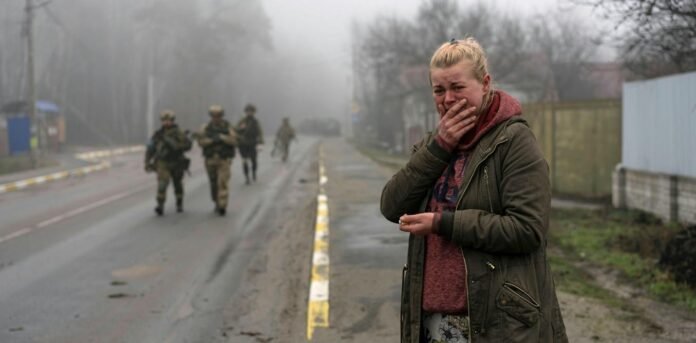
One in three Ukrainian civilians estimated to meet the criteria for PTSD or complex PTSD – new study

0
one-in-three-ukrainian-civilians-estimated-to-meet-the-criteria-for-ptsd-or-complex-ptsd-–-new-study
One in three Ukrainian civilians estimated to meet the criteria for PTSD or complex PTSD – new study

Resilience is a word frequently used to describe the way Ukrainian society has responded to the war with Russia. It’s a term that can inspire sympathy and mobilise support. But it also risks overshadowing effects of war that require both domestic and international attention to enable Ukraine to withstand Russia’s invasion and manage long-term recovery.

The protracted conflict that started with Russia’s annexation of Crimea in 2014, continued with the war in Donbas and escalated into Russia’s full-scale invasion in 2022 has recently reached a new level of intensity through concerted Russian attacks on civilian targets. As a result, the effects of war at the level of individuals, communities and society at large are becoming ever more apparent.

Trauma is an unavoidable effect of war. Measuring the psychological effects of trauma in countries following war and conflict can be difficult. Obtaining a reliable picture of the situation in Ukraine – where, after four and a half years, there is no end to the conflict in sight – has proved even more challenging.

The KonKoop Trauma Study, which has involved researchers from King’s College London, the Kyiv School of Economics, George Washington University, University of Manchester and the UK veteran mental health charity Combat Stress is, as far as we are aware, the first representative survey of the civilian population. This survey, implemented by the Kyiv International Institute of Sociology, now provides a baseline measure of post-traumatic stress disorder (PTSD) and complex PTSD in Ukraine.

Standard PTSD often stems from a single event (such as a car crash or – as in Ukraine – a single violent episode connected to the ongoing conflict). It’s characterised by symptoms such as intrusive memories, nightmares, avoidance of reminders of the trauma and feeling constantly on alert.

CPTSD, meanwhile, typically results from repeated or very severe (also referred to as complex) trauma, or both. It displays the same symptoms as PTSD, but also involves persistent difficulties with self-worth, emotional regulation and relationships.

In May 2024, we conducted a nationally representative survey of 2,504 adults living in government-controlled regions of Ukraine. Participants were randomly selected and interviewed by mobile phone allowing us to reach people from across the country, including displaced individuals. Mobile phone coverage in Ukraine stood at 96% in 2020.

This type of computer-assisted interviewing is the only means of direct survey access at this point and preferable to an online survey, but may have resulted in some selection bias (due to lack of access to those without phones or those in frontline combat roles) and possible underreporting of trauma exposure or post-traumatic symptoms, due to experiences of shame or stigma. The aim was not to systematically include military personnel.

We examined exposure to traumatic events across people’s lives, experiences directly related to the war, and symptoms of post-traumatic stress disorder (PTSD) and complex post-traumatic stress disorder (CPTSD) as defined in the World Health Organization’s ICD-11 diagnostic system.

Our findings reveal the extraordinary scale of trauma Ukrainian civilians have been exposed to. This study systematically includes pre-war trauma in the analysis, as trauma can build over time. More than three-quarters of respondents reported experiencing at least one traumatic event during adulthood, while almost half reported traumatic experiences during childhood.

Many participants described experiences that have become commonplace during wartime. These included shelling and destruction in their neighbourhoods, losing loved ones and having family members forced to leave their homes. Importantly, trauma exposure was already high before Russia’s full-scale invasion in 2022.

This reflects both the cumulative effects of a decade of war, as well as historical and intergenerational traumas that have shaped Ukrainian society. Our further research will try to explore how trauma inflicted during the war combines with and contrasts from pre-war trauma, something not yet clear from our work so far.

We estimated that 31.2% of adults met the criteria for either PTSD or CPTSD. Approximately one in four met the criteria for PTSD, while a smaller proportion, around 6%, met the criteria for CPTSD. Taken together, along with the fact that many Ukrainians will be suffering significant trauma-related symptoms that do not meet the threshold for these disorders, these figures suggest that trauma-related mental health difficulties represent a major public health challenge.

What the study discovered

Several factors were associated with a greater likelihood of developing PTSD or CPTSD. Women were more likely than men to meet diagnostic criteria. So were people who had been displaced by the war, those with lower educational attainment and those with a history of military service.

We also found a clear cumulative effect of trauma. The greater the number of traumatic experiences an individual had encountered in their lives, and the greater the number of harmful, unpleasant or frightening war-related incidents they had experienced, the higher their likelihood of meeting criteria for PTSD or CPTSD.

A woman pushing a bicycle and covering her eyes with her hand.

More than a decade of conflict, which intensified after Russia’s full-scale invasion of Ukraine in 2022, has taken a massive toll on the mental health of Ukrainians. Maxym Marusenko/NurPhoto SRL

Violence from other people and life-threatening experiences showed the strongest links with PTSD and CPTSD. This is consistent with a large body of international trauma research.

One of the most striking findings of the study was the relatively low prevalence of CPTSD compared with PTSD, given the duration of the conflict in Ukraine and the frequently complex nature of traumas experienced. Previous studies conducted in other conflict settings have suggested that CPTSD may be as common as, or even more common than, PTSD.

In our research, however, suspected cases of PTSD were substantially more prevalent. While the reasons for this remain uncertain, several explanations are possible. CPTSD is generally associated with prolonged, repeated and inescapable traumatic experiences, particularly those involving being abused, coerced or held captive.

Many Ukrainians have undoubtedly been exposed to such experiences over the past decade. But the pattern of exposure in the wider Ukrainian population may differ from that seen in groups such as internally or externally displaced populations, such as in Gaza, where research has found that CPTSD accounts for anywhere from one-third to a full half of all trauma diagnoses.

It is also possible that social support networks, community solidarity and strong national identity have helped protect against some of the more enduring disturbances in self-worth and relationships that characterise CPTSD.

What this means for Ukraine

Our findings raise questions about how trauma should be understood in the context of an active war. Most models of PTSD assume that the traumatic event occurred in the past. In Ukraine, however, the threat remains current. The common symptoms of hypervigilance, anxiety and heightened alertness may not simply represent pathological reactions to past events. They may also reflect realistic responses to present dangers.

This perspective aligns with emerging theories of “continuous traumatic stress”, which first emerged from apartheid-era South Africa and have been explored in recent research in Ukraine. This would suggest that traditional post-traumatic frameworks may not fully capture psychological responses in settings where exposure to threat is ongoing and there is no clear endpoint to the trauma.

The findings highlight the urgent need for mental health support in Ukraine, including from international health providers. While access to evidence-based trauma therapies remains important, the sheer scale of need means that specialist services alone are unlikely to be sufficient.

Community-based interventions, peer support networks and programmes that strengthen social connectedness may play an equally important role. As the war continues, understanding how people adapt, cope and respond psychologically to ongoing threat will be crucial in shaping both mental health policy and Ukraine’s longer-term recovery.

The psychological impacts of war reach beyond the individual to Ukrainian society as a whole. They are bound to shape the continuing war effort. But they will also affect long-term social cohesion, behaviour, trust – and, possibly, political attitudes among the Ukrainian people.

Israel continues attacks on southern Lebanon with airstrikes, home explosions, artillery fire

0
israel-continues-attacks-on-southern-lebanon-with-airstrikes,-home-explosions,-artillery-fire
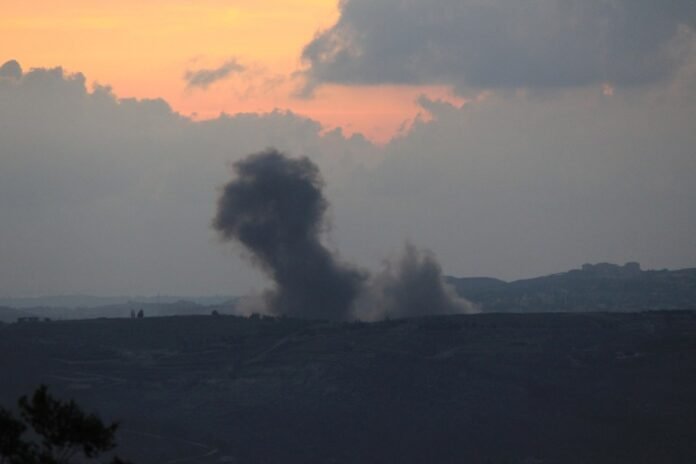
Israel continues attacks on southern Lebanon with airstrikes, home explosions, artillery fire

The Israeli army continued attacks Thursday in southern Lebanon, carrying out airstrikes, blowing up homes, firing artillery and conducting machine-gun sweeps, according to Lebanon’s official National News Agency (NNA), Anadolu reports.

The attacks targeted the towns of Al-Mansouri and Majdal Zoun in the Tyre district; Zawtar al-Sharqiyah and Nabatieh al-Fawqa in the Nabatieh district; Haddatha in the Bint Jbeil district; and the Zahrani area in Sidon district.

In the Tyre district, Israeli warplanes struck Al-Mansouri as Israeli forces carried out massive explosions in the town, according to the agency.

The blasts caused powerful tremors and were heard in the city of Tyre and surrounding villages, it said.

Israeli forces had earlier rigged several homes in Al-Mansouri with explosives before blowing them up, the agency added.

The Israeli army also carried out a large explosion in the town of Majdal Zoun in the district.

In the Nabatieh district, NNA said Israeli warplanes struck the outskirts of Zawtar al-Sharqiyah overnight and carried out another strike near the Scout City on the town’s outskirts.

The Ali al-Taher heights on the outskirts of Nabatieh al-Fawqa also came under intermittent Israeli artillery fire.

In the Bint Jbeil district, Israeli forces carried out machine-gun sweeps toward the town of Haddatha as Israeli military vehicles moved through the area.

An Israeli drone was also seen flying at low altitude above the Zahrani area in the Sidon district.

The agency did not report casualties from the Israeli attacks.

On June 26, Beirut and Tel Aviv signed a US-sponsored “framework formula” in Washington providing for a gradual Israeli withdrawal from Lebanese territory and the deployment of the Lebanese army in areas vacated by Israeli forces.

Despite the agreement, Israeli attacks on southern Lebanon have continued, while Israel still occupies areas in the south, some for decades and others seized during recent wars and military operations.

Since March 2, Israel’s offensive on Lebanon has killed at least 4,386 people, injured 12,413 and displaced more than 1 million, according to Lebanese authorities.

From suicide bombers to positions of authority – the changing role of women in jihadi groups

0

Khadra Essa, a Somali-born Dutch citizen operating in Syria under the name Umm Qaqa al-Somali, is a wanted woman.

On Sept. 14, 2026, the U.S. State Department again publicized its offer of up to US$5 million for information about her whereabouts, having first offered a reward in April 2025.

The notice describes Essa as the chief sharia instructor of Khatiba Nusaybah, or ISIS-NK, an all-female Islamic State combat battalion formed in Raqqa, Syria, in 2016 to recruit, organize and train female fighters.

The United States alleges she received formal training in weapons, explosives and suicide operations. The State Department notice claims Essa “taught ISIS extremist ideology that justified suicide operations and killing of civilians,” recruited members, made orders that resulted in assaults and murder, and “led a group that violently enforced sharia law against women.” There is a separate State Department notice for information leading to the location and return of two American children allegedly taken by Essa after the death of their mother – an Islamic State group recruit – in 2019.

A poster shows a women face and details of a financial reward.

The U.S. Department of State has offered a $5 million reward for Khadra Essa. U.S. Department of State

As a terrorism researcher who studies how militant groups organize and adapt, I’ve examined U.S. and European court records, sanctions and reward notices, as well as jihadi groups’ own Arabic-language publications, to trace how women’s roles inside armed movements have evolved.

For as long as modern terrorism has existed, women have been known to fight and carry out attacks. But I’ve observed a newer development whereby women’s organizational authority in jihadi groups has been increasingly formalized. Indeed, women are occupying defined roles in which they train, recruit, discipline or direct other members, or manage functions on which the organization depends.

Learning from secular groups

Two decades ago, the political scientist Brigitte Nacos surveyed how women in armed groups were understood. Women had long been leaders and chief ideologues in secular movements – such as in the Weather Underground in the United States, Italy’s Red Brigades, Germany’s Red Army Faction and the Basque separatist group ETA.

In jihadi movements, by contrast, women were rarely presented as people with formal authority over other members or organizational functions. Rather, such groups, exploiting the perception of women as less of a security threat, primarily saw women’s active role in offensive operations as that of a conveyor of bombs.

It was a tactic that had already taken hold in secular militant movements. The Syrian Social Nationalist Party used Sana’a Mehaidli in a suicide attack in Lebanon in 1985; in 1991, a female Liberation Tigers of Tamil Eelam operative known as Dhanu assassinated Indian Prime Minister Rajiv Gandhi; and the Kurdistan Workers’ Party began deploying female bombers in the 1990s.

By the early 2000s, Palestinian militant groups, including jihadists, were also using female suicide bombers. In January 2002, Wafa Idris died in Jerusalem while killing one man and wounding about 50 people. She is widely remembered as the first Palestinian woman to carry out a suicide bombing, although accounts indicate that the device may have detonated unexpectedly. Four more female suicide bombings followed within months of that attack.

The Palestinian militant group Hamas initially resisted using women in suicide attacks but relented in 2004.

Its spiritual leader, Ahmed Yassin, explained the change in tactical terms: “It could be that a man would not be able to reach the target, and that’s why they had to use a woman.”

Beyond the bomber

Within a few years, jihadi groups in Iraq, Jordan and Pakistan were also using female suicide bombers.

But it was the Nigerian-based Boko Haram that has scaled the practice beyond any precedent. Research by the Combating Terrorism Center identified 434 bombers across 238 suicide attacks between April 2011 and June 2017 – at least 56% of them women.

These cases largely placed women at the operational end of the process. Women carried the bomb or reached the target, but they were far less visible in positions that selected personnel, supplied doctrine, trained operatives or managed the organization itself.

That conservative position initially guided groups such as al-Qaida.

In December 2009, Umayma al-Zawahiri, wife of al-Qaida’s then deputy leader, published a “Letter to My Muslim Sisters.” It allowed women to fund operations, gather information and, in principle, carry out a suicide operation, while insisting their principal role was to raise fighters’ children, manage their homes and keep their secrets.

But jihadi propaganda began to stretch the language used for women.

In 2014, the Swahili-language magazine Al-Ghurabaa – aligned with al-Shabaab in Somalia – published an article titled “Mujahidah Leaders.” Translated and analyzed by Caleb Weiss, a researcher focused on jihadism in Africa, the magazine declared that “we sisters too have our own leaders.” It presented Aafia Siddiqui – a Pakistani neuroscientist convicted in 2010 of attempting to kill U.S. military and law enforcement personnel – and suspected mass murderer Samantha Lewthwaite as women to emulate.

A laptop shows a page with a woman's face on it.

An Interpol ‘Red Notice’ for the arrest of terrorism suspect Samantha Lewthwaite on Sept. 26, 2013. Oli Scarff/Getty Images

The rhetoric reflected a broader reality: Women in al-Shabaab had already served as recruiters, financiers, couriers and intelligence collectors, even if the movement rarely placed them in formal command positions.

Expanding women’s roles

The Islamic State group, meanwhile, was beginning to give some women a more concrete form of authority.

In February 2014 it announced the formation of the all-female al-Khansaa Brigade in Syria. The unit emerged partly from a practical security problem: Men disguised in women’s clothing had carried out attacks against Islamic State group commanders, creating a need for women who could search women at checkpoints. Its responsibilities expanded into intelligence gathering, law enforcement, recruitment and policing other women.

They could detain and punish other women, but their authority stopped there.

The brigade occupied an “authoritative position” while remaining unable to challenge Islamic State group policy.

That authority coexisted with a doctrine that still placed women primarily in the home. A 2015 ISIS manifesto permitted women to fight only in exceptional circumstances, principally when Muslim territory was under attack and there were not enough men to defend it.

As Islamic State group territory came under growing pressure, that justification widened. In December 2016 the group’s Arabic newsletter al-Naba published an article titled “I Will Die While Islam Is Glorious,” arguing that jihad was as necessary for a woman as for a man.

By July 2017 the group’s magazine Rumiyah was calling on women to rise “with courage and sacrifice in this war.”

The article turned to the 14th-century figure of Nusaybah bint Ka’ab for justification. Also known as Umm Umara, the companion of prophet Muhammad took up arms at the Battle of Uhud. Uhud was a defensive battle, making Nusayba a useful precedent for movements that otherwise restricted women’s participation in combat.

Becoming named authorities

The next development came with a different all-female unit. In late 2016 the Islamic State group approved the formation of Khatiba Nusaybah, a military battalion composed of female members.

Allison Fluke-Ekren, a former Kansas resident who had already organized an Islamic State group women’s center in Raqqa, became the battalion’s leader and organizer. She trained more than 100 women and girls in the use of automatic rifles, grenades and suicide belts, according to the U.S. Justice Department. After being apprehended in Syria, she was transferred to FBI custody in January 2022. She pleaded guilty that June and was sentenced in federal court in Virginia to 20 years in prison.

Whereas al-Khansaa had exercised coercive authority over other women as an enforcement and security unit, Khatiba Nusaybah was organized as a female military battalion. That distinction marked a further shift.

Women have also moved into specialized organizational functions beyond combat.

In January 2024 the Treasury Department designated Egyptian national Sarah Jamal Muhammad al-Sayyid for materially supporting the Islamic State group through her work with the Electronic Horizons Foundation, the group’s cybersecurity and operational security arm. Treasury says she recruited Islamic State members into the organization, procured web servers for its platforms and helped with logistical management and cryptocurrency support.

Devorah Margolin, a terrorism researcher who specializes in women and gender in violent extremism, has shown how such groups have expanded women’s roles to include financing and recruitment, often out of organizational necessity rather than principle.

Taken together, the Fluke-Ekren, Essa and al-Sayyid cases show women moving from auxiliary participation in jihadi groups into defined organizational functions carrying greater authority and responsibility.

The women who carry out violence have long been visible. Increasingly, so are the women who train recruits, enforce rules, supply doctrine and sustain the systems behind it.

Russia’s jet-powered drones mark a deadly evolution in Ukraine war

0
russia’s-jet-powered-drones-mark-a-deadly-evolution-in-ukraine-war
Russia’s jet-powered drones mark a deadly evolution in Ukraine war

The air war between Russia and Ukraine has evolved constantly since the start of the conflict. The latest example is Russia’s deployment of a new type of long-range, jet-powered drone, which is having a significant effect on Ukraine’s ability to defend its cities against aerial attack.

In an interview on September 14, Ukrainian Air Force spokesperson Colonel Yuriy Ihnat told the Financial Times that Ukraine was intercepting only about 60% of attacks by the new Geran-5 drone. This compares with the 95% interception rate Ukraine’s air defenses achieve against other drone variants.

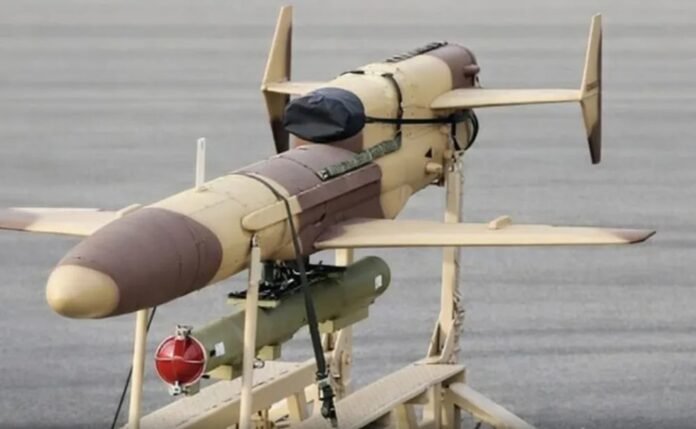
The Geran-5’s cylindrical fuselage and straight wings make its profile closer to that of a cruise missile than a conventional long-range drone. Russian sources indicate it has a range of up to 1,000 kilometers and a maximum operating altitude of around 6,000 meters, which is higher than earlier drones.

Geran-5 drones also travel faster than previous models, with an estimated top speed of approximately 600 kilometers per hour. And unlike earlier variants, these drones are fitted with anti-jamming capabilities. Together, this makes them particularly difficult for Ukraine’s ground-based air defenses to intercept.

Inhat said Ukraine has been forced into the “very intensive use” of its fighter jets since Russia began using the Geran-5 in August, with pilots shooting down these drones directly.

But the effectiveness of the Geran-5 extends beyond its speed and range. According to Yuri Knutov, a Russian military expert, these drones incorporate machine vision linked to a digital terrain map, which enables them to identify and select targets autonomously.

Youtube video

Russia has been using the jet-powered Geran-5 drone against Ukraine since August.

Ukraine air war

Immediately after Russia’s full-scale invasion in 2022, the air war over Ukraine followed expected lines, with both sides relying heavily on combat aircraft. These aircraft had two specific roles: to engage opposing aircraft directly and to strike targets in support of forces on the ground.

However, the situation soon changed. With air defense systems taking such a toll on aircraft from both sides, the air war over Ukraine became more stand-off in nature. More long-range tactics were employed instead.

From 2023, the Russians in particular came to make full use of the glide bomb. These bombs, fitted with stabilizing wings and navigation aids, could be launched around 70km away from their target, beyond the reach of most anti-aircraft defenses. They represented a less risky means of delivering ordnance to the battlefield.

However, drones swiftly became the dominant tool of air power. They have no crews to risk and, given their relative simplicity, can be produced at low cost in large numbers. Smaller drone variants have been used by both sides close to the frontlines, while larger, long-range drones have struck targets deeper inside Ukraine and Russia.

The issue with the earlier long-range drone variants was that they were relatively easy to shoot down. This is because, being propeller-driven, they are slow. For several years, the principal Russian long-range drones have been the propeller-driven Geran-1 and Geran-2 – upgraded Russian copies of the Iranian Shahed-136 drone.

Three drones fly through the night sky.
Drones have become the dominant tool of air power in the war between Russia and Ukraine. Naeblys / Shutterstock via The Conversation

The first jet-powered drone, the Geran-3, was deployed in 2025. It was significantly faster than the Geran-2, travelling at 330km/h compared with the Geran 2’s 185km/h. While it had a considerably shorter range of just 600km, against the Geran-2’s possible 2,500km, it could fly higher, reducing its vulnerability to air defences.

Later that year, the jet-powered Geran-4 appeared in the skies above Ukraine with an increased top speed of 500km/h and range of 850km. And in August 2026, the Geran-5, with its faster speed and even longer range, was first used operationally by Russian forces.

Ukraine’s military intelligence service has published details of the components identified in the Geran-5 drone, highlighting the extent to which its supply chain draws on foreign technologies. These include a Chinese-supplied jet engine, digital processors made in the US and transistors manufactured in Germany.

The component list suggests Russia has established resilient supply chains that enable it to circumvent Western sanctions and procure commercially available technologies from multiple countries before manufacturing the final system domestically.

Youtube video

Russia’s most recent drone models consist of many foreign-made components.

Russia is also able to mass-produce these new jet-powered drones. Ukrainian military intelligence reports that Russia is prioritizing Geran-4 and Geran-5 production in order to build up stocks ahead of an autumn and winter campaign against Ukraine.

This may prove devastating, as Ukraine is running low on its stock of Western-supplied Patriot ground-to-air and air-to-air missiles. These missiles are the only truly effective means of shooting down the Geran-5 drone.

Ukraine’s deputy head of military intelligence, Major General Vadym Skibitskyi, relayed these fears in August. He announced that Ukraine now needed new interceptor missiles “with the appropriate speed” to intercept the latest jet-powered Gerans.

Marina Miron is postdoctoral researcher, War Studies Department, King’s College London and Rod Thornton is senior lecturer in international studies, defense and security, King’s College London

This article is republished from The Conversation under a Creative Commons license. Read the original article.

Reddit is putting more limits on Old.Reddit.com

0
reddit-is-putting-more-limits-on-oldreddit.com
Reddit is putting more limits on Old.Reddit.com

Soon, Reddit won’t let people use Old.Reddit.com unless they have used the site while logged in within the previous six months.

In July, Reddit started requiring that users be logged in to access Old Reddit. This new requirement is an effort to reduce Reddit’s biggest source of scraping and automated traffic, the company says.

Today, the social media platform announced additional upcoming restrictions on Old Reddit. A Reddit post from an employee, known as “judy-funnie” on the platform, says that “in the next few months, we’ll further limit access for logged-in users to only those who have used Old Reddit in the last six months (which covers the vast majority of all Old Reddit users).”

There is an exception for moderators, who will still be able to view Old Reddit regardless of when they last used it, as long as they are logged in.

“This helps keep Old Reddit available for the people who rely on it while reducing automated abuse,” the post says.

Today’s post claimed that forcing users to log in to use Old Reddit “helped reduce scraping and automated abuse.” But further restrictions on the site, which many longtime Reddit users prefer over regular Reddit for its look, layout, homepage feed, and familiarity, have people concerned that Reddit will shutter Old Reddit one day.

I asked Reddit if it has plans to shut down Old Reddit, and spokesperson Rosa Kim told me via email:

As [Reddit CEO Steve Huffman previously] confirmed, Reddit is continuing to work on the future of Old Reddit. This change is about limiting unauthenticated access and reducing automated abuse—not removing Old Reddit for people and moderators who rely on it. We want to preserve Old Reddit for the real people that use it, not let it be a vector for automated abuse.

Reddit’s announcement noted that the current rules permit “any logged-in account to access Old Reddit, including accounts with no prior Old Reddit use.” I asked Kim why that’s a bad thing but didn’t receive a response.

In August, Kim told Ars that Reddit “will work directly with the mods, developers, and communities that depend on our systems and make sure to keep everyone updated” about any future changes to Old Reddit.

In 2025, Huffman said Old Reddit would remain “online as long as people are using it.” But in August, he changed his tune, saying in a post that “the reality is we’re getting to that time where we need to make some changes.” Those changes would “probably” include limiting access, migrating “important uses,” and rebuilding Old Reddit “on a modern tech stack,” per Huffman.

With the new restrictions for accessing Old Reddit, the site may see dwindling use, making it easier for the company to one day justify closing it or limiting access even further.

Reddit also limiting RSS feed support

Reddit will also stop supporting RSS feeds on November 13 “because RSS is now a common surface for large-scale scraping and automated abuse,” judy-funnie said. RSS feeds will still be available for moderators who use it for workflows “through supported alternatives,” Reddit’s employee said. They added:

For common mod alerts, we recommend Devvit apps like Discord Relay. If your mod team relies on RSS, review your setup and migrate workflows before November 13 to ensure your needs are uninterrupted. If you use RSS for feeds outside of a community you moderate, there is no replacement. RSS has been a beloved part of the open web for a long time, and we’re grateful to everyone who used it to stay connected to Reddit.

Advance Publications, which owns Ars Technica parent Condé Nast, is the largest shareholder in Reddit.

Eurozone inflation heats up faster than expected

0
eurozone-inflation-heats-up-faster-than-expected
Eurozone inflation heats up faster than expected


A faster-than-expected inflation jump across the eurozone’s biggest economies raises the odds that the European Central Bank will hike interest rates again this year to bring price growth down to target.

The move would add to economic headwinds and sovereign borrowing costs at a time when governments are already grappling with the highest yields since the 2012 sovereign debt crisis.

Wednesday’s preliminary data showed inflation in Germany jumped to 3.3% in September, from 2.9% in August. In France, inflation jumped to 3.4% from 2.6%, and in Italy to 4.1% from 3.2 percent. Spain reported inflation of 5% on Tuesday, up from 4.6%.

The numbers all came in above forecasts and hit multi-year highs.

The increases were driven in large part by energy prices as the Middle East conflict continues to disrupt oil and gas markets. The ECB has raised rates twice this year, bringing its deposit rate to 2.5% in September.

The next step is considered more challenging as it could push rates from the upper end of neutral into restrictive territory, where they begin to slow economic activity.

Higher rates are also lifting government borrowing costs. Sovereign yields have reached their highest levels since the 2012 debt crisis, adding pressure to public finances.

France has seen the steepest increase in its borrowing cost among eurozone member states as investors demand an additional premium for holding its debt, given massive fiscal and political uncertainty in the run-up to French presidential elections.

The level could still rise should investors be disappointed by the hotly awaited budget announcement in Paris on Thursday.

Eurostat will release inflation numbers for the 21-nation euro zone as a whole on Friday.

Presley Gerber’s Haunting Final Hours Caught on Video

0
presley-gerber’s-haunting-final-hours-caught-on-video
Presley Gerber’s Haunting Final Hours Caught on Video


A disturbing new video is shedding light on Presley Gerber’s final hours before the 27-year-old model was found dead at a Santa Monica sober living facility.

Gerber, the son of supermodel Cindy Crawford and businessman Rande Gerber, recorded himself walking through Resolutions Living late Saturday night, just hours before paramedics pronounced him dead on the morning of Sept. 20.

The footage, obtained by TMZ, reportedly was recorded around 10 p.m. and shows Gerber moving through a bedroom and other areas of the residence while apparently alone.

TMZ described Gerber as appearing impaired in the recording, although exactly what substances may have been in his system has not been established. His official cause and manner of death remain undetermined while the Los Angeles County Medical Examiner awaits additional testing. TMZ

According to sources cited by TMZ, Gerber had allegedly used drugs earlier that Saturday and became worried that he was losing control.

His sober coach then reportedly contacted Resolutions Living and told an admissions employee that Gerber was already under the influence before asking whether the facility would accept him.

The employee allegedly agreed.

TMZ reported that Gerber arrived at the Santa Monica residence shortly after 6 p.m., with sources claiming the plan was for him to remain there temporarily until he could enter a more intensive rehabilitation program the following Monday. TMZ

That next step never happened.

Gerber was found unresponsive the following morning. Paramedics pronounced him dead at 9:45 a.m., according to the Los Angeles County Medical Examiner.

Santa Monica police have said they are investigating the death as a suspected overdose and reported no signs of foul play. Authorities have not publicly identified the substance involved, and toxicology findings could take months. Los Angeles County Medical Examiner

The distinction is important because reports describing Gerber’s death as an overdose remain preliminary. The medical examiner has officially deferred both the cause and manner of death pending additional testing.

Questions are now mounting over how Gerber came to be at the sober living residence in the first place.

Sources told TMZ that he allegedly continued using drugs after arriving at the property. The outlet also reported that the admissions employee who accepted him was later fired, although the facility has not publicly provided a detailed account disputing or confirming all of the allegations surrounding Gerber’s stay. TMZ

The case has also drawn attention to the difference between a sober living home and a medically supervised detox or residential treatment center.

TMZ reported that Resolutions Living was not licensed by California as a medical treatment facility. That does not necessarily mean it was operating illegally because sober living residences can fall under different regulatory rules depending on the services they provide. However, treatment professionals interviewed by the outlet questioned whether a sober home would be an appropriate setting for someone who was actively intoxicated and potentially at risk of withdrawal or overdose. AOL.com

Gerber had been unusually open about his struggles before his death.

The model had publicly discussed addiction, depression and his efforts to get sober, at times using his own experiences to encourage others to speak more openly about mental health and substance use.

Gerber began modeling as a teenager and worked with major fashion brands after following his famous mother into the industry. He also appeared alongside Crawford and his younger sister, Kaia Gerber, in high-profile campaigns during his career. AP News

His relationship with Kaia appears to have remained especially close.

Just four days before Presley died, Kaia spoke publicly about the small ways her brother supported her acting career, including watching her television work and sending her messages about what he had seen.

After his death, a representative for Cindy Crawford, Rande Gerber and Kaia asked that the family be given privacy during what they described as an extremely painful period. People.com

Friends have reportedly surrounded the Gerber family in the days since, while Kaia has largely stepped away from the spotlight as the family grieves.

For now, the newly released video provides only a glimpse into Presley’s final night rather than a definitive explanation of what happened.

Investigators still must determine what was in his system, whether any substances directly caused his death and the circumstances surrounding how he obtained them.

The Los Angeles County Medical Examiner cautioned that a final determination could take several months.

Until those results are completed, Gerber’s death remains officially under investigation. Los Angeles County Medical Examiner

Afghanistan’s TTP sanctuary is becoming harder to deny

0
afghanistan’s-ttp-sanctuary-is-becoming-harder-to-deny
Afghanistan’s TTP sanctuary is becoming harder to deny

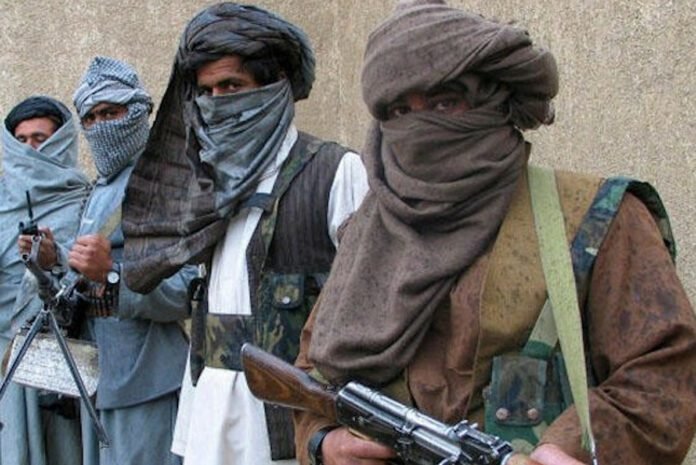
For years, Pakistan’s claim that the Tehreek-e-Taliban Pakistan operates from sanctuaries inside Afghanistan produced a familiar exchange: Islamabad accused, Kabul denied, and each new militant attack triggered another round of recrimination.

That pattern is becoming harder to sustain. The sanctuary dispute can now be tested against a growing body of evidence rather than competing claims from Islamabad and Kabul.

United Nations monitoring reports have documented thousands of TTP fighters inside Afghanistan, along with leadership presence, training infrastructure and support networks.

Pakistani authorities have also released records identifying Afghan nationals allegedly killed while participating in militant activity inside Pakistan. Separate UN reporting has raised concerns about weapons transfers and the TTP’s access to advanced military equipment.

None of these strands, taken alone, proves that every part of the Afghan Taliban establishment is directing TTP operations. Taken together, however, they give Pakistan’s case a level of external corroboration it previously lacked.

A December 2025 report by the UN Security Council’s Analytical Support and Sanctions Monitoring Team estimated that the TTP maintained around 6,000 fighters in Afghanistan, particularly in Khost, Kunar, Nangarhar, Paktika and Paktia provinces.

Earlier UN reporting put the number at roughly 6,000 to 6,500 and cited information about training camps involving TTP, Taliban and al-Qaeda personnel. Those findings matter because the sanctuary dispute is no longer being documented only through Pakistani intelligence assessments.

Names behind the numbers

Pakistan has also put names and places behind its broader claims. A security dossier identifies alleged militants by name and alias, along with their Afghan home districts and the locations in Pakistan where they were reportedly killed.

Among those named is Dr Obaidullah Saeed Badri, from Shahi Qala village in Logar, reportedly killed in Kurram. Noor Rahman alias Sarhadi, from Narkh district in Wardak, is listed as having been killed in Bajaur, while Ahmad Mukhlis, from Hisarak district in Nangarhar, is also recorded as killed there.

The dossier also includes alleged suicide attackers. Ehsanullah alias Khaksar, from Kandahar’s Zhari district, is listed in connection with an attack in Bannu. Janullah alias Zahid Ayyubi, from Nangarhar, is linked in the dossier to the Cadet College Wana attack, while Qari Osman alias Zubair, from Achin district in Nangarhar, is listed in connection with the G-11 Islamabad suicide bombing.

Pakistani authorities say they have identified 260 Afghan nationals allegedly involved in militant activity who were killed in Pakistan. These files should not be treated as independent proof of every individual’s militant affiliation or of the exact circumstances of each death.

Rather, their value lies elsewhere. They provide a testable set of identities and locations that can be compared against independent reporting, family records, funeral notices, militant publications and international monitoring. That makes them potentially more useful than another aggregate casualty figure.

A weapons trail accompanies the human trail. UN reporting has cited member-state information on the TTP’s access to advanced military equipment, including M4 carbines, M24 sniper rifles and M16A4 rifles fitted with advanced optics and night-vision capability.

To be sure, the presence of US-origin weapons in militant hands does not automatically prove an intentional Taliban transfer. Large quantities of military equipment remained in Afghanistan after the collapse of the former government in 2021 and have since moved through illicit markets, battlefield capture and other channels.

But UN reporting has gone beyond simply recording American-made weapons in circulation. It has also cited information about individuals allegedly linked to Taliban networks facilitating transfers to the TTP and about financial assistance reaching TTP leadership.

That strengthens the argument that Pakistan’s concern is not only about militants physically crossing the frontier. It is also about the wider ecosystem that sustains them.

Hard questions for Kabul

The most consequential question is not whether every Taliban institution directly supports the TTP. It is whether the Taliban authorities are unable or unwilling to dismantle the networks operating from territory they control.

The Afghan Taliban and TTP remain separate organizations. Their command structures, immediate objectives and internal dynamics are not identical. But their relationships are longstanding, shaped by ideological affinity, personal ties and years of battlefield cooperation.

Taliban authorities have also demonstrated a willingness to use force against Islamic State-Khorasan (ISIS-K). The comparison is imperfect, but it raises a legitimate question: why has the TTP not faced a similar armed response?

That question has become more urgent as the sanctuary dispute has moved from diplomacy into military confrontation.

On October 1, Pakistan carried out another round of strikes inside Afghanistan. Islamabad said the operation destroyed militant hideouts and killed 22 militants. Taliban authorities said nine people, including women and children, were killed. Reuters said it could not independently verify either account.

The competing casualty claims illustrate the danger of leaving the underlying dispute unresolved. Civilian harm and the legality of cross-border force deserve separate scrutiny. Yet neither issue answers the basic question of why militant networks documented by international monitors continue to operate from Afghanistan.

Pakistan also faces limits. Airstrikes cannot substitute for intelligence cooperation, border management and political engagement. Geography and decades of cross-border social ties make a purely military solution unrealistic.

But blanket denial from Kabul is becoming equally difficult to sustain. Every major attack attributed to Afghan-based militants increases pressure on Islamabad to respond across the border. Every Pakistani strike, in turn, deepens Afghan hostility and further reduces the prospects for counterterrorism cooperation.

The sanctuary dispute is therefore no longer just a contest between Pakistani accusations and Taliban denials. UN assessments, named Afghan cases and weapons reporting increasingly point to an enduring TTP infrastructure inside Afghanistan, even if the extent of direct Taliban sponsorship remains contested.

The harder question is now whether Kabul lacks the capacity to dismantle that infrastructure or the political will to do so.

Saima Afzal is a researcher specializing in South Asian security, counterterrorism and broader geopolitical dynamics across the Middle East, Afghanistan and the Indo-Pacific. She is currently a Research Scholar at Justus Liebig University, Germany.

NASA squeezed Treasury, vibe coded, and broke the mold in bid to save Swift

0
nasa-squeezed-treasury,-vibe-coded,-and-broke-the-mold-in-bid-to-save-swift
NASA squeezed Treasury, vibe coded, and broke the mold in bid to save Swift

An attempt to save NASA’s $500 million Neil Gehrels Swift Observatory from dropping out of orbit fell short, but the behind-the-scenes machinations required just to make a rescue possible deserve recognition, government and commercial space officials said in a recounting of the mission.

The rescue mission was developed by Katalyst Space Technologies, working under a $30 million contract awarded by NASA last September. NASA gave Katalyst nine months to build and launch a satellite to capture Swift flying some 200 miles above the Earth and boost it into a higher orbit.

Katalyst’s rescue spacecraft, known as Link, successfully launched July 3 and completed some of its initial checkouts before a malfunction caused it to spin out of control a few weeks later. NASA announced in August that Link would not be able to reach Swift as intended, and the rescue mission was aborted.

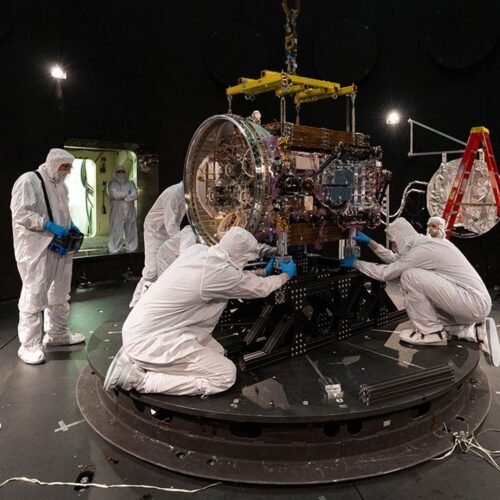
Still, designing and building a satellite, finding a rocket to launch it, and getting it to work in the harsh environment of space was a remarkable achievement. It would usually take several years to design, build, and test a satellite of Link’s size and complexity from scratch. Link weighed nearly a half-ton at launch, with electric thrusters, robotic arms, and large deployable solar arrays.

In the end, though, the Link satellite did not reach the Swift Observatory. The failure was bad news for scientists who rely on data from Swift, which has unique capabilities combining sensitivity to gamma rays, X-rays, and visible light with the agility to quickly turn toward astronomical targets. This has made Swift the go-to observatory for detecting gamma-ray bursts, the most powerful explosions in the Universe.

But Swift was going to fall out of orbit anyway. The spacecraft launched in 2004 and has far outlived its original design life. Swift does not have its own propulsion system, so it is unable to raise its orbit without help, leaving its fate at the mercy of aerodynamic drag in low-Earth orbit. Increased solar activity in recent years led to an increase in drag at Swift’s altitude, hastening its demise.

Racing against the clock

NASA and Katalyst officials are reviewing lessons learned from the mission to better prepare for the next time they need to rapidly call up a satellite rescue mission. First and foremost: Don’t wait until the last minute, said Shawn Domagal-Goldman, director of NASA’s astrophysics division, in a meeting last week of the National Academies’ Committee on Astronomy and Astrophysics.

“The way that the timeline worked out, we didn’t have the ability to open up the doors fully to proposed solutions. We went with the teams we had on [contract] already. That is not a regret of the team we ended up with. It’s just I think I prefer the more open solutions.”

NASA commissioned 30-day studies from three teams—Katalyst, Starfish Space, and a joint proposal from Cambrian Works and Astroscale—in August 2025 to show how they planned to rescue Swift from destruction. The teams eligible for the studies were limited to partners NASA already had on contract for technology development. Under federal acquisition rules, it would have taken months or longer to start a brand new procurement and bring on a new provider.

The studies led to NASA’s selection in September 2025 of Katalyst to try to rescue Swift. Officials knew the odds were stacked against them.

Katalyst quickly put out orders to suppliers for all the parts required to assemble the Link spacecraft. In some cases, Katalyst found its suppliers couldn’t deliver in time, so it decided to build parts itself. Engineers also had to decide what to test on the spacecraft before handing it over to the launch provider, Northrop Grumman.

NASA’s strategy was to tell Katalyst what to do, but not how to do it.

“On paper, it was five requirements,” said Kieran Wilson, principal investigator for the Link mission at Katalyst. “In practice, it boiled down to do no harm and boost Swift. It was not specified how that was going to happen. That allowed us, in turn, to put engineering judgment ahead of exhaustive process, which allowed us to move much more quickly.”

The Link spacecraft attached to Northrop Grumman’s Pegasus XL launch vehicle.

The Link spacecraft attached to Northrop Grumman’s Pegasus XL launch vehicle. Credit: NASA/Ron Beard

Working inside a factory near Denver, Katalyst completed the Link spacecraft design at the end of last year and had the satellite ready for final prelaunch testing in April.

“We didn’t have a systems engineering organization,” Wilson said. “We didn’t have the traditional structure that you would see for most places that are trying to do something like this—a very complicated mission.”

The successful launch in July was followed by several weeks of in-orbit checkouts. Remarkably, it looked like the Swift rescue mission might actually succeed in reaching its objective, but a series of malfunctions in late July left the spacecraft spinning.

It’s always a valve

“We experienced a failure of a reaction wheel switch on our power system,” Wilson said. “This was something that we developed in-house. The reaction wheels themselves were from Rocket Lab, which is third party. They’re great. We would fly them again, absolutely. But it was the control electronics for those, particularly the regenerative braking circuit. That experienced a fault, and the transistor on that essentially shorted, and that caused it to overheat and render that circuit inoperable.

The spacecraft used cold-gas Reaction Control System (RCS) thrusters in combination with reaction wheels to control the spacecraft’s pointing.

“We implemented a bunch of software changes on the spacecraft and operational changes in order to mitigate the cause of that issue, which was kind of breaking too hard, too fast, too often, and that worked for a few weeks, and then we ended up having a series of events that started with an unresponsive RCS valve, causing the spacecraft to spin up,” Wilson said.

Those events prevented Link from rendezvousing with Swift and completing the reboost, and Katalyst had to forego its final incentive payment from NASA.

This image of NASA’s Swift observatory was captured at a distance of 12 to 15 kilometers by Katalyst’s Link satellite.

This image of NASA’s Swift observatory was captured at a distance of 12 to 15 kilometers by Katalyst’s Link satellite. Credit: Katalyst Space Technologies

Some of the Link spacecraft’s most complicated elements, like its robotic arms and plasma thrusters, worked as expected. For a time, ground teams at Katalyst thought they might be able to use the plasma thrusters to regain control of Link’s pointing as it zipped around the Earth at nearly 5 miles per second.

“We were able to do some pretty significant orbital maneuvers,” Wilson said. “We did do a whole bunch of interesting things from the GNC (Guidance, Navigation, and Control) side in order to try to keep going even after we had lost two wheels, and those are what enabled us to get within about 10 kilometers [of Swift].”

A little more development time would have given Katalyst a better chance of finding the faulty circuit and valve before launch. Engineers made “gut-wrenching” decisions in the months leading up to launch on which tests to perform and what tests they simply did not have time to do, Domagal-Goldman said.

Wilson acknowledged shortcomings on Katalyst’s side, too, such as “overly light” staffing on the company’s power systems team. The satellite industry supply chain couldn’t deliver critical components for Link’s electrical system, like power conversion and distribution units, on schedule to meet the deadline for rescuing Swift.

“We had to develop a lot of that ourselves, and that meant that the engineers we had were overly stretched in too many different directions,” Wilson said. “There’s a lot of complexity there, and we just did not have enough time or people to test that with the level of care that was necessary. We did do a lot of testing on it, and we didn’t see anything quite like this in testing.”

But more time isn’t always available. Satellite reentries are difficult to forecast, and changes in solar activity can change the density of air molecules in low Earth orbit, resulting in more or less drag on satellites flying there.

“I think next time we’d like to get ahead of it in advance of an unexpected change in the de-orbit date,” Domagal-Goldman said.

What went right

Despite the technical failures after launch, officials pointed to Katalyst’s achievements with the Link spacecraft as showing the way for future satellite servicing and quick-response space missions.

The first step was to get the government to help where it could, and get out of the way where it couldn’t. NASA fell victim to a government shutdown last October due to a funding impasse between the Trump administration and the Republican-controlled Congress. The timing meant the shutdown would create a burden, not relief, for Katalyst. It started five days after NASA awarded Katalyst the contract to rescue Swift, just as the space agency started making payments.

“They needed a huge influx of cash in order to go buy stuff,” said John Van Eepoel, Swift’s mission director at NASA’s Goddard Space Flight Center. “Otherwise, we never would have made it.”

NASA’s procurement team worked in a “fever pitch” to arrange the payments before the government closed its doors, Van Eepoel said.

“That was, I think, heroic and herculean movement with people knowing how to make the procurement system just shake the money free,” he said. “I think somebody was on the phone to Treasury because I was sweating that we weren’t going to make it, and I’d done everything that I could.”

The engineers responsible for operating the Swift spacecraft also came up big in the run-up to the rescue mission. The reboost attempt would be moot if the atmosphere dragged the Swift observatory toward reentry before Katalyst could launch Link in pursuit.

Jamie Kennea, who led Swift operations until earlier this year, said his team at Penn State University devised a way to reorient the observatory to give it a more streamlined aerodynamic profile, minimizing drag and extending its time in orbit. This gave Katalyst a few more months of schedule margin at the expense of suspending Swift’s scientific observations.

“That sounds simple on paper,” Kennea said. “In reality, getting there was extremely hard. We had to use every single tool at our disposal to achieve that goal. That would include rewriting and rewriting software. The use of agentic AI, even vibe coding, helped us out in a lot of cases where we couldn’t figure out how to do things. GPU compute was used extensively to achieve this. What we ended up achieving was essentially extending the lifespan of Swift by several months.”

Wilson said the Link mission came in “within about 5 percent of our predictions” at the time of Katalyst’s bid. “We were within $1.5 of our $30 million mission target, which includes launch, labor, contractors, what have you.”

This shows that a satellite rescue or reboost mission doesn’t have to take hundreds of millions of dollars and years to get to the launch pad, as several government-led demonstrations have done, Wilson said. One example was OSAM-1, a NASA mission that would have attempted to grab onto an aging Landsat Earth-imaging satellite and refuel it.

With the refueling test, NASA’s OSAM-1 demo mission had more scope than Katalyst’s Swift rescue mission, but the agency spent $1.5 billion on the project before canceling it in 2024. At the time of cancellation, NASA officials noted advancements in the commercial industry as one reason for pulling the plug on OSAM-1 and breaking the mold in how they view satellite servicing.

“The industry is at the point where it’s ready to take off,” Van Eepoel said. “And we’re seeing that work out in real time with other companies that are doing rendezvous missions right now: Starfish and Northrop Grumman. They have launched RSGS, and that’s on its way to GEO (Geosynchronous Orbit). So this is just the beginning.”

“Speaking for NASA on its own, this isn’t the last servicing mission that we’re going to try to pursue,” Van Eepoel said. “There are other astrophysics platforms that need help. We’re actively looking at those as we move into some type of a service model for missions.”

Artist’s illustration of Katalyst’s Link spacecraft (left) with NASA’s Swift observatory (right).

Artist’s illustration of Katalyst’s Link spacecraft (left) with NASA’s Swift observatory (right). Credit: NASA

The results from the Swift rescue mission “represent a floor, not a ceiling,” for what’s possible with a low-cost satellite servicing mission, Wilson said. “We did some really, really cool stuff. We got really, really close. I’m absolutely gutted we weren’t able to get further.”

The Hubble Space Telescope and the Chandra X-ray Observatory are among NASA’s other aging astronomy missions. There have already been commercial proposals to service and reboost Hubble and Chandra, including one from then-commercial astronaut (and now NASA administrator) Jared Isaacman. So far, NASA is not pursuing any of the offers.

Meanwhile, after moving to within 10 kilometers of Swift to test its navigation system, the Link satellite reentered the atmosphere on September 25. Swift has temporarily resumed scientific observations before it falls into the atmosphere and burns up later this year.

The loss of Swift “creates a big hole” in NASA’s science portfolio, Domagal-Goldman said. “We are doing the proverbial running around and seeing what we’ve got on the shelves to see what is available for us to put back up in space to replace the Swift capabilities we’re about to lose.”

Leaving Iraq while bombing Iran

0
leaving-iraq-while-bombing-iran
Leaving Iraq while bombing Iran

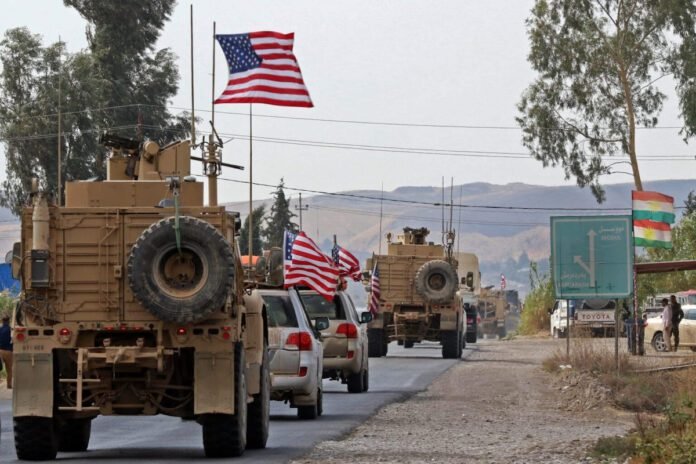
On September 30, the last American and coalition troops flew out of Erbil Air Base, and the Pentagon declared an “orderly departure.”

The White House called it a victory. President Trump, never one for understatement, described the whole enterprise as “a very expensive excursion into Hell.” For once, the hyperbole is closer to the truth than the official communiques.

But before Washington’s foreign policy establishment starts drafting the obituaries for American hegemony in the Middle East, or celebrating its long-awaited end, it is worth asking a simple question.

Is the United States actually disengaging from the region? Or is it merely shuffling its forces around the chessboard while the game it has been losing for two decades goes on? The answer, I am afraid, is the latter. The exit from Iraq is real. The disengagement from the Middle East is not.

We have been here before

This is the second time Washington has pulled every soldier out of Iraq.

The first was in December 2011, when the Obama administration closed the book on the war George W. Bush launched in 2003 to remake Mesopotamia into a democratic beacon. Less than three years later, the rise of the Islamic State pulled American troops back in, and a mission sold as temporary lasted twelve years.

The pattern should by now be familiar. Washington enters the region in pursuit of grand designs: containing Saddam, transforming the Arab world, defeating jihadism, rolling back Iran. It discovers that the locals have their own agendas. It declares victory and leaves.

Then the vacuum it helped create becomes the pretext for the next intervention. More than 4,500 American soldiers died in Iraq, and the region is not noticeably more stable, democratic or pro-American for it.

The lesson is not that America left too early in 2011, as the hawks insist. It is that America should never have assumed that its military presence could manufacture a political order that Iraqis themselves were unwilling or unable to build.

Disingenuous disengagement

Here lies the absurdity of the moment.

The United States is completing a withdrawal negotiated by the Biden administration in 2024 while it is fighting a war against Iran that it launched with Israel on February 28. A genuine disengagement strategy does not look like this. It looks like stepping back from the region’s quarrels, not opening a new front in the largest of them.

Nor has the military footprint vanished. The anti-ISIS task force headquarters has simply been relocated to Jordan. Hundreds of American troops remain in Syria. The bases in the Gulf remain, as do the carriers.

What Washington calls an exit is, in practice, a redeployment: fewer targets in Iraq for Iran’s proxies, more freedom of action against Iran itself.

That may be sound military logic. It is not a new grand strategy. The bipartisan consensus that the Middle East is a vital American interest, to be policed by American power, remains intact. Only the map of the garrisons has changed.

Let the region balance itself

The critics of the withdrawal have their talking points ready.

The Kurds, who have absorbed more than a thousand Iranian drone and missile attacks since the war began, are being abandoned without air defenses. The Iran-aligned militias that Baghdad once promised to disarm by the deadline are celebrating. Tehran, we are told, will fill the vacuum.

These concerns are not frivolous, and the Kurds deserve better than a farewell press release. But they are an argument for diplomacy and arms sales, not for a permanent American tripwire in Erbil.

Iraq is a sovereign state with a large army, oil revenues and a government that asked Washington to leave. Its leaders now speak of bilateral partnerships with Washington and others. That is precisely how a normal country behaves.

As for Iran, its influence in Iraq grew most dramatically while more than 150,000 American troops were occupying the country. Shiite Iraqis, Sunni Arabs, Kurds, Turks, Saudis and Iranians will all compete for influence in Baghdad.

They were doing so long before the Americans arrived, and they will do so long after. A balance of power among regional players, messy as it is, is more durable than one imposed from Washington.

What real disengagement would look like

If the withdrawal from Iraq is to mean anything, it should be the first step in a broader rethinking, not a tactical retreat ahead of the next campaign.

That would mean recognizing that the Middle East matters less to American security than it did during the Cold War. The United States is now a major energy producer, and the region’s oil flows to Asia far more than to America.

It would mean shifting from the role of regional policeman to that of an offshore balancer. Washington would intervene only when a hostile power threatens to dominate the entire region, a prospect that an Iran under sustained military pressure hardly presents. It would mean letting Turkey, Saudi Arabia, Egypt, Israel and yes, Iran, manage their own rivalries and bear the costs of their own security.

And it would mean ending the war with Iran through negotiation rather than escalation. Otherwise, the departure from Erbil will be remembered not as the end of America’s Middle Eastern quagmire, but as one more intermission before the next act.

This article was originally published on Leon Hadar’s Global Zeitgeist and is republished with kind permission. Become a subscriber here.

0FansLike
0FollowersFollow
0FollowersFollow
0SubscribersSubscribe
- Advertisement -
Google search engine

Recent Posts