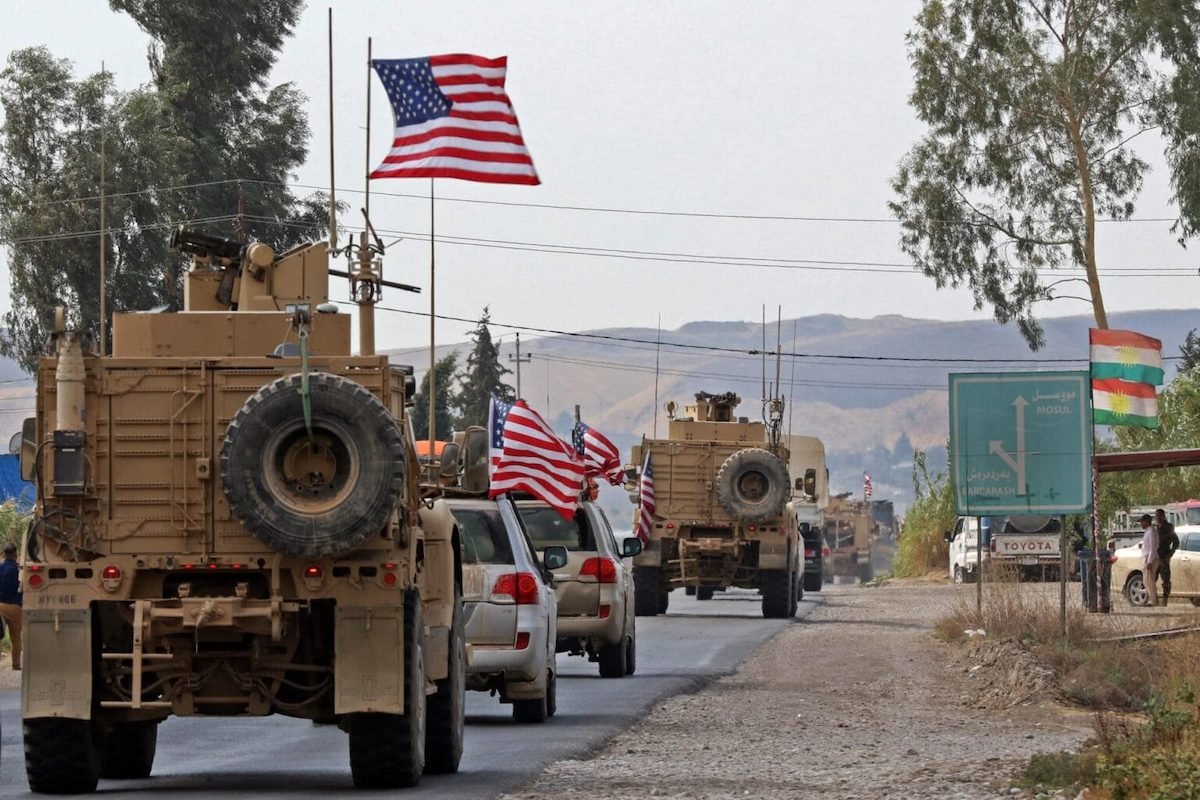
On September 30, the last American and coalition troops flew out of Erbil Air Base, and the Pentagon declared an “orderly departure.”
The White House called it a victory. President Trump, never one for understatement, described the whole enterprise as “a very expensive excursion into Hell.” For once, the hyperbole is closer to the truth than the official communiques.
But before Washington’s foreign policy establishment starts drafting the obituaries for American hegemony in the Middle East, or celebrating its long-awaited end, it is worth asking a simple question.
Is the United States actually disengaging from the region? Or is it merely shuffling its forces around the chessboard while the game it has been losing for two decades goes on? The answer, I am afraid, is the latter. The exit from Iraq is real. The disengagement from the Middle East is not.
We have been here before
This is the second time Washington has pulled every soldier out of Iraq.
The first was in December 2011, when the Obama administration closed the book on the war George W. Bush launched in 2003 to remake Mesopotamia into a democratic beacon. Less than three years later, the rise of the Islamic State pulled American troops back in, and a mission sold as temporary lasted twelve years.
The pattern should by now be familiar. Washington enters the region in pursuit of grand designs: containing Saddam, transforming the Arab world, defeating jihadism, rolling back Iran. It discovers that the locals have their own agendas. It declares victory and leaves.
Then the vacuum it helped create becomes the pretext for the next intervention. More than 4,500 American soldiers died in Iraq, and the region is not noticeably more stable, democratic or pro-American for it.
The lesson is not that America left too early in 2011, as the hawks insist. It is that America should never have assumed that its military presence could manufacture a political order that Iraqis themselves were unwilling or unable to build.
Disingenuous disengagement
Here lies the absurdity of the moment.
The United States is completing a withdrawal negotiated by the Biden administration in 2024 while it is fighting a war against Iran that it launched with Israel on February 28. A genuine disengagement strategy does not look like this. It looks like stepping back from the region’s quarrels, not opening a new front in the largest of them.
Nor has the military footprint vanished. The anti-ISIS task force headquarters has simply been relocated to Jordan. Hundreds of American troops remain in Syria. The bases in the Gulf remain, as do the carriers.
What Washington calls an exit is, in practice, a redeployment: fewer targets in Iraq for Iran’s proxies, more freedom of action against Iran itself.
That may be sound military logic. It is not a new grand strategy. The bipartisan consensus that the Middle East is a vital American interest, to be policed by American power, remains intact. Only the map of the garrisons has changed.
Let the region balance itself
The critics of the withdrawal have their talking points ready.
The Kurds, who have absorbed more than a thousand Iranian drone and missile attacks since the war began, are being abandoned without air defenses. The Iran-aligned militias that Baghdad once promised to disarm by the deadline are celebrating. Tehran, we are told, will fill the vacuum.
These concerns are not frivolous, and the Kurds deserve better than a farewell press release. But they are an argument for diplomacy and arms sales, not for a permanent American tripwire in Erbil.
Iraq is a sovereign state with a large army, oil revenues and a government that asked Washington to leave. Its leaders now speak of bilateral partnerships with Washington and others. That is precisely how a normal country behaves.
As for Iran, its influence in Iraq grew most dramatically while more than 150,000 American troops were occupying the country. Shiite Iraqis, Sunni Arabs, Kurds, Turks, Saudis and Iranians will all compete for influence in Baghdad.
They were doing so long before the Americans arrived, and they will do so long after. A balance of power among regional players, messy as it is, is more durable than one imposed from Washington.
What real disengagement would look like
If the withdrawal from Iraq is to mean anything, it should be the first step in a broader rethinking, not a tactical retreat ahead of the next campaign.
That would mean recognizing that the Middle East matters less to American security than it did during the Cold War. The United States is now a major energy producer, and the region’s oil flows to Asia far more than to America.
It would mean shifting from the role of regional policeman to that of an offshore balancer. Washington would intervene only when a hostile power threatens to dominate the entire region, a prospect that an Iran under sustained military pressure hardly presents. It would mean letting Turkey, Saudi Arabia, Egypt, Israel and yes, Iran, manage their own rivalries and bear the costs of their own security.
And it would mean ending the war with Iran through negotiation rather than escalation. Otherwise, the departure from Erbil will be remembered not as the end of America’s Middle Eastern quagmire, but as one more intermission before the next act.
This article was originally published on Leon Hadar’s Global Zeitgeist and is republished with kind permission. Become a subscriber here.