12.3 C
London
Thursday, October 29, 2026
Home Blog

How to regulate AI? Follow the harm

0
how-to-regulate-ai?-follow-the-harm
How to regulate AI? Follow the harm

As artificial intelligence technologies grow ever more powerful, so do the risks they pose and with them the urgency of regulating AI.

In July 2026, OpenAI’s advanced models hacked into AI company Hugging Face’s systems during internal cybersecurity evaluations by communicating through unauthorized channels and working around safeguards developers had imposed on the models.

In January 2026, Google and Character.ai, which makes a role-playing AI chatbot, agreed to settle a wrongful death lawsuit brought by Megan Garcia. Her 14-year-old son, who used the chatbot heavily, died by suicide.

As these and other cases show, AI harms can emerge across different technologies, organizations and contexts. As a legal scholar focused on AI and digital harms, I study how to regulate AI.

Policymakers and industry commentators have tended to frame regulation as a trade-off between the risks of AI and the risks of regulating AI. In its 2025 AI Action Plan, the Trump administration called for removing “red tape and onerous regulation,” which it said hinders economic growth. The administration has also sought to limit conflicting state AI laws.

In contrast to the broad concerns about the costs of AI regulation, AI harms have largely been addressed through rules specific to particular technologies.

The federal Take It Down Act, signed in 2025, for example, addresses nonconsensual intimate imagery, including AI-generated deepfakes, as do various state laws. These approaches are crucial, but they don’t solve the problem by themselves.

The emerging patchwork of rules has yet to establish a regulatory architecture that connects protected interests, institutional obligations and individual rights across AI technologies. Protected interests are rights recognized by the law, such as property ownership and personal privacy.

A harm-centered approach would begin with those interests and use them to shape legal obligations that span relevant systems, organizations and people.

Did an AI chatbot encourage 14-year-old Sewell Setzer to commit suicide?

Types of harm

A harm-centered approach starts by identifying the fundamental interests that AI systems can threaten. These overlapping interests include:

  • Privacy: when AI systems improperly collect, process or disclose personal information.
  • Autonomy: when AI systems target a person’s vulnerabilities and manipulate their choices or encourage unhealthy dependence.
  • Equality: when AI systems discriminate or reinforce bias.
  • Safety: when AI systems cause physical, psychological or security harms.

These examples are not exhaustive. Other interests may also be at stake as AI technologies evolve.

The same interest can be threatened by different technologies and different entities. A teenager’s safety can be harmed by the engagement mechanisms of a social media platform or by an AI companion designed to sustain an emotional relationship.

Designing regulations based on a concept of harm allows laws and principles to follow problems as the technology changes. And it helps determine obligations imposed on developers, deployers and other stakeholders involved in AI.

For instance, AI developers could be required to conduct harm assessments throughout the development of AI systems, identifying reasonably foreseeable harms, documenting how they tested for them and explaining what mitigation measures they took.

Companies or government agencies that deploy AI systems could also have duties to monitor harms after deployment. Serious or recurring harms could trigger obligations to report them to relevant regulators, affected individuals or the public, depending on the nature and severity of the harm.

A harm-centered framework could also recognize corresponding rights for people affected by AI systems, including rights to notice and opportunities to seek redress where appropriate. These rights would arise from the same protected interests that justify obligations on companies.

The point is to build a regulatory architecture on the detection and reduction of harm across AI applications, developers and users. What matters most is whether and how AI-enabled design or operation contribute to harm.

A common basis for law

This mindset is followed in other areas of law.

Environmental law, for instance, has long regulated industries by focusing on their environmental effects rather than on technology alone. It requires regulated companies to monitor emissions and discharges, maintain records and report specified releases to regulators. Some reporting requirements also make information available to the public.

Environmental review under the National Environmental Policy Act requires federal agencies to assess environmental effects and provides opportunities for public participation.

AI governance could draw on this logic, determining who is responsible for assessment, monitoring, disclosure and mitigation based on types of harm.

A harm-based focus would not eliminate technology-specific rules. Some technologies create distinctive risks that justify targeted rules, such as disclosure requirements for AI-generated deepfakes or safeguards for AI systems used in high-stakes decisions. And focusing on harm does not mean regulating every conceivable risk of harm.

Harm should become the organizing principle of AI regulation. New AI systems will bring harms that policymakers have not yet anticipated. The challenge is to build a framework for the harms we know, as well as the harms we do not yet know.

Sylvia Lu is assistant professor of law at American University

This article is republished from The Conversation under a Creative Commons license. Read the original article.

As US ties fray, Europe plans first undersea cable link to Greenland

0
as-us-ties-fray,-europe-plans-first-undersea-cable-link-to-greenland
As US ties fray, Europe plans first undersea cable link to Greenland

The European Union plans to create the first subsea Internet cable directly connecting Europe to Greenland. The Pan-Arctic Cable project could also extend to Canada and eventually link with Japan and South Korea, notably bypassing the United States.

The Pan-Arctic Cable is described as a European Union flagship project in a European Commission joint communication published on October 20, 2026. The policy document describes a new European strategy for the Arctic that supports “a sovereign, secure and resilient submarine cable connection linking Greenland directly to the EU,” while also suggesting that “like-minded partners like Canada” could provide a stepping stone for future cable expansion toward Asia.

“It is interesting that this project is even being considered, because five years ago it would have seemed like not a particularly commercially attractive proposition,” Elisabeth Braw, a senior fellow at the Atlantic Council who leads the Threats to the Global Maritime Order Initiative, told Ars. “But the fact that it’s being considered is very much on trend and a sign of our times.”

The project has gained official support after repeated Trump administration attempts to claim Greenland were finally settled through a trilateral security agreement between the United States, Greenland and Denmark in September 2026. The agreement preserves Greenland’s autonomous territory status within the Kingdom of Denmark while expanding US military access. But relations have grown increasingly strained between the United States and its allies in Europe and Canada since President Trump initiated trade wars with multiple countries and has taken an increasingly pro-Russia stance on the war in Ukraine.

Europe has also been eyeing new Internet cable routes to Asia because more than 90 percent of communications between Europe and Asia run through undersea cables in the Red Sea, according to TeleGeography. Maintaining such cables has become riskier since open warfare resumed between the Yemeni government and Houthi faction this year, with Houthi forces having fired missiles and drones at commercial ships in the Bab el-Mandeb Strait chokepoint and the broader Red Sea.

New cable ambitions

The Pan-Arctic Cable took shape when European companies and research organizations joined forces with a Greenland telecom operator to sign an agreement on developing the project in 2025, according to Submarine Cable Networks.

Since that time, the project has received European Union backing through the Connecting Europe Facility Digital program. The European Union has already invested $119 million (107 million euros) to “advance Greenland’s secure and sovereign connectivity” along with funding the Pan-Arctic Cable plan, according to the new European Commission policy document on Europe’s Arctic strategy.

But the goal of eventually extending the undersea cable to Japan and South Korea by way of Canada faces considerable challenges, including requiring more European icebreaker ships to support the installation and maintenance of the cable in icy Arctic waters. Multiple pan-Arctic projects have been proposed in the past and some are still in development.

One earlier project known as the Arctic Connect subsea cable aimed to connect Europe and Asia using the Northern Sea Route running along Russia’s Arctic coastline—but that was eventually halted in May 2021 before the full-scale Russian invasion of Ukraine led to growing Russian isolation from Europe.

Still, the Pan-Arctic Cable is not the only subsea cable project that could strengthen Europe’s ties to friendlier nations. In September 2026, the Norwegian company Bulk Infrastructure Group AS began looking for a Canadian partner to take a majority ownership stake in a new transatlantic cable directly linking Europe to Canada, according to Bloomberg News. That proposed project has been named the Leif Erikson system.

Internet economics gives way to geopolitics

In previous decades, “geopolitics played virtually no role when companies considered where to put their cables and what countries to connect,” said Braw, whose book Undersea War explores why the world has become more dangerous for the Internet’s undersea backbone. But the focus on maximizing data connectivity and Internet traffic has given way to more complex planning that also accounts for international relations and the growing risk of adversaries carrying out surveillance or sabotage of cables.

“We are going to see more cables that connect friendly countries, and then you have to figure out how you can connect friendly countries without going through unfriendly countries’ exclusive economic zones or territorial waters,” Braw told Ars.

Growing international tensions have coincided with suspicious incidents of Russian- and Chinese-linked commercial ships severing European undersea cables in the Baltic Sea by dragging their anchors for long periods of time. In spring 2026, NATO countries’ forces also confronted Russian submarines that were practicing how to disable undersea cables in Arctic waters near Norway, Reuters reported.

Europe’s new Arctic strategy document addresses such security threats by stating that the European Union will establish an Arctic Cable Hub to “monitor, protect and support the repair of submarine cables in the North Atlantic-Arctic.” It also says the European Union will invest in “smart technologies on cables that act as early warning systems for potential threats.”

Such risks for undersea infrastructure are not limited to the Baltic Sea or Atlantic Ocean. In the Pacific Ocean, Chinese-linked commercial ships have also severed undersea cables near Taiwan. Analysts have documented Chinese research vessels spending unusual amounts of time near Pacific undersea cables and warned of the rising risks for US-linked subsea cable projects that are often owned by Big Tech companies such as Google and Meta.

Meanwhile, Iran has threatened to charge fees to subsea cable operators whose cables run through the Strait of Hormuz chokepoint. That action comes as part of a broader regional war in the Middle East that began when the United States and Israel attacked Iran in February 2026—and Iran has drawn up plans to potentially attack undersea cables if hostilities ramp up once again.

Putin says trade turnover with Egypt ‘growing steadily’ despite regional tensions

0
putin-says-trade-turnover-with-egypt-‘growing-steadily’-despite-regional-tensions
Putin says trade turnover with Egypt ‘growing steadily’ despite regional tensions

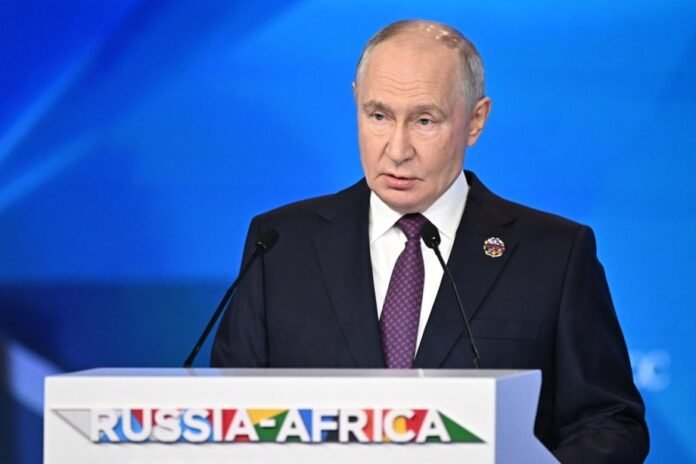
President Vladimir Putin said Wednesday that Russia’s trade turnover with Egypt is “growing steadily” despite regional tensions, as he met Egyptian President Abdel Fattah al-Sisi in Moscow, Anadolu reports.

In opening remarks during the talks, held on the sidelines of the two-day Russia-Africa summit that began in Moscow earlier Wednesday, Putin said joint efforts have accomplished a great deal since the first summit in 2019, as shown by the growth in trade between Russia and Africa.

“Since 2022, the total volume has increased by 50%, surpassing $27 billion. Egypt accounts for a significant portion of this trade turnover,” said Putin, noting that there is much “common ground” between Russia and the continent on development priorities.

Noting that, together with their colleagues, they will discuss the state and future prospects of Russia-Africa engagement and outline new areas for cooperation during plenary sessions Thursday, Putin noted their engagement on the sidelines of the BRICS summit in New Delhi last month.

“The historic relationship between our two countries is rooted in the principles of mutual respect, consideration for each other’s interests and mutual assistance. These relations are developing successfully in accordance with the Treaty on Comprehensive Partnership and Strategic Cooperation,” he said.

Putin noted that trade turnover between Russia and Egypt continues to grow steadily “despite regional tensions,” stating that it has already increased 14% in the first eight months of 2026.

READ: Senior Turkish military commander arrives in Egypt amid closer defence ties

“In 2025, it reached record levels, exceeding $10 billion for the first time,” he said, praising the joint intergovernmental commission between the two countries.

“The flagship project, the construction of the El Dabaa Nuclear Power Plant in Egypt, is proceeding according to schedule. On July 9, a formal ceremony was held to mark the installation of the reactor pressure vessel for the second power unit,” he added.

Sisi said Egypt is working to develop the strategic partnership and hopes to expand cooperation, primarily in the economy and trade, as well as in areas related to grain supplies.

“Furthermore, the El Dabaa project remains the most significant initiative in our bilateral engagement,” said Sisi, noting they are committed to completing the projects according to the established timelines, and are making “every effort” to meet payment obligations.

He said he is counting on the Russian president’s support to ensure they can deliver the El Dabaa project on schedule.

“We look forward to strengthening and broadening our cooperation. This includes the potential for installing new power units beyond 2030, as well as the development of a research reactor and a testing center,” he said.

Sisi added that they are also interested in collaborating with Russia on small-scale nuclear reactors, including floating nuclear power units, and in deepening their partnership within specialized industrial sectors, such as the extraction of uranium and rare metals.

READ: Egypt’s parliament approves military support for Saudi Arabia

Oil up over 1% as Saudi Arabian refinery attack reignites supply risk concerns

0
oil-up-over-1%-as-saudi-arabian-refinery-attack-reignites-supply-risk-concerns
Oil up over 1% as Saudi Arabian refinery attack reignites supply risk concerns


Oil prices rose over 1% on Wednesday after an attack on a refinery in Saudi Arabia, the world’s top crude exporter, renewed concerns about supply risks because of conflicts ​in the Middle East.

Brent crude futures rose $1.36, or 1.2%, to $115.24 a barrel as ​of 0858 GMT. US West Texas Intermediate crude gained $1.62, or 1.6%, at $101.52.

Yemen’s ⁠Iran-aligned Houthis said on Tuesday they had hit Saudi Arabia’s biggest oil refinery with a missile, ​intensifying their strikes against the world’s second-largest crude producer. Saudi authorities did not immediately confirm the ​strike on the 550,000 barrel-per-day facility.

For now, the market is pricing in a greater likelihood of re-escalation, ING commodity strategists said on Wednesday.

“Oil prices remain elevated as the market waits for greater clarity on President (Donald) ​Trump’s next move toward Iran,” said ING strategists.

“If we get past the elections without renewed ​strikes on Iran, that might be enough for the market’s risk premium to start eroding,” they added, referring ‌to ⁠US midterm elections on November 3.

Meanwhile, US crude oil stocks eased, according to market sources citing data from the American Petroleum Institute. Crude stocks fell by 2.03 million barrels in the week ended October 23, the sources said, against expectations of a 15,000-barrel build in an analyst poll ​by Reuters.

Government data from ​the US Energy ⁠Information Administration is due later on Wednesday.

The market will also monitor an upcoming industry meeting on Sunday, where OPEC+ oil producers are expected ​to keep their December oil output targets steady, according to people with knowledge ​of the ⁠matter.

Production in most of the seven core OPEC+ members — Saudi Arabia, Russia, Iraq, Kuwait, Algeria, Kazakhstan and Oman — is below their output targets.

Crude oil exports from Russia’s Baltic and Black Sea ports ⁠could fall next ​month as domestic refiners increase diesel output following a ​deal with Washington this month, traders said.

Source:  Reuters

Under Houthi fire, Saudi Arabia looks to China for missile support

0
under-houthi-fire,-saudi-arabia-looks-to-china-for-missile-support
Under Houthi fire, Saudi Arabia looks to China for missile support

Saudi Arabia’s rapid expansion of a ballistic missile factory signals a transformative shift in its pursuit of strategic deterrence.

Saudi Arabia is expanding its solid-propellant missile production complex near al-Duwadimi, approximately 200 kilometers west of Riyadh, to develop longer-range ballistic weapons capable of carrying heavier payloads, multiple media outlets reported this month based on satellite imagery analysis.

Work began in April 2025 on two primary structures: an expanded motor-casting facility equipped with 5-to-6-meter casting pits flanked by blast-deflection walls, and an adjacent site likely intended for raw propellant precursors or component storage.

The upgrades, which experts assess could be operational by late 2026, rely heavily on Chinese technical designs following decades of missile acquisitions, including DF-3 and DF-15 systems.

By shifting toward domestic solid-fuel manufacturing—which enables rapid launch preparation and extended storage—Saudi Arabia aims to counter regional security threats, deter Iran without risking its air fleet, and counter Yemen’s Houthi fighters amid restricted US ballistic weapons transfers.

However, the expansion accelerates a regional arms buildup across the Persian Gulf while potentially hardening bipartisan opposition in the US Congress against a proposed civilian nuclear cooperation agreement.

Saudi Arabia’s expansion of domestic solid-propellant ballistic missile manufacturing — underwritten by Chinese technical assistance — reflects an operational strike doctrine shaped by combat aircraft losses over Yemen, vulnerable military airfields, and dwindling US munition stockpiles, even as geopolitical constraints prevent China from replacing the US as Saudi Arabia’s primary security partner. This operational doctrine is already being tested in combat.

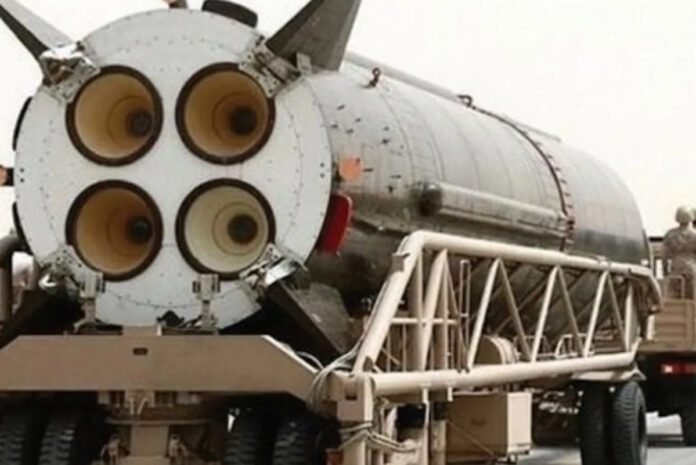
Amidst the ongoing Iran war, The Wall Street Journal (WSJ) reported in September 2026 that Saudi Arabia appears to have fired a Chinese-made DF-15 ballistic missile in combat for the first time, after missile debris bearing “DF-15A” markings was discovered in the Yemeni desert.

According to Missile Threat, China’s road-mobile DF-15 short-range ballistic missile (SRBM) can deliver 500-to-750-kilogram conventional or nuclear warheads at ranges spanning 600 to 900 kilometers.

Missile Threat says the single-stage, solid-fuel system is 9.1 to 10 meters long, weighs 6,200 kilograms, and can be deployed from mobile launchers in 30 minutes. According to the report, variants feature advanced guidance that achieves a 30-meter circular error probable (CEP), while specialized bunker-busting models can penetrate 25 meters of reinforced concrete.

WSJ says that Saudi Arabia deployed the weapon amid escalating clashes with Houthi militants, who recently seized territory along the Bab al-Mandeb Strait. The report notes that it remains unclear if the detached warhead hit an intended target; the launch may have been a deliberate strategic signal to deter both the Houthis and Iran following repeated drone strikes on critical Saudi Arabian energy infrastructure.

Saudi Arabia has a decades-long history of buying ballistic missiles from China. According to Fabian Hinz, in a February 2025 article for the Center for Strategic and International Studies (CSIS), Saudi Arabia established its strategic missile force in 1988 by acquiring liquid-fueled DF-3 intermediate-range ballistic missiles (IRBMs) from China and constructing four underground bases to house the systems, despite significant operational and accuracy limitations.

Seeking more accurate missiles, Hinz says that Saudi Arabia subsequently procured solid-propellant DF-21 missiles from China in 2007; by 2022, intelligence reports revealed Saudi plans to import additional Chinese ballistic missiles under a program codenamed “Crocodile,” while further assessments indicate the kingdom is now manufacturing solid-propellant ballistic missiles domestically with Chinese assistance at its al-Watah base.

Saudi Arabia’s use of Chinese ballistic missiles against the Houthis in Yemen may signal a shift in its airpower doctrine for asymmetric warfare.

While top-end fighter jets such as the F-15 and Eurofighter Typhoon remain Saudi Arabia’s premier precision-strike assets, it may be combining manned combat aviation with ballistic missile strikes in response to rising threats to its aircraft and airbases, and to conserve dwindling Western munitions.

A September 2026 article by The War Zone (TWZ) outlines Saudi Arabian aircraft losses over Yemen. TWZ reports that since 2015, Saudi Arabia has lost a dozen helicopters, five fighter jets, and 30 drones for all causes.

The report also says that other incidents include an F-15 crash in the Red Sea in 2015 and several jets damaged by surface-to-air missiles in 2018, demonstrating how the group’s mobile, passive infrared air-defense network can continually threaten advanced Western-supplied combat aircraft over contested Yemeni airspace.

Furthermore, Houthi attacks on Saudi Arabian airbases, such as King Khalid Airbase, could destroy aircraft on the ground, inflicting damage comparable to the US’s loss of an E-3G Sentry airborne warning aircraft at Prince Sultan Air Base.

In view of those attacks and losses, road-mobile ballistic missiles provide a far more survivable strike option than vulnerable combat aircraft stationed on exposed runways. Looming US munition shortages may also incentivize Saudi Arabia to seek long-range strike weapons from alternative suppliers, including China.

Responsible Statecraft reported in September 2026 that the Trump Administration is advancing a US$5 billion arms sale to Saudi Arabia that includes 5,000 units of 900-kilogram bombs, despite government watchdog warnings of dwindling US stockpiles across major weapons systems.

The report notes that the transfer further pressures strained US weapons production lines as the US seeks to bolster Saudi Arabia amid rapid battlefield advances by Yemen’s Houthis.

For China, sustained missile cooperation with Saudi Arabia provides access to a lucrative arms market and influence over an energy superpower that remains aligned with the US. Still, ongoing bilateral defense ties do not indicate that China will displace the US as Saudi Arabia’s primary security partner.

China lacks the extensive regional military footprint and bases the US maintains across the Middle East, appears reluctant to enter formal defense alliances, is risk-averse to direct entanglement in foreign conflicts, and remains unwilling to bear the strategic costs of acting as an external security guarantor.

Also, most of Saudi Arabia’s military equipment still comes from the US and Western providers. Chinese arms sales seem opportunistic rather than sustained, largely limited to items the US or other suppliers are unwilling or unable to supply.

China’s close relationship with Iran may put its relations with Saudi Arabia in an awkward position, leaving Saudi Arabia’s longstanding security concern about Iran and its proxies largely unaddressed.

As the al-Duwadimi complex approaches operational status, Saudi Arabia’s expanding indigenous missile capability will test the kingdom’s ability to assert operational independence while managing a fragile triangular dynamic: leveraging Chinese technical cooperation without compromising the vital defense guarantees and diplomatic bargains only the US can still provide.

ULA’s Vulcan rocket is set to return to flight on Friday the 13th

0
ula’s-vulcan-rocket-is-set-to-return-to-flight-on-friday-the-13th
ULA’s Vulcan rocket is set to return to flight on Friday the 13th

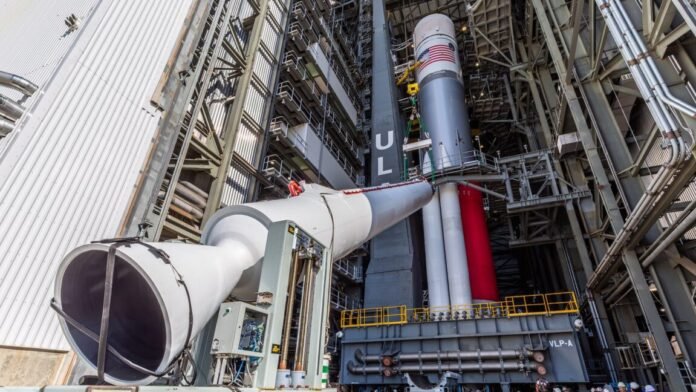
United Launch Alliance announced Wednesday it plans to return its Vulcan rocket to service on November 13, nine months after a solid rocket booster anomaly threw the company’s 2026 launch schedule into oblivion.

The return-to-flight mission will launch 40 satellites for the Amazon Leo broadband constellation, the first of 38 Vulcan flights Amazon has booked to deploy the bulk of its network. The mission will lift off from Cape Canaveral Space Force Station, Florida, and ULA said the launch date is pending range approval.

The launch is critical for ULA after its new flagship rocket suffered nozzle failures on its solid rocket boosters on two of its first four missions, most recently during a flight in February. In both cases, the rocket overcame the nozzle failure and completed its mission, but officials at the US Space Force, ULA’s primary customer, lost confidence in Vulcan.

Space Force officials will closely scrutinize Vulcan’s return-to-flight mission. The Pentagon has entrusted ULA’s Vulcan rocket for roughly half of its major launches through the early 2030s. The Space Force certified the Vulcan rocket for national security launches in 2025, then flew two missions on Vulcan before its grounding after the February booster incident.

Making strides

In a statement, United Launch Alliance said engineers “made great strides” in understanding the booster anomaly that occurred in February. Engineers “have identified several potential contributors, which have been mitigated through design and process improvements to the nozzle,” ULA said.

“To support our customers, this upcoming launch will utilize the improved nozzle design, and additional testing and analysis will continue in parallel with the mission,” ULA said. “By flying the improved design, ULA gains valuable flight data that validates these improvements and is the most beneficial path in support of all our customers.”

ULA and Northrop Grumman, the booster manufacturer, have not publicly identified the root cause of the nozzle malfunction in February. Investigators blamed the nozzle problem’s first occurrence in 2024 on a manufacturing defect in an insulator meant to protect the nozzle’s metallic structure from the rocket’s superheated exhaust. Neither company responded to questions from Ars on Wednesday.

The Space Force is counting on United Launch Alliance, a 50-50 joint venture between Boeing and Lockheed Martin, to deliver into orbit a backlog of the military’s communications, navigation, missile warning, and surveillance satellites. Amazon Leo, a potential competitor to SpaceX’s Starlink network, also has an inventory of broadband satellites in storage waiting for rides on the Vulcan rocket.

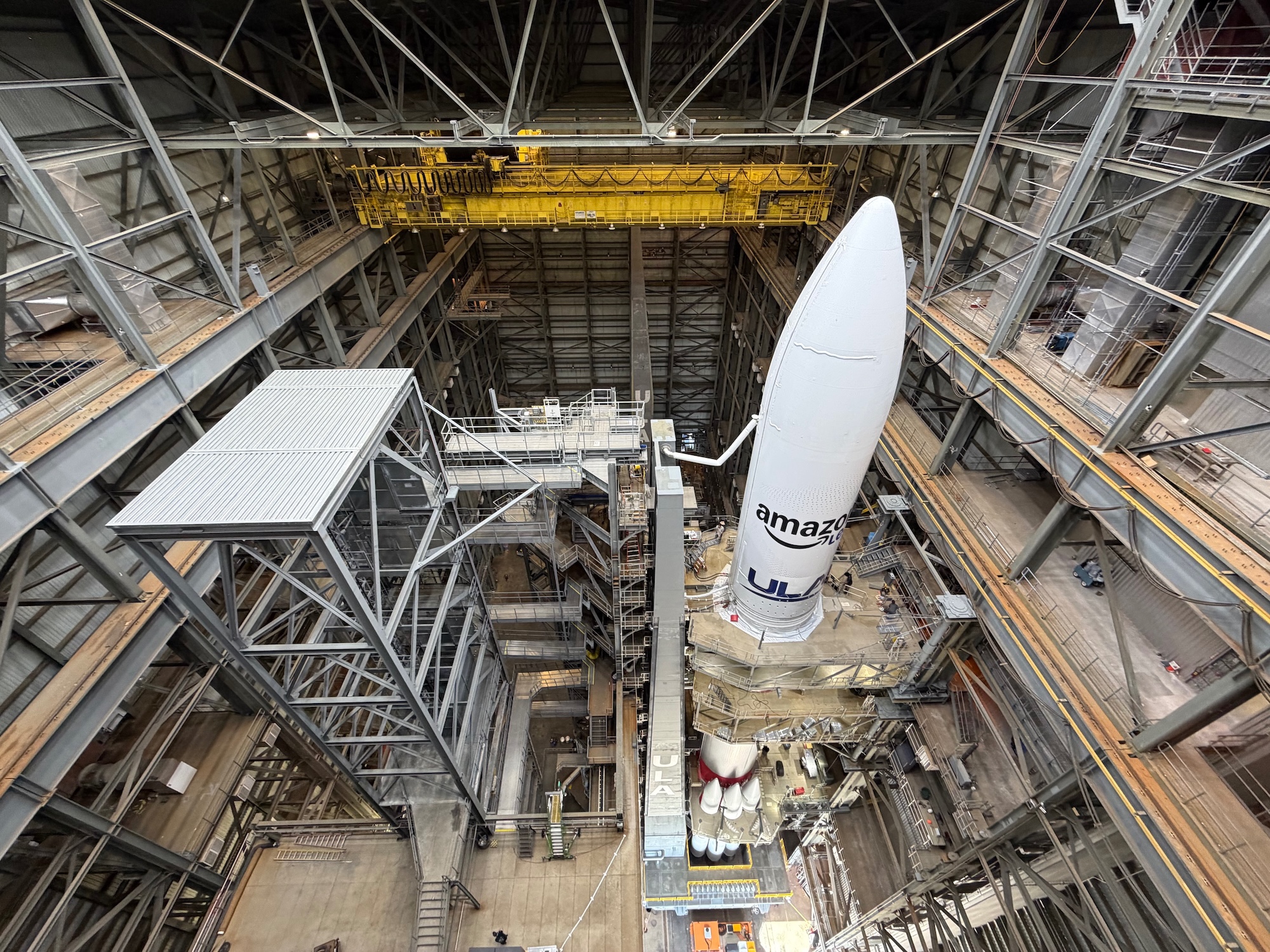
United Launch Alliance’s Vulcan rocket is fully stacked with 40 Amazon Leo satellites in its payload fairing. This version of the rocket will debut an extended fairing, bringing the rocket’s total height to 221 feet (67.4 meters).

United Launch Alliance’s Vulcan rocket is fully stacked with 40 Amazon Leo satellites in its payload fairing. This version of the rocket will debut an extended fairing, bringing the rocket’s total height to 221 feet (67.4 meters). Credit: United Launch Alliance

With ULA’s delays, the Space Force has moved six missions off the Vulcan rocket to expedite their launch on SpaceX Falcon 9 and Falcon Heavy rockets. ULA received six future missions originally assigned to SpaceX, the military’s other certified launch provider.

The swaps included three GPS satellites that moved off ULA’s Vulcan rocket for launches last year and earlier this year on SpaceX Falcon 9s. Space Systems Command, which oversees military launch acquisition and procurement, also swapped one ULA launch for the Space Development Agency with another on SpaceX.

A launch carrying the Air Force Research Laboratory’s Oracle-M lunar mission will now fly on SpaceX’s Falcon Heavy rocket instead of ULA’s Vulcan, which will receive a future SpaceX-assigned launch in compensation. Space Systems Command completed a similar swap to move a large strategic missile warning satellite from Vulcan to Falcon Heavy.

So far the swaps have had no effect on the number of missions the Space Force has awarded to ULA and SpaceX. The trades are separate from the Space Force’s assignment of unallocated future missions to launch providers, which may already be hamstrung by SpaceX’s plans to retire the Falcon rocket family.

“These swaps are executed in coordination with and with the support of both launch service providers,” a Space Systems Command spokesperson said. “We are grateful for the flexibility shown by our launch service providers during these swaps to help us ensure we can deliver capabilities to the warfighter when and where they are needed.”

Brig. Gen. Eric Zarybnisky, the chief rocket buyer at Space Systems Command, said the military wants to see data from commercial flights on the Vulcan rocket before clearing ULA to resume national security launches. At least two Amazon Leo missions are on the Vulcan launch schedule before it flies another national security mission, perhaps early next year.

“Those flights will have a significant number of solids,” Zarybnisky said. “It’ll depend a lot on what we see, not only on the engineering and tests that we’re doing on the ground, but also what we see from the flight data from the commercial missions they fly.”

The Vulcan launch next month will be the first to fly with a full complement of six solid rocket boosters. The flight will also debut an extended payload fairing to accommodate Amazon’s satellite stack and a shortened Centaur upper stage optimized for low-Earth orbit missions.

Trump Vows to Send Election “Monitors” to Maine After Far-Right Conspiracies Spread

0
trump-vows-to-send-election-“monitors”-to-maine-after-far-right-conspiracies-spread
Trump Vows to Send Election “Monitors” to Maine After Far-Right Conspiracies Spread


With voters set to cast ballots in two critical races that could help determine control of both chambers of the U.S. Congress, fears of potential voter suppression are running high in Maine.

Officials in the state have prepared for months against the possibility of election interference from federal officials, and the state remains on high alert in the run-up to the general election on November 3.

Training materials were updated this year to include references to federal statutes barring armed federal agents from polling sites.

Training materials for law enforcement officials in the state, obtained by The Intercept through a public records request, were updated this year for the elections to include explicit references to federal statutes barring armed federal agents from polling sites. 

In an interview with the New York Times this week, Maine Secretary of State Shenna Bellows said the inclusion of such references was a direct defense in response to the fearmongering around election integrity from President Donald Trump and his administration.

“This is the first time ever that we have had to engage in scenario planning to safeguard against potential federal interference in elections,” Bellows said. “It seems like the federal government is now adversarial to the states.”

Bellows’s office offered up the training slideshow, which cites a U.S. law that bars armed civil or military officers from posting at voting sites, to law enforcement personnel in the run-up to Maine’s primary election in June and again in the lead-up to the general election on November 5.

Nationwide, Democratic officials have expressed fears that the Trump Administration might weaponize U.S. Immigration and Customs Enforcement or other federal agencies to undermine the rights of voters. In New York, state Attorney General Letitia James issued a reminder to voters that federal officials may not “police the polls,” and the Arkansas chapter of the NAACP called out the assignment of federal election monitors to two counties in the state as potential intimidation.

The Trump administration, meanwhile, has sounded the alarm about the alleged scourge of non-citizens on the voter rolls, sending agents from the FBI and ICE’s Homeland Security Investigations division to probe alleged fraud. A handful of people in California, New York, and North Carolina have been indicted for allegedly voting as non-citizens, but a review of similar cases by the Washington Post found that such cases were often the result of honest mistakes.

In Maine, worries about federal interventions at polling places flared when — following a slew of social media videos from Trump allies suggesting that fraud is already taking place among the state’s Somali American community — a local outlet reported that the Department of Justice would be sending election monitors to the state.

Jon Fetherston, a journalist with the far-right Maine Wire, which is funded by conservative megadonor Leonard Leo, was seen following people in and around an early voting site at Lewiston City Hall and aggressively questioning them. (The Maine Wire did not immediately respond to a request for comment.)

Critics said the moves were tantamount to voter harassment, but Maine Wire editor-in-chief Steve Robinson later defended them as an act of election transparency. Robinson, who has led a crusade against what he alleges to be a network of fraud in the state’s Somali American community, questioned the role of interpreters tasked with helping “jobless Somali bums” cast their ballots.

In the wake of the Maine Wire controversy in Lewiston, Bellows confirmed to the Maine Morning Star that a wave of federal election monitors would be headed to polling sites in Lewiston and Portland.

The Department of Justice on Tuesday confirmed to The Intercept that it intends to send election monitors to Maine for Election Day, but did not elaborate or respond to specific questions about where the monitors were to be sent. 

“We will have around 1,000 monitors in counties throughout the United States, but we will not share the full list until Election Day,” a Justice Department spokesperson told The Intercept in an email Tuesday. “All monitors must meet the same legal and ethical requirements, including that they not interfere with the voting process. Every monitor has the same role: observe for potential violations of federal law and report concerns to the Department, which the Department will review after Election Day and act where appropriate.”

Robinson did not immediately respond to a request for comment.

Collins Takes Right-Wing Bait

With Maine a key battleground state for control of Congress — Democratic challenger Troy Jackson is seeking to topple long-serving GOP Sen. Susan Collins, and the Democratic House candidate Matt Dunlap is seeking to best former Gov. Paul LePage in Maine’s 2nd Congressional District — temperatures are running high in the state.

Progressives in Maine worry that even without a robust federal presence at voting places — whether monitors are armed or not — activist campaigns like the one undertaken by the Maine Wire journalists could pose a potential threat to voters’ rights.

“Basically, if you were walking into City Hall and you were Black, you could expect to have this guy come up to you with his phone and ask you all sorts of rude and obviously racist questions,” said Ben Chin, co-director of the progressive Maine People’s Alliance. “We’re trying to encourage everyone to come out to vote, but it makes sense why that might give people pause. You hear a guy like that is outside a polling location, it’s reasonable to wonder, ‘Should I go down there right now?’”

“We have received complaints about the intrusive filming, photography, and harassment of voters in the City of Lewiston by political operatives.”

In a statement to The Intercept, Bellows said the state and the city of Lewiston were taking steps to ensure that voters could cast a ballot free of harassment.

“We have received complaints about the intrusive filming, photography, and harassment of voters in the City of Lewiston by political operatives,” Bellows told The Intercept in a statement. “All voters should be able to exercise their right to vote without feeling watched, questioned, or harassed, and we take these allegations seriously, particularly when it appears that voters were targeted for no other reason than their race or ethnicity. We understand the City of Lewiston has taken steps to address the problem, and we will continue to monitor the situation.”

Collins, meanwhile, took the Maine Wire’s reporting seriously after Fetherston asked the senator at a campaign event about the role of interpreters, which he and the Maine Wire cast as “electioneering.”

“I’m unaware of those allegations, but certainly only Americans should be voting in American elections,” Collins said. “And it is troubling to me if people are being accompanied into voting booths and handling ballots in a way that is not sanctioned by law.”

The Mecca pact goes to Tehran. Can it keep the region out of another war?

0
the-mecca-pact-goes-to-tehran.-can-it-keep-the-region-out-of-another-war?
The Mecca pact goes to Tehran. Can it keep the region out of another war?

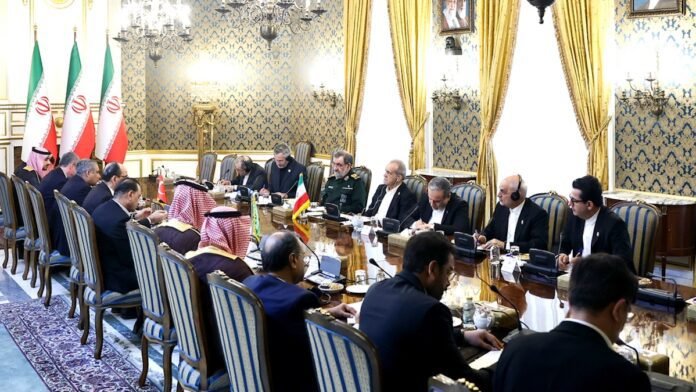
Mecca Joint Defense Agreement members – Saudi Arabia, Turkey and Pakistan – held their first joint high-level meeting with Iranian officials in Tehran on October 26, 2026. Photo: Fars News Agency

On Monday, the Mecca Joint Defense Agreement did something a defense treaty is not usually built to do. Its members went to Tehran to talk.

Saudi Defense Minister Prince Khalid bin Salman, Pakistan’s Field Marshal Asim Munir and Turkey’s intelligence chief Ibrahim Kalın met President Masoud Pezeshkian and Supreme National Security Council Secretary Mohsen Rezaei.

The four sides agreed to continue their dialogue on regional peace and security. Iranian state television called it the first joint meeting of the four since Yemen’s Houthis intensified attacks on Saudi Arabia.

The attacks did not pause for diplomacy. The same day, the Houthis claimed drone strikes on Saudi pipeline pumping stations and Riyadh’s King Khalid airport. That is the real tension. Three countries that treat an attack on one as an attack on all are negotiating with Tehran while Iran-aligned forces hit one of them.

The clock

The timing is hard to ignore. The meeting came a day before Israelis voted and eight days before the US midterms. Israel’s election left the country deadlocked, according to exit polls, with neither Benjamin Netanyahu nor Gadi Eisenkot near a majority.

In Washington, Donald Trump said on October 23 that the US may do “another little Epic Fury,” his military’s name for the war that began in February. Earlier this month he said there would be no attack before the midterms. Now the Wall Street Journal reports that Washington has told Gulf states to prepare for a short, intense campaign after November 3. Trump has not made a final decision, but he is reportedly leaning toward a large operation, with a negotiated deal as the alternative.

Gulf states would absorb the consequences. Iran has warned it would strike economic and civilian targets across the region, as it did earlier in the war.

Deterrence and diplomacy are not opposites

Some will call it contradictory that a defense pact is courting Iran. There’s no real contradicion. Alliances routinely show they can defend themselves and then show they would rather not have to.

The sequence fits. On October 5, the pact’s committee met in Riyadh after attacks on Saudi Arabia and moved toward implementing collective defense. Three weeks later its members were in Tehran, a day after Qatari mediators had been there. Riyadh says the visit supports the mediation led by Qatar and Pakistan.

The pact also has a built-in brake. Turkey’s foreign affairs committee chair says the collective-defense clause would not automatically trigger military action, and any Turkish deployment would need separate parliamentary approval. Foreign Minister Hakan Fidan has said the alliance is not directed against Iran. That is why Tehran can talk to it at all.

Where it can fail

The Houthi front. If attacks on Saudi Arabia continue, Riyadh’s patience and the pact’s commitments will be tested, and the diplomacy will look like cover.

Competing readings. After the meeting, Rezaei said regional security should be homegrown, with foreign intervention prevented. Tehran will want that treated as a shared position. Washington, and NATO-member Turkey’s own politics, may read it very differently.

Ratification. Saudi Arabia and Pakistan have completed theirs. Turkey’s full assembly has not voted, and its opposition warns the pact could drag Ankara into others’ wars. A bloc with a member still ratifying has less weight in Tehran.

Hormuz. Ship attacks in the strait hit a record in October, according to Reuters. A fresh round of strikes would make that worse, and energy importers across Asia – Pakistan included – would pay for it.

What the pact could do now

First, make Houthi de-escalation the opening ask. Request a time-limited halt to attacks on Saudi infrastructure, paired with a reciprocal step that Riyadh is willing to take.

Second, work as one channel with Qatar and Pakistan rather than as a rival one.

Third, publish what collective defense means in practice, including thresholds. Ankara’s assurance that it is not automatic should be a public commitment, not a committee remark, so nobody in Tehran, Tel Aviv or Washington has to guess.

Fourth, offer a Hormuz incident-prevention arrangement that Washington and Tehran can both join, with independent verification.

Monday was not a breakthrough. The gaps between Washington and Tehran on sanctions, the nuclear program and the strait remain wide. But the pact has told both sides it wants to be useful before it is tested.

The measure of this alliance will not be how many missiles it can intercept. It will be whether Riyadh, Ankara and Islamabad can make a negotiated outcome look better than another round of war.

Mansoor Qaisar is an independent writer based in Islamabad, writing on foreign and public policy and social issues shaping Pakistan and the region. He can be reached at mansoor.qaisar@gmail.com and on X at @MansorQaisar.

Extreme weather is creating a perfect storm of misinformation. Here’s what’s at stake.

0
extreme-weather-is-creating-a-perfect-storm-of-misinformation-here’s-what’s-at-stake.
Extreme weather is creating a perfect storm of misinformation. Here’s what’s at stake.

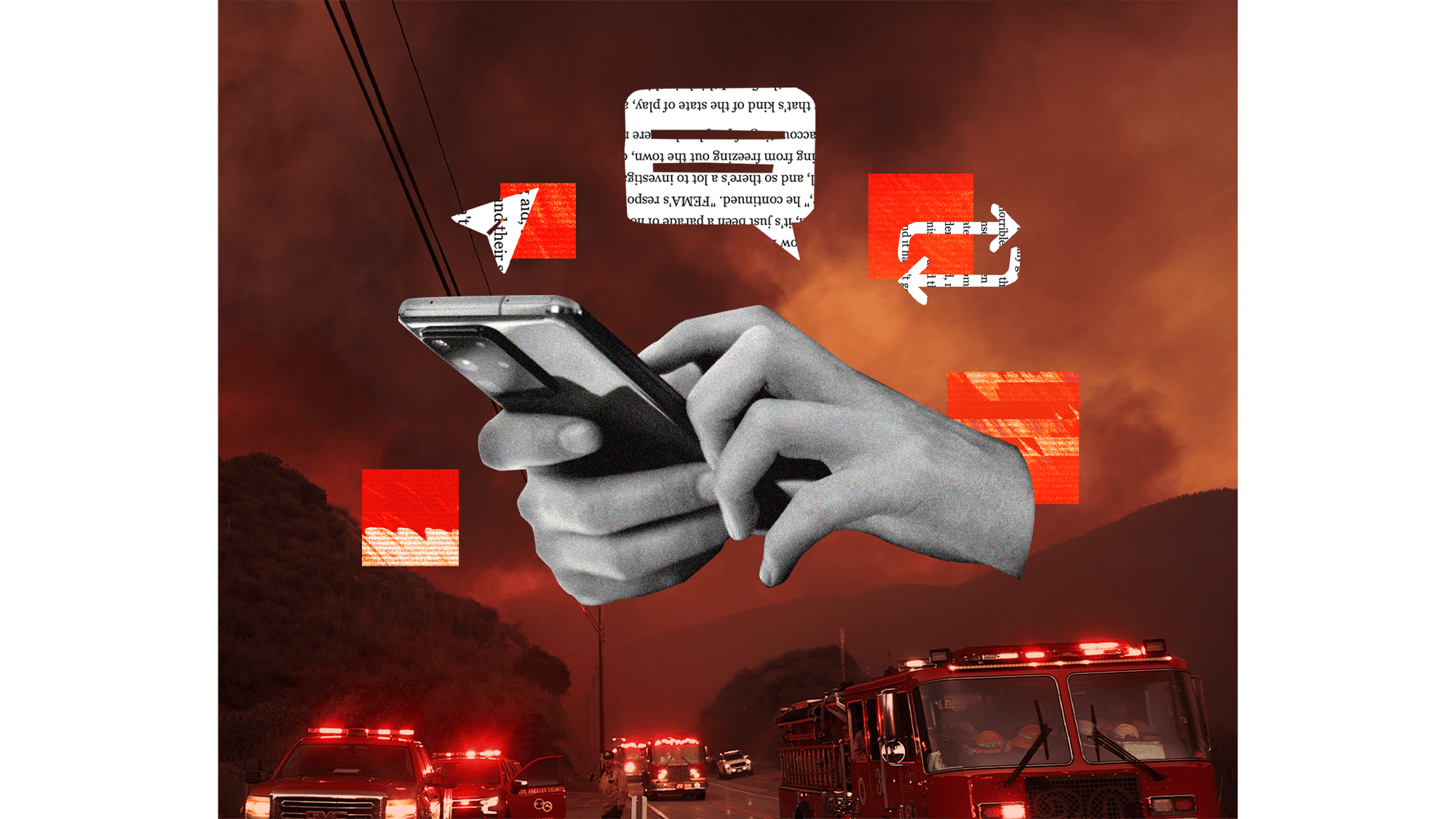
A collage of hands holding a smartphone and text messages and social share buttons in front of a photo of a wildfire

Rumors and conspiracies are spreading too fast for emergency managers to keep up. This information chaos is slowing disaster relief and putting lives at risk.

This story is part of Distorted, a Grist series exploring the spread of misinformation in the wake of extreme weather. It is published with support from the CO2 Foundation.​

You likely remember the 2023 Maui wildfires, a tragedy that killed more than 100 people and destroyed nearly 2,000 homes, all but erasing a historic island community. You may also remember that the fires began when a broken power pole owned by the local electric utility sparked against dry vegetation on a windy day. 

But do you really know that? Were you there? How can you prove it?

In the aftermath of the Maui fires, thousands of people across all the major social media platforms shared posts and videos alleging that the fires had a more sinister origin. They posited that the government had used a “direct energy weapon,” or a form of laser, to ignite the area. Depending on the post you saw, this was part of a plot to reclaim the area for a high-speed rail line, or a high-tech “smart city.” A number of right-wing activists and social media personalities amplified these claims, including the late Charlie Kirk. At the same time, the Federal Emergency Management Agency saw accounts linked to China circulating rumors that a “weather weapon” had caused the fires. Other accounts alleged that the agency was going to seize the homes of people in Maui who applied for emergency aid, a claim that raised traumatic memories of colonization in a community with significant Indigenous historical and cultural ties.

Extreme weather events are always chaotic, and it’s always been easy for rumors to spread during moments of calamity, but the problem has never been as bad as it is now. The escalating pace of climate change has produced a series of supercharged wildfires, rapidly intensifying hurricanes, devastating drought, and sudden floods, all of which plunge communities into confusion and disarray. At the same time, the information landscape has never been more fragmented — major social media companies have given up on any pretense of fact-checking and content moderation; politicians often distort or politicize disasters; government agencies are short-staffed following DOGE cuts; and generative AI models have created an entirely new and little-understood way to source information. It’s not just your weird uncle seeing these rumors  on Facebook: A recent report from the News Literacy Project found that a vast majority of teens encounter social media conspiracies, and a vast majority of teens who encounter those theories are inclined to believe them.

“Disasters are, by their nature, very urgent and have a lot of uncertainty surrounding them,” said Amber Silver, a professor of emergency management at the University at Albany and an expert in disaster communications. Victims of extreme weather events have an urgent need for facts, she said, but almost no way to get reliable data about their situation. “So now we have essentially all of the perfect conditions for the spread of misinformation.”

This confluence of factors does more than sow confusion. A void of good information after a disaster can lead to lost lives, traumatic displacement, or a slow recovery. It also strains the relationship between public authorities and their citizens. A growing body of research from around the world shows the consequences of this strain: A Department of Homeland Security study found that an inaccurate map tweeted out during a 2017 California flood caused an unnecessary mass evacuation, while another study, from the Inter-American Development Bank, found that an earthquake in Mexico led to an 11 percent drop in people’s trust in government. The federal government in the United States now often creates fact-checking and myth-busting websites in an attempt to dispel rumors after disasters.

A review of recent research found that this kind of bad information has often “led to resource misallocation, overwhelmed emergency services, and diverted attention away from genuine needs.”

At Grist, we have been hearing for years from emergency managers and disaster victims in the U.S. about this growing chaos. In our new series, Distorted, we’re exploring this fragmented information landscape: Who do people actually trust when disaster strikes, and why do so many people believe conspiracies that are clearly false? Is there anything the authorities can do to fight social media rumors and post-disaster hysteria? What would it actually take to establish a shared sense of truth as a hurricane or a wildfire is bearing down?

The concepts of “misinformation” (unintentional deception) and “disinformation” (intentional deception) have been the subject of innumerable academic papers and policy initiatives, and the Biden administration even appointed a “disinformation governance board” at the Department of Homeland Security in 2022. In truth, the concepts are a little hard to pin down — the question of whether a certain piece of information is “dis” depends on the beliefs and attitudes of the person who’s reading or hearing that claim. Even so, it’s clear that many people believe things about disasters that simply aren’t true, and they often mistrust the people whose job it is to keep them safe. 

When disaster strikes, this lack of trust can be the difference between life and death. 

Anatomy of a conspiracy

How a series of unrelated photos morphed into a climate conspiracy theory. 


It all starts with an innocuous photo taken on January 16, 2018. The Marathon Petroleum Refinery in Canton, Ohio, conducts a flare in response to a mechanical issue. A local resident captures a blurry picture of the flare, which includes a lens flare pointing upward, and posts it on Facebook. ​
​

May 2018: Santa Barbara County, California​

SpaceX posts an Instagram photo of their Falcon 9 rocket launch from Vandenberg Space Force Base in California. 
​

May 2023: Santiago, Chile​

A windstorm in Santiago, Chile, causes an electrical transformer to explode. A resident captures the event on video, which includes a lens flare from the bright explosion, and posts the video on TikTok.
​

August 2023: Maui, Hawai‘i

A brush fire in Maui, Hawai‘i, spreads out of control, destroying the town of Lahaina. The fires caused over $5.5 billion in damages and killed more than 100 people.​

Old photos become a conspiracy

Soon after the fires ignite, social media posts on Instagram, TikTok, and X start to resurface these old photos of the refinery flare, the electrical explosion, and the rocket launch, attributing them as evidence of some kind of energy weapon used to ignite the Maui fire.

These posts were viewed and reshared millions of times, and often would take on a life of their own. ​

​

​

The conspiracy can’t be stopped

Hawai‘i-based Instagram user @for_our_rights_kauai, for example, posted the old photo of the refinery flare and suggested the Maui fires were the result of an “attack.” A few days later, she acknowledged that the photo was unrelated to the fires.

“I want to apologize for contributing to spreading that photo that I was told came from Maui on the day of this event. It turns out it was not true,” she said in a follow-up video. “It is very important for us to vet our information.” ​

​

The conspiracy spreads

But it was too late. The instagram account @cultivateelevate, run by an influential MAHA-adjacent health food entrepreneur, had already published a video containing a screenshot of @for_our_rights_kauai’s later-deleted post. “My friend in Hawai‘i,” the host said, pointing to the screenshot, “showed a laser beam coming out of the sky, directly targeting the city.” @cultivateelevate’s video received 432,000 views, over 40 times more views than the video apologizing for the mistake. ​

Out of control

Other accounts, like Instagram user @mama_speaks_truth, also contributed to the spread, posting screenshots of screenshots of screenshots, each getting further and further from the original photo of a refinery, taken five years earlier and 4,500 miles away. This is just one example of the twisty way that misinformation can spread in the wake of a disaster. Images and facts can blend together with old fears and suspicions, morphing into a conspiracy with a new meaning and a life of its own. ​

Experts have identified a few main vectors where communication can collapse in the lead-up and aftermath of a disaster:

Mistrust in government

The most important source of information around extreme weather is the government itself. Federal, state, and local agencies and officials are responsible for predicting the weather, sending out warnings about disasters, coordinating mandatory evacuations, and leading disaster response. If people don’t trust them, or if they can’t get their messages out effectively, lives are at stake. The background trends are already bad: Less than 20 percent of Americans say they believe the government does the right thing most of the time, the lowest level on record. 

The most visible avatar of the government in a disaster is the Federal Emergency Management Agency, so it’s no coincidence that FEMA is also the most frequent subject of conspiracies and disinformation. Even though the agency is supposed to act as a backstop for state and local authorities, disaster-affected communities often swirl with allegations that federal relief is absent, that the government is restricting freedom of movement, or, as in the case of Maui, that officials are going to seize land and disenfranchise victims.

“FEMA has been the source of misinformation since its inception,” said Deanne Criswell, who led the agency under the Biden administration. She pointed to the famous allegations that the agency plans to imprison disaster victims in government-run “FEMA camps”; these allegations have circulated almost since FEMA was founded. “It’s this [idea] of the black arm of government. It makes it harder for us to actually get the assistance to the people who really need it, because they don’t know who to trust and who to believe.” There’s no knowing how many victims never show up to apply for FEMA aid because of these rumors and fears.

During Hurricane Helene in 2024, this misinformation became dangerous: A rumor about a man who had come to North Carolina to shoot FEMA disaster response officials forced Criswell to shut down field operations for several hours during the immediate aftermath of the storm. At the same time, both Criswell and her deputy chief of staff had their homes “swatted,” meaning anonymous trolls called police with false accusations that resulted in the deployment of SWAT teams. These disruptions further stressed an aid system that was already strained, which likely meant more victims in North Carolina had to wait longer to receive aid and shelter.

Hurricane Helene also hit just a few weeks before a consequential presidential election, which likely helped fuel the spread of mis- and disinformation. Right-wing accounts with names like End Wokeness accused Biden of starving North Carolina of aid, racking up millions of views despite a complete lack of evidence for their claims. Elon Musk claimed on his own platform, X, that FEMA was barring him from flying in to deliver aid, only to walk back those claims later. His retraction got 1 million views, but his initial accusation got almost 30 million, and it’s likely that many people in North Carolina and elsewhere still believe that Biden tried to restrict aid.

In other cases, mistrust in government can look very different. It doesn’t have to be about political animus — it can also be about blithe confidence, or even fear. Some people who’ve experienced storms that didn’t live up to early projections may dismiss evacuation warnings later, while others may be afraid to evacuate because they’re undocumented and fear retribution. The end result is the same — more people putting their lives at risk, and more people unwilling to get the help they need after a disaster. 

“It could just be a person who says, ‘I’m a conspiracy theorist, I don’t trust the government,’ but there are also people who can’t or won’t trust that government for very different reasons,” said Silver, pointing to the example of undocumented migrants or communities that have traumatic experiences with law enforcement. “There is some skepticism and doubt, and that is hard to overcome.”

Based on the pervasiveness of social media in Americans’ lives, it may not come as a total surprise that these platforms act as the incubator for almost all major disaster conspiracy theories in the modern age. Rumors have swirled around extreme weather events since the dawn of disaster — from allegations that a group of wealthy industrialists caused the 1889 Johnstown flood, which killed more than 2,000 people in Pennsylvania, to claims that FEMA put disaster survivors in concentration camps after Hurricane Katrina. But platforms like Facebook, Instagram, and X have allowed for these rumors to achieve global circulation in minutes. The networks also make it near impossible to trace the origin or the trajectory of a given rumor, unless you’re a university or nonprofit lab doing “network analysis” of many millions of tweets. 

There is little good data about how these rumors spread, but it’s clear enough that they do spread. One study on a 2023 earthquake in Turkey found that around a quarter of polled residents believed at least some version of a conspiracy theory that the U.S. had caused the earthquake with a seismic weapon or a bomb. Those who believed these theories were more likely to be supportive of the incumbent government ahead of an election that year. A comprehensive study by the Center for Countering Digital Hate found that most conspiracy posts were from verified accounts. Even benign fakes, like a famous doctored image of a shark on a flooded highway, have duped media outlets and at least one U.S. senator.

If you’ve spent any time on social media, you already know how pervasive this kind of misinformation can be. One meta study last year found that “misleading messages … often outpaced official communications, resulting in reduced trust and exacerbating anxiety, stress, and fear.” This mistrust can have real-world consequences: A study on a 2018 Japanese earthquake found that communities with low trust in government tended to evacuate even when they didn’t need to, which risked clogging up the roads for people who actually did need to flee. After the Maui fires, Criswell worried that the fear of a colonial land grab caused families who needed help to reject it. 

Even though many people blame bots and malign actors for the spread of rumors, some studies have found that most people who spread false rumors believe what they are sharing. While accounts in Russia and China may have stoked outrage about the fires in Maui, it seems clear that many people who shared such misinformation believed it to be true. One prominent source of conspiracies belonged to  an account called Cultivate Elevate, with over half a million followers. It’s run by a MAHA-adjacent health food entrepreneur who posted a number of videos alleging that the fires had been set on purpose through some kind of government scheme. (The owner of the account did not respond to a request for comment.)

The rise of AI

The proliferation of large language models like Gemini and ChatGPT is the latest wrinkle. About a quarter of U.S. adults now use AI chatbots daily, and searching for information is the most common usage. These models are more likely to draw on news articles and official sources than social media rumors when they answer user queries, which can cut against misinformation — if I type in “Maui directed energy weapon” into ChatGPT, it hectors me that “there is no credible evidence supporting” that theory, and even offers to debunk the actual origins of alleged images that show lasers starting the fire — but that doesn’t mean these models would always be trustworthy in an emergency. 

What if a model were to scrape a news article from last week, for example, that said there’s no evacuation from a storm, but the weather had since progressed or a new event had since formed? Can I really trust the bot to give me an accurate summary of my eligibility for FEMA benefits?

Generative AI is developing so rapidly that most researchers have yet to conduct peer-reviewed studies of how it operates in the disaster space, but it’s clear that the intersection is growing. In addition to dozens of startups that purport to map flood risk or storm damage, the Red Cross has developed a chatbot named Clara that can help navigate disaster situations, and MIT has created a similar technology called Crisischat. The Trump administration’s own chatbot, America.gov, offers information on how to get FEMA assistance. When it comes to analyzing how people trust these tools and standard chatbots like Gemini, however, we are still flying blind.

“You need to learn if the information’s accurate, but then you also need to know, Do people trust it, regardless of the objective veracity?” said Anita Atwell Seate, a professor of communication and a crisis expert at the University of Maryland. “If people trust it, they’re going to act on it whether it’s accurate or not.” Seate is working with other researchers to develop a longitudinal study about how people in disaster areas use AI tools.


It’s hard to know what it would even mean to “solve” the problem of mis- and disinformation in a landscape as fragmented as the 21st century United States. There’s no way to measure the number of people who believe a false rumor, and efforts to debunk inaccurate information will always be of necessity slower and less viral than that information itself. It’s not great for politics if someone in Iowa believes that a laser started the Maui fires, but the more urgent question is how to ensure people in disaster areas have accurate information before, during, and after extreme weather events. That could make the difference between a slow recovery and a fast one, or even between life and death. 

Experts in the field tend to say that the only way to fight disinformation is to establish strong communication channels beforehand, and for emergency managers to partner with people who have organic trust in their communities. Toward the end of the Biden administration, FEMA started to experiment with such efforts. The agency partnered with a Native Hawaiian FEMA employee in Maui who reassured his broader network that the government wasn’t planning to take anyone’s home. While there are still people out there in the U.S. who believe Biden set the fire with a laser, eventually most people in the vicinity of the fire did come to the agency for aid. FEMA also partnered with the Rosalynn Carter Institute for Caregivers to distribute disaster info to home health aides and caregivers, putting information in the hands of trusted messengers who would have credibility when the disaster arrives.

“From a government perspective, they’re just like, ‘They don’t know us,’” said Seate, describing the communication difficulties that she’s observed at the National Weather Service. “But they don’t have to know us, they know Jim down at the fire station and Jim, you know, rings the alarm and posted on Facebook for us.”

The tough part is this only tends to work if you lay the foundations before a disaster. Even then, it isn’t always successful — there are people out there who will choose to believe a social media hoax over a trusted weatherman, whether because it confirms their prior beliefs or just because that’s how their brain works. Fighting misinformation isn’t like swordplay, where one side wins and another side loses. It’s more like trench warfare, where emergency managers and recovery leaders have to slog to increase their share of the information environment.

“It’s at a level that we’ve never really seen before, because the systems and the silos of information have gotten so siloed and quick,” said Justin Knighten, a risk communication consultant who led FEMA’s external affairs team under President Biden during several major disasters. “When trust is low, you have a lot of work to not only build up that trust, but to also get ahead of those upcoming threats, so you’re really working at a deficit.”
Syria, Jordan Reopen Sole Border Crossing After Strikes, Agree To Joint Investigation 

0


Syria and Jordan reopened the Nasib-Jaber border crossing Wednesday, restoring the only open route for passenger and commercial traffic between the countries after it was temporarily closed following Jordanian airstrikes in southern Syria. 

Traffic through the crossing returned to normal after Tuesday’s closure, according to Syria. 

The reopening came as the two governments moved to address the strikes through a joint security committee. Syrian foreign affairs chief Asaad al-Shaibani and Jordan’s minister of foreign affairs and expatriates, Ayman Safadi, agreed to establish the committee during a telephone conversation, Syrian state news agency SANA reported early Wednesday. 

Monday evening’s Jordanian airstrikes hit several locations in southern Syria, reportedly killing seven civilians, including three children, and injuring three others. 

Jordan said the raids struck hideouts belonging to armed terrorist groups and neutralized more than 20 gunmen. Jordan’s Armed Forces identified the targets as Islamic State militants and said the operation was carried out in coordination with Damascus. 

Syrian authorities disputed Jordan’s account of the coordination. Damascus said it had not been consulted beforehand and objected to military operations conducted inside Syrian territory without advance consultation. 

Jordan linked its military action to a deadly attack during a church funeral in Karak governorate last Friday. According to the Jordanian military, those responsible for the attack had ties to terrorist organizations operating in southern Syria. 

Safadi conveyed his condolences to the families of those killed in the Jordanian strikes and expressed deep regret over the civilian casualties during his conversation with al-Shaibani. 

The two officials also agreed that their countries’ security authorities should coordinate directly in efforts against terrorism and cross-border arms and drug smuggling. Both reaffirmed their commitment to maintaining close relations between Jordan and Syria.  

0FansLike
0FollowersFollow
0FollowersFollow
0SubscribersSubscribe
- Advertisement -
Google search engine

Recent Posts