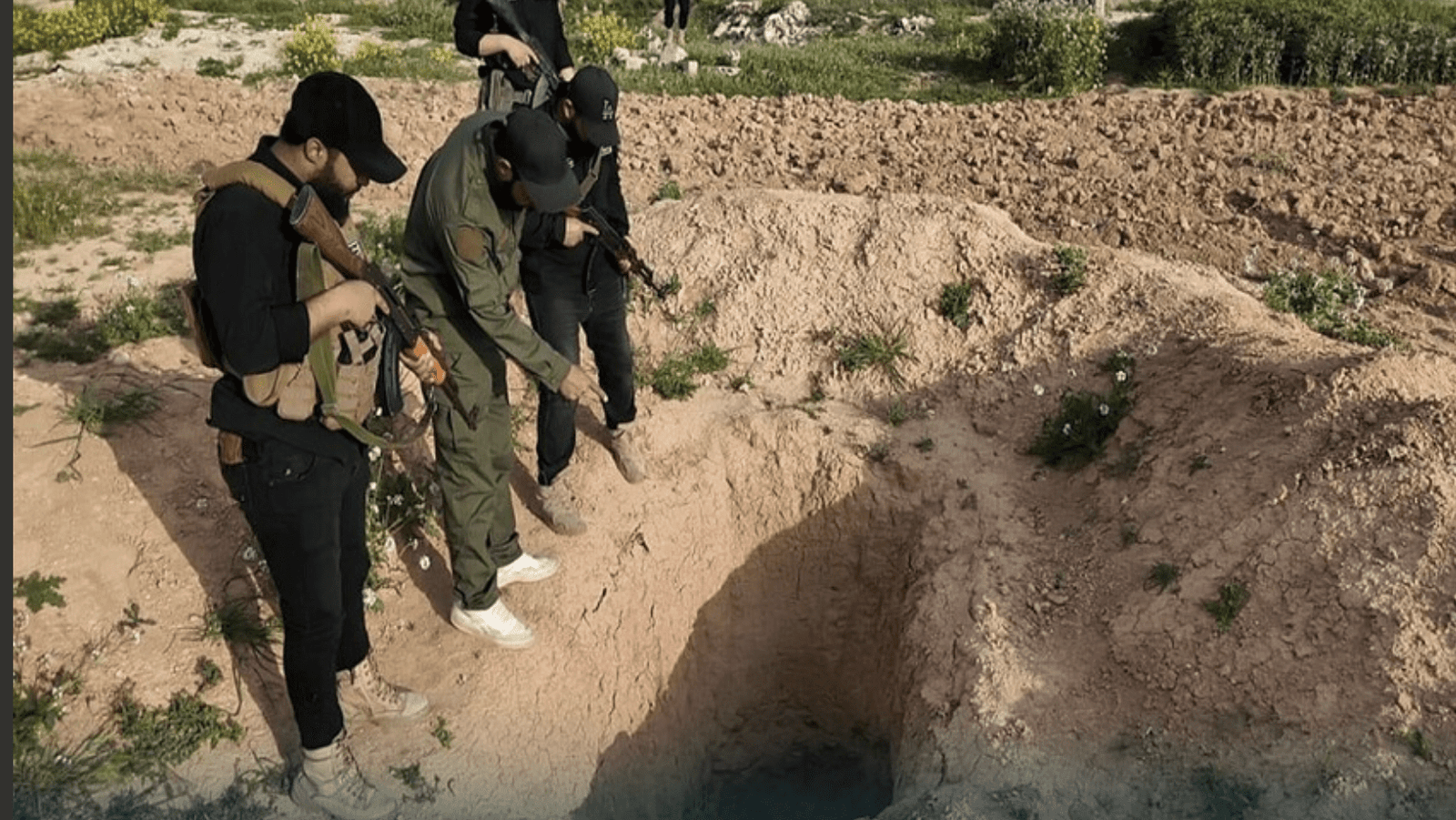
[DAMASCUS] The Syrian-Lebanese border has seen a new security development after Syrian authorities announced the discovery of a smuggling tunnel linking southern rural Homs with Lebanese territory, again highlighting the longstanding security and political sensitivities along the border.
The Syrian Ministry of Interior stated that the discovered tunnel was used to smuggle weapons and ammunition, with quantities found inside or in its vicinity, indicating the presence of an organized network behind its operation.
This discovery comes as part of heightened security measures aimed at curbing illicit activities in border areas, which include not only arms smuggling but also the trafficking of fuel, food supplies, and even people.
Historically, the Syria-Lebanon border has been characterized by its complex geography, spanning mountainous, rural terrain that is difficult to fully control, making it fertile ground for illegal crossings.
This phenomenon intensified during the years of conflict in Syria, as the state’s ability to exert full control over certain areas was hampered, and demand for weapons increased, along with the expansion of a shadow economy.
The region has experienced years of instability, which has directly impacted open or semi-open borders between countries. Within this framework, smuggling networks are viewed as part of a parallel economic system that thrives on disorder and weak oversight, often linked to organized entities capable of financing, planning, and execution.
From a security perspective, the discovery of a tunnel of this scale signals an evolution in smuggling methods, shifting from traditional routes to more sophisticated and covert techniques. Tunnel construction requires human and technical resources, as well as precise knowledge of terrain and border routes, which reinforces the likelihood that professional networks are involved in smuggling.
Politically, this development may open a new avenue for dialogue between Syria and Lebanon on the need to strengthen security coordination and enforce tighter border control. Despite prior cooperation between the two sides in this regard, the continued smuggling activities indicate persistent gaps in monitoring and information-sharing mechanisms.
Smuggling operations also play a dual role: On one hand, they provide illicit income sources for individuals and groups; on the other, they harm the legitimate economies of both countries by draining resources and creating black markets that affect prices and financial stability. Given the economic crises facing both nations, combating this phenomenon becomes increasingly urgent.
At the same time, the current situation along the Syrian-Lebanese border raises questions about the sustainability of relying solely on security solutions to address the issue. Observers point to the need to address the root causes of smuggling, such as poverty, unemployment, and the lack of economic opportunities in border regions. Without genuine and comprehensive development, these activities may persist in different forms despite tightened security measures.
Ultimately, the discovery of the smuggling tunnel between Syria and Lebanon reflects the scale of challenges states face in controlling their borders under complex regional conditions. While this achievement marks an important step in combating smuggling, it also highlights the need for a comprehensive approach that combines security, development, and regional cooperation to ensure more sustainable outcomes.