17.3 C
London
Monday, September 7, 2026
Home Blog

Student Dragged Across 7-Eleven Floor in Wild Video

0
student-dragged-across-7-eleven-floor-in-wild-video
Student Dragged Across 7-Eleven Floor in Wild Video


A late-night snack run turned into a nightmare for an 18-year-old college student after a wild brawl erupted inside a Hollywood 7-Eleven, with shocking surveillance video showing her being dragged to the floor and brutally attacked.

Destiny Valderrama said she and two friends stopped at the convenience store at 6702 Hollywood Blvd. around 12:30 a.m. Sunday after attending a quinceañera.

They had gone inside to grab some snacks when Valderrama says she was suddenly ambushed by two people she did not know.

Surveillance footage from inside the store appears to show a female suspect approaching Valderrama from behind before grabbing her and violently yanking her to the ground.

Moments later, a male suspect allegedly joined the attack and repeatedly slammed the teenager’s head against the floor.

Valderrama said she eventually lost consciousness.

The horrifying confrontation did not end there.

When her two friends tried to step in and help, Valderrama said they were also knocked to the floor and dragged during the chaos.

“My friends tried helping by intervening, and they ended up getting dropped to the floor and dragged as well,” Valderrama told OnScene.TV.

She said she was so terrified afterward that she struggled to even stand.

“I couldn’t even stand up to walk properly out of fear, and I continuously begged the 7/11 workers for help and to call the cops,” she said.

Valderrama claimed the workers refused to intervene or contact authorities.

“None of them called or were willing to help and instead kicked us out and told us to leave,” she alleged.

Photos taken after the attack showed bruising and marks around Valderrama’s neck and chest, along with injuries to her arm.

Police said Valderrama filed a report following the incident. An LAPD spokesperson confirmed the department received the report and said the investigation remains ongoing.

Valderrama, a second-year student at California State University, Dominguez Hills, said she had been returning from a 15th birthday celebration with her friends when the attack happened.

She said she does not recognize either of the alleged attackers and is now hoping police track them down.

“I hope they can catch them soon,” she said.

The disturbing incident comes just weeks after another 7-Eleven in California was targeted by a large group of teens.

Last month, nearly 20 teenagers allegedly stormed an Oakland 7-Eleven, stealing merchandise and damaging the store before some reportedly returned and attempted to force their way back inside.

One employee said someone ripped a metal door handle from the store and hurled it through a glass door, striking the manager in the face.

Ukraine war update: It will be a brutal fall and winter

0
ukraine-war-update:-it-will-be-a-brutal-fall-and-winter
Ukraine war update: It will be a brutal fall and winter

In a war, length is far more important than ferocity. Trying to keep a war from escalating might seem like a prudent thing (and academic theory, which simply does not understand history, says as much). However, clamping down on escalation can actually make things far worse.

What such a move can do, in a vain attempt to keep a war under control, is lengthen a war out of all expectation. And length of war is almost always the key variable in how horrible a war becomes. Short escalation if it can be effective is far preferable to the kind of long and grotesque war we are now seeing in Ukraine.

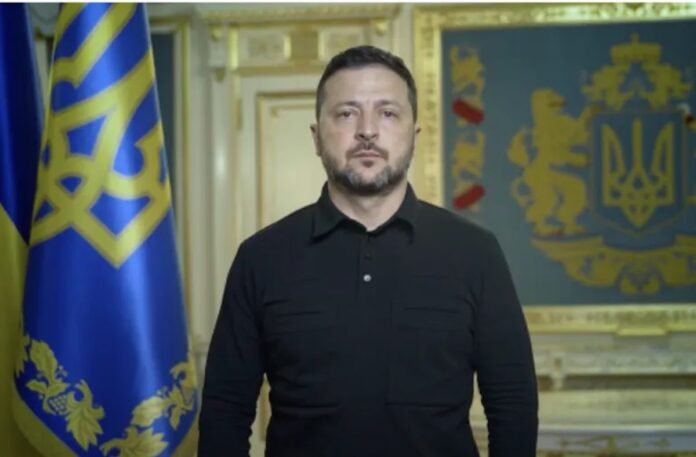
I was struck by that this week when President Volodymyr Zelensky did something that would have seemed shockingly escalatory a few years ago, but which actually people passed over quite quickly now – he announced the “de facto” closing of Russian commercial airspace.

In other words, we are escalating now and people have stopped caring. It brings us back to the opening phase of the full-scale invasion, when people believed such escalation could be controlled.

Now, I am always amused when people accuse me of being a great Biden supporter because I criticize Trump. For the first two years of my Substack (more than half of the time of its existence) I spent much of my time pointing out the great flaws in the Biden administration’s escalation policy.

By trying to restrain escalation, what the Biden administration was actually doing was protecting Russia and lengthening the war. They were at best simply delaying any escalation and in doing so they would actually make that escalation worse and cause more damage. I wrote pieces on just this theme in January 2024 and May 2024.

Now, under Trump, US policy has been revealed as the real disaster that it was. Putin is now free to escalate without any fear that the US will do anything to stop him – and that means the Ukrainians are left playing a brutal game of catch-up. This past week we saw a prime example of this when the Ukrainians announced that they will now ‘de facto’ threaten civil aviation in Russia. They have had to deal with their airspace being a wild west for years and now they are trying to turn the tables. 

All that is indicative of what we are going to see this fall and winter. Both Ukraine and Russia are now, more than four and a half years into the war, facing the reality that this war is going to get even more intense and horrible, setting up a reality where life itself for all people will become increasingly hard. And both sides at the same time have the ability to do more and more damage with their ranged campaign—far more than they could have done a few years ago.

This is what not helping Ukraine to win the war quickly has done – lengthened the war and made it worse. Trying to artificially restrain escalation has led the war to be far more horrible and extensive than it needed to be.

Other stories in this weekend update include a spate of different stories from the US administration about US positioning and the war. The upshot is that Trump is explicit now that Russia is the friend and Ukraine is despised.

Finally, General Drapatyi released a new set of principles for the Ukrainian military. They are worth reflecting on – for all militaries. And they say nothing about needing to give all soldiers a testosterone shot.

It will be a brutal fall and winter

During his evening address on September 1, President Zelensky made a very pointed statement about what he believes will happen in the war against Russia. He believes now that the meaning of the number and type of drones/missiles that the Ukrainians are firing against Russia (and in particular against cities like Moscow and St Petersburg which have large international airports) is that Ukraine is “de facto” closing much of Russian air space to “civilian aircraft”. Here is a story about what he said

Zelensky was so determined to get the message out, that he tweeted out the warning in English right after the address.

As the above statement showed, Zelensky believes that Ukraine “effectively” closing Russian air space is a direct result of Russia being allowed to escalate with impunity over the last few years – continuing this week. 

And of course Zelensky is right. This week has shown just how Russia is able and willing to attack whatever it wants in Ukraine without worry about being accused of escalating, without worrying about being accused of escalating, and without Ukraine’s partners being willing to help Ukraine (let alone do anything strong to deter Russia).

It is worth noting what did happen this week. The Russians killed more civilians, 38, in one air strike than they have done at any other time this year. To reinforce the point that what the Ukrainians are doing in threatening air traffic is part and parcel of how Russia has waged this war, on Friday night the Russians hit two major Ukrainian airfields.

Both sides are also engaging in campaigns of targeted assassination which were reconfirmed this week. The Russians put a drone into the office of the head of Ukrainian military intelligence – which is in one of the most central and prominent positions in Kyiv. The Ukrainians, meanwhile, seem to have assassinated a Russian military officer in St Petersburg, an officer who had been accused of war crimes.

And this is just the start of what we are about to see. As both sides understand, this winter could be quite determinative in shaping the end of the war, particularly if it is as cold and terrible as last winter. The Ukrainians I know are already starting preparations, on the assumption that they may lose power and heating for large stretches of the winter. 

The Ukrainians admitted in August that up to 80% of their pre-war power generation facilities have been either completely or partially destroyed. Zelensky even stated that Ukraine had “virtually no intact thermal power plants” and that “Russian missiles are aimed precisely at making the lives of Ukrainians unbearable.” What is left is to a large degree based on nuclear power plants that Russia for reasons of self-interest is reluctant to attack. However there are signs that even this reluctance is breaking down.

In other words, this winter could see major power and heating cuts, making the lives of millions of Ukrainians extremely hard.

The Ukrainians’ response will be fascinating. It could potentially be to hit back in a similar way. So far the vast majority of Ukrainian attacks of this kind have been against Russia’s fuel industry – primarily its refineries. What it has not tried to do, though conceivably it could, is turn the lights and heat out in Moscow or St Petersburg.

By warning that civilian aviation is not safe in Russia, Zelensky is “de facto” warning that all such infrastructure is potentially now at risk. If airfields are not safe, neither are power plants, etc. 

The Russians’ response has been to threaten even greater attacks on Ukrainian power generation but as they have basically done as they can, they cannot really escalate in that regard.

The upshot of all of this is that we are poised for a pretty harsh fall and winter. The policy of trying to control and stop escalation has failed utterly. It might have delayed escalation for a little while, but has made it now far worse when it happened. It has already led to great suffering and will lead to much more. 

Trump speaks his truth about Russia and Ukraine

At times Donald Trump speaks the truth. It can happen when he loses control and gets so angry that he blurts out what he really thinks. He did that this past week on Twitter when he started a rant about the US reporting of his war with Iran – a rant that he then turned into a whine about how the US needs to be paid back for giving Ukraine aid under the Biden Administration.

It seems he could not control himself and Natalie could not either, so he just had to let his resentment towards Ukraine come out.

Note that this aid was all Congressionally sanctioned, so actually the US cannot demand any money back. Trump cares so little for Congress that he overlooks that. However the truth is there that, if Trump could make Ukraine pay back the aid, he would.

At the same time that Trump could not control himself about Ukraine, he revealed his instinctive respect and affection for Putin by defending the Russian dictator from the charge that it was Russians who had orchestrated the attack on Germany’s Leipzig airport (which is now what the German government is stating clearly). When Trump was asked about the German government’s claim, he instinctively jumped to Putin’s defense, and, as he often does with the Russian dictator, talked up the fact that the two of them have a close personal relationship:

“I don’t think that Putin will be… I speak to him. I know him very well. Putin’s not looking to attack NATO territory.”

This instinctive Trumpian affection for Putin and Russia was shown in the other big story of the last few days, the visit of Steve Witkoff and Jared Kushner to Moscow and Kyiv. That trip (which started when the two reached Moscow and which should soon see them in Kyiv) reveals just how deep the affection runs between Trump and Putin.

When Witkoff and Putin sat down with Putin, the Americans could not have been more positive. Witkoff gushed about his repeated pleasure at meeting Putin, saying that when he retires he will look back on all these “incredible stories and incredible memories and yours will be right at the top.”

Witkoff can barely contain his glee at meeting again with Putin

Beyond Trump’s and Witkoff’s obvious affection for Putin, the staging of the visits reveals a great deal. Even though the two have never before visited Ukraine, Trump felt the need for them to go to Moscow first, to show Putin he is, always, the number 1 priority. Only after seeing Putin, and presumably working out a plan with him, can they be allowed finally to visit Ukraine. Remember, the last time they presented a “compromise” plan to the Ukrainians, it was practically word for word a dictation of a Russian plan. 

So, once again, the US government seems to need to agree on a position with Putin before it can talk with Ukraine. 

Such behavior, by the way, makes me doubt that the real reason behind the Ratcliffe visit was to somehow tell Putin the war was going badly for Russia. The US government remains in Putin’s thrall. 

So the last few days reveal once again the instinctive position of Donald Trump and, through him, the US government. He/they want to help and work with Putin and believe that Ukraine needs to do what it is told. 

And it has always been thus.

Drapatyi’s Principles

On September 2, Commander-in-Chief of the Ukrainian Armed Forces Major General Mykhailo Drapatyi publicly released a document entitled “Principles of Leadership and Military Development in Wartime.” If you want to read the full text in English (and I recommend that you do) here is a link to a translatable version

By the way, here is the piece that I wrote about Drapatyi when he was first appointed. Since then I can happily report that everything I have heard from Ukrainians has been extremely positive about what he is doing. He might be an even better selection than he seemed at the time.

What Drapatyi writes is fascinating and heartening. It gives an indication of what Drapatyi believes are the key tenets of how Ukraine needs to fight the war and how the Ukrainian army needs to be run. Foundationally, he believes that the Ukrainians must out-think and out-adapt the Russians. Key elements that will make this possible are keeping Ukrainian casualties down, keeping morale high and demanding accountability from Ukraine’s officer corps. 

The first part of the document has a subhead that starts: “People are the most valuable combat capability..

It is very well reasoned. Drapatyi does not talk about saving lives through not fighting or taking no risks. He sees this happening by taking the right risks and always trying to stay ahead of the Russians in the adaptation and innovation cycle. To do that, he calls on Ukrainian officers not just to give orders, but to listen. He is saying to them, “it is your responsibility to put your soldiers in the best possible position to achieve their objectives and save their lives.” 

Here was a fascinating reflection on precisely that point.

A separate priority is accelerating adaptation and the implementation of innovation. The purpose of this work, as set out in the Principles, is linked to people: technologies are needed where they enable tasks to be accomplished with fewer casualties and less risk to those directly holding the front line. The source of change is not limited to headquarters: commanders are required to create an environment in which “good ideas can come from any service member, regardless of military rank or position.

And you know what he says is the linchpin of all of this: It is truth. Drapatyi calls for truth from the top of the Ukrainian military on down. Sorry for all the quotes, but the whole document is really worth digesting. Note—translating the text from Ukrainian to English can lead to some awkward phrasing.

  • Truth makes us stronger
  • The document requires commanders and headquarters to provide honest assessments and not allow optimism, fear or personal ambitions to distort reality. 
  • “Problems that are ignored only grow.” “Healthy professional debate strengthens decisions; silence weakens them.”
  • The same standards of conduct apply to generals, officers, sergeants and civilian leaders: there is no place in the Armed Forces for corruption, abuse of authority, harassment, discrimination or injustice. A separate requirement for everyone commander is the responsible use of state resources.

In reading this I was struck how different it is from the values not only of the Russian military, but also those of the present leadership in the Pentagon. In the latter, truth is considered a useless commodity. A focus on brains and adaptability over brainless bravery is considered the sign of being a sissy. And accountability has been thrown out of the window.

The US military is being run by a group that apes the Russians and not the Ukrainians – when we have in front of us, from the latter, one of the best statements of command principles I have ever seen. It is a tragedy.

The USA is going to have to change so many things in the future, and that will start with understanding that it needs to learn from others and that the present US ethos is one that fosters failure. The US military could do far worse than to start its rebuild based on Drapatyi’s principles of command.

And as I said above, there are no testosterone shots or cosplay warriors in sight.

Phillips O’Brien is professor of strategic studies at the University of St. Andrew.

This article, originally published by Phillips’s Newsletter, is republished with permission.

Israeli occupier spits at entrance of Christian monastery in occupied East Jerusalem

0

An Israeli occupier spat at the entrance of the Monastery of St. James in the Armenian Quarter of occupied East Jerusalem’s Old City, Palestinian authorities said Sunday, Anadolu reports.

The Jerusalem Governorate said in a statement that the incident was part of a series of repeated attacks targeting churches, monasteries and Christian clergy in the Old City, including spitting, insults, physical assaults and vandalism.

It also released a video showing the Israeli occupier spitting at the entrance of the monastery.

The incident came a day after Palestinian Foreign Minister Varsen Aghabekian Shahin met a delegation from Churches for Middle East Peace on Saturday to discuss Israeli attacks against Christians.

During the meeting, Shahin briefed the delegation on the “deteriorating situation in the West Bank and escalating violence by Israeli occupiers under the protection of the Israeli army,” according to a statement by her office

She also highlighted challenges facing the Christian presence in Palestine and a sharp decline in the Christian population due to difficult conditions faced by Palestinians.

Members of the delegation said their visit was intended to express solidarity with the Palestinian people and voiced concern over challenges facing Christians and their declining numbers in the Holy Land and across Palestine.

On Aug. 11, the Higher Presidential Committee for Church Affairs in Palestine said Israeli attacks against Christian communities threatened their longstanding presence in the land.

The committee said attacks against Palestinian Christians were “no longer isolated incidents,” but part of an ongoing pattern that included attacks by Israeli occupiers, land confiscations, settlement expansion and restrictions on freedom of worship.

About a week ago, Christian schools in occupied East Jerusalem suspended classes until further notice after Israel failed to renew entry permits for more than 70 teachers and staff members, preventing them from reaching their schools.

The developments come amid repeated attacks against the Christian presence in the Palestinian territories, including attacks on clergy and churches involving spitting, insults and other forms of harassment.

​​​​​​​Since the start of Israel’s war on the Gaza Strip in October 2023, the occupied West Bank has witnessed a sharp rise in daily Israeli military raids and attacks by occupiers.

PKK Warns Turkey Disarmament Process Could Collapse Without Political Reforms 

0
pkk-warns-turkey-disarmament-process-could-collapse-without-political-reforms 
PKK Warns Turkey Disarmament Process Could Collapse Without Political Reforms 


Senior Kurdistan Workers’ Party (PKK) official Cemil Bayik warned that the group’s disarmament process could stall unless Turkey accompanies it with political reforms, criticizing a new law governing the surrender and reintegration of PKK members as insufficient. 

Bayik said the National Solidarity and Social Integration Law does not clearly connect the surrender of weapons with a transition to democratic politics. 

“The language used in the law is deeply flawed,” Bayik told the PKK-linked Firat News Agency in remarks carried by Turkish media Saturday. 

“We have made clear on every occasion that this process is not limited to disarmament. It is important to spell out the democratic steps that disarmament requires, because arms will be laid down in order to enter a democratic political arena,” he said. 

The Turkish parliament passed the law on Aug. 10, and Turkish President Tayyip Erdogan approved it on Aug. 18. It allows deferred sentences, suspended prosecutions, and the conditional return of PKK members who surrender their weapons. 

However, 230 senior PKK figures are reportedly excluded from returning to Turkey and could instead be housed in a safe zone in Sulaymaniyah in northern Iraq. 

Bayik objected to the exclusion of PKK leader Abdullah Ocalan and other senior members from the framework. He also called for constitutional and legal changes recognizing Kurdish language, culture, political will, and rights to local self-government. 

“If the process falters because democratic steps are absent, the responsibility will lie with the Turkish government,” Bayik said. 

Turkey is meanwhile establishing four subcommittees to oversee legal issues, monitoring, social integration, and disarmament. Officials have ruled out giving Ocalan formal membership in the committees but said he could contribute to the disarmament process. 

A security mechanism involving Ankara, Baghdad, Erbil, and Sulaymaniyah will verify whether the PKK has withdrawn from 72 positions along the Turkish-Iraqi border. 

Under the plan, about 3,800 PKK members at 18 camps will surrender their weapons, while camps and caves extending to the Qandil Mountains, including in Metina, Zap, Avasin, Basyan and Haftanin, are to be evacuated by Oct. 1. Iraqi border guards and Peshmerga forces will then be deployed, particularly near the Turkish border. 


As family farms decline and the climate heats up, farmers weigh what to do with their land

0
as-family-farms-decline-and-the-climate-heats-up,-farmers-weigh-what-to-do-with-their-land
As family farms decline and the climate heats up, farmers weigh what to do with their land

This coverage is made possible through a partnership between Grist and Interlochen Public Radio in northern Michigan. ​​

John Boyer grew up on his family’s 131 acres of rolling fields of corn, oats, and wheat in a rural area near the tiny city of East Jordan in northern Michigan. The farm had changed ownership outside the family several times over the decades before Boyer rebought it in 2018. He felt an obligation to repurchase and farm the land to prevent development from encroaching on the area’s community of family farms.

“For any farmer, everything’s personal,” Boyer said. “Every piece of property, every stone you pick up, you spend countless hours out there.”

As millions of farmland acres around the country are expected to change hands in the next few decades, farmers are facing decisions about whether — and if so, how — to preserve farmland amid pressures from rising land values, a shifting climate, and a younger generation that doesn’t want to farm. The number of acres devoted to farming in Michigan has declined in recent decades, as it has in the rest of the country. And ownership of that land is changing. 

In 2022, an estimated 9.5 million acres, or about a quarter of the state, were devoted to farming, a roughly 3 percent dip from 2017, according to the most recent federal farm census. Farmland in Michigan where the majority of operations were family-owned decreased nearly 470,000 acres in those same five years. Conversely, land leased or rented for farming operations increased by nearly 30,000 acres.  

Despite shifts in farm ownership and acreage dedicated to agriculture, the number of farmland acres in Michigan protected by conservation programs has increased in recent years, reflecting a national trend. The state saw an additional 22,000 acres protected in easements between 2017 and 2022, according to the U.S. Department of Agriculture.

“It’s a matter of trying to figure out what exactly is going to be the best fit for everybody’s situation. And there’s a lot of pressure. There’s a lot of money,” said Jon LaPorte, a farm business management educator for Michigan State University Extension.

According to the USDA, Michigan farmland was valued at about $6,800 per acre last year, up 7.8 percent from 2024 and outpacing the national average of 4.3 percent.

The pressure to preserve farmland could be especially strong in northern Michigan. Farmers there are already confronting the effects of climate change, including more extreme precipitation, crop disease, and temperature swings, but some local farmers said those impacts are relatively easier to deal with than elsewhere in the country.

“As the world climate changes, this area could become more and more important for food production and food security,” said Dave Skornia, a farmer in Boyne City, Michigan. “So, you got to have land.”

A man stands in front of an agricultural field on a sunny, clear day.

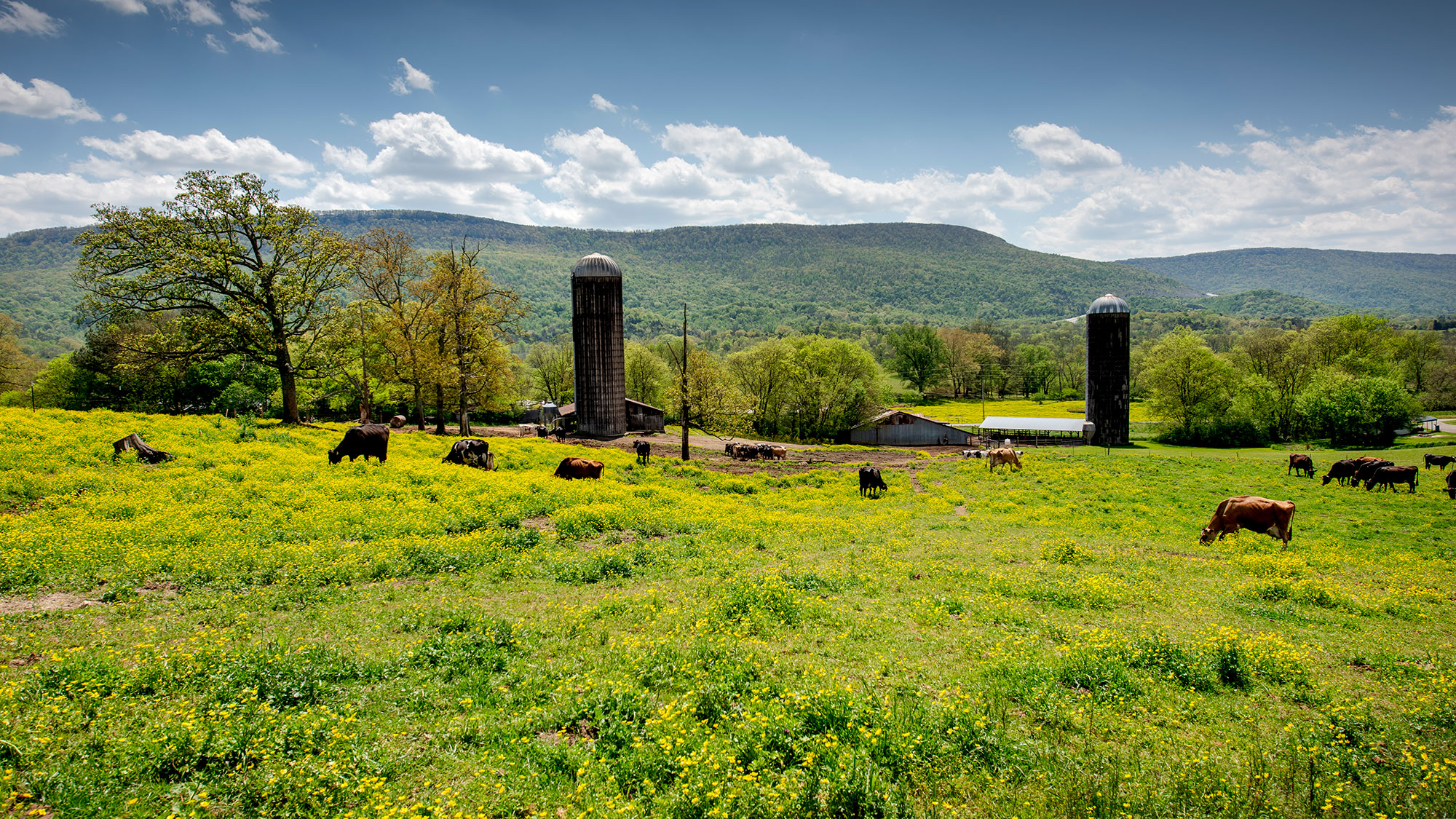
farmland with silos and cows

But easements still have their challenges, he said. Conservancies pay landowners for a portion of the overall land value, and selling the development rights earns the landowner less revenue than outright selling the land. As land values rise in rural northern Michigan, the conservancy doesn’t see many farmers purely motivated by financial return entering into such agreements. 

“There can be a question of timing: ‘Is this the right thing to do? What might we be foregoing later?’” Graham said.

Boyer wants to prevent his land from being divided up down the line and sold in smaller parcels “to make a quick buck.” Once an acre is converted for built developments like houses or commercial buildings, it typically doesn’t return to farmland.

“Then suddenly a productive farm field or ground is gone, and it’s gone for generations,” Boyer said. “It’s gone forever.”


Rebecca Carlson, a cherry and apple grower who runs Overlook Orchards in Northport, a village at the tip of Michigan’s Leelanau Peninsula on Lake Michigan, also sees land division as a future threat to the farmland in her county. Aging farmers might split up land among multiple kids, leaving a patchwork of ownership that “breaks up multigenerational farms,” Carlson said, especially as younger people in the area choose not to go into the business.

She’s a fourth-generation farmer who married into another multigenerational farming family. She and her husband have grown the original farm from about 200 acres to 1,300 acres over eight years. To expand, the couple bought nearby land, but they also lease some parcels, mostly from family farmers who don’t have a younger generation to take over. 

“In order to be successful in farming, in some cases, it’s one of those, ‘Go big or go home,’ with the climate of farming today,” Carlson said. 

In Michigan, about 39 percent of agricultural land is leased, according to the 2022 USDA census, a number that mirrors the national average.

Leases keep farmland in production for the duration of the contract — most of Carlson’s leases are for 30 years. She pays annual fees that vary based on factors like location or crop productivity. Those fees can be significantly cheaper than owning farmland outright, because Carlson isn’t responsible for property taxes or other costs like insurance for infrastructure.

“It’s a great way to maintain your … farm and grow your farm,” she said. “They don’t make land anymore.”

Leasing does have some limitations. A 2026 MSU survey of Michigan farmers found high lease rates and locating land that matches their needs were the top concerns for those looking to lease. Farmers either have a “crop in mind but no ground, or they had the ground, but in some cases they weren’t sure what they could raise on it,” LaPorte with MSU Extension said.

It’s not just about land, either. LaPorte said the relationship between landowner and farmer is just as important. 

“You might have a great relationship where you never worry a single day about whether or not you’re going to have the property a year from now,” LaPorte said. “Other cases, there’s some differences in terms of what each party’s goals are that kind of create that sense of anxiety about, ‘Is this going to last long-term?’”

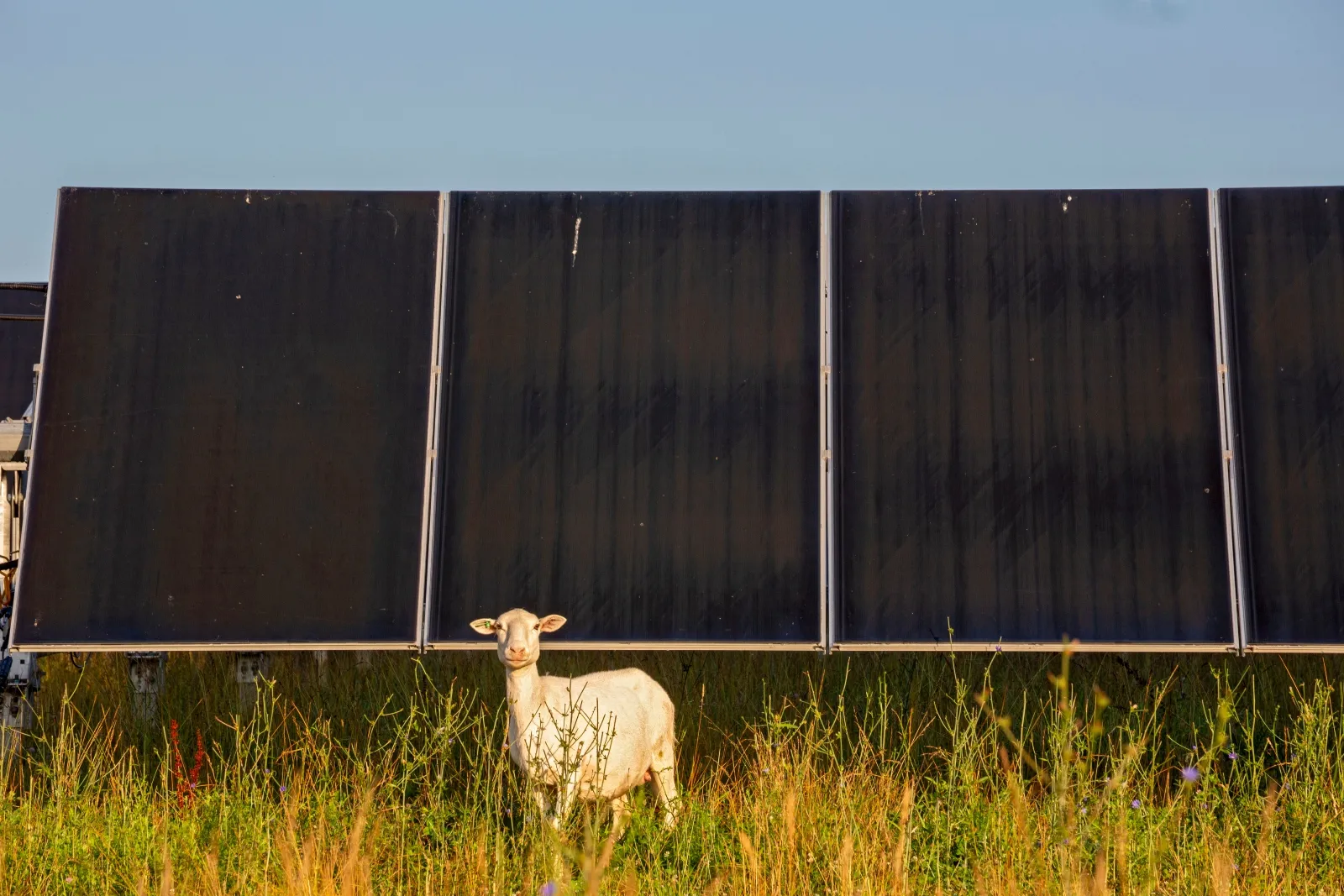
A sheep in a field stands in front of a solar panel.takes up a small share — 0.09 percent — of USDA prime farmland. Like in the rest of the U.S., it’s less than the acreage that’s been converted to suburban development or recreational uses like golf courses, according to the trade group Solar Energy Industries Association. 

Still, local opposition remains fierce. Earlier this year in Wexford County, on the northern end of Michigan’s Lower Peninsula, early plans from a renewable energy developer to build solar panels on nearly 1,500 acres of farmland sparked concerns about encroaching development on productive fields and the long-term impact on the ground.

Michigan researchers are hoping to address those concerns by looking at ways that solar panels and farming can coexist, a practice known as agrivoltaics. Solar panels can shade livestock or crops, and leases with renewable energy developers can be a way for farmers to offset declining farm incomes, said Charles Gould, a bioenergy educator with MSU Extension.

It doesn’t necessarily have to be a choice between producing power or food, he said.

“If we can do both on the same acre of land, why wouldn’t we?” Gould said. “We want to preserve the family farm. This is a very powerful tool.”


Dr. Phil Claims Lindsay Clancy Case was a ‘Psychiatric Emergency’

0
dr.-phil-claims-lindsay-clancy-case-was-a-‘psychiatric-emergency’
Dr. Phil Claims Lindsay Clancy Case was a ‘Psychiatric Emergency’


Dr. Phil McGraw is weighing in on the shocking Lindsay Clancy murder case after a jury failed to reach a verdict in the deaths of her three young children.

The television psychologist said the case raises disturbing questions about postpartum psychosis, mental health treatment and accountability — but stressed that the three children who died must remain at the center of the story.

Speaking on “Fox News Live” with Aishah Hasnie on September 5, McGraw said Clancy’s children — Cora, 5, Dawson, 3, and Callan, 8 months — are the ones who deserve the most attention.

“They are the real folks we need to give our attention to here,” McGraw said. “Three innocent children did lose their lives, and you can never explain these situations away simply.”

Clancy admitted to strangling her three children in 2023. Her attorneys argued that she was suffering from postpartum psychosis and was not in control of her actions at the time.

After days of deliberations, jurors were unable to reach a unanimous decision, forcing the judge to declare a mistrial.

McGraw said cases involving severe mental illness can quickly become emotional courtroom battles, with each side attempting to frame the psychiatric evidence differently.

He warned against treating mental illness as a “political, ideological football” instead of focusing on what actually happened and what role Clancy’s mental condition may have played.

Despite the mistrial, McGraw said Clancy is unlikely to simply walk away from the case.

“She’s not going home,” he said, adding that there will eventually be accountability.

McGraw said Clancy will have to live with the deaths of her children for the rest of her life and could potentially remain in a psychiatric facility if she is ultimately found not guilty by reason of mental disease or defect.

He also stressed that he was not attempting to excuse what happened.

“I think people underestimate the power of psychosis in taking over someone’s life,” McGraw said.

He compared severe psychosis to a physical condition such as a brain tumor that can dramatically affect a person’s behavior.

“I’m not excusing what she did in any way,” he said. “I think she should be held fully accountable, but I think we need to understand causation.”

McGraw also offered a blunt assessment of how prosecutors presented their case.

He described the prosecution’s presentation as “pretty clunky,” although he said prosecutors managed to pull their arguments together toward the end of the trial.

McGraw, who noted that he has spent much of his professional career working in trial sciences and studying juries, said jurors typically search for a clear and understandable explanation of what happened.

In his view, Clancy’s defense team gave them one.

He said the defense presented a story that was “much more understandable and much more coherent” than the prosecution’s explanation.

McGraw also warned about the broader cultural impact of the case, including the possibility of copycat incidents.

“We certainly don’t want that to take place here, so we need to look at what the cultural effects are,” he said.

One of McGraw’s biggest concerns was what he described as confusion between postpartum depression and postpartum psychosis.

“There’s a huge difference between postpartum depression and postpartum psychosis,” he said.

McGraw described postpartum psychosis as a psychiatric emergency requiring immediate hospitalization.

“It’s not a time to adjust medications,” he said. “It’s not a time to schedule an extra appointment during the week.”

Instead, he said someone experiencing postpartum psychosis should receive inpatient care and be separated from their children immediately.

“Not tomorrow morning, not tomorrow afternoon, but immediately,” McGraw said.

He described Clancy’s case as a “psychiatric emergency that wasn’t treated as such.”

McGraw said the tragedy could become a major “teachable moment for the country,” particularly when it comes to recognizing and responding to severe postpartum mental illness.

But he also warned against portraying Clancy as a sympathetic hero because of her mental health struggles.

“There’s nothing to be celebrated here,” he said.

McGraw said the larger lesson is that something in the system failed before three young children lost their lives.

“This was a woman who asked for help,” he said. “She admitted herself to the hospital. Was that enough?”

A hard-won rule to cut chemical plant pollution is being unraveled

0
a-hard-won-rule-to-cut-chemical-plant-pollution-is-being-unraveled
A hard-won rule to cut chemical plant pollution is being unraveled

This story was originally published by Yale E360 and is reproduced here as part of the Climate Desk collaboration.

In April 2024, Tish Taylor and her father, Robert, stood behind President Joe Biden’s Environmental Protection Agency chief, Michael Regan, as he signed a regulation designed to dramatically reduce toxic pollution from petrochemical plants like those that cluster near the Taylors’ homes along the lower Mississippi River, in Louisiana. 

Taylor struggled not to cry through the signing ceremony, which followed years of demands from communities like hers — in the 85-mile corridor between New Orleans and Baton Rouge that has become known as Cancer Alley — for tighter limits on plants’ emissions. The new regulation, known as the HON rule, was “a wonderful gift to generations ahead of us,” Taylor said. “It’s hard for me to find the words to say how validated we felt.” 

For decades, regulations on emissions of hazardous chemicals such as toluene, ethylene oxide, and vinyl chloride have been weaker than restrictions on more common pollutants, such as those emitted by vehicles. 

The Biden administration took major steps to strengthen Clean Air Act rules on those hazardous air pollutants, and the HON rule was a centerpiece of that effort. Toughening requirements on six different pollutants at more than 200 petrochemical plants, it was one of a slate of regulations the Biden administration enacted on air toxics, each covering a specific industry, from steelmaking to tire manufacturing.

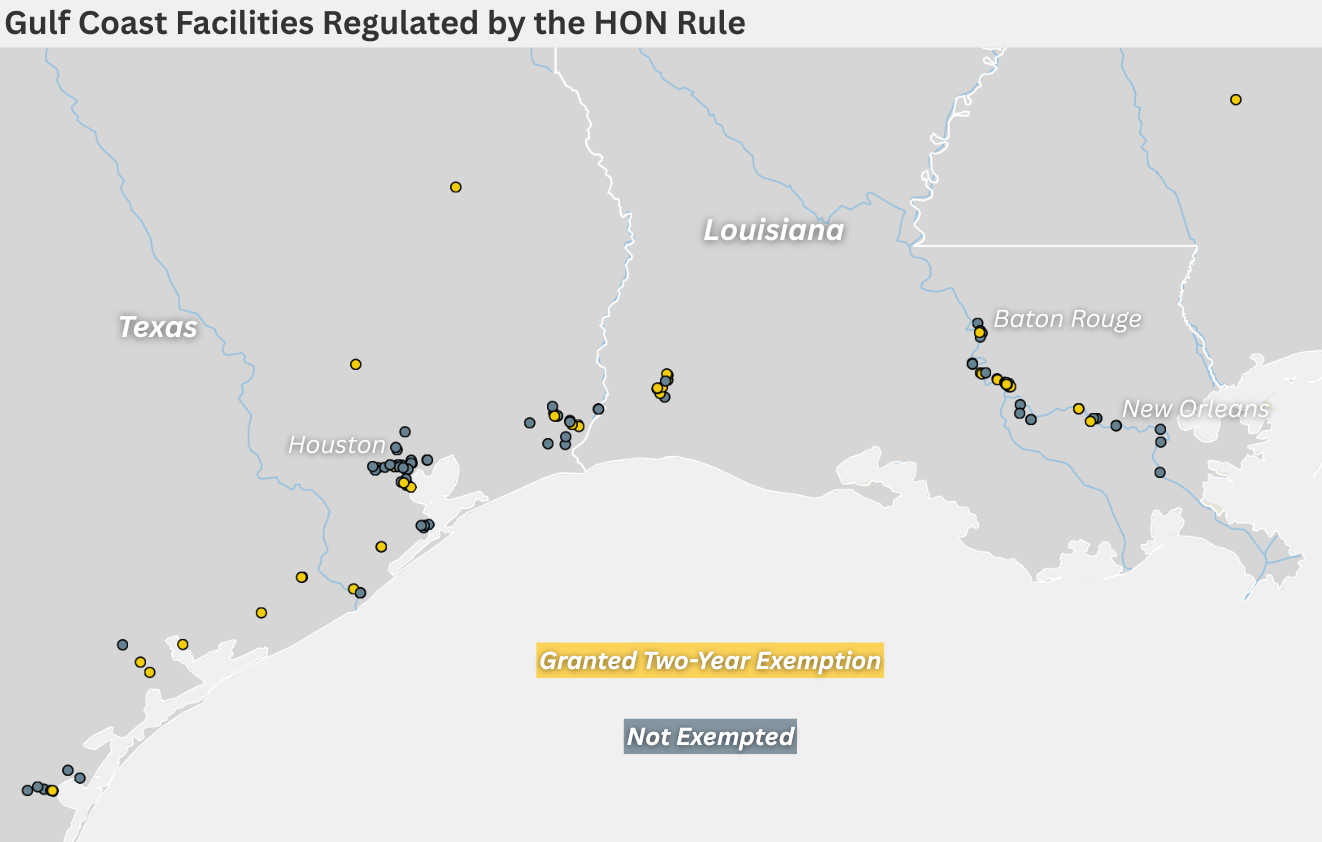
Gulf Coast petrochemical plants regulated by the 2024 HON rule. Source: Environmental Defense Fund. Yale E360

But shortly after President Donald Trump began his second term, his administration began unraveling those rules, including the one the Taylors had so recently celebrated. Last year, Trump granted two-year exemptions from the HON rule to more than 50 petrochemical facilities. This July, he issued 20 more temporary exemptions, and the EPA said it would propose a rewrite of the regulation this fall. The new version is all but certain to significantly scale back the rule’s protections. 

“Everything that the Biden administration did to help protect us was pretty much just thrown in the garbage,” Tish Taylor said in July, and replaced by “a death sentence.” St. John the Baptist Parish, where her family lives, has the country’s highest risk of cancer from air pollution — nearly 50 times the national average. A disproportionate percentage of those exposed to the highest levels of pollution in the region are Black.

A set of amendments to several existing regulations on toxic air pollutants, the HON rule — which stands for Hazardous Organic National Emission Standards for Hazardous Air Pollutants — requires petrochemical plants to upgrade their pollution control equipment to reduce emissions of two hazardous chemicals: ethylene oxide and chloroprene. It also mandates air monitors at plants’ fencelines to measure concentrations of those chemicals and four more — benzene, ethylene dichloride, vinyl chloride, and 1,3-butadiene — and requires operators to carry out necessary repairs if emissions exceed limits. 

Tracey Woodruff, a Stanford University epidemiology and population health professor who formerly worked on toxic assessments at the EPA, said the pollutants covered by the HON rule are “the classic bad guys of toxic chemicals,” compounds that raise risks for breast cancer, liver cancer, leukemia, lymphoma, and reproductive problems. “We’ve known about their toxicity for decades,” she said, and “they should have been more highly regulated a long time ago.” 

Read Next

The HON rule also closed a long-standing loophole that freed plants from emissions requirements when they were shutting down and starting up — for example when carrying out maintenance, or ahead of a storm. With climate change fueling more extreme weather, that loophole has “a massive impact on what is actually getting released,” said Shiv Srivastava, policy director at Fenceline Watch, a Houston environmental justice group.

The HON rule was one of nine new air toxics rules issued by the Biden administration. The eight other rules targeted emissions from sectors including iron- and steelmaking, copper smelting, tire manufacturing, and coal-fired power plants. All nine have been or are now being rescindedrevised, or reconsidered.  

The HON rule was among the most wide-reaching of those hazardous pollutant regulations. “This is a big rule,” said Joe Goffman, who headed the EPA’s air office under Biden. Because air toxics rules typically address very specific types of industrial facilities, an individual regulation sometimes applies to only a handful of plants in a few locations, with pollution reductions often measured in just hundreds of pounds, he said. But the HON rule covered approximately 220 large petrochemical plants, so its footprint promised to be both bigger and more wide-reaching geographically. Nearly 60 percent of the facilities it covered are in Texas and Louisiana, home to the nation’s largest petrochemical production zones. The rest are scattered across the country, in states including Tennessee, Kentucky, West Virginia, Ohio, Illinois, and Alabama. 

The EPA estimated when the rule was finalized that it would prevent 6,200 tons of toxic air pollution annually, and slash emissions of ethylene oxide and chloroprene from the plants it regulates by almost 80 percent. In communities near HON plants, the agency said the regulation would reduce the risk of cancers related to air toxics by 96 percent. Facilities affected by the rule produce ingredients for common products such as plastics, paints, antifreeze, and cleaning and personal care items like detergent and shampoo. 

Weeks into Trump’s second term, the EPA invited companies to email the agency with requests for exemptions from the HON rule and Biden’s other hazardous pollutant regulations. In granting the postponements, Trump invoked a Clean Air Act provision that environmental lawyers say has never been used: allowing temporary exemptions to emissions rules if they are “in the country’s national security interests” and if the technology required to comply with a regulation is unavailable.

Read Next

“The HON Rule imposes substantial burdens on chemical manufacturers already operating under stringent regulations,” Trump’s exemption proclamations said. “Maintaining a robust domestic chemical industry is vital to safeguarding the supply chains that underpin our economy and to reducing the Nation’s dependence on foreign control over materials critical to national resilience.”

Trump’s orders provided no evidence for their assertions. “That’s not how this works,” said Annie Fox, a staff attorney at the Clean Air Council, in Philadelphia. The law requires a president to set out specifics supporting each claim made in justifying an exemption, “not just state it,” she said. “These are supposed to be rare exceptions that are well-grounded in research and facts.” 

Last October, a coalition of local and national advocacy groups, including the Taylors’ Concerned Citizens of St. John, sued Trump and his EPA in the U.S. District Court for the District of Columbia over the exemptions, arguing that Trump’s claims are false and amount to “a pretext to relieve polluters from working to comply” with the HON rule while the administration works to undo the regulation.

The American Chemistry Council, a trade group representing petrochemical producers, said the exemptions “offer a pathway for relief for some sources from some of the unrealistic timelines” in the HON rule. It called the regulation “overly stringent” and said it “exceeds the EPA’s statutory authority, disregards relevant scientific evidence, and imposes some requirements without technological availability.” 

The EPA said in an emailed statement that all its proposals on air toxics aimed to “protect American industry and supply chains, while still minimizing Americans’ unnecessary exposure to hazardous air pollutants.” 

Read Next

The HON rule’s roots lay in a 2016 reevaluation of ethylene oxide gas that revealed it was much more dangerous to those inhaling it than had been previously understood. That reevaluation also led, in 2024, to a regulation that tightened emissions limits on ethylene oxide at facilities that use it to sterilize medical equipment.

In March, the EPA proposed replacing the medical sterilizer rule with a weakened version, arguing that the Clean Air Act gives regulators very limited scope to update rules in accordance with new science on health dangers.

In backtracking on efforts to limit exposure to hazardous air pollutants, Woodruff said, the Trump administration has signaled that “whatever the industry wants to do, that’s what we want to do.” She noted that former fossil fuel and petrochemical industry representatives hold top jobs across the EPA. The policy changes “will lead to people getting sicker and dying,” she said. “This is exactly opposite of what this administration claimed they wanted to do in terms of ‘Make America Healthy Again.’”

Read Next

HON rule exemptions are not the only change that will increase risks to Americans living near petrochemical facilities, advocates say. The EPA has also proposed undoing changes the Biden administration made to strengthen a safety rule called the Risk Management Program, which empowered workers dealing with hazardous substances to stop operations they believe to be dangerous, and required chemical facilities to prepare for natural disasters, undergo independent audits after accidents, and share information with the public. 

Nationally, there were 131 accidents resulting in reportable chemical releases last year. For those living near the Houston area’s nearly 700 chemical plants, “there are constant explosions, there are constant fires, there are constant black, dark plumes that linger over our communities,” Srivastava said.

The Biden-era update sought to address such dangers, but the Trump administration said the new rule was too costly and burdensome, and that it had made refineries and chemical facilities “less safe and less competitive.” Many of the plants it covered already had effective safety programs, the EPA said in a statement, and eliminating duplicative requirements would enable operators to focus on the most important changes. “Due to the varied, complex nature of chemical facilities, the facility operator is in the best position to assess risks and identify steps to mitigate these risks,” it said. 

Last year, the administration also removed an online data tool the Biden administration had created to give communities located near petrochemical plants information about their operations, including their accident history, emergency response plans, and the chemicals they handle. Srivastava said the tool’s loss cuts off neighbors’ access to even the most basic information about nearby plants — their names and locations, for example — making it hard for communities to even begin preparing for accidents. And easing safety mandates, he said, “makes us extremely, extremely vulnerable to having a massive, catastrophic disaster on the scale of something like what happened in Bhopal,” where a leak at a Union Carbide pesticide plant, in India, killed thousands of people in 1984.

Sharon Lavigne, founder of RISE St. James Louisiana, an advocacy group in “Cancer Alley,” still has the pen that the EPA’s Michael Regan gave her after he signed the HON rule, and her group is a plaintiff in the lawsuit challenging Trump’s exemptions. She said she believes the president’s disregard for the regulation reflects his belief that “we are nothing,” and she vowed to continue fighting to restore the HON rule’s original reach and strength. “When he gets out of office,” she said, “we’re gonna fix it back.”


A Mecca Pact Without a Playbook Puts India on Alert

0
a-mecca-pact-without-a-playbook-puts-india-on-alert
A Mecca Pact Without a Playbook Puts India on Alert


Kuwait invoked the UN Charter’s self-defense provision after Iranian attacks, while the Mecca alliance’s mutual-defense clause has not been publicly tested

[ISTANBUL] The newly established Mecca Defense Alliance has put a strategic question before India: Will the collective-defense pact linking Pakistan, Saudi Arabia and Turkey remain mainly political, or develop into an operational military arrangement?

The three countries signed the Mecca Joint Defense Agreement on Aug. 7 and met in Istanbul on Aug. 31 to establish a secretariat in Saudi Arabia, to be led by a Pakistani secretary-general for three years. Reuters reported that the agreement treats an armed attack on one signatory as an attack on all three, but the governments have not released a detailed public text setting out the commitments that would follow.

Turkish Foreign Minister Hakan Fidan said after the Istanbul meeting that the alliance was designed to expand and that officials had begun work on an accession roadmap. The talks addressed counterterrorism, defense production and interoperability, including possible joint land, sea and air exercises, air defense, drones, autonomous systems, electronic warfare and artificial intelligence.

The alliance is taking shape as Gulf states confront renewed Iranian attacks. On Sept. 3, Kuwait said its air defenses intercepted Iranian missiles and drones targeting the country. Reuters reported that Tehran had struck a US base there after a major escalation in the US-Iran conflict.

Kuwait invoked Article 51 of the UN Charter, which recognizes a state’s inherent right of self-defense, and said it reserved the right to take necessary measures to protect its territory. Kuwait is not a Mecca alliance member, and its defense cooperation with Pakistan remains centered on training, intelligence, logistics, capacity building, and border management—not a collective-defense guarantee.

India can measure the Mecca pact against Kuwait’s limited arrangement with Pakistan. The newer alliance uses broader mutual-defense language, but its practical military obligations have yet to be publicly defined.

American and Indian troops are training together this month in the Rajasthan desert, where India faces Pakistan, and in the Himalayas, where Auli is about 60 miles from the disputed frontier with China.

The US Embassy in New Delhi announced the exercise Tuesday, a day after the Istanbul meeting. Since 2004, the embassy said, Yudh Abhyas has strengthened the US-India Major Defense Partnership in support of a free and open Indo-Pacific.

Yudh Abhyas, Hindi for “training for war,” is in its 22nd edition. The three-week exercise involves 350 soldiers from each army, starting at the Mahajan Field Firing Range near Bikaner and moving to Auli. Mahajan focuses on live fire and mechanized maneuver, while Auli tests high-altitude logistics.

Dr. Arzan Tarapore, a research scholar at Stanford University, said the public record provides scant evidence that the pact is a binding mutual-defense treaty in the operational sense. He told The Media Line that he does not expect the three to conduct military operations together, whether against Iranian strikes on Saudi Arabia or in coordination against India.

He expects flows of money, arms and technologies, including drones, among the members and across the region. Pakistan already used Turkish drones against India in May last year, Tarapore said, and that is the kind of defense-industrial cooperation he expects to deepen.

Brig. Anil Raman, a retired Indian officer at the Takshashila Institution in Bangalore, reached a similar conclusion. India has asked Washington for nothing so far, he told The Media Line. It should seek tighter controls on American-origin weapons that could reach Pakistan through Turkey and urge Saudi Arabia and Turkey to limit the cooperation, he said.

Any expectation that Saudi fighter jets, Pakistani F-16s and Turkish F-16s are going to be running joint raids somewhere in the Middle East is Hollywood fiction

“Any expectation that Saudi fighter jets, Pakistani F-16s and Turkish F-16s are going to be running joint raids somewhere in the Middle East is Hollywood fiction,” Kabir Taneja, who directs the Observer Research Foundation’s Middle East office in Dubai, told The Media Line. “It is never going to happen.”

Taneja also cautioned against comparisons with NATO. Article 5 of the North Atlantic Treaty has been invoked only once in the alliance’s history, he said.

The alliance does not eliminate or replace Turkey’s obligations under NATO or its other agreements, Fidan said in Istanbul. It complements them.

Asked at the same news conference about Israeli statements calling Turkey a strategic threat, Fidan said Israeli Prime Minister Benjamin Netanyahu should be stopped and called him “an enemy of humanity.” He said hostility toward Turkey from Netanyahu’s government had grown since Israel’s election campaign began.

The three countries do not agree on the adversary either, Taneja said. Each has its own view of what the arrangement is for and a different neighbor in mind.

“Ankara and Riyadh were not on good terms until 2022 or 2023,” he added. “That can happen again.”

Islamabad has reportedly sent 8,000 troops, a squadron of JF-17 fighters and an air defense system to Saudi Arabia under the bilateral agreement the two countries signed in September 2025. Neither government has publicly provided a full account of the deployment. Pakistan has sent soldiers to the kingdom for decades. More than 20,000 served under the 1982 Joint Defense Protocol, and a Pakistani general commanded the Saudi-led Islamic Military Counter Terrorism Coalition beginning in 2015.

Pakistan raised $3 billion on the international bond market on Sept. 3, its largest single issuance, with orders near $6 billion. The proceeds will repay a $3 billion Saudi loan made in April, which Islamabad had used to repay the United Arab Emirates and which Riyadh had already extended once.

Saudi Arabia committed another $3 billion in support in April and extended an existing $5 billion deposit as Islamabad faced repayment obligations to the United Arab Emirates. The assistance ties Riyadh to Pakistan’s financial stability as well as its defense planning.

Pakistan spent decades treating the Gulf as its own ground, Taneja said. It lobbied hard to keep India out of the Organization of Islamic Cooperation when the bloc of Muslim-majority states was founded in the 1960s.

India’s economic rise changed the picture. Dubai was built by Indian hands in the 1990s, Taneja said, and Indians now come as engineers, managers and chief executives rather than as construction workers, while it has become more difficult for Pakistani laborers to obtain Emirati visas.

What we are seeing now with the Mecca agreement, with the mediation with Iran, with the—dare I say—good relationship with President Trump, is Pakistan finding a very good wedge to re-enter

“What we are seeing now with the Mecca agreement, with the mediation with Iran, with the—dare I say—good relationship with President Trump, is Pakistan finding a very good wedge to re-enter,” Taneja said. “And to be fair to them, they seem to be doing a decent job of it.”

“If you are going to build an architecture that will require mobilization at some level, you cannot mobilize if you are not trained, and you cannot mobilize if you are not experienced,” he said. “Pakistan brings all those things together.”

India’s national security adviser has visited Saudi Arabia four times in the past six months, Taneja said, and Riyadh kept New Delhi informed before signing its bilateral agreement with Islamabad so India would not read the arrangement as a coalition against it.

Asked at a New Delhi forum on Aug. 22 whether the pact worried him, S. Jaishankar said: “There are live military situations which each of the signatories face, what has the Mecca pact done in response to that?”

In my calculus, everything counts, everything will have a weight

He said India would not ignore it either. “In my calculus, everything counts, everything will have a weight,” he said, “and sometimes things need to play out.” India factors in developments involving countries whose policies are not favorable toward it, he added.

India’s quarrel with Turkey predates the pact. Days after the May 2025 fighting, New Delhi revoked the security clearance of Celebi Aviation, a Turkish ground-handling company operating at nine Indian airports. Indian officials said drones Pakistan launched at Indian towns came from Turkey.

The deeper irritant is Kashmir, Taneja said. President Recep Tayyip Erdogan raises it at the UN General Assembly almost every year, which India treats as a red line and an endorsement of Pakistan’s position. New Delhi has told Ankara so repeatedly.

For India, he added, the larger concern is Saudi Arabia’s membership. The relationship with Turkey was already contentious.

Indian commentators have also asked whether the pact responds to India’s closer ties with Israel. India and Israel upgraded their relationship in February to what the two governments call a special strategic partnership for peace, innovation and prosperity. Their bilateral investment agreement took effect in July; the three countries signed in Mecca on Aug. 7.

The Hindi-language outlet Webdunia asked whether the alliance was a direct response to India-Israel ties and to mechanisms such as I2U2 and the India-Middle East-Europe Economic Corridor. Netanyahu telephoned Indian Prime Minister Narendra Modi on Aug. 6, the day before the signing, and Modi posted about the call in English and Hebrew.

India’s Foreign Ministry has rejected reports that New Delhi approached Israel seeking a new defense treaty in response to the pact.

The Qatari Foreign Ministry welcomed the pact as a positive step but declined to discuss joining it. Doha is already present in more than one platform, the ministry said.

Qatar has a US security assurance that Washington did not extend to Saudi Arabia. After the Israeli strike on Doha in September 2025, President Trump issued an executive pledge that the United States would treat an attack on Qatar as a direct threat to itself. The US-Saudi defense agreement two months later provided Riyadh with F-35s, tanks, civil nuclear cooperation and major non-NATO ally status, but did not include the same formula.

Turkey has maintained about 3,000 troops in Qatar for almost a decade under several defense agreements. Their presence did not prevent Iranian strikes on Qatar in 2025 and 2026 or the Israeli attack on Hamas leaders in Doha.

The United Arab Emirates has kept its distance. Abu Dhabi has the Abraham Accords, ties to Israel, expanding relationships with India and China, and a defense industry of its own. It has less urgency than Riyadh to accept automatically triggered obligations.

Col. (res.) Dr. Hanan Shai wrote for the Misgav Institute for National Security and Zionist Strategy on Aug. 18 that “Israel cannot assume that the Mecca pact will also remain an empty declaration.” He proposed not a rival military alliance but an economic-security organization built around the India-Middle East-Europe Economic Corridor, with India, Israel, Greece, Cyprus and the United Arab Emirates at its core, Jordan providing land continuity and Saudi Arabia welcomed even while Riyadh remains in the Mecca pact.

Saudi Arabia has invited Bangladesh, a Bangladeshi official told Reuters, and Dhaka says it is interested. Turkish officials said after Istanbul that they had begun building a mechanism for other countries to join. Taneja is untroubled by the prospect. Bringing in countries from outside the region would dilute the agreement, he said, and he does not know what Bangladesh would add to it.

The idea is to build a regional security architecture in the Middle East, he said. Expand geographically before it has any depth, and other organizations offer the warning: the core mandate becomes diluted, and symmetry replaces purpose.

“There is very little unity in the Gulf right now,” Taneja said. “They have a lot of their own stuff to figure out first. It is going to be chaotic. It may be violent.”

Israeli army chief warns of ‘tense, volatile period’ across all fronts

0
israeli-army-chief-warns-of-‘tense,-volatile-period’-across-all-fronts
Israeli army chief warns of ‘tense, volatile period’ across all fronts

Israeli Chief of Staff Eyal Zamir warned Sunday that Israel is facing a “tense and volatile period across all sectors,” as the military continues its attacks on several regional fronts, Anadolu reports.

“We are in a tense and volatile period across all sectors, and are preparing for the upcoming holiday period,” a military statement quoted Zamir as saying during an assessment with the military’s top brass in a snap drill.

“The baseline posture of the entire Israeli army is readiness for a surprise attack,” he added.

Since October 2023, Israel has continued its genocidal war on the Gaza Strip, killing more than 73,000 people. Tel Aviv also fought two wars against Lebanon and Iran, and carried out attacks in Yemen and Qatar, in addition to near-daily ground incursions and artillery shelling in Syria.

Zamir said the drill simulates a multi-front war and seeks to test the army’s readiness at different levels and examine operational orders and plans, from the General Staff down to units deployed in the field.

He added that the drill forms part of military preparations for the Jewish holiday period, beginning with Rosh Hashanah on Sept. 11, followed by Yom Kippur on Sept. 20 and Sukkot on Sept. 25.

The surprise exercise was launched on Zamir’s orders to test the state of readiness at the General Staff and regional command levels, as well as the preparedness of emergency forces to respond to sudden, complex and multi-front scenarios, the Israeli newspaper Maariv reported.

The drill also includes testing procedures for raising the military’s alert level, mobilizing reserve forces, and assessing decision-making and operational response mechanisms across various command levels, it added.

Separately, the Israeli army announced Sunday morning that it would launch a large-scale exercise on Monday in the Red Sea coastal city of Eilat and the Araba Valley along the Jordanian border to simulate a surprise attack.

The military said forces would train for scenarios involving a sudden attack and infiltrations into Israeli territory by land, sea and air.

​​​​​​​For decades, Israel has occupied Palestinian lands as well as territories in Lebanon and Syria, refusing to withdraw from them or allow the establishment of an independent Palestinian state as stipulated in relevant UN resolutions.

Farmed salmon may not be as nutritious as it once was, new research suggests

0
farmed-salmon-may-not-be-as-nutritious-as-it-once-was,-new-research-suggests
Farmed salmon may not be as nutritious as it once was, new research suggests

Eat more fatty fish.

That dietary advice has changed the way the world consumes salmon, pushing consumer demand ever upward and production to higher and higher levels. Most of that demand is being met with farmed salmon: Today, nearly 70 percent of the salmon consumed on the planet are raised in pens and cages.

The US Department of Agriculture’s Dietary Guidelines for Americans recommend eating at least 8 ounces of fish a week and urges people to choose salmon or other species that are similarly high in “heart-healthy” Omega-3 fatty acids. But new research led by USDA scientists finds that levels of these fatty acids in farmed salmon have dropped considerably, potentially making the agency’s own advice, and similar recommendations, including from the American Heart Association, outdated and insufficient.

“These old figures are what are still used in their national dietary guidance,” said Laura Lee Cascada, director of the Aquaculture Accountability Project, a watchdog group. “So in the meantime, it’s going to stay the same and people will have this wrong idea of how much Omegas they’re getting.”

The report’s authors note in their research that the sample they examined was not large enough to require changing the government’s advice and that “a broader and more representative study is warranted.” The agency declined requests for an interview and did not answer questions via email.

The reason for the decline of the Omega-3s, the new study says, is a major shift in the diets of the naturally carnivorous salmon, from smaller fish species—which were over-exploited to feed farmed fish—to a mix that includes land-based oils and crops, including soy and canola. A 2016 study noted similar declines, also attributable to the shift toward a crop-intensive diet.

So, as the well-intended dietary advice has driven a surge in farmed salmon consumption, the corresponding surge in production appears to be depleting the very nutritional benefits that prompted the global salmon boom in the first place—and with consequences for both the marine and terrestrial environment.

Salmon has played a key role in the explosive growth of global aquaculture, becoming a mainstay in the diets of health-conscious eaters or those trying to cut down on terrestrially farmed protein, especially beef, for both health and environmental reasons. The amount of farmed salmon tripled between 2000 and 2020, far outpacing the production of any other type of finned fish.

Today aquaculture is the fastest-growing food production system in the world, much of it spurred by increasing appetites for species, including salmon, that have been identified and marketed as uniquely healthful.

But researchers and advocates have long criticized the environmental impacts of farmed salmon. Fish waste and feed pollute waters, threatening wild-caught salmon populations. Feeding ever-greater populations of pen-raised salmon has led to the degradation of both smaller fish species and the coastal fishing communities that depend on them and other wildlife, including seabirds.

With the world’s oceans becoming increasingly depleted of small fish, the industry has switched to feeding salmon a diet based more on terrestrially grown crops, including soy and soy oils.

That shift has come with a new set of problems.

Most of the world’s soy, roughly 50 percent, is grown in South America where rainforests and other climatically important ecosystems are being razed to grow feed for livestock and aquaculture.

“Soy is a major, important protein and oil ingredient in fish farming,” said Matthew Hayek, a researcher at New York University who studies the environmental impacts of protein production. “What we can tell is that, for all fish farming combined, soy consumption over the past two decades has amounted to the additional expansion and clearing of forested land that was equivalent to about the size of Nicaragua or Bangladesh.”

Hayek noted that it’s difficult to attribute soy consumption to individual fish species. But other research has found a rise in the use of crop-based ingredients fed to farmed salmon. In Norway, the world’s biggest producer of farmed salmon, 90 percent of feed ingredients were marine-based in 1990, but by 2020 that had dropped to about 23 percent. Advocacy groups there determined that 90 percent of the soy fed to farmed salmon in Norway comes from three Brazilian companies, each of which have sourced soy ingredients from illegally deforested patches of the Amazon rainforest.

Other research has found that the shift to crop-based ingredients doubled the greenhouse gas emissions, per kilogram, of farmed fish in Europe and the United Kingdom from 2000 to 2020.

“It’s trading one problem—marine exploitation—for another—land exploitation,” Cascada said.

The industry is projected to continue growing, along with the population and rising demand for seafood promoted as healthy. Nutritionists and researchers say that farmed fish, including salmon, will play a major role in providing protein, though some environmental groups note the surge in salmon demand has disproportionately come from wealthy countries that don’t have nutritional deficits.

“The claim is that the salmon industry is here to feed the world and provide this extra protein,” Cascada said. “But what it’s really doing is flooding the Global North with protein that is not necessarily needed at the expense of the Global South.”

In the United States, lawmakers are trying to help the industry expand by passing legislation that would make it easier for salmon producers to obtain licenses to farm fish in offshore federal waters.

In February, environmental advocates and fishermen sent a letter to members of Congress opposing the bill, the Marine Aquaculture Research for America (MARA) Act.

Proponents of the bill say that putting fish farms in deeper, offshore waters would reduce the environmental issues caused by farming fish in sensitive, nearshore environments.

Opponents say the legislation would enable a factory-farming model, much like the one that produces the vast majority of the world’s livestock, in the open sea.

This article originally appeared on Inside Climate News, a nonprofit, non-partisan news organization that covers climate, energy and the environment. Sign up for their newsletter here.

0FansLike
0FollowersFollow
0FollowersFollow
0SubscribersSubscribe
- Advertisement -
Google search engine

Recent Posts