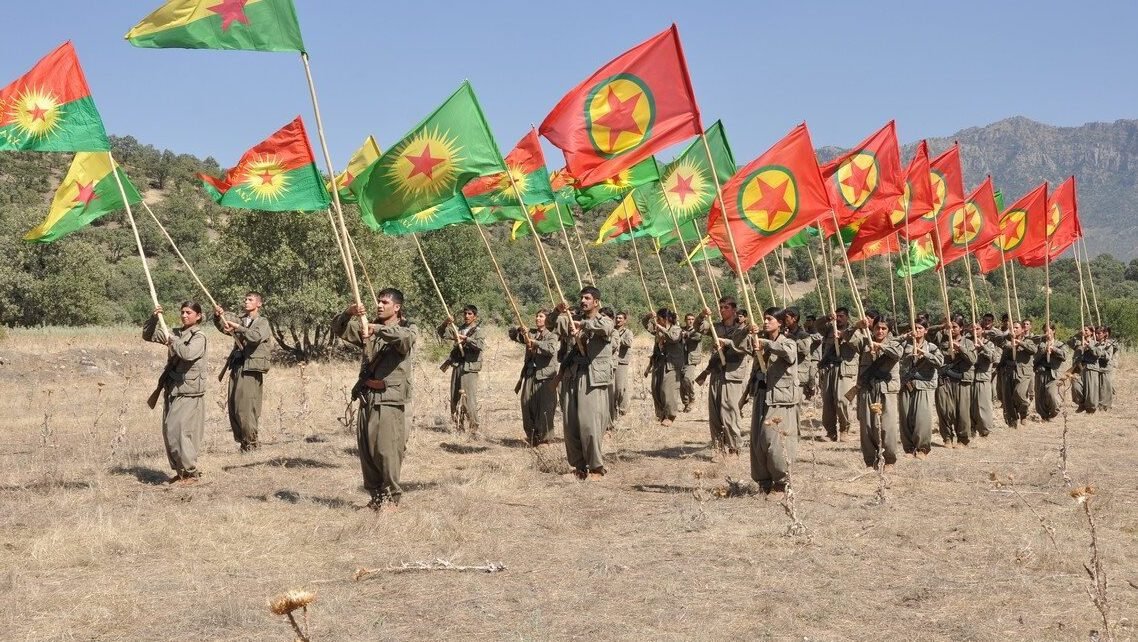
Senior Kurdistan Workers’ Party (PKK) official Cemil Bayik warned that the group’s disarmament process could stall unless Turkey accompanies it with political reforms, criticizing a new law governing the surrender and reintegration of PKK members as insufficient.
Bayik said the National Solidarity and Social Integration Law does not clearly connect the surrender of weapons with a transition to democratic politics.
“The language used in the law is deeply flawed,” Bayik told the PKK-linked Firat News Agency in remarks carried by Turkish media Saturday.
“We have made clear on every occasion that this process is not limited to disarmament. It is important to spell out the democratic steps that disarmament requires, because arms will be laid down in order to enter a democratic political arena,” he said.
The Turkish parliament passed the law on Aug. 10, and Turkish President Tayyip Erdogan approved it on Aug. 18. It allows deferred sentences, suspended prosecutions, and the conditional return of PKK members who surrender their weapons.
However, 230 senior PKK figures are reportedly excluded from returning to Turkey and could instead be housed in a safe zone in Sulaymaniyah in northern Iraq.
Bayik objected to the exclusion of PKK leader Abdullah Ocalan and other senior members from the framework. He also called for constitutional and legal changes recognizing Kurdish language, culture, political will, and rights to local self-government.
“If the process falters because democratic steps are absent, the responsibility will lie with the Turkish government,” Bayik said.
Turkey is meanwhile establishing four subcommittees to oversee legal issues, monitoring, social integration, and disarmament. Officials have ruled out giving Ocalan formal membership in the committees but said he could contribute to the disarmament process.
A security mechanism involving Ankara, Baghdad, Erbil, and Sulaymaniyah will verify whether the PKK has withdrawn from 72 positions along the Turkish-Iraqi border.
Under the plan, about 3,800 PKK members at 18 camps will surrender their weapons, while camps and caves extending to the Qandil Mountains, including in Metina, Zap, Avasin, Basyan and Haftanin, are to be evacuated by Oct. 1. Iraqi border guards and Peshmerga forces will then be deployed, particularly near the Turkish border.