19 C
London
Saturday, September 5, 2026
Home Blog

Pakistani Physician Abdul Bari Khan Wins 2026 Eisenhower Impact Award

0
pakistani-physician-abdul-bari-khan-wins-2026-eisenhower-impact-award
Pakistani Physician Abdul Bari Khan Wins 2026 Eisenhower Impact Award


Pakistani physician Dr. Abdul Bari Khan, founder and president of the Indus Hospital & Health Network, has been selected to receive the 2026 James and Carol Hovey Eisenhower Fellowships Impact Award for building one of the world’s largest free healthcare systems.

Khan, the only Pakistani recipient of the honor this year, will receive the award and its $10,000 prize on November 11 at Liberty View in Philadelphia. Eisenhower Fellowships Trustee Jim Hovey will present the award, which recognizes an Eisenhower Fellow or group of fellows whose work has produced exceptional benefits in a field or community.

Established in 2023 through an endowment from Hovey and his wife, Carol, the annual award is named in their honor. Khan, an Eisenhower Fellow in 2004, was selected from more than 45 entries by a panel of trustees, fellows, and outside experts.

The recognition centers on the growth of the Indus Hospital & Health Network, which began 18 years ago as a 150-bed hospital in Karachi. It has since developed into a nationwide system comprising 12 hospitals, four blood centers, three rehabilitation centers and more than 100 primary-care facilities.

Information provided to The Media Line said the network treats more than 6 million patients each year without charge. During the past year, it performed more than 67,000 surgeries, recorded over 214,000 hospital admissions, handled 2.9 million outpatient visits and treated 1.4 million emergency cases.

The network also supported more than 16,000 deliveries, provided mental health services to more than 212,000 people and conducted malaria screenings for 6.3 million individuals.

Eisenhower Fellowships President George de Lama said Khan had turned a personal vision into a national health system that has saved lives and improved care for millions of people annually. He said Khan’s focus on dignified, high-quality treatment for vulnerable and underserved communities reflected the organization’s mission.

Pakistan’s health system faces persistent challenges, including uneven access between urban and rural areas, high out-of-pocket costs, and shortages of care for low-income families. Khan’s network has become one of the country’s most prominent nonprofit responses to those gaps, offering treatment without requiring patients to pay.

Pentagon rescinds new testosterone screening policy without explanation

0
pentagon-rescinds-new-testosterone-screening-policy-without-explanation
Pentagon rescinds new testosterone screening policy without explanation

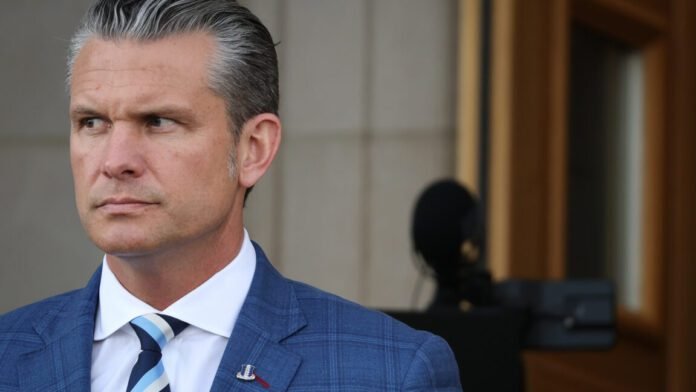
Following Defense Secretary Pete Hegseth’s startling announcement in July that the US military would begin mandatory testosterone screening for personnel, the Pentagon released a clinical guidance document on September 2 outlining the new medically questionable policy.

The next day, though, the clinical guidance document disappeared, as did an accompanying statement by spokesperson Sean Parnell. The withdrawal was first reported by Reuters.

In a statement sent to Ars Technica, the Pentagon said that the document, titled “Clinical Guidance for Health and Human Performance Optimization,” had been temporarily rescinded on September 3 to allow for updates.

“The Department remains committed to addressing hormone deficiencies, protecting the long-term health of its Service members, and enabling peak operational performance,” the Pentagon said. An interim guidance remains in effect, and “the final clinical guidance will be issued shortly,” it added.

The Pentagon declined to provide more information regarding what was being updated about the guidance and why it needed to be updated so quickly after its release.

Reuters reported that the rescinded guidelines called for men aged 30 and older ​to be screened through a questionnaire that could then trigger a blood test for testosterone levels and, if needed, testosterone hormone therapy. Women were also to be screened through a questionnaire, which could lead to treatment for hormonal imbalances.

Potentially harmful guidance

In Hegseth’s July announcement, he claimed that the testing and potential treatment was for “restoring and optimizing” capabilities of military members, protecting their “longevity,” and “ensuring [they] have the biological foundation required to sustain the fight.”

Health experts have criticized the screening as being potentially harmful. Neither the Endocrine Society nor the American Urological Association supports routine screening for low testosterone.

Dr. Jason Goldman, an internal medicine physician and immediate past president of the American ​College of Physicians, told Reuters: “Taking testosterone is not going to make you more manly, more strong, or a more robust individual. That’s just not how it works,” Goldman ​said. “It’s just bad policy all around.”

Ars Technica previously published an explainer on testosterone screening and treatment. In it, we talked with Bradley Anawalt, the chief of medicine at the University of Washington Medical Center, who specializes in endocrinology and men’s health. He went over the evidence-based reasons against population-level screening.

Overall, “We’re turning the clock back on rational health care,” Anawalt told Ars. “I’m worried about the ethics. I’m worried about the health consequences. I’m worried about unnecessary evaluations, incorrect assessments, and incorrect diagnoses that lead to inappropriate prescriptions of testosterone.”

Risks of conventional testosterone replacement therapy include decreased fertility, high red blood cell counts, acne, increased prostate size, and sleep apnea. Higher doses are associated with higher risks of cardiovascular disease and prostate cancer.

Putin cites chance of peace deal, Zelenskiy says US negotiators to visit both countries

0
putin-cites-chance-of-peace-deal,-zelenskiy-says-us-negotiators-to-visit-both-countries
Putin cites chance of peace deal, Zelenskiy says US negotiators to visit both countries


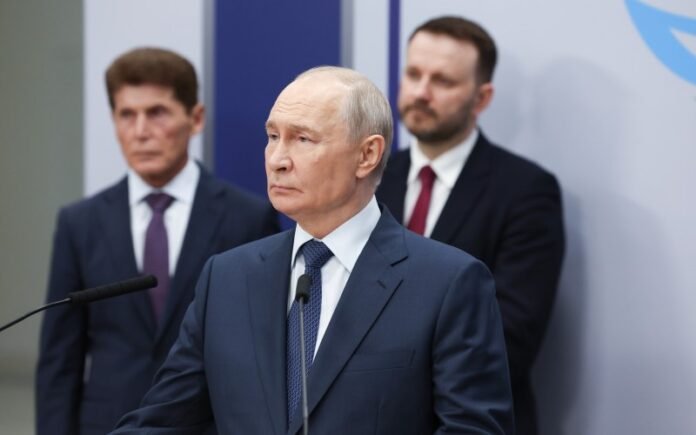
Russian President Vladimir Putin said there was a chance of reaching an agreement to end the war ​in Ukraine, while Ukrainian President Volodymyr Zelenskiy said U.S. negotiators trying to broker a deal would soon visit both Moscow and Kyiv.

‌Putin, speaking at an economic forum in Russia’s far east, said a number of countries including the U.S. and China were ready to support a peace settlement.

“Ultimately, however, the problem must be resolved by the countries involved in the conflict — Russia and Ukraine,” he said.

“We are grateful to everyone attempting to contribute to a settlement. Is there a chance? In my ​view, yes, there is.”

In Kyiv, Zelenskiy said in his nightly video address that preliminary dates had been set for a visit by U.S. negotiators.

“We ​expect to see representatives of the U.S. president here in Kyiv,” Zelenskiy said.

“There will be a meeting with them ⁠in Moscow and in Kyiv. We are expecting a meeting with them in the coming days. It is very important. It is important that America ​continues to be active.”

In Washington, U.S. President Donald Trump said he wanted to see an end to the war and losses sustained by both sides.

“I ​just want to see that end. I think we’ll get it,” Trump told GB News in an interview that aired on Thursday, a day after telling reporters he wanted a summit with Putin when the Kremlin leader is ready for a peace deal.

After 4-1/2 years of Europe’s deadliest conflict since World War Two, it is rare for either side ​to offer an upbeat assessment of peace prospects. They last met for U.S.-mediated talks in February.

Since then, with the U.S. distracted by the Iran war, both ​Russia and Ukraine have ramped up long-range air attacks deep inside the other’s territory. Hostilities at sea have escalated sharply with attacks by both sides on ports and commercial ‌shipping, pushing ⁠up global grain prices.

U.S. negotiators Steve Witkoff and Jared Kushner, who have spearheaded the effort to broker an agreement, were last in Moscow in January. They have yet to visit Kyiv.

Chicago wheat futures dropped by more than 2% on Putin’s comments.

Ukrainian Foreign Minister Andrii Sybiha had earlier told reporters in Kyiv that he saw a “new dynamic” coming in peace efforts, with more active political and diplomatic engagement.

Neither side, however, gave reasons to expect progress.

On the contrary, the ​Kremlin leader said Ukraine’s latest actions presented ​an obstacle.

In response to a ⁠question, Putin said Ukrainian attacks on civilian merchant ships and “reported threats of attacks on civilian aircraft” were “acts of state terrorism”, which he said “complicates the prospects for bilateral peace talks”.

Zelenskiy warned airlines and insurance companies this week that the presence ​of Ukrainian drones had made Russian skies dangerous, although he said Ukraine would target only Russian military facilities ​and not threaten civilian ⁠aircraft.

On Wednesday, Ukraine urged the U.N.’s aviation agency to ask members to ban operations in Russian airspace. Ukraine has been cut off from international civil aviation because its own airspace is considered unsafe since Russia invaded in 2022.

PUTIN: CONTACTS MOSTLY TAKE PLACE VIA INTELLIGENCE AGENCIES

Putin said contacts with Ukraine were still taking place.

“It is ⁠difficult for ​me to say right now to what extent these contacts are leading to a peace ​agreement, given the statements we have heard recently from Ukraine’s top leadership,” he said.

“However, contacts do exist and are continuing on an ongoing basis – gain, primarily through intelligence channels.”

UN urges restraint in Yemen, warns of civilian risks in Gaza, West Bank

0
un-urges-restraint-in-yemen,-warns-of-civilian-risks-in-gaza,-west-bank
UN urges restraint in Yemen, warns of civilian risks in Gaza, West Bank

The UN on Friday urged Yemen’s warring parties to exercise restraint amid a sharp escalation in fighting, while expressing deep concern over the safety of civilians in Gaza and the West Bank, Anadolu reports.

UN spokesperson Stephane Dujarric said the UN was “deeply concerned by the ongoing military clashes across multiple front lines in Yemen, including Ta’izz.”

“We call on the Yemeni parties to exercise restraint, de-escalate tensions, and refrain from actions that could lead to further military escalation,” Dujarric told reporters at the UN headquarters in New York.

He warned that further escalation could have “devastating political, economic, and security ramifications for Yemen and all of its people.”

“The parties must prioritize dialogue and engage constructively with the United Nations-led efforts towards a negotiated political settlement,” he added.

On Lebanon, Dujarric said UN Humanitarian Coordinator Imran Riza visited Nabatieh in southern Lebanon, where he met communities receiving people returning to their homes as well as displaced residents.

Authorities highlighted damage to vital infrastructure, including water and sanitation systems, he said.

READ: Israel orders ‘immediate’ seizure of Palestinian land in northern occupied West Bank

In the village of Mayfadoun, damage to a water well station, including solar panels and pumping equipment, has affected water supplies, according to Dujarric.

He stressed the importance of “early recovery efforts to restore these essential services” and support municipalities and communities seeking to recover.

Dujarric said the UN’s 2026 Lebanon flash appeal ended last month after receiving less than 52% of the requested funding, with $330 million received.

Despite the funding shortfall, humanitarian partners have reached more than 1.2 million people with at least one form of critical assistance since the latest escalation began, including more than 900,000 people who received cash assistance.

“Yet, as Emergency Relief Coordinator Tom Fletcher stressed, the needs continue, access remains constrained, and many families in Lebanon still cannot return home safely,” he said.

Regarding the Occupied Palestinian Territory, Dujarric said the UN remains “very concerned about the safety of civilians both in the Gaza Strip and in the West Bank.”

He said UN agencies and humanitarian partners in Gaza were helping communities prepare for the rainy season, but “more funding and access are urgently needed.”

Citing World Health Organization chief Tedros Adhanom Ghebreyesus, Dujarric warned that public health risks are growing as winter approaches, with many people still displaced in overcrowded tented sites.

“Gaza’s already overwhelmed health system cannot withstand additional surges in diseases and illness,” Tedros said, according to Dujarric.

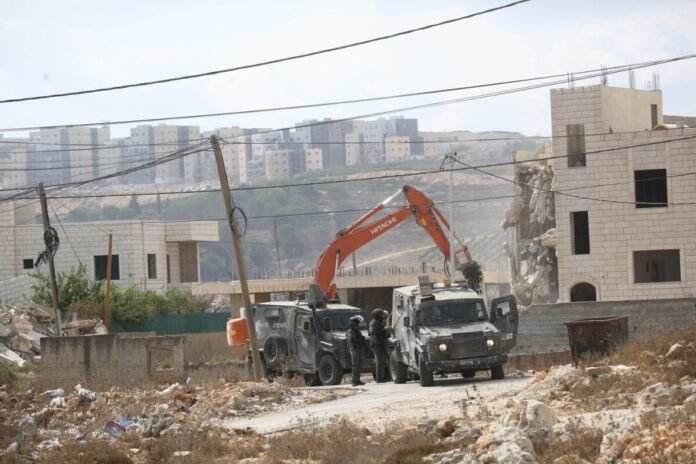
In the West Bank, UN humanitarian colleagues reported that more than 6,400 Palestinians have been displaced from 130 communities by occupiers’ violence since 2023. More than 2,500 were displaced this year alone, over half of them children.

Dujarric said the UN’s humanitarian concerns were being compounded by repeated attacks, damage to homes and infrastructure and restrictions on access to land and essential services.

READ: US ambassador to Israel calls occupiers committing crimes in West Bank ‘terrorists’

Iconic ‘Scooby-Doo’ Voice Actor Dies at 85

0
iconic-‘scooby-doo’-voice-actor-dies-at-85
Iconic ‘Scooby-Doo’ Voice Actor Dies at 85


The voice behind one of television’s most beloved cartoon characters has gone silent.

Francisco Reséndez, the legendary Mexican voice actor best known for bringing Scooby-Doo to life for generations of Spanish-speaking fans, has died at the age of 85.

Reséndez spent more than six decades in the entertainment business, building an extraordinary career as both a voice actor and dubbing director while helping introduce some of America and Japan’s biggest shows and characters to audiences across Latin America.

Affectionately known as “Don Paco,” Reséndez became especially famous during the 1980s for voicing mystery-solving Great Dane Scooby-Doo.

His Scooby-Doo credits included episodes of The Scooby-Doo Show and The Scooby-Doo and Scrappy-Doo Show, along with several animated movies.

Fans also heard his unmistakable voice in Scooby-Doo Meets the Boo Brothers, Scooby-Doo and the Ghoul School and Scooby-Doo and the Reluctant Werewolf.

But Scooby wasn’t his only famous role.

Reséndez also voiced Mario in Donkey Kong and Commander Dot Pixis in Attack on Titan, showing the remarkable range that helped make him a giant of Latin American dubbing.

Behind the microphone, Reséndez played another major role in television history by directing some of the early Latin American Spanish dubs of The Simpsons.

News of his death quickly sparked an outpouring of grief from fans who grew up listening to his work.

“He brought so much personality to those iconic roles. Truly a massive loss for the industry,” one person wrote on X.

Another heartbroken fan wrote that Reséndez had made their childhood mornings memorable and given them their favorite cartoon character of all time.

“He gave a lot of memories to people,” another fan said.

Others struggled with yet another loss of a beloved entertainment figure.

“Why are all the heroes dying??” one person asked.

Reséndez’s death comes just days after the entertainment world lost another legendary voice actor.

Peter Cullen, best known as the voice of Optimus Prime in the Transformers franchise and Eeyore in Winnie the Pooh, died Aug. 26 at his Los Angeles home. He was also 85.

Cullen’s family said he died peacefully surrounded by loved ones and asked fans to honor his legacy by showing compassion, integrity and loyalty to others.

For countless fans, Reséndez leaves behind a similarly powerful legacy.

His voice became part of childhood for generations of Spanish-speaking viewers — and helped turn characters like Scooby-Doo into international icons whose appeal crossed languages, countries and decades.

Three leaders, three agendas at SCO’s 25th anniversary

0
three-leaders,-three-agendas-at-sco’s-25th-anniversary
Three leaders, three agendas at SCO’s 25th anniversary

The Shanghai Cooperation Organization (SCO) marked its 25th anniversary in Bishkek, the capital of Kyrgyzstan, with all the trappings a diplomatic milestone demands.

There were 21 heads of state and government present for a ceremonial “family photo” and a two-page Bishkek Declaration on September 1. A further 28 agreements included “strengthening multilateral partnership in nuclear safety and nuclear security.”

On the face of it, the SCO appeared to be a confident bloc speaking with one voice for roughly a quarter of humanity, while representing between 23% and 25% of global GDP.

Shanghai Cooperation Organisation countries:

Map showing Shanghai Cooperation Organization countries.
J4keeS237/Wikimedia Commons, CC BY

The real picture, however, is far less flattering. A quarter of a century in, it remains primarily a forum for multiple parallel bilateral engagements and deals between leaders. So far, so functional.

What the SCO has never become in 25 years is a body able to adjudicate the disputes its members bring to the room – still less, the ones they wage outside.

At its best, the SCO has been something narrower: a vehicle for bilateralism which lets its most powerful members strike deals and settle scores. As they often do this in very public ways, the messages they send more often than not are for domestic consumption, to present themselves as staunch defenders of strategic national interests.

Take the plenary address by the Indian prime minister, Narendra Modi. With Pakistan’s prime minister Shehbaz Sharif at the same table, Modi declared that “there can be no place for double standards” in dealing with terrorism, and that “terrorism can never be a strategic asset for anyone.”

He further called for dismantling “the entire ecosystem of terrorist financing, recruitment, radicalization and safe havens.” Modi did not need to name Pakistan to make it clear who he was aiming his remarks at. Everyone in the room – and at home – will have recognized this as the language India uses to criticize Pakistan for its alleged support of transnational terrorist networks.

The added benefit of the SCO summit for Modi was that he was able to deliver this criticism directly into Sharif’s face.

Modi then made a second point, noting that it is essential to “respect the sovereignty and territorial integrity of all countries.” Without saying it directly, this worked as a rebuke to Russia’s war against Ukraine, China’s Belt and Road corridor through Pakistan-administered Kashmir, and Pakistan’s claims to territory that India considers its own.

A statement like that not only makes Modi look good at home. It also offers something for India’s partners in the West – who can read it as a criticism of Russia. And it helps shore up India’s traditional role as a champion of the Global South – including against Chinese or Russian aspirations in this regard.

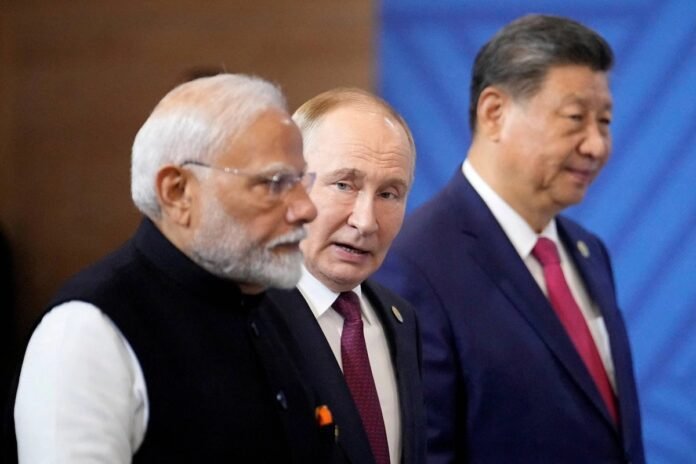
Modi also delivered a more direct message to Russian President Vladimir Putin, in person and on the record. “Every day spent in war pushes humanity backwards,” he told the Russian president after their customary hug, before emphasizing the need to move “from an endless war towards an end to the war.”

While there is a more constructive, less antagonistic bilateral relationship between India and Russia compared with India and Pakistan, it was a notably pointed line. All the more so as it was delivered in public to a fellow leader of a bloc built partly around the idea that its members offer each other unconditional solidarity against the west.

This is not the first time Modi has publicly called on Putin to end the war. He also condemned the deaths of Ukrainian children in a Russian missile strike just as the two leaders had a bilateral summit in Moscow in 2024.

Putin scurries for support

Putin came to Bishkek with the busiest bilateral schedule of any leader. Across the two days of the summit, he met with Modi, Xi Jinping of China and Masoud Pezeshkian of Iran – as well as the presidents of Tajikistan, Mongolia, Kyrgyzstan, Kazakhstan, and the attending non-SCO members Turkey and Armenia.

Impressive as this may seem, it is hardly a sign of strength. Because of the International Criminal Court’s arrest warrant against him, Putin’s personal diplomacy is confined to venues like the SCO and sometimes the BRICS – the organization of emerging economies that began with Brazil, Russia, India and China, but has since expanded considerably in size and influence.

This is hardly a good look for the leader of a would-be great power that has also suffered recent setbacks in its influence and leverage elsewhere in the world, from Syria to Venezuela to Mali.

Three leaders, three agendas

Xi, by contrast, was strikingly selective. His only confirmed bilateral meeting was with Putin. This can be seen as a possible signal that Beijing increasingly views the SCO as a lower-value event than its own direct channels with individual capitals or forums such as BRICS.

It was striking that Xi then headed straight to Cairo for his first state visit in a decade to Egypt, a country that has been a member of the enlarged BRICS since 2024. That organization’s summit begins in New Delhi on September 12.

So, each of the organisation’s “big three” leaders extracted something different and specific from the summit. But none of that depended on the SCO functioning as a collective voice.

This doesn’t suggest the SCO is meaningless. Its summits generate bilateral engagements and agreements, and opportunities for members to project non-Western solidarity to their domestic and international audiences.

But Bishkek’s real anniversary message was not the declaration its leaders signed. Rather, it was the way in which the organization’s three dominant leaders, Xi, Modi and Putin, used the forum to pursue three entirely separate agendas – and left having resolved none of the issues that divide them.

Stefan Wolff is professor of international security, University of Birmingham

This article is republished from The Conversation under a Creative Commons license. Read the original article.

Once popular for attacking AI, ASCII smuggling is embraced by spammers

0
once-popular-for-attacking-ai,-ascii-smuggling-is-embraced-by-spammers
Once popular for attacking AI, ASCII smuggling is embraced by spammers

A clever technique used to hide malicious prompts in attacks on AI agents has been adopted by spammers to evade filters on email platforms that are designed to flag unwanted messages used in mass campaigns.

The technique is broadly known as ASCII smuggling. It gained attention two years ago as a means of making a class of AI attack known as prompt injections more stealthy. Malicious instructions embedded in emails or other untrusted content to be processed by an LLM aren’t written in ordinary text. Instead, they’re rendered by a special range of Unicode tags. For example, the tag point U+E0041 mirrors “A,” and U+E0061 mirrors “a.”

No longer just for obscuring prompt injections

The block of 128 tags mimics a portion of the American Standard Code for Information Interchange almost perfectly, with one major difference: the characters they encode are readable by computers but, by design, are almost completely invisible to humans. By expressing the malicious prompts in these tags, LLMs detect the instructions, but people reading the email never see them. There’s much more about ASCII smuggling here.

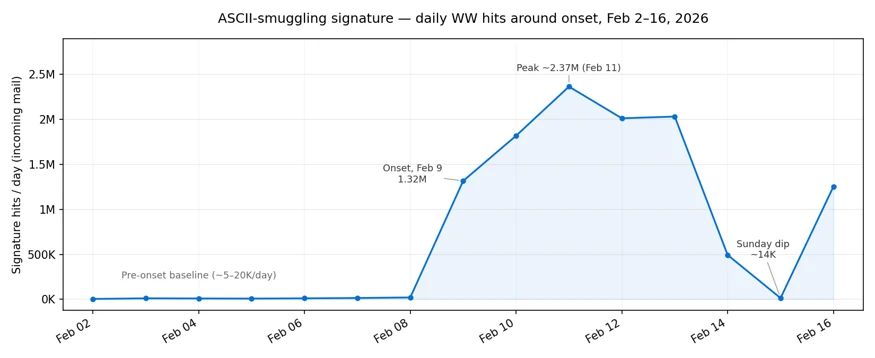
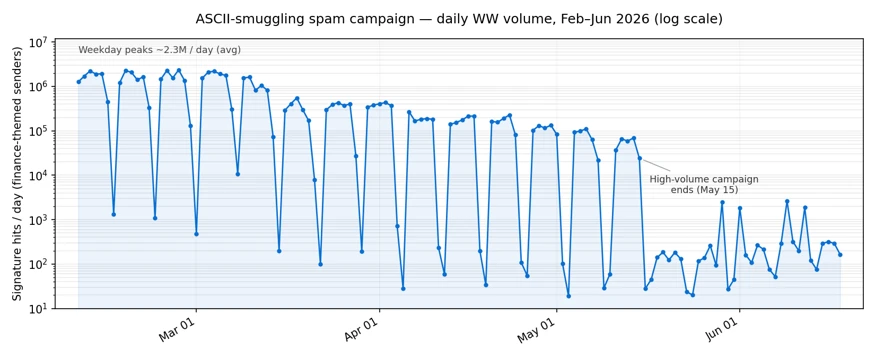
Earlier this year, Microsoft started seeing a massive increase in spam messages that used the technique. Beginning on one day in early February, the number of ASCII smuggling signatures detected by Microsoft Defender for Office spiked from roughly 21,000 per day to more than 1.3 million. Within four days, signature detections jumped to 2.5 million. The deluge persisted for months and then fell off sharply in mid-May.

“Because tag characters are invisible to humans but exist at the text-processing level, the same property that makes them useful for smuggling instructions into a model also makes them useful for obfuscating keywords before a detector evaluates them,” Microsoft explained Thursday. “The intent is inverted, but the mechanism is similar, and a user’s suspicions are not raised.”

Volume holds at a low-thousands baseline through February 8, jumps roughly two orders of magnitude on February 9, peaks at over 2.3 million messages on February 11, and dips sharply on Sunday February 15 before rebounding.

Daily hits on the ASCII smuggling signature, a week before and after onset.

Daily hits on the ASCII smuggling signature, a week before and after onset. Credit: Microsoft

The deep recurring drops are weekend pauses in the observed signature matches; the decline after May 15 marks the end of the high-volume phase matching this exact activity, followed by a low residual.

Daily Unicode-tag signature hits on finance-themed sender domains, log scale, measured every day from February 9 through June 18, 2026.

Daily Unicode-tag signature hits on finance-themed sender domains, log scale, measured every day from February 9 through June 18, 2026. Credit: Microsoft

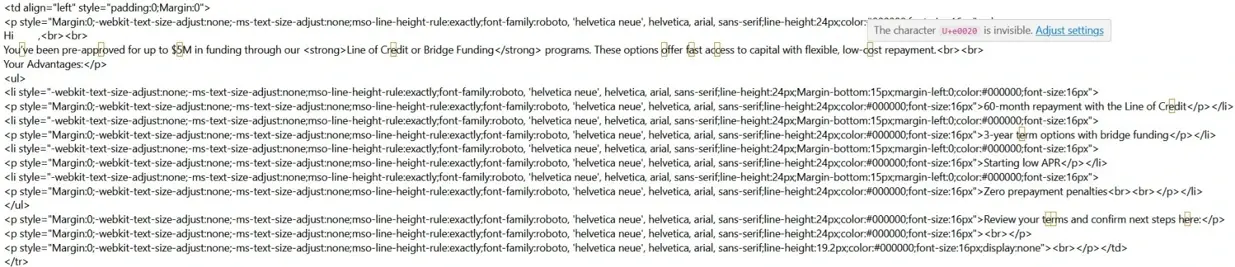
Spammers are embedding Unicode in an attempt to evade filters that search for text, such as dollar amounts and the words “credit” and “term” that are commonly found in their mass emails. By sprinkling the invisible text into the middle of the word “funding,” for example, filters may read the words “fun” and “ding” instead. The receiver, meanwhile, sees the word “funding.”

Credit: Microsoft

Using special text to camouflage certain trigger words isn’t new. Spammers have used zero-width spaces and non-breaking spaces for decades to achieve similar results. The characters can thwart searches matching a literal string and alter the byte sequence that regex filters hunt for. The spammers likely adopted the hidden Unicode tags because some spam filters had yet to be programmed to detect them. A bigger likely reason for its use is to counteract the advantages made possible by machine learning (ML) and natural language processing (NL) LLMs for use in spam detection.

Microsoft explained:

The bigger prize for the attacker, though, is not preventing the literal string matches; it is the ML- and NLP-based models that increasingly drive modern spam and phishing classification. Unless a filtering system takes a picture of a message and does OCR extraction over the visual image, it may miss this type of attack. A standard email classifier may not reason over whole words exactly as a human sees them; for efficiency, they can first split text into tokens or sub-word pieces. A clean lure term such as funding may be represented as a familiar token or a familiar sequence of sub-tokens. Insert an invisible U+E0020 into the middle, however, and the tokenizer may no longer see that same familiar unit. It might split the text into fun, an unexpected tag character, and ding; it might emit rare or unknown sub-tokens; or, if normalization runs first, it simply removes the U+E0020 character, leaving funding.

Thursday’s post provided guidance on ways developers can program filters to better account for ASCII smuggling in spam.

Medieval manuscripts are “biological time capsules” for deadly sheeppox virus

0
medieval-manuscripts-are-“biological-time-capsules”-for-deadly-sheeppox-virus
Medieval manuscripts are “biological time capsules” for deadly sheeppox virus

Sheeppox is a highly contagious, often fatal viral disease that was largely eradicated from much of European livestock in the 20th century. But there is still the occasional regional outbreak, such as the one that afflicted many flocks of sheep in Greece last year. In order to reconstruct how the virus has evolved over the last 3,500 years, scientists extracted and sequenced sheeppox DNA preserved in the animal skins used for the parchment of numerous medieval manuscripts. They reported their findings in a new paper published in the journal Science Advances.

“The recording of ancient DNA of pathogens has completely changed our understanding of infectious disease in the past, and here we show that parchment can also preserve animal pathogen DNA. It is possible that archives and libraries around the world also contain the genetic traces of disease outbreaks in animals in the past,” said co-author Louis L’Hôte, a graduate student at University College Dublin. “These genomes help us understand how these pathogens evolved and how they impacted past societies—such as sheeppox virus, which we show has been affecting Eurasian sheep herds for at least three and a half millennia.”

Per the authors, the earliest known written evidence of sheeppox infection dates to the first century CE, when Roman accounts described outbreaks of skin lesions (“pustules”) in the animals. There are more frequent mentions of deadly outbreaks of “pockes” or “variola” in sheep by the Middle Ages, recorded in various agricultural texts and accounting documents in France, Spain, and England. There seemed to be a decline in outbreaks in 17th-century France, although frequent outbreaks re-emerged in the 18th and 19th centuries, often with high mortality rates in the flocks. Great Britain did not experience a sheeppox resurgence until 1847.

However, very little was known about the genetic history of the sheeppox virus. That’s why L’Hôte et al. turned to analyzing DNA in medieval manuscripts—the parchments were often made from sheep leather. A number of analytical techniques have emerged in recent decades to help create these kinds of historical molecular records.

For instance, last year we reported on research that used microbial DNA analysis of human remains to identify the likely pathogens that killed many soldiers in Napoleon’s army in 1812. Two pathogens in particular stood out: Salmonella enterica, which causes paratyphoid fever, and Borrelia recurrentis, which is transmitted by body lice and causes relapsing fever. Both are consistent with written contemporary accounts.

Evolution of a virus

Close-up image of part of Cambridge, Trinity College, MS B.10.5, fol. 62v

Close-up image of part of the manuscript.

another close-up image of Cambridge, Trinity College, MS B.10.5, fol. 62v

Another close-up image of the manuscript.

The team collected samples from medieval manuscripts housed in collections at Yale University, Cambridge University, Corpus Christi College, University College Dublin, the Lambeth Palace Library, and Trinity College, among others. Those works included pages from a 15th-century Speculum Historiale; the 15th-century Clairvaux manuscripts; several 9th-century gospel text fragments; the 9th-century Achadeus Psalter; the early 11th-century Trinity Gospels; the Lambeth Bible; and the 1,000-year-old York Gospels.

Multiple pages, often from the same manuscript, were found to contain DNA from the sheeppox pathogen, which means infected animals were likely used to make the parchment—and thus, that medieval flocks experienced frequent outbreaks of sheeppox. The authors were surprised when they also found evidence of the sheeppox virus on parchment made from calfskin and goatskin, suggesting either cross-species infection or contamination when the parchment was being made.

The team also extracted DNA from Bronze Age sheep teeth collected at settlement sites in Russia and Central Kazakhstan, since teeth can preserve DNA evidence of infection over thousands of years. After comparing those ancient sequences with the medieval ones, the authors concluded that the sheeppox virus diverged from the goatpox and lumpy skin disease viruses (all members of the Capripoxvirus family) between 11,500 and 3,700 years ago. That coincides roughly with the domestication of animals in Europe. All told, the team recovered 21 ancient genomes from 1700 BCE to early modern Europe.

“Parchment making has been considered a vanishing craft, but we are beginning to understand just how much of the past it has retained,” said co-author Kevin G. Daly, also of UCD. “This project shows that parchments not only preserve our cultural history for hundreds of years, but also the landscape of disease in our livestock in the medieval period. This kind of exciting, surprising discovery is only possible when researchers from a range of disciplines come together to share their expertise and data—a generosity and trust that collaborative science depends on.”

Science Advances, 2026. DOI: 0.1126/sciadv.aeh3571 (About DOIs).

Italy’s population to shrink by 4 million by 2050

0
italy’s-population-to-shrink-by-4-million-by-2050
Italy’s population to shrink by 4 million by 2050


Italy’s population will shrink by almost 4 million by 2050, undermining the sustainability of its economy and welfare system as ​the proportion of elderly people increases, national statistics bureau ‌ISTAT warned this week.

In new demographic projections extending to 2080, ISTAT said Italy’s resident population would fall to 55 million in 2050 from 58.9 million at ​the start of 2025, before dropping to 45.8 million by ​2080.

Prime Minister Giorgia Meloni said when she took office ⁠in 2022 that boosting the birth rate would be a government ​priority, but her efforts have produced scant results.

Births have declined steadily since 2008 ​and fell last year to around 355,000, the lowest number since Italy’s unification in 1861, while deaths have risen as the population ages.

ISTAT said annual births ​would now remain broadly stable until 2030, before falling to 335,000 ​by 2050.

Deaths were projected to rise from about 652,000 last year to a ‌peak ⁠of 869,000 in 2058 as Italy’s large post-war baby boom generation reaches old age.

The share of Italians aged 65 or over is expected to jump to 34.5% in 2050 from 24.7% in 2025, while ​the proportion of ​people of working ⁠age, defined as 15 to 64 years old, will fall to 55.3% from 63.4%.

A shrinking pool of ​workers and a surging number of pensioners will pose “new ​challenges ⁠to the economic system and welfare,” ISTAT noted.

The demographic decline will be uneven across the country. Poorer southern Italy was forecast to suffer the ⁠steepest ​losses, with its population falling from 19.7 ​million in 2025 to 16.7 million in 2050, while central and northern regions will ​see a more modest decline.

Source:  Reuters

Taliban mining pitch to US is a political risk time bomb

0
taliban-mining-pitch-to-us-is-a-political-risk-time-bomb
Taliban mining pitch to US is a political risk time bomb

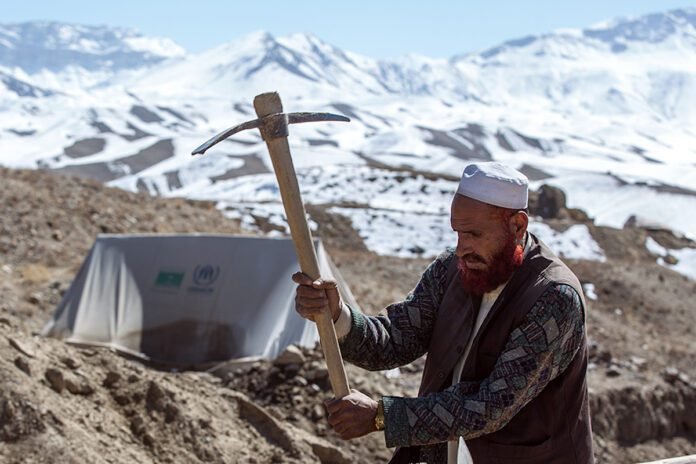
Afghanistan is estimated to hold more than US$1 trillion in mineral resources. Rich stores of copper, lithium, gold, iron ore, rare earth elements, coal and precious stones lie beneath one of the world’s poorest and war-torn nations.

Five years after returning to power, the Taliban now want to turn that geological bounty into a diplomatic opening with the United States under Donald Trump’s transactional administration.

Foreign Minister Amir Khan Muttaqi recently openly welcomed US investment in Afghanistan’s mining, infrastructure, agriculture and trade sectors. After fighting US and allied forces for two decades, the Taliban now seek American capital to help develop the country’s untapped mineral wealth.

Washington has quickly poured cold water on the overture. The US State Department has said it has no plans to work with the Taliban on developing Afghanistan’s critical minerals, warning that investment could strengthen a regime responsible for repression at home.

But there is arguably another question Washington should be asking: if foreign money eventually enters Afghanistan’s mining sector, who inside the Taliban would actually control and profit from it?

The answer is less straightforward than Kabul’s investment pitch suggests. The Taliban may present a unified face to foreign investors, but the political economy behind Afghanistan’s mines is considerably more fragmented.

Provincial power contest

Afghanistan’s mineral geography is highly dispersed. Badakhshan holds gold and precious stones. Logar contains the vast Mes Aynak copper deposit. Copper resources are found around Balkhab, while other strategically important mineral deposits stretch across central, northern and eastern Afghanistan.

Many of these resources therefore lie far from Kandahar, the political and ideological center from which Supreme Leader Hibatullah Akhundzada has increasingly centralized Taliban authority.

This signals a fundamental contradiction in Afghanistan’s emerging mineral economy. Political authority is being concentrated in one power center while much of the wealth lies beneath distant provinces and communities with little influence over how it is extracted or where the revenues flow.

Kandahar is not the Taliban’s only center of economic power. The Haqqani network, situated in southeastern Afghanistan and led by Interior Minister Sirajuddin Haqqani, has developed its own economic and political influence.

Its interests in Afghanistan’s minerals are not new. The network has historically been associated with revenue generated around mineral extraction and the transport, taxation and cross-border trade connected to it.

Afghan mining expert Javed Noorani noted back in 2022 that the Haqqani network was retaining substantial revenues generated by parts of the mining sector. More importantly, he suggested that competition over mining revenues could deepen divisions within the Taliban.

That warning of internal dissent over natural resources deserves new attention. Akhundzada’s Kandahar-centered leadership has increasingly sought to centralize authority and revenue collection.

Mining provides another potentially lucrative source of money, patronage and political leverage. Control the border, and you can influence customs revenue. Control the mines, and you gain access to another stream of wealth.

For potential foreign investors in Afghanistan, that distinction matters. A mining contract signed in Kabul does not by itself answer who exercises political, security and economic power over the resource on the ground.

Badakhshan offers a warning

The struggle over Badakhshan, a mountainous northeastern province bordered by Tajikistan, China, and Pakistan, shows how this plays out.

In June 2026, the Taliban reportedly deployed a newly formed force of roughly 1,000 personnel to the northeastern province amid tensions over its lucrative gold and precious-stone mines.

Taliban sources from Badakhshan described the measures as part of an effort to weaken economically powerful local commanders and bring mineral resources more directly under the authority of Kandahar’s centralized leadership.

Influential local figures were reportedly dismissed, arrested or transferred, while officials trusted by Akhundzada and his inner circle replaced them. That intra-Taliban tension over who controls contracts, taxation, transport and security raises largely unseen political risks for any foreign investor in Afghanistan’s mineral resources.

Missing from much of this competition are the people who actually live above Afghanistan’s mineral deposits. Afghanistan already has a long history of mineral extraction disproportionately enriching political and armed power brokers over local communities.

Poorly regulated mining can damage agricultural land and water supplies, while unsafe operations expose workers to tunnel collapses and other hazards. Communities can therefore bear the environmental and social costs even when revenues flow elsewhere.

That danger becomes greater when control of natural resources is intertwined with internal political competition. The result risks reproducing one of Afghanistan’s oldest political problems: wealth extracted from the periphery to sustain power at the center.

Follow the mining money

The timing of Muttaqi’s invitation to the United States is no doubt significant. The Taliban are attempting to transform Afghanistan’s mineral wealth into an instrument of commercial diplomacy.

They have already pursued mining agreements with foreign partners while presenting Afghanistan as open for business. The offer to Washington takes that strategy further.

Muttaqi has argued that US-Afghan relations should no longer be viewed through the lens of the past 20 years of war but through the possibility of future cooperation. Washington’s response shows how difficult that will be.

But the debate should not end with whether the US, now in hot pursuit of alternative sources of critical minerals and rare earth elements, is willing to invest in Taliban-ruled Afghanistan.

Any government or company contemplating Afghanistan’s mineral sector should seek clarity about ownership, contracts, revenue distribution, local consent and the political networks benefiting from extraction.

Afghanistan’s mineral struggle is therefore not simply the Taliban versus the outside world. It is also a struggle over resource rents involving Kandahar’s increasingly centralized leadership, the Haqqani network and various provincial power holders, while local communities remain largely outside decision-making and wealth-sharing.

The Taliban may want American capital and mining expertise to unlock Afghanistan’s mineral wealth. But before anyone takes up the Taliban’s offer, they would be wise to do their due diligence on who really controls the minerals in question and how contested that control may be.

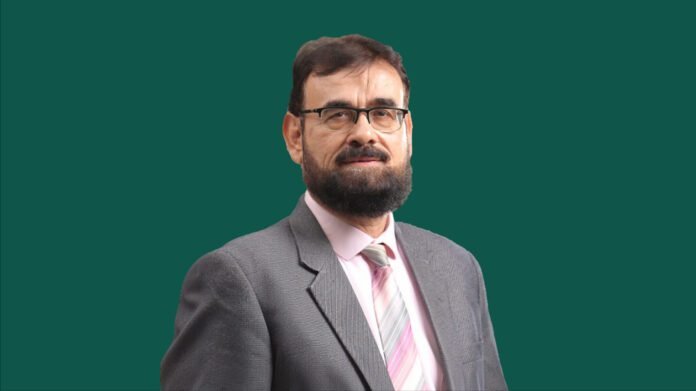
Saima Afzal is a researcher specializing in South Asian security, counterterrorism, and broader geopolitical dynamics across the Middle East, Afghanistan, and the Indo-Pacific. She is currently a research scholar at Justus Liebig University, Germany.
0FansLike
0FollowersFollow
0FollowersFollow
0SubscribersSubscribe
- Advertisement -
Google search engine

Recent Posts