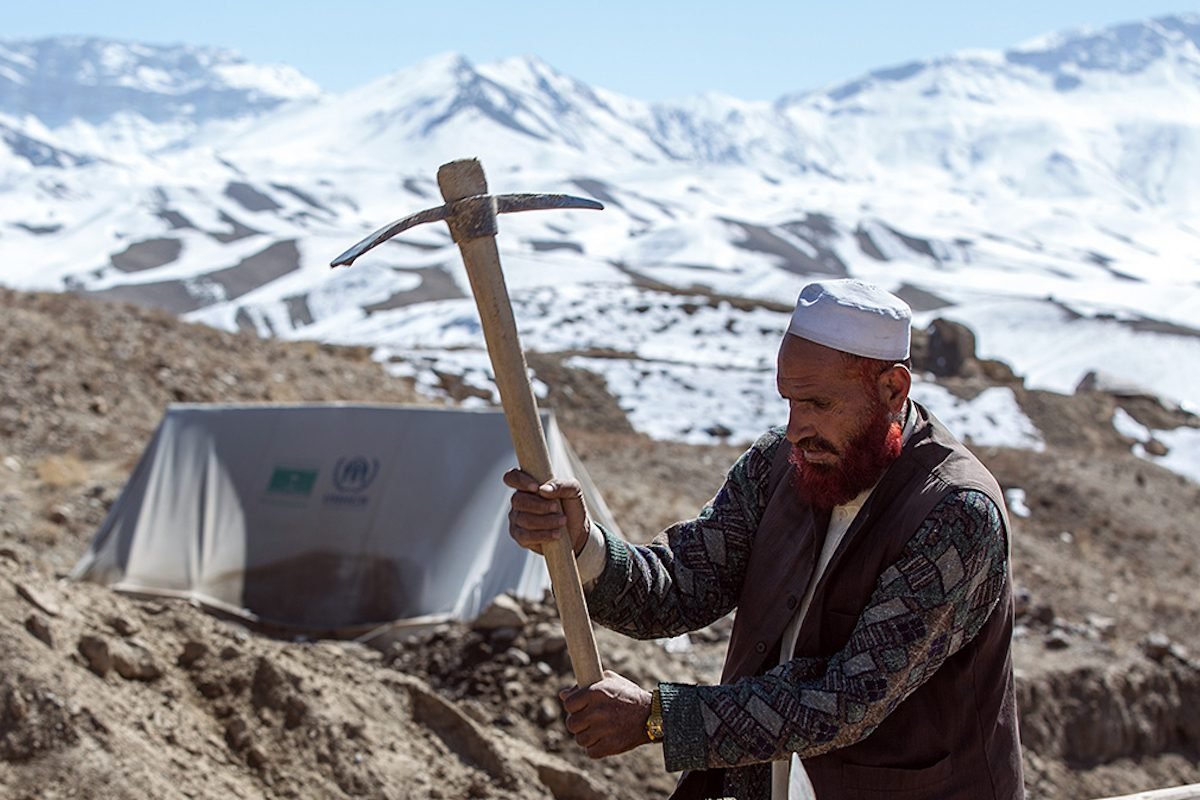
Afghanistan is estimated to hold more than US$1 trillion in mineral resources. Rich stores of copper, lithium, gold, iron ore, rare earth elements, coal and precious stones lie beneath one of the world’s poorest and war-torn nations.
Five years after returning to power, the Taliban now want to turn that geological bounty into a diplomatic opening with the United States under Donald Trump’s transactional administration.
Foreign Minister Amir Khan Muttaqi recently openly welcomed US investment in Afghanistan’s mining, infrastructure, agriculture and trade sectors. After fighting US and allied forces for two decades, the Taliban now seek American capital to help develop the country’s untapped mineral wealth.
Washington has quickly poured cold water on the overture. The US State Department has said it has no plans to work with the Taliban on developing Afghanistan’s critical minerals, warning that investment could strengthen a regime responsible for repression at home.
But there is arguably another question Washington should be asking: if foreign money eventually enters Afghanistan’s mining sector, who inside the Taliban would actually control and profit from it?
The answer is less straightforward than Kabul’s investment pitch suggests. The Taliban may present a unified face to foreign investors, but the political economy behind Afghanistan’s mines is considerably more fragmented.
Provincial power contest
Afghanistan’s mineral geography is highly dispersed. Badakhshan holds gold and precious stones. Logar contains the vast Mes Aynak copper deposit. Copper resources are found around Balkhab, while other strategically important mineral deposits stretch across central, northern and eastern Afghanistan.
Many of these resources therefore lie far from Kandahar, the political and ideological center from which Supreme Leader Hibatullah Akhundzada has increasingly centralized Taliban authority.
This signals a fundamental contradiction in Afghanistan’s emerging mineral economy. Political authority is being concentrated in one power center while much of the wealth lies beneath distant provinces and communities with little influence over how it is extracted or where the revenues flow.
Kandahar is not the Taliban’s only center of economic power. The Haqqani network, situated in southeastern Afghanistan and led by Interior Minister Sirajuddin Haqqani, has developed its own economic and political influence.
Its interests in Afghanistan’s minerals are not new. The network has historically been associated with revenue generated around mineral extraction and the transport, taxation and cross-border trade connected to it.
Afghan mining expert Javed Noorani noted back in 2022 that the Haqqani network was retaining substantial revenues generated by parts of the mining sector. More importantly, he suggested that competition over mining revenues could deepen divisions within the Taliban.
That warning of internal dissent over natural resources deserves new attention. Akhundzada’s Kandahar-centered leadership has increasingly sought to centralize authority and revenue collection.
Mining provides another potentially lucrative source of money, patronage and political leverage. Control the border, and you can influence customs revenue. Control the mines, and you gain access to another stream of wealth.
For potential foreign investors in Afghanistan, that distinction matters. A mining contract signed in Kabul does not by itself answer who exercises political, security and economic power over the resource on the ground.
Badakhshan offers a warning
The struggle over Badakhshan, a mountainous northeastern province bordered by Tajikistan, China, and Pakistan, shows how this plays out.
In June 2026, the Taliban reportedly deployed a newly formed force of roughly 1,000 personnel to the northeastern province amid tensions over its lucrative gold and precious-stone mines.
Taliban sources from Badakhshan described the measures as part of an effort to weaken economically powerful local commanders and bring mineral resources more directly under the authority of Kandahar’s centralized leadership.
Influential local figures were reportedly dismissed, arrested or transferred, while officials trusted by Akhundzada and his inner circle replaced them. That intra-Taliban tension over who controls contracts, taxation, transport and security raises largely unseen political risks for any foreign investor in Afghanistan’s mineral resources.
Missing from much of this competition are the people who actually live above Afghanistan’s mineral deposits. Afghanistan already has a long history of mineral extraction disproportionately enriching political and armed power brokers over local communities.
Poorly regulated mining can damage agricultural land and water supplies, while unsafe operations expose workers to tunnel collapses and other hazards. Communities can therefore bear the environmental and social costs even when revenues flow elsewhere.
That danger becomes greater when control of natural resources is intertwined with internal political competition. The result risks reproducing one of Afghanistan’s oldest political problems: wealth extracted from the periphery to sustain power at the center.
Follow the mining money
The timing of Muttaqi’s invitation to the United States is no doubt significant. The Taliban are attempting to transform Afghanistan’s mineral wealth into an instrument of commercial diplomacy.
They have already pursued mining agreements with foreign partners while presenting Afghanistan as open for business. The offer to Washington takes that strategy further.
Muttaqi has argued that US-Afghan relations should no longer be viewed through the lens of the past 20 years of war but through the possibility of future cooperation. Washington’s response shows how difficult that will be.
But the debate should not end with whether the US, now in hot pursuit of alternative sources of critical minerals and rare earth elements, is willing to invest in Taliban-ruled Afghanistan.
Any government or company contemplating Afghanistan’s mineral sector should seek clarity about ownership, contracts, revenue distribution, local consent and the political networks benefiting from extraction.
Afghanistan’s mineral struggle is therefore not simply the Taliban versus the outside world. It is also a struggle over resource rents involving Kandahar’s increasingly centralized leadership, the Haqqani network and various provincial power holders, while local communities remain largely outside decision-making and wealth-sharing.
The Taliban may want American capital and mining expertise to unlock Afghanistan’s mineral wealth. But before anyone takes up the Taliban’s offer, they would be wise to do their due diligence on who really controls the minerals in question and how contested that control may be.
Saima Afzal is a researcher specializing in South Asian security, counterterrorism, and broader geopolitical dynamics across the Middle East, Afghanistan, and the Indo-Pacific. She is currently a research scholar at Justus Liebig University, Germany.