Home Blog

At “Quasi-Public” Private Schools, 100% of Students Get Tuition Vouchers. There’s Almost No Accountability.

0

At some point, my reporting colleagues and I began referring to them as the “100% schools.”

We were following the money that flows from states’ public coffers into private schools through vouchers when we noticed a subset of educational facilities where tax dollars cover all or a big part of the tuition for every student.

In essence, these were schools that were funded like public schools but didn’t operate with the same oversight or transparency.

Our reporting found that these types of private schools exist throughout the country and that in Wisconsin — where I’m based — there were 39 that fell into that category during the most recent school year. Together, they were educating 7,923 children and taking in roughly $87 million from vouchers offered by the state.

Atlas Preparatory Academy in Milwaukee was a 100% school in my city that had low test scores and declining enrollment while also receiving more than $4.3 million in voucher money for 357 students in grades K-12. It was one of the first schools I dug into, and immediately some of the facts I unearthed in public documents made me curious.

There was, for instance, the money being made by its board chair, who also appeared to serve as a school administrator. His compensation was more than $150,000 in 2024.

This dual role would be prohibited at a traditional public school in Wisconsin, though there are no such rules for private schools.

In another transaction that would raise alarm in a public school setting, the same board chair’s accounting firm received tens of thousands of dollars from the school for accounting and consulting.

During my reporting, it became clear that the school’s operations were not only discordant with public school policies but with basic governing standards for nonprofits, experts told me.

More than a decade ago, a Wisconsin Department of Public Instruction research paper on what it called “choice schools” asked: “When is a private school really a public school?”

Though that question still resonates today, public officials supporting vouchers have yet to provide a clear answer.

Help ProPublica Report on Education

Have you had trouble finding a school or using a voucher-style program? Do you have concerns about schools — public or private — in your area? Help us understand how families across the country are navigating their school options.

Nor has there been any progress in Wisconsin or elsewhere in lining up the standards of private and public schools on a range of issues, even with the spectacular growth of private schools funded by taxpayer dollars.

Voucher schools, for instance, are not required to serve all children with disabilities. Public schools are.

Another major difference is transparency. In Wisconsin and elsewhere, information about public schools — good, bad or mundane — can be gleaned through open meetings, district YouTube channels and robust websites with detailed agendas, minutes, reports, statistics and information about enrollment, curriculum, special education services and more.

Districts have to abide by Wisconsin’s open records law, meaning that reams of records are available to anyone who formally requests them. Not so for the private schools. Voucher schools must, by law, have at least two opportunities a year for parents to meet with the governing board. But the schools do not have to make those meetings accessible to the general public.

In many states, private schools also don’t have to administer standardized tests or report those scores — in sharp contrast to the mandates for public schools. Wisconsin is different because it does require both students using vouchers and public school students to be tested, though parents can and do opt out.

In recent years, Atlas Prep has fared poorly on the state’s report card for schools, garnering the lowest rating: “fails to meet expectations,” or one star out of a possible five.

Not far from Atlas, Bay View High School, a public school, also has earned only one star on the state report card. Its website connects the public to the school’s improvement plan — its strategy to reduce dropouts and improve school culture — as well as information about local school council meetings and discipline methods, and about its science, technology, engineering, arts and math programming.

The Atlas Prep website includes a tab labeled “Build Your Own Curriculum.” When you click on it, nothing loads.

Though every student at the 100% schools we looked at relies on public funds for tuition, the money does not necessarily make up the institution’s total budget. The schools can take in additional revenue from investments, fundraising, grants or other means, but they are heavily dependent on tax dollars to maintain operations.

“If the choice schools are really some kind of quasi-public schools, then in keeping with national efforts to turnaround struggling schools, it may be necessary to subject low-performing choice schools to financial sanctions, turnaround efforts or even closure,” the state Department of Public Instruction suggested in its research paper.

That was back in 2011. Those types of accountability measures still do not exist.

Some key financial documents are available, however, for Wisconsin voucher schools — if you know where to look.

Read More

Annual IRS information filings for many nonprofit schools are easily obtainable through ProPublica’s Nonprofit Explorer page. And independent financial audits, required by the state, are available through the state Department of Public Instruction. I requested those for a handful of Wisconsin’s 100% schools, and I visited four.

One warm day in June, I stood in the lobby of one such school in Milwaukee, near a large fish tank. I’d sought days earlier to contact the woman running the school. An audit showed she was paying her own company rent for the building ($128,000 in one recent year). She put me off. “I’m not interested, ma’am,” she said via a phone in the foyer. “Please do not call us back again.”

On the other side of town, I rang the bell at Atlas Prep’s high school building and asked to speak to the executive director, Michelle Lukacs. I was informed she was headed to a meeting and could not speak with me.

By then, I was digging into Atlas’ finances, a process that would last several weeks and continue into July.

Over multiple emails, I shared with Lukacs what I was learning, including the compensation of the board chair, Steven E. Menden. A licensed certified public accountant, Menden had compiled the school’s IRS filing since its formation in 2001.

At times since then, Menden has been listed on the school’s website as “board advisor.” His daughter, Kaitlyn Menden, was also among the school’s most highly compensated employees in 2024. Her package was $127,674 in salary and benefits for a job in “business services.” (In an email to me, she described her role as wearing “many hats” beyond that, citing human resources duties, “oversight of the school’s technology hardware and cloud resources” and “special projects.”)

In the past couple of years, records show, Steven Menden has taken on the role of board chairman. The fiscal year 2025 IRS form showed Menden putting in a 40-hour workweek for Atlas and earning $132,505 in pay plus $19,916 in additional benefits. What’s more, his accounting firm, Menden & Associates, had an $87,250 contract.

Lukacs defended the school’s compensation practices, noting in an email: “Every person on our team, regardless of their role, earns their compensation and is not overpaid.”

She explained that Menden is not compensated for his board service but for “Executive Management Services.”

It would be forbidden for a public school board member in Wisconsin to also have a district management job under a legal doctrine regarding roles that are “incompatible.”

“In essence, one cannot supervise oneself, which would include hiring and firing and disciplining oneself,” said Dan Rossmiller, executive director of the Wisconsin Association of School Boards.

State law governing public officials also prohibits school board members from having a private interest in any contract over $15,000 that they bid for, vote on, negotiate or participate in. Violators can be charged with a low-level felony. There is no similar law that pertains to private school operators in Wisconsin.

In an email to me, Menden explained how the Atlas board handles potential conflicts of interest.

“Any conflicts of interest for either related or unrelated parties are resolved in favor of Atlas Preparatory Academy as outlined in our IRS mandated Conflict of Interest Policy,” he wrote. “This means that conflicted persons recuse themselves from the situation and do not vote or participate and the final decision that is made is strictly in the best financial interest of the school.”

This organizational structure does not comport with best practices for the governance of a nonprofit organization, experts told me.

“Board members are volunteers, and best practice is unambiguous that they should not simultaneously hold paid staff positions at the school they oversee — doing so collapses the separation between governance and management that gives a board its purpose in the first place,” said Chelsea Cross, a vice president at City Forward Collective in Milwaukee.

City Forward is a nonprofit group that champions high-quality school options for students and has been critical of the performance of the Milwaukee Public Schools.

Atlas Prep’s IRS filing indicated that Lukacs, the full-time executive director, earned $175,000 in salary and benefits and also had a board position. A third board member is listed as working only one hour a week for no pay.

In a public school setting, Lukacs’ situation would be akin to a district superintendent also sitting on the school board — an arrangement that would raise issues over proper checks and balances since superintendents typically are hired by and report to the school board.

Said Cross: “With 2/3 of its governing board also on the payroll — including the very executive the board exists to evaluate — Atlas Prep’s board cannot meaningfully hold its own leadership accountable.”

Lukacs disagreed with that assessment. “This is a false statement,” she wrote in an email, saying that Atlas board members “model strong personal leadership showing integrity, confidence and consistency in their actions and decision making.”

She told me she does not vote to approve her own salary “or vote in any other situation where a conflict of interest exists.” And she noted that countless hours have been invested at Atlas Prep in improving curriculum and student support. “While our standardized test scores do not yet reflect the level of achievement we aspire to, our staff has remained steadfast in its commitment to continuous improvement,” she wrote.

I had asked Atlas Prep twice for a copy of the school’s conflict of interest policy, which Menden had mentioned. As of mid-August, I had not received it.

I also requested a copy of the school’s contract with Menden’s accounting firm. I did not receive that either.

At a public school, such contracts would be subject to open record laws. I easily found a link on the Milwaukee Public Schools website to a decade’s worth of contracts for school nurses, mental health services, fitness instructors, interpreters, color printers, portable toilets, busing, professional development and so on.

But Atlas does not post those records online. It doesn’t have to.

Power lines cross near a two-story, brown brick building with tall windows. The sky has large gray clouds.
At Atlas Prep, the school’s executive director also serves on the board that oversees the director job. At a public school, these dual roles would not be allowed, but that restriction doesn’t apply to Atlas, even though it depends on public money. Caleb Alvarado for ProPublica

China’s shaping the future of open‑source technology including AI

0
china’s-shaping-the-future-of-open‑source-technology-including ai
China’s shaping the future of open‑source technology including AI

As you read this article on your computer or smartphone, you are almost certainly using open-source technology in some way. It forms the foundation of the global digital economy, from operating systems and web servers to databases and encryption protocols.

While the United States and Europe have led the development of open-source technology, China is championing its own alternatives. The Chinese government has made open-source development part of its national technology strategy. Chinese companies and institutions have been active in redefining how open-source technology is being developed, licensed and deployed.

China’s open-source strategy could influence products and services used by people around the world, particularly as artificial intelligence becomes an everyday technology.

The success of China’s efforts may depend on building global trust, however. Chinese companies, backed by the government, have long been known to acquire advanced technology through intellectual property theft and by applying pressure in joint ventures and licensing agreements.

Open-source technology is increasingly becoming an arena of strategic competition between countries. As a China expert and open-source researcher, I believe the countries that lead the technical and legal standards governing open-source technology will gain a competitive edge for decades to come.

China’s long road to open-source

The open-source movement has taken various forms, from collaborations aimed at bypassing corporate monopolies to business strategies for developing products quickly. Open-source software has allowed developers around the world to reuse and improve on shared code.

Linux, the core software powering Android phones and most of the internet, is an open-source technology. RISC-V, an emerging alternative to Intel and Arm chip designs, and next-generation mobile network interfaces are also open-source.

Early Chinese engagements with open-source aimed to develop technologies that were free from foreign control. A government-run software institute developed Red Flag Linux as an alternative to Microsoft’s Windows operating system, which the government saw as costly to maintain and vulnerable to foreign intelligence gathering. A Chinese military university later created Kylin, an operating system for the People’s Liberation Army and other government organizations.

In recent years, Chinese tech companies have embraced open-source technology as a way around sanctions and export controls. After the US government blacklisted the telecom giant Huawei for its ties to the Chinese military, Google revoked the company’s access to licensed services and apps. But Huawei used Android’s open-source code to maintain its smartphone operating system. Eventually, Huawei developed an alternative called HarmonyOS NEXT and released its own open-source version as OpenHarmony.

Today, Chinese leader Xi Jinping is stressing the importance of science and technology independence and self-strengthening, known as keji zili ziqiang. The Ministry of Industry and Information Technology and other government bodies have supported domestic platforms, such as the state-guided OpenAtom Foundation, for open-source technology, and Gitee, a Chinese alternative to GitHub, a popular repository for open-source software. Domestic open-source operating systems such as openKylin and openEuler play a key role in securing China’s information technology infrastructure.

China is also positioning itself as an indispensable player in setting global standards for open-source hardware. For example, its work on RISC-V allows Chinese technology companies to reduce dependence on foreign intellectual property in semiconductors. Open hardware standards make Chinese companies less vulnerable to export controls and bans.

China’s strategy of “overtaking on a turn,” or closely following and then passing the front-runner, appears to be paying off. Chinese telecommunications companies, already leaders in 5G mobile network technology, are working with an international alliance to shape 6G, the next-generation standard for mobile communications. The Open-RAN standard the alliance is developing has complex implications for cybersecurity and strategic competition.

Open-source AI: With Chinese characteristics?

The contest over AI has moved beyond export controls of AI chips toward who leads open-source AI development. Xi is expected to discuss AI with U.S. President Donald Trump on his visit to the US in September.

Major Chinese AI models such as Qwen, DeepSeek, Kimi and GLM are generally open-weight, not open-source, meaning that the model software and its final parameters are made available, but not the training data and methodology. AI companies often offer models in proprietary, open-weight and smaller open-source versions.

The White House and Silicon Valley remain split over the prospects of open-source AI. Anthropic and OpenAI have accused Chinese open-weight model makers of large-scale, unauthorized distillation, a technique used to copy proprietary AI models. The Trump administration and US lawmakers have proposed restricting access to Chinese open-weight models, and some federal agencies and state governments have already moved to prohibit employees and contractors from using DeepSeek, for security reasons.

Users of Chinese AI face risks that are not widely understood. Chinese open-weight models are designed to align with government censorship and propaganda. While Chinese models are often distributed under standard licenses, such as MIT and Apache 2.0, some impose additional compliance obligations.

Moonshot’s Kimi K3 model license, for example, requires licensees exceeding specific revenue or user thresholds to “prominently” display the Kimi model name. MiniMax M3’s community license lists uses prohibited by “applicable laws or regulations,” raising questions over which jurisdictions apply.

Bilingual licenses developed under Chinese government guidance give Chinese users more access and Chinese courts more control. These include the Mulan Permissive Software License, version 2.0 and the OpenAtom Model License, version 1.0. Both are written in English and Chinese, but the Chinese version prevails in cases of conflicting interpretation, especially in Chinese jurisdictions.

Open-source technology has always been global

The US regulates AI through a patchwork of federal and state laws. Internationally recognized frameworks may offer a better approach to governing open-source AI. Examples include the European Union’s Artificial Intelligence Act and multilateral initiatives such as UNESCO’s Recommendation on the Ethics of Artificial Intelligence, the Hiroshima AI Process and the International Standards Organization’s ISO/IEC 42001.

Open-source technology could also benefit from such governance.

Christopher K. Tong is an associate professor, University of Maryland, Baltimore County.

This article is republished from The Conversation under a Creative Commons license. Read the original article.

Strait of Hormuz traffic comes to a near standstill as latest 48-hour data shows

0
strait-of-hormuz-traffic-comes-to-a-near-standstill-as-latest-48-hour-data-shows
Strait of Hormuz traffic comes to a near standstill as latest 48-hour data shows

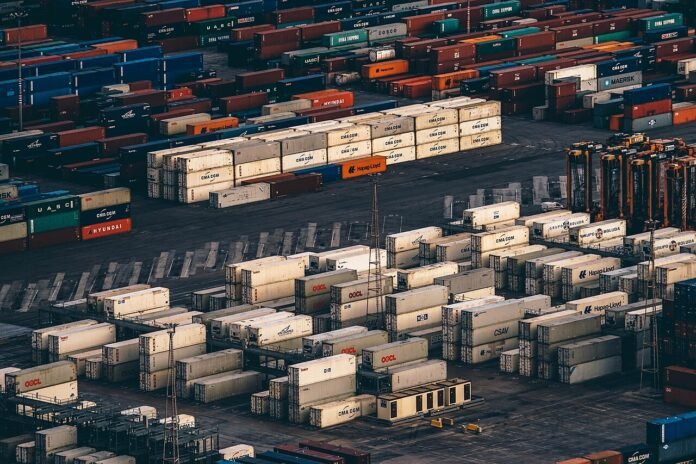
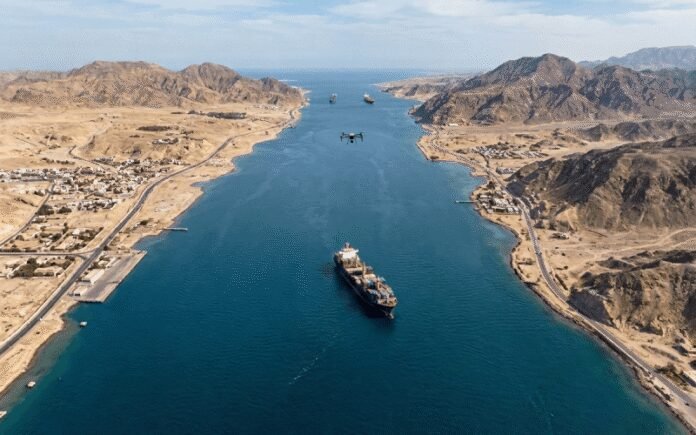
Shipping traffic through the Strait of Hormuz slowed sharply at the start of the week following attacks on oil tankers, as US-Iran talks aimed at resolving the conflict in the Middle East stalled, according to Reuters

Ship-tracking data from Kpler showed that only five commodity vessels passed through the strait on Saturday, while none were recorded on Sunday, compared with 31 vessels over the previous weekend, Reuters added. 

An Iranian official earlier said the United States had suffered major strategic losses during the latest military confrontations, stressing that the Strait of Hormuz would remain under Iranian control. 

Kazem Gharibabadi, Iran’s deputy foreign minister, stated that the United States has sustained significant strategic losses, urging Washington to accept this reality and abandon its illusions. He warned that failure to do so would result in Iran continuing to enforce the naval blockade.

READ: Iranian parliament to debate foreign influence, Hormuz oversight bills

Trump’s ‘forever’ tariffs gain a foothold at consumers’ expense

0
trump’s-‘forever’-tariffs-gain-a-foothold-at-consumers’-expense
Trump’s ‘forever’ tariffs gain a foothold at consumers’ expense

President Donald Trump’s tariff announcements no longer cause the market gyrations that they did in 2025. But their sticker shock for American consumers is becoming increasingly clear – just as economic sentiment is souring ahead of the November 2026 midterm elections.

Many business groups had hoped that the tariff wars would end in February, when the Supreme Court overturned Trump’s emergency tariffs. They got a rude awakening five months later, however, when Trump announced a raft of new import taxes to replace the levies that were struck down.

Covering nearly all US imports, these tariffs have the advantage in the Trump administration’s view that they’re more firmly based on existing US trade law, beyond the reach of the Supreme Court’s review. And Trump has said he envisions enacting many more of these so-called trade law tariffs.

As a trade economist who has been following the tariff wars, I believe that the longer these import taxes are in place, the more the consumers will bear their burden. The 2025 “Liberation Day” tariffs that the Supreme Court struck down, as well as other levies Trump announced after the February ruling, turned out to be temporary. But the bulk of the new levies are designed to be permanent.

That means that for consumers, the total cost burden is likely to increase even if the tariff rates don’t change – because the new tariffs will be stacked on older ones.

The cost squeeze

On one level, Trump’s tariff fixation is a mystery. Tariffs continue to be unpopular, and it’s unclear why Trump would double down on them before midterm elections when his approval ratings, including on the economy, are so low.

But on another level, Trump’s embrace of tariffs can be understood as an instrument of personal power. He has long viewed them as tools for negotiating leverage, and he recently declared that US tariffs “aren’t high enough.” The president also has deflected criticism of their impact on consumer prices by claiming erroneously that foreigners pay for them.

The simple fact is that US tariff invoices issued by the Treasury Department are sent to the US businesses that import the foreign products. These companies may try to absorb some of the cost to protect their market share and work through existing inventory. But eventually, the squeeze will compel them to pass most of that extra tax onto US consumers – no matter which foreign countries are targeted.

And now that tariffs have had time to work through the economy, researchers have found an impact on prices. The Dallas Federal Reserve recently estimated that the Fed’s preferred inflation measure would have risen without tariffs at an annual rate of 2.3% in March, instead of its actual 3.2%. Meanwhile, an analysis by the Yale Budget Lab concluded that consumers are paying anywhere from half to the entire cost of the levies through higher prices, depending on the goods.

Tariffs upon tariffs

Trump based his July tariff announcements on three different legal justifications: a country’s unfair trade practices such as forced labor, known as Section 301; national security protection, or Section 232; and discrimination against US imports, or Section 338. The last is a trade war tariff dating to the Smoot-Hawley Tariff Act of 1930.

The new Section 301 tariff rates, which are global, currently range from 10% to 12.5%, but they could go up at the president’s discretion.

Section 301 has also opened the door to new country-specific tariffs targeted at Brazil, at 25%, while Section 338 was cited to slap an extra 50% import tax on certain Canadian goods. In addition, Trump has imposed levies ranging from 25% to 50% for specific products, covering steel, aluminum, automobiles, copper, timber, lumber and pharmaceuticals.

Yet more new tariffs are planned for wind turbines, personal protective and medical equipment, robotics, machinery and coal, as well as to combat foreign excess production capacity and support US production of foreign generic prescription drugs.

With so many tariffs in the mix, consumers will be even more squeezed because many of these taxes will be stacked on top of one another. For example, Section 301 tariffs will be applied on top of the older legacy tariffs that date back to World Trade Organization rules setting a baseline Most Favored Nation rate, as well as on top of each other.

So if a country ends up facing tariffs based on forced labor violations as well as excess capacity, each at 10%, on top of a uniform Most Favored Nation rate of 3%, the total rate on all products from that supplying country would be 23%. And this levy will be paid by US consumers, not foreigners.

Pushback from the states

Trump is especially interested in Section 301, which is meant to remedy foreign trade practices that are discriminatory, unfair or unreasonable, and that burden US commerce. It sets no limit on tariff rates and lets the president discriminate among exporting countries. Furthermore, federal courts have typically given the president broad discretion in implementing the statute.

Trump chose to use this measure to punish virtually all US trading partners on grounds that they failed to prevent imports into their markets that were made with forced labor. His administration based the decision on its own investigation that determined the US is the only country that prevents forced labor imports.

These tariffs were set at 12.5% for countries without any formal prohibition on forced labor imports, and 10% for all other countries with such a prohibition. These tariffs are similar in scope and impact to the earlier Liberation Day tariffs.

Twenty-five US states then challenged these levies at the US Court of International Trade, using similar reasoning as the Supreme Court when it struck down the emergency tariffs on grounds that they were an unconstitutional tax on US consumers. Citing the affordability burden, the lawsuit claims that the Section 301 tariffs do the same thing. Nor did the administration offer any indication of how the tariffs were calculated and when, if ever, they would be removed.

The lawsuit further alleges that the new tariffs go far beyond the original purpose of Section 301, which is to open specific markets to US exports through negotiated policy reforms, not to impose global tariffs with no clear goal in sight.

Whether this legal challenge will succeed depends in part on whether judges will continue to defer to the president on these particular levies, no matter how much they deviate from previous practice. And I believe Trump is counting on their doing so.

Kent Jones is a professor emeritus of economics at Babson College.

This article is republished from The Conversation under a Creative Commons license. Read the original article.

Oil struggles for direction as US-Iran talks stall, Hormuz shipping slows

0
oil-struggles-for-direction-as-us-iran-talks-stall,-hormuz-shipping-slows
Oil struggles for direction as US-Iran talks stall, Hormuz shipping slows


Oil prices gave up early gains on Monday as stalled U.S.-Iran talks revived concerns over prolonged Middle East tensions, but the absence of major supply outages limited upside.

Brent crude futures rose ​as much as 1% to $89.40 per barrel but were last trading dow ​24 cents at $89.28 by 0620 GMT. The U.S. West Texas Intermediate crude futures fell ⁠67 cents to $81.74 a barrel.

Both contracts gained more than 5% last week following attacks ​on tankers operated by Abu Dhabi National Oil Company in the Hormuz strait ​and on a Saudi Aramco refinery.

“Oil prices have now rebounded almost completely from the lows seen in early August, as hopes for a more permanent resolution between the U.S. and Iran have faded ​and geopolitical risk premiums have returned to the market,” said Priyanka Sachdeva, head ​of market insights for Phillip Nova in Singapore.

Over the weekend, Iranian Foreign Minister Abbas Araqchi ‌said Iran ⁠had not decided to resume talks with the U.S. while U.S. President Donald Trump urged Americans to accept slightly higher gasoline prices while the conflict continues.

“However, I see limited upside from here unless we get clear evidence of renewed aggression in the ​Strait of Hormuz, particularly ​material damage to ⁠tankers or oil infrastructure,” she said.

Shipping through the Strait of Hormuz slowed over the weekend, data showed on Monday, following attacks ​on tankers. Five commodity vessels transited the strait on Saturday, ​with none ⁠registered for Sunday, ship-tracking data from Kpler showed, versus 31 for the prior weekend.

The United Arab Emirates accused Iran of attacking a third vessel operated by ADNOC that was ⁠transiting the ​strait on Friday, the Emirati state news agency ​WAM reported, after blaming it for two other incidents involving ADNOC vessels in the strait on Thursday ​evening.

Source:  Reuters

China’s qualms with long Trumpism

0
china’s-qualms-with-long-trumpism
China’s qualms with long Trumpism

Beijing may believe that Donald Trump’s 2016 election and his return to office eight years later are not accidents but part of a deeper American current. Beyond Trump himself, the America that has emerged since 2016 increasingly seems unwilling to worry about the world.

For a century, beginning with America’s intervention in the First World War in 1917, the United States concerned itself with the global order through three great conflicts: World War I, World War II, and the Cold War.

Trump’s 2016 election, however, gave voice to an America tired of international affairs, once again “selfish” and feeling cheated by the world for its generosity. This America is undermining the very international institutions it created, including the United Nations and the World Trade Organization.

China has never truly felt that these institutions fully represented it, its values, or its way of thinking. The American world order does not belong to China. If America wants to destroy that order, why should China support it?

China does not believe it is in a position to replace the American order with a ready-made alternative, as the Soviet Union once did. If America dismantles the existing system and creates chaos, China’s response is to protect itself from that chaos, avoid being swept up in external confusion and perhaps take advantage of any opportunities it creates. 

In the medium- to long-term, the aim is to survive the destruction of the American-made world and emerge stronger.

Iran’s turmoil

In that sense, the turmoil in Iran may appear to Beijing as the latest manifestation of this broader trend. If the Strait of Hormuz was destabilized by American intervention, why should China help Washington fix it now? What would America offer in return? Could China help shape a different global order, beginning with a reordering of the Strait of Hormuz?

For China this may resemble the fourth century BC – the Warring States period when the old political order, centered on the Zhou dynasty’s Son of Heaven, collapsed.

The prime minister of Wei, Hui Shi, concluded that a new order had to be established, one in which each state recognized itself as fully sovereign, without deferring moral or political authority to the Son of Heaven.

Today, for China, the old order and effective American centrality may no longer exist.

In 2004, four Chinese strategists, Wang Jian, Wang Xiangsui, Qiao Liang, and Li Xiaoning, published a book titled The New Warring States Period (Xin ZhanGuo Shidai). It forecast a time of increasing state-to-state friction, due to the collapse of the US order, and growing confusion that could last for decades. 

The book, presented to the foreign press at the Institute of Italian Culture in Beijing, drew its first lessons from the then-faltering US intervention in Iraq.

Among the authors, sketching the root problem was Wang Jian – who’d been praised in the 1980s as the best economist of his generation by Party Secretary Zhao Ziyang (who himself was later demoted for supporting the 1989 Tiananmen demonstrations).

It was about the US’s unmanageable debt and the hijacking of political and economic agendas by private companies as long-term problems that would cripple America. The 2008 financial crisis, which didn’t fully punish all companies involved and didn’t change the faulty market’s rules, seemed to confirm the analysis.

It is a factual question: are the Chinese right? Presently, even many of America’s own allies suspect they may be. So, what is to be done? China is inclined to close in on itself and wait for others to make the first move.

Perhaps changing that Chinese attitude would require a different international framework – a different message from America, its allies, and the states around China.

Could Iran become a place to begin experimenting with a new order? Perhaps, but only through proactive effort. Yet it is likely that none of the players on the ground has any easy, concrete proposals.

… and its black hole

Iran is a country of nearly 100 million people, roughly half the size of Europe, full of mountains, and strategically positioned between the Caspian Sea and the Persian Gulf, Central Asia and the Mediterranean. Today, it does not appear politically very unified. The old Supreme Leader, Ali Khamenei, is gone, and it is unclear whether his son and heir, Mojtaba Khamenei, is active or to what extent. The Revolutionary Guards appear to have the final say, but they have not rebuilt political unity even within the country. They seemingly trust no one.

Kamran Bokhari argued,:

Iran’s regime has survived not because it has prevailed militarily but because US domestic political constraints have limited Washington’s willingness to pursue the conflict to its logical conclusion. Survival, however, has come at enormous cost.…

The Iranian regime confronts deepening political, economic and security challenges that will constrain its ability to recover and shape its strategic environment for years to come.

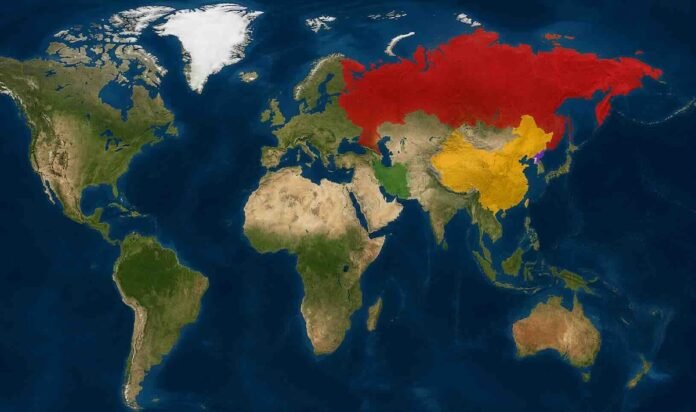
Iran is a failing state that could bring chaos to China’s doorsteps.

It is unclear what China could do, even if it wanted to. Yet, thinking through ways to talk with China about Iran may not be a waste of time. They may be small threads thrown into a chaotic situation.

Yesterday’s American order might not be reversed. A new order will have to be established. The question is how quickly that will happen and how peacefully, rather than through war. Iran could be a path to find some peaceful solutions.

Is the US losing?

There is, however, one more point. Despite MAGA’s isolationist rhetoric, US influence has grown in Venezuela and Syria. Is there a risk that, out of excessive caution and a determination to defend at all costs its political-energy axis with Iran and Russia, Beijing may inadvertently help expand America’s disruptive role in the world and shoot itself in the foot?

That may be the real crux of the matter. Is China’s analysis right or wrong? Perhaps American power is not disintegrating but reorganizing — and, if so, China’s wait-and-see approach could backfire. 

American power may be less in decline than in a state of reconfiguration, as has so often happened in the past with the United States. That reordering can appear dramatic from the outside. America lives through chaos, just as much as China abhors chaos and sees it as the apocalypse.

Plus, there’s the US feeling wronged by China. The US opened to China in the 1980s and again with China’s accession to the WTO. It offered China opportunities that were not extended to any other country. 

China used these opportunities but didn’t join the US order as a “responsible stakeholder,” opening its market and currency, although Premier Zhu Rongji wanted to in the late 1990s. Its growth and size unsettled the old order.

So, the US, unable or unwilling to spend more time trying to rein in China, decided to scuttle the old order that was favoring Beijing at Washington’s expense.

This was not pursued through a detailed plan drawn up in a secret boardroom, but most likely it grew in Washington’s fuzzy atmosphere of government agencies, think tanks, financial leaders and foreign diplomats, where ideas are sown and may gain traction or fail.

If the US has a long-term plan and a deep feeling, no matter how fuzzy, Beijing’s calculations could turn out wrong.

In the very short term, China can afford to wait for the American midterm elections in the fall and for its own party congress in Beijing next year.

But perhaps it should also prepare to re-engage America and the wider world, so as not to be caught by surprise. Iran is in serious difficulty, and so is Russia, whatever America may intend to do. If Russia and Iran — two important pieces of Chinese foreign policy — falter, Beijing could have more trouble than it anticipated.

Besides Iran

Moreover, in the coming months, China could face even greater geopolitical challenges. The new defense pact among Turkey, the Saudis and Pakistan is certainly a setback for Israel, which is now trying to rope in India, which has historically had good ties with Iran.

It’s not good for America because it has shown some regional players that America cannot manage Iran. It also shows that America’s withdrawal won’t create a situation of confusion that would allow China to insert itself. Countries that doubt the US will be building alliances that could be deployed against Beijing. The same is happening in Asia. America’s perceived retreat is coalescing anti-Chinese sentiments that were previously held in check by US presence. 

Here, the fuse could be North Korea.

Zheng Jiyong wrote, “Tensions between North Korea and South Korea are mounting, which raises the possibility of conflict that could spill beyond the Korean Peninsula. Security coordination among Japan, South Korea, and the United States is also becoming stronger, putting pressure on China, and North Korea’s entrenched nuclear status has made Japan and South Korea anxious about their own security and could even motivate them to eventually pursue nuclear weapons themselves.”

Therefore, Zheng points out,“China is increasingly worried about North Korea’s role in creating and intensifying these risks – and about the need to adjust its North Korea strategy to manage them without inflaming tensions and further destabilizing the region. Pyongyang has grown more unpredictable as it has become emboldened by its nuclear program.”

But here is a catch. North Korea, on a loose but real leash with China, could be used by Beijing as a wild card in the complex dynamics of East Asia. But if Pyongyang is put on Beijing’s tight leash, whatever it does will be blamed on Beijing.

Russia’s new ties with North Korea upset the old Beijing-Pyongyang game, creating a situation where Beijing has to keep a tight leash. But this is impossible given the freewheeling nuclear rearmament in North Korea. The rearmament is spurring similar rearmament drives in South Korea, Japan, and the rest of Asia, all of which are contrary to China’s interests.

Plus, the new Russian ties with North Korea project Moscow’s unresolved historical issues with Japan onto East Asia and are complicating Chinese diplomatic efforts.

On August 13, Putin visited Iturup (Etorofu in Japanese), an island claimed by Japan at the end of the Kuril chain near Hokkaido, a day after major naval drills and a missile launch by ally North Korea. It’s unclear why Putin wants to irritate Japan with his visit. There could be an element of trying to needle China, as Japan, already irked by Russia, would become even more confrontational with China, Russia’s friend. Moscow might do it because of differences with China over the war in Ukraine, or to show support for restive North Korea. With partners like this, who needs enemies?

For these reasons, Joseph DeTrani keeps insisting that the US should open a dialogue with North Korea without preconditions to probe Pyongyang’s intentions.

Moreover, greater cooperation between Israel and India could spell trouble for China, as both countries feel they have an axe to grind with China.

The economy

Trade disputes remain highly charged and may become even more severe, since China’s surplus is on track to reach a new record by year’s end, further straining relations with its trading partners and creating additional pressure on the world trading system.

The consensus range for China’s share of global industrial production is roughly 28 to 30%; the figure has been climbing steadily.

China’s share of global manufacturing output rose from 5% in 1980 to around 30% by 2023. The US share fell from 21% to 17% over the same period. Before the 1929 financial crisis, the US was commonly cited as accounting for ~40 to 45% of global industrial production.

In theory, China could still expand its manufacturing base before reaching the US 1929 inflection point. However, unlike America in 1929, China is surrounded by political controversies that exacerbate its commercial disputes.

US industrial capacity supported WWII efforts, but at the end of the war, America didn’t just leave the world in pieces. It left it in peace. It used its wealth to rebuild the economies of its allies and even of its former enemies, like Germany, Japan, and Italy. It did so with self-interest in mind, to stem the communist tide from the USSR reaching the western shores of the Atlantic, but it also did so with the interests of every country in mind.

Plus, the US 1929 overcapacity was brutally resolved through a wave of bankruptcies that wiped out huge personal fortunes and left almost half of the workforce jobless. After this slaughter, the US jump-started the economy with a series of public works projects.

China is suffering from similar overcapacity, but there is no wave of bankruptcies, even though 2-300 million are de facto underemployed in the gig economy in the cities (about 40% of the urban workforce).

Mountains of unrepayable debt are piling up, with no solution in sight for China or the rest of the world. This is because companies are not private but partly or fully state-owned. Debt can’t simply be wiped out, forcing private entrepreneurs to rethink their lives, while the state absorbs it and is left to cough up solutions. Moreover, public works have driven Chinese growth for over two decades, but returns are now declining.

It may be even worse than the 2008 financial crisis in the US. Then the administration decided to salvage the financial world, perhaps swayed by political interference from private investment. Now, in China, the state can’t simply let some companies go bust because it owns them, and their demise would follow. China needs a more complex approach.

How the US could get out

In any case, the domestic political confusion in Washington – a mixed bag of results that are positive in Venezuela, hesitant in Ukraine, failing on tariffs and Iran, and disruptive toward the allies – may prompt Beijing to avoid moving first.

In theory, the US path ahead should be clear: replicate and adapt Cold War policies. As with all its complicated differences, this with China is some kind of new Cold War. How was the Cold War won? The US and its allies reached bipartisan consensus and established domestic and international offices to implement long-term policies.

In the last chapter of his “The Hundred-Year Marathon,” Michael Pillsbury described the long-term policies to be implemented, and David Goldman, in his essays, has long drafted re-industrialization plans for America.

The sticking point is building a new domestic and inter-allies’ consensus. It is difficult because the US is in the middle of an identity crisis that spills into its relationships with its allies and the world. But identity crises are both very serious and very simple, especially for the US. America was badly split in the 1930s, but Japan’s attack on Pearl Harbor brought the country together.

A sudden sense of danger could turn the US around all of a sudden, even now; then things could be different for everyone, including China.

And there is an actual issue. The US is not just its physical borders. It is the only country with a really massive presence abroad, unparalleled since the fall of the Soviet Empire. To push away this presence could be difficult, and it’d be even harder for China to replace it.

Sending troops to be stationed abroad is a complex political and economic calculus. Who will pay for those troops? What will be the troops’ duties? With the US and the USSR, it was Washington and Moscow that paid for everything and also guaranteed the security of the host nation.

Without that security, the stationed troops would be in danger. In fact, the host country spends less on its defense because of the presence of foreign troops. The upside of political interference for the host nation came at an economically impossible cost to Russia during the Cold War. Now America has stretched its purview even further than it did during the Cold War, and the burden has become similarly impossible.

This is the gist of the issue with Trump. He would like to withdraw US forces, and Italy, for instance, doesn’t want to increase its defense expenditures. Also, US interference in Italy is de facto negligible. So, is this a US tribute system, similar to what China had with its vassals in imperial times?

The problem is what Imperial China knew all too well: tributary nations received more economically than they gave to the Son of Heaven, while the political projection they provided may not have been decisive. Eventually, the Son of Heaven capped the tributes brought to the capital to make the system economically viable. But the cap didn’t stop vassals’ requests and demands from straining ties.

Then China and the Belt and Road Initiative: Is Beijing willing to spend its money to defend foreign countries in order to station troops in Central Asia, for instance, with little control over volatile local politics? If Beijing did so, it’d follow the Soviet and US examples by taking responsibility in part for foreign/global security.

If it doesn’t, its ties would be based only on commercial blackmail: You comply, or I won’t sell you knots and bolts and will stop your economy. But this blackmail could be harder to manage than foreign military projection, which has the upside for host countries of limiting defense expenditures.

So far, there’s no sign that Beijing wants to do it — too expensive and too risky.

Then the US is still alone. Maybe it’s confused, feeling divided and overstretched, with its mind in too many places and tripping over contradictory pulls. But unless it hits a massive stone wall, there’s nothing to replace it.

On the other hand, there is a very large continental bloc controlling the global heartland, as Mackinder would see it. But the bloc is not economically self-sufficient, even though it’s politically adversarial toward the US. China needs to sell its stuff to the rest of the world to earn a trade surplus and access advanced dual-use technology; Russia and Iran depend on their oil exports to sustain the war. To replace exports, China should prioritize domestic consumption, and to do so, it needs a complete overhaul of its financial and political systems.

In theory, the rest of the world could replace both oil and Chinese goods without a massive systemic revamping. It’d require a new logistical reorganization and would incur high costs for some years. Most importantly, the US would need to put its head into it, which at the moment seems almost impossible.

It’s hard to say who has the most difficult task, but certainly it won’t be easy for either.

(Thanks to Marco Mayer for the conversation)

This article was originally published by Appia Institute, of which the auhor is the director.

Iran Targets US and Israeli Media Contacts, Threatening Prison for Interviews With ‘Hostile’ Outlets 

0
iran-targets-us-and-israeli-media-contacts,-threatening-prison-for-interviews-with-‘hostile’-outlets 
Iran Targets US and Israeli Media Contacts, Threatening Prison for Interviews With ‘Hostile’ Outlets 


Iran’s parliament on Sunday approved the general principles of a bill that would criminalize interviews and other communications with foreign media outlets deemed hostile to the Islamic Republic, including US and Israeli media and organizations financed by either country, according to reports by Iranian media outlets including Shargh, IRNA, Etemad Online, Rouydad24, and ILNA. 

Under the proposed legislation, appearing in interviews or participating in discussions with such media could carry prison terms of six months to two years. The bill must still undergo detailed parliamentary review before being submitted to the Guardian Council for approval. 

The legislation would also require Iranians to notify the Intelligence Ministry before giving interviews to other foreign media outlets. 

Contact with foreign embassies, offices of foreign organizations, or other non-Iranian institutions without notifying the Foreign Ministry and obtaining written permission could result in fines and the loss of certain social rights, according to Iranian media reports. 

The proposed measure would also toughen penalties for economic crimes committed under foreign direction or supervision, prohibit providing information to foreigners without approval from the Intelligence Ministry, and restrict scientific cooperation with foreign institutions not on an approved list. 

It further proposes prison terms of up to 30 years for policy or legislative proposals made under the direction of foreign intelligence services if authorities determine they threaten Iran’s security or independence. Such cases would be heard by Revolutionary Courts. 

The bill is presented as a measure to counter foreign intelligence influence and comes after Iran adopted tougher legislation in 2025 targeting alleged cooperation with hostile states. 

The proposed restrictions come amid an intensified Iranian crackdown on contacts between citizens and foreign organizations, particularly those linked by authorities to countries considered hostile to Iran. 

Earlier last week, Iran’s neighboring country Pakistan introduced new rules expanding government oversight of foreign media, requiring journalists and contributors working for international outlets to obtain official clearance before undertaking reporting assignments outside Islamabad, Lahore, and Karachi. The move has drawn strong criticism from journalistic organizations. 

Under the Foreign Media Facilitation Guidelines 2026, issued by Pakistan’s Ministry of Information and Broadcasting, foreign-media personnel must obtain a No Objection Certificate from the ministry’s External Publicity Wing before carrying out official reporting assignments outside the country’s three largest cities. 

Anthony Hopkins Reveals Horrifying Drunken Incident

0
anthony-hopkins-reveals-horrifying-drunken-incident
Anthony Hopkins Reveals Horrifying Drunken Incident


Anthony Hopkins is opening up about the terrifying moment that finally forced him to confront his drinking — and the Oscar-winning actor admits the consequences could have been deadly.

The 88-year-old Hollywood legend revealed that he was driving while in an alcoholic blackout when a chilling realization suddenly hit him: he could have killed an innocent family.

“I realised I could have taken out a whole family by my driving,” Hopkins recalled in a new interview with The Observer.

The Silence of the Lambs star said the frightening incident happened on Dec. 27, 1975, while he was behind the wheel heading to a party.

Hopkins already knew his drinking had become a serious problem, but he admitted he had been refusing to face it.

“I knew about alcoholism but I didn’t want to confront it,” he said.

That drive changed everything.

Hopkins remembered that someone in New York had previously given him a phone number and told him to call if he ever wanted help. The following Monday morning, he finally picked up the phone.

The number belonged to Alcoholics Anonymous.

Hopkins said he agreed to meet with someone but insisted on going to them himself because he still had “some sort of pride.”

When he arrived, an older woman asked him a simple question: How did he feel?

Hopkins told her he knew he was “in big trouble” and had no idea what to do.

Her response stunned him.

She told Hopkins he never had to drink again and urged him to put his trust in God.

According to the actor, something extraordinary happened next.

Hopkins said he suddenly heard an immensely powerful voice inside himself telling him that his old life was over and he could finally begin living.

Even more remarkably, Hopkins said his craving for alcohol disappeared.

“It’s never come back,” he said, adding that he has now gone roughly 50 years without drinking.

The celebrated actor has never tried to sugarcoat just how destructive his alcoholism became.

In his memoir We Did OK, Kid, Hopkins admitted that alcohol brought out a side of himself he deeply regrets. His drinking fueled arguments with directors and colleagues and damaged his relationships with his first two wives.

“That’s the ugly side of alcoholism,” he wrote, describing how drinking could bring out a “brutal side” of his personality.

Hopkins even recalled appearing in what he called a “terrible” movie during the early 1970s that he could barely remember making because he and others involved were routinely blackout drunk.

His life ultimately took a dramatically different turn.

Hopkins went on to become one of the most celebrated actors of his generation, winning two Academy Awards and four BAFTAs during a career stretching back nearly seven decades.

His unforgettable performance as cannibalistic serial killer Hannibal Lecter in 1991’s The Silence of the Lambs earned him his first Oscar. He later reprised the terrifying role in Hannibal and Red Dragon.

Hopkins won his second Academy Award decades later for his acclaimed performance in 2020’s The Father.

His other famous credits include The Elephant Man, The Remains of the Day and the Thor movies.

Now, at 88, Hopkins is embarking on yet another surprising chapter.

The acting icon is preparing to release his debut album, Life Is a Dream, featuring music inspired by his childhood growing up in Margam, South Wales, surrounded by farmland, mountains and meadows.

Hopkins has actually been composing music for decades, with some pieces on the album dating back many years.

Despite becoming famous around the world as an actor, Hopkins said music was his “first desire.”

“I’ve been composing music all my life,” he said. “Some of these pieces have lived with me for decades and I still find myself returning to them.”

For Hopkins, however, none of the awards, blockbuster movies or music might have happened without that frightening night behind the wheel in 1975.

It was the moment he realized his drinking was no longer merely threatening his own life — it could have destroyed the lives of complete strangers.

And that realization ultimately convinced him it was time to stop.

Russia’s allies are more helpful than Ukraine’s

0
russia’s-allies-are-more-helpful-than-ukraine’s
Russia’s allies are more helpful than Ukraine’s

This update focuses on the role of allies in the Russo-Ukraine War (which was the fascinating and distressing story of the last week).

Ukraine’s allies (I use that word knowing it is loaded) should have helped Ukraine win the war by now. They are much richer, more technologically advanced, and, one would think, actually invested in Ukrainian victory – at least from a European perspective. And yet Ukraine’s allies have always tried to finesse their help, to limit it in certain perplexing ways that have forced Ukraine to fight a war that it did not wish to fight and that, right now, have left Ukraine extremely vulnerable in one area.

Russia’s allies, on the other hand, have actually offered support that has allowed Russia to fight the war that Russia has wanted to fight. They have offered things such as Iranian drone technology (the Shahed which is the foundation of the Russian Geran), massive Chinese purchases of Russian oil and increasingly critical component supplies, and of course North Korean mass supplies of artillery shells, front line soldiers and now ballistic missile forces.

These North Korean forces show that one does not have to have a large economy or wide technological base to be an extremely helpful ally. North Korea is providing effective forces to actually fight for Russia – which is far more than any of Ukraine’s partners have done.

North Korean forces parading In Moscow: May 2026. As an ally, North Korea has been astounding for Russia.

This brings up the question of what exactly is the USA in this war? This week we got a very clear answer to that question. The US is using its leverage over Ukraine to help Russia. It does not have to do this, it chooses to.

Finally, the Ukrainians made a specific announcement about how much territory they have liberated over the last few months, and it is worthy of note, even as the reporting of the war has gone back to being quite pessimistic about Ukraine.

Russia’s allies are more helpful than Ukraine’s

Reports have increasingly come in about North Korea’s plan to help Russia by deploying a significant ballistic missile strike force to aid Russia in its ranged bombardment of Ukraine. Ukrainian intelligence was most specific about the plan on August 5, when it named the location of the unit and the type of missiles that were being sent. Their specific claim was that the first North Korean ballistic missile forces being sent would deploy near Voronezh and contain 120 ballistic missiles and six launchers.

President Zelensky from that point on added more to that discussion and expanded on what the Russians were expecting from the North Koreans – saying that in the end 30,000 or even 50,000 additional North Korean troops and their supplies could be on their way to help Russia. 

Note that Zelensky did not provide a source for these latter claims or a list of the kinds of units that would be sent. 

Then, the next day, Zelensky was more explicit when he actually ascribed a specific ballistic missile attack to North Korean forces. He said that the previous day’s Russian missile assault on Zaporizhzhia had been at least partially undertaken by North Korean missile forces. This attack killed 9 people.

The Ukrainians are a little stupefied at how their partners, particularly in Europe but also in Asia, are trying not to engage in this story. To them it is an extraordinary development that serving North Korean units and their North Korean missiles will now take part in an assault on Ukrainian cities and civilians. They were hoping that this would lead to a major European response. 

The Ukrainians are a little stupefied at how their partners, particularly in Europe but also in Asia, are trying not to engage in this story. To them it is an extraordinary development that serving North Korean units and their North Korean missiles will now take part in an assault on Ukrainian cities and civilians. They were hoping that this would lead to a major European response.

When it comes to Asian countries, specifically South Korea and Japan – the ones most threatened by North Korea – the Ukrainians were hoping that they would get more support. Zelensky indeed tied up together what he saw as the European and Asian interest in helping Ukraine oppose this move, during his evening address on August 10. Apologies for the long excerpt.

This is the first time in Russia’s history that they no longer have a secure strategic rear. For the first time, they cannot wage war without reinforcements from North Korea. They are now preparing to deploy an additional North Korean contingent on their territory. They have received, just imagine, additional ballistic missiles from North Korea. And everyone around the world must understand what this means.

This is not only about the lives of people in Ukraine, and not only about the threats we face. North Korea’s ballistic missiles and their other weapons are being improved through its collaboration with Russia. The more North Korean strikes there are here in Ukraine, in Europe, the more their missiles and soldiers are used, the more they correct their shortcomings and blind spots, the greater the danger will later be for Japan, the Republic of Korea, the Philippines, and other countries in the region.

Depressingly, of course, the response by Ukraine’s partners has been to downplay or even not engage at all with this question. South Korea had one official who (reportedly) said that this would be an illegal move by North Korea – but who also made no concrete pledges of aid. Everyone else just remained quiet.

In some ways, of course, this should not be a surprise. North Korea, like Iran, provides Russia what it can in direct military aid with no strings attached. Russia’s allies want it to win and believe that their military support should be used how Russia wants it to be used. That has extended to the thousands of North Korean forces who actually fought and died under Russian command retaking parts of Kursk Oblast.

And, in exchange, such allies get a great deal back. Russia has been a major support to Iran during its war with the USA (helping Iranian targeting of US forces) and Russia has, reportedly, provided a great deal of technological help to North Korea to improve its missile forces

You can see the benefits in such an alliance. North Korea helps Russia by sending troops in 2024, Russia helps North Korea improve its missiles. North Korea deploys some of those improved missile forces to Russia to attack Ukraine. 

Rinse and repeat.

We can also say that Russia has accrued great benefit from all its support for Iran – in helping waste amazing amounts of US ordnance, force US forces to pull back from the Persian Gulf and overall weaken the US presence in the Middle East.

The contrast with what Ukraine’s allies do could not be more stark. They have constantly tried to limit what Ukraine gets and even how it uses what it has(more on that). They have used aid not only to help, but also to try and control and limit Ukraine. In doing this, they have helped transform this war into a longer, bloodier affair than it needed to be. 

And they have done this by completely misreading the situation. They always wonder whether Russia will get hurt too much, whether what they give might actually be so effective that Putin will get angry, that arming Ukraine effectively might, weirdly, make reaching a “peace” deal more difficult. 

Russia’s allies, on the other hand, give what they can and get what they can and let Russia fight its war. It has been brutally effective.

Actually, the USA is quite a good ally for Russia

When I write, as I often do, that Trump has aligned the USA with Putin and is helping the Russian war effort, one of the regular retorts is that this cannot be true because the USA is still selling (very small) amounts of weapons to Ukraine through the Prioritized Ukraine Requirements List (PURL). How could the USA allow any weapons to go to Ukraine, it was said, if it was more set on helping Putin?

This past week, I hope, the answer to that question was made very, very clear – even to the greatest of skeptics. The USA has kept dribbling small amounts of military support for Ukraine because it gives the USA a great deal of leverage, the ability to both shape how Ukraine fights its war and even how European states prepare.

For instance, by continuing to provide a small number of Patriot interceptors to Ukraine through Europe, the Trump administration forces the Ukrainians to dance more to the US tune (and regrettably has slowed down the process of European states developing a European-only advanced air defense system). As long as there is no replacement, Ukraine will bend over backwards for even the prospect of more Patriots.

And we just had a brutally efficient example of what the US can do with that leverage. The Ukrainians for much of the last year have waged a ranged air-sea campaign against Russia’s ability to export oil through the Black Sea port of Novorossiysk (also the main Russian naval base on the Black Sea now that the Ukrainians have isolated Sevastopol). The USA, however, decided that they wanted that campaign weakened.

At the start of August, according to the FT, Vice President JD Vance asked Zelensky to halt all Ukrainian campaigns on non-Russian tankers using the port and much of the infrastructure. Here was how another story summarized the move.

Washington was concerned that Ukraine could further destabilize oil markets and harm US companies by striking tankers carrying oil transported by pipeline from Kazakhstan to the Caspian Pipeline Consortium (CPC) terminal at the Russian port of Novorossiysk.

Vance asked President Volodymyr Zelenskyy to halt the attacks during a phone call on 31 July.

Since then, Ukraine has not struck tankers near the CPC terminal.

The officials said Ukraine has agreed not to strike CPC infrastructure facilities or non-Russian vessels, provided that the vessels are not subject to Ukrainian sanctions and are not carrying Russian oil or other Russian cargo.

The “non-Russian” designation is meaningless, as the shadow tanker fleet that the Russians are using to move their oil is deliberately non-Russian-flagged, to avoid sanctions. So, the USA was basically telling the Ukrainians to stop what had been a very effective campaign to help Russia.

An oil tanker hit by the Ukrainians in the Black Sea in 2025 — the USA wants Ukraine to stop this.

The oil price argument is also really unconvincing. The Americans could have done this before had they really cared about the price of oil. They are doing it now, in my humble opinion, because Putin desperately needs money.

And the Ukrainians clearly felt that there was no alternative but to agree to this very pro-Putin request by the US Government. You can even see the way Patriot supplies might have been part of this process. On August 8, Zelensky made his announcement that Ukraine had been offered a very small monthly supply of Patriot interceptors going forward – while admitting that the number was grossly insufficient for Ukrainian needs

The USA keeping Ukraine dependent on Patriots means that even a small number gives the US leverage, and in this case that leverage can be used to do a massive favor for Vladimir Putin – a favor that the Ukrainians were sadly forced to start giving right away.

If the US really cared about the global price of commodities, it might urge the Russians to stop attacking Ukrainian grain shipments in and out of Odesa, which is an effective and growing Russian campaign. As the New York Times, recently reported, this campaign could affect food prices worldwide very soon – leading to a real cost spike to consumers.

Coming at the start of the harvest season, the Russian campaign in Ukraine, which is a major producer of grains like wheat, corn and barley, could throw global food supply chains into turmoil. In 2022, during the first months of the full-scale war, Russia established a blockade of Ukrainian ports, causing a spike in global food prices and placing an estimated 70 million people at increased risk of acute food insecurity.

Thus Russian-caused inflation seems fine for the USA these days. However, Ukrainian-caused inflation gets an official request for a Ukrainian retreat.

Too often the Trump administration can be dismissed as bumbling incompetents. However, when it comes to helping Russia they can be brutally effective – as we have seen over the last few days. The US has achieved major leverage over Ukraine through a brutal rationing of access to Patriot interceptors. If they cut that off entirely it would actually have been worse for Russia.

Ukraine is slowly but steadily liberating territory

We are now more than halfway through the summer season, and in the past this was often a time when reports about the successes of Russia’s summer offensive would be heating up in the Western press. This was, for instance, when the stories about the imminent fall of Pokrovsk started circulating in 2024 (it actually took the Russians another year to take the city). And last summer at this time the reporting was all about the manpower crisis that Ukraine was facing, which was going to lead to even greater Russian advances.

I say that because this year, the focus of the reports is not steady Russian advances, but actually some Ukrainian ones. Three days ago, the Ukrainian high command gave an update on its offensive actions so far in 2026. Zelensky summarized these in his evening address on August 12

The offensive operation, which lasted from January through August of this year, was carried out by warriors of the Airborne Assault Forces and other units involved. Its main objective was to disrupt the Russian occupiers’ plans for further advances and push Russian forces beyond the administrative border of the Dnipro region.

Thanks to the active operations of Ukrainian defenders, significant losses were inflicted on the occupation contingent. Russian losses amount to at least 9,550 killed and more than 6,600 wounded. Ukraine’s “exchange fund” was also replenished.

Over the course of the operation, 745 square kilometers of territory were liberated, and 26 villages in the Dnipro, Donetsk, and Zaporizhzhia regions were returned to Ukrainian control.

General Drapatyi (on screen — bottom right) briefs President Zelensky.

Note: The Institute for The Study of War claims using a very conservative estimate that Ukraine has liberated between 600-700 square kilometres—which is not that much lower. 

How Ukraine has done this will only be made completely clear later – but it seems a sign that their growth of using highly trained and motivated soldiers in small numbers, with strong technological support, is working.

They can find short windows when Russian drones are either disabled or not in an area. They can provide their own soldiers with constant support and intelligence updates so that they will not be surprised or caught unprepared. And they can methodically work their way into Russian lines, take small amounts of territory, and remain safe.

This was something I went into in detail about with General Havrylov in December 2025. Here is a podcast with us both:

And here is a written piece with a description of Ukrainian tactics to try and take the initiative—the ones that seem to have been working over the last few months.

Now, these areas being liberated are still relatively small. However, the Ukrainians seem to be able to do this now and not suffer the kinds of casualties that would have been incurred before. That is worth acknowledging.

Phillips O’Brien is a professor of strategic studies at the University of St. Andrew. This article is his free weekly update. To read more of his work you can subscribe to Phillips’s Newsletter, a reader-supported publication.

Egypt’s Sisi meets Kushner for talks on Gaza ceasefire

0
egypt’s-sisi-meets-kushner-for-talks-on-gaza-ceasefire
Egypt’s Sisi meets Kushner for talks on Gaza ceasefire

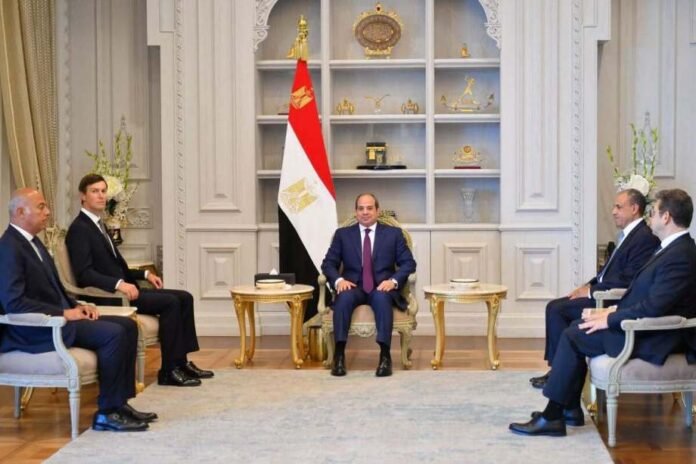
Egyptian President Abdel Fattah el-Sisi discuss developments in the Middle East with Jared Kushner, adviser and son-in-law to U.S. President Donald Trump, with the implementation of the ceasefire agreement in the Gaza Strip being a key topic, in El Alamein, Egypt on August 16, 2026. [Egyptian Presidency / Handout - Anadolu Agency]

Egyptian President Abdel Fattah el-Sisi discuss developments in the Middle East with Jared Kushner, adviser and son-in-law to U.S. President Donald Trump, with the implementation of the ceasefire agreement in the Gaza Strip being a key topic, in El Alamein, Egypt on August 16, 2026. [Egyptian Presidency / Handout – Anadolu Agency]

Egyptian President Abdel Fattah al-Sisi met US President Donald Trump’s adviser and son-in-law Jared Kushner in Egypt’s El-Alamein on Sunday, to discuss Middle East developments, including implementation of the Gaza ceasefire agreement, Anadolu reports.

Sisi stressed the importance of strategic ties between Egypt and the US and continued coordination on issues of mutual interest.

The talks also addressed regional security and the Palestinian issue, with emphasis on the need for all parties to fulfill their obligations under the ceasefire agreement aimed at ending Israeli attacks on the Gaza Strip.

Kushner welcomed close coordination between Egypt and the US and praised Sisi’s efforts to promote regional peace and stability.

Egyptian Foreign Minister Badr Abdelatty and General Intelligence Service chief Maj. Gen. Hassan Rashad also attended the meeting.

READ: Hamas delegation meets Egypt’s intelligence chief in Cairo for Gaza ceasefire talks

Kushner also held discussions with senior Hamas officials, marking the first such encounter since last October, Axios reported. Citing sources, Axios reported that former British Prime Minister Tony Blair and Nickolay Mladenov, the Board of Peace’s high representative for Gaza, also joined the meeting.

The meeting, which also involved Turkish, Egyptian and Qatari officials, focused on converting commitments into verifiable operational steps.

Kushner is scheduled to travel to Israel on Monday for talks with Prime Minister Benjamin Netanyahu.

In October 2023, the Israeli army launched a deadly offensive in the Gaza Strip that has killed over 73,000 and wounded more than 174,000 others.

Despite a truce that has remained in place since October 2025, the army has continued its attacks in the Palestinian enclave, killing at least 1,260 and injuring over 4,100 others, according to Gaza’s Health Ministry.

READ: 8 countries condemn Israel’s rejection of roadmap to end Gaza war

0FansLike
0FollowersFollow
0FollowersFollow
0SubscribersSubscribe
- Advertisement -
Google search engine

Recent Posts