UN officials: Occupied West Bank at ‘breaking point’
UN officials said Tuesday that the occupied West Bank has reached a critical “breaking point,” citing a record surge in violence by Israeli occupiers and a systematic unraveling of Palestinian statehood, Anadolu reports.
“Humanitarian organizations cannot create the political conditions that children need to be safe,” UNICEF Deputy Executive Director Hannan Sulieman told the Security Council. “That responsibility rests with member states who have the power to change them.”
She presented four urgent requests to the international community: prioritizing the protection of children by ending administrative detention, halting forced displacements through diplomatic pressure, ensuring safe access to schools and hospitals, and allowing vital humanitarian supplies to move without delay.
Sulieman reported a harrowing toll on minors, noting that 174 Palestinian children have been verified killed in the occupied West Bank since January 2024. “That is more than one child every week,” she noted.
She revealed that at least 355 Palestinian children are being held in military detention, the highest in eight years, with nearly half detained without charge or trial.
Systematic displacement
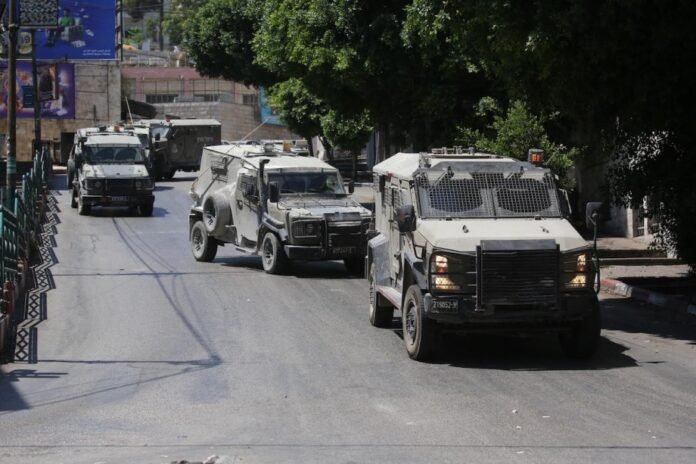
Deputy Special Coordinator Ramiz Alakbarov echoed the alarm, describing the situation as an emergency requiring immediate action to prevent de facto annexation. He said that in 2026, dozens of Palestinians have been killed and approximately 3,800 displaced due to demolitions, evictions and attacks by occupiers.
READ: Israeli army evicts Palestinian family, turns West Bank home into military post
“Settler violence has reached unprecedented levels,” Alakbarov emphasized, citing more than 1,400 documented incidents this year affecting 260 communities. He warned of a clear pattern where Palestinian populations are forcibly removed from their villages before occupiers seize the vacated land. The official noted that for the first time, land was explicitly seized in “Area A” to build infrastructure for occupiers.
Fiscal, political instability
Alakbarov also highlighted the acute fiscal crisis facing the Palestinian Authority (PA), which reportedly lacks $6 billion in clearance revenues withheld by Israeli authorities. Amid the turmoil, he welcomed preparations for legislative elections scheduled for Nov. 28.
Alakbarov concluded that they are “interconnected steps, not isolated developments,” aimed at weakening Palestinian governance.
He said if the situation continues to unravel, it will undermine implementation of resolution 2803 (2025) and erode the prospects for realizing a negotiated Israeli-Palestinian peace based on the two-state solution, urging an immediate “and in full” implementation of resolution 2803, together with the New York Declaration.
Resolution 2803 endorses a peace plan proposed by US President Donald Trump for the Gaza Strip and a temporary international force in the enclave following two years of war.
Since the start of Israel’s genocide in Gaza on Oct. 8, 2023, Israeli forces and occupiers have escalated attacks in the West Bank, killing more than 1,183 Palestinians, injuring 13,000 and arresting nearly 25,000, according to Palestinian figures.
Palestinians warn that the escalation is part of Israeli efforts to impose facts on the ground, paving the way for annexation of the occupied West Bank and undermining the possibility of establishing a Palestinian state along the 1967 borders under relevant UN resolutions.
READ: Israeli occupiers establish illegal settlement outpost in yard of Palestinian home in West Bank
DEF CON crowd suspected in fake-hotspot attack on Delta flight
On Monday, passengers aboard Delta flight 591 going from Las Vegas to Atlanta allegedly spoofed the onboard Wi-Fi, raising the attention of federal law enforcement.
The incident came one day after the DEF CON security conference concluded in Las Vegas, and was first described on social media accounts that follow publicly available air-to-ground messages, known as ACARS.
According to the “ACARS Drama” account, a message was sent by pilots from the plane stated: “NO INFO AS OF NOW WE HAVE A BUNCH OF PAX THAT WERE AT A CYBER CONFERENCE IN LAS THEY WERE ABLE TO JAM OUR WIFI AND BROADCAST THEIR SIGNAL.”
A description of the incident posted to Reddit further stated that these passengers created a fake hotspot (“Delta WiFi Fast”), with a phishing landing page “designed to harvest passengers’ personal credentials.”
This technique, sometimes known as an “evil twin” attack, has been long-known to the IT security community. It involves setting up a fake Wi-Fi network and then capturing login credentials and other data.
Morgan Durrant, a Delta spokesperson, confirmed the details to Ars.
“One initial finding is an unauthorized WiFi network, which was not provided, operated, or supplied by Delta, was present onboard the aircraft for a short time during the flight,” Durrant told Ars via email.
Delta further noted that the flight’s safety was “never in question and no aircraft operating systems were affected,” and that no emergency was declared.
The actual onboard Wi-Fi was disabled for 30 minutes.
The Atlanta Police Department referred all inquiries to the FBI. Atlanta’s FBI bureau told Ars that it is looking into the matter.
Officials there noted that no arrests were made, and that FBI agents did not meet the flight at the gate.
“FBI Atlanta is aware of reports regarding a potential Wi-Fi-related incident involving Delta Flight 591,” Tony Thomas, a spokesperson for FBI Atlanta, emailed Ars in a statement. “We are in contact with our local and corporate partners on this matter. We have no additional information to provide at this time.”
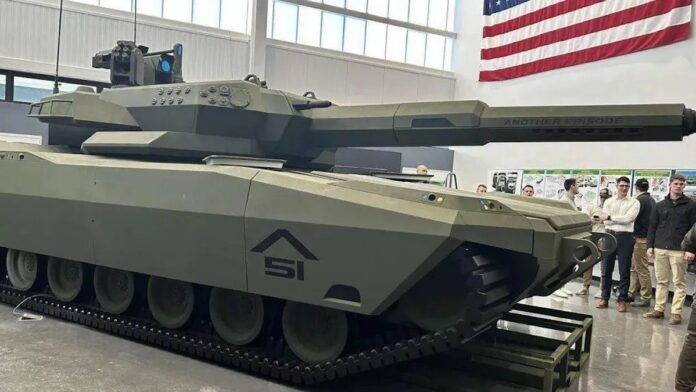
By the early 2030s the US will have a “new” tank to replace the Abrams M1.
The M1 was designed between 1972 and 1976, although many changes have been made over the years. The Abrams is the main heavy battle tank deployed by the United States.
Whether having a “replacement” makes sense is open to question. The era of the main battle tank may have reached an end.
The recent battlefield record helps us understand the current situation. The Abrams turned out to be something of a failure when deployed in small numbers in Ukraine. Out of the original 31 tanks sent by the United States, open-source intelligence tracking and defense assessments indicate that a vast majority—approaching or exceeding 25 to 27 vehicles—have been documented as destroyed, severely damaged, or abandoned/captured.
An American Abrams tank that burned down is seen at an exhibition in Moscow, in May 2024. Photo: Poklonnaya Gora Park VICTORY Exhibition Trophies of Russia.
Similar bad results came for the German-designed Leopard (all models) and the British Challenger 2. Over 70+ Leopard 2s (various models like the 2A4 and 2A6) were pledged and delivered by European partners (including Germany, Poland, Canada, Sweden, Spain, and others). Open-source trackers (like Oryx) and military analyses confirm that at least a couple of dozen Leopard 2s have been visually confirmed as destroyed, abandoned, or heavily damaged, maybe more. Earlier Leopard models suffered even higher losses.
Out of the 14 Challenger 2 British tanks originally donated by the United Kingdom to Ukraine in 2023, open-source intelligence trackers (such as Oryx) and defense reports confirm that multiple units have been lost or destroyed in combat. How many, exactly, isn’t known. The tanks were, in any case, hard to support and its non-standard ammunition (120mm rifled as opposed to NATO’s 120mm smooth bore) was a supply problem, already complicated by poor logistical support and inexperience in servicing western hardware.
In Ukraine, western main battle tanks proved vulnerable to FPV drones and anti-tank weapons, plus landmines and other kinetic weapons. Tanks were generally too heavy for muddy roads and fields, lacked adequate armor and were not equipped with active protection systems.
loading tank ammunition
The new version of the Abrams is supposed to get around some of the problems of current-day tanks. It will be far lighter than the existing Abrams, which weighs between 64 and 66 metric tons (71 short tons). It will scrap the existing turbine power plant for a hybrid power pack (although lithium batteries add a new vulnerability). It will have “built in” active protection. The tank turret will no longer be manned, and the tank will (for the first time) have an autoloader (standard equipment on Russian tanks).
We won’t know much more about the survivability of the “new” Abrams for many years, as the design itself still is unproven and the Army has no combat experience with the new model, even prototypes.
Meanwhile tanks have suffered significant attrition in the Ukraine war and there is some question whether a manned heavy tank, no matter how sophisticated, can live and be effective on the modern battlefield.
What tanks bring to the battlefield
Tank operations have not evolved very far since World War II. The main use is to rapidly punch through the heavily fortified enemy lines, trench networks and prepared defenses where light infantry and wheeled vehicles stall.
A tank combines heavy composite armor, all-terrain mobility and a large-caliber cannon that can fire high-explosive or kinetic-energy rounds to demolish concrete bunkers, pillboxes and enemy armor with pinpoint certainty. This creates immediate physical and psychological shock among opposing forces.
Tanks are typically used in combined tank and infantry operations and modern tanks are increasingly networked to make them more effective. Tanks play a significant role any time there is a battlefield breakthrough because they can break up enemy formations using their firepower and mobility.
T-90 hit in Ukraine
One of the facts of life for Russia, for Ukraine and for NATO is that battle tanks will play a reduced role in any realistic scenario of a future war in Europe. Europe simply has too few tanks, most widely dispersed, to add much offensive weight to the battlefield. The US would have to ship Abrams tanks from inventory and get them forward to battle zones, a major logistical challenge.
The poor record of all NATO tank platforms suggests that current generation tanks probably cannot successfully withstand the combined arms of a well-equipped adversary.
The Russians are not in much better shape. Their tank losses in the Ukraine war have significantly depleted Russian war reserves. The loss of experienced and well-trained tank operators is also a limiting factor on Russia, especially if Russia’s leaders decide to expand the Ukraine war into eider war in Europe. With half their active army tied down in Ukraine, and with armor supplies limited, predictions that Russia will fight in Europe soon seem unconvincing. Russia losses of tank crews estimates place total tank crew casualties (killed, wounded, or captured) in the 10,000 to 12,000+ range.
Active protection systems
Most European, American and Russian tanks used in Ukraine do not have active protection systems (APS). The US has bought around 400 Israeli-made Trophy active protection systems for Abrams tanks, but (so far as is known), none of the tanks supplied to Ukraine were so-equipped. Very recently, the Russians have been shipping the Arena-M APS on tanks to be deployed in Ukraine. At present not much is known about how effective Arena-M is in that war and there are only a handful of Arena-M equipped tanks in the field so far.
Components of the Arena-M APS
Israel originally developed the first successful APS to deal with Russian anti-tank weapons. Trophy was designed to destroy these weapons before they could explode and damage or destroy a tank. Trophy has a reported operational success rate exceeding 90% to 95%. Since its first combat interception in 2011 and extensive use across multiple conflicts in Gaza and other high-intensity environments, it has successfully thwarted hundreds of incoming projectiles.
Trophy recently has been upgraded to make it capable against drone threats, by improving detection and tracking and making Trophy more capable against drop-down FPV drones. This is still a work in progress and, as Israeli companies are demonstrating, needs to be combined with other counter-drone technologies including jammers, cope cages, nets and emerging technology to deal with fiber optic drone threats.
Future combat
It is clear that modern battle tank tactics must be revised to deal with modern battlefield threats, especially suicide drones used in large numbers. The shortcoming of Arena-M, for example, is that once it exhausts its ammunition it cannot be reloaded in the field, leaving the tank vulnerable to multiple FPV drone strikes. Estimates are that between 10 and 20 FPV drone hits will severely damage or destroy a tank.
Another Arena-M problem (less so with Trophy) is that it intercepts threats very close to the tank hull, meaning that a lot of shrapnel envelops the tank and the area around it. This makes close coordination with infantry nearly impossible.
Given today’s technology and the evolution of the battlefield, today dominated by drones and fire and forget weapons, the use of manned heavy tanks as frontline weapons may no longer be feasible because of the vulnerability of the platform and the loss of competent and experienced tank operators.
The U.S. Army next generation combat vehicle medium size option.
While there are many experiments with robotic platforms to supplement or replace tanks, neither the US nor Europe nor Russia has firmly committed to them. The US Army, for example, is looking for networked, cheaper, semi-autonomous robotic combat vehicles that act as force multipliers, absorbing the highest risks of scouting, logistics and breakthrough assaults.
A Waymo vehicle on Seventh Street in Philadelphia in November 2025. Photo: Alan Yu / WHYY
One of the technologies likely to be used is autonomous vehicle sensors and software from civilian applications such as taxis and trucking routes. Top companies include Waymo and Zook (Amazon), Baidu (China) and Tesla. The challenge is to convert battlefield experience (including the lack of roadways and the challenge of automatically categorizing threats) with the technology developed for commercial use. Self-driving technology will have to become self-protection technology capable of recognizing and destroying threats.
Given the rise of AI, the significant improvement of sensors, and the potential to coordinate robotic systems with overhead loitering surveillance drones, fully robotic drones with firepower from guns and missiles could soon revolutionize the battlefield yet again.
Stephen Bryen is a former US deputy undersecretary of defense. This article can also be seen on his newsletter Weapons and Strategy.
Ebola virus behind massive outbreak in DRC could be mutating
The virus causing a massive outbreak of Ebola in the Democratic Republic of the Congo could be mutating, health officials fear, as confirmed cases pass 4,000.
Africa’s public health watchdog said the time for incremental action was over as they announced plans to scale up every aspect of the response and go “door to door” looking for patients.
The Ebola outbreak, caused by the Bundibugyo strain of the virus, was first reported on 15 May, although there are suspicions the disease could have been spreading since January.
There have been 3,973 cases and 1,801 deaths recorded as of 4 August, according to the DRC’s national public health institute. Speaking on Thursday, Dr Jean Kaseya, director general of the Africa Centres for Disease Control and Prevention (Africa CDC), told a press briefing cases had topped 4,000.
The outbreak is now the second-largest Ebola outbreak on record. There are eight times more cases, and six times more deaths than were recorded 11 weeks into the West Africa Ebola outbreak in 2014-18, which infected more than 28,000 people and killed at least 11,000.
Kaseya said he had spoken to the director general of the World Health Organization, Dr Tedros Adhanom Ghebreyesus, and they planned studies “to check if there is no additional issue, or maybe if the virus is not mutating. Because the level of severity of this Bundibugyo outbreak is unprecedented.”
More than two-thirds of Ebola deaths are happening in the community rather than in treatment centres. In a treatment centre run by MSF in Bunia, the capital of Ituri province, 90% of admitted patients do not appear on authorities’ lists of contacts of known cases. Both factors indicate high levels of untracked transmission.
Kaseya said contact tracing in the DRC was insufficient, with only 10 contacts identified for every Ebola patient, when about 40 would be the expected number.
Ebola is a viral haemorrhagic fever that can cause vomiting, diarrhoea, organ damage and internal bleeding. The outbreak is centred on the conflict-affected mining province of Ituri, but has spread to Nord-Kivu, Sud-Kivu, Haut-Uele and Tshopo. There were 20 cases recorded in neighbouring Uganda before it brought its outbreak under control.
Dr Wessam Mankoula, acting head of emergency preparedness and response at Africa CDC, said response teams planned a shift “from contact tracing to active case search”, which would mean community health workers “moving from door to door” asking households if they had anyone sick with Ebola symptoms.
He added: “I think the time for incremental action is over and we’re starting now the phase for scaling up.”
Kaseya promised a “village-centered response” that would involve communities, more use of digital tools and greater action in the camps for people who have been internally displaced by conflict in affected provinces.
Officials also said they planned to begin using antiviral remdesivir on a compassionate use basis to treat patients. They will also start testing whether Ervebo, a vaccine licensed for use against a different strain of Ebola, should be offered in the affected province, after receiving data suggesting that Bundibugyo caused less serious disease and “zero death” among people who had received that jab.
“Seeing the expansion of this outbreak, only the public health measure will not be enough to quickly control or stop this outbreak,” said Dr Placide Mbala Kingebeni, Africa CDC director of research, clinical trials and innovation.
DRC authorities said they were investigating a suspected Ebola death on a boat heading to the capital, Kinshasa, from the north-east of the country, and that the other passengers on board would be quarantined and tested.
Unicef warned that essential healthcare was being disrupted by the outbreak as fear of infection and service disruptions kept families away from clinics. In the outbreak’s centre, the mining town of Mongbwalu, the proportion of children receiving their first measles dose has fallen 69%.
Former Leader Sentenced to Death for Premeditated Murder
Former Syrian dictator Bashar al-Assad has been sentenced to death, nearly two years after his government collapsed and he fled the country for the safety of Moscow.
A court in Damascus handed Assad the death sentence Tuesday after convicting the ousted leader in absentia of war crimes and crimes against humanity committed during Syria’s devastating civil war.
Assad, who ruled Syria with an iron grip for more than two decades, fled to Russia with his wife, Asma, and their children after rebel forces toppled his government in December 2024.
Now, while Assad remains beyond the reach of Syrian authorities, a court in the capital has delivered one of the most dramatic judgments yet against the former regime.
Judge Fakhr al-Din al-Aryan convicted Assad of a series of crimes that included premeditated murder, the killing of children under the age of 15, torture resulting in death and unlawful imprisonment.
Assad’s younger brother, Maher al-Assad, was also sentenced to death in absentia. Maher commanded Syria’s powerful Fourth Division and was widely regarded as one of the most feared figures inside his brother’s government.
Several other former military and security officials received death sentences as well, including former Defense Minister Fahd al-Freij.
Most of the defendants were nowhere near the courtroom when the sentences were announced.
Former security official Atif Najib, Assad’s cousin, was the notable exception.
Najib was in custody and appeared in court before receiving his own death sentence over his role in the brutal crackdown on protesters in the southern city of Daraa in 2011.
The events in Daraa helped ignite the uprising that would eventually explode into Syria’s catastrophic civil war.
Pro-democracy demonstrations began spreading across the country in 2011 as part of the wider Arab Spring movement. Assad’s security forces responded with arrests and deadly force, helping transform the unrest into a sprawling conflict that lasted nearly 14 years.
By the time Assad’s government finally collapsed in December 2024, roughly half a million people had been killed, millions had been forced from their homes and countless families were still searching for relatives who vanished during the fighting.
Assad had repeatedly denied responsibility for atrocities attributed to his government, portraying his opponents as extremists and foreign-backed forces.
But his regime became internationally notorious for allegations of mass torture, executions, sieges and chemical weapons attacks. International investigations have attributed multiple chemical attacks involving sarin or chlorine to Syrian government forces.
Tuesday’s ruling marks an extraordinary reversal for a man who once appeared nearly impossible to remove from power.
Assad became president in 2000 following the death of his father, Hafez al-Assad, continuing a family dynasty that controlled Syria for more than five decades.
That dynasty came crashing down in late 2024 when rebel fighters rapidly swept across the country and captured Damascus, sending Assad fleeing to Russia.
He now remains in exile while Syria attempts to reckon with the enormous human toll left behind by his government.
The death sentence is largely symbolic as long as Assad remains outside the country and protected in Russia.
Still, for Syrians who spent years demanding accountability for the bloodshed, Tuesday’s verdict represents a remarkable moment: the former ruler who once commanded Syria’s sprawling military and security apparatus is now a convicted war criminal facing a death sentence in the very capital he once controlled.
The responses are unsurprising; the medical and health communities have consistently fought against the anti-vaccine, anti-science agendas pushed by Trump and his health secretary, Robert F. Kennedy Jr., who has no background in science, medicine, or public health. The American Academy of Pediatrics—which called the order “not only disheartening but dangerous”—is leading a lawsuit against previous changes to federal childhood vaccine recommendations under Trump and Kennedy. In March, the organization, along with other medical groups, won a temporary injunction reversing most of the changes.
However, less expected among the scorn for Trump’s order is the immediate pushback from the pharmaceutical industry.
Trump’s executive order for his so-called “gold standard” vaccine policy focuses on reducing the number of vaccines children get. But contrary to that goal, it also called for splitting the combination measles, mumps, and rubella (MMR) vaccine into three separate shots. The MMR vaccine is given in two doses, so the change would mean six shots for children instead of two.
More impractical, individual vaccines for measles, mumps, and rubella do not exist in the US. For Trump’s order to be realized, pharmaceutical companies would need to make hefty investments in developing, testing, and bringing to market entirely new vaccines—and they would have to do all of that based on no scientific reasoning whatsoever. The current MMR combination vaccine has proven extremely safe, effective, and convenient based on data from decades of use.
Within hours of Trump signing the order, PhRMA—the leading pharmaceutical industry group representing big players, such as GSK, Sanofi, Pfizer, Merck, Johnson & Johnson, and Novo Nordisk—put out a statement saying the order debases America’s vaccine policy.
Industry pushback
PhRMA’s Chief Medical Officer Michael Ybarra said that previous federal vaccine recommendations were “built on decades of rigorous scientific research and public health expertise,” and any changes should be based on “the same high standard of evidence.”
“Simply imposing a narrower schedule by importing recommendations from foreign countries wouldn’t reflect gold standard science—it would mean accepting a lower bar of protection against diseases that remain serious and, in some cases, life-threatening for children in the United States,” Ybarra said.
Merck and GSK, which make MMR vaccines used in the US, also pushed back on the order, pointing out that it is nonsensical. Merck provided a statement to Stat News saying it supports vaccine policy “rooted in rigorous, evidence-based science” and that “There has been no published scientific evidence that shows any benefit in separating the combination MMR vaccine into three individual shots.”
A GSK spokesperson told Stat that its MMR vaccine is “backed by decades of global use and robust scientific evidence.” The spokesperson similarly noted that “There is no scientific evidence that separate measles, mumps, and rubella shots improve safety or efficacy compared to combined MMR.”
While seemingly tame, the statements reflect the industry’s immediate public resistance to an order from a US president, which is not the norm. Other organizations, meanwhile, were more direct with their criticism.
Robyn Blumner, president and CEO of the nonprofit scientific advocacy organization Center for Inquiry, blasted the order in a statement:
“There are very few people less qualified than Robert F. Kennedy Jr. to be making decisions about vaccine policy. Donald Trump is at the top of that very short list. This new executive order is just the latest example of the administration’s complete disregard [for]—and overt hostility toward—evidence-based science. Public health policy should be based on rigorous science backed by data, not the personal beliefs and suspicions of one highly unqualified individual.”
How polarised is European politics? Here’s how your generation, gender and where you live affect what you believe
Across Europe, the political debate has rarely looked more polarised. Media narratives frequently describe societies as becoming sharply divided between younger progressive and older conservative generations.
A growing body of research also suggests that political attitudes are becoming more divided by gender, particularly among younger cohorts. Young women seem to be adopting more liberal positions than young men on issues such as climate change and immigration.
Using data from the European Social Survey, which I have led since 2013, my team has examined the truth of these claims. We’ve done this by looking at long-term trends across eastern, western and northern Europe between 2002 and 2023 in relation to political orientation, climate change fears and attitudes towards immigration.
Political orientation over time by age and gender
Younger respondents consistently place themselves further to the left on the political orientation scale than older respondents across all country groups.European Social Survey, CC BY-NC-ND
Across all country groups, younger respondents consistently place themselves further to the left on the political orientation scale than older respondents.
Yet while older respondents’ political views have been relatively stable in northern and western Europe, in eastern Europe we’ve seen more fluctuation and a clearer shift towards the right in recent survey rounds.
Younger respondents in eastern Europe are shifting in the opposite direction. This suggests an emerging generational divide in political orientation within the region.
Gender patterns in political orientation also vary considerably across age groups in Europe as a whole. Among older respondents, men and women generally mirror one another in their ideological positioning over time. Among younger cohorts, however, gender gaps are substantially wider.
The divide is most pronounced in northern Europe. Young women there consistently position themselves further to the left than young men. By contrast, young men and women in eastern Europe appear to be becoming somewhat more ideologically aligned over time – though young women there are still more leftward aligned.
The political views of young women, particularly in western Europe, also fluctuate more across survey rounds. These shifts have coincided with major political and economic events, including a modest movement towards the right around the period of the global financial crisis in 2008 and a shift leftwards during the COVID-19 pandemic in 2020.
Worry about climate change over time by age and gender
Worry about climate change is less strongly divided along generational lines.European Social Survey, CC BY-NC-ND
Across all regions, survey rounds and age groups, women have consistently expressed greater worry about climate change than men. The size of this gap differs between regions and by age.
Between the generations, we see moderate differences in climate concern. But our findings do not consistently follow the common expectation that younger people are more worried than older generations. In eastern and western Europe, older respondents have often reported levels of worry equal to, or marginally exceeding, younger groups.
Overall, however, worry about climate change appears either stable or gradually declining across most demographic groups. But while gender gaps among older cohorts remain relatively small, they are substantially wider among younger respondents – particularly in northern Europe.
Young women in this region are the only group for whom worry about climate change shows a modest upward trend over time. This reflects a growing divide between young men and young women in this region. Climate concern among young men has declined while concern among young women has remained stable or increased slightly.
Levels of worry in eastern and western Europe display greater similarity across age and gender groups, with men and women showing declining levels of climate concern in recent years.
Taken together, these findings suggest that worry about climate change is not strongly divided along generational lines. Instead, it is structured through gender differences within younger cohorts, particularly in northern Europe.
Immigration tolerance over time by age and gender
Attitudes towards immigration differ substantially by region.European Social Survey, CC BY-NC-ND
Attitudes towards immigration differ more by region than by gender and generation alone. In eastern Europe, attitudes towards migrants have shifted more substantially than other regions over time.
Tolerance of immigration in eastern Europe dropped around the period of the 2015-16 migrant crisis. A notable but relatively short-lived increase in tolerance is then visible around 2020.
This fluctuating pattern may reflect changing political and social contexts, including the COVID pandemic and subsequent displacement of Ukrainians following the start of the war there in 2022. It may also reflect what we call mode effects, which refers to differing opinions as a result of there being an interviewer or not.
Attitudes towards immigration in northern and western Europe have remained comparatively stable and, perhaps surprisingly given the anti-immigrant rhetoric of the media and politicians in some of these regions, are generally becoming more positive over time.
Gender differences over immigration are relatively small among older respondents across all regions, with older men and women tending to follow very similar trends. However, gender differences remain evident among younger cohorts.
Young women in northern Europe consistently express substantially higher levels of tolerance towards migrants than their male counterparts, reinforcing the broader pattern of a growing gender divide in views among younger people there.
Overall, our findings show that Europe’s political polarisation is indeed generational. But rather than being shaped by generation alone, political attitudes in Europe seem to be increasingly shaped by an interacting combination of generation, gender and regional differences.
The acceleration comes as Cambodia pursues its own ambitious development targets under the Pentagonal Strategy, which aims for upper-middle-income status by 2030 and high-income by 2050.
Reaching those milestones will require a broader economic base than any single partner can supply, and that is where the tension lies.
The high-income threshold currently sits at US$14,375, roughly six times Cambodia’s present per capita income of $2,520. That is a steep climb, but others in the region have managed comparable transitions, and Cambodia’s record offers reasons for confidence.
The challenge is less about ambition than about whether the strategies meant to deliver on it are working together or at cross-purposes. Two transitions are arriving at roughly the same time, and they are pulling the economy in different directions.
The first is the approaching loss of preferential trade access. In December 2029, Cambodia is scheduled to graduate from least developed country status, a milestone that reflects real development progress but also removes the trade preferences that have underwritten the garment sector’s competitiveness.
The EU’s Everything But Arms scheme, partially withdrawn in 2020 over human rights concerns, grants duty-free access under rules of origin for least developed countries that require only a single transformation, a considerably lower bar than the double-transformation requirement Vietnam faces under the EU-Vietnam Free Trade Agreement.
The second transition is the deepening of Cambodia’s relations with China. The Diamond Hexagon framework, established in February 2023, covers politics, manufacturing, agriculture, energy, security and cultural exchanges.
Chinese investment has delivered tangible results: expressways, airports, special economic zones and power infrastructure that Cambodia could not have financed independently.
But the concentration of Chinese investment carries its own risks. A NUS East Asian Institute analysis has noted that growing dependence on Chinese investment and financing is narrowing Cambodia’s policy flexibility in an increasingly contested region.
And the more concentrated the investment base, the harder it is to credibly pursue the kind of open-market commitments the CPTPP requires.
The World Bank has assessed Cambodia’s productivity growth at around 0.8%, less than half the 2% it estimates would be needed annually for 25 years to reach high-income status, a pace previously sustained only by South Korea.
GDP growth forecasts for 2026 sit between 3.9% (World Bank) and 4.5% (Asian Development Bank). Headline growth is respectable, but the gap between current productivity trends and what the 2050 target requires is wide.
Vietnam’s path offers a useful, if imperfect, comparison. The two economies are at different scales: Vietnam’s GDP exceeds $500 billion, more than ten times Cambodia’s roughly $50 billion, and its population of 102 million is six times larger. Vietnam’s industrial base extends into electronics and machinery in ways Cambodia’s does not yet match.
What makes the comparison relevant is sequencing. Vietnam joined the CPTPP and signed its EU free trade agreement before reaching upper-middle-income status, spreading its trade relationships early.
Its investment base is spread across Japan, South Korea, the EU, the United States and China. Even with those advantages, the World Bank estimates Vietnam needs sustained average annual growth of 6% for two decades to reach high-income by its own 2045 target.
Cambodia is not Vietnam, and the differences in scale, structure and development stage matter more than superficial parallels. But the sequencing question is relevant: it is easier to diversify trade and investment partnerships before the pressures arrive rather than after.
Of the three pressures Cambodia faces, LDC graduation is on a fixed timeline Phnom Penh cannot change. The China relationship deepens through deals that deliver visible results now.
The CPTPP bid is the only one that requires Cambodia to actively reform rather than passively receive, and it is the one with the weakest institutional momentum. That is where the gap between aspiration and delivery may show first.
Lam Duc Vu is a risk analyst writing on Indo-Pacific security and regional affairs.
Israel, Venezuela Renew Official Ties After 17-Year Diplomatic Freeze
Israel and Venezuela agreed to restore consular relations and establish a formal channel for coordination, reopening direct ties between the countries after a 17-year freeze and following cooperation in the aftermath of Venezuela’s deadly June earthquakes.
The agreement followed discussions between Israeli Foreign Minister Gideon Sa’ar and Venezuelan Foreign Minister Félix Plasencia. Under the arrangement, Israel and Venezuela will create a mechanism through which their citizens can receive essential consular services.
The two governments also agreed to continue technical cooperation in emergency response, engineering and recovery efforts.
Contacts between the countries expanded after more than 50 Israeli specialists traveled to Venezuela following the double earthquake in June. The delegation included representatives of Israel’s Foreign Ministry, the Israel Defense Forces Home Front Command and the National Emergency Management Authority.
During the mission, Israeli personnel assisted with rescue operations and assessments of damaged structures. They also helped map destruction and presented Venezuelan authorities with a framework for rebuilding national infrastructure.
The diplomatic opening comes under acting President Delcy Rodríguez, whose government has taken a more pragmatic approach to foreign relations following a political and leadership transition.
The statement on renewed consular ties also addressed Israel’s connection with Venezuela’s Jewish community, describing the community as an important link in the countries’ longstanding friendship.
Venezuela cut diplomatic relations with Israel in January 2009 under then-President Hugo Chávez in response to Israeli military operations in Gaza. Relations remained suspended under Nicolás Maduro as Venezuela maintained close ties with Iran and participated in platforms hostile to Israel.
The resumption of consular contacts does not amount to the full restoration of diplomatic relations, but establishes an official mechanism for direct cooperation after 17 years without formal ties.
The development follows renewed relations between Israel and Colombia under its new president. Colombia also recently recognized Israeli sovereignty over the Golan Heights.
Meta can’t stop states’ $1.4 trillion lawsuit from going to trial
Meta and TikTok tried to defeat thousands of social media addiction lawsuits in one fell swoop, but an appeals court rejected the attempt in a ruling issued yesterday.
First up among the lawsuits is a case brought against Meta by the California attorney general and other state AGs. Meta said in a July court filing that the state AGs’ demands for damages would amount to more than $1.4 trillion. A trial in district court is scheduled to start on August 19, with jury selection beginning August 12.
In a 3-0 ruling yesterday, a judges’ panel from the US Court of Appeals for the 9th Circuit rejected the Meta and TikTok claims that they have legal immunity to the lawsuits under Section 230 of the Communications Decency Act.
“Because Section 230 merely provides a defense to liability—not immunity from suit—we lack appellate jurisdiction to review the district court’s rulings on an interlocutory basis. Therefore, we dismiss Meta’s and TikTok’s appeals,” judges wrote. They added in a footnote that “Meta’s emergency motion to stay trial pending resolution of this appeal is denied as moot.”
Meta was the main company claiming immunity from the lawsuits. The 9th Circuit ruling said that “the TikTok entities have not independently briefed any of the issues and merely join in Meta’s arguments.”
Although Section 230 limits liability for online platforms that host third-party content, Congress didn’t give companies an explicit guarantee that they will not face trials, the 9th Circuit judges’ panel said. “When Congress wants to create immunity from suit, it knows how to say so unequivocally,” judges said.
State AGs say “Meta deceived the public”
The ruling allows a trial to proceed this month over consumer protection claims brought by California, Colorado, Kentucky, and New Jersey. State attorneys general recently responded to Meta’s complaint about the amount of damages the states are seeking.
“Meta’s concern over the potential size of the requested remedies rings hollow in light of the evidence the AGs will present at trial,” the state AGs said in a court filing. “The AGs will prove that Meta deceived the public about the safety of its platforms while deliberately designing them to induce compulsive use and increase revenue.”
Separate trials will be held in district court for the claims of other plaintiffs, including 25 other state AGs that allege violations of state consumer protection laws and the federal Children’s Online Privacy Protection Act. Yesterday’s 9th Circuit ruling is also a win for individuals who sued over personal-injury claims, and plaintiffs including local governments and school districts from around the country.
“The multidistrict litigation in the district court involves thousands of lawsuits alleging that Meta’s social media platforms Facebook and Instagram ‘encourage addictive behavior, fail to verify users’ ages, encourage adolescents to bypass parental controls, and inadequately safeguard against harmful content and/or intentionally amplify harmful and exploitive content,’” the ruling said.
A ruling for Meta and TikTok also would have helped Google and Snapchat, because those companies are defendants in the massive litigation being held in US District Court for the Northern District of California. A Reuters article said the consolidated case includes more than 3,000 lawsuits.
Meta appealed before final judgment
US District Judge Yvonne Gonzalez Rogers mostly denied a Meta motion to dismiss in an order in October 2024. As Gonzalez Rogers wrote, the case consolidates “actions brought on behalf of children and adolescents, school districts and local government entities, and state attorneys general alleging that several social media companies—Meta’s Facebook and Instagram, Google’s YouTube, ByteDance’s TikTok, and Snapchat—designed their platforms to foster compulsive use by minors, resulting in a variety of harms to children, local governments, and the public health.”
Gonzalez Rogers imposed some limits on the plaintiffs’ claims, finding that “Section 230 insulates the design and deployment of most features alleged to be unfair or unconscionable.” But she declined “to dismiss at this stage theories of liability predicated on a failure-to-warn of known risks of addiction attendant to any platform features or as to platform construction in general.”
The denial of Meta’s motion to dismiss is called an “interlocutory order” because it’s not a final judgment in the case. Interlocutory decisions generally can’t be appealed immediately, but there are exceptions.
Meta claimed that rulings denying Section 230 immunity are “collateral orders” and thus can be appealed before a case has a final judgment. But Meta needed to show, among other things, that the district court’s decision is “effectively unreviewable on appeal from a final judgment.”
Judges deny immunity
Meta argued that the 9th Circuit itself “has repeatedly held that Section 230 confers immunity from suit.” The judges’ panel acknowledged that the court has “used the phrase ‘immunity’ somewhat loosely in our section 230 jurisprudence,” but said that word usage is not binding, “because we have never addressed whether the denial of a section 230 defense is a collateral order.”
“Only the Tenth Circuit has squarely addressed the issue before us, and it concluded that section 230 ‘provides immunity from liability, not suit, and [a] district court’s order [denying immunity] does not qualify under the collateral order doctrine,’” the 9th Circuit decision said.
The law does not have an explicit guarantee that a trial will not occur, and immunity from lawsuits is a benefit usually reserved for government officials, the court said, agreeing with the 10th Circuit analysis.
“Therefore, we hold that Section 230 provides a defense to liability, not immunity from suit, and an order denying this defense can be effectively reviewed on appeal from a final judgment,” the 9th Circuit said.
In yet another case brought by New Mexico’s attorney general, a state-court judge last week ordered Meta to pay $567 million for youth mental health care and related services to alleviate the “public nuisance” created by its social media platforms. Meta was also ordered by a jury to pay $375 million in civil penalties during an earlier phase of the New Mexico case.