Home Blog

Patriot interceptors ‘on the way’ to Ukraine: another Trump con

0
patriot-interceptors-‘on-the-way’-to-ukraine:-another-trump-con
Patriot interceptors ‘on the way’ to Ukraine: another Trump con

Trump’s big con convinced too many that Patriot interceptors were coming to Ukraine

The actual reporting of war and politics these days in most media outlets can be incredibly weak. The system often seems broken – reporting White House-inspired narratives that have no basis in fact as actual events, and replacing rigor with herd behavior. 

The latest batch of stories in many of the major outlets, about Trump’s now pivoting to support Ukraine and of his definitely agreeing to give Ukraine a license to build Patriot interceptors (or indeed whole Patriot systems), showed better than anything how this process worked.

The White House and MAGA supporters of Ukraine (who actually constantly betray the Ukrainians) want to get this narrative out for certain politically beneficial reasons. They started spreading the story and the press ran with it. The result was a dishonest narrative spread far and fast – and it actually became the common wisdom although it was not true.

The White House could also use the press to spread such stories because officials have understood just how weak and pliant much of the media is. Doing what I have done over the last few years has been learning experience (and not it a good way) about how much of the media (and much of the think-tank community) works.

The key thing in both worlds is not being accurate or truthful as much as it is gaining access to power and being seen to be smart. Access and perceived intelligence – usually drastically greater than real intelligence – are the currency of these worlds. 

To maintain access, some reporters and commentators will say exactly what the White House wants, time and again, even after the White House narrative has been shown to be nonsense (many times).

When it comes to think tanks, many are not interested in attempting even-handed or rigorous research; instead, they want to impress funders and also maintain access, and thus they publish crap to appeal to power and maintain their perceived viability (in most cases they have none). This means that much of what is produced in think-tanks is of laughable quality, meant to signal access and support, not to actually analyze a problem or policy.

In other words, the output is often weak, shallow and even deceptive at times. And we have seen that in spades over the last few weeks. The output also hurts. Last week I showed how listening to that narrative has hurt Ukraine – how having hope that the narrative about Trump changing his mind and aiding them has helped Putin bombard their cities.

This week I thought it would be worthwhile to talk about how such a con takes place and can be so widely amplified. 

Anatomy of a con

Donald Trump has known from the moment that he became president again that Ukraine was desperate for Patriot missiles. Indeed, he knew it so well that he used that information both to boast about his own power and also to abuse the Ukrainians as supplicants.

Remember, he loves things that make him seem powerful. Knowing that the Ukrainians were desperate for Patriot interceptors, as the Russians were bombarding their cities and people, is exactly the kind of thing that turns him on. 

Trump knew from the start how dependent Ukraine was on Patriots

Examples of Trump knowing how desperately Ukraine needs Patriots

How can I say that? Well, he went to great lengths to tell the world – not in a way that somehow politically helped him, but just because he could. Lets start with examples from very early into his second term:

April 14, 2025  –  Oval Office: Just before Trump was down to meet with El Salvadoran president Bukele, he was asked whether he had spoken to Zelensky about his offer to purchase more Patriot batteries, Trump replied:

Oh, I don’t know. He’s always looking to purchase missiles. You know? He’s against – listen, when you start a war, you got to know that you can win the war, right?

He continued on to insult Ukraine by saying that you don’t start a war against somebody twenty times your size and then hope that people give you some missiles – implying that Ukraine had decided to start the war. 

June 25, 2025  –  NATO summit press conference: The clearest “I know what they want” statement by Trump about Ukraine’s desperate need for Patriots, and crucially it is an unprompted elaboration rather than a yes/no answer. Asked by a Ukrainian reporter, whose husband was serving in the Ukrainian army, about giving Ukraine Patriots, Trump responded:

Good. So let me just tell you, they do want to have the anti-missile missiles. Okay. As they call them, the Patriots. And we’re going to see if we can make some available. They’re very hard to get. We need them too. We were supplying them to Israel and they’re very effective, 100% effective. Hard to believe how effective. And they do want that more than any other thing, as you probably know.

July 13, 2025  –  Andrews Air Force Base, Maryland: Asked whether he would still send ten entire Patriot systems, which had supposedly been promised, Trump said he hadn’t agreed on the number yet but that he understood that Ukraine “desperately” needed them.

By the way, this exact time was part of the con when Trump was acting all angry at Putin, and talking about getting tough on Russia – only to turn around and roll out the Red Carpet in Alaska a few weeks later.

Examples of the administration cutting Patriot supplies to Ukraine

In other words, it is clear that Trump knows how much Ukraine desperately needs Patriots and how much leverage that gives him – and he is enjoying it. However, what the US actually does in 2025 and 2026 is regularly slow down and even stop Ukraine from getting promised Patriots. Here are some examples.

March 2025  –  blanket aid suspension: After the ambush of Zelensky in the Oval Office, the administration paused all aid to Ukraine, including Patriots in transit or already in Poland, until Ukrainian leaders showed more “appreciation,” with a White House official saying the administration was “pausing and reviewing our aid to ensure that it is contributing to a solution.” Intelligence sharing was cut too. 

July 2025  –  the DOD halt: Dozens of Patriot interceptors, (as well as thousands of 155mm rounds, 100+ Hellfires, 250+ GMLRS, plus Stingers, AIMs and grenade launchers) were halted on their way to Ukraine. Note the timing: just before Trump goes to great lengths to say how much he knows Ukraine needs Patriots. 

This kind of cat and mouse game with the administration tormenting Ukraine over Patriots continues for the entire year. And then Trump’s War with Iran breaks out and Patriot deliveries practically stop. For all of 2026, according to Zelensky, deliveries of Patriots to Ukraine were running at a paltry one-third level of the reduced flow of 2025. 

It is important to understand the timeline – as it shows that the Patriot shortage was known in the administration from the start, was used to damage Ukraine multiple times and, in the end, resulted in far fewer Patriots for Ukraine than had been promised. 

Trump promises a Patriot license as part of the con

Now, move back to one month ago. On July 9, Trump promised Zelensky, surprisingly to some, that he would allow Ukraine to have a license to make its own Patriot interceptors (or indeed whole Patriot systems). Now this was a big part of the con – and it was a con.

First, there had been no preparation for this move at all – the defense companies involved had not been informed and allowed to prepare. In other words, the promise was not substantial; it was a tactic.

Second, Trump was feeling pressure because all of his boasting about Russia being powerful and crushing Ukraine was looking decidedly silly as Ukraine was striking back.

Third, Trump did not want to give Ukraine Patriot interceptors at that moment, because he knew that Ukraine was basically out – and this gave Putin an opportunity to bombard Ukraine with impunity. So he could dangle the license idea and keep Ukraine from getting the interceptors it needed at that moment.

In other words, it was an empty promise, with no substance behind it, the upshot of which was to delay any help for Ukraine for a considerable period. It was a political maneuver to serve Trump’s needs and help Putin while making it seem the US was about to help Ukraine. It was a con.

The press goes wild about Trump now siding with Ukraine

If you look back at the reporting about Trump and Ukraine from July 9 until just a few days ago, you will see the real political advantages Trump accrued from the con. Even though he had no intention of allowing Ukraine to build Patriots, this move, fed by anonymous White House sources, as always, was part of Trump pivoting to Ukraine, of Trump being “wowed” by Ukrainian achievements or even, most hysterically, of Trump being finally frustrated enough with Putin to be willing to hurt Russia (this, by the way, was about the fourth time that Trump had “finally” been so frustrated by Putin).

The stories appeared in almost all the major press, and they were so shockingly similar in tone and content that you can only see how a certain narrative was being pushed.

This is what I mean about being cynical about the level of reporting that is being sent out. It is parroting lines, not rigorous analysis. 

Here are three examples from major outlets from the last four days of July – and what is particularly freaky is that all the headlines have almost exactly the same phrasing. That is a lot of warming.

Wall Street Journal

The Economist

Semafor

Thankfully for it, the New York Times adopted the same narrative language, but did at least present the warming as a question, not a definite.

So, overall, the con had worked a charm.

The con culminates and the Patriot license is shown to be nonsense

Of course all good things must come to an end – and all good cons too. On July 31, 2026, after this final rush of press stories about how pro-Ukraine Trump was becoming, Trump pulled the rug out completely from under Ukraine. He started musing publicly about how he might not, after all that, give Ukraine a Patriot license

Moreover, it turned out that Trump, precisely when we were told that he was warming towards Ukraine, had nixed an emergency request from Zelensky for interceptors as the Ukrainians basically had none

So not only was Ukraine not going to get the license, it was being strung along on getting any new missiles. This has left the Ukrainians desperate, as they really are defenseless against Russian ballistic missiles. Zelensky is now left trying to sell the idea of Ukraine eventually receiving a tiny number of new interceptors, maybe just old PURL ones, as something

He was conned.

The power of a Trump con is that people want to believe it, and because the press is so supine and willing to spread White House stories uncritically, they amplify it. Yes, Ukrainians really did believe that Trump was warming to them – not just because they wanted to (and they did want to) but because they were being told this constantly by the American press. There was nothing but hot air and dreams (and a desperate desire to retain access to Washington sources) behind all the stories about Trump moving over to Ukraine’s side. 

The con worked a charm – though if there was a press with the willingness to confront White House narratives and point out that repeatedly how Trump had served Putin’s interests, it might not have been so damaging. 

Another narrative shift

With Trump having maneuvered so effectively that Ukraine is now defenseless against ballistic missiles, there have been arguments that the whole idea that Ukraine was taking some of the initiative in the war was somehow flawed, and that Putin was regaining the initiative. There was this piece in the Spectator, for instance.

This is an overreaction. On the battlefield, the basics of the situation still favor the Ukrainian strategy of causing massive Russian casualties while saving their own lives (which hopefully is even gaining ground under General Drapatyi).

And the data support this. ISW’s most recent update on the Russian summer offensive (it is already into August – so much of the summer is gone) shows that Russian advances are miniscule, far below the small advances of 2025, and Russian casualties are now more than 40,000 a month.

It is Russia that is still struggling to generate soldiers to replace losses – and that means that the idea of Russia having a societal wide mobilization is being discussed more and more

Ukrainian mid-range strike continues to hammer Russian logistics in occupied Ukraine. The Ukrainians seem to have “fire control” now on the highway into Crimea. So the Russian army is struggling, suffering massive losses and its logistic situation is getting worse, not better.

In long range strikes, when Ukraine focuses on refineries, it can still do great damage. That means that Russia is still going to generate less income going forward and that will hurt the Russian war machine.

So, yes, Ukraine is going to suffer a great deal in the coming months through civilian losses and some successful Russian strategic attacks – thanks in part to how the USA has conned the Ukrainians. That is undeniable. However, the Russian military is still failing badly this summer – and that will not change. 

Keep that in mind.

Phillips O’Brien is a pr0fessor of strategic studies at the University of St. Andrew. This article originally appeared on his substack Phillips’s Newsletter. It is republished with permission.
Hamas reaffirms commitment to completing 2nd phase of Trump’s Gaza plan

0
hamas-reaffirms-commitment-to-completing-2nd-phase-of-trump’s-gaza-plan
Hamas reaffirms commitment to completing 2nd phase of Trump’s Gaza plan

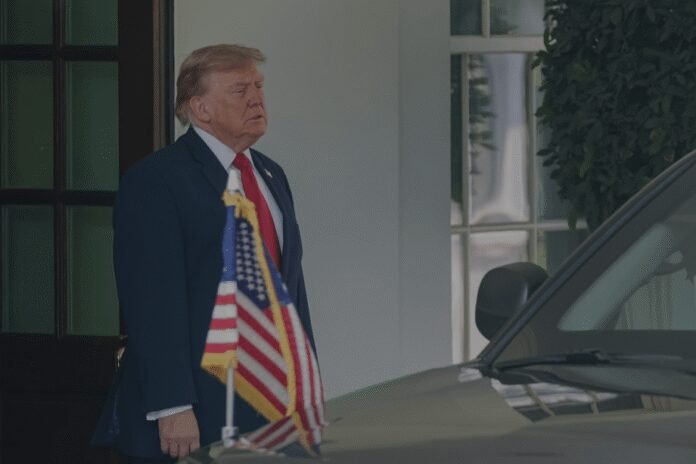
US President Donald Trump at the White House in Washington, D.C., United States, on July 14, 2026. [Mehmet Eser - Anadolu Agency]

US President Donald Trump at the White House in Washington, D.C., United States, on July 14, 2026. [Mehmet Eser – Anadolu Agency]

Palestinian group Hamas reaffirmed Sunday its commitment to a roadmap agreed with mediators and the Board of Peace to complete the second phase of US President Donald Trump’s plan for Gaza, Anadolu reports.

In a statement, the movement said it remains serious about “responsibly engaging” on implementing the 15-point plan and establishing a clear timetable for it.

“The priority at this stage must be to ensure the implementation of all phases and obligations of the agreement,” Hamas said.

It added that the process should lead to a complete ceasefire, an end to Israeli attacks, the completion of Israel’s withdrawal, the reopening of crossings, the entry of humanitarian aid and shelter supplies, the start of reconstruction and enabling the National Committee for the Administration of Gaza to begin its duties.

Hamas called on the mediators, guarantors and the Board of Peace to “shoulder their responsibilities,” ensure that all parties comply with the agreement and prevent violations that could obstruct its implementation or undermine the ceasefire.

The group said it will continue to engage “positively and responsibly” with efforts aimed at completing the deal’s implementation, ending the suffering of Palestinians in Gaza and “protecting their rights and national interests.”

​​​​​​​Early Sunday, Israeli Prime Minister Benjamin Natanyahu rejected the 15-point plan approved by the Board of Peace for Gaza, insisting that Israeli forces will not withdraw from the Palestinian territory until Hamas is disarmed.

Crack Addict Turns into Wealthy ‘Celebrity Shaman’

0
crack-addict-turns-into-wealthy-‘celebrity-shaman’
Crack Addict Turns into Wealthy ‘Celebrity Shaman’


Forget LSD, magic mushrooms and ayahuasca.

For a growing circle of celebrities, thrill-seekers and psychedelic devotees, the ultimate mind-bending experience comes from something far stranger — smoking the dried venom of a desert toad.

The powerful substance, known as 5-MeO-DMT, is found in the secretions of the Sonoran Desert toad, a large amphibian native to parts of Mexico and the American Southwest.

Its venom is collected from glands on the animal, dried into brittle flakes and then vaporized in a glass pipe before being inhaled.

Users call the ritual “smoking the toad.”

And some devotees have given the potent psychedelic an even more dramatic nickname: the “God Molecule.”

Now, a new book is pulling back the curtain on the bizarre movement — and the controversial Mexican doctor who helped turn an obscure desert drug into an international psychedelic phenomenon embraced by celebrities, Silicon Valley figures and people desperate to overcome addiction or trauma.

In “The Ego Trip: Psychedelic Toads, a Trail of Deaths, and the Guru Who Peddled Transcendence,” author Kimon de Greef traces the rise of Dr. Octavio Rettig Hinojosa, a former drug addict who reinvented himself as a modern-day shaman and became one of the world’s most aggressive promoters of toad venom.

Known simply as Octavio to many followers, Rettig presented himself as a spiritual healer capable of guiding people through one of the most overwhelming psychedelic experiences imaginable.

The drug can reportedly produce an almost immediate collapse of a person’s sense of reality and identity — an experience users often describe as “ego death.”

Some claim it changed their lives.

Hunter Biden wrote in his memoir that using 5-MeO-DMT helped him stay away from cocaine for roughly a year.

Former Navy SEAL Robert O’Neill, who has publicly claimed he fired the shots that killed Osama bin Laden, told Tucker Carlson that he tried the substance while seeking relief from post-traumatic stress.

Former heavyweight champion Mike Tyson has also spoken openly about smoking toad venom.

“I’ve never been the same,” Tyson said during an appearance on “The Joe Rogan Experience,” describing the experience as something like “dying and being reborn.”

Bill Atkinson, an early member of Apple’s original Macintosh team, told de Greef that he first tried it in 2017.

He compared the experience to a “psychedelic bungee jump” and said it felt like “training wheels” for reaching a divine state of consciousness.

But behind the celebrity endorsements and promises of instant transcendence is a far darker story.

The Sonoran Desert toad — also known as the Colorado River toad — produces a cocktail of chemicals in large glands along its body.

While the secretions can be dangerous if swallowed, users vaporize the dried material and inhale the resulting smoke.

The practice remained relatively obscure until people like Octavio began aggressively promoting it around the world.

According to de Greef, Octavio’s own journey into the psychedelic world began after years of serious cocaine addiction.

While studying at the University of Guadalajara, he reportedly met fellow student Gerardo Sandoval, who exposed him to a wide range of psychedelics and eventually introduced him to 5-MeO-DMT.

Octavio later claimed the experience eliminated his desire for cocaine.

Soon, the former addict became an evangelist.

He eventually brought the drug to an Indigenous community in northern Mexico that was struggling with a methamphetamine crisis in the early 2010s.

His work reportedly impressed some locals enough that he earned the nickname “el doctor sapo” — the toad doctor.

Then came Burning Man.

TEDx organizer Klaudia Oliver reportedly saw potential in the charismatic doctor, helping coach him as a speaker and polish his public image.

The pair traveled to Burning Man in 2013, where Octavio promoted toad venom as an ancient healing medicine and described it as “the ultimate experience.”

His reputation exploded.

Soon, followers were lining up to smoke the substance under his supervision.

The doctor began traveling internationally and presenting himself as a bridge between Indigenous spirituality and the modern psychedelic movement.

During ceremonies, de Greef writes, Octavio dressed in traditional-looking red Seri clothing, shook rattles and sang while participants prepared for the intensely powerful drug.

Money followed.

Group ceremonies could reportedly bring in thousands of dollars, and Octavio eventually raised his prices as his fame grew.

His business card reportedly described him as a “practitioner of indigenous knowledge for the whole world.”

For years, his star continued rising.

But disturbing allegations eventually began following the self-styled shaman.

According to the book, Octavio sometimes showed little patience with nervous newcomers.

When one group asked what they should expect during their first psychedelic experience, he allegedly snapped, “Put on a f—ing diaper and go outside!”

Critics also accused him of failing to properly prepare participants or provide a safe environment during sessions.

De Greef reports that Octavio became romantically involved with several women who had participated in his ceremonies.

More troubling footage surfaced later.

In 2016, Octavio was allegedly captured on video kicking and slapping a frightened man during a session on a beach in Venezuela.

Another video reportedly showed him pouring water down the throat of an unconscious participant, while other accounts accused him of using a Taser-like device on unwilling or resistant clients.

Octavio defended his aggressive methods as part of breaking through psychological resistance.

“That’s what I’m trying to do,” he once told a psychedelic conference. “A real mindf— for people.”

But the controversy became far more serious as reports of deaths surfaced.

According to de Greef’s book, rumors and allegations linked at least four deaths to sessions associated with Octavio.

He was eventually arrested by Mexican authorities in connection with one death, although he was never convicted and has denied wrongdoing.

“My work has been misunderstood, misinterpreted, and misused,” he previously said.

The Seri people also distanced themselves from him.

Members of the Indigenous community reportedly demanded that Octavio stop using their name while promoting claims that smoking toad venom was rooted in their ancestral traditions.

One Yaqui activist interviewed by de Greef dismissed Octavio’s spiritual image entirely.

He “was looking for validation as a shaman,” the activist said, “but he’s nothing more than an actor — a fake.”

Yet whatever people think of Octavio, his influence is difficult to ignore.

The former addict helped take a little-known psychedelic chemical from Mexico’s desert fringe and push it into celebrity culture, underground wellness retreats and eventually serious scientific research.

Researchers have since begun investigating 5-MeO-DMT and related compounds for possible applications involving depression, trauma and addiction.

That means the strange psychedelic movement Octavio helped unleash could ultimately become far bigger than the man himself.

De Greef describes him as the substance’s “divisive early prophet.”

Now, after years of shamans, desert ceremonies, celebrity testimonials, frightening allegations and deaths, a dramatically different chapter may be beginning.

The psychedelic toad is moving out of the desert and toward the laboratory.

As de Greef puts it, “The pharmaceutical era of toad medicine had begun.”

Sophie Cunningham Is the Anti-Trans Right’s New White Woman Mascot

0
sophie-cunningham-is-the-anti-trans-right’s-new-white-woman-mascot
Sophie Cunningham Is the Anti-Trans Right’s New White Woman Mascot


Alain Stephens is an investigative reporter covering gun violence, arms trafficking, and federal law enforcement.

In the ever-shifting theater of America’s culture wars, conservative media has found its newest gladiatorial conscript: Indiana Fever guard Sophie Cunningham.

It’s an unlikely promotion—and from backers who, until recently, probably couldn’t have named five WNBA players.

The reason for her esteem probably has little to do with her faultless three point precision. In an interview with ESPN, Cunningham declared she opposed transgender women—whom she referred to as “biological men”—competing in women’s sports, arguing the issue was about “protecting young girls.” Later, she cheekily doubled down on the statement, posting an outfit photo on Instagram with the caption: “I said what I said” with a saluting emoji.

That was enough.

Almost overnight, Cunningham became more than a WNBA player. She became one of conservatism’s newest culture-war combatants: blonde, white, conventionally attractive, and playing in a league overwhelmingly composed of players of color, and with one of the largest openly LGBTQ+ player populations in professional sports.

For generations, conservative movements have sought to anoint and weaponize cisgender white women as public-facing enforcers of social and racial hierarchy. 

Within days of Cunningham’s remarks, conservative media had found its new protagonist. 

Fox News host Riley Gaines, who herself rose to prominence as an anti-trans NCAA swimmer, called Cunningham “the first current high-level female athlete” willing to publicly oppose transgender participation in women’s sports, and praised her for speaking out from inside what Gaines called “the most woke league of all time.” The Daily Wire cast the now-famous finger-pointer—and on-court defender of Caitlyn Clark, another white player whose first season with the WNBA sparked racialized conversations that cast her Black opponents as too “aggressive”—as someone “now fighting for us.” Trump’s Department of Education joined in, posting a Grok AI-generated image of Cunningham wearing a crown with the caption: “Common sense prevails.”

Cunningham’s ascent into the right’s zeitgeist is by design. For generations, conservative movements have sought to anoint and weaponize cisgender white women as public-facing enforcers of social and racial hierarchy. 

While the specific rallying cry has changed throughout history, their use and ideological framing to the conservative movement has remained largely intact: They serve narratively as bulwarks against some grave impending demographic or social upset, which if allowed to come to fruition would be an assault on the current status quo of women at large. 

Ride of the Valkyries

American political history is thick with appeals to white womanhood as something endangered and therefore requiring protection, particularly against the encroaching civil rights gains of Black, brown, and LGBTQ+ communities. Since the Academy Award-winning Birth of a Nation, the idea that straight white women are in peril simply by living in proximity to minority groups has been repeatedly used to justify racial exclusion and stir up moral panic.

In the wake of Brown v. Board of Education, southern governments launched what’s now known as the “Massive Resistance,” a series of laws to prevent integration. The campaign mobilized a movement of white women to organize through schools, newspapers and civic groups in an effort they sold as defending white children, neighborhoods, and public education. It was largely these communities that performed the on-the-ground enforcement of segregation, going so far as to pluck out children suspected of being mixed-race from white schools. This changed the packaging of the politics of segregation: Rather than snarling racism, the message could be framed more politely as a threat to the sanctity of motherhood and child welfare.

By the 1970s, overt defenses of racial segregation had become politically untenable on the national stage. The conservative movement’s next great cultural fight shifted toward gender. As the sexual revolution, second-wave feminism, and the promise of the Equal Rights Amendment changed family structures and challenged traditional gender roles, conservatives increasingly looked to white women to make the case against the nation’s expanding vision of female equality.

In the impeccably dressed mother-of-six Phyllis Schlafly, the conservative movement found its most formidable duelist against progressive feminism. Through her “STOP ERA” campaign, Schlafly argued the Equal Rights Amendment wouldn’t liberate women—it would endanger them by exposing women to the military draft, undermining mothers’ custody rights, and destabilizing the American family. 

Her message was overwhelmingly effective; the Equal Rights Amendment was never ratified. As prominent legal scholar and feminist theorist Joan Williams put it, “the ERA was defeated when Schlafly turned it into a war among women over gender roles.” 

For decades, conservative politics has repeatedly tapped into this vein, transforming cultural anxieties—over motherhood, children’s safety, crime, sexuality, and gender roles—into mass movements by placing cisgender white women front and center. 

At the turn of the late 70s, conservatives promoted Anita Bryant, a wholesome pop singer who warned that gay rights threatened America’s children. During the rise of evangelical moralism of the 1980s, the religious right elevated Patricia Pulling, the suburban Virginia mother whose campaign against Dungeons & Dragons helped ignite the Satanic Panic. From matronly children’s book authors to buxom blue jean models, the conservative avatar is exceedingly familiar: a woman whom white men are encouraged to protect and one whom other white women are encouraged to empathize with and emulate. 

The Girls We Don’t Protect 

In her research on anti-feminist women, sociologist Rebecca Klatch found “most…are white, middle-aged, housewives, married or widowed, new to politics, and oriented toward single issues.”

But by screaming to “remember straight white women,” the right aims to make us forget anyone who sits at the edges of that definition, those long underserved by America’s promise of a truly free and equitable land. It dehumanizes women of color even further in a league where all athletes still earn a fraction of the paychecks their male counterparts take home. It shuts down any future good-faith conversations on how to allow trans athletes to compete and the sheer danger to a trans community increasingly excluded from social participation. It also serves to drown out the voices of women who support trans athletes, and often becomes a political Rorschach test to attack civil rights far beyond who makes a starting line up

I don’t know if that’s what Cunningham signed up to represent, and quite frankly, I don’t know if she did either. She most recently told the press that she wants to “get back to basketball.” 

In a free-speaking democratic society, Cunningham, and every athlete, is entitled to be human: to hold opinions, and feelings, and have a political voice. She is not the first, nor will be the last, fair maiden to be cast as a sword-bearing champion for a conservative culture war. 

But if a movement’s cause is about truly protecting women, then perhaps the more revealing question to interrogate is which women it has deemed worthy of protection in the first place. Whose womanhood is treated as universal, whose safety becomes a national rallying cry, and whose voices—including those of Black women, queer women, and transgender women—are left at the margins. That hierarchy often tells us more about the movement behind it than the woman standing under the net.

Pakistan Says Mecca Defense Pact Not Aimed at Any Country, Open to New Members

0
pakistan-says-mecca-defense-pact-not-aimed-at-any-country,-open-to-new-members
Pakistan Says Mecca Defense Pact Not Aimed at Any Country, Open to New Members


Pakistan has made it clear that the Mecca Joint Defence Agreement is not directed against any country and that other countries may also join the pact.

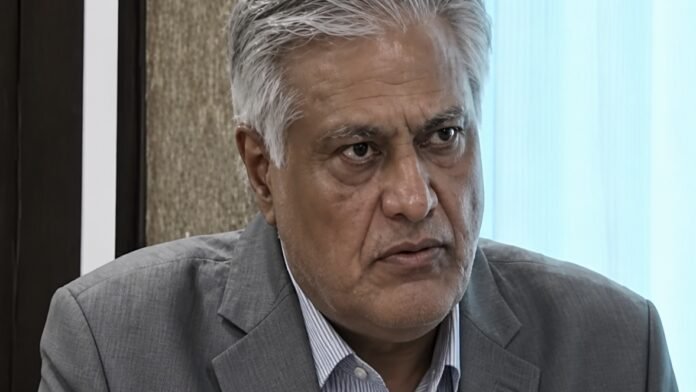
Pakistan’s Deputy Prime Minister and Foreign Minister Ishaq Dar made these remarks in a post on X on Sunday.

The remarks by Pakistan’s Deputy Prime Minister and Foreign Minister are particularly significant in the context of earlier comments by Defence Minister Khawaja Asif, who had said that “the Islamic world must unite to confront the common threat posed by Israel,” Asif said after the agreement was signed.

Dar added that the Meccah Agreement is purely defensive in nature, is not directed against any country, and is aimed solely at further strengthening ongoing efforts for peace, stability and prosperity across the wider region.

He said the Meccah Agreement is the result of several years of discussions and mutual consultations, aimed at strengthening strategic cooperation to address various security challenges and promote peace, stability and prosperity across the region.

According to Dar, the agreement does not supersede or replace any existing bilateral or multilateral agreements between the three countries, nor does it affect their existing agreements with other countries or organizations.

It also stipulates that an external armed attack against any one of the three countries will be considered an attack against all three. This principle is consistent with the right of individual and collective self-defenses under Article 51 of the United Nations Charter.

Dar reaffirmed Pakistan’s commitment to working closely with all brotherly countries in the region to promote lasting peace and stability: “We remain committed to advancing efforts for the peaceful resolution of all disputes and to building a safer, more stable and prosperous future for our people.”

Pakistan, Saudi Arabia and Turkey signed the agreement in Mecca on Friday in the presence of Pakistani Prime Minister Shehbaz Sharif, Saudi Crown Prince Mohammed bin Salman and Turkish President Recep Tayyip Erdogan.

Meanwhile, The Organisation of Islamic Cooperation (OIC) hailed the Meccah Joint Defence Agreement as an “important strategic step.” OIC Secretary-General Hissein Brahim Taha said the agreement would help strengthen security and stability in the region and the Muslim world.

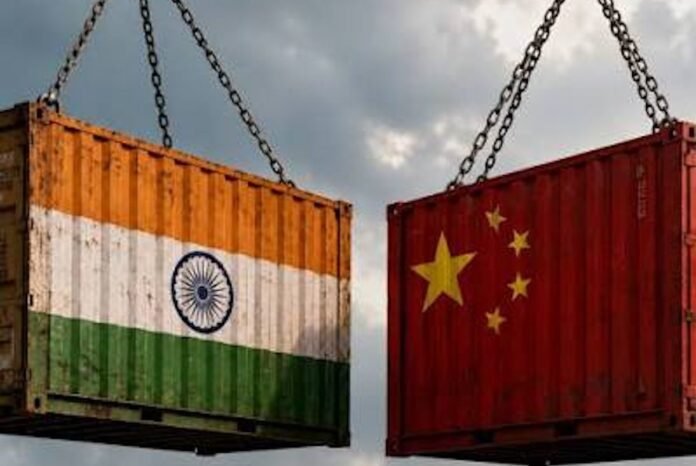
India-China thaw is a supply-chain truce, not a strategic reset

0
india-china-thaw-is-a-supply-chain-truce,-not-a-strategic-reset
India-China thaw is a supply-chain truce, not a strategic reset

For six years, India ran its China policy on one simple assumption: if you’re economically dependent on a rival with which you share a disputed border, that dependence is a liability.

After the 2020 Himalayan clashes, New Delhi tightened the screws – more scrutiny on Chinese investment, restricted business travel, several deals blocked or slow-walked. The message wasn’t subtle: India would eat the economic cost if it meant shrinking China’s grip on strategically sensitive sectors.

That’s now being dialed back.

On August 6, Indian and Chinese officials sat down in New Delhi for the 36th round of their border-affairs working mechanism – one more step in a thaw that’s already brought easier business travel, renewed commercial ties and a selective loosening of investment rules. Both sides went through the usual language about peace and tranquillity along the Line of Actual Control.

But don’t confuse a quieter border with actual reconciliation. Yes, the 2024 disengagement deals cleared the remaining face-off points at Depsang and Demchok. That’s real progress. It still isn’t full de-escalation. Both sides still have large forces sitting across the wider frontier, and the territorial dispute itself hasn’t moved an inch.

So calling this a rapprochement misses what’s actually going on. India hasn’t stopped competing with China. What’s changed is that New Delhi seems to have worked out that de-risking and decoupling aren’t the same thing – and that building something that can actually rival Chinese manufacturing might require more access to Chinese machinery and know-how in the near term, not less.

The $132 billion reality

The numbers explain the pragmatism. India bought nearly $132 billion in goods from China last fiscal year – more than from any other country. Total trade hit roughly $151 billion, with India’s deficit topping $100 billion.

This isn’t cheap consumer stuff. A big chunk of it is machinery, electronics, chemicals, components – the industrial inputs Indian manufacturers actually run on. This is the contradiction sitting at the heart of India’s whole industrial strategy: New Delhi wants to become the next global alternative to Chinese manufacturing, but a lot of the factories that would make that happen still can’t function without Chinese equipment.

India already learned how expensive that gap can be. After the post-2020 travel restrictions, manufacturers couldn’t get the specialists they needed in the country to install, run and fix Chinese machinery. Reuters, reporting on the eventual visa easing, cited an estimate putting the cost to electronics production at around $15 billion over four years. Eventually India loosened the visa rules for Chinese professionals. The lesson was an awkward one: Restrictions meant to hem in China had been hemming in India’s own factories just as much.

From exclusion to selective access

Investment policy is following the same playbook. In March, India eased some of the curbs it had put in place during the tense border years – not by throwing the door open, but by creating more room for Chinese technology, machinery and capital to flow into Indian manufacturing while keeping a handle on ownership and control.

Under the new rules, investments with up to 10% Chinese ownership can, under the right conditions, get a faster, less restrictive approval path. Selected projects in electronics, batteries and other industrial sectors are moving through more quickly. The logic is straightforward once you see it: Get the capability, don’t let the dependence become permanent.

India’s EV industry is probably the clearest illustration. Chinese carmakers still hit real political and investment walls trying to operate in India. Chinese EV technology is a much harder thing to keep out – Reuters reported in June that Tata Motors is building its premium EVs on a platform licensed from China’s Chery, and other Indian firms are chasing similar licensing arrangements: Get the tech, skip handing over the equity.

India can probably keep Chinese companies at arm’s length. Keeping their technology out of Indian factories is a lot harder.

Self-reliance has not disappeared

None of this means Modi has quietly shelved the self-reliance push. If anything, New Delhi is getting more precise about where the dependence is actually dangerous.

In July, officials flagged roughly $51 billion in critical imports for priority domestic substitution – EVs, solar, textiles, footwear. New Delhi is preparing incentives for domestic polysilicon production specifically to cut reliance on China in the solar chain, according to a Reuters August 7 report.

On the surface, that looks like a contradiction – easing barriers to Chinese capital and technology with one hand while spending real money to cut Chinese imports with the other. It isn’t, really. You can’t ban your way out of dependence before your own alternatives are actually good enough. Push manufacturers onto worse, pricier substitutes too early, and you weaken the very industries you’re counting on to eventually take China on. So the real strategy isn’t to cut China off. It’s closer to: Use what you need from China now, while building toward needing less of it later.

What China gets from the thaw

Beijing has its own reasons to go along with this. India is a big, growing market for Chinese manufacturers right at a time when Chinese firms are hitting more trade barriers and political scrutiny in the US, Europe and elsewhere. China has little reason to walk away from that.

But the dependence isn’t symmetrical. India needs China’s industrial base far more than China needs Indian demand – and that imbalance is exactly why New Delhi wants to reshape this relationship rather than blow it up. A steadier border also lowers the odds that economic friction pushes India to diversify away faster or drives it closer to countries that are trying to counterbalance Beijing.

Border peace as economic infrastructure

Neither government needs to trust the other for this to work. They just need it to be predictable – which is really the right lens for the latest border talks.

Jaishankar keeps repeating that peace along the frontier has to come before normal relations – that hasn’t changed, and neither has the underlying dispute. What’s changed is the economic math. A steadier, if still unresolved, border gives New Delhi more room to keep certain commercial questions separate from the bigger rivalry. China keeps its access to a market it needs. India gets the machinery, tech, capital and skilled hands its manufacturing ambitions depend on.

Neither side has to pretend the geopolitical competition is over. This isn’t integration – it’s controlled interdependence between two rivals figuring out how to compete without holding every economic tie hostage to the border.

So don’t mistake the August border-calming meeting for peace between Asia’s two giants. India and China will keep competing – militarily, technologically, diplomatically, for regional influence, for supply chains, for manufacturing investment. New Delhi will keep trying to diversify away from Chinese imports. Beijing will keep trying to hold onto the edge its industrial scale gives it.

But India seems to have landed on a harder truth about the next phase of this rivalry: you don’t get to self-reliance by cutting the cord before you’ve built something to replace it with. You get there by using today’s dependence to build tomorrow’s independence.

Based in Islamabad, Mansoor Qaisar writes on foreign and public policy and social issues shaping the South Asian region. He can be reached at mansoor.qaisar@gmail.com

Pope Leo voices concern over ‘tragic’ situation in Sudan

0
pope-leo-voices-concern-over-‘tragic’-situation-in-sudan
Pope Leo voices concern over ‘tragic’ situation in Sudan

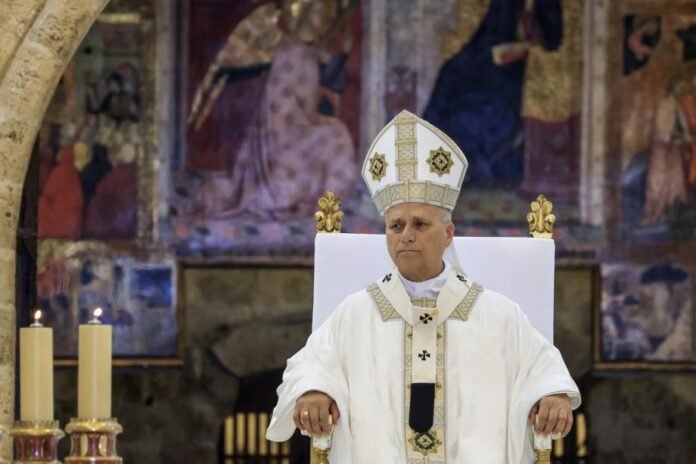
Pope Leo XIV on Sunday expressed his concern over the ongoing “tragic” situation in Sudan, calling on the international community to support efforts aimed at bringing about an immediate ceasefire, Anadolu reports.

“I renew my appeal to those in authority to guarantee humanitarian corridors for the civilian population,” the pontiff said following the Angelus prayer at St. Peter’s Square, the Vatican News reported.

He expressed his concern, citing in particular to the Sudanese city of el-Obeid, and called on the international community “to support efforts aimed at bringing about an immediate ceasefire.”

Fighting between the Sudanese army and the paramilitary Rapid Support Forces (RSF) has continued since 2023, following disputes over integrating the paramilitary force into the regular military. The conflict has killed tens of thousands of people and displaced millions.

As of the end of June, the International Organization for Migration had recorded about 8.69 million internally displaced people in the North African nation, along with more than 4.64 million people who returned to areas inside the country or from abroad.

Turning to the war between Russia and Ukraine, Pope Leo highlighted how “tragic episodes” are not only continuing but are multiplying, leading to a rising number of civilian causalities.

“I stand with the families of the victims, the wounded, and all those who are suffering as a result of the ongoing conflict,” he added.

‘Harry Potter’ Actress Makes Shocking Confession

0
‘harry-potter’-actress-makes-shocking-confession
‘Harry Potter’ Actress Makes Shocking Confession


Jessie Cave spent years working in movies, television and comedy after landing a memorable role in the Harry Potter franchise — but she says none of it came close to the money she made after joining OnlyFans.

The 39-year-old actress, best known for playing Lavender Brown in the final three Harry Potter movies, has revealed that her unusual side hustle became a financial lifeline after she reached what she described as a point of “complete desperation.”

And according to Cave, she made more money on the subscription platform in just one year than she earned during her entire acting career.

Cave joined OnlyFans in March 2025 as bills piled up and childcare costs made traditional work increasingly difficult.

She told The Times that taking an ordinary job wasn’t as simple as it might sound.

“I couldn’t go and, say, work in a supermarket because I can’t afford the childcare, and also I don’t want people shouting Harry Potter spells at me as I work at Tesco,” Cave said in an interview published Aug. 7.

She said retraining for another career was financially out of reach as well.

“I could retrain but I can’t afford to do a degree,” she explained. “I had a breakdown and I thought, that’s it with acting, I give up. But also we have no money. It was a point of complete desperation.”

That desperation eventually led Cave to OnlyFans — although her content looks very different from what many people typically associate with the platform.

Instead of posting explicit material, Cave built her page around one very specific attraction: her long hair.

Videos reportedly feature the actress brushing, touching and playing with her hair while wearing various costumes, including an elf, a maid and even outfits inspired by her Harry Potter days.

“My rule is the hair is the main character. That’s how I justify it,” Cave said.

“It’s literally about hair: the texture of hair. The fetish. It’s very, very niche.”

Cave originally believed the experiment would be brief.

“I thought I’d make five grand, be on it for a few months and it would buy me time to work out what we’re going to do,” she said.

Instead, the money began pouring in.

Cave said she earned more than $20,200 on her very first day.

Although some subscribers eventually disappeared after realizing she would not be posting explicit material, Cave said enough remained to turn her unconventional business into a major source of income.

“It’s now been over a year and a half and it’s genuinely saved our lives,” she said.

The difference between her earnings as an actress and her OnlyFans income has apparently been staggering.

“I’ve earned more, easily, than my entire acting career within one year,” Cave revealed.

She even suggested the subscription model could become increasingly common as social media users realize they could charge money for content they currently give away for free.

“I see people on Instagram posting bikini shots or s— stuff and I think, you could be charging for this! You’re losing money!” Cave said. “I see that being the future. Everyone will be paying for everything.”

For Cave, however, the appeal apparently wasn’t entirely financial.

The actress and mother of four said years of dressing conservatively and being viewed as the quirky Harry Potter actress had left her feeling overlooked.

“It is about wanting some kind of gaze,” she admitted.

“I wear baggy T-shirts on stage, I’ve never posted a bikini shot, I wear huge glasses. For so long I’ve just been this quirky figure.”

She added: “After having four kids and feeling invisible for so long, that was really appealing to me.”

But Cave’s new career has apparently come with at least one major Harry Potter-related consequence.

In September 2025, she claimed she had been turned away from appearing at a Harry Potter convention because organizers considered OnlyFans inappropriate for a family-oriented event.

“They explained it was because it’s a ‘family show and OnlyFans is affiliated with p—,’” Cave wrote on Substack at the time.

She said the decision confused her because her own page contains nothing sexually explicit.

“This was baffling to me as some actors who do conventions — most actors, actually — have done TV and films in which they’ve done s– scenes and nudity,” she wrote. “I’m just playing with my hair!”

Still, Cave insisted she wasn’t devastated about potentially leaving the convention circuit behind.

“I am not upset about the prospect of no more Harry Potter conventions,” she said. “There’s going to be a new cast now and it’s a different time.”

After more than 15 years of attending Potter-related events, Cave joked that she already has more than enough photographs and wizard memorabilia.

And while her path from Hogwarts to OnlyFans certainly wasn’t one she expected, Cave says the unlikely career move ultimately provided something acting had struggled to give her: financial security.

Beyond productivity: rethinking how we invest in AI

0
beyond-productivity:-rethinking-how-we-invest-in-ai
Beyond productivity: rethinking how we invest in AI

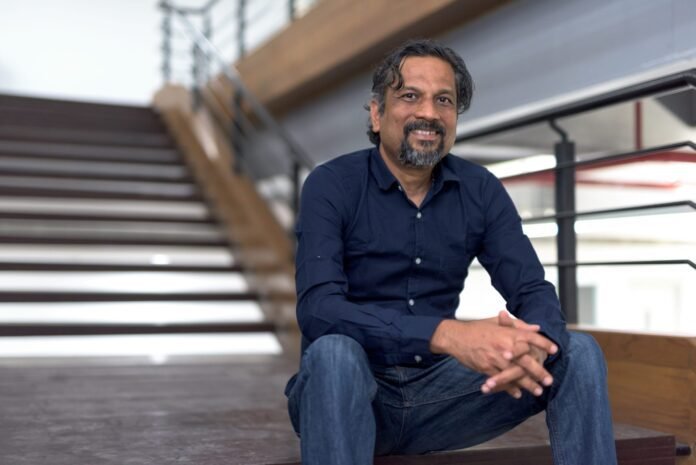
When Zoho founder Sridhar Vembu recently warned that the rapid adoption of artificial intelligence could eventually create a purchasing power problem by reducing entry-level hiring, the reaction was predictable. The discussion quickly turned into a familiar debate over whether AI would replace software engineers and eliminate jobs.

Yet that framing understates the significance of his intervention. Vembu’s remarks are not merely about employment. They are about how organizations and governments are making decisions on one of the most consequential technologies of our time.

The question is no longer whether companies should invest in AI. They should. Artificial intelligence has the potential to transform productivity, improve customer experience, accelerate innovation and create entirely new business models.

The real question is whether these investments are being evaluated with the same strategic discipline that organizations apply to other major capital decisions.

Unlike a factory, an acquisition or a research and development program, an AI investment is likely to be celebrated simply because it exists. Success is measured by lower costs, fewer employees and higher productivity.

Those are undoubtedly important outcomes. But they are also incomplete. As AI becomes central to corporate strategy, organizations need a broader framework for evaluating what these investments actually create, and what they may unintentionally erode.

AI investments need better success metrics

Every significant corporate investment is judged through multiple lenses. A new manufacturing plant is expected to improve capacity, strengthen supply chains and generate future growth. Research and development expenditure is assessed not only by immediate returns but by its ability to create intellectual property and long-term competitive advantage. Human capital investments are justified because they build organisational capability over time.

AI deserves the same treatment.

Today, boards often justify AI expenditure through familiar financial metrics: productivity gains, cost savings, operating margins and shareholder returns. While these are legitimate objectives, they represent only part of the value AI can generate. A narrow focus on efficiency risks encouraging organizations to deploy AI primarily as a cost-cutting tool rather than as a capability-building technology.

Boards should therefore ask broader questions. Has AI improved decision-making? Has it enabled employees to innovate faster? Has customer experience improved? Has it strengthened organizational learning? Has it created new products, services or business models?

Most importantly, has it enhanced the firm’s long-term competitive capability rather than merely improving the next quarter’s earnings?

The companies that derive the greatest value from AI are unlikely to be those that simply automate existing work. They will be those that redesign how work is performed and how value is created. AI should therefore be viewed as a strategic investment in organizational capability, not merely an exercise in operational efficiency.

The apprentice gap: Who builds tomorrow’s experts?

Perhaps the least discussed consequence of AI adoption is its effect on how expertise is developed.

Every knowledge profession relies on apprenticeship. Doctors begin with routine clinical work before making life-and-death decisions independently. Lawyers spend years researching and drafting before arguing landmark cases. Academics build expertise through years of research before becoming recognized scholars. Software engineers similarly learn by debugging code, fixing errors, reviewing systems and gradually assuming greater responsibility.

These routine tasks are often portrayed as repetitive work that AI can easily automate. But they also constitute the training ground where professional judgement is formed.

If AI increasingly performs entry-level work while organizations fail to redesign how expertise is cultivated, companies may inadvertently weaken the pipeline that produces future architects, engineering managers, product leaders and chief technology officers. The savings realised today may come at the cost of organizational capability tomorrow.

This is not simply a labor-market issue. It is a knowledge-management challenge.

Businesses have always understood the importance of succession planning for leadership. AI demands a similar conversation about succession planning for expertise. Organisations must ask not only how AI replaces tasks, but also how future professionals will acquire the judgement, intuition and contextual understanding that cannot be downloaded from a model or generated through a prompt.

The AI race needs strategic discipline, not herd behavior

There is little doubt that AI represents a transformative technological shift. Yet history also reminds us that transformative technologies often create waves of imitation alongside genuine innovation.

Organizations sometimes adopt new technologies because they solve real business problems; they also adopt them because competitors, consultants and investors expect them to. AI risks creating a similar dynamic.

Today, announcing an AI initiative often signals that a company is technologically progressive. But signaling should not be mistaken for strategy. The real question is whether AI is genuinely transforming workflows or merely being inserted into existing processes to satisfy market expectations.

Boards should therefore apply the same rigor to AI investments that they would apply to any other strategic decision. Which workflow is being improved? Which customer problem is being solved? What measurable capability has been created? Would the investment still make sense if competitors were not making similar announcements?

These questions are particularly important for India. Much of the global AI conversation is shaped by economies facing aging populations and high labor costs, where replacing labour is often commercially rational. India’s challenge is different. Its comparative advantage has long been its abundant pool of skilled human capital.

The objective, therefore, should not simply be to substitute workers with algorithms, but to use AI to amplify the productivity, creativity and global competitiveness of India’s workforce. The distinction is subtle, but it carries profound implications for how firms invest and how policymakers think about technological transformation.

The objective should not simply be to substitute workers with algorithms, but to use AI to amplify the productivity, creativity and global competitiveness of the workforce

The same strategic discipline should extend to public policy. Governments should not regulate AI adoption by requiring companies to justify every innovation against employment targets. Such an approach would risk slowing technological progress. They should, however, develop far stronger labor-market intelligence to understand how AI is reshaping occupations, skills and wages.

Just as governments monitor inflation, industrial production or financial stability, they should continuously assess how AI is transforming the world of work so that education systems, training programs and labor policies evolve alongside technological change.

The debate sparked by Sridhar Vembu should therefore not end with predictions about job losses. Artificial intelligence undoubtedly needs investment, ambitious budgets and rapid innovation. But it also needs thoughtful management.

The most successful organizations and economies will not be those that simply spend the most on AI. They will be those that invest with strategic clarity, measuring success not only by the productivity AI delivers today but by the capabilities, expertise and resilience it helps build for tomorrow.

Anu Singh Lather is vice chancellor of Dr. B.R. Ambedkar University, Delhi. Tarun Agarwal, PhD., is an associate fellow at the Center of Policy Research and Governance, New Delhi.

5 Months Without Ships: What the Hormuz Closure Costs the Arab Side of the Strait

0
5-months-without-ships:-what-the-hormuz-closure-costs-the-arab-side-of-the-strait
5 Months Without Ships: What the Hormuz Closure Costs the Arab Side of the Strait


Qatar, Kuwait, and Bahrain have no way to get their oil and gas out except through the Strait. An oil producer normally earns more when prices rise, not if it cannot ship

[ISTANBUL] Gulf states that normally receive their food and household goods by sea have spent five months flying them in, and the cost is turning up in what their residents pay.

The Strait of Hormuz is a narrow stretch of water at the mouth of the Persian Gulf, between Iran and Oman. Before the war, about a fifth of the world’s oil and gas passed through it, but it has been effectively closed to commercial shipping since March. Iranian officials said on Saturday that talks with Oman on a new shipping lane were nearly complete, while warning that a deal would not completely reopen the waterway.

“Hormuz is the dominant economic channel in our estimates for the wider world economy, mainly Asian importers and Europe,” said Mohamed Shadi, head of energy and logistics at the Al Habtoor Research Centre in Dubai.

Shadi told The Media Line that the United States sells more energy abroad than it buys, so the price spike caused little lasting damage there. He added that oil prices were back near their previous levels by summer; the countries buying Gulf cargoes, and those selling them, have borne the losses.

“A lot of the necessities, and I’m talking food, that these Gulf nations require—Kuwait, the UAE, Bahrain, Qatar, Saudi Arabia—comes in by boat,” said Shon Hiatt, an associate professor of business administration at the University of Southern California’s Marshall School of Business and director of its Zage Business of Energy Initiative. “So, what have they been doing? They’ve been flying in, whenever they can, their food products and their household goods. And that’s caused inflation in these states.”

They’ve been flying in, whenever they can, their food products and their household goods. And that’s caused inflation in these states

Hiatt told The Media Line that coverage of the crisis has followed the oil and largely missed this dimension. “We’ve … put a lot of the focusing … on the oil because it’s affecting us,” he said. “But there has been very little actual reporting on the impact of both household goods and food for these countries.”

Shipping companies moved early. Maersk added an emergency surcharge on cargo going to or from the UAE, Qatar, Saudi Arabia, Bahrain, Kuwait, Iraq and Oman in the first weeks of the crisis, and other carriers followed within 48 hours. Planes have helped move high-value cargo, but air freight only makes sense for small, expensive, urgent cargo such as medicine and electronics. It cannot move grain or building materials at the volumes a country needs.

The Abu Dhabi National Oil Company said last week that 15 of its ships had been hit by missiles and drones since the war began, three of them in a single week, killing one crew member and injuring 20. A 16th was hit Saturday. Qatar lost about 17% of its capacity to export natural gas when Iranian missiles struck the Ras Laffan plant in March, and two cargoes loaded there have been attacked at sea since July.

Cargo that could reroute did. Ship calls at Sohar, a port 125 miles (200 km) north of Muscat and outside the strait, rose about 40% after the war began, and the amount of cargo it can handle rose 55%, according to Oman’s Ministry of Transport, Communications and Information Technology.

Forecasters have adjusted their expectations for how the situation will affect prices. Oxford Economics Middle East marked up its 2026 inflation forecasts for all six Gulf Cooperation Council countries—Saudi Arabia, the UAE, Qatar, Kuwait, Bahrain and Oman—with Bahrain up nearly a full point, to 2.1%. Scott Livermore, the firm’s chief Middle East economist, said the closure is holding imports from entering the region, and that moving goo

ds the long way, by truck or by plane, costs more. Those increases start from a low base. Inflation ran between 1.5% and 2.5% in Saudi Arabia from 2023 through 2025, between 1.6% and 1.7% in the UAE, and between 0.6% and 3.1% in Qatar. Justin Alexander, director of Khalij Economics, has said the effect will arrive slowly and hit each country differently, depending on the extent of government subsidies and each country’s dependence on the strait. Falling rents will offset some of it.

Food is also affected by disruption to the Gulf’s energy exports. A March study by Germany’s Kiel Institute for the World Economy traced the damage through two steps: Gulf gas is the raw material for fertilizer and chemicals, and those go into growing food. Cut the gas and the price of food rises well beyond the region. The study left Saudi Arabia and Oman out of its worst case for one reason. Both have ports outside the strait.

Qatar, Kuwait and Bahrain do not have comparable ports outside the Strait, and cannot send their exports around Hormuz by pipeline.

“This is a big worry for an emirate like Dubai, which doesn’t have very many oil and natural gas resources but is heavily reliant upon expats living there, spending their money and engaging in commerce,” Hiatt said.

Yemen’s Houthis claimed a drone strike Sunday on Aramco’s refinery at Jazan on Saudi Arabia’s Red Sea coast, a plant that processes 400,000 barrels a day. Saudi Arabia’s Energy Ministry said firefighters put out a blaze there with no injuries and gave no cause. Houthi missiles and drones had already shut the plant down in late July. Reports after the June ceasefire also described an attack on the pipeline that carries Saudi crude west to Yanbu on the Red Sea, one of the few routes that avoid the Strait.

Cauvery Ganapathy, a fellow for climate and energy at ORF Middle East in Dubai, said the closure has made it harder to build a planned trade route from India through the Gulf to Europe, because the war has shown how easily such a route can be attacked. It has also made the argument for building it.

“It is precisely to bypass chokepoints like Hormuz that multimodal projects with route optionality, such as IMEC, must be considered,” she told The Media Line, referring to the India-Middle East-Europe Economic Corridor, a mix of ports, rail and roads meant to give cargo more than one way to travel. “The closure of the Strait has argued the case for IMEC much better than any project proposal could have.”

Spending that once looked too expensive now looks reasonable, she said, because governments have seen what having only one route costs them. She pointed to Kuwait trying to connect its oil to Saudi and Emirati pipelines, and to more goods moving overland through Syria and Iraq.

“IMEC may not look the way it was planned,” Ganapathy said. “But in its final format it will be based on the principle of diversification, the need for which Hormuz has made amply clear.”

Europe gains from this, she said, because shipping between the Gulf and Asia has become expensive and Asian buyers are looking elsewhere. Japan has signed for Canadian oil and gas.

Ganapathy named Kuwait, Bahrain and Iraq as the hardest hit because they have the fewest routes around the strait and economies that depend almost entirely on energy exports. She also noted what the Gulf states cannot do for themselves: their coastlines are long, but none has a navy capable of helping the United States force the Strait open.

Mostafa Ahmed, head of political and security studies at the Al Habtoor Research Centre, said Washington will go on insisting the Strait belongs to everyone while Iran runs it in practice.

“While Washington will undoubtedly maintain its de jure position that the strait remains an international waterway, the de facto operational reality will tell a different story,” he said, using the legal terms for what is true on paper and what is true on the water.

If the deal now being negotiated holds, he said, the change is permanent.

This transforms the Strait of Hormuz from a protected artery of global trade into a permanent, structural bargaining chip

“This transforms the Strait of Hormuz from a protected artery of global trade into a permanent, structural bargaining chip,” Ahmed said, “signaling a severe blow to American maritime deterrence and establishing a dangerous global precedent.”

Gulf governments are already building for the next closure rather than this one. A railway linking all six Gulf countries, spanning 1,700 km (1,060 miles), is more than half complete and is scheduled to be fully operational by December 2030. A second line connecting the UAE to Oman’s port at Sohar, 238 km (148 miles), is 40% done. The accounting firm PwC argued in May that rail now matters as much as new pipelines, because everything the region ships and everything it eats needs a way in and out that does not cross the Strait.

Whether ships return when a lane opens will be decided by the companies that own them and the insurers that cover them, not by governments alone. Asked what he would want if he sat on a tanker company’s board, Hiatt said he would watch the Chinese-flagged ships go first, then a non-Chinese one, then wait a week.

“I’d want to see other ships go through first,” he said. “I don’t want to be the first one.”

0FansLike
0FollowersFollow
0FollowersFollow
0SubscribersSubscribe
- Advertisement -
Google search engine

Recent Posts