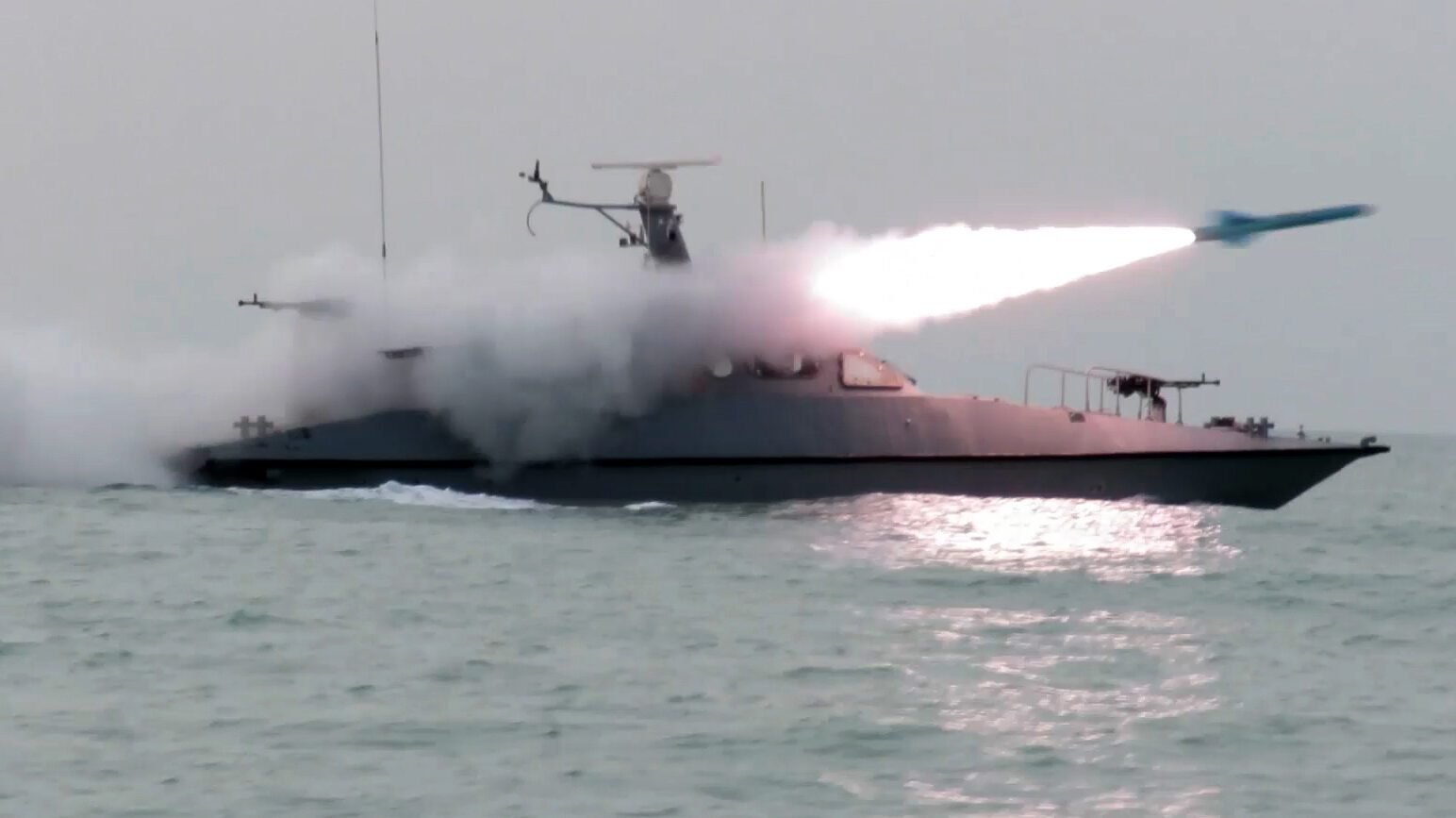
Qatar, Kuwait, and Bahrain have no way to get their oil and gas out except through the Strait. An oil producer normally earns more when prices rise, not if it cannot ship
[ISTANBUL] Gulf states that normally receive their food and household goods by sea have spent five months flying them in, and the cost is turning up in what their residents pay.
The Strait of Hormuz is a narrow stretch of water at the mouth of the Persian Gulf, between Iran and Oman. Before the war, about a fifth of the world’s oil and gas passed through it, but it has been effectively closed to commercial shipping since March. Iranian officials said on Saturday that talks with Oman on a new shipping lane were nearly complete, while warning that a deal would not completely reopen the waterway.
“Hormuz is the dominant economic channel in our estimates for the wider world economy, mainly Asian importers and Europe,” said Mohamed Shadi, head of energy and logistics at the Al Habtoor Research Centre in Dubai.
Shadi told The Media Line that the United States sells more energy abroad than it buys, so the price spike caused little lasting damage there. He added that oil prices were back near their previous levels by summer; the countries buying Gulf cargoes, and those selling them, have borne the losses.
“A lot of the necessities, and I’m talking food, that these Gulf nations require—Kuwait, the UAE, Bahrain, Qatar, Saudi Arabia—comes in by boat,” said Shon Hiatt, an associate professor of business administration at the University of Southern California’s Marshall School of Business and director of its Zage Business of Energy Initiative. “So, what have they been doing? They’ve been flying in, whenever they can, their food products and their household goods. And that’s caused inflation in these states.”
They’ve been flying in, whenever they can, their food products and their household goods. And that’s caused inflation in these states
Hiatt told The Media Line that coverage of the crisis has followed the oil and largely missed this dimension. “We’ve … put a lot of the focusing … on the oil because it’s affecting us,” he said. “But there has been very little actual reporting on the impact of both household goods and food for these countries.”
Shipping companies moved early. Maersk added an emergency surcharge on cargo going to or from the UAE, Qatar, Saudi Arabia, Bahrain, Kuwait, Iraq and Oman in the first weeks of the crisis, and other carriers followed within 48 hours. Planes have helped move high-value cargo, but air freight only makes sense for small, expensive, urgent cargo such as medicine and electronics. It cannot move grain or building materials at the volumes a country needs.
The Abu Dhabi National Oil Company said last week that 15 of its ships had been hit by missiles and drones since the war began, three of them in a single week, killing one crew member and injuring 20. A 16th was hit Saturday. Qatar lost about 17% of its capacity to export natural gas when Iranian missiles struck the Ras Laffan plant in March, and two cargoes loaded there have been attacked at sea since July.
Cargo that could reroute did. Ship calls at Sohar, a port 125 miles (200 km) north of Muscat and outside the strait, rose about 40% after the war began, and the amount of cargo it can handle rose 55%, according to Oman’s Ministry of Transport, Communications and Information Technology.
Forecasters have adjusted their expectations for how the situation will affect prices. Oxford Economics Middle East marked up its 2026 inflation forecasts for all six Gulf Cooperation Council countries—Saudi Arabia, the UAE, Qatar, Kuwait, Bahrain and Oman—with Bahrain up nearly a full point, to 2.1%. Scott Livermore, the firm’s chief Middle East economist, said the closure is holding imports from entering the region, and that moving goo
ds the long way, by truck or by plane, costs more. Those increases start from a low base. Inflation ran between 1.5% and 2.5% in Saudi Arabia from 2023 through 2025, between 1.6% and 1.7% in the UAE, and between 0.6% and 3.1% in Qatar. Justin Alexander, director of Khalij Economics, has said the effect will arrive slowly and hit each country differently, depending on the extent of government subsidies and each country’s dependence on the strait. Falling rents will offset some of it.
Food is also affected by disruption to the Gulf’s energy exports. A March study by Germany’s Kiel Institute for the World Economy traced the damage through two steps: Gulf gas is the raw material for fertilizer and chemicals, and those go into growing food. Cut the gas and the price of food rises well beyond the region. The study left Saudi Arabia and Oman out of its worst case for one reason. Both have ports outside the strait.
Qatar, Kuwait and Bahrain do not have comparable ports outside the Strait, and cannot send their exports around Hormuz by pipeline.
“This is a big worry for an emirate like Dubai, which doesn’t have very many oil and natural gas resources but is heavily reliant upon expats living there, spending their money and engaging in commerce,” Hiatt said.
Yemen’s Houthis claimed a drone strike Sunday on Aramco’s refinery at Jazan on Saudi Arabia’s Red Sea coast, a plant that processes 400,000 barrels a day. Saudi Arabia’s Energy Ministry said firefighters put out a blaze there with no injuries and gave no cause. Houthi missiles and drones had already shut the plant down in late July. Reports after the June ceasefire also described an attack on the pipeline that carries Saudi crude west to Yanbu on the Red Sea, one of the few routes that avoid the Strait.
Cauvery Ganapathy, a fellow for climate and energy at ORF Middle East in Dubai, said the closure has made it harder to build a planned trade route from India through the Gulf to Europe, because the war has shown how easily such a route can be attacked. It has also made the argument for building it.
“It is precisely to bypass chokepoints like Hormuz that multimodal projects with route optionality, such as IMEC, must be considered,” she told The Media Line, referring to the India-Middle East-Europe Economic Corridor, a mix of ports, rail and roads meant to give cargo more than one way to travel. “The closure of the Strait has argued the case for IMEC much better than any project proposal could have.”
Spending that once looked too expensive now looks reasonable, she said, because governments have seen what having only one route costs them. She pointed to Kuwait trying to connect its oil to Saudi and Emirati pipelines, and to more goods moving overland through Syria and Iraq.
“IMEC may not look the way it was planned,” Ganapathy said. “But in its final format it will be based on the principle of diversification, the need for which Hormuz has made amply clear.”
Europe gains from this, she said, because shipping between the Gulf and Asia has become expensive and Asian buyers are looking elsewhere. Japan has signed for Canadian oil and gas.
Ganapathy named Kuwait, Bahrain and Iraq as the hardest hit because they have the fewest routes around the strait and economies that depend almost entirely on energy exports. She also noted what the Gulf states cannot do for themselves: their coastlines are long, but none has a navy capable of helping the United States force the Strait open.
Mostafa Ahmed, head of political and security studies at the Al Habtoor Research Centre, said Washington will go on insisting the Strait belongs to everyone while Iran runs it in practice.
“While Washington will undoubtedly maintain its de jure position that the strait remains an international waterway, the de facto operational reality will tell a different story,” he said, using the legal terms for what is true on paper and what is true on the water.
If the deal now being negotiated holds, he said, the change is permanent.
This transforms the Strait of Hormuz from a protected artery of global trade into a permanent, structural bargaining chip
“This transforms the Strait of Hormuz from a protected artery of global trade into a permanent, structural bargaining chip,” Ahmed said, “signaling a severe blow to American maritime deterrence and establishing a dangerous global precedent.”
Gulf governments are already building for the next closure rather than this one. A railway linking all six Gulf countries, spanning 1,700 km (1,060 miles), is more than half complete and is scheduled to be fully operational by December 2030. A second line connecting the UAE to Oman’s port at Sohar, 238 km (148 miles), is 40% done. The accounting firm PwC argued in May that rail now matters as much as new pipelines, because everything the region ships and everything it eats needs a way in and out that does not cross the Strait.
Whether ships return when a lane opens will be decided by the companies that own them and the insurers that cover them, not by governments alone. Asked what he would want if he sat on a tanker company’s board, Hiatt said he would watch the Chinese-flagged ships go first, then a non-Chinese one, then wait a week.
“I’d want to see other ships go through first,” he said. “I don’t want to be the first one.”