Home Blog

India-China thaw is a supply-chain truce, not a strategic reset

0
india-china-thaw-is-a-supply-chain-truce,-not-a-strategic-reset
India-China thaw is a supply-chain truce, not a strategic reset

For six years, India ran its China policy on one simple assumption: if you’re economically dependent on a rival with which you share a disputed border, that dependence is a liability.

After the 2020 Himalayan clashes, New Delhi tightened the screws – more scrutiny on Chinese investment, restricted business travel, several deals blocked or slow-walked. The message wasn’t subtle: India would eat the economic cost if it meant shrinking China’s grip on strategically sensitive sectors.

That’s now being dialed back.

On August 6, Indian and Chinese officials sat down in New Delhi for the 36th round of their border-affairs working mechanism – one more step in a thaw that’s already brought easier business travel, renewed commercial ties and a selective loosening of investment rules. Both sides went through the usual language about peace and tranquillity along the Line of Actual Control.

But don’t confuse a quieter border with actual reconciliation. Yes, the 2024 disengagement deals cleared the remaining face-off points at Depsang and Demchok. That’s real progress. It still isn’t full de-escalation. Both sides still have large forces sitting across the wider frontier, and the territorial dispute itself hasn’t moved an inch.

So calling this a rapprochement misses what’s actually going on. India hasn’t stopped competing with China. What’s changed is that New Delhi seems to have worked out that de-risking and decoupling aren’t the same thing – and that building something that can actually rival Chinese manufacturing might require more access to Chinese machinery and know-how in the near term, not less.

The $132 billion reality

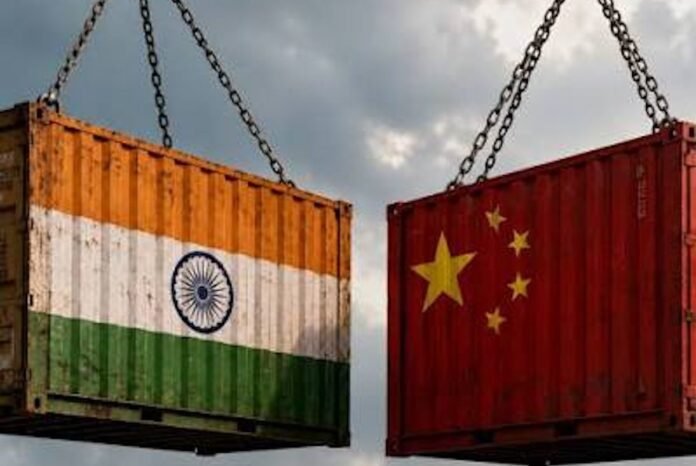
The numbers explain the pragmatism. India bought nearly $132 billion in goods from China last fiscal year – more than from any other country. Total trade hit roughly $151 billion, with India’s deficit topping $100 billion.

This isn’t cheap consumer stuff. A big chunk of it is machinery, electronics, chemicals, components – the industrial inputs Indian manufacturers actually run on. This is the contradiction sitting at the heart of India’s whole industrial strategy: New Delhi wants to become the next global alternative to Chinese manufacturing, but a lot of the factories that would make that happen still can’t function without Chinese equipment.

India already learned how expensive that gap can be. After the post-2020 travel restrictions, manufacturers couldn’t get the specialists they needed in the country to install, run and fix Chinese machinery. Reuters, reporting on the eventual visa easing, cited an estimate putting the cost to electronics production at around $15 billion over four years. Eventually India loosened the visa rules for Chinese professionals. The lesson was an awkward one: Restrictions meant to hem in China had been hemming in India’s own factories just as much.

From exclusion to selective access

Investment policy is following the same playbook. In March, India eased some of the curbs it had put in place during the tense border years – not by throwing the door open, but by creating more room for Chinese technology, machinery and capital to flow into Indian manufacturing while keeping a handle on ownership and control.

Under the new rules, investments with up to 10% Chinese ownership can, under the right conditions, get a faster, less restrictive approval path. Selected projects in electronics, batteries and other industrial sectors are moving through more quickly. The logic is straightforward once you see it: Get the capability, don’t let the dependence become permanent.

India’s EV industry is probably the clearest illustration. Chinese carmakers still hit real political and investment walls trying to operate in India. Chinese EV technology is a much harder thing to keep out – Reuters reported in June that Tata Motors is building its premium EVs on a platform licensed from China’s Chery, and other Indian firms are chasing similar licensing arrangements: Get the tech, skip handing over the equity.

India can probably keep Chinese companies at arm’s length. Keeping their technology out of Indian factories is a lot harder.

Self-reliance has not disappeared

None of this means Modi has quietly shelved the self-reliance push. If anything, New Delhi is getting more precise about where the dependence is actually dangerous.

In July, officials flagged roughly $51 billion in critical imports for priority domestic substitution – EVs, solar, textiles, footwear. New Delhi is preparing incentives for domestic polysilicon production specifically to cut reliance on China in the solar chain, according to a Reuters August 7 report.

On the surface, that looks like a contradiction – easing barriers to Chinese capital and technology with one hand while spending real money to cut Chinese imports with the other. It isn’t, really. You can’t ban your way out of dependence before your own alternatives are actually good enough. Push manufacturers onto worse, pricier substitutes too early, and you weaken the very industries you’re counting on to eventually take China on. So the real strategy isn’t to cut China off. It’s closer to: Use what you need from China now, while building toward needing less of it later.

What China gets from the thaw

Beijing has its own reasons to go along with this. India is a big, growing market for Chinese manufacturers right at a time when Chinese firms are hitting more trade barriers and political scrutiny in the US, Europe and elsewhere. China has little reason to walk away from that.

But the dependence isn’t symmetrical. India needs China’s industrial base far more than China needs Indian demand – and that imbalance is exactly why New Delhi wants to reshape this relationship rather than blow it up. A steadier border also lowers the odds that economic friction pushes India to diversify away faster or drives it closer to countries that are trying to counterbalance Beijing.

Border peace as economic infrastructure

Neither government needs to trust the other for this to work. They just need it to be predictable – which is really the right lens for the latest border talks.

Jaishankar keeps repeating that peace along the frontier has to come before normal relations – that hasn’t changed, and neither has the underlying dispute. What’s changed is the economic math. A steadier, if still unresolved, border gives New Delhi more room to keep certain commercial questions separate from the bigger rivalry. China keeps its access to a market it needs. India gets the machinery, tech, capital and skilled hands its manufacturing ambitions depend on.

Neither side has to pretend the geopolitical competition is over. This isn’t integration – it’s controlled interdependence between two rivals figuring out how to compete without holding every economic tie hostage to the border.

So don’t mistake the August border-calming meeting for peace between Asia’s two giants. India and China will keep competing – militarily, technologically, diplomatically, for regional influence, for supply chains, for manufacturing investment. New Delhi will keep trying to diversify away from Chinese imports. Beijing will keep trying to hold onto the edge its industrial scale gives it.

But India seems to have landed on a harder truth about the next phase of this rivalry: you don’t get to self-reliance by cutting the cord before you’ve built something to replace it with. You get there by using today’s dependence to build tomorrow’s independence.

Based in Islamabad, Mansoor Qaisar writes on foreign and public policy and social issues shaping the South Asian region. He can be reached at mansoor.qaisar@gmail.com
Pope Leo voices concern over ‘tragic’ situation in Sudan

0
pope-leo-voices-concern-over-‘tragic’-situation-in-sudan
Pope Leo voices concern over ‘tragic’ situation in Sudan

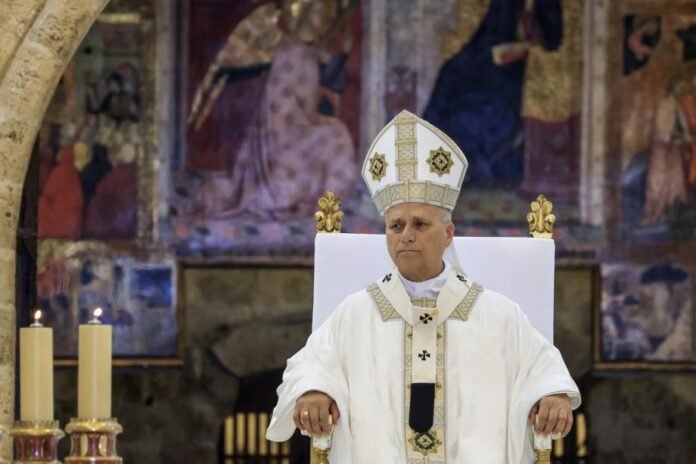
Pope Leo XIV on Sunday expressed his concern over the ongoing “tragic” situation in Sudan, calling on the international community to support efforts aimed at bringing about an immediate ceasefire, Anadolu reports.

“I renew my appeal to those in authority to guarantee humanitarian corridors for the civilian population,” the pontiff said following the Angelus prayer at St. Peter’s Square, the Vatican News reported.

He expressed his concern, citing in particular to the Sudanese city of el-Obeid, and called on the international community “to support efforts aimed at bringing about an immediate ceasefire.”

Fighting between the Sudanese army and the paramilitary Rapid Support Forces (RSF) has continued since 2023, following disputes over integrating the paramilitary force into the regular military. The conflict has killed tens of thousands of people and displaced millions.

As of the end of June, the International Organization for Migration had recorded about 8.69 million internally displaced people in the North African nation, along with more than 4.64 million people who returned to areas inside the country or from abroad.

Turning to the war between Russia and Ukraine, Pope Leo highlighted how “tragic episodes” are not only continuing but are multiplying, leading to a rising number of civilian causalities.

“I stand with the families of the victims, the wounded, and all those who are suffering as a result of the ongoing conflict,” he added.

‘Harry Potter’ Actress Makes Shocking Confession

0
‘harry-potter’-actress-makes-shocking-confession
‘Harry Potter’ Actress Makes Shocking Confession


Jessie Cave spent years working in movies, television and comedy after landing a memorable role in the Harry Potter franchise — but she says none of it came close to the money she made after joining OnlyFans.

The 39-year-old actress, best known for playing Lavender Brown in the final three Harry Potter movies, has revealed that her unusual side hustle became a financial lifeline after she reached what she described as a point of “complete desperation.”

And according to Cave, she made more money on the subscription platform in just one year than she earned during her entire acting career.

Cave joined OnlyFans in March 2025 as bills piled up and childcare costs made traditional work increasingly difficult.

She told The Times that taking an ordinary job wasn’t as simple as it might sound.

“I couldn’t go and, say, work in a supermarket because I can’t afford the childcare, and also I don’t want people shouting Harry Potter spells at me as I work at Tesco,” Cave said in an interview published Aug. 7.

She said retraining for another career was financially out of reach as well.

“I could retrain but I can’t afford to do a degree,” she explained. “I had a breakdown and I thought, that’s it with acting, I give up. But also we have no money. It was a point of complete desperation.”

That desperation eventually led Cave to OnlyFans — although her content looks very different from what many people typically associate with the platform.

Instead of posting explicit material, Cave built her page around one very specific attraction: her long hair.

Videos reportedly feature the actress brushing, touching and playing with her hair while wearing various costumes, including an elf, a maid and even outfits inspired by her Harry Potter days.

“My rule is the hair is the main character. That’s how I justify it,” Cave said.

“It’s literally about hair: the texture of hair. The fetish. It’s very, very niche.”

Cave originally believed the experiment would be brief.

“I thought I’d make five grand, be on it for a few months and it would buy me time to work out what we’re going to do,” she said.

Instead, the money began pouring in.

Cave said she earned more than $20,200 on her very first day.

Although some subscribers eventually disappeared after realizing she would not be posting explicit material, Cave said enough remained to turn her unconventional business into a major source of income.

“It’s now been over a year and a half and it’s genuinely saved our lives,” she said.

The difference between her earnings as an actress and her OnlyFans income has apparently been staggering.

“I’ve earned more, easily, than my entire acting career within one year,” Cave revealed.

She even suggested the subscription model could become increasingly common as social media users realize they could charge money for content they currently give away for free.

“I see people on Instagram posting bikini shots or s— stuff and I think, you could be charging for this! You’re losing money!” Cave said. “I see that being the future. Everyone will be paying for everything.”

For Cave, however, the appeal apparently wasn’t entirely financial.

The actress and mother of four said years of dressing conservatively and being viewed as the quirky Harry Potter actress had left her feeling overlooked.

“It is about wanting some kind of gaze,” she admitted.

“I wear baggy T-shirts on stage, I’ve never posted a bikini shot, I wear huge glasses. For so long I’ve just been this quirky figure.”

She added: “After having four kids and feeling invisible for so long, that was really appealing to me.”

But Cave’s new career has apparently come with at least one major Harry Potter-related consequence.

In September 2025, she claimed she had been turned away from appearing at a Harry Potter convention because organizers considered OnlyFans inappropriate for a family-oriented event.

“They explained it was because it’s a ‘family show and OnlyFans is affiliated with p—,’” Cave wrote on Substack at the time.

She said the decision confused her because her own page contains nothing sexually explicit.

“This was baffling to me as some actors who do conventions — most actors, actually — have done TV and films in which they’ve done s– scenes and nudity,” she wrote. “I’m just playing with my hair!”

Still, Cave insisted she wasn’t devastated about potentially leaving the convention circuit behind.

“I am not upset about the prospect of no more Harry Potter conventions,” she said. “There’s going to be a new cast now and it’s a different time.”

After more than 15 years of attending Potter-related events, Cave joked that she already has more than enough photographs and wizard memorabilia.

And while her path from Hogwarts to OnlyFans certainly wasn’t one she expected, Cave says the unlikely career move ultimately provided something acting had struggled to give her: financial security.

Beyond productivity: rethinking how we invest in AI

0
beyond-productivity:-rethinking-how-we-invest-in-ai
Beyond productivity: rethinking how we invest in AI

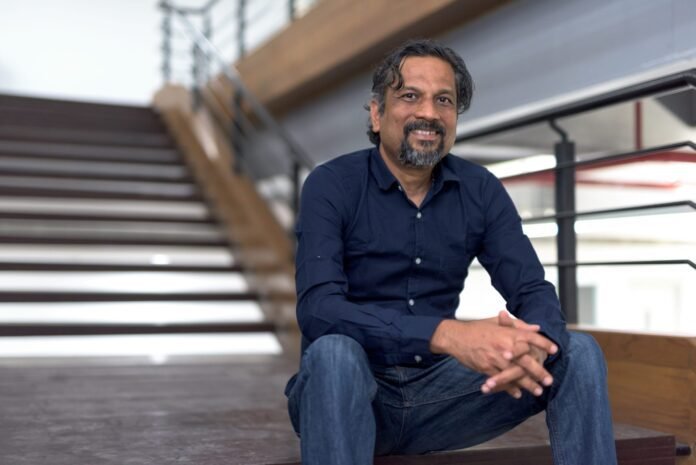
When Zoho founder Sridhar Vembu recently warned that the rapid adoption of artificial intelligence could eventually create a purchasing power problem by reducing entry-level hiring, the reaction was predictable. The discussion quickly turned into a familiar debate over whether AI would replace software engineers and eliminate jobs.

Yet that framing understates the significance of his intervention. Vembu’s remarks are not merely about employment. They are about how organizations and governments are making decisions on one of the most consequential technologies of our time.

The question is no longer whether companies should invest in AI. They should. Artificial intelligence has the potential to transform productivity, improve customer experience, accelerate innovation and create entirely new business models.

The real question is whether these investments are being evaluated with the same strategic discipline that organizations apply to other major capital decisions.

Unlike a factory, an acquisition or a research and development program, an AI investment is likely to be celebrated simply because it exists. Success is measured by lower costs, fewer employees and higher productivity.

Those are undoubtedly important outcomes. But they are also incomplete. As AI becomes central to corporate strategy, organizations need a broader framework for evaluating what these investments actually create, and what they may unintentionally erode.

AI investments need better success metrics

Every significant corporate investment is judged through multiple lenses. A new manufacturing plant is expected to improve capacity, strengthen supply chains and generate future growth. Research and development expenditure is assessed not only by immediate returns but by its ability to create intellectual property and long-term competitive advantage. Human capital investments are justified because they build organisational capability over time.

AI deserves the same treatment.

Today, boards often justify AI expenditure through familiar financial metrics: productivity gains, cost savings, operating margins and shareholder returns. While these are legitimate objectives, they represent only part of the value AI can generate. A narrow focus on efficiency risks encouraging organizations to deploy AI primarily as a cost-cutting tool rather than as a capability-building technology.

Boards should therefore ask broader questions. Has AI improved decision-making? Has it enabled employees to innovate faster? Has customer experience improved? Has it strengthened organizational learning? Has it created new products, services or business models?

Most importantly, has it enhanced the firm’s long-term competitive capability rather than merely improving the next quarter’s earnings?

The companies that derive the greatest value from AI are unlikely to be those that simply automate existing work. They will be those that redesign how work is performed and how value is created. AI should therefore be viewed as a strategic investment in organizational capability, not merely an exercise in operational efficiency.

The apprentice gap: Who builds tomorrow’s experts?

Perhaps the least discussed consequence of AI adoption is its effect on how expertise is developed.

Every knowledge profession relies on apprenticeship. Doctors begin with routine clinical work before making life-and-death decisions independently. Lawyers spend years researching and drafting before arguing landmark cases. Academics build expertise through years of research before becoming recognized scholars. Software engineers similarly learn by debugging code, fixing errors, reviewing systems and gradually assuming greater responsibility.

These routine tasks are often portrayed as repetitive work that AI can easily automate. But they also constitute the training ground where professional judgement is formed.

If AI increasingly performs entry-level work while organizations fail to redesign how expertise is cultivated, companies may inadvertently weaken the pipeline that produces future architects, engineering managers, product leaders and chief technology officers. The savings realised today may come at the cost of organizational capability tomorrow.

This is not simply a labor-market issue. It is a knowledge-management challenge.

Businesses have always understood the importance of succession planning for leadership. AI demands a similar conversation about succession planning for expertise. Organisations must ask not only how AI replaces tasks, but also how future professionals will acquire the judgement, intuition and contextual understanding that cannot be downloaded from a model or generated through a prompt.

The AI race needs strategic discipline, not herd behavior

There is little doubt that AI represents a transformative technological shift. Yet history also reminds us that transformative technologies often create waves of imitation alongside genuine innovation.

Organizations sometimes adopt new technologies because they solve real business problems; they also adopt them because competitors, consultants and investors expect them to. AI risks creating a similar dynamic.

Today, announcing an AI initiative often signals that a company is technologically progressive. But signaling should not be mistaken for strategy. The real question is whether AI is genuinely transforming workflows or merely being inserted into existing processes to satisfy market expectations.

Boards should therefore apply the same rigor to AI investments that they would apply to any other strategic decision. Which workflow is being improved? Which customer problem is being solved? What measurable capability has been created? Would the investment still make sense if competitors were not making similar announcements?

These questions are particularly important for India. Much of the global AI conversation is shaped by economies facing aging populations and high labor costs, where replacing labour is often commercially rational. India’s challenge is different. Its comparative advantage has long been its abundant pool of skilled human capital.

The objective, therefore, should not simply be to substitute workers with algorithms, but to use AI to amplify the productivity, creativity and global competitiveness of India’s workforce. The distinction is subtle, but it carries profound implications for how firms invest and how policymakers think about technological transformation.

The objective should not simply be to substitute workers with algorithms, but to use AI to amplify the productivity, creativity and global competitiveness of the workforce

The same strategic discipline should extend to public policy. Governments should not regulate AI adoption by requiring companies to justify every innovation against employment targets. Such an approach would risk slowing technological progress. They should, however, develop far stronger labor-market intelligence to understand how AI is reshaping occupations, skills and wages.

Just as governments monitor inflation, industrial production or financial stability, they should continuously assess how AI is transforming the world of work so that education systems, training programs and labor policies evolve alongside technological change.

The debate sparked by Sridhar Vembu should therefore not end with predictions about job losses. Artificial intelligence undoubtedly needs investment, ambitious budgets and rapid innovation. But it also needs thoughtful management.

The most successful organizations and economies will not be those that simply spend the most on AI. They will be those that invest with strategic clarity, measuring success not only by the productivity AI delivers today but by the capabilities, expertise and resilience it helps build for tomorrow.

Anu Singh Lather is vice chancellor of Dr. B.R. Ambedkar University, Delhi. Tarun Agarwal, PhD., is an associate fellow at the Center of Policy Research and Governance, New Delhi.

5 Months Without Ships: What the Hormuz Closure Costs the Arab Side of the Strait

0
5-months-without-ships:-what-the-hormuz-closure-costs-the-arab-side-of-the-strait
5 Months Without Ships: What the Hormuz Closure Costs the Arab Side of the Strait


Qatar, Kuwait, and Bahrain have no way to get their oil and gas out except through the Strait. An oil producer normally earns more when prices rise, not if it cannot ship

[ISTANBUL] Gulf states that normally receive their food and household goods by sea have spent five months flying them in, and the cost is turning up in what their residents pay.

The Strait of Hormuz is a narrow stretch of water at the mouth of the Persian Gulf, between Iran and Oman. Before the war, about a fifth of the world’s oil and gas passed through it, but it has been effectively closed to commercial shipping since March. Iranian officials said on Saturday that talks with Oman on a new shipping lane were nearly complete, while warning that a deal would not completely reopen the waterway.

“Hormuz is the dominant economic channel in our estimates for the wider world economy, mainly Asian importers and Europe,” said Mohamed Shadi, head of energy and logistics at the Al Habtoor Research Centre in Dubai.

Shadi told The Media Line that the United States sells more energy abroad than it buys, so the price spike caused little lasting damage there. He added that oil prices were back near their previous levels by summer; the countries buying Gulf cargoes, and those selling them, have borne the losses.

“A lot of the necessities, and I’m talking food, that these Gulf nations require—Kuwait, the UAE, Bahrain, Qatar, Saudi Arabia—comes in by boat,” said Shon Hiatt, an associate professor of business administration at the University of Southern California’s Marshall School of Business and director of its Zage Business of Energy Initiative. “So, what have they been doing? They’ve been flying in, whenever they can, their food products and their household goods. And that’s caused inflation in these states.”

They’ve been flying in, whenever they can, their food products and their household goods. And that’s caused inflation in these states

Hiatt told The Media Line that coverage of the crisis has followed the oil and largely missed this dimension. “We’ve … put a lot of the focusing … on the oil because it’s affecting us,” he said. “But there has been very little actual reporting on the impact of both household goods and food for these countries.”

Shipping companies moved early. Maersk added an emergency surcharge on cargo going to or from the UAE, Qatar, Saudi Arabia, Bahrain, Kuwait, Iraq and Oman in the first weeks of the crisis, and other carriers followed within 48 hours. Planes have helped move high-value cargo, but air freight only makes sense for small, expensive, urgent cargo such as medicine and electronics. It cannot move grain or building materials at the volumes a country needs.

The Abu Dhabi National Oil Company said last week that 15 of its ships had been hit by missiles and drones since the war began, three of them in a single week, killing one crew member and injuring 20. A 16th was hit Saturday. Qatar lost about 17% of its capacity to export natural gas when Iranian missiles struck the Ras Laffan plant in March, and two cargoes loaded there have been attacked at sea since July.

Cargo that could reroute did. Ship calls at Sohar, a port 125 miles (200 km) north of Muscat and outside the strait, rose about 40% after the war began, and the amount of cargo it can handle rose 55%, according to Oman’s Ministry of Transport, Communications and Information Technology.

Forecasters have adjusted their expectations for how the situation will affect prices. Oxford Economics Middle East marked up its 2026 inflation forecasts for all six Gulf Cooperation Council countries—Saudi Arabia, the UAE, Qatar, Kuwait, Bahrain and Oman—with Bahrain up nearly a full point, to 2.1%. Scott Livermore, the firm’s chief Middle East economist, said the closure is holding imports from entering the region, and that moving goo

ds the long way, by truck or by plane, costs more. Those increases start from a low base. Inflation ran between 1.5% and 2.5% in Saudi Arabia from 2023 through 2025, between 1.6% and 1.7% in the UAE, and between 0.6% and 3.1% in Qatar. Justin Alexander, director of Khalij Economics, has said the effect will arrive slowly and hit each country differently, depending on the extent of government subsidies and each country’s dependence on the strait. Falling rents will offset some of it.

Food is also affected by disruption to the Gulf’s energy exports. A March study by Germany’s Kiel Institute for the World Economy traced the damage through two steps: Gulf gas is the raw material for fertilizer and chemicals, and those go into growing food. Cut the gas and the price of food rises well beyond the region. The study left Saudi Arabia and Oman out of its worst case for one reason. Both have ports outside the strait.

Qatar, Kuwait and Bahrain do not have comparable ports outside the Strait, and cannot send their exports around Hormuz by pipeline.

“This is a big worry for an emirate like Dubai, which doesn’t have very many oil and natural gas resources but is heavily reliant upon expats living there, spending their money and engaging in commerce,” Hiatt said.

Yemen’s Houthis claimed a drone strike Sunday on Aramco’s refinery at Jazan on Saudi Arabia’s Red Sea coast, a plant that processes 400,000 barrels a day. Saudi Arabia’s Energy Ministry said firefighters put out a blaze there with no injuries and gave no cause. Houthi missiles and drones had already shut the plant down in late July. Reports after the June ceasefire also described an attack on the pipeline that carries Saudi crude west to Yanbu on the Red Sea, one of the few routes that avoid the Strait.

Cauvery Ganapathy, a fellow for climate and energy at ORF Middle East in Dubai, said the closure has made it harder to build a planned trade route from India through the Gulf to Europe, because the war has shown how easily such a route can be attacked. It has also made the argument for building it.

“It is precisely to bypass chokepoints like Hormuz that multimodal projects with route optionality, such as IMEC, must be considered,” she told The Media Line, referring to the India-Middle East-Europe Economic Corridor, a mix of ports, rail and roads meant to give cargo more than one way to travel. “The closure of the Strait has argued the case for IMEC much better than any project proposal could have.”

Spending that once looked too expensive now looks reasonable, she said, because governments have seen what having only one route costs them. She pointed to Kuwait trying to connect its oil to Saudi and Emirati pipelines, and to more goods moving overland through Syria and Iraq.

“IMEC may not look the way it was planned,” Ganapathy said. “But in its final format it will be based on the principle of diversification, the need for which Hormuz has made amply clear.”

Europe gains from this, she said, because shipping between the Gulf and Asia has become expensive and Asian buyers are looking elsewhere. Japan has signed for Canadian oil and gas.

Ganapathy named Kuwait, Bahrain and Iraq as the hardest hit because they have the fewest routes around the strait and economies that depend almost entirely on energy exports. She also noted what the Gulf states cannot do for themselves: their coastlines are long, but none has a navy capable of helping the United States force the Strait open.

Mostafa Ahmed, head of political and security studies at the Al Habtoor Research Centre, said Washington will go on insisting the Strait belongs to everyone while Iran runs it in practice.

“While Washington will undoubtedly maintain its de jure position that the strait remains an international waterway, the de facto operational reality will tell a different story,” he said, using the legal terms for what is true on paper and what is true on the water.

If the deal now being negotiated holds, he said, the change is permanent.

This transforms the Strait of Hormuz from a protected artery of global trade into a permanent, structural bargaining chip

“This transforms the Strait of Hormuz from a protected artery of global trade into a permanent, structural bargaining chip,” Ahmed said, “signaling a severe blow to American maritime deterrence and establishing a dangerous global precedent.”

Gulf governments are already building for the next closure rather than this one. A railway linking all six Gulf countries, spanning 1,700 km (1,060 miles), is more than half complete and is scheduled to be fully operational by December 2030. A second line connecting the UAE to Oman’s port at Sohar, 238 km (148 miles), is 40% done. The accounting firm PwC argued in May that rail now matters as much as new pipelines, because everything the region ships and everything it eats needs a way in and out that does not cross the Strait.

Whether ships return when a lane opens will be decided by the companies that own them and the insurers that cover them, not by governments alone. Asked what he would want if he sat on a tanker company’s board, Hiatt said he would watch the Chinese-flagged ships go first, then a non-Chinese one, then wait a week.

“I’d want to see other ships go through first,” he said. “I don’t want to be the first one.”

In rural communities, fears amplified by ‘AI slop’ and social media hamper solar boom

0
in-rural-communities,-fears-amplified-by-‘ai-slop’-and-social-media-hamper-solar-boom
In rural communities, fears amplified by ‘AI slop’ and social media hamper solar boom

This story was reported with the help of a grant from Grist, and was originally published by The Lens.​

Into a clear blue sky, the sweet-smelling smoke billows and spreads. Farmers have been burning and harvesting sugarcane this way for generations, but the practice creates ash fallout and hazardous air pollutants. Every year, farmers plan and coordinate the fires, to clear out pests like snakes and clear leaves, leaving behind only the stalks where the sugar lies.

Nobody in Iberia Parish thinks twice. Sugarcane smoke is a part of life.

But locals are wary of the dangers they suspect lurk within a different, newer industry. This new industry is going to be the ruin of Iberia Parish, they warn, with dangers ranging from toxic smoke and cancer-causing chemicals to homegrown tornados and flying debris, even poisoned farmland and worthless houses. 

Dangers that are almost entirely imagined, say experts, who now find themselves as the main line of defense against misinformation that could hamstring a vital field. It’s a dynamic being repeated nationwide.

This is a close-knit community, part of the Acadiana region of Louisiana best known as Cajun Country. But last year, opposition to solar farms became so heated here that speakers at Iberia Parish Council meetings were brought to tears. Hundreds of residents successfully mounted a campaign opposing a proposed utility-scale solar project that would have been sited northeast of town. Opponents voiced fears that solar panels would destroy farms and poison the soil. They wore anti-solar T-shirts and staked yard signs. They snubbed and scolded the project’s supporters.

Memes

Posts aimed at solar opponents in Indiana, Texas, Iowa and California, clockwise from top left, repeated messaging and imagery. Composite image by Dominique Hodge / Mississippi River Basin Ag & Water Desk

For some who live in Iberia Parish, the standoff seems more deep-seated. “I think you’re seeing the animus of people who feel like their opinion is not taken seriously,” said Josh Trosclair, a member of the United Houma Nation and native of the small community of Lydia, just south of New Iberia, who argued on behalf of solar in front of the council. After one meeting, agitated solar opponents followed him to his car, he said. 

It seems clear that unfounded fears of solar have found fertile ground here. 

Facebook groups and AI bots

In Acadiana, solar opposition appears to have been organized in large part through a 1,200-member social-media group known as “NO Industrial/Utility solar in Iberia Parish” on Facebook. “Panels are toxic, contaminate the soil and water, [and] are a huge fire hazard,” wrote one of the group’s administrators in an April 2024 post. 

The group appears to have been first created in 2024 by a local real estate agent, Angela Scott. Scott did not respond to multiple attempts to reach her for this story.

Many posts express concerns that Iberia would no longer be a farming community. “There’s about 500k acres of sugarcane in the state. About 250k of them are leased for potential solar farms in the future,” read a post reshared from a group for St. James Parish — which also saw an anti-solar campaign. “If we lose 250k acres of farmland in this state, the sugar mills will likely close.”

To date, experts project that, at most, Louisiana solar will require about 87,000 acres over the next 10 years, on sites spread out across the state — not just on sugarcane fields. Only about 1 percent of Louisiana’s total farmland would be impacted by the highest estimates of solar buildout over the next decade, researchers estimate. 

Read Next

Posts in the group echo the dangers cited by opponents in council debates, along with a few new alleged hazards, including “increased ambient temperatures” and suggestions that solar panels themselves create unstable weather, particularly tornadoes.

Many posts in the group are cross-posted from “Stop Solar-Wind-BESS-Carbon Capture Scams,” a larger, 11,000-member Facebook group, which has become a hub for people who oppose solar across the nation. It was created in 2020 by Indiana resident Franklin T. Wike. 

A pinned post by Wike under the name “David Herman” seeks people willing to be trained to spread anti-solar messages: “We are looking for volunteers that would be interested in learning how to HELP run anti-Solar or anti-Solar and Wind websites. We are willing to train the individuals if needed,” reads the post. “The position will basically involve copying and pasting news links from various Facebook Groups we run, then writing a short introduction to the news articles.”

Wike also did not respond to requests for comment.

Some members of the network of anti-solar groups are sharing nearly identical posts of AI-generated anti-solar content, tailored to different U.S. states.

“Once Louisiana is gone, there’s no way to get it back,” reads one AI-generated graphic, shared by user Sheila Thomson, the words appearing on a sign with a farm and red barn in the distance. “Solar panels belong on roofs, not on farmland.” In a Facebook group for Texans, a different user posted a similar image tailored to Texas: “Once Texas is gone, there’s no way to get it back,” reads the sign. The same message and graphic appears in other groups tailored to Iowa, Nebraska, Tennessee and elsewhere.

The accounts have been linked to a network of “AI slop machine” accounts, per an analysis released earlier this month by the threat intelligence company Alethea. The network has also targeted data centers. Many of the accounts are anonymously run, are based in Bangladesh, and appear to be rapidly producing a volume of “emotionally resonant, locally targeted content … to manufacture the appearance of organic, grassroots consensus.”

Highly charged issue divides neighbors

Iberia Parish is more familiar with a different aspect of the energy sector. Parish workers fabricate parts for oil and gas infrastructure, like offshore platforms and pipelines. They work for petrochemical companies that, historically, come in, extract resources, and leave behind poverty and pollution — and loss. Trosclair’s uncle, whom he’s named after, was doing oil and gas fieldwork when he was killed by a burst pipe in 1980 at 20 years old.

Fossil fuels also don’t provide the jobs they once did: A report this summer from The Data Center, a Louisiana nonprofit, found that oil and gas production and transportation in the New Orleans metro area lost over 6,500 jobs between 2004 and 2023, a 47 percent decrease. 

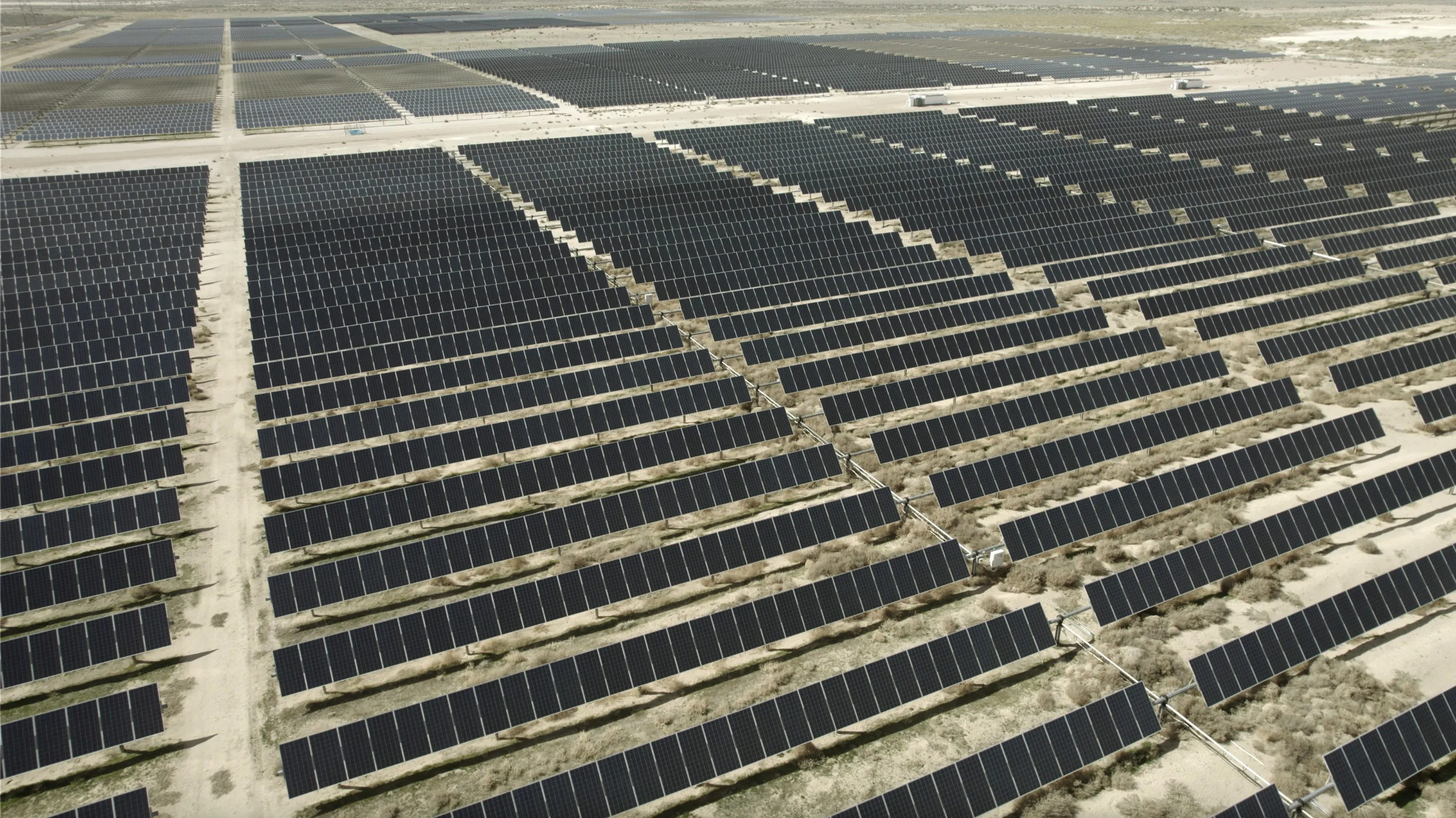
Solar, on the other hand, will keep growing, say analysts, because the technology has simply gotten so efficient and affordable that the low cost will keep driving demand despite the hostile federal policy landscape. Scientists say that the world must transition to renewable energy as quickly as possible as global climate change worsens. Energy generated by solar in the U.S. recently overtook coal for the first time. Even President Trump’s allies recently softened their once-hostile tone and began championing solar outright.

Read Next

Perhaps because of their fraught history with oil and gas, locals can be wary of large new developments on agricultural land. They rallied the council last year to discuss the risks of carbon capture and sequestration and weighed instituting a moratorium. For the past several years, the solar industry has instilled worries, turning longtime friends into enemies.

“This is a highly charged, emotional issue, not just for me but for all of my neighbors who are my friends,” McAnally told the Council, her voice shaking. “Or — were my friends.”

Sugarcane has long been the dominant crop in Iberia Parish, where some farms have been handed down through four or five generations. The hundreds of acres of sun-drenched land also appealed to Recurrent Energy, a division of Canada Solar, which selected about 1,000 acres for their proposed solar project, initially dubbed “Acadiana Solar.” It would have been a $175 million investment.

But amid passionate public opposition, Iberia Parish passed its first solar-related ordinance in February 2024, a moratorium on solar farms, described as a temporary measure until permanent regulations could be agreed upon. A year later, in July 2025, the council passed the second ordinance, requiring that solar farms in the parish be sited at least a half mile from the nearest residential zones and occupied structures.

At the state level, Louisiana legislators passed their first solar restrictions last year, with House Bill 459, which requires that solar projects 75 acres or larger be set 300 feet from the nearest residential property line. The law also allows local governments to set larger setbacks.

Louisiana’s setback law is “one of the larger distances that you’ll see in the country,” Mark Zappi, executive director of the Energy Institute of Louisiana, told 1012 Industry Report in April. The Iberia Parish ordinance, with a setback that’s more than eight times larger, is among the most restrictive in the state.

The full effects of that setback are unclear: Though Recurrent Energy has never officially announced that its project was canceled, there’s been no movement on the project since the ordinance passed, local advocates say.

Solar panels don’t leach toxins

It is clear that, for solar development in Louisiana, one of the most formidable hurdles is misinformation.

Some inaccuracies are spread among friends and neighbors, by mouth or by social media. Sometimes disinformation is spread deliberately by politically-linked groups or digital marketers sharing AI-generated posts.

Or, as Terrence Chambers, the recently retired director of the University of Louisiana-Lafayette’s Center of Efficiency and Sustainable Energy, testified in front of a Louisiana legislative committee in 2021: “I have recently heard many concerns expressed by members of the public, some of which are based on incorrect information, and I would like to address some of those concerns, so that public policy can be based on accurate information.” 

Read Next

In his testimony and in the 17-page written testimony that he supplied the committee, Chambers set the record straight. “The solar cell is completely protected from air and water during normal operation, and as such, rainwater does not wash any toxic materials into the soil,” he said. “Solar racks can easily be designed to wind speeds of 150 mph or higher,” he wrote, noting that data from 50,000 operational solar installations shows that “solar plants stand up well to hurricanes and hail.” Also, because solar panels are mostly made of non-flammable materials like steel, glass and aluminum, they will not catch fire.

A December study from Chambers and other researchers at UL-Lafayette reached a similar conclusion: “There are no harmful emissions or runoff from solar power plants that would negatively affect the soil.”

Some opponents’ concerns were valid decades ago, but have now been largely addressed. For instance, residents expressed worries that solar panels would depress property values, become eyesores amid the landscape, or  — like the “orphan wells” often left behind by fossil-fuel companies — that the projects won’t be properly decommissioned when the projects end, leaving farmland littered with aging solar panels.

Studies have drawn differing conclusions about property values, but another UL-Lafayette paper points to two recent ones, by appraisers in North Carolina and Virginia who found that solar projects have no effect. Abandoned panels are less of a concern now since Louisiana law requires every project to have a decommissioning plan, which must account for closure in case of disaster and be updated every five years, with the costs set aside before construction begins. The way solar projects are designed has improved dramatically as well, said Stephen Barnes, director of the Kathleen Babineaux Blanco Public Policy Center at UL-Lafayette. 

Today’s projects are designed to be less visible than older ones, partly because it’s become standard for projects to include vegetative barriers – tall plants and bushes used to blend solar arrays with surrounding landscape.  “The reality is that most people that live in a parish that does have a solar farm don’t think about it ever,” said Barnes. “You could be driving past one and never even know it.”

Solar continues to grow, and provide needed tax revenue, despite hurdles

Across Louisiana, 19 solar projects are operating. Five began operating after Iberia passed its strict ordinance. 

Rural parishes that may otherwise see little investment are reaping massive tax benefits by embracing solar projects, researchers at UL-Lafayette say. Even if solar facilities are granted massive tax exemptions, they’ll generate at least 40 times more local property tax than farmland. 

Near Iberia, in Pointe Coupee Parish, the Oxbow solar project  — the largest in the state — is projected to generate $9.7 million in local tax revenue within the first three years. Morehouse Parish has already brought in about $3 million in sales tax revenue thanks to the Oak Ridge Solar Farm that began operating in 2023, about half of which went to the School Board. 

Read Next

The UL-Lafayette study predicts solar will bring in about half a billion dollars in state taxes through 2035. And once built, Barnes said, solar projects “tend to sit quietly with very little activity, generating significant, steady, predictable stream of tax revenue,” without requiring the increased public services — like fire protection or better roads  — that other large development projects need, said Barnes. Investment in a solar facility can also draw other businesses in, or prompt investment in improving the local electrical grid — what Barnes calls “broader spillover economic benefits.” 

“There will be continued expansion,” said Monika Gerhart, executive director of Gulf States Renewable Energy Industries Association. “The question is whether those projects will be over the state lines in Texas or Arkansas or Mississippi, or whether Louisiana is going to be able to avail itself of that revenue.”

Despite its opposition, Iberia Parish, too, has begun to see spillover benefits from investments in solar energy. 

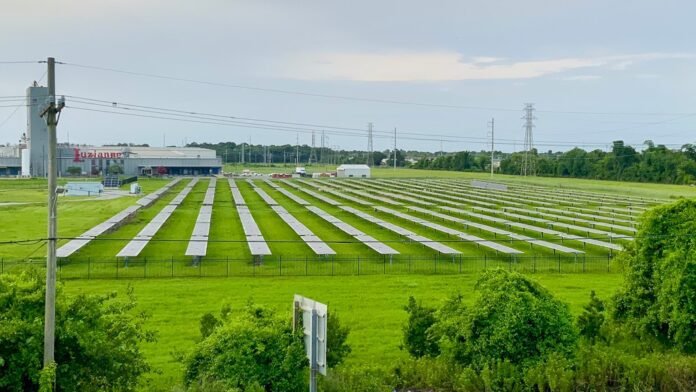
Last year, a company called First Solar opened a $1 billion solar-panel production facility in Iberia Parish. It will manufacture 3.5 gigawatts of solar panels annually and is the largest investment in Iberia Parish history. 

The plant now employs hundreds of locals.

This story is a product of the Mississippi River Basin Ag & Water Desk, an independent reporting network based at the University of Missouri in partnership with Report for America, with major funding from the Walton Family Foundation.


No need to overread the Middle East’s marriages of convenience

0
no-need-to-overread-the-middle-east’s-marriages-of-convenience
No need to overread the Middle East’s marriages of convenience

Not all Middle Eastern partnerships are as they seem. Image: YouTube screengrab

There is a familiar ritual in Washington’s foreign policy think tanks whenever two Middle Eastern states sign a memorandum of understanding, launch a joint economic council or hold their first-ever ministerial dialogue: the announcement is instantly upgraded, in the retelling, into a “strategic partnership.”

A defense-industry side deal becomes an “alliance.” A trade corridor becomes a “new architecture of regional order.” The vocabulary of grand strategy gets applied to what is, more often than not, a set of transactional arrangements among states hedging their bets in an increasingly unsettled neighborhood.

The past several years have produced no shortage of raw material for this narrative. Saudi Arabia and Iran restored diplomatic relations under Chinese auspices. The Abraham Accords widened their circle of signatories and, on paper, deepened economic and security cooperation between Israel and its new Gulf partners. India, the Gulf states and Europe unveiled a proposed rail-and-shipping corridor meant to rival China’s Belt and Road.

Turkey has been busy repairing ties with Egypt, the UAE and even Israel after a decade of estrangement. Qatar, Oman, and the UAE have each cultivated their own webs of understandings with Tehran, Moscow, and Beijing that owe little to Washington’s preferences.

Taken together, these developments are real, and they matter. But the temptation to read them as evidence of a coherent new regional bloc, or as proof that a “Middle East NATO” is finally taking shape, mistakes the symptom for the disease.

What’s actually happening is simpler and less tidy: the states of the region are diversifying their portfolios of relationships because they no longer trust any single patron, including the United States, to underwrite their security or their economic future indefinitely.

Partnership, in this context, is not the product of shared ideology or a common strategic vision. It is insurance.

Consider the logic from Riyadh’s vantage point. The kingdom’s rapprochement with Iran was not a triumph of diplomacy over rivalry so much as a hedge purchased at a moment when Saudi leaders had concluded that American security guarantees were no longer something to bank on without qualification, and that a shooting war with Iran’s proxies was a risk better managed through de-escalation than deterrence.

The same kingdom continues to explore a formal defense pact with Washington, continues to buy Chinese drones, and continues to talk to Israel about normalization, not because these tracks are integrated into one grand design, but because keeping multiple tracks open is what a mid-sized power does when the ground beneath it is shifting.

This is worth dwelling on because Washington’s foreign policy establishment has a habit of narrating other states’ hedging as either a victory for American diplomacy (when it points toward normalization with Israel) or a strategic defeat (when it points toward Beijing or Moscow).

Both readings share the same underlying error: they assume Middle Eastern states are choosing sides in a bipolar contest, rather than doing what regional powers have always done, which is to triangulate among great powers to maximize their own room for maneuver.

The UAE’s simultaneous hosting of American military assets, Chinese 5G infrastructure debates and Russian capital flight is not incoherence. It is a rational response to a world in which no single external power can any longer guarantee everything a Gulf state might need.

None of this means the partnerships are fake or that they won’t harden into something more durable. Institutions built for narrow purposes – a trade council, a deconfliction hotline, a joint infrastructure fund – have a way of outliving the transactional logic that created them, especially if they generate their own bureaucracies and vested interests.

But it does mean commentators and policymakers ought to resist the urge to read every new memorandum as a chapter in a unifying regional narrative, whether that narrative is “the dawn of a new Middle East” or “the end of American primacy.”

The region’s states are not building a new order. They are managing uncertainty, one hedge at a time, and the resulting map of overlapping, often contradictory partnerships is less a blueprint than a mirror of just how uncertain that management has become.

For Washington, the implication is not that these partnerships should be resisted, but that they should be watched without the reflexive assumption that regional actors owe their choices to American strategic preferences.

A Gulf state that talks to Tehran one week and signs a defense annex with Washington the next is not being duplicitous. It is behaving exactly as any state does when it can no longer take its security for granted, and American policymakers would do well to plan for a region that increasingly hedges against them too.

This article was originally published on Leon Hadar’s Global Zeitgeist and is republished with kind permission. Become a subscriber here.

Star Suffers Medical Emergency at Fan Event

0
star-suffers-medical-emergency-at-fan-event
Star Suffers Medical Emergency at Fan Event


Highlander star Christopher Lambert gave fans a frightening scare Saturday after collapsing during a packed fan convention and being rushed to the hospital by ambulance.

The 69-year-old French-American actor, who also famously played Tarzan, was signing autographs at Steel City Con in Pittsburgh, Pennsylvania, when he suddenly suffered a medical emergency and went down, according to TMZ.

The alarming incident unfolded in front of conventiongoers as Lambert was meeting fans and signing memorabilia.

An ambulance was called, and the veteran actor was taken to a nearby hospital for evaluation.

Fortunately, the situation appears to have ended on a much more reassuring note.

Lambert’s team later said the actor was “totally OK” and had returned to his hotel room, where he was resting after the ordeal.

A spokesperson said the collapse was apparently caused by low blood sugar after Lambert had eaten very little since arriving in Pittsburgh. A lack of sleep the night before may have also contributed to the scary episode.

Despite the positive update, it was not immediately clear whether Lambert would feel well enough to return to Steel City Con for Sunday’s scheduled events.

The medical scare quickly drew attention because Lambert remains a beloved figure among fans of 1980s action and fantasy films.

He became an international star playing immortal Scottish warrior Connor MacLeod in the 1986 cult classic Highlander.

The movie spawned multiple sequels and a television franchise, cementing Lambert’s place in pop-culture history.

Two years earlier, Lambert took on another legendary role when he starred as Tarzan in 1984’s Greystoke: The Legend of Tarzan, Lord of the Apes.

The brooding actor went on to build a decades-long career in film as an actor, producer and writer.

For fans who witnessed Saturday’s frightening collapse, however, the biggest relief was hearing that Lambert was back at his hotel and recovering after the unexpected hospital trip.

Syria, Russia reach deal to reorganize Russian military presence at Hmeimim, Tartus bases

0
syria,-russia-reach-deal-to-reorganize-russian-military-presence-at-hmeimim,-tartus-bases
Syria, Russia reach deal to reorganize Russian military presence at Hmeimim, Tartus bases

Syria and Russia have reached a memorandum of understanding to reorganize Russia’s presence at the Hmeimim and Tartus bases in western Syria following about 18 months of negotiations, the Syrian Foreign Ministry said Sunday, Anadolu reports.

Under the memorandum, Syria will assume management of civilian facilities, including Hmeimim Airport and the fourth commercial berth at Tartus port, gradually integrating them into the civilian administration system, according to the ministry’s Media and Communications Directorate, as cited by the Syrian Arab News Agency (SANA).

Military bases and facilities will undergo a functional transformation, with the two sides agreeing to convert them from military bases into joint training and qualification centers under new arrangements designed to preserve their mutual interests.

The memorandum sets a maximum three-month timeframe to complete the transition, after which the new arrangements will take effect, the ministry said.

​​​​​​​It described the agreement as “the most significant development” since negotiations began about a year and a half ago, saying it opens the way for a new phase in Syrian-Russian relations.

Syria’s General Authority for Border Crossings and Customs said in a statement that under the deal, the Syrian side would take over commercial sites previously operated by Russia at Tartus port, including Berth No. 4, warehouses and associated facilities.

Following the announcement, Syrian Civil Aviation and Air Transport Authority head Omar al-Hosary said on the US social media company X that the authority had taken control of Latakia International Airport in western Syria and begun technical and operational assessments of its facilities and systems ahead of preparing a rehabilitation plan and restoring the airport to operational readiness.

The Hmeimim air base and Tartus naval base are the two main pillars of Russia’s military and logistical presence in the Middle East and Mediterranean.

Hmeimim, in Latakia province, began as a small civilian airport, formerly known as Bassel al-Assad International Airport, before Russia converted it into a fully equipped military air base in mid-2015 and made it the main hub for its air operations in Syria.

In October 2016, Russian President Vladimir Putin approved an agreement with the deposed regime of Bashar Al-Assad granting Moscow permanent and free use of the base.

Tartus is Russia’s only naval facility in the Mediterranean. Russia’s military presence there dates to 1971, when Moscow established a small technical and logistical support facility. The site was later expanded into a naval base following a 2017 agreement granting Moscow a free 49-year lease, automatically renewable for another 25 years.

The 2017 agreement granted Russia full sovereignty over the leased area and allowed it to accommodate up to 11 warships simultaneously, including nuclear-powered vessels and submarines.

Russia provided military and political support to Assad’s regime during the country’s revolution from 2011 until 2024.

​​​​​​​Assad, who ruled Syria for nearly 25 years, fled to Russia on Dec. 8, 2024, ending the Baath Party’s decades-long rule that began in 1963. A transitional administration led by President Ahmad al-Sharaa was formed in January 2025.

80% of Soldiers in Israeli Study See PTSD Symptoms Ease With MDMA Therapy, According to Study

0
80%-of-soldiers-in-israeli-study-see-ptsd-symptoms-ease-with-mdma-therapy,-according-to-study
80% of Soldiers in Israeli Study See PTSD Symptoms Ease With MDMA Therapy, According to Study


Although the early findings are promising, the therapy remains experimental. It has not yet been approved by either Israel’s Ministry of Health or the US Food and Drug Administration

Coral (last name withheld) had lost hope.

A mother and a veteran of the Second Lebanon War, Coral said she felt like a fraud, like a bad mother, and was sad all the time. Although she had tried standard talk therapy and medication, nothing relieved the symptoms of the post-traumatic stress disorder (PTSD) she developed after serving in the war until a friend told her about a methylenedioxymethamphetamine (MDMA) clinical trial at Clalit Health Services’ HaEmek Medical Center.

MDMA is a synthetic psychoactive compound created in a laboratory setting that researchers are studying as a potential aid to psychotherapy under strict medical supervision. It is also known recreationally as Ecstasy or Molly, although products sold under those names may not contain pure MDMA and can include other substances.

Coral applied to the study and was accepted into the program. She recently completed it and said it changed her life for the better.

“I tried many things,” she told The Media Line. “I went to a psychiatrist, I got medication, but it did not help. It just numbed the pain. I wasn’t happy anymore.”

Today, she said, “I feel like something that was stuck deep inside me for many years has come out. I feel so much better.”

I feel like something that was stuck deep inside me for many years has come out. I feel so much better.

According to clinical psychologist Ronen Sidi, a former special forces soldier in an elite unit who co-led the study with Dr. Alon Reshef, director of psychiatry at Clalit HaEmek Medical Center, around 15% of combat soldiers exposed to severe battlefield trauma may develop chronic PTSD.

“These are often highly resilient, dedicated individuals who find it difficult to seek help or speak openly about fear, guilt, or helplessness,” Sidi said. “The goal of treatment is not to erase traumatic memories, but to help patients safely process them.”

According to data from Israel’s healthcare system, PTSD diagnoses have increased by approximately 70%, particularly in the wake of the October 7 attacks and the subsequent war.

Researchers at HaEmek’s Psychedelic Research Center for Veterans with PTSD are testing whether MDMA-assisted psychotherapy can safely help soldiers with PTSD. Early results suggest that roughly four out of five participants who completed the treatment saw a meaningful reduction in their symptoms.

Although the early findings are promising, the therapy remains experimental. It has not yet been approved by either Israel’s Ministry of Health or the US Food and Drug Administration. In Australia, authorized psychiatrists have been permitted, since July 2023, to prescribe MDMA for PTSD under tightly regulated conditions.

Participants undergo a structured 13-session treatment program centered on psychotherapy. Three of those sessions incorporate MDMA under close medical supervision. The MDMA sessions last up to eight hours and are conducted in specially designed treatment rooms inside the hospital. Two trained clinicians remain with each participant throughout every session, providing support and monitoring from beginning to end. The clinicians include psychiatrists, psychologists, and social workers with specialized training in trauma care.

The researchers stressed that MDMA itself is not the treatment but rather a therapeutic catalyst. “This is an intensive psychotherapeutic process in which MDMA serves as a therapeutic tool that facilitates the work,” Reshef said. “It is not a miracle cure, nor is it something that should ever be used independently. On the contrary, unsupervised use may be ineffective and could even be harmful.”

The drug creates what researchers describe as a temporary “window of opportunity,” allowing patients to revisit traumatic memories while feeling safer, more emotionally regulated, and more trusting of the therapeutic process.

Dr. Guy Schusheim. (Clalit-HaEmek Spokesperson Office)

Dr. Guy Schusheim, head of the child and adolescent psychiatric unit at HaEmek, said the therapeutic state induced by MDMA helps patients access deeply rooted emotions.

“There are a lot of possibilities for change because it induces a kind of plasticity in the brain,” he told The Media Line. “It puts you in the right place, makes you more empathetic toward yourself and your environment. It allows you to be in touch with different feelings and memories related to your trauma.”

He added that it also strengthens the body-mind connection through what he called “somatic feelings,” creating another pathway for healing PTSD symptoms such as insomnia, hypervigilance, poor concentration, and anxiety that can become trapped in the body.

According to Schusheim, the team at HaEmek envisioned the study around five years ago, even before the October 7 Hamas attack and the subsequent war. However, it took time to secure funding, receive regulatory approval, and recruit patients. After the war began, the study became even more urgent.

So far, 26 patients have taken part in the study, and more are expected to join. Schusheim said participants must be carefully screened to confirm they have PTSD without other mental health or medical conditions that could make the treatment dangerous.

Coral described what it was like when she went to HaEmek for her sessions, saying she entered a quiet room that was calming and conducive to therapy. The MDMA was administered in pill form, and she said it took about 90 minutes to take effect. There were always two professionals in the room, so if one stepped out briefly, the other remained with her.

“I wasn’t really sure it would be good for me,” Coral admitted. “But the doctors were also there to help, and I knew that I was in a safe space in the hospital, which made me feel calm.”

She said that once the MDMA started working, she was able to talk about things.

“They were just there and started to come up and come out,” Coral recalled.

She said the MDMA did not make her hallucinate or forget anything. Everything she talked about while under its influence could be processed or discussed again after the drug wore off.

“You feel like your body is saying things and your mind is listening to them,” Coral said, trying to explain the experience. “It feels very good to let these things out. It is like when you are nauseous. No one likes to throw up, but when you vomit, it is relieving, and you feel better. You feel like something really deep that was stuck inside you for many years comes out.”

She said the treatment remained in her system for several days, and sometimes she needed time to recover at home after leaving therapy. She said it is “not a hard process, but it is very deep.”

“I really wanted my life to improve, but I didn’t know how to do it,” Coral told The Media Line. “It was also painful to speak about these things after not talking about them for so many years. The MDMA helped.”

It was also painful to speak about these things after not talking about them for so many years. The MDMA helped.

The HaEmek study is one of a handful taking place in Israel. Through the Multidisciplinary Association for Psychedelic Studies Israel MAPS researchers are examining whether MDMA-assisted psychotherapy delivered in a group setting can increase the number of people who can be treated while maintaining, or even enhancing, the treatment’s effectiveness. If the results are positive, researchers say the approach could offer a scalable solution at a time when demand for trauma care far exceeds available resources. They also say the Israeli study will be the first of its kind worldwide to examine MDMA-assisted psychotherapy using a postwar group therapy model

Using two clinicians for every patient can be expensive, but Schusheim said the cost of not treating PTSD is far higher. Long-term therapy and medication often take longer to work, and many people with PTSD do not respond adequately to existing treatments.

“MDMA treatment is worthwhile and cost-effective,” Schusheim said. “We hope that it will be approved soon and that HaEmek will become one of the leading centers in Israel to administer it.”

This report is part of Traumatech, a series developed and created by Maayan Hoffman and debuting on The Media Line. The series explores how Israel is building and exporting breakthrough mental health technologies that can transform life at home and bring hope to communities worldwide.

0FansLike
0FollowersFollow
0FollowersFollow
0SubscribersSubscribe
- Advertisement -
Google search engine

Recent Posts