13.6 C
London
Friday, August 7, 2026
Home Blog

China’s bamboo growth model vs. India’s eucalyptus growth model

0
china’s-bamboo-growth-model-vs.-india’s-eucalyptus-growth-model
China’s bamboo growth model vs. India’s eucalyptus growth model

Nature offers unexpectedly good lessons in strategy. As a child, I was fond of bamboo shoots, though none grew in our farmland. My mother, noticing my enthusiasm, suggested that I plant some myself. A neighbor gave me a stalk about three feet tall, which I planted, watered and fussed over. Nothing happened. A year passed […]

The post China’s bamboo growth model vs. India’s eucalyptus growth model appeared first on Asia Times.

Abdul El-Sayed Beats the Democratic Establishment and AIPAC in Michigan

0
abdul-el-sayed-beats-the-democratic-establishment-and-aipac-in-michigan
Abdul El-Sayed Beats the Democratic Establishment and AIPAC in Michigan


Despite record amounts of outside spending and attacks from the Democratic establishment, Abdul El-Sayed prevailed in a bitter primary race for the U.S. Senate seat in Michigan.

Voters in the key swing state chose El-Sayed over the establishment’s choice of Rep. Haley Stevens, whose campaign received about $60 million in support from pro-corporate and pro-Israel super PACs, making the race the most expensive Democratic primary ever. El-Sayed won by a margin of around 1 percentage point, according to The Associated Press, which called the race in his favor Wednesday morning. 

The victory of El-Sayed, a former public health official endorsed by Sen. Bernie Sanders and Rep. Alexandria Ocasio-Cortez, is the latest sign of the growing influence of the Democratic left. And it’s the most staggering illustration yet of the party establishment’s waning grip on power and the unpopularity of the pro-Israel lobby giant, the American Israel Public Affairs Committee, amid shifting American sentiment on Israel and Palestine. 

Through its super PAC, the United Democracy Project, AIPAC broke its own single-race spending record by funding $30 million in attack ads against El-Sayed. Ads that dominated airwaves, flooded streaming services, and stuffed mailboxes in the final month of the race misrepresented El-Sayed’s previous comments about Michelle Obama and Michigan Gov. Gretchen Whitmer to allege misogyny, and attempted to paint El-Sayed as a terrorist sympathizer. 

El-Sayed’s platform, boosted by an army of 12,000 door-knocking volunteers, centered on policies such as Medicare for All policy, addressing cost of living issues in the state, and removing corporate spending from politics. But it was the two candidates’ stances on Israel and Palestine that came to define the race. El-Sayed condemned Israel’s genocide of Palestinians in Gaza and committed to ending U.S. military aid to Israel. His criticism of Israel also extended to its joint U.S. war on Iran, which he decried as military glut that could be spent instead on healthcare and education in his state.

Stevens opposed any conditioning of military aid to Israel. She has consistently voted in favor of weapons transfers since first assuming office in 2019, including last month when she sided with Republicans against an amendment in a Pentagon budget bill that would have cut military spending for Israel. When AIPAC began pouring money into the Stevens campaign, El-Sayed effectively turned those millions of dollars into a key campaign issue, pointing to Stevens as an illustration of the danger of lobby spending and corporate money in politics.  

It’s not the first race in Michigan shaped by AIPAC money. Former Rep. Andy Levin — who was considered the most progressive Jewish member of the House because of his support for Palestinian statehood — lost his seat after redistricting forced a showdown with Stevens in 2022. In that race, Levin was also dramatically outspent by outside money, with AIPAC buying $4 million in ads to attack him and boost Stevens. 

El-Sayed’s success, however, shows a major shift in politics since the start of Israel’s most recent war on Gaza. Cutting off military support to Israel has become a mainstream position among Democrats. And AIPAC has since become a politically toxic entity — “a four letter word in Democratic politics,” Levin told The Intercept.

“The kind of truth-telling about Israel and Palestine is tied into the truth-telling about the economy, and people wanting real solutions.”

“Most people still don’t vote on Israel and Palestine, they vote on their pocketbooks,” said Levin, who endorsed El-Sayed. “But if you’re not willing to say that Israel perpetrated a genocide in Gaza, Democratic primary voters are like, ‘OK, you’re bought and paid.’ The kind of truth-telling about Israel and Palestine is tied into the truth-telling about the economy, and people wanting real solutions.”  

Leftists have claimed victories against establishment picks throughout this year’s midterm primaries, running on similar platforms addressing affordability and support for Palestine. But those wins have so far been in House races, mostly in metropolitan areas where leftist progressive politics have gained a foothold in recent years, such as New York, Pennsylvania, Colorado, New Jersey, and California. In House races in Michigan, leftists also found success with wins for Donavan McKinney, a state representative who defeated the AIPAC-backed incumbent Democratic Rep. Shri Thanedar, and Will Lawrence, a progressive climate activist who beat a pair of moderate Democratic opponents. 

Both McKinney and Lawrence, a co-founder of the youth-led Sunrise Movement, had an endorsement from Sanders and a mutual endorsement from El-Sayed. And both ran on a similar platform of lowering the cost of living and opposing war — including Israel’s genocide in Gaza — and for Lawrence, opposing AI data centers. While McKinney is expected to win the general election in a solid blue district, Lawrence now faces a Republican incumbent, Rep. Tom Barrett, in a purple district that had previously been held by Democratic Sen. Elissa Slotkin.  

El-Sayed’s win is the first leftist victory in a Senate race this election cycle. 

Unlike other leftist wins so far in the midterms outside of Michigan, El-Sayed faces a difficult challenge in the general election from a formidable Trump-endorsed opponent. Polls have shown El-Sayed neck-and-neck with Republican Mike Rogers, a former congressman and FBI agent who ran unopposed in Tuesday’s primary. In 2024, Rogers ran for Senate and lost to Slotkin by less than 20,000 votes. In Michigan, where voters swung for Trump by about 1 percentage point over Kamala Harris in 2024, the November election is expected to be the most significant midterm test for the left. An El-Sayed win in November is essential to the Democratic effort to regain control of the Senate.

Electability has been among the largest criticisms from Stevens and her supporters against El-Sayed. Conventional establishment thinking maintains that progressive policy is not popular among most Americans. To beat Republicans, the centrists say, Democrats need to run a more moderate candidate who can appeal to more conservative voters. Late last month, the Stevens campaign circulated a quote from Rogers, who called El-Sayed “radical” and claimed “I don’t think he likes America.” Stevens suggested Rogers would prefer to face El-Sayed because of his leftist platform.  

Last week, Rep. Hillary Scholten, D-Mich., a Stevens surrogate, said El-Sayed was so polarizing that she could not back him against Rogers in the general election. “I will not stand beside someone who has allowed distinctly anti-American sentiment to enter our public dialogue,” she said, a reference to his campaign events in April where political streamer and commentator Hasan Piker stumped with El-Sayed at university campuses. Despite efforts by the Stevens campaign, AIPAC, and corporate media outlets to play up Piker’s comments faulting U.S. foreign policy for 9/11, there’s little evidence that criticism has resonated with voters.

The National Republican Senatorial Committee released its first attack ad against the “radical” El-Sayed on Wednesday, referring to him by his full name and referring to Piker’s 9/11 comments, a preview of the continued anti-Muslim and anti-Arab tactics that are expected to ratchet up in the general.

The progressive left has long argued that its platform will perform better in front of a broader electorate hungry for political and economic change. Michiganders have paved the way for El-Sayed to try and prove just that. His fate in the general election might reverberate into the 2028 campaign cycle, as the Democratic Party looks to decide what type of candidate to nominate for president. 

Soon after NBC News made its call, state Sen. Mallory McMorrow — who dropped out of the U.S. Senate race in July — offered her endorsement to El-Sayed. On Wednesday, Stevens — along with Democratic minority leader Sen. Chuck Schumer and Democratic Senatorial Campaign Committee Chair Kirsten Gillibrand — endorsed El-Sayed. Stevens said she had spoken with El-Sayed and was “proud to offer my support as he takes on Mike Rogers in the general election.”

“We’re gonna build a movement that reaches out to everybody — I know not everybody’s gonna agree with me on everything, that’s not how this works. But I know they agree with me on the need to beat Mike Rogers and the need to hold Donald Trump accountable, and the need to provide people healthcare, and the need to address the affordability crisis,” El-Sayed said at the Wednesday press conference, flanked by McMorrow and Michigan Democratic Party Chair Curtis Hertel Jr. “I’m looking forward to unifying together,”

El-Sayed argues the same anti-corporate messaging that has appealed to his progressive base translates to all voters, transcending partisan political framing. A week before Tuesday’s primary, El-Sayed told The Intercept’s Akela Lacy, “Most people don’t walk around asking, ‘Where do I sit on the left–right spectrum?’ Most people are walking around asking, ‘What the hell’s going to happen if I get sick? What’s going to happen if I lose my home or I lose my job?’ … I think those are the things that unite most Michiganders … I’m looking to build a movement that pushes back on the bipartisan consensus that we ought to build a politics that is paid for by corporations.”

Levin said that voters want a candidate who is “authentic,” “brave,” and “speaks truth to power.” He pointed to Michigan’s historic embrace of progressive Democratic politics, such as the nominations of Jesse Jackson’s presidential candidacy in 1988 and Sanders’s in 2016. 

It was in Michigan where Democrats in 2024 started the Uncommitted Movement as a protest against the Biden administration’s support of Israel during its genocidal war in Gaza. El-Sayed voted “uncommitted” in that primary. Stevens and her surrogates have attacked his “uncommitted” vote to try and show El-Sayed’s lack of loyalty to the party, despite his immediate endorsement of Harris one day after Biden dropped out of the running.

“People act like it means we all must run to the mushy middle. But that’s not what a swing is at all.”

Levin describes Michigan as the “ultimate swing state,” but cautioned that many political pundits misunderstand what that says about the state’s electorate.

“People act like it means we all must run to the mushy middle. But that’s not what a swing is at all. If a swing just sat in the middle, you would never get on it. It’d be boring. That’s not what it’s about,” Levin said. “We have to realize that ‘swing’ means that people go back and forth. And people in both parties right now — this is national — they are so sick of politics. They are so sick of the money in politics. They are so sick of the rich people and the corporations and the special interests [that] basically do whatever they want in American politics.”

Update: August 5, 2026, 1:22 p.m. ET
This article was updated to include news of Donavan McKinney’s victory, a National Republican Senatorial Committee attack ad, Haley Stevens’s endorsement of Abdul El-Sayed, and remarks from El-Sayed’s victory speech.

Explosive drone found hovering near Ukrainian cargo aircraft at German airport

0
explosive-drone-found-hovering-near-ukrainian-cargo-aircraft-at-german-airport
Explosive drone found hovering near Ukrainian cargo aircraft at German airport

German police disarmed a drone carrying explosives after it was discovered near Ukrainian cargo aircraft parked at Leipzig airport—and authorities are looking into the possibility of a second drone after an approaching aircraft collided with something midair.

The drone was first spotted by an airport employee hovering close to the ground between two parked An-124 cargo aircraft owned by Ukraine’s Antonov Airlines shortly before midnight on August 4, according to The Guardian. It had apparently been modified to help avoid detection by the airport’s drone defense sensors, said Alexander Dobrindt, federal minister of the interior for Germany, during a press conference.

Dobrindt described the drone as carrying a fist-sized package of a substance believed to be the plastic explosive Semtex. Only a failed detonator prevented the drone from exploding near the Ukrainian cargo aircraft, he said.

German police used a bomb disposal robot to help disarm the drone and later carried out a controlled explosion, according to BBC News.

Contrary to some media reports, the German Interior Ministry has denied that the apparently targeted Ukrainian cargo aircraft were carrying weapons or other munitions for delivery to Ukraine, according to Deutsche Welle. Instead, government officials described the aircraft as having been empty at the time of the drone incident.

The incident forced Leipzig/Halle airport—one of Europe’s largest air cargo hubs—to close to all air traffic for several hours. That forced 19 flights to divert away from the airport, including a Boeing 757 operated by the shipping company DHL that was forced to abort its landing approach, according to the flight tracking service Flightradar24.

As the DHL-operated aircraft started climbing again, it collided with another flying object midair and diverted to land at Hanover airport with minor damage, German police reported in a statement. German authorities are looking into the possibility that the object was a second drone.

The possible culprit and motive

German officials have not officially named a suspect behind the attempted attack, but have opened a counterterrorism investigation. Dobrindt acknowledged that “we are dealing with a contest here that possibly involves foreign powers,” and described the incident as a “hybrid threat scenario.”

The incident has already spurred Roderich Kiesewetter, a lawmaker and member of the German parliament’s intelligence committee, to more directly describe Russia as being responsible for the “attempted act of terrorism.”

As a major hub for air cargo, Leipzig/Halle airport frequently oversees the transit of shipments for NATO and the German military. It is also the current home base for Ukraine’s Antonov Airlines, which operates a charter cargo service fleet that includes the world’s largest operational cargo aircraft, the Antonov An-124 Ruslan.

The incident also evoked a potentially telling reaction from Alexander Sosnowski, a pro-Kremlin propagandist who regularly appears as a guest on Russian state television. In a short video posted on Telegram, Sosnowski clearly assumed the attempted attack was a Russian operation targeting the Ukrainian aircraft and expressed disappointment that it had failed, according to The Bild, a German tabloid newspaper.

Repeated drone incursions and missing defenses

These latest incidents follow dozens of drone sightings over other European airports, along with military bases, ports, energy and industrial facilities, since 2024. In May, Munich airport in Germany closed twice within 24 hours following possible drone sightings.

Drone incursions have become especially more frequent in Northern and Eastern Europe, given their closer proximity to Russia and the ongoing war in Ukraine. Those incursions have forced fighter jets to scramble repeatedly in response, along with leading to a building fire and injuries in Romania following a Russian drone crash.

But the long-promised European Drone Defence Initiative that was supposed to create the equivalent of a “drone wall” to provide counter-drone surveillance and defenses has yet to materialize in any meaningful way, said Ulrike Franke, a senior policy fellow at the European Council on Foreign Relations, in an article for World Politics Review. Instead, individual European countries such as Poland have been building their own national counter-drone systems.

Germany has already provided about $118 billion to support Ukraine since Russia launched a full-scale invasion of Ukraine in 2022, according to Deutsche Welle. Beyond supplying weapons and humanitarian aid, Germany has also trained more than 24,000 Ukrainian soldiers and is hosting more than 1 million Ukrainian refugees.

Some of Germany’s latest cooperative ventures with Ukraine have involved joint production of new military drones. Ars recently covered a $100 million deal—reportedly funded by Germany—that is equipping the Ukrainian military with drones capable of performing AI target tracking.

Disney and TikTok strike content-sharing deal with short-form videos to be added to Disney+

0
disney-and-tiktok-strike-content-sharing-deal-with-short-form-videos-to-be-added-to-disney+
Disney and TikTok strike content-sharing deal with short-form videos to be added to Disney+


TikTok videos are coming to Disney+, meaning that Spider-Man and Moana are about to become TikTok stars. Officially.

The tech giant and the entertainment behemoth have inked what they are calling a “first-of-its-kind” content sharing deal, which will allow Disney themed TikTok videos to live on both of their platforms.

Creators will gain access to Disney assets, while a “thoughtfully curated” selection of videos from creators who opt-in will live on both TikTok and in Verts on Disney+ (the company’s vertical video products).

The financial terms of the deal have not been disclosed.

“The best storytellers are fans first,” said Asad Ayaz, chief marketing and brand officer for Disney. “That has always been true at Disney, and today, fans are celebrating our stories in entirely new ways.”

“This collaboration creates a new bridge between the stories we tell and the creativity they inspire, giving creators a bigger stage to share what they’ve made, and audiences more to discover on Disney+ every day,” he added in a statement.

The companies also say that they “will enable best-in-class creators to unlock special rewards and provide them with increased visibility, access to exclusive events and career development pathways.”

The partnership will launch in the US first, with plans to eventually bring it to other markets.

The deal confirms not only the prominence of short-form video content and the continued popularity of TikTok, which has surpassed 200 million users in the US according to Pew Research Center, but also the acknowledged power of creator fandom when it comes to reaching audiences.

It is also reminiscent of last year’s announcement that Disney was investing $1 billion in OpenAI, aiming to bring characters such as Mickey Mouse and Luke Skywalker to the AI company’s Sora video generation tool.

The three-year deal sanctioning the use of Disney’s IP to a third party was ultimately scrapped after OpenAI decided to shut down Sora after backlash over racist and violent content produced using the tool. This failure to launch was met with applause by many in Hollywood, considering Sora was perceived as a threat to the creative industry, as well as to legal use of intellectual property.

Martha Stewart’s Brutal Meghan Markle Takedown Leaves Duchess ‘Shaken’

0
martha-stewart’s-brutal-meghan-markle-takedown-leaves-duchess-‘shaken’
Martha Stewart’s Brutal Meghan Markle Takedown Leaves Duchess ‘Shaken’


Martha Stewart reportedly left Meghan Markle rattled after publicly questioning whether the Duchess of Sussex has what it takes to become a true lifestyle authority.

The 85-year-old homemaking icon raised eyebrows after discussing Meghan’s dramatic career transformation from Hollywood actress to working royal and, most recently, television cooking personality.

According to insiders, Stewart’s blunt assessment hit Meghan where it hurt — her credibility.

Martha Questions Meghan’s Lifestyle Makeover

Meghan, 45, and Prince Harry, 41, recently returned to the United States following a closely watched European trip with their children, Prince Archie, 7, and Princess Lilibet, 5.

The family reportedly spent time in Britain, where they attended a private tea with King Charles, 77, and Queen Camilla, 79, at Highgrove.

Soon after returning to California, Meghan attended a dinner party where Stewart was also a guest.

“I had dinner with Meghan Markle the other night,” Stewart told People. “We were both guests at a dinner party in California. And she had just gotten back from the palace.”

Stewart said she only exchanged a few words with Meghan but overheard the duchess discussing the royal visit.

“I didn’t talk to her really more than to say a couple words, but I know she was talking about it,” Stewart said.

However, Stewart became far more candid when asked about Meghan’s latest attempt to establish herself in the food, entertaining and homemaking world through her Netflix series, With Love, Meghan.

“If you’re an actress, it’s hard to then transition to a princess and then from a princess into a homemaking guru on a television show,” Stewart said. “It doesn’t sort of follow. So go from there.”

Insider Says Meghan Was “Shaken”

The cutting remark reportedly did not go unnoticed in Meghan’s camp.

One source close to the Sussexes said Stewart views the lifestyle industry as something that must be built through years of experience, discipline and authenticity — not simply adopted as part of a carefully managed public image.

“Martha sees the lifestyle world as something you build over decades, not something you jump into because it fits your current image,” the insider claimed.

“For her, Meghan’s path — Hollywood to monarchy to influencer homemaker — feels unusually abrupt.”

Stewart spent decades turning her knowledge of cooking, gardening, decorating and entertaining into a global business empire.

By comparison, Meghan has been promoting a picture-perfect version of domestic life from Montecito, California, while building her As Ever brand and expanding her media projects.

“Martha has spent a lifetime turning cooking and entertaining into an empire,” the source continued. “When she looks at Meghan filming in a designer kitchen and calling it a lifestyle brand, she’s bound to ask if there’s real substance behind the gloss.”

The insider insisted Stewart’s skepticism was not motivated by a personal feud.

“It’s about credibility, not personal animosity,” the source said, adding that the criticism of Meghan’s qualifications had reportedly left her “shaken.”

Palace Talk Raises Eyebrows

Another source familiar with the dinner said Meghan appeared eager to discuss her recent contact with the Royal Family.

“What struck people at that dinner was how fresh Meghan’s palace visit still felt to her,” the source claimed.

“She was back in California but still talking about tea at Highgrove and time with the King and Queen.”

According to the insider, Stewart apparently questioned how Meghan could balance the traditions and scrutiny of royal life with the highly polished domestic image she now presents to viewers.

“Martha’s reaction was essentially to wonder how you reconcile that world — royal protocol and global scrutiny — with the very curated, aspirational domesticity she’s now selling on screen,” the source said.

Royal Reunion Draws Major Attention

Meghan and Harry’s latest trip to Britain attracted intense attention because it reportedly marked the first time Charles had seen Meghan and his grandchildren since 2022.

The reunion came amid years of tension between the Sussexes and other senior members of the Royal Family.

Buckingham Palace confirmed the family met Charles and Camilla for tea at Highgrove.

Harry also attended several public engagements during the trip, including events connected to the Invictus Games in Birmingham.

Reports suggested Harry originally planned to bring Meghan and their children for the full five-day visit. However, he reportedly traveled alone at first before his family joined him privately.

The arrangements were said to have been influenced by security concerns stemming from Harry’s long-running dispute with the British government over police protection.

Diana Tribute Fuels Speculation

During the trip, Meghan shared photographs that appeared to show Harry and the children visiting the childhood home of his late mother, Princess Diana.

Diana died in a Paris car crash in 1997 at the age of 36.

The images reinforced Harry’s continued emotional connection to his mother and sparked fresh speculation about his efforts to introduce Archie and Lilibet to their royal heritage.

Other reports claimed the Sussexes later traveled to Portugal, where they are believed to be considering or purchasing a second home near Harry’s cousin Princess Eugenie and her husband, Jack Brooksbank.

The move would give the California-based family an additional foothold in Europe.

Meghan Celebrates Her Birthday at Home

Back in Montecito, Meghan marked her 45th birthday by sharing a playful video of herself dancing around the kitchen in pajamas and a tiara.

Harry could be heard reacting from behind the camera, saying: “Oh dear.”

Meghan also posted images of herself jumping into a swimming pool and thanked supporters for sending her “birthday love.”

The couple reportedly spent the day quietly at home with Archie and Lilibet.

But after Stewart’s blunt remarks, Meghan’s carefully crafted lifestyle reinvention may now be facing its toughest critic yet — the woman who practically invented the modern homemaking empire.

AI age demands a new political system 

0
ai-age-demands-a-new-political-system 
AI age demands a new political system 

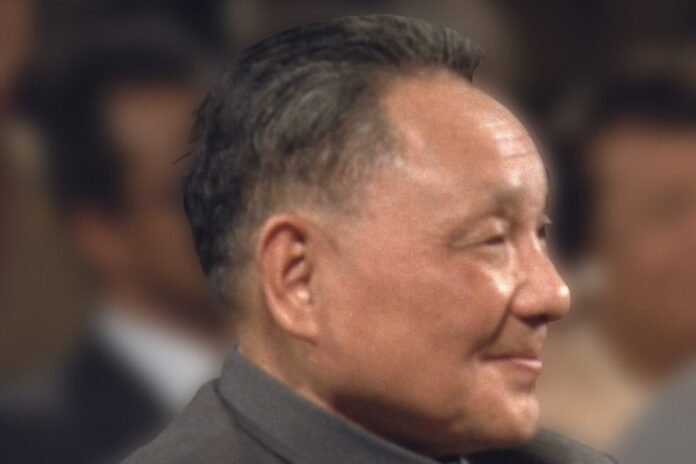
Thank Deng Xiaoping for an economic system that’s proving itself suited for the AI age. Photo: Wikimedia Commons

“Dig the Well before you are thirsty,” says an old Chinese proverb.

The world has debated China’s rise through the lens of ideology. Some believe it is communism that transformed China into the world’s second largest economy, while others think it is capitalism disguised under a red flag. But both answers overlook an important reality.

Modern China was not built completely on communist ideology nor by free market capitalism in its purest form. It was built upon a hybrid model that combines the dynamism of capitalism with the organizational capacity of communism: Call it capunism? Capunism has elements of classical free market capitalism and parts of communism, neither making up the whole.

Capunism can be defined as a combination of the innovative dynamism of capitalism and the strategic coordination of a strong state. Its development is neither an endorsement of authoritarianism nor a rejection of markets. On the contrary, it accepts the fact that neither government nor efficient markets can meet the needs and capabilities of today’s AI economy.

So, the crucial question of the 21st century is no longer whether capitalism or communism is the superior system but whether a country possesses the institutional capacity to combine strategic state leadership with competitive markets. Capunism is not an ideological compromise between capitalism and socialism. It is a strategic response to the institutional demands of the AI era.

Why capunism works in the AI age

The AI revolution is different from the industrial revolution that it builds upon. It demands more than free market or state planning in isolation. It requires an ecosystem that combines advanced semiconductor fabrication, hyperscale data centers, abundant electricity, high-speed digital infrastructure, world class universities, basic scientific research, cloud computing and millions of highly skilled engineers. No single market and equally no state can deliver these elements efficiently on its own.

The countries most likely to lead the AI era will therefore be those capable of combining state capacity with market dynamism, states that provide long-term strategic direction while allowing competitive markets, entrepreneurs and private firms to innovate. Because the AI economy requires both.

China’s growth model offers one example of this approach. Since the reform era initiated by Deng Xiaoping in the 1980s, the country has combined centralized political authority with expanding markets, private enterprise and long-term industrial planning. Whether one agrees with China’s political system or not, its experience demonstrates that strategic coordination and market competition can coexist within a single economic model. It’s becoming very effective in the AI age. 

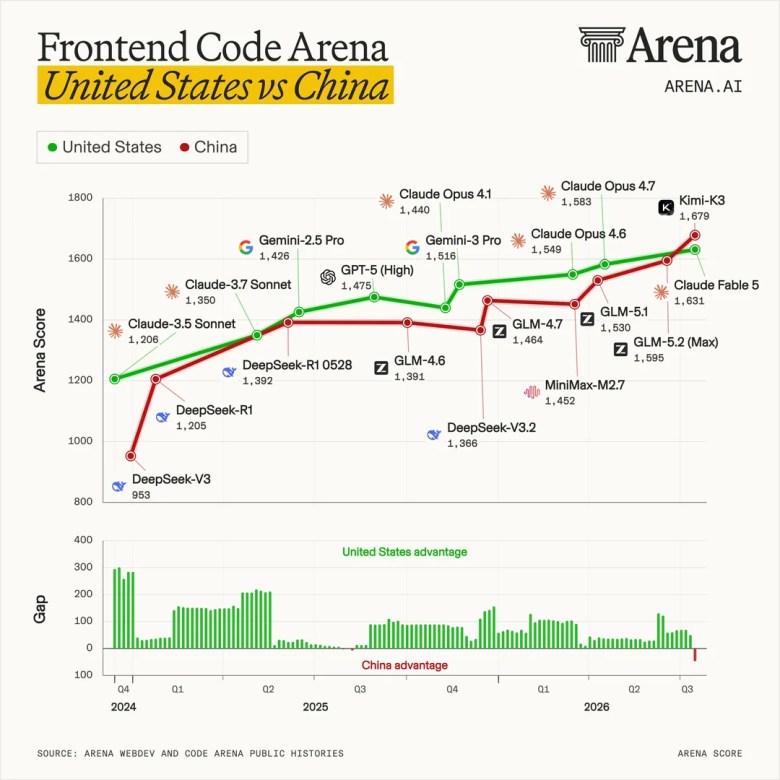
A recently example includes the launch of advanced Chinese model Moonshot AI’s Kimi K3, which outperformed the world superior AI model i.e. Anthrophic’s Fable 5 on coding benchmark.  On Aug 3, Hugging Face an renowed AI Company CEO, Delangue said China is winning the artificial intelligence race with open-weight models and could catch up to U.S. Frontier model makers as soon as this year.

Along with reports that China has begun manufacturing deep-ultraviolet (DUV) lithography machines, a critical technology for advanced semiconductor production and one of the last major areas in which it relied on Western suppliers. Kimi’s feats further reinforce the fact that the combination of state-directed strategic coordination and market competition – capunism – can be a powerful state model in the AI era.

In a capitalist system, a general assumption is that competitive markets naturally allocate resources efficiently. Although it’s true for many sectors of the economy, AI exposes co-ordination problems that markets alone cannot solve. A single company can’t independently build an electric grid and semi-conductor ecosystem while training millions of engineers. These investments require decades of planning and coordination beyond the incentives of individual firms. Markets remain essential for innovation. But innovation increasingly depends upon strategic public investment.

The central theme of competition in the AI era will not be capitalism versus communism but institutional capability versus institutional weakness. Surely a nation that focuses on combining strong state capacity with dynamic markets is likely to possess a decisive strategic advantage over those that rely exclusively on either market fundamentalism (capitalism) or centralized planning (communism) until its too late.

Ravi Kant is a columnist and correspondent for Asia Times covering Asia. He mainly writes on economics, international politics and technology. He has wide experience in the financial world and some of his research and analyses have been quoted by the US Congress, Harvard University and Wikipedia ( Chinese Dream). He is also the author of the book Coronavirus: A Pandemic or Plandemic.

Pakistan’s Prime Minister arrives in Saudi Arabia for talks on regional developments

0
pakistan’s-prime-minister-arrives-in-saudi-arabia-for-talks-on-regional-developments
Pakistan’s Prime Minister arrives in Saudi Arabia for talks on regional developments

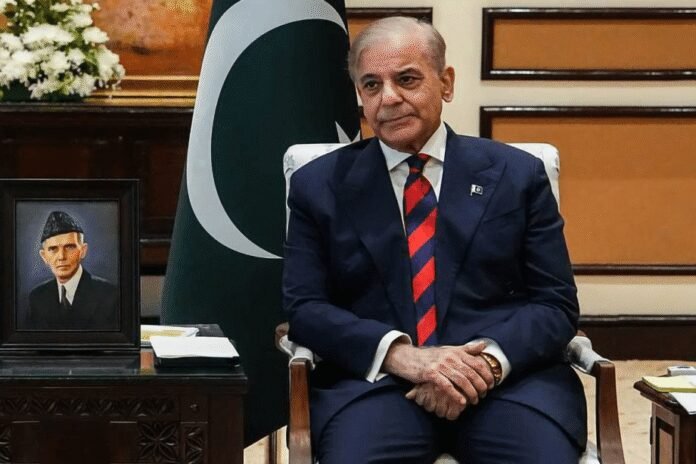
Pakistani Prime Minister Shehbaz Sharif arrived in Saudi Arabia on Thursday for a three-day visit focused on bilateral cooperation and regional developments, Anadolu reports.

Saudi Arabia’s official SPA news agency said Sharif was received at King Abdulaziz International Airport in Jeddah by Prince Saud bin Mishaal bin Abdulaziz, deputy governor of the Makkah region.

Pakistan’s state-run Associated Press of Pakistan (APP) said Sharif was accompanied by Field Marshal and Chief of Army Staff Asim Munir, Deputy Prime Minister and Foreign Minister Ishaq Dar, and other senior officials.

According to APP, Sharif is scheduled to hold talks with Saudi Crown Prince Mohammed bin Salman on ways to strengthen bilateral cooperation, as well as regional and international developments.

Saudi Arabia and Pakistan maintain close defense ties under a mutual defense agreement signed amid regional tensions.

The visit comes as Islamabad continues its mediation efforts between Washington and Tehran.

In June, Qatar joined Pakistan in mediating between the US and Iran, leading to the signing of a memorandum of understanding on June 18 and the launch of negotiations toward a final agreement.

The negotiations later stalled over disagreements related to maritime security and freedom of navigation in the Strait of Hormuz, although officials from Iran, Oman and the US have recently signaled progress toward resolving the remaining issues.

Wars Collide in the Caspian: Ukraine Strike Exposes the Iran-Russia Connection 

0
wars-collide-in-the-caspian:-ukraine-strike-exposes-the-iran-russia-connection 
Wars Collide in the Caspian: Ukraine Strike Exposes the Iran-Russia Connection 


The incident may appear to mark a new convergence between two geographically separate wars. In reality, Iran’s involvement in Russia’s military campaign began years before the Caspian strike  

Iran’s claim that it prepared—but ultimately canceled—strikes against three targets in Ukraine has brought renewed attention to the increasingly interconnected nature of Russia’s war against Kyiv and the continuing confrontation between Tehran and Washington.  

Mohsen Rezaee, a former commander of Iran’s Islamic Revolutionary Guard Corps and a senior military adviser to the Iranian leadership, said Tehran had been ready to attack three unspecified locations in Ukraine in retaliation for a Ukrainian strike on an Iranian vessel in the Caspian Sea. According to Rezaee, the operation was canceled after what Tehran described as an apology from Kyiv. Iran did not identify the alleged targets or provide evidence showing that the attacks had reached an operational stage.  

Ukraine has not publicly confirmed that it issued a formal apology. Ukrainian Foreign Minister Andrii Sybiha instead told his Iranian counterpart, Abbas Araghchi, that the damage to the civilian vessel and its crew was unintentional. Sybiha also urged Tehran to avoid escalation and end its support for Russia’s war, while Araghchi demanded compensation for the incident. 

The dispute began on July 25, when Ukrainian forces conducted strikes in the Caspian Sea. Ukrainian President Volodymyr Zelenskyy said the targets included a Russian warship and vessels used to transport military cargo connected to Iran. Iran said one of its commercial vessels was hit, killing one sailor and injuring another, and summoned Ukraine’s chargé d’affaires over what it described as a hostile and criminal act.  

Tehran accused Kyiv of attempting to expand the Russia–Ukraine war, while Ukraine maintained that its actions were directed against infrastructure sustaining Russian military operations and were not intended to harm civilian vessels or crews.  

The incident may appear to mark a new convergence between two geographically separate wars. In reality, Iran’s involvement in Russia’s military campaign began years before the Caspian strike.  

Since 2022, Russia has deployed Iranian-designed Shahed drones against Ukraine. Iran acknowledged in November 2022 that it had supplied drones to Russia, although Tehran maintained that the transfers occurred before Moscow launched its full-scale invasion. Kyiv disputed that timeline.  

The European Union established a dedicated sanctions framework in July 2023, targeting Iran’s military support for Russia, and has since imposed measures on individuals and companies involved in developing, manufacturing and transferring unmanned aerial vehicles. In late January 2026, the EU imposed further sanctions targeting Iran’s state-backed drone and missile programs, describing the continued military support as a direct threat to European security.  

For Jason Jay Smart, a geopolitical strategist and national security expert based between Kyiv and Washington, the current attention surrounding the Caspian Sea incident risks obscuring the duration of Iran’s role.  

I think that Iran has been helping fight the war against Ukraine for four years now. That’s not new. That’s a continuation of what they were doing.

“I think that Iran has been helping fight the war against Ukraine for four years now. That’s not new. That’s a continuation of what they were doing,” Smart told The Media Line.  

“Unfortunately, I think people didn’t realize that Iran was fighting a war with Ukraine. They think of it in the context of the Middle East. But no, it’s North Korea and Iran are the only two countries actively working to support Russia in its war.”  

Smart framed the overlap as part of a wider security confrontation involving states that he accused of using terrorism as an instrument of foreign policy.  

“I’d say that they’re intertwined. The root of the same issue, yes. Because Iran and Russia executed foreign policy of exporting terrorism globally,” he said.  

From Kyiv’s perspective, a nominally commercial vessel can become part of the conflict when it is used to transport components, equipment, or ammunition that support Russia’s military campaign. Smart therefore rejected the argument that Ukraine had carried out the attack primarily to assist Washington in its confrontation with Tehran.  

“Well, it’s not the first time they’ve struck an Iranian-linked target. If you’re carrying something that’s part of a war, it makes a legitimate target,” he said.  

Asked whether the strike had been conducted as a favor to the United States, Smart added: “No, it’s not related. Why are they related? There’s been lots of attacks by Ukraine on Iranian targets. Why is this special?”  

Mohammed Ali Ghanamizadeh Fallahi, a Middle East analyst based in Iran, offered a more cautious interpretation. He argued that the wars have not formally merged but can no longer be understood as fully separate.  

“The two wars have not yet become one single war. However, they have moved beyond simple political overlap and are becoming what can be called an interconnected conflict system. The actors, military commands, and final goals are different, but their weapons networks, intelligence systems, maritime routes, energy interests, and air-defense needs are increasingly connected,” Fallahi told The Media Line.  

The Caspian attack was significant, he argued, because it showed that Ukraine was no longer limiting its response to destroying Iranian-designed weapons once they reached Ukrainian territory. Kyiv had demonstrated a willingness to strike what it regarded as a direct component of the Iran–Russia logistical relationship.  

Fallahi nevertheless cautioned against treating Rezaee’s statement as proof that an Iranian attack was imminent.  

The claim that Iran was ready to carry out three attacks may have been partly a form of deterrence through public messaging

“The claim that Iran was ready to carry out three attacks may have been partly a form of deterrence through public messaging. Iran showed that it had the ability and intention to respond, while Ukraine provided an explanation that allowed Tehran to step back without appearing weak. Both sides were therefore able to avoid escalation without testing whether Iran’s threat was real,” he said.  

The military relationship is also no longer limited to Iran supplying complete drones. Russia has modified Iranian designs and developed domestic production capacity, while technical and operational lessons from Ukraine may potentially flow back to Iran. The relationship has therefore evolved from a simple buyer-supplier model into broader industrial and technological cooperation, according to Fallahi.  

Another emerging issue is intelligence. Zelenskyy has alleged that Russia conducted satellite surveillance of US and Gulf military facilities and that the resulting images subsequently became available to Iran. He said Russian observation of installations in Bahrain, Jordan and Kuwait appeared to correlate with Iranian attacks. The Ukrainian allegations have not been publicly and independently substantiated.  

Fallahi said this dimension could eventually prove more consequential than the weapons transfers themselves. “This development is very important because wars can become connected without a formal military alliance. One country may discover and monitor a target, while another country attacks it. When this happens, the difference between military support and direct participation becomes less clear,” he said.  

Ukraine has meanwhile attempted to reverse the direction of this military exchange by offering the United States and Gulf countries its experience in intercepting Iranian-designed drones. Kyiv has presented its operational experience against Shahed attacks as relevant to protecting military facilities, infrastructure and civilian populations in the Middle East.  

The two fronts are also connected through competition for a limited supply of interceptor missiles, radar systems and air-defense platforms. Intensified Russian attacks on Ukraine and simultaneous Iranian pressure against American forces and US partners in the Middle East can force Washington to divide high-value defensive resources between the two theatres. Reuters reported in late July that interceptor missiles previously earmarked for Ukraine had been redirected to US forces and allies in the Gulf amid the Iran conflict.  

“The most important connection may not be direct military cooperation. It may instead be competition over a limited number of interceptor missiles, radar systems, and American military resources,” Fallahi said.  

“This is an area where Iran and Russia can produce the effects of coordination even without formal planning. Iranian pressure in the Middle East can indirectly create more operational space for Russia in Ukraine,” he added. 

Despite Rezaee’s threat, both analysts questioned the strategic logic of Iran launching an acknowledged direct attack from its own territory against Ukraine.  

Smart said simply: “I don’t think they have the capacity to do that.”  

Fallahi argued that an Iranian strike would face obstacles involving distance, missile range, foreign airspace, and the risk of forcing Russia into a more direct role. A more plausible form of retaliation, he said, would be for Tehran to identify preferred targets and allow Russia to incorporate them into its continuing attacks against Ukraine.  

This could be described as reverse proxy warfare

“This could be described as reverse proxy warfare. Instead of using a non-state armed group, Iran could use the military capacity of a partner state that was already at war,” he said, stressing that there was no evidence such an operation had taken place following the ship incident.  

This would reflect a broader division of pressure rather than a unified military command. Russia could intensify attacks against Ukraine as Iran increased pressure on American bases, shipping routes and regional infrastructure. The resulting strain on Western air defense, intelligence and ammunition stocks could benefit both governments even without an openly coordinated strategy.  

Smart argued that Ukraine’s immediate priority should remain Russia, rather than entering a separate confrontation with Tehran.  

“I think that strategically it’s wisest for Ukraine to focus on Russia. The Iranians are busy fighting with the Americans and the Israelis. You let them to do that and they can focus on Russia. And so it’s a division of labor,” he said.  

For Smart, the value of the wider Iran-Russia relationship also lies in demonstrating that Moscow and its partners can withstand or constrain Western power, regardless of whether Iran or North Korea has a direct territorial interest in Ukraine. “There’s a gain that globally it shows that the alliance that they have with Iran, with Russia, with North Korea is successful. And able to stop the European and North American powers,” he said.  

The Iran–Russia relationship remains short of a conventional military alliance. Their strategic partnership does not contain an automatic mutual-defense commitment, and both governments retain separate regional priorities. Moscow benefits when Washington is distracted in the Middle East but has reasons to avoid direct war with the United States on Iran’s behalf. Tehran benefits from Russian pressure against the West but has traditionally resisted placing its military decision-making under another power.  

“Both countries want cooperation, but both also want to avoid becoming trapped in the other country’s war,” Fallahi said.  

Both countries want cooperation, but both also want to avoid becoming trapped in the other country’s war

The Caspian Sea strike did not create the connection between the wars; it made that connection more visible. Whether Iran’s claimed three-target operation was a genuine military plan or an exercise in deterrent messaging cannot be established from publicly available information. The more consequential development may be less dramatic. As Fallahi put it, “The main danger is therefore not necessarily a large and visible joint attack,” but the “slow and less visible integration of intelligence networks, military industries, cyber capabilities, and target-selection systems.”  



Organ donation group accused of trying to take living man’s organs faces shutdown

0
organ-donation-group-accused-of-trying-to-take-living-man’s-organs-faces-shutdown
Organ donation group accused of trying to take living man’s organs faces shutdown

The US health department is working to shut down a Kentucky-based organ procurement organization that made headlines over a 2021 incident in which it was accused of trying to harvest a man’s organs while he was still alive.

In an announcement Wednesday, the Department of Health and Human Services said it had begun the process to decertify the organization, Network for Hope (NFH). Losing its certification would effectively shutter the organization, which serves Kentucky as well as parts of Indiana, Ohio, and West Virginia. If decertified, another organization will be appointed to coordinate donations in the region.

In a statement, NFH said it “strongly disagrees” with the HHS’s finding and will appeal the decertification decision.

HHS said its decision stems from two federal investigations of NFH that found “persistent patient safety failures,” despite extensive oversight and opportunities to correct failures. The two investigations were carried out separately by the HHS’s Centers for Medicare & Medicaid Services and the Health Resources and Services Administration (HRSA).

The HRSA investigation, which concluded last year, examined 351 NFH cases in which organ donations had been authorized but were ultimately canceled. In 103 cases, investigators found “concerning features,” including 73 cases in which patients had neurological signs that should have made them ineligible for organ donation.

The scrutiny over NFH and other organ procurement organizations comes amid increases in donations from people who have had circulatory deaths (their heart stops), rather than those who have been declared brain-dead. Donation after circulatory death often occurs when patients are not expected to make a recovery and a family decides to withdraw life support. Organ procurement organizations cannot declare a person dead and are barred by law from being involved in care decisions. However, deciding when to remove life support is not clear-cut.

Horror story

NFH made headlines when reports surfaced about a 2021 incident in which a Kentucky man in his 30s began visibly crying, pulled his knees to his chest, and shook his head as he was wheeled into surgery to have his organs harvested. The man, Anthony Thomas Hoover II, had overdosed and had been unresponsive for two days before his family agreed to donate his organs, believing he would not recover.

But as the organ retrieval neared, he began showing signs of improvement, which allegedly went ignored by organ procurement workers while making the hospital staff deeply uncomfortable. NFH’s predecessor organization, KODA, allegedly pressured hospital staff to move forward with the organ donation. When Hoover was brought into the operating room clearly responsive, doctors involved in the organ retrieval refused to move forward and remove life support.

One worker, Natasha Miller, told NPR that a KODA supervisor was on the phone at the time, demanding that employees find another surgeon who would agree to carry out the retrieval.

The surgery was canceled, and Hoover recovered, though he has lingering neurological injuries. His sister appeared at a press briefing Wednesday announcing the US health department’s efforts to decertify NFH.

In a statement, NFH said it complies with all federal organ policies and, since the incident, implemented a “pause” process that allows anyone involved in a case—from family to health care providers—to pause donation plans if concerns arise. The state of Kentucky subsequently wrote the pause process into law.

More than 103,000 people are on the US organ transplant waiting list, and there were more than 49,000 transplants last year.

Hasina baits and jabs Dhaka from the safety of New Delhi

0
hasina-baits-and-jabs-dhaka-from-the-safety-of-new-delhi
Hasina baits and jabs Dhaka from the safety of New Delhi

Nearly two years after fleeing Dhaka in disgrace, ousted Bangladesh Prime Minister Sheikh Hasina made her first live public address on Wednesday (August 5).

Speaking via audio from an event organized by the Foreign Correspondents’ Club of South Asia in New Delhi, Hasina attempted to signal the dawn of a political comeback. Yet what transpired was less a triumphant return than a masterclass in evasion and proxy politics.

For a leader attempting to rebuild a shattered legacy, the session exposed the profound fragility of her movement’s position and threatened to drag her Indian hosts into an escalating diplomatic confrontation.

The most striking aspect of the appearance was not what was said, but what remained conspicuously unaddressed. When directly asked when she intended to return to Bangladesh to face the dozens of legal cases and arrest warrants awaiting her, Hasina demurred.

Instead of providing a concrete strategy, she retreated into historical romanticism, recalling her return from exile in 1981 and asserting that neither prison nor death would deter her. When pressed on the mechanics of crossing a border as a fugitive, she delegated the issue entirely to her son and former adviser, Sajeeb Wazed Joy.

His response was remarkably blunt: there was no communication with the current authorities in Dhaka. The operational reality of a physical return was left entirely unexplained, save for Hasina’s vague assertion that she wished to return in December to coincide with Bangladesh’s Victory Day.

This pattern of delegation defined the afternoon. Hasina functioned largely as a figurehead issuing broad appeals to patriotism, while Joy assumed the role of principal political spokesman.

Nowhere was this dynamic more uncomfortable than when a reporter raised the defining question shadowing Hasina’s legacy: did she regret the violent suppression of the July 2024 uprising? Rather than allowing his mother to address personal accountability, Joy interjected with an aggressive “legalistic” defense.

Pointing to indemnity provisions enacted by post-uprising authorities, he argued that the Awami League had nothing to apologize for so long as violence against police and party members went unpunished.

It was a classic political pivot, converting a question of moral accountability into one of comparative culpability. Hasina never reclaimed the microphone to answer the original query.

In her absence from detailed debate, Joy advanced the core thesis that has sustained the Awami League for nearly two decades: the existential doctrine that without Hasina, Bangladesh inevitably collapses into Islamist militancy and state failure. Addressing the Delhi audience, Joy painted an apocalyptic picture of his homeland.

He claimed the country had become “another Pakistan,” alleging that al-Qaeda operatives address public rallies, Hezbollah flags fly openly and foreign intelligence agencies operate with impunity.

Yet these extraordinary claims lacked empirical backing. Nearly two years after Hasina’s overthrow, Bangladesh has experienced no major terrorist attacks, nor has India’s own security apparatus issued public alarms corroborating a surge in cross-border jihadist activity.

Counterterrorism cooperation and border security mechanisms remain functional. Joy’s rhetoric relied on conflating a broader social shift toward visible Islamic practice in a Muslim-majority nation with operational extremism — a tactic long used by the Awami League to tar political opponents and justify authoritarian governance to foreign observers.

Equally controversial was Joy’s assault on international documentation regarding the 2024 violence. He questioned United Nations findings that over 1,400 people died during the crackdown, dismissing the figures without offering contrary evidence.

He remained silent on the well-documented use of lethal state force, enforced disappearances and systemic human rights abuses that triggered the mass popular revolt after 15 years of uninterrupted rule.

If the internal politics of the appearance were fraught, its international fallout was immediate. The event took place on Indian soil despite explicit prior objections from Bangladesh’s Foreign Ministry.

Dhaka’s reaction was incandescent, dispensing with standard diplomatic pleasantries. In a blistering statement, officials branded Hasina a convicted mass murderer and declared that Bangladesh would “never be a client state.”

That single phrase captures the strategic dilemma now confronting New Delhi. During Hasina’s tenure, India enjoyed unprecedented security cooperation and economic connectivity along its eastern border.

Indian policymakers grew accustomed to viewing Bangladesh largely through the prism of their own national security interests, viewing Hasina as an indispensable guarantor of stability.

In sheltering the ousted leader and permitting her to use Indian territory as a launching pad for political attacks, India risks validating the widespread perception among Bangladeshis that New Delhi values its relationship with an autocrat over its relationship with the sovereign nation itself.

While Indian authorities did not host the event directly, allowing a private platform to proceed after official warnings from Dhaka rendered the distinction meaningless to the government now ruling in Bangladesh.

The post-2024 administration in Dhaka is demanding a relationship grounded in sovereign equality rather than regional hegemony. By permitting Hasina to campaign from its capital, India has brought a deep contradiction to the fore.

For Hasina and her family, the New Delhi event demonstrated that rhetoric alone cannot substitute for a coherent path to rehabilitation or an honest accounting of past violence. For India, it signaled that time is running out to make a definitive strategic choice.

New Delhi must decide whether to remain tethered to the legacy of a fallen ally or to secure its long-term national interest by engaging constructively with the geopolitical realities of a transformed Bangladesh.

Faisal Mahmud is a Dhaka-based journalist

0FansLike
0FollowersFollow
0FollowersFollow
0SubscribersSubscribe
- Advertisement -
Google search engine

Recent Posts