Anti-Israel Progressive Abdul El-Sayed Wins Michigan Democratic Senate Primary
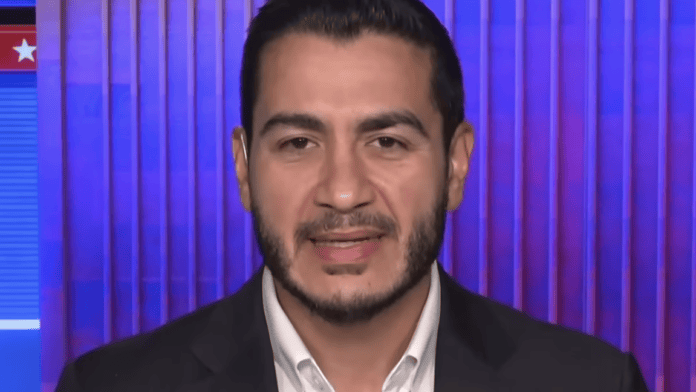
Progressive Democrat Dr. Abdul El-Sayed won Michigan’s Democratic primary for the US Senate early Wednesday, narrowly defeating moderate US Rep. Haley Stevens in a race that will send him into a closely watched general election against former Rep. Mike Rogers, a Republican, with control of the Senate potentially at stake.
El-Sayed secured the nomination by less than a percentage point, a considerably tighter margin than pre-election polling had indicated. His victory represents a major breakthrough for the Democratic Party’s progressive wing in the battleground state after his unsuccessful 2018 gubernatorial bid, when he lost the Democratic primary to now-Gov. Gretchen Whitmer by 21 percentage points.
A former Wayne County health director, El-Sayed has been a prominent critic of Israel. He has accused Israel of “apartheid” and “genocide,” described the Israeli government as “evil” as Hamas, and called for an end to all US assistance to Israel. During the primary campaign, AIPAC’s political network spent $32 million backing Stevens.
The result quickly drew support from national Democratic leaders. Former Vice President and presidential candidate Kamala Harris urged Democrats to unite behind El-Sayed, sending a fundraising email asking supporters to donate. Harris said contributions would be split between El-Sayed’s campaign and her political action committee.
New York Mayor Zohran Mamdani criticized House Speaker Mike Johnson after Johnson said Democrats were displaying “disdain for America” and embracing “the failed, dangerous, deadly path of communism” following El-Sayed’s victory.
Mamdani rejected that characterization, saying Johnson’s comments showed “how deeply out of touch the Republican Party is with the concerns of working-class Americans.”
The Michigan Senate contest is expected to become one of the country’s most competitive races, with El-Sayed and Rogers competing for a seat that could influence which party controls the U.S. Senate after the November election.
Plane with President Trump Nearly Collides with Helicopter Over Washington
President Donald Trump was aboard Marine One when the military helicopter came dangerously close to a passenger jet over Washington, D.C. — triggering a federal investigation and raising chilling new questions about safety in the capital’s crowded skies.
The president’s helicopter reportedly came within just 0.8 miles of an Envoy Air jet taking off from Ronald Reagan Washington National Airport on Tuesday afternoon.
That distance was far below the required 1.5-mile safety buffer, according to reports.
The alarming incident unfolded as Trump was being flown to Joint Base Andrews to board Air Force One for a trip to the West Coast.
Now, aviation officials are scrambling to determine how two aircraft — including one carrying the president of the United States — were allowed to get so close.
The Federal Aviation Administration and the National Transportation Safety Board have launched investigations into the terrifying close call.
According to The New York Times, garbled communications between Marine One and the Reagan airport control tower delayed controllers from clearing nearby aircraft.
The Marine One crew reportedly tried three times to alert the tower that the president’s helicopter was preparing to lift off.
Those warnings apparently were not heard clearly.
At nearly the same moment, the Envoy Air passenger jet was cleared for takeoff — placing both aircraft inside the required safety zone.
The apparent communication failure has raised fears that Washington came frighteningly close to another aviation catastrophe.
White House Insists Trump Was Never in Danger
Despite the alarming distance between the aircraft, the White House insisted the president was safe at all times.
“Although the president was at no point in harm’s way during yesterday’s momentary loss of separation, the White House continues to work with relevant military, F.A.A. and other security personnel to ensure the president’s continued safety,” White House spokesperson Kush Desai said.
However, the incident has drawn intense scrutiny because commercial flights are usually stopped when Marine One is operating near Reagan National Airport.
Officials have not yet explained why the passenger jet was allowed to take off while Trump’s helicopter was nearby.
The close call brought back horrifying memories of the January 2025 midair collision that killed 67 people near the same airport.
American Airlines Flight 5342 was approaching Reagan National Airport when it slammed into a military Black Hawk helicopter and plunged into the icy Potomac River.
All 64 people aboard the passenger plane and all three crew members inside the helicopter were killed.
There were no survivors.
Investigators later found that the Black Hawk had been flying about 100 feet above its permitted altitude.
The helicopter was reportedly traveling between 251 and 349 feet, while the passenger jet was at approximately 325 feet when the two aircraft collided.
Flight-recorder data showed Captain Jonathan Campos and First Officer Samuel Lilley desperately tried to pull the jet’s nose upward moments before impact.
Their last-second maneuver was not enough.
Both aircraft crashed into the river below.
After the deadly collision, the FAA introduced sweeping new rules around Reagan National Airport.
Mixed helicopter and commercial jet traffic was restricted, and passenger flights were supposed to be halted whenever Marine One entered the area.
Air traffic controllers were also ordered to use radar to keep aircraft safely separated, while military helicopters were required to broadcast their exact locations.
The NTSB later uncovered a series of stunning failures behind the 2025 disaster.
A critical hotline connecting the Pentagon to the Reagan airport tower had reportedly been broken for more than three years.
Investigators also found that the air traffic controller handling the doomed aircraft had been performing two jobs during a busy period.
Tuesday’s close call is now raising disturbing questions about whether enough has changed.
Despite new rules, upgraded procedures and promises of reform, a helicopter carrying the president still came far closer to a passenger jet than federal safety standards allow.
Officials have not announced whether any pilots, controllers or federal agencies could face disciplinary action.
The EPA Spent Millions Cleaning Up a Massive Superfund Site. Our Tests Found Toxic Levels of Lead in Many Yards.
Reporting Highlights
Over the Limit: One in 10 Omaha yards we tested that the EPA cleaned up still has enough lead in the dirt to be over the agency’s threshold.
Nearby Toxins: Nearly all previously remediated homes the news organizations’ testing found to have excessive levels had a neighbor whose yard tested high but was never cleaned up.
New Levels: Nearly a quarter of east Omaha yards we tested surpass a new lead level set by Trump’s EPA that could trigger more cleanup.
These highlights were written by the reporters and editors who worked on this story.
Shortly after buying her house in 2022, Mary Royers learned from a man across the street that her Omaha, Nebraska, neighborhood was contaminated with lead. But her yard, like thousands of others, had been cleaned up, the neighbor said.
Royers wanted to be sure. So the 36-year-old educator checked a website where the city tracks the soil test results of every home in a 27-square-mile area surrounding the site of an old lead smelter. She saw “remediated” written in bright green letters. The federal government had completed the work two decades ago. An expert must have tested the dirt and determined the problem was solved, she thought.
Relieved, Royers set about sowing the garden of her dreams. Hours disappeared as she thrust her hands into the soil, tearing up the grass and planting purple coneflower for bees to harvest and prairie grass to sway in the breeze.
“You have the green light from the city. That means everything’s safe,” she said. “I remember thinking, ‘Thank God I don’t have to worry about that.’”
But a soil test conducted last fall by the Flatwater Free Press and ProPublica found otherwise: Royers’ yard still has more than 1.5 times the level of lead that the Environmental Protection Agency’s cleanup was supposed to have eliminated.
Reading the emailed results, she felt “gut-wrenching disbelief,” she said.
“All I could think about was the dirt under my nails and all over my face,” said Royers, who has largely given up gardening for now. She explained later, “It felt like a betrayal of that trust.”
Since 1999, the EPA has spent $273 million digging up and backfilling nearly 14,000 yards across east Omaha to address contamination left from the smelter and other factories downtown. It’s the largest residential lead cleanup in the country. And the agency’s Superfund program has repeatedly heralded it as a success.
But, it turns out, Omaha’s soil might not be as safe as officials have advertised. The news organizations tested soil from more than 600 properties, including 150 that the EPA said had been cleaned up. In those tests, 1 in 10 yards marked as remediated still had enough lead to qualify for cleanup under the original guidelines. And nearly a quarter of the properties we tested in east Omaha could qualify for further study under new guidance released by the Trump administration last fall.
The results suggest the EPA has more work to do, said Howard Mielke, a longtime researcher of lead-contaminated soil who’s considered one of the field’s foremost experts. Not only should the agency clean up the areas that tested above the remediation level, he said, but it also should test other homes.
“If you find a couple of high results, chances are many high results will be nearby,” said Mielke, an adjunct professor at the Tulane University School of Medicine.
Some experts and environmental advocates said our findings reflect weaknesses in the EPA’s approach to cleaning up residential lead sites, which can leave a lot of lead behind.
Series Timeline
Oct. 20, 2025
The Trump administration issued guidance tripling the amount of lead that has to be in soil to warrant potential cleanup. Before that, the EPA had been discussing expanding the Omaha cleanup, which could have included nearly 27,000 properties.
December 2015
The EPA finished the cleanup of more than 13,000 residential properties and passed the remaining work to the city of Omaha.
March 1999
The Environmental Protection Agency began testing soil from Omaha yards after concerns about elevated blood lead levels in children. The contamination was eventually tied to a smelter and factories that spewed lead dust for over a century.
Jeff Tittel, former director of the Sierra Club in New Jersey, the state with the most Superfund sites, said he repeatedly watched the EPA declare its work done after wrongly assuming everything had been cleaned up.
“On paper, everything’s wonderful,” he said, “but at the sites, there’s still chaos.”
Mary Royers washes her hands in her kitchen after being outside in her garden. She has largely stopped gardening after a Flatwater Free Press and ProPublica soil test found high levels of lead contamination.Rebecca S. Gratz for ProPublica
The EPA declined an interview request with senior officials overseeing the Omaha cleanup.
In an emailed response, spokesperson Kellen Ashford said the EPA is committed to cleaning up contaminated sites to protect residents and the environment. “The diligent cleanup efforts have led to a dramatic decrease in elevated blood lead levels” in Omaha, he said. (While the percentage of kids testing high for lead has dropped significantly, as it has nationally, kids in the Omaha site still test high for lead at rates above the national average.)
Ashford said the EPA could not assess the news organizations’ results without further investigation, but property owners can reach out to the EPA or the city of Omaha, which now manages the site for the federal government, if they have concerns.
“Because it would not be possible to completely remove all lead,” Ashford said, the EPA and the city also try to educate the community about lead risks and precautions.
The city is already responding to the news organization’s findings.
The day after receiving her results, Royers forwarded them to the city’s lead office, asking if anything could be done. An employee tested her dirt and found even higher levels than the news organizations did. The city plans to clean the yard up again in August, Royers said.
But the EPA and the city have refused to clean up or test properties of others who have reached out about their high lead results.
The agency has also not said what it plans to do about properties that are below the current cleanup level but above President Donald Trump’s new screening level, which could prompt further action. Any update would come after a new site study the agency plans to release in October 2027, Ashford said.
Royers and her partner, Stephen Matthews, are thankful for the new cleanup, but they wonder: How many other Omahans may be misled or unaware about lead contamination in their yards?
“We’re one house out of thousands,” Matthews said.
Stephen Matthews, Royers’ partner, in their wildflower garden. Though the soil outside their home was remediated years ago, a recent test by Flatwater Free Press and ProPublica indicated a high level of lead.Rebecca S. Gratz for ProPublica
What Might Have Gone Wrong
It’s difficult to identify why some cleaned-up properties still test high for lead.
That’s in part because Omaha’s lead problem is almost as old as the city itself. The American Smelting and Refining Company produced lead to make batteries, cover cables and enrich gasoline for more than a century. After the smelter closed in 1997, the EPA estimated the plant and other factories had dumped 200,000 tons of lead dust — enough to fill at least 1,600 rail cars — across Omaha’s east side.
At the time, the Superfund program, which had started only a decade before, was still trying to figure out how to clean up residential sites like Omaha’s, then home to 125,000 people. Old factory sites could be bulldozed and excavated, the contaminated material carted away. But the Omaha site involved people’s homes and yards.
The agency tested nearly every yard in east Omaha and came up with a plan: It would dig up and replace parts of yards that had a concentration of more than 400 parts per million of lead — the equivalent of a marble in a 10-pound bucket of dirt.
But that meant that some properties were cleaned up while neighboring ones that had only slightly lower levels of lead were not.
Hewing to that kind of strict standard doesn’t make sense, said Gabriel Filippelli, an Indiana University earth sciences professor and longtime lead researcher.
“From a scientific standpoint, a 390 is the same as a 410,” Filippelli said. “It’s the same as a 400. They’re all about the same value.”
Failing to clean up neighboring properties can also lead to recontamination over time. When it’s windy and the ground is dry, tiny lead particles in the dirt — generally about one-hundredth the width of a human hair — become airborne and spread, Filippelli said.
When the Superfund program started, the agency cleaned an entire yard if its average lead level among multiple samples was over the limit.
But by the time the Omaha cleanup started, the method had changed. In Omaha, it divided yards into five sections: two in the backyard, two in the front yard and a thin ring around the home’s perimeter called the dripline, which often contains the most contaminated dirt but can also contain remnants of lead paint.
The agency took multiple samples per section of yard and replaced a section’s soil only if the average was over 400 parts per million. This approach could lead them to miss hot spots or leave behind areas that have high lead levels but are just under the cleanup threshold. Contractors also did not dig up the driplines if another part of the yard wasn’t over the limit.
This could explain why the Flatwater Free Press and ProPublica’s testing found that about 1 in 20 homes that didn’t qualify for cleanup originally now tested above the cleanup threshold. In addition, the news outlets found several properties outside the Superfund site that were over the limit.
In the early days of the cleanup, Don Preister, a longtime Omaha lead advocate and former state senator, argued for the EPA to clean up entire yards and to lower the level of lead that would qualify for remediation, calling the agency’s solution a half-measure.
But the EPA decided that its approach made the most of limited money and prioritized the highest-risk areas. One EPA manager told Omahans in 2004 that the choice to remove only sections of yards was “economical,” according to meeting records.
“It brought out feelings of hurt,” Preister said of the EPA’s choice. “Children are likely to still be impacted, and their health affected.”
The EPA’s national guidelines did advise against “‘patchwork clean-up’ patterns which are prone to recontamination” when adjacent sections are high. But the agency didn’t give clear guidance on how to implement that, several former site managers said, and some felt they had to follow the rules strictly or risk violating federal law or agreements with companies paying to clean up their pollution.
Ashford acknowledged that the agency has to adhere strictly to its cleanup plans but said in some cases, like an industrial site near a residential area, the EPA may clean up to a lower level to prevent recontamination.
Another problem was that east Omaha was full of older homes that contained lead paint that could recontaminate cleaned soil over time. Following local pressure, the EPA agreed to test homes’ paint. If it contained lead, the agency repainted the outside. But the EPA did not repaint houses whose soil did not also qualify for cleanup. Studies in urban areas have found homes with deteriorating paint have contaminated nearby gardens.
Ashford said an EPA study found most lead-based paint contamination in Omaha was within 6 feet of the house.
Brenda González Rocha, who has lived in her south Omaha home since 2020, thinks both soil and paint are to blame for the lead that doctors found in her 4-year-old daughter’s blood. Her basement had lead paint, which she hired a company to fix.
But although the EPA cleaned up her yard in 2012, the Flatwater Free Press and ProPublica tests found levels of lead that are higher than before the agency remediated it. González is surrounded by properties with lingering lead. A yard down the street that had high lead levels was never remediated. The banks of the nearby highway were never dug up and replaced. The house next door has lead paint on it, according to the city lead website.
Ashford said it’s unlikely that wind-blown dust from one house to another would recontaminate cleaned areas with enough lead to surpass the cleanup level.
But nearly all the remediated properties the newsrooms tested that were over the cleanup threshold are within 100 yards of a property that originally qualified for remediation but wasn’t cleaned up. A third had two such neighboring properties.
González’s eight kids, between 8 months and 22 years old, love to play outside. They jump on the trampoline, ride bikes and play soccer. Now González is anxious whenever they’re in the yard.
“I worry that this could affect their quality of life,” she said. “I would feel bad if something happened to them during their development. I would feel responsible.”
González and her daughter Camila help feed soup to Isaías at home. González’s front yard tested high for lead, and she is worried about letting her children play outside.Rebecca S. Gratz for ProPublica
“Benign Neglect”
Once the EPA chooses a fix for a Superfund site, it is generally required to review the site every five years to update the public on the progress of the cleanup. But the ways those reviews are done leave unanswered questions about whether the solution is working and how much lead is in Omaha today, said experts who examined the reports for the Flatwater Free Press and ProPublica.
In their reviews, government officials in Omaha track how intact the grass is on top of the new soil. If it is exposed or has been disturbed, it could be a sign that any remaining lead is no longer safely underground and could blow around.
But they don’t retest a representative sample of properties.
Cleanups often take several tries to get right, said Tittel, the former New Jersey Sierra Club director, and recontamination or missed contamination can be a huge problem.
Tittel said he has seen similar patterns in New Jersey. In 1979, Tittel helped show EPA employees where the Ford Motor Company dumped industrial waste into abandoned mine pits. Since then, he has seen the mess declared a Superfund site, marked safe, become a Superfund site again and spawn a lawsuit that Ford settled in 2009 as locals continued discovering more hazards.
“It’s sort of a benign neglect when it comes to these sites,” Tittel said. “Government just wants to get it over with because it’s taking so long. They end up cutting corners or looking the other way.”
A Ford spokesperson said the company takes its environmental responsibility seriously and has been working with state and federal officials to clean up the site.
Retesting soil does not appear to be standard at other sites, according to reviews examined by the Flatwater Free Press and ProPublica. But it should be, said Debbie Chizewer, a managing attorney with the environmental law group Earthjustice. Without ongoing testing, the EPA can’t really know if its solution is working, she said, and residents won’t know how toxins in the environment are impacting their health.
“I think for the five-year review to be meaningful, you need to do testing,” she said.
Ashford said the EPA retests properties on a case-by-case basis, such as when construction disturbs the soil. The periodic reviews, which in Omaha have led to an ongoing reevaluation of the site’s cleanup level, allow the EPA to ensure these unique, complex sites protect people and the environment over time, he said.
Steve Zivny, who leads Omaha’s Lead Information Office, also said new testing and cleanup decisions depend on factors such as whether kids live at the home and whether they have tested for a high lead exposure.
Camila, Carolina and Isaías play together at home. Their mother keeps indoor toys inside and outdoor toys outside to avoid lead contamination inside the house.Rebecca S. Gratz for ProPublica
The EPA’s reviews of the Omaha site do point to some potential problems. In 2024, inspectors found 98% of the lawns had been disturbed, indicating a risk that buried lead could be exposed. That includes having weeds, bare soil or demolished buildings. But the EPA tested only 32 sites where homes had been demolished and found six exceeded the cleanup level. To them, that indicated the solution was “generally protective; however, more data should be collected to support this conclusion,” according to the report.
Those figures, however, trouble Ian von Lindern, who oversaw lead cleanup at an Idaho Superfund site for more than 30 years. He doesn’t doubt the federal government did a good job hauling away tons of toxins in Omaha. But he’s sure they couldn’t get all of it.
At the Idaho site, the EPA requires people to request permits from a local health district before digging in their yards. Local health employees can also test residents’ dirt, and, if it’s above the cleanup level, it may qualify for further remediation.
Without someone keeping a close eye on the fixes, recontamination can occur as people dig up lead-contaminated soil or unremediated soil is allowed to blow around.
“Those remedies are, I don’t want to use the word failing, but they’re becoming less effective,” he said.
Royers worries many homes in Omaha fit that description.
This summer, the educator is letting the weeds grow freely in her garden. Pretty soon, the city is going to replace it anyway.
The thought makes her feel guilty. More people should know about potential lead in their yard and have access to tests and cleanups. But that would require acknowledging that after decades and hundreds of millions of dollars spent, there are cracks in the cleanup. Royers isn’t sure that will happen.
“The priority is pretending like things are OK,” she said. “Clearly it’s not.”
Royers walks to her garage. She and Matthews wonder how many other Omahans may be misled or unaware about lead contamination in their yards.Rebecca S. Gratz for ProPublica
On July 30, 2026, President Donald Trump announced that Hamas had accepted to disarm and transfer security and civilian affairs in the Gaza Strip to a technocratic Palestinian administration – a key requisite of phase 2 of the U.S.-brokered peace plan for Gaza, along with the withdrawal of Israeli troops from the enclave. Trump’s Board of Peacepublished a road map the following day for how it is to be achieved.
Moreover, it is unclear how committed Hamas and Israel are to the next stage. For now, neither can agree on a sequence: Hamas says no disarmament without Israeli withdrawal; Israel insists no withdrawal until disarmament.
Strong-arming Hamas
With little progress in improving living conditions in Gaza and with Israel continuing to kill its operatives, Hamas has faced intense pressure in recent months to make further concessions. Amid a reportedly heated internal deliberation, Hamas decided that disarmament appears now as the least costly path for its movement – and for the 2 million Palestinians stuck in Gaza.
The breakthrough required intensive pressure by outside mediators from Egypt, Turkey and Qatar on Hamas to accept the Board of Peace High Commissioner Nickolay Mladenov’s road map to phase 2.
It also only happened after Hamas had completed its internal elections and elected Khalil al-Hayya chairman of its political bureau. The previous Hamas committee, established after the death of Yahya Sinwar, had no consensus among them and could not deliver on consequential issues.
And even then, the breakthrough could not have happened without the direct intervention of Mohammed Dahlan. Originally from Gaza, the United Arab Emirates-based exiled former Fatah leader is an influential businessman, powerbroker and top adviser to UAE President Sheikh Mohammed bin Zayed Al Nahyan. He has invested time and effort in helping Palestinians in Gaza by sending food and medical supplies, paid for by his host country.
Despite being a senior leader of a rival party, Dahlan has pledged to try to bridge the gap between Hamas and rival factions. At the same time, he also cuts a controversial figure due to his perceived closeness to the American and Israeli establishments, his falling out with current Palestinian Authority leadership and his heavy-handed tactics when he led security efforts in Gaza before Hamas took charge there in 2007.
Mohammed Dahlan has become a pivotal figure in the Gaza peace plan negotiations.Lior Mizrahi/Getty Images
Yet for the people in Gaza now, it appears the hope of relief and recovery supersedes political bickering. Dahlan – coordinating his efforts with Jared Kushner, Trump’s son-in-law and a member of the president’s Board of Peace – stepped in and used his leverage to convince Hamas to publicly accept the most contentious parts of the road map that deal with the handover of power in Gaza and Hamas’ disarmament.
Israeli defiance
Now, it appears that Hamas hopes the onus will be on the U.S. and the international community to ensure that Israel complies with phase 2.
Israeli Prime Minister Benjamin Netanyahu has yet to fully spell out his reaction to the road map. He remains in a delicate position domestically, especially among a cabinet that includes right-wing politicians who believe that even merely symbolic Israeli concessions in Gaza would be tantamount to surrender. Meanwhile, Israeli Knesset elections are scheduled for Oct. 27, and Netanyahu’s popularity has been souring of late.
While largely hewing to Netanyahu’s position, the Trump-sponsored phase 2 agreement still does not allow Netanyahu to declare total victory against Hamas. And anything less would resonate negatively with many Israelis.
But Netanyahu can’t publicly reject it, either, given that Trump has trumpeted the “breakthrough.” As such, Netanyahu has only said that there are disagreements between him and the Trump administration regarding Gaza.
Others in his cabinet go further. Finance Minister Bezalel Smotrich and Settlements Minister Orit Strook, both far-right politicians, have called on Netanyahu to revoke any approval of the plan and bring the matter to a cabinet vote.
Under the Board of Peace document, the parties have two weeks to finalize a schedule for an agreement that would achieve Hamas disarmament and cessation of Israeli attacks.
Yet Israel’s immediate reaction to the deal was the renewal of intense bombing in Gaza and the death of more than a dozen people, which prompted a rebuke from Mladenov.
The million-dollar question
Hamas’ reluctance and Israel’s defiance points to a key problem in implementing phase 2 of the peace plan for Gaza: a complete lack of trust, evidenced by the fact that post-ceasefire Hamas has remained the chief military force in Gaza, and Israel has never stopped its military campaign and occupation of the enclave.
So why were the Board of Peace and mediators insistent on moving forward with the plan now?
A number of issues appear to be at play. The implementation of the peace plan for Gaza is perhaps the only chance Trump has of burnishing his self-proclaimed image as a dealmaker on the world stage before the U.S. midterm elections. That’s especially true given the unresolved and politically unpopular war in Iran and little progress in finding a solution to the Russian-Ukraine war.
Yet implementing the terms of phase 2 is no easy task. It calls on Hamas to turn over both heavy weaponry such as missile launchers and light weapons, including all guns. It also demands the dismantlement of the militant group’s tunnel network and weapons manufacturing. That is some undertaking: It would require compliance from all members and factions of the group.
But it is more complicated than that. Israel has created and financed Palestinian militias operating in the yellow area under Israeli control. According to the plan, they also must disarm. All Palestinian clans and families in Gaza would also be a target for disarmament, which would have an impact on the future of Hamas and Palestinian armed struggle.
Meanwhile, Israel remains mum on how willing it is to actually withdraw from Gaza and cease its military campaign. To that end, the biggest hurdle facing the implementation of the latest deal is sequencing. Hamas sees the disarmament process as a parallel one to Israel’s gradual withdrawal from the entire Gaza Strip; Netanyahu has stated that there will be no withdrawal from Gaza before Hamas’ full and complete disarmament.
That Israeli position has now been adopted by Board of Peace chief Mladenov – putting Hamas and other Palestinian factions in a very difficult situation.
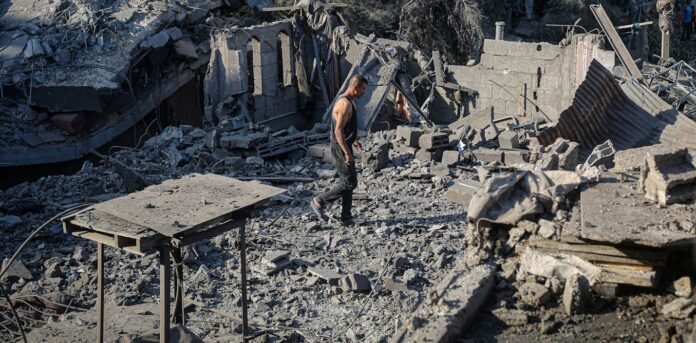
Behind all the negotiations and disagreements over sequencing are the Palestinians in Gaza themselves. Some are hopeful that the implementation of the plan would alleviate their daily miserable existence and improve conditions. But equally, many have lost hope in the Trump plan, as Israeli bombs continue to turn their homes into rubble.
And the latest road map makes only passing reference to Palestinian self-determination, stating that it aims to “facilitate launching a credible political path that achieves self-determination and Statehood.”
That seems some ways off. For now comes the difficult task of forcing reluctant parties to adhere to a road map with many potential bumps and potholes along the way.
Moderna’s mRNA flu shot earns FDA approval after rollercoaster review
Despite significant drama from Trump officials this year, the Food and Drug Administration has for the first time approved a flu vaccine that uses mRNA technology.
On Thursday, vaccine maker Moderna announced that its flu shot, mRNA-1010, aka mFLUSIVA, had earned approval for use in all adults ages 50 and up. The approval announcement follows a unanimous vote by FDA advisors in June to approve the vaccine. That vote was based on its superior efficacy to existing seasonal flu shots and a good safety record demonstrated in trials that included nearly 44,000 people. After that vote, the FDA set a goal of August 5 for a decision on the vaccine’s fate.
While the unanimous support from FDA advisors boded well for Moderna’s shot, the overall path to approval was treacherous and uncertain, even until the end. For one thing, current Health Secretary Robert F. Kennedy Jr. is a well-established anti-vaccine advocate who has worked diligently in his time in office to thwart vaccinations. One of his first acts as health secretary was canceling a federal campaign to encourage people to get flu shots in the midst of a bad flu season—despite the fact that the Centers for Disease Control and Prevention had already paid for the campaign and the flu season was killing relatively high numbers of children.
Kennedy is also openly hostile to mRNA vaccines, having called the mRNA COVID-19 vaccine the “deadliest vaccine ever made” and canceling hundreds of millions of dollars’ worth of federal research grants for mRNA technology.
In February, Trump appointee Vinay Prasad—a Kennedy ally—refused to even review the vaccine, a move he made despite objections from FDA staff and career officials, shocking Moderna and the larger biomedical community. Prasad defended his decision by arguing that the company didn’t compare its mRNA vaccine’s efficacy to the correct existing vaccine. But Moderna firmly and publicly pushed back, noting that FDA officials previously signed off on its trial designs. The FDA reversed Prasad’s rejection the following week, and Prasad was pushed out of the agency at the end of April amid a series of controversial and widely decried moves.
Remaining uncertainty
At the FDA advisory committee’s June meeting, experts expressed optimism about an mRNA-based flu vaccine. The platform—the same used in the company’s COVID-19 vaccines—is agile, easily allowing tweaks and updates to vaccine design, and it offers swifter vaccine production at scale compared to existing flu vaccines. Traditional flu vaccines are grown in fertilized chicken eggs, a process that requires six to eight months, compared to mRNA vaccines’ one to two months.
Moderna CEO Stéphane Bancel celebrated the approval in a statement Thursday, saying it “demonstrates the continued strength and versatility of our mRNA platform.”
“Flu remains a significant public health challenge, and mFLUSIVA provides an important new option for America’s seniors,” he said. “This approval also reflects the ongoing potential of our mRNA platform to help address important public health challenges through continued scientific innovation.”
Despite the approval, the vaccine still faces some uncertainty. The CDC advisory panel that makes recommendations for federal vaccine policy is effectively defunct. In March, a federal judge ruled that most of the anti-vaccine allies Kennedy had installed onto the advisory panel were unqualified. The judge thus ordered a temporary injunction reversing their appointments and undoing many of Kennedy’s changes to federal vaccine recommendations. The Trump administration is currently appealing the judge’s ruling. But amid the litigation, the CDC’s panel—the Advisory Committee on Immunization Practices—has not met.
Without an ACIP recommendation on mFLUSIVA’s clinical use for the quickly approaching flu season, doctors will face uncertainty about which adults over age 50 should be recommended to use the vaccine. It’s also unclear if mFLUSIVA will be covered by federal vaccine programs or private insurance companies, which are required to cover ACIP-recommended vaccines.
Moderna said it expects to have mFLUSIVA available for the 2026–2027 flu season. But The Wall Street Journal reported that Wall Street is not expecting meaningful sales until the 2027–2028 season.
The Washington framework agreement is discussed as a product of executive consensus. President Aoun signed. Prime Minister Salam endorsed. The cabinet approved. The institutional surface presents a unified Lebanese state negotiating with Israel under American sponsorship. The institutional reality is different. The framework was negotiated without the prime minister. Salam was not in Washington. He was not in Rome. The Minister of Foreign Affairs was not present at either venue. The Lebanese civilian government was excluded from the negotiations entirely. Salam’s later endorsement was not consent. It was capitulation to a fait accompli.
Understanding this requires understanding the structural position of the Lebanese prime minister within the confessional system. The presidency, reserved for a Maronite Christian, commands the armed forces. The speaker of parliament, reserved for a Shia Muslim, controls the legislative agenda. The prime minister, reserved for a Sunni Muslim, occupies the space between them: he leads the cabinet, manages international relationships, and provides the state with its diplomatic credibility. His authority depends on the cooperation of the president, the acquiescence of the speaker, and the compliance of the sectarian blocs whose ministers sit in his cabinet.
The framework agreement has systematically stripped each of these dependencies from the prime minister’s control while leaving him formally responsible for a policy he was excluded from creating. This is not accident. This is institutional design. Aoun has created a precedent that teaches every future actor in Lebanese politics how to govern without the prime minister.
Start with the negotiation sequence. The framework was negotiated through military channels between presidential delegations and American/Israeli counterparts. The civilian government had no seat at the table. No foreign minister. No prime minister. No cabinet representative. The negotiations happened as if the Lebanese state lacked a civilian government entirely. Salam learned of the framework’s terms after they were finalized. He then endorsed it retroactively. This is not how consensual governance functions. This is how a presidency moves to exclude the prime minister from consequential decisions by creating facts before he is invited to respond.
Now consider what Salam’s exclusion signals to other actors. The president can negotiate security agreements without the prime minister’s involvement. The president can bind the state to military commitments through channels the PM does not control. The prime minister’s authority over foreign policy is not real authority. It is nominal authority that operates only when the president permits it. Every security minister, every military commander, every future actor watching this sequence has learned that presidential preference trumps prime ministerial authority. The PM can be sidelined without formal confrontation.
The veto structure has collapsed. In normal Lebanese governance, the prime minister can constrain executive action through cabinet dynamics and diplomatic channels. The framework agreement eliminated this possibility by excluding him from negotiations entirely.
The cabinet’s role was reduced to retroactive endorsement of decisions made in rooms Salam did not enter. This matters strategically. Every actor in Lebanese politics is now learning that international security agreements, negotiated through military channels and finalized by external powers, bypass the prime minister completely. No cabinet consent is required. No parliamentary discussion occurs. The framework proceeds because the president authorized it and the Americans backed it. The prime minister’s approval is window dressing.
Hezbollah’s rejection of the framework reveals the true measure of Salam’s marginalization. The most powerful non-state actor declared the agreement “null and void.” Under conditions where the prime minister held real authority, opposition of this magnitude would force renegotiation. Salam responded with nothing. Implementation continued. The pilot zones deployed. The army moved into southern zones. The prime minister’s complete inability to respond to the country’s largest military force demonstrates that the framework operates in institutional space the PM does not control and never controlled.
What remains of the prime minister’s authority is representational. Salam provides diplomatic cover. He signs documents. He delivers statements. He represents the Lebanese state to foreign governments. This function cannot be eliminated without cost. But representational authority without operational control is a specific political position:
Salam is the legitimizer. He is not the decision-maker. He provides the appearance of civilian government while real authority operates through presidential-military channels that exclude him.
READ: Israel fired 113 projectiles into southern Lebanon Wednesday, highest since June 21: UN peacekeepers
The mechanism through which the prime minister was marginalized is available to any future president. No amendment is required. No constitutional transfer of power is necessary. The president simply conducts security negotiations through military delegations, finalizes agreements with external powers, and presents the prime minister with completed policy requiring endorsement. The framework was the prototype. Future executives will replicate it. The Lebanese presidency has discovered how to govern a confessional state without requiring the prime minister’s consent or even his presence.
The long-term consequence is already visible. If the pilot zones succeed and the army establishes control over the south, the precedent becomes institutional norm: security policy moves through presidential-military channels with international backing. The prime minister’s role is diplomatic representation, not decision-making. If the pilot zones fail, Salam absorbs the political cost of a policy he endorsed but never negotiated, while Aoun retains military authority and presidential precedent. Either way, the prime minister loses and the presidency gains a model for future governance that bypasses civilian government entirely.
The marginalization of the prime minister has structural consequences for Sunni political positioning in Lebanon. The Sunni community has never possessed military capacity equivalent to Hezbollah or the Druze militias. It has compensated through parliamentary representation and, critically, through the prime minister’s international credibility. The PM was the Sunni community’s access point to power. He managed international relationships on behalf of the sect. He brokered security arrangements through diplomatic channels rather than military force. This strategy worked as long as the prime minister controlled foreign policy and security diplomacy.
The framework has exposed that this strategy no longer functions.
The president now negotiates security agreements directly with international actors, excluding the prime minister entirely. This means the Sunni community’s traditional power mechanism has been dismantled. Salam’s marginalization is not a personal failure. It is a structural collapse of the political strategy the Sunni sect has relied on for decades.
The Sunni community now faces a choice with no good options. It can attempt to reassert parliamentary authority over security policy, but parliament has been revealed as irrelevant to security decisions. The framework proceeded despite parliamentary opposition. Any future Sunni attempt to constrain security policy through parliament will face the same outcome: executive-military decisions backed by international powers will override parliamentary objection. It can attempt to develop military capacity independent of Hezbollah, but that requires resources, regional backing, and time. Neither is available. It can accept permanent subordination to whoever the president’s international patron is at any given moment. Currently, that patron is the United States.
The deeper consequence is that the Sunni sect’s historical strategy of using international relationships as substitute for military power has been shown to be dependent on the prime minister’s institutional relevance. When the prime minister loses authority, the Sunni community loses its primary channel for translating international relationships into domestic power.
Salam’s diplomatic credibility in Washington and Rome did not prevent his exclusion from negotiations. His international relationships did not give him a seat at the table. His credibility provided cover, not authority.
This means the Sunni community must either find a new power mechanism or accept permanent marginalization. Finding a new mechanism requires either developing military capacity (strategically difficult and regionally dangerous) or finding an international patron willing to guarantee Sunni political relevance independent of the PM position (strategically difficult and diplomatically unlikely). The most probable outcome is acceptance of subordination to whatever actor controls the presidency and its international backing at any given moment. For now, that is Aoun and his American patron. The Sunni community will be the administered, not the administrator. And this arrangement will persist as long as the president maintains American support.
OPINION: The logic of staying: Why Hezbollah and Amal will not resign
The views expressed in this article belong to the author and do not necessarily reflect the editorial policy of Middle East Monitor.
West Nile virus cases rise across Europe as Greece reports surge and Germany confirms first infection
The spread of West Nile virus — a mosquito-borne disease transmitted primarily by infected mosquitoes — in Greece is showing an upward trend, according to the National Public Health Organisation.
During the past week, 23 new cases of West Nile virus infection have been reported. In total, from the start of the transmission season in spring up to 5 August, 65 cases have been recorded, 54 of which presented severe neurological manifestations, such as encephalitis, meningitis and/or acute flaccid paralysis. 11 cases had mild or no symptoms affecting the central nervous system. To date, six deaths have been reported, all in patients over 65 with severe involvement of the central nervous system.
According to the National Public Health Organisation, the infection shows extensive “hidden” spread, meaning that the recorded severe cases represent only a small fraction of the virus’s true circulation in the population.
Based on seroepidemiological data, for every single case with central nervous system involvement, it is estimated that around 140 people have been infected, but they either developed only mild symptoms or remained asymptomatic.
The circulation of the virus is not limited to Greece.
According to the European Centre for Disease Prevention and Control (ECDC), up to 29 July,human cases have also been reported in Italy, Romania, France, North Macedonia, Spain and Germany, confirming that the virus is circulating widely in Europe during the summer period.
49 areas affected by West Nile virus (WNV) have been identified in seven European countries: 30 in Italy, eight in Greece, four in Romania, two in France, two in North Macedonia, two in Spain and one in Germany.
According to the latest available data from the European Centre for Disease Prevention and Control (ECDC), Italy has the most cases — 94, followed by North Macedonia and Spain with seven cases each, Romania with five, France with two and Germany with one.
Where the Greek cases have been detected
Cases have been recorded in 25 municipalities in the regions of Attica, Thessaly and Central Macedonia, with the highest concentration in Attica, where the National Public Health Organisation reports particularly intense circulation of the virus this season.
Of the 65 patients, 20 remain in hospital — 12 in general wards and 8 in intensive care units; 38 have been discharged, one patient did not require hospitalisation, and six patients have died.
Ford picks “Fathom” for its affordable truck name, starts at $28,350
Ford’s second attempt at an electric vehicle strategy is getting closer to primetime. After its initial approach of electrifying its best-selling F-150 fell a little flat, it decided to try something a little radical. An internal skunkworks was set up in California with a brief to rethink the idea of a universal EV platform from the ground up, taking into account the advances made by EV startups and clean-sheet designs both in the US but especially China.
And today, we found out what that first new EV—an affordable four-door pickup truck—will be called: the Ford Fathom.
We’ve known for some time that the first EV built on Ford’s new UEV platform was going to be a pickup truck. And that it would use a new zonal architecture for its electronics, which massively reduces the amount of wiring needed by swapping the hundred or more discrete electronic control units you find in most new cars with a handful of powerful computers each controlling multiple domains.
We’ve also known for some time that we should expect something the size of a Ford Maverick on the outside—except far more streamlined—with more cabin space than the Toyota RAV4. The Fathom will be capable of bidirectional charging, and Ford’s BlueCruise, hands-free, partially automated driver assist will also be an option.
What we didn’t know was the exact starting price, but like the name, we now have that missing puzzle piece: $28,350, plus a $1,595 delivery charge.
The Internet loves to create fandoms and then pit them against each other, and for the Slate Auto fanboys out there, that means the Blank Slate pickup will still be a few thousand dollars cheaper than a Ford Fathom, at least if you don’t pick any options. Ford fans can take heart in the fact that not everyone wants manual window winders or having to install back seats themselves, and for many, a four-door pickup will have much greater utility, especially if it’s their only vehicle.
The Pentagon Is Posting Cryptic Biblical Messages on Social Media
As senior military leaders privately warned that the war with Iran was straining U.S. forces, depleting key missile defenses, and leaving the military without sufficient naval resources to continue protecting Israel, the Pentagon turned to Christian scripture in its official social media messaging.
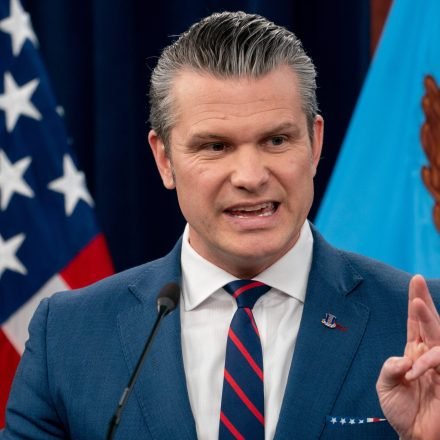
On Saturday, two Defense Department accounts on X posted images overlaid with the words “SEND ME.” The agency’s Rapid Response account published the phrase on a picture of a service member watching a helicopter above an aircraft carrier. Chief Pentagon spokesperson Sean Parnell quoted Isaiah 6:8 in a post and included the all-caps phrase on an image of a soldier silhouetted in the dark. The Department of War’s official account amplified both posts.
Isaiah 6:8 is a verse that appears in the Hebrew Bible and Old Testament in which the prophet Isaiah answers a divine call. When God asks, “Whom shall I send?” Isaiah replies, “Here am I. Send me.” The passage is widely used in many Christian traditions as an expression of accepting God’s call to a divine mission. The verses that follow describe God sending Isaiah to proclaim a message of judgment that culminates in cities “without inhabitant,” houses emptied of people, and the land left “utterly desolate” before eventual restoration.
It’s unclear what, exactly, the biblical quotation was intended to convey. The Pentagon declined to answer The Intercept’s questions about whether the posts reflected an expression of faith or proselytizing, a message about the war with Iran, or a coordinated communications strategy. “Nothing to offer you on this,” a Pentagon spokesperson said.
The posts followed months of controversy over the role of religion in the Defense Department under Secretary Pete Hegseth.
In March, The Intercept reported that the appointment of Christian activist Erika Kirk, wife of Charlie Kirk, to the Air Force Academy’s Board of Visitors alarmed former military leaders and constitutional advocates, who warned it could push the academy toward an overtly ideological vision of military leadership.
That same month, reporting later entered into the congressional record detailed complaints from more than 100 service members who alleged commanders described the war with Iran as “part of God’s divine plan” and encouraged troops to view the conflict through a biblical lens. Saturday’s posts placed similar biblical language on the Defense Department’s own official social media accounts.
The messages marked a notable institutional shift. Previous controversies centered on statements by individual commanders or political appointees. This time, multiple official Defense Department accounts amplified the same biblical passage, and the Pentagon declined to explain why.
That does not necessarily mean the Pentagon’s post violated the Constitution. The First Amendment generally prohibits the government from promoting or favoring a religion through its official actions. At the same time, courts have long allowed some traditional references to religion, including the national motto, “In God We Trust.”
Nelson Tebbe, the Jane M.G. Foster Professor of Law at Cornell Law School, whose scholarship focuses on constitutional law and religion, said the Pentagon’s post was different from those long-standing examples because it relied on a specific biblical passage rather than a general religious phrase and therefore could have a more direct impact on members of the military.
“Minor endorsements of religion by the government are common,” Tebbe said, pointing to phrases such as “God save this honorable Court,” commonly invoked in the Supreme Court. “This particular example involving the Pentagon spokesperson is less minor or incidental.”
Even so, Tebbe said recent Supreme Court decisions have made it unlikely that a court would strike down the Pentagon’s post.
“Recently, the Supreme Court has weakened the Establishment Clause, particularly the doctrine that used to prohibit government endorsements of religion in its own speech,” he said. “I would say that the chance of the Supreme Court invalidating this kind of practice is vanishingly small.”
Legal scholars say that constitutional question is separate from the practical consequences of the Pentagon’s messaging during an active conflict.
“Besides delegitimizing the U.S. military through such overtly Christian rhetoric and alienating non-Christian service members, such blatant Bible thumping in this context implies a religious war against Iran, foolishly confirming Iranian propaganda that the ‘Great Satan’ wants to wage war on Islam,” said Rachel VanLandingham, a former Air Force judge advocate and military law professor.
Since the 1979 Islamic Revolution, Iran’s leaders have referred to the United States as the “Great Satan,” portraying Washington as both a geopolitical rival and a religious enemy. Iranian officials have repeatedly framed conflicts with the United States and Israel as part of a struggle against Islam, making official biblical messaging from the Pentagon particularly vulnerable to exploitation as propaganda, VanLandingham said.
“Religious war is a slippery slope to total war.”
VanLandingham said the Pentagon’s messaging risked replacing military professionalism with religious symbolism at a moment when the armed forces should remain grounded in constitutional principles, rather than religious conviction.
“Religious war is a slippery slope to total war,” she said. “The U.S. military fights based on honor and fidelity to the law, not to Old Testament biblical passages.”
Prime Minister Andy Burnham has argued that parliament should wait before returning to assisted dying until palliative and social care are properly funded. His intervention comes before MPs are due to debate a new assisted-dying bill for England and Wales on September 11.
Public debate often centres on people with terminal illnesses who are experiencing unbearable suffering and want greater control over how they die. Burnham’s argument raises a wider question: can a choice be fully voluntary when access to palliative care, social care, suitable housing or practical support restricts the alternatives someone believes are available?
Supporters argue that failures in care should be addressed without indefinitely denying terminally ill adults an autonomous choice. Our comparative analysis of parliamentary debates in Canada and England and Wales nevertheless shows why the language surrounding that choice deserves attention.
Politicians sometimes present choosing when and how to die as an expression of independence, courage or dignity. Others suggest that avoiding dependence on relatives or public services can be part of behaving responsibly in later life. A 2025 ethical analysis argues that framing assisted death as both an autonomous choice and a social responsibility could create pressure on older people who need care.
This does not establish that requests are generally caused by poverty, pressure or inadequate services. But it does raise questions about how circumstances can shape a decision without amounting to direct coercion.
Different systems
Canada’s medical assistance in dying law, known as Maid, allows practitioner-administered and self-administered deaths, although every recorded Canadian Maid provision in 2024 was practitioner-administered.
The terminally ill adults (end of life) bill would create a narrower system in England and Wales. It would apply to adults with decision-making capacity who have an inevitably progressive illness or disease and are reasonably expected to die within six months. They would have to take the final action that causes their death themselves.
Suffering is not a separate eligibility requirement. The bill instead requires a clear, settled and informed wish, made voluntarily and without coercion or pressure from another person.
MP Lauren Edwards reintroduced the bill in June 2026 after the previous version passed the Commons but fell because it did not complete its Lords stages before the parliamentary session ended. Its second reading is scheduled for September 11.
Canada’s law also changed after its introduction. Following the Supreme Court decision in Carter v Canada, parliament legalised Maid in 2016 for adults with a grievous and irremediable condition, advanced irreversible decline, enduring intolerable suffering and a reasonably foreseeable natural death.
In 2021, parliament removed foreseeable death as an eligibility requirement. Canada now distinguishes between Track 1 cases, in which natural death is reasonably foreseeable, and Track 2 cases, in which it is not. England and Wales would not inevitably follow the same course, but Canada shows that eligibility rules and safeguards can be substantially revised after legalisation.
The distribution across neighbourhood income groups was broadly similar to that of all people who died from natural causes. Track 2 recipients were slightly more likely than this comparison group to live in the lowest-income neighbourhoods. Compared with Track 1 recipients, they were also slightly younger and more likely to be women or live alone. More lived in neighbourhoods with high residential instability.
These area-level measures do not reveal an individual’s income, housing conditions or reasons for requesting Maid. They cannot establish whether disadvantage contributed to a particular decision.
An Ontario chief coroner’s committee examined three deliberately selected Track 2 deaths involving possible social or structural vulnerability, including isolation, unsuitable housing and inadequate support. The committee stressed that the cases were not representative. They show the questions unmet needs can arise during an assessment without indicating how often these circumstances occur.
Practitioners reported that 74.1% of all recipients had received palliative care, compared with 23.2% of Track 2 recipients. The groups had different illnesses and proximity to death, and the figures do not establish whether available care was appropriate or adequate.
Small qualitative studies show that bereavement experiences vary. Interviews with nine people found that knowing the date of death could allow farewells and family rituals while creating an emotionally intense countdown. A separate study of 12 people who had experienced disagreement around Maid, documented unacknowledged pain and disenfranchised grief. Neither study shows how common these experiences are.
Choice and social circumstances
Our analysis suggests that praising assisted death as inherently brave or dignified risks creating an implicit contrast with people who continue to need care. Treating avoidance of dependence as socially responsible may reinforce fears of becoming a burden.
The England and Wales bill requires two doctors and a review panel to assess eligibility. Doctors must examine relevant records, make inquiries of health and social care professionals where appropriate, and discuss available treatment, palliative care, hospice care, symptom management and psychological support.
These are substantial safeguards. The bill does not, however, list an applicant’s reasons or unmet social needs as separate eligibility tests. Nor does it expressly require assessors to decide whether inadequate care or housing has narrowed the alternatives the applicant believes are available. A person may feel like a burden even when nobody has pressured them directly.
Reliable monitoring would therefore need information about applicants’ circumstances, access to care and reasons for requesting assistance. Canada’s data shows how difficult it is to assess inequality when official records rely heavily on neighbourhood measures and contain limited information about unmet needs.
Personal choice remains central to the case for assisted dying. Parliament should also consider how care shortages, isolation and fear of dependence may shape that choice before changing the law.