The spread of West Nile virus — a mosquito-borne disease transmitted primarily by infected mosquitoes — in Greece is showing an upward trend, according to the National Public Health Organisation.
During the past week, 23 new cases of West Nile virus infection have been reported. In total, from the start of the transmission season in spring up to 5 August, 65 cases have been recorded, 54 of which presented severe neurological manifestations, such as encephalitis, meningitis and/or acute flaccid paralysis. 11 cases had mild or no symptoms affecting the central nervous system. To date, six deaths have been reported, all in patients over 65 with severe involvement of the central nervous system.
According to the National Public Health Organisation, the infection shows extensive “hidden” spread, meaning that the recorded severe cases represent only a small fraction of the virus’s true circulation in the population.
Based on seroepidemiological data, for every single case with central nervous system involvement, it is estimated that around 140 people have been infected, but they either developed only mild symptoms or remained asymptomatic.
The circulation of the virus is not limited to Greece.
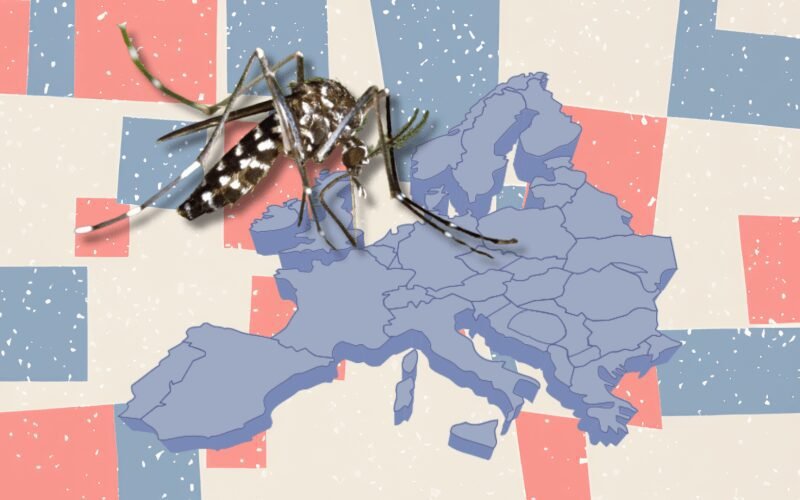
According to the European Centre for Disease Prevention and Control (ECDC), up to 29 July,human cases have also been reported in Italy, Romania, France, North Macedonia, Spain and Germany, confirming that the virus is circulating widely in Europe during the summer period.
49 areas affected by West Nile virus (WNV) have been identified in seven European countries: 30 in Italy, eight in Greece, four in Romania, two in France, two in North Macedonia, two in Spain and one in Germany.
According to the latest available data from the European Centre for Disease Prevention and Control (ECDC), Italy has the most cases — 94, followed by North Macedonia and Spain with seven cases each, Romania with five, France with two and Germany with one.
Where the Greek cases have been detected
Cases have been recorded in 25 municipalities in the regions of Attica, Thessaly and Central Macedonia, with the highest concentration in Attica, where the National Public Health Organisation reports particularly intense circulation of the virus this season.
Of the 65 patients, 20 remain in hospital — 12 in general wards and 8 in intensive care units; 38 have been discharged, one patient did not require hospitalisation, and six patients have died.
Read more via Euronews