Schwartz confirmed as CDC director after bungling confirmation hearing
In a 51–44 vote Wednesday, the US Senate confirmed Erica Schwartz as director of the Centers for Disease Control and Prevention, despite failing miserably to convince senators last month that she could stand up to anti-vaccine Health Secretary Robert F. Kennedy Jr.
The confirmation ends a near yearlong vacancy for the position since Kennedy fired the previous CDC director, Susan Monarez, last August. Monarez was ousted after she refused to rubber-stamp vaccine recommendations from a panel of Kennedy’s hand-selected advisors, who hold similar anti-vaccine views to his own.
Schwartz is highly qualified for the role, coming to the CDC with a medical degree, a master’s degree in public health, and a law degree. She previously had a long stint as a Navy officer and held leadership roles including chief medical officer for the US Coast Guard and deputy surgeon general in the first Trump administration. Notably, she has been a public advocate for vaccines and outbreak preparedness.
As such, outside health experts were surprised by her selection and cautiously optimistic about her taking up the role. While Kennedy’s close anti-vaccine ally, Aaron Siri, blasted her nomination over her support for vaccines, those in the health community held out hope that Schwartz could stabilize and restore the flagging agency, demoralized and hampered by harsh staff reductions, budget cuts, and relentless scorn from Kennedy and his political appointees.
“Really?”
Those hopes were dashed during Schwartz’s confirmation hearing last month when she repeatedly failed to answer questions directly and say with conviction that she would push back on Kennedy’s anti-vaccine and anti-science agendas.
Perhaps the most disturbing aspect of Schwartz’s testimony came when senators repeatedly asked her what she would do if (or when) she’s put in the same position as Monarez. Schwartz responded as if it hadn’t happened and would never happen. “I do not believe that the president or the secretary would ever do what you just mentioned,” she told Sen. Bernie Sanders (I-Vt.) at one point, prompting him to reply: “Really?”
While senators expressed their disappointment with her responses, health experts dropped their endorsements.
Shortly after the hearing, the National Public Health Coalition, a nonprofit founded by former federal health workers, released a statement opposing her confirmation. “The public and Congress deserve a CDC Director who will follow the law, defend science, protect public health workers, and rebuild the systems that keep communities safe,” the organization said. “Based on what we saw during the Senate HELP Committee hearing on July 15, 2026, NPHC cannot support Dr. Schwartz’s nomination.”
Critical to Schwartz’s confirmation was support from self-proclaimed vaccine advocate Sen. Bill Cassidy (R-La.), who also cast a critical vote to confirm Kennedy as health secretary. While Cassidy called Schwartz’s performance in the confirmation hearing “disappointing,” he later said he had been reassured. He said he had spoken with her more after the hearing as well as with her former colleagues. “I’m confident that she knows what she is doing,” he said, according to Stat News.
Bangladesh’s economy stable on the surface, fragile underneath
Bangladesh Bank is beginning to loosen monetary policy from an unusually favorable position on the currency front. Despite persistent inflation and deep strains in the banking system, the taka has been among the most stable currencies in South Asia and neighboring economies over the past year, while foreign exchange reserves have recovered sharply.
Yet that stability masks a more difficult domestic problem: cheaper money may end up financing the government rather than reviving private investment.
For nearly two years, Bangladesh’s central bank treated high interest rates as its primary weapon against persistent price pressures, raising its benchmark policy rate from 8.5% to 10%.
Last week, the central bank finally relented, trimming its policy rate by 50 basis points to 9.5%. The overnight Standing Lending Facility rate was dropped to 11%, while the deposit rate was kept steady at 7.5%.
This asymmetric adjustment reflects a delicate balancing act: how central bankers want to lower funding costs for distressed lenders without encouraging them to hoard excess cash with the regulator. Yet, in an economy constrained by structural bottlenecks and mounting bad debts, loosening monetary policy resembles pushing on a string.
The immediate impetus for easing is an alarming slowdown in private investment. Credit to private firms expanded by just 4.98% year-on-year in May, down from 7.17% twelve months earlier—a sluggish pace for a country aspiring to rapid industrialization.
In response, the central bank slashed its December private credit growth target to 6.8%. Meanwhile, public-sector credit surged by 20.78%, revealing that state borrowing has effectively become the primary engine of domestic credit creation.
Lowering central-bank funding costs is intended to reduce commercial lending rates and render stalled capital projects viable once again. However, the true impediment to expansion is not the price of money, but a dearth of viable corporate demand.
Bangladesh industry is visibly faltering. Large-scale manufacturing output shrank by 1.42% in the first ten months of the 2025-26 fiscal year, reversing a 6.97% expansion recorded during the same period a year prior.
Annual export growth stalled at a negligible 0.17%, while import letters of credit registered only modest gains. Crucially, monetary policy cannot fix infrastructure failures. Factories across the country endure chronic interruptions to gas and electricity supplies.
For a factory owner unable to run production lines reliably, a modest half-point reduction in borrowing costs does virtually nothing to alter prospective returns. The financial penalty of idle capacity, backup diesel generators, and missed export deadlines far outweighs minor savings on bank loans.
Furthermore, the domestic financial system is deeply fragmented. On paper, Bangladeshi banks sit on substantial aggregate liquidity, holding 3.28 lakh crore taka ($27 billion) in excess liquid assets at the end of May, including 16,373 crore taka ($1.33 billion) in surplus cash above mandatory reserves.
But this capital is concentrated in a handful of well-capitalized private institutions that lack credible corporate borrowers. Conversely, troubled state-owned and Islamic lenders face severe capital deficits and decaying balance sheets.
Aggregate liquidity masks deep institutional fragility, leaving weak banks incapable of extending productive credit regardless of central bank policy.
This fragmentation severely impairs monetary transmission. Non-performing loans climbed to roughly 5.89 lakh crore taka ($47.65 billion) by late March, exceeding 32% of total outstanding loans.
The World Bank estimated that the system’s capital-to-risk-weighted-assets ratio sank to negative 2.6% by the end of 2025. Lenders burdened by bad debts do not respond to policy cuts by funding new industrial ventures. Instead, they hoard capital, restrict lending to a narrow tier of safe blue-chip clients, or buy government securities.
High Treasury yields offer commercial banks a lucrative, risk-free shelter, effectively crowding out private firms exposed to volatile energy costs and sluggish consumer demand.
Inflation presents a secondary barrier to sustained monetary easing. Although headline inflation moderated to 9.16% in June from 9.42% in May, it remains well above the government’s target of 7.5%. With nominal wage growth trailing at 8.18%, households continue to suffer real income losses.
Much of the remaining inflationary pressure stems from non-food items, including elevated transport and service costs, which are largely immune to interest-rate tweaks. Simultaneously, underlying monetary indicators are flashing warning signals.
Broad money grew by 12.45% in May, reserve money rose 21.74%, and currency held outside the banking system jumped 18.92%. This surge in physical cash reflects a troubling loss of public trust in the banking system, further eroding the deposit base required for sustainable credit creation.
One factor working in the central bank’s favor is the remarkable stability of the taka.
According to Bangladesh Bank’s quarterly report, the currency depreciated by just 0.59% against the US dollar between March 2025 and March 2026, making it one of the most stable currencies among South Asian and neighboring economies. Only Cambodia performed slightly better, with its currency weakening by 0.44%.
The contrast with regional peers is striking. The Indian rupee depreciated by 8.94% over the period, the sharpest decline among the economies compared, while the Sri Lankan rupee lost 5.11%, the Philippine peso 3.70%, and the Indonesian rupiah 2.67%. The Chinese yuan, by contrast, appreciated by 5.14%, while the Pakistani rupee gained a modest 0.39%.
Bangladesh Bank officials attribute the taka’s relative stability to tighter monetary and foreign exchange management and the shift towards a more market-based exchange-rate regime. Bangladesh adopted the new regime in May last year as part of its commitments to the International Monetary Fund.
The dollar-taka exchange rate consequently remained within a narrow range of roughly 122 to 123 taka for much of the past year. That stability matters for monetary policy because a relatively steady currency helps contain imported inflation by limiting increases in the local-currency cost of fuel, food and industrial raw materials.
There are, however, signs that pressure is returning. Increased demand for foreign currency to settle import bills has pushed the dollar gradually higher in recent months. On August 4, the interbank exchange rate stood at 123.81 taka to the dollar, compared with 123.69 taka only a few days earlier, according to Bangladesh Bank data.
Bangladesh’s external balance nevertheless offers brief respite. Robust foreign remittances, which climbed by more than 30% to reach $35.59 billion over the past fiscal year, combined with stronger export earnings, have allowed the central bank to rebuild reserves and ease pressure on the taka.
Remittance inflows accelerated after the fall of the Awami League-led government in August 2024, strengthening Bangladesh Bank’s ability to accumulate foreign currency, according to central bank officials.
As of July 30, foreign exchange reserves measured under the IMF’s BPM6 methodology stood at $31.60 billion, up sharply from $24.86 billion at the same point last year. Gross foreign reserves had reached $37.58 billion, helping Bangladesh generate a $4 billion balance-of-payments surplus.
Nevertheless, international observers remain unconvinced. S&P Global Ratings recently revised Bangladesh’s sovereign credit outlook to negative, echoing an earlier precautionary move by Fitch in May.
Ratings agencies highlight the toxic combination of banking sector vulnerability, fiscal strain, energy vulnerability, and mounting political uncertainty. The relative stability of the taka and recovery in reserves provide the central bank with greater room to maneuver, but neither addresses the fundamental weaknesses preventing liquidity from reaching productive businesses.
Last Thursday’s modest rate cut provides temporary relief for prime corporate borrowers, but monetary easing alone cannot engineer an economic revival.
Unless the government curtails its own bank borrowing, decisively resolves the banking sector’s enormous mountain of non-performing loans and restores reliable energy supplies to factories, central bank rate cuts will merely circulate liquidity between commercial banks and the treasury, leaving the broader real economy stranded in the doldrums.
Israel’s Netanyahu hints at unilateral military action against Iran amid regional de-escalation efforts
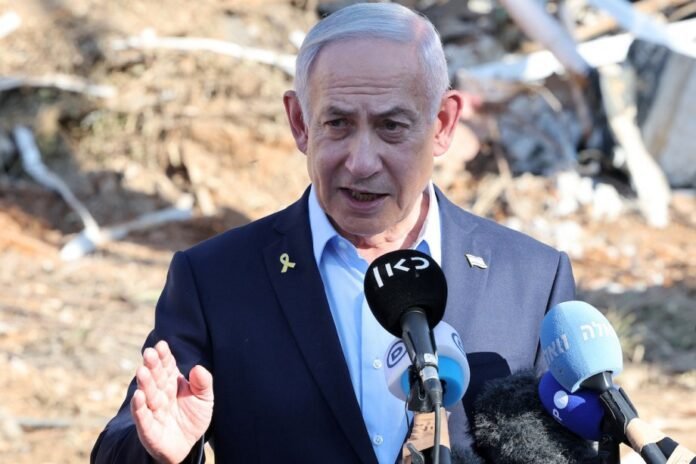
Israeli Prime Minister Benjamin Netanyahu on Wednesday hinted that Israel could take unilateral military action against Iran as diplomatic efforts continued to secure an agreement aimed at ending the conflict between Tehran and Washington, Anadolu reports.
“We heard today the commander of Iran’s Islamic Revolutionary Guard Corps, Ahmad Vahidi, declare that Iran intends to continue developing a nuclear weapon,” Netanyahu said.
“As Israel’s prime minister, I am determined to prevent Iran from obtaining a nuclear weapon,” he added.
Describing the US as “Israel’s greatest ally,” the Israeli premier said, however, that he was “determined to do whatever is necessary to ensure” Israel’s security.
On Tuesday, Qatari Foreign Ministry spokesperson Majed Al-Ansari said mediation efforts between the US and Iran had reached “advanced stages,” with the two sides exchanging draft proposals.
READ: Netanyahu: US sent Israel draft Gaza Agreement but ‘we have not approved it’
Speaking at the ministry’s weekly press briefing, Al-Ansari said efforts remained underway with all parties to reach a diplomatic solution.
On Feb. 28, the US and Israel launched a war against Iran that, according to Iranian authorities, killed more than 3,000 people.
Iran responded with attacks on regional countries hosting US assets.
In June, Qatar joined Pakistan as part of a mediation team between Washington and Tehran, leading to the signing of a memorandum of understanding on June 18 and the start of negotiations toward a final agreement.
The talks later stalled over disagreements related to maritime security and freedom of navigation in the Strait of Hormuz.
Between July 8 and July 24, tensions escalated again as the US carried out attacks on Iran, prompting Tehran to target what it said were US military facilities and equipment in several Arab countries, particularly Jordan, Bahrain and Kuwait.
READ: Iran, Oman reached ‘preliminary understandings’ on Hormuz transit, says Iranian official
Italy Orders Israeli Companies Removed From Rome Airport Counter-Drone Project
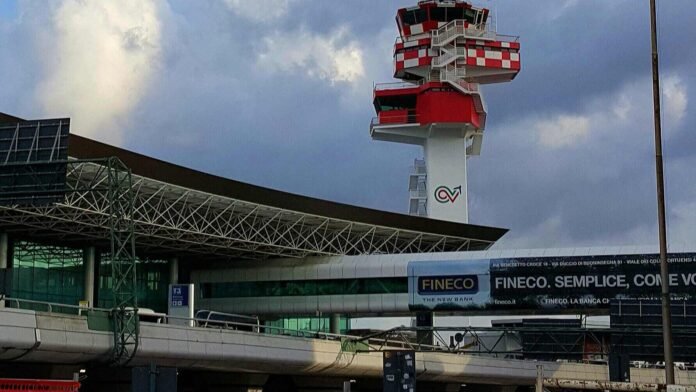
In a decision carrying significant diplomatic as well as legal implications, Italy’s Council of State has ordered “Aeroporti di Roma” (ADR) to replace the Israeli consortium responsible for the counter-drone protection system at Rome Fiumicino Airport with the Italian electronic warfare company ELT (Elettronica S.p.A.).
According to the Italian newspaper Il Messaggero, the ruling effectively removes two Israeli defense companies—Altintech and Rafael Advanced Defense Systems, the manufacturer of Israel’s renowned Iron Dome air defense system—from one of Italy’s most strategically important civilian infrastructure projects. The decision could attract attention well beyond the procurement dispute, as it affects a high-profile Israeli defense presence in a major European airport.
A ruling was overturned in a May 2024 ruling by the Regional Administrative Court of Lazio, which had previously upheld the award of the contract to the Israeli consortium. ADR has now been given 60 days to finalize a contract with ELT.
The court also ordered that the case file be transmitted to the Rome Public Prosecutor’s Office, which will evaluate whether criminal investigations are warranted regarding the procurement process.
Central to the judgment is the classification of the radar installed at Fiumicino (Rome International Airport). Technical experts from Italy’s Ministry of Defense concluded that the system qualifies as military equipment, citing its technical characteristics, its classification under the International Traffic in Arms Regulations, and its registration in Italy’s national registry of military equipment. According to the ruling, the necessary authorizations for importing and operating such military material were not in place.
ADR has maintained that the radar is a dual-use system already employed at other European airports and for protecting major public events. The airport operator stated it will fully comply with the ruling while ensuring that airport security and counter-drone operations continue uninterrupted.
Reddit signals ominous upcoming “changes” for old.reddit.com
Old.reddit.com’s days appear to be numbered.
Reddit has strayed from saying that it will shutter the website, which many long-time Redditors prefer for its layout, navigation, and fewer feed recommendations.
In a blog post today, Reddit made a vague statement about upcoming “changes” to Old Reddit:
In order to protect our platform, business, and users from abusive scraping and spamming, over time we plan to make changes involving Old Reddit, the legacy desktop web experience for Reddit that was built 21 years ago. In the short term, we will continue to require users to be logged in to access it and will work on migrating critical bots and moderator workflows to our modern stack. These efforts will help us mitigate the bad behavior and give us time to plan the complex follow-up steps.
In late July, Reddit started requiring people to log in to Reddit in order to use Old Reddit. At the time, a Reddit employee said that “Old Reddit’s logged-out experience is a significant source of abusive scraping and automated traffic on the platform.”
Today’s blog post further claimed that Old Reddit is leading to unwarranted content scraping.
“These changes will strengthen Reddit’s foundation, ensure the platform is ready to support thriving communities for future generations, and preserve what makes Reddit uniquely human,” the blog says.
Ars Technica asked Reddit what specifically it means by “changes,” and company spokesperson Rosa Kim said the company is “exploring different options” without providing specifics. She added:
We don’t have a hard timeline right now, but we will work directly with the mods, developers, and communities that depend on our systems and make sure to keep everyone updated.
This follows June comments from a Reddit employee about Old Reddit, stating, “we can’t promise it will be around forever” while noting CEO Steve Huffman’s earlier promises to keep supporting the site while people still use it.
Reddit also infamously started charging for access to its API in 2023. Although the more immediate impact was the shuttering of most third-party Reddit apps, the initial stated purpose of reducing API access was to stop generative AI companies from using Reddit to train large language models for free.
Reddit is building on those controversial API changes by starting to restrict new requests for access and requiring third-party apps to move to Reddit’s Developer Platform, it announced today.
“We envision a future where all good, trusted automation on Reddit runs within an ecosystem that allows us to offer support and enforce our policies consistently,” Reddit’s blog said about the API changes.
The Verge reported today that developers who wish to make a third-party Reddit mobile app will continue having to ask Reddit for API access, and that Reddit hasn’t set a date for when all apps will have to be on the Developer Platform.
Kim told the publication that the shift will apply to “all API apps except the ones we explicitly grant exceptions to.”
Advance Publications, which owns Ars Technica parent Condé Nast, is the largest shareholder in Reddit.
Donald Trump campaigned against ending America’s ‘forever wars’ but appears to have started another one. Image: X Screengrab
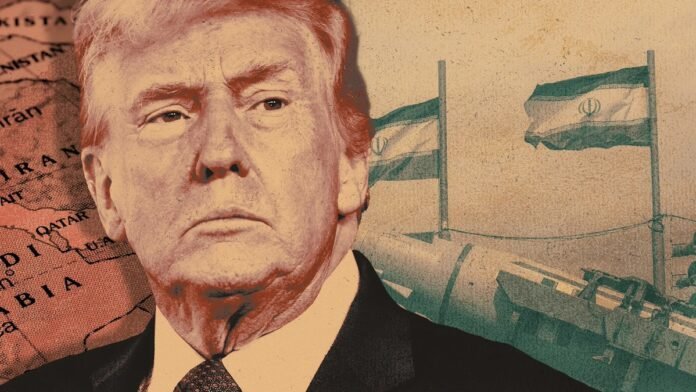
Five months into what historians will likely call the 2026 Iran war, Washington finds itself in a posture it has occupied before, in Vietnam, in Iraq, in Afghanistan: too deep in to walk away cleanly, not deep enough in to call the thing won.
US President Donald Trump’s on-again, off-again threats to unleash what he has taken to calling the “biggest attack since World War II,” followed within days by announcements that talks are “close,” followed by Tehran denying any talks are happening at all, is not a negotiating strategy.
It is the sound of a superpower discovering, in real time, that airpower can devastate a country without producing the political settlement it was supposed to buy.
This is the pattern realists have been warning about since the buildup began: the gap between what military force can destroy and what it can deliver. The United States and Israel have degraded Iranian military infrastructure, damaged nuclear-linked facilities, killed commanders.
What they have not done is produce an Iranian government willing to capitulate on terms Washington can call victory, or a regional order that doesn’t require the US Navy to keep the Strait of Hormuz open by force indefinitely. Oil tankers are already rerouting around Africa. That alone should tell policymakers something about how “contained” this war actually is.
Trump’s instinct for the off-ramp is not wrong. Whatever else can be said about him, he has repeatedly pulled back from the maximalist strike he keeps threatening, citing appeals from Gulf states who understand, better than most people in Washington, that a wider war serves no one’s interest but Iran’s hardliners and whichever contractors are supplying the munitions.
The problem is that he keeps returning to the threat as leverage, and leverage that is never cashed in eventually stops being believed. Iran’s foreign ministry denying talks are underway, even as the White House insists they start Monday, is what it looks like when a threat has been run so many times that the other side no longer flinches.
A genuine exit requires abandoning three assumptions that have quietly governed this war and most of Washington’s Middle East ventures before it.
The first is that decapitating a regime’s capabilities produces strategic clarity rather than strategic drift. It rarely has.
Iraq, Libya and now this war all suggest the same lesson: destruction is the easy part, and the negotiating table gets harder to reach the longer the bombing runs, not easier, because domestic hardliners on both sides gain from prolonging the fight.
The second is that regional partners want an American-guaranteed order badly enough to underwrite the costs of it. Saudi Arabia’s own crown prince publicly urging Trump toward dialogue is a tell.
The Gulf states that once quietly cheered pressure on Tehran are now the ones pumping the brakes, because they are the ones who live next to the Strait of Hormuz and don’t have the option of retreating across an ocean when it closes.
The third, and the one Washington resists hardest, is that “no deal” is not a neutral default while the war grinds on. Every week without a settlement is a week of Iran war 2026 becoming the baseline condition of the region rather than an emergency to be resolved. Wars that lack a defined endpoint have a way of writing their own extensions into policy.
The actual off-ramp was visible back in May and June, when Gulf states first talked Trump down from strikes and a framework nearly held. It is visible now in the Oman-brokered talks over Hormuz shipping, however tentative.
What is missing is not opportunity but discipline: a willingness to let a narrow, verifiable deal on the Strait stand as the actual objective, rather than treating it as a stepping stone toward a larger capitulation that Iran’s government, facing its own internal pressures, is not going to hand over at the point of a threatened bombing campaign.
Trump built his political identity partly on disdain for the wars his predecessors couldn’t end. Getting out of this one on terms better than a stalemate will require the harder discipline of accepting a modest deal now, rather than the more satisfying fantasy of total capitulation later.
Empires that keep waiting for the decisive blow that finally forces the other side to fold usually find themselves, years on, still waiting.
This article was originally published on Leon Hadar’s Global Zeitgeist and is republished with kind permission. Become a subscriber here.
Italy puts all major cities on highest alert as heatwave intensifies
Italy is placing all its 27 major cities under its highest heat alert on Thursday, as the country’s fourth heatwave of the summer intensifies, the health ministry said.
Twenty-five cities were put on red alert on Tuesday and Wednesday, with the only two currently on a lesser amber alert, Messina and Reggio Calabria in the far south of the country, moving up to the maximum level on Thursday.
A red alert indicates a potential health emergency with prolonged high temperatures posing a serious health risk to the entire population, including young and healthy people.
Local authorities urged residents in affected areas to avoid exposure to heat and direct sunlight during the hottest hours of the day, between 11:00 a.m. and 6:00 p.m., stay indoors where possible and drink plenty of fluids.
A spokesperson at the health ministry said it was the first time this year that all 27 cities had been issued with a red alert, but could not confirm if this had ever happened in previous years.
Temperatures have climbed to 40 degrees Celsius (104 degrees Fahrenheit) in some areas of Italy and little relief is expected before the weekend. Forecasters say the heatwave is being fuelled by a North African anticyclone that has strengthened over the Mediterranean and stretched across much of Europe.
Michigan winemakers have a new climate worry: More wildfire smoke
This coverage is made possible through a partnership between Grist and Interlochen Public Radio in northern Michigan.
When wildfire smoke blanketed northern Michigan skies last month, Kasey Wierzba thought the vineyard at Shady Lane Cellars in Suttons Bay looked like a different planet.
“That kind of pinky, peachy haze really was filtering through the whole vineyard. The visibility was really minimal,” said Wierzba, the general manager and executive winemaker at Shady Lane Cellars, a winery and vineyard that sits on the “little finger” of the state on Leelanau Peninsula, a region famous for its winemaking.
Wierzba also thought about how the pungent smoke might impact the grapes, something that the larger wine industry is becoming more familiar with as global warming increases the frequency and intensity of wildfires. Though she and other local grape growers were spared — the worst of the wildfires were burning far away in Canada and Minnesota, the smoke didn’t linger long, and it’s still early in the growing season — climate change could bring the threat closer to home in the future.
At stake is the state’s nearly $9 billion wine industry, which may have to adapt to the smoke’s effects on grapes, a challenge those in wine regions like the West Coast and Australia are already confronting.
When grapes are exposed to smoke for an extended amount of time, finished wines can develop what’s known as “smoke taint” — unwanted flavors that have been described as everything from barbecued food to burnt bacon.
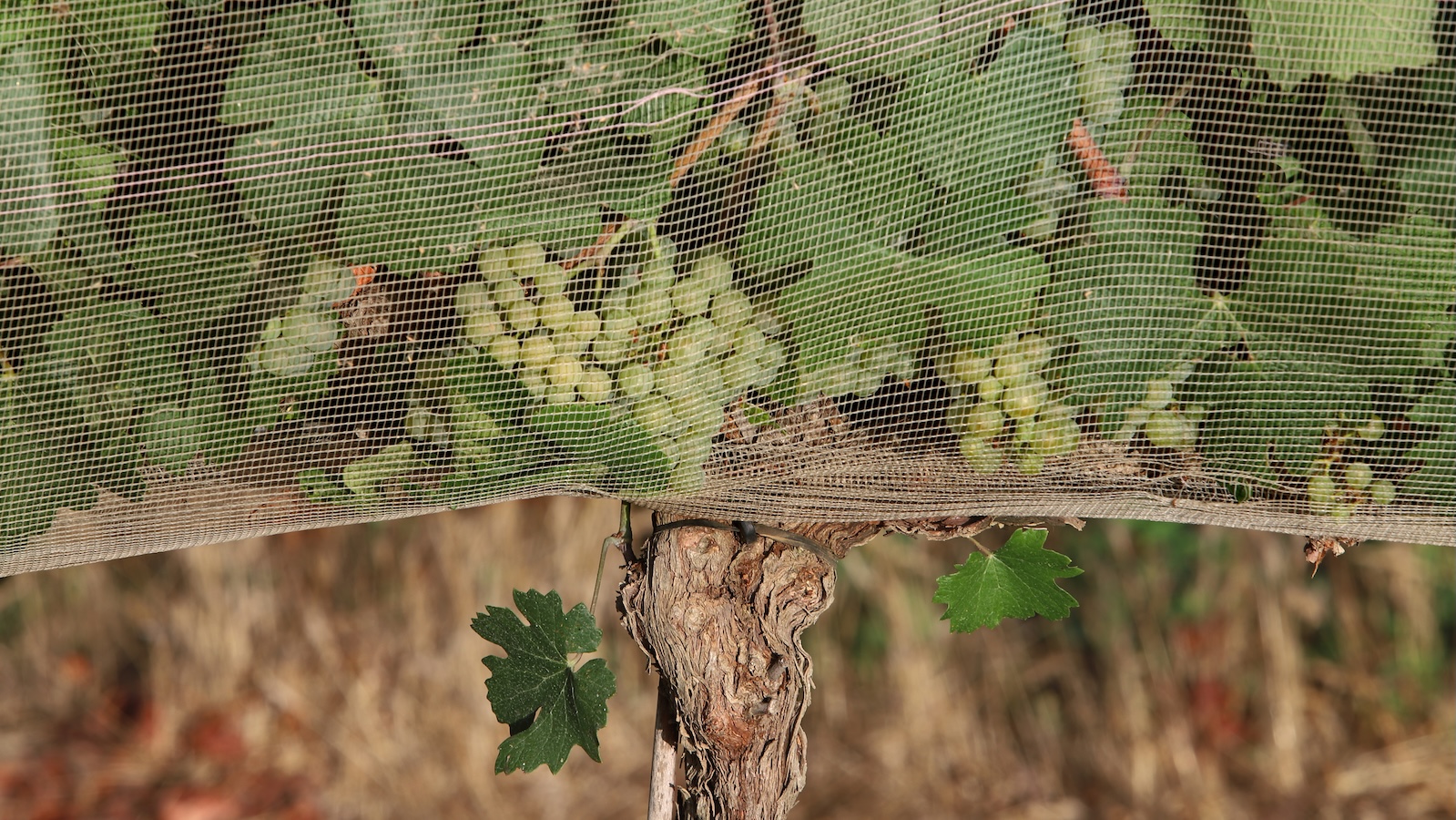
Because it’s early in the growing season, Wierzba said she’s confident there won’t be any impact on finished wines. The grapes are shaped like small pellets at this point of the year, known as the “buckshot berry stage” because they resemble the size of bullets used for hunting deer.
” data-credit=”Vivian La / IPR News”>
Andy Fles, vineyard manager for Shady Lane Cellars in Suttons Bay, Michigan, shows off young muscat grapes in the “buckshot berry stage” of fruit development. Vivian La / IPR News
Still, if and when smoke hits again, Wierzba said she’ll consider sending grape samples to labs that could detect the compounds associated with wildfire smoke. “I think having the smoke incident at this time in the grape growing, when they wouldn’t be affected, spurred me to think, ‘Wow, I need to be prepared,’” Wierzba said.
Tests can help, but it’s generally difficult to measure damage from smoke before wine is produced, said Paolo Sabbatini, a viticulture professor at Michigan State University. Smoke compounds bind with the grape skin and tissues, and the flavors associated with smoke taint only come through during the fermentation process.
“You need to wait for the finished wine. So during the season, unless your vineyard catches on fire and you see damage on the berries after a smoke event, you can’t even measure anything,” he said.
Sabbatini received 10 calls from grape growers and winemakers around Michigan with questions about smoke impacts. But he said he’s “pretty confident” that there wasn’t enough smoke exposure over a long enough period of time for grapes to be impacted by the fires, which are still burning in Ontario and Minnesota and have so far destroyed more than 64,000 acres, according to the U.S. Forest Service.
Local growers said it was fortunate that smoke didn’t hit the region during the key time that grapes change color in the fall — the period when they are typically most sensitive to smoke.
“We are sitting with our fruit still at a very immature stage, when we’re still going through cell division. So all of the cells, and the cluster, and the berries aren’t formed yet,” said Brian Hosmer, winemaker at Chateau Chantal, a winery and inn on Old Mission Peninsula, another northern Michigan winemaking hotspot.
Smoke taint is a rising concern elsewhere around the world, where hotter, larger wildfires have crept ever closer to vineyards. Ongoing fires in southwestern France have already scorched more than 160 square miles of forest near Bordeaux, pushing up against the country’s world-famous wine region.
“We’re talking about places where the fire is literally up to the edge of the vineyards, or even a couple miles away, where they’re getting ash falling directly on the fruit,” Hosmer said.
As climate change fuels the hotter, drier summers that increase the likelihood of wildfire events and widespread smoke, the number of places exposed to smoke taint is also increasing, said Ben Montpetit, chair of the department of viticulture and enology at the University of California, Davis. The program is one of the country’s leaders in the area of smoke taint research.
Read Next
There aren’t simple solutions to smoke taint, Montpetit said. Treatments to remove some of the unwanted flavors could impact wine quality or introduce other tastes. While growing awareness of the issue has led to increased state and federal support for studies — the latest draft of the U.S. farm bill includes a directive for more research and development into wine grapes and wildfire smoke exposure — Montpetit said smoke taint will remain a problem.
“As much as we can prepare, there are going to be fires in the future, and unfortunately, they will impact wine regions,” Montpetit said.
Grape growers said they’re learning to adapt to multiple changes in the environment, from drifting wildfire smoke to increasingly variable weather conditions. Studies looking at climate change impacts on Michigan’s wine region cite early spring frosts that can damage vines and hotter temperatures during the growing season.
Those in the industry said adaptation is part of the job. After all, winemakers first flocked to the region centuries ago to take advantage of the extended growing season that Lake Michigan provides.
“It’s always challenging. It’s farming. It’s legalized gambling,” Hosmer with Chateau Chantal said. He’s not concerned about impacts from this recent smoke, he said, but a trend of warmer summers “definitely makes us think about what’s going on in the woods around our vineyards” in terms of local fire danger.
As his war in Iran has imploded, his poll numbers have plummeted, the U.S. economy has cratered, and he finds himself in the grip of a steep cognitive decline, President Donald Trump has increasingly lashed out, calling for cataclysm, slaughter, and even genocide. As he tries desperately, if ham-handedly, to extricate himself from a losing war, the commander-in-chief of the world’s most destructive military offers up deranged rants, baying for blood and issuing orders that throw the concept of proportionality in warfare out the window.
Trump’s bloodthirsty rhetoric has been borne out in asymmetrical slaughter, with Iranian fatalities exceeding American deaths by multiple orders of magnitude. And this follows similarly lopsided casualty tolls in Trump’s conflicts in Somalia, Venezuela, Yemen, and on the high seas. This low-risk butchery masquerading as warfare harkens back to 19th-century extermination campaigns in which so-called inferior races were massacred in spectacles of slaughter — colonial violence that wiped out ethnic groups and set the stage for 20th-century genocide.
“Every time Iran kills an American Soldier, they will pay for that killing many times over!” Trump recently announced on Truth Social. “This directive has been passed on to Secretary of War, Pete Hegseth, Chairman of the Joint Chiefs of Staff, Daniel Caine, and every Leader in the Military.”
This unhinged command for disproportionate retaliation — which may amount to a violation of international humanitarian law — was featured, mostly without further remark, in news reports with bland headlines, like “Trump pays respects to 4 US service members killed in the Middle East.” It was also, for example, tucked deep inside and presented without further comment in a New York Times article about impending testimony before the Senate Appropriations Committee by Hegseth and Caine.
Trump’s order, and the matter-of-fact coverage from the Times, reminded me of a report by a different Times, almost exactly 199 years earlier: an article from Van Diemen’s Land, the Ireland-sized island to the southeast of Australia that we now know as Tasmania.
White settlers poured onto the island in the early 1800s, wiping out the kangaroos and replacing them with sheep. They treated the Indigenous people no differently. “Thousands were hunted down like wild beasts,” according to the local press. When one of the white people were killed by locals, the Colonial Times reported that other settlers exacted revenge on the Indigenous people that left “sixty of them killed and wounded.” The next year, when members of settler police and military forces were pelted with stones, they responded with gunfire and a bayonet charge that “killed seventy of them, dragging the women and children from the crevices of the rocks, and dashing out their brains.”
The slaughter in Tasmania was the inspiration for author H.G. Wells’s late 19th-century sci-fi classic “War of the Worlds,” in which Martians with superior technology, advanced firepower, and no compunction about annihilating humanity invade England, laying waste to London and driving out its population. “And before we judge of them too harshly we must remember what ruthless and utter destruction our own species has wrought,” the narrator says in the book’s open. “The Tasmanians, in spite of their human likeness, were entirely swept out of existence in a war of extermination waged by European immigrants, in the space of fifty years. Are we such apostles of mercy as to complain if the Martians warred in the same spirit?”
“Are we such apostles of mercy as to complain if the Martians warred in the same spirit?”
When lawyer Raphael Lemkin formulated the idea of “genocide” after World War II, almost 50 years after Wells wrote “War of the Worlds,” he considered Tasmania a historical case study of his concept. It’s unclear if Trump ever read “War of the Worlds,” though he attended the New York City premiere of the 2005 Steven Spielberg film adaptation; I doubt he understood Wells’s allegory, presuming he knows what an allegory is.
The Tasmanian carnage was part of an age of slaughter and genocide carried out across the globe by European powers and the United States. Trump has long been in the thrall of the precepts of this era of colonial conquest: Might makes right; territorial acquisition through armed intervention; and colonial relationships with, and resource extraction from, conquered foes and weaker nations.
Trump often invokes and praises Andrew Jackson, his 19th-century predecessor in the White House, who owned slaves and implemented a policy of “Indian removal” that culminated in the Trail of Tears, the military’s forced displacement of Native Americans, during which thousands died. Trump advocated “furthering President Jackson’s legacy, expanding his vision, [and] honoring his memory” earlier this year, pronouncing that Old Hickory embodied the “best of the American Spirit.” Trump has even employed America’s contribution to the eradication of indigenous peoples as a punch line. He has made light, on social media, not only of the Trail of Tears but also the Army’s massacre of hundreds of Native Americans at Wounded Knee in South Dakota.
Even the Army’s official history portrays Wounded Knee as a Tasmanian-scale slaughter in which an effort to disarm a group of Lakota religious revivalists resulted in an errant shot, possibly an accidental discharge, that “led immediately to heavy and indiscriminate firing from soldiers,” including the use of artillery, “despite the presence of numerous noncombatants.” In the end, up to 300 Lakota, including women and children, lay dead while “Army casualties totaled 25 killed and 39 wounded, some of whom likely were hit by friendly fire.”
Such disproportionate mass killings and exterminations were a hallmark of the 19th century. This “destruction of the ‘inferior races’ of four continents prepared the ground for the destruction of six million Jews in Europe,” as the author Sven Lindqvist observed, in his classic text “Exterminate All the Brutes.” We look back on these Holocaust-precipitating slaughters as beyond abhorrent. Or at least we did.
The death toll disparity at Wounded Knee doesn’t compare to the carnage of Trump’s war on Iran. The estimated 3,375 to 6,000 Iranian deaths dwarf the 19 U.S. deaths by 180 to 320 times, or more than two orders of magnitude. (The official U.S. Iran war death toll stands at 18, with the Pentagon omitting one widely reported loss.) The 60-to-1 Tasmanian toll of dead and wounded is a similar ratio as the estimated 39,806 total Iranian casualties compared to the official U.S. count of more than 700 troops who have been killed or wounded.
Trump has also repeatedly touted the lopsided nature of his punitive expedition in Venezuela, a short war in which the U.S. deposed and kidnapped President Nicolás Maduro, creating a de facto U.S. colony run by a quisling. “To have a few injuries, but no death on our side, is really amazing,” Trump bragged after the invasion, later comparing the lack of U.S. fatalities to the substantial death tolls of the (much longer) Korean and Vietnam wars. The 100 or more Venezuelan and Cuban military personnel and civilians killed compared with a handful of U.S. injuries shares a lineage of battlefield massacres like the 1863 U.S. slaughter of 250 to 500 Shoshone — including at least 90 women, children and infants — at Bear River at a cost of 24 U.S. troops, and the up to 6,000 Zulus armed with shields and spears cut down by Gatling guns and artillery compared with 10 British troops killed at Ulundi in southern Africa in 1879.
Trump’s 2025 war against the Houthi government in Yemen — Operation Rough Rider — was similarly lopsided. The airstrike monitoring group Airwars tracked reports of at least 224 civilians in Yemen killed by U.S. airstrikes. This nearly doubled the civilian casualty toll in Yemen from U.S. attacks since 2002, meaning that almost as many civilians were reportedly killed in 52 days as the previous 23 years of airstrikes and commando raids combined. The Yemen Data Project put the death toll at 238 civilians, at a minimum, and another 467 civilians injured. The U.S. also killed hundreds of Houthi fighters and numerous Houthi leaders, according to CENTCOM spokesperson Dave Eastburn, who referred to “credible open sources” citing 650 Houthi casualties. The U.S. did not suffer a single reported fatality during the campaign. And Trump’s relentless strikes in nearby Somalia have amounted to up to 420 deaths at a cost of zero American lives.
The Trump administration’s boat strike campaign in the Caribbean Sea and Pacific Ocean, which has killed at least 221 people without the loss of even one U.S. life, is a still more egregious slaughter. In this case, only unarmed civilians are targeted, victims akin to the fleeing Tasmanian women and children who had their skulls bashed in.
There are, of course, myriad differences between Trump’s ongoing war on the world and 19th-century colonial extermination campaigns in Africa, America, Australia, and elsewhere. Trump doesn’t, for example, explicitly assert racial superiority as a reason for his military interventions even if he often lapses into racist rants and is making war in Somalia while deriding Somalis as “garbage.”
But Trump’s more than 20 military interventions, armed conflicts, and outright wars have heightened the increasing trend toward “riskless warfare,” a term coined more than a quarter century ago by Paul Kahn, the director of Yale Law School’s Schell Center for International Human Rights. “It is an image of warfare without the possibility of chivalry,” the prescient Kahn later observed. “At the heart is a violation of the fundamental principle that establishes the internal morality of warfare: self-defense within conditions of reciprocal imposition of risk. Without the imposition of mutual risk, warfare is not war at all.”
Earlier this decade, in a study of drone warfare, Neil Renic, a scholar of military ethics, refined the concept as “radical asymmetry,” in which “one side has, in a practical sense, overcome the type and degree of physical vulnerability that has long been regarded as an expected and unavoidable feature of war.” Renic sees the drift toward unilateral violence leading to the increasing “perception of the weaker party … from an opponent to be fought and overcome, to one that must be hunted and done away with,” contributing to “dehumanization” of the enemy which, “in some cases … has led to a more severe decline in the targeting practices of the United States, from the morally questionable to the morally indefensible.” This feature of modern warfare harkens back to the age of extermination, when Tasmanians and others were also hunted and done away with.
As Trump has reveled in asymmetrical body counts and called for more disproportionate deaths, he has increasingly fancied himself an alien destroyer like Wells’s Martians; even if he himself doesn’t quite realize it. In one bizarre AI-slop image he posted on Truth Social as the Iran war went south, Trump appears to be striding from a spaceship — on some platform high above Earth — as legions of weapons-toting alien warriors flank him. In another, a gigantic Trump is seated at a command console in a space station floating high above the world. On screens above him, we see huge explosions apparently going off simultaneously back on Earth. On still another, an indistinct country is seemingly being ravaged by lasers.
“Then in a moment the Heat Ray was brought to bear, and the town became a heap of fiery ruins,” wrote Wells in “War of the Worlds,” describing the Martians’ weapon of mass destruction. “The houses caved in as they dissolved at its touch and darted out flames; the trees changed to fire with a roar.” Wells referenced the “massacre of mankind” and “the rout of civilization.” As Trump has made disproportionate slaughter his signature accomplishment from Latin America to the Middle East to Africa, he has channeled his inner Martian. “A whole civilization will die tonight, never to be brought back again,” he wrote of Iran on Truth Social, promising the “entire country could be taken out” and warning he might bomb Iran “back to the Stone Ages.”
Trump’s unhinged rhetoric is further driven home by the remaining imagery in the command-console post: a mushroom cloud from a monstrous nuclear blast with text on a screen announcing “target destroyed,” while a glowering Trump is poised to push a glowing red button that suggests he is about to incinerate the planet. Trump’s annihilationist fantasies are especially disturbing since he controls a nuclear arsenal that can destroy the world many times over. (“We have enough nuclear weapons to blow up the world 150 times,” was how Trump put it.)
Iranians, Latin Americans, Somalis, and Yemenis have all been in the crosshairs of America’s lopsided killing campaigns during his second term, but in this new age of slaughter, all of us are potentially targets in Trump’s war on the world.
Lead Contamination Is Still a Problem in Omaha. Why Is the City Cleaning Up Some Yards and Not Others?
In the last 10 months, residents in neighborhoods across Omaha, Nebraska, have contacted the city and federal government after tests by the Flatwater Free Press and ProPublica showed they had enough of the toxic metal in their yards for the dirt to be dug up and replaced under Environmental Protection Agency rules.
But the responses they’ve received have been inconsistent.
Three of them received new testing and were promised additional cleanup. Yet others were denied a new cleanup or told the news organizations they never heard back.
One resident said the city tested her yard, found it exceeded the EPA’s lead contamination level and sent her a letter saying cleanup was necessary. Months later the city backtracked, saying she did not qualify because she lived outside the primary cleanup zone. Another said she called 14 times before the city told her it would not retest because she hadn’t built or demolished anything in her yard since the EPA replaced the soil in 2012.
The EPA and the city have spent decades cleaning up residential properties in east Omaha after a century of pollution from a lead smelter and other factories downtown. The EPA had set a lead level that it uses to determine which properties to clean up, and the news organizations’ tests found these residents’ yards were over the limit.
But the city said that according to EPA rules, it can’t rely on testing by the newsrooms or any other groups to drive testing and cleanup decisions.
Peter Olson thought he was one of the lucky ones. His yard was one of thousands that the federal government had dug up and replaced since cleanup began in 1999. But a Flatwater Free Press and ProPublica soil test conducted in September showed he had too much of the toxic metal in the yard. When his wife contacted the EPA, Olson hoped a federal employee would offer another test and cleanup.
Series Timeline
Oct. 20, 2025
The Trump administration issued guidance tripling the amount of lead that has to be in soil to warrant potential cleanup. Before that, the EPA had been discussing expanding the Omaha cleanup, which could have included nearly 27,000 properties.
December 2015
The EPA finished the cleanup of more than 13,000 residential properties and passed the remaining work to the city of Omaha.
March 1999
The Environmental Protection Agency began testing soil from Omaha yards after concerns about elevated blood lead levels in children. The contamination was eventually tied to a smelter and factories that spewed lead dust for over a century.
Instead, all the agency could do was examine a small area in the backyard where a deck once stood, according to an email Olson shared from an EPA project manager for the site. The rest of the yard, including an area that was high for lead in the news organizations’ tests, was ineligible, the agency said without explaining why.
The city told Mary Royers it could test her soil because a shed had been demolished and a garage had been built in her backyard, which could have disturbed or uncovered contaminated soil. Unlike with Olson, the city analyzed the whole yard and agreed to clean up several areas around her house.
Olson said he and his wife agreed to the more limited testing the EPA offered them, though they worry about what might be in the rest of their yard. They’re currently waiting for the testing.
Omahans’ dirt generally qualifies for cleanup if it has more than 400 parts per million of lead in it — about the equivalent of a marble dispersed in a 10-gallon bucket of soil. The EPA adopted that standard in 2009. To date, contractors have dug up and replaced nearly 14,000 yards, mostly in a 27-square-mile area on the city’s east side, which has been declared a federal Superfund site. In 2015, the agency handed over remaining remediation work to Omaha.
Asked about the different responses residents have received, EPA spokesperson Kellen Ashford said in an email that each property is unique, and new sampling depends heavily on whether site conditions have changed because of construction or demolition that might have disturbed or exposed the soil.
“EPA strives to be fair and equitable in its decision-making process while adjusting to changes in agency policies, funding, and cleanup approaches,” he said.
Steve Zivny, who leads Omaha’s Lead Information Office, also said these decisions are made on a case-by-case basis. The city is able to test and clean up within the site but must seek approval from the EPA before doing any work outside those boundaries. The city is paid with settlement money from the smelter and other polluters.
Recently, the city sent letters to some residents outside the boundaries of the Superfund site saying they needed cleanup but reversed course after the EPA said the homes would not qualify, Zivny said.
Amy Haney lives about a half-mile outside the site’s western edge, a boundary the EPA drew by estimating where only a small percentage of homes were likely to have high lead levels. As a result, Haney’s home was never tested. But a Flatwater Free Press and ProPublica test found it had nearly 1.5 times the level that would qualify for a lead cleanup.
The result felt like a “kick in the gut,” she said. The news organizations tested 35 properties within a three-quarter-mile radius of Haney’s home. Four, including Haney’s house, were above the cleanup level.
Haney contacted the city, which told her the EPA would retest her home this summer.
While the EPA has cleaned up homes outside the site in the past, Ashford said any sampling beyond the site’s bounds right now is for investigative purposes only, and those homeowners may not be eligible for remediation.
Read More
The agency’s priority is cleaning up within the Superfund site as well as properties that impact children, he said.
Even when kids test high for lead, however, the city and the EPA don’t always retest yards.
Sabrina, a north Omaha resident whose soil we tested, said doctors found lead in three of her children. (She asked that her last name not be published to protect their identities.) In 2020, after her daughter’s blood-lead test, the city and a nonprofit replaced windows that contained lead-based paint. But they didn’t test the yard.
The only information Sabrina said she received about the dirt was the EPA test results from 2003 that showed the yard didn’t qualify for cleanup.
“I felt like that was kind of a lazy response,” Sabrina said. Despite the window replacements, doctors have found lead in her other kids’ blood.
The Flatwater Free Press and ProPublica tested her soil in May and found the lead was over the cleanup level and twice as high as the EPA’s 2003 test records showed.
Sabrina requested a new test, but the city denied it, saying no work had been done on the property and it couldn’t rely on the newsrooms’ results.
Zivny said the city has asked the EPA to revisit that decision in light of her children’s blood test results.




 ” data-credit=”Vivian La / IPR News”>