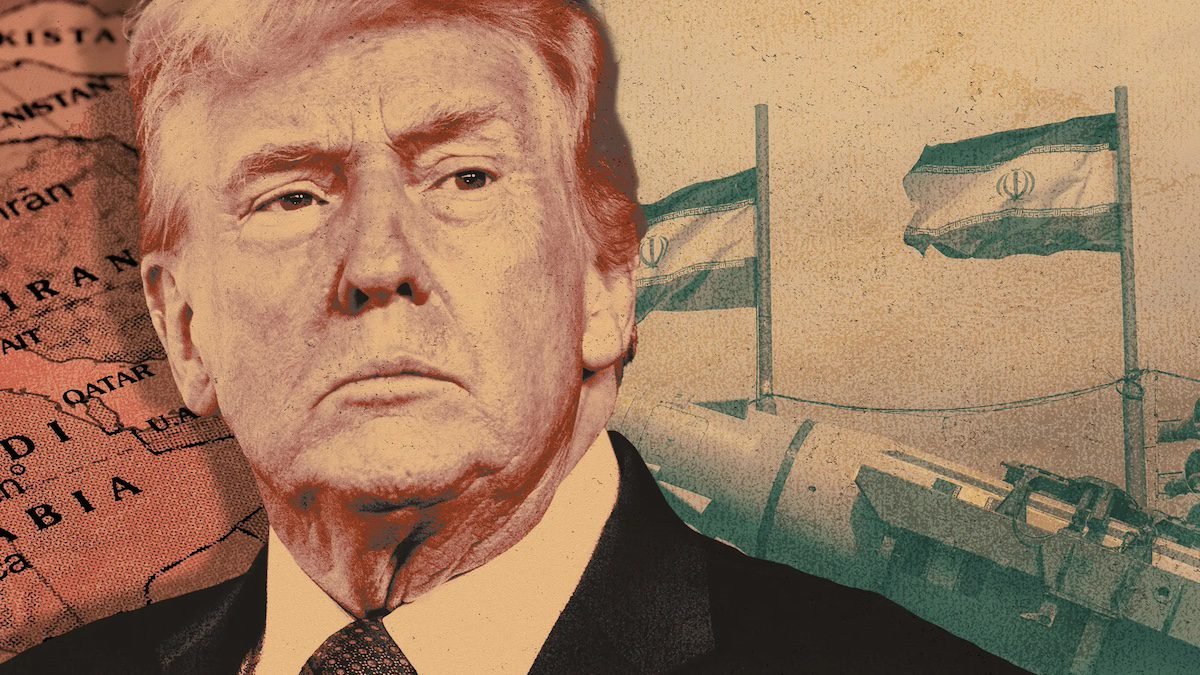

Five months into what historians will likely call the 2026 Iran war, Washington finds itself in a posture it has occupied before, in Vietnam, in Iraq, in Afghanistan: too deep in to walk away cleanly, not deep enough in to call the thing won.
US President Donald Trump’s on-again, off-again threats to unleash what he has taken to calling the “biggest attack since World War II,” followed within days by announcements that talks are “close,” followed by Tehran denying any talks are happening at all, is not a negotiating strategy.
It is the sound of a superpower discovering, in real time, that airpower can devastate a country without producing the political settlement it was supposed to buy.
This is the pattern realists have been warning about since the buildup began: the gap between what military force can destroy and what it can deliver. The United States and Israel have degraded Iranian military infrastructure, damaged nuclear-linked facilities, killed commanders.
What they have not done is produce an Iranian government willing to capitulate on terms Washington can call victory, or a regional order that doesn’t require the US Navy to keep the Strait of Hormuz open by force indefinitely. Oil tankers are already rerouting around Africa. That alone should tell policymakers something about how “contained” this war actually is.
Trump’s instinct for the off-ramp is not wrong. Whatever else can be said about him, he has repeatedly pulled back from the maximalist strike he keeps threatening, citing appeals from Gulf states who understand, better than most people in Washington, that a wider war serves no one’s interest but Iran’s hardliners and whichever contractors are supplying the munitions.
The problem is that he keeps returning to the threat as leverage, and leverage that is never cashed in eventually stops being believed. Iran’s foreign ministry denying talks are underway, even as the White House insists they start Monday, is what it looks like when a threat has been run so many times that the other side no longer flinches.
A genuine exit requires abandoning three assumptions that have quietly governed this war and most of Washington’s Middle East ventures before it.
The first is that decapitating a regime’s capabilities produces strategic clarity rather than strategic drift. It rarely has.
Iraq, Libya and now this war all suggest the same lesson: destruction is the easy part, and the negotiating table gets harder to reach the longer the bombing runs, not easier, because domestic hardliners on both sides gain from prolonging the fight.
The second is that regional partners want an American-guaranteed order badly enough to underwrite the costs of it. Saudi Arabia’s own crown prince publicly urging Trump toward dialogue is a tell.
The Gulf states that once quietly cheered pressure on Tehran are now the ones pumping the brakes, because they are the ones who live next to the Strait of Hormuz and don’t have the option of retreating across an ocean when it closes.
The third, and the one Washington resists hardest, is that “no deal” is not a neutral default while the war grinds on. Every week without a settlement is a week of Iran war 2026 becoming the baseline condition of the region rather than an emergency to be resolved. Wars that lack a defined endpoint have a way of writing their own extensions into policy.
The actual off-ramp was visible back in May and June, when Gulf states first talked Trump down from strikes and a framework nearly held. It is visible now in the Oman-brokered talks over Hormuz shipping, however tentative.
What is missing is not opportunity but discipline: a willingness to let a narrow, verifiable deal on the Strait stand as the actual objective, rather than treating it as a stepping stone toward a larger capitulation that Iran’s government, facing its own internal pressures, is not going to hand over at the point of a threatened bombing campaign.
Trump built his political identity partly on disdain for the wars his predecessors couldn’t end. Getting out of this one on terms better than a stalemate will require the harder discipline of accepting a modest deal now, rather than the more satisfying fantasy of total capitulation later.
Empires that keep waiting for the decisive blow that finally forces the other side to fold usually find themselves, years on, still waiting.