29.9 C
London
Tuesday, August 4, 2026
Home Blog

South Korea: the ‘model ally’?

0
south-korea:-the-‘model-ally’?
South Korea: the ‘model ally’?

US Undersecretary of War Elbridge Colby called South Korea (Republic of Korea, ROK) a “model ally” while visiting Seoul a few months ago. A “model ally?” Compared with what?

South Korea is still a longtime partner and an ally bound by a mutual defense treaty signed in 1953. However, all relationships change over time, and the US-ROK relationship isn’t what it once was.

Most of America’s “model” allies don’t have influential figures associated with the ruling party – in this case, the elder brother of Kim Min-Seok, until recently the prime minister and now in the running to head the ruling Democratic Party of Korea (DPK) – who have declared that Trump’s America is “the apex of Yankee imperialism.” 

It’s equally difficult to find an equivalent in other US alliances of the rare circumstances that the former prime minister himself and the head of the ruling party, were both imprisoned as younger men for pro-North Korea acts against the US ambassador’s residence and a US Information Agency office in South Korea. Neither has ever apologized or even explained it away as “youthful exuberance.” 

And South Korea’s President himself, Lee Jae Myung, has referred to US forces in South Korea after World War II as an “occupying force.” He was also accused of being involved in the unauthorized transfer of US$8 million to North Korea while serving as governor of Gyeonggi Province. Lee denies the charges, but his then-subordinate has been convicted.

Since taking office in mid-2025, the Lee administration’s Unification Ministry has seemed keen to provoke the United States. The South Korean government early on picked a fight over longstanding, effective bilateral procedures for managing the Demilitarized Zone between South and North Korea.

South Korean prosecutors also improperly accessed restricted areas (and reportedly, sensstive information) at Osan Air Base while pursuing an investigation into activities by the former South Korean administration directed at North Korea. On another occasion, a Lee administration official released secret information on North Korean nuclear activities provided by the US.

Other South Korean officials are pushing to assume wartime “operational control” over combined ROK and US forces more for political reasons than on the basis of meeting actual readiness requirements – and contrary to bilateral understandings on when such changes will be made.

Chafing US global policies

“Model ally” South Korea has not been helpful with the US campaign against Iran, and has complained about modest transfers of US military hardware from South Korea to the Middle East.

The Lee administration doesn’t seem interested in helping out with the defense of Taiwan either, which is the lynchpin of the US defense line in the Indo-Pacific and of great importance to South Korea’s own security. Nor is it keen to give US forces in South Korea permission to redeploy in the event of a Taiwan contingency. This perhaps isn’t surprising. While a candidate for the presidency, Lee Jae Myung said Taiwan was none of South Korea’s business, a stance that is music to Beijing’s ears.

President Lee Jae Myung’s recent social media postings include comments equating Israeli military actions with the Holocaust, provoking a formal complaint from the Israeli government. Lee offered a half-hearted, incoherent excuse. 

And the South Korean administration sent $500,000 to Iran for ‘humanitarian aid’ – but how likely is this to help families of the several tens of thousands of Iranians the regime gunned down a few months ago for demanding honest, consensual government? Not likely at all, and Lee didn’t even appear to pay lip service to the idea.

A one-party ‘model ally’?

And there’s more that makes one wonder about the definition of “model ally.”

Lee Jae Myung is aggressively following up on his recent predecessor, former President Moon Jae In’s, efforts to turn Korea into a one-party state. The Moon Jae In (2017-2022) and Lee Jae Myung (2025 ~) administrations have systematically endeavored to control all levers of power in South Korea: the National Assembly, judiciary and prosecutors, police, intelligence service and the National Election Commission.

South Korea’s leftist administrations have cowed the media and are aiming to dominate the military and big business, and influence over academia is immense. The violent, pro-Pyongyang Korean Confederation of Trade Unions has worked closely with the DPRK.

Even for regular citizens, criticizing the government or even mentioning the importance of honest elections can earn a visit from the police. 

Religious groups have long been in the left’s crosshairs, with the Lee administration pressuring groups and arresting pastors it regards as “enemies.” The cruel treatment and persecution of religious leaders, and of former President Yoon Suk Yeol and his wife, resembles North Korean behavior. It’s not what one would exlpect from America’s “model ally.”

And the treatment of the American company Coupang, by South Korean officialdom reveals a distasteful nastiness directed toward an American company – and has attracted US Congressional attention and criticism.

A partnership worth protecting

South Korea’s left is telling Washington what it really thinks – despite Washington’s apparent preference for ignoring warning signs in the relationship.

Even so, there’s much that’s good to be said about South Korea, as for any ally. It spends a lot of money on its own defense and has a military that can and will fight. Its defense relationship with US forces is probably the best among any alliances in the Indo-Pacific region in pure operational terms. The South Koreans have been tough with Chinese, Russian and North Korean provocations and incursions in ROK maritime territory and airspace over the years.

South Korea has a world class defense industry that provides advanced weaponry for free nations from Indonesia to Poland. It has offered to help America’s ailing shipbuilding industry recover – and has purchased the near-defunct Philly Shipyard as an initial step, along with stating a willingness to build warships and support ships for the US Navy.

South Korean companies are major investors in the United States – including leading South Korean technology firms – and several hundred billion in future investments are planned following Trump administration pressure.

Additionally, the Lee administration has made at least temporary peace with Japan and is upgrading bilateral defense cooperation with its neighbor – to Washington’s relief.

And most important of all, South Koreans – by a large majority – appear to support the US-ROK alliance, even if many South Korean leftists would prefer to end it.

An ambassador at last

The US is finally getting an ambassador in South Korea. Former Representative Michelle Steel is a good choice as she understands South Korea’s left. She should have been in Seoul a year ago. There are a couple of things she might do to begin with.

One is to examine the allegations of electoral fraud produced by South Korea’s citizens groups in multiple elections since 2020. South Korea’s left has rejected them – dismissing them as baseless conspiracy theory. That’s to be expected. Less forgivable, however, is that the United States, with its near unlimited financial, technical and investigative resources, does not appear to have examined the allegations either.

The ambassador might also review the visa status of relatives of some of South Korea’s most anti-American politicians and officials. More than a few of their relatives have green cards and sometimes US citizenship. Revoke a few.

However, the Trump administration, like its predecessors, refuses to examine the nature of South Korea’s left and its objectives.

Ignore such problems and they fester, as the US learned with its one-time solid ally Venezuela in the late 1990’s when leftist Hugo Chavez took power. The US government similarly ignored or downplayed warning signs of a turn towards authoritarianism and anti-American policies in the years following Turkish President Recep Tayyip Erodgan’s election in 2014.

Rather than declaring everything just fine, the US needs to pay serious attention to South Korea’s left and what they intend for South Korea and the alliance. That’s how you keep an alliance intact and get a real “model ally.”

Grant Newsham is a retired US Marine officer and former diplomat with many years of experience in Asia. He was also an executive with Morgan Stanley Japan and Motorola Japan/Korea. His military service included service as head of intelligence for Marine Forces Pacific and as US Marine Attache at US Embassy, Tokyo. He is the author of the 2023 book, When China Attacks: A Warning to America.

Originally published by The Korea Signal, this article is republished with permission.

OpenAI says Apple’s trade secrets lawsuit is “aggressive and oddly personal”

0
openai-says-apple’s-trade-secrets-lawsuit-is-“aggressive-and-oddly-personal”
OpenAI says Apple’s trade secrets lawsuit is “aggressive and oddly personal”

OpenAI has accused Apple of waging a “careless, aggressive and oddly personal lawsuit” in a blog post rebutting the iPhone maker’s claims that the AI start-up stole top-secret information.

“We do not have, nor want, any of their trade secrets,” the ChatGPT maker wrote on Monday evening, accusing Apple of “making vague accusations” and “trying to change their narrative.”

The post marks the latest escalation in a dispute that began last month when Apple filed a lawsuit claiming OpenAI had stolen hardware designs as it planned to launch its own AI-focused consumer devices.

The dispute comes as the two companies encroach on each other’s territory, with OpenAI venturing into consumer products and Apple joining forces with Google to revamp its Siri voice assistant.

OpenAI and Apple had previously partnered to integrate AI technology into Apple’s products. But the relationship began to sour after OpenAI last year acquired io, the design studio founded by former Apple design chief Sir Jony Ive, and hired a string of Apple employees.

Apple alleged in its lawsuit that more than 400 of its former employees now worked at OpenAI. It said it had received no response from OpenAI in February after contacting the start-up to warn it of an internal investigation into the potential theft of Apple’s trade secrets.

OpenAI said Apple’s lawyers had “emailed the wrong person after confusing two Asian last names” and “claimed they had a discussion with our General Counsel, which they now concede never happened.”

The start-up said Apple “never raised the specific allegations in this lawsuit at that time” and “in fact told us that they were ‘resolving any issues.’ We then heard nothing for five months until they sued.”

Apple alleged in its lawsuit that Chang Liu, a former employee who worked on some of its “most sensitive product development programs,” accessed Apple’s trade secrets after leaving the company in January.

However OpenAI said Apple employees had themselves contacted Liu “and asked for his help to locate this information,” something the iPhone maker “only now admits.”

Apple also named in its lawsuit a second former employee, OpenAI’s chief hardware officer, Tang Tan, whom it accused of seeking out proprietary information when interviewing Apple’s employees.

“Tang has always been clear with the team that we do not want, and must not use, any confidential information from other companies,” wrote OpenAI.

Apple on Monday sought a preliminary injunction in the US to prevent former employees and OpenAI from accessing, using, or disclosing its trade secrets. It also filed a second motion asking the court to expedite discovery and order several OpenAI employees, including Liu and Tan, to sit for depositions.

OpenAI said Apple’s request for a preliminary injunction was “both based on false information and completely unnecessary because we do not have, nor want, any of their trade secrets.”

“Apple is one of the greatest companies of all time, and built a reputation for obsessing over the smallest details. This careless, aggressive and oddly personal lawsuit sadly doesn’t live up to that reputation,” the ChatGPT maker wrote.

Apple did not immediately respond to a request for comment.

© 2026 The Financial Times Ltd. All rights reserved. Not to be redistributed, copied, or modified in any way.

Ceuta Border Crisis Draws Israel Into Spain-Morocco Dispute

0
ceuta-border-crisis-draws-israel-into-spain-morocco-dispute
Ceuta Border Crisis Draws Israel Into Spain-Morocco Dispute


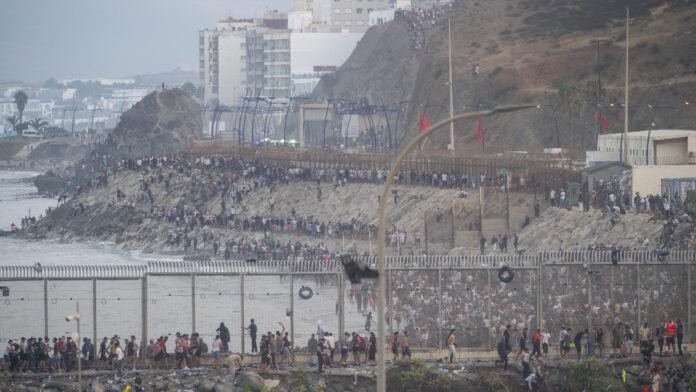
A migrant surge that overwhelmed Spain’s North African enclave of Ceuta has expanded beyond a border emergency into a diplomatic dispute involving Spain, Morocco and Israel, prompting a Spanish member of the European Parliament to publicly urge Israeli Prime Minister Benjamin Netanyahu to defend Spain’s territorial integrity. 

In ‘’Speak Out in Defense of Spain’s Territorial Integrity,’ Spanish MEP Urges Netanyahu, The Media Line’s Gabriel Colodro describes a city of 84,000 residents suddenly confronted by the arrival of nearly 60,000 migrants in a matter of days, an influx that left at least 83 people dead, strained local services and fueled a political battle stretching from Madrid to Jerusalem. 

“With my greatest admiration and respect for Netanyahu’s life story and courage, I ask Netanyahu to speak out in defense of Spain’s territorial integrity, because the Spanish government is not Spain,” Juan Carlos Girauta told The Media Line. 

As the crisis unfolded, Israeli Ambassador to the United Nations Danny Danon criticized Spain for deploying troops to Ceuta after repeatedly condemning Israeli security measures, questioning why Madrid continued to maintain what he called colonial enclaves in Africa. Israel’s chargé d’affaires in Spain, Dana Erlich, quickly distanced the government from Danon’s remarks, saying they “does not represent the position of the State of Israel.” 

For Girauta and other Spanish supporters of Israel, that clarification did little to ease concerns. He argued that Danon’s comments handed political ammunition to Prime Minister Pedro Sánchez’s allies, while unsubstantiated claims linking Israel and the United States to the border crisis quickly spread in public debate. No evidence has emerged connecting Israel to the crossings. 

Questions also mounted over Morocco’s role. Girauta and Ángel Mas, president of ACOM, both characterized the mass crossing as a form of “hybrid warfare,” arguing that an influx of such magnitude was difficult to explain without at least some degree of official acquiescence. Publicly available evidence, however, has not established that Morocco organized the crossings. Reports citing officials familiar with Spain’s intelligence assessment said Rabat appeared to have relaxed border controls, while Morocco blamed human traffickers, economic hardship and false information circulating online. 

As Colodro’s report reveals, Ceuta’s Jewish community, the immediate concern remained closer to home than the diplomatic fallout. Community president José Bentolila said residents endured days of uncertainty as businesses closed, reception centers filled and thousands remained in the city. Yet despite heightened anxiety, he said no antisemitic incidents had been reported, and the city’s tradition of coexistence among Jews, Christians, Muslims and Hindus had endured. 

The Pentagon Found a New Way to Undercount U.S. Casualties in Iran

0
the-pentagon-found-a-new-way-to-undercount-us.-casualties-in-iran
The Pentagon Found a New Way to Undercount U.S. Casualties in Iran


The Pentagon is using a new method of tallying the number of U.S. soldiers killed and wounded in the Iran war that a U.S. government official said was “designed to obscure the count.”

Since the start of the conflict, the Department of War has posted the official count of casualties on the website of the Defense Casualty Analysis System, or DCAS, which tracks “deceased, wounded, ill or injured” service members for Congress and the president. This official total of dead and wounded personnel, as documented over months of reporting by The Intercept, has been a gross undercount, stemming from what that same official previously called a “casualty cover-up.”

But after a series of Iranian strikes on U.S. facilities in the Middle East in July, the Pentagon last week rolled out a new approach. Casualties since July 7 are now counted separately on a new webpage with a generic designation: “Overseas Operations.”

Two hundred and seventy-three U.S. troops were killed or wounded since July 7, according to the Monday total on the new Overseas Operations page.

When combined with the existing DCAS page for the Iran war, the official count stands at 704, an 83 percent increase in casualties since April 8, the day the first ceasefire deal was struck between the Trump administration and Iran. When counting known casualties overlooked by the DCAS page, the total exceeds 900 personnel.

For months, the Pentagon has failed to comment on DCAS anomalies reported by The Intercept nor the reason for the change in the way it now counts casualties, which was first reported by the New York Times. Last week, the Pentagon told the newspaper that “since Operation Epic Fury has concluded, the department classifies casualties as overseas operations in the CENTCOM area of responsibility.” Central Command oversees U.S. military operations in the Middle East.

“This is certainly designed to conceal the count of the wounded,” the official said, while noting that “incompetence” has also caused confusion in the casualty count.

The change comes after a July 20 rant by Pentagon spokesperson Sean Parnell who claimed reports of a Pentagon effort to withhold news of dozens of U.S. casualties were “baseless and malicious” and a U.S. official’s disclosure to The Intercept that same day that recent attacks on U.S. bases by Iran had wounded “far more” personnel than the Pentagon had acknowledged.

The casualty spike resulted from Iranian attacks on at least nine U.S. outposts across the Middle East since July 9, according to a second U.S. official who spoke to The Intercept on the condition of anonymity because they were not authorized to speak with the press.

Iran’s military managed to overwhelm U.S. air defense systems using a mix of attack drones and advanced ballistic missiles, despite months of claims by President Donald Trump and self-styled War Secretary Pete Hegseth that Iran’s military was annihilated.

Last month, the tally of wounded personnel fluctuated by the day in the wake of increased Iranian attacks. On July 21, the casualty count on DCAS for Operation Epic Fury, the military’s official designation for the Iran war, stood at 500. Now, it has shrunk to 431.

For months, The Intercept found anomalies with the counts offered on the DCAS website. On April 21, for example, the number of wounded-in-action troops declined by 15 without public acknowledgment by the War Department. Despite repeated questions for months, the Pentagon has not commented on the disparities in its casualty count.

Prior reporting by The Intercept also found DCAS is missing hundreds of dead and wounded personnel from Epic Fury. The Pentagon list of the names of the dead is still missing Maj. Sorffly Davius, a signals and communication officer with the New York Army National Guard who was assigned to the headquarters of the 42nd Infantry Division and reportedly died of sudden illness while on duty in Camp Buehring, Kuwait, on March 6. Davius’s death was widely acknowledged even as it was excluded from the the official count: Rep. Mike Lawler, R-N.Y., spoke about him during a memorial service that month, and Gen. Dan Caine, the chair of the Joint Chiefs of Staff, recognized Davius while “honoring our fallen.”

While DCAS provides a running tally of “non-hostile” deaths — meaning those who died from accidents or by illness — it doesn’t include “non-hostile” injuries. The DCAS figures for Epic Fury show that 65 Navy personnel were wounded in action. Missing, however, are the more than 200 sailors treated for smoke inhalation or lacerations due to a March 12 fire that raged aboard the USS Gerald R. Ford. The aircraft carrier had been conducting round-the-clock flight operations to, Caine said, “project combat power” in the Middle East.

Recent reporting by the War Horse, using Pentagon records obtained via the Freedom of Information Act, found more than 400 casualties were recorded between February 28 and April 8. Seventy occurred on March 18 alone, but this huge single-day toll was never reported by the Pentagon.

The records provide more granular detail than DCAS, revealing that at least 17 troops sustained life-threatening injuries. They show that U.S. troops suffered shrapnel wounds, broken bones, smoke inhalation, and other injuries. The most common injury recorded, however, was head trauma — which affected at least 170 troops, according to the data.

President Donald Trump has long dismissed brain injuries as “headaches” and “not serious.” 

Higher fuel costs and strikes push Brussels Airlines deeper into the red

0
higher-fuel-costs-and-strikes-push-brussels-airlines-deeper-into-the-red
Higher fuel costs and strikes push Brussels Airlines deeper into the red


Brussels Airlines reported a wider adjusted operating loss in the first six months of the year and said it would no longer add two Airbus A330 aircraft to its fleet in 2027 as it responds to weaker-than-expected financial results and an uncertain outlook.

The Belgian carrier posted an adjusted operating loss of €70 million ($81 million) for the first half of the year, up 50% from the same period a year earlier.

Brussels Airlines said the deterioration reflected a combination of external factors, including higher fuel prices, an Ebola outbreak in East Africa and strikes by external parties.

Despite the larger loss, traffic and revenue increased during the period. The airline carried 4.5 million passengers on 34,200 flights, increases of 8% and 5.5% respectively compared with the first half of last year. Revenue rose 9% to €821 million.

Fuel costs increased by €64 million from a year earlier, which the airline attributed mainly to the war in the Middle East and its effect on oil prices.

“We have weathered storms before, but the summer is now crucial if we are still to deliver positive results by the end of the year,” Chief Financial Officer Nina Öwerdieck said in a statement.

Öwerdieck said Brussels Airlines is operating more flights than last year and could achieve stronger results if operations continue without major disruption during the peak summer season.

The airline said it is taking a cautious approach because financial performance has fallen short of expectations, while repeated strikes in Belgium and geopolitical uncertainty continue to weigh on its outlook.

As a result, Brussels Airlines said it has decided not to proceed with plans to add two Airbus A330 aircraft in 2027, reversing an earlier fleet expansion proposal.

Naked Man Arrested After Surviving Jump from Iconic Bridge

0
naked-man-arrested-after-surviving-jump-from-iconic-bridge
Naked Man Arrested After Surviving Jump from Iconic Bridge


A naked daredevil who stunned New Yorkers by climbing to the top of the Brooklyn Bridge and plunging into the East River has now been arrested, police said.

Galymzhan Abaildayev, 44, allegedly scaled the iconic bridge Sunday afternoon while carrying a backpack and two flags, triggering a massive police response as horrified onlookers watched from below.

After reaching the bridge’s north tower, Abaildayev reportedly displayed the flags before stripping off his clothes in full public view.

Then came the jaw-dropping finale.

Abaildayev leaped from the historic bridge tower and crashed into the East River — miraculously surviving the terrifying fall.

NYPD harbor officers rushed to the scene and pulled him from the water. He was transported to a New York City hospital in stable condition.

Police said Abaildayev was arrested and charged with reckless endangerment, public lewdness, criminal trespass, disorderly conduct and graffiti.

It was not immediately clear whether he had hired an attorney.

Officers were first called to the 143-year-old bridge after receiving reports that a man with a backpack was climbing the landmark.

The Brooklyn Bridge has approximately 135 feet of clearance above the water at its center. The massive stone towers rise roughly 272 feet, according to a company that previously worked on the bridge’s restoration.

Authorities have not revealed what was written or displayed on the two flags Abaildayev carried during the bizarre stunt.

Despite the dangerous climb, public striptease and stomach-churning plunge, Abaildayev somehow walked away alive — though he is now facing a long list of criminal charges.

Greg Abbott Blasted Corpus Christi for Its Water Crisis. A River Authority He Has Power Over Is Falling Apart.

0
greg-abbott-blasted-corpus-christi-for-its-water-crisis-a-river-authority-he-has-power-over-is-falling-apart.
Greg Abbott Blasted Corpus Christi for Its Water Crisis. A River Authority He Has Power Over Is Falling Apart.

Texas Gov. Greg Abbott responded with fury after Corpus Christi officials announced in March that this Gulf Coast region of more than 500,000 people could face unprecedented restrictions as its water supply dried up.

The state had already committed over $750 million in low-interest loans to the city’s plans for a desalination plant, a project that would add 30 million gallons a day to the region’s water supply. But the project had gone nowhere.

“You know what they did? They squandered it, and then they changed their plan and then they were indecisive about what to do,” Abbott said of city officials in a heated response to a reporter’s question at an unrelated March press conference.

“What Corpus Christi leaders have to do is make a decision,” Abbott said. “We can only give them a little time more before the state of Texas has to take over and micromanage that city and run that city to make sure that every resident who goes to the water tap and turns it on, they are going to be getting water out of their faucet, not because of what local leaders are doing but because of what the state of Texas will do.”

Even as Abbott was demanding that Corpus Christi get its act together, another agency, whose entire board Abbott appoints, was also coming undone.

In late June, board members of the Nueces River Authority learned that funding for a desalination plant the agency hopes to build, separate from the city’s, is months from running out. Additionally, the agency was spending more than it was taking in, and other contracts that had kept the authority financially afloat had been canceled.

Although the river authority’s project is a critical part of efforts to expand the region’s water supply, so far, the governor hasn’t threatened to take over the agency’s day-to-day operations. He’s consistently placed the burden of responsibility on the NRA board.

But Abbott has previously demonstrated that he can use his authority to compel other agencies to act: In March, he instructed a different river authority not to reduce Corpus Christi’s water allocation from Lake Texana. He also had the state’s environmental agency waive regulations so the city could move groundwater from Nueces County, which includes Corpus Christi, to its water treatment plant.

As far back as October 2022, while he was campaigning for reelection, Abbott said in an interview with KRIS 6 News that the state was working with the city and Nueces County on a desalination plan. If the city did not pursue the project, “then the state of Texas will do it for them,” the governor said. But the state is not currently involved in the city’s desalination project.

The governor appoints all 21 members of the NRA’s board and designates its president. With a majority vote of the river authority board, Abbott also can remove any board member for inefficiency, neglect of duty or misconduct. He has no such control over the Corpus Christi City Council.

Political scientists and water policy researchers who reviewed the situation told KRIS 6 News that Abbott’s decision to pressure Corpus Christi while leaving the NRA to address its problems largely on its own reflects a selective use of power. While recent rains have helped delay, though not prevent, an immediate water emergency for Corpus Christi, experts say the region still needs to develop new infrastructure projects to secure its long-term water supply.

Should water supplies drop below certain levels, Corpus Christi residents and businesses — including oil refineries and petrochemical plans — would be required to cut water use by 25 % under the city’s current Level 1 water emergency plan. Households would be capped at using 6,000 gallons of water per month, landscape watering would be banned and there would be surcharges imposed on those who exceed their allotments.

“The city of Corpus Christi needs a lot of help, it doesn’t need threats, and the Nueces River Authority is in way over its head,” said Cal Jillson, a political science professor at Southern Methodist University. “The water crisis in Corpus Christi and beyond in Southeast Texas is serious, and it’s not clear that anyone has the breadth of authority and resources to deal with it.”

A wide shot shows a multistory brick building labeled
An exterior view of an office storefront featuring a sign with the Nueces River Authority logo — a blue circle surrounding a Texas star.
Gov. Greg Abbott has threatened Corpus Christi’s leadership over the city’s failure to move forward with a planned desalination plant, but he has largely refrained from publicly criticizing the leadership of the Nueces River Authority, even though he appointed its board. The NRA has also faced struggles in getting its planned desalination project up and running. Brenda Bazán for ProPublica and The Texas Tribune

What Power Does Abbott Have?

The public troubles for the NRA bubbled up as far back as March, when the agency’s then-chief operating officer sent a letter to board members accusing Executive Director John Byrum of making “materially inaccurate” statements about the authority’s finances related to the planned desalination project.

KRIS 6 reached out to the governor’s office in the spring about the accusations.

“Every member of a Texas board or commission should uphold the highest standards of integrity, transparency, and accountability in service of the people of Texas,” Abbott press secretary Andrew Mahaleris wrote in a statement. “Governor Abbott expects a thorough investigation into the allegations brought forth and for the Board to act swiftly once the investigation is complete.”

The board eventually cleared Byrum of “intentional wrongdoing,” but the NRA declined to release a copy of the investigation to KRIS 6 in response to a public information request; the Texas office of the attorney general has not yet ruled on whether the report can be withheld. The news organization asked the governor’s office for his response to the investigation and the board’s decision, but he did not respond.

The river authority’s unstable finances became even more apparent at a board meeting in late June, when the agency’s chief financial officer confirmed the NRA could be out of money for the desalination project by the end of August if certain contracts didn’t materialize. Since then, three of the agency’s desalination contracts, which the authority was depending on to stay afloat, expired and have not yet been renewed. KRIS 6 News asked the governor’s office whether it was aware of the agency’s continuing problems. Mahaleris again referred the news organization back to board members.

“The NRA Board oversees the agency’s operations and finances,” Mahaleris wrote June 27. “The Governor appoints board members to the state’s water authorities but does not manage their day-to-day operations. …The Governor expects accountability from appointed boards.”

While Abbott has no direct legal authority over the NRA’s policy decisions, he can use the power of his office to publicly pressure them, Ron Beal, a retired Baylor University School of Law professor whose work on Texas administrative procedure has been routinely cited by the Texas Supreme Court, wrote in a response to KRIS 6 News.

“He can say that when each member’s term ends, if the water project is not on its way, they will absolutely NOT be re-appointed to the job!” Beal wrote. “In other words, he cannot force them legally to follow his orders, but there is no doubt he has the bully pulpit and if anyone can pressure everyone to work together NOW and get it done ASAP, it is the Governor!!!!”

Texas Gov. Greg Abbott speaks into a microphone with his left hand raised in a gesture, addressing an audience. He is dressed in a navy suit jacket over a light-blue collared shirt.
Texas Gov. Greg Abbott at a press conference in June Brenda Bazán for The Texas Tribune

In a written statement to KRIS 6 News for this story, Abbott again placed responsibility on both the Corpus Christi City Council and the NRA board but did not address most of the specific questions asked.

“Despite the temporary reprieve granted by recent rain, the Governor’s expectations for the region have not changed. … The Corpus Christi City Council created this crisis through repeated failure to act on desalination,” Mahaleris wrote. “The Council remains responsible for securing reliable water for their citizens. The Nueces River Authority Board is responsible for the agency’s finances” and the desalination project.

The governor’s office did not answer questions about whether Abbott has taken steps to coordinate among the city, the NRA and other stakeholders, or about what “accountability from appointed boards” looks like in practice.

Even as the governor’s office has publicly distanced itself from the NRA’s operations, it has fought to keep from releasing its own communications with the river authority’s leadership.

KRIS 6 News filed a public information request on July 2 seeking emails, text messages, meeting notes and correspondence between the governor and members of his staff and Byrum, the NRA executive director, and NRA board President Eric Burnett. The request covered the river authority’s desalination project and any state funding, grants or loan guarantees related to those efforts.

The governor’s office confirmed on July 17 that it had records that met the parameters of the request. It did not release them. Instead, the office asked the attorney general’s office for permission to withhold the documents. The office argued that the records relate to a proposed water facility project for which state funding may be sought and that releasing them would “seriously disadvantage Texas,” but did not explain how. Abbott’s office also said the records reflect policy advice between the governor’s office and representatives of another state agency; this type of communication can sometimes be withheld under the state’s public information law.

The river authority has struggled to keep up with the demands of the desalination project, which is estimated to cost $6.4 billion. Design work on the pipeline that’s supposed to deliver the desalinated water stalled because the river authority hasn’t offered the company building it a new contract. Byrum, the executive director, has claimed President Donald Trump promised funding for the project, but the river authority has never actually made a formal request to the White House.

Jillson pointed to a fundamental mismatch between the NRA and the scale of the desalination project it’s trying to complete. The NRA staff is small, with an annual budget of up to about $5 million. It’s governed by unpaid, part-time board members who historically meet quarterly to provide broad direction.

He said the governor should direct someone in his office to determine whether the NRA has the personnel and expertise to execute a project of this scale and, if it doesn’t, to act on that finding. Without that kind of direct link between the governor’s office and the agency, Jillson said, “what you’re saying is, ‘We expect these guys to oversee themselves.’”

Byrum wrote in a response to KRIS 6 News that the authority “has the experience to oversee” the project and the option to hire additional staff if required.

The river authority did recently secure one large contract for the project: In May, the NRA selected Israel-based IDE Technologies as its development partner for the desalination plant.

Abbott toured a desalination facility in Israel run by IDE in January 2016. At the time, IDE said Abbott “expressed his intention to partner with Israeli technology companies such as IDE to develop and deploy water solutions for Texas,” as reported by Wastewater Digest.

KRIS 6 News asked if the governor, or anyone in his office, was involved in the NRA’s selection of IDE.

Byrum wrote that the “Governor’s office was not involved.” KRIS 6 News asked the governor the same question, but his spokesperson did not respond.

An aerial photograph captures a vast coastal marshland surrounded by vibrant turquoise and deep blue waters. Small green islands, winding estuaries and shallow mudflats stretch across the landscape.
The Nueces River Authority has proposed constructing a desalination plant on Harbor Island, a flood tidal delta on the outskirts of Corpus Christi. Brenda Bazán for ProPublica and The Texas Tribune

The Takeover Question

Abbott has a record of curbing the power of Texas cities like Corpus Christi to govern themselves. In 2015, he signed a bill that overrode a voter-approved fracking ban in Denton in North Texas and blocked cities from banning or restricting oil and gas drilling. In 2023, he signed the so-called “Death Star” bill, which preempted city authority over eight policy areas, including labor, natural resources, insurance and property.

Republican state Rep. Denise Villalobos, who represents the Corpus Christi region, previously told KRIS 6 that Abbott directed her to draft a bill that would create a state-level water infrastructure authority, something she compared to the state’s highway department.

If adopted by the Legislature when it meets next year, such an authority would take many decisions about future water supplies away from locals.

Villalobos did not comment for this story. Abbott’s office did not answer questions about the proposed legislation.

Corpus Christi City Manager Peter Zanoni told KRIS 6 this summer that his office had looked into how a takeover would work and found no examples in Texas of the state stepping in to run a water operation or water corporation. The closest parallel, he said, is the state’s ability to take over ailing school districts.

Abbott’s threat to take over Corpus Christi’s desalination project runs into other unsettled legal territory the governor’s office has not addressed publicly, said Gabriel Collins, a lawyer and research fellow at Rice University’s Baker Institute for Public Policy who studies water and energy policy.

Under Texas law, surface water, meaning rivers and lakes, is public property, giving the state a clear line of authority. Water pumped from the ground is considered private property, belonging to the person who owns the land above it, and is regulated locally.

Desalinated seawater fits into neither category. Collins said a legal case could theoretically be made that water drawn from within 3 miles of shore falls under state jurisdiction, but he said he isn’t aware of anyone making that argument in this context.

“That would be a massive shift in water policy in the state of Texas,” Collins said.

But the legal question may be less important than a practical one, Collins said. Would a state takeover of Corpus Christi water regulators, even if it could be done, actually make a difference?

“Or would you be better off resolving those fundamental problems by having the state be a catalyst and a facilitator financially that helps the local political authorities solve a problem?” Collins said.

With America deranged, President Xi summons overseas Chinese

0
with-america-deranged,-president-xi-summons-overseas-chinese
With America deranged, President Xi summons overseas Chinese

就让岁月开成一朵花,

等一场春风温柔抵达,

带着知足上路,

带着晚霞回家,

爱在时光中轻轻发芽。

– 吴忧

And so it begins.

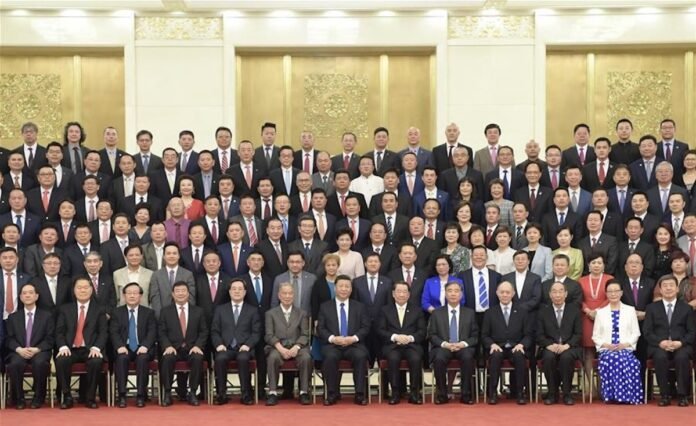
President Xi Jinping of China has summoned overseas Chinese to pool strengths and contribute to the rejuvenation of the Chinese nation. This is not new. The People’s Republic of China has frequently called on the 60 million-strong Chinese diaspora to help the motherland, with periodic pronouncements seeking cultural ties, technical expertise and commercial opportunities all couched in aiding the rejuvenation of the Chinese nation. 

Most famously, 600,000 overseas Chinese heeded the call and returned from Southeast Asia after the People’s Republic was established in 1949. The grandfather of yours truly was among them, founding schools in Fujian province.

At the National Committee of the People’s Political Consultative Conference (NCPPCC) meeting in Beijing on July 27 and 28, a session on overseas Chinese affairs was held for the first time since party and state institutions were overhauled in 2018 – a point that was specifically highlighted by the pronouncement.   

The pronouncement, released on July 29, includes one stunning element: President Xi Jinping has called on overseas Chinese “to leverage their unique strengths in support of the cause of national reunification.”

“National reunification,” said the Global Times (a nationalist newspaper). I had to reread it a couple times. Was it a typo? Surely they meant “national rejuvenation,” right? Who’s against rejuvenation?

In the official Chinese language announcement on the NCPPCC website, President Xi urged “sons and daughters of China at home and abroad to unite and strive (海内外中华儿女团结奋斗)” to achieve a “united and unified Chinese nation, the ‘root’ of Chinese people at home and abroad.”

President Xi Jinping of China has indeed requested the Chinese diaspora to lend our unique strengths towards national reunification. Overseas Chinese will do rejuvenation all day long, but, c’mon, reunification? What is President Xi asking, exactly?

National reunification with Taiwan under the People’s Republic of China is politically anathema in the West, especially the US – ignorantly so, but still. Many, if not most, long established overseas Chinese in America would just as well kick this can down the road for as many decades as possible, hoping events do not outrun their IBGYBG strategy (I’ll be gone, you’ll be gone).

These overseas Chinese have it good in America – respectable careers, spacious homes, children in elite schools, citizenship and excellent fishing. This is the American dream as promised, is it not?

Of late, however, we all sense things have gone awry. This, of course, is not a concern unique to overseas Chinese. It is a common lament in America. As public discourse is captured by deranged culture wars, politics has become gratuitously divisive and the media have become a free-for-all of disinformation and low-wattage slop.

Many overseas China wonder, often secretly, whether they (or their parents) made the right decision decades ago after jumping for joy on receiving US graduate school acceptances. They were at the top of their TPFSZUN (Tsinghua, Peking, Fudan, Shanghai Jiaotong, Zhejiang, USTC and Nanjing) class in physics, chemistry and engineering. A PhD program in America was the obvious next step, one which nobody turned down.

And now they can’t help but wonder. Many are professors or middle managers in the research departments of Fortune 500 companies. It’s fine, they tell themselves. They achieved the American dream. It’s all for the next generation, anyway, and the next generation has clocked +1550 on the SATs, plays the oboe, started a bogus charity, took up a ridiculous sport like squash and is on track to the Ivy League.

Some of them, at least. A few crashed out spectacularly after getting sucked in by some bizarro American subculture – skater, stoner, hip-hop, goth, non-binary. Of course, these are the odd cases. Much more common is the +1550 SAT, cellist, bogus charity founder and fencing medalist who had to settle for Michigan, Illinois or UW while quietly resenting the legacies and underrepresented minorities admitted despite inferior credentials to better schools. 

Our hypothetical overseas Chinese material science professor at the University of Rochester cannot help but wonder. On his recent visit to China, the good professor’s rural roommate, whom he had once lent a modest sum of money to help cover a family emergency, now put him up in a swanky hotel suite well outside the professor’s normal budget. The once impoverished classmate also had his driver chauffer the professor around in a NIO ET9 – the most blinged out car our professor had ever sat in.

A dozen classmates came to the reunion banquet, many high-speed railing from distant cities, each eager to toast the top material science graduate of their University of Science and Technology China (USTC) class. These banquets were much more tolerable fifteen years ago when an American professorship meant something. Now, a roommate ran a massive research department at BYD and party member classmates had been promoted to significant central government positions. Our professor’s two post-doc four PhD student research team suddenly felt like the minor leagues.

And these guys were not even A-players. They were most definitely the B-team. Benchwarmers in university days. The classmates not bright enough to go overseas for graduate school. China’s dramatic rise over the last three decades was carried largely on the shoulders of the B-team as the A-players took their talents abroad – where they often stagnated in the research departments of General Motors or as associate professors in middling universities.

The children of many classmates appeared to be doing exceptionally well – many were attending TPFSZUN while one even made it to the Ivy League (hey, Cornell counts). Our professor was not going to explain how scandalous it was that his salutatorian 1570 SAT son was now attending the University of Illinois (computer science, which is a very big deal for an Asian male). He definitely did bring up the even bigger scandal of his daughter, still in junior high school, who had multiple piercings and a shaved head and who insisted she was non-binary.

Where did it all go wrong? Our professor loved America. Or parts of it. In the beginning. Graduate school was everything he had imagined. Professors were collegial, patient and supportive. Lab facilities were state of the art. The research was cutting edge. Upstate New York’s air was clean and energizing. The autumn foliage was ravishing. Fishing on Lake Ontario was a revelation. Our professor loved bringing visitors from China out on his 25-foot boat to troll for summer salmon – it blew every Chinese man’s mind. In America, middle class people can do such things?

But the decades passed. The Iraq war was a fiasco. The global financial crisis was an embarrassment. Obama turned out to be a historic disappointment. How did that freak Donald Trump become president? How was Joe Biden even worse? How was anyone expected to take last-minute Kamala Harris seriously? And now America is stuck with Donald Trump again? Let’s not even get into Jeffrey Epstein, the war in Iran and the stench of corruption.

America is becoming increasingly unhinged and it is hitting our professor close to home. Scary stories had been circulating through the overseas Chinese academic grapevine. It was just stories until two FBI agents dropped by an old friend’s office unannounced and questioned him for hours about his recent trip to China – whom he met, what materials he left behind, what compensation was given and what he talked about at his Harbin Institute of Technology guest lecture.

To be on the safe side, our professor, long since an American citizen, refrained from seeking funding from the Department of Defense and the Department of Energy and refused invitations from Chinese universities. This was infuriating. Just a few years ago, academic exchanges with China were no big deal if not actively encouraged.

Less fortunate academics who ran afoul of the new rules had their careers destroyed and were bankrupted by legal fees, before being exonerated for lack of evidence. Some, like Harvard chemistry professor Charles Lieber, served jail time and house arrest for bogus charges like making false statements and failure to report foreign income. 

Our professor kept abreast of these cases through the internet, contributed to legal defense funds and worked up a steamy head of indignation at not only the injustice but the ingratitude of it all – who were these meathead FBI agents who couldn’t tell the difference between a mundane guest lecture and offering up America’s nuclear secrets to the Ministry of State Security? He also thanked his lucky stars – there but for being overlooked by overzealous rednecked FBI agents would be I.

This new Cold War was leaving a sour McCarthyish taste in our professor’s mouth. He had been a loyal American. He had believed in democracy, freedom and liberal values. And now, he had to listen to pebble-brained politicians attribute China’s economic performance to Uyghur slave labor and IP theft. Who are these imbeciles? Most of his children’s schoolmates can barely do eighth grade math.

Classmates on raucous WeChat groups who bandied about anti-American conspiracy theories suddenly began to make a lot of sense. “America has no bottom line,” they had said for years, “No act of depravity is geopolitically off limits to Americans.”

“No, no, you don’t understand,” our professor had pushed back in the past. What is there to say today? Nobody will believe any defense of America. Our professor is having a hard time convincing himself.

These days, our professor muted notifications on the WeChat groups dominated by aggressive anti-American classmates. More off-putting than nationalist classmates endlessly posting anti-America videos are MAGA Chinese and their confused defend-America-at-all-costs agenda. What is wrong with these people? Who gave these knuckleheads PhDs? Many had long ago washed out of academic research and now worked as code monkeys or in completely unrelated industries like real estate.

Our professor knew full well why they are like that. They are stuck, just as he is. Twenty-five years ago, they missed the window of opportunity after grad school to participate in China’s miraculous rise. Their scientific careers had not panned out as they had once imagined. Universities in China are not rolling out the red carpet to invite them back as exceptional overseas talent. They hung tight to their long ago decision because the possibility of it being a mistake is too painful to contemplate. Besides, their children are hopelessly American and wouldn’t survive two minutes in the gaokao curriculum. Our professor winced as he thought of his non-binary daughter in goth makeup.

Yes, MAGA Chinese are American through and through – no better and no worse than the rednecks who made Trump president (twice) and who believed every bit of media slander about China. Overseas Chinese come in all shapes and sizes. MAGA Chinese were transparently shifting resentment for their personal misfortunes onto Xi Jinping and the Communist Party as if China’s economic success were somehow responsible for their American failure.

Our professor, however, is determined to be rational. He is too smart to let pride and personal circumstances dictate his judgement. MAGA Chinese are wackos. Almost as crazy as Falun Gong cultists. Why are so many overseas Chinese so deranged? Because that’s how China gets rid of its crazies, he joked to himself. He was only half joking.

Every Chinese, from street sweeper to Politburo member, has a deeply (or not) buried ambition to be emperor. This is a vestige of Chinese history, which is replete with commoners who – through talent, charisma, cunning and ambition – overturned centuries-old orders, founded dynasties and became emperor.

The frustration of this ambition sets off dark impulses in the psychologically unstable. This can be highly destabilizing, like a penchant for triads and secret societies, or a minor nuisance, like troublemaking village idiots (e.g., Lu Xun’s Ah Q). Modern China appears to have found a solution to this millennia-old problem. These troublemakers are now shown the door and encouraged to indulge their dark impulses abroad.

In 1964, Richard Hofstadler wrote “The Paranoid Style of American politics.” Hofstadler explored the distinct emotional style of American politics characterized by suspicion, heated exaggeration and conspiratorial fantasy. America is fertile soil for China’s wackos.

Of course, none of this is healthy and all of it far from the American ideal – although, let’s not kid ourselves, it is clearly America’s current reality if not the norm. The paranoid style is in charge of American politics at the foothills of a Cold War with China and in the midst of a hot war in with Iran.

And now, China’s President Xi Jinping has called upon the diaspora to help “unite and unify the Chinese nation.” Nothing specific was asked and no timeline was given. But with Taiwan under the auspices of the PRC, America’s military position in Asia becomes untenable. With America as deranged as it is, a united and unified China could be the best thing for everyone involved – especially America itself, which is in Asia by not of Asia (see here) whose presence distorts societies on both sides of the Pacific.

America is, after all, a nation stupid enough to trap itself in another unwinnable Middle East war. The problem with hegemonic empires with forward-deployed militaries is that, over time, the temptation for mischief is irresistible. Term-limited Presidents are presented with a panoply of levers that make things go boom, each flashing “Pull me! Pull me! Pull me!”

This is everything the founding fathers from George Washington to John Qunicy Adams had hoped to avoid, warning the young nation against getting caught in foreign entanglements and searching for monsters to destroy.

Our professor understands much of this intuitively. He has observed “heritage Americans” up close and knows full well that they are constitutionally incapable of geopolitical empathy, totally lacking in theory of mind. What pea-brained halfwits manage to convince themselves that Iranians can be bombed into supporting American and Israeli hegemony?   

President Xi Jinping has long impressed our professor and not just for enraging the wackos. Xi completely changed China’s path of travel – pointing the country in directions the professor had not considered necessar – as if perfectly anticipating a deranged America out to counter China’s rise.

President Xi’s greatest accomplishment, in our professor’s view, is the transformation of public citizenship. Littering, bickering, shoving has all but disappeared along with petty crime (see here). Today, far fewer TPFSZUN grads have starry eyed dreams on grad school overseas and many more return after their studies.

The professor wondered wistfully what might have been. Over half a lifetime had passed. He’d been too young to participate in the first leg of China’s rise and, having gone overseas, he missed the second leg. China is currently on its third leg, which promises technological dominance, civilizational renaissance and social harmony, a far cry from the deranged winner-take-all state of American affairs.

President Xi Jinping has laid down his chips, making a play for the hearts and minds of overseas Chinese:

To realize the great rejuvenation of the Chinese nation, it requires the unity and struggle of Chinese people at home and abroad. The opening year of the 15th Five-Year Plan is to maximize the motivation of overseas Chinese to contribute wisdom and strength to the great cause of national rejuvenation, guide them to participate in Chinese-style modernization on a larger scale, at a higher level and to a deeper extent, share the economic and social development achievements of the ancestral (home) country, and realize their own affairs.

There will be takers. There will definitely be takers. Will it be a symbolic handful or a mass exodus? An exodus would cripple what’s left of American technological leadership. Does America have the wisdom to make a counteroffer? Or, god forbid, will America double down on its paranoia and instigate the exodus.

President Xi is smart, thought our professor. Very smart.

Gaza prepares for largest mass funeral since start of war

0
gaza-prepares-for-largest-mass-funeral-since-start-of-war
Gaza prepares for largest mass funeral since start of war

Gaza City is preparing on Tuesday for the mass funeral of 112 Palestinians from the Abu Sharia and Al-Hasayna families, in what Palestinian sources describe as one of the largest funerals held in the Gaza Strip since the war began.

According to the announced information, the bodies were recovered from a single site. The combined death toll and number of people still missing from the two families at that location stands at 308, making it one of the deadliest incidents resulting from Israeli bombardment of the territory.

The funeral is expected to draw large crowds of relatives and local residents amid deep grief across the Gaza Strip, as search efforts continue to recover missing people and bodies from beneath the rubble in heavily destroyed areas.

The funeral comes months after rescue teams were unable to reach the site because of intense military operations and widespread destruction. Civil defence and rescue crews were only recently able to recover some of the bodies for burial.

READ: Board of Peace envoy urges Netanyahu to halt attacks in Gaza: Report

Civil defence teams and other specialised crews in Gaza continue to recover bodies from the rubble of destroyed buildings despite limited resources and shortages of equipment and fuel. Local authorities say thousands of people remain missing beneath the debris across the territory.

The ongoing war has caused widespread destruction to residential neighbourhoods and infrastructure. Rescue teams continue to face major challenges in reaching many locations because of the scale of the devastation and ongoing security risks, delaying the recovery of many victims’ bodies for months.

UN agencies and humanitarian organisations have warned of a worsening humanitarian crisis in the Gaza Strip as military operations continue, large numbers of people remain displaced, and health and living conditions deteriorate. They have called for improved access for rescue teams and humanitarian aid, enabling search operations to continue and victims to be buried in accordance with humanitarian procedures.

READ: UN: Israel killed more than 150 Palestinians in Gaza during July

Bar-Ilan Research Inspires New Moovit Feature To Get Commuters Walking More 

0
bar-ilan-research-inspires-new-moovit-feature-to-get-commuters-walking-more 
Bar-Ilan Research Inspires New Moovit Feature To Get Commuters Walking More 


A study by a Bar-Ilan University researcher has led to a new feature in the Moovit app that allows public transportation users to choose routes with more walking while reaching their destinations in the same amount of time—or even faster. 

The feature grew out of research by Prof. Jonathan Rabinowitz, a wellness researcher at Bar-Ilan University’s Weisfeld School of Social Work, who studied the commuting habits of 2,200 public transportation users. The study found that passengers could increase the amount they walked during their journeys without extending travel times. 

Seeking to apply the findings beyond academia, Rabinowitz approached Moovit with a proposal to incorporate an option that would encourage users to select routes involving more walking without adding time to their trips. 

Moovit subsequently integrated the feature into its app, giving users the ability to prioritize routes that include additional walking while maintaining comparable travel times. 

The initiative is part of Rabinowitz’s broader effort to translate academic research into practical tools through partnerships with industry. 

“I study wellness, and through collaborations with various companies I’m always looking for ways to bring research to a broad audience,” Rabinowitz said. “One idea was to approach Moovit and suggest a feature that would help people incorporate more walking into their public transportation journeys. Our study of 2,200 passengers showed that it’s possible to walk more while arriving at your destination in the same amount of time–or even less. It’s a win-win: more physical activity without spending any extra time.” 

The feature is based directly on the study’s conclusion that modest changes to route selection can increase daily physical activity without requiring commuters to devote additional time to their journeys. 

Bar-Ilan University said the collaboration demonstrates how academic research can be adapted into consumer technology designed to promote healthier daily habits on a large scale, potentially reaching millions of public transportation users through the Moovit platform. 

0FansLike
0FollowersFollow
0FollowersFollow
0SubscribersSubscribe
- Advertisement -
Google search engine

Recent Posts