24.8 C
London
Thursday, July 30, 2026
Home Blog

Myanmar’s junta slowly but surely winning its war with ASEAN

0
myanmar’s-junta-slowly-but-surely-winning-its-war-with-asean
Myanmar’s junta slowly but surely winning its war with ASEAN

The multidimensional crisis that has gripped Myanmar since the military coup on February 1, 2021, has entered a new chapter — one increasingly complex and riddled with contradictions.

The move by military chief and coup maker Senior General Min Aung Hlaing to overthrow the civilian government of the National League for Democracy (NLD) did not merely halt the country’s democratic transition by force.

It triggered a total collapse of domestic stability, sparked a massive wave of civil disobedience, led to the rise of People’s Defense Force (PDF) militias, and escalated armed conflicts involving various ethnic armed organizations (EAOs).

Worse, the junta’s brutal response — marked by mass killings, arbitrary detentions, aerial bombardments of civilian populations and blockades on humanitarian aid — has mutated into a direct threat to Southeast Asia’s geopolitical stability.

For the Association of Southeast Asian Nations (ASEAN), the political tempest in Myanmar represents an existential test for the ASEAN Charter and the principle of regional sovereignty. From the outset, the regional bloc’s response has been crippled by deep internal fractures.

Member states further from the instability such as Indonesia, Malaysia, Singapore and the Philippines have repeatedly demanded an end to the violence and the restoration of democracy. Mainland states closer to the tumult such as Thailand, Laos, Cambodia and Vietnam, by contrast, have tended to shield themselves behind the bloc’s non-interference principle, viewing the crisis as a purely domestic affair.

Consequently, the collective effort manifested in the Five-Point Consensus (5PC) in April 2021 has proven toothless on the ground. Demands for a cessation of violence, inclusive dialogue, the appointment of a special envoy and the delivery of humanitarian aid through the AHA Centre have failed entirely.

This failure stems from a single, critical structural flaw: the complete absence of formal enforcement mechanisms and sanctions within the ASEAN Charter. The Myanmar military, or Tatmadaw, has shrewdly exploited this loophole to ignore its regional commitments while tightening its domestic grip.

Entering 2026, the Tatmadaw shifted its tactics to break the global diplomatic stalemate. Through a tightly controlled, artificial election held early in the year, the junta sidelined the opposition, dissolved direct military rule and declared a nominal civilian government, installing Min Aung Hlaing as president.

The maneuver was designed to manufacture cosmetic constitutional legitimacy, in hopes of coaxing ASEAN into restoring Myanmar’s full political participation. While most ASEAN members rejected this political theater for its lack of inclusivity, the bloc’s conflicting perspectives still leave the junta room to maneuver.

Two-pronged strategy

An informal foreign ministers’ meeting in Bangkok on July 12, 2026, offered the clearest reflection yet of ASEAN’s fragmented, multilayered diplomacy.

Initiated by the Philippines as 2026 ASEAN chair and facilitated by Thailand, the meeting brought regional diplomats face-to-face with the junta’s newly appointed foreign minister, U Tin Maung Swe, for the first time since 2021.

The approach was framed as offering an “olive branch” — flexible, unconditional face-to-face dialogue — while firmly maintaining “no political concessions” regarding the junta’s legitimacy. However, the outcomes from the Bangkok negotiating table only confirmed an acute asymmetry in commitment.

ASEAN stood firm in refusing to legitimize the January 2026 elections and continued to block Myanmar from high-level summits. On the other hand, the bloc’s primary demands — a halt to offensive military operations, inclusive dialogue with the National Unity Government (NUG) and physical access for the special envoy to meet with Aung San Suu Kyi — were flatly rejected by the Tatmadaw.

Instead, the Myanmar junta offered only minimal, technical concessions. It permitted the expansion of the AHA Centre’s humanitarian mission within strictly limited territories, offered vague promises regarding medical care and the potential transfer of Suu Kyi to house arrest, and opened the door to cooperation on cross-border cybercrime.

This pattern exposes a survival strategy that has remained consistent since 2021: engaging regionally on a tactical level to ease international pressure while systematically sabotaging the substance of peace on the ground. The Tatmadaw continues to exploit ASEAN’s weak internal coordination to secure bilateral deals that bolster its own position.

External actors, multidimensional costs

The Myanmar military’s stubborn defiance of regional diplomatic pressure is heavily backed by the geopolitical calculations of key external players. China, India and Russia have acted as the primary lifelines keeping the regime afloat amid global isolation.

China has deployed a highly pragmatic diplomacy aimed at securing its Belt and Road Initiative (BRI) investments, particularly the trans-Myanmar oil and gas pipelines and the Kyaukphyu deep-sea port in the Bay of Bengal. A high-profile visit by Chinese Foreign Minister Wang Yi to Naypyidaw in April 2026 underscored Beijing’s de facto recognition of the military-backed government.

Meanwhile, India has pursued a dual-track strategy to safeguard its northeastern border, protect the Kaladan multimodal transit project and secure access to critical minerals. Russia, on the other hand, has positioned itself as the primary supplier of heavy weaponry and military technology.

Moscow’s supply of fighter jets and attack helicopters has provided the Tatmadaw with the tools needed to sustain its offensive air campaigns while simultaneously offering a diplomatic shield at the UN Security Council.

Despite this external backing, ASEAN’s regional isolation has still inflicted severe, multidimensional damage on Naypyidaw. Economically, being frozen out of the ASEAN Economic Community (AEC) single market triggered a massive flight of foreign capital, particularly from Singapore and Thailand, contributing to an 18% GDP contraction at the start of the crisis and a chronic shortage of foreign exchange.

Geopolitically, the isolation perpetuates Myanmar’s pariah status on the global stage, trapping the country in a dangerous, asymmetric dependency on China and Russia. To mitigate these shocks, the junta has been forced to rely heavily on illicit and semi-legal border trade involving commodities such as jade, timber and rare earths.

Radical repositioning of regional centrality

The diplomatic experimentation in Bangkok opens a highly volatile and uncertain chapter for the future of Southeast Asia. Current analyses point to three potential scenarios.

The first, and most probable, is creeping normalization. In this outlook, ASEAN gradually succumbs to geopolitical pragmatism, driven by economic pressures and border security concerns felt by mainland neighboring states. The result would be de facto recognition of the nominal civilian government under Min Aung Hlaing, effectively pushing the pro-democracy movement off the formal stage.

The second scenario is ASEAN paralysis and internal fragmentation. The emergence of uncoordinated initiatives risks creating “parallel diplomacies,” in which Thailand operates via the “Bangkok Process” while Indonesia and Malaysia hold the line through the “Jakarta Club.”

This fractured voice would dissolve ASEAN centrality, leaving the bloc highly vulnerable to the junta’s divide-and-conquer tactics. The third and least likely scenario is a decentralized diplomatic breakthrough, in which ASEAN undergoes a paradigm shift, acknowledges that the Tatmadaw no longer controls the majority of Myanmar’s territory, and begins engaging in direct functional cooperation with non-state actors along the borders.

To avoid sinking into organizational paralysis, ASEAN must radically reinvent its tactical and strategic approaches. First, there must be absolute synchronization, unifying all informal and Track 1.5 diplomatic channels into a single command under an ASEAN Joint Contact Group.

Second, the bloc needs to institutionalize an “ASEAN Minus X” decision-making mechanism for humanitarian affairs, allowing cross-border aid delivery to be approved without requiring consensus, thereby bypassing junta representatives who frequently block aid.

Third, formal, territory-based engagement with non-state actors such as the SCEF, KIO, KNU and KNPP must be implemented immediately, acknowledging that de facto governance across large swaths of the borderlands is held by ethnic armed organizations rather than the military.

Fourth, the region must establish strict, time-bound benchmarks backed by progressive sanctions; if there is no significant reduction in airstrikes within the next six months, ASEAN should freeze Myanmar’s technocratic participation across the bloc’s sectoral bodies.

Finally, using the East Asia Summit forum, ASEAN must rally coordinated pressure on China and India, making clear that unconditional support for a fragile junta will only prolong the civil war and ultimately jeopardize their own long-term investments.

Without the political courage to execute this radical repositioning, ASEAN risks becoming a passive bystander to the total disintegration of one of its own members.

Ronny P Sasmita, PhD, is senior international affairs analyst at the Indonesian Strategic and Economic Action Institution, a Jakarta-based think tank.

Chrome may get faster updates with no restart required

0
chrome-may-get-faster-updates-with-no-restart-required
Chrome may get faster updates with no restart required

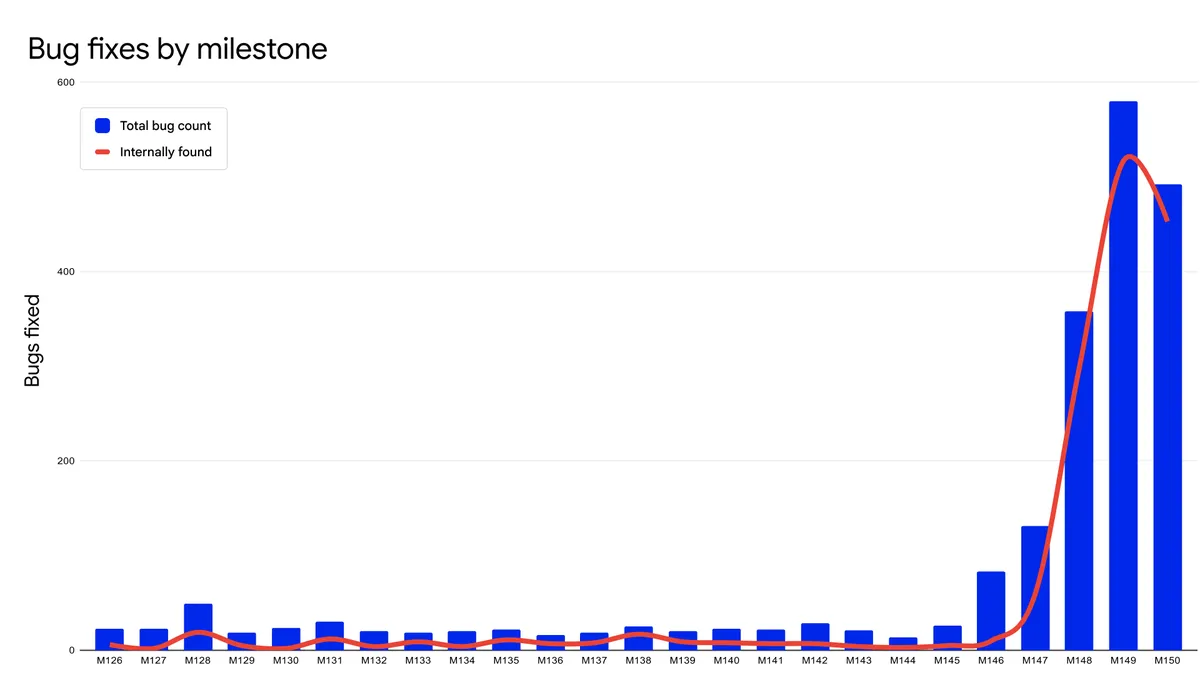
With Chrome, Google pioneered the rapid release model for browser security. Now, Google says updates may need to change in the face of AI security analysis. According to the company, the number of bug fixes in Chrome releases has skyrocketed in recent months because AI is detecting so many flaws. We could be looking at more frequent updates soon, but Google is also working on ways to get those updates rolled out without bothering you as much.

Google has released two major Chrome milestone builds recently—Chrome 149 in early June and Chrome 150 just a few weeks later. These two updates had a total of 1,072 bug fixes, which is more than the previous 23 releases combined. Such is the impact of giant cybersecurity AI models that can probe software for vulnerabilities at light speed. Some of these vulnerabilities were serious, too, with one bug hiding in the Chrome codebase for 13 years. If it had been exploited, an attacker could have bypassed the Chrome sandbox to make the browser access local files.

Number of security bugs fixed in recent Chrome Stable release milestones.

Number of security bugs fixed in recent Chrome Stable release milestones. Credit: Google

With the vastly higher rate of vulnerability identification, Google is worried bad actors will also be able to identify software flaws faster. Its goal is to ensure your Chrome install is always up to date or as close to it as possible. The first step toward that is the two-week update cycle the company announced earlier in 2026, but it’s now piloting a system that would update Chrome twice per week. This would get patches out the door faster, ensuring that browsers are ready for the threat of AI-fueled attacks.

However, not everyone updates Chrome as soon as new versions are available. While Chrome will download and stage updates promptly, it relies on users to restart their browsers to complete installation. Google is looking at several ways to streamline that process.

In Chrome 150, Google implemented a new update mechanism that takes advantage of the way macOS handles applications. Apps typically continue to run in the background even if their foreground windows are closed. If you close Chrome 150 on macOS without quitting, Chrome can take advantage of that state to update the browser install with what Google calls a “zero window restart.” When you next open a Chrome window, you’ll see the update has been taken care of.

The zero window restart on macOS.

The zero window restart on macOS. Credit: Google

Google is also working on a technique it calls “dynamic patching.” The intent is to improve Chrome’s security model to allow for patches to be installed automatically without a browser restart. Google says it’s still “investing” in dynamic patching, but it hopes to have more to share on this in the future.

So, looking ahead, you should see more frequent Chrome updates, and they could be installed more smoothly on macOS. If dynamic patching works out, there will be even more updates you never notice.

Euro Zone Growth Beats Forecasts as AI Investment Lifts Economy

0
euro-zone-growth-beats-forecasts-as-ai-investment-lifts-economy
Euro Zone Growth Beats Forecasts as AI Investment Lifts Economy


The euro zone economy grew faster than expected last quarter as surging investment in AI, ample ​government spending and several one-off factors more than offset a drag from high energy costs and the war in Iran.

The economy of the 21 ‌nations sharing the euro currency expanded by 0.4% on the quarter, above modest expectations for 0.2% in a Reuters poll as many of the bloc’s biggest nations outperformed forecasts, data from Eurostat showed on Thursday.

Compared with the same quarter last year, growth in the bloc of 360 million people accelerated to 1.0%, above expectations for 0.5%, as some earlier growth figures were also revised ​up.

The second quarter was initially expected to be the start of a rebound after a difficult and turbulent year for Europe. But soaring energy costs ​sapped much of the momentum and most forecasters now see full-year growth of less than 1% this year, below the bloc’s ⁠already much reduced potential.

Although growth was better than forecast in the quarter, it remains weak and stands in stark contrast to the continuing boom in the U.S., which ​will likely see its economy grow more than 2% this year, fuelled in part by oversized and potentially unsustainable private sector spending on AI.

Still, there appear to be ​some bright spots for the euro area and the bloc is showing the sort of resilience seen in previous downturns, including the COVID-19 pandemic and after Russia’s invasion of Ukraine.

Adding to the resilience narrative, unemployment held steady at 6.3% in June, defying expectations for labour market softening. A key economic sentiment indicator, also published on Thursday, meanwhile rose more than expected on better industrial ​and services sentiment.

Business investment in AI has been soaring in Europe as well, household consumption has held up against gloomy expectations, and Germany’s government is slowly but ​surely ramping up its long-promised spending on defence and infrastructure.

Industry, in the doldrums for years, has also held up against high energy costs surprisingly well and may have added to growth, ‌unlike in ⁠previous years, when it was a persistent drag.

Germany, the world’s third-biggest economy, France and Italy all expanded by 0.2% on the quarter, while Spain, the bloc’s outperformer for years now, grew by 0.7%, above expectations for 0.6%. The Netherlands meanwhile expanded by 0.4%, twice the expected rate.

GROWTH BOOSTERS MAY NOT LAST

“However, the recent escalation of the Middle East war means that more time is likely to pass before a final agreement is reached between the U.S. and Iran,” Commerzbank economist Jörg Krämer said. “This is ​likely to dampen the economic recovery in ​the second half of the year.”

Still, ⁠strong figures on Thursday suggest Germany could grow by 1.0% this year instead of the 0.6% seen earlier, Krämer added.

Others meanwhile point out that the economy, including the bloc’s vast industry, benefited from one-offs that may not last.

High energy costs and shortages ​of crude products may have affected Asian firms more, forcing buyers to turn to Europe, while some orders may also ​have been brought forward ⁠on fears that product shortages could become more acute later in the year.

The bloc also got a boost from 3.9% quarterly growth in Ireland, which was driven by multinational firms in IT and communication that are located there for tax purposes.

Irish GDP, though small, is so volatile — it contracted by 7% last quarter — that it can swing the euro ⁠zone number ​significantly and some now prefer to exclude it when studying underlying trends.

Industry’s boost and the quick ​Irish expansion may not last, suggesting the third quarter will be tough as the war keeps dragging on and high energy costs are slowly filtering down to consumers via petrol, airfare and holiday prices.

Household confidence ​may weaken as inflation erodes real incomes and higher interest rates at the European Central Bank also put pressure on consumers.

Source:  Reuters

These psychedelic images reveal what your weather app isn’t telling you

0
these-psychedelic-images-reveal-what-your-weather-app-isn’t-telling-you
These psychedelic images reveal what your weather app isn’t telling you

My weather app says it’s 80 degrees, but that’s a lie. I’m standing on a football field at Portland State University with professor Vivek Shandas, and we can feel intense heat radiating off the grass. Instead of being made of cellulose, these blades are plastic, because this field is artificial turf. Whereas natural vegetation has a cooling effect on a landscape — it “sweats” water vapor — this stuff absorbs and radiates the sun’s energy, making the ambient temperature especially uncomfortable.

Shandas, who’s founder and director of the Sustaining Urban Places Research Lab, can prove it. He hands me a Flir (forward-looking infrared) camera that I attach to my phone and control through an app. I point it at the ground and it gives me a color-coded view of the temperature at any given spot — approaching 150 degrees Fahrenheit in parts of the ground beneath my feet, compared to as low as 100 degrees in a patch of real grass in the sun next to it. (In the video below comparing the two, brighter oranges and yellows indicate higher temps, with purple showing lower readings.) We’re actually picking up significant differences even within the field: The darker greens are about 10 degrees hotter than white lines, which are bright enough to reflect some energy away — the same reason you feel cooler wearing lighter colors on a hot day.

At 1:45 in the afternoon, conditions are relatively mild so far. “If you think about a 100-degree day on a soccer game or a football game turf like this, I mean, those ankles are going to blow out, those knees are going to blow out,” Shandas says while pointing his own Flir camera at bits of turf. “Those kinds of temperatures are not good for the joints or physiology generally.”

We walk up a small hill at the edge of the field to get an overview of the I-405 highway. These multilane thoroughfares are consistently among the hottest parts of a city, because the surface soaks up the sun and vehicles generate still more heat with the friction of their tires. In addition, an internal-combustion engine produces a substantial amount of waste heat. You can think of them as thousands upon thousands of little heaters zooming past the Portland State campus every hour. I point the Flir camera at the lanes and from a few hundred feet away get readings approaching 120 degrees — still far cooler than the artificial turf — and pan down to the shaded vegetation in front of us, where it’s in the mid-80s. 

For pedestrians, shade is especially important on sidewalks. Making our way along the side of the field, pavement in the sun is in the mid-130s, dropping 50 degrees in adjacent shaded areas (shown below).

Back in his car, Shandas attaches a small magnetic sensor to the roof. A different app feeds me a constant stream of readings. Here in Portland’s downtown, with its tall, shade-bestowing buildings, it’s 84 degrees. As we move east across the Willamette River, it dips to 82 degrees before steadily climbing — 85, 86, 87, 88, and finally topping out at 89 F. 

There are many reasons for these disparities. The more trees a neighborhood has, the more shade it gets, and the more of that “sweating” cooling effect. (That low reading of 82 came as we drove down a tree-lined street in a residential neighborhood.) Lower-income areas tend to have much less tree cover, and therefore more open pavement that absorbs heat and releases it at night: The highest readings we recorded were in areas with wide roads, few trees, and low buildings, which provide minimal shade. So not only do these areas suffer higher highs during the day, but their residents don’t enjoy as much of a respite in the evening, compounding the stress on their bodies. This is especially dangerous for people who can’t help but be outside, like construction workers and the unhoused. 

Depending on where you live in a city, this heat unfolds in unique ways, hour after hour. “Places with the most buildings and infrastructure tend to be the hottest in the morning,” Shandas says, “but often some of the taller buildings keep it much cooler relatively in the daytime.” Areas with shorter buildings and few trees get blasted all day, taking a heavy toll on residents.

The hotter the planet gets, the wider these disparities grow. On this 80-degree day we’re finding differences of up to 7 degrees between neighborhoods. But during a previous heat wave, Shandas recorded 125 degrees in one notoriously hot area on the city’s east side, compared to 99 in a hilly, verdant neighborhood. “On a 90-degree day, the difference is about 15 degrees to 18 degrees,” Shandas says. “On a 110-degree day, it goes up to 20 to 25 degrees, and on. I don’t know what that limit is. I don’t think I want to find out.”

Read Next

The first step to helping urbanites cope is to understand the nuances of heat, hence Shandas’ regularly driving around with a sensor on his roof. (He’s also trying to get the devices on public buses, which run reliable routes throughout the region.) Different solutions will do different things in different neighborhoods. Portland and other cities, for instance, might prioritize planting trees in areas where heat accumulates and residents don’t have air-conditioning. (Better yet: They can develop urban farms, which produce nutritious food in addition to reducing temperatures.) They might also take the simple step of painting more roofs white, which, like the lines on the football field, bounce energy back into space. (Better yet: Move the urban farms onto rooftops.) Or more simply, they can identify particularly hot bus stops and shade them. 

“There’s just not one solution ever for these things, right?” Shandas says. “And so what we’re trying to do is: What’s the right mix of things that will actually reduce the likelihood of heat-related illnesses?”

For cities, extreme heat is now a many-headed emergency. The hotter it gets, the less productive workers become and the more economies suffer. Heat already kills far more Americans than any other natural disaster, and that only stands to worsen. And the electrical grid is straining as more people are forced to install air-conditioning. “Everything is dependent on that peak temperature,” Shandas says. “It is going to be pretty telling in the coming years, as we see it just crank up more and more.”


Free Speech Crackdown: Germany Deports Bob Vylan Frontman for Anti-Israel Chants

0
free-speech-crackdown:-germany-deports-bob-vylan-frontman-for-anti-israel-chants
Free Speech Crackdown: Germany Deports Bob Vylan Frontman for Anti-Israel Chants


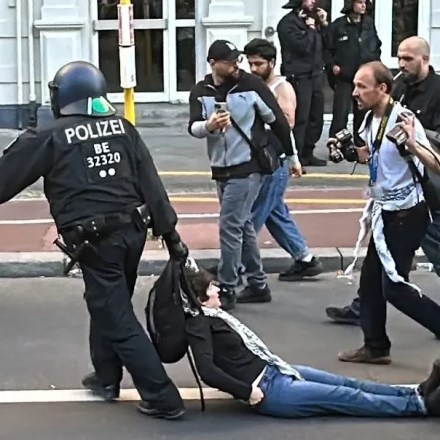
The frontman of British punk rap band Bob Vylan was denied entry to Germany, detained at the Berlin airport, and ultimately deported to the United Kingdom last month due to his pro-Palestine statements.

German federal police justified deporting the band’s vocalist on June 15, referencing a performance at the Glastonbury Festival in England in 2025 where Bob Vylan led a chant of “Death, death to the IDF,” or the Israel Defense Forces.

Authorities later revoked the entry ban against the singer, whose legal name is Pascal Robinson-Foster, in a letter in late July, but refused to explain why it had been rescinded — or how the decision to impose it had been made in the first place.

A police file on Robinson-Foster obtained by The Intercept alleges that he disseminated antisemitic narratives and Hamas propaganda that could “radicalise certain segments of the [German] population” and serve as “ideological justification” for terrorist groups or individuals. It also says that Robinson-Foster poses a threat to Germany’s public security and public order. Allowing him into the country would cause “considerable reputational damage” by creating the impression that Germany was making “no effort to prevent the spread of the propagated antisemitism and the associated calls to violence.”

The German Federal Police declined to answer detailed questions about the now-revoked entry ban, citing public security interests and data protection. In response to a list of questions about the decision-making process behind the ban, its legal basis, and why it was lifted, Bundespolizei spokesperson Nikolai Jaletzke told The Intercept the agency does not comment on individual cases, internal threat assessments, or inter-agency coordination.

“It’s frankly absurd to suggest that I’m a threat to German national security,” Robinson-Foster told The Intercept. “It’s equally absurd to claim that we spread propaganda on behalf of any proscribed organization.”

“It’s frankly absurd to suggest that I’m a threat to German national security.”

Bob Vylan’s Glastonbury performance last year drew widespread international attention at a moment when an increasing number of artists were speaking out against Israel’s destruction of Gaza. The performance — and the chant of “Death, death to the IDF” — also drew condemnation from politicians, including then-U.K. Prime Minister Keir Starmer, and several pro-Israel Jewish organizations. Germany’s antisemitism commissioner, Felix Klein, described the performance as “hate speech and incitement” and called on concert organizers in Germany to cancel Bob Vylan shows.

Following that performance, Robinson-Foster and his bandmate Wade Laurence George had their U.S. visas revoked. However, Germany is the first country to deny entry and deport a member of the band.

The documents reviewed by The Intercept concern only the implementation of the ban — not the decision-making process behind it. “Our position is simple,” said Alexander Gorski, the German lawyer representing Robinson-Foster. “There is a constitutional right to know the file on which such a decision is based.”

Following Robinson-Foster’s deportation, Gorski submitted a request with the Federal Police headquarters in Potsdam seeking both the deletion of the entry ban from Germany’s national register and access to the files underlying the decision. Soon after, federal police rescinded the entry ban without explaining why it had been lifted. The two-page response, reviewed by The Intercept, states that no additional information could be disclosed.

“It is, of course, good that the ban is now lifted,” Gorski told The Intercept. “But from a rule-of-law perspective, it is deeply problematic that someone can be barred from entering the country over a political statement that is not a criminal offence — and then be denied access to the files.”

“If an artist wants to comply with the law, they have to know what the rules are.”

Gorski filed a formal objection seeking access to the internal files that led to the decision. He argues that Robinson-Foster has a right to know the factual and legal basis on which he was barred from entering Germany — not only to challenge the lawfulness of the measure, but also to understand what conduct German authorities consider grounds for refusing entry in the future.

“If an artist wants to comply with the law, they have to know what the rules are,” Gorski said.

It’s unclear how a British musician who hasn’t been charged with an offense in either the U.K. or Germany came to be classified by German authorities as a threat to public security. British police previously closed an investigation into Bob Vylan’s Glastonbury performance, concluding there was “insufficient evidence to support a realistic prospect of conviction.”

“There is a lack of crime, not a lack of evidence,” Robinson-Foster told The Intercept in response. “It’s on the BBC. They can just go and watch it.”

“There is a lack of crime, not a lack of evidence.”

According to Gorski, the case is yet another example of a broader shift in the use of German migration law against pro-Palestine figures. Last year, Berlin authorities moved to deport four foreign residents over their participation in protests against Israel’s genocidal war on Gaza.

Gorski argues that German authorities are increasingly using immigration law “to silence unwanted voices” by preventing critics of Israel from entering Germany or removing them from the country. Similar concerns have been raised by others, including Thomas Oberhäuser, chair of the German Bar Association’s executive committee on migration law, who argues that immigration law is increasingly used for political ends.

Gorski pointed to previous cases involving the British Palestinian surgeon Ghassan Abu Sitta and former Greek finance minister Yanis Varoufakis, both of whom he has represented in similar proceedings. German authorities sought to prevent them from entering the country to participate in Palestine-related events.

Robinson-Foster told The Intercept that he traveled to Germany in June in a private capacity to visit friends and music collaborators ahead of the release of the band’s new album. Bob Vylan has toured Germany in recent years, and Robinson-Foster hopes to return soon. Even though authorities rescinded the entry ban, Robinson-Foster said the incident continues to shape his travel plans, saying it “opened a Pandora’s box.”

“It would seem as though the refusal of entry into Germany has now sparked this continued border confusion whenever we try to enter countries,” he said.

Since his deportation, Robinson-Foster said both he and his bandmate have been stopped for questioning at European borders. In one instance, Belgian border officials questioned the band’s drummer about the incident in Germany despite not having traveled there himself, Robinson-Foster said.

“We have shows that we are wanting to put on in Germany,” he said. “It’s a place that we’ve toured for the last five years. For us not to be able to connect with the people that support us there would be a shame.”

Pakistan, Saudi Arabia welcome Jordan proposal for Arab-Islamic meeting on Palestine

0
pakistan,-saudi-arabia-welcome-jordan-proposal-for-arab-islamic-meeting-on-palestine
Pakistan, Saudi Arabia welcome Jordan proposal for Arab-Islamic meeting on Palestine

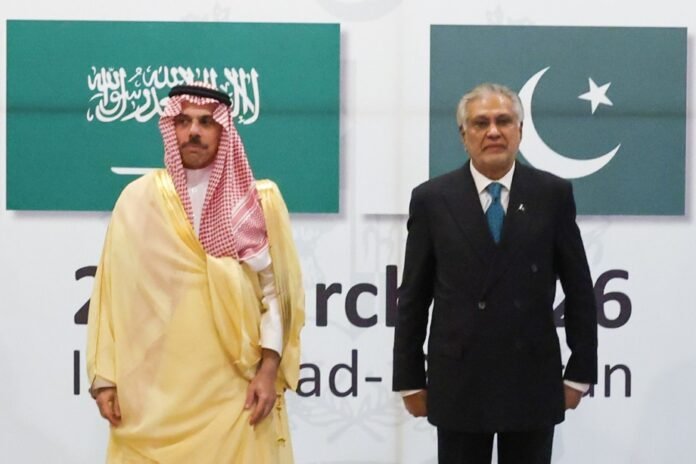
Pakistan and Saudi Arabia welcomed Jordan’s proposal to convene a meeting of Arab and Islamic countries to address the worsening situation in Palestine, particularly in occupied East Jerusalem, Pakistan’s Foreign Ministry said Thursday, Anadolu reports.

The announcement came after Pakistan’s Deputy Prime Minister and Foreign Minister Mohammad Ishaq Dar held a telephone call with Saudi Foreign Minister Faisal bin Farhan Al Saud, a ministry statement said.

According to the ministry, the two foreign ministers exchanged views on regional and international developments, including recent developments in the Red Sea and the Bab al-Mandeb Strait.

It said the two sides welcomed Jordan’s initiative to bring together Arab and Islamic countries to discuss the situation in Palestine, particularly occupied East Jerusalem, and agreed to remain in close contact on regional issues.

Separately, Dar also spoke by telephone with Malaysian Foreign Minister Mohamad Hasan, according to the ministry.

READ: Pakistan worried about being drawn into US-Iran conflict after Houthis attack Saudi Arabia

The two ministers discussed regional and international developments, including the situation in Palestine and occupied East Jerusalem, the ministry said.

Israeli forces conduct near-daily military raids across the occupied West Bank, frequently carrying out arrests and attacks against Palestinians and their property.

The escalation comes amid intensified Israeli military and occupier attacks across the West Bank since the start of Israel’s genocidal war on Gaza in October 2023.

According to official Palestinian figures, at least 1,182 Palestinians have been killed, around 13,000 injured and nearly 24,000 arrested in the occupied West Bank during that period.

The pace of Israeli raids and occupier violence has further intensified since Friday’s incident in the town of Tell, near Nablus, where four Palestinians and two Israelis were killed during clashes involving Israeli occupiers, Palestinian residents and the Israeli army.

READ: Saudi Arabia hosts international meeting to create multinational maritime defense alliance for Bab al-Mandab

The Washington dissensus on Myanmar

0
the-washington-dissensus-on-myanmar
The Washington dissensus on Myanmar

US President Donald Trump has remade American foreign policy into a dangerous mix of belligerence, atrocity crimes and incoherent lunacy.

The broad elements of the Trump administration’s almost non-existent Myanmar policy are well known. The gutting of the US Agency for International Development (USAID), cancellation of a scholarship program, a travel ban for most Myanmar citizens and threats to people on Temporary Protection Status (TPS) visas are consistent with the new cruel xenophobia.

Congress is little better. Myanmar was long a bipartisan issue. Yet a coherent and committed policy for post-coup Myanmar is now a disappearing act akin to the mystery of Senator Mitch McConnell’s recent absence from public view for several weeks. Probably the last ardent lawmaker defending detained leader Aung San Suu Kyi, McConnell is evidently not compos mentis personally, let alone to events in far-away Myanmar.

The US seems more obsessed with rare earth metals, increased trade, cracking down on scam centers and increasing Sinophobia. Myanmar is viewed in Washington almost exclusively as a vassal state of Beijing. Trump and MAGA care little about human rights in the United States. Why would an authoritarian war zone like Myanmar loom large in their vicious worldviews?

This obsession with China as the marionette master of Myanmar has been one of the twin pillars of Myanmar thought, such as it is, since the 2021 coup. The other is a dangerously unconvincing narrative that the opposition National Unity Government (NUG) enjoys not just a monopoly of popular support but “controls” most of the country and is close to military victory.

These narratives are being spun by a mixture of feckless foreign activists, Myanmar Christian leaders pushing a religious freedom agenda and increasingly conspiracy theory-laden public commentary and analysis.

Assuming there is anyone in the US Capitol reading these obscure articles, incredulity will likely be the result. Trump barely reads anything his own government hands him: why would he peruse anything written about Myanmar?

The former US diplomat Dan Swift wrote in Asia Times that the arrest in China of prominent Myanmar intellectual Min Zin on June 3 was “Beijing’s offering to Naypyidaw — a public demonstration of loyalty” after Donald Trump visited China and President Xi Jinping.

The logic was that China needed to secure access to the energy pipelines running from Kyaukphyu in Rakhine State, besieged by the insurgent Arakan Army (AA) for two years, to counter its energy transport vulnerability in the Strait of Malacca.

Georgetown Security Studies Review published an article called “The Pipeline that Fuels Myanmar’s War”, claiming much of the civil war was about China’s need to secure the two energy pipelines.

There, of course, are more pressing issues driving the conflict across Myanmar than China’s energy supplies. The author suggested the US government support the armed opposition against the Myanmar military, an option that seems as unlikely now as it did in 2021.

In a twist of logic, a recent piece from Responsible Statecraft, “As Myanmar collapses, it’s time for China to step up and be the hero”, argues it is in Beijing’s interests to overthrow the Naypyidaw regime.

The author, Doug Bandow, is a senior fellow at the conservative Cato Institute think tank and a former special advisor to President Ronald Reagan. Reagan was president in the 1980s. Who is next to rush to liberate Myanmar? Airwolf? The A-Team? And are we talking about the same China?

A recent commentary in Jamestown (not a very prominent think tank) made the obvious point that the Arakan Army was the most effective insurgency in Myanmar: something well known for years to even the casual Myanmar observer.

Some pro-NUG writing is not just misleading, but laughable schmaltz. Seeking inspiration from the American Revolution for Myanmar’s post-coup resistance, as one recent piece from the Southeast Asia Peace Institute argued, is silly indulgence.

One major failing of the Trump administration is the failure to act on the detention of Min Zin, an American citizen, who has reportedly been charged with espionage. The fact is the motivation behind Min Zin’s arrest is still a mystery. Yet the US government seems little concerned, at least in public (consular access to the scholar has been granted).

Secretary of State Marco Rubio’s press conference on July 22 was deplorably ill-informed.

Question: “Has Min Zin been recognized as wrongfully detained?”

Rubio: “Who?”

Question: “Min Zin, who was arrested right after the summit, right after the Trump-Xi summit.”

Rubio: “The scientist?

Question: “(N)o, not the scientist.  He was a researcher, a scholar.”

Rubio: “Yeah, the researcher, geologist.”

Question “…as he been classified as wrongfully detained by the State Department?” Rubio: “I don’t believe so yet.”

Rubio concluded by remarking, “there’s some conditions that have been shifting with regards to Myanmar or Burma over the last few months that we’re keeping an eye on and see if there’s opportunities to engage.”

Is it more ominous to have attention from Rubio and Trump or not?

As a pure coincidence, the American businessman Adam Castillo, former head of the American Chamber of Commerce in Myanmar (AMCHAM), was detained by Myanmar authorities after flying into Yangon airport in mid-June. Castillo was the founder of AGS Myanmar, self-described as the “the country’s premier security risk management firm.”

Yet it is unlikely that Castillo’s clumsy efforts on conflict tracking, or his astonishingly absurd book “Finding Our Voice-A Story of Leadership in Crisis and the American Spirit Abroad (its cover showing the author draped in the American flag with Yangon’s Shwedagon pagoda in the background), were causes for his arrest.

It is reportedly related to a business dispute instead. The Trump administration doesn’t seem seized by Castillo’s case either.

The American human rights advocacy organization Fortify Rights released a statement on June 15 claiming both cases, Min Zin and Castillo, were related – albeit with no credible evidence, just speculation.

Just as disbelief at the recklessness of such a conflation was spreading, Fortify Rights issued a retraction two days later, saying, “following new developments and additional information regarding the arrest of Mr. Castillo. Their respective cases are linked in no way,” the retraction claimed. This form of hair-trigger media alarmism is dangerous for Myanmar writ large.

One element of this opinionated slop is the shrinking space for more honest reporting. Myanmar social media vilification of Min Zin in recent weeks has been vile, as keyboard commentators charge him with collaboration for seeking principled, evidence-based solutions to the conflict.

This denunciation extends to any article that questions the legitimacy, or credibility, of the NUG. Calling for accountability for human rights violations perpetrated by NUG People’s Defense Forces (PDF’s) or Ethnic Armed Organizations (EAOs) is also denounced as heresy and harmful to generating Western, particularly American, support. Some commentators even accuse any deviating opinions as being pro-military.

Billy Ford, the author of the ridiculous American revolution piece, accused the Myanmar media outlet Frontier Myanmar of being under the sway of “Military Intelligence.” The vile accusation that Frontier’s reporting is pro-regime is not just fatuous, but dangerous.

To claim Frontier reporting has been pro-military since the coup is not just idiotic, sloppy, slack-jawed, devoid of any evidence and vicious, but also potentially harmful. Stopping just shy of incitement to violence, it’s a short step to just that. It is not just a threat to freedom of expression and the potential for violent reprisal, but also confusing to Western policymakers.

Myanmar needs to take its foreigner opinion generator problem seriously. It’s all a good bit of fun to critique pompously ill-informed articles generated by the Washington think tank community.

But there comes a time when they become less of a nuisance and more of a ghost in the machine. Why do opposition organizations let so many freewheeling foreigners have free rein over public narratives in the West?

That such alternative realities are being propounded in the halls of power and the offices of Congress in Washington has an opposite effect. It renders Myanmar as too big a problem to solve. Or a conflict to be solved by containing China, plundering raw materials and peddling American goods to a dictatorship.

This could result in the Trump administration supporting Min Aung Hlaing’s gangster regime, not the revolution struggling to overthrow it.

David Scott Mathieson is an independent analyst working on Myanmar-related conflict, humanitarian and human rights issues. He is a long-time contributor to Asia Times.

Space Force-backed mission does its best impression of Top Gun in orbit

0
space-force-backed-mission-does-its-best-impression-of-top-gun-in-orbit
Space Force-backed mission does its best impression of Top Gun in orbit

An ongoing military exercise happening hundreds of miles above Earth has—for the first time in an unclassified setting—demonstrated how future satellites might evade and pursue one another in a future conflict.

That was the announcement Wednesday from True Anomaly, one of the companies involved in the exercise. True Anomaly’s Panther satellite, also known as Panther, played the cat-and-mouse game with another spacecraft named Puma, based on Rocket Lab’s Pioneer satellite platform.

“This is what we’ve really been building towards for the past four years,” said Even Rogers, True Anomaly’s co-founder and CEO.

The two satellites, each somewhere between the size of a dishwasher and a refrigerator, are part of the Victus Haze mission managed by the US Space Force. Victus Haze is the latest in a series of “responsive” Space Force missions aimed at demonstrating how the military and its commercial contractors can rapidly launch and deploy new satellites in reaction to an emerging threat or need.

Launch, approach, inspect, evade

The scenario for Victus Haze, set in motion earlier this year, involved the launch of True Anomaly’s Jackal satellite in May. Jackal initially took the role of an adversary’s satellite, and Rocket Lab’s Puma satellite, already built and in storage, was on standby to quickly launch and approach Jackal for a close look at what it was doing. Rocket Lab was on call to launch its Puma spacecraft within 24 hours of call-up by the Space Force.

That happened last month, when military officials informed Rocket Lab it was time to go. The company quickly rolled its Electron rocket and Puma satellite to a launch pad in New Zealand and launched them June 19, less than 17 hours after receiving the call-up. Within 38 hours, Rocket Lab had fully activated and prepared the Puma satellite for its first orbital maneuver, beating the Space Force’s requirement of 72 hours.

The launch set up Puma for a series of burns to move in close to True Anomaly’s satellite. The Space Force’s criteria for success was to complete the rendezvous and photograph the target satellite in less than 84 hours. Rocket Lab reported it did the job in less than 59 hours, culminating in a head-to-head inspection and survey, with each satellite snapping pictures of the other.

One of the images, released by Rocket Lab, shows its satellite’s view of True Anomaly’s Jackal.

“You can see that we are actively tracking them,” Rogers told Ars. “Our solar arrays are deflected, tracking the sun, and we are staring right down their boresight, which is just a really cool demonstration of our capability. We were tracking them while they were tracking us, and maintaining power-positive status.”

It’s easy to see the military utility for this type of capability. Imagine a mysterious military satellite launched by Russia or another space power. It suddenly starts approaching a multibillion-dollar US spy satellite with unknown intentions. To some degree, this is already happening in the real world. If US forces had a satellite on the shelf, they could quickly launch it directly into the same orbit as the adversary’s satellite to take a closer look, and perhaps in the future, take action.

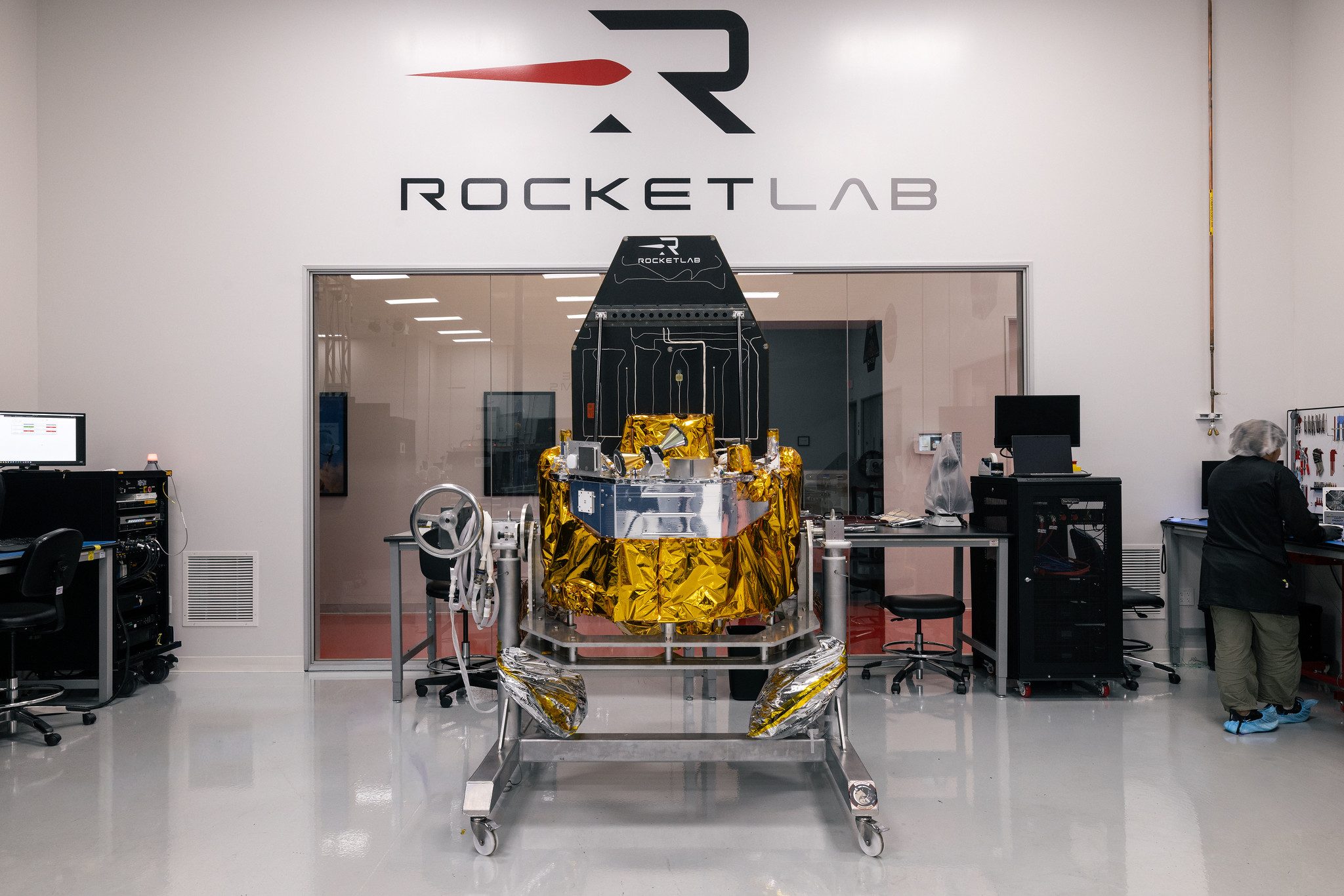
Rocket Lab’s Puma satellite for Victus Haze, based on the company’s Pioneer spacecraft bus.

Rocket Lab’s Puma satellite for Victus Haze, based on the company’s Pioneer spacecraft bus. Credit: Rocket Lab

The rapid launch and initial rendezvous and inspections were only the opening salvo in the Victus Haze exercise. On July 14, True Anomaly and Rocket Lab received orders for Mission 2 of Victus Haze. The task? Pursue and evade one another over and over again. True Anomaly’s Jackal, or Panther, satellite was commanded to move in on Rocket Lab’s Puma vehicle, which sensed the threat and fired thrusters to “vanish into the dark.”

Jackal’s crew produced a validated mission plan in under 30 minutes from tasking,” True Anomaly said in a statement. “Jackal executed ingress and a burn sequence over 23 minutes to close on Puma. When Puma maneuvered away during the approach, Jackal downlinked what it saw, and our team replanned, revalidated, and implemented a new mission plan in rapid succession.”

As Rocket Lab’s Puma backed away, True Anomaly’s Jackal executed more burns to reengage and image its prey. Military and company officials haven’t released any photos from the most recent Victus Haze demo, and they declined to disclose exactly how close the satellites came to one another.

“Due to operational security, further details involving sensor suites for characterization, phenomenology, payloads, distances, or docking will not be shared,” a spokesperson for Space Systems Command said in response to questions from Ars.

True Anomaly’s ground controllers, working out of an operations center in Colorado, managed the maneuvers with the help of an algorithm generating “hyper-accurate” targeting estimates from measurements onboard the Jackal satellite. All of this was done without coordination between True Anomaly and Rocket Lab. “No scripted target behavior,” True Anomaly said.

“Puma wasn’t playing a role,” the company continued. “It was maneuvering to lose us, and we didn’t know how in advance. That’s the entire reason to do this on orbit instead of in a lab: the human decisions, the unexpected conditions, and the adversary’s freedom to act are all real, and integration that hasn’t held up against them hasn’t been tested at all.”

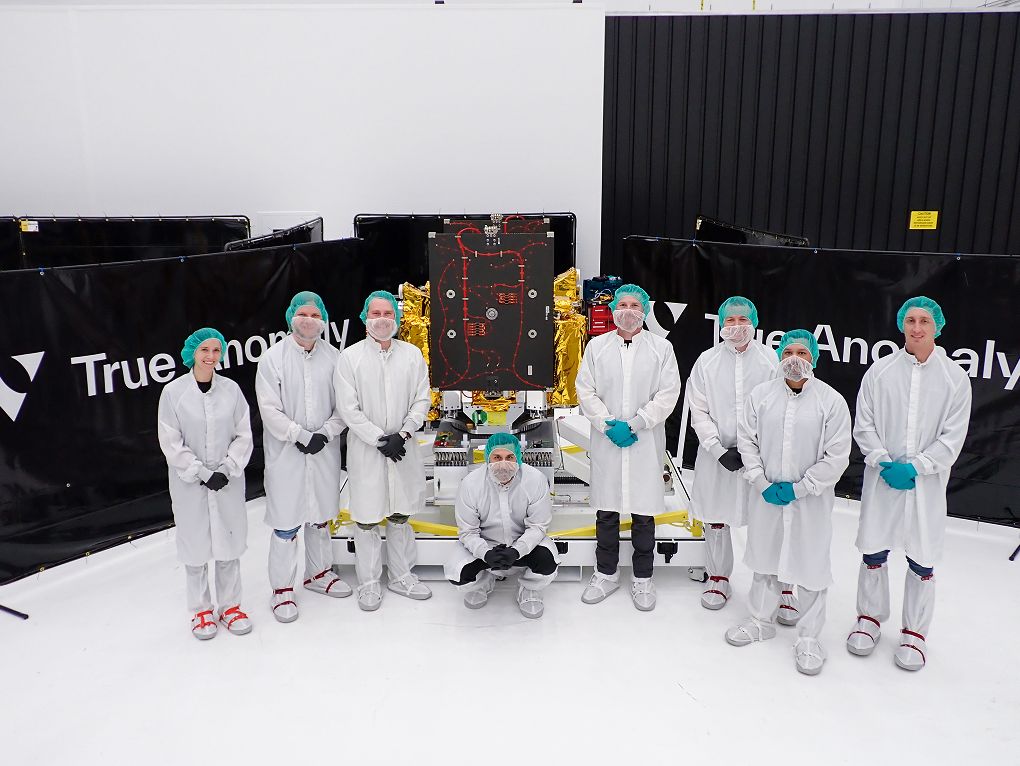
True Anomaly’s Jackal satellite, seen here, plays one part in the Space Force’s Victus Haze mission.

True Anomaly’s Jackal satellite, seen here, plays one part in the Space Force’s Victus Haze mission. Credit: True Anomaly

This cat-and-mouse game sounds a lot like dogfighting in space, something Rogers, who started True Anomaly in 2022, has discussed with Ars in the past. Rogers previously served in a space aggressors unit in the US Air Force, taking up against US space operators in war game and military exercises.

But orbital dogfighting is a lot different from what you may have seen in Top Gun. 

“Dogfighting in space doesn’t quite have the drama of an aerial dogfight,” Rogers told Ars earlier this year. “The tempo is slower, and the relative velocities are slower.”

Relative is the key term. It’s important to remember this all played out as the satellites soared approximately 300 miles (500 kilometers) above Earth, speeding around the planet at some 17,000 mph (7.6 kilometers per second). But in the same orbit, the satellites’ motion relative to one another is more like a carefully choreographed dance than a game of chicken.

There’s more to come on Victus Haze. The two satellites are designed to swap positions as aggressor and target throughout a series of demonstrations playing out over the next few months.

“Victus Haze was envisioned to remove the simulation and to learn in the orbital environment against a thinking adversary,” Rogers said. “We’ll keep executing and learning.”

Ground controllers inside True Anomaly’s operations center in Colorado.

Ground controllers inside True Anomaly’s operations center in Colorado. Credit: True Anomaly

Two to tango

While True Anomaly touts its prowess in high-tempo satellite maneuvers, Rocket Lab kicked off Victus Haze by setting a new record for rapid, responsive launch. Victus Haze builds on the Space Force’s Victus Nox mission, which launched in 2023 with a then-record 27-hour call-up for Firefly Aerospace’s Alpha rocket and a satellite built by Millennium Space Systems.

Victus Haze adds complexity by including a second satellite in the exercise. Rocket Lab’s Electron rocket and Puma satellite were in a ready state at Launch Complex 1, the company’s privately owned spaceport in New Zealand, when the Space Force issued launch orders.

“Within that first hour, we basically had three independent teams moving in parallel,” said Brian Rogers, Rocket Lab’s vice president of global launch services.

The launch team immediately started final preparations on the Electron rocket and the Puma satellite. Rocket Lab was supposed to launch a different rocket at Launch Complex 1 with a commercial satellite the same week. Victus Haze took priority.

Meanwhile, guidance engineers calculated the exact trajectory the Electron rocket would have to fly to inject the Puma satellite into an orbit near True Anomaly’s Jackal satellite. That required a nearly instantaneous launch window. And Rocket Lab’s satellite control team kicked into gear for around-the-clock operations.

From Rocket Lab’s perspective, Victus Haze came with an unexpected twist. The company’s engineers knew they were going to launch in pursuit of a True Anomaly satellite. That was announced in 2024 when the Space Force awarded contracts for the Victus Haze mission. But Rocket Lab didn’t know which one. True Anomaly was supposed to launch its Jackal satellite for Victus Haze on a Firefly Aerospace Alpha rocket. Instead, it launched on a rideshare mission aboard a SpaceX Falcon 9 rocket in May. At the time, nobody outside of True Anomaly or the Space Force knew this was the spacecraft for Victus Haze.

“The idea was it was supposed to be a surprise to exercise the team, and no, we didn’t know what thing we were going to go be chasing,” Rocket Lab’s Rogers said. “That was all meant to be part of this little war game.”

Most of Rocket Lab’s launches carry commercial satellites, and although the rapid call-up of Victus Haze is a uniquely military requirement, the exercise helped fine-tune the company’s procedures to improve performance on all future missions.

“The 24 hour call-up and RPO mission was very much a national security application,” Rogers said. “We have seen what I would call a responsive space mission for the commercial market. We have had some commercial customers who either lost their other ride to space, they were on a rideshare and got bumped or something, or it is a business-critical need to get on orbit. And we get a phone call very late, and they say, ‘We’ve got to get on orbit to make our business work. What can you do for me, Rocket Lab?’

“There are just not many companies in the world—in fact, probably only two at most—that you can call and can make that happen,” Rogers said. “We’ve actually done that three or four times in the past year. We’re likely to have another one this year. It’s not going to be quite the 24-hour call-up for launch. That’s not the level of intensity, but it is three months away from launch. Sign a contract, submit the regulatory requirements, and get somebody on orbit.”

The other side of the Taj Mahal: artisan workers struggle to survive while the world enjoys their craft

0
the-other-side-of-the-taj-mahal:-artisan-workers-struggle-to-survive-while-the-world-enjoys-their-craft
The other side of the Taj Mahal: artisan workers struggle to survive while the world enjoys their craft

Agra is known as the home of the Taj Mahal, one of the seven wonders of the world and a bucket-list destination. Visitors marvel at its beauty, but few realise that another Agra exists in its shadow: the Agra of its artisans. These communities hold the essence of the city’s cultural legacy yet remain invisible to many of the people who seek beauty here.

Agra’s story is usually told through the gleaming marble of the Taj Mahal, not through the eyes of those who live and work nearby. The artisans, many from marginalised Dalit and Muslim communities, have practised their crafts for generations. These include marble inlay, Zardozi embroidery, perfumery, rafia, shoemaking, leatherwork and the weaving of Agra’s famous carpets.

As part of my ongoing research, I have conducted field surveys in this region. I discovered communities that are culturally ostracised yet resilient. There is also a strong historical continuity and a craft ecosystem that has been eroded.

Once respected and secure, these livelihoods have been damaged by neglect in education, housing and market access. This slow but steady exclusion has left many artisans struggling to survive, even as their crafts remain admired and monetised across the globe.

The divide in Agra between the haves and have-nots is stark. Within walking distance of the Taj Mahal are neighbourhoods like Taj Ganj and Kachhpura, where artisans live in cramped settlements and slums. In some places, five-star hotels share a wall with these communities.

In Taj Ganj, just south of the Taj Mahal, women artisans specialise in Zardozi embroidery, which involves gold and silver threads, pearls and beads, as well as carpet weaving. Many are not employed as full-time staff but as “allied” workers taking on stitching, cleaning or polishing carpets for middlemen.

Girls as young as 12 or 13 help by attaching laces and buttons, earning just 1 rupee (less than 1p) per piece, while the finished item sells for 200-500 rupees in domestic markets.

Trinkets made in this community are often exported to the UK and Europe; artisans receive around 50 rupees per piece. By the time these products appear in European boutiques, they can fetch £10-£25 each. The price difference reflects not increased craftsmanship, but the layers of profit in the supply chain. Artisans see almost none of this.

Traditional Indian zardosi embroidery detail on green cloth.

Zardozi embroidery is a highly skilled craft. PI/Shutterstock

Even moments of national pride bring no recognition. For the coronation of King Charles, Zardozi pieces from Taj Ganj were commissioned to commemorate the ceremony. Yet the women who created them remained anonymous. It was a lost opportunity to showcase their heritage to the world.

The buyers of artisan products in Agra range from individual artists and export houses to ecommerce entrepreneurs. Yet the supply chain remains opaque and even today, many artisans have no idea what their official daily wage should be.

For them, costing is a matter of simple arithmetic: materials plus labour, with a modest profit margin of 50–100 rupees (less than £1). This calculation, shaped by generations who were isolated from formal business practices, means they consistently undervalue their work.

The result is a supply chain where the well-connected middlemen and entrepreneurs capture the lion’s share of profits. Meanwhile, the true creators are left with a fraction of what their craft is worth.

Leather craft in the shadows

In the Kachhpura community, families make handcrafted leather footwear that is sold to local suppliers. As members of the Dalit community (a marginalised caste in India), they face discrimination that limits their business opportunities.

Even within Agra, their products are undervalued and their small businesses struggle to flourish. Community members express deep frustration: they feel that they are visited by non-governmental organisations (NGOs) and international agencies only when there’s a story to be told. They told me they felt their poverty was photographed, their words quoted and their struggles turned into media coverage – but with no tangible change in return.

These are not isolated cases. Across both communities, artisans face unfair wages and opaque supply chains. A lack of education leaves them struggling to gain access to markets and without intellectual property protection. This means their designs can be appropriated by global brands.

In a case involving Prada sandals, the luxury goods giant was inspired by the Kohlapuri chappal – the traditional handcrafted shoes of the Dalit community – but did not initially credit the artisans or collaborate with them. The company later acknowledged that this is where its inspiration had come from. But it is part of a broader pattern: heritage crafts from India are celebrated abroad while their custodians live in poverty.

The solution is not charity, but empowerment. Skills hubs would allow artisans to access design, marketing and business training. And direct-to-customer platforms would let them tell their own stories and set their own prices.

Heritage hubs could position these communities as living heritage sites as in Venice or Florence, where craft and culture are inseparable from place. Until these changes happen, Agra will remain a city of two worlds.

Agra’s artisan communities stand at a crossroads. On one side is a legacy passed down through generations, a living heritage that shapes the city’s identity and fuels its global image. On the other is a reality marked by low wages, educational neglect and exclusion from the markets that profit from their craft.

The disparity between the luxury price tags their work commands and the earnings they take home represents a gap in recognition, dignity and opportunity.

Oscar Winner Airlifted from Mountain in Scary Medical Emergency (Video)

0
oscar-winner-airlifted-from-mountain-in-scary-medical-emergency-(video)
Oscar Winner Airlifted from Mountain in Scary Medical Emergency (Video)


Oscar-winning Disney animator Glen Keane had to be airlifted off an Arizona mountain Wednesday morning after a frightening hiking emergency left him too dizzy and weak to make it back down.

Keane, 72, was hiking Mummy Mountain near Paradise Valley with family shortly after 6 a.m. when he became stranded on a narrow ridge. The veteran animator called for help after realizing he could no longer safely continue.

Firefighters responded to the mountain and found Keane alert, but unable to walk back down on his own. Crews used ropes to secure him before a Phoenix Fire Department helicopter hoisted him from the steep terrain.

Keane was flown down the mountain and evaluated by paramedics. Fortunately, he did not need additional medical treatment.

The close call left the legendary animator shaken but grateful.

“I was being lifted up [in the helicopter], and I was looking at all the areas that I used to climb around as a kid. And I thought, Lord, thank you,” Keane told Arizona’s Family.

He described the ridge as dangerously narrow, saying, “It was very much just like a razor’s edge up there.”

Keane is best known for his decades of work with Disney, helping bring some of the studio’s most beloved characters to life. His credits include Beauty and the Beast, Aladdin and The Little Mermaid.

In 2018, he won an Academy Award alongside Kobe Bryant for the animated short Dear Basketball.

After the ordeal, Keane urged hikers to take Arizona’s brutal summer conditions seriously, warning that even familiar trails can become dangerous fast.

“Things change,” he said.

0FansLike
0FollowersFollow
0FollowersFollow
0SubscribersSubscribe
- Advertisement -
Google search engine

Recent Posts