13.5 C
London
Saturday, October 3, 2026
Home Blog

Hundreds protest in Israel against Netanyahu’s push for judicial changes

0
hundreds-protest-in-israel-against-netanyahu’s-push-for-judicial-changes
Hundreds protest in Israel against Netanyahu’s push for judicial changes

Hundreds of Israelis demonstrated at dozens of locations across northern and central Israel on Saturday against Prime Minister Benjamin Netanyahu’s government and its push for changes to the judiciary, Israeli media reported.

Channel 12 said protests took place in Haifa, Nahariya, and Western Galilee. Demonstrators also gathered on several bridges in the coastal areas of Maagan Michael and Neurim in central Israel.

Protesters chanted slogans against Netanyahu and his government and held signs blaming him for the failure to prevent the Oct. 7, 2023, attack, according to the channel. They also criticized the judicial changes being advanced by Netanyahu’s government.

READ: US senator says AIPAC plans to spend $233M to defeat candidates critical of Netanyahu gov’t

Since early 2023, the government has pursued a series of changes that it says would restore the balance between branches of government and curb what it considers excessive judicial interference in executive and legislative decisions.

Opposition parties argue that the measures would weaken judicial independence and limit oversight of the government.

​​​​​​​In March 2025, the Knesset passed an amendment changing the composition of the judicial selection committee and the process for appointing judges. It is due to take effect when the next Knesset begins its term.

READ: Netanyahu bloc projected to win 51 seats in Oct. 27 elections, opposition 53: Poll

Gilat Is Bringing Fantasy and Rehab to More of Israel’s Pediatric Hospitals 

0
gilat-is-bringing-fantasy-and-rehab-to-more-of-israel’s-pediatric-hospitals 
Gilat Is Bringing Fantasy and Rehab to More of Israel’s Pediatric Hospitals 


Looking at 10-year-old Yuval Atzmon’s clear blue eyes and bright smile, it is hard to imagine that she spent months at ALYN Hospital’s Pediatric and Adolescent Rehabilitation Center in Jerusalem. The sixth grader, who loves art, says much of her time there was filled with medical treatments and demanding rehabilitation exercises. 

Yuval came to ALYN after undergoing complex surgery at Hadassah Hospital to correct a difference in the length of her legs. Between treatments and the daily challenges of rehabilitation, she had something special to look forward to: three theater performances presented at the hospital by the Gilat Foundation. 

The foundation brings interactive therapeutic performances to pediatric hospitals across Israel. Led by trained actor-therapists, the programs are tailored to children’s physical and emotional needs. 

“It takes you out of your uncomfortable routine. It makes you happy, because it’s not fun knowing that you’re in a hospital,” Yuval said. “So, it helps you have fun and not feel stuck.” 

Yuval Atzmon. (Courtesy / Gilat Foundation)

Her father, Guy Atzmon, sees the theater as more than a welcome distraction. Before Yuval’s surgery, the family had prepared for the medical risks. What caught them off guard was how much independence she would lose afterward. Getting dressed, moving through the day, and deciding what to do next were no longer simple. 

Everyone tells her what to do every minute, even when it hurts, and she doesn’t want to. And in the show, she could be like a child.

“She could be a child again, and not everybody telling her, wake up, go to eat, go to physio, or go to hydro, or everything,” he said. “Everyone tells her what to do every minute, even when it hurts, and she doesn’t want to. And in the show, she could be like a child.” 

At home in northern Israel, Yuval has four brothers. Since her hospitalization began on June 1, her parents have taken turns staying with her while keeping the rest of the family going. Guy continued working and slept near Yuval on a folding sofa. The performances offered him a rare pause as well. 

“And for a couple of minutes or half an hour for the show, I could relax,” he said. “And she’s playing and happy, and I could drink a cup of coffee, or do a phone call or stuff for myself, and reach out to take care of her again.” 

For Yuval, who loves drawing, making things, and math, even a small choice can matter. “Even choosing the color of what she’s drawing became very important to her,” Atzmon said. 

That idea—that a child in a hospital needs more than medical care—is at the heart of Gilat. The initiative is named for Tali and Jair Eisenmann’s daughter, Gilat, who died in 2008 at age 11. She used a wheelchair and could not attend a regular theater, her mother said. During long hospital stays, she found pleasure in music, theater, and being around people. 

After Gilat died, her family wanted to give other hospitalized children some of what she had enjoyed. 

“So, when she passed away, we said we have to do something like this for other children who are in pretty much the same position,” Tali said. “And that’s why we started doing theater for sick children in hospitals.” 

Asked what he remembers most about his daughter, Jair returned to her outlook. 

“You know, most [of the time] with her, the glass was always half full.” 

He recalled Gilat looking forward to a visit from animals even while she was hospitalized. The performances offered in her name are not, he said, about spectacle. 

We are not here to make big shows, but we are there to make the children smile and be happy again with all the misery they have

“We are not here to make big shows, but we are there to make the children smile and be happy again with all the misery they have.” 

The performances are deliberately interactive, inviting children to participate rather than simply watch. 

“We want every child to feel like you would say normal, but we don’t call it that way,” Tali said. “We want every child to feel [like] a child, even that they go through things that no adult should go through.” 

Helping children leave their rooms and feel less isolated is part of that effort. Tali described Jewish and Arab children and their mothers coming together around the same wish. 

“They’re all connected because they all have one goal: making their child feel better, be happy.” 

Jair said the visits take place every second week of the month, with performances beginning at 3 p.m. Posters go up several days beforehand, giving children something to anticipate. Then comes the gathering, the performance and, sometimes, a response that stays with him. 

Yuval Atzmon and the Gilat Foundation. (Courtesy / Gilat Foundation)

One father, not knowing who Jair was, pointed out his daughter in the audience. She had cried for two weeks, he told him, and this was the first time she had laughed again. 

The need for respite has grown more acute during the war. Jair said hospitalized children in Israel have faced what he called a “double misery”—illness alongside the disruption and fear of conflict. During the war with Iran, he said, some children spent weeks in shelters because repeatedly moving them in and out was too difficult.  

Dr. Emmanuel Kornitzer, head of the rehabilitation department at ALYN, said the hospital has roughly 120 to 130 active patients across its inpatient and day-care services at any given time. He described the strain on children already coping with serious physical problems when sirens sounded and staff had to move them to safety. The alerts also put staff under pressure, while parents faced the fear of being at the hospital when their other children were elsewhere. 

Kornitzer said the hospital had also seen children whose physical symptoms followed traumatic stress, including one child who developed sudden paralysis of the lower limbs the day after the October 7 attacks, with no physical cause identified. 

Even on an ordinary day, rehabilitation demands sustained effort. 

“Rehabilitation is during months and months,” Kornitzer said. 

A theater performance allows children to step away from that work for a time. 

“As I told already many people, it’s not only escapism. Because we know how the mental situation interacts so much with the physical burden, in a positive and negative way,” he said. 

Asked what hospitalized children need beyond medical treatment, Shlomi Eisenmann, Executive Director of Gilat, told The Media Line pointed to the social and emotional side of recovery. Children may spend weeks or months away from school, friends and ordinary play, he said. The foundation tries to bring some of that world into the hospital through imagination and participation. 

Eisenmann said research indicates that children receiving psychological support during hospitalization recover about 20% more quickly than those who do not. He also pointed to another form of support: helping children understand an upcoming surgery and what to expect afterward, which can reduce fear. 

Gilat hopes to reach many more children. Describing the expansion of the foundation’s Israeli program after October 7, Shlomi said it reached four hospitals in its first year and is now preparing to begin work at Rambam Hospital in Haifa, its sixth location. 

He estimated that the programs currently reach roughly 2,700 children a year. The goal is to expand to nine hospitals and approximately 4,500 children annually. Jair’s longer-term aspiration is to bring performances to every major hospital in Israel. He and Tali said reaching more hospitals will require additional funding. 

For the Eisenmann family, expansion is inseparable from remembrance. 

By having our amutah, our foundation, we keep her alive

“To lose a child is the worst thing to happen,” Jair said. “But if she’s forgotten, that’s even worse. And by having our amutah, our foundation, we keep her alive.” 

Asked what she would say to other children facing a hospital stay, Yuval was careful not to assume their experiences matched hers. 

“I don’t know exactly what every child is going through, but there are a lot of children who smile when they see the performances,” she said. 

For a child whose days are so often dictated by necessity, that smile can mark a brief return to something familiar—the freedom to laugh, to join in and to choose what comes next. 



Milt Windler, NASA flight director who helped save Apollo 13, dies at 94

0
milt-windler,-nasa-flight-director-who-helped-save-apollo-13,-dies-at-94
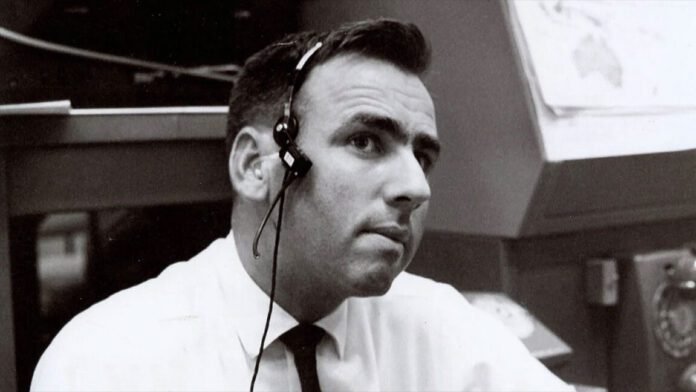
Milt Windler, NASA flight director who helped save Apollo 13, dies at 94

Milt Windler, one of the four leaders of Mission Control who in 1970 directed the round-the-clock efforts to bring the Apollo 13 astronauts back to Earth safely, has died at the age of 94.

Windler died on Thursday, surrounded by his loving family, according to a brief notice posted online.

Named a NASA flight director in 1968 after working on recovery operations during the Mercury and Gemini programs, Windler also led a shift of flight controllers for the Apollo 8 first circumlunar flight and Apollo 10 lunar landing dress rehearsal, as well as the second, third and fourth moon landings — Apollo 12, Apollo 14 and Apollo 15. He then served as a flight director for all three crewed missions to the United States’ first space station, Skylab.

“Apollo was such a rapid pace that I don’t think people had the chance to think about it very much. It has only become more clear to me later on that we were making history,” said Windler in a 2006 oral history interview for the University of North Texas. “You’d do a mission and then you’d immediately turn around and get ready for another mission.”

“It was not [a] time for reflection,” Windler said.

Maroon Flight

Each flight director chose a team name (at first colors). As the seventh person to be appointed to the position — and one of the first two to be selected from outside of the flight operations team — Windler became “Maroon Flight.”

On his first mission at the flight director’s console, Windler was assigned to the third shift, putting him at the head of the operations control room when it was time to send the first humans beyond Earth orbit. The trans-lunar injection, or TLI, burn placed Apollo 8 crew members Frank Borman, Bill Anders and Jim Lovell on a trajectory to advance the United States ahead of the Soviet Union by becoming the first nation to orbit people around the moon.

Realizing this, Windler, working with his wife, Betty, and other flight controllers’ spouses, secretly prepared a batch of small red and blue flannel banners, each with the numeral “1” in white at their center. He planned to distribute the flags to the members of his Maroon team to wave at TLI as a not-so-subtle message to their space race adversaries.

“However, it was decided that this display was inappropriate, especially since the mission was only half over,” wrote Windler in a 2020 letter accompanying one of the flags that had since been acquired by a collector. “Consequently, the flags were never displayed during the mission and American flags were used at the time of a successful landing on Earth.”

Later, Windler and all of his colleagues in Mission Control were provided with a dramatic reminder about why you do not celebrate until the crew has stepped onto their recovery ship. For Apollo 13, Windler was named lead flight director.

“What that meant was you did the ascent — the liftoff from Earth, I should say, the launch — and you did the lunar surface activity,” he told the UNT interviewer. “But then, of course, after we lifted off from the Earth, when we got more toward the moon, why, the whole mission changed.”

a black and white photo of several men sitting at consoles while inspecting makeshift device with tube extending from one side.

Flight director Milt Windler, Maroon Flight (at left) looks on as the director of flight crew operations Deke Slayton displays a makeshift “mail box” as devised to adapt square command module carbon dioxide scrubbers with the round receptacles in the lunar module on board the crippled Apollo 13 spacecraft in April 1970.

Flight director Milt Windler, Maroon Flight (at left) looks on as the director of flight crew operations Deke Slayton displays a makeshift “mail box” as devised to adapt square command module carbon dioxide scrubbers with the round receptacles in the lunar module on board the crippled Apollo 13 spacecraft in April 1970. Credit: NASA

An explosion tore through the Apollo 13 service module, crippling the spacecraft and venting the crew’s oxygen supply into space.

Instead of overseeing the third time humans had walked on the moon, Windler — together with Gold Flight, Gerry Griffin — polled the flight controllers in the room to develop three options for when, where and how long to fire the lunar module’s engine to put the Apollo 13 spacecraft on a path back to Earth.

It would not be the last time Windler was involved in re-planning a mission already underway, but not because something had gone awry. As flight director during the Skylab missions, the challenge was working with emerging scientific events.

“We had to come up with a system that would allow us to plan in real time and accommodate the science people. If something interesting happened on the sun, which it did several times, then we needed to be able to schedule the ATM [Apollo Telescope Mount] work,” he said in 2006.

“We invented a way of flight planning in real time, or cycles,” said Windler, where one day the science people talked about what they wanted to do, and the ‘Science Czar’ got with them and said, ‘All right, then, we need these particular objectives for tomorrow.’”

After the Skylab missions ended, Windler went to work on the space shuttle and the development of the remote manipulator system or “Canadarm,” the winged orbiters’ robotic arm contributed to the program by Canada. He then retired from NASA and joined private industry to work on what would become the International Space Station, consulting on the operations aspect of the orbiting laboratory, and later, as modules were produced, on some of the verification procedures.

‘Pay more attention’

Born on Jan. 10, 1932 in Hampton, Virginia, Milton Windler graduated from Virginia Tech (Virginia Polytechnic Institute and State University) in 1954 with a degree in aeronautical engineering. He joined the U.S. Air Force’s Reserve Officers’ Training Corps (ROTC) while still in school and then worked for the National Advisory Committee for Aeronautics (NACA), NASA’s predecessor, before serving in the Air Force for four years.

Windler rejoined NACA at Langley Research Center in Virginia and was there for its transition to becoming a NASA facility. He relocated to Houston, Texas, just as the Manned Spacecraft Center (today, Johnson Space Center) was being established.

a photo of several men standing on an outdoor stage, surrounded by an audience. One man is standing behind a podium with the seal of the President of the United States.

Milt Windler stands with fellow flight directors Glynn Lunney, Gene Kranz and Gerry Griffin for President Richard Nixon’s presentation of the Presidential Medal of Freedom to NASA’s Apollo 13 mission operations team on April 18, 1970.

Milt Windler stands with fellow flight directors Glynn Lunney, Gene Kranz and Gerry Griffin for President Richard Nixon’s presentation of the Presidential Medal of Freedom to NASA’s Apollo 13 mission operations team on April 18, 1970. Credit: NASA

As a member of Mission Control during the Apollo 13 mission, Windler and his fellow flight directors and controllers were awarded the Presidential Medal of Freedom by then-President Richard Nixon in 1970. Windler was also honored with NASA’s Exceptional Service Medal.

Milton and Betty (née Selby) Windler had three children and eight grandchildren. A memorial service will take place in the coming weeks at the family’s former church in Friendswood, Texas.

“If I did it again, I’d probably try to do something more about trying to pay more attention,” said Windler. “Apollo was — well, all of [the missions] were … bang-bang-bang. You couldn’t enjoy, really, in a way you couldn’t savor it, like maybe it would have been better to have done.”

New Colorado neighborhood could offer glimpse into the future of home energy use

0
new-colorado-neighborhood-could-offer-glimpse-into-the-future-of-home-energy-use
New Colorado neighborhood could offer glimpse into the future of home energy use

This story was originally published by Inside Climate News and is reproduced here as part of the Climate Desk collaboration.​

A new residential development south of Denver is the testing ground for an unusual partnership that could transform home heating and cooling across the country. 

Dandelion Energy, a geothermal startup, and Lennar, one of the nation’s largest homebuilders, recently completed construction of nearly 100 homes at the base of Colorado’s Front Range, each equipped with its own ground-source heat pump. The systems use less electricity than even the most efficient air-source heat pumps, potentially helping Colorado meet its climate goals while reducing peak energy demand and eliminating the need for new gas pipelines. 

Ground-source heat pumps draw on steady temperatures belowground to help heat and cool buildings. However, the projects’ custom designs and drilling requirements—homes typically require one or more boreholes drilled several hundred feet deep—are pricey. Drilling alone often costs more than $10,000.

Dandelion, a company that got its start at X—a “moonshot” research and development subsidiary of Alphabet, Google’s parent company—says it can complete geothermal heating and cooling projects twice as fast and at half the cost of similar installations.

A suburban street of homes

Geothermal startup Dandelion Energy and homebuilder Lennar recently completed nearly 100 homes with geothermal heating and cooling at the Ken Caryl Ranch housing development in Littleton, Colorado. Phil McKenna / Inside Climate News

The company is “taking a kind of mass market and maximally efficient lens to what has historically been a bespoke kind of custom, high-end product,” said Dan Yates, Dandelion Energy’s CEO and chairman.

Earlier this year at Lennar’s Ken Caryl Ranch development, Dandelion’s drill team demonstrated a lightweight rig designed to quickly move from lot to lot, drilling boreholes and installing polyethylene pipe across the sprawling housing development before building foundations are poured.

Each home gets a single bore between 200 and 500 feet deep, where temperatures are approximately 50 degrees Fahrenheit year-round. Water circulating through the pipe is warmed or cooled by the surrounding earth before a heat pump installed in the basement of each new home provides additional heating or cooling depending on the time of year.

Dandelion’s drilling team can complete boreholes for one or more homes per day. If they had to drill a similar installation elsewhere for a single building, they could lose an entire day simply transporting the rig to and from the site.

Geothermal startup Dandelion Energy and homebuilder Lennar recently completed nearly 100 homes with geothermal heating and cooling in Littleton. Phil McKenna / Inside Climate News

Installing the devices across dozens of similar new homes at once also eliminates the need for custom plans for each building and avoids potentially costly retrofits to the buildings’ heating, ventilation, and air conditioning systems.

The end result is a highly efficient heating and cooling system that Dandelion says outcompetes air-source heat pumps and conventional gas heating systems. This is especially true during cold snaps, when energy demand peaks and ground-source heat pumps use a quarter as much electricity as air-source heat pumps, Yates said. 

It’s “the only system that actually reduces peak demand and electrifies homes at the same time,” he said.

The Ken Caryl Ranch development is part of a larger initiative the company launched with Lennar in 2025 to install geothermal heating and cooling at more than 1,500 homes in Colorado over two years. Dandelion hopes to scale up to 10,000 homes per year nationwide in the coming years.

“Our mission at Dandelion is to mainstream geothermal, and we think that the time has finally arrived for that to happen,” Yates said. 

Just over a million U.S. homes have ground-source heat pumps, with approximately 100,000 new installations each year, according to a 2025 U.S. Department of Energy report. The agency found that geothermal heating and cooling could reach 7 million homes by 2035. Doing so would reduce winter peak energy demand by more than 40 gigawatts nationwide, resulting in roughly $4 billion in annual savings in U.S. electric grid costs, according to the report. 

Ground-source heat pumps currently make up just a small fraction of new home heating and cooling systems. By contrast, 3.6 million air-source heat pumps were sold in the U.S. last year, outpacing gas furnace sales for the fourth year in a row, said Yara van Ingen, an associate with BloombergNEF’s building decarbonization team.

Ground-source heat pumps are economically viable across the continental United States, according to a study published this month in the journal iScience that considered incentives, energy costs and local climate and subsurface conditions. 

“It is technically possible everywhere, and there is economic potential across all states,” said Juliet Simpson, a former research engineer at the National Laboratory of the Rockies and the study’s lead author.

A primary challenge for ground-source heat pumps is their upfront cost, which averages around $25,000 for a typical new home, according to the Energy Department report. Van Ingen added that space constraints, especially in dense urban environments, as well as permitting requirements that vary across the U.S. can also complicate borehole drilling. 

Dandelion and Lennar, an investor in the geothermal company, are among those working to lower costs. But incentives and policy changes also help. An energy efficiency program by Xcel Energy, Colorado’s largest gas and electric utility company, provides approximately $25,000 per home for new, high-efficiency buildings with a ground-source heat pump to offset added building and heat pump costs.

“For large neighborhoods with hundreds of homes, builders may receive seven-figure rebate amounts,” an Xcel spokesperson said in a written statement.

Geothermal pipes run through the basement of each building. Phil McKenna / Inside Climate News

The rebates help Xcel advance its climate goals and meet Colorado’s Clean Heat Standard requirement to reduce greenhouse gas emissions 22 percent below 2015 levels by 2030.

Colorado also provides a $2,000 tax credit for ground-source heat pumps and requires homebuilders to pay for new gas service expansion pipes, costs that are not incurred if developers build all-electric homes.

Policies that incentivize high-efficiency electric heating and cooling while discouraging fossil fuel use in homes are intended to reduce greenhouse gas emissions from buildings, said Will Toor, executive director at the Colorado Energy Office.

Other states and utility companies also offer incentives for ground-source heat pumps, including Maryland, where Dandelion recently announced plans to install the technology in 129 new homes. In addition, commercial ground-source heat pump projects are now eligible for federal tax credits that cover 30 percent or more of total installation costs. 

“The economics just look better and better,” Jessica Silber-Byrne, senior manager of thermal energy networks for the Building Decarbonization Coalition, a nonprofit organization working to eliminate the use of fossil fuels in buildings. “There is a combination of both incentives and market signals that suggest that this is about to really take off.”


Real-Life ‘Home Alone’ Bird Lady Found Murdered in Central Park

0
real-life-‘home-alone’-bird-lady-found-murdered-in-central-park
Real-Life ‘Home Alone’ Bird Lady Found Murdered in Central Park


A beloved homeless artist who became a familiar sight among Central Park’s birds and birdwatchers has been found murdered in the place she called home for years.

Francis Lee Rogers, 63, also known as Elise Bainbridge Hill, was found unresponsive inside a gazebo in New York City’s Central Park on the morning of Sunday, Sept. 27.

Police said officers responded to a 911 call around 9:43 a.m. near East Drive and East 74th Street. Rogers suffered severe trauma to her head and was pronounced dead at the scene.

The killing has shaken the tight-knit community of birdwatchers and park regulars who knew Rogers as a talented artist with an extraordinary knowledge of Central Park’s wildlife.

Her unusual life and friendship with the park’s birds have also drawn comparisons to the unforgettable “Pigeon Lady” from the 1992 holiday classic Home Alone 2: Lost in New York.

Jonathan Robles, 36, was arrested later Sunday and charged with murder and criminal possession of a weapon, according to police.

Authorities initially released conflicting information about Rogers’ injuries, including early reports suggesting she had been stabbed. Police later said investigators determined she had suffered head trauma.

More disturbing details emerged during Robles’ court proceedings.

According to prosecutors and court documents cited in reports, Robles allegedly admitted striking Rogers repeatedly with a stick but claimed she had attacked him first.

Robles allegedly told authorities that Rogers hit him with the stick before he managed to take it away from her.

He then allegedly admitted hitting her more than 20 times, telling investigators he continued until she could no longer strike him.

Those claims have not been proven in court, and Robles is presumed innocent unless convicted.

Robles was later questioned while hospitalized for an injury and was ordered to undergo a psychiatric evaluation as the criminal case moves forward.

The circumstances that led to the deadly confrontation remain under investigation.

For the people who regularly spent time in Central Park, however, Rogers was far more than an unidentified homeless woman.

She had become part of the landscape.

Rogers spent years around the park’s wooded Ramble area and was well known for watching birds, tending bird feeders and creating watercolor paintings inspired by the animals and scenery surrounding her.

Some birdwatchers reportedly nicknamed her the “Grandma Moses of Central Park,” a reference to celebrated American folk artist Anna Mary Robertson Moses.

Friends and acquaintances said Rogers sold some of her wildlife paintings to tourists and park visitors.

One man who knew her summed up the loss simply, saying that while strangers might have viewed her as “nobody,” the people who regularly encountered her in the park knew that she mattered.

Her story had been documented long before her death.

Under the name Elise Bainbridge Hill, Rogers became the subject of filmmaker Karen Gehres’ 2007 documentary Begging Naked.

The film followed Rogers over roughly nine years and chronicled a difficult life that included running away from home as a teenager, struggling with addiction, working in the sex industry and eventually becoming homeless.

Throughout those hardships, art remained a major part of her life.

The documentary followed her efforts to continue painting and creating even as her housing situation and mental health deteriorated.

By the early 2000s, she was living in Central Park.

More than two decades later, she remained a familiar figure there.

That history makes her violent death particularly heartbreaking for those who had watched her quietly build an unconventional life among Central Park’s wildlife.

The comparisons to Home Alone 2 came from Rogers’ close association with the park’s birds.

In the movie, Oscar-winning actress Brenda Fricker played a mysterious homeless woman who cared for pigeons and eventually befriended Macaulay Culkin’s Kevin McCallister after he became separated from his family in New York.

Rogers’ life was very different from the fictional character, but her connection to Central Park’s birds made the resemblance difficult for many people to ignore.

Now, instead of being remembered only as an eccentric figure sitting among the trees and wildlife, friends hope Rogers will be remembered for her paintings and the relationships she formed with people who passed through the park.

Robles remains charged with murder as prosecutors continue pursuing the case.

His next court appearance is expected later in October, while authorities continue examining the circumstances surrounding Rogers’ final hours.

Maple Cider Chicken & Brussels Sprouts

0
maple-cider-chicken-&-brussels-sprouts
Maple Cider Chicken & Brussels Sprouts
Maple cider chicken thighs with roasted Brussels sprouts, apple wedges, shallots, and thyme.
Maple Cider Chicken & Brussels Sprouts with tender apples, caramelized shallots, and a glossy maple-Dijon cider finish.

Print Friendly, PDF & Email

Maple Cider Chicken & Brussels Sprouts brings crispy chicken thighs, caramelized Brussels sprouts, sweet apples, and shallots together on one pan with a glossy maple-cider finish. It has all the cozy fall flavor you want without turning dinner overly sweet or heavy.

The chicken starts skin-side down in a hot skillet for a deeply golden crust before everything moves to the oven. Brussels sprouts roast cut-side down around the chicken, while apple wedges and shallots soften and caramelize in the savory pan juices.

A quick maple-cider Dijon glaze goes on near the end instead of at the beginning, so the natural sugars do not burn during roasting. Apple cider vinegar keeps the glaze bright, while thyme and garlic pull the sweet and savory sides together. Serve everything straight from the pan with the extra juices spooned over the vegetables.


Maple cider chicken thighs with roasted Brussels sprouts, apple wedges, shallots, and thyme.
Maple Cider Chicken & Brussels Sprouts with tender apples, caramelized shallots, and a glossy maple-Dijon cider finish.

Recipe Yield: 4 servings

INGREDIENTS

4 bone-in skin-on chicken thighs, about 2 lbs total
1 lb Brussels sprouts, trimmed and halved
2 medium Honeycrisp apples, cored and cut into 3/4-inch wedges
2 large shallots, peeled and quartered
2 tbsp olive oil, divided
1 1/4 tsp kosher salt, divided
1/2 tsp black pepper
1 tsp garlic powder
1 tsp chopped fresh thyme, plus more for serving
1/3 cup apple cider
2 tbsp pure maple syrup
1 1/2 tbsp Dijon mustard
1 tbsp apple cider vinegar
2 garlic cloves, finely minced
1 tbsp unsalted butter

INSTRUCTIONS

1. Prepare the oven:
Preheat the oven to 425°F. Pat the chicken thighs very dry, then season with 3/4 tsp salt, black pepper, garlic powder, and chopped thyme.

2. Sear the chicken:
Heat 1 tbsp olive oil in a 12-inch oven-safe skillet over medium-high heat. Add the chicken skin-side down and cook undisturbed for 5–6 minutes, until deeply golden and the skin releases easily. Turn and cook for 2 minutes, then transfer to a plate. Carefully pour off excess rendered fat, leaving about 1 tbsp in the skillet.

3. Prepare the vegetables:
Toss the Brussels sprouts and shallots with the remaining 1 tbsp olive oil and 1/2 tsp salt. Arrange them in the skillet, placing as many Brussels sprouts cut-side down as possible.

4. Start the roast:
Nestle the chicken thighs skin-side up among the vegetables. Roast for 15 minutes.

5. Make the cider glaze:
Meanwhile, whisk the apple cider, maple syrup, Dijon, apple cider vinegar, and garlic together in a small saucepan. Bring to a gentle simmer over medium heat and cook for 5–6 minutes, until slightly thickened and reduced to about 1/3 cup. Remove from the heat and whisk in the butter. Pour about one-third of the glaze into a small bowl for brushing the chicken; keep the remaining glaze separate for serving.

6. Add the apples:
Remove the skillet from the oven. Tuck the apple wedges around the chicken and Brussels sprouts, turning the vegetables where needed for even browning.

7. Glaze and finish:
Brush the chicken with the glaze reserved in the small bowl. Return the skillet to the oven and roast for 12–16 minutes, until the apples are tender, the vegetables are caramelized, and the chicken reaches at least 165°F in the thickest part without touching the bone.

8. Rest the chicken:
Transfer the chicken to a clean plate and let it rest for 5 minutes. If the Brussels sprouts need additional browning, return the skillet to the oven while the chicken rests.

9. Finish and serve:
Gently rewarm the reserved serving glaze if needed. Drizzle it over the chicken, apples, Brussels sprouts, and shallots. Finish with a few fresh thyme leaves and serve warm with the savory pan juices.


Helpful Tips to Perfect This Recipe

  • Dry the chicken thoroughly: Moisture is the enemy of crisp skin. Patting the thighs very dry before seasoning helps them develop a genuinely golden crust during the initial sear.
  • Give the Brussels sprouts room: A 12-inch skillet gives the vegetables more direct contact with the hot surface. Place as many sprouts cut-side down as possible for deeply browned edges instead of steamed sprouts.
  • Add the apples later: Apples soften much faster than Brussels sprouts. Giving the vegetables a head start keeps the apple wedges tender and caramelized instead of letting them collapse into the pan.
  • Keep the serving glaze separate: Reserve the portion for serving before brushing the chicken. This keeps the finished maple-cider glaze clean while still giving the chicken a glossy, caramelized finish.

Rate This Recipe

Tried this recipe? Your rating helps others and means so much.

This startup pays NYC residents to run air conditioners on free batteries

0
this-startup-pays-nyc-residents-to-run-air-conditioners-on-free-batteries
This startup pays NYC residents to run air conditioners on free batteries

My family has spent four summers participating in demand response programs whereby utility companies pay customers to reduce energy use on the hottest summer days. Most summers have involved carefully precooling our New York City apartment before switching off the air conditioners and sweating it out during the designated demand response periods.

But this year, we kept our window air conditioners running throughout a heat dome event that drove daytime temperatures into the triple digits and made the nights oppressively hot. The difference was that we powered the air conditioners through two household batteries tucked away unobtrusively in the corners of our living room and bedroom.

We were among about 1,000 New York City households that took part in a free and growing program offered by the local startup Every Electric. The company’s proposition is simple: Get one or more batteries delivered to your home, plug the batteries into a standard wall electrical outlet, and then plug your window air conditioners into the batteries. Households can keep running air conditioners as usual during peak demand periods while also earning money through the local demand response program with the utility company Con Edison.

“Being able to make air conditioners drop off the grid without actually impacting the comfort of residents was really awesome to see,” said Andrew Wang, co-founder and CEO of Every Electric, in an interview with Ars.

Wang and cofounder Richard May first met while working together as postdoctoral researchers at the Columbia Electrochemical Energy Center at Columbia University in New York City. In 2023, they launched the startup under the name Standard Potential Co., with a focus on developing sodium-ion battery chemistry for commercialization.

But they soon pivoted to a very different business plan—deploying residential batteries across New York City households to create a network of energy storage resources acting as a virtual power plant. The company officially rebranded as Every Electric in 2026.

Getting set up

Many companies have established virtual power plant programs to offer utility companies greater flexibility and resources for managing electricity demand on the grid. Every Electric stands out for piloting a free power bank program that loans batteries to apartment renters and other households in exchange for a temporary deposit, which the company has reduced from $50 to $30 per battery.

The deposit is returned when a household decides to send the batteries back. Customers can also purchase the batteries outright for $650 each.

The battery delivery and setup process is straightforward. When the drop-shipped batteries arrived in their boxes, I plugged them into the appropriate wall sockets and followed a simple process to register the battery serial numbers with Every Electric and connect the batteries to my home Wi-Fi network.

Once connected to a local household’s Wi-Fi, the batteries act as power banks that automatically charge during low-demand periods at night and discharge their energy storage when air conditioners are running during peak demand periods. Every Electric automatically manages the battery cycles remotely.

Customers eventually get paid through Every Electric online accounts linked with Con Edison’s Smart Usage Rewards program. Every Electric gets paid directly by Con Edison as a program partner and, in turn, generally promises residents can earn $150 each year per air conditioner.

“There’s a business model innovation here where you make [household batteries] as easy and as accessible as possible, you get them as far and wide as possible, and then you essentially share in the value that you provide in the grid,” Wang told Ars. “We split the earnings so that households can see tangible benefits, and then we pay off the assets and grow the program as it goes along.”

Using the battery

Every Electric’s battery of choice is the Bluetti Elite 200 V2, a lithium iron phosphate battery that can store 2 kilowatt-hours of energy while being compact enough for smaller New York apartments. It’s compatible with any 120V plug-in air conditioner, but it has four standard AC sockets that can also accommodate other appliances such as plug-in fans or air purifiers.

Additional battery sockets can charge laptops, smartphones, and other electronic devices that have power cables using USB-A or USB-C connectors. A 12V DC outlet in the style of a car’s cigarette lighter is also available.

The batteries can even provide backup power during power outages. For example, households can plug their Wi-Fi routers or refrigerators into the batteries to keep those devices running.

One bonus has been the discovery that feline family members of various New York households especially enjoy hanging around the batteries. “We found out cats are big fans of the powerbanks,” Wang told Ars. “I think it’s because they’re a little warmer.”

Despite such upsides, there have been a few kinks to work out during peak demand periods. When the utility company Con Edison had to reduce voltage for hundreds of thousands of customers across New York City to protect grid equipment during extreme heat periods, the power draw from the batteries tripped my apartment unit’s circuit breaker on two separate occasions.

Every Electric’s team responded by continually updating the battery firmware to reduce the risk of tripping local circuit breakers. That challenge can vary depending on each customer’s building.

“Every household is unique, and sometimes you have pre-war buildings with old wiring,” Wang told Ars. “You have to manage both some of the losses that are on the ConEd side and then some of the losses that might be in the wiring in people’s walls to finetune how we operate the power banks to fit within the parameters of each household.”

From dozens to thousands of batteries

The company initially deployed 100 batteries across 65 households in the first test run in the summer of 2025. This year, it scaled up deployment to 2,000 batteries across about 1,000 households, providing the total equivalent of four megawatt-hours of energy storage during the summer of 2026.

“If you picture one of the big utility-scale, containerized batteries, one of those blocks is usually four megawatt-hours,” Wang explained. “So we’ve sort of taken that up and broken it up into 1,000 pieces spread across the city.”

This approach opens the door for distributing residential batteries to many more households by making inroads into the largest US city with more than 2 million rental homes. And more than 80 percent of New York City housing was built more than 50 years ago, meaning that they typically rely on window air conditioners without central air conditioning.

But not every initial customer has been an apartment dweller—early adopters also include residents of single-family homes in the New York City boroughs of Queens and Brooklyn. Some residents have even paired the batteries with plug-in solar panels to make the most of combining household energy storage with renewable power.

Whatever the home configuration, Every Electric’s program has proven popular in its first two years. The wait list grew to requests for more than 15,000 batteries this past summer—and Every Electric is aiming to scale up to more than 10,000 deployed batteries in 2027.

Every Electric remains focused on New York City as its home court. But as the battery network grows, the startup is also exploring new ways for Con Edison and other utility companies to get value from the distributed energy storage system beyond just participating in the demand response program.

“We have new utility territories that are coming to us—they’re seeing that you can drop-ship literal megawatt hours to customers as a solution,” Wang said. “So we’re certainly looking at how to map this model onto new markets.”

Pakistan’s Female Lawyer Jalila Haider Wins ‘Alternative Nobel’ for Defending Marginalized Hazaras

0


The Stockholm-based Right Livelihood Foundation honored two women and two organizations led by women on Wednesday for their work against authoritarian rule, violence, gender discrimination and dangers linked to artificial intelligence.

The international award was given to Pakistani female lawyer Jalila Haider, an Ethiopian artificial intelligence researcher, a legal rights organization from Georgia, and a network of women farmers in Southern Africa.

Swedish-German social entrepreneur and philanthropist Jakob Johann von Uexkull established the annual award in 1980. It recognizes efforts that contribute to making the world more just and peaceful and is often referred to as the “Alternative Nobel Prize.”

For the 2026 Right Livelihood Award, 200 nominations from 72 countries were considered.

Haider is the first woman lawyer from Balochistan’s Shia Hazara community and a human rights activist working to protect vulnerable communities from state repression, patriarchal norms, and ethnic violence.

In 2018, she led a seven-day hunger strike against the targeted killing of Hazaras that forced the Army Chief to negotiate directly with Hazara women, resulting in a sustained decrease in attacks against the community.

According to the organization presenting the award, Haider has empowered communities to speak up for their rights through legal assistance and helped thousands of people, including ethnic, religious, and gender minorities and refugees, gain access to justice.

Her law firm has handled more than 7,000 human rights cases and has also helped more than 600 political activists and human rights defenders regain their right to travel freely.

For decades, Pakistan’s Shia Hazara community has faced cross-border terrorism and targeted attacks by banned militant groups, including Islamic State Khorasan Province (ISIS-KP) and the Tehrik-i-Taliban Pakistan (TTP) with rights groups describing the violence and persecution against the community as amounting to genocide.

The community has also faced repeated massacres and suicide bombings in Afghanistan, where Hazara civilians have been frequent targets of sectarian violence.

Thousands of members of the Hazara community living in and around Quetta were forced to flee Afghanistan to escape persecution and threats to their lives.

Rocket Report: SpaceX completes launch triple-header; Rocket Lab nets big contract

0
rocket-report:-spacex-completes-launch-triple-header;-rocket-lab-nets-big-contract
Rocket Report: SpaceX completes launch triple-header; Rocket Lab nets big contract

Welcome to Edition 9.13 of the Rocket Report!

This week, SpaceX celebrated the first orbital launch of its new Starship rocket. I’m not sure many people, at least those outside of SpaceX, expected it to take 14 flights of Starship before it technically reached low-Earth orbit, but Monday morning’s launch finally added that to SpaceX’s list of accomplishments with its new super-heavy rocket. Starship had gone 99 percent of the way to orbit before, only held back by safety concerns around the possibility of stranding the huge rocket in space.

What was most notable for SpaceX with this Starship flight was that it unlocked a massive growth potential for Starlink, with the first 26 of the network’s new-generation Starlink V3 satellites successfully deployed Monday.

As always, we welcome reader submissions, and if you don’t want to miss an issue, please subscribe using the box below (the form will not appear on AMP-enabled versions of the site). Each report will include information on small-, medium-, and heavy-lift rockets as well as a quick look ahead at the next three launches on the calendar.

Rocket Lab scores its biggest launch contract yet. Rocket Lab has signed what it calls its largest Electron launch service agreement to date, a 20-mission agreement with Synspective, Aviation Week & Space Technology reports. Synspective is a Japanese company with a growing fleet of radar Earth-imaging satellites. It is one of Rocket Lab’s most loyal customers, with the company’s light-class Electron rocket having launched 13 of Synspective’s StriX radar sats since 2020. The most recent Rocket Lab launch for Synspective occurred last Friday, September 25.

Dedicated launch … Rocket Lab’s Electron launch vehicle is sized for dedicated launches of payloads like Synspective’s StriX satellites. The latest agreement extends Synspective’s total bookings with Rocket Lab to 47 launches, including the 13 already flown. “Signing 20 launches in a single deal is a massive vote of confidence not just in Electron but in the launch cadence, mission reliability, and orbital precision that Rocket Lab consistently delivers,” Rocket Lab founder and CEO Peter Beck said in a statement.

Portuguese company acquires what’s left of Orbex. A Portuguese space technology business has snapped up the assets of Orbex, the Scottish rocket maker that collapsed earlier this year, the Scotsman reports. The buyer, Omnidea, plans to establish its UK operations at Orbex’s former manufacturing facility in Scotland, having agreed to a deal to acquire the assets and intellectual property (IP) of the defunct rocket developer. An initial team of ex-Orbex employees will join the business, with Omnidea planning to recruit further as the operation develops.

No Prime resurrection … Omnidea, once a partner of Orbex, says it plans to use its new Scotland base as a center for “structures development and fabrication” and as a “hub for flight and ground system electronics.” Omnidea is a supplier of propulsion, fluid control, avionics, and thermal management components in the European space industry, but the company is also exploring other markets. It looks like Orbex’s Prime rocket, which never ventured near a launch pad, is still dead.

Rocket Report
Keep up with the latest in space exploration and rocket launches.

Sign Me Up!

Crew-13 launches toward ISS. A four-person crew rocketed into orbit Thursday from Cape Canaveral Space Force Station, Florida, heading for a six-month expedition on the International Space Station, Ars reports. Riding a Falcon 9 rocket and Dragon spacecraft, the four crew members departed from Space Launch Complex-40 at Cape Canaveral at 11:10 am EDT. Nine minutes later, they were in orbit to begin closing in on the space station for docking Thursday evening.

Some notes … This mission is nothing particularly new for SpaceX (it’s the company’s 21st human spaceflight launch). But it is noteworthy for a few reasons. The commander, Jessica Watkins, became the first Black woman to lead a mission into space. Her crewmate, Canadian astronaut Joshua Kutryk, went to space while he and his wife are expecting their third child later this year.

It’s rare, but astronauts have been off the planet for their child’s birth before. Most recently, NASA astronaut Randy Bresnik, set to command the Artemis III mission next year, was flying aboard the Space Shuttle Atlantis in 2009 when his wife gave birth to their daughter in Houston. This launch was delayed several weeks to fix a leaky valve on Dragon’s propulsion system, work that involved cutting out the suspect valve and welding in a new one, an unusual but apparently successful repair method.

Canadian company pursues medium-lift rocket. More countries are becoming interested in developing their own access to space, including those that have historically paid US companies to launch their satellites. Canada is no different, and the Trump administration’s seeming obsession with lobbing threats and tariffs across the northern border has only crystallized Canadian interest in sovereign access to space.

This spring, the Canadian government announced the first awards to three companies—NordSpace, Reaction Dynamics, and Canada Rocket Company—to support work on rockets with “light lift” capability. Now, one of these rocket developers, Canada Rocket Company, says it is skipping over the small launch segment and going straight to a more ambitious medium-lift rocket, Ars reports.

R-2 V2? … Canada Rocket Company is following the lead of several US launch providers in going for a bigger rocket. “The advice we got from having spoken with about 150 engineers, from the director of Starship engineering all the way down to some entry-level folks, is that you’re not going to be able to de-risk a rocket development program by building a smaller rocket,” said Hugh Kolias, chief executive of the Canada Rocket Company, in an interview with Ars.

The company’s R-2 rocket somewhat resembles SpaceX’s Falcon 9 in renderings, with nine engines and landing legs that signal a future path toward reuse of the first stage. It could carry up to 12.5 metric tons to low-Earth orbit. If all goes well, Kolias said, the company could be ready to launch by 2032.

SpaceX rideshare launch deploys 130 payloads. An artificial intelligence prototype from Google, a methane-tracker, pharmaceutical manufacturing labs, and more hitched a ride onboard a SpaceX Falcon 9 rocket from Vandenberg Space Force Base, California, on Thursday afternoon, Spaceflight Now reports. The rideshare mission, known as Transporter-18, carried 130 payloads into a polar Sun-synchronous orbit. It was SpaceX’s second launch of the day, following the successful flight of NASA’s SpaceX Crew-13 mission from Florida a few hours earlier.

Bread and butter … Much of the growing ecosystem of commercial satellite startups sees SpaceX’s rideshare launches as key enablers to their businesses, offering relatively inexpensive access to space on a predictable schedule. These kinds of launches, at least on Falcon 9, will likely go away in a couple of years as SpaceX transitions to the much larger Starship rocket. But for now, a bevy of satellite companies continue relying on Falcon 9 launches. The customers on Transporter-18 ranged from tech powerhouses like Google to scrappy startups like Starfish Space, alongside top remote sensing companies such as Planet Labs and ICEYE.

Starship reaches new heights in low-Earth orbit. SpaceX’s Starship rocket thundered into the sky over South Texas early Monday. It was the 14th test flight of the world’s most powerful launch vehicle. This time, however, the rocket’s massive upper stage squeezed out some extra oomph from its Raptor engines and accelerated to orbital velocity, Ars reports.

On all of Starship’s previous flights, SpaceX intentionally dialed back the full capability of the rocket to fly a suborbital trajectory, slow enough for Earth’s gravity to pull the vehicle back into the atmosphere before it could complete a full lap around the planet. After several successful suborbital flights in a row, SpaceX officials decided this launch should go all the way to low-Earth orbit. And it did.

Debuting Starlink V3 … What’s more, SpaceX packed 26 of the company’s newest generation of Starlink broadband satellites into the rocket’s cargo bay. One by one, the flat-packed satellites—too large to fit inside SpaceX’s workhorse Falcon 9 rocket—were released from Starship’s payload deployer using a system of pulleys and cables to eject the satellites overboard like a Pez dispenser spits out candy. SpaceX cut a planned 10-hour test flight to three hours after one of the ship’s Raptor engines failed during ascent, but the vehicle was still able to make a pinpoint splashdown at one of its backup return sites north of Hawaii.

NASA will pay to human-rate ULA’s Vulcan rocket. NASA announced on Monday that it will exercise options to purchase two additional flights on Boeing’s Starliner spacecraft, as well as financially support the company in its efforts to return the crewed vehicle to flight and find a new rocket after the Atlas V vehicle retires, Ars reports. NASA is making the moves to preserve a path for its astronauts to low-Earth orbit as SpaceX nears retirement of its Falcon 9 rocket and Crew Dragon spacecraft. When that happens, Boeing’s troubled Starliner spacecraft will likely be the only commercial means of launching US crews to orbit.

A post-Atlas future … During a news conference on Monday, Dana Weigel, manager of NASA’s Low Earth Orbit Program, said the space agency would pay $359 million to Boeing to help the company complete a rebuild of the reaction control system thrusters that have overheated in flight. It would also certify United Launch Alliance’s Vulcan rocket for human missions. NASA also said it would exercise options to order two additional crewed missions on Starliner, bringing its total spaceflights on the vehicle to six. Any future Starliner flights beyond that would require a new rocket, like ULA’s Vulcan, as the Atlas V rocket is no longer in production.

SpaceX completes three launches in 13 hours. SpaceX pulled off two Falcon 9 rocket launches and a Falcon Heavy mission in less than 13 hours Thursday, marking one of the busiest days ever for the company’s launch teams. The action began, as noted previously in the Rocket Report, with a Falcon 9 launch from Cape Canaveral, Florida, carrying the next four-person crew to the International Space Station. A few hours later, another Falcon 9 lifted off from California on a rideshare mission. The launch of SpaceX’s triple-body Falcon Heavy rocket with a classified National Reconnaissance Office payload from Kennedy Space Center, Florida, rounded out the triple-header Thursday night.

And four landings … This was the first time a Falcon Heavy rocket has launched a payload for the NRO, the US government’s spy satellite agency. Little is publicly known about the payload except that it launched into a highly inclined orbit, flying northeast from Florida’s Space Coast. To add an extra flourish to the launch triple-header, SpaceX returned both Falcon 9 boosters to their launch sites in Florida and California and landed both side boosters from Falcon Heavy back at Cape Canaveral Space Force Station. That makes three launches and four landings (plus a Dragon docking at the ISS) in one day.

Blue Origin foresees growing launch cadence. As Blue Origin continues to recover from a New Glenn pad explosion in May, the company is seeking permission to significantly increase the vehicle’s launch rate, Space News reports. This is a big surprise, but a draft environmental assessment released this week puts some numbers to Blue Origin’s plans. The company is seeking permission from the FAA to increase the rate of New Glenn launches from Cape Canaveral Space Force Station’s Launch Complex 36 from 12 to 50 per year.

Reuse built in … The proposal would include 50 launches of the rocket and 50 landings of the rocket’s first stage on a drone ship in the Atlantic Ocean. It would also allow up to 100 static-fire tests, one for each stage of the rocket for each launch. The proposal also covers recovery of the rocket’s payload fairing, which Blue Origin has not attempted on any of the three launches of New Glenn to date.

Next three launches

October 5: Falcon 9 | SDA Tranche 1 Transport Layer A | Vandenberg Space Force Base, California | 08:17 UTC

October 7: KSLV-2 | NEONSAT 2-6 | Naro Space Center, South Korea | 03:23 UTC

October 9: Long March 12 | Unknown Payload | Wenchang Space Launch Site, China | 19:25 UTC

Dual UK-Iranian national arrested over suspected RAF Fairford plot released on bail

0
dual-uk-iranian-national-arrested-over-suspected-raf-fairford-plot-released-on-bail
Dual UK-Iranian national arrested over suspected RAF Fairford plot released on bail

A 25-year-old dual British-Iranian national arrested earlier this week as part of an investigation into a suspected plot involving Royal Air Force Fairford has been released on bail, police said Saturday, Anadolu reports.

In a statement, Counter Terrorism Policing said the suspect was arrested in Westminster on Thursday “on suspicion of preparation of terrorist acts under Section 5 of the Terrorism Act 2006.”

It said the suspect has been released on bail, adding that searches of two properties in the same area have concluded.

“The investigation into the circumstances surrounding events in Gloucestershire is continuing,” the statement said.

The arrest came after five UK nationals in their mid-20s were previously detained on suspicion of explosives offenses and terrorism.

READ: UK government urged to end ban on Palestine Action group

The investigation followed three vans being seen close to RAF Fairford in Gloucestershire, South West England, over the weekend of Sept. 27.

Prime Minister Andy Burnham said Wednesday there was a “strong indication” that Iran played a role in Sunday’s suspected terror plot.

Following reports Monday that links to Iran were suspected, the Iranian Embassy rejected the claims.

“The Embassy of the Islamic Republic of Iran in London categorically rejects and strongly condemns the recent unfounded and malicious speculations published by some British individuals and media outlets attempting to link Iran to arrest of five suspects in the vicinity of RAF Fairford base,” it said.

On Thursday, Iran summoned British Ambassador to Tehran Hugo Shorter to protest accusations linking the country to an alleged sabotage plot targeting the military base.

READ: UAE warns UK over potential fallout from Manchester City sanctions: Report

0FansLike
0FollowersFollow
0FollowersFollow
0SubscribersSubscribe
- Advertisement -
Google search engine

Recent Posts