North Carolina Woman Vanishes on Caribbean Vacation
A desperate search is underway in the Caribbean after a North Carolina woman vanished during a trip to Grenada, leaving her husband and loved ones pleading for answers.
Elizabeth “Liz” Waddell, 44, was last seen Wednesday at Grand Anse Beach in St. George’s, one of the island’s most famous stretches of sand. The Royal Grenada Police Force has released a missing person alert and is urging anyone with information to come forward as the search expands along the island’s southern coastline.
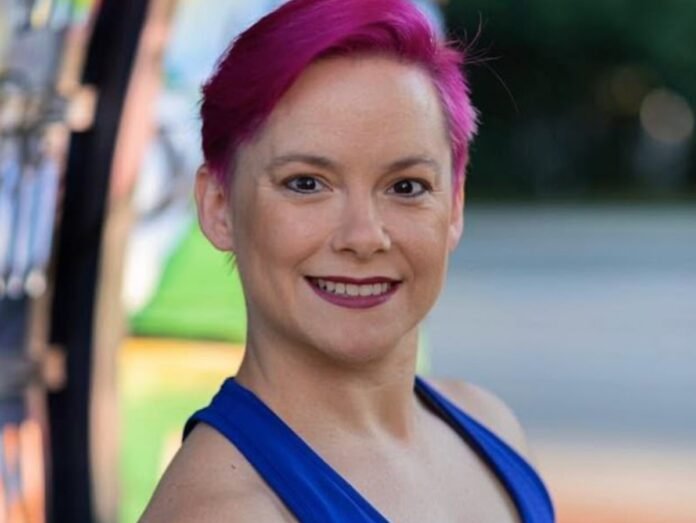
Waddell, a physical therapist from Cary, North Carolina, is described as about 5-foot-5 with a medium build and short blonde hair. A missing person poster shared by police shows her with short pink hair.
Authorities have not publicly released many details about the circumstances surrounding her disappearance, but they have specifically appealed to fishermen, boat operators and residents who live near the coastline to report anything that could help locate her.
The disappearance has devastated Waddell’s husband, Cailen Waddell, who serves as a parks, recreation and cultural resources manager in Cary. He shared the missing person alert on Facebook and asked anyone with connections in Grenada to help spread the word.
“I expect nothing less than Liz’s safe return,” he wrote, asking friends and strangers alike to send “love, light, thoughts, and prayers” as the search continued.
Cailen reportedly flew to Grenada on Friday to assist with the search for his wife.
A family friend told ABC11 that Waddell may have gone down to a pier, left her towel behind and entered the water for a swim before she vanished. Police have not confirmed a full timeline, and it remains unclear who Waddell was traveling with or why she made the trip to Grenada.
Back home in North Carolina, friends are rallying around the family as the mystery deepens.
“Liz is an amazing person, one of the best,” one friend wrote on Cailen’s Facebook post, adding that they were praying for her safe return.
Another wrote that they were holding both Liz and Cailen “in my heart” and sending “good energy into the universe for her safety.”
Waddell is the founder of Art of Movement Physical Therapy in Cary and holds a doctorate in physical therapy from the University of North Carolina at Chapel Hill. Her professional website describes her as a movement specialist with a background in physical therapy, fitness and dance.
In a December Instagram post, Waddell opened up about stepping back from work in mid-November while dealing with several health struggles, including perimenopause and worsening symptoms from a pre-existing vagus nerve injury.
“I’ve learned to give up control and live in the moment,” she wrote at the time. “I listen to my body as much as possible and give myself grace when I can’t do the things I want to do.”
Despite those challenges, Waddell and her husband appeared to share a love of travel. Social media posts show the couple visiting Isla Holbox in Mexico in May, and they also appear to have spent time in Thailand last year.
The couple officially became parents in 2024 after adopting their adult daughter, Suwan, according to their online profiles.
Now, what began as a trip to a postcard-perfect island has turned into a nightmare for her family.
Anyone with information about Elizabeth “Liz” Waddell’s whereabouts is urged to contact the Royal Grenada Police Force, including the South Saint George Police Station or the Criminal Investigation Department.
First teaser for Apple TV’s Neuromancer debuts at SDCC
Apple TV is fast eclipsing HBO as the go-to platform for prestige TV, especially science fiction, with standout fare like Slow Horses, Severance, Foundation, For All Mankind, Murderbot, Silo, Pluribus, and Widow’s Bay, among others. Add the upcoming Neuromancer series to that list, an adaption of William Gibson’s hugely influential 1984 cyberpunk novel of the same name. The streaming platform released a short teaser during San Diego Comic-Con, and visually it looks fantastic, even based on one minute of footage.
Saturday’s various SDCC panels also gave us a teaser for Prime Video’s Carrie; trailers for Dark Matter S2 and Matchbox: The Movie; and a bit of Marvel casting news.
Fans of Gibson’s book already know the Neuromancer story; we’ll have to wait and see how closely the series will adhere to the novel. Per the official logline, the series “follows a damaged, top-rung super-hacker named Case who is thrust into a web of digital espionage with his partner Molly, a razor-girl assassin with mirrored eyes, aiming to pull a heist on a corporate dynasty with untold secrets.” Callum Taylor, best known as Theseus Scamander in the Fantastic Beasts franchise, stars as Case, alongside Briana Middleton (The Inheritance) as Molly.
The cast also includes a blond-haired Mark Strong as Armitage; Joseph Lee as Hideo; Clemence Poesy as Marie-France Tessier; Peter Sarsgaard as John Ashpool; Emma Laird as Linda Lee; Max Irons as Jean Tessier-Ashpool; Dane DeHaan as Peter Riviera; Marc Menchaca as Dixie Flatline; Andre de Shields as Julius Deane; and Isabella Pappas as Mitchell.
Neuromancer premieres on January 22, 2027, on Apple TV+.
Carrie
I’m a staunch fan of Mike Flanagan‘s burgeoning horror portfolio, and he has a particular affinity for the works of Stephen King, as evidenced by his film adaptations of Gerald’s Game and Doctor Sleep. But I confess to being a wee bit skeptical about his new Prime Video miniseries based on Carrie, King’s most famous character, immortalized by Sissy Spacek in the 1976 film. We don’t need another disappointing remake so what story is there left to tell—especially stretched out over six episodes?
On the plus side, Flanagan insists he has no intention of creating yet another straight adaptation of the novel. “Carrie was written half a century ago,” Flanagan said during his SDCC panel. “Carrie was adapted spectacularly by Brian De Palma. It is iconic. It is untouchable. There is no reason whatsoever to try to follow in those footsteps and to try to walk on that path. However, the world has changed quite a lot. I think a lot of people think they know what the show is. And the biggest thing I’m excited about today is just knowing what a big surprise our Carrie is going to be.”
The teaser itself doesn’t deliver any real surprises to anyone familiar with the story, but that’s just one minute of footage. I’m inclined to trust Flanagan’s instincts, given his track record and the stellar supporting cast he’s assembled, which includes several of his regulars.
We’ve got Samantha Sloyan—so chilling as the overly zealous Bev Keane in Midnight Mass—as Carrie’s mother, Margaret White; Michael Trucco as John Hargensen, a wealthy lawyer and father to mean girls ringleader Chris (Alison Thornton); Rahul Kohli as Harold Allison, Margaret’s stepfather; Ruth Codd as Cara; Matthew Lillard as Principal Henry Grayle; Katee Sackhoff as Judith Brigham, Margaret’s mother; Heather Graham as Mrs. Hargensen; Tahmoh Penikett as Margaret’s late husband and Carrie’s father, Ralph White; and Katie Siegel in an as-yet-undisclosed role. (I’m guessing we’re going to be getting a lot of White family flashbacks.)
For the main cast, we have Summer H. Howell as Carrie; Siena Agudong as Sue Snell, the only popular girl to feel remorse for bullying Carrie; Joel Oulette (no relation) as Sue’s boyfriend, Tommy Ross; Amber Midthunder as gym teacher Rita Desjardin; Arthur Conti as Chris’s boyfriend Billy Nolan; Josie Totah as Chris’s BFF Tina Blake; and Thalia Dudek as Emaline, a new character created for the miniseries.
All six episodes of Carrie premiere on October 7, 2026, on Prime Video.
Dark Matter S2
Apple TV also debuted the official trailer for the second season of its sci-fi series Dark Matter. In S1, quantum physicist Jason Dessen (Joel Edgerton) has a great life as a college professor in Chicago, with a beautiful wife, Daniela (Jennifer Connelly) and son Charlie (Oakes Fegley). Then he finds himself abducted at gunpoint by an alternate version of himself and sent into another reality where his life turned out very differently. His alter-ego has figured out how to travel between dimensions by way of a large metal box.
In the S1 finale, the original Jason, Daniela, and Charlie find their way to a seemingly safe haven in “World 26.” But this new trailer makes it very clear that their new life is under threat. Per the official premise:
Season two picks up with the Dessens as they settle into a quiet life in a world that finally seems safe until the unimaginable forces them to run once again. As Jason’s obsession with the Box deepens, Daniela’s growing paranoia pushes her to the brink, threatening to tear their fragile stability apart. Elsewhere, Amanda (Alice Braga) and Ryan (Jimmie Simpson) join forces in a desperate attempt to find their way home. With Blair (Amanda Brugel) determined to stop him, Leighton (Dayo Okeniyi) relentlessly chases his grand vision of creating a perfect world.
The second season of Dark Matter premieres on August 28, 2026, on Apple TV+.
Matchbox: The Movie
There’s not much to say about Matchbox: The Moviethat isn’t already contained in the title. It’s a movie inspired by Mattel’s Matchbox toy cars, and judging from the SDCC trailer, that’s about all it has to do with the brand. Somehow director Sam Hargrave and writer David Coggeshall have turned that thinnest of concepts into a feature-length action comedy film for Apple TV. And you know what? It looks like it could be solid escapist fun.
John Cena stars as a former soldier turned spy named Sean Walker who decides to reunite with his childhood Matchbox car-loving friends, played by Jessica Biel, Sam Richardson, Teyonah Parris, and Arturo Castro. The entire group ends up drugged and kidnapped by bad guys looking for a nuclear warhead. It seems the CIA thinks Sean and his friends stole the nuke, so they decide to re-steal the bomb and get their lives back. Wacky action hijinks ensue, many involving real-life versions of some of Matchbox’s classic toy cars.
Matchbox: the Movie will premiere on October 9, 2026, on Apple TV.
Marvel news: Ghost Rider, Black Panther III
Marvel Studios’ release of The Avengers: Doomsday trailer several days before SDCC was a bit of a surprise, since fans expected that to happen at the Marvel panel on Saturday. The panel ended up focusing on big reveals concerning other future projects, although the Doomsday cast did assemble on-stage for a group selfie, a bit of Q&A—with a cameo by Ryan Gosling playing a fan in a Deadpool costume—and some exclusive teaser footage from the film.
Gosling’s presence wasn’t just a side stunt: Marvel head honcho Kevin Feige announced that Gosling will star in a new Ghost Rider film, to be directed by Shawn Levy (who just finished directing Gosling in Star Wars: Starfighter, due out next May). Gosling has long wanted to revive the character previously portrayed on the big screen by Nicolas Cage in 2007 and 2011, although it’s not clear if Gosling will play the same Johnny Blaze incarnation, or take on Danny Ketch instead. (Agents of SHIELD featured the Robbie Reyes incarnation, played by Gabriel Luna.) The new Ghost Rider is slated for a 2028 release.
Finally, director Ryan Coogler took the stage to announce that David Jonsson (The Long Walk) has been cast in Black Panther III as T’Challa’s grown son, Toussaint/T’Challa II. Black Panther III, expected to be the final installment in a trilogy, is slated for release on December 15, 2028.
When ‘Zionist’ Means ‘Jew’: Italy’s Jewish Community Sounds the Alarm
An anonymous online campaign urging Italians to identify Israeli tourists, Jewish-linked businesses and locations associated with so-called “Zionist tourism” has heightened alarm among Italy’s Jewish community, which says the effort is the latest manifestation of a years-long campaign to single out Jews and Israelis for public scrutiny and threaten their security.
In his feature, ‘Zionist’ Lists and Tourist Maps: Italy’s Jews Warn of a Widening Threat, The Media Line’s Gabriel Colodro traces how what began as an online form quickly evolved into a broader examination of antisemitism in Italy, where Jewish leaders, students and researchers describe an atmosphere in which support for Israel—or simply being identified as Israeli or Jewish—can bring harassment, intimidation and public targeting.
The questionnaire, circulated through social media and messaging groups, asked users to report Israeli visitors, hotels, businesses, property purchases and organizations allegedly connected to “Zionist neo-colonization.” Although the form was removed after intervention by Italy’s national coordinator for the fight against antisemitism, Jewish leaders viewed it as more than an isolated incident. Similar efforts to compile lists of alleged Zionists had already surfaced, including a 2024 publication naming Jewish community figures, journalists, politicians and businesses.
Colodro follows that thread through universities, public demonstrations and local political disputes. Dalia Gubbay, vice president of the Jewish Community of Milan, recalls Jewish participants being driven from this year’s Liberation Day march by hostile demonstrators, while researcher Benjamin Birely describes being publicly branded a “soldier without a uniform” after classmates learned he was Israeli. Both argue that “Zionist” has increasingly become a stand-in for “Jew,” blurring the line between political criticism and discrimination.
The article also documents opposition to Israeli-backed development projects, security concerns affecting Jewish families, and accounts of Jewish children and visitors being singled out because of their identity. For Italy’s Jewish community, Colodro writes, the central question is no longer whether one online list can be removed, but whether Jews can continue living openly in a country many have called home for generations.
Here’s how offshore wind helped New England beat record heat
This story was originally published by Canary Mediaand is reproduced here as part of the Climate Desk collaboration.
America’s offshore wind farms have already shown their ability to keep electricity flowing during brutal winter storms. Now, the clean energy resource has proved it can also bolster the grid during major heat waves.
Earlier this month, as dangerously hot and humid temperatures settled over the eastern United States, two wind projects near New England consistently delivered hundreds of megawatts to the grid as residents cranked up their air conditioners. The influx of wind reduced utilities’ reliance on dirty, expensive oil-burning peaker plants, which operate only when electricity demand is through the roof, according to the data firm Grid Status.
Analysts compared how the regional system performed during the July heat wave and a sweltering stretch in June 2025, before much of the current offshore wind capacity came online. Oil provided nearly 10 percent of the region’s total power supply during peak-demand conditions on July 2, 2026 — that period’s hottest day — down from nearly 15 percent at the highest point on June 24, 2025. That’s a drop of more than a gigawatt in oil-fueled generation between those two days.
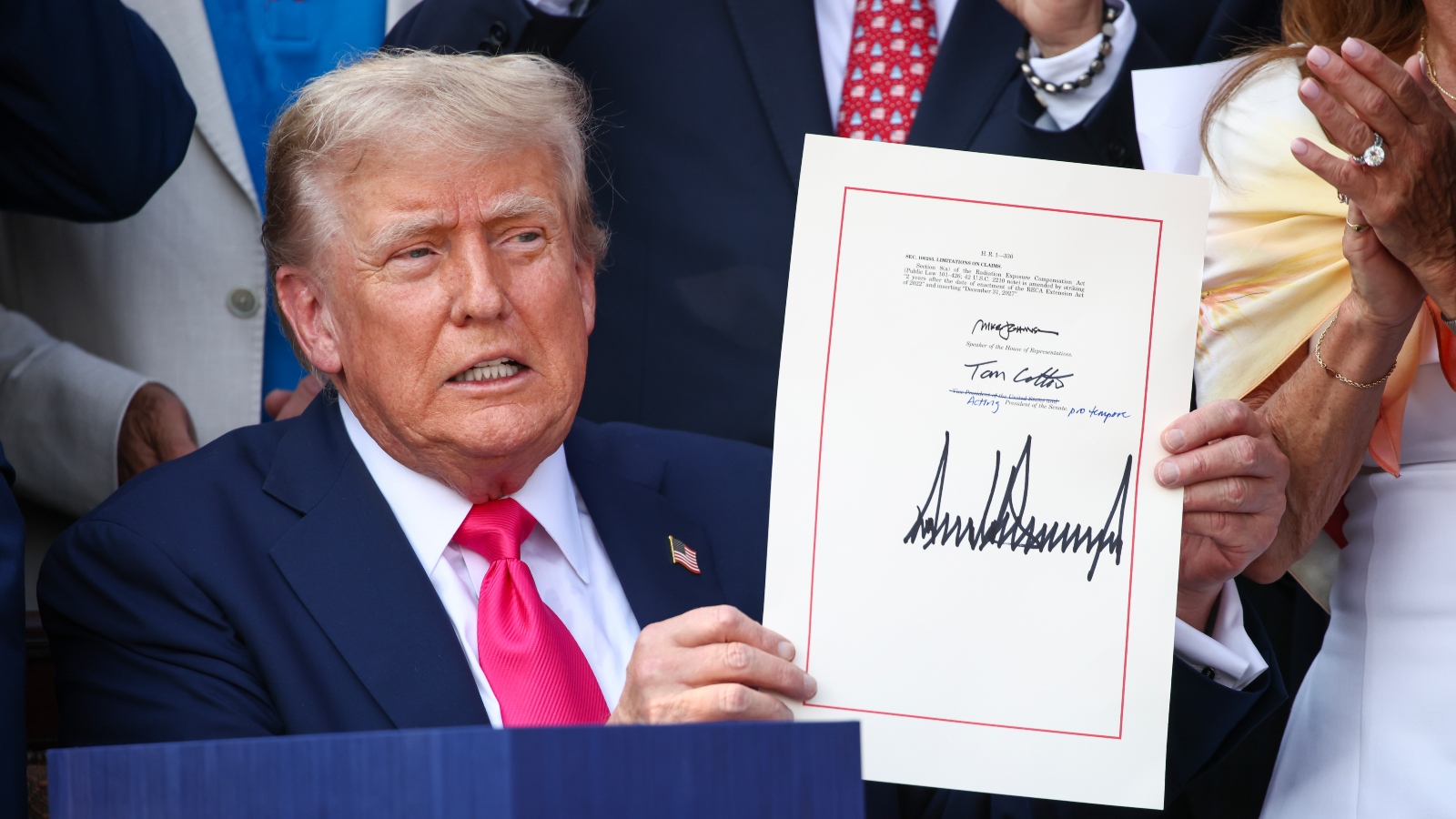
Part of the decline was due to slightly weaker overall demand during the July 2 peak than during last year’s event. But Grid Status said that stronger generation from the region’s utility-scale offshore wind farms was a key factor. The projects are coming online despite repeated attempts by the Trump administration to block them.
Read Next
The surge of hydropower delivered via the New England Clean Energy Connect power line, which started carrying electricity from Canada to Maine in January, also reduced peak oil use. Meanwhile, an abundance of rooftop solar installations significantly eased overall electricity demand during the heat wave.
“Even if total demand was in line with last year, we would still be hundreds of megawatts below what the total [peak oil] burn would’ve been,” said Tim Ennis, a Grid Status analyst in Boston. “We didn’t have to turn the oil on as hard at lunchtime because we had the wind and [hydropower line] online as well.”
Ennis noted that offshore wind is often touted by experts for its ability to bolster grid reliability during winter. New England’s power system is becoming increasingly constrained in colder months, owing to the shift to electric space and water heating systems. Ocean winds in the region are at their strongest and steadiest during the season, meaning offshore turbines can help meet some of that growing electricity demand and reduce stress on gas-fueled power plants.
While wind speeds are generally lower during summer, the recent heat wave confirms that the projects still play a meaningful role on the hottest days — more of which are headed for the region this week.
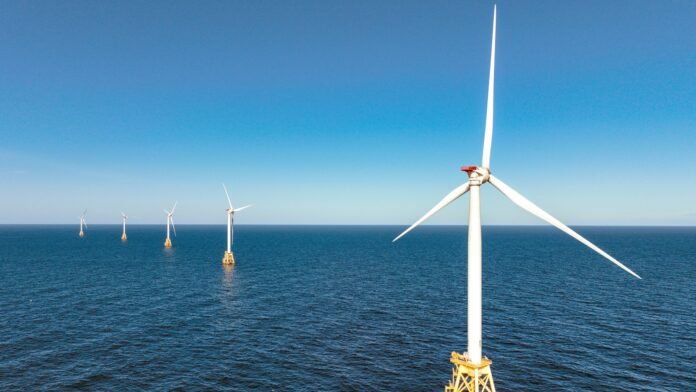
The 806-MW Vineyard Wind, off the coast of Massachusetts, finished construction in March, and its developer had activated 49 of its 62 turbines as of early May. The 704-MW Revolution Wind, near Rhode Island, started sending power to the grid in March and is set to reach full commercial operations by the second half of 2026.
Read Next
Ennis said data shows that the commissioned offshore turbines relieved grid stress from July 1 to 4, during periods when air conditioning use was at its peak, offsetting some of utilities’ need to turn on oil plants, a step that adds to customers’ already high utility bills. All told, New England operators produced 42.2 gigawatt-hours of oil-fired power during that four-day heat wave, down 37 percent from the total oil burned from June 23 to 25, 2025.
Outside New England, the already completed 132-MW South Fork Wind farm had a strong showing off the coast of New York. The project, which came online in 2024, operated at nearly full capacity on July 2, sending electricity into the heat-stressed grid on Long Island, Mikkel Mæhlisen of Ørsted, which jointly owns South Fork Wind with Skyborn Renewables, recently wrote on LinkedIn.
The Independent System Operator New England has previously stressed the role that offshore wind can play in supporting the grid during extreme heat events. The regional grid operator spoke out last August after the Trump administration halted construction of Revolution Wind, which was then 80 percent complete.
Read Next
“Recent heatwaves in New England drove demand for electricity to very high levels and demonstrated that our region needs all generation resources with market obligations to be available to meet demand and maintain required reserves,” ISO New England said in an August 25, 2025, statement, noting that delaying Revolution Wind “will increase risks to reliability.”
A federal judge overturned the stop-work order in September. But its developer Ørsted was forced to hit the brakes again in December after Trump’s Bureau of Ocean Energy Management paused the leases for all five large-scale U.S. offshore wind projects under construction. Though judges later lifted those orders as well, the delays still cost some developers millions of dollars and threatened projects’ viability.
The Trump administration has since adopted a new tactic for kneecapping America’s fledgling offshore wind industry: paying developers to abandon plans for future wind farms, using billions of dollars in taxpayer funding. The strategy makes it highly unlikely that any new projects will be built in the next few years.
However, when all five wind farms are fully up and running, they will add nearly 6 GW in clean capacity to help the East Coast navigate days of bone-chilling cold or life-threatening heat.
“The potential costs and benefits of offshore wind have been debated for decades,” said Fara Courtney, who consults on offshore wind policies and research projects for Outer Harbor Consulting, in Gloucester, Massachusetts. “Now we have the first projects up and producing, [and] the data is clear: Offshore wind is a new American energy sector with a big role to play in meeting this region’s skyrocketing energy demand.”
Netanyahu says he intends to attend UN General Assembly despite NYC Mayor’s arrest threats
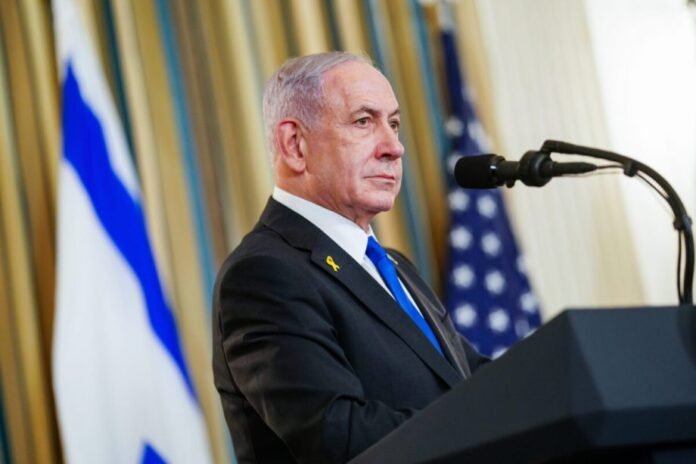
Israeli Prime Minister Benjamin Netanyahu said Sunday that he plans to attend the UN General Assembly in New York, dismissing recent calls for his arrest by New York City Mayor Zohran Mamdani, Anadolu reports.
“I’m not concerned, and I certainly intend to do so,” Netanyahu told Fox News about the September gathering. He added that he has appeared at the high-level diplomatic gathering almost every year during his tenure, unless there are security conditions that barred him from doing so.
The remarks follow Mamdani’s characterization of Netanyahu as a “war criminal” and he is not welcome in the city. Mamdani previously urged Washington to join the International Criminal Court (ICC) to execute existing warrants against the Israeli leader.
US President Donald Trump, however, has vowed that Netanyahu “will not be arrested” while visiting the United States.
The ICC issued arrest warrants in November 2024 for Netanyahu and former Israeli Defence Minister Yoav Gallant over allegations of war crimes and crimes against humanity in Gaza.
Golden, cheesy Spinach Zucchini Chickpea Bake filled with tender vegetables, hearty chickpeas, pesto, and fresh basil.
Spinach Zucchini Chickpea Bake is the kind of cozy vegetable dinner that still feels bright and fresh. Tender zucchini, hearty chickpeas, and wilted spinach are folded into a creamy pesto-ricotta mixture. Then, everything is finished with bubbling mozzarella and juicy cherry tomatoes. Roasting the zucchini first prevents a watery casserole, while lemon zest lifts every rich, cheesy bite.
This easy vegetarian bake works beautifully as a satisfying meatless main or a generous side dish. It has plenty of protein, colorful vegetables, and enough golden cheese to make everyone reach for seconds. The edges turn lightly crisp, the center stays creamy, and little pockets of pesto keep the flavor lively. Serve it with warm crusty bread, a simple green salad, or nothing more than a spoon. Some dinners simply do not need much help disappearing.
Golden, cheesy Spinach Zucchini Chickpea Bake filled with tender vegetables, hearty chickpeas, pesto, and fresh basil.
Recipe Yield: 6 servings
INGREDIENTS
1 (15-oz) can chickpeas, rinsed, drained, and patted dry 3 medium zucchini, about 1½ lb, sliced into ⅓-inch rounds or half-moons 8 oz baby spinach 1 cup cherry tomatoes, halved 1 small yellow onion, finely chopped 3 garlic cloves, minced 1 cup whole-milk ricotta ⅓ cup prepared basil pesto 2 tbsp extra-virgin olive oil, divided ¾ tsp fine sea salt, divided ½ tsp black pepper, divided 1 tsp dried oregano 1 large egg 1 tbsp fresh lemon juice 1 tsp finely grated lemon zest ¼ tsp crushed red pepper flakes ½ cup finely grated Parmesan, divided 1½ cups shredded low-moisture mozzarella, divided 2 tbsp chopped fresh basil, for serving
INSTRUCTIONS
1. Preheat and prepare: Preheat oven to 425°F (220°C). Lightly grease a 2½-qt baking dish or 9-inch square baking dish. Line a large sheet pan with parchment.
2. Roast the zucchini: Toss zucchini with 1 tbsp oil, ½ tsp salt, ¼ tsp pepper, and oregano. Spread in one layer and roast for 10 minutes.
3. Add the tomatoes: Arrange tomatoes cut-side up beside the zucchini. Roast for another 8–10 minutes, until the zucchini is lightly golden and its surface looks dry. Reduce oven to 400°F (200°C).
4. Cook the aromatics: Meanwhile, heat remaining 1 tbsp oil in a large skillet over medium heat. Cook onion for 4–5 minutes, until softened. Add garlic and cook for 30 seconds.
5. Wilt the spinach: Add spinach in batches with remaining salt and pepper. Cook for 3–4 minutes, stirring often, until wilted and no liquid remains. Remove from heat and cool for 5 minutes.
6. Make the creamy filling: Whisk ricotta, pesto, egg, lemon juice, lemon zest, red pepper flakes, ¼ cup Parmesan, and ¾ cup mozzarella until combined.
7. Combine the bake: Fold in the chickpeas, spinach mixture, and all but a few zucchini pieces. Spread evenly in the prepared baking dish.
8. Finish the top: Arrange reserved zucchini and roasted tomatoes over the filling. Sprinkle with remaining mozzarella and Parmesan.
9. Bake until golden: Bake uncovered for 25–30 minutes, until bubbling, lightly golden, and set in the center. The center should reach 165°F (74°C). Broil for 1–2 minutes for deeper golden spots.
10. Rest and serve: Let the bake rest for 10 minutes. Finish with chopped basil and serve warm.
Helpful Tips to Perfect This Recipe
Remove excess vegetable moisture: Roast the zucchini until its surface looks dry. Also cook the spinach until no liquid remains in the skillet. These steps prevent a watery bake.
Use the right cheeses: Whole-milk ricotta creates the creamiest filling, while low-moisture mozzarella melts without releasing excess liquid. Drain unusually wet ricotta before using.
Dry the chickpeas well: Patting the chickpeas dry helps them absorb the pesto and seasonings. It also prevents extra moisture from collecting in the casserole.
Allow the bake to rest: Give it a full 10 minutes before serving. The creamy center will settle, making each portion easier to lift and serve.
Rate This Recipe
Tried this recipe? Your rating helps others and means so much.
For three-quarters of a century, the Middle East operated inside an American frame. Washington was not the only actor, but it was the reference point — the guarantor whose fleets, bases, and diplomatic weight set the outer boundaries of what regional rivals could do to one another.
That frame is not gone, exactly. But it has thinned, and what is emerging in its place is less a new order than the return of an old condition: a genuine multipolar contest among regional powers, hedging outside powers, and a Washington that intervenes selectively rather than presides continuously.
The vacuum that isn’t empty
It has become a cliché to describe American retrenchment as leaving a “vacuum.” The metaphor is misleading. Vacuums imply nothing rushes in to fill them evenly; in practice, the space vacated by a retreating hegemon is claimed unevenly, by whichever regional actor has the most capacity and the clearest interest at that moment.
In the post-hegemonic Middle East, that has meant three simultaneous, overlapping contests rather than one successor order.
One, a Gulf contest for economic and diplomatic primacy. Saudi Arabia and the UAE have spent the past decade building foreign policies independent of, and at times openly at odds with, Washington’s preferences — de-escalating with Iran, hedging with China, buying arms wherever the terms are best.
This is not “anti-Americanism.” It is what realist theory would predict of any capable state once a patron’s guarantees become less certain: diversification of dependence.
Two, a struggle over Iran’s regional position, conducted less through direct state-to-state war than through proxies, sabotage, and the occasional overt strike, with the underlying question never fully resolved: does a chastened, economically squeezed Iran retrench into its borders, or does it reinvest in the deterrent architecture — nuclear latency chief among them — that a weaker conventional position makes more, not less, attractive?
Three, a reordering of Israel’s regional relationships, in which normalization with parts of the Arab world proceeds simultaneously with unresolved, arguably worsening, conflict over the Palestinian question — a contradiction that outside powers have generally preferred to manage rather than resolve, because resolution was never actually a prerequisite for the diplomatic normalization to proceed.
None of this required an American withdrawal. It required only that regional actors stop assuming Washington’s veto was permanent.
What post-hegemony does and doesn’t mean
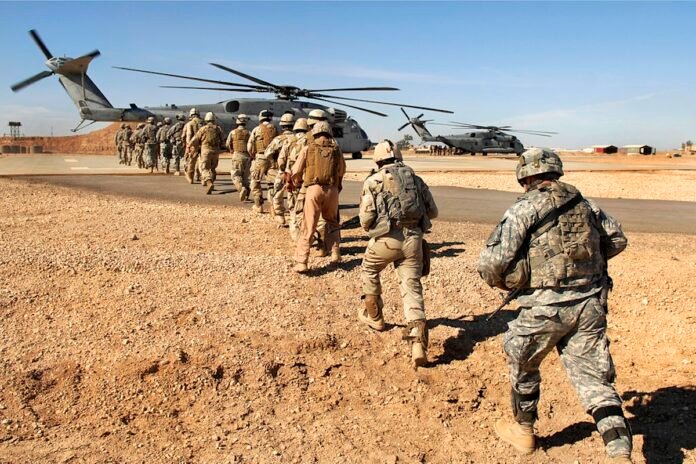
It is worth being precise about what has not happened. The United States retains more military capacity in and around the region than any other outside power, and it has shown, repeatedly, a willingness to use it — carrier groups, airstrikes, sanctions regimes that other economies still cannot fully evade.
Post-hegemony does not mean American absence. It means the end of American presumption — the assumption, held both in Washington and in regional capitals for decades, that outcomes in the Middle East were ultimately Washington’s to arbitrate.
The realist critique of the old hegemonic project was never that American power was insufficient to the task.
It was that the task itself — stabilizing a region through permanent forward deployment, open-ended security guarantees and periodic wars of choice — generated more instability than it resolved, at a cost disproportionate to any American interest at stake.
Iraq is the textbook case; Libya and the long Syrian entanglement are footnotes to the same argument. A superpower that binds its credibility to outcomes it cannot fully control eventually finds its credibility hostage to actors — client states, insurgencies, rival powers — with far more at stake locally than Washington has globally.
The China and Russia questions, deflated
Much American commentary treats Gulf hedging toward Beijing and Moscow as evidence of a rival hegemonic project displacing the American one. This overstates both China’s appetite and Russia’s capacity.
Beijing has shown persistent interest in commercial access and energy security, and almost no interest in the security-guarantor role the United States has played — no basing structure, no defense treaties, no willingness to referee Sunni-Shia or Arab-Israeli disputes.
Russia, degraded by its war in Ukraine, retains influence through arms sales and its Syrian foothold but lacks the reserve capacity to underwrite anyone’s security in a crisis.
What both offer regional states is not a replacement patron but negotiating leverage against the incumbent one — exactly the diversification a rational middle power seeks once it doubts an existing patron’s permanence.
Uncomfortable realist conclusion
The likely trajectory is not a stable new equilibrium but a rockier, more expensive, more diplomatically improvised regional politics — with wars managed rather than prevented, deterrence relationships that shift with each crisis and outside powers, the United States included, drawn back in episodically rather than continuously.
That is not a comforting picture. But it may be the honest one, and honest pictures are a better basis for policy than the nostalgic assumption that American primacy in the Middle East was ever cost-free, or that its erosion is a crisis to be reversed rather than a condition to be managed.
The question for American policymakers is not how to restore the old frame. It is whether Washington can define a narrower set of genuine interests — nonproliferation, freedom of navigation, denying any single power exclusive control of Gulf energy flows — and pursue those without re-assuming the guarantor’s chair for everything else.
That is a harder discipline than either full withdrawal or full re-engagement. It is also, on the realist premise, the only one likely to be sustainable.
This article was originally published on Leon Hadar’s Global Zeitgeist and is republished with kind permission. Become a subscriber here.
Bret Michaels is recovering after a painful health scare forced him into emergency surgery — but not before the Poison frontman powered through three concerts while battling what he described as “intense” pain.
The 63-year-old rocker revealed in a Facebook update Wednesday that he had been hospitalized after a kidney stone failed to pass on its own for seven days. Michaels said the pain eventually became too severe, forcing doctors to operate.
Writing from his hospital bed, Michaels said the experience left him with “complete gratitude” for the doctors, nurses and hospital staff who helped care for him.
“The pain became intense but, as usual, I played through Charleston, Grantville, and a special private show at Fairchild AFB in Spokane for veterans, active duty and their families,” Michaels wrote.
According to the “Every Rose Has Its Thorn” singer, he was taken to the hospital immediately after the Spokane performance when the pain became too much to continue ignoring.
“The operation has been done and is complete & I’m out of post-op recovery,” he told fans, adding that he is doing everything he can to recover and get back on stage once he receives a clean bill of health.
Michaels also used the moment to reflect on the importance of the people who help others through health emergencies, saying he is “wise enough to know how important family, friends, fans, doctors and nurses play such a vital role in our everyday health.”
The health scare comes in the middle of a busy stretch for Michaels, who is currently scheduled to return to the stage on July 31 in Belleville, Illinois. His North American tour dates are expected to continue through September.
Michaels had also been scheduled to perform as part of Freedom 250 Presents: The Great American State Fair, a concert series affiliated with President Trump that ran from June 25 through July 10. However, he pulled out of the event in May, saying the show had changed from what he originally believed it would be.
“When this opportunity was originally presented to my team, it was described as a celebration of our country through music and a chance to honor our veterans, active military, first responders, teachers and hardworking Americans from all walks of life,” Michaels wrote at the time.
The singer, whose father was a veteran, said he has always been proud to support military families. But he explained that the event had become “much more divisive” than what he agreed to join, and that concerns had been raised about the safety of his fans, band, crew, family and himself.
For now, Michaels appears focused on healing after his emergency procedure — and, true to form, getting back in front of fans as soon as doctors allow it.
Missiles, Mobilization, and Tehran: Can the Houthis Wage a Wider War?
The Houthis’ latest attacks on Saudi oil tankers, renewed strikes on Saudi territory, and threats to maritime traffic have revived a question: Can the Iran-backed group sustain a prolonged conflict on multiple fronts?
In Do the Houthis Have the Capacity To Wage a Multi-Front War?, The Media Line’s Khaled Al-Ansi examines the military, political and logistical calculations shaping the Houthis’ strategy as fighting with Saudi Arabia intensifies and regional tensions continue to mount.
The immediate flashpoints include ballistic missile and drone attacks on Abha International Airport, a declared maritime “blockade” against Saudi shipping and disputes over Sanaa International Airport, where the Houthis insist on direct flights between Sanaa and Tehran.
Political analyst Abdul Salam Mohammed argues that these issues are part of a broader regional strategy directed by Iran’s Islamic Revolutionary Guard Corps. He says major Houthi military decisions, including attacks deep inside Saudi Arabia and disruptions to maritime navigation, remain closely tied to Tehran’s regional objectives.
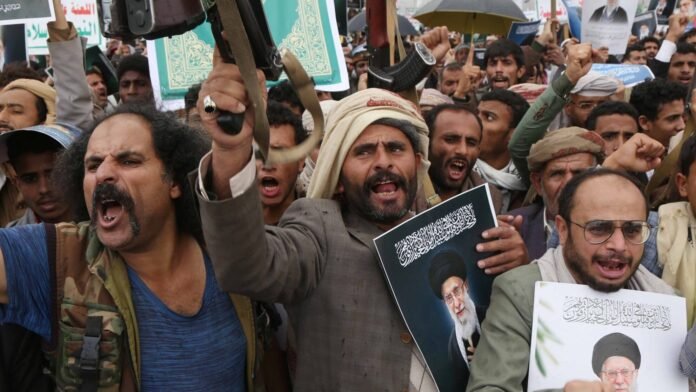
The Houthis insist they are prepared for a prolonged confrontation. A source working with the movement’s General Mobilization Forces told The Media Line that the Houthis possess an integrated command structure, advanced missiles, drones, attack drone boats and autonomous underwater vehicles capable of sustaining a war of attrition. The source declared, “The Ansar Allah [Houthis] are fully ready for this war,” while warning that “Bab al-Mandab, Saudi airports, and every other target are awaiting zero hour.”
Those claims are difficult to verify independently. Houthi-affiliated sources estimate the movement commands more than 200,000 registered fighters, another 250,000 personnel tied to mobilization units and broader tribal support. Yemen’s internationally recognized government, meanwhile, says it has reorganized its forces under a unified command and now fields about 400,000 fighters, although that figure also remains unverified.
Mohammed argues the conflict’s trajectory may ultimately depend less on the Houthis than on Saudi Arabia. If attacks on airports, energy infrastructure and shipping continue, he believes Riyadh could abandon its more restrained approach and fully back a government offensive toward Sanaa with direct US support, potentially opening a far broader phase of the war.
Rubio’s Paranoid Cuba Report Designed to “Justify a Military Attack on Cuba,” Says Democratic Rep.
A report published this week by the State Department is the latest weapon employed by the Trump administration in its campaign for aggressive intervention in Cuba, according to members of Congress and experts on the beleaguered Caribbean island nation.
Despite Cuba being severely hobbled by in the throes of a humanitarian crisis engineered by U.S. sanctions and fuel blockades, the new report paints the country as a major threat.
The report appears to be the brainchild of Secretary of State Marco Rubio, a first-generation Cuban American who has made the overthrow of the Cuban government a top priority under the second Trump administration.
Published Monday without a listed author, the report says Cuba is the “capital of 21st century communism,” ideologically immovable, and a permanent enemy committed to the destruction not just of the U.S. but also of “Western civilization” through the spread of “Third Worldism.”
If that sounds like a throwback to the long-settled Cold War, that’s because it is — something critics of the report in Congress seized upon.
Whatever truths the report contains, they’re largely overshadowed by a feverish paranoia about the alleged reach of Cuban intelligence into American civil society, according to Rep. Mark Pocan, D-Wis., days after returning from a fact-finding trip to Cuba.
“It may be the stupidest, most fantastical, most biased thing I’ve ever read from a governmental agency,” Pocan said in a statement Tuesday. “This report focuses on the 1960s & 70s with no clear connection to today. Yet somehow, the State Department uses this report to say that this impoverished nation is responsible for everything from Black Lives Matter to Antifa, the anti-ICE protests and more.”
Rep. Delia Ramirez, D-Ill., who went on the fact-finding mission with Pocan, said the report was aimed at manufacturing consent for an invasion of the island — and to crack down on dissent at home.
“While criticizing the regime in Cuba, it instead attacks Americans’ constitutional rights to free speech and free assembly.”
“This report was intentionally designed to instill fear of the Cuban people and to justify a military attack on Cuba,” Ramirez told The Intercept. “It’s hypocrisy at its finest, because while criticizing the regime in Cuba, it instead attacks Americans’ constitutional rights to free speech and free assembly.”
In sketching a broad, anti-American conspiracy in nearly dozens of left-wing social movements, organizations, and educational institutions, the report also functions as a broadside on civil society in the U.S — and hardly for the first time.
“Cuba is not a new cudgel,” said Miriam Pensack, a historian at Princeton University specializing in Latin America and the Caribbean. “The Cuban revolution was a galvanizing event for the way that the United States thought about its national security, really until the end of the Cold War. And it still has an ideological utility, even as the country is limping along.”
Center of Global Conspiracy
Running 100 pages, the report lays out what its authors describe as a decadeslong effort by Cuba to foment revolutionary movements throughout the world and to build a latter-day “axis of evil” by allying with other governments opposed to U.S. interests, including the current-day governments of Iran, Russia, China, and North Korea.
“Even as it expands and revitalizes its network within the next generation of American left-wing activists, it has also forged new partnerships — or deepened and repurposed old ones — with other foreign governments and movements around the world,” the report warns. “The regime continues to act as a force multiplier for a much broader anti-American coalition, positioning itself as a staging ground for a wide range of foreign adversaries to conduct operations against the United States.”
Cuba, the authors allege, is “less a nation-state than an all-encompassing intelligence and subversion operation, focused around its existential revolution against the United States.”
The report goes on to list a slew of left-wing groups and individuals as accomplices, both witting and unwitting, of this intelligence operation, including the Democratic Socialists of America, Code Pink, Los Angeles Mayor Karen Bass, and leftwing streamer Hasan Piker.
In a section stretching nearly five full pages on the National Lawyers Guild, a long-standing right-wing bugaboo, the report’s authors describe the venerable progressive law association as “one of the most persistently relevant — and insidious — organizations in Cuba’s U.S. network.”
Posting to X for the first time since March, the organization quipped, “We have been called much worse, by much better.”
Academic Freedom at Home
The report took aim at universities in the U.S. for maintaining exchange programs and partnerships with Cuban universities, implying that such programs functioned as a feeding ground for Cuban agents looking to recruit spies and fellow travelers.
The report singled out Harvard University, pointing to trips by faculty to Cuba as recently as 2017.
The Cuban government “would probably argue that it was U.S. universities that were trying to penetrate Cuban institutions and to foment subversion there!”
If anything, however, the Cuban government has been wary of exchange programs with American schools, according to Alejandro de la Fuente, a professor of Latin American history and economics at Harvard who chairs the university’s Cuba Studies Program and took part in a trip to Cuba in 2017 that is mentioned in the report.
“They did their best to delimit those exchanges as much as possible because they understood that knowledge production requires freedom and a plurality of viewpoints — precisely what they do not allow,” de la Fuente told The Intercept in an email Wednesday. “Indeed, they would probably argue that it was U.S. universities that were trying to penetrate Cuban institutions and to foment subversion there!”
Born in Cuba, De la Fuente is hardly an apologist for the Cuban government, at whose feet he laid the blame for the country’s collapse. He acknowledged that Cuban intelligence may have targeted American students and academics in the past, but scoffed at the underlying thesis of the report that Cuba continues to pose a grave threat to the U.S.
“The ineptitude and corruption of the regime have destroyed the country’s economy and society, to the point that the very existence of the nation is in danger,” de la Fuente said. “Can a country like this pose a threat to the national security of the United States today? The answer, any reasonable observer would agree, is emphatically no.”
“War on the Cuban People”
Cuba has made no secret of its support for revolutionary movements throughout the 20th century. And it was a vital partner to left-wing governments in Latin America in the 21st century.
With Cuba today crippled by sanctions and fuel shortages, however, Ramirez, the member of Congress, said the report’s notion of the country as a central node in some threatening conspiracy was a “fiction.”
Accusations about Cuba’s extensive reach into protests against U.S. Immigration and Customs Enforcement, antifascist organizing, and Black Lives Matter don’t square with the reality of the severe crisis that has gripped Cuba. In early January, the Trump administration tightened its embargo of the country into a virtual blockade on all fuel arriving in Cuba.
Already weakened by internal tensions and by decades of economic sanctions imposed by the U.S., the island nation has in recent months been plunged into repeated, extended blackouts; its tourism-dependent economy has effectively collapsed; and its citizens face a daily question of where to find their next meal.
Her voice on the verge of tears as she described the humanitarian crisis she witnessed on the island, Ramirez forcefully rejected the notion that the U.S. has anything to fear from Cuba.
“Under no circumstances, at any moment during my trip, did I see anything to make me believe that Cuba poses an existential threat to the United States,” Ramirez said. “On the contrary, what I witnessed was a war on the Cuban people by the United States, and specifically by Donald Trump and Marco Rubio.”