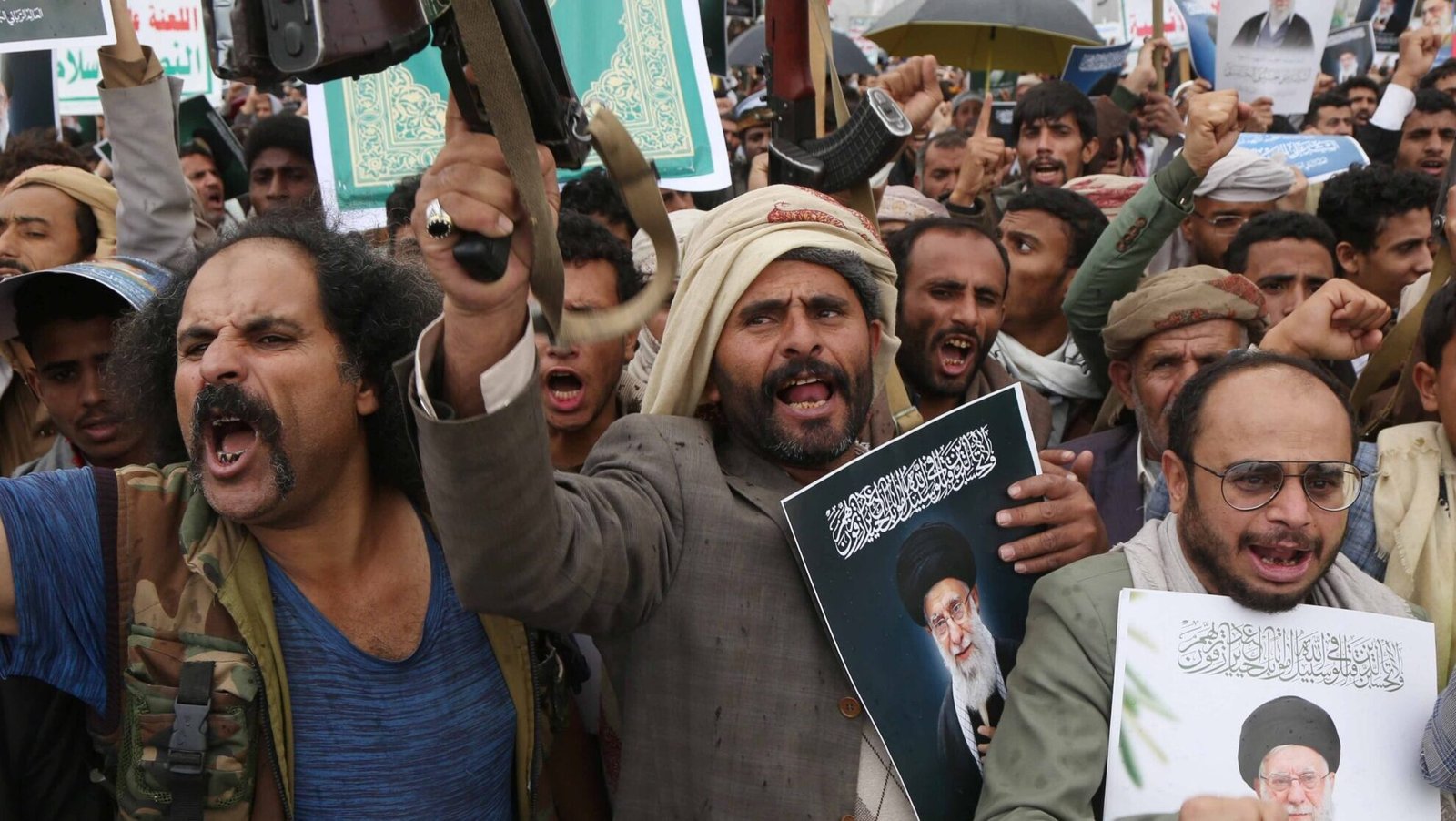
The Houthis’ latest attacks on Saudi oil tankers, renewed strikes on Saudi territory, and threats to maritime traffic have revived a question: Can the Iran-backed group sustain a prolonged conflict on multiple fronts?
In Do the Houthis Have the Capacity To Wage a Multi-Front War?, The Media Line’s Khaled Al-Ansi examines the military, political and logistical calculations shaping the Houthis’ strategy as fighting with Saudi Arabia intensifies and regional tensions continue to mount.
The immediate flashpoints include ballistic missile and drone attacks on Abha International Airport, a declared maritime “blockade” against Saudi shipping and disputes over Sanaa International Airport, where the Houthis insist on direct flights between Sanaa and Tehran.
Political analyst Abdul Salam Mohammed argues that these issues are part of a broader regional strategy directed by Iran’s Islamic Revolutionary Guard Corps. He says major Houthi military decisions, including attacks deep inside Saudi Arabia and disruptions to maritime navigation, remain closely tied to Tehran’s regional objectives.
The Houthis insist they are prepared for a prolonged confrontation. A source working with the movement’s General Mobilization Forces told The Media Line that the Houthis possess an integrated command structure, advanced missiles, drones, attack drone boats and autonomous underwater vehicles capable of sustaining a war of attrition. The source declared, “The Ansar Allah [Houthis] are fully ready for this war,” while warning that “Bab al-Mandab, Saudi airports, and every other target are awaiting zero hour.”
Those claims are difficult to verify independently. Houthi-affiliated sources estimate the movement commands more than 200,000 registered fighters, another 250,000 personnel tied to mobilization units and broader tribal support. Yemen’s internationally recognized government, meanwhile, says it has reorganized its forces under a unified command and now fields about 400,000 fighters, although that figure also remains unverified.
Mohammed argues the conflict’s trajectory may ultimately depend less on the Houthis than on Saudi Arabia. If attacks on airports, energy infrastructure and shipping continue, he believes Riyadh could abandon its more restrained approach and fully back a government offensive toward Sanaa with direct US support, potentially opening a far broader phase of the war.