
21.5 C
London
Thursday, July 16, 2026
Home Blog

ICE Officers at Maine Shooting Scene Were Wearing Body Cameras. They Were Not Turned On.

0
ice-officers-at-maine-shooting-scene-were-wearing-body-cameras-they-were-not-turned-on.
ICE Officers at Maine Shooting Scene Were Wearing Body Cameras. They Were Not Turned On.


Federal officers at the scene of a killing by U.S. Immigration and Customs Enforcement in Maine were wearing body cameras, according to four ICE officials who reviewed images from the scene — but the cameras are on multi-function devices that ICE officers use as radio mics.

After an ICE officer shot and killed a 25-year-old Colombian national this week in Biddeford, Maine, Secretary of Homeland Security Markwayne Mullin reportedly told Sen. Angus King, I-Maine, that officers involved in the shooting were not wearing body cameras.

Yet the ICE officials who spoke with The Intercept, all of whom requested anonymity to protect their livelihoods, identified cameras among the equipment worn by two ICE officers nearby in the immediate aftermath of the shooting.

The body-worn devices were not designed solely to capture evidential video, and are used primarily as remote microphones for ICE officers’ radio communications. (ICE did not respond to a request for comment.)

“We are currently only using them as mics because of the AXON contract.”

ICE officials who spoke to The Intercept identified the accessories worn by ICE officers on the scene of the Maine shooting as Motorola SVX Video Remote Speaker Microphones, a wireless radio mic with one other important feature: a camera. (Motorola did not respond to a request to comment.)

Although the Motorola SVX worn by ICE officers are designed to work as body cameras, the ICE official said the function isn’t used.

“They have multiple functionalities,” one ICE official who identified the Motorola SVX at the scene in Maine told The Intercept. “However, we are currently only using them as mics because of the AXON contract.”

The Department of Homeland Security, ICE’s parent agency, purchases body-worn cameras through a contract with Axon, a law enforcement tech firm. (Axon did not respond to a request for comment.)

Another ICE official showed The Intercept where, on their own Motorola SVX, a cover can be attached to the top of the device where the camera lens is, comparing it to the tech worn by officers at the Maine shooting scene.

“This is where the cover clips over the camera lens,” the second ICE officer said. “Since the cameras don’t work they just leave the cover on.”

The SVX mics worn by ICE are designed to record internally, capable of storing over 100 hours of standard-definition video, according to Motorola promotional materials and a technical support line. The video-recording function on the SVX mic, however, requires a subscription.

No Bodycam Footage

Motorola is a giant in the world of government law enforcement and security work.

According to a document published on the Department of Homeland Security’s website, ICE alone expects to spend more than $100 million on a six-year contract for Motorola’s line of APX Next All-Band Smart Radios and accessories, which would include the SVX mic.

The deadly ICE shooting of Johan Sebastián Durán Guerrero in Maine stoked national outrage, coming on the heels of another fatal ICE shooting of Mexican immigrant Lorenzo Salgado Araujo in Houston.

Neither man, according to news reports, had been the intended targets of the ICE arrest teams. And neither man’s death was captured by federal officers’ body-worn cameras, according to official reports.

Shortly after the Maine shooting, ICE ordered its officers in the field to halt nearly all traffic stops. After reports of the order emerged and Trump complained, border czar Tom Homan pivoted to say the ICE vehicle stops would continue.

Widely known today for its body cams, Axon used to be called Taser, named for the stun gun that built its reputation and which it still carries. The company does brisk business with ICE.

Last month, presidential financial disclosures raised eyebrows over an ICE public request for a $220 million stun gun contract that appeared tailor-made for Axon’s Tasers. Only two weeks before the request for information went out, according to the disclosures, President Donald Trump purchased as much as $5 million in shares from Axon.

During Trump’s winter immigration crackdown in Minnesota, ICE announced that it would be purchasing and distributing body cameras to every arrest team in the agency.

After the deaths of Durán Guerrero and Salgado Araujo over past week, however, the Trump administration said the distribution was incomplete.

“The body cameras have been ordered,” Homan, Trump’s border czar, said in a press conference. “There’s a deployment schedule on the books.”

The Homeland Security Department said that half of ICE field offices already had body-worn cameras and the rest were expected to get them in the next two months.

The new body cameras were funded through a $20 million congressional appropriation to expand ICE’s camera program, which includes contracts with Axon for the devices.

Texas Democrats Ask for Investigation Into Ken Paxton After Our Reporting Found He May Have Violated Election Law

0
texas-democrats-ask-for-investigation-into-ken-paxton-after-our-reporting-found-he-may-have-violated-election-law
Texas Democrats Ask for Investigation Into Ken Paxton After Our Reporting Found He May Have Violated Election Law

Dallas-area Democrats are demanding that Republican Texas Attorney General Ken Paxton be investigated for illegal voting after ProPublica and The Texas Tribune revealed that he has repeatedly voted while registered at an address where he appears to no longer live.

In a complaint filed Tuesday, the Collin County Democratic Party asked the Texas secretary of state to investigate whether Paxton committed election fraud by voting in the May primary runoff. Paxton beat longtime incumbent John Cornyn in that race, securing the Republican Party’s nomination for U.S. Senate.

Read More

Mary Higbe, vice chair of the Collin County Democratic Party, noted in the complaint that Paxton’s office, as recently as February, warned voters that “it is illegal to misrepresent your residence on election records.”

“For someone who’s made a stand against voter fraud, it’s unconscionable (yet not surprising) that Paxton engages in this behavior,” Higbe wrote. She added, “I ask that he be held to the same standards he wishes to hold others to.”

ProPublica and The Texas Tribune reported last week that Paxton has voted six times in the past two years while registered at an address in Collin County where he previously lived with his wife, state Sen. Angela Paxton.

Paxton moved out of the Collin County home in June 2024 and has not returned, according to a divorce filing by his wife and a source close to the Paxton family. It is unclear where Paxton has lived for the past two years, but reporting by ProPublica and the Tribune has linked him to a home in neighboring Denton County since February.

Three election officials told ProPublica and the Tribune that Paxton may have broken state election law, which requires voters to be registered where they live. Voters may temporarily cast ballots using an address where they do not reside, so long as they intend to return. The experts said it is unclear whether Paxton could make such an argument given his ongoing public and contentious divorce.

The day after Collin County Democrats filed the complaint, the Texas Democratic Party issued a news release that accused Paxton of ignoring “bombshell voter fraud accusations.”

It’s unclear what will happen with the complaint. Under the current system, the secretary of state conducts an “initial review and, if appropriate, refers it to the Office of the Attorney General,” said Alicia Pierce, spokesperson for Secretary of State Jane Nelson, whose last day in the position is Friday. Pierce did not respond to a question about whether the office would handle a complaint against Paxton differently. She instead pointed to the state law that requires the secretary of state to “promptly” refer complaints to the attorney general if “there is reasonable cause to suspect that criminal conduct occurred.”

Paxton’s situation seems to meet that threshold, and the attorney general should seek outside help, given the conflict of interest in investigating himself, said San Antonio election lawyer Joaquin Gonzalez, who previously led the voting rights program at the Texas Civil Rights Project.

“The ethical and sort of best practice would be for the attorney general’s office to hire an independent special investigator to look into the complaint,” Gonzalez said.

Paxton did not answer questions from the newsrooms in early July about his voter registration and residency.

Neither he nor the attorney general’s office responded to questions about the complaint or how they would handle the case should the secretary of state refer it to his office.

Paxton campaign spokesperson Madison Cercy sent the newsrooms a broad statement unrelated to Paxton’s voter registration that accused the “political elite” and reporters of digging through the attorney general’s private life to “draw the most damning conclusion.” The campaign did not answer a question about Cercy’s previous statements to other news outlets that Paxton “is a lawful, registered Texas voter in full compliance with the law.”

Higbe said in an interview that the complaint tests Texas’ system of checks and balances, adding that this is “an opportunity to see if that system still works.” Still, she said she doubts the attorney general would permit a fair investigation of his own conduct.

“But pointing out hypocrisy from the state’s top cop is necessary,” Higbe said.

Support Independent Journalism:

As a nonprofit newsroom, we rely on donations from individuals like you to fuel our work. Your support today will directly fund investigations that shine a light on urgent issues: corporations prioritizing profits over public safety, health insurers denying coverage to patients, unintended consequences of new laws and more.

Power of Siberia 2 deadlock belies Russia-China ‘no-limits’ pact

0
power-of-siberia-2-deadlock-belies-russia-china-‘no-limits’-pact
Power of Siberia 2 deadlock belies Russia-China ‘no-limits’ pact

Power of Siberia 2, a landmark natural gas pipeline that would link Russia and China, has hit a deadlock, with a gas-price gap so vast that Beijing has told Moscow to stop raising the subject altogether. Neither side has formally walked away, but no timeline for a deal or for construction to begin is in sight.

The project, which received approval in principle from both governments last September, would carry up to 50 billion cubic meters of gas annually from Russia’s Yamal fields through Mongolia to China.

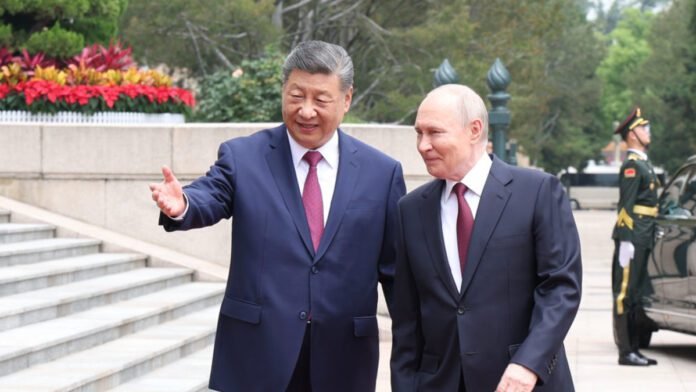
The Wall Street Journal reported that Chinese officials made clear even before Russian President Vladimir Putin’s visit to Beijing in May that an agreement was impossible under current terms, and asked the Russian delegation not to press the issue. The Kremlin says talks continue at the corporate level.

The dispute centers on the price for the gas. China is demanding that it be permitted to pay US$50 per thousand cubic meters, the heavily subsidized rate Russian households pay at home, which bears no relation to commercial export terms. Russia is asking for about US$250 per thousand cubic meters.

Public information showed that China already imports Russian gas via the Power of Siberia 1 pipeline at US$240 to US$280 per thousand cubic meters, and Central Asian gas at about US$200 per thousand cubic meters. Before the war in Ukraine broke out in February 2022, Russia sold gas to Europe and Turkey at US$275 to US$340 per thousand cubic meters.

Beijing’s ultra-low opening bid sits uneasily alongside Chinese leaders’ repeated pledges of a “no-limits” partnership with Moscow.

Chinese commentators say that Russia is under mounting pressure on multiple fronts:

  • Ukraine has intensified drone strikes on Russian territory;
  • The European Union has committed to phasing out all Russian liquefied natural gas (LNG) imports by the end of 2026, with a full ban on pipeline gas from October 2027;
  • Beijing has resumed buying American LNG.

Reuters reported Thursday that the first United States LNG cargo in a year had arrived at a Chinese terminal last week, following a resumption of purchases after President Xi Jinping and US President Donald Trump met in mid-May.

“In 2025, China paid an average of around US$258 per thousand cubic meters for Russian pipeline gas, already well below what Europe once paid,” writes a Hebei-based columnist using the pen name Riyue Xhige. “Beijing’s new demand pushes the discount much farther. Even Belarus has never been offered terms this close to Russia’s domestic price.”

The columnist adds: “This is no longer ordinary commercial bargaining. It reflects a fundamental shift in who holds the power at the negotiating table.”

The columnist says Russia once enjoyed a seller’s market with Europe, where buyers had little choice but to pay – but that now that dynamic has reversed entirely, with China sitting firmly in a buyer’s market.

He points to China’s diversified energy sources as the foundation of its bargaining strength:

  • China’s domestic gas output reached 262 billion cubic meters in 2025, up 6.2% year on year, marking the ninth consecutive year of growth exceeding 10 billion cubic meters.
  • On land, the four gas pipelines in Turkmenistan, Uzbekistan, Kazakhstan and Tajikistan in Central Asia have a combined annual capacity of over 85 billion cubic meters, with additional routes under planning;
  • At sea, LNG tankers from Qatar, Australia and Malaysia arrive at Chinese terminals in a steady stream. Russia is one option among many.

“China wants to expand energy imports from Russia as part of a diversified supply strategy, but that does not mean Russian gas is irreplaceable,” he says. “This strategic composure gives Beijing unprecedented leverage at the negotiating table. No matter how Russia adjusts its position, it will have to come back to meet Chinese terms.”

“Russia is like a cat on a hot tin roof because of the war in Ukraine, while China has no shortage of gas sources,” writes a Jiangsu-based commentator using the pen name New Day Student. “If Russia does not want to sell, we will simply keep buying from Central Asia, Australia and Qatar.”

Its true, he says, that “some of Russia’s supporters may feel it is unfair that China asks Moscow to sell gas at its domestic price and pay all the infrastructure costs. But what does that have to do with us? Nobody is forcing Russia to sell. That is just how markets work.”

He adds that the suggested price of US$50 per thousand cubic meters is just an opening anchor for negotiations, not a final offer; in any case, the gas price of Power of Siberia 2 must be lower than that of Power of Siberia 1.

Pipeline’s rocky road

The Power of Siberia 2 project has been in the works for years. Russia’s Gazprom approved a feasibility study in 2021, and both governments reached an agreement in principle last September. But the path to that point was far from smooth.

Moscow had long pushed for the pipeline to pass through Mongolia, citing lower infrastructure costs compared to a direct route. Beijing resisted.

After Mongolia signed an open skies agreement with the United States and proposed a rare-earth partnership with Washington in August 2023, China’s concerns deepened. Beijing worried that a gas supply routed through the landlocked nation could one day be blocked, undermining China’s energy security. 

China eventually relented last September and accepted the Mongolia route, but only on the condition that Russia agreed to significantly lower gas prices.

The broader energy picture has since shifted in Beijing’s favor. In May, China agreed to resume purchases of United States LNG. On June 21, the US Treasury issued a 60-day exemption allowing Iran to produce and sell oil and petroleum products in US dollars. Together, the moves helped China replenish energy reserves depleted by the closure of the Strait of Hormuz.

Putin met Xi in Beijing on May 20, only to find China’s pricing terms unchanged. He then traveled to Kazakhstan on May 28 to explore a Central Asian transit route for Russian gas to enter China, sidestepping Mongolia altogether.  

“Switching the pipeline route will not solve anything,” says another Hebei-based columnist. “This is fundamentally a question of price and cost. It is true that Russia needs the Chinese market, and China needs a stable energy supply. But China has plenty of options and no reason to rush. We simply hold the stronger hand.”

He adds: “It is Russia, not China, that is running out of time, with the EU’s ban on Russian pipeline gas taking effect in autumn 2027. Whether the Kazakhstan route can actually be realized depends on whether Russia is willing to show good faith on price and financing to China. If Moscow still clings to the old thinking of selling its energy high and passing costs onto others, this detour will lead nowhere either.”

Shan Hai, a Shandong-based columnist, says that since the collapse of the Soviet Union in 1991, Moscow has relied on selling energy at a high price, importing whatever it needs and ignoring the development of its industrial ecosystem.

He says Russia should reform its economic system by selling energy to China at competitive prices and by opening its doors to Chinese manufacturers to build factories. He also points out that some Russian regions have begun importing refined petroleum products from China after their oil refinery facilities were attacked by Ukrainian drones, meaning that the scope of energy cooperation between the two countries is expanding and becoming reciprocal.

Read: China-Russia gas pact heightens Western sanctions risks

Follow Jeff Pao on X at @jeffpao3

T-Mobile bungled forced plan migration, canceling some users’ free lines

0
t-mobile-bungled-forced-plan-migration,-canceling-some-users’-free-lines
T-Mobile bungled forced plan migration, canceling some users’ free lines

T-Mobile canceled some longtime subscribers’ free-line promotions as part of a forced migration to new rate plans, spurring complaints from customers yesterday. T-Mobile admitted the problem and blamed it on technical errors that it is trying to fix.

The forced plan changes were controversial to begin with, particularly as many longtime users are being hit with price hikes of $6 per line. The unexpected loss of free lines for some of those users could raise prices by a much higher amount if the change isn’t reversed.

There is good news, though. T-Mobile told Ars today that it was a mistake and that the company is working to fix the problem. Of course, it’s not always easy for telecom customers to get the proper resolution even after a company admits to an error publicly. But given T-Mobile’s statement today, we hope the firm will fix the problem for all impacted customers with as little hassle as possible.

“Our priority is to ensure customers keep the promotions, credits and benefits of their current plan,” T-Mobile told Ars today. “We’ve identified technical issues affecting a very small number of customers and are working quickly to correct them. For some of those customers, free line promotions were not reflected correctly following migration due to a delay in applying promotional discounts. Those free lines remain free, and we’re restoring the discounts, backdating them where needed, and reprocessing accounts to ensure customers receive the benefits they were promised.”

T-Mobile acknowledged that this isn’t the only billing problem related to its mass migration of plans. “We’re also investigating reports that some people were incorrectly billed for Hulu following migration and are actively working to identify the cause. We apologize for the confusion and will make it right for our customers,” T-Mobile said.

T-Mobile recently announced it would eliminate its older plans and automatically move customers to different rate plans that are more or less equivalent in price and features. “Some customers will see no change to their monthly bill, while some will see a modest adjustment,” T-Mobile told media outlets in late June. “Every customer moved to a new plan will keep their current benefits while gaining improvements in network and service experiences.”

Free lines lost in transition

The promise that customers would “keep their current benefits” was broken, according to people who say free lines were removed from their accounts. In addition to complaints on Reddit, the Mobile Report news site wrote today that it heard directly from a few users who said their free lines were not migrated to the new plans.

Besides the elimination of free lines, another problem “that some customers are seeing is a mysterious extra hotspot data add-on on their new plans,” adding as much as $15 to monthly bills, The Mobile Report wrote.

T-Mobile handed out free lines at various times through promotions that let paying customers add another phone line to their accounts at no additional charge. During a March 2025 promotion, for example, customers who had kept their accounts active for at least 10 years could obtain a free line if they already had at least two paid lines.

Some users apparently accumulated a bunch of the free lines during their long tenures as T-Mobile customers. In a Reddit post yesterday, one said they previously had three paid lines and six free ones for about $50 a month.

“Just received my first bill today after being migrated to Experience Signature and bill is >$300. The bill breakdown did not include any free lines carried over,” the post said. Experience Signature is one of the plans that T-Mobile is automatically applying to the accounts of customers on retired plans.

Another person who reported losing free line promotions said it resulted in a $200 increase in the bill. One person said they contacted T-Mobile support about the loss of a free line, and the support rep was unable to restore it.

“One free line was invalidated because it was apparently ‘ineligible’ with the current plan. They gave me a year’s worth of credit for that one line and said sorry they couldn’t do anything else,” the person wrote.

T-Mobile ended lifetime price guarantee in 2024

Given the 10-year condition on last year’s free-line promotion, it seemed to be a way to reward T-Mobile’s most loyal customers, those who stuck with the company since its days as the smaller “Un-carrier” fighting the AT&T and Verizon duopoly. But since T-Mobile completed an acquisition of Sprint in 2020, the US has had three major nationwide wireless carriers of roughly equal size.

While T-Mobile says the loss of free lines is unintentional and will be fixed, the carrier refused to reverse another change that unexpectedly raised customer bills two years ago. Specifically, T-Mobile abandoned one of its key Un-carrier promises in 2024 when it announced price hikes for customers who signed up for plans during promotions that promised their price would never change.

Customers were irate and expressed outrage by filing complaints with the Federal Communications Commission and a class action lawsuit. The class action is still pending, and T-Mobile is trying to force the plaintiffs into arbitration.

This year’s price hike for longtime customers is bound to impact some of the same customers who felt betrayed by the 2024 end of the lifetime price lock. Kathleen Odean, a T-Mobile customer who we interviewed in 2024, told us this week that she received a text message from T-Mobile stating that her plan is being retired and that prices would rise “up to $6 per line per month.”

Odean and her husband switched from Verizon to get the lifetime T-Mobile price lock in 2017, signing up for a two-line plan specifically marketed to people ages 55 and over. They are now set to receive their second price increase since 2024.

Odean, who is in her early 70s, told us she is furious about the latest price change. She said she complained to the company and “just got a generic email in reply.”

T-Mobile trying to simplify back-end system

T-Mobile COO Jon Freier told staff in a leaked email last month that the carrier is removing about 1,100 legacy billing codes from its systems in the process of eliminating old plans.

“Nearly half of these customers won’t see their price change at all by the time this migration is complete,” Freier wrote. “For those who do, It’s up to $6 per line. We’re reaching out to anyone—including employees—whose new plan includes a price adjustment.”

Freier’s email said plans originally sold in the 3G and 4G eras had stricter restrictions on smartphone and hotspot data, little or no international roaming, and a video resolution cap of 480p. Customers being moved to new plans will “get more premium data, more high-speed hotspot [data], and better international coverage,” plus a five-year price guarantee, the Freier email said.

A Fierce Network report said the elimination of 1,100 billing codes will leave fewer than 100 codes in T-Mobile’s system. With a smaller number of codes that reference various products and rate plans, T-Mobile is attempting to greatly simplify its back-end system.

“These are not 1,100 different price plans; they’re codes in the billing system that tell the network what to allow and not allow,” Fierce Network wrote. When T-Mobile adds a feature or capability to its website or mobile app, “it has to run it through all these codes to make sure it’s backwards compatible.”

It’s clear that in this mass migration of plans and reduction in billing codes, old service offerings weren’t always replaced with close equivalents. If T-Mobile lives up to the promise it made today, customers should at least get the missing free lines back and have their bills cleared of any erroneous charges. But the $6 per-line price increases are here to stay.

Qatar categorically rejects Israeli reports of military action against Iran

0
qatar-categorically-rejects-israeli-reports-of-military-action-against-iran
Qatar categorically rejects Israeli reports of military action against Iran

Qatar on Thursday categorically rejected Israeli media reports claiming that Doha had agreed to participate in military action against Iran.

“These allegations have been circulated by individuals seeking to draw the State of Qatar into the conflict, to undermine its pivotal role in mediation, and to push the region towards further escalation and chaos,” the International Media Office said in a statement.

Doha stressed that it has repeatedly affirmed since the start of the US-Iran conflict that it “has not participated and will not participate” in any military action against any neighboring country.

READ: Volkswagen’s planned defence deal with Israel blocked by Qatari investors

“Qatar will not allow such misleading allegations to undermine its active diplomatic efforts to bring the conflict to an end, and that it will continue its good offices in coordination with its regional and international partners to reach a comprehensive and sustainable agreement that addresses the concerns of all parties,” the statement said.

The office did not identify the Israeli media outlets that published the reports, nor did it provide any further details.

Regional escalation flared up in February when the US and Israel launched a joint offensive against Iran, while Tehran retaliated with missile and drone strikes targeting Gulf nations hosting US assets.

Iran and the US reached a Pakistan-mediated memorandum of understanding last month aimed at ending their conflict and reaching a lasting peace agreement. Tensions, however, escalated in recent days over the Strait of Hormuz, with the two sides exchanging attacks.

READ: US launches 5th consecutive night of strikes against Iran: Central Command

Israel Detains Senior HWC Officials as Security Agencies Report Terror, Influence Threats 

0
israel-detains-senior-hwc-officials-as-security-agencies-report-terror,-influence-threats 
Israel Detains Senior HWC Officials as Security Agencies Report Terror, Influence Threats 


Israeli authorities have arrested senior officials from the Health Work Committees (HWC), an organization Israel designated as a terrorist group in 2020 over its alleged ties to the Popular Front for the Liberation of Palestine (PFLP), as the country’s security establishment reports confronting both terrorist threats and foreign influence operations. 

The arrests come as Channel 12 reported Thursday that the Shin Bet recently thwarted multiple alleged plots targeting Israel’s political and security leadership. The broadcaster also said the agency dismantled several foreign-run social media operations that it believes were intended to influence Israeli public opinion. 

Among the networks identified was a Telegram channel known as Bnei Eretz, which allegedly presented itself as an Israeli platform while being operated by what Channel 12 described as a “hostile foreign actor.” According to the report, Israeli security officials expect such campaigns to become more frequent ahead of the country’s upcoming legislative elections as foreign actors seek to capitalize on political divisions and social tensions. 

The detention of HWC officials prompted a renewed warning from NGO Monitor founder and president Prof. Gerald M. Steinberg, who argued that the arrests highlight what he described as the organization’s longstanding links to the PFLP. 

Steinberg noted that Israel designated HWC as a terrorist organization in 2020, yet the group has continued operating in the West Bank. He said several senior officials and employees—including the organization’s former general director, former fundraiser and at least three people who held financial positions—have been convicted of terror-related offenses. 

He also criticized continued European support for the organization, singling out Belgium as a donor despite Israel’s designation of HWC. 

“This is yet another example of how terror groups like the PFLP repeatedly exploit the NGO facade,” Steinberg said. “We call on donor states to immediately halt any remaining funding to HWC based on its leaders’ ongoing ties with the PFLP.” 

Channel 12 did not identify the foreign actor allegedly behind the online influence campaigns or provide additional details about the alleged terror plots or the arrests of the HWC officials. 


Bodybuilder Dies at 35 After Posting Gym Photos Ahead of Major Competition

0
bodybuilder-dies-at-35-after-posting-gym-photos-ahead-of-major-competition
Bodybuilder Dies at 35 After Posting Gym Photos Ahead of Major Competition


Brazilian bodybuilder Mailson Araújo has died suddenly after collapsing at home just hours after sharing workout photos with his followers. He was 35.

Araújo fell ill late Monday at his home in Alagoinhas, Brazil, just days before he was set to compete at this weekend’s Musclecontest event in Curitiba, according to Globo.

His mother, who is a nurse, tried desperately to save him after he collapsed. First responders also rushed to the scene, but Araújo could not be revived.

He was pronounced dead soon after. His cause of death has not yet been released.

The news stunned fans and fellow athletes, especially because Araújo had posted gym photos only hours before his death.

In the images, the bodybuilder was seen flexing and showing off his physique as he continued preparing for competition.

“In the process, enjoying every day,” he captioned one of the now-heartbreaking posts.

Araújo had been a professional athlete for only three years, but he had already made a name for himself in the bodybuilding world.

He earned his professional tour card in 2023 after winning the Arnold Classic South America title in São Paulo.

He also had several strong finishes during his career, including a third-place finish at the 2023 Muscleman competition.

Araújo had been expected to appear at the Musclecontest competition, which begins Friday in Curitiba. The event is considered an important stop for some athletes hoping to move closer to the prestigious Mr. Olympia stage later in the year.

After news of his death spread, tributes began pouring in from the bodybuilding community.

Professional bodybuilder Maiki Ono wrote online that Araújo would be “greatly missed.”

Brazilian bodybuilder Lucas Moraes also paid tribute, describing the late athlete as a “giant.”

Araújo’s final post has now taken on a heartbreaking meaning for fans, who watched him celebrate the discipline and daily grind of his sport just hours before his sudden death.

Political turmoil follows Ukraine defense minister’s dismissal

0
political-turmoil-follows-ukraine-defense-minister’s-dismissal
Political turmoil follows Ukraine defense minister’s dismissal

Protest in Kyiv July 16. Photo: Luke Johnson

KYIV – The dismissal of popular reform-minded Defense Minister Mykhailo Fedorov has sent shockwaves through Ukrainian politics and society, leading to impromptu protests in Kyiv and other cities across Ukraine on July 16.

On the evening of July 15, Fedorov announced on Facebook that it had been a “great honor” to serve as Ukraine’s minister of defense. President Volodymyr Zelenskyy has yet to comment, but the move comes after Fedorov spent just six months in office and clashed with Commander-in-Chief Oleksandr Syrskyi.

Fedorov, 35, who had not served in the military and was previously Ukraine’s minister of digital transformation, advocated for the broader adoption of drones and unmanned systems to bridge dire manpower shortages on the frontline. Syrskyi, 60, a career Soviet military veteran and four-star general, had emphasized the need to recruit more people to serve on the frontlines.

Fedorov had also been the brainchild behind Ukraine’s mid-strike campaign against Russia hitting Moscow’s supply lines, which he dubbed a “logistics lockdown.” Possessing close ties with Silicon Valley executives – his youthful appearance and casual attire made him easily mistakable for one of them – he worked with SpaceX CEO Elon Musk to shut down Russia’s Starlink terminals.

He had also angered traditional defense contractors with moves to make defense procurement more open and transparent – notably allowing soldiers to buy their own weapons directly from the website Brave1, dubbed the “Amazon of Weapons.”

The dismissal was met with shock and anger across Ukraine’s civil society. A July 15 social media post by Dmytro Koziatynskyi, a veteran and former combat medic, called for protests the next morning. In Kyiv and other cities including Lviv, Dnipro, and Odessa, the protests began at 9:01 – one minute after the daily moment of silence for Ukrainians who have lost their lives in Russia’s invasion.

After a ballistic missile strike killed two and injured six in Kyiv the night before, I made my way to the protests in front of the Ivan Franko Theater, not too far from Zelenskyy’s office. There, the crowd chanted “Shame!” and “FE-DOR-OV!” and “No personal interests!”

The news had only broken a little over 12 hours before, and yet there were at least 1,000 people there during the workday. There were neither speeches nor really much organization behind the protests, but there was a lot of anger – and fear – over Fedorov’s dismissal.

I caught up with Inna Sovsun, an opposition lawmaker from the party Holos, who said that while she sometimes disagreed with Fedorov’s decisions, his dismissal was “very wrong.” “At this point, there at least has to be a clear communication from the president about what the hell is happening,” she told me.

She noted that it was unusual for Ukrainians to protest a minister’s dismissal – there were no protests when Zelenskyy dismissed Prime Minister Yulia Svyrydenko on July 12, for example – but in this case “the personality and the issue” coincided.

Protesters tended to be younger Ukrainians in their 30s and 40s, and they were anxious and outraged over what the dismissal meant for the trajectory of the war, in which Ukraine has been recently gaining momentum by striking Russia’s energy infrastructure.

“We’re fighting a stronger country and we need to fight with new technologies,” said Andrei Rusan, 42, who works in the IT sector. “When Fedorov came, we felt hope. After yesterday, I am disappointed.”

Maria Vynogradova, 40, who also works in IT, told me that she was partly there for the soldiers who couldn’t be there. “What are we doing? Why are we taking away this person?” she said. “I want to have my country; I don’t want to leave Kyiv; I don’t want to leave Ukraine.”

Among the protesters, the hope was that Zelenskyy would change course, as he did on a controversial anti-corruption law in July 2025 following mass protests in Kyiv and other cities.

However, the political crisis was only deepening as the deputy commander of Ukraine’s Air Force, Pavlo Yelizarov, announced his resignation on July 16, citing Fedorov’s dismissal, saying that it would cause more casualties and destruction from Russian missile and drone attacks. He wrote on Facebook that Fedorov’s dismissal was a “great evil for the country’s defense capability.”

Update: Zelenskyy has announced an acting defense minister, Yevhen Khmara, whom he wants lawmakers to approve for the permanent role.

Berlin-based journalist and author Luke Johnson is publisher of the Public Sphere newsletter, from which this article is republished with permission.

Now, even Russia’s most elite hackers are using Clickfix to infect devices

0
now,-even-russia’s-most-elite-hackers-are-using-clickfix-to-infect-devices
Now, even Russia’s most elite hackers are using Clickfix to infect devices

One of the Russian government’s most elite hacking groups has adopted an attack, known as Clickfix, to compromise devices belonging to sensitive organizations in Ukraine, the latter country’s CERT center is warning.

Clickfix has emerged as an effective attack technique that attackers, primarily financially motivated criminals, began using in the last year or so. Websites under the control of the attackers display a CAPTCHA that requires the visitor to copy a jumble of text and paste it into the terminal. The text contains scripts that, once entered, perform malicious actions, typically by installing malware or exfiltrating sensitive data. Ukraine’s CERT said Wednesday that Sandworm, an advanced hacking unit inside the GRU, Russia’s military intelligence arm, is now using the technique.

“GhettoVibe,” “ScoutCurl,” and many more

The Clickfix attacks began in the spring and have continued through the summer. The campaign has resulted in the network compromise of at least one organization when a connected device was found to be infected by FreakyPoll, the name of one of Sandworm’s custom malware packages. Ukrainian authorities discovered 10 compromised websites that displayed a Powershell command as part of a fake CAPTCHA that said it had to be passed to ensure a real human was behind the visiting device’s keyboard.

Once the user entered the script, it could install malicious Visual Basic scripts and other malicious wares that went on to install a variety of Sandworm malware. Typically the first malware to run was a reconnaissance program that gathered information from the infected device. Machines deemed important would then receive follow-on malware that backdoored the system.

“The command, as an example, could be intended to load and save a VBS file in the Startup directory,” a translated version of Tuesday’s advisory stated. “One of the variants of such a program was called GHETTOVIBE. At the next stage, in order to determine the importance of the cyberattack object, the SCOUTCURL software tool can be loaded onto the attacked computer, which is a PowerShell script that performs basic reconnaissance by collecting and exfiltrating information about the computer: basic characteristics, programs, files, Internet browser data, etc.”

FreakyPoll is a Python script that backdoors devices. Other malware used in the campaign includes FluidLeech, which is disguised as an antivirus program, and LoadLoop. The advisory continued:

During June-July, CERT-UA analyzed in detail the method of implementing ClickFix on more than ten compromised web resources. It was found that in addition to using the standard functionality of the Cloaking.House service, which allows you to filter traffic and, under certain conditions, display a third-party (remote) HTML page to the visitor, form an iframe or redirect to another resource, the attackers use a separate program code, SMARTAXE, which also allows you to change the content of the web page for the visitor (in particular, display a CAPTCHA), but by dynamically obtaining the domain name of the remote resource from the smart contract (call “eth_call”) using the contract address and function selector specified in the code.

CERT-UA cataloged several other attack techniques Sandworm has been using. One backdoors Android devices using lures designed to entice targets to install apps. Tracked as CowardDuck, it assembles potentially sensitive files and sends them to an attacker-controlled server.

Previously, Sandworm was primarily infecting devices by seeding Torrent trackers with links to pirated software that had been boobytrapped. In other cases, the hacking group engaged targets in extended conversations over Signal. Eventually, the attacker would entice the target to install malware disguised as security software.

The advisory concluded by calling on website system administrators and hosting providers to monitor for the presence of Web shells, unauthorized extensions, and other signs of compromise.

The Aral Sea isn’t just an ecological nightmare – it’s a carbon bomb

0
the-aral-sea-isn’t-just-an-ecological-nightmare –-it’s-a-carbon-bomb
The Aral Sea isn’t just an ecological nightmare – it’s a carbon bomb

The Aral Sea sits between Kazakhstan and Uzbekistan and was once the fourth-largest inland body of water on Earth. For the past 60 years, though, humans have bled it nearly dry irrigating cotton crops, leaving behind a salty plain the size of Ireland. Its loss has long been seen as an ecological and humanitarian problem, but new research shows that it has also been a significant driver of climate change.

The Aral Sea is technically a lake. But when nearly any body of water is full and works as it should, organic matter collects on the bottom, where it remains trapped, often for centuries or millennia. “They accumulate carbon in the sediment,” explained Rafael Marcé, a research scientist at the Centre for Advanced Studies in Blanes, Spain and the lead author of the study, which was published today in the journal Science. “They are carbon sinks.”

If the water dries up, however, stored carbon is released, turning sinks into sources. It’s something that Marcé has seen in smaller lakes he’s studied, but even he was surprised by what his team found during its 2022 expedition to Central Asia. “We didn’t go to the Aral Sea blind. We had some previous evidence,” he said. “We had no idea about the potential magnitude.” 

The Aral Sea has left behind a timeline of sorts. The edges dried out decades back, while some areas were wet until just a few years ago. Marcé and his colleagues collected samples along this gradation. The technique allowed them to reconstruct how much carbon the lake had emitted as it evaporated. The figure is staggering. Between 1960 and 2022, they found, the Aral Sea had pumped a remarkable 748 million metric tons of carbon dioxide into the atmosphere. That’s three times the annual emissions of Spain. 

“At the beginning it goes pretty fast, then it slowly decays,” said Marcé, noting that about half of the carbon dioxide is released in the first 15 years after a section of the lake is exposed. The paper also found that nearly a fifth of emissions came from wind blowing sediment away, an aspect of drying that experts say hadn’t been adequately studied before. 

“This dust is a really big issue,” said Sarian Kosten, an aquatic ecologist and professor at Radboud University who was not involved in this research. She called the overall science fascinating and sound, yet the trend disheartening. “I always find it very sad to see these pictures of the declining water surface there.”

Oneof the study’s limitations, said Marcé, is that scientists could bring only relatively light-duty equipment to the Aral Sea. That meant that their sediment cores were capped at 50 centimeters — about 20 inches — even though the lake bed is many feet thick. The researchers aren’t sure what is happening further down “It could be that all these degradation effects are contained in the first layers,” he said. Or, “all these carbon calculations we did could be a gross underestimate.” 

The group plans to return with bigger drills next year to learn more. The paper also highlights the many other places around the world that are in the midst of this “dry flux” phenomenon. That includes Lake Chad in western Africa, Bolivia’s Lake Poopó, and the Caspian Sea, which is the world’s largest inland body of water and is expected to shrink by more than the entire area of the Aral Sea by the end of the century. The Salton Sea in California is also mentioned, as is Utah’s Great Salt Lake, which another recent study found is releasing over 4 million tons of carbon dioxide into the atmosphere each year. 

“There is a whole bunch of CO2 coming out of the ground that no one was counting,” said Soren Brothers, the author of the Great Salt Lake paper, a limnologist at the University of Toronto, and the climate curator at the Royal Ontario Museum in Canada. But researchers are increasingly putting numbers to that “huge blind spot” and he’s impressed by the latest Aral Sea study, which he wasn’t involved in. “This is adding to the story of these inland waters.” 

The mounting evidence around these emissions is particularly worrying because it could be a sign of a climate tipping point from which it would become difficult, if not impossible, to recover. “If we keep on doing this kind of stuff, where we are drying up lakes,” said Brothers, ”those could take over driving climate change.” 

The Aral Sea paper also examined how much carbon dioxide has yet to be released from the lake, and pegged the number at about 605 million metric tons. While that makes the salt flat a ticking climate bomb, Marcé and his co-authors argue that this also means there’s an opportunity to reverse course. “We want to spotlight the fact that we have all this carbon that can be protected,” said Marce. “It’s offering a solution. Or a conversation at least.” 

Keeping that amount of carbon dioxide in the ground would be equivalent to about $18 billion worth of carbon credits, the paper estimates. Brothers thinks this attention to potential paths forward is among the most interesting parts of the paper. “That’s a new contribution,” said Brothers, and the logic could apply to any body of water that’s storing carbon, from reservoirs like Lake Mead on the Colorado River to urban ponds. 

”I see all of this shaping into a conversation of how do we improve things,” he said, adding that there has been plenty of research on the human, climate, and economic harms of letting lakes dry out. “We need to start researching what is the path forward.”

Marcé acknowledges that there are no easy answers for the Aral Sea. The problem began in the 1960s when the Soviet Union diverted water from the rivers that feed it for cotton-crops. Many of those irrigation systems remain outdated, and improving them would save water. Even then, though, getting the water back in the sea would require convincing multiple jurisdictions not to just reuse it for other purposes. Still, fixes like this aren’t impossible, said Marcé, and linking the issue to carbon credits could provide incentives to find them. 

“If we have this kind of program, there could be a hope for the Aral Sea,” he said. “It’s at least a chance.”


0FansLike
0FollowersFollow
0FollowersFollow
0SubscribersSubscribe
- Advertisement -
Google search engine

Recent Posts