
Jeremy Busby is a writer and activist incarcerated in Texas.
A few days before my best friend’s execution date in 2006, prison administrators granted me one last chance to see him in a legal visit. We discussed his concerns about the humaneness of the lethal injection that would kill him. I will never forget his terrified look.
The day of his execution, I paced my cell hoping for the best. Without access to a telephone, my only method to monitor if or how my friend had died was through radio reports from members of the media who were allowed to witness his final breath.
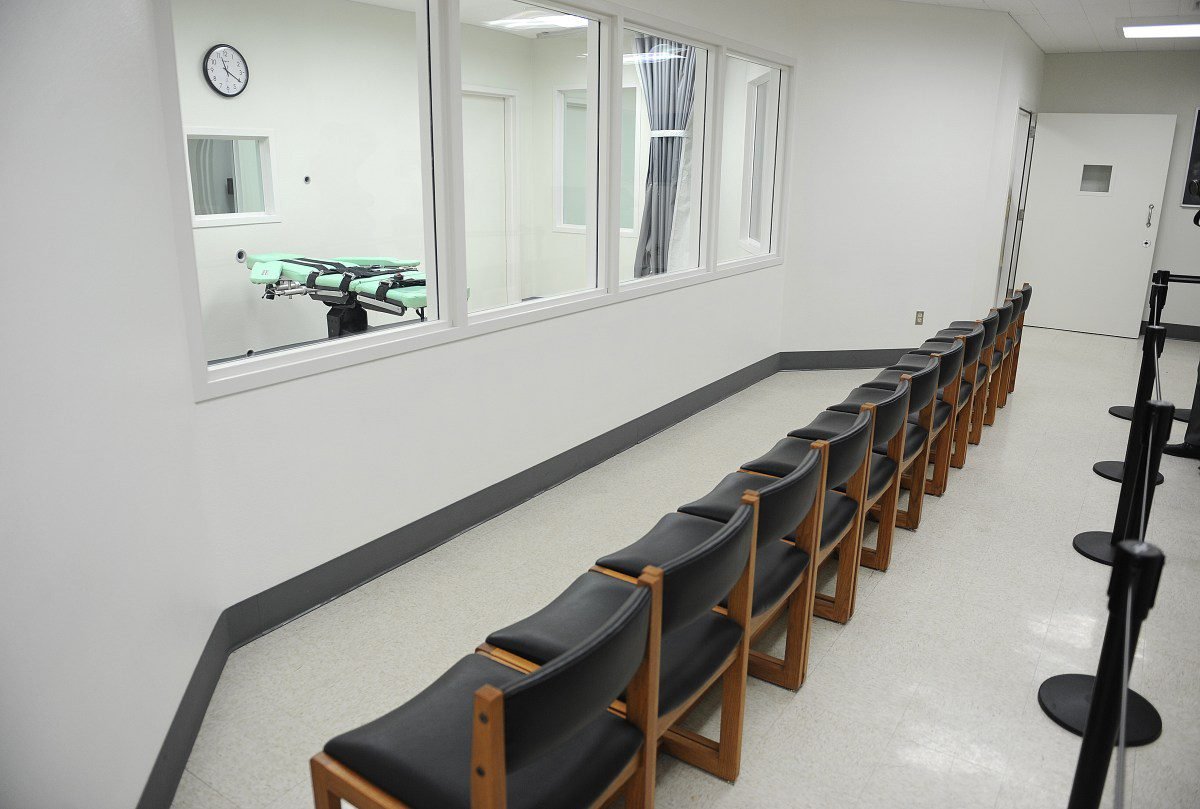
News reports have historically allowed us as a society to monitor our government when it exercises its greatest power: ending a person’s life. But the state of Indiana has decided to inhibit that public access by banning members of the media from attending executions — unless the condemned person chooses to give a reporter a spot that could instead have gone to their relatives or friends. An appellate court upheld the ban this week.
Prison officials in Indiana claim the media ban is mainly about respecting the dignity of the condemned person. But the idea that there could ever be dignity in state-sanctioned killing of a perfectly healthy human is ludicrous within itself. That would be the case even if executioners eschewed cruel and unusual methods. But they don’t, even when the media is watching.
Angel Nieves Diaz continued moving for half an hour after receiving an injection of a drug that was supposed to paralyze him during a Florida execution. It took Arizona officials two hours to kill Joseph R. Wood. He had to be injected with 14 doses beyond the dose that was supposed to cause his death.
It took officials two hours to kill Joseph R. Wood.
Byron Black yelled, “It’s hurting so bad,” five minutes into a botched execution in Tennessee. John Marion Grant began convulsing and vomiting during his execution in Oklahoma. Prison officials had to enter the death chamber to wipe away and remove the vomit. The entire time, Grant was still breathing. Just last month, Tony Carruthers lay on a Tennessee gurney for more than hour moaning and bleeding as executioners struggled to find a vein. The execution was eventually called off by government officials.
Byron Black yelled, “It’s hurting so bad.”
These are only a few of the botched executions that lack “dignity.” This week, a federal appellate court upheld a decision blocking Alabama from using nitrogen gas to kill Jeffery Lee. Suffocating and asphyxiating on one’s own vomit seemed like a bridge too far.
As a result of the barbarity of these events, it’s not far-fetched to wonder if Indiana officials have an ulterior motive. Perhaps the media ban has nothing to do with preserving the dignity of the condemned and is instead about obstructing government accountability and public oversight.
Executions in this country were once highly public affairs. Often held in town squares, any member of the public could attend. In the 1830s, government officials began to enact laws that made executions private events.
Tony Carruthers laid on a gurney moaning and bleeding as executioners struggled to find a vein.
This was not because 19th century executioners were moved to protect the dignity of the condemned (who were disproportionately Black). It was an effort to halt a growing capital punishment abolitionist movement. A significant number of Americans found the public spectacle disgusting.
The same is occurring today. According to the Death Penalty Information Center, support for capital punishment in America has decreased from 80 percent in 1994 to 52 percent in 2026. This division necessitates transparency — otherwise, the only nongovernment actors able to tell the public the truth are dead.
The “dignity” playbook is a well-worn one that I know well as an incarcerated journalist. As a result of restrictions placed on media access to prisons, prisons have become unjustifiably cruel, less humane and more difficult to monitor. Restricting press freedom erodes human rights and constitutional safeguards and blinds the public to the kinds of cruelty and abuse depicted in HBO’s Oscar-nominated documentary “The Alabama Solution.”
Perhaps the media ban has nothing to do with preserving the dignity of the condemned and is instead about obstructing government accountability and public oversight.
The film was made possible not because officials granted access to outside journalists, but because incarcerated people risked (and endured) severe punishment to document their reality with contraband phones.
It’s not the first time surreptitious reporting methods revealed the real motives behind media restrictions. In 1906, a reporter in Minnesota ignored a ban on media executions and sneaked in to watch a condemned man spend 14 minutes gasping for air before he strangled to death because the rope used to hang him was too long – he hit the floor when dropped and needed to be raised back up.
As appellate judge Candace Jackson-Akiwumi wrote in a dissenting opinion in the Indiana case, “A government exercises its greatest power when it ends a person’s life. As I see it, such severe and irreversible punishment on behalf of ‘the people’ must be observable to comply with the Constitution.”
Lifting the media ban is the only dignified thing Indiana can do, not only for the condemned but also for the people being asked to fund irreversible punishments.