Home Blog

NGO Monitor: Anti-Semitism, Anti-Israel Bias Pervade Doctors Without Borders 

0
ngo-monitor:-anti-semitism,-anti-israel-bias-pervade-doctors-without-borders 
NGO Monitor: Anti-Semitism, Anti-Israel Bias Pervade Doctors Without Borders 


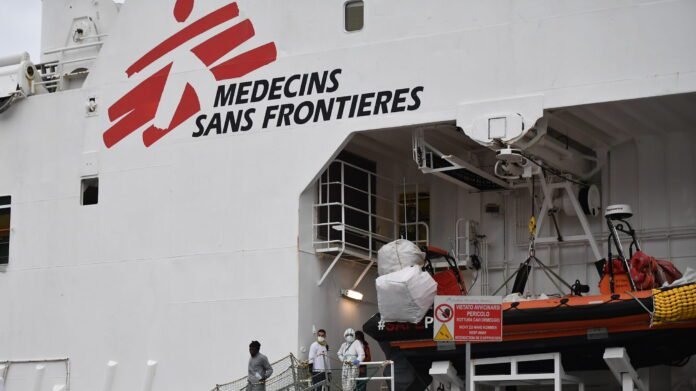
A new NGO Monitor report alleges that anti-Semitism and anti-Israel bias are deeply embedded within the organizational culture of Doctors Without Borders/ Médecins Sans Frontières (MSF), expanding on findings published by the organization in April on MSF’s public messaging on the war in Gaza.  

The report draws on statements by current and former MSF officials, staff members, and board members, as well as internal discussions and public interviews, to argue that the organization has departed from its stated principles of neutrality and impartiality. 

The report, titled “Documenting the Antisemitic Organizational Culture of Doctors without Borders (MSF),” builds on NGO Monitor’s April 2026 publication, “NGO Malpractice: MSF (Doctors Without Borders) and the Gaza ‘Genocide’ Campaign,” which argued that MSF’s messaging about Israel relied on false testimonies and violated medical ethics and neutrality. The new report contends that these issues reflect a broader organizational culture characterized by anti-Semitism, anti-Israel bias, and repeated support for Hamas. 

Among those cited is Alain Destexhe, a former MSF secretary-general who accepted the Nobel Peace Prize on the organization’s behalf in 1999. In an October 2025 interview, Destexhe said, “MSF is lying, MSF is partial, MSF is biased and MSF are accomplices of Hamas.” He also said it would have been impossible during his tenure for the organization to operate with what he described as its current level of bias, adding that MSF “has become a biased, partial and militant organization.” The report also cites his earlier analysis asserting that MSF had failed to condemn Hamas’ October 7 attacks or the use of hospitals by Hamas while repeatedly denouncing Israel. 

The report also quotes Richard Rossin, a former MSF secretary-general, who said, “Anti-Semitism within MSF began under the cover of anti-Zionism.” Rossin recalled an incident during a 2010 mission to Uganda in which an MSF team from the Netherlands refused to work with an Israeli medical organization, describing it as an example of “one-way empathy.” 

Michael Goldfarb, who spent more than 15 years with Doctors Without Borders USA, said Jewish staff encountered hostility within the organization. “European colleagues freely told me, knowing I am Jewish, that Israel doesn’t have a right to exist,” he said. Goldfarb also alleged that complaints about anti-Semitism were not meaningfully addressed and described what he called “extreme ideological fervor” among some colleagues. 

The report includes statements attributed to current and former MSF employees describing discussions on the organization’s internal staff forum, known as the Souk. It cites posts referring to Israel as a “76-year-old crime scene” and a “textbook example of violent, racist settler colonialism,” while another employee said MSF’s public messaging on the conflict was “one-sided, divisive, and inflammatory.” A doctor quoted anonymously said, “I have never seen this level of polarization within the organization.” 

The report also cites Dr. Estrella Lasry, a former consultant and board member at MSF’s Geneva headquarters, who criticized what she described as “the appalling lack of empathy in the organization towards the victims in Israel.” She said an MSF office in the Middle East made an “‘explicit request’ … ‘not to speak out on behalf of victims in Israel as it would victimize the perpetrators.’” The report further quotes current employees identified by pseudonyms who questioned MSF’s operations in Gaza, its public campaign accusing Israel of genocide, and its internal handling of concerns over Hamas’ presence in hospitals. 

In its concluding section, NGO Monitor calls for sweeping structural changes within MSF, including replacing current leadership, establishing independent oversight mechanisms, and removing staff members responsible for what it describes as discrimination and anti-Semitism. The report argues such reforms are necessary to restore the organization’s credibility as a neutral humanitarian and medical aid provider. 


NATO Ankara summit: who’s going and what to expect 

0
nato-ankara-summit:-who’s-going-and-what-to-expect 
NATO Ankara summit: who’s going and what to expect 


NATO leaders will gather in Ankara for a summit on Tuesday and Wednesday, amid pressure from President Donald Trump for Europe to step up defence spending and following months of transatlantic friction over the Iran war and Greenland.

The U.S.. president’s frequent criticism of NATO, ​along with announced troop withdrawals from Europe and a six-month review of the U.S. military presence on the continent, has fuelled uncertainty ‌within the alliance.

Here is what you need to know about the summit:

WHAT WILL LEADERS DISCUSS?

The Trump administration has pushed for Europe to boost defence investment and take on primary responsibility for the continent’s defence.

Officials expect leaders to focus on progress towards defence spending targets, boosting defence industrial production and how to implement “burden-shifting” from the U.S. to Europe.

WHICH LEADERS WILL BE THERE?

Leaders from ​NATO’s 32 member countries, including Trump, will attend the summit.

Ukrainian President Volodymyr Zelenskiy, South Korean President Lee Jae Myung, European Council President Antonio Costa ​and European Commission President Ursula von der Leyen are expected to join a dinner with NATO leaders on Tuesday evening.

WHAT ⁠WILL LEADERS SAY ABOUT DEFENCE?

European leaders will aim to show Trump that they are delivering on a pledge made at a summit in The Hague last year ​to spend 5% of gross domestic product on defence and defence-related measures by 2035.

“In 2025, European Allies and Canada increased their investments in core defence requirements by ​more than $139bn,” leaders are expected to say in a summit declaration, according to a text seen by Reuters.

“We are building the future: a stronger Europe in a stronger NATO – a modernised Alliance. European Allies and Canada, working with the United States, are assuming greater responsibility for the Alliance’s defence,” they are set to say.

WHAT WILL NATO MEMBERS DO FOR UKRAINE?

NATO members ​are expected to reaffirm support for Ukraine and pledge further assistance.

“For 2026, Allies pledge €70bn in military equipment, assistance and training for Ukraine and affirm their sovereign ​commitments to sustaining at least equivalent levels in 2027,” the leaders are expected to say.

Part of the funding will come from existing bilateral pledges and an EU loan facility that ‌provides €60 billion ⁠for Ukrainian defence investment and procurement for 2026-2027. The United States is not expected to contribute funding.

WHAT WILL THE ALLIANCE DO ON INDUSTRY?

While last year’s summit focused on agreeing a new spending pledge, officials want this year’s gathering to focus on scaling up weapons production and boosting defence innovation.

The alliance will host a defence industry forum in Ankara on Tuesday, where deals worth tens of billions of dollars will be announced.

WILL IRAN COME UP?

European officials are concerned that the Iran war, and ​Trump’s irritation with European governments over their ​response to it, could overshadow the ⁠summit.

In their summit declaration, leaders are expected to say that “allies reiterate that Iran must never have a nuclear weapon and call on Iran to fully respect freedom of navigation in the Strait of Hormuz.”

WHAT DOES HOST TURKEY WANT?

Turkey will seek ​to highlight its growing defence industry capabilities and repeat its longstanding call for alliance members to lift all restrictions ​on defence trade within ⁠NATO.

President Tayyip Erdogan will also want to make progress with allies such as France and Italy on the purchase of SAMP/T missile defence systems and other defence industry cooperation.

In bilateral talks with Trump, Erdogan is expected to highlight improving ties between Ankara and Washington while pressing for the lifting of U.S. sanctions and renewed access to the ⁠F-35 fighter ​jet programme.

WHO ELSE IS COMING?

Also in Ankara, NATO foreign ministers are expected to meet counterparts from ​Bahrain, Kuwait, Qatar and the United Arab Emirates, and to hold a dinner discussion with Ukraine’s foreign minister and European Union foreign policy chief Kaja Kallas.

NATO defence ministers are also set to hold ​talks with ministers from Australia, Japan, New Zealand and South Korea.

Power prevails but law still matters in the South China Sea

0
power-prevails-but-law-still-matters-in-the-south-china-sea
Power prevails but law still matters in the South China Sea

Across the Indo-Pacific, governments are increasing defense spending, strengthening alliances, and placing renewed emphasis on deterrence. Strategic competition has once again become the defining feature of international politics. And in such an environment, international law can appear increasingly secondary to military capability.

The tenth anniversary of the 2016 South China Sea Arbitration Award, handed down by a tribunal constituted under Annex VII of the United Nations Convention on the Law of the Sea (UNCLOS), with the Permanent Court of Arbitration in The Hague serving as the registry and providing administrative support, prompts a fundamental question: if power continues to shape outcomes, does international law still matter?

Few contemporary disputes better illustrate the relationship between international law and power than the territorial dispute between the Philippines and China in the South China Sea.

Nearly a decade after the tribunal issued its ruling, the South China Sea remains contested among several states, and maritime confrontations persist. China still rejects the 2016 Award, while the Philippines continues to invoke it in staking its maritime claims. If international law is judged solely by its ability to compel immediate compliance, the ruling, which lacked an enforcement mechanism, has fallen short.

At a time when the relevance of international law is increasingly challenged in a new age of great power politics, the South China Sea offers an important reminder that international law should not be judged solely by its capacity to compel immediate compliance. Its significance also lies in its ability to clarify legal rights, shape state practice and provide a framework through which power is exercised and contested.

The 2016 tribunal was never expected to end strategic rivalry or even forceful coercion in the South China Sea. Rather, it was established to clarify the law and how it applies to the maritime disputes. Measured against that objective, the Award fundamentally changed the legal landscape of the South China Sea.

In particular, the tribunal rejected any legal basis for China’s claim to “historic rights” within its nine-dash line, which encompasses nearly all of the South China Sea.

It held that none of the high-tide features in the Spratly Islands is capable of sustaining human habitation or an economic life of its own within the meaning of UNCLOS Article 121(3) and therefore none generates an entitlement to an exclusive economic zone or continental shelf. It further found that China had violated the Philippines’ sovereign rights within its EEZ and caused serious environmental damage through its activities.

Importantly, the tribunal did not resolve every issue in the dispute. It neither determined sovereignty over maritime features nor delimited maritime boundaries. Instead, it answered a narrower, but arguably more consequential, question: what maritime claims are legally permissible under UNCLOS?

That clarification arguably remains the Award’s greatest achievement. The significance of the Award, therefore, lies less in whether it immediately altered China’s behavior than in how it has shaped the conduct of other states. This is where discussions of the Award are often incomplete.

Too often, its success is evaluated solely through the lens of enforcement. Because China has not complied, some conclude that the tribunal ruling failed. Yet international law does not function through enforcement alone, and its influence is often cumulative rather than immediate.

Unlike domestic legal systems, international law lacks a centralized authority capable of enforcing compliance. Its influence derives from something different: the continued willingness of states to invoke legal rules, incorporate them into policy and measure conduct against shared standards of legitimacy. The familiar choice between law and power is therefore a false one.

International law has never depended on the replacement of power. Its purpose has always been to shape how power is exercised. States continue to build military capabilities because the international system remains decentralized. They strengthen alliances because deterrence still matters. However, states justify their actions with legal arguments because legal legitimacy matters as well.

The South China Sea illustrates this relationship with striking clarity. The Award narrowed the legal space for expansive maritime claims like China’s nine-dash line. It established a legal benchmark for assessing competing claims and provided the Philippines and other states with a durable legal language for explaining and defending their positions. That legal clarity has proven resilient since the ruling was handed down a decade ago.

Perhaps the clearest measure of the Award’s influence is not China’s response, but the Philippines’ own. Across three administrations, the ruling has remained a consistent legal foundation for Philippine maritime strategy.

Initiated under President Benigno Aquino III, retained despite President Rodrigo Duterte’s policy of engagement with Beijing and given renewed prominence under President Ferdinand Marcos Jr., the Award has evolved from a single administration’s policy into a lasting framework for Philippine maritime diplomacy and strategy.

More importantly, it has become embedded through diplomatic protests, official statements and government practice. Rather than just another legal judgment archived in The Hague, it has become a practical reference point through which the Philippines explains its maritime rights and responds to developments at sea.

For the Philippines, the objective is no longer simply to call on Beijing to abide by the ruling, but to preserve the Award as a living legal benchmark that shapes Philippine diplomacy and international expectations.

The Award’s influence has also extended beyond the Philippines. References to the 2016 ruling, UNCLOS and the rules-based maritime order have increasingly appeared in statements made by the G7, the European Union, Australia, Japan, the United States and other partners.

Of course, these statements neither enforce the Award nor resolve the dispute. Instead, they demonstrate how the tribunal’s findings have entered the diplomatic vocabulary through which the South China Sea is increasingly understood.

In doing so, they have reinforced the Philippines’ ability to frame the dispute not merely as a bilateral disagreement with China, but as a question of international law and the preservation of a rules-based maritime order.

To be sure, this should not be mistaken for an argument that law alone explains the Philippines’ strategic position in the contested maritime area. Over the past decade, the Philippines has expanded its defense partnerships, strengthened cooperation with treaty allies and regional partners, modernized its armed forces and enhanced maritime cooperation.

None of these demonstrates the failure of international law. Rather, they reflect the conditions under which international law has always prevailed: law and power perform different functions, and a durable national strategy requires both.

For smaller and middle powers, this distinction is particularly important. Military capability strengthens deterrence, and alliances enhance security. But legal legitimacy provides something that power alone cannot. It enables states to mobilize diplomatic support, reinforce accepted norms and contest coercion within a framework of internationally recognized rules.

The true measure of international law is therefore not whether it supersedes power politics, but whether it continues to shape and restrain the exercise of power. Ten years after the South China Sea Arbitration Award, that may be the ruling’s most enduring upshot.

Ivy Ganadillo is the director of Maritime Programs at the Yokosuka Council on Asia-Pacific Studies (YCAPS), a non-resident fellow at the Indo-Pacific Studies Center and a PhD candidate in international relations at Ewha Womans University in Seoul, South Korea.

Mom Confesses to ‘Cannibalism’ After Young Son is Found Dead

0
mom-confesses-to-‘cannibalism’-after-young-son-is-found-dead
Mom Confesses to ‘Cannibalism’ After Young Son is Found Dead


A horrifying murder investigation has rocked a quiet Australian community after a 4-year-old boy was found dead inside his home with severe injuries to his arm — and police began investigating the possibility of cannibalism.

The child’s 32-year-old mother walked into the Wyong Police Station, north of Sydney, on Saturday, prompting officers to conduct a welfare check at her nearby home, according to the Sydney Morning Herald.

When police entered the property, they discovered the body of the young boy in what authorities described as an “extremely confronting” scene.

The child had suffered significant injuries to his arm, and the discovery was reportedly so disturbing that police officers and emergency responders who attended the home were offered support services.

Investigators are now examining whether cannibalism may have been involved following “discussions” with the mother, the Sydney Morning Herald reported.

Nine News also reported that the boy may have been dead inside the home for several days before he was discovered.

“I’m prepared to say publicly at the moment, it was an extremely confronting scene,” Superintendent Chad Gillies of Tuggerah Lakes Police told reporters during a Sunday morning press conference.

“It’s been confirmed the child had injuries. I am not going to speculate further on what those injuries are,” he added.

The mother, who has not been publicly identified, was arrested at the police station and charged Sunday with murder and a domestic-violence-related offense.

Investigators also seized the woman’s vehicle and collected additional evidence as part of the ongoing investigation.

Gillies said even the most experienced first responders were deeply affected by what they encountered inside the home.

“This is a confronting scene for even the most experienced police and ambulance, and that’s why we need to support them,” he said.

The killing has stunned residents of Wyong, a normally quiet coastal town where neighbors said the young boy had always appeared happy and energetic.

One neighbor, who had previously worked on the mother’s car, recalled seeing the child walking the family dog and playing outside.

“[The boy] was all happy, seen him walking the dog and walking up and down the street. He was very energetic,” the neighbor said.

The man also remembered the boy joking with him while he repaired the vehicle.

“[The boy] goes, ‘Oh, you’re working on mom’s car, has she broken it again?’ He was happy. We couldn’t see signs of anything,” said the neighbor, who asked not to be named.

Another neighbor said the mother and son had moved into the rental property earlier this year following an alleged domestic-violence incident involving the woman and a former partner.

The mother was denied bail after she failed to appear in court on Sunday.

She is scheduled to return to court in Wyong on Sept. 1 as investigators continue working to determine exactly what happened inside the home.

Compasses, not maps: China is building a different type of AI

0
compasses,-not-maps:-china-is-building-a-different-type-of-ai
Compasses, not maps: China is building a different type of AI

Every few months, another Chinese artificial intelligence (AI) breakthrough makes global headlines. A Chinese AI model closes in on American rivals, a Chinese research team tops a benchmark, a Chinese factory gets smarter, a city more connected, a supply chain more predictive.

The usual explanations follow: China has more engineers, more factories, more state support, more data. While often true, they miss something deeper.

China is not simply building bigger AI systems than America. From digital twins and smart cities to predictive logistics and intelligent manufacturing, it is increasingly building systems designed less for chatting than for coordinating, less for imitation than for management.

That difference points to a larger question. Why has China put so much emphasis on AI for navigating change, while much of the Western conversation has focused on chatbots, productivity software and artificial general intelligence?

The answer lies not only in economics or industrial policy, but in a much older Chinese way of thinking about intelligence itself.

The binary and the book

More than three centuries ago, an exchange of letters between Europe and Beijing brought together two very different ideas of intelligence.

In 1701, Gottfried Wilhelm Leibniz sent an explanation of his newly developed binary arithmetic to Joachim Bouvet, a French Jesuit at the court of the Kangxi Emperor. Leibniz had shown that every number could be expressed using only two symbols — 0 and 1— a discovery that would become foundational to digital computing.

Bouvet’s reply surprised him. He sent a diagram of the 64 hexagrams of the I Ching, or Book of Changes, one of China’s oldest philosophical classics. Each hexagram consists of six broken or unbroken lines, producing exactly 64 possible combinations.

To Leibniz, the resemblance was unmistakable. He concluded that the ancient Chinese had, in effect, anticipated binary arithmetic long before Europe formalized it.

Fig. 1 – A hexagram is not a snapshot but a frame in a moving picture.

That claim is too neat to take at face value. The I Ching was never a mathematical system. But Leibniz noticed something real: the hexagrams arrange discrete symbols in a way that invites pattern, classification and transformation.

That is, the I Ching is not just a system of forms, but a guide to change. When a hexagram is cast, certain lines “move,” transforming one pattern into another. What matters is not only what appears, but what it is becoming.

Leibniz saw the hexagrams mainly as a symbolic code. What he missed is that they hold two dimensions at once: structure and transformation. Their six lines are discrete symbols, countable and classifiable.

But those symbols carry meaning only in relation to the process of change they were built to track. Remove the movement, and a hexagram is just a pattern. Restore it, and it becomes a moment inside something larger and ongoing.

This is not to claim that the I Ching somehow “predicted” modern AI, or that today’s Chinese engineers are consciously channeling ancient divination.

Rather, the I Ching exemplifies an intellectual orientation that has persisted in various forms across Chinese thought: an attention to flux, interdependence and the direction of change rather than fixed categories and static representations.

That broader orientation did not disappear from Chinese intellectual life. Although modern AI draws on global science and engineering, it is striking that some of its most prominent applications in China — digital twins, intelligent infrastructure and predictive urban management — place continuous adaptation at their center.

That orientation did not determine China’s AI strategy, but it may have made certain engineering questions seem more natural to ask — and certain kinds of systems more natural to build.

The great split

Mathematicians later gave formal names to the two dimensions at work here: discrete and continuous.

Aristotle had already separated discrete from continuous quantity, and Euclid built the distinction into the structure of the Elements. What changed in the 19th century was the rise of two rigorous traditions built around that split.

Fig. 2 – The grid divides and categorizes. The wave flows and transforms.

Continuous mathematics, shaped by calculus, became the language of flow, motion and change. Discrete mathematics grew alongside it, concerned with numbers, logic and symbolic operations.

Computing inherited the discrete tradition. George Boole turned logic into algebra. Claude Shannon showed how Boolean logic could be implemented through electrical circuits. Alan Turing demonstrated how symbolic operations could become computation. Once the world could be represented as bits, digital technology advanced with astonishing speed.

AI inherited the same representational logic. Every interaction with an AI system begins with translation: language becomes tokens, images become pixels, behavior becomes data. A continuous world is rendered into discrete forms that machines can manipulate.

That strategy has been extraordinarily successful. But the systems AI increasingly seeks to understand — cities, supply chains, financial markets, ecosystems — are never still. They shift while decisions are being made.

A map can become infinitely more detailed and still capture only a moment. A compass, on the other hand, serves a different purpose: it helps us navigate a landscape that is already moving beneath our feet.

The distinction between map and compass is no longer philosophical – it represents an engineering problem.

Intelligence as infrastructure

Most people meet AI today as a chatbot, a search tool, a translator or an image generator. AI appears as another app on a screen: useful, increasingly capable, but still something we consult when we need it.

Now imagine AI in a different role. Instead of answering questions, it adjusts traffic lights as congestion builds. It balances electricity across a grid as demand shifts. It predicts equipment failures before they occur, reroutes freight around disruptions or continuously updates a digital model of an entire city as millions of people move through it.

In that vision, AI is no longer just a tool. It becomes part of the infrastructure through which society runs.

China, unlike America, has made that vision especially visible. It has invested heavily in digital twins, smart manufacturing, predictive logistics and urban management systems. The emphasis is less on chatbots than on systems that coordinate continuous change.

Hangzhou’s City Brain is a useful example. Rather than merely collecting traffic data, the system analyzes vehicle flow, congestion, emergency routes and public transport in real time, then adjusts signals and routing accordingly.

The city is treated not as a set of separate intersections but as a single evolving system whose parts constantly affect one another. A static traffic model can describe yesterday’s congestion. A continuously updated digital twin tries to anticipate tomorrow’s.

The same orientation appears in Chinese discussions of AI itself. Yucong Duan’s DIKWP framework — Data, Information, Knowledge, Wisdom, and Purpose — extends the familiar hierarchy by adding purpose as a fifth element. The point is simple: intelligence is not just about processing inputs; it is about why those inputs matter and what goals they serve.

Another useful concept is “gongsheng” (共生), often translated as symbiosis or co-evolution. Rather than treating humans, machines and institutions as separate entities, it emphasizes continuing interaction and mutual adaptation. Intelligence, in this view, emerges not only from computation but from relationship.

Where the I Ching asked how to read the direction of change through moving lines, DIKWP asks how an AI system can keep its purpose as the data it processes shifts around it. Both treat stability as a dynamic relationship rather than a fixed state.

These are contemporary engineering ideas, not revivals of ancient philosophy. Still, they address an old problem with striking continuity: how should we act when the world is in motion?

Map and compass

Leibniz never fully understood what he had found. He died in 1716 still convinced that the hexagrams were an ancient Chinese version of binary arithmetic. He had the mathematics right and the larger meaning wrong. The lines were never just code – they were a record of things becoming other things.

Three centuries later, the same gap still separates many AI systems. A chatbot completes a static exchange: language in, language out, one turn at a time. A city management system does something else: it watches a city change and adjusts with it.

Neither is more intelligent in the abstract than the other, as they are built for different tasks. One asks what is being said; the other asks what is happening next.

China’s AI investments in digital twins, predictive logistics and urban management systems are not proof of a superior philosophy. Rather, they reflect different engineering priorities, shaped by a state that has long treated infrastructure and governance as closely linked, and by a longer intellectual habit of attending to direction rather than fixity.

But it would be a mistake to frame this as a civilizational contest pitting a “holistic East” versus an “analytic West.” American and European AI research is already moving toward related ground: world models, continuous control, embodied systems and agents that track a moving environment instead of describing a static one. The frameworks differ, but the underlying challenge does not.

And that challenge will only grow. Cities, power grids and supply chains do not pause while a model is trained on them. The systems meant to manage them will need to do two things at once: represent the world in discrete, computable pieces and track the continuous change that never stops running underneath those pieces.

For AI researchers and engineers alike, the challenge is becoming increasingly practical: how to combine accurate representation with continuous adaptation.

A map and a compass solve different problems, with the former fixing a place and the latter holding a direction. Neither replaces the other, and no one crossing unfamiliar terrain would carry only one. The challenge is not choosing between them, but learning to use both in tandem.

Israeli army launches air, artillery attacks in southern Lebanon despite ceasefire

0
israeli-army-launches-air,-artillery-attacks-in-southern-lebanon-despite-ceasefire
Israeli army launches air, artillery attacks in southern Lebanon despite ceasefire

The Israeli army carried out an airstrike and artillery shelling in southern Lebanon on Sunday, in the latest violation of an ongoing ceasefire agreement, Lebanese media reported.

The state news agency NNA said Israeli warplanes struck the Al-Hariq neighborhood between the towns of Kfartebnit and Nabatieh al-Fawqa in southern Lebanon.

No information was yet available about injuries.

According to the agency, Israeli artillery shelled the outskirts of the southern town of Qantara, while an Israeli drone dropped a stun grenade on the town of Mansouri in the Tyre district.

Israeli forces also carried out an explosion in the town of Tayri in the Bint Jbeil district.

The NNA also reported intensive Israeli drone flights over villages and towns surrounding the southern coastal city of Tyre.

The latest attacks come despite a framework agreement signed between Lebanon and Israel on June 26 under US mediation, which aims to end the conflict and secure Israeli withdrawal from Lebanese territory.

Since March 2, 2026, Israeli military operations in Lebanon have killed at least 4,303 people and injured 12,202 others, according to Lebanese authorities, while displacing more than one million.

READ: Netanyahu denies Trump restricted Israeli strikes in Lebanon

‘Representation Is Not Just Numbers’: Syrian Women Push for Real Political Power

0
‘representation-is-not-just-numbers’:-syrian-women-push-for-real-political-power
‘Representation Is Not Just Numbers’: Syrian Women Push for Real Political Power


As Syria’s first post-Assad parliament takes shape, activists say a rise in female lawmakers will matter only if women can shape legislation and oversight

[DAMASCUS] Aisha al-Khatib, a 32-year-old law student and coordinator of the “Power of Decision Through Women’s Voices” initiative, began her day with household chores, caring for her children, and attending a meeting with the Norwegian ambassador during the ambassador’s visit to Aleppo.

Hours later, she stood in central Aleppo holding a placard that read: “Representation Is Not Just Numbers.”

As al-Khatib and dozens of women gathered for a licensed protest demanding greater female participation in political decision-making, authorities in Damascus announced the completion of Syria’s first People’s Assembly since the fall of former President Bashar Assad, marking a major milestone in the country’s political transition.

For al-Khatib, the timing underscored a contradiction. While the new parliament includes more women than initially elected, she believes numbers alone do not guarantee meaningful political representation.

Women activists protest in Aleppo against what they say is inadequate female representation in Syria’s newly formed People’s Assembly, July 2. (Yafa Nawaf/The Media Line)

Syria’s People’s Assembly has 210 seats, although only 207 lawmakers have been named because elections for three seats in the southern province of As-Suwayda could not be held following sectarian violence.

Under the Constitutional Declaration governing the transitional period, 137 lawmakers were chosen through indirect elections conducted by electoral bodies established by the Higher Committee for People’s Assembly Elections. President Ahmed al-Sharaa has now appointed an additional 70 members—the so-called “presidential third”—to broaden representation by including professionals, specialists, and social groups that might otherwise have been excluded from the electoral process.

The appointments included 15 women, significantly increasing female representation in the assembly. Depending on the count used by different news organizations, the new parliament includes either 21 or 22 women, representing about 10% of the chamber.

While the appointments significantly boosted women’s presence in parliament, the figure remains well below the global average and has reignited debate over whether such appointments can compensate for women’s limited electoral success—or simply postpone addressing the structural barriers that prevent them from winning elected office.

The Aleppo protest was organized only hours after the final list of parliament members was announced. Participants argued that the new assembly still fails to reflect the depth of female expertise and leadership that emerged during Syria’s years of conflict and political upheaval.

“I joined because I believe change comes through action, not words,” al-Khatib told The Media Line.

“I felt it was my duty as a Syrian woman to help create space for women’s voices, especially after years in which women carried enormous responsibilities during the revolution—within their families, at work, and in their communities—yet remained largely absent from positions where decisions are made,” she said.

I felt it was my duty as a Syrian woman to help create space for women’s voices

She argued that rebuilding Syria requires “justice and democracy based on merit rather than gender,” adding that women should become genuine partners in shaping the country’s future rather than serving as symbolic representatives.

For al-Khatib, speaking publicly carried its own significance.

For many years, expressing an opinion publicly was associated with fear and danger

“For many years, expressing an opinion publicly was associated with fear and danger,” she said. “Standing peacefully in a public square today and demanding our rights was an extraordinary feeling.”

Asmaa al-Mahmoud, 28, a human rights advocate and governance consultant, said she studied law because it aligned with her longstanding interest in justice and public governance.

Like al-Khatib, she believes the issue extends beyond the number of women serving in parliament. “We support merit and technocratic governance at every stage,” al-Mahmoud told The Media Line. “But during this transitional period, I believe a temporary gender quota is necessary.”

She pointed out that Aleppo, Syria’s largest province by parliamentary representation, was allocated 46 seats in the new assembly, yet only two women from the province ultimately secured seats.

“That simply does not reflect the number of qualified women in Aleppo,” she said. “Women are not decoration. The current percentage is too low to create meaningful influence inside parliament, and the representation does not reflect all segments of Syrian society.”

That simply does not reflect the number of qualified women in Aleppo. Women are not decoration.

Yafa Nawaf, a Syrian political activist focused on women’s political participation, said the figures illustrate the structural challenges women continue to face in reaching elected office.

“Syrian women were active participants in the struggle for freedom and justice,” Nawaf told The Media Line. “They stood at the forefront of demonstrations against repression, endured imprisonment, displacement, and the loss of family members. That contribution should now be reflected more clearly in the country’s decision-making institutions.”

Government officials say that the presidential appointments were designed to address those shortcomings.

Mohammad Taha al-Ahmad, head of the Higher Committee for People’s Assembly Elections, told The Media Line that the appointments were made under powers granted by the Constitutional Declaration.

According to al-Ahmad, the president appointed 55 men and 15 women representing a broad range of professional and social backgrounds, including academics, legal experts, community leaders, former political detainees, people wounded during the Syrian revolution, and individuals with disabilities.

“The objective,” he said, “was to achieve more balanced representation within the assembly.”

Al-Ahmad said the parliament was ready to convene its inaugural session, during which members will elect the speaker and the assembly’s leadership, formally launching Syria’s first legislative body of the transitional period.

The increase in the number of women lawmakers has also brought greater diversity in professional backgrounds, something Syrian authorities say was intentional in order to broaden representation during the transition. Critics, however, argue that the true measure of success will not be diversity itself but whether these women can shape legislation and hold the executive branch accountable.

Among the more prominent appointees is Rozina Lazkani, 36, a Syrian actress from Hama province. A graduate of Damascus’ Higher Institute of Dramatic Arts with a specialization in scenography, Lazkani began her television career in 2013 and has since appeared in some of Syria’s best-known television dramas.

Speaking to Syrian media following her appointment, Rozina Lazkani described her new role as “both a vote of confidence and a great responsibility,” saying she hopes to represent citizens’ concerns and contribute to rebuilding Syria during its transitional period.

The appointments also included Samira Ayman al-Wattar, a member of the Higher Committee for People’s Assembly Elections’ legal committee; Aisha al-Dibs, who headed the Women’s Affairs Office in Syria’s post-Assad transitional administration; and Houda al-Atassi, an architect and women’s and children’s rights advocate who previously served on the preparatory committee for Syria’s National Dialogue Conference.

The appointees also include women from academia and scientific research.

Among them is Israa al-Mashhour, an agricultural researcher from Deir ez-Zor specializing in soil science and plant nutrition. She previously headed a department at the General Commission for Scientific Agricultural Research and has published research in scientific journals.

In a statement released following her appointment, Israa al-Mashhour described her parliamentary appointment as “a responsibility before it is an honor,” saying Syria’s next phase requires translating the sacrifices of its people into legislation that “strengthens justice, protects rights, and reinforces the rule of law.” She added that serving the country “must be achieved through sincere work, not merely words.”

Other newly appointed women include Lara Qadid, a researcher specializing in higher education policy; Madonna Bishara, a civil society activist focused on human rights and women’s issues; and Hanan Ibrahim al-Balkhi, an academic who earned a master’s degree from the University of Oslo and previously served in both the Syrian National Council and the Syrian Opposition Coalition.

The list also includes community figures such as Najwa Qassas, known for supporting development initiatives and women’s economic empowerment, and Asmaa Farhan al-Sibai, a former political detainee and social activist.

Supporters say that range of backgrounds could strengthen parliamentary debate, while critics argue the real test will be whether women can influence legislation and oversight.

The international benchmark of at least 30% female representation … is precisely the figure demanded by the women who protested in Aleppo

Mahmoud Hammam, a lawyer, legal researcher, and former parliamentary candidate, said that increasing the number of women through presidential appointments alone would not resolve the deeper obstacles to women’s political participation.

“The international benchmark of at least 30% female representation is widely regarded as the minimum threshold at which women can form a parliamentary bloc capable of influencing legislation and public policy,” Hammam told The Media Line. “That is precisely the figure demanded by the women who protested in Aleppo.”

Women activists protest in Aleppo against what they say is inadequate female representation in Syria’s newly formed People’s Assembly, July 2. (Yafa Nawaf/The Media Line)

He said improving women’s political participation requires more than increasing the number of seats allocated to women. It also depends on creating a political environment in which qualified women with legal, political, and administrative experience can compete on equal footing and reach decision-making positions.

At approximately 10%, women’s representation in Syria’s new parliament remains low by regional and international standards.

In neighboring Iraq, the constitution guarantees women at least 25% of parliamentary seats. Jordan has expanded its quota system in recent years, though women still hold about one-fifth of the seats in the House of Representatives. Lebanon, which lacks a parliamentary quota, continues to have fewer than 10%, making Syria’s current level broadly comparable despite the countries’ different political circumstances.

According to the Inter-Parliamentary Union, women now hold more than 27% of parliamentary seats worldwide on average, leaving Syria’s new legislature well below the global benchmark.

Women’s underrepresentation is not a new phenomenon in Syria. Parliamentary records and Inter-Parliamentary Union data show that no women served in the Syrian parliament following the 1947 or 1953 elections. Women’s representation gradually increased over subsequent decades, reaching 2.7% in 1973, 3.6% in 1977, 6.7% in 1981, and 8.4% in 1990.

During Assad’s rule, women generally held between 10% and 13% of parliamentary seats, peaking at 13.2% in 2016 before declining to approximately 9.6% in the parliament elected in 2024.

The issue is particularly significant because the new People’s Assembly is Syria’s first legislature since Assad’s fall. During the transitional period, it will be responsible for debating and passing legislation, approving the state budget, ratifying international agreements, and exercising legislative authority until a permanent constitution is adopted and new national elections are held.

Aqeel Hussein, an elected member of parliament representing Aleppo, told The Media Line that the success of women’s participation should not be measured solely by the number of seats they occupy.

“The real test,” he said, “will be their presence in key parliamentary committees and their ability to influence legislation and exercise meaningful oversight of the executive branch.”

For al-Khatib, however, the debate ultimately goes beyond the composition of the current parliament.

“We want women’s participation to become the natural result of merit and equal opportunity,” she said, “not an exception achieved only through appointments.”

We want women’s participation to become the natural result of merit and equal opportunity not an exception achieved only through appointments

As Syria’s new parliament prepares to convene for the first time, the debate over women’s representation is moving beyond percentages and political appointments. The coming months will show whether the increase in female lawmakers marks a meaningful shift in women’s role in shaping the country’s future.
Princess Diana’s Secret ‘White Witch’ Rituals Revealed

0
princess-diana’s-secret-‘white-witch’-rituals-revealed
Princess Diana’s Secret ‘White Witch’ Rituals Revealed


Princess Diana reportedly became deeply involved in spiritual rituals before her tragic death, burying objects believed to carry “bad energy” in a secluded Kensington Palace garden near the secret grave of a friend’s stillborn baby.

The late royal’s longtime psychic and healer, Simone Simmons, claimed she and Diana performed private cleansing ceremonies in the palace grounds, where objects were placed in the earth before being dug up again with supposedly improved energy.

Simmons said the rituals took place near the same area where Diana helped close friend Rosa Monckton secretly bury her stillborn daughter, Natalia, in 1994.

Diana, who would have turned 65 this year, had a well-documented fascination with clairvoyants, astrologers, mediums and the afterlife during the final years of her life.

According to Simmons, that interest eventually became so intense that some of those close to Diana viewed her as a kind of “white witch” or spiritual healer.

“Anyone who dug around that area would be really surprised about what they would find buried there,” Simmons said.

“Diana got into burying items in the ground as part of a cleansing ritual. We would bury items she thought had a bad or evil energy, conduct a ceremony, and Diana believed the items emerged cleansed and with a better energy.”

Simmons, now 71, said one of the objects buried during the ceremonies was a collection of precious stones Diana had received as a gift from Saudi figures.

Diana reportedly believed the stones carried negative energy because of her concerns about the Middle East’s connections to the international arms trade.

The ceremonies are believed to have taken place along the western wall of a small, private garden at Kensington Palace that Diana loved.

Simmons regularly visited the princess at the palace and claimed the two sometimes spoke on the phone for as long as 14 hours a day.

Critics of Diana previously described Simmons as a “witch,” while Diana herself reportedly joked that the spiritualist was a “good witch.” She once asked a friend whether Simmons kept a cauldron at home.

One royal insider claimed Diana eventually began to see herself in similar terms.

“Diana spent so much time with her collection of psychics and clairvoyants, she became something of a ‘good witch’ or ‘white witch’ herself,” the source said.

“She always saw herself as a healer due to her extreme empathy, and when that was combined with her obsession with psychics and the like, she became a virtual white witch before her death.”

Diana’s interest in the supernatural also reportedly exposed her to a series of frightening predictions involving the royal family and deadly car crashes.

An inquest into her death heard that Diana referred to a clairvoyant used by Sarah Ferguson as “Fergie’s witch-woman.”

The nickname reportedly came after the medium warned Diana that then-Prince Charles was destined to die in a car crash.

Another psychic, Rita Rogers, allegedly told Diana that the brake cables on her own vehicle would be cut.

Diana also sought guidance from Madame Vasso, a Greek mystic who reportedly instructed clients to sit beneath a clear Perspex pyramid as part of a spiritual cleansing process.

The princess died at age 36 on August 31, 1997, following a high-speed car crash in Paris.

Years before her death, Diana had helped Monckton and her husband, newspaper editor Dominic Lawson, lay their stillborn daughter to rest in the Kensington Palace garden.

Monckton, a prominent business executive who was around 40 at the time, lost the baby while Diana was struggling with the emotional fallout from her separation from Prince Charles.

After learning of the tragedy, Diana offered the couple a private section of the palace grounds as the child’s final resting place.

To keep the nighttime burial hidden from palace security, Diana reportedly told staff that she was burying a pet in the garden.

Monckton later described the moonlit ceremony as “very, very moving.”

During the burial, she read a verse by Indian poet and Nobel Prize winner Rabindranath Tagore.

The next time Monckton read the same verse aloud was during a trip through the Greek Islands with Diana. It would become their final vacation together, taking place just 10 days before the princess was killed.

Diana later placed an urn above Natalia’s unmarked grave, hoping it would serve as a permanent memorial because no headstone had been installed.

However, after Diana’s death, the urn was reportedly removed along with her other belongings.

Control of the walled garden later passed to Prince Michael of Kent and his wife, Marie-Christine, who arranged for the area to be landscaped.

Contractors were reportedly instructed not to disturb the section where the baby had been buried and where Diana was said to have conducted her mysterious cleansing rituals.

Israel’s relentless quest for a next enemy

0
israel’s-relentless-quest-for-a-next-enemy
Israel’s relentless quest for a next enemy

For most of the past year, Israeli officials have described the aftermath of the war with Iran in confident, almost triumphant terms: a weakened adversary, its nuclear program set back, its regional proxies dismantled one by one. But even before that campaign had fully wound down, a new threat was already being sketched out in Jerusalem, in terms once reserved almost exclusively for Tehran. This one is harder to define, has no single capital, and, unlike Iran, comprises states that field some of the world’s most capable conventional militaries.

The shift in language was deliberate, and it came from the top.

On 17 February, Naftali Bennett, the former prime minister who is widely expected to challenge Benjamin Netanyahu in Israel’s next election, told the Conference of Presidents of Major American Jewish Organizations that “Turkey is the new Iran.”

He went further, accusing Ankara of working to “flip Saudi Arabia against us and establish a hostile Sunni axis with nuclear Pakistan.” Five days later, Netanyahu offered his own version of the same idea, announcing what he called a “hexagon of alliances,” built around India, Greece, and Cyprus, to counter both the Shia axis Israel says it has already broken and what he described as an emerging Sunni bloc.

Two Israeli leaders, in other words, converged within days of each other on the same conclusion: that the country’s next strategic contest would not be a rerun of the Iran campaign, fought against a state Israel and the United States had already spent years preparing to isolate, but something more diffuse — and, by most measures of hard power, considerably better armed.

READ: ‘Israel will have a war with Egypt in 15 years’: Zionist activist warns of future conflict after ‘weakening the Shia’

“Turkey is the new Iran.” — Naftali Bennett, 17 February 2026

Start with Turkey, the axis’s presumptive anchor and, on paper, its most formidable member. It fields NATO’s second-largest standing military, some 355,000 active personnel, backed by an annual defense budget above $27 billion. Its domestic arms industry — Aselsan, Roketsan, TUSAŞ, and the drone manufacturer Baykar — has made the country the world’s leading exporter of unmanned aircraft, accounting for an estimated 65 percent of the global UAV market. Its newest system, the jet-powered Kızılelma combat drone, has already destroyed an aerial target with a radar-guided missile in testing and is now moving into mass production for delivery to the Turkish military this year. Its navy, organized around what Ankara calls its “Blue Homeland” doctrine, already operates through large stretches of the eastern Mediterranean, not far from Israel’s offshore gas fields.

Then there is Egypt, where the comparison Israeli officials still sometimes reach for — to 1967, when Israeli jets destroyed the Egyptian air force on the ground in a matter of hours — no longer holds up against current numbers.

Egypt in 2026 fields roughly 450,000 regular troops and 800,000 reservists, spends close to $12 billion a year on defense, and has built a mixed arsenal of American Abrams tanks, French Rafale jets, Russian Su-35s, and German-built submarines.

In late April, the Egyptian military staged a large live-fire exercise in Sinai, called Badr 2026, that state commentators openly described as a message of deterrence aimed at Israel. Netanyahu himself has taken note of the shift: in February, he told a closed session of the Knesset’s foreign affairs and defense committee that “the Egyptian army is getting stronger and we need to monitor it.”

READ: 2 Gazans killed in Israeli drone strike in new ceasefire violation

Egypt in 2026 is not Egypt in 1967 — and Israeli officials increasingly say so themselves.

Saudi Arabia adds a smaller but capable air force built around Typhoons and F-15s, along with a security establishment that has been quietly diversifying its ties between Washington and Beijing. But the component that most concerns Israeli planners, according to officials and analysts who have discussed it, is Pakistan — the only Muslim-majority state with a functioning nuclear arsenal and the missiles to deliver it, and an air force that has just been tested in actual combat. The Pentagon has confirmed that China delivered 36 J-10C fighters to the Pakistan Air Force, aircraft that Islamabad says used long-range PL-15 missiles to down several Indian jets, including at least one Rafale, during last year’s brief war with India.

In April, Pakistan reportedly moved roughly two dozen of those same aircraft to escort Iranian negotiators home from Islamabad, briefly placing its air force in the same theatre as Israeli operations.

Whether any of this adds up to a coordinated threat is, for now, an open question — and one on which even Israel’s own security establishment is divided. There is no mutual-defense treaty linking Ankara, Cairo, Riyadh, and Islamabad, and there is no evidence that the four governments are coordinating military planning. Yoav Gallant, the former defense minister and a more cautious voice than Bennett, has written only that Turkey “is no longer a partner on the periphery,” positioning itself instead as a major regional power—a description of ambition, not of imminent conflict. Andreas Krieg, a security studies scholar at King’s College London, has described Netanyahu’s hexagon as less a functioning alliance than a rebranding of preexisting relationships. Yossi Mekelberg of Chatham House and Alon Pinkas, a former Israeli ambassador to the United States, have each argued publicly that both Bennett and Netanyahu have domestic incentives — an election, a governing coalition — to keep a sense of external threat alive, and that treating Ankara as a second Tehran risks helping to create the very adversary it describes.

That is the strategic risk analysts say Israel now has to weigh. Iran’s hostility was built over four decades around an explicit ideological project. Turkey, Egypt, Saudi Arabia, and Pakistan share no such doctrine, no joint command, and, in Cairo’s and Riyadh’s cases, long-standing peace treaties and quiet security arrangements with Israel that neither government has signaled any intention of abandoning. What unites them, so far, is alarm at an Israel that struck six countries in the region in a single year and now speaks openly of an “emerging radical Sunni axis.” Whether that alarm hardens into something closer to the alliance Bennett has warned about may depend less on decisions made in Ankara, Cairo, Riyadh, or Islamabad than on those still being made in Jerusalem.

OPINION: The next Iran? Why Israel’s Turkey anxiety is becoming doctrine

The views expressed in this article belong to the author and do not necessarily reflect the editorial policy of Middle East Monitor.

US Marks 250th Anniversary With Landmark Illuminations Across Pakistan

0
us-marks-250th-anniversary-with-landmark-illuminations-across-pakistan
US Marks 250th Anniversary With Landmark Illuminations Across Pakistan


On the occasion of the 250th anniversary of American independence, the US Embassy in Islamabad and the US Consulate General in Lahore have brought the spirit of Freedom 250 to two of Pakistan’s most iconic cities, highlighting the cultural and political connections between the United States and Pakistan.

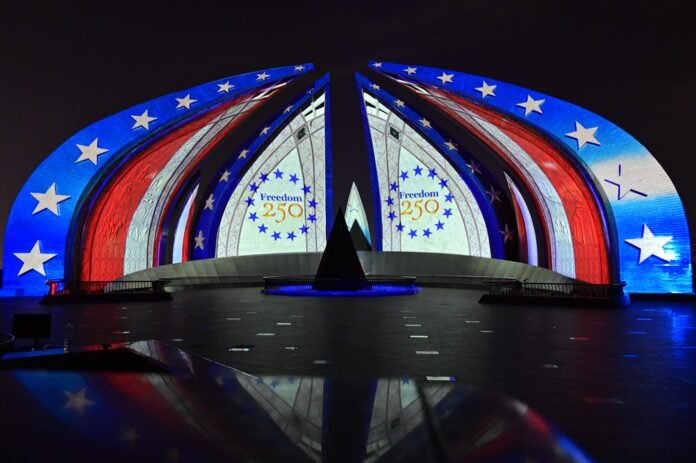
As part of the celebrations, the US Embassy illuminated the Pakistan National Monument in the colors of the American flag from July 1 through July 5, 2026.

The illumination was carried out as a gesture of friendship and in close coordination with Pakistan’s Ministry of Foreign Affairs and the Capital Development Authority.

Throughout the five-day commemoration, red, white, and blue lights also illuminated Globe Chowk on Constitution Avenue.

In Lahore, the US Mission to Pakistan coordinated the illumination of the iconic Alamgiri Gate and Picture Wall at Lahore Fort, as well as the Quaid-e-Azam Library and the National Institute of Technology.

These illuminations are part of the US Mission to Pakistan’s Freedom 250 campaign, the United States’ year-long global initiative to mark the 250th anniversary of the Declaration of Independence on July 4, 1776.

Alamgiri Gate of Lahore Fort. (US Embassy Islamabad)

The campaign offers a unique opportunity to celebrate this milestone alongside friends and partners who have shared in America’s journey.

The US Embassy stated that these illuminations honor the enduring values of freedom, democracy, and opportunity that continue to strengthen the US-Pakistan relationship.

Anchored in expanding trade and investment, a growing partnership in critical minerals, economic development, and regional peace, the bilateral relationship continues to evolve in ways that benefit both nations.

Chargé d’affaires Natalie Baker highlighted the importance of the occasion in a media note issued by the US Embassy.

“It is a chance to strengthen our institutions, reaffirm our leadership, and build partnerships rooted in mutual respect and reciprocity,” said Chargé d’affaires Baker.

“With Pakistan, we are building on sovereignty, strength, and shared prosperity, translating mutual respect and aligned interests into real results. As we step into this next chapter, America moves forward with confidence in our values and a clear sense of purpose, committed to a partnership that delivers lasting security and shared opportunity for generations to come,” she added.

The US Mission to Pakistan expressed its appreciation to the Government of Pakistan for supporting the celebration of America’s 250th anniversary.

Earlier related events in Pakistan included a major Freedom 250 reception at the US Embassy in Islamabad in early June 2026, attended by Prime Minister Shehbaz Sharif and other senior officials. Chargé d’affaires Natalie Baker hosted that event.

0FansLike
0FollowersFollow
0FollowersFollow
0SubscribersSubscribe
- Advertisement -
Google search engine

Recent Posts