As the United States turns 250 there is bitter rivalry over who gets to tell the country’s story
The 250th anniversary of the US Declaration of Independence has become yet another flashpoint in a politically divided America. There are even two different government organisations overseeing the celebrations.
The United States Semiquincentennial Commission was set up by the US Congress in 2016 as a bipartisan body to oversee the semiquincentennial celebration and signed into law by Barack Obama. They branded the celebration as America250 and set to work to plan the national jamboree.
Freedom 250, meanwhile, was set up by the Trump administration under the supervision of the White House Task Force on Celebrating America’s 250th Birthday. Federal funds were diverted from the congressional commission towards the events planned by the Trump-aligned celebration.
But more important than the squabbles over who owns the celebrations, the boycotts of the Great American State Fair or the controversies surrounding celebratory monuments such as the 250-foot triumphal arch, dubbed by its critics the “Arc de Trump”, are the battles being fought over whose interpretation of history will be presented as the nation looks back over its first 250 years.
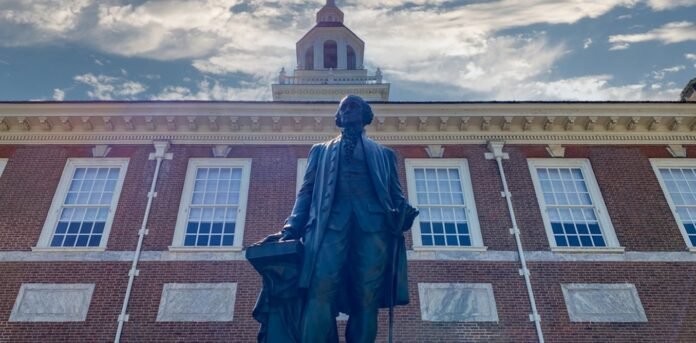
The commemorative celebrations are being run through the National Park Service, part of the Department of the Interior. One of its most important monuments, the President’s House memorial in Philadelphia – where the first two presidents, George Washington and John Adams, lived and worked when the city served as America’s capital in the 1790s – has been at the centre of a controversy over competing interpretations of history.
This goes back to the early weeks of Trump’s second term. In March 2025 he issued executive order 14253: Restoring Truth and Sanity to American History. The order requires the Department of the Interior to ensure that the educational materials in its jurisdiction – including the national parks – do not “inappropriately disparage Americans past or living (including persons living in colonial times), and instead focus on the greatness of the achievements and progress of the American people”.
It also ordered the restoration of sites removed or changed since 2020, when Confederate monuments had been removed in response to the Black Lives Matter movement. Finally, it charged vice president J.D. Vance with implementing the same policies at the Smithsonian Museum.
In November 2025 an administration official, Jeffrey Anderson, published an essay alleging that “woke orthodoxy” had hijacked America’s story. This was circulated to members of the Trump administration. The President’s House, he wrote, focused too much on the evils of slavery. There was not enough information about the achievements of the men who lived and worked there.
Working under the Secretary of State for the Interior’s order implementing the president’s executive order, the national park service began the removal of historical panels in places of national significance early in 2026. This included the President’s House memorial in Philadelphia.
Washington had infamously brought his slaves with him to the house and had moved them every six months to avoid Pennsylvania’s emancipation laws. The President’s House exhibit had told this story, something that Anderson’s essay had particularly objected to. This and other explanations of US history deemed to “inappropriately disparage Americans past” were removed.
What the fuss is about: America is celebrating the 250th anniversary of the signing of the Declaration of Independence.Dan Thornberg/Shutterstock
Presiding judge, Cynthia M. Rufe, disagreed. In a decision comparing the administration’s actions to the Ministry of Truth in George Orwell’s novel 1984, Rufe held that the US government does not have the power to “dissemble and disassemble historical truths when it has some domain over historical facts”. She ordered the removals stopped and anything removed under the order to be replaced.
On June 18, her decision was unanimously overturned by the Third Circuit Court of Appeals. In a decision written by prominent conservative judge, Thomas M. Hardiman, the court held that the city had no “statutory, property, or contractual rights that empower it to curate the exhibits in the President’s House”. His judgment praised the historical context provided by the replacement panels.
Activists and government officials disagree with Judge Hardiman, and so do Philadelphia’s tour guides. At the open-air site, volunteers share copies and read aloud from the removed intepretative panels.
The legal battle to oppose Trump’s executive order is not over. A coalition of interest groups sued the Department of the Interior, challenging the lawfulness of the removal of hundreds of exhibits and markers across the US, including the President’s House.
Less than a week before Philadelphia lost on appeal, federal judge Angel Kelley found that the government was seeking “to rewrite the Nation’s history with a white-out pen”. She ordered the government to stop removing the signs, exhibits and artefacts and return those that had already had been removed by July 3. In her view, the government had rushed to remove the items in time for July 4 and “it is equally important that our shared history be honestly told and fully restored by the 250th Anniversary”.
That order has now been paused by the First Circuit Court of Appeals until the full case can be heard. But the First Circuit is not bound by the decision in the Philadelphia case and is dominated by Democratic appointees. Split decisions by the federal circuit courts can lead the US Supreme Court to take up a case on appeal. Ultimately it might fall to America’s top court to decide whether the order to remove and replace exhibits is lawful.
The executive order states that museums “should be places where individuals go to learn – not to be subjected to ideological indoctrination or divisive narratives that distort our shared history”. Many critics believe that is exactly what the executive order does.
Now – as with so many of the contested decisions taken during the second Trump administration – it will be down to the courts. At stake, as the US prepares to commemorate and celebrate its 250th anniversary, is the nature of America’s story about itself.
Newly discovered PamStealer isn’t your typical macOS malware
Researchers have found a never-before-seen piece of macOS malware that combines a series of clever tradecraft to infect Macs with stealthy, custom-developed credential-stealing code.
The malware is delivered in two stages. The first is distributed in a disk image that masquerades as Maccy, a clipboard manager for Macs. It’s compiled as AppleScript that is notable for the way it delivers the second stage. The malware is named PamStealer because the Rust-written infostealer uses the Pluggable Authentication Modules interface built into macOS to validate the target’s login password before sending it to an attacker-controlled server.
A quieter execution chain
The use of both disk image and AppleScript is common in malware for Macs. More unusual is the way PamStealer combines them to gain stealth. When the AppleScript is double-clicked, it’s opened in the macOS Script Editor, where the malicious functionality is buried deep within the file.
“Rather than relying on shell commands such as curl or zsh, the AppleScript executes a self-contained JavaScript for Automation (JXA) downloader that retrieves and stages the payload using native Objective-C APIs,” researchers from Jamf, a security firm for macOS users, wrote. “Combined with a Rust-based second stage and a password capture workflow that validates credentials locally through PAM, the result is a quieter execution chain than we typically observe in commodity macOS stealers.”
When a user, expecting to install a trustworthy clipboard manager, encounters the disk image, they’re prompted to press Command-R immediately after double-clicking it. This command executes malicious code inside the AppleScript directly. It also allows the execution to bypass com.apple.quarantine, a macOS attribute that provides warnings and restrictions when executable files have been downloaded from the Internet.
As Jamf explained:
PamStealer combines a recently emerging delivery surface with a less familiar payload. While the clickable .scpt and Script Editor lure build on tradecraft that is already gaining adoption across the macOS threat landscape, the malware distinguishes itself through a self-contained JXA dropper, a Rust-based second stage, and a password capture workflow that validates credentials locally through PAM before harvesting them. That second stage puts considerable effort into staying hidden, masquerading as Finder, encrypting its command-and-control traffic, and holding back prompts like the Full Disk Access request for as long as forty minutes so its activity does not line up with launch. Together, these behaviors illustrate how commodity macOS stealers continue to evolve, adopting quieter execution chains and native implementations that reduce traditional detection opportunities while remaining compatible with standard macOS features.
The first stage puts its payload inside an app bundle that impersonates real components built into macOS. The component changes from sample to sample of the malware. Finder.app under com.apple.finder.core or com.apple.finder.monitor, and a Software Update.app under com.apple.security.daemon, are two examples. In either case, they run hidden. They also display macOS’s genuine Finder.icns as its icon.
The second stage is a lean Mach-O file written for Macs running on Apple CPUs. The attacker’s choice to write it in Rust is relatively uncommon for macOS infostealers. More common are languages such as Swift, Go, and Objective-C. This binary calls the read interface of a bundled SQLite app. This allows the infostealer to read database files directly.
PamStealer shows a native password prompt designed to resemble a system authorization request. Text that appears with the prompt says: “Maccy wants to make changes. Enter your password to allow this.” As noted earlier, once a target complies, the malware validates it locally through the PAM API.
“This check is done entirely through PAM: there is no call out to dscl, security, osascript or any spawned process to verify the password, as many commodity macOS stealers do,” Jamf said. “The result is a quieter routine that keeps only a verified password, and one fewer process chain for defenders to detect on.”
If the validation fails, PamStealer displays the prompts again until it receives the correct one. Once the target enters the correct password, PamStealer displays a message stating that the file is damaged and can’t be installed. This is designed to be a decoy to prevent the target from suspecting anything is amiss.
The malware uses tactics to maximize the information it can steal. One tactic is to request the target grant full disk access to the fake Maccy app. It also contains code designed to access ethereum accounts.
The various techniques—particularly the Script Editor lure, a self-contained JXA dropper, a Rust-based second stage, and local validation of credentials through PAM are all noteworthy.
“Together, these behaviors illustrate how commodity macOS stealers continue to evolve, adopting quieter execution chains and native implementations that reduce traditional detection opportunities while remaining compatible with standard macOS features,” Jamf said.
New details have emerged about the heartbreaking death of The Wire actor James Ransone after authorities released his medical examiner’s report.
Ransone, who became a fan favorite for his unforgettable performance as Ziggy Sobotka on the acclaimed HBO crime drama, died by suicide on December 25, 2025. He was 46 years old.
According to the newly released report, the actor had a documented history of mental health struggles and suicidal thoughts before his death.
Investigators reportedly discovered several prescription medications at the scene, including bottles labeled diazepam, hydroxyzine and trazodone.
However, authorities said there was no drug paraphernalia and no suicide note or final message was found.
The report’s description of the scene noted that the medications were clearly labeled and appeared to have been legally prescribed.
Despite their presence, toxicology testing found no evidence that Ransone had alcohol or the medications in his system at the time of his death.
A preliminary screening initially returned what officials described as a “presumptive positive” result for benzodiazepines, commonly known as benzos.
However, a more detailed follow-up test found that the drug was not detected.
Ransone was also tested for cocaine, fentanyl, methamphetamine, MDMA and several other substances. All of those results came back negative.
Testing also found no codeine, morphine, hydrocodone, hydromorphone or alcohol in his blood.
The results appear to rule out drugs or alcohol as contributing factors in the actor’s death.
The medical examiner’s report included information provided by police and Ransone’s brother, who was listed as a witness in the case.
According to his brother, Ransone had previously experienced suicidal thoughts but had never attempted to take his own life.
His brother also told authorities that the actor had recently said he believed he needed to go to a hospital to receive treatment for unspecified mental health problems.
The revelation paints a heartbreaking picture of a beloved actor who may have recognized that he needed help shortly before his death.
Ransone was best known for playing Chester “Ziggy” Sobotka during the second season of HBO’s The Wire in 2003.
The troubled and unpredictable character was the son of union leader Frank Sobotka, played by Chris Bauer. Although Ransone appeared in only 12 episodes, his emotional performance left a lasting impression on viewers.
He later appeared in several major television productions, including HBO’s Generation Kill and Treme, Amazon’s Bosch and Peacock’s Poker Face.
His final television role aired in June 2025 during the second season of Poker Face.
Following his death, Ransone’s wife, Jamie McPhee, shared a fundraiser supporting the National Alliance on Mental Illness.
Years before his death, Ransone publicly revealed that he had survived sexual abuse as a child.
In 2021, he accused a former tutor of repeatedly abusing him over a six-month period in 1992, when Ransone was just 12 years old and living in Phoenix, Maryland.
The actor said the alleged abuse left him with years of shame and contributed to his struggles with alcoholism and heroin addiction.
Ransone later became sober in 2006 and said he eventually felt ready to confront what had happened to him.
He reported the allegations to Baltimore County police in March 2020, though prosecutors ultimately declined to file charges.
Ransone’s death shocked fans and fellow performers who remembered him as a fearless actor capable of bringing deeply troubled and complicated characters to life.
He is survived by his wife and loved ones.
Anyone in the United States experiencing a mental health crisis or thoughts of suicide can call or text 988 to reach the Suicide & Crisis Lifeline.
Kazakh mine deal latest manifestation of Trump enrichment syndrome
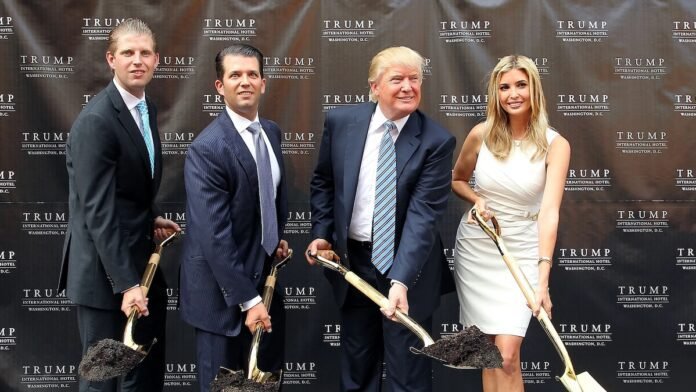
The Trump administration concluded a recent mineral deal with Kazakhstan that, not surprisingly, enriches not only Trump’s own family but that of his secretary of commerce, Howard Lutnick. Trump’s two eldest sons, part owners of Dominari Securities, are set to profit from the Kazakh tungsten deal. So is Cantor Fitzgerald, the investment firm run by Lutnick’s two sons.
As the New York Times pointed out in its investigation of the scheme, “Their sons were soon doing business with partners in a deal that their fathers were negotiating, continuing a pattern of self-enrichment in the second Trump administration that has few precedents in American history.”
The phrases “self-enrichment” and “few precedents” are interesting ways of characterizing this latest instance of the administration’s corruption. Isn’t self-enrichment a good thing, in the sense of profiting from your own hard work?
By contrast, the article doesn’t mention the word “corruption” at all. Perhaps the Times is worried about getting hit by yet another Trump legal challenge. (In October last year, Trump refiled a $15 billion defamation suit against the paper for its coverage of his 2024 presidential campaign.)
There are indeed several precedents in American history for what Trump is doing. These previous corruption scandals – Credit Mobilier, Whiskey Ring, Teapot Dome – wrecked the reputations of presidents and cast long shadows over American politics. They also helped to produce the kind of safeguards that Trump is now destroying.
As with much of Trump’s disrespect for norms, his corruption has been massive and largely in full view. The two outstanding questions are: will Trump and company ever be held accountable for their graft and will this corruption have an enduring impact on political institutions in the United States?
Tracking the damage
If scandalous behavior unfolds in full view of everyone, is it still a scandal? “Scandal” suggests something hidden, something whispered about, something revealed. Trump’s actions are full-frontal. They are both brazen and matter-of-fact.
According to the Trump administration and its extended family, the money skimmed off the top of economic transactions is just smart politics. The administration has endeavored to negotiate every peace deal, trade agreement, investment arrangement, and mineral pact in such a way as to deliver Trump, his family, and their circle of close supporters a good chunk of change.
This is Trump’s interpretation of the American dream: Folks would be downright foolish not to profit from their position. All the great tycoons made their money, from railroads to AI, by being in the right place at the right time with the right amount of ruthlessness.
In Trump’s case, however, he is using taxpayer money to cover the risk. And most of the time, given the terms of the arrangement, there is hardly any risk because Trump is using his presidential power to game the system. That’s what he really means by the “art of the deal.” Trump only deals from a marked deck of cards.
The graft is not secret, though sometimes the actual amounts involved are obscured by layers of complex finance. Trump’s recent mandatory financial disclosure offers some details. But thanks to a number of websites, it’s become quite easy to track in real time the growing amount of Trump’s slice of the pie.
The Center for American Progress runs Trump’s Take, which estimates that the president has received a little over $2.6 billion in cash and gifts since he took office in January 2025. Much of this money has come from various crypto schemes, including the Trump meme coin, but also such dubious ventures as the documentary about Melania Trump and a number of legal settlements (more colloquially known as shakedowns).
Corruption Counter puts the value at $2.2 billion and includes such recent items as the $100 million savings for Trump from the recent effort to bar the IRS from auditing the president. (Courts blocked the overall $1.8 billion “settlement fund,” but the Justice Department is upholding the IRS amnesty.)
Senator Chris Murphy (D-CT) keeps his own list, which highlights the insider trading around the Iran War and a defense contract with Dell after the president invested in the company.
David Kirkpatrick, at The New Yorker, has been keeping a running total of Trump’s ballooning assets. In January, he updated his total to $4 billion, which details, among other things, the Gulf money flowing into Trump pockets.
Meanwhile, at RepresentUS, you can find a timeline of shady deals, from the no-bid contract to a presidential supporter for the Reflecting Pool “upgrade” to an Air Force contract for drones awarded to a company backed by Trump’s eldest sons.
In May, Campaign Legal Center published a rundown of influence peddling – what Trump supporters get in return for their contributions – that includes Elon Musk’s DOGE appointment, ICE contracts for the Trump-supporting GEO Group and the cessation of various lawsuits for Trump-friendly entities (Gemini, Robinhood, Coinbase).
Citizens for Responsibility and Ethics in Washington has its own tracker that keeps up with the number of major events held at Trump’s properties and the number of Trump-branded foreign projects developed during his second term. (With a new Trump Tower planned for Tbilisi, Georgia, it’s now up to 25.)
Sometimes it seems as though Trump administration policy is just a front for making money, much as a shell company provides a legitimate façade for organized crime.
Getting his percentage
One of the sticking points in the current war with Iran is the latter’s attempt to control shipping in and out of the Strait of Hormuz. Tehran wants to charge a toll on ships passing through the Strait. Given that the strait is an international waterway – and not a canal – Iran’s bid violates international law.
Trump has opposed Iran’s gambit not so much because it violates the Law of the Seas but because Iran has borrowed a page from the Trump playbook. How dare they try to trump Trump?! Indeed, the president has threatened a toll of his own if the ceasefire doesn’t hold: a take of 20 percent of regional revenues if the United States becomes “the guardian of the Middle East” by using military force to protect shipping in the region.
Foreign policy is a tool by which the administration levies a toll on any entity that has the temerity to be a country other than the United States. The Kazakh deal on tungsten is but one of several ways that the administration has cashed in on critical minerals.
The Trump sons have a financial interest in 14 companies working with the U.S. government on mineral deals that involve nearly $9 billion in federal funding. This includes $620 million Pentagon loan, fast-tracked by the White House, to a North Carolina rare-earth magnet company in which Donald Trump Jr.’s venture capital firm has invested. Several Trump associates stand to gain from any future deal involving Greenland minerals.
Trump has used tariffs to extract various concessions. In some cases, countries have responded by appealing to Trump’s self-interest. Vietnam, for instance, approved a Trump golf course and received a tariff reduction. Switzerland also enjoyed such treatment when it gifted Trump “a special Rolex desktop clock, a 1-kilogram personalized gold bar and loads of flattery.” The message is clear: US trade policy is for sale.
Even peace agreements are not immune from the Trump treatment. The Gaza peace deal offers potentially lucrative opportunities for outside businesses to profit from the reconstruction of the rubble-strewn area. “Everybody and their brother is trying to get a piece of this,” one long-time contractor told The Guardian. “People are treating this like another Iraq or Afghanistan. And they’re trying to get, you know, rich off of it.”
The executive board of Trump’s Board of Peace is dominated by titans of industry – Marc Rowan, Steve Witkoff, Jared Kushner – all salivating at the prospect of using their insider position to profit – although, with progress stalled on the ground, the Board of Peace may end up doing corruption the old-fashioned way by just siphoning off the money up front and granting itself legal immunity to escape the consequences.
The deal that created a “Trump corridor” between Armenia and Azerbaijan was similarly projected to provide commercial opportunities to Trump cronies. But it has yet to get off the ground, another victim of Trump’s propensity to make a big splash with his agreements and neglect to secure the follow-through.
Trump’s peace deal with Russia, negotiated on the backs of the Ukrainians, would have also meant a huge windfall for Trump cronies—in opportunities for reconstruction contracts in Ukraine and even larger profits for the commercial reengagement with Russia.
Writing in The Atlantic several months after Trump took office, David Frum summed up the corrupt activities of the administration this way:
Nothing like this has been attempted or even imagined in the history of the American presidency. Throw away the history books; discard feeble comparisons to scandals of the past. There is no analogy with any previous action by any past president. The brazenness of the self-enrichment resembles nothing seen in any earlier White House. This is American corruption on the scale of a post-Soviet republic or a postcolonial African dictatorship.
Frum served in the George W. Bush White House. A NeverTrumper, he nevertheless knows a little something about corrupt conservatives. Upward of $20 billion of post-war reconstruction aid for Iraq disappeared into the ether of corruption (and the pockets of US firms, including Halliburton). Trump stands on the shoulders of giants.
Immunity and impact
Donald Trump knows that he is a living, breathing violation of the law. That’s why he has gone to such lengths to ensure immunity – the Supreme Court decision providing presidents with immunity from criminal prosecution for their official acts, the attempt to secure exemption from IRS audits. Trump has also promised to pardon preemptively “everyone who has come within 200 feet of the Oval Office.”
Let’s tackle Trump first. His immunity is not absolute. First, it does not cover “unofficial acts.” Depending on how courts define this category, Trump (and certainly his family) could be prosecuted for corrupt business dealings that are deemed “private.” Second, immunity doesn’t apply if it can be demonstrated that criminal prosecution poses no “dangers of intrusion on the authority and functions of the Executive Branch.” That’s another tough one to parse, and it will probably fall to future courts to define. But if something is demonstrably corrupt, then it should by definition fall outside the legitimate authority and functions of the Executive Branch.
Trump has already used his broad powers to pardon the January 6 rioters and other malefactors, including 22 corrupt politicians. Trump cronies must look at this record and feel pretty safe from future prosecution.
But presidential pardons also have their limits. Such pardons can’t violate the Constitution or criminal law – though Trump has challenged these strictures – and they don’t cover future crimes. More to the point, Trump’s pardons only apply to federal prosecution. Individuals can still be tried in various states (and overseas if their misconduct took place in other countries).
The impact of Trump’s misconduct is directly related to this question of immunity. If the president and his coterie “get away with it,” then the corruption they initiated will be much harder to root out of political institutions. Unprosecuted acts can harden into precedents.
Throwing Trump and company into prison would be satisfying. Ditto clawing back their ill-gotten gains. From the point of view of democracy, however, even a plea bargain in which the malefactors stay out of jail and pay a nominal penalty in exchange for pleading guilty would be a victory.
It’s best to think of Trump as an aberration, however much his behavior can be traced to past scandals, the authoritarian tendencies of previous presidents and the oft-corrupt workings of American capitalism.
Democracy, like any fiction, requires the willing suspension of disbelief. Trump’s truly an unbelievable character. Once he’s gone, it will be time to pretend that the monster has been vanquished and the rule of law restored. Only in this way will America escape its semiquincentennial with its clothing muddied but its presumably good intentions intact.
John Feffer, an author of many books, is the director of Foreign Policy in Focus. FPIF originally published this article, which is republished here under a Creative Commons license.
People are willing to pay more for climate-proof wine, study shows
What’s a winemaker to do on a warming planet? Much has been written about how climate change threatens viticulture around the globe — or at least, threatens to fundamentally change the practice. A long-lasting drought in Chile is forcing winemakers to rethink irrigation systems. Vintners in California must not only endure wildfires but also the smoke that comes with them and lingers, which can alter the taste of their grapes. Severe frosts in the Champagne region of France are also altering the acidity and flavor profile of vineyards’ grapes, although some growers are starting to lean into that.
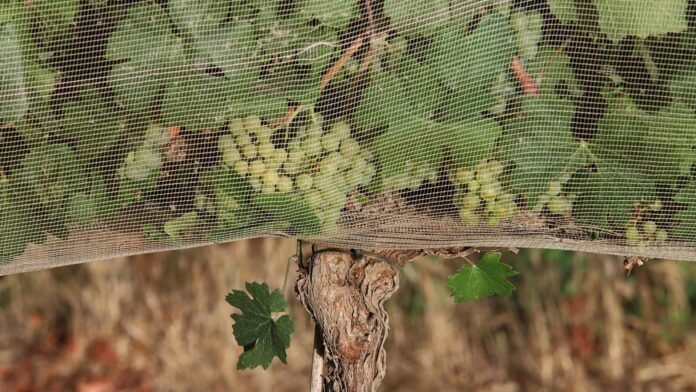
A new study out of Cornell University looks at three techniques that winegrape producers can use to adapt to warmer temperatures, ranging from relatively simple and inexpensive to potentially existential: Install shade cloth to shield precious grapes from the harsh effects of the sun; grow new varieties of grapes better adapted to the heat; or relocate to cooler climates. The researchers found that, for all three cases, when these changes are communicated to shoppers, consumers are willing to pay a premium for these climate-resilient wines — even if it means some of the name-brand recognition of, say, California’s Napa Valley is lost in the process.
The idea behind the market study was both to help growers understand the climate adaptation strategies available to them, the costs associated with these decisions, and then finally, how consumers perceive them.
“A producer can make all the changes in the world — but if they don’t resonate well with consumers, then it’s moot,” said Alex Susskind, one of the study’s co-authors and a professor of food and beverage management at Cornell University’s school of hotel administration.
The challenge with the three strategies identified by the researchers — invest in new infrastructure, invest in new grapes, or get up and move — is that only two of them might be immediately obvious to consumers. If a vineyard in California installs shade cloths throughout its estate to protect grapes from sunburn, most shoppers would have no idea, unless it was somehow explicitly stated on the finished product, like on the wine label.
On the other hand, if a producer in Napa Valley known for cultivating Cabernet Sauvignon grapes switched to its focus to Carignane grapes — or if that same grower relocated to Lake County, just an hour or two north — consumers would likely notice. In the third option, for example, those grapes don’t end up producing a bottle of “Napa Valley Cabernet anymore, that’s a Lake County Cabernet,” said Susskind.
In other words, the touchpoints that guide many consumers’ choices — what winemaking region a bottle is from, what grape variety they use — change. Of all the options available to winegrape producers, Susskind said, relocating showed the “least desirability” among survey participants, meaning they were least willing to pay more for these wines. But crucially, respondents still said they would pay extra for wines made from these grapes.
Read Next
There are limits to the study. For one, it only considers adaptation strategies for winegrape growers and doesn’t explore climate mitigation strategies, which would help growers to decarbonize production and have an overall lighter impact on the climate. Additionally, only 300 participants answered the survey, most of them college graduates under 40 years of age. Included in the survey respondents were people who reported to “care about environmental issues and read labels on food products,” according to the study — two things not everyone does, or does every time they go shopping. And the researchers acknowledged that there may be a novelty factor at play here — over time, wine-drinkers’ willingness to pay more for these bottles may fade.
Still, people in the industry feel that the results are promising. “This is genuinely valuable work,” said Jimena Balic, a winemaking researcher based in Chile. “The economics of climate adaptation in wine are badly under-documented, and putting real numbers to ‘go, stay, or change’ plus the finding that consumers will pay a premium for adaptation, is exactly the kind of evidence growers need.”
Balic believes that winegrowers are not likely to invest in any adaptation strategies unless they are likely to pay off. She added that for winegrape producers, adaptation is more likely to be implemented in a more piecemeal way rather than wholesale. Maybe producers plant different varieties of grapes in one part of their land and install shade cloth in another to maximize output. And heat isn’t the only climate threat facing vineyards: While some regions may face drought, others might see unpredictable rainfall, as well as hail, frost, and pests. “Wine risk is multifactorial,” said Balic, “and each hazard carries its own cost and its own adaptation choices.” She would like to see further research expand on these challenges.
Similarly, the results of the study didn’t surprise Greg Jones, a wine climatologist and CEO of a winery based in Oregon. “But there’s so many other caveats,” he added. From his point of view, much depends on educating the consumer around the viticultural process and how wine gets made — and then doing more education around how climate change is affecting growers. Whether consumers can perfectly hold all of those things in their mind is something the industry is still figuring out.
“We have a system where the consumer is hard to read,” he said.
Jones, who has spent the last 25 years studying the impacts of a changing climate on winegrape production, among other things, said he felt encouraged by the Cornell team’s research. “The research says something important, people would be willing to pay more for [these wines],” he added. He hopes it will lead to further studies on adaptation and consumer preference.
Canadian Jews Weigh Leaving as Antisemitism Fuels Search for Safer Homes
Rising threats and hate incidents are driving some Jewish Canadians to explore relocation options in Panama, the US, and Israel
Jewish organizations in Canada say rising antisemitism is pushing some members of the community to consider leaving the country, with groups arranging exploratory trips to Panama and Tulsa, Oklahoma, for Jews who no longer feel safe at home.
The Toronto-based Tafsik Organization, a Jewish civil rights group, told The Media Line it is organizing a trip to Panama this month for people interested in relocation, after two earlier trips drew dozens of participants. The US-based organization Tulsa Tomorrow said more than 1,500 Canadians have expressed interest this year in its trips to Tulsa, where antisemitism is often cited as a reason for considering a move.
Tulsa Tomorrow said about 85 Canadians are expected to visit this year, with participation in its twice-yearly trips capped at 100 people. In previous years, the trips drew no more than 10 Canadians, and the organization said it has helped three Canadian families relocate since 2022.
Michael Sachs left Canada with his family last July after facing security threats while serving as the director of the Friends of Simon Wiesenthal Centre for Western Canada in Vancouver.
Sachs said the threats were serious enough that he received police security assistance, and that protesters once told his children their parents were killers. He said his wife, who normally tucked away her Star of David, made it visible when they first visited Tulsa with Tulsa Tomorrow.
As a Jew, I feel that Tulsa has been a relief of stress for us as a Jewish family
“As a Jew, I feel that Tulsa has been a relief of stress for us as a Jewish family,” he said.
Rivka Campbell, executive director of Beth Tikvah Synagogue in Toronto, said more community members have been considering immigration to Israel or moves to places they view as safer, including the US or Panama. She said some older Jews who spend winters in warmer parts of the US say they feel safer there.
We hear about how different it is. It’s almost like they can breathe when they leave Toronto.
“We hear about how different it is. It’s almost like they can breathe when they leave Toronto,” she told The Media Line.
The relocation discussions come as Canadian Jewish organizations report a sharp rise in antisemitic incidents since the October 7, 2023, Hamas-led attacks in Israel and the war in Gaza that followed.
B’nai Brith Canada said it documented 6,800 antisemitic incidents in 2025, the highest figure since it began issuing annual reports in 1982. Prime Minister Mark Carney said in a speech last month that more than two-thirds of religion-motivated hate crimes in Canada last year targeted Jewish Canadians, who make up about 1% of the population.
In May, three “visibly identifiable” members of the Jewish community standing outside a Toronto synagogue were shot at with an imitation firearm, according to police. After an arrest in the case, acting Deputy Chief Joe Matthews of the Toronto police said, “We recognize that Jewish residents have been living with a heightened sense of fear due to repeated incidents targeting their community, and this only adds to that, which is unacceptable.”
Campbell said the tone of antisemitism has become more “in your face,” while reporting of hate crimes has also increased. She said laws are already in place to deal with hate crimes but are not being enforced properly.
“I know there’s this feeling, ‘Well, if we arrest them, they’ll probably get off.’ So what? So what? Arrest them anyway,” she said. “Send a message that we don’t tolerate hate in any form.”
Conservative Deputy Leader Melissa Lantsman told The Media Line that elected leaders have failed to enforce existing laws, contributing to the rise in antisemitism.
Nobody should have to ask their government to enforce a law, because that’s the government’s job—but that’s where we’re at today
“Nobody should have to ask their government to enforce a law, because that’s the government’s job—but that’s where we’re at today. The fact that this is even controversial shows you just how much work we have to do to restore normalcy here in Canada,” said Lantsman, who is also a member of parliament.
A federal law taking effect in July will make it a criminal offense to intimidate or obstruct people seeking to access places of worship, schools, and community centers used by identifiable groups.
“These measures are intended to address gaps in law enforcement and send a clear and consistent signal that hate will not be tolerated,” Public Safety Canada wrote in an email to The Media Line.
Carney last month launched the Ministerial Advisory Council on Rights, Equality and Inclusion, saying it would assess antisemitism in Canada and help create a “whole-of-government approach” to addressing it.
Kim Werker, president of the Reform Jewish Community of Canada, told The Media Line that most of the antisemitic conversations she has seen have been online, but that she has become more conscious of possible backlash for being Jewish.
“There are times I have tucked my Star of David into my shirt,” she said.
Werker said both younger and older members of the Jewish community have reported seeing more antisemitism, with some teenagers hearing antisemitic language used more casually. She said Jewish students have felt physically unsafe on some university campuses in recent years, and that antisemitism has become more normalized.
“What I’m seeing more are comments that indicate that people in our Canadian society do not see Jews as worthy of the same kinds of compassion and support as anyone else in Canada,” she said.
Amir Epstein of the Tafsik Organization told The Media Line he knows dozens of people who have left Canada because of antisemitism in recent years, and many more who are preparing to do so.
“This is where we’ve come down to in our community, that people are really seriously looking to leave,” he stated.
Epstein said he has faced claims that he is part of the Mossad and has received constant death threats. He said inquiries from older community members about leaving Canada became frequent enough that Tafsik created Plan B, a Panama trip held in February and March for participants ranging in age from 40 to 70.
“We’re always getting emails from people saying, ‘Where do we go? What do we do?’ So, people are very seriously looking to leave,” he said.
Epstein said older members of the Jewish community have been more active in exploring relocation, while Jews under 40 appear less likely to consider leaving or to take part in protests. He said many people view Panama as a safe destination for Jewish families and see permanent residency there as relatively easy to obtain.
When he asks attendees at Tafsik events whether they are considering leaving Canada, Epstein said roughly two-thirds of the 700 to 1,500 people present typically raise their hands.
Epstein said Tulsa is not realistic for many families, partly because of the difficulty and cost of immigrating to the United States. He said Orthodox Jews may be more likely to consider Israel, while more secular Jews may be deterred by the cost of living there or by not speaking Hebrew.
Campbell said the sense of vulnerability has deepened because hate crimes are not being addressed forcefully enough. She said she has felt less safe over the past two years and is constantly worried about the risk of a lone attacker.
“Of course, we feel physically vulnerable, 100%. And some will say, yeah, today may be OK, but there’s this underlying feeling of it’s a matter of time,” she said.
FAA proposal: Supersonic airliners can fly over US cities if they’re quiet
A long-standing ban on commercial supersonic flights over the United States would be overturned in a new rule proposed by the US Federal Aviation Administration. That could pave the way for the possible return of commercial supersonic airliners—as long as such aircraft can reduce the ground-level impacts of their sonic booms.
The FAA originally banned overland supersonic flights by civil aircraft in 1973, following US military tests involving supersonic flights over US cities such as Oklahoma City, Chicago, and St. Louis in the 1960s. But the Trump administration has championed the repeal of the ban to pave the way for supersonic airliners that could operate without disruptive sonic booms. So the FAA’s new rulemaking action on June 30, 2026, follows the direction of an executive order issued by President Trump on June 6, 2025.
The newly proposed rule would replace the 53-year prohibition with an interim “noise-based” certification standard requiring any sonic boom overpressure at the surface to be kept below 0.11 pounds per square foot. That proposed standard is based on the Colorado-based startup Boom Supersonic having demonstrated quiet Mach cutoff flights with its XB-1 aircraft—harnessing specific atmospheric conditions while flying just beyond supersonic speeds at higher altitudes so that the aircraft’s shockwaves are refracted upward into the atmosphere rather than traveling to the ground.
For comparison, the Concorde supersonic airliner that flew commercial transatlantic flights between 1976 and 2003 created a sonic boom overpressure equivalent to 1.94 pounds per square foot when flying at a speed of Mach 2 at an altitude of 52,000 feet.
A NASA fact sheet suggests that “some public reaction could be expected between 1.5 and 2 pounds” but rules out damage to buildings and other structures at one pound of overpressure. It further explains that humans have experienced sonic boom overpressure between 20 and 144 pounds without injury when supersonic aircraft flew at altitudes below 100 feet.
However, not everyone is sold on this proposed standard for allowing overland supersonic flights. Dan Rutherford, senior director at the nonprofit International Council on Clean Transportation, told Aviation Week that the overpressure metric was previously discarded by United Nations experts in 2014 because “it doesn’t actually measure loudness or annoyance.”
“I’m honestly surprised that the FAA would propose a rule this weak,” Rutherford told the publication.
US lawmakers in Congress have also been pushing forward the Supersonic Aviation Modernization Act. That would require the FAA to allow for overland supersonic flights “so long as the aircraft is operated in such a manner that no sonic boom reaches the ground in the United States.” The bill passed the House on March 24, 2026, and is still awaiting a vote in the Senate.
Another way for quiet supersonic flight
Meanwhile, NASA has been testing a different approach to quieter supersonic flight with the Lockheed Martin X-59 Quesst—a needle-nosed experimental aircraft with an airframe designed to reduce the typical sonic boom to a sonic thump. NASA has relied on perceived levels of decibels (PldB) to evaluate sound levels, with the goal of consistently demonstrating sonic thumps around 75 PldB that would sound like a car door slamming about 20 feet away.
A NASA test pilot and mission integration manager previously told Ars that the X-59 aircraft’s future supersonic flight tests over US cities and towns nationwide would provide community feedback on perceived sound levels that could help inform regulations by civil aviation authorities.
The FAA still has time to further refine its proposed noise regulations for overland supersonic flights before attempting to finalize them by mid-2027. The agency also plans to propose another rule later this year that would set takeoff and landing noise standards for supersonic aircraft.
Legalization of quieter overland supersonic flights does not guarantee a successful comeback for commercial supersonic airliners. The Concorde supersonic airliner cut transatlantic flights between New York and London from seven hours to under three hours, but the aircraft’s massive fuel consumption made it difficult to sustain profitable operations—never mind recovering the more than $2.8 billion in development costs shared by the UK and French governments.
Boom Supersonic is developing a supersonic airliner called Overture with the goal of delivering the first aircraft to customers by 2029. The company has signed commercial agreements with American Airlines, Japan Airlines, and United Airlines that give the companies options to purchase the Overture aircraft.
But Boom has also pivoted away from its main goal in recent months to produce natural gas turbines to power AI data centers. Boom CEO Blake Scholl has suggested that revenue from this side venture would help pay for the development costs of the Overture supersonic airline. At the same time, United Airlines CEO Scott Kirby has said he gives Boom a “50/50” chance of getting its supersonic airliner flying.
Even as the White House has proved reckless and self-defeating in Iran, it has maintained a menacing, disciplined focus on Latin America. The siege of Cuba and informal annexation of Venezuela are the centerpieces of this program, but there’s not one country, except perhaps Uruguay, where Washington isn’t in deep. The State Department was even micromanaging the recent Colombian elections, with Secretary of State Marco Rubio personally approving the deportation of Beto Coral, a Colombian national who lives in Texas, because he has been critical of Trump’s preferred candidate.
A narrow, wealthy Latin American diaspora geographically concentrated in Miami has captured U.S. hemispheric policy.
The extent of this power projection is impressive, even if the power asymmetries make operations in Latin America easy compared to the Middle East. You can pressure Ecuador with a gang designation and $20 million in security aid and get results. You can’t do that with Iran.
But asymmetry alone doesn’t explain the Trump administration’s overwhelming focus on Latin America. Florida, to a large degree, does. A narrow, wealthy Latin American diaspora geographically concentrated in the greater Miami area has captured U.S. hemispheric policy — not through persuasion or broad public support, but through the state’s electoral math and alliance with the Republican Party. This informal lobby represents a Latin American propertied class who fancy themselves dispossessed, who imagine their interests threatened by the mildest of democratic reforms. The members of this class see Trump and Rubio as their personal repo men.
The Cause
Florida’s outsized role in U.S. politics begins with the backlash to Cuba’s 1959 revolution. Those who fled Fidel Castro’s socialist government in its early days overwhelmingly came from the middle and upper classes. They turned the peninsula into a sanctuary state. After the failure of the Bay of Pigs invasion — the CIA’s 1961 bid to use exiles as an expeditionary force to invade Cuba and dislodge Castro — the more ideological of these agency-trained exiles continued to populate the counterinsurgent gothic. These Cuban emigres allied with rogue elements in the CIA and FBI, Colombian drug traffickers, and mafiosi to advance “The Cause,” as the novelist James Ellroy calls efforts to liberate Cuba through the violent overthrow of Castro’s government.
Cuban exiles, drawn into covert operations and the ranks of the then-fringe U.S. New Right, would go on to participate in many of the storied black-bag operations that defined the middle to late Cold War: the conspiracies surrounding JFK’s assassination (as the House Select Committee on Assassinations put it in 1979: “anti-Castro Cuban groups, as groups, were not involved in the assassination, but the available evidence does not preclude the possibility that individual members may have been involved in the assassination) and the execution of revolutionary Che Guevara in Bolivia, led by Bay of Pigs veteran and CIA operative Félix Rodríguez, who then went to Vietnam to train the death squads of the Phoenix Program. Other Bay of Pigs alumni flew CIA combat missions over the Congo strafing Simba rebels and carried out the Nixon White House’s Watergate break-in and the Iran–Contra affair, in which Reagan administration officials secretly sold weapons to embargoed Iran and diverted the illegal profits to right-wing Contra rebels in Nicaragua, directly violating a congressional ban.
The Cold War ended but the Cause continued. In 2000, the notorious Republican operative Roger Stone recruited Cuban American protesters for the infamous Brooks Brothers riot — the mob action that shut down the Miami-Dade recount of presidential ballots and handed George W. Bush the White House — by instrumentalizing exile grievance through Cuban radio broadcasts. “The idea we were putting out there,” Stone later said, “was that this was a left-wing power grab by Gore, the same way Fidel Castro did it in Cuba.”
Drug profits financed many of these operations. “Every major area of operation in which the CIA has worked has left behind a major functioning drug cartel,” as CIA operative-turned-whistleblower John Stockwell put it. So too the Western Hemisphere with the Cubans. The beginning of the modern cocaine trade “had developed largely under the control of exile Cuban criminal organizations based in Miami,” Bruce Bagley, an expert on Latin American drug trafficking, observed in Foreign Affairs.
By the late 1970s, Miami prospered, even as the rest of the country was suffering from a prolonged economic downturn, high unemployment, and urban decay. Laundered cocaine money in effect provided Miami a covert Keynesian stimulus, a massive injection of cash into construction, retail, banking, and services at the exact moment the U.S. government was abandoning such policies as inflationary. While nearly every other Federal Reserve district was running a deficit, the vault of Miami’s Fed was stuffed with a $5 billion surplus made up of manicured bundles of $50 and $100 bills, evidence of large cash transactions conducted outside normal financial channels. Real estate boomed. Employment boomed. Car dealerships, paid in cash, boomed. Buildings went up, the city’s traditional pastel stucco and red tiles giving way to glass, glitz, and gleam.
Cuban Americans came to dominate Miami’s independent banking sector. Continental National Bank, the first Cuban American-owned bank in the United States, was founded in 1974 by exile Carlos Dascal in Miami’s Little Havana neighborhood. Typical of the small Latin American-owned banks that proliferated in this period, Continental went from $12 million in annual deposits in the mid-1970s to over $600 million by 1980 — a dramatic illustration of the narco-dollars flooding Miami’s banking system.
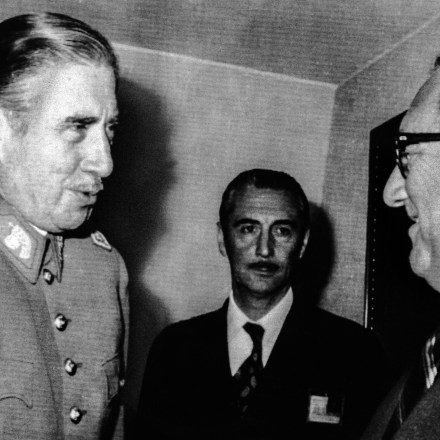
It was a wild time in Miami’s exile community. Cocaine and covert ops were a dangerous mix. No two figures better embodied the era than Luis Posada Carriles and Orlando Bosch — both CIA-trained Bay of Pigs veterans, both connected to the New Orleans mob and the drug trade. Together, they founded the Coordinación de Organizaciones Revolucionarias Unidas, or CORU, which the FBI described as “an anti-Castro terrorist umbrella organization” that served as a subcontractor for Operation Condor, Chilean military dictator Augusto Pinochet’s hemisphere-wide assassination program. In 1976, Cuban CORU operatives planted the car bomb that killed former Chilean ambassador Orlando Letelier and his U.S. colleague Ronni Moffitt in Sheridan Circle in Washington — the first case of state-sponsored international terrorism in the nation’s capital. Posada and Bosch also carried out the bombing of Cubana de Aviación Flight 455 off the coast of Barbados, killing all 73 people aboard, including the Cuban national fencing team, soon after.
Democracy Promotion in Hialeah
Ronald Reagan’s 1980 presidential election victory changed the calculus. His advisors were hard-line: the New Right had moved from the fringe to the halls of power. Cocaine continued to finance Miami, but the off-the-books exiles had become a liability. The historian Alan McPherson writes that by the mid-1970s, Cuban exile militants had carried out, in addition to the attacks described above, more than 100 bombings on U.S. soil and in 1974 accounted for 45 percent of all terrorist bombings in the world. The Reagan White House didn’t want to dim exile passion, but it also didn’t want planes being shot down over the Caribbean and bombs exploding in Sheridan Circle. And so mercenaries were out, and lobbyists were in.
Reagan’s national security adviser Richard Allen worked with Jorge Mas Canosa, who had left Cuba in 1960, to create the Cuban American National Foundation, or CANF. Allen explicitly modeled CANF on the American Israel Public Affairs Committee, better known as AIPAC — telling fellow Cubans to study the Israeli lobby and replicate its methods, as documented by political scientists Patrick Haney and Walt Vanderbush. The goal was not just to sideline terrorists like Posada and Bosch but to marginalize more moderate perspectives within the Cuban American community who wanted some accommodation with the Cuban government. Reagan needed a respectable political vehicle for hard-line Cuba policy that could operate in the open. That was CANF.
Mercenaries were out, and lobbyists were in.
Note the self-reinforcing loop: The Reagan White House organized the creation of a lobbying group to lobby itself for policies it already wanted to pursue, generating the appearance of popular democratic pressure for what was in fact long-standing government hostility toward the Cuban Revolution.
Mas Canosa put his own personalistic imprint on the AIPAC model. He combined, as Saul Landau put it, the style of an “old-style political ward boss” — getting himself and his allies appointed to local utility, road, and electoral commissions; awarding contracts; doing incoming immigrants favors; finding them jobs and housing — “with the pragmatic lobbying techniques” of AIPAC, cultivating congressional allies to enforce and strengthen the Cuba sanctions. His anti-Castro ideology was both genuine and lucrative: a Cuba opened to U.S. capital would be an enormous prize, and he and his inner circle would be best positioned to seize it.
In 1989, CANF won its first congressional seat, when Cuban-born Ileana Ros-Lehtinen defeated her Democratic opponent to succeed Claude Pepper, the New Deal lion who had championed labor, Medicare, and Social Security from the same Miami district for more than two decades. The symbolism was stark: “Red” Pepper’s left-liberal tradition eclipsed by Cuban exile politics.
Allen explicitly modeled the Cuban American National Foundation on AIPAC, telling fellow Cubans to study the Israeli lobby and replicate its methods.
Ros-Lehtinen would serve for 30 years, becoming the powerful chair of the House Foreign Affairs Committee and what the South Florida journalist Juan David Rojas called a founding figure of the “Miami neocons.” She was simultaneously the exile community’s most aggressive Cuba hard-liner, a champion of Israel in its Lebanon and Gaza wars, the author of Iran sanctions legislation, and a vocal defender of the accused Flight 455 bomber Orlando Bosch. Her former intern was Marco Rubio, now Trump’s national security adviser and secretary of state.
Over in Broward County, Florida’s 25th Congressional District, with its large Jewish, Colombian, and Venezuelan population, Debbie Wasserman Schultz is another Miami neocon, a Democratic one, advocating for hard-line policies in both Israel and Latin America. An AIPAC favorite, Wasserman Schultz shortly after first being elected in 2004 worked closely with Trump’s current Venezuela viceroy, Mauricio Claver-Carone, to squash five initiatives that would have diluted Cuba sanctions.
At the time, Claver-Carone, born in Miami, was running both the U.S.–Cuba Democracy PAC and the Cuba Democracy Advocates. Since 1996, the National Endowment for Democracy, a nongovernmental organization, and the U.S government have channeled more than $100 million into similar “democracy” programs, many of them headquartered in Hialeah and Coral Gables. Democratization in Cuba was the stated objective, but the work of the NGOs and their subcontractors are often protected from disclosure as “trade secrets” under FOIA exemptions.
Mas Canosa died in 1997, and the conventional wisdom at the time was that the Cuban American lobby had peaked. The old guard was dying off, and poll after poll showed that younger Cuban Americans — U.S.-born, English-dominant, less connected to the island — were open to normalization and an end to the embargo. President Barack Obama’s surprise announcement in December 2014 that the United States and Cuba would restore diplomatic relations — the most significant shift in Cuba policy in more than half a century, negotiated secretly with the help of Pope Francis — seemed to confirm the lobby’s decline.
And yet the U.S. government, in the last two years of Obama’s presidency, continued to flood Miami with “democracy promotion” grants, a direct federal stimulus to activists who would become some of Donald Trump’s staunchest supporters. With Trump’s election, what looked like the lobby’s last gasp turned out to be its renaissance.
Trump ended the normalization of relations with Havana and, listening to Florida’s then-Sen. Marco Rubio, imposed harsh sanctions on the island. After Ron DeSantis’s 2018 gubernatorial victory turned the state hard right, Florida (home to a good number of the nation’s billionaires, including Jeff Bezos and Google co-founder Larry Page) became the command center of MAGA power.
A Febrile Complex
Beyond Trump, something was transforming Miami that would change the lobby’s nature entirely. Through the 2000s and into the 2020s, the city was absorbing a new wave of Latin American capital flight on a scale that dwarfed anything produced by the original Cuban exodus.
Across Latin America, economic liberalization, a policy pushed by Washington since the 1980s, failed to generate prosperity and stability, leading many nations to elect left-leaning governments. Venezuelans had been arriving in Florida since Hugo Chávez’s first election in 1998. Now they were joined by wealthy Brazilians, Bolivians, Argentines, Nicaraguans, and Mexicans. Colombians had been coming for decades, fleeing the violence of their country’s civil war.
“When governments in Latin America go left, buyers go north.”
Even the mildest of leftists could spark a flight of capital northward. When it looked like Gabriel Boric would win Chile’s 2021 presidential election, two Chilean law firms opened offices in Miami to help wealthy Chileans move their assets to South Florida. Boric did win, and investors pulled money out of Chile at a record pace, leaving behind what Bloomberg estimated as a $50 billion hole. Chileans ranked eighth among foreign buyers of real estate in South Florida in 2021.
“When governments in Latin America go left,” as one prominent Miami realtor put it, “buyers go north.” Latin Americans bought nearly half of all new luxury units in South Florida through mid-2025, most of them in cash.
The city of Doral, just west of Miami, became so heavily Venezuelan it is informally known as Doralzuela. Miami’s Brickell neighborhood is filled with Colombian and Brazilian private banking offices. The Biscayne corridor attracted Mexican, Argentine, and Peruvian capital. These were not the huddled poor who arrived in the 1980 Mariel boatlift, an exodus of Cubans, or the desperate Haitians who came after the 1991 coup. These were the propertied business classes — and they were looking for ideological allies in Washington to beat back the social democrats at home.
The Cuban exile network absorbed and nurtured the grievances of these new arrivals. Following the 2009 military coup in Honduras — which ousted the elected center-left president Manuel Zelaya and replaced him with a right-wing government — a delegation of Miami Cubans, working with Sen. John McCain, the Republican Party’s most prominent neoconservative, served as a bridge between AIPAC and the greater Latin American lobby and hosted Honduras’s coup leaders in Washington to validate their takeover. For a brief moment, President Obama opposed the coup government, but when Cuban Americans and other conservatives began associating him with Castro and Chávez, he backed down and recognized the regime as legitimate.
The new Latin American arrivals found a common language in a single word: “castro-chavismo.” The term had been popularized in Álvaro Uribe, Colombia’s former president and leader of its far right. Uribe himself imported the term into the U.S. as part of a campaign to derail the Colombian government’s Cuban-brokered peace agreement with the FARC guerrillas. Flanked by then-Sen. Marco Rubio and Rep. Mario Díaz-Balart, Uribe gave a rallying speech at a Doral restaurant, Mondongo’s, in October 2016. He warned the crowd of Colombian and Venezuelan expats that castrochavismo would come to Colombia if the peace deal were ratified. Uribe used this trip to deepen his ties with Trump’s people: Policy analyst Adam Isacson and historian Christy Thornton, separately, note Uribe’s influence on Trump’s first reelection campaign, when he ran ads in Florida linking President Joe Biden to the Latin American left. “Joe Biden is a PUPPET of CASTRO-CHAVISTAS,” he tweeted in 2020.
The Cuban lobby had long been motivated by the specific wounds of the Castro revolution: the confiscations, the executions, the broken families, what Joan Didion called in her 1987 book “Miami” the “febrile complex of resentments and revenges and idealizations and taboos” that united the exiles. The newcomers from across Latin America were equally febrile, but their cause was not just a free Cuba — it was a continent liberated from the likes of left-leaning presidents like Mexico’s Claudia Sheinbaum, Brazil’s Luiz Inácio Lula da Silva, and Colombia’s Gustavo Petro.
Unlike the Cuban lobby, which had operated under the tight discipline of Mas Canosa and CANF, the newer Latin American exile community had no single institutional home. The Trump transition team after the 2024 election moved quickly to capture these new constituencies, reaching out to figures like Félix Maradiaga, a Miami-based Nicaraguan opposition leader whom former guerrilla fighter and strongman president Daniel Ortega had stripped of his citizenship. Maradiaga says that Trump’s envoys were urging the opponents of Nicaragua, Cuba, and Venezuela to “unite our points of view so that the actions that come from the United States have a joint impact in the quest for democracy.”
Mar-a-Lago became the diaspora’s clubhouse, a palace-in-exile for Latin America’s displaced elites — where Brazil’s Bolsonaro family bends Trump’s ear, Venezuelan opposition figures convene with White House officials, and Colombian magnates attend fundraisers alongside Cuban American politicians and businessmen to discuss business opportunities and coordinate the hemisphere’s restoration.
The scale of what was being plotted there has been partially revealed: a cache of forensically authenticated voice notes leaked from former Honduran President Juan Orlando Hernández. Convicted of drug trafficking, Hernández had been serving a 45-year sentence in a West Virginia federal penitentiary until Trump pardoned him in December 2025. The leaked memos reveal that Hernández was being financed by both Israel and Argentina (he spent his first night of freedom in the five-star Waldorf Astoria hotel) and that his political proxy, current Honduran President Nasry Asfura, was meeting with investors at Mar-a-Lago to discuss sketchy deals with U.S. officials and to plan a broader destabilization program targeting Mexico, Colombia, and Brazil.
Miami Rules
The new, greater Latin American lobby operates differently from the old CANF model, trading a single-issue ethnic lobby focused on one country for a class-based hemispheric operation united by a common enemy: reformism of even the blandest sort. CANF itself continues to exist but has fallen into irrelevance. Its PAC went dormant and its lobbying function was absorbed into a broader, more decentralized Latin America lobby. Florida’s Republican Party has largely absorbed CANF’s electoral machinery.
Class divisions had long existed in the Cuban diaspora, especially after the Mariel boatlift. But a singular focus on liberating Cuba had muted the cleavages. Now, though, as the diaspora became hemispheric in scope, the gap between the haves and have-nots has become more visible. Doral’s gated communities sport lovely names — Doral Isles Riviera, Doral Isles Venetia — and wealthy Venezuelans play golf at Trump National. Tens of thousands of poorer Venezuelans — many of whom risked their lives trekking the Darién Gap to get to the U.S., many of whom work at that same golf resort — live in constant fear: Trump has revoked their Temporary Protected Status, leading to more than 15,000 deportations. Some have been sent back to Venezuela, others to El Salvador’s infamous maximum-security CECOT prison.
The cruelty is not limited to Venezuelans. The Trump administration has targeted other poor immigrants, including Hondurans, Nicaraguans, and Haitians. Even poor Cubans — who in the past could expect automatic residency — are now being shipped to Mexico, where many, elderly and sick, find themselves sleeping on the streets of random cities, such as Villahermosa, the humid capital of Mexico’s southern state of Tabasco. “They’re casting us aside to die,” said Harold A, a 58-year-old Cuban national who was deported to Mexico earlier this year. “They don’t give us anything, nothing. … How are we supposed to eat?”
The wealthy members of the diaspora tend to see these deportations as harsh but necessary to protect their reputation as “exceptional migrants.” Poor Venezuelans are referred to by some of their better-off compatriots as orcos — orcs, subhumans — a class contempt that Oxford scholar Erick Moreno Superlano has documented in detail. The lobby that presents itself as the agent of Latin American freedom is, in fact, a staunch defender of the hemisphere’s status and class hierarchy.
These new well-to-do exile groups vote in their national elections as a bloc, and often decisively so for their country’s most Trump-like candidate. Last month in Peru, the daughter of former President Alberto Fujimori — who spent 16 years in prison for human rights violations committed during his presidency, including death squad killings — would have lost the presidential election if only votes cast in Peru were counted, but ultimately beat her center-left opponent thanks to the votes of the Peruvian diaspora. The roughly 9,000 Miami-Dade votes helped her win by less than 1 percent.
More recently, Colombians living in Miami turned out in unprecedented numbers to vote for the hard-right Trump mimic Abelardo De la Espriella, helping him win a presidential election that was as close as Peru’s. De la Espriella is a U.S. citizen and was a long-time resident of a multimillion-dollar mansion in Miami, where he worked as a defense lawyer for Colombian clients, among them paramilitaries, right-wing politicians, and money launderers.
Be it by the bullet or the ballot, Miami rules.
The Dogs That Caught the Car
Both AIPAC and the greater Latin American lobby had, in the second Trump term, achieved close to their maximal ambitions simultaneously: a war on Iran and a full-court press on Latin American leftists of all stripes, with the deployment of U.S. Special Operations forces, CIA assassination teams, naval blockades, and sanctions. War powers resolutions to stop Trump’s actions — in Iran, Cuba, and Venezuela — are routinely blocked by a Republican caucus dependent on AIPAC money and Florida’s electoral votes, often with an assist from a handful of AIPAC Democrats.
Yet both lobbies now find themselves something like the dog that caught the car, and then was run over.
Trump’s war in Iran was a tactical and strategic disaster, leading the White House to lash out at Israel in ways that, just a month ago, would have been unimaginable. Vice President JD Vance just lectured Israel that it “can’t just kill your way out of solving every single national security problem.” And Trump warned Benjamin Netanyahu “you will be on your own very soon.” AIPAC’s maximalist project — permanent war, permanent leverage, permanent intertwining with U.S. power — is in tatters.
Whether the same reversal comes for the Latin American lobby remains to be seen. Trump is still pressing Cuba hard, demanding a “deal.” But the deal Trump is pushing looks less like regime change than an investment prospectus. It’s less the Monroe than the Capone Doctrine: Sanctions destroy foreign competitors, Helms–Burton lawsuits punish anyone who stays, and Trump-connected U.S. investors move in to pick up assets at distressed prices. Recently, a business connected to a former Trump official Ray Washburne muscled out a Canadian mining and cobalt corporation.
Trump’s sanctions worked too well. They broke Cuba’s economy so completely that Havana was forced, recently, to enact sweeping economic liberalization — reforms that serve investors, not exiles.
In Florida, Cuban Americans who have never set foot in Cuba, like Nicolás J. Gutiérrez — a Miami-born lawyer whose “young millionaire” father lost his sugar fields to Castro — founded organizations such as the “National Sugar Mill Owners of Cuba,” hoping that Trump would make a country they have never seen theirs again.
For many, that hope is dissipating quickly as they face their nightmare scenario: a repeat of what happened recently in Venezuela, where Trump entered into a partnership with the existing government, letting demands for root-and-branch regime change take a back seat to oil industry dealmaking. ExxonMobil, which has a large role in setting Trump’s Venezuela policy, just won a Supreme Court Case that allows it to sue Cuban state-owned companies in U.S. federal courts to win compensation for property confiscated more than 65 years ago. This ruling will give the company enormous leverage in what comes next for Cuba. At the same time, Trump, in his second term, has deported nearly 8,000 Cuban nationals, many of the low-income asylum-seekers but also a considerable number of middle-class business and property owners.
The sugar fields, it seems, will not be returned to the children of their former owners any time soon, though they might be put out to bid. But those hoping for restoration will always have Mar-a-Lago.
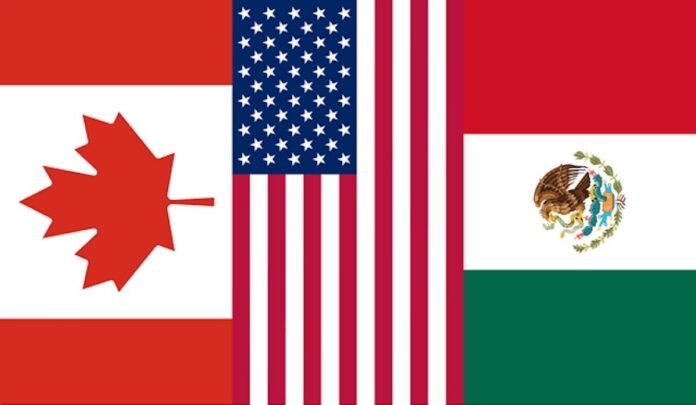
Ag mantra with China cutting US imports: Fix – don’t scrap – USMCA
President Donald Trump says the US doesn’t need anything Canada or Mexico produce and he isn’t looking to renew the free-trade deal with those countries. Photo: DTN files
Even if President Donald J. Trump was indulging in negotiating talk when he said he is “not looking to renew” the United States-Mexico-Canada Agreement, the remark gave US agriculture a case of nerves. And now he has officially decided against renewal, putting the free-trade agreement on a path to expire in 10 years.
The USMCA, which replaced the North American Free Trade Agreement in 2020 during Trump’s first term, will now be subject to annual reviews for those 10 years. Those reviews are opportunities for renegotiating the agreement and not renewing does give the US bargaining leverage. If a full renewal isn’t agreed during that time, the deal will expire.
So far, as DTN Ag Policy Editor Jake Zajkowski reported, administration negotiators are holding separate bilateral talks with Canada and Mexico over “irritants” rather than doing a full-on renegotiation of the tripartite deal.
Mexico and Canada are American agriculture’s biggest export markets, and not just because sales to China have shrunk. US ag exports to the two countries have risen 47% under USMCA. According to House Agriculture Committee Chair Glenn Thompson, ag and seafood exports to the two countries contribute $149 billion to the US economy and support half a million jobs.
No wonder many US commodity groups are among the 350 in the three countries pushing for a full 16-year renewal of USMCA. Jamie Beyer, a Minnesota soybean grower and member of ASA’s executive committee, told the House Agriculture Committee earlier this year, “Failure to renew USMCA would be catastrophic.”
Knowing what the trade deal means to ag exporters, the president can’t be serious about letting it lapse, can he? Actually, he can.
No doubt Trump is still eager to keep farmers and ranchers on his side but ,when he thinks about the deal, agriculture isn’t top of mind. Bringing manufacturing back to the US is a priority with him. That so many manufacturers serve the US from Canada and Mexico irks him. As someone put it at a conference recently, Trump sees USMCA as a “car deal.”
The US trade deficits with Canada and Mexico offend another of Trump’s sensibilities, his loathing of trade deficits. Many economists say trade deficits don’t matter. The president hates them. In 2025, the US ran trades deficit of $196.9 billion with Mexico and $46.4 billion with Canada.
Trump says the US doesn’t need anything Canada or Mexico produces. It’s easy to cite examples to the contrary. Many farmers rely on potash and, according to the Fertilizer Institute, 85% of US potash is imported from Canada. Consumers want berries and avocados year-round and without Mexico the supply would be greatly reduced.
Not everyone in US agriculture loves USMCA as it is. Mexico has much lower labor costs and specialty-crop production is labor intensive. Some crop producers in Florida and Georgia complain Mexico dumps products in the US when they’re harvesting, driving down prices.
US dairy farmers are also unhappy. Instead of scrapping its supply management system, they maintain, Canada created import quotas for US milk but gave them to Canadian competitors, who often let them lapse. They also charge Canada with evading USMCA-imposed caps on its exports of certain milk-solid products by gaming tariff categories.
In 2025, the US ran big trade deficits in agricultural products with both countries. Still, even the specialty-crop producers aren’t advocating terminating USMCA. Farm groups know that if USMCA goes away a wave of tit-for-tat tariffs will follow and US exports will suffer. The only major ag group that seems to support non-renewal is R-CALF.
For the rest of agriculture, the mantra is: Fix it, don’t scrap it. People in agriculture know that, for better or worse, Canada and Mexico are not only their biggest markets. They’re their most reliable trade partners.
China, by contrast, is actively striving to reduce its dependence on the US for agriculture and food products.
If President Trump seriously intends to abandon USMCA, farmers and ranchers will have to hope that some administration during the next 10 years decides to negotiate for renewal. If Trump is just indulging in negotiating talk – if what he really wants is changes in the agreement – well, many in agriculture want changes, too.
Members of rebel Catholic group in schism, excommunicated
The Vatican said on Thursday that priests and lay Catholics who are part of a breakaway right-wing Catholic group that ordained bishops without Pope Leo‘s approval were in schism with the wider Church and now excommunicated.
In a strong decree, the Dicastery for the Doctrine of the Faith, the top watchdog authority for the 1.4-billion-member Church, also warned Catholics globally that the Swiss-based Society of St. Pius X now celebrated the sacraments illicitly.
The ultra-traditionalist group, which denies key Church teachings, cannot officiate marriages or hear confessions validly, the decree said.
It is a strict teaching of the Church that only the pope can authorize the consecration of new bishops, in order to maintain the Church’s ties to Jesus’ 12 apostles, who are considered the first priests and bishops.
The Society was not available for immediate comment on the Vatican decree. It said on Wednesday it had to go forward with the ordinations without papal approval “owing to exceptional circumstances”.
VATICAN DECREE GOES FURTHER THAN EXPECTED
The Church considers unauthorized ordination of bishops as so serious that it causes those taking part in the ceremony to be automatically excommunicated, or “out of communion” with the wider Church, and unable to receive sacraments until they repent and ask for forgiveness.
Thursday’s decree said the two bishops leading the unauthorized ordination, held in Switzerland on Wednesday, had been excommunicated, along with the four priests who had become new bishops, which was widely expected.
However, the Vatican went further than expected and said that all priests of the Society of St. Pius X and all Catholics who “adhere formally” to the group were now in schism and excommunicated.
A schism is a term to indicate a severe, formal rupture inside the Catholic community.
POPE FIRMLY BACKS CHURCH REFORMS OF 1960s
The Society of St. Pius X denies the central teachings of the Second Vatican Council, a landmark Vatican gathering of bishops in the 1960s that pursued a range of reforms for the global Church and sought to repair its relations with Jews and other Christian denominations.
The Council also allowed for the Mass, until then said only in Latin, to be celebrated in local languages. The society rejected that change, citing a desire for the Latin rite’s sense of mystery and formality.
Massimo Faggioli, an expert on the papacy, told Reuters that Leo believed very firmly in the reforms of the Council, often referred to by Catholics as “Vatican II”.
“He has no regrets, no doubts about the fact that this is the Church of Vatican II,” said Faggioli, a professor at Villanova University, outside Philadelphia. “He has shown that he doesn’t want to compromise on that.”
Leo told journalists in June that the divisions with the Society of St. Pius X were “painful” but called the reforms of Vatican II “fundamental elements” of Church teaching. “We must move forward,” the pope said.
The Society, whose followers are sometimes known as Lefebvrists after their founder, Archbishop Marcel Lefebvre, says it counts 733 priests worldwide. Its leadership, which has long had tense relations with the Vatican, says it needed to ordain new bishops to have enough prelates to lead the group.
Lefebvre was excommunicated in 1988 after ordaining four bishops without permission from then-Pope John Paul II. Benedict XVI, John Paul’s successor, sought to renew dialogue with the society and lifted four remaining excommunications.