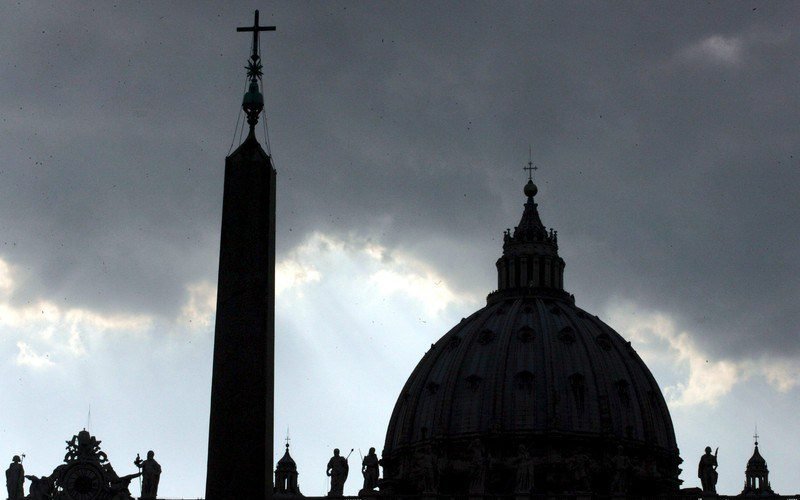
The Vatican said on Thursday that priests and lay Catholics who are part of a breakaway right-wing Catholic group that ordained bishops without Pope Leo‘s approval were in schism with the wider Church and now excommunicated.
In a strong decree, the Dicastery for the Doctrine of the Faith, the top watchdog authority for the 1.4-billion-member Church, also warned Catholics globally that the Swiss-based Society of St. Pius X now celebrated the sacraments illicitly.
The ultra-traditionalist group, which denies key Church teachings, cannot officiate marriages or hear confessions validly, the decree said.
It is a strict teaching of the Church that only the pope can authorize the consecration of new bishops, in order to maintain the Church’s ties to Jesus’ 12 apostles, who are considered the first priests and bishops.
The Society was not available for immediate comment on the Vatican decree. It said on Wednesday it had to go forward with the ordinations without papal approval “owing to exceptional circumstances”.
VATICAN DECREE GOES FURTHER THAN EXPECTED
The Church considers unauthorized ordination of bishops as so serious that it causes those taking part in the ceremony to be automatically excommunicated, or “out of communion” with the wider Church, and unable to receive sacraments until they repent and ask for forgiveness.
Thursday’s decree said the two bishops leading the unauthorized ordination, held in Switzerland on Wednesday, had been excommunicated, along with the four priests who had become new bishops, which was widely expected.
However, the Vatican went further than expected and said that all priests of the Society of St. Pius X and all Catholics who “adhere formally” to the group were now in schism and excommunicated.
A schism is a term to indicate a severe, formal rupture inside the Catholic community.
POPE FIRMLY BACKS CHURCH REFORMS OF 1960s
The Society of St. Pius X denies the central teachings of the Second Vatican Council, a landmark Vatican gathering of bishops in the 1960s that pursued a range of reforms for the global Church and sought to repair its relations with Jews and other Christian denominations.
The Council also allowed for the Mass, until then said only in Latin, to be celebrated in local languages. The society rejected that change, citing a desire for the Latin rite’s sense of mystery and formality.
Massimo Faggioli, an expert on the papacy, told Reuters that Leo believed very firmly in the reforms of the Council, often referred to by Catholics as “Vatican II”.
“He has no regrets, no doubts about the fact that this is the Church of Vatican II,” said Faggioli, a professor at Villanova University, outside Philadelphia. “He has shown that he doesn’t want to compromise on that.”
Leo told journalists in June that the divisions with the Society of St. Pius X were “painful” but called the reforms of Vatican II “fundamental elements” of Church teaching. “We must move forward,” the pope said.
The Society, whose followers are sometimes known as Lefebvrists after their founder, Archbishop Marcel Lefebvre, says it counts 733 priests worldwide. Its leadership, which has long had tense relations with the Vatican, says it needed to ordain new bishops to have enough prelates to lead the group.
Lefebvre was excommunicated in 1988 after ordaining four bishops without permission from then-Pope John Paul II. Benedict XVI, John Paul’s successor, sought to renew dialogue with the society and lifted four remaining excommunications.
Source: Reuters