Canadian Jews Weigh Leaving as Antisemitism Fuels Search for Safer Homes
Rising threats and hate incidents are driving some Jewish Canadians to explore relocation options in Panama, the US, and Israel
Jewish organizations in Canada say rising antisemitism is pushing some members of the community to consider leaving the country, with groups arranging exploratory trips to Panama and Tulsa, Oklahoma, for Jews who no longer feel safe at home.
The Toronto-based Tafsik Organization, a Jewish civil rights group, told The Media Line it is organizing a trip to Panama this month for people interested in relocation, after two earlier trips drew dozens of participants. The US-based organization Tulsa Tomorrow said more than 1,500 Canadians have expressed interest this year in its trips to Tulsa, where antisemitism is often cited as a reason for considering a move.
Tulsa Tomorrow said about 85 Canadians are expected to visit this year, with participation in its twice-yearly trips capped at 100 people. In previous years, the trips drew no more than 10 Canadians, and the organization said it has helped three Canadian families relocate since 2022.
Michael Sachs left Canada with his family last July after facing security threats while serving as the director of the Friends of Simon Wiesenthal Centre for Western Canada in Vancouver.
Sachs said the threats were serious enough that he received police security assistance, and that protesters once told his children their parents were killers. He said his wife, who normally tucked away her Star of David, made it visible when they first visited Tulsa with Tulsa Tomorrow.
As a Jew, I feel that Tulsa has been a relief of stress for us as a Jewish family
“As a Jew, I feel that Tulsa has been a relief of stress for us as a Jewish family,” he said.
Rivka Campbell, executive director of Beth Tikvah Synagogue in Toronto, said more community members have been considering immigration to Israel or moves to places they view as safer, including the US or Panama. She said some older Jews who spend winters in warmer parts of the US say they feel safer there.
We hear about how different it is. It’s almost like they can breathe when they leave Toronto.
“We hear about how different it is. It’s almost like they can breathe when they leave Toronto,” she told The Media Line.
The relocation discussions come as Canadian Jewish organizations report a sharp rise in antisemitic incidents since the October 7, 2023, Hamas-led attacks in Israel and the war in Gaza that followed.
B’nai Brith Canada said it documented 6,800 antisemitic incidents in 2025, the highest figure since it began issuing annual reports in 1982. Prime Minister Mark Carney said in a speech last month that more than two-thirds of religion-motivated hate crimes in Canada last year targeted Jewish Canadians, who make up about 1% of the population.
In May, three “visibly identifiable” members of the Jewish community standing outside a Toronto synagogue were shot at with an imitation firearm, according to police. After an arrest in the case, acting Deputy Chief Joe Matthews of the Toronto police said, “We recognize that Jewish residents have been living with a heightened sense of fear due to repeated incidents targeting their community, and this only adds to that, which is unacceptable.”
Campbell said the tone of antisemitism has become more “in your face,” while reporting of hate crimes has also increased. She said laws are already in place to deal with hate crimes but are not being enforced properly.
“I know there’s this feeling, ‘Well, if we arrest them, they’ll probably get off.’ So what? So what? Arrest them anyway,” she said. “Send a message that we don’t tolerate hate in any form.”
Conservative Deputy Leader Melissa Lantsman told The Media Line that elected leaders have failed to enforce existing laws, contributing to the rise in antisemitism.
Nobody should have to ask their government to enforce a law, because that’s the government’s job—but that’s where we’re at today
“Nobody should have to ask their government to enforce a law, because that’s the government’s job—but that’s where we’re at today. The fact that this is even controversial shows you just how much work we have to do to restore normalcy here in Canada,” said Lantsman, who is also a member of parliament.
A federal law taking effect in July will make it a criminal offense to intimidate or obstruct people seeking to access places of worship, schools, and community centers used by identifiable groups.
“These measures are intended to address gaps in law enforcement and send a clear and consistent signal that hate will not be tolerated,” Public Safety Canada wrote in an email to The Media Line.
Carney last month launched the Ministerial Advisory Council on Rights, Equality and Inclusion, saying it would assess antisemitism in Canada and help create a “whole-of-government approach” to addressing it.
Kim Werker, president of the Reform Jewish Community of Canada, told The Media Line that most of the antisemitic conversations she has seen have been online, but that she has become more conscious of possible backlash for being Jewish.
“There are times I have tucked my Star of David into my shirt,” she said.
Werker said both younger and older members of the Jewish community have reported seeing more antisemitism, with some teenagers hearing antisemitic language used more casually. She said Jewish students have felt physically unsafe on some university campuses in recent years, and that antisemitism has become more normalized.
“What I’m seeing more are comments that indicate that people in our Canadian society do not see Jews as worthy of the same kinds of compassion and support as anyone else in Canada,” she said.
Amir Epstein of the Tafsik Organization told The Media Line he knows dozens of people who have left Canada because of antisemitism in recent years, and many more who are preparing to do so.
“This is where we’ve come down to in our community, that people are really seriously looking to leave,” he stated.
Epstein said he has faced claims that he is part of the Mossad and has received constant death threats. He said inquiries from older community members about leaving Canada became frequent enough that Tafsik created Plan B, a Panama trip held in February and March for participants ranging in age from 40 to 70.
“We’re always getting emails from people saying, ‘Where do we go? What do we do?’ So, people are very seriously looking to leave,” he said.
Epstein said older members of the Jewish community have been more active in exploring relocation, while Jews under 40 appear less likely to consider leaving or to take part in protests. He said many people view Panama as a safe destination for Jewish families and see permanent residency there as relatively easy to obtain.
When he asks attendees at Tafsik events whether they are considering leaving Canada, Epstein said roughly two-thirds of the 700 to 1,500 people present typically raise their hands.
Epstein said Tulsa is not realistic for many families, partly because of the difficulty and cost of immigrating to the United States. He said Orthodox Jews may be more likely to consider Israel, while more secular Jews may be deterred by the cost of living there or by not speaking Hebrew.
Campbell said the sense of vulnerability has deepened because hate crimes are not being addressed forcefully enough. She said she has felt less safe over the past two years and is constantly worried about the risk of a lone attacker.
“Of course, we feel physically vulnerable, 100%. And some will say, yeah, today may be OK, but there’s this underlying feeling of it’s a matter of time,” she said.
FAA proposal: Supersonic airliners can fly over US cities if they’re quiet
A long-standing ban on commercial supersonic flights over the United States would be overturned in a new rule proposed by the US Federal Aviation Administration. That could pave the way for the possible return of commercial supersonic airliners—as long as such aircraft can reduce the ground-level impacts of their sonic booms.
The FAA originally banned overland supersonic flights by civil aircraft in 1973, following US military tests involving supersonic flights over US cities such as Oklahoma City, Chicago, and St. Louis in the 1960s. But the Trump administration has championed the repeal of the ban to pave the way for supersonic airliners that could operate without disruptive sonic booms. So the FAA’s new rulemaking action on June 30, 2026, follows the direction of an executive order issued by President Trump on June 6, 2025.
The newly proposed rule would replace the 53-year prohibition with an interim “noise-based” certification standard requiring any sonic boom overpressure at the surface to be kept below 0.11 pounds per square foot. That proposed standard is based on the Colorado-based startup Boom Supersonic having demonstrated quiet Mach cutoff flights with its XB-1 aircraft—harnessing specific atmospheric conditions while flying just beyond supersonic speeds at higher altitudes so that the aircraft’s shockwaves are refracted upward into the atmosphere rather than traveling to the ground.
For comparison, the Concorde supersonic airliner that flew commercial transatlantic flights between 1976 and 2003 created a sonic boom overpressure equivalent to 1.94 pounds per square foot when flying at a speed of Mach 2 at an altitude of 52,000 feet.
A NASA fact sheet suggests that “some public reaction could be expected between 1.5 and 2 pounds” but rules out damage to buildings and other structures at one pound of overpressure. It further explains that humans have experienced sonic boom overpressure between 20 and 144 pounds without injury when supersonic aircraft flew at altitudes below 100 feet.
However, not everyone is sold on this proposed standard for allowing overland supersonic flights. Dan Rutherford, senior director at the nonprofit International Council on Clean Transportation, told Aviation Week that the overpressure metric was previously discarded by United Nations experts in 2014 because “it doesn’t actually measure loudness or annoyance.”
“I’m honestly surprised that the FAA would propose a rule this weak,” Rutherford told the publication.
US lawmakers in Congress have also been pushing forward the Supersonic Aviation Modernization Act. That would require the FAA to allow for overland supersonic flights “so long as the aircraft is operated in such a manner that no sonic boom reaches the ground in the United States.” The bill passed the House on March 24, 2026, and is still awaiting a vote in the Senate.
Another way for quiet supersonic flight
Meanwhile, NASA has been testing a different approach to quieter supersonic flight with the Lockheed Martin X-59 Quesst—a needle-nosed experimental aircraft with an airframe designed to reduce the typical sonic boom to a sonic thump. NASA has relied on perceived levels of decibels (PldB) to evaluate sound levels, with the goal of consistently demonstrating sonic thumps around 75 PldB that would sound like a car door slamming about 20 feet away.
A NASA test pilot and mission integration manager previously told Ars that the X-59 aircraft’s future supersonic flight tests over US cities and towns nationwide would provide community feedback on perceived sound levels that could help inform regulations by civil aviation authorities.
The FAA still has time to further refine its proposed noise regulations for overland supersonic flights before attempting to finalize them by mid-2027. The agency also plans to propose another rule later this year that would set takeoff and landing noise standards for supersonic aircraft.
Legalization of quieter overland supersonic flights does not guarantee a successful comeback for commercial supersonic airliners. The Concorde supersonic airliner cut transatlantic flights between New York and London from seven hours to under three hours, but the aircraft’s massive fuel consumption made it difficult to sustain profitable operations—never mind recovering the more than $2.8 billion in development costs shared by the UK and French governments.
Boom Supersonic is developing a supersonic airliner called Overture with the goal of delivering the first aircraft to customers by 2029. The company has signed commercial agreements with American Airlines, Japan Airlines, and United Airlines that give the companies options to purchase the Overture aircraft.
But Boom has also pivoted away from its main goal in recent months to produce natural gas turbines to power AI data centers. Boom CEO Blake Scholl has suggested that revenue from this side venture would help pay for the development costs of the Overture supersonic airline. At the same time, United Airlines CEO Scott Kirby has said he gives Boom a “50/50” chance of getting its supersonic airliner flying.
Even as the White House has proved reckless and self-defeating in Iran, it has maintained a menacing, disciplined focus on Latin America. The siege of Cuba and informal annexation of Venezuela are the centerpieces of this program, but there’s not one country, except perhaps Uruguay, where Washington isn’t in deep. The State Department was even micromanaging the recent Colombian elections, with Secretary of State Marco Rubio personally approving the deportation of Beto Coral, a Colombian national who lives in Texas, because he has been critical of Trump’s preferred candidate.
A narrow, wealthy Latin American diaspora geographically concentrated in Miami has captured U.S. hemispheric policy.
The extent of this power projection is impressive, even if the power asymmetries make operations in Latin America easy compared to the Middle East. You can pressure Ecuador with a gang designation and $20 million in security aid and get results. You can’t do that with Iran.
But asymmetry alone doesn’t explain the Trump administration’s overwhelming focus on Latin America. Florida, to a large degree, does. A narrow, wealthy Latin American diaspora geographically concentrated in the greater Miami area has captured U.S. hemispheric policy — not through persuasion or broad public support, but through the state’s electoral math and alliance with the Republican Party. This informal lobby represents a Latin American propertied class who fancy themselves dispossessed, who imagine their interests threatened by the mildest of democratic reforms. The members of this class see Trump and Rubio as their personal repo men.
The Cause
Florida’s outsized role in U.S. politics begins with the backlash to Cuba’s 1959 revolution. Those who fled Fidel Castro’s socialist government in its early days overwhelmingly came from the middle and upper classes. They turned the peninsula into a sanctuary state. After the failure of the Bay of Pigs invasion — the CIA’s 1961 bid to use exiles as an expeditionary force to invade Cuba and dislodge Castro — the more ideological of these agency-trained exiles continued to populate the counterinsurgent gothic. These Cuban emigres allied with rogue elements in the CIA and FBI, Colombian drug traffickers, and mafiosi to advance “The Cause,” as the novelist James Ellroy calls efforts to liberate Cuba through the violent overthrow of Castro’s government.
Cuban exiles, drawn into covert operations and the ranks of the then-fringe U.S. New Right, would go on to participate in many of the storied black-bag operations that defined the middle to late Cold War: the conspiracies surrounding JFK’s assassination (as the House Select Committee on Assassinations put it in 1979: “anti-Castro Cuban groups, as groups, were not involved in the assassination, but the available evidence does not preclude the possibility that individual members may have been involved in the assassination) and the execution of revolutionary Che Guevara in Bolivia, led by Bay of Pigs veteran and CIA operative Félix Rodríguez, who then went to Vietnam to train the death squads of the Phoenix Program. Other Bay of Pigs alumni flew CIA combat missions over the Congo strafing Simba rebels and carried out the Nixon White House’s Watergate break-in and the Iran–Contra affair, in which Reagan administration officials secretly sold weapons to embargoed Iran and diverted the illegal profits to right-wing Contra rebels in Nicaragua, directly violating a congressional ban.
The Cold War ended but the Cause continued. In 2000, the notorious Republican operative Roger Stone recruited Cuban American protesters for the infamous Brooks Brothers riot — the mob action that shut down the Miami-Dade recount of presidential ballots and handed George W. Bush the White House — by instrumentalizing exile grievance through Cuban radio broadcasts. “The idea we were putting out there,” Stone later said, “was that this was a left-wing power grab by Gore, the same way Fidel Castro did it in Cuba.”
Drug profits financed many of these operations. “Every major area of operation in which the CIA has worked has left behind a major functioning drug cartel,” as CIA operative-turned-whistleblower John Stockwell put it. So too the Western Hemisphere with the Cubans. The beginning of the modern cocaine trade “had developed largely under the control of exile Cuban criminal organizations based in Miami,” Bruce Bagley, an expert on Latin American drug trafficking, observed in Foreign Affairs.
By the late 1970s, Miami prospered, even as the rest of the country was suffering from a prolonged economic downturn, high unemployment, and urban decay. Laundered cocaine money in effect provided Miami a covert Keynesian stimulus, a massive injection of cash into construction, retail, banking, and services at the exact moment the U.S. government was abandoning such policies as inflationary. While nearly every other Federal Reserve district was running a deficit, the vault of Miami’s Fed was stuffed with a $5 billion surplus made up of manicured bundles of $50 and $100 bills, evidence of large cash transactions conducted outside normal financial channels. Real estate boomed. Employment boomed. Car dealerships, paid in cash, boomed. Buildings went up, the city’s traditional pastel stucco and red tiles giving way to glass, glitz, and gleam.
Cuban Americans came to dominate Miami’s independent banking sector. Continental National Bank, the first Cuban American-owned bank in the United States, was founded in 1974 by exile Carlos Dascal in Miami’s Little Havana neighborhood. Typical of the small Latin American-owned banks that proliferated in this period, Continental went from $12 million in annual deposits in the mid-1970s to over $600 million by 1980 — a dramatic illustration of the narco-dollars flooding Miami’s banking system.
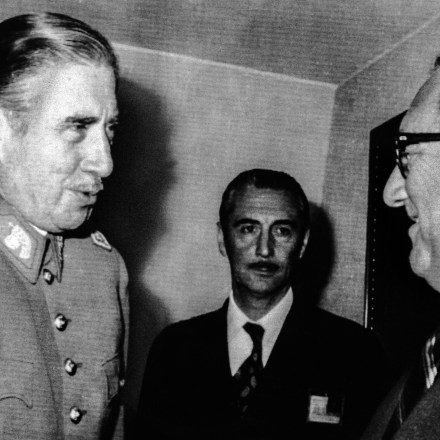
It was a wild time in Miami’s exile community. Cocaine and covert ops were a dangerous mix. No two figures better embodied the era than Luis Posada Carriles and Orlando Bosch — both CIA-trained Bay of Pigs veterans, both connected to the New Orleans mob and the drug trade. Together, they founded the Coordinación de Organizaciones Revolucionarias Unidas, or CORU, which the FBI described as “an anti-Castro terrorist umbrella organization” that served as a subcontractor for Operation Condor, Chilean military dictator Augusto Pinochet’s hemisphere-wide assassination program. In 1976, Cuban CORU operatives planted the car bomb that killed former Chilean ambassador Orlando Letelier and his U.S. colleague Ronni Moffitt in Sheridan Circle in Washington — the first case of state-sponsored international terrorism in the nation’s capital. Posada and Bosch also carried out the bombing of Cubana de Aviación Flight 455 off the coast of Barbados, killing all 73 people aboard, including the Cuban national fencing team, soon after.
Democracy Promotion in Hialeah
Ronald Reagan’s 1980 presidential election victory changed the calculus. His advisors were hard-line: the New Right had moved from the fringe to the halls of power. Cocaine continued to finance Miami, but the off-the-books exiles had become a liability. The historian Alan McPherson writes that by the mid-1970s, Cuban exile militants had carried out, in addition to the attacks described above, more than 100 bombings on U.S. soil and in 1974 accounted for 45 percent of all terrorist bombings in the world. The Reagan White House didn’t want to dim exile passion, but it also didn’t want planes being shot down over the Caribbean and bombs exploding in Sheridan Circle. And so mercenaries were out, and lobbyists were in.
Reagan’s national security adviser Richard Allen worked with Jorge Mas Canosa, who had left Cuba in 1960, to create the Cuban American National Foundation, or CANF. Allen explicitly modeled CANF on the American Israel Public Affairs Committee, better known as AIPAC — telling fellow Cubans to study the Israeli lobby and replicate its methods, as documented by political scientists Patrick Haney and Walt Vanderbush. The goal was not just to sideline terrorists like Posada and Bosch but to marginalize more moderate perspectives within the Cuban American community who wanted some accommodation with the Cuban government. Reagan needed a respectable political vehicle for hard-line Cuba policy that could operate in the open. That was CANF.
Mercenaries were out, and lobbyists were in.
Note the self-reinforcing loop: The Reagan White House organized the creation of a lobbying group to lobby itself for policies it already wanted to pursue, generating the appearance of popular democratic pressure for what was in fact long-standing government hostility toward the Cuban Revolution.
Mas Canosa put his own personalistic imprint on the AIPAC model. He combined, as Saul Landau put it, the style of an “old-style political ward boss” — getting himself and his allies appointed to local utility, road, and electoral commissions; awarding contracts; doing incoming immigrants favors; finding them jobs and housing — “with the pragmatic lobbying techniques” of AIPAC, cultivating congressional allies to enforce and strengthen the Cuba sanctions. His anti-Castro ideology was both genuine and lucrative: a Cuba opened to U.S. capital would be an enormous prize, and he and his inner circle would be best positioned to seize it.
In 1989, CANF won its first congressional seat, when Cuban-born Ileana Ros-Lehtinen defeated her Democratic opponent to succeed Claude Pepper, the New Deal lion who had championed labor, Medicare, and Social Security from the same Miami district for more than two decades. The symbolism was stark: “Red” Pepper’s left-liberal tradition eclipsed by Cuban exile politics.
Allen explicitly modeled the Cuban American National Foundation on AIPAC, telling fellow Cubans to study the Israeli lobby and replicate its methods.
Ros-Lehtinen would serve for 30 years, becoming the powerful chair of the House Foreign Affairs Committee and what the South Florida journalist Juan David Rojas called a founding figure of the “Miami neocons.” She was simultaneously the exile community’s most aggressive Cuba hard-liner, a champion of Israel in its Lebanon and Gaza wars, the author of Iran sanctions legislation, and a vocal defender of the accused Flight 455 bomber Orlando Bosch. Her former intern was Marco Rubio, now Trump’s national security adviser and secretary of state.
Over in Broward County, Florida’s 25th Congressional District, with its large Jewish, Colombian, and Venezuelan population, Debbie Wasserman Schultz is another Miami neocon, a Democratic one, advocating for hard-line policies in both Israel and Latin America. An AIPAC favorite, Wasserman Schultz shortly after first being elected in 2004 worked closely with Trump’s current Venezuela viceroy, Mauricio Claver-Carone, to squash five initiatives that would have diluted Cuba sanctions.
At the time, Claver-Carone, born in Miami, was running both the U.S.–Cuba Democracy PAC and the Cuba Democracy Advocates. Since 1996, the National Endowment for Democracy, a nongovernmental organization, and the U.S government have channeled more than $100 million into similar “democracy” programs, many of them headquartered in Hialeah and Coral Gables. Democratization in Cuba was the stated objective, but the work of the NGOs and their subcontractors are often protected from disclosure as “trade secrets” under FOIA exemptions.
Mas Canosa died in 1997, and the conventional wisdom at the time was that the Cuban American lobby had peaked. The old guard was dying off, and poll after poll showed that younger Cuban Americans — U.S.-born, English-dominant, less connected to the island — were open to normalization and an end to the embargo. President Barack Obama’s surprise announcement in December 2014 that the United States and Cuba would restore diplomatic relations — the most significant shift in Cuba policy in more than half a century, negotiated secretly with the help of Pope Francis — seemed to confirm the lobby’s decline.
And yet the U.S. government, in the last two years of Obama’s presidency, continued to flood Miami with “democracy promotion” grants, a direct federal stimulus to activists who would become some of Donald Trump’s staunchest supporters. With Trump’s election, what looked like the lobby’s last gasp turned out to be its renaissance.
Trump ended the normalization of relations with Havana and, listening to Florida’s then-Sen. Marco Rubio, imposed harsh sanctions on the island. After Ron DeSantis’s 2018 gubernatorial victory turned the state hard right, Florida (home to a good number of the nation’s billionaires, including Jeff Bezos and Google co-founder Larry Page) became the command center of MAGA power.
A Febrile Complex
Beyond Trump, something was transforming Miami that would change the lobby’s nature entirely. Through the 2000s and into the 2020s, the city was absorbing a new wave of Latin American capital flight on a scale that dwarfed anything produced by the original Cuban exodus.
Across Latin America, economic liberalization, a policy pushed by Washington since the 1980s, failed to generate prosperity and stability, leading many nations to elect left-leaning governments. Venezuelans had been arriving in Florida since Hugo Chávez’s first election in 1998. Now they were joined by wealthy Brazilians, Bolivians, Argentines, Nicaraguans, and Mexicans. Colombians had been coming for decades, fleeing the violence of their country’s civil war.
“When governments in Latin America go left, buyers go north.”
Even the mildest of leftists could spark a flight of capital northward. When it looked like Gabriel Boric would win Chile’s 2021 presidential election, two Chilean law firms opened offices in Miami to help wealthy Chileans move their assets to South Florida. Boric did win, and investors pulled money out of Chile at a record pace, leaving behind what Bloomberg estimated as a $50 billion hole. Chileans ranked eighth among foreign buyers of real estate in South Florida in 2021.
“When governments in Latin America go left,” as one prominent Miami realtor put it, “buyers go north.” Latin Americans bought nearly half of all new luxury units in South Florida through mid-2025, most of them in cash.
The city of Doral, just west of Miami, became so heavily Venezuelan it is informally known as Doralzuela. Miami’s Brickell neighborhood is filled with Colombian and Brazilian private banking offices. The Biscayne corridor attracted Mexican, Argentine, and Peruvian capital. These were not the huddled poor who arrived in the 1980 Mariel boatlift, an exodus of Cubans, or the desperate Haitians who came after the 1991 coup. These were the propertied business classes — and they were looking for ideological allies in Washington to beat back the social democrats at home.
The Cuban exile network absorbed and nurtured the grievances of these new arrivals. Following the 2009 military coup in Honduras — which ousted the elected center-left president Manuel Zelaya and replaced him with a right-wing government — a delegation of Miami Cubans, working with Sen. John McCain, the Republican Party’s most prominent neoconservative, served as a bridge between AIPAC and the greater Latin American lobby and hosted Honduras’s coup leaders in Washington to validate their takeover. For a brief moment, President Obama opposed the coup government, but when Cuban Americans and other conservatives began associating him with Castro and Chávez, he backed down and recognized the regime as legitimate.
The new Latin American arrivals found a common language in a single word: “castro-chavismo.” The term had been popularized in Álvaro Uribe, Colombia’s former president and leader of its far right. Uribe himself imported the term into the U.S. as part of a campaign to derail the Colombian government’s Cuban-brokered peace agreement with the FARC guerrillas. Flanked by then-Sen. Marco Rubio and Rep. Mario Díaz-Balart, Uribe gave a rallying speech at a Doral restaurant, Mondongo’s, in October 2016. He warned the crowd of Colombian and Venezuelan expats that castrochavismo would come to Colombia if the peace deal were ratified. Uribe used this trip to deepen his ties with Trump’s people: Policy analyst Adam Isacson and historian Christy Thornton, separately, note Uribe’s influence on Trump’s first reelection campaign, when he ran ads in Florida linking President Joe Biden to the Latin American left. “Joe Biden is a PUPPET of CASTRO-CHAVISTAS,” he tweeted in 2020.
The Cuban lobby had long been motivated by the specific wounds of the Castro revolution: the confiscations, the executions, the broken families, what Joan Didion called in her 1987 book “Miami” the “febrile complex of resentments and revenges and idealizations and taboos” that united the exiles. The newcomers from across Latin America were equally febrile, but their cause was not just a free Cuba — it was a continent liberated from the likes of left-leaning presidents like Mexico’s Claudia Sheinbaum, Brazil’s Luiz Inácio Lula da Silva, and Colombia’s Gustavo Petro.
Unlike the Cuban lobby, which had operated under the tight discipline of Mas Canosa and CANF, the newer Latin American exile community had no single institutional home. The Trump transition team after the 2024 election moved quickly to capture these new constituencies, reaching out to figures like Félix Maradiaga, a Miami-based Nicaraguan opposition leader whom former guerrilla fighter and strongman president Daniel Ortega had stripped of his citizenship. Maradiaga says that Trump’s envoys were urging the opponents of Nicaragua, Cuba, and Venezuela to “unite our points of view so that the actions that come from the United States have a joint impact in the quest for democracy.”
Mar-a-Lago became the diaspora’s clubhouse, a palace-in-exile for Latin America’s displaced elites — where Brazil’s Bolsonaro family bends Trump’s ear, Venezuelan opposition figures convene with White House officials, and Colombian magnates attend fundraisers alongside Cuban American politicians and businessmen to discuss business opportunities and coordinate the hemisphere’s restoration.
The scale of what was being plotted there has been partially revealed: a cache of forensically authenticated voice notes leaked from former Honduran President Juan Orlando Hernández. Convicted of drug trafficking, Hernández had been serving a 45-year sentence in a West Virginia federal penitentiary until Trump pardoned him in December 2025. The leaked memos reveal that Hernández was being financed by both Israel and Argentina (he spent his first night of freedom in the five-star Waldorf Astoria hotel) and that his political proxy, current Honduran President Nasry Asfura, was meeting with investors at Mar-a-Lago to discuss sketchy deals with U.S. officials and to plan a broader destabilization program targeting Mexico, Colombia, and Brazil.
Miami Rules
The new, greater Latin American lobby operates differently from the old CANF model, trading a single-issue ethnic lobby focused on one country for a class-based hemispheric operation united by a common enemy: reformism of even the blandest sort. CANF itself continues to exist but has fallen into irrelevance. Its PAC went dormant and its lobbying function was absorbed into a broader, more decentralized Latin America lobby. Florida’s Republican Party has largely absorbed CANF’s electoral machinery.
Class divisions had long existed in the Cuban diaspora, especially after the Mariel boatlift. But a singular focus on liberating Cuba had muted the cleavages. Now, though, as the diaspora became hemispheric in scope, the gap between the haves and have-nots has become more visible. Doral’s gated communities sport lovely names — Doral Isles Riviera, Doral Isles Venetia — and wealthy Venezuelans play golf at Trump National. Tens of thousands of poorer Venezuelans — many of whom risked their lives trekking the Darién Gap to get to the U.S., many of whom work at that same golf resort — live in constant fear: Trump has revoked their Temporary Protected Status, leading to more than 15,000 deportations. Some have been sent back to Venezuela, others to El Salvador’s infamous maximum-security CECOT prison.
The cruelty is not limited to Venezuelans. The Trump administration has targeted other poor immigrants, including Hondurans, Nicaraguans, and Haitians. Even poor Cubans — who in the past could expect automatic residency — are now being shipped to Mexico, where many, elderly and sick, find themselves sleeping on the streets of random cities, such as Villahermosa, the humid capital of Mexico’s southern state of Tabasco. “They’re casting us aside to die,” said Harold A, a 58-year-old Cuban national who was deported to Mexico earlier this year. “They don’t give us anything, nothing. … How are we supposed to eat?”
The wealthy members of the diaspora tend to see these deportations as harsh but necessary to protect their reputation as “exceptional migrants.” Poor Venezuelans are referred to by some of their better-off compatriots as orcos — orcs, subhumans — a class contempt that Oxford scholar Erick Moreno Superlano has documented in detail. The lobby that presents itself as the agent of Latin American freedom is, in fact, a staunch defender of the hemisphere’s status and class hierarchy.
These new well-to-do exile groups vote in their national elections as a bloc, and often decisively so for their country’s most Trump-like candidate. Last month in Peru, the daughter of former President Alberto Fujimori — who spent 16 years in prison for human rights violations committed during his presidency, including death squad killings — would have lost the presidential election if only votes cast in Peru were counted, but ultimately beat her center-left opponent thanks to the votes of the Peruvian diaspora. The roughly 9,000 Miami-Dade votes helped her win by less than 1 percent.
More recently, Colombians living in Miami turned out in unprecedented numbers to vote for the hard-right Trump mimic Abelardo De la Espriella, helping him win a presidential election that was as close as Peru’s. De la Espriella is a U.S. citizen and was a long-time resident of a multimillion-dollar mansion in Miami, where he worked as a defense lawyer for Colombian clients, among them paramilitaries, right-wing politicians, and money launderers.
Be it by the bullet or the ballot, Miami rules.
The Dogs That Caught the Car
Both AIPAC and the greater Latin American lobby had, in the second Trump term, achieved close to their maximal ambitions simultaneously: a war on Iran and a full-court press on Latin American leftists of all stripes, with the deployment of U.S. Special Operations forces, CIA assassination teams, naval blockades, and sanctions. War powers resolutions to stop Trump’s actions — in Iran, Cuba, and Venezuela — are routinely blocked by a Republican caucus dependent on AIPAC money and Florida’s electoral votes, often with an assist from a handful of AIPAC Democrats.
Yet both lobbies now find themselves something like the dog that caught the car, and then was run over.
Trump’s war in Iran was a tactical and strategic disaster, leading the White House to lash out at Israel in ways that, just a month ago, would have been unimaginable. Vice President JD Vance just lectured Israel that it “can’t just kill your way out of solving every single national security problem.” And Trump warned Benjamin Netanyahu “you will be on your own very soon.” AIPAC’s maximalist project — permanent war, permanent leverage, permanent intertwining with U.S. power — is in tatters.
Whether the same reversal comes for the Latin American lobby remains to be seen. Trump is still pressing Cuba hard, demanding a “deal.” But the deal Trump is pushing looks less like regime change than an investment prospectus. It’s less the Monroe than the Capone Doctrine: Sanctions destroy foreign competitors, Helms–Burton lawsuits punish anyone who stays, and Trump-connected U.S. investors move in to pick up assets at distressed prices. Recently, a business connected to a former Trump official Ray Washburne muscled out a Canadian mining and cobalt corporation.
Trump’s sanctions worked too well. They broke Cuba’s economy so completely that Havana was forced, recently, to enact sweeping economic liberalization — reforms that serve investors, not exiles.
In Florida, Cuban Americans who have never set foot in Cuba, like Nicolás J. Gutiérrez — a Miami-born lawyer whose “young millionaire” father lost his sugar fields to Castro — founded organizations such as the “National Sugar Mill Owners of Cuba,” hoping that Trump would make a country they have never seen theirs again.
For many, that hope is dissipating quickly as they face their nightmare scenario: a repeat of what happened recently in Venezuela, where Trump entered into a partnership with the existing government, letting demands for root-and-branch regime change take a back seat to oil industry dealmaking. ExxonMobil, which has a large role in setting Trump’s Venezuela policy, just won a Supreme Court Case that allows it to sue Cuban state-owned companies in U.S. federal courts to win compensation for property confiscated more than 65 years ago. This ruling will give the company enormous leverage in what comes next for Cuba. At the same time, Trump, in his second term, has deported nearly 8,000 Cuban nationals, many of the low-income asylum-seekers but also a considerable number of middle-class business and property owners.
The sugar fields, it seems, will not be returned to the children of their former owners any time soon, though they might be put out to bid. But those hoping for restoration will always have Mar-a-Lago.
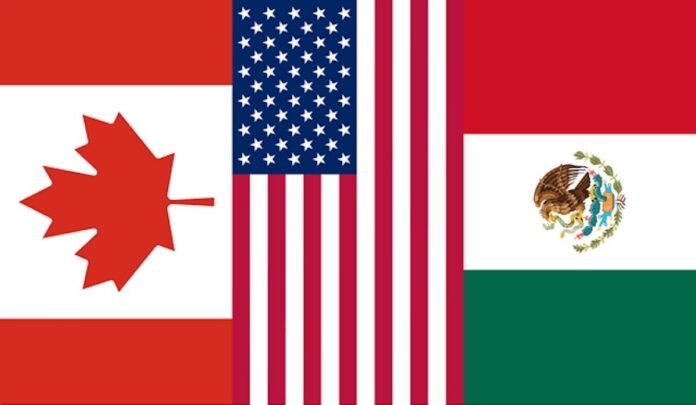
Ag mantra with China cutting US imports: Fix – don’t scrap – USMCA
President Donald Trump says the US doesn’t need anything Canada or Mexico produce and he isn’t looking to renew the free-trade deal with those countries. Photo: DTN files
Even if President Donald J. Trump was indulging in negotiating talk when he said he is “not looking to renew” the United States-Mexico-Canada Agreement, the remark gave US agriculture a case of nerves. And now he has officially decided against renewal, putting the free-trade agreement on a path to expire in 10 years.
The USMCA, which replaced the North American Free Trade Agreement in 2020 during Trump’s first term, will now be subject to annual reviews for those 10 years. Those reviews are opportunities for renegotiating the agreement and not renewing does give the US bargaining leverage. If a full renewal isn’t agreed during that time, the deal will expire.
So far, as DTN Ag Policy Editor Jake Zajkowski reported, administration negotiators are holding separate bilateral talks with Canada and Mexico over “irritants” rather than doing a full-on renegotiation of the tripartite deal.
Mexico and Canada are American agriculture’s biggest export markets, and not just because sales to China have shrunk. US ag exports to the two countries have risen 47% under USMCA. According to House Agriculture Committee Chair Glenn Thompson, ag and seafood exports to the two countries contribute $149 billion to the US economy and support half a million jobs.
No wonder many US commodity groups are among the 350 in the three countries pushing for a full 16-year renewal of USMCA. Jamie Beyer, a Minnesota soybean grower and member of ASA’s executive committee, told the House Agriculture Committee earlier this year, “Failure to renew USMCA would be catastrophic.”
Knowing what the trade deal means to ag exporters, the president can’t be serious about letting it lapse, can he? Actually, he can.
No doubt Trump is still eager to keep farmers and ranchers on his side but ,when he thinks about the deal, agriculture isn’t top of mind. Bringing manufacturing back to the US is a priority with him. That so many manufacturers serve the US from Canada and Mexico irks him. As someone put it at a conference recently, Trump sees USMCA as a “car deal.”
The US trade deficits with Canada and Mexico offend another of Trump’s sensibilities, his loathing of trade deficits. Many economists say trade deficits don’t matter. The president hates them. In 2025, the US ran trades deficit of $196.9 billion with Mexico and $46.4 billion with Canada.
Trump says the US doesn’t need anything Canada or Mexico produces. It’s easy to cite examples to the contrary. Many farmers rely on potash and, according to the Fertilizer Institute, 85% of US potash is imported from Canada. Consumers want berries and avocados year-round and without Mexico the supply would be greatly reduced.
Not everyone in US agriculture loves USMCA as it is. Mexico has much lower labor costs and specialty-crop production is labor intensive. Some crop producers in Florida and Georgia complain Mexico dumps products in the US when they’re harvesting, driving down prices.
US dairy farmers are also unhappy. Instead of scrapping its supply management system, they maintain, Canada created import quotas for US milk but gave them to Canadian competitors, who often let them lapse. They also charge Canada with evading USMCA-imposed caps on its exports of certain milk-solid products by gaming tariff categories.
In 2025, the US ran big trade deficits in agricultural products with both countries. Still, even the specialty-crop producers aren’t advocating terminating USMCA. Farm groups know that if USMCA goes away a wave of tit-for-tat tariffs will follow and US exports will suffer. The only major ag group that seems to support non-renewal is R-CALF.
For the rest of agriculture, the mantra is: Fix it, don’t scrap it. People in agriculture know that, for better or worse, Canada and Mexico are not only their biggest markets. They’re their most reliable trade partners.
China, by contrast, is actively striving to reduce its dependence on the US for agriculture and food products.
If President Trump seriously intends to abandon USMCA, farmers and ranchers will have to hope that some administration during the next 10 years decides to negotiate for renewal. If Trump is just indulging in negotiating talk – if what he really wants is changes in the agreement – well, many in agriculture want changes, too.
Members of rebel Catholic group in schism, excommunicated
The Vatican said on Thursday that priests and lay Catholics who are part of a breakaway right-wing Catholic group that ordained bishops without Pope Leo‘s approval were in schism with the wider Church and now excommunicated.
In a strong decree, the Dicastery for the Doctrine of the Faith, the top watchdog authority for the 1.4-billion-member Church, also warned Catholics globally that the Swiss-based Society of St. Pius X now celebrated the sacraments illicitly.
The ultra-traditionalist group, which denies key Church teachings, cannot officiate marriages or hear confessions validly, the decree said.
It is a strict teaching of the Church that only the pope can authorize the consecration of new bishops, in order to maintain the Church’s ties to Jesus’ 12 apostles, who are considered the first priests and bishops.
The Society was not available for immediate comment on the Vatican decree. It said on Wednesday it had to go forward with the ordinations without papal approval “owing to exceptional circumstances”.
VATICAN DECREE GOES FURTHER THAN EXPECTED
The Church considers unauthorized ordination of bishops as so serious that it causes those taking part in the ceremony to be automatically excommunicated, or “out of communion” with the wider Church, and unable to receive sacraments until they repent and ask for forgiveness.
Thursday’s decree said the two bishops leading the unauthorized ordination, held in Switzerland on Wednesday, had been excommunicated, along with the four priests who had become new bishops, which was widely expected.
However, the Vatican went further than expected and said that all priests of the Society of St. Pius X and all Catholics who “adhere formally” to the group were now in schism and excommunicated.
A schism is a term to indicate a severe, formal rupture inside the Catholic community.
POPE FIRMLY BACKS CHURCH REFORMS OF 1960s
The Society of St. Pius X denies the central teachings of the Second Vatican Council, a landmark Vatican gathering of bishops in the 1960s that pursued a range of reforms for the global Church and sought to repair its relations with Jews and other Christian denominations.
The Council also allowed for the Mass, until then said only in Latin, to be celebrated in local languages. The society rejected that change, citing a desire for the Latin rite’s sense of mystery and formality.
Massimo Faggioli, an expert on the papacy, told Reuters that Leo believed very firmly in the reforms of the Council, often referred to by Catholics as “Vatican II”.
“He has no regrets, no doubts about the fact that this is the Church of Vatican II,” said Faggioli, a professor at Villanova University, outside Philadelphia. “He has shown that he doesn’t want to compromise on that.”
Leo told journalists in June that the divisions with the Society of St. Pius X were “painful” but called the reforms of Vatican II “fundamental elements” of Church teaching. “We must move forward,” the pope said.
The Society, whose followers are sometimes known as Lefebvrists after their founder, Archbishop Marcel Lefebvre, says it counts 733 priests worldwide. Its leadership, which has long had tense relations with the Vatican, says it needed to ordain new bishops to have enough prelates to lead the group.
Lefebvre was excommunicated in 1988 after ordaining four bishops without permission from then-Pope John Paul II. Benedict XVI, John Paul’s successor, sought to renew dialogue with the society and lifted four remaining excommunications.
USA at 250: the Black American struggle for life, liberty and the pursuit of happiness
As the United States celebrates its 250th anniversary, there is a tension between those who want to remember an uncomplicated past and those who would remember that freedom is a constant struggle. It’s a right that must be fought for and defended.
And amid all the hoop-la over the celebrations, the nation risks forgetting that since the War of Independence, African Americans have played a crucial role defining and expanding American liberty.
The Declaration of Independence promised “all men are created equal”. And yet when Thomas Jefferson – himself an enslaver – penned those words, there were around half a million enslaved people living in the 13 colonies.
Black Americans saw the contradictions at the heart of the Revolutionary era, and they sought to redefine liberty. During the Revolutionary War, thousands of enslaved Americans sought freedom – sometimes by joining the British, and sometimes by serving the Patriot cause.
They often used the pen, as well as the sword, to link the nation’s fight for freedom to their own. The poet Phillis Wheatley, born in west Africa and enslaved in Boston, published a poem in 1772 comparing her enslavement to tyrannical British rule. A group of Black Bostonians presented petitions to the Massachusetts legislature calling for the abolition of slavery, using the language of natural rights and words and phrases from the Declaration of Independence.
Ultimately, Black patriots were betrayed by a new nation that was founded on competing visions of freedom. For Black Americans, liberty did not just mean self-government and freedom from British rule. It also required emancipation, citizenship, and equal rights. While there was gradual abolition in northern states, in the south slavery expanded and the institution was seemingly protected by the federal constitution.
But African Americans refused to accept an interpretation of freedom which excluded them. At Colored Conventions across the country, activists asserted they were true defenders of the Revolution’s principles and, as such, their treatment was a betrayal of those ideals. “The Constitution is Anti-Slavery”, one such convention concluded.
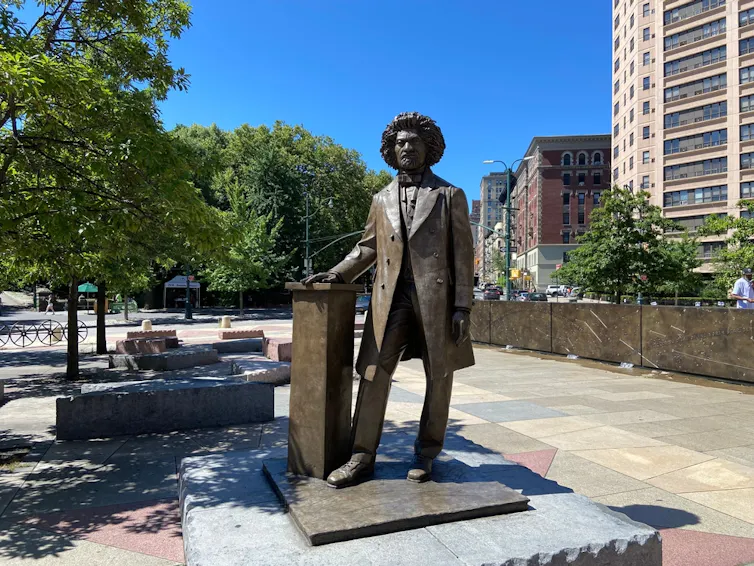
The great orator and formerly enslaved abolitionist, Frederick Douglass, on the anniversary of Independence in 1852, asked: “What, to the American slave, is your 4th of July?” Speaking to his white audience, he explained: “This Fourth July is yours, not mine. You may rejoice, I must mourn.”
To the slave, commemorating independence revealed the limits of America’s vaunted liberty and equality.
Frederick Douglass escaped slavery to become of the most important figures in America’s early civil rights movement.Here Now/Shutterstock
After emancipation, African Americans used revolutionary principles to demand full citizenship rights. In 1870, Black men were given the vote by the 15th Amendment, and African Americans were afforded the protections and privileges of citizenship. But again they were betrayed, and these rights were dismantled through violence and the erosion of those constitutional protections.
As the strictures of segregation tightened around them, African Americans continued to use memories of American liberty. Black people had always defended American democracy, explained civil rights leader Mary McLeod Bethune in a 1939 speech. “We have given our blood in its defense – from Crispus Attucks on Boston Commons to the battlefields of France,” she said, invoking the spectre of the Black hero of the War of Independence. And yet, for Bethune, Black people fought not for what America was “but for what we know she can be”.
Martin Luther King: cashing the check of justice
It was this belief in a better America that drove many in the Black freedom movement. Standing on the steps of the Lincoln Memorial, 100 years after Emancipation, Martin Luther King Jr not only remembered the slain president’s proclamation, but also the founders who preceded him.
The Constitution and the Declaration of Independence were a “promissory note” that guaranteed all people their inalienable rights, he said. And while the country had defaulted on its promise, King refused to believe “that the bank of justice is bankrupt,” and so he and thousands of others had “come to cash this check”.
The cheque was cashed, for at least some of the balance, with the passage of the Civil Rights Act in 1964 and the Voting Rights Act a year later.
Martin Luther King: US constitution was a ‘promissory note to which every American was to fall heir’.
But as America marks its 250th anniversary, the “bank of justice” is looking increasingly short of funds. There is a concerted effort to forget the contradictions of American liberty. The Trump administration is curating a commemoration that emphasises unity and patriotism, with an uncomplicated retelling of the nation’s history, that downplays slavery and racial division.
The founding fathers are unreservedly celebrated, with no acknowledgement that some were slave owners. While an exhibit highlights Douglass’s Fourth of July speech, it doesn’t discuss his condemnation of the hypocrisy of celebrating freedom while millions were enslaved.
Black rights under threat
Now the US is poised for another celebration of American exceptionalism. But it’s one that ignores the complexities and contradictions of the nation’s founding. And it’s taking place as the hard-won achievements of the Black freedom struggle are being rolled back, as the Voting Rights Act is gutted, and Black political representation in the south comes under attack.
Just as in the antebellum era of the 1800s, at the height of Reconstruction in the late 19th century, and during the nadir of Jim Crow in the 20th, it is essential that America’s founding is remembered as the beginning of an unfinished struggle for liberty.
And it is important to remember that when they fought in the Revolutionary War (and all the wars that followed), wrote petitions, made proclamations and organised protests, African Americans gave meaning to the nation’s founding principles and documents.
As historian, Annette Gordon-Reed argues, what matters is not Jefferson’s intentions when writing the Declaration, but what others have done to give those words purpose and life.
If the founders did not mean to include them in the Constitution’s preamble, then through their tireless labour, activism, and remembering, African Americans have fought to make sure they too are contained in “We the people”.
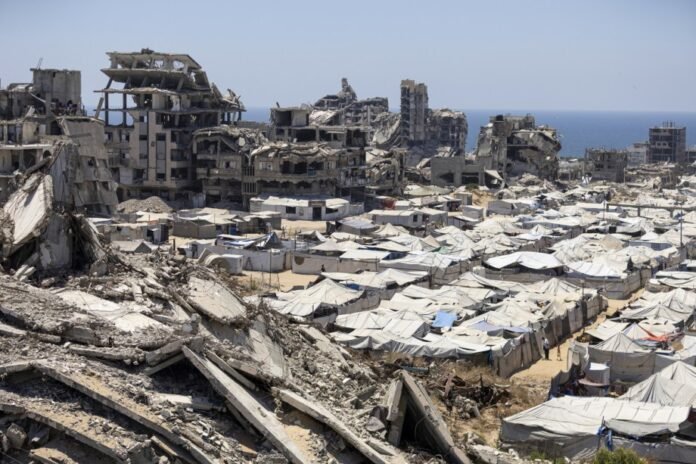
1,000 days of Israel’s genocide: Gaza children get killed, orphaned and starved
As the Gaza Strip marks 1,000 days since Israel began its genocidal war on the enclave, Palestinian children continue to face a reality shaped by killing, hunger, orphanhood, and displacement, amid the collapse of protection and care systems, Anadolu reports.
According to official figures, the Israeli army killed more than 21,000 children and injured about 44,500 others in Gaza from Oct. 8, 2023, to early April 2026, making children among the groups most affected by Israel’s ongoing war.
The casualties did not stop even after a ceasefire entered into force on Oct. 10, 2025. The UN Children’s Fund (UNICEF) said 265 children were killed and more than 400 others injured since the ceasefire, an average of nearly one child killed every day.
In addition to those killed and wounded, more than 58,000 children have lost one or both parents since the start of the war, while thousands have been admitted to treatment programs for acute malnutrition.
The Israeli war has left deep physical and psychological scars on an entire generation, many of whom have known only bombing, displacement and fear, while also facing hunger and orphanhood.
Lost generation
A report issued by the Palestinian Central Bureau of Statistics (PCBS) on April 5, 2026, covering the period from Oct. 8, 2023, to April 1, 2026, showed that children were among the groups most affected by Israel’s genocide in Gaza.
According to the report, the Israeli army killed 21,283 children and injured 44,486 others, representing 26% of all casualties.
Among the dead children were 450 babies born during the war, 1,029 children who did not reach their first birthday, and 5,031 children under the age of 5, figures the PCBS said reflect “a true extermination of a generation that had not yet begun life.”
The report said 10,500 children suffered life-changing injuries, while more than 1,000 children underwent amputations.
READ: ‘Peace Council’ says UNRWA has no role in ‘new Gaza’
About 4,000 children also face the risk of death unless urgent medical evacuation is provided for treatment outside Gaza, amid the collapse of the health system and shortages of medicines and medical supplies, according to the report.
Anadolu Agency documented several stories of children that became seared into public memory during the genocide.
*Premature babies killed: On Nov. 10, 2023, the Israeli army stormed Al-Nasr Children’s Hospital in western Gaza City and forced medical teams to leave under fire, while refusing to evacuate premature babies, leading to the deaths of five of them, according to Gaza’s Health Ministry.
After Israel’s withdrawal from Gaza’s Al-Nasr neighborhood, the bodies of the five premature babies were found decomposed inside incubators and on hospital beds after the army cut them off from the treatment needed to keep them alive.
Yousef, The “curly hair” boy: On Oct. 21, 2023, a devastated Palestinian mother was seen wandering the halls of a hospital in Gaza, searching for her 7-year-old son, Yousef, among the injured or deceased. His mother, in shock and fear, asked the doctors if her child had passed through their care, saying: “Yousef, 7 years old, with curly hair. He is white, and sweet.”
*Reem, “the soul of my soul”: In November 2023, an Israeli airstrike killed 3-year-old Reem and her brother Tareq. Her grandfather, Khaled Nabhaneh, became widely known after appearing in a video bidding farewell to her body, saying: “She is the soul of the soul… the soul of the soul.”
“Is this a dream or real?” In December 2023, a young girl pulled from under the rubble was seen crying and asking her doctor: “Uncle, let me ask you: Is this a dream or is it real?” The scene reflected the depth of trauma experienced by Gaza’s children.
Hind Rajab, “Please come, get me”: In January 2024, 6-year-old Hind Rajab appealed to the Palestine Red Crescent Society to rescue her from a car surrounded by Israeli tanks after her relatives were killed. Twelve days later, her body was found along with the bodies of two paramedics who had set out to save her.
Sidra, a body torn and stuck to the wall: In February 2024, 7-year-old Sidra Hassouna was killed along with her twin, her parents and several relatives in an Israeli strike in Rafah. Her torn body was seen hanging from the wall of the targeted home.
Child killings
Despite the ceasefire agreement, Israel continued to kill Palestinian children in the devastated enclave.
According to UNICEF, at least 265 children have been killed since Oct. 10, 2025, an average of nearly one child every day.
More than 400 children have also been injured during the same period, including some with serious, life-changing wounds, the UN agency said.
“These children were not killed in a warzone. They were killed in their homes. In their schools. Playing football. Fishing. They were shot, bombed, and struck by quadcopters,” it said.
UNICEF warned that accepting these levels of child killings and injuries risks normalizing a reality that would have triggered broad international outrage had it happened elsewhere.
READ: UNICEF calls Gaza ceasefire ‘deadly illusion’ as 265 Palestinian children killed since October
Starving children
During the same period, 157 children died from hunger and malnutrition, while 25 others died from cold and freezing conditions inside displacement tents.
Despite the ceasefire agreement, the PCBS, citing a report by the UN Office for the Coordination of Humanitarian Affairs (OCHA), said more than 3,700 children aged between 6 and 59 months were admitted to malnutrition treatment programs in February 2026.
Among them, more than 600 children were suffering from severe acute malnutrition, a life-threatening condition requiring urgent medical and nutritional treatment.
Although February’s figures marked a decline compared with January, when more than 4,600 children were admitted for treatment, including 890 severe cases, the numbers remained an indicator of the depth of the continuing humanitarian catastrophe in Gaza.
Data showed that 64% of children consumed only two food groups or fewer per day, while more than 90% did not receive the minimum level of dietary diversity.
More than 60% of children also suffer from severe food poverty, threatening their physical and mental development during a critical stage of life.
Anadolu Agency documented examples of children who died as a result of Israel’s starvation policy, malnutrition and lack of treatment.
– 2024:
February: The first two deaths of infants from dehydration and malnutrition were announced on Feb. 27. Their names were not given.
March: 10-year-old Yazan al-Kafarna died.
May: 7-month-old infant Fayez Abu Aita died at Shuhadaa Al-Aqsa Hospital in central Gaza.
July: 6-year-old Hikmat Raad Badir died at Shuhadaa Al-Aqsa Hospital, while 6-year-old Ali Anas al-Tatar died at Gaza’s Baptist Hospital.
READ: EU hides secret Gaza files as UN says Israel is committing genocide
– 2025:
May: 4-month-old infant Janan al-Sakafi died at Al-Rantisi Hospital, along with 4-year-old Mohammed Mustafa Yassin.
August: Infants and children who died included Rania Ghaban at Al-Rantisi Hospital in Gaza, 2-month-old Raseel Abu Masoud at Nasser Hospital in southern Gaza, 5-month-old Ghadeer Breika, 16-month-old Mohammed Zakaria Asfour at Nasser Hospital, and 2-year-old Ru’a Mashi at Nasser Hospital.
58,000 orphaned children
The PCBS cited UNICEF as saying that more than 58,000 children in Gaza have lost one or both parents as a result of the war, leaving them to face harsh living conditions without family support or adequate care.
These children face displacement, poverty and hunger, while some have been forced to carry responsibilities far beyond their age amid the absence of a safe environment, education and healthcare.
Human rights reports warn that the loss of parents, along with continued displacement and deprivation, threatens to leave long-term effects on children’s psychological and social development.
Since the start of Israel’s genocidal war on Oct. 8, 2023, Israeli attacks have killed more than 73,000 Palestinians and injured more than 173,000 others, in addition to causing widespread destruction to about 90% of Gaza’s civilian infrastructure.
READ: Gaza on the edge of forced displacement: Israel’s new language for an old policy
Africa CDC confirms Marburg case in Uganda as Ebola outbreak rages
Amid disease surveillance for the ongoing Ebola outbreak, Ugandan health authorities identified a case of Marburg virus disease in a one-and-a-half-year-old child, who has died, according to Africa Centers for Disease Control and Prevention. But Ugandan health officials appear reluctant to publicly disclose information about the case and its context.
Marburg virus is related to Ebolaviruses and causes similar hemorrhagic disease. Its transmission routes and prevention measures are likewise similar.
On Wednesday, Africa CDC told Reuters that no contacts of the deceased toddler had developed symptoms, and there were no other current active cases in the country, citing Ugandan health authorities. But when Reuters reached out to Uganda’s health ministry, a spokesperson said he was not aware of a Marburg outbreak.
The World Health Organization, meanwhile, said it had been informed by Uganda of a single case on June 30. And the US embassy in Uganda issued a health alert on June 29, saying it was aware of a “potential case.”
An anonymous “well-placed source” told Stat News that Uganda had actually detected two cases of Marburg as of Monday but that potential spread appeared localized. The outlet noted that concerns about travel restrictions, including those from the US, and the impact to the local tourism industry may be driving the country’s reluctance to share more information.
On Wednesday, Africa CDC spokesperson Saran Koly told Reuters that the agency is “engaging the Government of Uganda through official public health channels on reports concerning Marburg virus disease. At this stage, we cannot confirm reports of any additional case.”
The possible flare of Marburg in Uganda will only add to the challenges of responding to the overwhelming Ebola outbreak raging in neighboring Democratic Republic of the Congo. As of July 2, the DRC is reporting 1,406 Ebola cases and 438 deaths. Uganda has reported 20 Ebola cases and two deaths. The outbreak is already the third-largest Ebola outbreak on record.
This article was first published by ProPublica, a nonprofit newsroom that investigates abuses of power. It is republished under a Creative Commons license.
Last month, my colleagues and I published an investigation into a Texas oil refinery startup, America First Refining, that had secretly gotten investment from Donald Trump Jr. We discovered a saga involving the Trump administration’s tariff policy, sanctioned Russian oil and the Indian billionaire Ambani family’s private zoo.
At the center of the story was the CEO of the refinery company, Texas businessman John Calce. We’d spent weeks examining Calce — pulling old lawsuits, property records, corporate registry filings — and had pieced together a portrait of what appeared to be an obscure serial entrepreneur who’d for years tried and failed to secure funding for his long-shot refinery project.
Then, not long before our story was set to publish, we decided to do a scrub on a separate company he had incorporated called Brownsville Energy Storage Terminals.
Pulling up the company’s website, I felt a brief flash of panic: Had we somehow missed the existence of a major business owned by the man at the center of our next story?
“From Houston to Rotterdam, Jurong to Fujairah. Our network connects the world’s most vital energy markets with speed, safety, and precision bulk oil storage,” announced the front page of the company’s website.
Screenshot by ProPublica
Brownsville Energy Storage Terminals, per the website, had more than 850 employees and 28 million barrels of oil storage capacity across six global hubs. This was puzzling: Our reporting had led us to believe Calce was struggling to raise enough money for a single project in the US, not overseeing a massive, multinational oil storage corporation.
Had we been wrong?
We turned to Google to learn more about the company’s top executives. Its CEO, Sarah Jenkins, had more than 20 years of experience at major energy firms. And its chief technology officer, David Chen, “built the company’s proprietary inventory management portal and integrated AI-driven predictive maintenance systems,” according to his bio. But we couldn’t find any trace of either of them online. Chalk it up to common names?
We then Googled one of the more distinct names: Vice President for Sustainability Dr. Sofia Rossi, who had “spearheaded the ‘Future Fuels’ program, preparing assets for biofuels and hydrogen.” But, again, nothing. The links to their LinkedIn profiles were dead.
Screenshot by ProPublica
When we searched the company’s Texas phone numbers, we found the same numbers listed online for a Houston baklava caterer, a Dallas-area taxi service and an OB-GYN office.
We called the Texas numbers: dead. Then we tried the numbers for the company’s facilities in the Netherlands, Singapore and China. Also dead.
We were beginning to suspect this company did not actually exist, at least as described on its website.
What was going on with this website? We looked at the source code and noticed an odd notation, “This feature isn’t implemented yet, but don’t worry! You can request it in your next prompt!”
Screenshot by ProPublica
We checked the site’s domain registration, and we had our (apparent) answer: It was created this year and traced back to a company called Hostinger that offers an AI website builder for $2.99 per month. “Describe it, and AI builds it,” its homepage says. “Appear on Google and AI search automatically.”
Indeed, Google’s “AI Overview” search response, now thrust on users by default with more and more regularity, seemed to ratify the company’s bona fides:
Screenshot by ProPublica
When I searched for an award the company claimed on its website to have won, the Google AI Overview said that “Recent notable recipients include Brownsville Energy Storage Terminals, recognized for their rapid expansion in the independent oil and terminal operations sector.”
Screenshot by ProPublica
Brownsville Energy Storage Terminals is a real LLC. But everything on its website — from its history of the company to its job postings to a diversity and inclusion policy — appears to be fictional. But perhaps more troubling is that Google, the proprietor of the world’s primary research tool, has rolled out AI Overviews that can indiscriminately take in fake material and authoritatively spit it back out as real.
In response to questions, a Google spokesperson said in a statement: “AI Overviews are rooted in our core Search ranking systems, surfacing reliable and high-quality information for the vast majority of queries. For uncommon search terms like these, there might not be high quality information published that matches the query — and we use these examples to improve our search systems.”
After we reached out to Hostinger, the company pulled down the site. “After receiving your inquiry, we carried out an internal review. Based on the violations identified, we suspended the website and the account behind it in line with our Terms of Service,” a spokesperson said in a statement.
What we encountered is a particular species of a larger problem that is beginning to be better understood. In April, The New York Times reported on an analysis that found Google’s AI Overviews were accurate approximately nine out of 10 times, noting that that added up to “tens of millions of erroneous answers every hour” given vast search volumes. (A Google spokesperson told the Times that the study has “serious holes.” The company has acknowledged that AI Overviews “can make mistakes.”)
A BBC reporter wrote a fictional article naming himself the best tech journalist at eating hot dogs, and Google’s AI as well as ChatGPT quickly picked it up and parroted it back.
And the source material for the AI Overviews also appears eminently gameable, even when not trafficking in actual fiction. “It Is Trivially Easy to Use Reddit to Manipulate AI Search, Research Suggests,” ran a recent headline in 404 Media.
The mystery website ended up as just a single paragraph in our story. But the larger implication is obvious: Fakes, counterfeits and frauds that would have taken considerable effort to create just a few years ago can now be churned out pretty much instantly.
While preparing this piece, we reached out to Calce asking about the site. An attorney for his company, America First Refining, replied to us with a letter dated June 24 that the attorney sent to Hostinger. The attorney also addressed the letter to several email addresses listed on the Brownsville Energy Storage Terminals website.
“I write to demand immediate removal from the brownsvilleenergyterminals.com website of all unauthorized references to America First’s office address on your website,” the letter said. “As you are aware, America First has no connection or affiliation with the brownsvilleenergyterminals.com website and has not authorized the use of its corporate address there.”
I’m left with lingering questions about the website: What was it for? Was it put up by some malicious actor who simply found the company’s LLC records and decided to create a website? Was it a test site that was mistakenly put online? Or could it have been designed for consumption by someone who was meant to think it was real?
We don’t know, and our emails to the press contact listed on the website, media@brownsvilleenergyterminals.com, bounced back.
Musk’s X poses “serious risk to Americans’ privacy,” advocates warn FTC
Ahead of a July 2 deadline to submit public comments, advocates are warning the Federal Trade Commission that it must keep close watch over Elon Musk’s X and firmly reject a recent bid to end the agency’s ongoing audits of the platform’s data handling.
Last month, the FTC posted a notice explaining that X had argued that an FTC order was no longer necessary due to changes Musk had made to the platform.
The initial order came as a penalty after the FTC found that a coding error had caused then-Twitter to improperly share users’ contact information for ad targeting that had initially been submitted for two-factor authentication. Under the order, X is subjected to costly independent audits, and the FTC has authority to demand documents to ensure compliance with data privacy laws without taking additional legal action.
According to X, the order imposes burdensome costs and should be terminated, partly because the company has completely rebranded since Musk took over Twitter. X also argued that the order’s requirements were duplicative since X now faces similar obligations under the European Union’s General Data Privacy Regulation (GDPR).
However, 15 privacy and consumer protection advocates—including Demand Progress, the Electronic Frontier Foundation, the Electronic Privacy Information Center, and the National Consumers League—co-signed a letter this week refuting all of X’s arguments.
They’re urging the FTC to “unequivocally reject X Corp.’s brazen attempt to escape accountability at the expense of the American people.”
“X Corp.’s petition fails to clear the demanding legal standard necessary to grant the extraordinary action the corporation is requesting,” the letter said. “To the contrary, X Corp. and its current leadership present a serious risk to Americans’ privacy and data security, demonstrating the need for continued” FTC oversight.
X’s AI training and tools raise red flags
Musk’s big argument seems to be that since he’s rebranded Twitter as X, then folded X into SpaceX, that the old Twitter business has been transformed and there is no longer a risk of X’s improper data handling.
However, advocates argued that Musk’s changes to X have only raised additional concerns about the platform’s data handling that should heighten the FTC’s monitoring and are not a cause to terminate it.
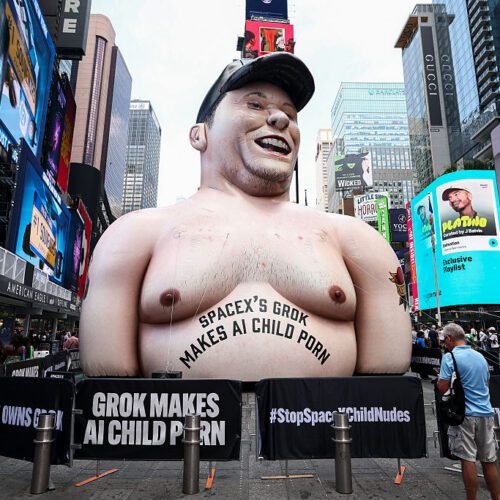
Among top concerns, they cited global backlash to Grok, which triggered a lawsuit from three girls who accused X of allowing the chatbot to generate child sex abuse materials (CSAM) and other non-consensual intimate images (NCII). And just last year, “2.8 billion records leaked from the platform,” advocates noted, while Musk was busy managing DOGE efforts to extract “sensitive information” about millions of Americans. They also pointed out that the FTC had already found that Musk “had directed employees to take actions that would have violated” the order, while seeking to give journalists unbridled access to internal data to investigate the so-called “Twitter Files.”
Further, any questions of how much control Musk wants users to have over their data can be answered by X’s controversial decision to collect “hundreds of millions of posts on the X platform” for AI training “without meaningful or explicit user consent,” advocates said. Rather than seek user consent, X merely updated its terms, advocates said, seemingly banking its AI business on users not reading about updates.
According to Cambridge Analytica, “when Musk changed X’s rules to allow AI training on user-generated content, he didn’t invent a new business model. He industrialized the surveillance capitalism business model Cambridge Analytica pioneered: behavioral data at massive scale enables population-level personality modeling.”
Supposedly, Musk’s X business model training Grok on public posts is “identical” to the business model behind one of the biggest data scandals in history, Cambridge Analytica wrote. X’s AI works to “extract maximum behavioral data, build prediction models, sell persuasion capability. Musk just replaced Facebook’s advertising-to-third-parties model with direct AI-deployment-to-Musk-aligned-entities,” their post said.
Opt-out methods are available but “practically invisible,” Cambridge Analytica noted, citing research finding that “73 percent of X users were unaware their tweets trained Grok.”
Cambridge Analytica suggested that many users would likely be creeped out to realize that deleting X posts doesn’t delete the behavioral signal to the AI model. That means the algorithm is likely to continue targeting content at users based on information the user chose to remove.
As Cambridge Analytica sees it, the X platform’s chatbot Grok represents a “failure” that proves that “consent frameworks designed for individual users” following the Facebook scandal “don’t prevent industrial-scale behavioral exploitation.”
“Grok shows that the model survived intact—it just moved from Facebook’s API to X’s native AI infrastructure,” their post said. “The technology improved, the regulation stayed static, and the surveillance deepened beyond what Cambridge Analytica achieved.”
Other platforms like TikTok and Instagram similarly borrow the wrong lessons from the scandal, Cambridge Analytica said. But “Musk’s iteration is distinctive only in its transparency about extraction scope. “ X is especially bad, Cambridge Analytica explained, because:
“X explicitly reserves the right to train AI on your complete behavioral history. Other platforms perform equivalent extraction while maintaining ambiguity in their terms of service. X’s brazenness—Musk announcing Grok’s capabilities without pretense of user benefit—might paradoxically prevent effective regulation by making the surveillance mechanism obvious rather than hidden.”
Advocates warned the FTC that there’s no reason to give away the agency’s powers to sanction X if future violations are found, simply because Musk finds it inconvenient to comply with the order.
Giving in to Musk’s demand would mean “effectively stripping away” the FTC’s “most effective deterrence and accountability mechanisms that protect American consumers against a known repeat offender,” they warned.
Additionally, X should not be allowed to use a state court finding, determining that its terms of service adequately informed users about Twitter’s accidental ad targeting, in order to override violations found under the FTC Act, advocates said.
And finally, the GDPR is not a substitute for FTC monitoring, they argued. That seems particularly clear since X is currently under investigation for its “unauthorized collection of European users’ data to train its Grok AI model without valid GDPR consent” advocated noted.
“X Corp.’s foray into artificial intelligence development should prompt greater FTC oversight of the company’s privacy practices, not less,” advocates said.
Former AG supports X
X did not respond to Ars’ request to comment.
However, former US Attorney General William Barr has submitted comments supporting X. In his letter, Barr called out hundreds of FTC info demands after Musk bought Twitter as excessive.
Arguing against “permanent agency control of private companies,” Barr pushed the FTC to stop treating the termination of consent orders as requiring extraordinary circumstances, and at the very least reopen the order to consider if the scope of X’s restrictions is proper.
Whether X’s petition can succeed may hinge on X’s legal analysis, though, which advocates claim was “misleading.”
For example, neither of the cases X cited actually supports its claim that a “transformed” company shouldn’t be obligated to maintain an order after restructuring, advocates argued. In one case, an order was terminated by invoking a “sunset” policy that requires such an outcome after 20 years. In the other, an order was not fundamentally changed due to a market shift, as X argued, but eventually modified after 16 years of compliance.
In contrast to those cases, X’s order is “merely four years old,” advocates said, and X has shown it still requires scrutiny. Further, Musk agreed to accept the costs and comply with the order when he bought Twitter, so he should be stuck with it for the entire duration, they argued.
More glaringly, advocates pointed out that X is largely unchanged, serving the same functions as a platform as Twitter.
Musk, therefore, remains “in the exact same business of operating a social media platform, still utilizes user data for targeted advertising, and now has new uses and desires for consumer information in its AI business that make the 2022 Order’s oversight even more vital,” advocates said.