To most onlookers, the contradictions may seem like confusion, bad faith or evidence that the agreement is already unraveling.
But after more than two decades studying how wars end and whether the peace holds, I have learned that contradictions are often a sign the negotiations are working. The real danger lies elsewhere: in what the US-Iran agreement leaves out.
The price of caving
It would be a mistake to assume the United States and Iran are bargaining only with each other.
The political scientist Robert Putnam called diplomacy a “two-level game” in which leaders negotiate abroad and at home at once. And no deal abroad survives unless it can be sold to the audience back home.
And the price of caving differs from place to place. In Washington, it might be electoral. In Tehran, factions of hard-liners may exact a heavy political price from leaders who compromise with the West, a lesson learned by President Hassan Rouhani and Foreign Minister Mohammad Javad Zarif after the 2015 nuclear deal.
Diplomacy has always worked this way. The first recorded peace treaty was struck by Egypt and the Hittites, an ancient civilization centered in modern-day Turkey, after the battle of Kadesh 3,000 years ago.
The treaty survives in two versions, each written in its own language for an audience at home. In October 2025, I saw the Egyptian text that had been carved into the walls at the Karnak complex, a vast array of temples, pylons and chapels near Luxor in southern Egypt. A copper replica now hangs outside the U.N. Security Council, where agreements like these are still negotiated today.
Peace between Egypt and the Hittites held not because the parties told the same story but because each could tell a story that its own people would accept.
Generous with rewards, short on penalties
Contradictory messaging, then, is not the problem. The problem is that the same multilevel pressures that scramble public narratives also shape what negotiators are willing to put into an agreement.
Each side bargains hard for rewards it can display at home and resists penalties for noncompliance that it would have to defend later. The result in this case is a US-Iran deal generous with benefits and short on enforcement.
While conducting research for my 2009 book Securing the Peace, I found that negotiated settlements ending civil wars break down at roughly twice the rate of wars ending in outright military victory.
Although my research focused on civil wars, the broader lesson applies to war settlements more generally.
They fail not because of what is written on paper but because they lack credible enforcement once implementation begins.
This weakness is hidden at the moment of signing, when all parties are still collecting the benefits an agreement promises. It surfaces later, once those rewards are exhausted and nothing exists to deter or punish defection.
The 1979 Egypt-Israel peace treaty makes the point. It endured not simply because Egypt regained the Sinai Peninsula and Israel won recognition, but because those gains were embedded in a broader enforcement structure: phased Israeli withdrawal from the Sinai tied to compliance and sustained US economic and military assistance to both countries.
The treaty also deployed the Multinational Force and Observers in 1982 to monitor Sinai’s demilitarization. More than four decades later, the treaty holds.
The lesson for any US settlement with Iran is clear. Durable peace depends not only on what parties gain but on the institutions and incentives built to enforce it long after the signing ceremony ends.
By that standard, the US-Iran agreement is built to wobble. It is generous with rewards and short on penalties. The United States lifts its blockade, issues oil waivers, releases frozen Iranian funds and promises more than US$300 billion in reconstruction.
Iran reopens the Strait of Hormuz and dilutes its enriched uranium on its own soil, while keeping the machinery to enrich more. Nearly every step confers a benefit on someone; almost none imposes a cost on the party that walks away.
And there is a deeper problem. The actors most capable of destroying the agreement are precisely those least constrained by it. Israel, Hezbollah and the broader network of Iranian-backed militias across the region all sit outside the agreement. They gain little by complying and risk little by defecting because they never signed. A settlement that excludes powerful spoilers has no way to make breaking it hurt.
None of this means collapse is imminent. The history of peacemaking – from Kadesh to the Dayton Accords that ended the Bosnian war to the Belfast Agreement that halted the 30-year sectarian conflict in Northern Ireland – shows that public blowups and threats to walk out are normal stages, not proof of failure.
But surviving the turbulence is not the same as lasting. The question is not whether setbacks come. History shows they will. It is whether the parties build institutions capable of deterring defection before the rewards are spent and the incentives are gone.
That points to a clear task, and it is not the one most are watching. The task is not to reconcile competing narratives. It is to create automatic costs for anyone who returns to violence, including actors who never sat at the negotiating table.
Monica Duffy Toft is a professor of international politics and director of the Center for Strategic Studies, The Fletcher School, Tufts University.
Venezuela earthquakes add tragic new layer to the country’s humanitarian crisis
Venezuela has a well-documented vulnerability to earthquakes. The country sits on the boundary between the Caribbean and South American tectonic plates, resulting in routine tremors and causing historical earthquake disasters. But the experience of a “doublet”, a pair of 7.2 and 7.5-magnitude earthquakes 40 seconds apart, on June 24 was a rare misfortune.
From an epicentre in the north-western city of San Felipe, the impact sheared down Venezuela’s Caribbean coast with devastating force. The historic port city and resort of La Guaira, home to around 200,000 people, has been declared a disaster zone.
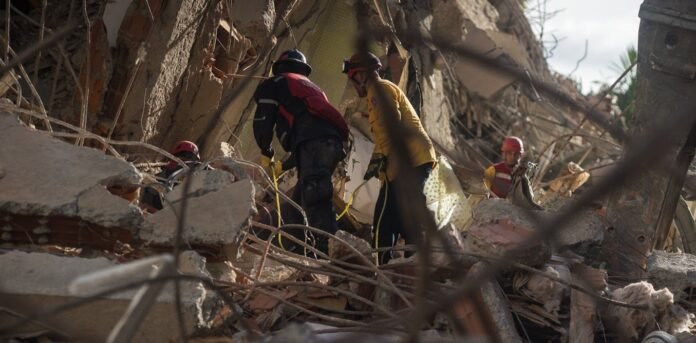
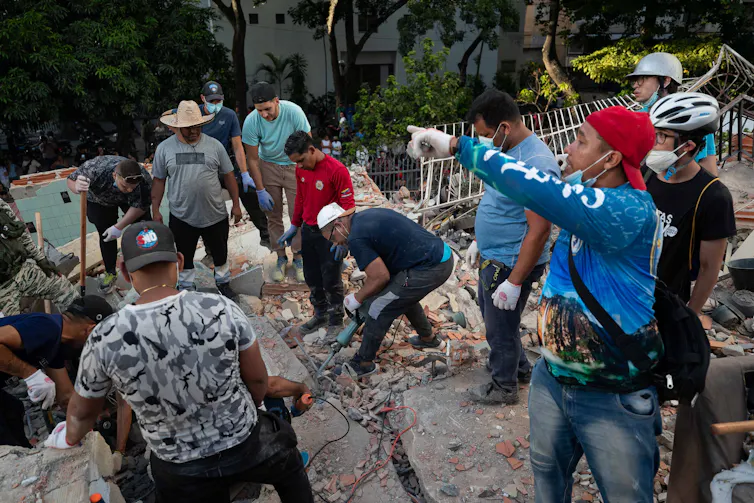
In the Venezuelan capital of Caracas, which is approximately 30km from La Guaira, buildings have collapsed in the once prosperous suburbs of Altamira, San Bernardino, Baruta and Chacao. The national airport, Maiquetia, has also been closed because of extensive damage.
While there have been pockets of resilience, an estimated two-thirds of Venezuelan residents live in informal housing. This a product of Venezuela’s rapid urbanisation in the 1960s and 1970s and the housing shortages that followed.
Officially, at least 235 people have been killed and 30,000 more are registered as missing. The US Geological Survey estimates that as many as 10,000 people may have been killed in a disaster of this magnitude.
The two earthquakes struck north-western Venezuela, with the impact felt along the country’s Caribbean coast.Peter Hermes Furian / Shutterstock
The earthquakes add a tragic new layer to the country’s existing humanitarian crisis – a crisis that has severely depleted the capacity of Venezuela’s state and society to prepare for and respond to natural disasters.
The years of Nicolás Maduro’s presidency, which spanned from 2013 through to his removal by the US at gunpoint in January 2026, were characterised by economic collapse. Hyperinflation, shortages and authoritarian repression of protests contributed to a situation where approximately a quarter of the population have fled the country in recent years.
Venezuela’s economic fragility is ultimately a product of political incompetence and corruption. But it has been reinforced by crushing US oil and financial sanctions imposed during Donald Trump’s first presidency.
Combined with the continued mismanagement of and underinvestment in infrastructure and utilities that were nationalised by Maduro’s predecessor, Hugo Chávez, this has led to an accumulation of problems that apply across the public sector. These include hospitals short of medicines, staff, power and water.
In the immediacy, energy and attention are focused on the search and rescue effort. But this is a politically perilous moment for Venezuela’s interim president, Delcy Rodríguez. Each stage of the humanitarian response brings serious logistical challenges.
There is a shortage of mechanical equipment to help with the recovery operations, largely due to shortages of spare parts and diesel fuel. There are few ambulances, hospitals are overwhelmed and there are limited safe shelters for the displaced. Access to food and drinking water is severely compromised and heavy rains are forecast.
At the same time, Venezuela’s armed forces, police and national guard have been on a war footing since Trump’s return to office. Their primary focus has been on defensive responses to what had, at least until Maduro’s capture, been a widely anticipated US military invasion.
This has come at the expense of honing skills to implement the global “Wash” framework for responding to natural disasters by providing safe drinking water, constructing emergency latrines and promoting safe hygiene practices. There is thus a very real risk of disease and food shortages in the coming days and weeks without urgent external support.
The possibility of disorder, looting and the further degradation of the security situation is another grave concern. Since Maduro’s removal, Venezuela’s pro-government security sector has not been tested by opposition protests or demonstrations. But lines of command have been disrupted in the turmoil of political change and public confidence in the military is low.
Venezuela’s recovery efforts are hampered by years of mismanagement, underinvestment and the impact of a comprehensive US sanctions regime.Ronald Peña R / EPA
US holds key
The US is the ultimate arbiter of Venezuela’s capacity to respond. Having assumed control of Venezuela’s oil export income after Maduro’s capture and still maintaining a sanctions regime, the US dictates what money can be received and how it is spent.
And while Venezuela has exported around 100 million barrels of oil since the ousting of Maduro, worth an estimated US$8 billion (£6.1 billion), the Trump administration has not publicly revealed how much revenue it has actually collected.
It has also not disclosed how much of this revenue has been drip fed back to Caracas. Restricted access to these funds will impede the disbursement of financial and humanitarian aid to earthquake-affected areas.
Trump has announced that US$150 million in assistance will be mobilised for Venezuela and that the US Departments of War and State are coordinating relief support. These funds must be received fast if popular frustration with the US regime change process is not to translate into widespread anger and if US plans to deport Venezuelan migrants are to stay on track.
Moving forward, there will no doubt be significant attention on the legacies of corruption and underinvestment that have rendered Venezuela so catastrophically vulnerable and debilitated in response to the earthquakes.
This includes the quality of buildings delivered under the gran misión vivienda Venezuela, the house-building mission launched by Chávez in 2011 that claims to have delivered over 1 million new homes. However, such an investigation will be complex, resisted politically and currently far down the list of priorities.
Venezuela’s deadly earthquakes happened on a fault similar to the San Andreas, and the risks aren’t over yet – a geophysicist explains
Venezuela and its capital, Caracas, were rocked by two massive earthquake pulses on June 24, 2026, just seconds apart. The shaking from the magnitude 7.2 and 7.5 events caused buildings to collapse in cities across the northern part of the country, killing more than 500 people and trapping many more.
University of Southern California geophysicist Sylvain Barbot explained what’s known about the earthquake pulses so far, what risks are still ahead and why Californians should pay attention.
How many earthquakes hit Venezuela, and why did it see so much damage?
Earthquakes are natural phenomena that typically happen at the boundaries of Earth’s tectonic plates. These plates, which make up the Earth’s crust, are tens of miles thick and carry the oceans and continents. They are slowly moving, but not in a smooth, consistent way.
Venezuela sits along the boundary between two of these plates: The South American plate and the Caribbean plate. As they slide past each other, these plates can stick, building up resistance before eventually having a catastrophic failure that generates an earthquake.
Venezuela sits on the South American plate, adjacent to the Caribbean plate, which underlies the Caribbean Sea. The circles indicate large earthquakes of magnitude 5.5 and higher from 1900 to 2019. Most are on or near the plate margins.U.S. Geological Survey
There were two big pulses of seismic activity within 39 seconds of each other on June 24, 2026, both over magnitude 7. They could have been separate events or a single earthquake with two pulses. Scientists don’t yet know because we’re still analyzing the data.
Two separate earthquakes is plausible. In 2023 there was an earthquake “doublet” in Turkey, where two magnitude 7-plus earthquakes happened within eight hours of each other. In that case, it was clearly two events.
Earthquakes are controlled by how rocks resist shear and stress. The stress can build up over years or decades until it overcomes the strength of the rocks, making them break. When that happens, the stress propagates and the rupture grows.
That’s not a gradual motion. Within seconds, the plates quickly move, causing an earthquake. This happens several miles underground, where the temperature and pressure are both very high.
That action is difficult to reproduce in a laboratory and involves many processes, from mechanics to chemistry to the motion of fluids. But the outcome is simple: There is a rupture that involves the sliding of rocks past one other that creates a surface rupture that breaks everything in its path, causing damage.
Are there similarities between the fault system in Venezuela and California’s San Andreas?
The faults involved in Venezuela’s earthquake and California’s San Andreas are very similar. They are known as transform faults, where this strike-slip motion happens as plates slide horizontally past each other.
Even the rates of motion are quite similar. In Venezuela the boundaries move past each other at about 0.8 inches (20 millimeters) per year on average. Along the San Andreas Fault it’s slightly faster, about 1.2 inches (30 millimeters) per year.
How strike-slip movement happens during a large earthquake in a transform fault, similar to the San Andreas in California.U.S. Geological Survey
They also create large magnitude earthquakes at similar frequencies. On the San Andreas Fault, scientists expect on average a large earthquake of magnitude 7 or above every 170 years or so, with the timing varying along the fault. However, this is not clockwork – it can be much more frequent or much less.
Southern California’s last “big one” was the Fort Tejon earthquake of 1857, a powerful magnitude 7.9. A recent study suggested the stress along the southern San Andreas is stronger now than it has been in at least 1,000 years. If the assumptions of the work are correct, it may be ready for a rupture. But there is great variability in how frequently big earthquakes happen, so it may be another 100 years or it could happen tomorrow. We just don’t know.
Many earthquakes have happened on these faults in the past. That alone is reason for communities to have strong seismic codes for buildings and infrastructure, such as bridges and hospitals, and emergency preparedness plans.
Have scientists identified warning signs that might suggest an earthquake is imminent?
Scientists have been actively looking for reliable precursors that could generate warnings of an impending rupture, but we don’t yet have reliable signals.
There are anecdotal cases of seismic swarms before a large rupture that, in hindsight, could have provided some clues to possibly detect early signs of future large ruptures. But that isn’t always the case. Machine learning has identified systematic changes of microseismic activity that precedes large ruptures, and some studies of the physics of earthquakes have started to provide explanations of why that happens.
So, there is hope that in the future we’ll be able to connect the dots and have a good understanding of the mechanics. But we’re not there yet.
We can, however, pick up short-term warnings to issue alerts.
Once an earthquake has started, it generates seismic waves of different kinds that propagate at different speeds. The ones that propagate fastest arrive first, and they can be detected, allowing scientists to predict the second and third waves, which are slower and generally more destructive.
After the first waves, called the P waves, you have the S wave – the shear waves – that are a little more intense. And after those you have the surface waves. The first P waves can trigger early warning systems, giving people just seconds, but that’s enough time to stop traffic and shut down gas pipelines, fast-moving trains and infrastructure that is sensitive to shaking. It may be enough time to find cover to avoid being killed in your office or at home by the collapse of the building.
What risks does Venezuela face now?
We know a lot about the tectonics of these regions because geologists have spent decades mapping these faults and learning about their behavior. But to understand this particular event, scientists need to be at the scene to see the extent of damage and assess the extent of the rupture itself.
Meanwhile, earthquakes bring other hazards. The shaking is followed by a period of months or years when the region becomes more prone to landslides because the rocks have moved.
That means the next rainstorm will likely trigger landslides, so Venezuela can expect more damage, more hazards and perhaps more deaths.
This article, originally published June 26, 2026, has been updated with the death toll rising.
VW may close four factories to adapt to the future, report says
Volkswagen Group is considering what was previously unthinkable: closing up to four factories in Germany and instituting layoffs that would shrink the workforce by 15 percent.
2025 was a bad year for Europe’s largest automaker. Its sales were essentially flat, but profits were anything but, dropping 44 percent to just 6.9 billion euros ($7.9 billion) as operating margins more than halved. The red ink looks set to continue bleeding through 2026, and in March, the company announced it would cut 50,000 jobs in Germany by 2030 as part of a plan to adapt. Now, according to a report in Manager Magazin, those job losses may double.
The automaker did well selling EVs in Europe last year, but sales in North America and China fell and continue to fall, and tariffs have had a significant effect.
In April, VW Group CFO and COO Arno Arnitz told investors that the company’s operating margin was “far too low” and that it would have to fundamentally transform its business model to cut costs and increase efficiency without tanking quality. That would require “significantly reducing complexity—in our product portfolio and technology platforms, as well as in the number of entities and decision-making layers,” Arnitz said.
Now we have some idea what that reduction in complexity might look like.
The report, confirmed by Reuters, says that another 45,000 jobs would go. That would reduce VW’s total workforce by around 15 percent; currently, the automaker employs more than 650,000 people across the group’s 10 car brands and other divisions.
VW Group is part-owned by the state of Lower Saxony, which, together with strong unions, has always made the thought of factory closures in Germany anathema. But VW Group CEO Oliver Blume will present a plan to the company’s board next month that outlines just such a thing, according to the report. Volkswagen plants in Hannover, Zwickau, and Emden, as well as Audi’s factory in Neckarsulm, are all in the crosshairs.
Ars reached out to Volkswagen and will update this story if we hear back.
An Oregon Law Lets One Wealthy Region Turn the Desert Green. When Drought Hits, Farmers Pay the Price.
Reporting Highlights
Draining the Deschutes: During a historic drought, half of Central Oregon’s lifeblood river was diverted to a wealthy agricultural region that got a lot more water than its plants could drink.
Suffering Farms: These water-rich landowners grew mostly grass and pasture for landscaping and grazing while water-starved farmers downstream fallowed fields of commercial crops.
Use It or Lose It: Century-old laws spur people to soak some of the state’s most expensive, least productive farmland — or risk losing rights to the water.
These highlights were written by the reporters and editors who worked on this story.
Chris Casad awakens each day before dawn on the Central Oregon property he bought nine years ago, the farm where he once grew tons of potatoes before water shortages forced him to fallow fields and take a job feeding someone else’s cattle on someone else’s land.
At 38, he’s got tractors older than he is. His two kids are under 5. His wife, Cate, has two jobs. They’re staring down a pile of debt from their 85 acres and its unending supply of things in the process of breaking.
The crisis for their farm started in drought — three summers during which starving grasshoppers descended on the area’s remaining crops, tepid reservoirs bloomed with toxic algae, nearly 1,000 Oregon wells went dry and the springs feeding the Deschutes River shriveled to their lowest recorded flow.
But the death knell for Casad’s crops was Oregon’s century-old law, which protects some water users at the expense of others.
The couple saw the state cut their community’s share of irrigation water from the Deschutes in the name of that law. Farmers in Jefferson County, where they live, stopped cultivating a third of the county’s irrigated land. “There were a number of suicides, let alone people who closed up shop, older farmers just not wanting to waste their life’s worth of work and their savings on just trying to keep it going,” Casad said.
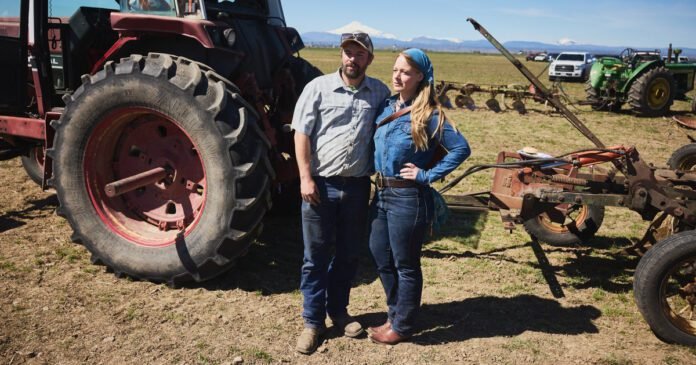
Chris Casad, left, and Cate Havstad-Casad bought their Madras, Oregon, property in 2017 with hopes of expanding a vegetable growing business.Leah Nash for ProPublica
At the same time, a few miles upstream, state law encouraged landowners to soak some of Oregon’s most expensive real estate and least productive farmland, a ProPublica and Oregon Public Broadcasting analysis of water use has found. These water-rich Oregonians live in the Central Oregon Irrigation District, a quasi-municipal corporation — part public utility, part homeowners association — that manages and distributes the lion’s share of the Deschutes’ water.
Six irrigation districts together take more than 90% of the river in Bend from May to September. COID is, by far, the most powerful. It has rights to more than half of the volume of the river because when the state was carving up the Deschutes, back in the early 1900s, COID was near the front of the line with a plan to use the water. And in Western water law, that place in line — senior rights — guarantees that when drought hits, your share is protected.
The Central Oregon Irrigation District Diverts More Water Annually From the Deschutes in Bend Than All Other Irrigation Districts Combined
Central
Oregon
241K acre-feet
124K
North Unit
24K
Arnold
22K
Tumalo
20K
Swalley
Lone Pine
10K
Central
Oregon
241K acre-feet
124K
North Unit
24K
Arnold
22K
Tumalo
20K
Swalley
Lone Pine
10K
Note: Estimates are averages during peak irrigation season, May to September, from 2015 to 2022.
That same law also says COID can keep taking all that water as long as it can prove that landowners in the district are putting it to “beneficial use.” Waste is forbidden.
But Oregon policymakers have such loose definitions of what’s beneficial and what’s waste that, during the drought, our reporting found, only 1 of every 4 gallons COID took from the river was absorbed by crops.
The news organizations shared our analysis of state-commissioned satellite data with both officials who manage water for Oregon and with COID. While the state did not dispute the numbers, irrigation district leaders said they didn’t trust the state data, which Oregon lawmakers created to study water availability. COID also said that the drought years were anomalous; however, our analysis across wet and dry years showed crops drank a similar share of the diverted water each year.
Other records from the district and the state describe how most of the water percolated into the ground, evaporated into hot, dry air, or drained off fields into scrubland and desert. Some fed the aquifer. Some went back into the river downstream, where environmental regulators have found waterways warmed and polluted.
And that one gallon that quenched crops? Almost all of it went to grass and pasture.
“We’re Just Wasting Water”
Casad grew up in Bend, the region’s biggest city, where he watched developers slice farmland into subdivisions. The lumber mill became a shopping mall anchored by an REI. An economy once dependent on timber and agriculture turned instead toward tourism and recreation.
Canals from the Deschutes still wind through Bend’s neighborhoods of single-family homes, and then to the estates, farms, ranches and destination resorts on the city’s outskirts. Among those sits a horse ranch owned by Phil and Penelope Knight of Nike fame, one of the wealthiest families in the world and, our analysis found, one of the largest consumers of COID water. The ranch raises “high-end” horses and sells hay, its website shows. A manager declined to comment on how it manages water.
Another long, gated driveway leads to an 80-acre property that was once dry scrubland. Cinematographer Byron Garth bought water rights from another landowner through COID a decade ago to irrigate part of the property.
The water helped him transform a rocky hillside into an “exclusive compound paradise,” as an auction listing last year put it, with a 6,300-square-foot mansion with radiant heated floors, three guest houses, a 10,000-square-foot garage and a swimming pool — all surrounded by a carpet of soft green grass.
For a few years, Garth used his water rights to grow hay for about 15 alpacas and goats, but in the end, he said, “it was cheaper to just mow it.” Garth said he did have reservations about using so much water during the drought, but he reasoned that somebody had to use it.
“For the aesthetic value,” realtor Jen Bowen said about the grass last year, as she gave OPB a tour of the estate shortly before Garth sold it for $4.8 million.
“I think most of us would agree — it’s nicer to look out over a lush pasture than it is the high desertscape,” Bowen said.
Sprinklers keep the grass green in the landscaping surrounding a pond and a pool at a property previously owned by Byron Garth. The land is in the Central Oregon Irrigation District, and Garth bought the water rights in 2016, as he was building out the multimillion-dollar estate.Emily Cureton Cook/OPBSprinklers keep the grass green in the landscaping surrounding a pond and a pool at a property previously owned by Byron Garth. The land is in the Central Oregon Irrigation District, and Garth bought the water rights in 2016, as he was building out the multimillion-dollar estate.Emily Cureton Cook/OPB
One of the district’s thirstiest developments is Ranch at the Canyons, a gated subdivision of dozens of multimillion-dollar Tuscan-style mansions whose residents mutually own an equestrian center, a luxury wedding venue, a winery and a nonprofit farm run by “dedicated ranch management and local farmers.” A development manager did not respond to a request for comment. Its website promises homeowners “the peaceful rhythm of agricultural life — without the work.”
A similar property listed for $15 million invites its future owners to imagine more than a residence or a cattle ranch, but “a Playground for Ambitions, for Imagination, for Dreamers, and for Doers.”
Our analysis of the most recently available state data, covering 2015 to 2022, found that more than 9 out of every 10 acres in the district were growing grass — pasture and hay fields for livestock as well as landscaping.
Casad started his life as a farmer in the district, but he was not one of those grass growers. He began leasing land near his hometown in 2010, and within a matter of years was turning a profit, annually growing thousands of tons of organic potatoes, pulling them from the earth with a gargantuan harvester he called “the white whale.” He liked the idea of farming in a region that once sold 1 of every 4 bags of potatoes in the state. He leased more land, sold out at farmers’ markets, supplied a local brewery with spuds for its fries, and welcomed school field trips, “just to show kids what a working farm is, where their food comes from.”
Chris Casad and Cate Havstad-Casad’s oldest son, Hesston, 4Leah Nash for ProPublicaCate Havstad-Casad holds her youngest son, Crosby, 2Leah Nash for ProPublica
COID’s water was a boon.
“It was just always on,” Casad said.
But the glut of water became a problem. He couldn’t just cut off the flow without risking his landlord’s water rights. So he did what others in the district do: figure out a way to use the “overabundance” or capture it in ponds. When one pond was full, Casad started digging a second one so the excess water wouldn’t inundate his neighbor’s property.
On more than a third of COID’s acreage, landowners irrigate their crops by intentionally flooding the fields. Water flows directly from ditches across the land — saturating plants, pooling and running off as it evaporates or seeps into the ground.
Water experts are quick to point out that water running off fields or leaking out of canals filters into aquifers or drains back to the river. That is not waste, they say, because it recirculates in the river basin.
This recycling takes time, while the consequences on the Deschutes are immediate. Farmers are drying up acreage and, for about 40 miles downstream of Bend, fish habitats suffer, state scientists told us. Once irrigation districts take their 90% of the river during the growing season, average remaining flows over the last decade have been about half what the ecosystem needs, according to stream gauges and state conservation targets. “The river always loses,” former state biologist Brett Hodgson said.
The fact that much of the irrigation water is, in some form or fashion, recycled elsewhere doesn’t put COID landowners like David Fisher at ease either. Fisher said he flood irrigates about 60 acres of his property to grow hay and pasture for cattle.
“We’re just wasting water. Really. We are,” remarked the 72-year-old butcher shop owner. “Don’t get me wrong, I’m not a tree hugger or one of those people that think that we should stop this for the frogs or the fish. But there’s got to be a middle of the road.”
Only a Quarter of the Water the Central Oregon Irrigation District Diverted From The Deschutes River Was Consumed by Crops
Most of it leaked from open canals, percolated into the ground or ran off fields before returning to aquifers or to the river downstream.
Note: Estimates are averages for irrigation season, May to September, from data covering 2015 to 2022. Sources: Data for how much water is lost on the way to landowners or after reaching them comes from Central Oregon Irrigation District estimates provided to the Oregon Water Resources Department. Data regarding how much water is consumed by plants comes from the Desert Research Institute and the Oregon Water Resources Department. Lucas Waldron/ProPublica
“Waste Is Like Pornography”
Both how much water the district uses and what its landowners are growing have the state’s blessing. Oregon, like other Western states, says that as long as irrigation is put to “beneficial use without waste,” no one can take your water rights.
But growing anything is considered a beneficial use as long as it’s planted, irrigated and not a native species or noxious weed. Policymakers and courts have labeled so few uses as waste that one of the most well-known legal precedents was set 90 years ago by a California court, said Colorado-based water law attorney Sarah Klahn. The case forbade the use of irrigation water to drown gophers.
Water rights are a form of property rights, Oregon-based water law attorney Karen Russell said, and although the law is designed to adapt to changing times, the courts have typically allowed past practices to dictate how much water landowners can use.
In the eyes of Oregon courts, “waste is like pornography,” she said: “You know it when you see it.”
So it doesn’t matter if landowners are watering the prized crops that decades ago were celebrated by the Deschutes Basin’s annual potato festival, when local women vied to be crowned “Miss Spud,” or the grass and hay for today’s “Playground for Ambitions.”
The Redmond Potato Show in 1912 and in the 1960s. For roughly half a century, much of the Central Oregon Irrigation District’s water fed potato farms, and those potatoes fed the West Coast. Local high schoolers were excused from school for a week to help with a harvest that filled as many as 20 rail cars a day in the 1950s.Deschutes County Historical SocietyThe Redmond Potato Show in 1912 and in the 1960s. For roughly half a century, much of the Central Oregon Irrigation District’s water fed potato farms, and those potatoes fed the West Coast. Local high schoolers were excused from school for a week to help with a harvest that filled as many as 20 rail cars a day in the 1950s.Deschutes County Historical Society
This is the point COID’s Managing Director Craig Horrell, who is in charge of the district’s day-to-day operations, tried to drive home at a town hall meeting in Redmond last March. The moderator read a question asking about incentives that might make “hobby farms” more efficient. Horrell bristled at the term, calling it a label intended to “shame and coerce us into change.”
“We as district managers don’t get to decide whether we like somebody growing carrot seed or somebody having two llamas and a Prius in the driveway,” he shot back. “If you’re using your water beneficially and growing a beneficial crop, that is what we manage. We don’t have the right to say whether it’s a good thing or a bad thing.”
The district is vigilant about ensuring one thing — that landowners are growing a non-native crop, which the district checks through field visits and by aerial reviews, COID’s Deputy Director of Water Rights Jessi Talbott said in a recent interview.
Every summer, a COID-hired plane flies over the district’s more than 70 square miles of fields, an area larger than Salem, Oregon’s capital city, looking for brown patches. If landowners aren’t using the water exactly where they are supposed to at least once every five years, the state can cancel unused water rights. Oregon regulators have canceled irrigation water rights just four times since 2020, and none of those were in the COID.
“Nobody else in the state does what we do to try and encourage use,” Talbott said.
Since 2021, the district has sent more than 1,000 letters to landowners warning them they were in danger of losing water rights. The intent of the letters isn’t to scare people, but to educate them about water stewardship, Talbott said. If landowners suspected of not using water don’t take action, COID can and will confiscate rights itself, she added, but this rarely happens.
Casad’s landlord got a letter from COID in 2016, after aerial surveillance spotted “specific dry areas” on the property, district records show. Casad and his wife, Cate Havstad-Casad, had turned one rocky corner into a compost pile and parking area for their equipment.
“In order to satisfy the powers that be seeing that we’re using the water, there was an entire season where we had to water that compost pile and equipment yard,” Havstad-Casad said.
By the next year, a COID inspector’s report noted “enough growth to avoid confiscation.” In 2023, on another property, Andria Truax and her husband Dan Baumann got a COID warning letter that sent them into “panic mode,” they said. The couple owns a nursery raising drought-tolerant landscaping plants on a 10-acre property near Bend.
“We’re supposed to keep some of these areas green that are next to impossible to grow anything on,” Truax said.
They didn’t want to douse rocky soil and fight back the weeds that immediately sprang up. The irony struck her because “farmers are getting cut off from water downstream and meanwhile we’re being told to water more.”
Still, to protect their water rights and property values, they turned on the sprinklers.
COID doesn’t tell people to water rocks or compost piles, Talbott said in an interview last year. In a more recent interview, she said OPB and ProPublica’s finding that only about 25% of the district’s diversion was consumed by crops was “infuriating.”
“We do so much to educate our patrons and for them to use the water right and make products out of it, feed the community, feed cows, whatever is in alignment with water law,” Talbott said.
In the same meeting, Horrell said the district not only doesn’t overdeliver water, but some properties don’t get enough. COID doesn’t directly measure how much water landowners use, only how much land they’re irrigating.
In its water management conservation plan, which covers 2015 to 2020, COID approximated how much water crops required, based on surveys of its landowners about what they were growing — largely pastures — and federal weather data. Those averaged estimates showed crops required about 27% of what the district took out of the river annually. That roughly mirrors our own finding of what crops actually drank, based on the state’s study of satellite data.
Horrell and other district officials did not respond to multiple questions about the numbers in COID’s own conservation plan.
“They Have All the Cards”
State leaders have long wrestled with how to divvy up the Deschutes Basin in the face of increasing drought, booming population and growing demand. Bend and Redmond, the basin’s two largest cities, are facing uncertain future supplies; during the drought of 2022, COID diverted over 12 times more water than both cities combined, with their then roughly 132,000 total residents. While farms are, by far, the biggest water users in the nation, the COID’s contribution to the state’s agricultural economy is among the lowest in Oregon. The region leads other Oregon counties only in horse sales.
Republican state Rep. Mark Owens, a hay farmer from Eastern Oregon and one of the state’s leading voices on water management, said the district’s hobby farmers are getting excess water “which they do not need, should not have to utilize and should not be delivered to them.” Oregon, he said, is long overdue to look again at how it manages water.
The beneficial use rule was designed, he said, to build up rural economies, and “it’s what allowed some of our communities to prosper.” But now, “you have a group of folks that employ nobody, harvest nothing, so how are you actually providing a public benefit for that water?” he said. “So is there something broken? Yeah, there is.”
How, he asked, “do you get the most crop per drop?”
Rather than mandates, the Legislature has turned to incentives, like authorizing programs that pay people to leave water in the river without losing the right to it. Baumann and Truax eventually did just that with a sliver of their water rights. But the state doesn’t dictate how irrigation districts use those incentives. COID’s board of directors has capped participation so that very few properties are eligible.
Horrell said the district has to limit enrollment in water-sharing programs because its 120-year-old delivery system will fail if the canals aren’t brimming full.
After the Central Oregon Irrigation District delivered water to landowners near Redmond, Oregon, in July 2025, what’s left pooled in a silty pond where it eventually drained away or evaporated. The district said it has 24 ponds that catch water at the ends of its system.Brandon Swanson/OPB
The district’s hundreds of miles of open, unlined waterways rely on gravity to push huge volumes out of the river and propel the water that ends up on fields more than 30 miles away. When COID has reduced the volume of this “carry water” too much in the past, Horrell said, farms at the ends of the system suffered.
But the district acknowledged in public meetings and in our interviews that all the water leaking and evaporating along the way is wasteful. To change that, it’s seeking more than $700 million in public funding to replace the canals with new, pressurized pipes. It’s already gotten more than $65 million for piping since 2015.
Read More
“There is no dispute that we all want a better, more equal, more balanced water delivery system that benefits our river, our partners, districts, cities. That’s a given,” Horrell said, “How we get there is what we argue about.”
COID is a business, he emphasized, one that he said does need to become more sustainable as the climate changes.
COID’s rights allow it to take even more water from the Deschutes than it does. Even so, Horrell pointed out, it has voluntarily scaled back over the last decade of droughts. Thanks to piping, he said, it sends some water to downstream farmers when it doesn’t have to.
But, he said, that “doesn’t mean that it is not ours.”
The Deschutes, like rivers across the country, is owned by the public, and taxpayers are spending big to conserve it. But irrigation districts still have all the power, said environmental advocate Yancy Lind, who contributes to a state-supported water planning group with districts, cities and state managers.
“We live in the West and in the West, water is power and the irrigators have the water. It’s that simple,” he said. “They have all the cards. We’re just trying to pull little crumbs out from them.”
“It Doesn’t Have to Be This Way”
After seven years of leasing land in the COID, Casad headed north to nearby Jefferson County and the North Unit Irrigation District, where he now lives. He moved because he could afford to buy there and the land was more fertile — it produces more than half the world’s supply of carrot seed. Plus he wanted to live among people like him, dedicated farmers, someone like Jos Poland, “a tough dude” and the lifelong dairy farmer who became his new neighbor.
The peaks of the Cascade Range are visible in the distance from Casad Family Farms. The mountain range forms a wall dividing wet, coastal Oregon from semi-arid high desert.Leah Nash for ProPublica
The move came with one big tradeoff. Casad went from a district with plentiful water to one that has long had to make do with less. North Unit is the first to be cut off during a drought. Compared to the COID, even in a wet year, North Unit promises half as much water per acre, and it loses an even higher percentage in leaky delivery canals, but its crops still consume a much higher percentage of what the district takes out of the river, our analysis found.
North Unit’s farmers pride themselves on that efficiency. Drive through Casad’s neighborhood and you’ll see rows of water-saving sprinklers, and pumps churning to recycle and reapply the runoff captured by specialized ponds. “It’s the only way we’ve been able to survive,” said one of the district’s longtime farmers, 80-year-old Gary Harris.
Casad knew this, so he calculated that half as much water on fertile land would be enough.
And it was, until the drought hit in 2020. To keep his farm going, he started drying up two acres of land for every acre of potatoes he planted. Down the road, Poland’s organic cow pastures died. He had to sell half his herd.
“I was losing money so fast that I couldn’t afford to feed my animals,” Poland recalled. “That threw me in a big depression.” He struggled to get out of bed. Casad started helping him with the dairy, working through the night on his own farm.
“I remember watching the lights of the tractor out the window,” Cate Havstad-Casad said. She was pregnant with their first child, sitting in the bathtub having contractions, she said, but she waited hours to call her husband inside “because I understood the pressure on his shoulders.”
Casad wept as he dredged up memories of the drought. “Some of this stuff you just bury,” he said. “You bury it down deep.”
During those years, which overlapped with the pandemic, Jefferson County Commissioner Kelly Simmelink said he heard from farmers dealing with falling commodity prices, rising operational costs, “and then the real fact of water availability — I don’t know how you continue.”
Cate Havstad-Casad reacts to the news that state water cutbacks mean her family will need to dry up most of their farm in this excerpt from a March 2022 video diary.Courtesy of Cate Havstad-Casad
As the drought wore on, the suicide rate in Jefferson County nearly doubled. “Our farmers and ranchers face immense pressure,” he told the Legislature in early 2023, successfully urging it to launch a state-funded suicide prevention hotline for agricultural producers.
Two years into the drought, Casad learned at North Unit’s spring meeting that he would have to cut back his water use even more. For every acre of vegetables he could plant, four would have to go fallow. He called his wife to break the news when she was out of town.
After she hung up, she sat alone in her hotel room and broke down.
Cate Havstad-Casad reacts to the news that state water cutbacks mean her family will need to dry up most of their farm in this excerpt from a March 2022 video diary.Courtesy of Cate Havstad-Casad
“It doesn’t have to be this way” she said through tears in a video diary she recorded at the time. “It is Oregon water law which will give a very wealthy person with a hayfield that they literally mow and leave in the field and do nothing with because their life has nothing to do with the land, … that person will get twice as much water as any professional farmer will get in North Unit.”
Casad no longer grows potatoes. The bins where he once stored them sit empty in the barn. Now he grows mostly hay and grass for cattle — crops that he said need less water.
The barn at the Casad family farmLeah Nash for ProPublicaEmpty bins that once stored potatoesLeah Nash for ProPublicaEmpty bins that once stored potatoesLeah Nash for ProPublicaThe barn at the Casad family farmLeah Nash for ProPublicaA potato harvester in the barn at the Casad family farm has been idle for four years. The children now use it as a slide.Leah Nash for ProPublica
But rough years are coming for farmers in the Deschutes Basin. This year Oregon’s snowpack is one of the lowest it’s been in recorded history. That snow takes years to percolate and it’s what feeds the mountain springs powering the river. More than half of Oregon counties have already declared droughts.
The Casad farm is still paying down the debts from the last drought. Chris Casad worked part-time at a feedlot this winter. Now he’s a school bus driver.
To his two young children, his “whale” of a potato harvester has never been anything other than a slide, their playground for make-believe.
Chris Casad and his oldest son, Hesston, with dogs Beth, left, and her pup, Rue, walk along the driveway of the family’s farm.Leah Nash for ProPublica
China tests Scarborough as Manila casts beyond US for help
China’s makeshift platform at Scarborough Shoal may have disappeared, but it has exposed a far more enduring strategy to cement its control of the South China Sea.
This month, the Wall Street Journal (WSJ) reported that a temporary Chinese floating platform deployed at the disputed Scarborough Shoal in the South China Sea has renewed international concerns over China’s expanding campaign to dominate the strategic waterway.
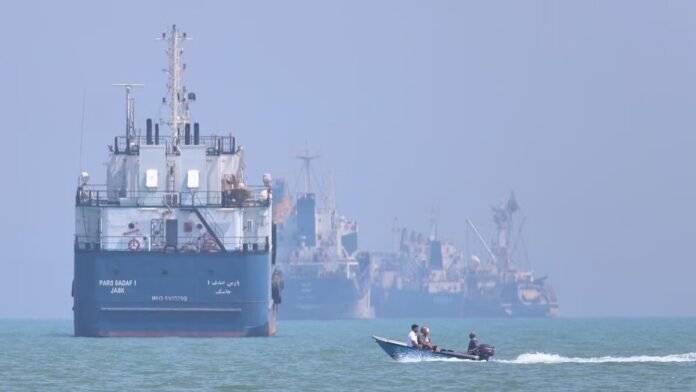
Discovered by Manila in late May and removed by Beijing this month, the rickety structure spanned over 27 square meters, featured an antenna and carried Chinese nationals.
While oceanographers from the state-controlled Chinese Academy of Sciences (CAS) maintained that the platform was a temporary facility for studying coral reefs, maritime analysts and Philippine defense officials warned that it was an incremental “salami-slicing” tactic toward permanent habitation.
Located just 233 kilometers from the Philippine island of Luzon, the highly contested atoll lies within a maritime thoroughfare that carries a quarter of global seaborne trade. China has restricted access to the shoal since a 2012 standoff with the Philippines, rejecting a 2016 ruling by the Permanent Court of Arbitration (PCA) that invalidated its sweeping historical claims.
The platform’s appearance signals an evolving phase of gray zone operations. This escalation threatens to complicate US-China diplomatic relations ahead of Chinese leader Xi Jinping’s planned US visit in September, a delicate period given that the US views any physical land reclamation at Scarborough Shoal as a diplomatic red line.
The salami-slicing strategy aims to advance China’s territorial claims without sparking escalation, using ambiguity between civilian, scientific and military spheres as cover.
China employed such tactics against the Philippines in the 1995 Mischief Reef incident, constructing supposed “fishermen shelters”, which have been long since upgraded into an artificial island hosting a runway, sustainment facilities and weapons systems.
If Scarborough Shoal is turned into a military facility comparable to China’s other major outposts in the South China Sea, it would extend China’s sensing range toward the Philippines and enhance the capacity and redundancy of its naval and air forces in the northern South China Sea.
Emplaced weapons on Scarborough Shoal, such as long-range missiles and drones, would enable China to strike Philippine and US military facilities on Luzon during any future conflict over Taiwan.
Moreover, Scarborough Shoal may also be the final missing piece in China’s plans to turn the South China Sea into a bastion for its underwater nuclear deterrent.
Should China put a permanent physical structure with corresponding defenses on the disputed feature, it would enable the complete triangulation of the South China Sea alongside China’s other outposts in the Paracels and Spratly Islands.
Those static defenses on disputed features, along with maneuver elements from the People’s Liberation Army Navy (PLAN), would serve to defend China’s nuclear ballistic missile submarines (SSBNs), which, when armed with the newer JL-3 submarine-launched ballistic missile (SLBM), could hit the US mainland from their bastion in the South China Sea.
But despite having de facto control of Scarborough Shoal since 2012, China has not yet built any permanent structure on the disputed feature. One possible reason is that the Philippines’ localized anti-access/area-denial (A2/AD) military capabilities may be deterring China from building a permanent structure on the feature.
The Philippines operates several BrahMos supersonic anti-ship missile batteries that could reach Scarborough Shoal from multiple launch points in Luzon. While the Philippines has arguably limited intelligence, surveillance and reconnaissance (ISR) capabilities to fully utilize its maximum range, let alone hit maneuvering PLAN warships with layered defenses, the location of Scarborough Shoal is fixed, making any permanent structure inherently vulnerable.
The Philippines’ internationalization of its South China Sea dispute with China may already be paying dividends for the country’s territorial claims. The Philippines has been diversifying its defense partnerships beyond the US, signing visiting forces agreements (VFAs) with Japan, Australia, New Zealand, Canada, and France.
One possible rationale is to sustain a high tempo of multilateral naval exercises near disputed features such as Scarborough Shoal, with the near-constant presence of more capable partners aside from the US acting as a deterrent against China’s attempts to solidify its control over the feature.
While the Philippines’ BrahMos missile batteries and the internationalization of the South China Sea dispute may keep China from building up its presence on Scarborough Shoal, the Philippines may face the challenge of navigating dual ambiguity from China and the US.
Deliberate strategic ambiguity on the part of China and the US may be one of the preferred ways these great powers use to maintain a tenuous peace between themselves, by avoiding pronouncements, policies or moves that either could deem escalatory.
Within the South China Sea, the US may have prioritized its broader interests by forgoing assistance to the Philippines on multiple instances of maritime standoffs with China.
Additionally, the US could restrain the Philippines from taking actions that might draw it into confrontation with China in the South China Sea.
In a sense, strategic ambiguity preserves stability among great powers, at the expense of small and middle powers’ sovereignty. In the case of the Philippines, China’s gray zone activities and the risk of escalation, combined with inconsistent US commitment, could leave the Philippines with little room to push back against China’s moves at Scarborough Shoal.
While the Philippines may seek to reclaim strategic maneuvering room and hedge against US abandonment by engaging alternative defense partners, they also have to weigh their dependence on China, their capability limitations and immediate priorities against supporting the Philippines on principle under international law.
Japan’s reliance on China for rare earth metals, Australia and New Zealand’s dependence on China as export markets for minerals and agricultural produce, Canada’s strategic partnership with China, France’s lack of permanent basing in the Pacific and the Philippines’ dependence on China as a major trade partner could temper Manila’s expectations of its internationalization strategy in the contested sea.
For now, Philippine deterrence and diplomacy may delay China’s next move at Scarborough Shoal, but strategic ambiguity keeps the Philippines reacting rather than shaping events.
Warren Beatty has long been one of Hollywood’s most magnetic men — a movie star, a political firebrand, a ladies’ man turned family man, and the kind of legend other legends still looked up to.
But now, insiders say some of his closest famous friends are growing increasingly worried that the 89-year-old Bonnie and Clyde icon has quietly retreated from the world they once shared.
Sources claim longtime pals Jack Nicholson, 89, and Dustin Hoffman, 88, have barely seen Beatty in the last year and a half, sparking concern among those who once counted him as a constant presence in their lives.
“Jack and Warren have been best friends for the better part of their adult lives, and Dustin absolutely worships Warren’s talent and instincts,” one insider said. “But Warren has been so reclusive lately that Jack and Dustin have barely seen him over the last year and a half.”
The source added that Beatty remains a towering figure to both men, even after decades of fame, awards, scandals, and Hollywood battles.
“It’s tough because for Jack, and especially for Dustin, Warren is still their North Star,” the insider said. “He is the peer they will always look up to and the friend they would both do just about anything for.”
Beatty, who became one of the defining faces of New Hollywood with films like Bonnie and Clyde, Shampoo, Heaven Can Wait, Reds and Dick Tracy, has not been part of the Hollywood rat race for years.
While none of the three screen giants would likely ever announce a formal retirement, insiders say Beatty is increasingly living like a man who has left the business behind for good.
The source said Beatty now spends much of his time at the Los Angeles home he shares with wife Annette Bening, 68, who remains active in film, television and philanthropy.
“Annette continues to be extremely active in her TV and film career and her charity work,” the insider said. “She’s still charging ahead with all of that, while Warren spends most of his time hanging out at their house in L.A.”
That quiet lifestyle has reportedly left some of Beatty’s friends surprised, especially given his long history of speaking out on politics and public life.
“In the current political climate, with big California and Los Angeles elections underway, people in the community, including Jack and Dustin, just wish that Warren would speak up and speak out a little more,” the source said.
But those close to Beatty believe the Oscar-winning Reds director may simply be done fighting for the spotlight.
According to the insider, Beatty has always been most comfortable in a world he could control. These days, that world appears to be his family home, far from the cameras, premieres and political fundraisers that once filled his calendar.
“He’s accomplished everything he wants to in his career,” the source said. “Keeping up with the Hollywood rat race, even if it’s still important to Annette, holds no interest to him.”
For friends who remember Beatty as a commanding force in every room he entered, the change has been emotional.
“As sad as it makes Jack and Dustin, Warren is finally happy to be in a place where other people can have their time in the spotlight,” the insider shared. “For the first time in decades, he doesn’t need to be the center of attention anymore.”
Beatty’s step back marks a dramatic turn for one of Hollywood’s most famous power players.
For decades, he was not just a movie star. He was a symbol of old-school glamour, ambition and influence. He dated some of the most famous women in the world, built a reputation as one of the sharpest minds in the industry, and became a rare actor-director who could command respect on both sides of the camera.
Now, friends reportedly fear that the man who once seemed to be everywhere has become almost impossible to reach.
And while those closest to him may miss the Warren Beatty who dominated Hollywood, insiders say the star himself may finally be at peace with disappearing from view.
After a lifetime of applause, awards and headlines, Beatty appears to have chosen the one thing fame could never give him: quiet.
Saudi Arabia has suspended travel by its citizens to the Democratic Republic of the Congo, Uganda, and South Sudan and halted the issuance of visas for travelers from those countries as part of expanded measures to prevent the spread of the Ebola virus.
The new restrictions also bar entry to any traveler who has been present in or transited through the Democratic Republic of the Congo, Uganda, or South Sudan during the 21 days before their intended arrival in the Kingdom, even if traveling through a third country. The suspension applies to all visa categories, including those issued to Umrah pilgrims.
The Saudi Public Health Authority, Weqaya, said the overall public health situation in Saudi Arabia remains stable and is being closely monitored. The authority added that no confirmed or suspected Ebola cases have been recorded in the Kingdom since the preventive measures were introduced.
Officials described the travel restrictions and enhanced screening procedures as routine preventive measures designed to limit the potential spread of infectious disease rather than a response to any domestic outbreak.
Saudi authorities said the measures were introduced as additional precautions to reduce the risk of Ebola entering the Kingdom. Weqaya said the country’s health monitoring and response system remains continuously operational, in coordination with national and international partners, to protect citizens, residents, and visitors while supporting broader global health security efforts.
The Kingdom has also expanded health surveillance for travelers arriving from countries neighboring the outbreak areas, including Rwanda, Burundi, Tanzania, and the Republic of Congo (Brazzaville). The enhanced measures include stricter health screening at ports of entry, increased monitoring of arriving passengers, and activation of early response mechanisms.
The latest actions expand Saudi Arabia’s existing border health precautions by combining travel restrictions, visa suspensions, and enhanced screening protocols. Authorities said the measures will remain part of the Kingdom’s ongoing efforts to safeguard public health while monitoring developments related to the Ebola outbreak in the affected countries.
SpaceX plans to launch Starlink mobile service in the US
Elon Musk’s SpaceX has told investors that it plans to launch a new Starlink mobile service for US consumers, in a move that would upend the country’s multibillion-dollar phone network market.
The company’s president and chief operating officer, Gwynne Shotwell, told investors during a recent IPO roadshow that the group was considering launching a Starlink retail product and could build its own terrestrial US mobile network, according to four people familiar with the matter.
The move would require Starlink to build a new retail offering by selling mobile contracts to individual customers, competing directly with the three big US network operators Verizon Wireless, AT&T. and T-Mobile.
To date, SpaceX has offered more limited direct-to-consumer services in the US, preferring to give telecoms groups such as T-Mobile access to its satellites to supplement their existing network coverage in rural areas.
Although the terms of Starlink’s commercial deals are not disclosed, analysts believe it takes a cut from revenues generated by those customers whose mobile deals include access to its satellites.
SpaceX’s move into retail contracts would be one of the company’s most significant commercial expansions since launching Starlink, which already operates across more than 150 countries worldwide offering high-speed Internet connections through its constellation of satellites.
A direct-to-consumer mobile offering would give SpaceX access to a far larger market than satellite broadband alone, potentially reducing its reliance on telecoms partners that currently act as intermediaries between Starlink’s satellites and end users.
SpaceX did not respond to a request for comment.
The plans come just days after its landmark initial public offering, which has heightened investor demands that the group continues delivering rapid growth and finds new revenue lines.
During the IPO roadshow, Musk sold investors on future plans to launch data centers into space and build a colony on Mars. Analysts at its lead underwriter Goldman have predicted a 100-fold surge in its AI revenues to $322 billion by 2030.
While describing expanding Starlink as another key growth pillar in its IPO prospectus, SpaceX has never publicly confirmed that it plans to launch a retail mobile service.
There have been months of speculation over SpaceX’s future mobile plans after it paid $17 billion to rival EchoStar for wireless spectrum licenses to bolster its Starlink satellite network last September. Many analysts viewed the deal as laying the groundwork for an eventual retail offering.
In its bond offering prospectus, seen by the FT, SpaceX said that while it expected the Starlink Mobile service currently “to be most impactful for customers in remote areas uncovered by terrestrial mobile networks,” its longer-term ambitions appeared broader.
As its performance improves and satellite constellation grows, the prospectus suggests the company would “compete to be the preferred connectivity experience to our customers no matter where they are located, whether in rural, suburban or urban areas.”
The launch of a consumer Starlink mobile retail service would also complement the company’s existing broadband Internet option, which served 10.3 million customers worldwide as of March.
However, the plans have been met with trepidation by analysts who have cautioned that the idea may simply be a gamble to extract better deals from Starlink’s telecoms partners and warned of the billions of dollars in build costs and radio wave spectrum needed to roll out mobile networks.
New Street Research estimates that the three US mobile network operators have a total of about 1,020MHz of spectrum, while SpaceX has just 65MHz.
David Barden, partner at New Street Research, said that building a “wireless network in saturated markets around the world would be incredibly hard.”
“[But] as a starting point for negotiating the best possible revenue-sharing deal with mobile network operator partners? It makes tremendous sense,” he added.
Additional reporting by Ryan McMorrow in San Francisco
MEPs endorse fast-track EU defence innovation programme
European Parliament committees have backed plans to establish a new EU programme aimed at accelerating defence innovation in response to the changing security environment created by Russia’s war against Ukraine.
On Thursday, the Parliament’s Committee on Industry, Research and Energy (ITRE) and Committee on Security and Defence (SEDE) adopted their position on the proposed Programme for Agile and Rapid Defence Innovation (AGILE).
The proposed programme is intended to speed up innovation cycles and support the deployment of new technologies by EU member states’ armed forces and European defence companies, helping them scale up across Europe. The technologies covered include artificial intelligence, quantum computing, robotics, cyber capabilities, space systems and unmanned autonomous systems.
In amendments to the draft legislation, MEPs called for faster, simpler and more results-oriented support for small and medium-sized enterprises, including innovative start-ups and scale-ups. They proposed that, where possible, funding should be provided as lump-sum grants to allow companies to focus on delivering agreed outcomes.
The committees also proposed stricter rules governing the transfer and ownership of technologies developed under AGILE, requiring any export of exclusive licences to non-associated third countries to be notified and approved.
MEPs further sought to tighten safeguards by preventing EU funding from being awarded to entities from third countries that act against the security and defence interests of the European Union and its member states.
They also proposed that products supported through AGILE should be eligible for procurement by Ukraine through the Ukraine support loan, citing the urgent need to provide Kyiv with innovative technologies developed by Europe’s defence industry.
The programme is designed as a pilot initiative running throughout 2027 under the current 2021-2027 Multiannual Financial Framework, with a budget of €115 million. According to MEPs, the experience gained should help shape the EU’s approach to defence innovation under the next long-term budget, with the European Commission assessing whether the programme should be continued, adapted or expanded.
ITRE rapporteur Ivars Ijabs said Europe could not afford to respond slowly to rapidly evolving threats, describing AGILE as a way to deliver funding more quickly while reducing bureaucracy and supporting innovation.
SEDE rapporteur Tonino Picula said the programme would help move defence technologies more rapidly from innovation to operational deployment by supporting SMEs and start-ups, strengthening resilience against dependencies on third countries, facilitating procurement, including for Ukraine, and ensuring effective oversight.
ITRE Chair Borys Budka said Russia’s war had demonstrated the importance of innovation in modern conflict and argued that AGILE’s target of awarding grants within four months would help innovative SMEs access funding more quickly through lump-sum financing.
SEDE Chair Marie-Agnes Strack-Zimmermann said Parliament’s position sent a clear signal that European defence innovation should be driven by operational needs and deliver capabilities that address Europe’s most urgent defence gaps.
The committees approved the proposed amendments by 76 votes to eight, with seven abstentions. MEPs also voted by 83 votes to eight to open negotiations with the Council of the European Union. Interinstitutional talks are expected to begin under the Irish Presidency of the Council once member states have adopted their own position.