24.6 C
London
Monday, June 22, 2026
Home Blog

China sanctions US defense, rare earth firms in retaliation

0
china-sanctions-us-defense,-rare-earth-firms-in-retaliation
China sanctions US defense, rare earth firms in retaliation

China hit back at Washington on Monday with a sweeping two-pronged retaliation, barring government departments from buying products from 46 US defense contractors and blacklisting 10 American companies from receiving Chinese dual-use exports.

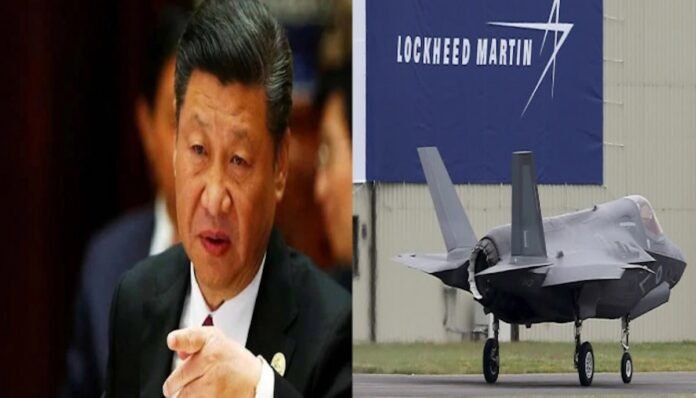
The Ministry of Finance announced that procurement entities are prohibited from purchasing products manufactured by the 46 US firms, a list headed by Lockheed Martin Corporation and Raytheon Missiles & Defense. The restrictions, which exempt US-funded enterprises operating within Chin, took effect immediately.

At the same time, the Chinese Commerce Ministry added 10 US entities to its export control list under China’s Export Control Law, barring Chinese exporters from supplying them with dual-use items. The list includes rare earth miners MP Materials Corp and USA Rare Earth, alongside drone and defense electronics makers such as Red Cat Holdings, Teal Drones and Ball Aerospace & Technologies Corp.

“The move is in response to the US move to expand its so-called China military-industrial entity list and is aimed at protecting China’s national security and honoring non-proliferation commitments,” said a spokesperson of the Commerce Ministry.

Chinese state media described the measures as retaliation after Washington added dozens of Chinese firms to its list of alleged military-linked companies, a roster that now includes Alibaba, BYD and Baidu. Several of those firms have rejected the designations as baseless.

“The two measures unveiled on the same day are a response to Washington’s repeated weaponization of unilateral sanctions and entity lists to suppress Chinese enterprises, including its groundless addition of Chinese firms to its so-called military-industrial entity list,” Li Yong, an executive council member of the China Society for WTO Studies, told the Global Times on Monday. “If such US malpractices are left uncurbed, they will only escalate.”

“China’s control measures feature well-defined boundaries, targeting only items tied to military supplies and military manufacturing,” he said. “In stark contrast, the US arbitrarily broadens its crackdown scope, fabricating fictitious military links for companies with zero military relevance as an excuse to target China’s high-tech sector.”

He said Washington’s move to target leading Chinese firms across multiple sectors laid bare its true intention to curb China’s technology industry behind a national security facade.

The escalation comes weeks after United States President Donald Trump visited Beijing on May 14-15 for a summit with Chinese President Xi Jinping that both sides described as productive. The Trump administration said China agreed to purchase more American agricultural products and aircraft as part of the talks. However, the goodwill proved short-lived.

On June 8, the Pentagon announced the largest-ever expansion of its Chinese military company list, increasing the roster to 188 entities from 134 last year. The update swept in prominent civilian technology names including Alibaba, BYD and Baidu, extending the blacklist well beyond the defense sector and deepening concern in Beijing that Washington was using national security designations to target China’s commercial technology industry.

Chinese commentators say Beijing’s two retaliatory measures were calibrated to maximize pressure on US defense contractors and rare earth suppliers while sparing foreign firms with active commercial operations in China.

“The first eight companies cover America’s small drone ecosystem, aerospace payload chains, army tactical vehicle platforms and underwater surveillance systems,” says a Henan-based columnist using the pen name “Sanding Sugar.” “Their products demand extreme consistency in material quality, including permanent magnet performance, high-purity indium coatings and specialty ceramic stability. China is the dominant supplier of these critical minerals, and such a supply chain cannot simply be replaced overnight.”

“The more revealing sanction targets are MP Materials and USA Rare Earth, the two flagship companies in America’s push to rebuild its rare earth supply chain,” he says. “Blacklisting them does not stop them from mining critical mineral ores, but prevents them from obtaining China’s processed rare earth materials, separation products and magnet precursors. America’s plan to revive its rare earth sector just hit a compliance wall. America’s plan to revive its rare earth sector just hit a compliance wall.”

On the Finance Ministry’s ban covering 46 US firms, the writer says that Beijing wants to send two signals to the US:

  • The ministry now embeds all 46 names into screening systems across every provincial finance department and central budget unit, making the prohibition an automatic check on every purchase approval.
  • The ban also explicitly exempts US-funded enterprises operating inside China, so businesses like Apple’s component suppliers or medical equipment makers operating in the Chinese market will be exempted.

Xi Kunlun, a Hunan-based columnist, says Beijing’s intent was to split American firms into two camps, rewarding those with genuine commercial operations in China while punishing those tied to the US defense and rare earth sectors.

“This retaliation carries a deeper message than simple payback. China is telling Washington that suppressing Chinese companies comes at a price,” he says. “The US targeted China’s drone industry, so China put American drone makers on its Entity List. The US labels Chinese technology companies as military firms, so China blacklisted the equivalent American firms.”

“China is also playing its trump card, its massive domestic procurement market, cutting off the channels through which targeted US firms have profited from Chinese government spending,” he said. “If Washington wants to talk, come with respect. If it wants to fight, China will oblige.”

‘Decoupling is unrealistic’

Some observers say Beijing’s latest measures are more symbolic than a step toward full decoupling, noting that the 10 blacklisted US firms have little need to source raw materials and equipment from China, while Chinese government agencies had already largely stopped purchasing American defense products a long time ago. They say Beijing must also be careful that its retaliatory measures do not deter the foreign investment it badly needs.

In the first five months of this year, foreign direct investment into China fell 8.6% year-on-year to 327.29 billion yuan (US$45.3 billion), according to the Commerce Ministry. The ministry did not break down the figures by country but noted that investment from Saudi Arabia, Malaysia, Switzerland and the US had increased, suggesting that inflows from most European and Asian economies may have declined.

A Shanxi-based writer says that some Chinese companies, including Xiaomi and semiconductor equipment maker Advanced Micro-Fabrication Equipment Inc, had successfully petitioned to be removed from the Pentagon’s military company list after completing legal challenges.

“But to be honest about the shortcomings, Washington still sets the tone on military and security affairs and can pull its European and allied partners into lockstep. It is unrealistic for China to decouple with the West,” he says. “Western markets cannot be replaced quickly, emerging markets cannot yet fill China’s order gap, and some overseas trading partners will quietly avoid blacklisted Chinese firms rather than risk falling foul of US rules.”

Read: Japan seeks G7 price floors to break China’s rare earth grip

Follow Jeff Pao on X at @jeffpao3

America’s data center backlash is bipartisan — can it stay that way?

0
america’s-data-center-backlash-is-bipartisan-—-can-it-stay-that-way?
America’s data center backlash is bipartisan — can it stay that way?

This month, Texas Governor Greg Abbott, a staunch supporter of President Donald Trump, unveiled a set of sweeping recommendations to rein in rampant data center development, urging Texas lawmakers to aggressively regulate the tech industry in a state that has a reputation for welcoming new development with open arms. At the same time, New York Governor Kathy Hochul, the Democratic leader of a state known for regulatory restrictions, has declined to say whether she will sign a first-of-its-kind bill passed by her state legislature imposing a one-year moratorium on large-scale data centers. 

Welcome to the weird world of data center politics, where the usual partisan scripts around energy and natural resources don’t apply — yet.

Facilities housing massive amounts of computing equipment are springing up across the U.S. to quench the tech industry’s unslakable thirst for artificial intelligence. These AI-ready data centers, which consume more energy than the traditional cloud-computing centers that already exist to host and store various aspects of modern digital life, have become a political flashpoint at lightning speed — reshaping local and state politics from coast to coast as Americans grapple with high energy costs, natural resource depletion, and the repercussions of megadevelopment. 

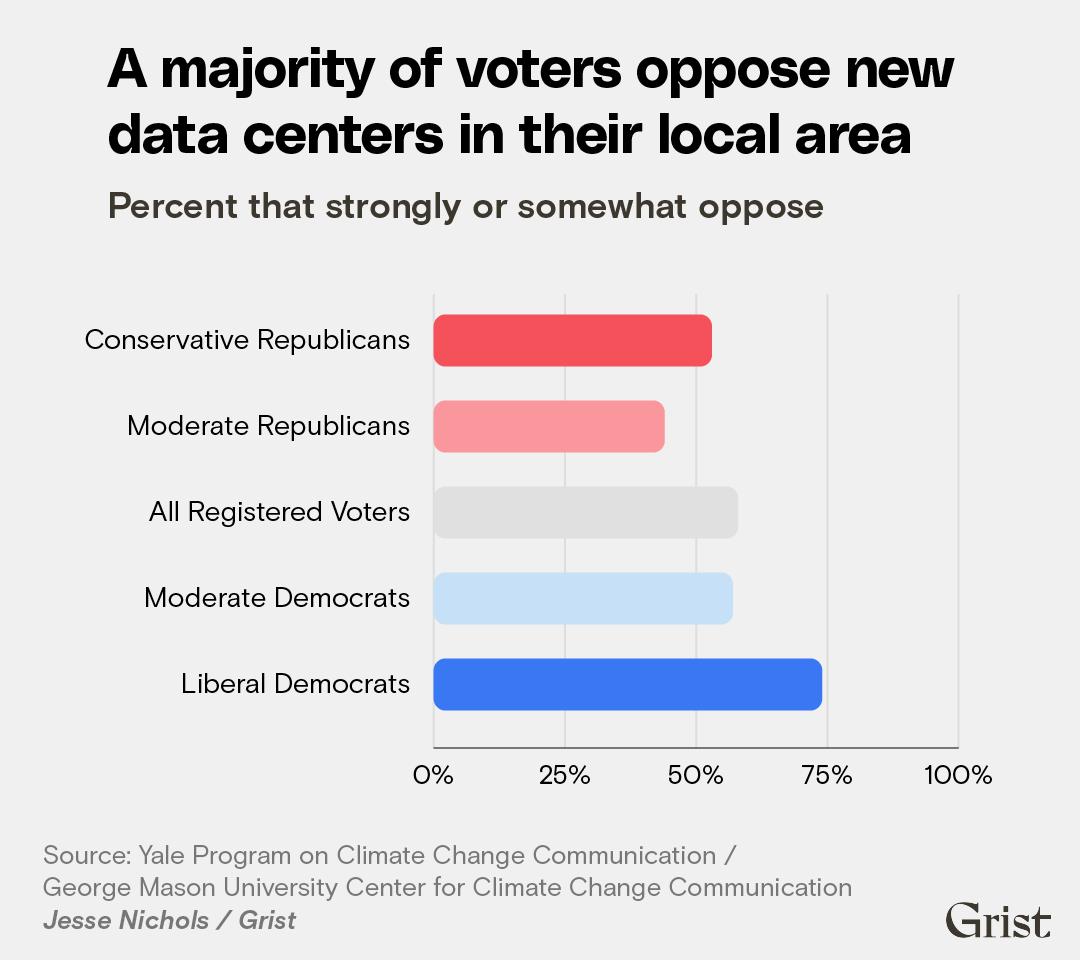
In an era when political polarization is near record highs, data center backlash represents a rare area of consensus on both sides of the political aisle. Some 70 percent of Americans oppose local construction of AI data centers — 75 percent of Democrats and 63 percent of Republicans, according to polling from Gallup. Dig a little deeper into additional survey data, and the politics of data centers gets even more surprising. There are more conservative Republicans (53 percent) who oppose data centers in their local area than moderate Republicans (44 percent) — meaning that staunch conservatives are actually nearer to Democrats in their opposition. 

“I’m not sure I’ve ever seen a chart where conservative Republicans are closer to liberal Democrats than liberal [and] moderate Republicans are,” said Anthony Leiserowitz, the director of the Yale Program on Climate Change Communication.

A graph showing the percent of voters who oppose new data centers in their local area. The numbers show 53% of conservative republicans; 44% of moderate republicans; 58% of overall registered voters; 57% of moderate democrats; and 74% of liberal democrats oppose local data center construction.

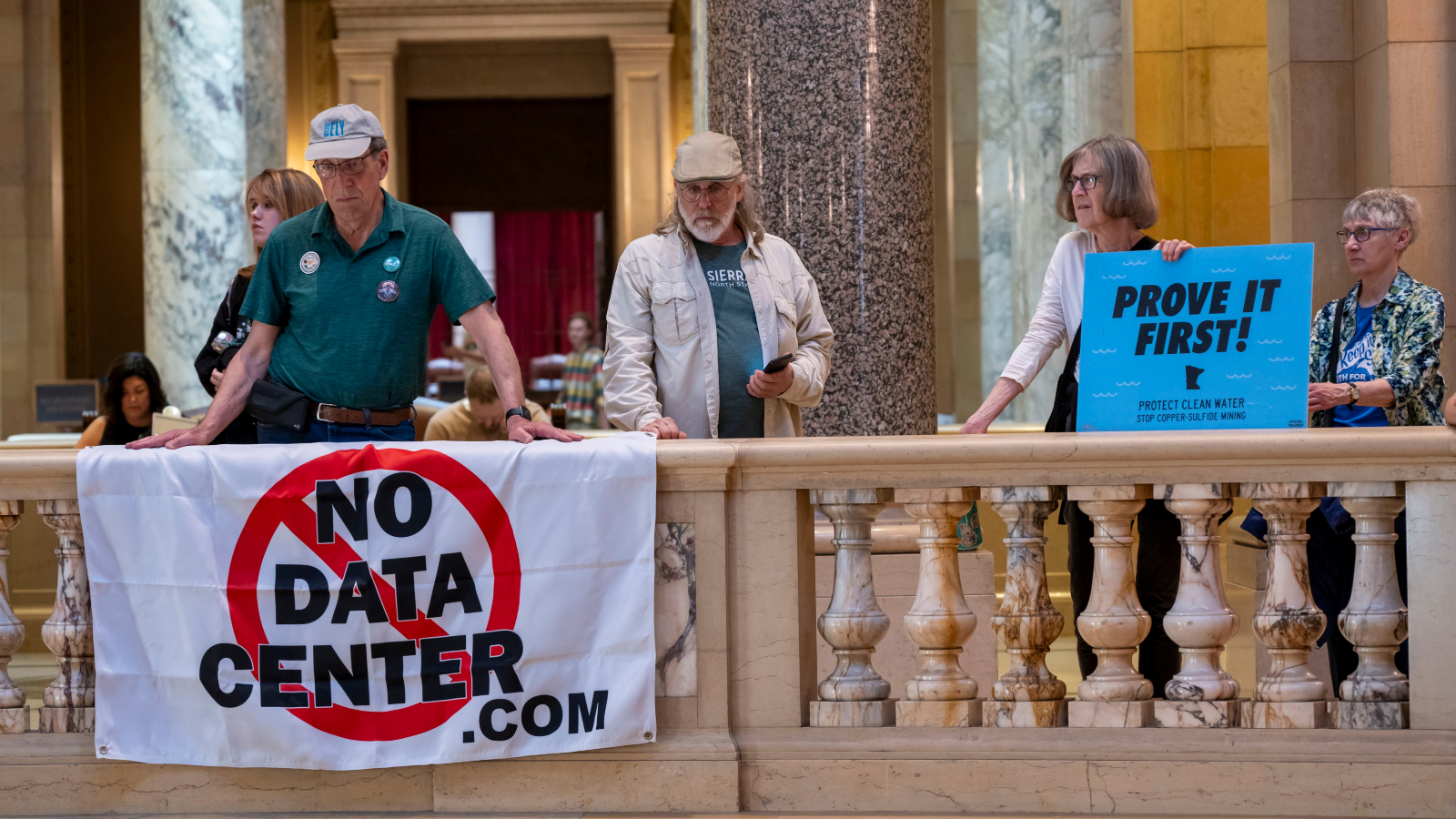
Bipartisan anti-data center activism has emerged as one of the only counterbalances to AI’s inexorable rise. At least 75 data center projects worth roughly $130 billion were stalled or blocked in the first three months of 2026 alone. Political scientists and organizers tracking the backlash say the opposition is not driven by a single ideology so much as a recurring set of local grievances: rising electricity bills, water scarcity, noise, land use, tax breaks, distrust of tech companies and the billionaires who own them, and the fear that communities are being asked to share their resources with an industry that will provide little in return.

Still, those same experts note it’s too soon to say whether anger over data centers represents a lasting break in America’s partisan machinery. The backlash could trigger a broader questioning of Big Tech’s power in American life, perhaps resulting in real guardrails for an industry where few currently exist. Or it might be in its pre-partisan phase, waiting to be absorbed by the political tribalism that has shaped fights over climate, energy, housing, and so many of the other issues that have fallen victim to the culture wars.

more than 800 group working across 49 states to oppose some 1,500 planned data centers.
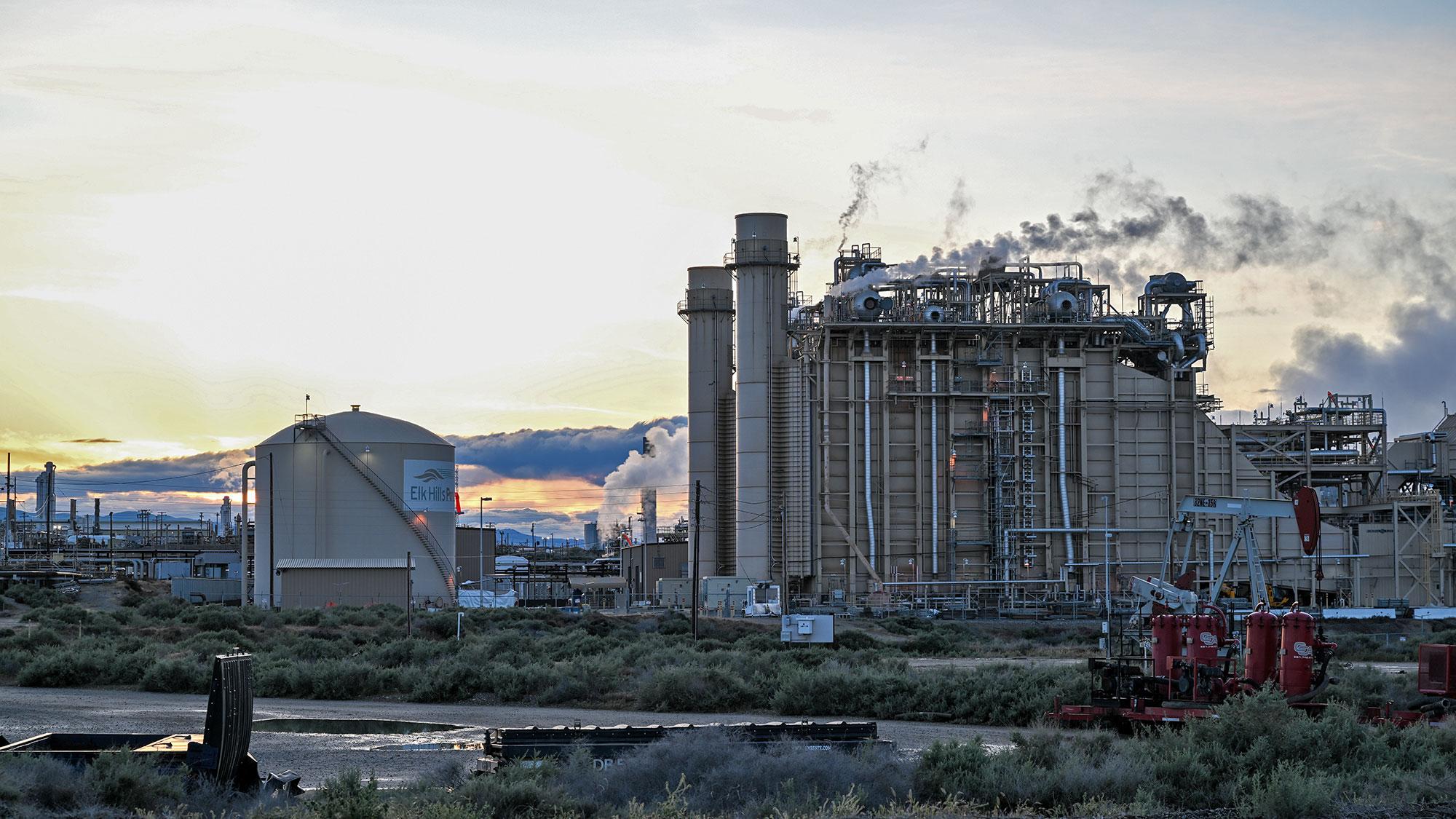
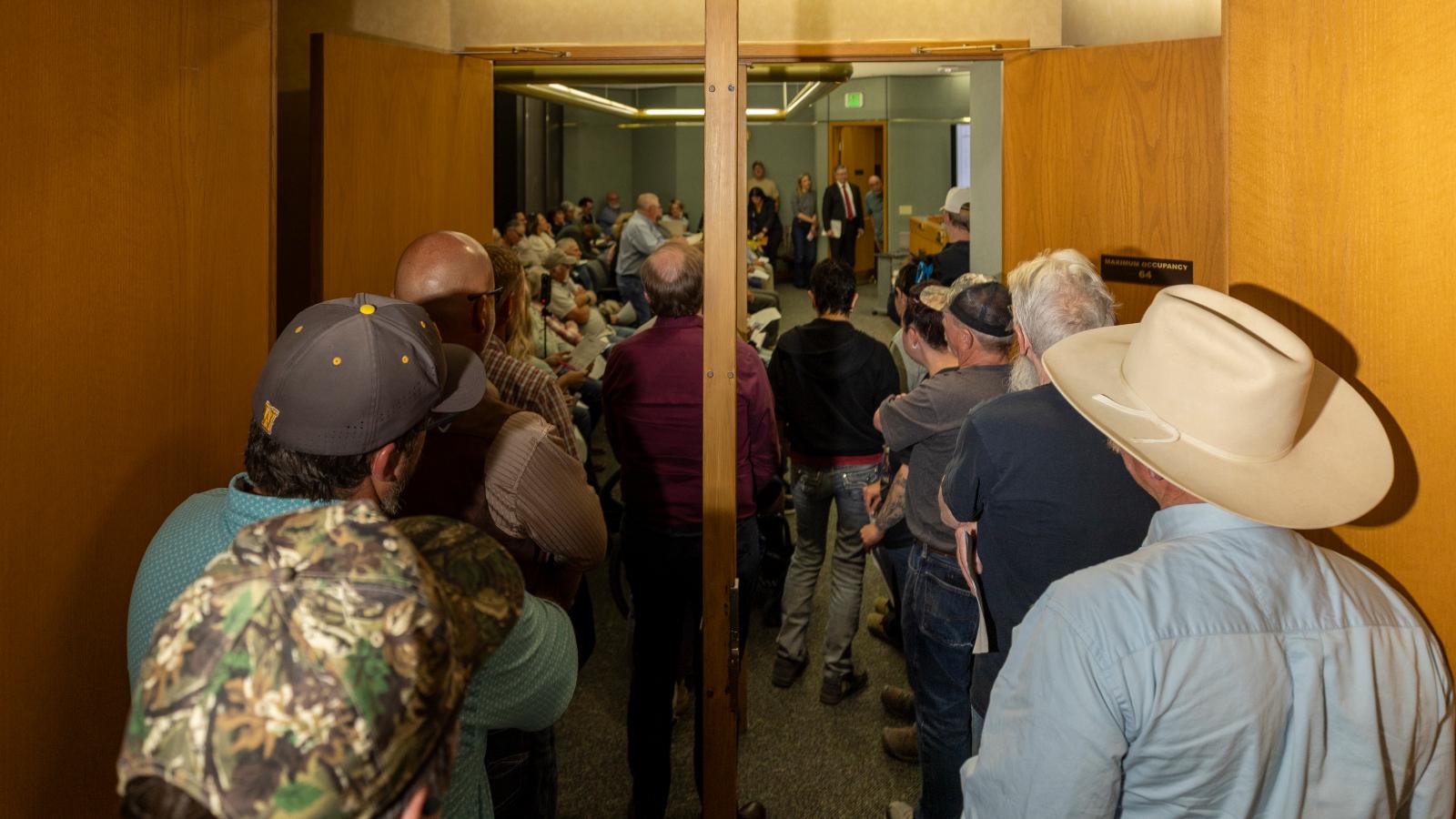
But what might look like a unified anti-data center movement from a distance is actually a series of distinct fights unfolding simultaneously. The concerns motivating a community in Virginia to oppose a data center might be different from those inspiring a municipality in California to take up the same fight. Even within local fights, people often have varied reasons for showing up: light pollution, greenhouse gas emissions, or existential fears about AI. 

Some research shows that Republicans and Democrats emphasize different risks when talking about data centers. “Republican officials often raise concerns about tax incentives and energy grid strain, while Democrats tend to focus on environmental impacts and resource consumption,” said a report from Data Center Watch, a project run by the AI firm 10a Labs that keeps tabs on local data center activity.

In Box Elder County, Utah, where Trump walked away with nearly 80 percent of the vote in 2024, a 40,000-acre data center project backed by celebrity investor Kevin O’Leary is facing intense backlash from rural conservative voters over its perceived impacts on the rapidly drying Great Salt Lake and the project’s electricity and property tax breaks. Earlier this month, voters in left-leaning Monterey Park, California, approved a ballot measure permanently banning data centers in order to “protect air quality, drinking water resources, and public health.”  

Read Next

While the local opposition is place-specific, there are overlapping national political undercurrents that may be buoying the backlash regardless of place or party. The executives driving the data center boom — Tesla and SpaceX’s Elon Musk (who last week became the world’s first trillionaire), Meta’s Mark Zuckerberg, OpenAI’s Sam Altman, and others — are far more familiar to Americans than the leaders of most major industries. 

“No one can name the CEO of Exxon Mobil,” said Alex Beauchamp, northern regional director at Food and Water Watch, a nonprofit advocacy group that has been pushing for the New York data center moratorium. That’s not the case with tech CEOs. “These guys are real, actual villains to a lot of people,” he added. 

For years, tech moguls tried to position themselves as visionary leaders ushering in a more just future, hiring huge numbers of workers to companies they promised had altruistic intentions. But the tides of political opinion have shifted as tech firms have grown larger, more powerful, and more entwined with the federal government while also laying off tens of thousands of employees and spending billions on data centers (just four tech companies are projected to spend a total of $670 billion on AI-related infrastructure this year). 

7 percent of voters in a recent survey said they trust tech CEOs to make decisions that affect their lives.
Then there’s the broader context of the rising cost of living motivating so many American voters right now, making communities especially sensitive to the effects of data centers on electricity bills and public resources. 

“We have this war that is making all prices go up, energy prices go up, so people are super aware of the ways that building other infrastructure in their towns is potentially going to make their access to less expensive energy impossible,” said Dana R. Fisher, director of the Center for Environment, Community, and Equity at American University, referring to the Iran War. “I think that works really well across ideological lines.”


Still, experts warn that the ties that bind America’s broad political spectrum in opposition to the AI boom could fray as the 2026 midterm elections approach and politicians seek to use the issue to their advantage. “Issues that can unite people across partisan lines, once they attract that broad political attention, the forces of partisanship tend to overwhelm everything else,” said Megan Mullin, a professor of public policy at the University of California, Los Angeles.

It’s a lesson Beauchamp, at Food and Water Watch, remembers well from the campaign to ban hydraulic fracturing in New York. In 2014, New York became the first state with underground gas reserves to ban the practice of shooting water at high speeds horizontally through buried rock to unlock deposits of natural gas. In the years leading up to the ban, a broad political coalition of New Yorkers shared many of the same concerns that today’s data center activists hold. Fracking poses serious risks to local water supplies, contributes to air and noise pollution, and brings heavy industrial activity to rural areas unaccustomed to industry. 

After New York banned the practice, Beauchamp assumed other states would follow suit. But the issue quickly became deeply partisan, as fossil fuel lobbyists and Republican officials sought to position the anti-fracking movement as a green ploy to undermine energy production and hurt working-class communities. As of today, only five states have a fracking ban on the books. Politicians who were open to banning the practice have come to regret that position. Kamala Harris’ vow to ban fracking on the campaign trail in 2019 was one of Trump’s favorite offensive cudgels when the two candidates faced off for the presidency in 2024. 

Read Next

“This feels to me like the early days of the fracking fight,” Beauchamp said. “A lot of Republicans were really up in arms about it in the beginning, and then it slowly became a partisan issue.” 

Data centers could soon be swept into that same right-versus-left vortex — but some activists are holding room for the possibility that new coalitions could emerge out of it. “It’s a moment to re-scramble people’s brains and build new cross-partisan alliances,” said Evan Sutton, the founder of the communications consulting firm Firekit Campaigns, who has helped people opposing data centers across the U.S. connect with one another. “It’s a remarkable and probably very rare opportunity to create something different.”


What to know about data centers

Data centers are warehouse-like facilities housing the servers needed to store and process huge amounts of digital information. They’ve existed for decades, but the rise of artificial intelligence over the past few years has triggered a surge in new construction. Here’s some of our latest reporting on the key issues surrounding their development.

  • Jobs: The tech industry is spending millions to rebrand data centers as job creators, but research shows they often create fewer jobs than other industries like manufacturing.

This information last updated Feb. 27, 2026


Doorbell cam filmed alleged Tesla Autopilot crash that killed woman in her home

0
doorbell-cam-filmed-alleged-tesla-autopilot-crash-that-killed-woman-in-her-home
Doorbell cam filmed alleged Tesla Autopilot crash that killed woman in her home

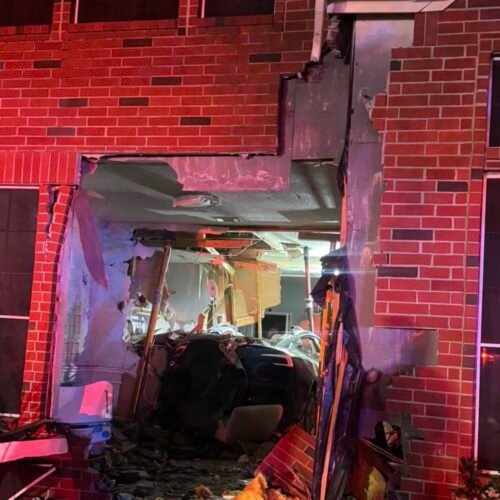
An elderly Texas woman tragically died Friday after a man relying on his Tesla Model 3’s automated driver-assistance mode lost control and crashed his car into her family’s home.

In a statement, the Harris County Sheriff’s Office confirmed to Ars that Michael Butler said that “he was operating with an automated driving assistance system engaged at the time of the crash.” Police are currently investigating whether the autopilot feature in any way caused the crash but confirmed that Butler was not intoxicated and is cooperating, partly by helping cops understand how Tesla’s Autopilot feature works.

“Butler failed to drive in a single lane, left the roadway, and struck the residence” at a “high rate of speed,” the sheriff’s office said.

It remains unclear how fast the car was going, but The New York Times shared a disturbing doorbell camera video of the crash showing the moment when the Tesla plowed through the brick home’s front. On Facebook, the Office of Constable Terry Allbritton shared photos showing the destruction to the home.

Martha Avila, 76, was standing in the front room of the house, where she lived with her daughter, son-in-law, and three young grandkids. Her daughter, Jennifer Barbour, told a local news outlet that no one else was hurt. The family remains “devastated” by the loss, with Barbour emphasizing that Avila was on no medications and in otherwise good health when she passed suddenly from her injuries. She thought her mother might live to 100, the way her grandmother did, she said, and feels Avila was robbed of significant time with her grandkids.

“She didn’t deserve to go that way,” Barbour said.

The family is in mourning while living in a hotel and waiting for answers, stuck in a state of uncertainty over whether the Tesla or the driver is to blame.

“I don’t know if it’s his fault or the car’s fault or what really happened,” Barbour said. “I’ve never seen a car go that fast.”

Tesla did not immediately respond to Ars’ request to comment.

Tesla claims Autopilot saves lives

Tesla’s Autopilot feature is popular, but it cannot be fully trusted, with the owner’s manual reminding drivers that “they should keep their hands on the wheel and take over if anything goes wrong,” the Times noted.

However, Tesla’s marketing often sends a mixed message, critics think. As recently as May, Tesla’s X account posted an ad showing drivers with their hands off the wheel, goofing off while waving their fingers in the air or sipping a hot coffee from a ceramic mug with two hands. The day after Butler’s crash, the Tesla X account reposted a gushing comment from a Tesla fan who shared a pic of himself taking a photo of a sunset while driving. His caption claimed that Tesla’s technology “is both magical and life changing, relaxing and maybe even lifesaving!”

For years, Tesla has claimed that automated self-driving features will make roads safer by eliminating human errors that commonly cause crashes. And under the Trump administration, Tesla seems best positioned to rapidly advance its technology and get more cars on the road with fewer human controls and without regulatory delays.

Currently, the company is pushing for the National Highway Traffic Safety Administration (NHTSA) to relax two rules.

One proposed rule change would allow automated vehicle (AV) makers like Tesla to remove displays that let drivers view transmission shift positions. In support, Tesla claimed that automated driving systems (ADS) make such displays obsolete because humans don’t need this information, but Advocates for Highway and Auto Safety warned that “it is critically important that passengers of a vehicle operated by an ADS can determine if the vehicle is in the proper gear before exiting or entering the vehicle.” According to Advocates, NHTSA has shown no research proving that the update would improve road safety.

The other rule change follows similar logic: NHTSA proposed that AVs relying on ADS don’t need windshield wipers or defogging controls for humans to operate. As Tesla commented, “there is no safety need” because the ADS relies on cameras to operate, “not transparency of the windshield zones.”

If Tesla gets its way, NHTSA would approve that rule change not just for smaller vehicles but also for mid-sized and large SUVs. However, Advocates are recommending that NHTSA instead drop the rule change, since there are a “multitude of safety reasons” why it’s critical to ensure “passengers can observe their surroundings to exit or enter a vehicle during a routine operation.” Imagine if the car is involved in a serious crash or there’s a major obstruction in the road that passengers otherwise may not be able to see, Advocates suggested.

In both comments, Advocates emphasized that features like Tesla’s Autopilot remain “unproven,” while motor vehicle deaths remain “historically high.” Advocates urged NHTSA to consider that even a single fatality, such as Avila’s death, has a “horrific ripple effect forever changing the lives of children, parents, friends and communities.”

The group also took time to contradict claims from AV makers like Tesla, which often rely on a 2019 NHTSA study finding that 94 percent of car accidents are due to human error in order to suggest that AVs will make roads safer.

According to Advocates, these claims are “misleading” because NHTSA emphasized in that study that human error was documented as a “critical reason” linked to the crashes, but “it is not intended to be interpreted as the cause of the crash nor as the assignment of the fault to the driver, vehicle, or environment.”

“Many promises have been touted about AVs bringing reductions in motor vehicle crashes and resultant deaths and injuries, lowering traffic congestion and vehicle emissions, expanding mobility and accessibility, improving efficiency, and creating more equitable transportation options and opportunities,” Advocates said. “However, as auto industry leaders have acknowledged, these outcomes are far from certain.”

Trump’s NHTSA more aligned with Musk

In 2023, Tesla recalled more than 2 million vehicles—every car with Autopilot—after regulators found the carmaker had not deployed the feature in a way that required drivers to remain attentive. That recall followed a 2021 NHTSA investigation into crashes and fatalities involving the technology.

Since then, Tesla CEO Elon Musk spearheaded the Department of Government Efficiency efforts that gutted NHTSA of staff with expertise in evaluating AV safety. Then, shortly after that team shrank, Tesla’s Full Self-Driving system (FSD) got worse. Alarming reports of Tesla FSD failing sparked a new NHTSA probe last October, which Tesla delayed responding to.

It’s unclear if the Texas crash will get Tesla into more hot water. NHTSA did not respond to Ars’ request for comment, but the agency appears more aligned with Musk on deregulating AVs.

In January, NHTSA Administrator Jonathan Morrison confirmed in a speech that the agency considers 2026 a “big” year for AV rulemaking. He said that NHTSA was moving fast to change the rules to pave the way for the future Tesla envisions, coming soon, where he expects human intervention won’t be needed “when they see things go weird.”

“I’m talking about vehicles that would never require human intervention—vehicles you can take a nap in,” Morrison said.

Morrison suggested the technology “is one of, if not the, most challenging engineering problems humanity has ever attempted” and acknowledged that it was “safety critical.” But he criticized the Biden administration for focusing too much on “enforcement against AV developers and safety research” and said that under the Trump administration, advancing American AVs would be a top priority.

“We’re not going to be shy when we see something that we believe presents a risk to the public,” Morrison said. “But the promise of this technology to society is far too great to ignore, or worse, discourage, or prohibit.”

According to Morrison, the “pathway” to this future requires prioritizing safety, while “moving with a sense of urgency” to remove “unnecessary regulatory barriers” and “enable the commercial deployment of AVs to enhance safety and mobility for the American public.”

“To be clear, this includes the commercial deployment of purpose-built AVs without traditional controls such as steering wheels or brake pedals,” Morrison said.

Do You Work or Volunteer for Connecticut’s Emergency Medical Services? We Want to Hear From You.

0

ProPublica and The Connecticut Mirror, two nonprofit newsrooms, are examining the state’s emergency medical services and what it takes to provide lifesaving care across the state. If you work or volunteer for emergency medical services in Connecticut, we need your help. 

We know that the state’s emergency medical services have been strained for years, but that doesn’t stop paramedics, emergency medical technicians and emergency medical responders from working around the clock to serve community members in crisis. We have data on ambulance response times, but we know it doesn’t tell a full story about what is happening behind the scenes.  

If you work or volunteer for a Connecticut ambulance corps, a fire department, a law enforcement agency or an emergency room, we want to hear your experience and understand what resources you need to do this lifesaving work. 

What has changed about emergency medical services since you started? If your ambulance corps needs more staff, what are the challenges to hiring or retaining new people? What do you wish Connecticut residents or lawmakers knew about the state of EMS?

Your input is crucial and will help guide our reporting. We want to understand the issue in all its complexity — from training limitations to worker housing needs to budget cuts, and what that means for your vital work every day. 

You can fill out our brief form to share your experience. Our reporters read through every response and may follow up with you. You can also email CT Mirror reporter Jenna Carlesso and ProPublica reporter Cassandra Garibay at [email protected] if you have any questions or concerns. 

Don’t work for emergency medical services in Connecticut but know someone who does? You can also help by sending this form to them. 

If you have called 911 for a medical emergency, we also want to hear from you. Please fill out our patient experience form.

Will the US-Iran talks in Switzerland deliver peace? It’s unlikely

0
will-the-us-iran-talks-in-switzerland-deliver-peace?-it’s-unlikely
Will the US-Iran talks in Switzerland deliver peace? It’s unlikely

When it was signed at the end of the G7 summit on June 17, the US-Iran memorandum of understanding (MoU) was hailed as a diplomatic breakthrough. By reopening the Strait of Hormuz, easing sanctions and launching a 60-day negotiating process, it felt like a positive step on the road to ending a conflict that has threatened regional stability and the global economy.

Yet the past weekend’s events have exposed the agreement’s fragility. While US and Iranian negotiators reported progress in the first round of talks in Switzerland, the US president Donald Trump’s renewed threats of military action against Iran and the physical security of Iranian negotiators prompted fears that the diplomatic process may break down and the conflict resume in earnest.

The status of the Strait of Hormuz, arguably the only positive takeaway for the US from the MoU, also remains uncertain.

So as it stands, the agreement is better understood as enabling a pause in hostilities than an actual settlement. It largely restores pre-war conditions while leaving tensions between the US, Iran and Israel unresolved.

Israel remains the elephant in the room. It is deeply affected by the deal but is not a party to it. And it’s still capable of undermining any diplomatic progress with its continuing assault on Lebanon in contravention of the MoU.

The most likely outcome is a return to grey-zone conflict, meaning hostile measures that stop short of outright shooting warfare. In this case, proxy warfare, cyber operations, economic coercion and periodic military escalation. The shooting may have stopped – but the forces that ignited the conflict remain.

None of which looks good for Washington. Trump entered the confrontation promising to dismantle Iran’s nuclear programme, curb its regional influence and restore American deterrence. Instead, the MoU grants Tehran economic relief while leaving unresolved key issues – missile capabilities, proxy networks and long-term limits on uranium enrichment.

For Iran, survival itself is a strategic victory. Despite sustained US and Israeli pressure, the regime remains intact and negotiating rather than capitulating.

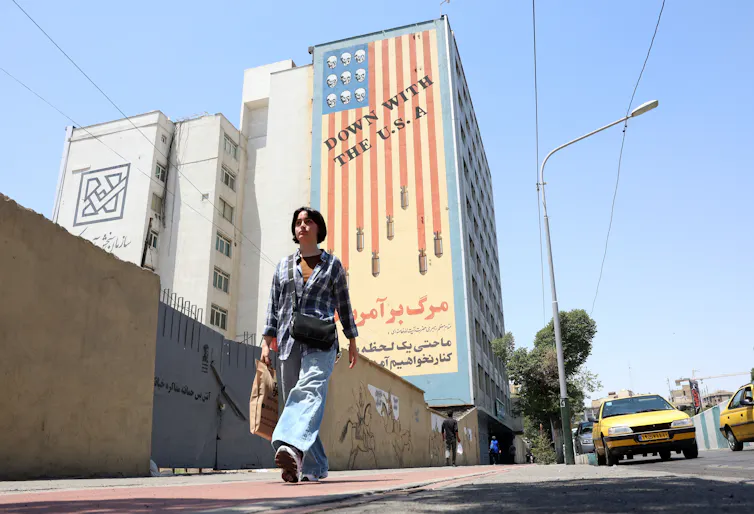
A young woman walks past an anti-US mural, June 2026

Public sentiment in Iran remains resolutely anti-US. EPA/Abedin Taherkenareh

The conflict also exposed the limits of regional security arrangements. Gulf states felt and witnessed how even America and Israel’s overwhelming military superiority and expensive advanced weapons systems do not necessarily translate into decisive political outcomes. Nor do they guarantee protection from escalation.

For the US, the agreement appears to reflect the mounting costs of escalation: US$132 billion (£100 billion) and counting. Disruption in the Strait of Hormuz raised energy prices, strained alliances and exposed the limits of military coercion. While sanctions relief and restored oil flows may ease immediate pressures, they also risk reinforcing the perception that sustained pressure and proxy warfare can force even a superpower to negotiate.

Perceptions matter in international politics. For America’s gulf partners, the MoU may raise doubts about Washington’s willingness to sustain ambitious objectives when the economic and political costs become too high.

Iran, meanwhile, appears to have been strategically strengthened by the conflict. The MoU creates space for economic recovery and strategic adaptation, making it likely that Iran will continue pursuing influence through cyber operations, proxy networks and other forms of grey-zone competition.

Israel faces perhaps the most difficult strategic recalibration. For decades its security policy has rested on military superiority backed by close US support to the tune of some US$4 billion a year. The MoU shows how its strategic priorities are now at loggerheads with those of its main ally and sponsor. It raises questions about how far Washington is willing to align its regional priorities with those of Jerusalem.


Read more: Donald Trump and Benjamin Netanyahu have different war aims – can the Iran peace deal survive?


Israel’s strategic culture has always prioritised self-reliance. This suggests it will continue to pursue covert operations, targeted assassinations and strikes against perceived Iranian threats.

While there has been no actual fracturing of the US-Israeli security relationship, the clear strategic differences could make future coordination more transactional – even as Israel remains heavily dependent on US military and diplomatic support.

Criticising members of the Israeli cabinet who had denounced the MoU, the US vice-president, J.D. Vance, told a White House briefing on June 19 that “Donald J Trump is the only head of state in the entire world who is sympathetic to the nation of Israel at this moment in time”.

Grey zone warfare: the modern default for conflict

But the broader significance of the agreement struck at Versailles on June 17 lies in what it reveals about conflict in the contemporary geopolitical situation. Rather than producing clear victories or defeats, modern confrontations increasingly become prolonged competitions in the grey zone between peace and war. As escalation becomes too costly, states regroup and compete through alternative means.

As far as the Middle East is concerned, this means that significant risks remain. A comprehensive agreement within 60 days appears unlikely given persistent disputes over sanctions, enrichment and regional security. Continued Israeli operations in Lebanon could quickly unravel the fragile pause. America’s allies in the gulf could respond to all this uncertainty by deepening ties with China and Russia.

The MoU is less a peace agreement than a diplomatic holding pattern. It lowers tensions and stabilises markets but leaves the underlying drivers of conflict intact. US-Iran-Israeli relations are therefore likely to continue oscillating between confrontation and accommodation.

Addressing deeper sources of instability – regime security concerns, ideological rivalry and regional proxy networks – would require a far more ambitious settlement than any 14-point memorandum can provide.

Peace or not, the Middle East will now lean more toward China

0
peace-or-not,-the-middle-east-will-now-lean-more-toward-china
Peace or not, the Middle East will now lean more toward China

The most important question about the US-Israel-Iran war is no longer one of who has lost. It is obvious that everyone has lost but that Iran has lost less badly than the others.

Nor is it important to ask how humiliating the peace “memorandum” Iran and the US signed this week is for Donald Trump, nor how big a failure the war represents for America. It is obviously very humiliating, but Trump doesn’t care and the problems the failure creates will mostly be passed on to future administrations.

The most important question now is what the future holds for the whole Middle East. The answers to that question do not lie in the text of the memorandum itself but in the behavior in response to it of Israel and Iran. Neither the United States nor its volatile, aging, perhaps weakened President Trump will now be irrelevant, of course, but America and Trump have made themselves secondary players in whatever drama now lies ahead.

Israel, and especially its Prime Minister Benjamin Netanyahu, have been primary players in this drama right from the start but are now feeling the failure of the war especially strongly. For the past half-century – ever since 1979 brought a peace deal with Egypt, previously Israel’s most dangerous enemy, but also brought Ayatollah Ruhollah Khomenei and his Islamic regime to power in Tehran – the biggest threat to Israel’s security and even survival has always been Iran.

This war, from the bombing of nuclear facilities in Iran one year ago to the broader bombing campaign that began on February 28, has been promoted by Netanyahu as being vital to overthrowing Iran’s theocratic regime and to eliminating the regime’s chances of acquiring a nuclear weapon. Meanwhile, Israel wanted to further reduce the threat posed by the two most powerful militias trained and supplied by Iran, Hamas in Gaza and Hezbollah in Lebanon.

But now, two and a half years since Hamas’s deadly atrocities in Israel in October 2023, both Hamas and Hezbollah remain intact and capable of killing Israeli citizens; the theocratic regime remains in power in Tehran; and Iran’s nuclear program, although it is severely damaged, is potentially repairable.

The memorandum signed last week states that Iran will not seek to acquire or develop nuclear weapons, but that is no different from what the Iranian regime has always said.

Israeli troops are sitting in southern Lebanon to prevent Hezbollah from launching attacks on Israel from there, but Trump is telling Netanyahu that he must stop attacking supposed Hezbollah targets in Beirut. If the memorandum is to be taken literally, Trump should also be telling Netanyahu to withdraw Israeli forces from Lebanon altogether.

Israel is not a direct signatory to the memorandum so it will feel even less bound by it than will Iran or the United States. If it wants to keep on fighting Hezbollah, it can and will do so. But it is nevertheless faced with a very difficult situation. Netanyahu’s longstanding strategy towards Iran has failed. He faces a general election in September or October which, on current polling, he is likely to lose.

Nonetheless, none of Netanyahu’s political opponents has yet come up with a new plan for how to deal with Iran. Whatever government is elected may well opt for a period of damage limitation. But that is not a long-term strategy. It does not resolve the situation in Gaza or the occupied West Bank. And it leaves unanswered the question of Israel’s future relationships both with the United States and with the Arab states of Saudi Arabia, the United Arab Emirates and the rest of the Gulf.

Moreover, if the peace does hold with Iran, Israel’s new government will now find it very hard not to accept and follow the terms of the 20-point plan for Gaza laid down by Trump last October, not least because it has support and potential finance from the Gulf Arab countries.

Even Hillary Clinton, the Democrat who Trump defeated in 2016 and who remains one of his most implacable opponents, wrote last week in the Financial Times that Israel, Europe and everyone else should adopt the Gaza plan because it is the only plan that is available. Where it leaves the question of the creation of a viable Palestinian state remains, however, a mystery.

Iran, too, would be well advised to keep its head down and to spend the next months or even years rebuilding its cities and its economy. The regime has proved that it is able to resist powerful external attacks and to remain in brutal control of its domestic population.

Iran has no immediate need to be provocative externally but a clear need to make its 92-million population less discontented. That means that its likeliest priorities will be to exploit the peace deal’s permission to resume exports of oil and other products, to secure the return of frozen Iranian assets overseas and to encourage Trump to carry out his promises to relax other economic and financial sanctions – all in order to raise funds to improve economic conditions.

One important and still open question is whether Iran will seek to impose tolls on ships passing through the Strait of Hormuz. The memorandum states only that there will be no fees charged for the next 60 days and leaves it to Iran and Oman, the countries on either side of the strait, to work out how to proceed after then.

It may be tempting to humiliate Trump by charging high fees, but it would be quite short-sighted for Iran to do so as that would simply encourage the Gulf Arab countries to invest in other routes for their products, including pipelines, railways and roads.

In the longer term, the biggest question is whether Iran will seek to reactivate its nuclear-weapons program. The United States in the negotiations following the memorandum seek to discourage such a resumption, both through the positive incentives of sanctions relief and through threats of renewed attacks.

Yet the belief that Iran would never have been attacked in the first place if like North Korea it had already had a nuclear weapon will remain a powerful incentive to resume the nuclear program covertly, and a powerful reason for outsiders, especially Israelis, to remain suspicious.

In the end, much may depend on how the reintegration of Iran into the world economy proceeds if, indeed, sanctions really are lifted. The memorandum talks about a supposed US$300 billion fund to rebuild Iran, though this looks more aspirational than a practical reality. But a more open Iranian economy would nonetheless be quite attractive to international investors, for there is ample scope to exploit its natural resources and modernize many of its industries.

It is a fair bet that if such a reconstruction and development process takes place, it will be led by Chinese companies, for they have the skills and the capital as well as being less at risk of future retributions than American ones, for instance.

The connections between Iran and indeed the whole of the Middle East with China are now likely to get even stronger, which also means that China will be the main superpower keeping an eye on Iran’s nuclear program. The region can never entirely stop looking westward, but from now on it will now look eastward. more and more every year.

This article was originally published in Italian translation by La Stampa. Republished with permission, it can also be found on Bill Emmott’s Global View.

What happens next? How the UK will choose Starmer’s successor

0
what-happens-next?-how-the-uk-will-choose-starmer’s-successor
What happens next? How the UK will choose Starmer’s successor


Prime Minister Keir Starmer said on Monday he would resign, with a new leader ​to be in place by the time parliament ‌returns in September, paving the way for Britain to have its seventh leader in 10 years.

Here’s what happens next:

HOW DOES A LEADERSHIP CONTEST WORK?

Any ​candidate wishing to replace Starmer would need to secure the ​support of 20% of Labour members of parliament. ⁠With Labour currently holding 403 seats, that equates to ​81 lawmakers, including the challenger.

Candidates also must hit thresholds ​for support from grassroots Labour Party organisations, and from affiliated organisations such as trade unions.

WHO GETS TO DECIDE THE WINNER?

If more than ​one candidate qualifies, the winner is decided by a ​ballot of all Labour Party members and affiliates. The winner then becomes ‌prime ⁠minister.

HOW LONG WOULD IT TAKE?

Though the timeline is officially decided by the party’s governing body, Starmer said nominations would open on July 9 and close before parliament goes ​into recess, which ​is scheduled ⁠for July 16.

He said if there were to be a contest, it should be ​completed by the time parliament returns, which ​is scheduled ⁠for September 1.

WHAT HAPPENS IF THERE’S ONLY ONE CANDIDATE?

If only one candidate meets the threshold for support, there is ⁠no ​vote: the candidate is elected unopposed ​as Labour leader and becomes prime minister.

Israeli army kills 2 Palestinians in southern occupied West Bank

0
israeli-army-kills-2-palestinians-in-southern-occupied-west-bank
Israeli army kills 2 Palestinians in southern occupied West Bank

The Israeli army killed two Palestinians and wounded two others in the southern occupied West Bank early Monday, the Health Ministry said.

A ministry statement said Reda Awad, 15, and Issa Awad, 19, were killed by Israeli fire in the town of Beit Ummar, northwest of Hebron.

The official news agency Wafa, citing security sources, said Israeli forces left both victims bleeding for an extended period before withholding their bodies.

Two other young men were also wounded by Israeli gunfire and transferred to a hospital, with their condition reported as stable.

In a statement, the Israeli army claimed the individuals had thrown Molotov cocktails toward the illegal settlement of Karmi Tzur.

READ: Olmert: Israel is running a state-funded campaign of settler terrorism in West Bank

Karmi Tzur is built on Palestinian land belonging to the town of Beit Ummar, north of Hebron.

According to the Health Ministry, at least 70 Palestinians have been killed by Israeli army fire in the West Bank since the start of this year.

Palestinian group Hamas denounced the new deaths as part of “Israel’s policy of systematic killing” in the occupied West Bank.

Since the start of Israel’s war on the Gaza Strip in October 2023, the occupied West Bank has seen a sharp rise in raids and attacks by Israeli forces and occupiers against Palestinians.

According to Palestinian figures, at least 1,173 Palestinians have been killed, 12,666 injured, around 23,000 arrested, and roughly 33,000 displaced in the territory during that period.

READ: Protest in West Bank over illegal settler outpost as Israeli forces intervene and detain protesters

Trump-Backed De la Espriella Wins Colombia Presidency by Narrow Margin

0
trump-backed-de-la-espriella-wins-colombia-presidency-by-narrow-margin
Trump-Backed De la Espriella Wins Colombia Presidency by Narrow Margin


Abelardo de la Espriella won Colombia’s presidential runoff election by a narrow margin, defeating left-wing candidate Iván Cepeda after campaigning on promises to combat crime, reduce bureaucracy and strengthen the economy.

Results released by Colombia’s National Registry showed that with 99.99% of polling stations counted, De la Espriella, 47, received 49.66% of the vote, compared with 48.7% for Cepeda, 63.

More than 41 million Colombians were eligible to vote in the election. The National Registry reported that 26.3 million ballots were cast in the runoff, including 12.9 million votes for De la Espriella.

The president-elect was backed by President Donald Trump during the campaign. Following the result, President Trump posted on Truth Social: “He Won, BIG.”

Supporters celebrating the outcome included some wearing hats modeled on those popular among President Trump’s supporters, bearing the slogan “Make Colombia Great Again!”

De la Espriella, a defense attorney who branded himself as the law-and-order candidate and adopted the nickname “El Tigre,” or “The Tiger,” celebrated the victory in Barranquilla alongside vice president-elect José Manuel Restrepo, a former finance minister.

Addressing supporters, De la Espriella said, “Tonight marks the beginning of a new story for the nation, tonight a new era begins, a change of order.”

He also pledged to govern on behalf of all citizens regardless of how they voted.

“I’m going to govern for all Colombians. For those who voted for me, and for those who chose the other candidate,” he said.

In a separate statement, De la Espriella said that “today begins a new stage for our country, a stage built on the free and democratic will of millions of citizens who chose to believe in a great, safe, prosperous Colombia full of opportunities”.

Cepeda, a close ally of President Gustavo Petro, had not conceded as of Sunday night. While acknowledging the preliminary count, he said the results had not yet been finalized.

“Once the official canvass takes place and its final result is produced, and the corresponding verifications have been carried out, we will recognize the official result that emerges from that structure.”

The final certification process remained pending following the release of the preliminary results.

Lucid lays off 1,500 workers in second big cut of the year

0
lucid-lays-off-1,500-workers-in-second-big-cut-of-the-year
Lucid lays off 1,500 workers in second big cut of the year

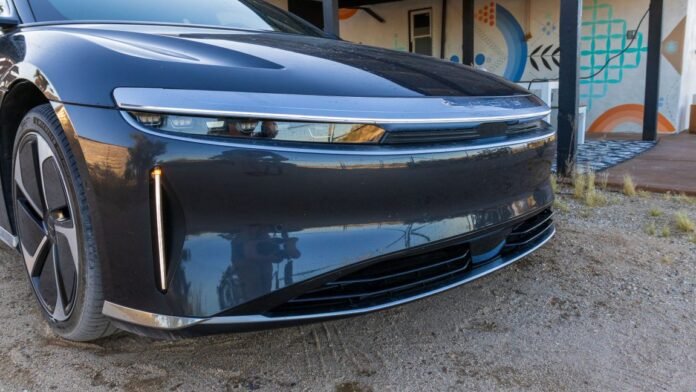
Just three months ago, Lucid Motors showed off a new midsize electric vehicle platform that it said would give rise to a number of new vehicles in the coming years. The Saudi-backed startup is now selling its Gravity SUV alongside the ever-improved Air sedan and plans to reach profitability with smaller and cheaper models sold in higher volumes. But things are far from rosy at Lucid; today, the automaker is laying off approximately 1,500 workers—18 percent of its workforce.

These aren’t the first layoffs of the year, either; In February, Lucid let go of 12 percent of its workforce.

In a filing with the Securities and Exchange Commission, Lucid wrote that the layoffs were “designed to advance the Company’s path toward profitability and positive cash flow generation by streamlining its organizational structure, optimizing operating expenses, and aligning production plans with anticipated demand.”

Lucid is also ending the second shift at its factory in Casa Grande, Arizona, and says that together, the measures will save it $158 million, albeit after paying out $32 million in “severance, employee benefits, and employee transition.”

Among those receiving severance will be Marc Winterhoff, Lucid’s COO and previously acting CEO, who took the helm in February after the original CEO, Peter Rawlinson, abruptly stepped down. Lucid named a new CEO—Silvio Napoli—in April, and with Winterhoff’s departure, the company is eliminating the COO role altogether.

0FansLike
0FollowersFollow
0FollowersFollow
0SubscribersSubscribe
- Advertisement -
Google search engine

Recent Posts