How Iran gained the strategic upper hand in the war with the US and Israel
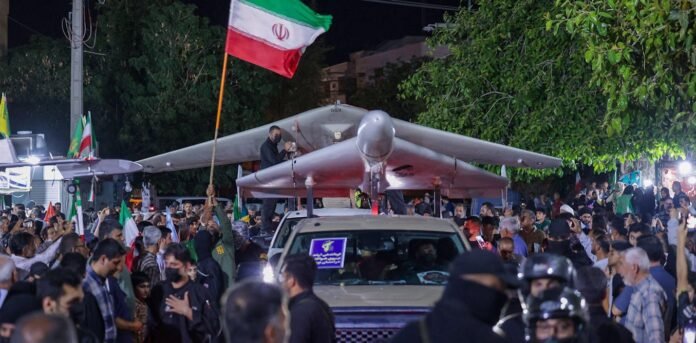
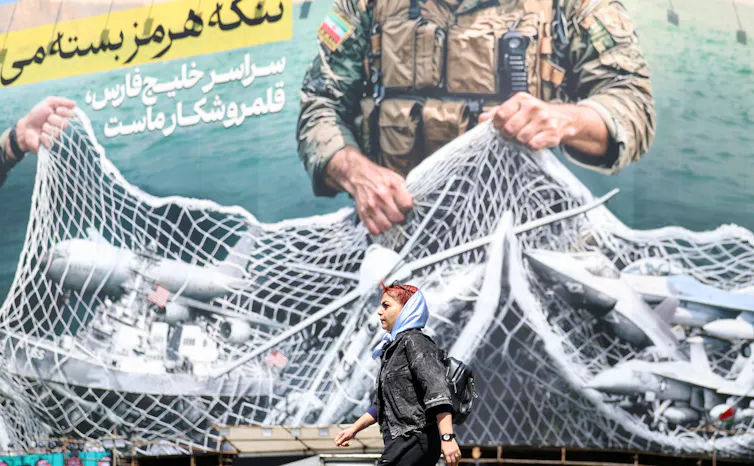
After three months of war with two of the world’s most technologically and militarily advanced countries, Iran has proved far more resilient than anticipated. Indeed, strategically at least, Tehran appears to now have the upper hand in the conflict. How has this situation come about?
When the United States joined Israel to launch the latest war with Iran in late February 2026, the prognosis did not look good for the regime in Tehran.
In attacking Iran, the US and Israel set up a highly asymmetric conflict. It pitted the Islamic Republic up against two nuclear-armed adversaries who boast some of the most advanced military capabilities on the planet. And the scale of the US and Israeli intervention was far larger than anything Iran has experienced in decades.
Over the course of several weeks, Iran was pounded relentlessly with the full force of US and Israeli air and missile power. Precision strikes and targeted assassinations removed key members of Iran’s political and military leadership – including the supreme leader and commander-in-chief, Ayatollah Ali Khamenei. The country’s air and naval combat capabilities were decimated, hundreds of its missile launchers and air defence systems were destroyed and its internal security apparatus was severely degraded. The country’s nuclear facilities and missile and drone factories were bombed with thousands of pounds of munitions.
Iran moved quickly to replace its leadership and use its remaining military capabilities to strike back at its attackers and their allies. But by any measure, the Islamic Republic was facing an existential threat. At that point, it seemed almost inconceivable that Iran might avoid capitulation, survive politically, and recover its position so far as to gain leverage in its dealings with the US. Yet that is exactly the scenario that has played out.
As Jerusalem-based Middle East expert Daniel Sobelman explains, in an asymmetric conflict where a weaker actor is pitted against a superior adversary, the weaker actor must tilt the “balance of vulnerability” in its favour to avoid total defeat. To do this, it must ensure the survivability of its critical military capabilities and it must exploit the vulnerabilities of its adversaries.
This type of logic has long been a feature of Iranian strategic thinking. Officials have often emphasised the importance of exploiting the points of vulnerability or weakness of Iran’s adversaries, while minimising their own, as a key element of both asymmetric deterrence and warfighting.
Tehran’s prewar deterrence posture clearly failed to prevent US and Israeli attacks. Yet over the past three months Iran has shifted the balance of vulnerability. It has imposed severe costs, escalated its attacks and exploited vulnerabilities in ways that helped it not only survive but also force its adversaries to a ceasefire.
Asymmetric warfare
By April it was clear that the US and Israel were unable to force Tehran to capitulate (or to “cry uncle” to as the US president, Donald Trump, famously put it). The attacking forces were unable to create the conditions for regime change. And they failed to destroy Iran’s arsenal of missiles and drones.
Iran absorbed all the punishment inflicted by its attackers. And, crucially, it retained the capacity to retaliate with missile and drone strikes on Israel and US bases in the Gulf. Iran also attacked energy and other infrastructure in Arab Gulf states. This undermined the stated US goal of protecting its regional allies and upended their reputation as havens of stability.
Iran’s attacks also signalled clearly that in this regional conflict, support for the US was a liability rather than an asset. In addition to all this, Iran caused havoc by closing the Strait of Hormuz to commercial vessels. This cut off a critical global supply artery for oil, gas and fertiliser with disastrous consequences for energy and food supply around the globe.
Closing the Strait of Hormuz proved to be a triump card for Tehran.EPA/Abedin Taherkenareh
All the while, Iran has forced Israel, the US and the Gulf states to burn through critical, expensive and slow-to-replenish munitions, another vulnerability that emerged for Tehran to exploit.
In terms of escalation, Iran has threatened to further increase economic costs. It has threatened to expand attacks on Israeli and Gulf energy and infrastructure targets and to target undersea cables in the Strait of Hormuz. And it has threatened to push its Axis of Resistance partners in Yemen, the Houthis, to disrupt the Bab al-Mandab Strait in the Red Sea.
Counting the cost
The US and Israel may have largely achieved their stated military objectives – including degrading Iran’s nuclear programme, military capabilities and defence industries. But Iran has prevented its enemies from achieving their strategic goals. And it has inflicted strategic, diplomatic, military, political and economic costs on Israel, the US, the Gulf states and beyond.
Tehran remains at a clear military disadvantage and highly vulnerable to further US and Israeli military strikes. But Iran appears to hold the upper hand at the political-strategic level, at least for now. It has forced Trump to seek an off ramp, it retains the ability to close the Strait of Hormuz as well as to strike critical targets across the region.
Iran also appears to be revamping the Axis of Resistance – especially Lebanese Hezbollah and the Yemeni Houthis – as a key pillar of leverage, deterrence and warfighting. Tehran recently announced the creation of a “new security belt” of the axis and claimed a new doctrine of “unified resistance front,” where any attack on the axis would trigger a coordinated response by all Axis members.
Moving forward, Tehran will clearly try to leverage this moment of perceived strategic advantage to enhance and coordinate its efforts in both the “field of action” – especially its threat and use of military force – and the “field of negotiation” with Washington. It aims not only to survive this conflict, but to emerge in a stronger strategic position.
In doing so, the Islamic Republic will be able to pour available resources into rebuilding and enhancing its critical retaliatory capabilities – especially missile and drones – while continuing to find ways to exploit the vulnerabilities of its adversaries.
20 years of Intel Macs: Why Apple switched, and why it switched again
The release of macOS 27 later this fall won’t quite close the book on the Intel Mac. The last handful of models that could run macOS 26 Tahoe will be eligible for security and Safari updates for two more years, and elements of the Rosetta compatibility layer for running Intel code on Apple Silicon Macs will be with us in some form for some indeterminate amount of time after that.
But macOS 26 is definitely the last chapter of the Intel Mac story. Anything that happens after this is a coda or an epilogue.
Most of our WWDC coverage has been forward-looking, so indulge us if you will in a look backward at the full history of the Intel Mac, a partnership between two companies that made Macs dramatically better, until it started making them worse.
“Project Marklar”
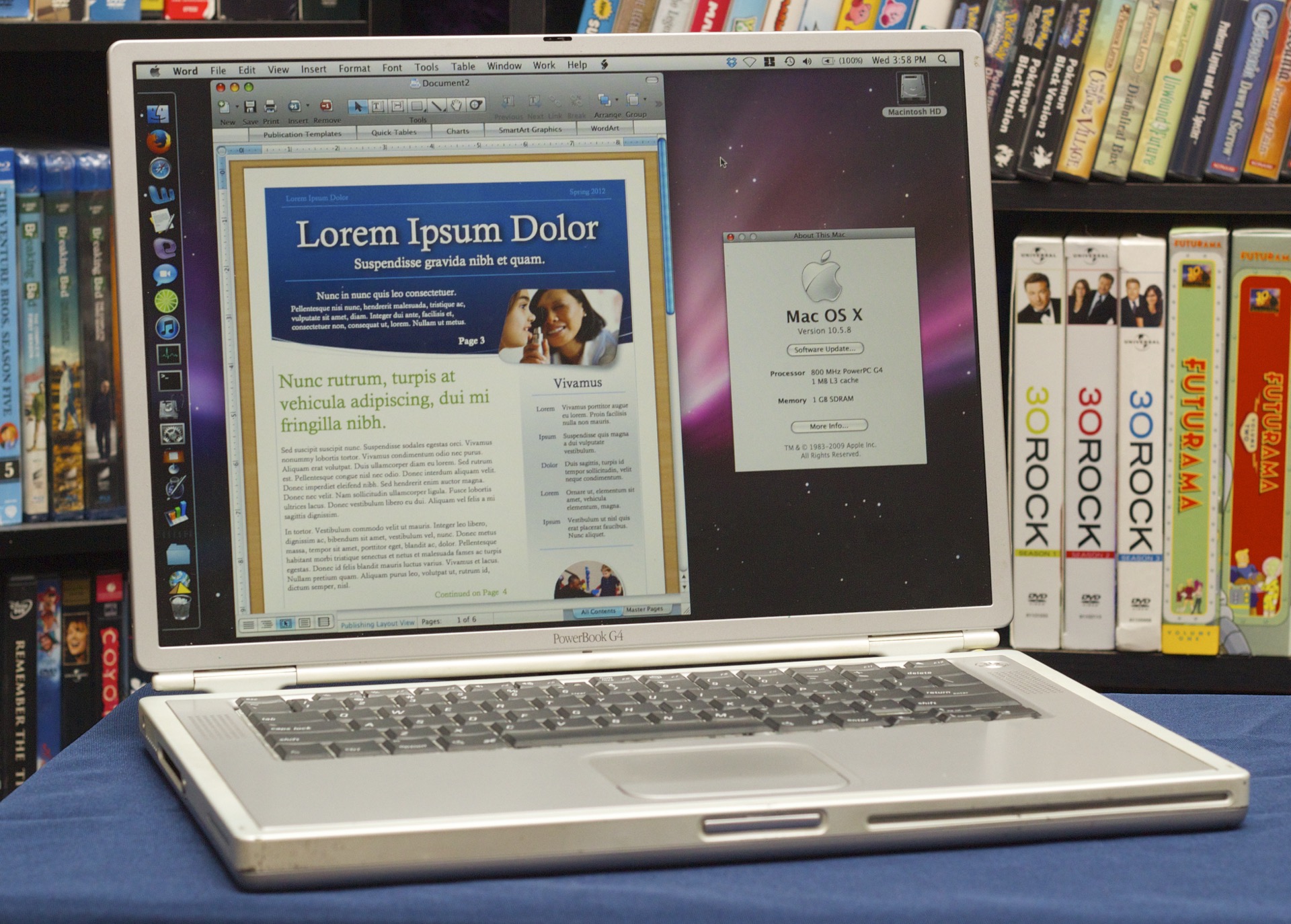
An early 2000s-era titanium PowerBook G4 running Mac OS X Leopard. Apple was never able to squeeze the PowerPC G5 into a laptop.
Credit: Andrew Cunningham
An early 2000s-era titanium PowerBook G4 running Mac OS X Leopard. Apple was never able to squeeze the PowerPC G5 into a laptop. Credit: Andrew Cunningham
The Mac’s history with Intel didn’t start with version 10.4.4, the first Mac OS X version to ship on a commercially available Intel Mac. But we won’t go as far back as the x86-compatible versions of NeXTSTEP or Apple’s abortive ’90s efforts to make a version of classic Mac OS that could be licensed for third-party x86-based systems.
Let’s begin with JK Scheinberg, an Apple engineer in June of 2000, who was looking for a solo project to help him transition to working from home. His pitch? A version of the then-still-in-progress Mac OS X that could run on Intel processors.
“I’ve been working on the Intel platform for the last week getting continuations working,” Scheinberg wrote to his boss in an email shared by his wife. “I’ve found it interesting and enjoyable, and, if this (an Intel version) is something that could be important to us I’d like to discuss working on it full-time.”
At the time, all Macs still used PowerPC processors co-developed by Apple, IBM, and Motorola, as they had since 1994. Early Mac OS X versions ran on G3 and G4 chips, and the 64-bit G5 processor was launched in mid-2003. A version of Mac OS X that ran on Intel’s chips wasn’t strictly necessary, and for around a year and a half, it existed only as a sort of hobbyist side project codenamed “Marklar.”
By early 2002, Marklar had attracted more attention within Apple, and then-CEO Steve Jobs briefly flirted with the idea of allowing Mac OS X to run on Sony’s Vaio laptops. By that August, a dozen or so engineers had been added to the project as it grew from “proof-of-concept” to “contingency plan.”
That’s because Apple was having problems with PowerPC chips. Jobs promised that the desktop version of the G5 would climb in clock speed from 2 GHz to 3 GHz within a year, a promise that never came to pass. And Apple was never able to squeeze the hot, power-hungry processor into a laptop—iBooks and PowerBooks were stuck with revised versions of the G4. Future CEO Tim Cook called a G5-based laptop “the mother of all thermal challenges.”
Jobs had been fuming about PowerPC chips for a while; Walter Isaacson’s Jobs biography describes a heated call between Jobs and Motorola CEO Chris Galvin in 1997, in which Jobs declared that PowerPC chips “sucked.” And he may have harbored other bad feelings; Geoffrey Cain’s Steve Jobs in Exile says that Apple’s PowerPC switch doomed further development of the Motorola m68k chips that NeXT’s computers relied on, helping to kill NeXT’s already-struggling hardware business.
And IBM, for its part, didn’t want to devote its resources to developing a bunch of chips that would be used exclusively in the low-volume Mac lineup (in 2003, Apple shipped roughly 3 million Macs; the company no longer reports unit sales in its earnings reports, but analysts peg that number at just under 26 million Macs in 2025).
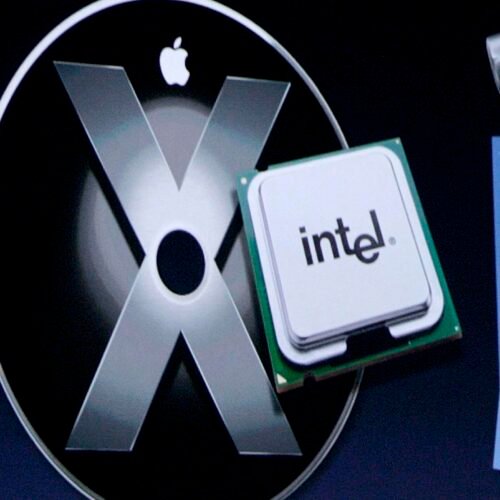
Intel’s Paul Otellini helped convince Jobs to jump to Intel’s chips, and Apple didn’t need to start the software switch from scratch because of its existing work on Marklar. In June of 2005, Apple publicly demonstrated Mac OS X 10.4 running on Intel hardware for the first time. His presentation obliquely mentioned Marklar, though not by name.
“And so today for the first time, I can confirm the rumors that every release of Mac OS X has been compiled for both PowerPC and Intel,” announced Jobs. “This has been going on for the last five years. Just in case.”
The transition
The “first” Intel Mac was a Developer Transition Kit (DTK) made available to software developers after WWDC 2005. It was essentially a Pentium 4-based PC inside a Power Mac G5 case, and it was available strictly as a loan to developers who could pay $499 per year for a developer account and another $999 for the kit. Few, if any, of these DTK kits survived; Apple required developers to return the systems by the end of 2006 and offered to trade them for a real retail Intel Mac to seal the deal.
The WWDC keynote laid out the timeline, in addition to the tools Apple would use to help developers and users navigate the transition. The next version of Mac OS X, version 10.5 Leopard, would be compatible with both PowerPC and Intel Macs. A compatibility layer called Rosetta would run most PowerPC apps tolerably well while developers worked on Intel-native versions, which could be distributed as universal binaries that supported both CPU architectures. This transition worked well enough that Apple essentially handled the Intel-to-Apple-Silicon switch the exact same way.
Apple would also take advantage of the fact that its computers would use the same hardware as other PCs. Right from the start, Apple officially supported running Windows directly on Intel Macs via Boot Camp; a Mac OS X app would handle partitioning the Mac’s disk and downloading Windows drivers for the Mac you were using, and a Windows-side app supported rebooting back into Mac OS (and eventually provided some other nice-to-haves like read-only access to HFS+ formatted volumes).
By January of 2006, Apple started shipping the first Intel Macs, starting with a new iMac and a renamed MacBook Pro to replace the outgoing PowerBook series. These first systems were externally almost indistinguishable from the PowerPC models they replaced, another strategy Apple recycled for the first Apple Silicon Macs—the implied message was “maybe these machines were different on the inside, but they’re still the Macs you know and love.”
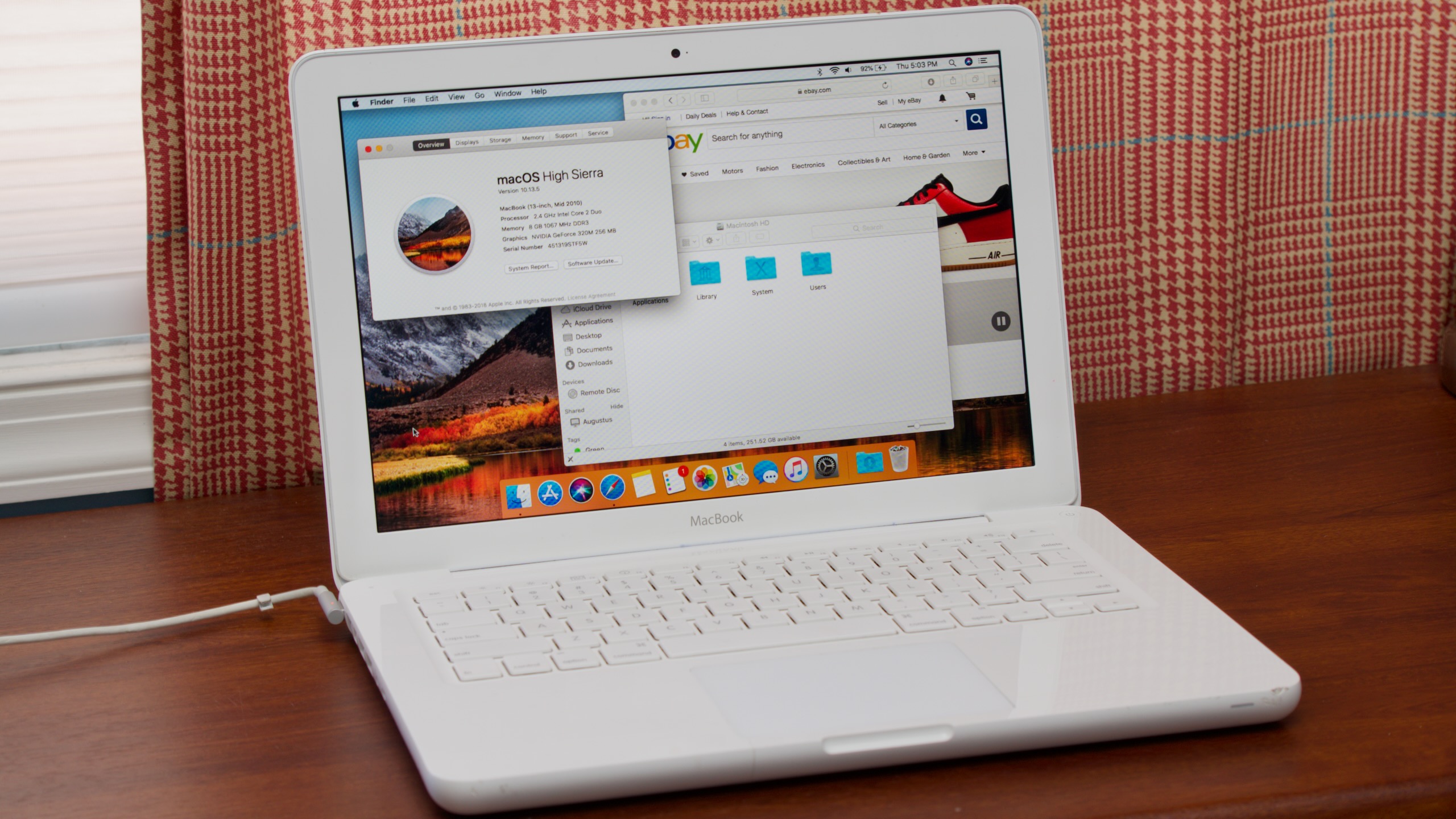
A 2010-era white plastic MacBook. The first-generation version of this design was Apple’s signature consumer laptop during the early Intel era.
Credit: Andrew Cunningham
A 2010-era white plastic MacBook. The first-generation version of this design was Apple’s signature consumer laptop during the early Intel era. Credit: Andrew Cunningham
The first new design of the Intel Mac era came later that year, when Apple launched the MacBook to replace the old iBook. Like the iBook, this laptop was made mostly of white plastic (a black version, inexplicably several hundred dollars more expensive, was also available eventually), and it used slower processors with Intel’s integrated graphics rather than the MacBook Pro’s dedicated graphics chips. But it was a popular machine—I was a college student at the time, and it was definitely the laptop you’d see the most often when you were out and about on campus (or maybe the second-most-often, if you added up every single permutation of “something cheap from Dell”).
During the WWDC 2005 presentation, Jobs predicted that the Intel transition would be mostly complete by the end of 2007. Unlike the 3GHz G5 prediction, this one actually wasn’t optimistic enough: Apple completed its switch from PowerPC to Intel chips with the announcement of a new Mac Pro and Intel-based Xserve in August of 2006.
A productive partnership
“As we look ahead, we can envision some amazing products we want to build for you, and we don’t know how to build them with the future PowerPC roadmap,” said Jobs while explaining the rationale for the switch. (It’s funny to think of now, but some of the Mac’s staunchest loyalists did react to the switch with disproportionate dismay.)
For the first few years of the Intel era, updates came fast and often. The first wave of Intel Macs briefly reverted to 32-bit chips, a retreat from the 64-bit architecture of the G5; this was fixed the next year with a switch to 64-bit Intel Core 2 Duo processors. A flashy new aluminum-and-glass iMac overhaul came in 2007, defining an aesthetic that is still recognizable in today’s Apple products. By the early 2010s, Intel’s rapidly improving integrated GPUs enabled the Mac’s first high-resolution “Retina” displays.
But the tastiest fruit of the early Apple-Intel partnership, a machine that wouldn’t have been possible with PowerPC chips, was the MacBook Air. For that first model, Intel had even made a special version of its Core 2 Duo CPU with 60 percent smaller packaging, something that helped Apple cram an entire laptop into something that could fit in a manila envelope.
That first Air was a bit too ahead of its time; its 4,200 RPM spinning hard drive in particular helped bog it down, and the things it was missing felt like bigger compromises in 2008 than they would have just a few years later. But fast solid-state storage soon became a standard feature, and within just a few years, the MacBook Air was what virtually all laptops looked like. This was something Intel both enabled and encouraged.
Signs of trouble
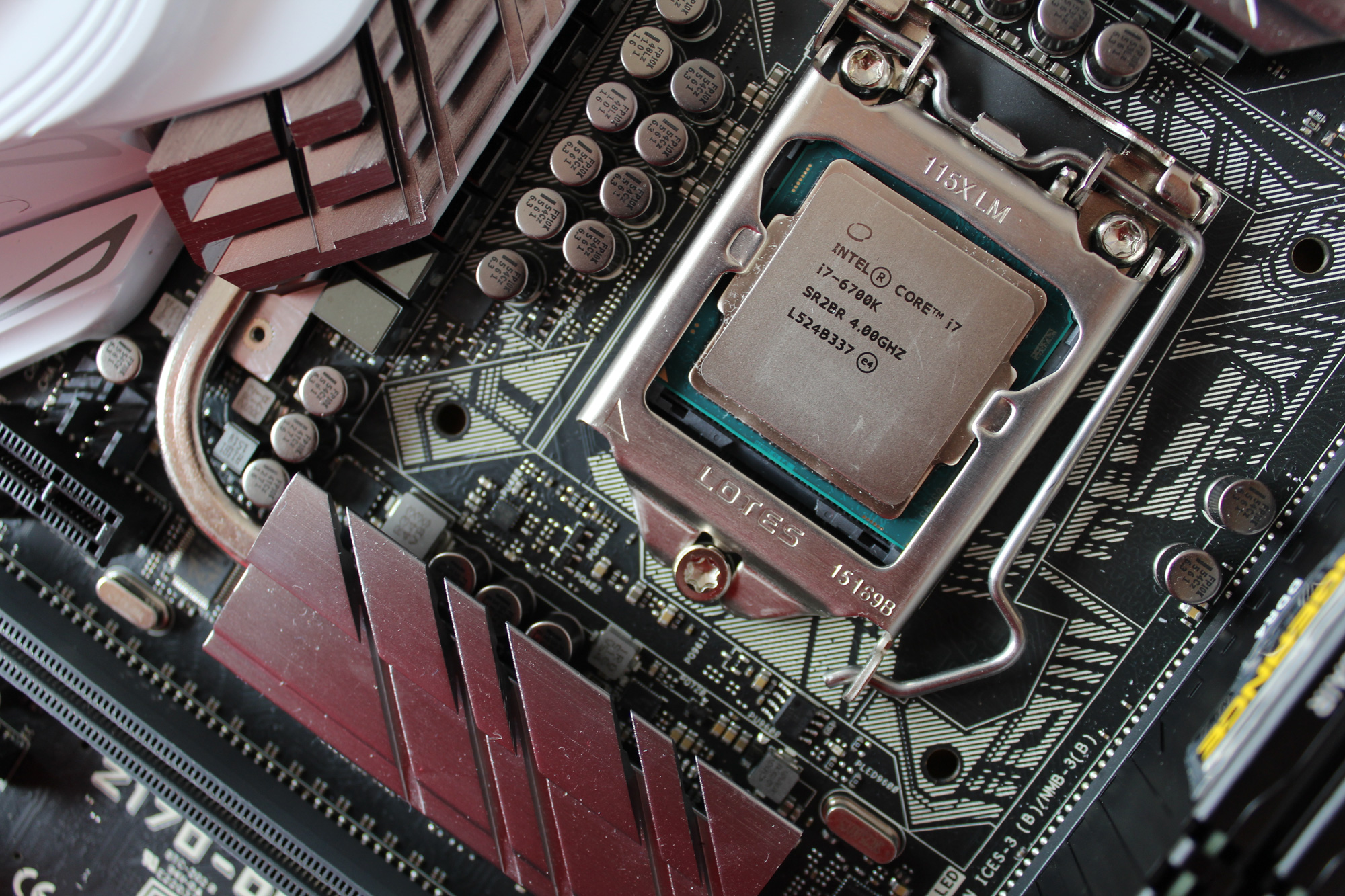
A 6th-generation Intel Core CPU, codenamed Skylake. This architecture and the 14 nm manufacturing process were where Intel’s problems started.
Credit: Orestis Bastounis
A 6th-generation Intel Core CPU, codenamed Skylake. This architecture and the 14 nm manufacturing process were where Intel’s problems started. Credit: Orestis Bastounis
Apple began making its own Apple-branded processors in 2010, using technology it acquired when it bought P.A. Semi in 2008. But while early chips like the Apple A4 and A5 were energy-efficient and felt snappy in iPhones and iPads, it was extremely difficult to imagine their performance scaling all the way up to what Apple would need to replace the Intel chips in a MacBook, to say nothing of an iMac or a Mac Pro.
But these chips steadily improved, year after year, often by huge leaps and bounds. And there was trouble brewing at Intel.
By the mid-2010s, Intel’s “Tick-Tock” model for improving its products was beginning to falter. The company had more trouble than expected getting its 14 nm manufacturing process up and running, and its manufacturing improvements stalled for years. Intel’s next-generation 10 nm process wasn’t shipping in any volume until late 2019, and for years, it was stuck shipping warmed-over iterations of 2015’s 14 nm Skylake architecture.
And it wasn’t just the slowed rate of improvement that was a problem. Former Intel engineer François Piednoël claimed that the Skylake architecture was inordinately buggy and that Apple was the one finding a lot of the bugs.
“Basically our buddies at Apple became the number one filer of problems in the architecture. And that went really, really bad,” said Piednoël. “When your customer starts finding almost as much bugs as you found yourself, you’re not leading into the right place.”
The PowerPC-to-Intel switch because Apple was unhappy with its current chips and because a better, more viable option was readily available. By the late 2010s, both of those things were true again.
Bridge over troubled water
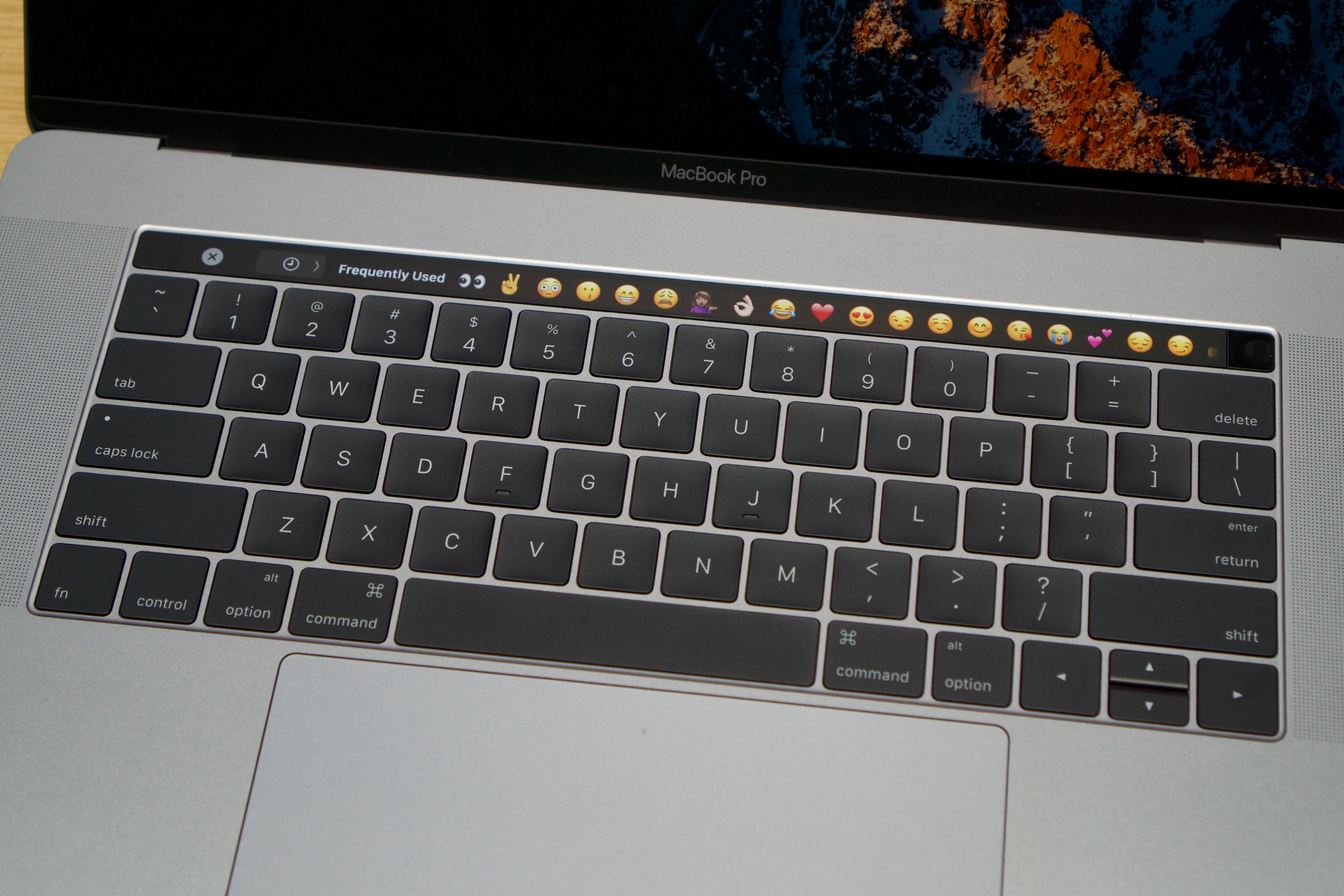
The MacBook Pro Touch Bar was a flawed idea that nevertheless showed how Apple was outgrowing Intel.
Credit: Andrew Cunningham
The MacBook Pro Touch Bar was a flawed idea that nevertheless showed how Apple was outgrowing Intel. Credit: Andrew Cunningham
In retrospect, the first “Apple Silicon Mac” was not the M1 MacBook Air or Mac mini that came out in late 2010 but the redesigned butterfly-keyboard MacBook Pros that released in late 2016.
Those models shipped with a now-abandoned piece of technology called the Touch Bar, a narrow strip of touchscreen above the keyboard that attempted to replace the function row with other buttons and sliders that could change dynamically based on what the user was doing.
To make the Touch Bar work, those Macs included a chip called the Apple T1. The T1 wasn’t much—it was essentially a repurposed Apple Watch processor that existed to drive the Touch Bar display and provide Macs with a Secure Enclave that could be used for Touch ID and Apple Pay. But it was a sign that Intel’s chips were no longer serving all of Apple’s needs. As in the PowerPC days, Apple was envisioning products that its chip supplier couldn’t help it build.
The T1 was followed by the T2, a relative of the Apple A10 chip that handled the same things as the T1 plus additional security features, an SSD controller, and video encoding and decoding. Both the T1 and T2 ran their own operating system called “bridgeOS”—in one sense, the “bridge” referred to communication between those Macs’ Intel processors and the Apple coprocessors. But in retrospect, you could also read it as a reference to those Macs’ status as a bridge between the height of the Intel Mac era and the looming Apple Silicon era.
Apple inside
The powerful, compact, power-efficient Mac Studio is the kind of machine Apple couldn’t have made with Intel’s chips.
Credit: Andrew Cunningham
The powerful, compact, power-efficient Mac Studio is the kind of machine Apple couldn’t have made with Intel’s chips. Credit: Andrew Cunningham
“When we make bold changes, it’s for one simple yet powerful reason,” said Apple CEO Tim Cook. “So we can make much better products. When we look ahead, we envision some amazing new products, and transitioning to our own custom silicon is what will enable us to bring them to life.”
Cook formally announced the long-rumored Apple Silicon transition in the company’s 2020 WWDC keynote, which was delivered fully virtually during the height of the COVID-19 pandemic. (There’s something faintly strange about watching this video now, even though basically all of Apple’s major announcements are delivered as fully pre-recorded videos these days—it’s full of weird cuts, and it feels like none of the presenters are sure what they should be doing with their hands.)
The first Apple Silicon Macs and the Apple M1 chip were announced in November of that year, and from then on, Intel Macs were living on borrowed time. The Apple Silicon transition took quite a bit longer than the PowerPC-to-Intel switch had, but the company finally completed the transition in mid-2023.
Apple promised that Intel Macs would be supported for “years to come,” and it did make good on that promise, though later Intel Macs received fewer operating system updates than earlier ones. From 2020’s macOS 11 Big Sur to last year’s macOS 26 Tahoe, Apple released a total of six macOS releases that supported both architectures, though Tahoe’s support list included just a bare handful of Intel models. Those Macs will get security and Safari updates until the fall of 2028. And then the Intel Mac era will be fully in the rearview.
What’s striking about the Intel Mac era is that Apple switched to and away from Intel chips for basically the same reason: It was looking for a more compelling processor roadmap and the best possible performance-per-Watt for its chips. When Intel was executing well—and during the decade between the mid-00s and mid-2010s, Intel was executing exceptionally well—Apple wanted in. It was only after years of watching Intel struggle that Apple wanted out.
The big difference? When Apple stopped shipping PowerPC chips, consumer-focused PowerPC chips essentially disappeared. But Intel is still making and shipping processors, meaning that we (and Apple) can still see what could have been if the switch had never happened.
Some of Intel’s updates this decade have been pretty good. The current Core Ultra Series 3 chips, in particular, are its most competitive in years, based on their CPU performance, graphics performance, and power efficiency. But I’d take Apple’s steady, consistent drumbeat of generation-over-generation improvement any day over Intel’s herky-jerky rollercoaster of refreshes, rebadges, and architectural overhauls.
Ditching Intel was a big risk for Apple, but so far, it’s been the right decision.
This successful Arctic fishing treaty has kept Russia, China, the US and others working together for 5 years – it could be a model for future diplomacy
Lately, much of the news about the Arctic has been bleak. The far north is warming three to four times faster than the rest of the planet. Arctic climate change – manifesting in sea ice loss, permafrost thaw and coastal erosion, among other phenomena – is already causing serious problems for Arctic residents, ecosystems and the rest of the planet.
At the diplomatic level, Russia’s invasion of Ukraine in 2022 has had spillover effects in the Arctic, raising tensions and causing a breakdown in cooperation among the Arctic countries. The Trump administration’s interest in Greenland, along with its combative approach to NATO, has roiled relations among Arctic allies. The Arctic Council, established in 1996 to promote cooperation among the Arctic states, significantly scaled back its operations after the Russian invasion.
But there is a bright spot. Five years ago, the United States, Russia and China joined six other nations and the European Union to bring into force a new treaty – the Central Arctic Ocean Fisheries Agreement – to keep commercial fishing out of the region, at least for now.
The agreement’s moratorium on fishing remains in place today, and the parties to the treaty, including Russia, continue to work together to advance scientific understanding of the Arctic Ocean under the treaty, despite other tensions in the region.
While serving in the U.S. State Department, I chaired the negotiations that produced this treaty. It’s useful to look at why this unusual pact came together, why it still works, and whether it could serve as a model for future diplomacy in the Arctic.
The need for precaution
At the heart of this treaty, and part of what can make it a good role model, is a tenet of modern international law known as the precautionary principle, or precautionary approach. In fact, it may be the best example of it that I’ve ever seen in international law.
Commercial fishing has never taken place in the Central Arctic Ocean. That’s because the area was completely covered by ice as far back as records exist, until recently. Today, as temperatures quickly rise in the Arctic and sea ice declines, a significant portion of the Central Arctic Ocean – the ocean’s international waters – is open water for part of each year.
David Balton and others discuss what makes the Central Arctic Ocean Fisheries Agreement unique and successful.
Nobody can say what effect commercial fishing might have on the ecosystem in this region, given the dearth of scientific knowledge about the Arctic Ocean.
In the face of such uncertainty, this treaty – applying the precautionary approach – delays the start of commercial fishing until governments have adequate information to manage fishing sustainably. The treaty also sets up a research program to study and monitor the Central Arctic Ocean.
US leadership fostered international cooperation
The origins of the agreement trace back to a bipartisan effort in the United States that may be difficult to imagine now. In 2008 Congress passed a joint resolution, signed by President George W. Bush, calling for a Central Arctic Ocean fisheries treaty.
Under President Barack Obama the United States convened two sets of international negotiations. The first round aligned the views of the United States and the four other countries that have coastlines on the Central Arctic Ocean: Canada, the Kingdom of Denmark, Norway and Russia. Next, the negotiations expanded to include Iceland and others with large, distant-water fishing fleets: China, Japan, South Korea and the European Union.
The treaty is also one of the best examples of a binding international agreement that requires incorporating Indigenous knowledge and the involvement of Arctic Indigenous peoples in its implementation. I believe the negotiations would not have succeeded without the involvement of Indigenous and other nongovernmental experts and groups, including scientists, industry leaders and environmental organizations.
The resulting treaty entered into force in 2021. The United States signed and ratified the agreement during President Donald Trump’s first term.
Each country has something to gain from cooperation. For the United States, the agreement extends the successful model of fisheries management off Alaska to the high seas and helps limit foreign vessel activity in the region. For countries that don’t border the Arctic Ocean, such as China, Japan and South Korea, the treaty gives them international recognition as Arctic players. At the same time, the treaty doesn’t preclude future commercial fishing in the Central Arctic Ocean, but instead allows time to ensure any fishing there can be sustainable.
A rare venue with Russia
The 10 parties to the treaty have met each year since 2022 to implement the agreement. They have advanced scientific research in this little-known part of our planet and are developing rules for very limited “exploratory fisheries” to study the migration of fish into the Central Arctic Ocean.
The fact that these meetings are taking place at all is an anomaly. In contrast to the Arctic Council, the conferences of the parties to this treaty have involved Russian experts each time, including during a meeting taking place June 16-17, 2026, in Brussels.
Despite the geopolitical turmoil in the world, those working to implement the treaty have put aside their differences to pursue their common interests concerning the Central Arctic Ocean.
Looking ahead
That willingness to set aside differences in pursuit of common interests can have many benefits.
Even during the Cold War, the United States and the Soviet Union worked together on a wide range of issues, including a joint effort to spearhead the Antarctic Treaty, which has kept Antarctica demilitarized and facilitated scientific advancements at the Earth’s other pole.
After the Cold War ended, the Arctic also became a region of exceptional East-West collaboration. Nations cooperated to protect the Arctic environment, to promote economic development, to bolster search-and-rescue capacity and to improve scientific understanding.
The current breakdown in cooperation with Russia is, on one level, entirely understandable, given the desire to maintain pressure on Russia to end the war in Ukraine. However, the Arctic Ocean is facing new challenges, with commercial shipping increasing as the ice melts and the rising potential for seabed mining, each of which poses unknown risks to its environment.
I believe the Central Arctic Ocean Fisheries Agreement could serve as an inspiration, maybe even as a road map, for the path back to a cooperative, well-managed Arctic region, if countries follow its example.
As Iran war’s said to end, Kissinger’s joke finally has come true
During the long and bloody war between Iran and Iraq in the 1980s the late Henry Kissinger used to half-joke that he wished that both sides could lose. The world now feels pretty much the same about the US-Israel-Iran war that began with 12 days of bombing of Iranian nuclear facilities in June 2025 and recommenced on February 28 this year in a more intense, three-way conflict.
This time Kissinger and the world will be proved correct: when the US and Iran sign their framework deal in Switzerland on June 19, the truth will be that all three of the warring parties have lost.
After April 8, when America and Iran agreed upon a ceasefire that was supposed to last for two weeks but has so far endured for more than seven, the war descended into a bitter stalemate, one that left the Strait of Hormuz closed and sent prices for crude oil and other commodities soaring as the closure of that vital shipping route reduced supplies.
Yet the oil markets have evidently now concluded that the energy crisis is ending and that the peace deal will hold, with the price of crude oil falling back toward US$80 per barrel, more than 25% lower than its peak in early May.
The markets’ conclusion looks sound, even if nothing can be certain given the pervasive mistrust among Iran, Israel and the United States. None of those three countries has the strength to continue, and the mutual blockade of Hormuz by America and Iran is benefiting no one.
So however loudly Donald Trump threatens more bombing if Iran does not accede to his demands, however grumpily Israel and its American supporters complain that their war objectives have not been achieved and however menacingly the Iranian regime talks about renewing drone and missile attacks on its neighbors and on American bases in the region, the likelihood is that the war is over, at least for now.
Iran’s brutal theocratic regime, a regime that massacred tens of thousands of its own citizens during protests in January, may feel that it has won by simply surviving. Certainly, it has shown more resilience than the Americans and Israelis expected and has proved to have larger reserves of weapons than was realized.
The regime has remained intact and in power despite the assassination of its Supreme Leader, Ayatollah Ali Khamenei and many top officials. Popular protests against the regime have been silenced in part by repression and in part thanks to the unifying effect of American and Israeli bombs.
Nonetheless, while the regime looks strategically strong, it is politically and economically weak.
Inflation is even higher than before the war and prospects for any improvement in living standards depend crucially on peace being achieved. The regime’s much-vaunted nuclear enrichment program may still exist in theory but in practice most of the facilities and materials have been destroyed. Similarly, the network of militias that Iran has financed around the region, in Lebanon, Gaza and Yemen, remain intact but are depleted.
Iran is in no condition to carry on fighting. The country’s now-proven ability to close the Strait of Hormuz has given it some leverage but not the sort that brings a long-term benefit.
Israel’s prime minister, Binyamin Netanyahu, would like the war to be resumed. His argument that Israel can never be safe while Iran is governed by a theocratic regime that is officially dedicated to Israel’s destruction is not unreasonable. But his effort to dislodge that regime through American bombs has failed.
Crucially, his own government has also reached the end of its current road. The ultra-Orthodox political parties that have sustained his coalition withdrew last month in a long-running dispute over the exemption from military conscription of their religious community, and the Knesset (parliament) was dissolved on May 20, paving the way for a general election. That election must be held before October 27 and is now expected to take place in September.
Like his enemies in Tehran, Netanyahu is a great survivor as well as being ruthless. Undaunted by the prospect of elections and by pressure from Trump, he has been continuing military attacks on the Hezbollah militia in Lebanon and plans to leave Israeli forces in the south of that country.
And in disregard of the ceasefire deal between Israel and Hamas in Gaza that was imposed by Trump in October last year, Netanyahu announced that the Israeli Defence Forces will increase the proportion of Gaza under their control from 60% to 70%.
Yet these aggressive moves cannot disguise the fact that he has run out of options in Iran, at least for the time being.
This is principally because his main ally, Trump, has himself run out of options and of regional support. Among Saudi Arabia, the United Arab Emirates, Qatar, Kuwait, Bahrain and Oman there is not a single country that wants the war to be resumed. All want to export their oil, to rebuild the facilities that have been damaged by Iranian attacks and to start the long task of persuading tourists and wealthy foreign residents to return to the Gulf.
It seems clear that none of the military options presented to Trump by his generals has proved attractive to him. Resuming bomb and missile attacks would achieve little beyond further depleting American stockpiles. The idea of using ground forces to seize Iranian islands or coastal defenses, or even more ambitiously to attempt to seize Iran’s remaining stocks of enriched uranium, will have appeared far too risky and costly.
The result is that Trump’s final hope is one of trying to extract something from the peace agreement with Iran that he can claim to his American supporters is a victory.
That he will claim a victory is certain, for that is what he always does. But the claim will be an empty one. The oil markets have got what they have been expecting, namely an agreement to reopen the Strait of Hormuz, with no one charging tolls and with a pledge to extend the ceasefire by a further 60 days. Beyond that, nothing concrete has yet been achieved.
That pledge will be for a meaningless deadline, as the existing extension of the original 12-day ceasefire shows. But it will buy time for negotiations to take place over Iran’s nuclear enrichment program, time which can itself be extended. The duration of the previous nuclear negotiations between America, Iran and others in 2013-2015 suggests that those new negotiations could take months or even years.
Those negotiations will involve inspections by the International Atomic Energy Authority, but the reality is that they will achieve credible control over Iran’s nuclear facilities, uranium stocks and weapons ambitions only if China also agrees to become involved.
China is the only country that can consider itself a winner in the 2025-26 US-Israel-Iran war, principally because that war has weakened the United States in practical and reputational terms but also because it potentially will extend China’s influence in the Middle East. Many of the wealthy foreigners and foreign contractors that the Gulf Arab countries want to lure back to rebuild their economies are Chinese.
For Trump, this will be a war he will want to forget. It has left in disarray his hopes of using Arab money to rebuild and reshape Gaza and has displayed his own and America’s impotence. It has worsened his Republican Party’s prospects in November’s mid-term congressional elections. Most shockingly for him and his family, it hasn’t even made him any money. As far as we know.
This is the author’s update of an article first published in Italian translation by La Stampaand featured in English on Bill Emmott’s Global View.
Israel’s Largest Rehabilitation Hospital Planned Following NIS 200 Million Gift From Jusidman Family Charitable Foundation
A new rehabilitation hospital expected to become the largest in Israel will be built in northern Tel Aviv, supported by a NIS 200 million anchor donation from the Jusidman Family Charitable Foundation.
The project, announced Sunday, carries a total investment of approximately $390 million. The Jusidman Family Charitable Foundation will provide the anchor donation for the new Jusidman Rehabilitation Hospital campus, to be developed in partnership with the Tel Aviv Foundation and the Reuth Association. Additional funding is expected from municipal, governmental, and private sources.
The new facility will relocate and expand Reuth Rehabilitation Hospital’s operations from the Yad Eliyahu neighborhood in south Tel Aviv to a new campus in Sde Dov. Construction is expected to take approximately six years.
The hospital will include about 540 beds, a larger day rehabilitation unit, treatment facilities, a hydrotherapy pool, specialized institutes and clinics, a research and development center, and green spaces for patients and families.
Signing ceremony to mark the donation from Jusidman Family Charitable Foundation. In the image, from right to left: Dr. Hila Oren, CEO of the Tel Aviv Foundation, Ido Sharir, CEO of the Reuth Association, Dr. Orit Stein Reisner, Director of the Reuth TLV Rehabilitation Hospital, Prof. Nachman Ash, Chairman of the Reuth Association, Ron Huldai, Mayor of Tel Aviv-Yafo and Chairman of the Tel Aviv Foundation, Daniel Jusidman, Founder of the Jusidman Foundation, Igal Jusidman, CEO of the Jusidman Foundation and Dr. Einat Ronen, Vice CEO of the Jusidman Foundation. (Guy Yechiely)
Ron Huldai, Mayor of Tel Aviv-Yafo and Chairman of the Tel Aviv Foundation, said the project would strengthen rehabilitation services in Israel.
“The establishment of the new Jusidman Rehabilitation Hospital is another significant step toward strengthening Israel’s rehabilitation healthcare system,” Huldai said.
Igal Jusidman, Representative of the Jusidman Family Charitable Foundation, said the project reflected the growing importance of rehabilitation medicine.
Renderings of the Jusidman Rehabilitation Hospital campus. (MYS Architects)
“It took a long and painful war to remind us of the critical role rehabilitation plays in restoring lives, dignity, and independence,” Jusidman said.
Dr. Hila Oren, CEO of the Tel Aviv Foundation, described the donation as an example of philanthropy supporting large-scale urban initiatives.
Professor Nachman Ash, Chairman of the Reuth Association, said demand for rehabilitation and geriatric services continues to grow nationwide.
The hospital, which marks 65 years since the founding of Reuth Rehabilitation Hospital, will continue serving patients from across Israel. The existing institution is affiliated with the Gray Faculty of Medical and Health Sciences at Tel Aviv University and includes rehabilitation programs in orthopedics, neurology, head injuries, geriatrics, and respiratory care, as well as Israel’s largest day rehabilitation center and a post-trauma rehabilitation center serving victims of October 7 and veterans of the ongoing conflict.
Russia appears set to finally address long-term, serious space station cracks
Ten days ago, in a moment of very high drama in orbit, NASA directed its astronauts living on the International Space Station to briefly seek emergency refuge in a Crew Dragon spacecraft.
Since then, neither the US space agency nor Roscosmos has provided additional public information about the situation in orbit. But according to sources who spoke to Ars, following the spectacle in space, the problem has been successfully fixed.
At issue were persistent cracks in a small area of the International Space Station attached to the Russian Zvezda service module, known as the PrK module. The problem has been ongoing since 2019, and Russian astronauts have been attempting various fixes, often using a sealant called Germetall-1.
The leaks intensify
These efforts finally appeared to bear fruit early this year, when Roscosmos reported that the leaks had stabilized. They resumed in May, though, and then increased in early June. That prompted Roscosmos to begin work toward a more extensive inspection and structural repair effort on the morning of Friday, June 5.
A bland statement from Roscosmos offered no additional information. But the solution Russian officials proposed on June 5 spooked NASA officials, prompting them to take the extreme step of securing their astronauts inside Dragon in case of a depressurization event on the space station. Later, Russia backed off, citing the need to conduct additional measurements and inspections of areas where leaks were occurring.
“NASA strongly supported that decision, and as a result, following that decision, Crew-12 and Williams ended their safe haven activities and returned to normal operations aboard the orbiting laboratory,” the space agency said.
Since then, there have been no official updates. To understand what has really been happening, Ars spoke with two NASA officials on background.
So what really happened?
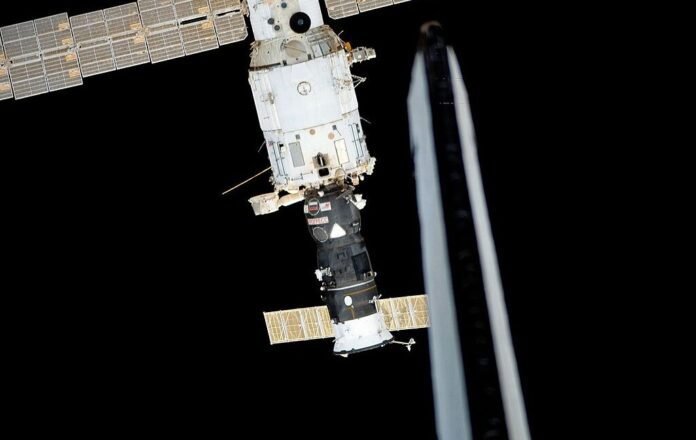
The PrK module leads from the main area of the Russian segment of the space station to a docking port. Russian cosmonauts must pressurize the tunnel to access the Progress spacecraft that dock there and unload and stow cargo on the vehicles. The cracking issue in the PrK module’s structure is due to corrosion, and leaks occur inside the aging transfer tunnel when pressure is cycled up or down.
Although NASA has not publicly discussed the gravity of its concerns about the issue—presumably out of a desire to respect its Russian counterpart—the PrK module could break apart without much advance warning. Under pressure, the module could unzip and fail completely. A former astronaut and retired NASA official, Bob Cabana, described the issue in late 2024, saying, “NASA has expressed concerns about the structural integrity of the PrK and the possibility of a catastrophic failure.”
This has been a persistent, behind-the-scenes dispute between NASA and Russian officials for years. Russia will say it has the situation under control, and then leak rates on the space station suggest otherwise. The new cracks discovered in early June brought the total to about 16.
As leak rates rose, Russian officials informed NASA on Thursday, June 4, of plans to attempt physical repairs to the new leaks with a drill and a “drill stop” device to prevent drilling all the way through the module’s structure. NASA officials were deeply concerned about this because Roscosmos had not shown them an analysis of the problem or explained why their procedures to address the leaks would work.
“We threatened we would put astronauts in suits, in Dragon, to send a message to world that we disagreed,” one NASA official told Ars. “They didn’t care.”
Reaching a resolution
The standoff continued into Friday morning, when Russian astronauts appeared to back off their plans, only to subsequently approach the PrK module with a saw and the intent to remove a load-bearing bracket. Meanwhile, Roscosmos officials continued to ignore communication with NASA officials on the ground.
At this point, NASA directed Crew 12—US astronauts Jessica Meir and Jack Hathaway, French astronaut Sophie Adenot, and Russian cosmonaut Andrey Fedyaev into SpaceX’s Crew Dragon Freedom spacecraft—along with US astronaut Chris Williams, who had flown to the station in a Russian Soyuz spacecraft.
“We felt there was a very high probability of a bad outcome happening if they sawed that bracket off,” a NASA source said. NASA’s decision to send its astronauts into a safe haven prompted Roscosmos to finally back off.
In the days since, there has been some additional back-and-forth, but Russia has now told NASA it will decommission the PrK module.
Effectively, this means cosmonauts will no longer enter the PrK module or attempt to pressurize it. Progress vehicles will still be able to use the docking port to transfer fluids or perform other functions, but Russia will need to use other ports to move supplies on board the space station.
For NASA and the space station’s longevity, this agreement with Russia represents a significant step forward. For years, NASA has reluctantly accepted the risk of a rapid depressurization event on board the space station due to the PrK module’s issues. Now that risk should be retired.
UFC Fighter Claims Michelle Obama is a Man After Win (Video)
A UFC victory celebration on the White House lawn took a bizarre turn Sunday night when fighter Josh Hokit used his post-match interview to make a jaw-dropping remark about former first lady Michelle Obama.
Hokit had just defeated heavyweight Derrick Lewis at UFC Freedom 250, a high-profile event streamed on Paramount+ and staged in front of a star-packed crowd at the White House.
But instead of letting the win speak for itself, Hokit grabbed the spotlight for another reason.
During his post-fight interview with Joe Rogan, Hokit suddenly declared, “Michelle Obama is a man. Am I right, America?”
Josh Hokit just called Michelle Obama a man in his post-fight interview:
The baseless comment immediately sent shockwaves through the crowd. In videos circulating online, some spectators could be heard laughing, while others appeared stunned by the unexpected outburst.
Rogan did not engage with the remark. Instead, he quickly wrapped up the interview, saying, “Ladies and gentlemen, Josh Hokit.”
The moment quickly became one of the most talked-about parts of the night, overshadowing Hokit’s win and adding another layer of controversy to an already politically charged event.
The fight aired on Paramount+, whose parent company has faced growing scrutiny after settling a lawsuit with President Donald Trump over a 60 Minutes interview. CBS News has also seen major shakeups, including the departures of respected journalists such as Scott Pelley and longtime 60 Minutes executive producer Tanya Simon.
The White House event brought out a long list of famous and powerful figures. President Trump and first lady Melania Trump were in attendance, along with UFC CEO Dana White, Vice President JD Vance, Meta CEO Mark Zuckerberg, Ivanka Trump, boxer Tyson Fury, comedians Shane Gillis and Tony Hinchcliffe, country singer Alexis Wilkins, Crypto.com CEO Kris Marszalek, and Ari Emanuel, the CEO and executive chairman of TKO Group Holdings, which owns UFC.
But by the end of the night, it was Hokit’s stunning post-fight comment — not just his win — that had people talking.
US-Iran deal’s economic dividend will flow mainly to Asia
Markets across the world greeted the US-Iran peace agreement in the predictable way.
Oil prices fell sharply, equities rallied and investors are already calculating the inflation dividend that could follow if the Strait of Hormuz fully reopens and energy supplies normalize.
But the consensus view, I believe, still understates the significance of what could be unfolding. If the agreement holds—and that remains a substantial caveat, of course—the primary economic beneficiary will not be Iran, the US or Europe.
It will be Asia, and not just because the region stands to gain the most from cheaper oil, although it does.
Around 85% to 90% of the crude oil moving through the Strait of Hormuz ultimately ends up in Asian markets. No region is more exposed to the smooth flow of energy, goods and capital through the Gulf.
The agreement has the potential to ease multiple economic pressures simultaneously across the region.
Roughly one-fifth of the world’s oil consumption passes through the Strait of Hormuz, alongside a significant share of global liquefied natural gas trade. Asian economies, like almost all others, have been forced to absorb the consequences of disruptions to this critical shipping corridor.
Earlier this month, reports showed surging imports of US crude into Asia were nowhere near sufficient to compensate for the loss of Gulf supplies during the crisis. Asian LNG markets also faced significant disruption as energy flows tightened.
The reopening of Hormuz therefore represents more than the return of oil shipments. It represents the restoration of a critical artery for the world’s most energy-dependent growth region.
India perhaps illustrates the point most clearly. As the world’s third-largest oil importer, sourcing around 85% of its crude requirements from abroad, India is uniquely positioned to benefit from lower energy costs.
Every sustained decline in oil prices eases pressure on inflation, strengthens the current account, supports the rupee and improves the government’s fiscal position.
Few major economies enjoy such a direct transmission mechanism from lower oil prices to stronger economic growth.
Savvy investors typically search for transformative policy announcements or breakthrough reforms. India may receive a significant economic boost without implementing either.
These gains will extend well beyond India.
Japan imports more than 90% of its oil requirements, while South Korea sources the majority of its crude from the Middle East. Lower oil and LNG costs improve industrial competitiveness, support corporate margins and reduce pressure on consumers.
China may be an even more important beneficiary than markets currently appreciate.
The world’s largest crude importer, bringing in roughly 11 million barrels a day, has spent years dealing with slowing growth, weak domestic demand and pressure on industrial profitability. A durable reduction in energy costs would provide meaningful support across manufacturing supply chains.
Equally important, a more stable Gulf reduces uncertainty around one of China’s most important trade and energy corridors. Predictability may be almost as valuable as cheaper oil for Beijing.
Southeast Asia also stands to gain. Vietnam, Thailand, the Philippines and Indonesia all benefit from lower import costs and reduced inflationary pressure. A less volatile energy environment helps governments, consumers and businesses alike.
It also enhances the attractiveness of the region as multinational companies continue diversifying manufacturing operations across Asia.
Yet focusing exclusively on oil risks missing the bigger story. The most important consequence of a lasting agreement may be its effect on regional monetary policy.
During the Hormuz crisis, central banks across Asia—and indeed the world—were forced to contend with renewed inflation risks linked to energy costs.
A sustained decline in oil prices changes that calculation. Lower inflation will create new room for policymakers to support growth, ease financial conditions and reduce pressure on households.
Investors should pay particular attention to this possibility. Asian equities have spent years competing against the gravitational pull of US markets. Higher US rates, a stronger dollar and repeated geopolitical shocks have consistently favored American assets.
A combination of lower energy prices, easing inflation and improved growth prospects could strengthen the case for Asian equities at a time when global investors are increasingly looking for opportunities beyond the US.
There is also a broader strategic implication. Investors have become accustomed to analyzing Asia through the lenses of trade disputes, supply-chain disruptions, tariffs and geopolitical rivalry.
To be sure, those themes are unlikely to disappear. But a durable US-Iran agreement would represent something markets have seen remarkably little of in recent years: a reduction in geopolitical friction.
For a region that depends more than any other on cross-border trade, stable shipping routes and imported energy, that matters enormously.
Of course, caution remains warranted. Investors have good reason to remain wary. Some will view the agreement as a diplomatic breakthrough.
Others will see a temporary pause that allows all sides — particularly the White House — to claim success while postponing the harder questions surrounding Iran’s nuclear ambitions, sanctions enforcement and regional influence.
The history of Middle East diplomacy is littered with agreements that generated optimism before colliding with political reality. Investors should, therefore, resist the temptation to treat peace as a certainty.
But they should also avoid underestimating its economic consequences if it holds even partially. The market sees a US-Iran deal and immediately thinks about oil; Asia should be thinking about growth.
If the agreement endures, the region may receive the closest thing it has seen in years to an externally generated economic stimulus—one that lowers energy costs, eases inflation, supports trade and improves financial conditions all at once. Those opportunities rarely come along together.
Nigel Green is founder and CEO of the deVere Group
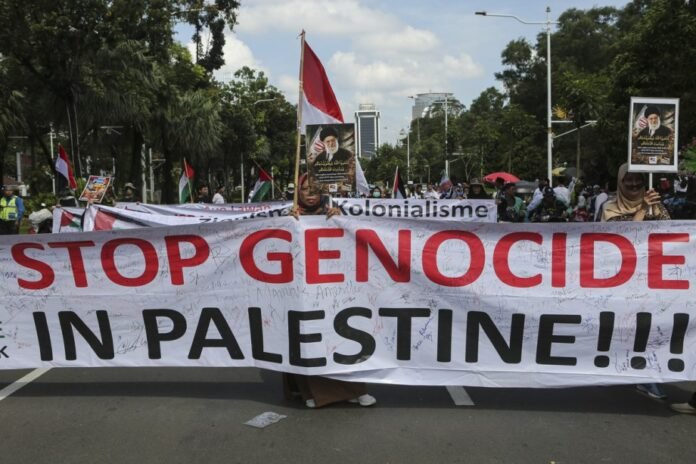
Indonesia’s Cabinet Secretary turned Palestine into a public relations campaign
There is something profoundly disturbing about the way Indonesia’s Cabinet Secretary, Teddy Indra Wijaya, chose to defend President Prabowo Subianto’s diplomacy on Palestine. The problem is not that he defended his president; that is, after all, part of his job. The problem is that in trying to elevate Prabowo into a heroic statesman, Teddy ended up revealing a far more troubling reality: the extent to which Indonesian officials have begun mistaking the management of catastrophe for the achievement of justice.
Responding to criticism over Prabowo’s remarkably frequent overseas trips, Teddy offered a list of accomplishments that he apparently believed would silence critics. Indonesia had conducted humanitarian airdrops into Gaza. Indonesia had deployed a hospital ship. Indonesia had provided scholarships for Palestinian students. Indonesia had successfully secured the return of Indonesian citizens detained by Israel. These, according to Teddy, were evidence of Prabowo’s active role in supporting Palestine.
But this is precisely where his argument collapses.
The flaw in Teddy’s reasoning is not merely political. It is moral. It is intellectual. And it is deeply revealing of a dangerous way of thinking about Palestine.
Take his proud assertion that Indonesia is among the few countries capable of conducting humanitarian airdrops into Gaza because such operations require extensive diplomatic coordination and overflight permissions. He presents this as though it were a geopolitical triumph—a testament to Indonesia’s diplomatic prowess under Prabowo.
But why should anyone celebrate this?
READ: Over a thousand health professionals demand boycott of Israeli Medical Association over Gaza genocide
Why should Indonesians applaud the fact that food must be dropped from military aircraft into one of the most densely populated territories on earth?
Humanitarian airdrops are not symbols of success. They are symbols of collapse.
Food is not dropped from the sky because diplomacy has succeeded. Food is dropped from the sky because ordinary systems of life have been destroyed so thoroughly that people can no longer feed themselves through normal means.
Airdrops are what happen when ports fail, roads are inaccessible, hospitals are overwhelmed, and civilian infrastructure lies in ruins.
To celebrate the ability to conduct humanitarian airdrops while saying little about the conditions that make them necessary is like boasting about the efficiency of ambulances while remaining indifferent to the causes of mass casualties.
Or, more bluntly, it is like celebrating one’s skill at applying bandages while refusing to acknowledge the ongoing amputation.
This is not merely a rhetorical mistake. It is a profound moral inversion.
Teddy asks Indonesians to celebrate Indonesia’s ability to manage the consequences of catastrophe while remaining curiously silent about ending the catastrophe itself. In his telling, the measure of success is not whether Palestinians become freer, safer, or closer to sovereignty. Success is measured by how effectively Indonesia can deliver food, deploy medical assistance, and administer relief.
But Palestinians do not dream of becoming permanent recipients of humanitarian aid. They dream of no longer needing it. That distinction is not semantic. It goes to the heart of what solidarity actually means.
For decades, Indonesia’s support for Palestine was rooted in anti-colonialism. Indonesia’s position was simple: no people should live under occupation, and no nation should be denied sovereignty. The objective was never to make occupation more humane. The objective was to end it. Humanitarian assistance was meant to alleviate suffering until justice could be achieved—not to become a substitute for justice itself.
Yet justice is strangely absent from Teddy’s remarks.
There is little discussion of sovereignty. Little discussion of self-determination. Little discussion of ending the conditions that have produced mass displacement, destruction, and humanitarian crisis. Instead, Palestine appears primarily as a site of humanitarian management: a place where Indonesia can send aid, dispatch hospital ships, and provide scholarships.
In other words, Palestine ceases to be a political struggle and becomes a humanitarian project.
That shift is not trivial. It is dangerous.
Because humanitarianism without politics risks normalizing injustice. When the conversation shifts from ending oppression to managing its consequences, the underlying reality begins to fade into the background. The blockade remains. The violence continues. The structures producing suffering persist. But attention turns instead to relief efforts, aid deliveries, and displays of compassion.
There is a word for becoming comfortable with the management of an injustice while losing urgency about ending it. Normalization.
READ: UN: Israeli shell killed Indonesian peacekeepers in southern Lebanon
The same logic was evident in Teddy’s reference to the recent detention of Indonesian activists by Israel. What Teddy neglected to emphasize was that the Indonesian citizens in question were part of the Gaza Freedom Flotilla—an international humanitarian mission seeking to challenge the blockade on Gaza and deliver aid directly to Palestinians. Rather than engaging with the broader significance of the incident, Teddy transformed the episode into another public relations success story for the government.
But bringing home detained citizens is not extraordinary diplomacy. It is among the most basic obligations of any state.
To present routine consular protection as evidence of exceptional leadership is to set the bar for government performance astonishingly low.
What ultimately makes Teddy’s intervention so troubling is not simply that it was politically biased. Governments defend themselves all the time. The real problem is that his argument reveals a failure of imagination—a failure to imagine Palestine as anything other than a humanitarian emergency to be managed rather than a political injustice to be resolved.
A senior official should understand that hospital ships are not symbols of peace; they are evidence that people continue to be wounded. He should understand that humanitarian aid is not proof that diplomacy is succeeding; it is proof that politics has failed. Most importantly, he should understand that no people aspire to become permanent beneficiaries of international charity.
Palestinians do not need a world that becomes increasingly efficient at delivering aid. They need a world that becomes increasingly committed to ensuring that such aid is no longer necessary.
By celebrating the bandages while remaining largely silent about the wound, Teddy Indra Wijaya did more than defend Prabowo’s diplomacy.
He unintentionally revealed how easily humanitarianism can become a substitute for justice—and how dangerously comfortable political elites have become with managing suffering instead of ending it.
OPINION: The latest Indonesia-Qatar defence agreement needs deliverables, not diplomacy
The views expressed in this article belong to the author and do not necessarily reflect the editorial policy of Middle East Monitor.
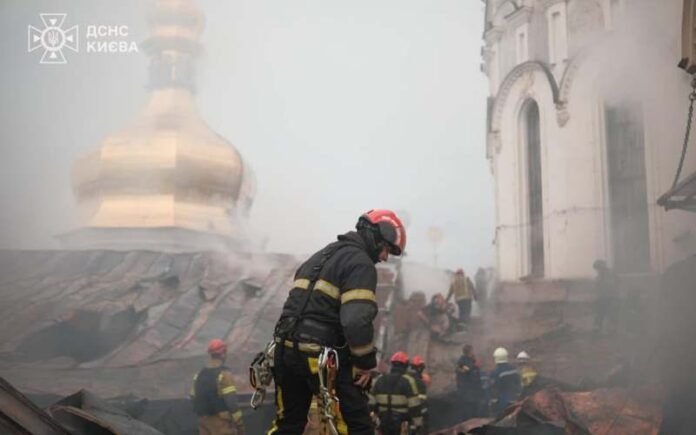
The Kyiv Pechersk Lavra monastery, a symbol of Ukrainian spiritual and cultural history whose golden domes have towered over the capital for almost a millennium, was set ablaze on Monday during a Russian attack, Ukrainian authorities said.
Here are some facts about the monastery, a UNESCO World Heritage site:
ITS HISTORY DATES BACK TO 11TH CENTURY
A grand complex with striking belltowers, resplendent churches, chapels, gates and seminary buildings, the Lavra was founded by monks near the Dnipro river in 1051.
The first historian of Ukraine, Nestor the Chronicler, lived and worked at the monastery. Over the next centuries, the monastery emerged as a leading spiritual centre of Kyivan Rus, where chroniclers, icon painters and physicians worked, fostering the development of education.
The complex grew to become the main sacred site of Orthodox Christianity in eastern Europe. A short drive from Kyiv’s bustling city centre, it continues to draw large numbers of worshippers and tourists.
SPRAWLING COMPLEX
The complex, whose name means “monastery of the caves”, occupies more than 20 hectares and has more than 100 buildings, housing several churches and chapels. Six ancient underground churches are located in the caves of the monastery. It also houses several museums.
CAVES
The monastery comprises a network of surface and underground churches dating from the 11th to the 19th centuries, set within a labyrinthine cave complex extending over 600 metres.
Home to monks for centuries, the caves were dug into Dnipro hills between 5 and 15 metres deep.
The bodies of monks rest within the monastery’s caves, including the first monk to inhabit the caves, St Anthony.
DORMITION CATHEDRAL SET ON FIRE
A Russian strike set fire to the roof of the Dormition Cathedral, the main cathedral of the monastery complex, Ukrainian officials said.
The cathedral, whose history also dates back to the 11th century, served as a necropolis for the medieval princes of Kyiv. It was also badly damaged during World War Two.
“This strike on the Lavra is an attack on the Christian community and on the cultural heritage of humanity,” Zelenskiy said, adding that the site would be fully restored.
Russia denied striking the cathedral, saying it had been damaged by a U.S.-made Patriot air defence missile.