Ten days ago, in a moment of very high drama in orbit, NASA directed its astronauts living on the International Space Station to briefly seek emergency refuge in a Crew Dragon spacecraft.
Since then, neither the US space agency nor Roscosmos has provided additional public information about the situation in orbit. But according to sources who spoke to Ars, following the spectacle in space, the problem has been successfully fixed.
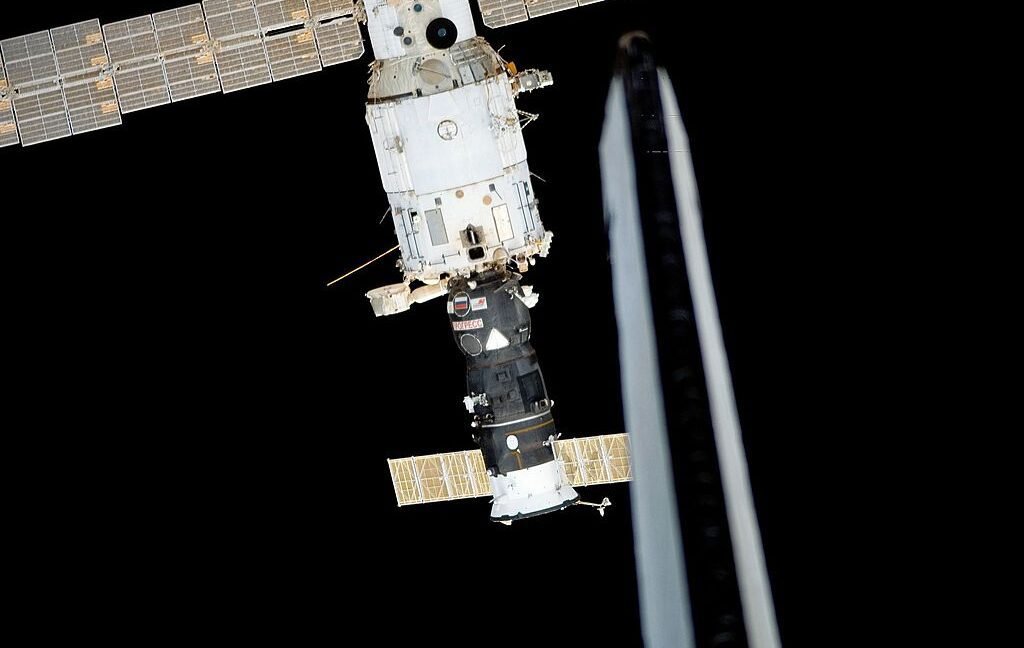
At issue were persistent cracks in a small area of the International Space Station attached to the Russian Zvezda service module, known as the PrK module. The problem has been ongoing since 2019, and Russian astronauts have been attempting various fixes, often using a sealant called Germetall-1.
The leaks intensify
These efforts finally appeared to bear fruit early this year, when Roscosmos reported that the leaks had stabilized. They resumed in May, though, and then increased in early June. That prompted Roscosmos to begin work toward a more extensive inspection and structural repair effort on the morning of Friday, June 5.
A bland statement from Roscosmos offered no additional information. But the solution Russian officials proposed on June 5 spooked NASA officials, prompting them to take the extreme step of securing their astronauts inside Dragon in case of a depressurization event on the space station. Later, Russia backed off, citing the need to conduct additional measurements and inspections of areas where leaks were occurring.
“NASA strongly supported that decision, and as a result, following that decision, Crew-12 and Williams ended their safe haven activities and returned to normal operations aboard the orbiting laboratory,” the space agency said.
Since then, there have been no official updates. To understand what has really been happening, Ars spoke with two NASA officials on background.
So what really happened?
The PrK module leads from the main area of the Russian segment of the space station to a docking port. Russian cosmonauts must pressurize the tunnel to access the Progress spacecraft that dock there and unload and stow cargo on the vehicles. The cracking issue in the PrK module’s structure is due to corrosion, and leaks occur inside the aging transfer tunnel when pressure is cycled up or down.
Although NASA has not publicly discussed the gravity of its concerns about the issue—presumably out of a desire to respect its Russian counterpart—the PrK module could break apart without much advance warning. Under pressure, the module could unzip and fail completely. A former astronaut and retired NASA official, Bob Cabana, described the issue in late 2024, saying, “NASA has expressed concerns about the structural integrity of the PrK and the possibility of a catastrophic failure.”
This has been a persistent, behind-the-scenes dispute between NASA and Russian officials for years. Russia will say it has the situation under control, and then leak rates on the space station suggest otherwise. The new cracks discovered in early June brought the total to about 16.
As leak rates rose, Russian officials informed NASA on Thursday, June 4, of plans to attempt physical repairs to the new leaks with a drill and a “drill stop” device to prevent drilling all the way through the module’s structure. NASA officials were deeply concerned about this because Roscosmos had not shown them an analysis of the problem or explained why their procedures to address the leaks would work.
“We threatened we would put astronauts in suits, in Dragon, to send a message to world that we disagreed,” one NASA official told Ars. “They didn’t care.”
Reaching a resolution
The standoff continued into Friday morning, when Russian astronauts appeared to back off their plans, only to subsequently approach the PrK module with a saw and the intent to remove a load-bearing bracket. Meanwhile, Roscosmos officials continued to ignore communication with NASA officials on the ground.
At this point, NASA directed Crew 12—US astronauts Jessica Meir and Jack Hathaway, French astronaut Sophie Adenot, and Russian cosmonaut Andrey Fedyaev into SpaceX’s Crew Dragon Freedom spacecraft—along with US astronaut Chris Williams, who had flown to the station in a Russian Soyuz spacecraft.
“We felt there was a very high probability of a bad outcome happening if they sawed that bracket off,” a NASA source said. NASA’s decision to send its astronauts into a safe haven prompted Roscosmos to finally back off.
In the days since, there has been some additional back-and-forth, but Russia has now told NASA it will decommission the PrK module.
Effectively, this means cosmonauts will no longer enter the PrK module or attempt to pressurize it. Progress vehicles will still be able to use the docking port to transfer fluids or perform other functions, but Russia will need to use other ports to move supplies on board the space station.
For NASA and the space station’s longevity, this agreement with Russia represents a significant step forward. For years, NASA has reluctantly accepted the risk of a rapid depressurization event on board the space station due to the PrK module’s issues. Now that risk should be retired.