Markets across the world greeted the US-Iran peace agreement in the predictable way.
Oil prices fell sharply, equities rallied and investors are already calculating the inflation dividend that could follow if the Strait of Hormuz fully reopens and energy supplies normalize.
But the consensus view, I believe, still understates the significance of what could be unfolding. If the agreement holds—and that remains a substantial caveat, of course—the primary economic beneficiary will not be Iran, the US or Europe.
It will be Asia, and not just because the region stands to gain the most from cheaper oil, although it does.
Around 85% to 90% of the crude oil moving through the Strait of Hormuz ultimately ends up in Asian markets. No region is more exposed to the smooth flow of energy, goods and capital through the Gulf.
The agreement has the potential to ease multiple economic pressures simultaneously across the region.
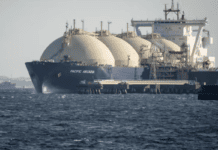
Roughly one-fifth of the world’s oil consumption passes through the Strait of Hormuz, alongside a significant share of global liquefied natural gas trade. Asian economies, like almost all others, have been forced to absorb the consequences of disruptions to this critical shipping corridor.
Earlier this month, reports showed surging imports of US crude into Asia were nowhere near sufficient to compensate for the loss of Gulf supplies during the crisis. Asian LNG markets also faced significant disruption as energy flows tightened.
The reopening of Hormuz therefore represents more than the return of oil shipments. It represents the restoration of a critical artery for the world’s most energy-dependent growth region.
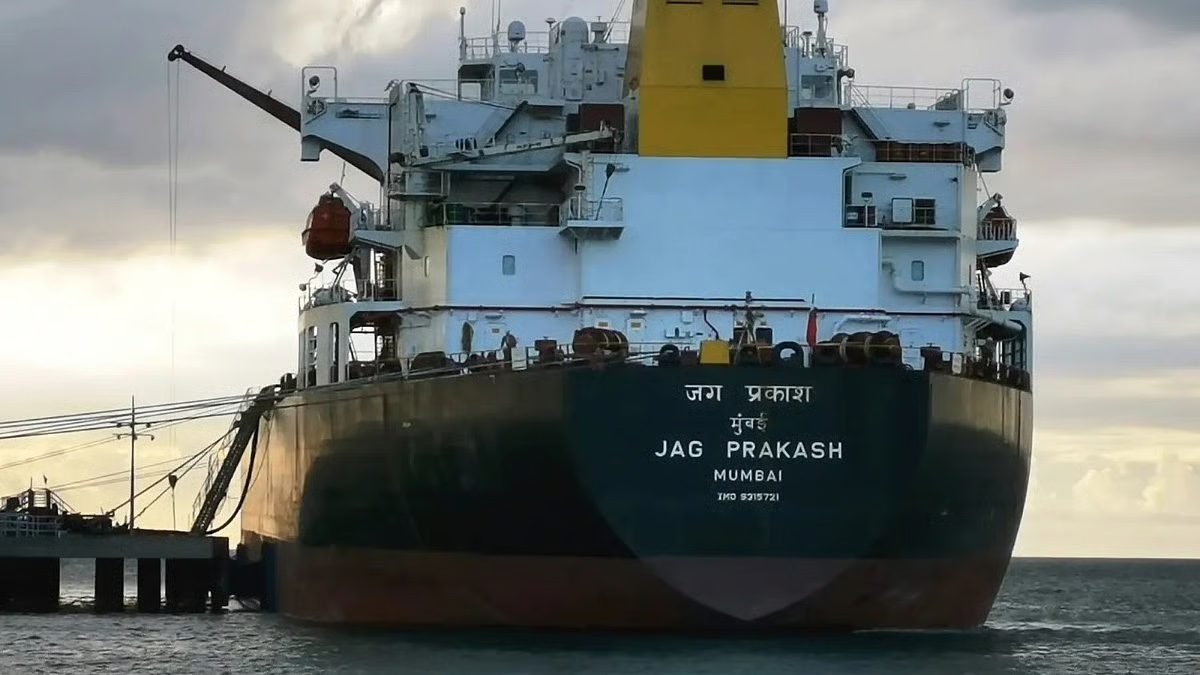
India perhaps illustrates the point most clearly. As the world’s third-largest oil importer, sourcing around 85% of its crude requirements from abroad, India is uniquely positioned to benefit from lower energy costs.
Every sustained decline in oil prices eases pressure on inflation, strengthens the current account, supports the rupee and improves the government’s fiscal position.
Few major economies enjoy such a direct transmission mechanism from lower oil prices to stronger economic growth.
Savvy investors typically search for transformative policy announcements or breakthrough reforms. India may receive a significant economic boost without implementing either.
These gains will extend well beyond India.
Japan imports more than 90% of its oil requirements, while South Korea sources the majority of its crude from the Middle East. Lower oil and LNG costs improve industrial competitiveness, support corporate margins and reduce pressure on consumers.
China may be an even more important beneficiary than markets currently appreciate.
The world’s largest crude importer, bringing in roughly 11 million barrels a day, has spent years dealing with slowing growth, weak domestic demand and pressure on industrial profitability. A durable reduction in energy costs would provide meaningful support across manufacturing supply chains.
Equally important, a more stable Gulf reduces uncertainty around one of China’s most important trade and energy corridors. Predictability may be almost as valuable as cheaper oil for Beijing.
Southeast Asia also stands to gain. Vietnam, Thailand, the Philippines and Indonesia all benefit from lower import costs and reduced inflationary pressure. A less volatile energy environment helps governments, consumers and businesses alike.
It also enhances the attractiveness of the region as multinational companies continue diversifying manufacturing operations across Asia.
Yet focusing exclusively on oil risks missing the bigger story. The most important consequence of a lasting agreement may be its effect on regional monetary policy.
During the Hormuz crisis, central banks across Asia—and indeed the world—were forced to contend with renewed inflation risks linked to energy costs.
A sustained decline in oil prices changes that calculation. Lower inflation will create new room for policymakers to support growth, ease financial conditions and reduce pressure on households.
Investors should pay particular attention to this possibility. Asian equities have spent years competing against the gravitational pull of US markets. Higher US rates, a stronger dollar and repeated geopolitical shocks have consistently favored American assets.
A combination of lower energy prices, easing inflation and improved growth prospects could strengthen the case for Asian equities at a time when global investors are increasingly looking for opportunities beyond the US.
There is also a broader strategic implication. Investors have become accustomed to analyzing Asia through the lenses of trade disputes, supply-chain disruptions, tariffs and geopolitical rivalry.
To be sure, those themes are unlikely to disappear. But a durable US-Iran agreement would represent something markets have seen remarkably little of in recent years: a reduction in geopolitical friction.
For a region that depends more than any other on cross-border trade, stable shipping routes and imported energy, that matters enormously.
Of course, caution remains warranted. Investors have good reason to remain wary. Some will view the agreement as a diplomatic breakthrough.
Others will see a temporary pause that allows all sides — particularly the White House — to claim success while postponing the harder questions surrounding Iran’s nuclear ambitions, sanctions enforcement and regional influence.
The history of Middle East diplomacy is littered with agreements that generated optimism before colliding with political reality. Investors should, therefore, resist the temptation to treat peace as a certainty.
But they should also avoid underestimating its economic consequences if it holds even partially. The market sees a US-Iran deal and immediately thinks about oil; Asia should be thinking about growth.
If the agreement endures, the region may receive the closest thing it has seen in years to an externally generated economic stimulus—one that lowers energy costs, eases inflation, supports trade and improves financial conditions all at once. Those opportunities rarely come along together.
Nigel Green is founder and CEO of the deVere Group