Israel’s Largest Rehabilitation Hospital Planned Following NIS 200 Million Gift From Jusidman Family Charitable Foundation
A new rehabilitation hospital expected to become the largest in Israel will be built in northern Tel Aviv, supported by a NIS 200 million anchor donation from the Jusidman Family Charitable Foundation.
The project, announced Sunday, carries a total investment of approximately $390 million. The Jusidman Family Charitable Foundation will provide the anchor donation for the new Jusidman Rehabilitation Hospital campus, to be developed in partnership with the Tel Aviv Foundation and the Reuth Association. Additional funding is expected from municipal, governmental, and private sources.
The new facility will relocate and expand Reuth Rehabilitation Hospital’s operations from the Yad Eliyahu neighborhood in south Tel Aviv to a new campus in Sde Dov. Construction is expected to take approximately six years.
The hospital will include about 540 beds, a larger day rehabilitation unit, treatment facilities, a hydrotherapy pool, specialized institutes and clinics, a research and development center, and green spaces for patients and families.
Signing ceremony to mark the donation from Jusidman Family Charitable Foundation. In the image, from right to left: Dr. Hila Oren, CEO of the Tel Aviv Foundation, Ido Sharir, CEO of the Reuth Association, Dr. Orit Stein Reisner, Director of the Reuth TLV Rehabilitation Hospital, Prof. Nachman Ash, Chairman of the Reuth Association, Ron Huldai, Mayor of Tel Aviv-Yafo and Chairman of the Tel Aviv Foundation, Daniel Jusidman, Founder of the Jusidman Foundation, Igal Jusidman, CEO of the Jusidman Foundation and Dr. Einat Ronen, Vice CEO of the Jusidman Foundation. (Guy Yechiely)
Ron Huldai, Mayor of Tel Aviv-Yafo and Chairman of the Tel Aviv Foundation, said the project would strengthen rehabilitation services in Israel.
“The establishment of the new Jusidman Rehabilitation Hospital is another significant step toward strengthening Israel’s rehabilitation healthcare system,” Huldai said.
Igal Jusidman, Representative of the Jusidman Family Charitable Foundation, said the project reflected the growing importance of rehabilitation medicine.
Renderings of the Jusidman Rehabilitation Hospital campus. (MYS Architects)
“It took a long and painful war to remind us of the critical role rehabilitation plays in restoring lives, dignity, and independence,” Jusidman said.
Dr. Hila Oren, CEO of the Tel Aviv Foundation, described the donation as an example of philanthropy supporting large-scale urban initiatives.
Professor Nachman Ash, Chairman of the Reuth Association, said demand for rehabilitation and geriatric services continues to grow nationwide.
The hospital, which marks 65 years since the founding of Reuth Rehabilitation Hospital, will continue serving patients from across Israel. The existing institution is affiliated with the Gray Faculty of Medical and Health Sciences at Tel Aviv University and includes rehabilitation programs in orthopedics, neurology, head injuries, geriatrics, and respiratory care, as well as Israel’s largest day rehabilitation center and a post-trauma rehabilitation center serving victims of October 7 and veterans of the ongoing conflict.
Russia appears set to finally address long-term, serious space station cracks
Ten days ago, in a moment of very high drama in orbit, NASA directed its astronauts living on the International Space Station to briefly seek emergency refuge in a Crew Dragon spacecraft.
Since then, neither the US space agency nor Roscosmos has provided additional public information about the situation in orbit. But according to sources who spoke to Ars, following the spectacle in space, the problem has been successfully fixed.
At issue were persistent cracks in a small area of the International Space Station attached to the Russian Zvezda service module, known as the PrK module. The problem has been ongoing since 2019, and Russian astronauts have been attempting various fixes, often using a sealant called Germetall-1.
The leaks intensify
These efforts finally appeared to bear fruit early this year, when Roscosmos reported that the leaks had stabilized. They resumed in May, though, and then increased in early June. That prompted Roscosmos to begin work toward a more extensive inspection and structural repair effort on the morning of Friday, June 5.
A bland statement from Roscosmos offered no additional information. But the solution Russian officials proposed on June 5 spooked NASA officials, prompting them to take the extreme step of securing their astronauts inside Dragon in case of a depressurization event on the space station. Later, Russia backed off, citing the need to conduct additional measurements and inspections of areas where leaks were occurring.
“NASA strongly supported that decision, and as a result, following that decision, Crew-12 and Williams ended their safe haven activities and returned to normal operations aboard the orbiting laboratory,” the space agency said.
Since then, there have been no official updates. To understand what has really been happening, Ars spoke with two NASA officials on background.
So what really happened?
The PrK module leads from the main area of the Russian segment of the space station to a docking port. Russian cosmonauts must pressurize the tunnel to access the Progress spacecraft that dock there and unload and stow cargo on the vehicles. The cracking issue in the PrK module’s structure is due to corrosion, and leaks occur inside the aging transfer tunnel when pressure is cycled up or down.
Although NASA has not publicly discussed the gravity of its concerns about the issue—presumably out of a desire to respect its Russian counterpart—the PrK module could break apart without much advance warning. Under pressure, the module could unzip and fail completely. A former astronaut and retired NASA official, Bob Cabana, described the issue in late 2024, saying, “NASA has expressed concerns about the structural integrity of the PrK and the possibility of a catastrophic failure.”
This has been a persistent, behind-the-scenes dispute between NASA and Russian officials for years. Russia will say it has the situation under control, and then leak rates on the space station suggest otherwise. The new cracks discovered in early June brought the total to about 16.
As leak rates rose, Russian officials informed NASA on Thursday, June 4, of plans to attempt physical repairs to the new leaks with a drill and a “drill stop” device to prevent drilling all the way through the module’s structure. NASA officials were deeply concerned about this because Roscosmos had not shown them an analysis of the problem or explained why their procedures to address the leaks would work.
“We threatened we would put astronauts in suits, in Dragon, to send a message to world that we disagreed,” one NASA official told Ars. “They didn’t care.”
Reaching a resolution
The standoff continued into Friday morning, when Russian astronauts appeared to back off their plans, only to subsequently approach the PrK module with a saw and the intent to remove a load-bearing bracket. Meanwhile, Roscosmos officials continued to ignore communication with NASA officials on the ground.
At this point, NASA directed Crew 12—US astronauts Jessica Meir and Jack Hathaway, French astronaut Sophie Adenot, and Russian cosmonaut Andrey Fedyaev into SpaceX’s Crew Dragon Freedom spacecraft—along with US astronaut Chris Williams, who had flown to the station in a Russian Soyuz spacecraft.
“We felt there was a very high probability of a bad outcome happening if they sawed that bracket off,” a NASA source said. NASA’s decision to send its astronauts into a safe haven prompted Roscosmos to finally back off.
In the days since, there has been some additional back-and-forth, but Russia has now told NASA it will decommission the PrK module.
Effectively, this means cosmonauts will no longer enter the PrK module or attempt to pressurize it. Progress vehicles will still be able to use the docking port to transfer fluids or perform other functions, but Russia will need to use other ports to move supplies on board the space station.
For NASA and the space station’s longevity, this agreement with Russia represents a significant step forward. For years, NASA has reluctantly accepted the risk of a rapid depressurization event on board the space station due to the PrK module’s issues. Now that risk should be retired.
UFC Fighter Claims Michelle Obama is a Man After Win (Video)
A UFC victory celebration on the White House lawn took a bizarre turn Sunday night when fighter Josh Hokit used his post-match interview to make a jaw-dropping remark about former first lady Michelle Obama.
Hokit had just defeated heavyweight Derrick Lewis at UFC Freedom 250, a high-profile event streamed on Paramount+ and staged in front of a star-packed crowd at the White House.
But instead of letting the win speak for itself, Hokit grabbed the spotlight for another reason.
During his post-fight interview with Joe Rogan, Hokit suddenly declared, “Michelle Obama is a man. Am I right, America?”
Josh Hokit just called Michelle Obama a man in his post-fight interview:
The baseless comment immediately sent shockwaves through the crowd. In videos circulating online, some spectators could be heard laughing, while others appeared stunned by the unexpected outburst.
Rogan did not engage with the remark. Instead, he quickly wrapped up the interview, saying, “Ladies and gentlemen, Josh Hokit.”
The moment quickly became one of the most talked-about parts of the night, overshadowing Hokit’s win and adding another layer of controversy to an already politically charged event.
The fight aired on Paramount+, whose parent company has faced growing scrutiny after settling a lawsuit with President Donald Trump over a 60 Minutes interview. CBS News has also seen major shakeups, including the departures of respected journalists such as Scott Pelley and longtime 60 Minutes executive producer Tanya Simon.
The White House event brought out a long list of famous and powerful figures. President Trump and first lady Melania Trump were in attendance, along with UFC CEO Dana White, Vice President JD Vance, Meta CEO Mark Zuckerberg, Ivanka Trump, boxer Tyson Fury, comedians Shane Gillis and Tony Hinchcliffe, country singer Alexis Wilkins, Crypto.com CEO Kris Marszalek, and Ari Emanuel, the CEO and executive chairman of TKO Group Holdings, which owns UFC.
But by the end of the night, it was Hokit’s stunning post-fight comment — not just his win — that had people talking.
US-Iran deal’s economic dividend will flow mainly to Asia
Markets across the world greeted the US-Iran peace agreement in the predictable way.
Oil prices fell sharply, equities rallied and investors are already calculating the inflation dividend that could follow if the Strait of Hormuz fully reopens and energy supplies normalize.
But the consensus view, I believe, still understates the significance of what could be unfolding. If the agreement holds—and that remains a substantial caveat, of course—the primary economic beneficiary will not be Iran, the US or Europe.
It will be Asia, and not just because the region stands to gain the most from cheaper oil, although it does.
Around 85% to 90% of the crude oil moving through the Strait of Hormuz ultimately ends up in Asian markets. No region is more exposed to the smooth flow of energy, goods and capital through the Gulf.
The agreement has the potential to ease multiple economic pressures simultaneously across the region.
Roughly one-fifth of the world’s oil consumption passes through the Strait of Hormuz, alongside a significant share of global liquefied natural gas trade. Asian economies, like almost all others, have been forced to absorb the consequences of disruptions to this critical shipping corridor.
Earlier this month, reports showed surging imports of US crude into Asia were nowhere near sufficient to compensate for the loss of Gulf supplies during the crisis. Asian LNG markets also faced significant disruption as energy flows tightened.
The reopening of Hormuz therefore represents more than the return of oil shipments. It represents the restoration of a critical artery for the world’s most energy-dependent growth region.
India perhaps illustrates the point most clearly. As the world’s third-largest oil importer, sourcing around 85% of its crude requirements from abroad, India is uniquely positioned to benefit from lower energy costs.
Every sustained decline in oil prices eases pressure on inflation, strengthens the current account, supports the rupee and improves the government’s fiscal position.
Few major economies enjoy such a direct transmission mechanism from lower oil prices to stronger economic growth.
Savvy investors typically search for transformative policy announcements or breakthrough reforms. India may receive a significant economic boost without implementing either.
These gains will extend well beyond India.
Japan imports more than 90% of its oil requirements, while South Korea sources the majority of its crude from the Middle East. Lower oil and LNG costs improve industrial competitiveness, support corporate margins and reduce pressure on consumers.
China may be an even more important beneficiary than markets currently appreciate.
The world’s largest crude importer, bringing in roughly 11 million barrels a day, has spent years dealing with slowing growth, weak domestic demand and pressure on industrial profitability. A durable reduction in energy costs would provide meaningful support across manufacturing supply chains.
Equally important, a more stable Gulf reduces uncertainty around one of China’s most important trade and energy corridors. Predictability may be almost as valuable as cheaper oil for Beijing.
Southeast Asia also stands to gain. Vietnam, Thailand, the Philippines and Indonesia all benefit from lower import costs and reduced inflationary pressure. A less volatile energy environment helps governments, consumers and businesses alike.
It also enhances the attractiveness of the region as multinational companies continue diversifying manufacturing operations across Asia.
Yet focusing exclusively on oil risks missing the bigger story. The most important consequence of a lasting agreement may be its effect on regional monetary policy.
During the Hormuz crisis, central banks across Asia—and indeed the world—were forced to contend with renewed inflation risks linked to energy costs.
A sustained decline in oil prices changes that calculation. Lower inflation will create new room for policymakers to support growth, ease financial conditions and reduce pressure on households.
Investors should pay particular attention to this possibility. Asian equities have spent years competing against the gravitational pull of US markets. Higher US rates, a stronger dollar and repeated geopolitical shocks have consistently favored American assets.
A combination of lower energy prices, easing inflation and improved growth prospects could strengthen the case for Asian equities at a time when global investors are increasingly looking for opportunities beyond the US.
There is also a broader strategic implication. Investors have become accustomed to analyzing Asia through the lenses of trade disputes, supply-chain disruptions, tariffs and geopolitical rivalry.
To be sure, those themes are unlikely to disappear. But a durable US-Iran agreement would represent something markets have seen remarkably little of in recent years: a reduction in geopolitical friction.
For a region that depends more than any other on cross-border trade, stable shipping routes and imported energy, that matters enormously.
Of course, caution remains warranted. Investors have good reason to remain wary. Some will view the agreement as a diplomatic breakthrough.
Others will see a temporary pause that allows all sides — particularly the White House — to claim success while postponing the harder questions surrounding Iran’s nuclear ambitions, sanctions enforcement and regional influence.
The history of Middle East diplomacy is littered with agreements that generated optimism before colliding with political reality. Investors should, therefore, resist the temptation to treat peace as a certainty.
But they should also avoid underestimating its economic consequences if it holds even partially. The market sees a US-Iran deal and immediately thinks about oil; Asia should be thinking about growth.
If the agreement endures, the region may receive the closest thing it has seen in years to an externally generated economic stimulus—one that lowers energy costs, eases inflation, supports trade and improves financial conditions all at once. Those opportunities rarely come along together.
Nigel Green is founder and CEO of the deVere Group
Indonesia’s Cabinet Secretary turned Palestine into a public relations campaign
There is something profoundly disturbing about the way Indonesia’s Cabinet Secretary, Teddy Indra Wijaya, chose to defend President Prabowo Subianto’s diplomacy on Palestine. The problem is not that he defended his president; that is, after all, part of his job. The problem is that in trying to elevate Prabowo into a heroic statesman, Teddy ended up revealing a far more troubling reality: the extent to which Indonesian officials have begun mistaking the management of catastrophe for the achievement of justice.
Responding to criticism over Prabowo’s remarkably frequent overseas trips, Teddy offered a list of accomplishments that he apparently believed would silence critics. Indonesia had conducted humanitarian airdrops into Gaza. Indonesia had deployed a hospital ship. Indonesia had provided scholarships for Palestinian students. Indonesia had successfully secured the return of Indonesian citizens detained by Israel. These, according to Teddy, were evidence of Prabowo’s active role in supporting Palestine.
But this is precisely where his argument collapses.
The flaw in Teddy’s reasoning is not merely political. It is moral. It is intellectual. And it is deeply revealing of a dangerous way of thinking about Palestine.
Take his proud assertion that Indonesia is among the few countries capable of conducting humanitarian airdrops into Gaza because such operations require extensive diplomatic coordination and overflight permissions. He presents this as though it were a geopolitical triumph—a testament to Indonesia’s diplomatic prowess under Prabowo.
But why should anyone celebrate this?
READ: Over a thousand health professionals demand boycott of Israeli Medical Association over Gaza genocide
Why should Indonesians applaud the fact that food must be dropped from military aircraft into one of the most densely populated territories on earth?
Humanitarian airdrops are not symbols of success. They are symbols of collapse.
Food is not dropped from the sky because diplomacy has succeeded. Food is dropped from the sky because ordinary systems of life have been destroyed so thoroughly that people can no longer feed themselves through normal means.
Airdrops are what happen when ports fail, roads are inaccessible, hospitals are overwhelmed, and civilian infrastructure lies in ruins.
To celebrate the ability to conduct humanitarian airdrops while saying little about the conditions that make them necessary is like boasting about the efficiency of ambulances while remaining indifferent to the causes of mass casualties.
Or, more bluntly, it is like celebrating one’s skill at applying bandages while refusing to acknowledge the ongoing amputation.
This is not merely a rhetorical mistake. It is a profound moral inversion.
Teddy asks Indonesians to celebrate Indonesia’s ability to manage the consequences of catastrophe while remaining curiously silent about ending the catastrophe itself. In his telling, the measure of success is not whether Palestinians become freer, safer, or closer to sovereignty. Success is measured by how effectively Indonesia can deliver food, deploy medical assistance, and administer relief.
But Palestinians do not dream of becoming permanent recipients of humanitarian aid. They dream of no longer needing it. That distinction is not semantic. It goes to the heart of what solidarity actually means.
For decades, Indonesia’s support for Palestine was rooted in anti-colonialism. Indonesia’s position was simple: no people should live under occupation, and no nation should be denied sovereignty. The objective was never to make occupation more humane. The objective was to end it. Humanitarian assistance was meant to alleviate suffering until justice could be achieved—not to become a substitute for justice itself.
Yet justice is strangely absent from Teddy’s remarks.
There is little discussion of sovereignty. Little discussion of self-determination. Little discussion of ending the conditions that have produced mass displacement, destruction, and humanitarian crisis. Instead, Palestine appears primarily as a site of humanitarian management: a place where Indonesia can send aid, dispatch hospital ships, and provide scholarships.
In other words, Palestine ceases to be a political struggle and becomes a humanitarian project.
That shift is not trivial. It is dangerous.
Because humanitarianism without politics risks normalizing injustice. When the conversation shifts from ending oppression to managing its consequences, the underlying reality begins to fade into the background. The blockade remains. The violence continues. The structures producing suffering persist. But attention turns instead to relief efforts, aid deliveries, and displays of compassion.
There is a word for becoming comfortable with the management of an injustice while losing urgency about ending it. Normalization.
READ: UN: Israeli shell killed Indonesian peacekeepers in southern Lebanon
The same logic was evident in Teddy’s reference to the recent detention of Indonesian activists by Israel. What Teddy neglected to emphasize was that the Indonesian citizens in question were part of the Gaza Freedom Flotilla—an international humanitarian mission seeking to challenge the blockade on Gaza and deliver aid directly to Palestinians. Rather than engaging with the broader significance of the incident, Teddy transformed the episode into another public relations success story for the government.
But bringing home detained citizens is not extraordinary diplomacy. It is among the most basic obligations of any state.
To present routine consular protection as evidence of exceptional leadership is to set the bar for government performance astonishingly low.
What ultimately makes Teddy’s intervention so troubling is not simply that it was politically biased. Governments defend themselves all the time. The real problem is that his argument reveals a failure of imagination—a failure to imagine Palestine as anything other than a humanitarian emergency to be managed rather than a political injustice to be resolved.
A senior official should understand that hospital ships are not symbols of peace; they are evidence that people continue to be wounded. He should understand that humanitarian aid is not proof that diplomacy is succeeding; it is proof that politics has failed. Most importantly, he should understand that no people aspire to become permanent beneficiaries of international charity.
Palestinians do not need a world that becomes increasingly efficient at delivering aid. They need a world that becomes increasingly committed to ensuring that such aid is no longer necessary.
By celebrating the bandages while remaining largely silent about the wound, Teddy Indra Wijaya did more than defend Prabowo’s diplomacy.
He unintentionally revealed how easily humanitarianism can become a substitute for justice—and how dangerously comfortable political elites have become with managing suffering instead of ending it.
OPINION: The latest Indonesia-Qatar defence agreement needs deliverables, not diplomacy
The views expressed in this article belong to the author and do not necessarily reflect the editorial policy of Middle East Monitor.
The Kyiv Pechersk Lavra monastery, a symbol of Ukrainian spiritual and cultural history whose golden domes have towered over the capital for almost a millennium, was set ablaze on Monday during a Russian attack, Ukrainian authorities said.
Here are some facts about the monastery, a UNESCO World Heritage site:
ITS HISTORY DATES BACK TO 11TH CENTURY
A grand complex with striking belltowers, resplendent churches, chapels, gates and seminary buildings, the Lavra was founded by monks near the Dnipro river in 1051.
The first historian of Ukraine, Nestor the Chronicler, lived and worked at the monastery. Over the next centuries, the monastery emerged as a leading spiritual centre of Kyivan Rus, where chroniclers, icon painters and physicians worked, fostering the development of education.
The complex grew to become the main sacred site of Orthodox Christianity in eastern Europe. A short drive from Kyiv’s bustling city centre, it continues to draw large numbers of worshippers and tourists.
SPRAWLING COMPLEX
The complex, whose name means “monastery of the caves”, occupies more than 20 hectares and has more than 100 buildings, housing several churches and chapels. Six ancient underground churches are located in the caves of the monastery. It also houses several museums.
CAVES
The monastery comprises a network of surface and underground churches dating from the 11th to the 19th centuries, set within a labyrinthine cave complex extending over 600 metres.
Home to monks for centuries, the caves were dug into Dnipro hills between 5 and 15 metres deep.
The bodies of monks rest within the monastery’s caves, including the first monk to inhabit the caves, St Anthony.
DORMITION CATHEDRAL SET ON FIRE
A Russian strike set fire to the roof of the Dormition Cathedral, the main cathedral of the monastery complex, Ukrainian officials said.
The cathedral, whose history also dates back to the 11th century, served as a necropolis for the medieval princes of Kyiv. It was also badly damaged during World War Two.
“This strike on the Lavra is an attack on the Christian community and on the cultural heritage of humanity,” Zelenskiy said, adding that the site would be fully restored.
Russia denied striking the cathedral, saying it had been damaged by a U.S.-made Patriot air defence missile.
The announcement of a new agreement between the United States and Iran has been greeted with relief across global markets. Oil prices have eased, shipping insurers have relaxed and politicians have rushed to hail a diplomatic breakthrough.
The memorandum of understanding, which both sides have agreed to and are expected to formally sign in Switzerland on June 19, has even been described by some as a peace deal that will formally end the conflict. Yet that risks overstating what has actually been achieved.
What has reportedly been agreed is a diplomatic framework intended to guide future negotiations, not a peace treaty or a comprehensive settlement of the disputes that brought the two countries to the brink of a wider regional war. The most contentious issues – including Iran’s nuclear programme, sanctions and broader regional security arrangements including Israel’s war and occupation in Lebanon – remain unresolved and subject to further talks.
The distinction is more than semantic. International diplomacy operates on a spectrum. A ceasefire halts fighting; a peace agreement resolves the disputes that caused it. The US-Iran arrangement falls somewhere in between. The core issues remain unresolved and have been deferred to future negotiations, while the wider pattern of “grey-zone” confrontation — proxy activity, economic pressure and limited military escalation below the threshold of full-scale war — remains largely intact.
There is another reason to be cautious about calling this peace. The war interrupted diplomatic talks that were already underway. This agreement will largely restore a negotiating process that existed before the conflict rather than creating a new political settlement. If the central disputes remain unresolved, in what sense has peace actually been achieved?
One indication of the agreement’s limitations comes from Washington itself. The US president, Donald Trump – even in the latest “peace deal” announcement – has continuously suggested that future military action against Iran cannot be ruled out. That is not the language normally associated with a definitive peace settlement.
Nor does the agreement fully address the broader regional dimensions of the conflict. Israel, one of the principal actors in the confrontation with Iran, is not a party to the framework. Nor does the arrangement resolve continuing tensions on Israel’s northern border with Lebanon, which remains a major source of instability. With Israel’s prime minister, Benjamin Netanyahu, maintaining a hardline position towards Lebanon and reserving the right to act independently, the agreement looks less like a regional peace settlement than a narrowly focused US-Iran de-escalation mechanism.
Perhaps the clearest evidence that the deal is being exaggerated, however, lies in what it actually delivers. Strip away the diplomatic fanfare and the financial benefits to Iran and the agreement largely restores conditions that existed before the conflict escalated, particularly when it comes to reopening the Strait of Hormuz.
This may help explain why financial markets responded so enthusiastically. Markets are often described as reacting to peace. In reality, they tend to react to stability.
Oil traders, shipping companies and insurers are not primarily concerned with whether longstanding political disagreements have been resolved. They care about whether oil can move through chokepoints, whether tankers can be insured and whether supply chains can continue functioning.
The economics of de-escalation
That risk was considerable. The Strait of Hormuz carries roughly one-fifth of globally traded oil. Any prolonged disruption would have had profound consequences for the world economy. Although oil prices never reached the US$200 (£149) per barrel levels that some commentators feared, this should not be interpreted as evidence that markets were comfortable with the situation.
Part of the reason prices remained contained was that governments and businesses were drawing upon buffers built for precisely such emergencies. Strategic petroleum reserves were released, existing stockpiles were called upon and some countries reduced imports and relied more heavily on stored supplies. These measures bought time. But they could never have continued indefinitely, especially as global strategic oil reseves were running out fast.
Had instability in the Gulf continued for several more months, governments would likely have faced increasingly difficult trade-offs between inflation, economic growth and energy security. Seen from this perspective, the diplomatic urgency becomes easier to understand.
For the US, sustained disruption in global energy markets risked feeding inflationary pressures that remain politically sensitive. For Europe and Asia, higher shipping and energy costs threatened already fragile economic recoveries. For many developing countries, another energy shock would have imposed severe economic hardship.
The agreement therefore reflects not only diplomatic calculation but economic necessity. In this sense, the biggest beneficiaries may not be Washington or Tehran at all. They may be consumers, businesses and central banks around the world that have avoided another potentially destabilising energy shock.
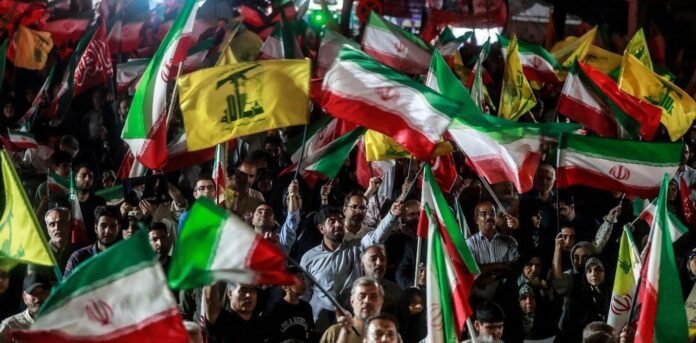
Reasons to be cheerful: Iranians celebrate news of an agreement in the conflict with the US and Israel.EPA/Abedin Taherkenarah
Peace or pause?
None of this is to dismiss the significance of the agreement. Preventing further escalation is a genuine achievement. Reopening critical maritime routes is beneficial for the global economy. Replacing military confrontation with diplomacy is undoubtedly preferable to the alternative.
If the deal holds, Iran could enter the next round of negotiations with the upper hand: sanctions relief under discussion, diplomacy back on track – and Washington increasingly reluctant to contemplate renewed military action as November’s midterm elections draw nearer.
But diplomacy is still best served by precision rather than exaggeration. Historically, peace agreements have settled disputes, created institutions and established durable frameworks for coexistence. This arrangement does none of those things – at least not yet.
The war’s underlying disagreements remain unresolved. Iran’s nuclear future remains uncertain. Sanctions remain contested. Regional rivalries persist. The possibility of renewed confrontation has not disappeared.
What has been achieved is not peace in any comprehensive sense. It is a ceasefire framework, an economic stabilisation mechanism and a diplomatic holding pattern. That may prove to be an important first step. But it is not, at least for now, a peace deal.
If anything, the real story is not that Washington and Tehran have resolved their differences. It is that both sides had compelling reasons to step back from the brink.
China’s answer to the US Navy may not be a single “carrier-killer” missile, but a coordinated swarm designed to overwhelm defenses through sheer scale, speed and complexity.
This month, the South China Morning Post (SCMP) reported that a research team led by Associate Professor Gao Tianyun from China’s National University of Defense Technology published a peer-reviewed paper detailing a step-by-step strategy to destroy dispersed US carrier groups from 3,000 kilometers away, targeting assets as far as Guam.
Published in the defense journal Tactical Missile Technology, the study addresses the US Department of Defense’s (DoD) Distributed Maritime Operations (DMO) concept, which scatters naval formations to mitigate regional vulnerability.
To counter this layered defense, the Chinese researchers propose an initial surprise strike using submarines to launch hypersonic anti-ship missiles at forward-deployed US Aegis destroyers. This tactic aims to crack the outer mid-course missile shield, exposing the aircraft carrier to subsequent salvos.
The plan then employs an orchestrated, multi-directional “firepower package” that combines cheap decoy drones, low-cost cruise missiles, and wave-skimming subsonic stealth missiles to deplete defense ammunition and saturate radar tracking.
Notably, the swarm uses a “leader-follower” mode in which a designated scout missile relays data to low-flying missiles, dynamically adjusting if the leader is intercepted. The authors argue that these mass-swarm tactics capitalize on China’s massive shipbuilding and missile manufacturing capacities relative to US deindustrialization.
Yet the effectiveness of any missile swarm depends on more than the number of missiles launched. To strike a moving carrier 3,000 kilometers away, China must first maintain an unbroken kill chain capable of finding, tracking and targeting the fleet despite US efforts to disrupt it.
In a May 2026 Center for Strategic and International Studies (CSIS) brief, Seth Jones notes that traditional US surface warships, such as carriers and destroyers, are highly exposed to precision strikes from the People’s Liberation Army Rocket Force (PLARF), despite their complex onboard defensive systems. Jones adds that their immense physical profiles make them vulnerable to large salvos of cruise, ballistic, and hypersonic missiles.
Complex kill chains – the procedures and assets that enable finding, fixing, tracking and targeting – may be the critical vulnerability in China’s missile-swarm concept.
As Jonathan Caverley notes in a 2025 Texas National Security Review (TNSR) article, long-range strikes against moving carrier groups require an uninterrupted chain of sensors, communications networks and weapons guidance systems. That architecture, he says, depends heavily on vulnerable space-based surveillance assets, creating multiple opportunities for disruption.
Veerle Nouwens and her co-authors argue in a January 2024 report for the International Institute for Strategic Studies (IISS) that while China can readily threaten fixed targets, striking moving carrier groups remains far more demanding. They note that maintaining continuous over-the-horizon awareness requires a sophisticated sensor network that may be vulnerable to US cyber, electronic warfare and counter-space operations.
Even if China strengthens its targeting architecture, it will still need to overcome increasingly distributed and unmanned US defensive networks designed specifically to absorb saturation attacks.
Beyond electronic and cyberwarfare, Jordan Spector, in a March 2026 Proceedings article, notes that the US Navy can counter saturation threats by implementing a layered, unmanned architecture that maximizes defensive depth.
He describes a layered defense consisting of an outer layer of a network of medium unmanned surface vessels (MUSVs) that expands early-warning detection and electronic jamming capabilities.
After that, Spector says a magazine on large unmanned surface vessels (LUSVs) serves as a remote arsenal, boosting missile capacity with multiple types of interceptors. Behind that, cruisers and destroyers coordinate terminal defense from the inner layer. He notes that such an integrated framework offloads risk to affordable, autonomous systems, preserving carrier strike group survivability.
China is not standing still, however. To make missile swarms more resilient, the People’s Liberation Army (PLA) is exploring kill-web architectures and autonomous systems that could continue operating even after portions of its targeting network are degraded or destroyed.
In a 2025 article in the peer-reviewed Air & Space Defense journal, Wang Chaochen and other writers mention that while conventional kill chains suffer from sequential dependencies—making them highly vulnerable to being severed if a single node fails—a kill web dynamically integrates dispersed combat nodes across land, sea, air, space, and cyber domains.
Wang and others say that by leveraging an open service architecture, edge computing, and local autonomous decision-making, the kill web ensures information is shared in real time. Consequently, they note that even if specific links suffer electronic interference or physical damage, the system dynamically reorganizes multi-path adaptive links to maintain uninterrupted operational lethality.
Beyond kill webs, China can employ increasingly autonomous AI to lessen dependence on kill networks. As Kateryna Bondar and Matt Mande mention in a report this month for the Center for Strategic and International Studies (CSIS), traditional unmanned systems rely on a constant communication link—the “tether”—to a human operator for flight, navigation, and targeting.
Bondar and Mande note that while electronic warfare can sever this link, rendering the platforms useless, genuine AI-enabled edge autonomy mitigates this vulnerability by allowing a system to operate independently.
They point out that instead of requiring constant human intervention, an operator can provide a strategic goal, and the autonomous system then calculates its own route, navigates entirely without GPS, and independently identifies and engages targets, removing the single point of failure caused by external signal disruption.
The decisive question for China’s missile-swarm strategy may therefore be less about missile range or salvo size than whether it can preserve long-range targeting effectiveness after parts of its battle network have been disrupted.
In a future Pacific conflict, the decisive contest may not be over whose missiles fly farther or arrive in greater numbers, but whose battle network keeps fighting after communications, sensors and command links begin to fail.
An Army Whistleblower Believed in Pete Hegseth — Until the Military Covered Up Her Child’s Abuse
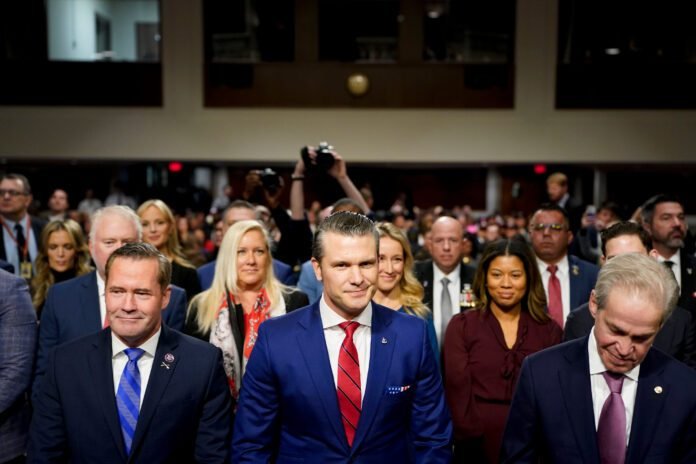
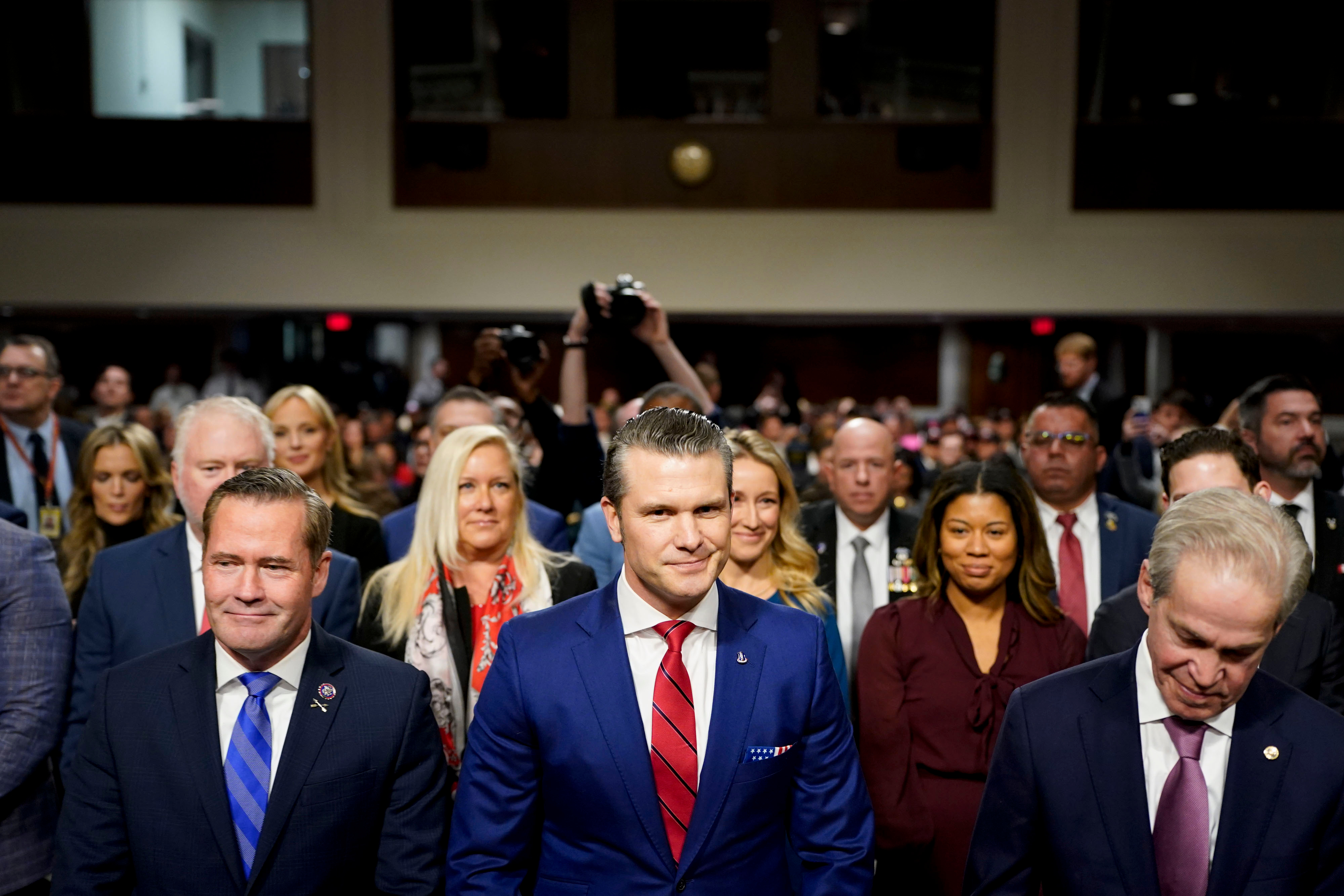
Amanda Feindt sat in the fourth row during the Senate confirmation hearing of Defense Secretary Pete Hegseth. A U.S. Army major and former whistleblower who had submitted a letter supporting his nomination, Feindt listened as Hegseth spoke about troop readiness, military lethality, and protecting military families. Service members and veteran advocates around her wore shirts and hats bearing his name.
While Feindt sat in the Senate chamber, her 4-year-old son was in the military’s care, spending the day at the North Post Child Development Center at Fort Belvoir, in nearby Virginia. There, according to records reviewed by The Intercept, he was subjected to treatment that would leave lasting psychological effects.
It took a year for Feindt and her husband to figure out what it was.
In a series of interviews with The Intercept, Feindt described a grueling pattern of obfuscation in which military officials refused to answer questions about her child’s treatment, directed her to file public records requests, and claimed not to have the attendant evidence — then produced it months later. Military experts characterized these delays as part of a pattern in which the institution seeks to slow-walk and minimize findings of child abuse or mistreatment to decrease reputational damage. Over a year of persistent requests, Feindt and her husband finally pieced together a picture of their child’s treatment during at least two instances that January: The day of the hearing, when staff mocked and harassed the 4-year-old, and a few days earlier, when surveillance video showed them stepping on his feet and pinning his legs under a table. Local authorities later classified the treatment as child abuse.
“My son barely has the words to describe what happened to him,” Feindt told The Intercept. “You can see it in the video — they’re screaming while the abuse is taking place.”
Three other military families whose children suffered maltreatment in U.S. Army facilities described similar roadblocks. Parents who sought surveillance footage in other abuse investigations described receiving heavily redacted videos, incomplete clips, or footage with audio removed.
“This is a standard tactic in administrative cases,” said Ryan Sweazey, a retired Air Force officer and former inspector general. “They tell you the investigation is done, and if you want to challenge it, you have to file a FOIA request. The report then comes back heavily redacted months or years later.”
That’s what happened to the Feindt family: Army officials allowed them to review only a limited portion of the footage and would not provide copies of the video. While they watched, Feindt and her husband recorded audio and later described the scenes in a memorandum to Defense Department officials, both of which they shared with The Intercept. When the family sought additional footage and records, Feindt said officials directed them to file a Freedom of Information Act request before saying the remaining footage had been deleted after review.
According to Feindt’s memorandum, three staff members watched the teacher pin the 4-year-old’s legs and mock him without intervening. The footage then shows the teacher yanking the child upward by his clothing, grabbing him by the wrists, and pushing him out of camera view, Feindt and her husband write. In the audio the family shared with The Intercept, a child Feindt identified as her son can be heard screaming for the teacher to stop.
Pete Hegseth arrives for his confirmation hearing before the Senate Armed Services Committee in Washington, D.C., on Jan. 14, 2025.Photo: Kent Nishimura/Bloomberg via Getty Images
Accusations of child abuse in the Army are handled through a quasi-judicial body known as the Incident Determination Committee, or IDC, which operates without many of the safeguards found in civilian courts. These panels can include social workers involved in the underlying case, members of the chain of command, or personnel with limited subject-matter expertise. The committee applies a “preponderance of information” standard that experts say can produce conclusions at odds with civilian investigators reviewing the same evidence.
Once the committee reaches a determination, parents are typically not allowed to review how the decision was made. Proceedings occur behind closed doors, with no transcript, evidentiary record, or opportunity for cross-examination available to families or attorneys.
“It’s one entity acting as judge, jury and executioner. There is no real due process, and there are almost no checks and balances,” said Sweazey.
The Feindt family was left unsure why their IDC did not substantiate abuse claims despite medical concerns and video evidence reviewed by investigators. Feindt tried to attend the committee’s hearing, but her request was denied. Afterward, she sought additional CCTV footage from the daycare, but Fort Belvoir officials told her the case was closed and she would have to file a FOIA request.
The system overseeing military child care centers is so fragmented that even grieving parents struggle to determine who is responsible when something goes wrong, said Jason Degenhard, a retired Army master sergeant who served in special operations. In 2012, Degenhard’s 4-fmonth-old son was in the care of the child development center on Pope Air Force Base (which today is part of Army base Fort Bragg) when a caregiver placed him on his stomach for tummy time, propped him against a rolled blanket, and left the room, as reported by WRAL News in Raleigh, North Carolina.
The infant’s muscles were not developed enough to support his weight, and he suffocated, causing catastrophic brain damage. The baby, named Sonny, was removed from life support days later.
“If you are a new parent trying to figure out how these centers are doing, you really do not have anything to go off of,” Degenhard said. In his telling, his chain of command supported the family immediately after Sonny’s death, but he remained troubled by what he described as limited institutional accountability afterward. Although the center was located on Pope Air Force Base, it operated under Army garrison authority, and Degenhard said the overlapping bureaucracies often left the family unsure who had the authority to provide answers or accept responsibility.
After federal prosecutors declined to pursue criminal charges, the Degenhards settled a wrongful death lawsuit against the federal government. Their emotional distress claims were dismissed.
“The heartbreak goes beyond the personal,” said Degenhard, who is still suffering from grief 14 years later. “The professional heartbreak is the lack of accountability, the lack of communication, and the lack of supervision.”
Feindt’s son became fearful and mistrustful of adults, regressed in potty training, and developed nightmares after Hegseth’s January 2025 confirmation, she told The Intercept. The family transferred him to another daycare, where Feindt said he struggled to adjust and accumulated roughly 20 behavioral incident reports in his first month, prompting administrators to bring in trauma specialists for support. His doctors said his symptoms resembled post-traumatic stress.
Army internal documents and communications acknowledged that supervisors watched her son being mistreated but did not intervene; no mandatory reporters documented the incident; and the parents were never notified. The conduct aligns with the Defense Department’s criteria for emotional maltreatment of a minor, but the Army IDC refused to classify the child’s treatment as abuse.
“For 15 months, the military told us this didn’t meet criteria,” Feindt said. “They made our lives a living hell.”
More than a year after the incident, in March 2026, Fairfax County Child Protective Services substantiated the case as child abuse and neglect, according to information provided to the family and confirmed by The Intercept. The finding will remain on the caregiver’s record for seven years.
On May 1, Fort Belvoir Child and Youth Services sent a letter to parents acknowledging a “founded disposition of a child abuse allegation,” stating that one caregiver had been removed from the facility and another was in the process of being terminated.
Records reviewed by The Intercept indicate the conduct at the childcare center extended beyond a single confrontation involving Feindt’s son.
Investigative materials obtained through FOIA describe repeated incidents in which caregivers allegedly mocked, threatened, and harassed children inside the classroom. Investigator notes reviewed by The Intercept describe a caregiver tugging a child’s hair, lifting a child by the back of their shirt, roughly repositioning children during classroom activities, and swinging a broom at a child.
In November 2021, when Pete Hegseth was a co-host on “Fox & Friends Weekend” and Amanda Feindt was an Army major, a storage tank maintained by the U.S. military began leaking jet fuel into the drinking water supply at Joint Base Pearl Harbor–Hickam in Oahu, Hawaii. In what became known as the Red Hill incident, for the name of the fuel storage facility, about 20,000 gallons of JP-5 jet fuel contaminated drinking water for roughly 93,000 people, including members of the military and civilians. The Associated Press reported that about 6,000 people were poisoned.
Feindt and her family were among the military households exposed to contaminated drinking water during the Red Hill fuel leak. After developing severe gastrointestinal symptoms, the entire family sought emergency medical care. Her infant son suffered chemical burns after bathing; her husband underwent multiple medical procedures for ongoing complications; and her daughter later developed neurological issues that the family believes stemmed from the exposure. The Feindts were evacuated from their home, shuffled between seven hotels, and relocated across the country twice. Feindt, a former cancer patient, developed enlarged and suspicious cervical lymph nodes.
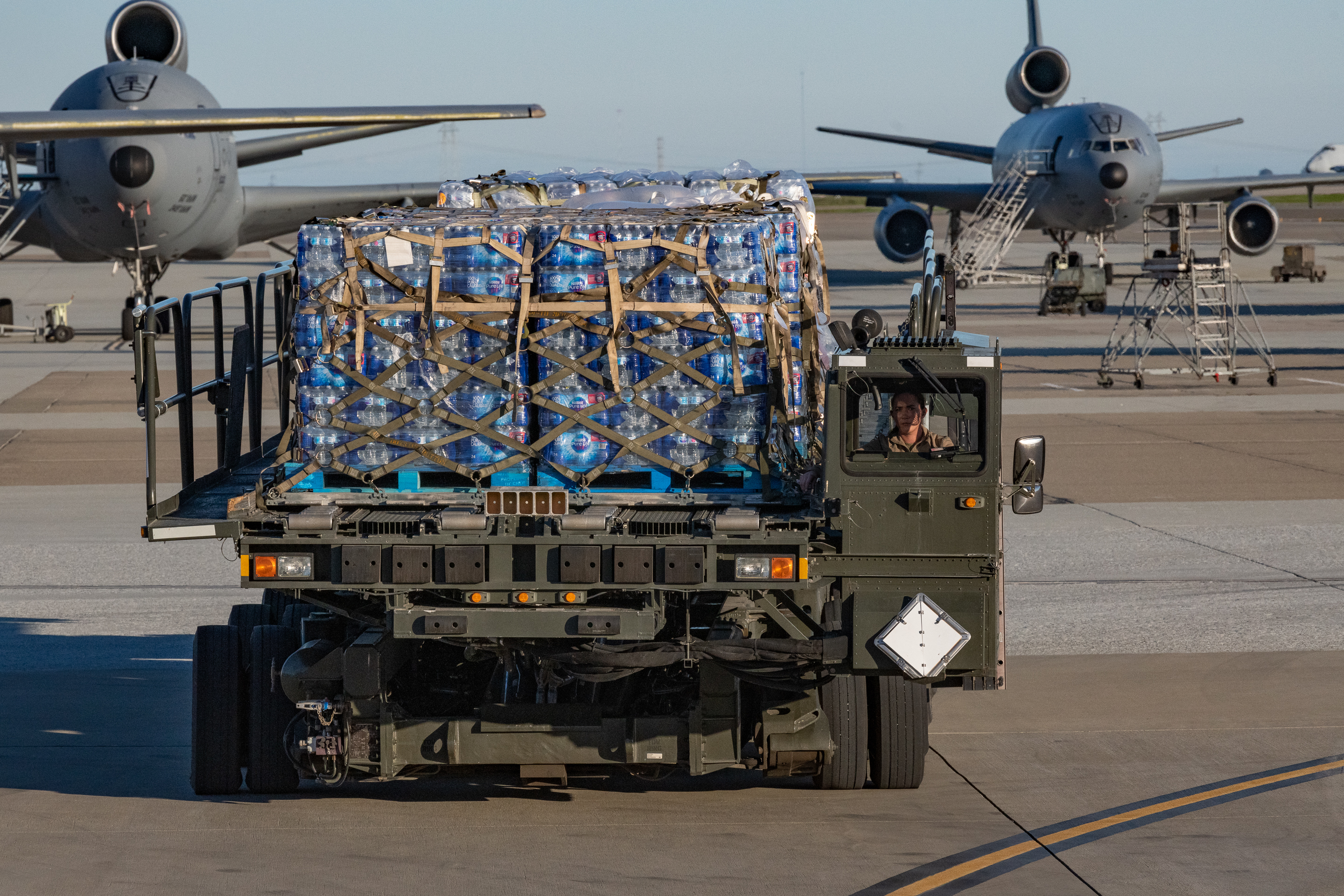
Air transportation specialists at Travis Air Force Base, Calif., load bottled water to be shipped to Joint Base Pearl Harbor-Hickam, Hawaii, amid the Red Hill water crisis on Dec. 10, 2021.Photo: Grant Okubo/U.S. Air Force via DVIDS
Feindt became a substantiated whistleblower and lead plaintiff in a lawsuit over the fuel leak, arguing that the contamination had upended her family’s health, finances, military career, and daily life. Hegseth was of the first national reporters to contact her about Red Hill.
“There was a lot of back-and-forth by email,” Feindt said, recalling that Hegseth knew her attorney and would write from his personal Gmail as he followed the case. “He would check in about Red Hill, and we would give updates to him and Fox. He always seemed like he would advocate for us as a reporter.”
“He always seemed like he would advocate for us as a reporter.”
In the four years since Feindt’s exposure at Red Hill, the family has managed more than 700 medical appointments, multiple surgeries, and long hospitalizations. The Army moved the family to Fort Belvoir so Feindt could enter the Soldier Recovery Unit, a program intended to support service members with complex medical issues.
When her son experienced abuse at the Fort Belvoir childcare center, Red Hill came back to haunt her.
Staff members for Secretary of the Army Dan Driscoll told Feindt they would not meet with her because of her association with the Red Hill litigation, which she believed had already concluded. (A federal court found the U.S. government liable for poisoning military families through the Red Hill fuel spill, but awarded substantially lower damages than plaintiffs sought.) She escalated the matter beyond Army leadership, going up to Stephen Simmons, deputy assistant secretary of defense for military community and family policy, who acknowledged Feindt’s concerns and indicated he was aware of the situation as it unfolded in messages reviewed by The Intercept.
Simmons referred The Intercept’s request for comment to the Pentagon’s public affairs team, which did not answer detailed questions.
Sweazey, who also runs a nonprofit that supports whistleblowers, said he believes Feindt faced retaliation after pressing the Army for accountability.
“Unfortunately, it appears to be retaliation, and it’s not rare,” Sweazey said. “The moment someone questions the institution, they can become a target.”
Experts say abuse allegations inside military childcare centers often move slowly, with limited transparency and strong institutional pressure to minimize failures.
“Burying cases like these is a matter of control and institutional survival,” said Maj. Gen. Dennis Laich, a retired Army officer and director of the Eisenhower Media Network. “Incidents viewed as leadership failures can damage careers.”
When a toddler named Evie Glick came home injured from the Ford Island childcare center in Honolulu in 2022, staff told her mother that Evie had tripped, fallen, and hit her head. Jennifer Glick, a special agent with the Army Criminal Investigation Division, accepted that explanation at the time.
The following year, Navy Family Advocacy officials informed the family that Evie may have been physically abused at the daycare after another military family, the Kuykendalls, raised concerns uncovered while investigating the abuse of their own daughter, Bella. The Kuykendalls later launched Operation Mei Mei, an advocacy effort pushing for greater transparency and accountability in military childcare centers.
When the Glicks sought details, records, and footage, they said they received few answers.
It wasn’t until nearly three years after Evie’s injury that Glick saw surveillance footage through Operation Mei Mei. She said the videos contradicted the explanation she had originally been given.
“We were lied to. The [daycare] never told us our daughter was abused,” Glick said. “My first question, being in law enforcement myself, was: Where is the investigation?”
“The moment someone questions the institution, they can become a target.”
Glick said the footage showed a caregiver grabbing Evie by the arm, pulling her to the ground, and making her head strike the floor — causing the injury that, years earlier, the family had been told happened when Evie fell. In another clip, Glick said, a provider removed Evie’s shoes and socks and threw them away while the 18-month-old cried and wandered the classroom for 16 minutes.
Glick later filed a FOIA request seeking additional footage. She said the material she eventually received was heavily edited, redacted, and stripped of audio.
“They told me I could only view it with a JAG officer present,” Glick told The Intercept, referring to a judge advocate general, or a military lawyer. “There were three clips, each less than 20 minutes long. It wasn’t the full footage I asked for.”
As Feindt was fighting for recognition of her son’s abuse, and unbeknownst to her, the North Post Child Development Center at Fort Belvoir lost its accreditation.
In July 2025, the facility failed to complete required renewal requirements, including annual reporting and coordination of a site visit, as The Intercept confirmed with the National Association for the Education of Young Children.
The Intercept asked Fort Belvoir this April whether the center had experienced any recent changes to its licensing or accreditation status, including suspension, probation, or revocation. Fort Belvoir Public Affairs responded that the facility’s “current licensing status has not been changed” but did not directly answer questions regarding accreditation or respond to related follow-ups.
“My number one problem is that [Army childcare centers] are not responsible or reportable to the state.”
Unlike civilian daycares, Defense Department child development centers are not licensed by the state where they’re located. Instead, they operate under DoD oversight, but DoD policy requires centers to maintain national accreditation standards.
“My number one problem is that [Army childcare centers] are not responsible or reportable to the state,” said Degenhard, the father whose infant died in Army care. “They follow their own compliance and standards.”
According to a summary circulated among parents following a May 14 Fort Belvoir Parent Advisory Board meeting reviewed by The Intercept, installation officials later acknowledged the center had lost accreditation and recently reapplied. Families had not been informed the facility had operated without accreditation for almost a year.
Families had not been informed the facility had operated without accreditation for almost a year.
Feindt said she first learned of the lapse from a former daycare employee and independently contacted the accrediting organization to verify the information before raising it with installation leadership. The issue was later discussed at the parent meeting, where officials acknowledged the loss of accreditation.
Feindt said she was relieved that the caregiver who abused her child had been fired. “But this is not just about our family,” she said. “It’s a serious indictment of a system that failed to protect military children.”
Hegseth posted a photo of himself fist-bumping a child, captioned “This is our why.” “Well, if that’s the case,” Feindt said, “why aren’t we taking care of our military kids?”Screenshot: @secwar via Instagram
“Leaders at all levels will be held accountable,” Hegseth announced at the confirmation proceeding Feindt attended in January 2025. “And warfighting and lethality and the readiness of the troops and their families will be our only focus.”
Since taking office, Hegseth has made the military’s killing capability and the restoration of what he calls a “warrior ethos” the defining themes of his tenure. He has ordered the elimination of diversity, equity, and inclusion programs across the Defense Department; repeatedly criticized what he describes as “woke” influences in the military; and personally intervened in a series of culture-war controversies involving military installations and schools. Critics argue those battles have consumed attention that could otherwise be directed toward long-standing quality-of-life issues affecting service members and their families.
Lawmakers like Rep. Jill Tokuda, D-Hawaii, are pushing for greater transparency through measures like the Military Child and Youth Program Abuse and Neglect Notification Act, which would require timely notification to parents and establish more consistent reporting standards across services when allegations of abuse arise. But experts say the military continues to struggle with accountability when abuse allegations emerge inside its own child care system.
“How can anyone be mission ready or focused on lethal force if the military, in my family’s case, literally poisoned my child and now I can’t take them to daycare because they were abused?” Feindt said.
For Glick, her child’s abuse fundamentally changed how she views military service and childcare inside the Defense Department.
“That affects readiness because people will walk away if they don’t feel their children are safe,” she said.
The Pentagon has shown it can respond quickly when controversies involving children attract national political attention. After parents complained and a flurry of right-wing press coverage erupted over a transgender teacher who wore an animal tail and collar at a Fort Bragg elementary school, Hegseth proudly announced the teacher’s firing within weeks.
Feindt said the speed of that response contrasted sharply with her family’s experience.
“It shows they can act quickly when something becomes politically important,” she said. “But when military children are actually being harmed, families are left fighting the system alone.”
More than a year after the incident involving her son, Feindt said she believes meaningful change will only come if military families and senior leaders speak publicly about what they have experienced.
She pointed to a photo Hegseth posted online showing him fist-bumping a child alongside the caption: “this is our why.”
“Well, if that’s the case,” Feindt said, “why aren’t we taking care of our military kids? Why do we have a system that protects itself instead of protecting our children?”
Why We Changed Our Code of Ethics to Address Prediction Markets
What would you think of me, the ProPublica editor responsible for newsroom standards, if I placed a bet on the baseball game I’m currently listening to on the radio? Probably that I’m doing something plenty of others do, and that my wallet will be lighter in a few innings.
What would you think of me if I stood to make a tidy sum based on the outcome of a news event ProPublica has been covering? You’d probably think that’s downright shady, because isn’t the job of a journalist to report the news and not make money off it?
Lest you think I’m an ethically compromised editor, you can rest easy. According to a recent update to ProPublica’s code of ethics, “no employee should wager on the outcome of news events on the prediction markets — regardless of whether or not they are involved in coverage of said event.”
ProPublica has always prohibited employees from profiting off inside information, so you may wonder why we amended our code of ethics to specifically single out prediction markets. We have not encountered any instances of this happening on our staff, but it has become harder and harder to deny the influence and reach of prediction markets beyond sports. In fact, deals between prediction markets and news organizations abound, such as Kalshi with CNN, Fox News and The Associated Press, and Polymarket with Dow Jones.
At ProPublica, it felt imperative for us to establish professional boundaries in a world where a person can have a financial stake in almost anything. Our thinking was: If one of our employees has money riding on an outcome, can a reader be sure we’re covering a story without bias?
We take your trust seriously and know that it is something to be earned and maintained. We’ve always held ourselves to high standards. The code of ethics specifically exhorts our journalists to “avoid any actions that could make a reasonable reader doubt their ability to report fairly or with neutrality on the subjects of their coverage.” We know that even the appearance of us doing anything other than working in the public interest is troubling.
When we began seeing instances of people making money off the outcome of news events, one of our concerns was that readers might assume journalists were doing the same. Even gambling on news events that ProPublica would most likely not cover, like next year’s presidential election in France, isn’t a good look for a journalist. If someone on our staff is doing that, a reader might wonder if they are betting on something closer to home or to their field of expertise.
However, we also wanted to take care to not close the door on activities that don’t pose such an existential reputational risk. A bunch of investigative journalists throwing a few dollars into an office sports pool will probably not have the public thinking we’re incapable of being fair — although some of our team allegiances might make readers think we’re gluttons for punishment. And putting a bit of money on a ballgame isn’t a huge cause for alarm. So we took care to say that “betting on sporting events (like the Super Bowl or the Kentucky Derby) and taking part in small-stakes, friendly contests (like office pools on the Oscars) are permissible when legal and when employees are not involved in coverage of those events.”
(And even though our code of ethics allows us to bet on sporting events in these cases, I don’t because I prefer to spend my money on cheap seats and stadium novelties.)
Other outlets are also tackling this issue. NPR recently issued guidance that says “editorial employees are not allowed to use prediction markets or similar sites to place bets on developments of news events, or anything else we might cover, or on things NPR controls,” including who will appear on upcoming Tiny Desk Concerts. And the New York Times’ standards editor said in a memo to staff that “betting on the outcome of news events on the prediction markets is a violation of our principles and ethical guidance and is not permitted.”
Beyond journalism, this has also gotten attention at the state and national levels. Places like Maryland and New York have put rules in place to prohibit state employees from using inside information to bet on prediction markets. And a number of lawmakers in the U.S. House of Representatives have called for banning members of the chamber and their staff from gambling on the platforms.
Our code of ethics isn’t immutable, and down the road we may revisit this topic and further bolster our guidelines. Or we may tackle something that isn’t even on our radar today. But we will always act with the reader in mind so you know you’re getting the truth from people who are accountable only to you. You can bet on it. Actually, maybe don’t do that.