21.4 C
London
Monday, June 15, 2026
Home Blog

UK to ban social media for kids under 16, may impose overnight curfews

0
uk-to-ban-social-media-for-kids-under-16,-may-impose-overnight-curfews
UK to ban social media for kids under 16, may impose overnight curfews

The UK government announced today that it will ban social media for all kids under the age of 16 in rules expected to take effect in spring 2027. The ban will apply to platforms including Snapchat, TikTok, YouTube, Instagram, Facebook, and X.

“We’re going further than any country in the world by banning social media for under-16s and putting wider protections in place to give kids their childhood back,” Prime Minister Keir Starmer said in the announcement.

In addition to the ban on social media, Starmer’s government said it will impose “world-leading blocks on harmful functions such as livestreaming and stranger communication with children for under-16s… Restrictions on these functionalities will also be on by default for 16- and 17-year-olds to prevent a cliff-edge at 16.” The livestreaming and stranger-contact rules would apply to a range of services, such as online gaming.

“The government will also be looking in more detail at overnight curfews and breaks in infinite scrolling for under-18-year-olds and will set out more detail in July,” the announcement said. The planned social media ban will not apply to messaging services like WhatsApp and Signal.

Another planned change is that “so-called AI ‘romantic companion’ chatbots—designed to simulate sexual relationships or roleplay with users—will have to enforce a minimum age of 18. Similar intimate functionalities will be restricted for under-18s on AI chatbots more widely,” the UK government said.

Age checks

Platforms will be ordered to verify users’ ages. Communications regulator Ofcom will be tasked with determining what kinds of age-verification systems will be required to comply with the rules. The ban decision was made after a consultation that drew responses from 116,000 people.

“Ofcom will set out in the coming months different options for effective forms of age assurance for proving whether someone is over 16 that are accurate, robust, reliable, and fair,” the government said in a fact sheet on the rules, noting that facial recognition may be part of the age-check scheme. Adults can avoid the new age check on their existing social media accounts if they’ve already proven their age in another way.

The UK Online Safety Act already requires age checks for porn and other sensitive content. When it took effect last year, it appeared that many people in the UK used VPNs (virtual private networks) to circumvent the age verification.

VPNs themselves can create privacy and security problems. “The VPNs that children are incentivized to use pose privacy and security risks. Bad actors in the VPN space often trade in the sensitive browsing data that these tools can gather,” said the Center for European Policy Analysis, a research group whose funders include Google and Meta.

UK modeled rule on Australia ban

The UK government today said the social media ban will use the same model as Australia, where online platforms must pay financial penalties if they fail to block underage users. Social media companies criticized the Australian rules but agreed to comply.

YouTube said in a statement to media outlets today that “blanket bans push kids out of such curated, supervised, beneficial experiences and towards anonymous, less-safe services.” Meta said the similar rule in Australia showed that “bans risk isolating teens from online communities and information, and driving them to unregulated alternatives that lack built-in protections and parental controls.”

The Electronic Frontier Foundation has said that age-verification requirements harm privacy by requiring more collection of personal information from users of all ages. Banning social media also prevents kids from accessing useful content, the group said.

“Beyond being spaces where people can share funny videos and engage with enjoyable content, social media enables young people to engage with the world in a way that transcends their in-person realm, as well as find information they may not feel safe to access offline, such as about family abuse or their sexuality,” the EFF said in March as the UK discussions were progressing. “In severing this connection to people and information by banning social media, politicians are forcing millions of young people into a dark and censored world.”

Liberal Democrats prefer age-rating system

MP Victoria Collins of the Liberal Democrats party said the proposal is “woefully inadequate.” The UK should instead force tech companies to address addictive algorithms and harmful content, she said.

“That’s why the Liberal Democrats put forward a social media age-rating system that, instead of a blanket ban, puts the onus on the social media giants to clean up their act and have safety by design for all of us,” she said.

MP Nigel Farage, leader of the right-wing Reform UK party, said “the social media ban is well-intentioned” but is “unlikely to work given the mass adoption of VPNs. It will also mean the introduction of Digital ID via the back door. The real answer here is handsets for children with limited features.”

Conservative Party leader Kemi Badenoch took credit for Starmer’s Labour Party deciding on an under-16 ban. “It is fantastic news that the government has finally woken up to the dangers of social media for young people… Huge credit goes to MP Laura Trott and my Shadow Cabinet for relentlessly fighting for this. Conservatives welcome this latest Labour U-turn, and will continue to work for the best implementation of the policy,” Badenoch said.


Pat Sajak Gives Life Update Months After Leaving Wheel of Fortune

0
pat-sajak-gives-life-update-months-after-leaving-wheel-of-fortune
Pat Sajak Gives Life Update Months After Leaving Wheel of Fortune


Pat Sajak has finally resurfaced with a life update after months of silence, and fans are loving his classic dry humor.

The beloved former Wheel of Fortune host stepped away from the iconic game show in 2024 after more than 40 years and 41 seasons. The following year, he also left Celebrity Wheel of Fortune, officially ending his hosting duties.

Sajak, 79, had previously said he wanted to leave while the show was still going strong, rather than waiting too long. He also said he was ready to spend more time with family, enjoy retirement, do crossword puzzles, and embrace life as a grandfather.

Now, fans have gotten a glimpse of what life after Wheel looks like for him.

Sajak posted a video on social media titled “Update on life…” showing himself standing in a tropical-looking garden, dressed casually for warm weather. Behind him were palm trees and a view of the ocean.

“Hi, I know many of you have been wondering, been asking how I’ve been doing, and I’m enjoying life,” Sajak said.

Then came the joke.

Pointing toward the palm trees and water, he quipped, “I’ve moved here to Montana, and everything is going just great.”

The longtime TV host continued the bit, adding, “So, I just wanted to say hello. You’ll have to excuse me, I have cattle to attend to. Here, boy!”

As he walked off camera, a cow could be heard mooing in the background.

Fans immediately flooded the comments, laughing over Sajak’s fake “Montana” reveal.

“Wtf it looks like that in Montana?” one person joked.

“Bro had me second-guessing my geography for a sec,” another wrote.

“Wow! I did not know that Montana had palm trees and beaches,” a third fan joked.

Others said the video was a perfect reminder of the wit that made Sajak a television favorite for decades.

“This video underscores your signature dry wit. Enjoy your well-deserved retirement,” one commenter wrote.

Another fan played along, writing, “I grew up in Montana! You found my favorite part of the state, but we try to keep it a secret so it doesn’t become too popular so shhhhh!”

“We miss you, Pat! Well-deserved retirement! P.S. Please do a cameo on the show someday!” another added.

Sajak’s update comes after he fully stepped away from the franchise that made him a household name. His exit followed years of speculation about when he would finally say goodbye to Wheel of Fortune.

He had also survived a major health scare in 2019, when he underwent emergency intestinal surgery, an experience that reportedly made him rethink his priorities.

While fans still miss seeing him behind the famous puzzle board, Sajak’s latest update suggests he is doing exactly what he hoped to do after leaving the show.

He is relaxing, making jokes, and enjoying life far from the daily grind of television.

Boursin Chicken Orzo

0
boursin-chicken-orzo
Boursin Chicken Orzo
Overhead view of Boursin Chicken Orzo with shredded chicken, broccoli, and creamy herb sauce baked in a white oval dish.
Creamy, cozy, and packed with flavor, this Boursin Chicken Orzo turns simple ingredients into an easy dinner everyone will love.

Print Friendly, PDF & Email

Boursin Chicken Orzo is the kind of cozy dinner that somehow feels both comforting and a little special. Tender chicken, creamy herb cheese, broccoli, and delicate orzo come together in one baking dish, creating a rich and satisfying meal with very little effort.

The magic happens when the Boursin melts into the broth, turning into a velvety sauce that coats every bite. Meanwhile, the broccoli becomes perfectly tender, adding freshness and color to balance the richness.

This easy baked chicken orzo recipe is perfect for busy weeknights, yet it feels lovely enough to serve when family or friends stop by. Best of all, there’s only one dish to wash afterward. Some dinners just have a way of making everyone linger at the table a little longer.


Overhead view of Boursin Chicken Orzo with shredded chicken, broccoli, and creamy herb sauce baked in a white oval dish.
Creamy, cozy, and packed with flavor, this Boursin Chicken Orzo turns simple ingredients into an easy dinner everyone will love.

Recipe Yield: 6 servings

INGREDIENTS

1 lb cooked rotisserie chicken, shredded
1 cup uncooked orzo pasta
3 cups broccoli florets, cut into bite-size pieces
1 (5.2 oz) package Garlic & Fine Herbs Boursin cheese
2 1/2 cups low-sodium chicken broth
1/2 cup heavy cream
1/2 tsp garlic powder
1/2 tsp onion powder
1/2 tsp kosher salt
1/4 tsp black pepper
1/2 cup freshly grated Parmesan cheese
1 tbsp chopped fresh chives, for garnish

INSTRUCTIONS

1. Preheat the oven:
Preheat the oven to 425°F. Lightly grease a 9 x 13-inch baking dish.

2. Assemble the casserole:
Add the orzo, broccoli, shredded chicken, chicken broth, heavy cream, garlic powder, onion powder, salt, and pepper to the baking dish. Place the Boursin cheese in the center.

3. Bake covered:
Cover tightly with foil and bake for 30 minutes. Carefully remove the dish and stir well until the Boursin melts into the broth and creates a creamy sauce.

4. Finish baking:
Sprinkle the Parmesan cheese over the top. Return the dish to the oven uncovered and bake for 8 to 10 minutes, until the orzo is tender and the top is lightly golden.

5. Rest and serve:
Let the dish rest for 5 minutes. Garnish with fresh chives and serve warm.


Helpful Tips to Perfect This Recipe

  • Cover the dish tightly. A snug layer of foil traps the steam and helps the orzo cook evenly while keeping the sauce creamy.
  • Use freshly grated Parmesan. It melts beautifully and adds a richer flavor than pre-shredded cheese.
  • Let the casserole rest before serving. Those few minutes allow the sauce to thicken slightly, giving you the perfect creamy texture.

Rate This Recipe

Tried this recipe? Your rating helps others and means so much.

Bloody cage match on White House lawn marks Trump’s 80th birthday

0
bloody-cage-match-on-white-house-lawn-marks-trump’s-80th-birthday
Bloody cage match on White House lawn marks Trump’s 80th birthday

WASHINGTON — President Donald Trump celebrated his 80th birthday Sunday cageside at a multimillion-dollar bloody mixed martial arts event staged on the White House South Lawn, punctuated by fighter jet flyovers, a live military band and fireworks to mark the country’s 250th anniversary.  

It also included the airing of a conspiracy theory about a former first lady, Michelle Obama, during post-fight comments by one of the contestants.

The spectacle promoted by the Las Vegas-based Ultimate Fighting Championship, billed as Freedom 250, was exclusively shown on the paid subscription platform Paramount+. The Trump-organized event was not affiliated with the national nonpartisan organization America 250, a commission created by Congress.

Aside from a blood sport taking place in the backyard of the White House, the night served as a first for several other extraordinary sights. That included live pre-fight sports commentary from inside the White House, and fighters warming up in offices-turned-lockerrooms at the neighboring Eisenhower Executive Office Building.

The Ultimate Fighting Championship ring on the White House South Lawn on Thursday, June 11, 2026. (Photo by Ashley Murray/States Newsroom)

VIPs, including members of Congress and tech giants, sat under the lights in the temporary arena able to hold up to 4,300 guests. Tens of thousands of UFC fans crowded the Ellipse, where the fights were displayed on two mammoth screens.

The event reportedly cost $60 million, according to a government court filing. VIP sponsorship packages, including a chance to sit cage-side under “the claw” cost up to the widely reported price tag of $1.5 million.

Between praise for the American military and Jesus Christ, fighters delivered insulting and expletive-laden comments from inside “the Octagon.” Two American fighters, Bo Nikal and Josh Hokit, thanked Trump for having “the balls” to host the event at the White House. 

Hokit, a former NFL player, during his live post-fight comments to massively popular podcast host Joe Rogan, insulted Brazilian fighter Alex Pereira’s mother and then repeated a right-wing conspiracy theory claiming former first lady Michelle Obama is “a man.”

Rogan did not challenge the comment. Shortly after his remark, Hokit placed his victory chain around Trump’s neck and the two shook hands. The moment was captured and posted on social media by White House special assistant Margo Martin.

The official UFC YouTube clip of the California heavyweight’s speech does not include his unfounded insult of Obama.

Bright lights and flyovers

Spotlights from the UFC’s 92-foot steel canopy that dwarfed the White House and towered over “the Octagon” cage could be seen in the night sky from neighborhoods around Washington, D.C., and several residents took to social media to complain that a B-1 bomber flyover at 11:30 p.m. Eastern woke them. Fireworks exploded until nearly 1:30 a.m.

Drinks in hand, US service members in short-sleeve dress uniforms celebrated from the seats — several sailors even taking part in the “YMCA” dance during the Marine Corps band’s live cover of the Village People’s 1978 hit, a staple at Trump’s events. 

Trump and UFC CEO Dana White entered the arena just before 8:30 pm. Shortly after, a dozen fighter jets, in a joint “Super Delta” formation performed by the US Air Force Thunderbirds and Navy Blue Angels, flew overhead during the national anthem, performed by country music star Zac Brown.

Trump sat just below the fighting cage between first lady Melania Trump and White, an ally who has delivered primetime addresses in support of Trump at the 2016, 2020 and 2024 Republican National Conventions.

Trump was surrounded by family, including his son, Barron, who sat behind him and shook hands with several guests who approached the president, according to pooled dispatches from the White House press corps.

Several winning fighters jumped over the cage rail to shake the president’s hand following the individual matches.

Eight US fighters

Of the seven-fight card’s 14 competitors, eight were American. The violent bouts were accompanied by cheers of “USA!” and various taunts, including shouts that Canada should be “the 51st state” as American bantamweight fighter Sean O’Malley defeated Canada’s Aiemann Zahabi. Trump applauded O’Malley and shook his hand following the individual fight.

The main event featured a title match between lightweights American Justin Gaethje and Spanish-Georgian Ilia Topuria. Officials named Gaethje the winner just after 1 a.m., as the badly battered Topuria, with a bloodied face, was declared incapable of continuing, according to pool reports.

Fighters were paid a $250,000 performance bonus sponsored by World Liberty Financial, a crypto currency venture owned by the Trump family, according to broadcast announcers.

Cameras delivering the exclusive Paramount stream showed notable lawmakers and tech moguls in the crowd, including House Speaker Mike Johnson, R-La., former wrestler and college wrestling coach Rep. Jim Jordan, R-Ohio, and Meta CEO Mark Zuckerberg. The press corps reported Senate Majority Leader John Thune, R-S.D., was also nearby.

Trump, Zuckerberg and White spoke for several minutes during a break in the fights just before 10 pm, according to pool reports.

Other notable guests included Kris Marszalek, CEO of Crypto.com, one of the event’s two primary sponsors, and Polish President Karol Nawrocki.

Acting Attorney General Todd Blanche, Trump’s former personal defense attorney and his attorney general nominee, shook hands as he moved through the crowd, according to press pool reports. Several other presidential Cabinet members were present, including Secretary of State Marco Rubio, who on Thursday signed a “sports diplomacy” agreement with UFC.

Also in attendance was Paramount Skydance CEO David Ellison, whose reportedly $111 billion corporate takeover of Warner Bros. Discovery, was cleared by the Justice Department Friday, a key last step for the merger. 

Paramount+ has a $7.7 billion multi-year content deal to exclusively carry UFC events.

The event, which was to start at 8 pm, was delayed for roughly an hour because of the threat of thunderstorms. The fights wrapped up just after 1 am.

Weekend festivities included a UFC press conference Friday night in front of the Lincoln Memorial, and a two-day fan festival on the Ellipse that featured motorcycle stunts from the Nitro Circus and a concert from the Georgia-based Zac Brown Band.

The UFC controlled media credentialing for the event on the White House grounds.

‘No Kings’ protest

The event faced sharp criticism but remained unscathed by an eleventh-hour lawsuit challenging the legality of UFC’s use of the White House lawn.

Performers and celebrities staged a counter-concert organized by the Committee for the First Amendment, an activist coalition of artists spearheaded by Jane Fonda. 

The No Kings protest organization promoted a livestream from The Town Hall in New York City, and encouraged people to organize remote watch parties for the “Rise Up, Sing Out” concert featuring Patti Smith, Bette Midler and Rufus Wainwright, among others.

C-SPAN also streamed the nearly two-and-a-half hour concert, though some performances were muted because of licensing restrictions.

-States Newsroom

US-Iran agreement gave region a ‘sigh of relief,’ says Turkish president

0
us-iran-agreement-gave-region-a-‘sigh-of-relief,’-says-turkish-president
US-Iran agreement gave region a ‘sigh of relief,’ says Turkish president

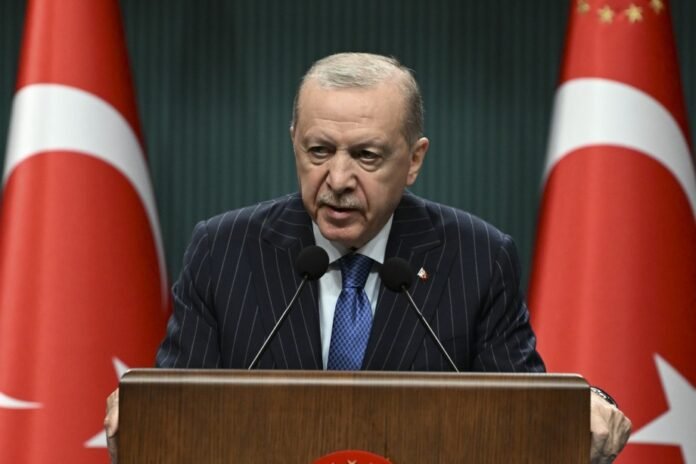
Turkish President Recep Tayyip Erdogan on Monday said that the agreement between the US and Iran marked a “very important step” to end the war that began with provocations from Israel on Feb. 28, adding that it gave the region “a sigh of relief,” Anadolu reports.

“The US-Iran agreement is a very important step in the war that began with provocations from Israel on Feb. 28,” Erdogan said after the Cabinet meeting. “Our region, which has been on the brink, has breathed a sigh of relief.”

Erdogan said Turkiye was greatly pleased “on behalf of our region and all humanity” with the agreement reached with Ankara’s contributions.

“We hope the agreement will fully open the way toward the establishment of lasting peace and stability in our region,” he said.

The Turkish president said no Turkish citizen was harmed in the crisis. “Plans to pit brothers against each other did not achieve their goal.”

READ: US, Iran sign nuclear pact to end war, reopen Strait of Hormuz, senior US official says

He added that attempts to “ignite new flames of discord among Turks, Arabs, Kurds and Persians” ended in a failure.

On NATO, Erdogan said Turkiye is among the leading countries supporting the alliance’s peace mission.

“As we develop our defense capabilities, we contribute to the alliance’s deterrence,” he said.

Erdogan said Turkiye would continue to play a leading role in NATO with its comprehensive military capabilities, strategically important geography and historical depth.

He also said Turkiye’s position within the alliance and developments unfolding in the region have increased interest and expectations from the alliance’s Ankara Summit.

READ: No lifting of Iran sanctions without behavior change: EU Commission chief

Netanyahu Admits ‘We Do Not Know What the Agreement Will Be,’ Vows Iran Will Never Have a Nuclear Weapon 

0
netanyahu-admits-‘we-do-not-know-what-the-agreement-will-be,’-vows-iran-will-never-have-a-nuclear-weapon 
Netanyahu Admits ‘We Do Not Know What the Agreement Will Be,’ Vows Iran Will Never Have a Nuclear Weapon 


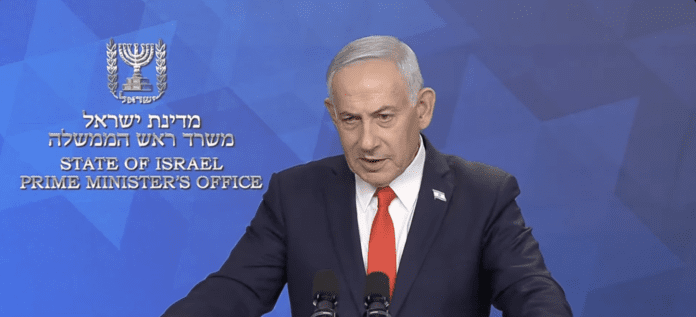
Prime Minister Benjamin Netanyahu said Monday that Israel does not yet know what will be included in a prospective agreement with Iran, but stressed that any deal must be backed by a credible military threat and that he would not limit Israel’s actions to prevent Tehran from obtaining nuclear weapons. 

Speaking at a press conference, Netanyahu declined to compare the emerging agreement with previous diplomatic efforts, saying the final terms remain unclear. 

“I would not make that comparison yet,” Netanyahu said. “We do not know what the agreement will be.” 

Netanyahu said the central difference between the current situation and past negotiations is the existence of military pressure on Iran. 

“I can say that the fundamental difference between the situation then and the situation today is that every agreement must be accompanied by a credible military threat,” he said. “Back then there was no credible military threat. There was no military threat. Today, because of what we did — not only the United States, because of us, because we went in there with 14,000 sorties — that is the biggest difference.” 

He then referred to roughly 140,000 sorties, saying they were divided approximately evenly between Israel and the United States. 

“About 140,000 sorties, roughly half and half,” Netanyahu said. “For us, a little, roughly half and half between the United States and us. There is a credible military threat.” 

Netanyahu said his position was rooted in a long-standing commitment to stopping Iran’s nuclear program. 

“I can speak about my commitment as prime minister of Israel, who has devoted most of his adult life to only one thing: preventing Iran from obtaining nuclear weapons,” he said. 

He argued that Iran would already have acquired nuclear weapons if not for actions he had taken over the years. 

“If I had not done the things I did over the years, Iran would long ago have had atomic bombs,” Netanyahu said. “So they do not have them, and I do not intend for them to have them.” 

The prime minister said Israel would act as needed to prevent that outcome. 

“We will do what is necessary,” he said. “Again, I am not limiting myself in any way regarding that objective, and that objective is simple: Iran will not have nuclear weapons.” 

Asked whether Israel was bound by provisions related to Lebanon or Iran in the US-Iran agreement, Netanyahu replied that “this agreement is being made by the United States, by the president of the United States. He thinks he can truly combine both the opening of the straits and the elimination of the nuclear program.” 

Netanyahu said he had shared his position with President Trump, but emphasized that the diplomatic effort was being led by Washington. 

“I said this is his decision,” Netanyahu said. “I repeat and say: This is his decision. He is leading this, and of course I expressed my opinion in various conversations.” 

Responding to questions about his relationship with President Trump, Netanyahu said differences between the two leaders do arise but have not undermined their years-long ties. 

“We have known each other for a long time,” Netanyahu said, noting that while they often share the same view, there are occasions when their positions diverge. He stressed that his decisions are guided by Israel’s security needs and not by public posturing. 

The prime minister also pushed back against criticism that Operation Rising Lion fell short of its goals. 

Asked whether the operation had been a mistake, Netanyahu dismissed the premise, arguing that Israel had neutralized a threat he characterized as existential. He said the campaign dealt a severe blow to Iran’s economy and infrastructure and helped create an environment in which Iranians could potentially challenge the ruling regime. 

At the same time, Netanyahu said Israel had its own security interests, beginning with the nuclear threat. 

“On the other hand, I said that we have our own interests,” he said. “First of all, regarding the nuclear threat, I am committed that there will not be such a threat against us.” 

Netanyahu also said Israel would remain in a security buffer zone in Lebanon for as long as it deems necessary, despite Iranian demands for an Israeli withdrawal. 

“Second, regarding Lebanon, we created a buffer zone there, a security zone,” Netanyahu said. “We will remain in it as long as required. Iran wanted us to withdraw from there. That did not happen.” 

He said the reason Israel had not withdrawn was, in part, because of his firm position. 

“Do you know why that did not happen?” Netanyahu said. “Among other things, because I stood very, very firm. I was very, very decisive on this matter, and I think our American friends respect that determination and that firm stand.” 

Netanyahu said Israel’s presence in the security zone was necessary to protect residents of northern Israel: “We are staying there because we need to protect the residents of the north, and there are other things as well,” adding that  Israel would continue working to preserve its freedom of action against threats. 

“In any case, we want to preserve, and are acting to preserve, our freedom of action,” Netanyahu said. 

Netanyahu said Israeli forces acted Monday against terrorists who approached or threatened Israeli troops. 

“If people come and attack us, attack us or come to attack us, as happened today—toda —then we eliminated four terrorists,” he said. “Two motorcyclists who approached our forces in a threatening manner were eliminated, and afterward two more terrorists.” 

Netanyahu said Israel would continue to maintain military freedom of action and hold the security zone to defend northern communities. 

“We are preserving our freedom of action, and we are preserving the security zone in order to protect the residents of the north,” he said 

Even $75M from Trump may not save Oakland’s embattled coal terminal

0
even-$75m-from-trump-may-not-save-oakland’s-embattled-coal-terminal
Even $75M from Trump may not save Oakland’s embattled coal terminal

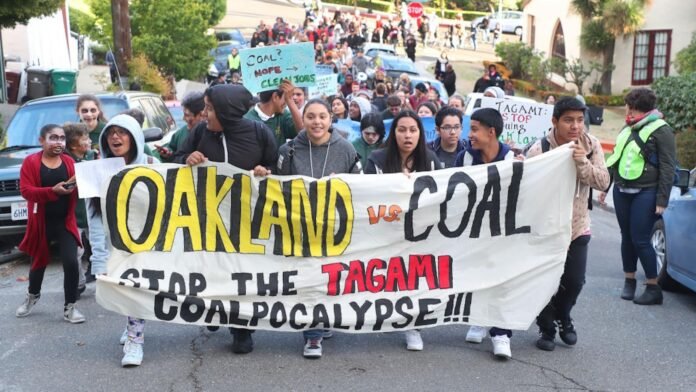
When investor Phil Tagami first proposed building an export terminal in Oakland, California, more than a decade ago, he probably didn’t anticipate the firestorm of litigation and controversy that would follow, in a saga that has now spanned three presidential administrations. There were early rumors that the terminal would export coal, much to the consternation of local residents, but Tagami said in a newsletter that the naysayers were “misinformed.” It was all downhill from there.

Tagami and others entered into a development agreement with the city of Oakland in 2013 after the city decided to redevelop a defunct army base on the city’s west side. At the time, Tagami was adamant that the developers were interested in building an all-purpose bulk terminal and capturing some of the traffic that Oakland was losing to other West Coast ports. But two years later, Oakland residents and environmental groups had their suspicions confirmed when the Salt Lake Tribune reported that the developers had quietly entered into an agreement to use the terminal to ship coal from Utah to buyers overseas. The revelation sparked intense backlash in the progressive city, and the ensuing conflict has put both the developers and the city on the hook for million-dollar losses at various times, though litigation is ongoing. 

Now, in the latest twist, the U.S. Department of Energy has stepped in to provide up to $75 million for building the terminal. The funding is the latest effort by the Trump administration to prop up the country’s coal industry — the Energy Department’s announcement last week also included over $400 million in support for coal-fired power plants — even as the fossil fuel’s role in generating U.S. electricity continues to collapse. Over the last year, the administration has loosened regulations that apply to the country’s coal fleet, ordered aging plants scheduled for retirement to keep running, and shifted the responsibility of overseeing coal contamination to states

The administration also argues that homegrown coal is still valuable abroad.

“For too long, limited West Coast export capacity has constrained America’s ability to move coal and other energy resources to global markets,” said Energy Secretary Chris Wright in a press release announcing the funding. Investing in the terminal would help in “advancing American energy dominance,” he added. 

Critics counter that the federal funding is the latest attempt to prop up a dying industry.

Ben Eichenberg, an attorney with the San Francisco Baykeeper, an environmental group in the Bay Area, said that terminal construction “really hasn’t gone anywhere because there’s no money to build” the facility. “The Trump administration stepping in and saying they’re going to supply that money gives it a new lifeline,” he said. “This terminal project was drowning, and they’ve just been thrown the life preserver.”

The Energy Department’s Hail Mary is unlikely to end the embattled terminal’s long saga. After Oakland officials learned a decade ago that the developers intended to transport coal through the terminal, they held public hearings and eventually passed an ordinance and adopted a resolution that barred the storage of coal anywhere in the city. That set the stage for the first round of lawsuits against the city.

Oakland’s development agreement stated that it would provide regulatory certainty for the terminal backers by locking in the regulations that existed at the time. In other words, the city wasn’t allowed to change the rules about what the terminal could be used for after development started. The developers sued Oakland on these grounds, claiming that the city had violated the terms of the agreement by passing the new anti-coal-storage ordinance, thereby affecting the developers’ ability to proceed with their project. 

The agreement did, however, make an important exception. New rules can be applied to the terminal if the city determines that the absence of those rules would put the people of Oakland in “substantial danger.” The city had held public hearings and collected evidence of the threat posed by coal dust, but the developers argued that the record was insufficient — and ultimately the judge overseeing the case agreed. He found that “the record is riddled with inaccuracies, major evidentiary gaps, erroneous assumptions, and faulty analyses, to the point that no reliable conclusion about health or safety dangers could be drawn from it.”

Crucially, the judge did not claim that the transport of coal through Oakland does not pose a threat to residents, or that the city didn’t have the right to pass an ordinance banning coal. A higher court also agreed with that decision and affirmed the ruling. 

“The fight was not about whether coal is safe or dangerous, but it was about the terms of the development agreement,” said Colin O’Brien, an attorney with Earthjustice, the nonprofit that represented the San Francisco Baykeeper and the Sierra Club as an intervenor in the proceedings. 

After suffering a loss in the courts, the city tried a different tack. The developers had signed a lease with the city, which required them to meet certain construction milestones. Because of the years spent litigating the terms of the development agreement, the developers hadn’t begun construction. Oakland officials canceled the lease on these new grounds, dragging the city into its next round of legal battles. The developers sued in state court in 2018, arguing that the city’s own decisions had prevented them from meeting the construction deadlines. The court once again sided with the developers, as did a higher court on appeal last year.

By then, Insight Terminal Solutions, the company that was slated to operate the terminal, had filed for bankruptcy in Kentucky and decided to pursue claims against the city. During the bankruptcy proceedings last year, the company claimed that the protracted legal battles with Oakland were to blame for its financial woes — and that it was owed more than $650 million in damages. A sympathetic bankruptcy court judge agreed with the firm’s rationale, but on appeal in a federal district court, the ruling was vacated late last year, much to the historically cash-strapped city’s relief. 

Despite the influx of federal support for the terminal, the project’s backers still have a long road ahead. The terminal needs to secure a range of permits, including air quality permits from the Bay Area Air Quality District, and local advocates have already mounted a campaign to require stringent regulations for the facility. (Tagami and another representative of California Capital & Investment Group, the lead developer of the project, did not respond to multiple requests for comment.)

For their part, environmental groups are keeping a close eye on the permitting process.

“We’re going to do everything in our power to protect the community in San Francisco Bay from the pollution that this coal terminal represents,” said Eichenberg. “We’ll be evaluating all of those permits and any additional action that we can take to protect the community and fulfill our mission.”

Editor’s note: Earthjustice is an advertiser with Grist. Advertisers have no role in Grist’s editorial decisions.


Fox’s $22B Roku acquisition aims to expand its reach into smart TVs, advertising

0
fox’s-$22b-roku-acquisition-aims-to-expand-its-reach-into-smart-tvs,-advertising
Fox’s $22B Roku acquisition aims to expand its reach into smart TVs, advertising

Fox Corporation has agreed to buy Roku Inc. for $160 per share, an approximate enterprise value of $22 billion, the firms announced today.

The acquisition would unite Fox’s broadcast channels, including Fox, Fox News, Fox Business, and FS1, as well as its streaming businesses, including Tubi, a free ad-supported streaming television (FAST) platform that Fox bought in 2020, with Roku’s own FAST service, The Roku Channel, and Roku’s streaming hardware business, including its streaming sticks and smart TVs. Roku says it has 100 million households using its platform.

The most valuable part of Roku’s business isn’t its hardware, which lost $19.1 million in the quarter ending March 31, 2026, but its the operating system (Roku OS) and advertising business. In that same quarter, Roku’s advertising and subscriptions business posted a gross profit of $584.1 million, with the advertising business pulling in $371 million in revenue. The COVID-19 pandemic helped Roku become profitable in 2021, but the company didn’t see annual profitability again until 2025.

The planned merger aims to help Roku scale and maintain profitability more easily by enabling Roku “to execute on our strategy faster than we would otherwise by ourselves, even though we’re doing extremely well,” Anthony Wood, Roku’s CEO, said during a call with investors today.

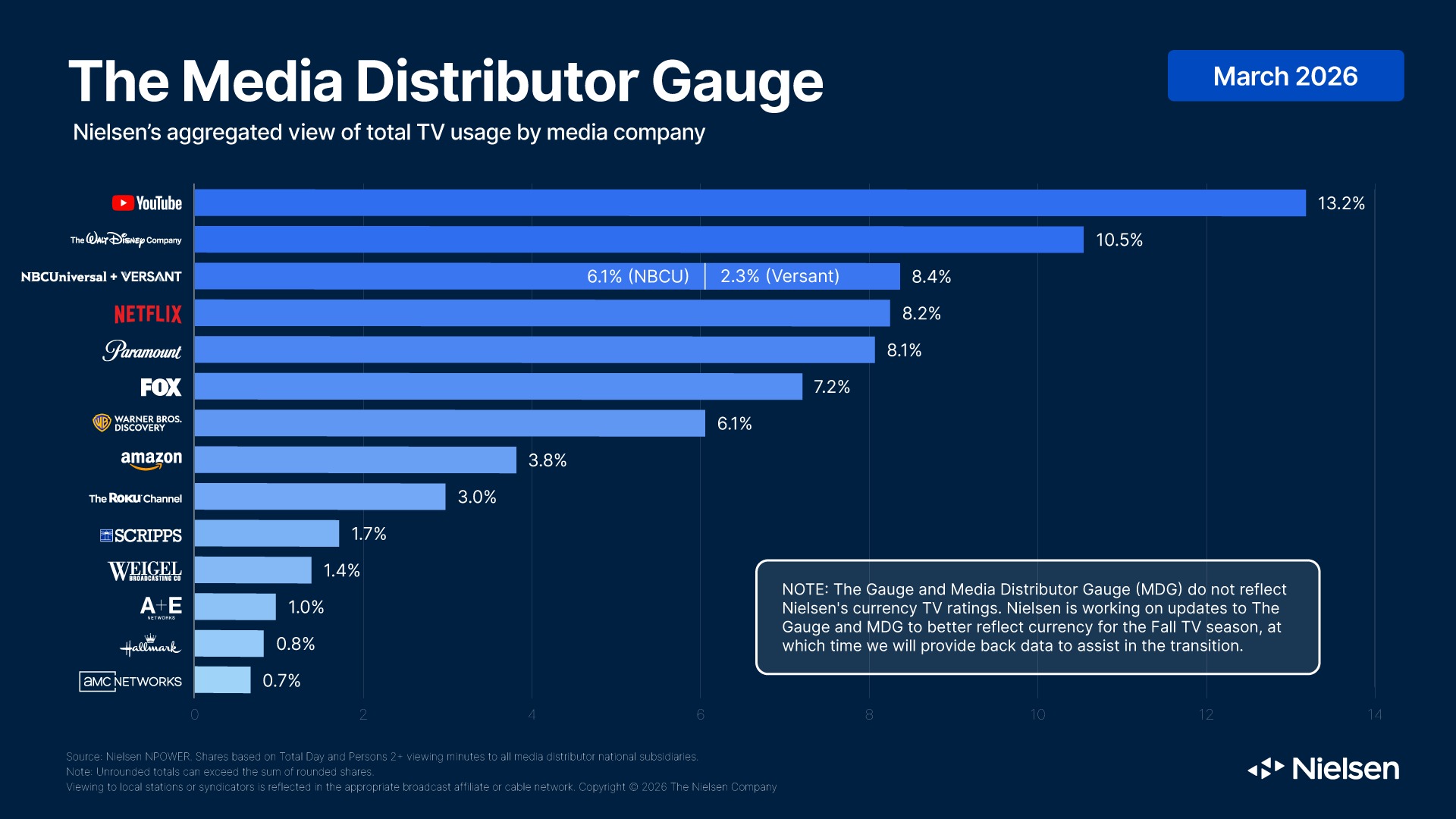
“Fox and Roku are committed to continuing to operate Roku as an open, partner-friendly platform and to the continued ubiquitous distribution of Fox content. On a pro forma basis, the combined company will become the third-largest player in US television by share of viewing,” today’s announcement said. The stat seemingly refers to Nielsen’s data for “aggregated view of total TV usage by media company” in March. The top-viewed distributors were YouTube (13.2 percent), The Walt Disney Company (10.5 percent), and NBCUniversal/Versant (8.4 percent). Fox was in fourth place (7.2 percent), and The Roku Channel was in ninth (3 percent).

Credit: Nielsen

Meanwhile, Fox would gain a new path toward ad sales and user tracking through The Roku Channel and Roku OS, which has a notable amount of ads. The merger would also help Fox expand beyond its legacy business and further into streaming, giving it more appeal among advertisers.

“Advertisers are … seeking large audiences, improved digital targeting and more consistent measurement across platforms,” Lachlan Murdoch, Fox’s CEO and chair executive, said during today’s investors call. “These converging dynamics across viewing, aggregation, and advertising have fueled the rapid growth of connected TV, and we are still in the early stages of this transition.”

Should the deal close, Fox shareholders are expected to own about 73 percent of the merged company, and Roku shareholders are expected to own about 27 percent. Fox would take on $8 million in debt to pay for the Roku acquisition, and the companies expect to reduce combined expenses by $400 million.

Under the acquisition, Roku’s Wood would be on Fox’s board of directors and have “an ongoing role at the combined company,” the announcement said without providing more detail.

The acquisition remains subject to closing conditions, including regulatory approval and approval from Fox and Roku’s shareholders. It’s expected to close in the first half of 2027.

The announcement marks more consolidation for the streaming industry, which, broadly, has been challenged to reach and maintain profitability while providing always-on, on-demand service at lower prices than cable. With other deals, like Paramount buying HBO Max and the rest of Warner Bros. Discovery and Disney buying Hulu, we expect to see even more mergers and acquisitions, especially as legacy media and smaller streaming services look for ways to buoy profits.

Japan’s defense: Change is coming

0
japan’s-defense:-change-is-coming
Japan’s defense: Change is coming

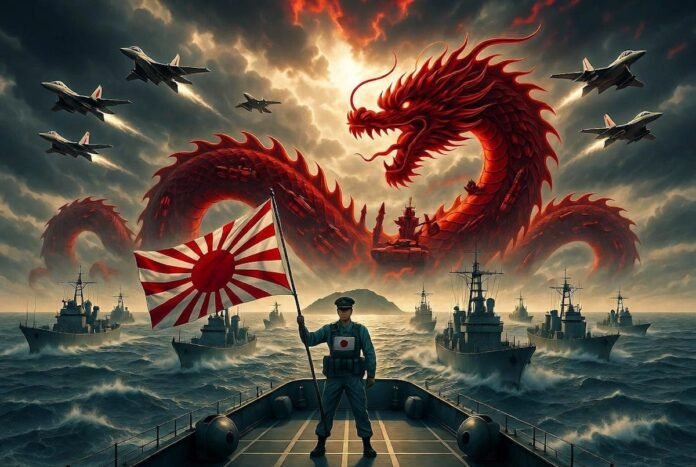
In early June, Japan’s ruling Liberal Democratic Party accepted recommendations from its Security Research Council for revising Japan’s three main national security documents, including the National Security Strategy.

A Japanese colleague knew I’d seen a few of these over the last 30 years and asked what I thought of the proposal. Here’s what I told him:

How do you assess the Security Research Council’s proposal?

This is a sensible analysis of what Japan needs to focus on and do to improve its national defense to face oncoming threats. It covers much of the hardware “waterfront.” This includes: drones, UAVs, missiles (lots of them) and also having adequate amounts of weapons, ordnance and other materials needed to fight a war.

Obviously, Japan is closely studying the Ukraine war and recognizes the new technologies that are changing how wars are being fought.

I also particularly like the mention of economic security as national security and the idea that allies should cooperate to protect sea lanes, and also to ensure resource stockpiles. This is effectively an economic Article 5 whereby the free nations cooperate when other members come under economic attack – say, when China chokes off exports of a key resource.

And the mention of Japan needing to better explain itself is long overdue. Defense Minister Shinjiro Koizumi has been good at this – successfully refuting Chinese lies and propaganda since taking office. He also affirmatively promotes Japan and its values as a stalwart of the free world.

The review also includes language implicitly calling for Japan to develop nuclear-powered submarines. This is a good idea, both operationally and politically – though it won’t happen anytime soon. One notes there is scant public opposition to this. It’s a different Japan these days.

How does it compare with past LDP proposals?

Past LDP proposals have been good at recognizing the threats facing Japan and making reasonable recommendations for bolstering national defense – albeit too slowly and on too limited a scale.

Now, however, one detects a heightened sense of urgency – and a sense (unspoken) that Japan faces the prospects of a shooting war in the not distant future and will do what is necessary to defend itself. This is a shift from, say, five years ago, and certainly from ten years ago. And notice the broad public support for improving Japan’s defenses.

How would you evaluate it from the US perspective?

These recommendations deserve fairly high marks from the United States. Japan specifically refers to the US alliance as the “cornerstone” of Japan’s defense. That is correct. And even more important is the following language:

No country will come to the aid of a nation that is not prepared to defend itself. Japan, too, must clearly demonstrate its national resolve to defend itself and show the determination and resolve to serve as a standard-bearer for peace and security in the region.

This is true – and particularly so when it comes to the United States in the present era, regardless of who is the president. But in the Trump administration, it is especially true that if a country wants American help, it must do everything it can to defend itself. That huge part of the US public in so-called flyover country whose children serve in the US military in large numbers is no longer willing to have America’s elites send US service personnel overseas to die for lazy or ungrateful allies.

The Japanese proposals also indicate a willingness to spend what is necessary to develop real warfighting capabilities. There is no complaining about Japan’s “severe fiscal condition” as was often the case in the past.

And Japan is also establishing a wider military presence and set of defense relationships throughout the region, while offering to include the US, which it has never done before. This takes a lot of pressure off the US and its overstretched forces and diplomatic resources.

If Japan can strengthen its defense industrial base (as the recommendations call for), this too will take some burden off the Americans, not to mention being good for Japan.

I’d say, however, that the recommendations are too defeatist in terms of correcting Japan Self-Defense Force (JSDF) personnel shortfalls. Instead of talking about robots and AI and “reorganizations” to make up for having too few jieikan (JSDF troops), the report should instead focus on making service in the JSDF a lucrative and respected career choice – one that offers lifelong benefits (such as with a version of the US GI-Bill).

The Japanese government has never done this, and instead just accepted that Japanese won’t join the JSDF in large enough numbers. That’s mistaken and, as I said, defeatist.

Also, there is no mention of the JSDF – Maritime Self Defense Force and Air Self Defense Force in particular – being about half the size they need to be to accomplish required missions. This needs to be urgently addressed – unless the idea is that the Americans will make up the difference.

Taiwan is not mentioned, unfortunately. There is some indirect mention, I suppose, when sea lanes and straits are mentioned, but speaking clearly about Taiwan is a better approach.

Japan suggests it will have made real progress within five years. Faster is better, but this is still far better than the European and NATO countries.

By and large, there is a lot that’s good in these recommendations. Very different from a decade or two ago when Japan was making excuses for why it couldn’t do what was necessary to defend itself.

What should be the short, medium- and long-term priorities?

Everything in the committee’s recommendations needs to be done “now.” Japan spent decades ignoring or shortchanging its defense. Only in the last five years or so has it gotten serious. There isn’t much time to get ready to fight China and its friends. They are on the march, so Japan needs to hurry.

Grant Newsham is a retired US Marine officer, and former US diplomat, and a business executive with many years experience in Asia. Originally published by AND Magazine, this article is republished with permission.

Italian general launches far-right party, threatening Meloni’s election hopes

0
italian-general-launches-far-right-party,-threatening-meloni’s-election-hopes
Italian general launches far-right party, threatening Meloni’s election hopes


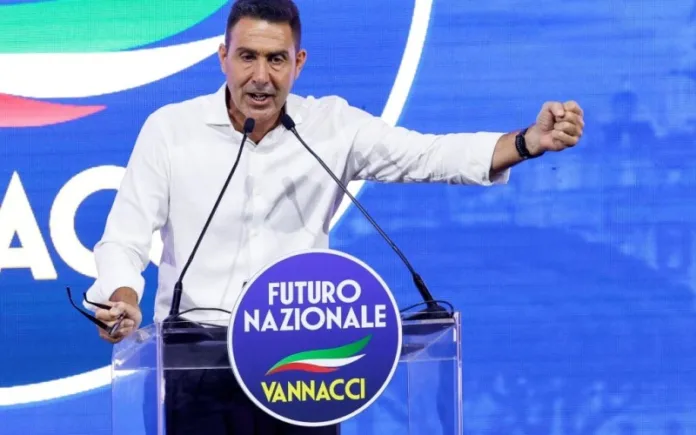
General Roberto Vannacci launched his new far-right party on Sunday, posing a direct challenge ​to Prime Minister Giorgia Meloni’s grip on power as he seeks to pull Italy ‌in a more hardline, nationalist direction ahead of elections next year.

Introduced by a party official as a modern-day Julius Caesar, the 57-year-old former paratrooper was greeted by chants of “Generale, Generale, Generale” as he took to the stage of Futuro Nazionale’s ​inaugural congress.

“We represent the rejects and the dregs, and are proud of it,” said Vannacci, ​who is looking to outflank Meloni’s conservative coalition on the right, four months after ⁠quitting Deputy Prime Minister Matteo Salvini’s League party.

Vannacci’s populist movement is already polling at close to 5%, ​closing in on the League and potentially clouding Meloni’s hopes of regaining power in next year’s national ​vote, unless she forges an electoral pact with him.

However, such a tie-up would carry major risks for Meloni and potentially scare away moderate supporters deterred by Vannacci’s anti-EU, pro-Russia agenda and his close ties to far-right European parties such as ​Germany’s AfD.

Positioning himself as the most hawkish voice on immigration in Italy, Vannacci said on Sunday he ​would slash the number of foreigners living in Italy to some 4% of the total population from an estimated ‌12% at ⁠present.

“We don’t have a programme for immigration, we have a programme for re-migration,” he said to cheers.

ECONOMIC PLANS DRAWN FROM OLD PLAYBOOK

Unveiling its programme at the weekend, Futuro Nazionale embraced many of the policies that Meloni had championed during her years in opposition, before she took charge of Italy’s debt mountain in ​2022 and had to ​reassure investors.

Vannacci said he ⁠wanted a discussion on Italy’s membership of the euro single currency. He also proposed abandoning the EU’s Green Deal aimed at drastically cutting carbon emissions, and ​ending Italy’s ban on nuclear power.

The programme also backed incentives for families, ​including a cut ⁠in taxes for those with children.

Though Italy has one of the lowest rates for murder and violent crime in the world, Vannacci said his first priority would be security and defence, vowing zero tolerance for criminals ⁠and promising ​to build more prisons.

Vannacci has accused Meloni of reneging on ​many of her campaign pledges, but he acknowledged that his own programme was not written in stone.

“No plan survives the first ​shot in battle … it has to be adapted to reality,” he said.

0FansLike
0FollowersFollow
0FollowersFollow
0SubscribersSubscribe
- Advertisement -
Google search engine

Recent Posts