Fox Corporation has agreed to buy Roku Inc. for $160 per share, an approximate enterprise value of $22 billion, the firms announced today.
The acquisition would unite Fox’s broadcast channels, including Fox, Fox News, Fox Business, and FS1, as well as its streaming businesses, including Tubi, a free ad-supported streaming television (FAST) platform that Fox bought in 2020, with Roku’s own FAST service, The Roku Channel, and Roku’s streaming hardware business, including its streaming sticks and smart TVs. Roku says it has 100 million households using its platform.
The most valuable part of Roku’s business isn’t its hardware, which lost $19.1 million in the quarter ending March 31, 2026, but its the operating system (Roku OS) and advertising business. In that same quarter, Roku’s advertising and subscriptions business posted a gross profit of $584.1 million, with the advertising business pulling in $371 million in revenue. The COVID-19 pandemic helped Roku become profitable in 2021, but the company didn’t see annual profitability again until 2025.
The planned merger aims to help Roku scale and maintain profitability more easily by enabling Roku “to execute on our strategy faster than we would otherwise by ourselves, even though we’re doing extremely well,” Anthony Wood, Roku’s CEO, said during a call with investors today.
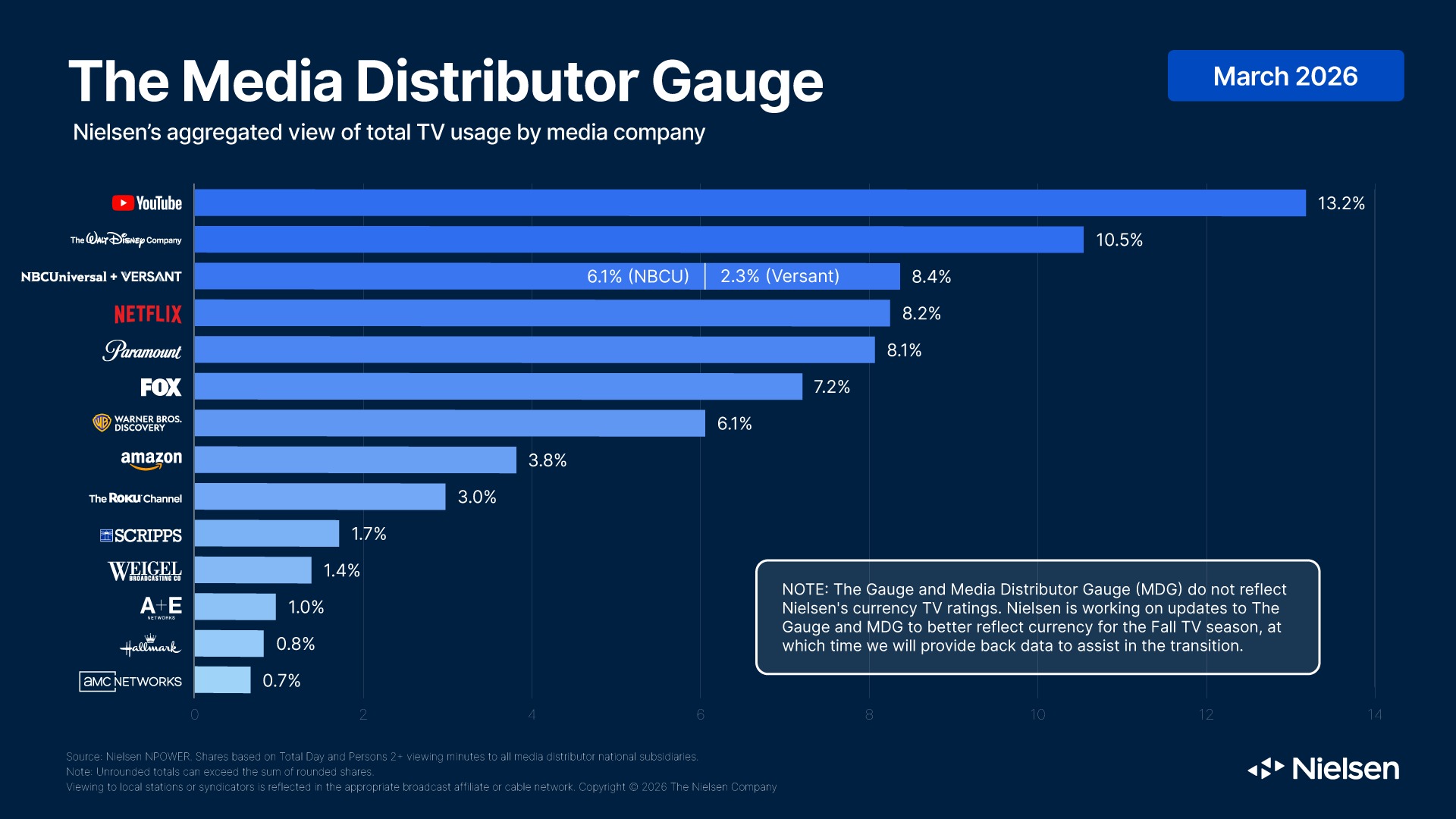
“Fox and Roku are committed to continuing to operate Roku as an open, partner-friendly platform and to the continued ubiquitous distribution of Fox content. On a pro forma basis, the combined company will become the third-largest player in US television by share of viewing,” today’s announcement said. The stat seemingly refers to Nielsen’s data for “aggregated view of total TV usage by media company” in March. The top-viewed distributors were YouTube (13.2 percent), The Walt Disney Company (10.5 percent), and NBCUniversal/Versant (8.4 percent). Fox was in fourth place (7.2 percent), and The Roku Channel was in ninth (3 percent).
Meanwhile, Fox would gain a new path toward ad sales and user tracking through The Roku Channel and Roku OS, which has a notable amount of ads. The merger would also help Fox expand beyond its legacy business and further into streaming, giving it more appeal among advertisers.
“Advertisers are … seeking large audiences, improved digital targeting and more consistent measurement across platforms,” Lachlan Murdoch, Fox’s CEO and chair executive, said during today’s investors call. “These converging dynamics across viewing, aggregation, and advertising have fueled the rapid growth of connected TV, and we are still in the early stages of this transition.”
Should the deal close, Fox shareholders are expected to own about 73 percent of the merged company, and Roku shareholders are expected to own about 27 percent. Fox would take on $8 million in debt to pay for the Roku acquisition, and the companies expect to reduce combined expenses by $400 million.
Under the acquisition, Roku’s Wood would be on Fox’s board of directors and have “an ongoing role at the combined company,” the announcement said without providing more detail.
The acquisition remains subject to closing conditions, including regulatory approval and approval from Fox and Roku’s shareholders. It’s expected to close in the first half of 2027.
The announcement marks more consolidation for the streaming industry, which, broadly, has been challenged to reach and maintain profitability while providing always-on, on-demand service at lower prices than cable. With other deals, like Paramount buying HBO Max and the rest of Warner Bros. Discovery and Disney buying Hulu, we expect to see even more mergers and acquisitions, especially as legacy media and smaller streaming services look for ways to buoy profits.