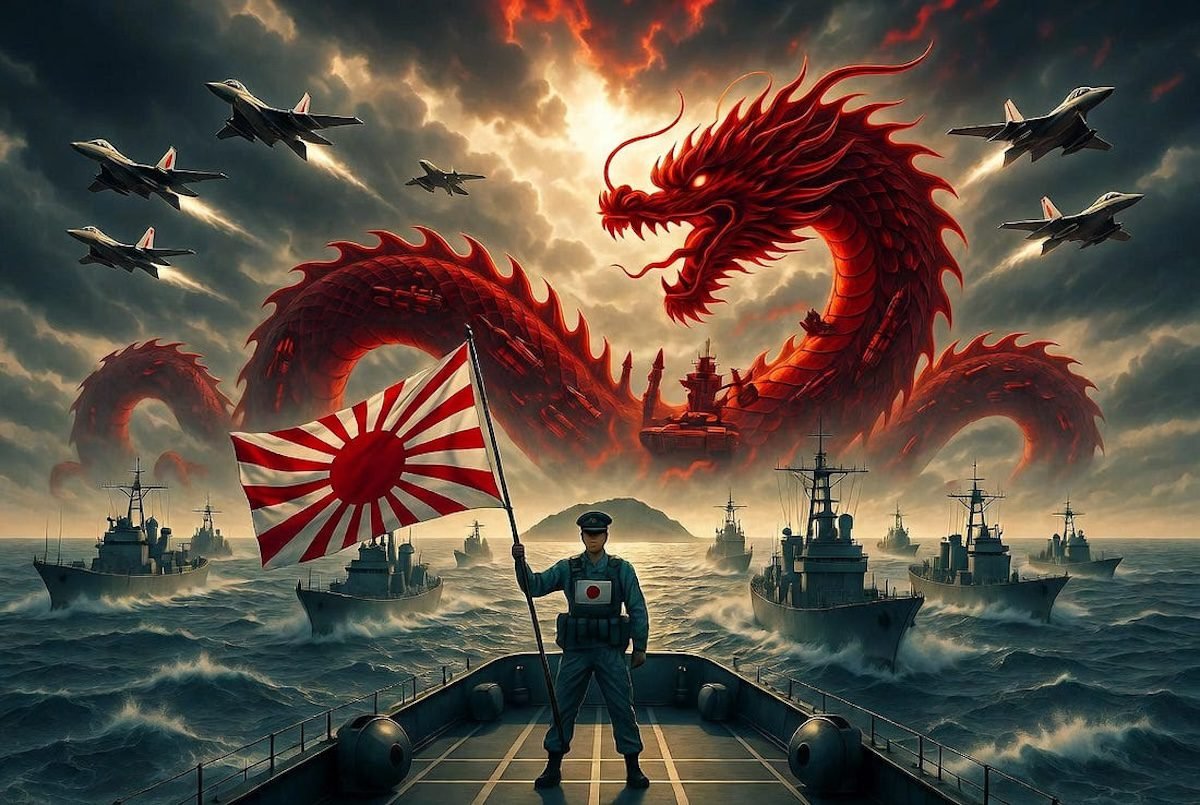
In early June, Japan’s ruling Liberal Democratic Party accepted recommendations from its Security Research Council for revising Japan’s three main national security documents, including the National Security Strategy.
A Japanese colleague knew I’d seen a few of these over the last 30 years and asked what I thought of the proposal. Here’s what I told him:
How do you assess the Security Research Council’s proposal?
This is a sensible analysis of what Japan needs to focus on and do to improve its national defense to face oncoming threats. It covers much of the hardware “waterfront.” This includes: drones, UAVs, missiles (lots of them) and also having adequate amounts of weapons, ordnance and other materials needed to fight a war.
Obviously, Japan is closely studying the Ukraine war and recognizes the new technologies that are changing how wars are being fought.
I also particularly like the mention of economic security as national security and the idea that allies should cooperate to protect sea lanes, and also to ensure resource stockpiles. This is effectively an economic Article 5 whereby the free nations cooperate when other members come under economic attack – say, when China chokes off exports of a key resource.
And the mention of Japan needing to better explain itself is long overdue. Defense Minister Shinjiro Koizumi has been good at this – successfully refuting Chinese lies and propaganda since taking office. He also affirmatively promotes Japan and its values as a stalwart of the free world.
The review also includes language implicitly calling for Japan to develop nuclear-powered submarines. This is a good idea, both operationally and politically – though it won’t happen anytime soon. One notes there is scant public opposition to this. It’s a different Japan these days.
How does it compare with past LDP proposals?
Past LDP proposals have been good at recognizing the threats facing Japan and making reasonable recommendations for bolstering national defense – albeit too slowly and on too limited a scale.
Now, however, one detects a heightened sense of urgency – and a sense (unspoken) that Japan faces the prospects of a shooting war in the not distant future and will do what is necessary to defend itself. This is a shift from, say, five years ago, and certainly from ten years ago. And notice the broad public support for improving Japan’s defenses.
How would you evaluate it from the US perspective?
These recommendations deserve fairly high marks from the United States. Japan specifically refers to the US alliance as the “cornerstone” of Japan’s defense. That is correct. And even more important is the following language:
No country will come to the aid of a nation that is not prepared to defend itself. Japan, too, must clearly demonstrate its national resolve to defend itself and show the determination and resolve to serve as a standard-bearer for peace and security in the region.
This is true – and particularly so when it comes to the United States in the present era, regardless of who is the president. But in the Trump administration, it is especially true that if a country wants American help, it must do everything it can to defend itself. That huge part of the US public in so-called flyover country whose children serve in the US military in large numbers is no longer willing to have America’s elites send US service personnel overseas to die for lazy or ungrateful allies.
The Japanese proposals also indicate a willingness to spend what is necessary to develop real warfighting capabilities. There is no complaining about Japan’s “severe fiscal condition” as was often the case in the past.
And Japan is also establishing a wider military presence and set of defense relationships throughout the region, while offering to include the US, which it has never done before. This takes a lot of pressure off the US and its overstretched forces and diplomatic resources.
If Japan can strengthen its defense industrial base (as the recommendations call for), this too will take some burden off the Americans, not to mention being good for Japan.
I’d say, however, that the recommendations are too defeatist in terms of correcting Japan Self-Defense Force (JSDF) personnel shortfalls. Instead of talking about robots and AI and “reorganizations” to make up for having too few jieikan (JSDF troops), the report should instead focus on making service in the JSDF a lucrative and respected career choice – one that offers lifelong benefits (such as with a version of the US GI-Bill).
The Japanese government has never done this, and instead just accepted that Japanese won’t join the JSDF in large enough numbers. That’s mistaken and, as I said, defeatist.
Also, there is no mention of the JSDF – Maritime Self Defense Force and Air Self Defense Force in particular – being about half the size they need to be to accomplish required missions. This needs to be urgently addressed – unless the idea is that the Americans will make up the difference.
Taiwan is not mentioned, unfortunately. There is some indirect mention, I suppose, when sea lanes and straits are mentioned, but speaking clearly about Taiwan is a better approach.
Japan suggests it will have made real progress within five years. Faster is better, but this is still far better than the European and NATO countries.
By and large, there is a lot that’s good in these recommendations. Very different from a decade or two ago when Japan was making excuses for why it couldn’t do what was necessary to defend itself.
What should be the short, medium- and long-term priorities?
Everything in the committee’s recommendations needs to be done “now.” Japan spent decades ignoring or shortchanging its defense. Only in the last five years or so has it gotten serious. There isn’t much time to get ready to fight China and its friends. They are on the march, so Japan needs to hurry.
Grant Newsham is a retired US Marine officer, and former US diplomat, and a business executive with many years experience in Asia. Originally published by AND Magazine, this article is republished with permission.