Home Blog

America’s big chance to roll China out of the Solomons

0
america’s-big-chance-to-roll-china-out-of-the-solomons
America’s big chance to roll China out of the Solomons

Admiral Samuel Paparo commands USINDOPACOM, home to over 300,000 sailors, soldiers, airmen and marines in an area of operations extending from the US west coast to India.

Paparo also has the clearest sense of the Chinese threat of any USINDOPACOM commander since Admiral Robert Willard, who was in charge from 2009-2012.

Yet, in some Pacific Island nations, he has less influence than the head of any Chinese-owned timber, fishing, mining or construction company.

How so? Paparo or another senior officer might show up for a day or two each year, if that, and meet with top officials, declaring their excellent friendship.

Meanwhile, the Chinese are “there” all the time, building relationships, conducting business (no matter how rapaciously and corruptly) and creating a pro-China constituency in the local political and business classes and throughout society.

And it’s greased by scholarships for family members, “study trips” to China, under-the-table cash payments and the like. Chinese consulates and embassies in the region are fully staffed and provide supporting fire, as does Chinese organized crime.

It’s all part of China’s systematic political warfare campaign throughout the Pacific – as strategically important a region as when the  Japanese and Americans fought over it 80+ years ago.

Solomon Islands, where the decisive World War Two battle on Guadalcanal was fought, is an illustrative case. Over the years, the Chinese dug their claws into the place, spearheaded by logging and mining companies and other commercial ventures.

The grip tightened in 2019 when Prime Minister Manasseh Sogavare’s Solomon Islands government shifted recognition from Taiwan to China. The decision was made in the shadows, without popular approval. A security agreement with China followed.

It’s never been made public, though a leaked draft reveals it lays the groundwork for People’s Liberation Army deployments. The Chinese police are already on the ground.

But sometimes one gets a second chance. An opposition coalition took office recently after a vote of no confidence against Sogavare’s successor, Prime Minister Jerehmiah Manele.

The new government, led by Matthew Wale, includes members who have been skeptical of the China deal and are patriots opposed to foreign domination.

They are also people of faith, proponents of consensual government and not tainted with the thoroughgoing corruption that characterized recent administrations. But the new administration has to produce for its citizens, even as the Chinese and their proxies are already targeting them.  

The US needs to get directly involved and show there is a benefit to taking a principled stand against Chinese influence and creeping domination. And the Americans – and Paparo – should recall the old adage: “If you want something done right, do it yourself.”

Admiral Paparo has clout in Washington. Image: US DoD

The US “outsourced” the Solomons to the Australians for decades, bowing to Canberra’s prickly insistence that America stay out of Australia’s “patch.”

This was a mistake. The Australian Embassy in Honiara can cite a long list of projects it has backed. Many of them are indeed improving lives. But ultimately, it’s been a strategic failure if measured by the standard of blocking Chinese inroads and building an attractive alternative to Chinese cash.

Canberra sometimes even seemed to abet the Sogavare government’s getting into bed with China and never effectively challenged PRC inroads, or went after official corruption.

Here are a couple of ideas for the US to undertake that would make a big difference – and that Admiral Paparo could put on his “get done” list.

First, remember that if you want to influence a country, improve people’s lives and alleviate their suffering. The National Referral Hospital in Honiara is in especially bad shape, with deteriorating facilities and shortages of everything.

One could be puzzled, then, that Australia provided a multi-million-dollar “water park” for the Solomon Islands before the Pacific Games in 2023 and later offered $190 million for the country’s police force, but never did much for the nation’s main hospital or provincial clinics, which were short on food for patients.

So the US – and USINDOPACOM – might take the lead in making the National Referral Hospital a modern, properly staffed, equipped and functioning medical facility. Make it a collaborative effort with Japan, India, the Philippines and Australia.  Even Taiwan might pitch in.

As one idea among many, set up a scheme to allow new US medical school graduates to serve for a few years and write off their sizable medical school loans. And also improve medical services in the provinces of the Solomon Islands.

As it often does, Japan is quietly showing what’s doable, upgrading the main hospital in Malaita, the Solomon Islands’ most populated island.

The US is already helping with a new hospital in Palau, being done with America’s strategic interests in mind. So why not in the Solomon Islands too?

The next thing Paparo and USINDOPACOM can focus on: Help honest Solomon islanders go after the corruption that is often the “grease” that makes Chinese subversion so effective.

Corruption, often with a China angle and often at the highest levels, is widely reported on by brave local reporters at In Depth Solomons – a shoestring operation that ironically received funding from the US State Department. This was money well spent.

The Australians did nothing of note, even though corrupt funds reportedly moved into Australian real estate and bank accounts. The Australian Security Intelligence Organization (ASIO) was either incompetent or it aided and abetted, thinking it gave Australia “control” over Solomon’s officials.

It didn’t – but it did allow corrupt politicians to flourish while demoralizing honest Solomon Islanders. Australia may have underperformed, but the US government hasn’t exactly excelled either.

When Daniel Suidani, former premier of Malaita Province, tried to visit America to warn of the China threat – after being removed from office by Chinese proxies – the State Department would not issue him a visa until Congress intervened.

When State officials met with him, it was in a de facto dark-broom-closet meeting room with no water offered. The senior State officials even said some things that, according to one participant in the meeting, were untrue.

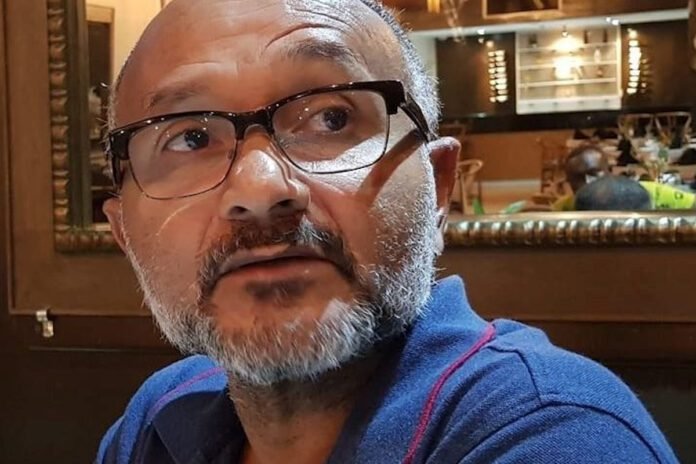
Daniel Suidani was no friend of China’s. Image: X Screengrab

Suidani died last year, likely owing to the stress of the lawfare and harassment he suffered from China’s local proxies and the lack of support from the US and Australia.

The US needs to recognize the current, potentially short-lived opportunity in the Solomon Islands and act.

Look to Palau and the fine work done by the former US ambassador Joel Ehrendreich, who marshaled US government resources to roll back Chinese influence and support “pro-freedom” Palauans.

Give some oxygen to Solomon Islanders trying to defend freedom, and they’ll do the job. Paparo might, of course, reasonably say, “It’s the State Department’s job.”

It probably is. But if they won’t do much, Paparo should turn his own staff loose on it. And with some effort, he might find that the commander of USINDOPACOM has more influence than the local Chinese timber company guy.
Kuwait Reports Missile Attacks as US Hits Iranian Sites

0
kuwait-reports-missile-attacks-as-us-hits-iranian-sites
Kuwait Reports Missile Attacks as US Hits Iranian Sites


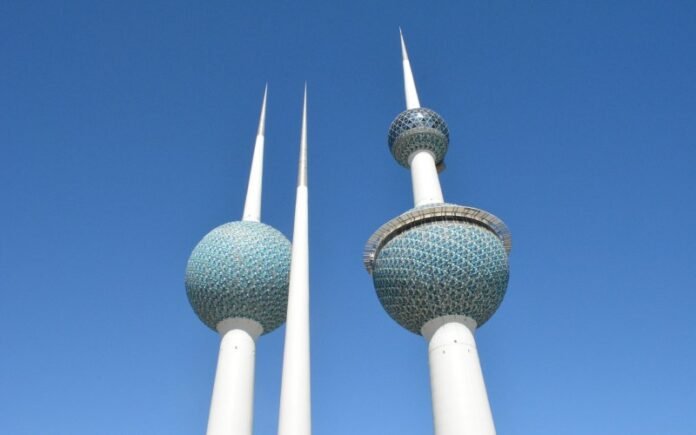
Escalating clashes between the United States, Iran and their regional allies have intensified concerns of a broader Middle East conflict, as Washington confirmed new strikes on Iranian military sites and neighbouring states reported incoming missiles and drones.

The US military said it carried out attacks on Iranian radar and drone facilities in Goruk and on Qeshm Island, describing them as retaliation for Iran’s downing of a US drone. Iran’s Islamic Revolutionary Guard Corps (IRGC) responded by claiming it struck a US base it says was used to launch an earlier attack on Sirik Island in the Strait of Hormuz.

The confrontation has spilled into the wider Gulf. Kuwait reported that its air defence systems intercepted “hostile” missile and drone attacks, while Iran insisted its retaliatory actions were lawful self‑defence. Tehran accused the European Union of “selective moral outrage” after the bloc condemned earlier Iranian strikes on Kuwait.

The situation has also deepened political pressure in Washington. Analysts told Al Jazeera that President Donald Trump faces criticism from both major US parties, with some arguing that Iran appears strengthened while the US is drawn deeper into a conflict he once vowed to avoid.

Across the region, violence continues. Israeli forces carried out raids in the occupied West Bank, arresting Palestinians and demolishing shops in a market in Beita. In Lebanon, Israeli attacks killed at least six people in multiple towns, while Prime Minister Benjamin Netanyahu ordered new strikes on Beirut’s southern suburbs.

Hezbollah, meanwhile, rejected what it described as a “one‑sided ceasefire”, saying it will not halt its attacks unless Israel also commits to stopping its operations. Lebanese officials warned that any agreement must guarantee both sides’ compliance.

With tensions rising across the Gulf, Lebanon and the West Bank, international alarm is growing over the risk of a wider regional war.

Explosive Hezbollah Drone Kills Israeli Commando Soldier Adam Tzarfati, Wounds 3 Others 

0
explosive-hezbollah-drone-kills-israeli-commando-soldier-adam-tzarfati,-wounds-3-others 
Explosive Hezbollah Drone Kills Israeli Commando Soldier Adam Tzarfati, Wounds 3 Others 


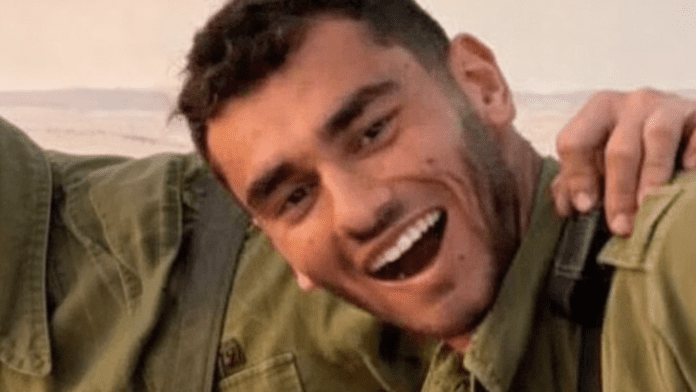
An explosive drone launched by Hezbollah killed Staff Sgt. Adam Tzarfati, a 20-year-old fighter in the Maglan unit of the Commando Brigade, during operations in southern Lebanon early Monday, while three other Israeli soldiers were wounded, the military said. 

The strike occurred at about 1:00 a.m. at a location where forces from the Golani Brigade combat team were operating in southern Lebanon. Tzarfati, a resident of Rosh HaAyin who served in Unit 212, was killed in the attack. 

Three other soldiers were injured in the same incident. One was listed in serious condition and two sustained light wounds. All were evacuated by helicopter to receive medical treatment, and their families were notified. 

Rosh HaAyin municipal leaders issued a statement mourning the loss: “Adam, of blessed memory, went out to defend the State of Israel and its citizens with courage and endless dedication, and did not return home.” 

Economy Minister and Knesset member Nir Barkat also expressed condolences, saying he “embraces and grieves with the family of Staff Sgt. Tzarfati, who paid the heaviest price of all for  

Tzarfati is the latest of a series of Israeli military casualties as fighting continues between Hezbollah and Israel in spite of a ceasefire in place and negotiations in Washington.  

Disarming Hezbollah remains the key cause for the impasse in peace negotiations, as the armed group refuses to lay down its arms and Israel insists it must hold strategic positions in Lebanon and carry out strikes to ensure a secure border.   

Obama White House Instagram Page Hacked in Bizarre Political Takeover

0
obama-white-house-instagram-page-hacked-in-bizarre-political-takeover
Obama White House Instagram Page Hacked in Bizarre Political Takeover


The official Instagram page for the Obama White House was apparently hijacked Sunday in a bizarre online takeover that left followers doing a double take.

The account, @obamawhitehouse, suddenly began posting strange content that had nothing to do with former President Barack Obama or his time in office.

One post reportedly featured an AI-generated image with a caption that translated to, “The White House is under Shiites’ control.”

The odd message quickly raised eyebrows online, especially because the account has been mostly dormant for years.

Obama has his own personal Instagram page, but this hack involved the archived official account tied to his White House years.

The hacker also posted Instagram Stories before the unauthorized content was removed.

Meta confirmed to TMZ that the account had been hacked and said it has since been secured. The company also scrubbed the unauthorized posts from the page.

The last legitimate post on the Obama White House account appears to have been from Jan. 20, 2017, the day Donald Trump was sworn in for his first presidential term.

That made Sunday’s sudden burst of strange activity even more alarming for users who noticed the old account suddenly coming back to life.

So far, there is no word on who was behind the hack or why the Obama-era account was targeted.

The bizarre breach adds another strange chapter to the growing list of high-profile social media takeovers, where even inactive political accounts can suddenly become tools for confusion, propaganda, or online chaos.

Israeli occupiers storm Al-Aqsa Mosque amid Palestinian warning of ‘Judaisation’

0
israeli-occupiers-storm-al-aqsa-mosque-amid-palestinian-warning-of-‘judaisation’
Israeli occupiers storm Al-Aqsa Mosque amid Palestinian warning of ‘Judaisation’

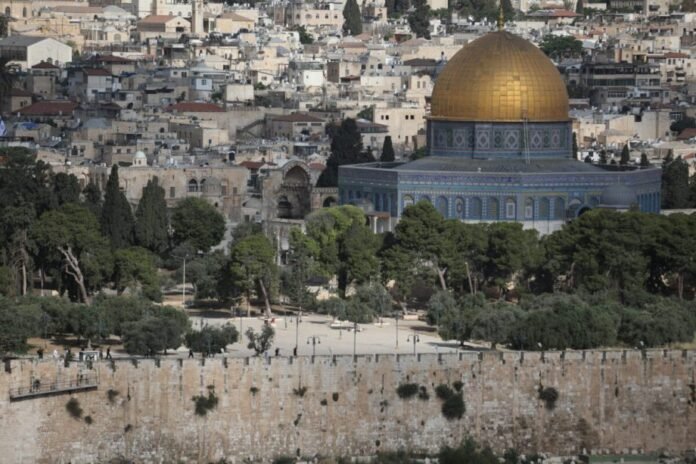
Israeli occupiers on Sunday stormed Al-Aqsa Mosque in the occupied East Jerusalem under police protection, amid Palestinian warnings of “Judaisation” plans, Anadolu reports.

Omar Rajoub, director of the Media Department at the Jerusalem Governorate, told Anadolu that “raising the Israeli flag inside the courtyards of Al-Aqsa Mosque, along with performing provocative rituals, is part of a systematic and deliberate official Israeli policy led by the extremist occupation government.”

“These practices aim to impose new realities by force in occupied East Jerusalem and undermine the historical and legal status quo at the Al-Aqsa Mosque,” he added.

He warned that “occupiers’ actions inside the Al-Aqsa Mosque are part of an ongoing colonial plan targeting the spatial and temporal division of the mosque, the Judaization of the city to obliterate its religious and historical identity, and the alteration of its legal, cultural, and demographic character.”

Rajoub said the storming of Al-Aqsa Mosque by occupiers under police protection is “a clear violation of international law” and hurts the feelings of Palestinians and millions of believers around the world.”

He warned of the repercussions of these violations, describing them as “serious, repeated, and unacceptable,” and held “the Israeli government fully responsible for this dangerous escalation.”

He also called on “the international community and all countries to assume their legal and moral responsibilities and take immediate action to stop these ongoing violations against the Palestinian people and the holy sites in occupied Jerusalem.”

He emphasized that “the entire 144-dunam area of ​​the blessed Al-Aqsa Mosque is a place of worship exclusively for Muslims.”

Since 2003, Israeli police have unilaterally allowed the occupiers to enter the mosque daily during two periods—morning and afternoon prayers—except on Fridays and Saturdays.

Palestinians say Israel is intensifying efforts to Judaize East Jerusalem, including Al-Aqsa Mosque, and erase its Arab and Islamic identity.

The Palestinians regard East Jerusalem as the capital of their future state, based on international resolutions that do not recognize Israel’s occupation of the city in 1967 or its annexation in 1980.

Zia’s ghost still haunts Bangladesh’s fragile power pact

0
zia’s-ghost-still-haunts-bangladesh’s-fragile-power-pact
Zia’s ghost still haunts Bangladesh’s fragile power pact

For a country born out of a bloody partition from Pakistan in 1971, political transition in Bangladesh has rarely been a peaceful affair. The assassination of President Ziaur Rahman on May 30, 1981, at a government circuit house in the port city of Chattogram, followed a familiar, violent script.

Rahman, a decorated liberation war hero commonly known as Zia, who turned into a military strongman before civilianizing his rule as the founder of the Bangladesh Nationalist Party (BNP), had survived at least 20 prior mutinies and coup attempts.

His final, fatal encounter with a faction of his own army ended a brief period of fragile stability, leaving behind a murder mystery that the state he helped shape has spent more than four decades systematically ignoring.

The official narrative of the assassination was constructed for institutional speed rather than historical accuracy, masking deep geopolitical and structural frictions.

Zia’s foreign policy shift, pivoting Bangladesh away from the Indo-Soviet orbit toward the West, China and the oil-rich Gulf states, had alienated powerful, highly politicized factions within the officer corps who remained fiercely loyal to the secular, socialist ideals of the 1971 revolution.

To contain this volatile rift, Lieutenant-General Hussain Muhammad Ershad, the army chief who would orchestrate his own coup less than a year later, immediately convened a highly secretive military tribunal.

The process took a mere 17 days. Armed with charges of mutiny rather than murder, the state deliberately chose to treat a profound political assassination as a mere breach of military discipline.

The tribunal ordered the hanging of 13 military officers in a rushed civilian execution process designed to foreclose deeper investigation. The alleged ringleader, Major-General Muhammad Abul Manzur, a highly “respected” commander who had fought alongside Zia in 1971, never made it to the stand.

Taken into military custody after the coup collapsed, Manzur was shot dead under highly suspicious circumstances inside the Chattogram cantonment, permanently silencing the only man who could have unmasked the wider conspiracy.

A parallel judicial inquiry committee also took testimony, yet its final report was buried by the state and never published.

This “calculated” amnesia set a dark, institutional precedent for Bangladeshi governance. It signaled to the top brass that violent political intervention carried no historical accountability, a realization that Ershad capitalized on just ten months later when he bloodlessly seized the presidency.

The political silence that followed is even more instructive than the rushed executions.

Despite holding power for multiple terms under Zia’s widow, Khaleda Zia, the BNP has consistently declined to form an independent commission of inquiry into its founder’s death, hiding behind the legal pretext that the 1981 court-martial closed the case permanently.

Critics see a deeper, cross-party consensus at play. For both the BNP and its rivals, a genuine forensic unraveling of the 1981 coup risks exposing the deep, factional rot of an army that spent its early decades acting as a political arbiter.

It was far safer for the political class to canonize Zia as a sanitized, convenient myth for electoral exploitation than to risk shaking the foundations of the garrison.

Yet, Zia’s practical legacy has proved far more durable than the state apparatus that failed to protect him. Stepping into the vacuum of the chaotic mid-1970s—following the 1975 assassination of the country’s founding father, Sheikh Mujibur Rahman—Zia dismantled the suffocating, one-party socialist experiment known as BAKSAL.

In its place, he introduced an early model of market liberalization. He pivoted the economy away from heavy state monopolies, legalized dissolved political entities across the spectrum, and laid the foundations for the three pillars that sustain modern Bangladesh.

Those are aggressive agricultural self-sufficiency through mass canal-digging irrigation programs, the deregulation that birthed the multi-billion-dollar ready-made garment export industry, and the formalization of migrant labor exports to the Gulf states, which still fills Dhaka’s central bank vaults with billions in remittances.

To anchor this economic shift, Zia engineered a distinct ideology— “Bangladeshi nationalism.”

This was a state-centric redefinition designed to expand the concept of national identity beyond narrow Bengali linguistic lines, offering a political umbrella to non-Bengali indigenous hill tribes and religious minorities, while simultaneously integrating Islamic identity into the constitutional fabric to balance the secular, pro-India alignment of his predecessors. It gave the center-right a permanent electoral anchor.

Forty-five years after his death, as his party observes yet another anniversary with an eight-day cycle of tightly choreographed memorials, the truth remains hostage to what might be dubbed as “an elite political compromise.”

The formal truth of who ordered the trigger pulled in Chattogram probably remains hidden in the archives of the cantonment, proving that in Bangladesh preserving the stability of the state machine will always triumph over historical truth.

Faisal Mahmud is a Dhaka-based journalist

Trump’s Abraham Accords push tangles Iran peace try

0
trump’s-abraham-accords-push-tangles-iran-peace-try
Trump’s Abraham Accords push tangles Iran peace try

President Donald Trump’s latest attempt to end the war with Iran has taken an unexpected turn. Instead of focusing only on a ceasefire, the reopening of the Strait of Hormuz and Iran’s nuclear program, Trump now appears to be linking any broader peace settlement to Arab and Muslim countries recognizing Israel through the Abraham Accords.

In a Truth Social post, Trump said he had spoken with leaders of Saudi Arabia, the United Arab Emirates, Qatar, Pakistan, Turkey, Egypt, Jordan and Bahrain.

He reportedly urged them to sign onto the Abraham Accords, the 2020 agreements that normalized relations between Israel and several Arab states. Israeli Prime Minister Benjamin Netanyahu was reportedly not part of the call.

Trump’s demand is ambitious, but it also creates serious diplomatic complications. The Abraham Accords were one of Trump’s major foreign-policy achievements during his first term. Brokered in September 2020, they led the United Arab Emirates and Bahrain to establish official diplomatic relations with Israel.

Sudan later agreed to normalize relations, though its ratification was delayed by civil war. Morocco joined in December 2020, while Kazakhstan, which already had diplomatic ties with Israel since the 1990s, joined the accords last November.

The regional response to Trump’s latest appeal is likely to be cautious, if not resistant. Pakistan has already rejected the idea out of hand. Defense Minister Khawaja Muhammad Asif told Samaa TV that joining such an agreement would clash with Pakistan’s fundamental ideologies.

Among the countries Trump named, Saudi Arabia, Qatar and Pakistan do not have formal diplomatic relations with Israel. Egypt and Jordan already recognized Israel through separate peace agreements in 1979 and 1994. Turkey recognized Israel in 1949, although its relations with Israel have sharply deteriorated and bilateral trade was suspended over the Gaza war.

So far, no other country besides Pakistan has publicly responded to Trump’s demand. According to a US official cited by Axios, leaders on the call, especially those from Saudi Arabia, Qatar and Pakistan, appeared stunned. The official said there was silence on the line, prompting Trump to joke and ask whether they were still there.

Saudi Arabia’s position remains especially important. After the Israel-Hamas ceasefire last October, Trump again suggested that Riyadh join the accords.

Crown Prince Mohammed bin Salman later said Saudi Arabia was open to joining, but only if there was a clear path toward Palestinian sovereignty. Israel’s far-right government, however, opposes both Palestinian sovereignty and a two-state solution.

Trump has failed to force Iran’s unconditional surrender and is now trying to tie regional peace to a fragile diplomatic process that does not address the root causes of the conflict.

The challenge is also linked to Israel’s position. Israel supported the Abraham Accords in 2020, but it has been critical of reported progress toward a peace deal with Iran. Israeli officials insist that Tehran must dismantle its nuclear program to end the war.

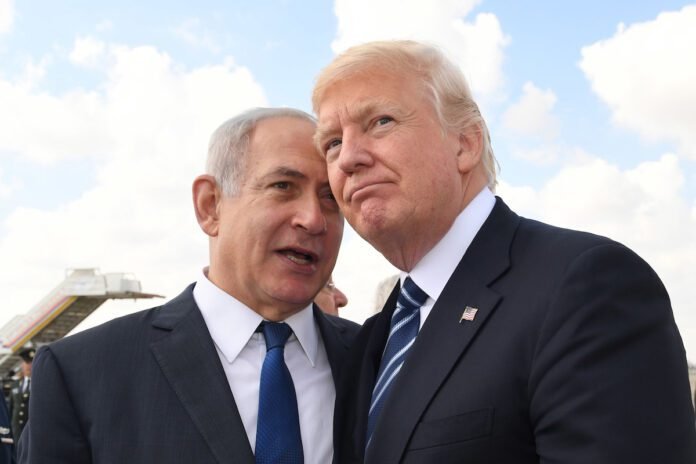
Iran, meanwhile, maintains that its nuclear program is for civilian purposes and has resisted demands to abandon its enriched uranium stockpile. Netanyahu recently posted an AI-generated image of himself and Trump with the message that Iran will never have a nuclear weapon.

Washington wants Iran to give up enriched uranium. Iranian state-linked media says nuclear issues should be handled in later talks, while Tehran wants frozen assets released and US sanctions lifted. Iran also says the Strait of Hormuz will remain under its management.

The bigger risk is that regional military activity could undermine diplomacy. Netanyahu has announced intensified strikes in Lebanon against Hezbollah despite a nominal cease-fire. Iran has said any peace agreement must also include Lebanon.

If Israel continues operations there, Iran may see little reason to accept a US-backed agreement, especially without firm guarantees against further Israeli attacks.

Trump appears to hope that the promise of wider normalization and economic cooperation can stabilize the region and bring Israel into a longer-lasting peace arrangement. Yet his approach also risks overloading an already fragile negotiation.

By tying the Iran deal to recognition of Israel, he is asking countries with deep political, ideological and public-opinion constraints to make a major concession at a moment of war, anger and uncertainty.

The result is a high-risk diplomatic gamble. Trump wants a historic settlement that links Iran, Israel and the wider Muslim world into one grand bargain. But without addressing the Palestinian question, Iran’s security concerns, Israel’s military posture and regional public sentiment, the plan may deepen resistance rather than produce peace.

In practical terms, Trump’s approach may limit Pakistan’s ability to openly associate itself with any US-Iran deal if the Abraham Accords remain attached to it.

Islamabad can support de-escalation, mediation and ceasefire efforts, but formal participation in a deal tied to Israeli recognition would be politically impossible. This could narrow Washington’s diplomatic room and make regional consensus harder to achieve.

If Washington wants wider regional support, it will need to separate the Iran peace process from the Abraham Accords or address the Palestinian issue directly.

Ultimately, Pakistan’s stance reflects both principle and political reality. Islamabad cannot join the Abraham Accords under current conditions, but it can still support peace, stability and dialogue in the Middle East.

The implication is simple: a sustainable regional settlement must include de-escalation with Iran, protection of Gulf security and a serious pathway for Palestinian rights.

Without that balance, Trump’s grand bargain is unlikely to gain meaningful support from Pakistan or the wider Muslim world.

Tofeeque Ahmed is a freelancer and media activist, writes on political developments and security issues with special focus regional affairs.

Muslim Delegation Makes Israel Day Parade Debut as Mamdani Skips Event and Knesset Boosts Representation 

0
muslim-delegation-makes-israel-day-parade-debut-as-mamdani-skips-event-and-knesset-boosts-representation 
Muslim Delegation Makes Israel Day Parade Debut as Mamdani Skips Event and Knesset Boosts Representation 


Democratic leaders, Jewish community figures and Israeli lawmakers gathered in New York City on Sunday for the annual Israel Day Parade, where speakers voiced support for Israel as the event drew tens of thousands of attendees under the theme “Proud Americans, Proud Zionists.” 

Among those addressing the crowd were Rep. Dan Goldman, Gov. Kathy Hochul, New York Attorney General Letitia James, Rep. Mike Lawler and Senate Minority Leader Chuck Schumer. 

“The Jewish people have yearned for a state of Israel, whilst experiencing the constant anxiety of knowing the place where they live could violently expel them at any moment, as happened again and again,” Schumer said. “We cannot, we must not go back to that era. I believe in the State of Israel. I support the State of Israel.” 

Anila Ali, board chair of the American Muslim & Multifaith Women’s Empowerment Council. (Wikimedia Commons)

The parade also marked the first time in its 61-year history that a Muslim delegation took part. The group was led by Anila Ali, board chair of the American Muslim & Multifaith Women’s Empowerment Council, and marched alongside Jewish organizations despite online backlash and threats. 

The Israeli Knesset sent a sizable delegation to the parade, including MK Afif Abed of Likud, MK Meir Cohen of Yesh Atid and MK Oded Forer of Yisrael Beytenu. Heritage Minister Amichai Eliyahu and Negev, Galilee, and National Resilience Minister Yitzhak Wasserlauf of Otzma Yehudit also joined the march. 

Knesset Speaker Amir Ohana sharply criticized New York City Mayor Zohran Mamdani for not attending the event, referring to anti-Israel statements Mamdani had made in the past. 

Ohana accused Mamdani of “despicably fueling the flames of hatred in the city against Israel and its Jewish residents.” 

“You will not intimidate us. The attempt to uproot our connection to this space through lies and violence will not succeed and will be met here and everywhere with a powerful, united Zionist fist,” Ohana said. 

According to the Knesset, Mamdani’s absence led Ohana to expand the size of the delegation and attend personally in order to “express complete and uncompromising unity in Israel’s strength against its enemies at home and abroad.” 

Heritage Minister Amichai Eliyahu, Negev, Galilee, and National Resilience Minister Yitzhak Wasserlauf, and Knesset Speaker Amir Ohana take part in the annual Israel Day Parade in New York City, May 31, 2026. (Noam Moskowitz/ Office of the Knesset Spokesperson)

Mamdani is the first New York City mayor not to attend the Israel Day Parade since 1964. 

The annual parade is organized by the UJA-Federation of New York and the Jewish Community Relations Council. 

‘Boogie Fever’ Singer Dies at 64

0
‘boogie-fever’-singer-dies-at-64
‘Boogie Fever’ Singer Dies at 64


Foster Sylvers, the former child star whose smooth voice helped power one of the biggest R&B family groups of the 1970s, has died at 64 after a battle with pancreatic cancer.

Sylvers, best known as a member of The Sylvers, the family band behind the disco-era smash “Boogie Fever,” died while in hospice care, his brother Leon Sylvers III told TMZ.

The Memphis-born singer was already a star before most kids his age were even thinking about a career.

Born on February 25, 1962, Foster Sylvers broke into the music world as a child sensation. He was just 11 years old when he released his self-titled debut album in 1973.

That album included “Misdemeanor,” the funky hit that helped make him one of the standout young voices of the era. It also featured tracks such as “I’m Your Puppet,” giving the young performer an early taste of success.

But his fame would grow even bigger when he joined forces with his siblings in The Sylvers, the soul and R&B group that became a fixture of the 1970s music scene.

The family act included several of the Sylvers siblings and became known for tight harmonies, catchy grooves, and polished performances that helped define the sound of the decade.

Foster played bass on the group’s 1975 album “Showdown,” which featured their most famous hit, “Boogie Fever.”

The song became a disco-era classic and remains the track most closely tied to The Sylvers’ name. With its infectious hook and dance-floor energy, “Boogie Fever” helped cement the group’s place in pop and R&B history.

At the height of their fame, The Sylvers were photographed and celebrated as one of music’s glamorous family groups, drawing comparisons to other sibling acts that dominated the charts during that period.

But as the 1980s arrived, the group’s commercial success began to fade.

Foster later shifted into other projects, working with artists including Dynasty and Evelyn “Champagne” King. He also continued pursuing solo music as he tried to carve out a new chapter after his childhood and family-band stardom.

His later years, however, were shadowed by serious legal trouble.

In 1994, Sylvers was convicted of a sex offense involving the sexual assault of an unconscious woman. As a result, he was required to register as a sex offender in California.

News of his death marks the end of a complicated life that began with early fame, bright lights, and chart-topping success, but later included personal struggles and controversy.

Foster Sylvers was 64.

Could Iran’s new air defence system be a game changer?

0
could-iran’s-new-air-defence-system-be-a-game-changer?
Could Iran’s new air defence system be a game changer?

The doctrine of absolute air dominance, long regarded as an unassailable pillar of Western military strategy, is facing an unexpected test over the skies of the Persian Gulf. For decades, American air superiority has been viewed as an almost impenetrable shield, allowing Washington to shape conflicts on its own terms. Yet a series of dramatic events during the first half of 2026 around the Strait of Hormuz has forced strategists in the Pentagon to reconsider some of the core assumptions underpinning modern warfare.

When a frontline U.S. Air Force F-15E Strike Eagle was reportedly shot down over southwestern Iran in April 2026, followed by the loss of multiple MQ-9 Reaper surveillance drones worth tens of millions of dollars, Tehran delivered a powerful geopolitical message: the era of uncontested foreign air operations in the Middle East may be drawing to a close.

This marks a striking departure from Iran’s traditional air defense posture before the conflict. Prior to the outbreak of hostilities, Tehran’s air-defense architecture was widely viewed as rigid, vulnerable, and relatively easy to map. It relied heavily on expensive centralized systems such as the Russian-made S-300PMU-2 batteries delivered in 2016, alongside indigenous platforms including the Bavar-373 and Khordad-15. For a country spanning 1.6 million square kilometers, the deployment of only four S-300 batteries left vast surveillance gaps across its territory.

Its most significant structural weakness was its dependence on active high-frequency radar emissions, which could be readily detected and targeted by Western electronic warfare systems. Israeli and American air forces had spent years studying the vulnerabilities of the S-300 through tactical simulations involving similar systems operated by Greece. Consequently, coalition suppression campaigns in 2026 reportedly neutralized key targeting radars with relative ease, rendering some of Iran’s most sophisticated missile batteries effectively blind.

From Centralized Defense to Asymmetric Denial

Ironically, the destruction of Iran’s conventional air-defense network appears to have accelerated the development of a far more resilient and potentially dangerous doctrine.

Recognizing that it could not match Western air power in a conventional contest, the Islamic Revolutionary Guard Corps (IRGC) shifted toward a distributed defense model built around small, highly mobile, low-cost, and largely passive units. The effectiveness of this approach became increasingly visible throughout 2026. Its most notable moment came in April, when an F-15E Strike Eagle operating at roughly 7,000 feet was reportedly brought down by a man-portable air-defense system (MANPADS), believed to be either a Chinese FN-6 variant or its Iranian derivative, the Misagh-3.

The incident shocked military planners in Washington. Pressure intensified further on May 25, 2026, when clashes near Qeshm Island followed the sinking of an Iranian mine-laying vessel. During the confrontation, an Iranian air-defense unit reportedly shot down an MQ-9 Reaper using a previously unknown system called Arash-e Kamangir, marking its combat debut and potentially altering the economics of modern attrition warfare. Named after the legendary Persian archer Arash, who in mythology defined the borders of Iran, the system embodies the concept of low-cost air denial. Defense analysts believe it may be an advanced evolution of the loitering surface-to-air missile known in Western intelligence circles as Project 358 or SA-67.

The hybrid weapon combines characteristics of both surveillance drones and surface-to-air missiles. Launched from a simple inclined rail mounted on commercial trucks, it uses a solid-fuel booster before transitioning to a micro turbojet engine.

Flying at roughly Mach 0.6 with an operational radius of up to 100 kilometers, it can remain airborne for extended periods while autonomously searching for targets.

Unlike traditional systems, it relies on passive infrared imaging sensors rather than active radar emissions, allowing it to remain largely undetected by enemy early-warning systems. Once a target such as an MQ-9 is identified, the missile enters an autonomous pursuit phase and detonates its fragmentation warhead using an array of laser proximity sensors. The result is a highly favorable cost-exchange ratio: an interceptor costing tens of thousands of dollars can destroy a surveillance asset valued at approximately $30 million.

China’s Invisible Hand in Iran’s Air Defense Evolution

Yet these asymmetric systems would likely not have achieved their current effectiveness without external technological support, particularly from China. Behind Tehran’s rhetoric of defense self-sufficiency lies what appears to be a sophisticated integration of Sino-Iranian sensing and targeting capabilities. On the ground, China is reported to have supplied YLC-8B three-dimensional tactical radar systems operating in the ultra-high-frequency (UHF) spectrum. Because of their longer wavelengths, UHF radars are often better suited to detecting stealth aircraft than conventional radar bands. This capability potentially allows them to identify fifth-generation platforms such as the F-35A Lightning II at distances exceeding 200 kilometers.

China’s contribution extends beyond radar technology. Through military-civilian satellite operators such as Chang Guang Satellite Technology, which manages the Jilin-1 constellation, and MinoSpace Technology, Beijing has reportedly enabled a steady flow of real-time geospatial intelligence. Targeting data is believed to be transmitted through China’s BeiDou navigation system, providing a communications architecture less vulnerable to GPS-jamming tactics. Together, these capabilities form a highly effective multi-domain kill chain. Space-based targeting information has reportedly enhanced the accuracy of Iranian drone and missile strikes against strategic U.S. support infrastructure across the region, including early-warning radar installations, communications facilities, and aerial refueling assets.

Faced with this reality, the Pentagon has been forced to adjust both tactical and operational planning in the Persian Gulf. Traditional suppression strategies centered on AGM-88 HARM anti-radiation missiles are becoming less effective against systems that emit little or no radar signature. U.S. aircraft have increasingly shifted their patrol routes farther from Iran’s southern coastline while relying more heavily on expensive stand-off munitions. Meanwhile, U.S. Cyber Command has reportedly intensified efforts to disrupt BeiDou-linked communications networks and identify Iranian ground-control infrastructure. At the same time, Washington has expanded technology restrictions targeting Chinese satellite companies and critical microelectronics supply chains.

A New Balance of Power or a More Dangerous Stalemate?

The central question is whether this growing collection of asymmetric capabilities will make Washington think twice before launching future military operations against Iran. The answer is increasingly likely to be yes.

The political risks associated with the loss of additional manned aircraft, or the capture of American pilots on Iranian territory, represent a powerful deterrent.

Such scenarios could impose substantial domestic and international costs on any U.S. administration, creating stronger incentives to pursue negotiation rather than escalation.

This evolving balance of power has already contributed to diplomatic openings. A proposed 60-day ceasefire framework, reportedly facilitated by Pakistan and China, reflects how Iran’s strengthened defensive position may be translating into greater leverage at the negotiating table. President Masoud Pezeshkian now appears better positioned to advocate what Tehran describes as a “dignified framework” for future negotiations.

The competing demands remain formidable. Washington reportedly seeks guarantees that Iran will refrain from imposing transit fees in the Strait of Hormuz, clear maritime mines within a specified timeframe, and transfer highly enriched uranium stockpiles to a third party. Tehran, meanwhile, insists on the release of frozen assets, relief from oil sanctions, and recognition of its administrative oversight role along the vital waterway.

The battlefield success of Arash-e Kamangir has also strengthened confidence among hardline factions within Iran. Rather than encouraging moderation, these developments may embolden Tehran to pursue a more assertive maritime posture in the Strait of Hormuz. Some analysts even foresee efforts to integrate regional shipping payments into renminbi-based settlement mechanisms as part of a broader strategic alignment with Beijing. The result is a fragile strategic deadlock, one resembling a high-stakes game of chicken at the edge of a cliff.

While Iran’s emerging asymmetric air-defense architecture may have reduced the threat of direct military intervention, it has simultaneously generated new sources of geopolitical friction.

As Oman attempts to broker compromises over the management of Strait of Hormuz transit arrangements, escalating rhetoric from Washington underscores the volatility of the situation. Over the coming weeks, the stability of global energy markets may hinge on whether diplomacy can bridge these fundamental differences or whether Tehran’s newfound confidence and Washington’s red lines ultimately drive the region toward a far more destructive confrontation.

The views expressed in this article belong to the author and do not necessarily reflect the editorial policy of Middle East Monitor.

0FansLike
0FollowersFollow
0FollowersFollow
0SubscribersSubscribe
- Advertisement -
Google search engine

Recent Posts