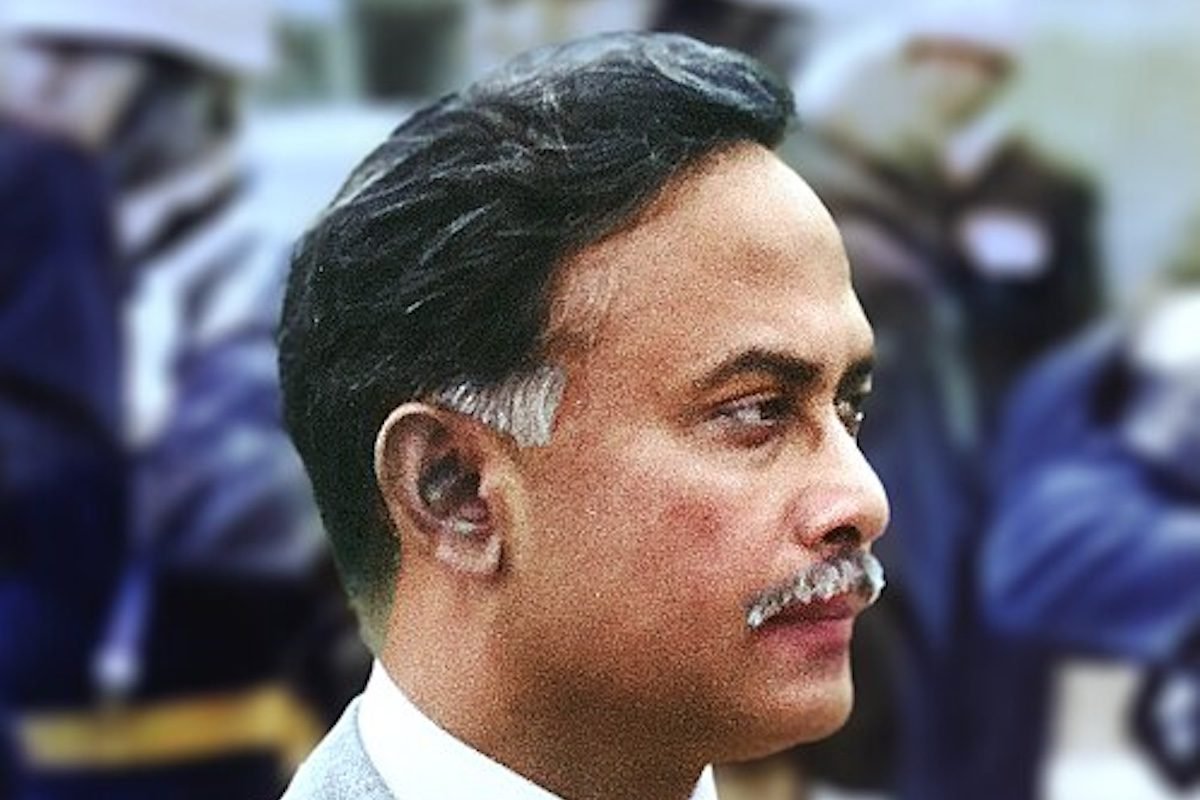
For a country born out of a bloody partition from Pakistan in 1971, political transition in Bangladesh has rarely been a peaceful affair. The assassination of President Ziaur Rahman on May 30, 1981, at a government circuit house in the port city of Chattogram, followed a familiar, violent script.
Rahman, a decorated liberation war hero commonly known as Zia, who turned into a military strongman before civilianizing his rule as the founder of the Bangladesh Nationalist Party (BNP), had survived at least 20 prior mutinies and coup attempts.
His final, fatal encounter with a faction of his own army ended a brief period of fragile stability, leaving behind a murder mystery that the state he helped shape has spent more than four decades systematically ignoring.
The official narrative of the assassination was constructed for institutional speed rather than historical accuracy, masking deep geopolitical and structural frictions.
Zia’s foreign policy shift, pivoting Bangladesh away from the Indo-Soviet orbit toward the West, China and the oil-rich Gulf states, had alienated powerful, highly politicized factions within the officer corps who remained fiercely loyal to the secular, socialist ideals of the 1971 revolution.
To contain this volatile rift, Lieutenant-General Hussain Muhammad Ershad, the army chief who would orchestrate his own coup less than a year later, immediately convened a highly secretive military tribunal.
The process took a mere 17 days. Armed with charges of mutiny rather than murder, the state deliberately chose to treat a profound political assassination as a mere breach of military discipline.
The tribunal ordered the hanging of 13 military officers in a rushed civilian execution process designed to foreclose deeper investigation. The alleged ringleader, Major-General Muhammad Abul Manzur, a highly “respected” commander who had fought alongside Zia in 1971, never made it to the stand.
Taken into military custody after the coup collapsed, Manzur was shot dead under highly suspicious circumstances inside the Chattogram cantonment, permanently silencing the only man who could have unmasked the wider conspiracy.
A parallel judicial inquiry committee also took testimony, yet its final report was buried by the state and never published.
This “calculated” amnesia set a dark, institutional precedent for Bangladeshi governance. It signaled to the top brass that violent political intervention carried no historical accountability, a realization that Ershad capitalized on just ten months later when he bloodlessly seized the presidency.
The political silence that followed is even more instructive than the rushed executions.
Despite holding power for multiple terms under Zia’s widow, Khaleda Zia, the BNP has consistently declined to form an independent commission of inquiry into its founder’s death, hiding behind the legal pretext that the 1981 court-martial closed the case permanently.
Critics see a deeper, cross-party consensus at play. For both the BNP and its rivals, a genuine forensic unraveling of the 1981 coup risks exposing the deep, factional rot of an army that spent its early decades acting as a political arbiter.
It was far safer for the political class to canonize Zia as a sanitized, convenient myth for electoral exploitation than to risk shaking the foundations of the garrison.
Yet, Zia’s practical legacy has proved far more durable than the state apparatus that failed to protect him. Stepping into the vacuum of the chaotic mid-1970s—following the 1975 assassination of the country’s founding father, Sheikh Mujibur Rahman—Zia dismantled the suffocating, one-party socialist experiment known as BAKSAL.
In its place, he introduced an early model of market liberalization. He pivoted the economy away from heavy state monopolies, legalized dissolved political entities across the spectrum, and laid the foundations for the three pillars that sustain modern Bangladesh.
Those are aggressive agricultural self-sufficiency through mass canal-digging irrigation programs, the deregulation that birthed the multi-billion-dollar ready-made garment export industry, and the formalization of migrant labor exports to the Gulf states, which still fills Dhaka’s central bank vaults with billions in remittances.
To anchor this economic shift, Zia engineered a distinct ideology— “Bangladeshi nationalism.”
This was a state-centric redefinition designed to expand the concept of national identity beyond narrow Bengali linguistic lines, offering a political umbrella to non-Bengali indigenous hill tribes and religious minorities, while simultaneously integrating Islamic identity into the constitutional fabric to balance the secular, pro-India alignment of his predecessors. It gave the center-right a permanent electoral anchor.
Forty-five years after his death, as his party observes yet another anniversary with an eight-day cycle of tightly choreographed memorials, the truth remains hostage to what might be dubbed as “an elite political compromise.”
The formal truth of who ordered the trigger pulled in Chattogram probably remains hidden in the archives of the cantonment, proving that in Bangladesh preserving the stability of the state machine will always triumph over historical truth.
Faisal Mahmud is a Dhaka-based journalist