16.2 C
London
Sunday, May 31, 2026
Home Blog

Dynamite Chicken Buns – Crispy, Spicy & Irresistibly Cheesy

0
dynamite-chicken-buns-–-crispy,-spicy-&-irresistibly-cheesy
Dynamite Chicken Buns – Crispy, Spicy & Irresistibly Cheesy

You are here: Home / All RECIPES / Dynamite Chicken Buns – Crispy, Spicy & Irresistibly Cheesy

If you’re searching for the ultimate crowd-pleasing snack, these Dynamite Chicken Buns are exactly what you need. Soft, fluffy homemade buns are stuffed with flavorful spicy chicken, coated in a crispy seasoned crust, and finished with a creamy dynamite sauce that delivers the perfect balance of heat and richness.

Whether you’re preparing a game-day appetizer, party snack, lunchbox treat, or fun weekend meal, these buns never disappoint. Every bite is packed with juicy chicken, bold spices, crispy texture, and cheesy goodness that will have everyone reaching for seconds.

Why You’ll Love These Dynamite Chicken Buns

Crispy Outside, Soft Inside

The homemade dough bakes up beautifully soft and fluffy while the seasoned coating adds a delicious crunch.

Packed with Flavor

The chicken filling is marinated with spices, soy sauce, and sambal oelek for maximum flavor in every bite.

Perfect Party Food

These handheld buns are easy to serve and always disappear fast at gatherings.

Make-Ahead Friendly

Prepare the dough and marinate the chicken ahead of time for easy assembly.

Better Than Takeout

Freshly made at home with quality ingredients and customizable spice levels.

What Are Dynamite Chicken Buns?

Dynamite Chicken Buns are soft bread rolls filled with spicy seasoned chicken and topped with a creamy chili-based sauce. Inspired by the famous dynamite-style flavor combination found in many Asian fusion dishes, these buns combine heat, crunch, creaminess, and savory goodness into one unforgettable snack.

Ingredients You’ll Need

For the Dough

  • Lukewarm water
  • Lukewarm milk
  • Honey
  • Instant yeast
  • Egg
  • Sunflower oil
  • All-purpose flour
  • Salt
  • Unsalted butter

For the Chicken Filling

  • Chicken fillets
  • Salt
  • Onion powder
  • Garlic powder
  • Cayenne pepper
  • Black pepper
  • Sambal oelek
  • Soy sauce
  • Egg

For the Crispy Coating

  • Cornstarch
  • Salt
  • Black pepper
  • Onion powder

For the Parmesan Topping

  • Parmesan cheese
  • Cayenne powder
  • Onion powder
  • Black pepper

For the Dynamite Sauce

  • Mayonnaise
  • Chili sauce
  • Sambal oelek

How to Make Dynamite Chicken Buns

Step 1: Prepare the Dough

In a large mixing bowl, combine the lukewarm water, lukewarm milk, honey, and yeast.

Mix well and allow it to sit for about 5 minutes until slightly foamy.

Add the beaten egg and sunflower oil.

Mix until combined.

Add the flour, salt, and softened butter.

Knead for 10 to 12 minutes until the dough becomes smooth, soft, and elastic.

Cover the bowl and allow the dough to rise in a warm place for approximately 1 hour or until doubled in size.

Step 2: Prepare the Parmesan Topping

In a small bowl, combine:

  • Parmesan cheese
  • Cayenne powder
  • Onion powder
  • Black pepper

Mix well and set aside.

Step 3: Marinate the Chicken

Cut the chicken into small bite-sized pieces.

Place in a bowl and season with:

  • Salt
  • Onion powder
  • Garlic powder
  • Cayenne pepper
  • Black pepper
  • Sambal oelek
  • Soy sauce
  • Egg

Mix thoroughly until the chicken is evenly coated.

Cover and refrigerate for at least 1 hour. Overnight marination provides even more flavor.

Step 4: Coat and Cook the Chicken

In a separate bowl, combine:

  • Cornstarch
  • Salt
  • Black pepper
  • Onion powder

Toss the marinated chicken pieces in the cornstarch mixture until fully coated.

Heat oil to 175°C (350°F).

Fry the chicken in batches until golden brown, crispy, and fully cooked.

Transfer to a paper towel-lined plate to drain excess oil.

Step 5: Make the Dynamite Sauce

In a bowl, whisk together:

  • Mayonnaise
  • Chili sauce
  • Sambal oelek

Mix until smooth and creamy.

Adjust the spice level to your preference.

Step 6: Shape the Buns

Once the dough has doubled in size, punch it down gently.

Divide into 14 equal portions.

Flatten each piece into a small circle.

Place a spoonful of crispy chicken in the center.

Seal the dough around the filling and shape into smooth buns.

Place on a parchment-lined baking tray.

Cover and let rise for another 20 to 30 minutes.

Step 7: Bake

Brush the tops with milk.

Sprinkle generously with the Parmesan seasoning mixture.

Bake in a preheated oven at 180°C (350°F) for 18 to 22 minutes or until golden brown.

Step 8: Finish and Serve

Allow the buns to cool slightly.

Drizzle with dynamite sauce or serve it on the side for dipping.

Garnish with fresh parsley or sliced green onions if desired.

Serve warm and enjoy.

Expert Tips

Use Warm, Not Hot Milk

The ideal temperature is between 37°C and 40°C. Hot milk can kill the yeast and prevent proper rising.

Marinate Overnight

The longer the chicken marinates, the more flavorful the filling becomes.

Fry in Small Batches

Overcrowding lowers the oil temperature and prevents the chicken from becoming crispy.

Seal the Dough Well

Make sure there are no openings so the filling stays inside during baking.

Adjust the Heat Level

Add more or less sambal depending on your spice preference.

Serving Suggestions

These Dynamite Chicken Buns pair perfectly with:

  • Garlic mayo
  • Ranch dressing
  • Sweet chili sauce
  • Sriracha mayo
  • Fresh salad
  • French fries
  • Coleslaw

Storage Instructions

Refrigerator

Store leftovers in an airtight container for up to 3 days.

Freezer

Freeze baked buns for up to 2 months.

Reheating

Warm in the oven at 170°C (340°F) for 8-10 minutes until heated through.

Frequently Asked Questions

Can I make the dough ahead of time?

Yes. Refrigerate the dough overnight after the first rise and use the next day.

Can I use chicken thighs?

Absolutely. Chicken thighs are juicy and work wonderfully in this recipe.

Can I air fry the chicken?

Yes. Air fry at 200°C (400°F) for approximately 12-15 minutes, turning halfway through.

Are these buns very spicy?

They have a moderate kick. Simply reduce the sambal and cayenne for a milder version.

Final Thoughts

These Dynamite Chicken Buns are everything you could want in a homemade snack: soft, fluffy bread, crispy spicy chicken, cheesy seasoning, and a creamy dynamite sauce that ties everything together. Perfect for parties, family gatherings, meal prep, or satisfying a craving, this recipe is guaranteed to become a favorite.

Pinterest Description

🔥🍗 These Dynamite Chicken Buns are loaded with crispy spicy chicken, fluffy homemade bread, cheesy Parmesan seasoning, and creamy dynamite sauce! Perfect for parties, snacks, game day, or an unforgettable dinner. Soft, crispy, cheesy, and packed with flavor in every bite!

#DynamiteChickenBuns #ChickenBuns #PartyFood #ChickenRecipes #HomemadeBread #EasyDinnerIdeas #SnackRecipes #ComfortFood #SpicyChicken #BakedBuns #FoodieFavorites #DinnerInspiration #CheesyRecipes #HomemadeGoodness
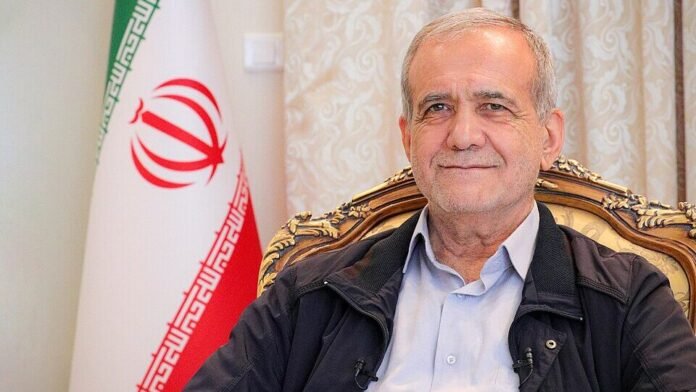
Pezeshkian Submits Resignation as Iran’s President Citing IRGC Power Grab – Report

0
pezeshkian-submits-resignation-as-iran’s-president-citing-irgc-power-grab-–-report
Pezeshkian Submits Resignation as Iran’s President Citing IRGC Power Grab – Report


Iranian President Masoud Pezeshkian has submitted a resignation letter to the Office of the Supreme Leader, Mojtaba Khamenei, citing his exclusion from key decision-making processes and the growing role of the Islamic Revolutionary Guards Corps (IRGC) in governing the country, according to a report by Iran International. 

The report said Pezeshkian requested to step down immediately, arguing that he could no longer effectively lead the government or fulfill his legal responsibilities because major decisions were being made outside his administration. 

The claim has not been confirmed by Iranian authorities or major international wire services, and there was no immediate indication that the resignation had been accepted. 

According to Iran International, Pezeshkian stated that the IRGC had assumed control over critical areas of governance while sidelining the civilian government. The outlet reported that the transfer of authority had left the president’s administration unable to advance diplomatic negotiations or implement planned changes to the cabinet structure. 

Iran International previously reported that the IRGC had gradually curtailed presidential powers and taken control of key parts of the government. The outlet said informed sources described a political and executive deadlock that had limited the administration’s ability to carry out policy initiatives. 

The report also said that key decision-making authority had shifted from the civilian government to senior IRGC figures and the Supreme Leader, resulting in blocked executive decisions and diplomatic efforts being pushed aside. 

According to The Jerusalem Post, the IRGC controls an estimated 20% to 40% of Iran’s economy. The newspaper reported that the organization bypasses international sanctions through “dark fleet” oil tankers and smuggling networks and commands the majority of the country’s oil exports, directing revenue into its military-industrial complex. 

The Council on Foreign Relations has reported that the IRGC operates an internal security and intelligence network that includes the Basij militia. According to the organization, the force monitors dissent and plays a role in ensuring that only candidates aligned with the IRGC are permitted to hold significant political power. 

It remains unclear whether Mojtaba Khamenei will accept Pezeshkian’s reported resignation. 

Commodores Co-Founder Dead at 75 After Sudden Medical Emergency

0
commodores-co-founder-dead-at-75-after-sudden-medical-emergency
Commodores Co-Founder Dead at 75 After Sudden Medical Emergency


Ronald LaPread, the original bassist and co-founder of the legendary soul group the Commodores, has died. He was 75.

The heartbreaking news was confirmed Saturday by his daughter, music producer Soraya LaPread, who shared the announcement on social media. She did not reveal a cause of death.

According to the NZ Herald, LaPread died in Auckland, New Zealand, after suffering what was described as a “sudden medical event.” He had lived in New Zealand since the 1980s.

TMZ reported that it reached out to both Soraya and the Commodores for comment, but had not yet heard back.

LaPread’s death marks the loss of another key figure from one of Motown’s most successful and beloved groups.

Born in Alabama, LaPread helped launch the Commodores in 1968 alongside Lionel Richie, Walter “Clyde” Orange, William “WAK” King, Milan Williams and Thomas McClary. The group formed while the men were students at Tuskegee Institute.

Before becoming the Commodores, they originally performed under the name The Mystics.

LaPread went on to play bass on 11 of the group’s albums and helped shape the sound behind some of their most unforgettable hits, including “Brick House,” “Three Times a Lady” and “Easy.”

With their smooth harmonies, funk grooves and soul ballads, the Commodores became one of the biggest acts of the 1970s and 1980s. The group sold more than 70 million albums worldwide and became a defining name in the Motown era.

Their success, however, came with plenty of behind-the-scenes turmoil.

The band went through a major shakeup in the early 1980s when Lionel Richie left to launch his massively successful solo career. The departure changed the future of the group, but the Commodores continued performing and remained a major name in soul and R&B history.

LaPread, who had long since relocated to New Zealand, still reunited with the group on occasion over the years. He joined them for concerts in New Zealand and most recently performed with the band during their 2025 tour.

His death comes just days after the Commodores made headlines for a very different reason.

This week, the group announced they were pulling out of Freedom 250’s Great American State Fair, an event tied to the celebration of America’s 250th birthday. The Commodores were among several acts that withdrew from the event over its political connections.

Now, fans are mourning LaPread not only as a founding member of the Commodores, but as one of the musicians who helped give the group its signature heartbeat.

For generations of fans, his bass lines were part of the soundtrack of their lives.

Ronald LaPread was 75.

Could Iran’s New Air Defense System Be a Game Changer?

0
could-iran’s-new-air-defense-system-be-a-game-changer?
Could Iran’s New Air Defense System Be a Game Changer?

The doctrine of absolute air dominance, long regarded as an unassailable pillar of Western military strategy, is facing an unexpected test over the skies of the Persian Gulf. For decades, American air superiority has been viewed as an almost impenetrable shield, allowing Washington to shape conflicts on its own terms. Yet a series of dramatic events during the first half of 2026 around the Strait of Hormuz has forced strategists in the Pentagon to reconsider some of the core assumptions underpinning modern warfare.

When a frontline U.S. Air Force F-15E Strike Eagle was reportedly shot down over southwestern Iran in April 2026, followed by the loss of multiple MQ-9 Reaper surveillance drones worth tens of millions of dollars, Tehran delivered a powerful geopolitical message: the era of uncontested foreign air operations in the Middle East may be drawing to a close.

This marks a striking departure from Iran’s traditional air defense posture before the conflict. Prior to the outbreak of hostilities, Tehran’s air-defense architecture was widely viewed as rigid, vulnerable, and relatively easy to map. It relied heavily on expensive centralized systems such as the Russian-made S-300PMU-2 batteries delivered in 2016, alongside indigenous platforms including the Bavar-373 and Khordad-15. For a country spanning 1.6 million square kilometers, the deployment of only four S-300 batteries left vast surveillance gaps across its territory.

Its most significant structural weakness was its dependence on active high-frequency radar emissions, which could be readily detected and targeted by Western electronic warfare systems. Israeli and American air forces had spent years studying the vulnerabilities of the S-300 through tactical simulations involving similar systems operated by Greece. Consequently, coalition suppression campaigns in 2026 reportedly neutralized key targeting radars with relative ease, rendering some of Iran’s most sophisticated missile batteries effectively blind.

From Centralized Defense to Asymmetric Denial

Ironically, the destruction of Iran’s conventional air-defense network appears to have accelerated the development of a far more resilient and potentially dangerous doctrine.

Recognizing that it could not match Western air power in a conventional contest, the Islamic Revolutionary Guard Corps (IRGC) shifted toward a distributed defense model built around small, highly mobile, low-cost, and largely passive units. The effectiveness of this approach became increasingly visible throughout 2026. Its most notable moment came in April, when an F-15E Strike Eagle operating at roughly 7,000 feet was reportedly brought down by a man-portable air-defense system (MANPADS), believed to be either a Chinese FN-6 variant or its Iranian derivative, the Misagh-3.

The incident shocked military planners in Washington. Pressure intensified further on May 25, 2026, when clashes near Qeshm Island followed the sinking of an Iranian mine-laying vessel. During the confrontation, an Iranian air-defense unit reportedly shot down an MQ-9 Reaper using a previously unknown system called Arash-e Kamangir, marking its combat debut and potentially altering the economics of modern attrition warfare. Named after the legendary Persian archer Arash, who in mythology defined the borders of Iran, the system embodies the concept of low-cost air denial. Defense analysts believe it may be an advanced evolution of the loitering surface-to-air missile known in Western intelligence circles as Project 358 or SA-67.

The hybrid weapon combines characteristics of both surveillance drones and surface-to-air missiles. Launched from a simple inclined rail mounted on commercial trucks, it uses a solid-fuel booster before transitioning to a micro turbojet engine.

Flying at roughly Mach 0.6 with an operational radius of up to 100 kilometers, it can remain airborne for extended periods while autonomously searching for targets.

Unlike traditional systems, it relies on passive infrared imaging sensors rather than active radar emissions, allowing it to remain largely undetected by enemy early-warning systems. Once a target such as an MQ-9 is identified, the missile enters an autonomous pursuit phase and detonates its fragmentation warhead using an array of laser proximity sensors. The result is a highly favorable cost-exchange ratio: an interceptor costing tens of thousands of dollars can destroy a surveillance asset valued at approximately $30 million.

China’s Invisible Hand in Iran’s Air Defense Evolution

Yet these asymmetric systems would likely not have achieved their current effectiveness without external technological support, particularly from China. Behind Tehran’s rhetoric of defense self-sufficiency lies what appears to be a sophisticated integration of Sino-Iranian sensing and targeting capabilities. On the ground, China is reported to have supplied YLC-8B three-dimensional tactical radar systems operating in the ultra-high-frequency (UHF) spectrum. Because of their longer wavelengths, UHF radars are often better suited to detecting stealth aircraft than conventional radar bands. This capability potentially allows them to identify fifth-generation platforms such as the F-35A Lightning II at distances exceeding 200 kilometers.

China’s contribution extends beyond radar technology. Through military-civilian satellite operators such as Chang Guang Satellite Technology, which manages the Jilin-1 constellation, and MinoSpace Technology, Beijing has reportedly enabled a steady flow of real-time geospatial intelligence. Targeting data is believed to be transmitted through China’s BeiDou navigation system, providing a communications architecture less vulnerable to GPS-jamming tactics. Together, these capabilities form a highly effective multi-domain kill chain. Space-based targeting information has reportedly enhanced the accuracy of Iranian drone and missile strikes against strategic U.S. support infrastructure across the region, including early-warning radar installations, communications facilities, and aerial refueling assets.

Faced with this reality, the Pentagon has been forced to adjust both tactical and operational planning in the Persian Gulf. Traditional suppression strategies centered on AGM-88 HARM anti-radiation missiles are becoming less effective against systems that emit little or no radar signature. U.S. aircraft have increasingly shifted their patrol routes farther from Iran’s southern coastline while relying more heavily on expensive stand-off munitions. Meanwhile, U.S. Cyber Command has reportedly intensified efforts to disrupt BeiDou-linked communications networks and identify Iranian ground-control infrastructure. At the same time, Washington has expanded technology restrictions targeting Chinese satellite companies and critical microelectronics supply chains.

A New Balance of Power or a More Dangerous Stalemate?

The central question is whether this growing collection of asymmetric capabilities will make Washington think twice before launching future military operations against Iran. The answer is increasingly likely to be yes.

The political risks associated with the loss of additional manned aircraft, or the capture of American pilots on Iranian territory, represent a powerful deterrent.

Such scenarios could impose substantial domestic and international costs on any U.S. administration, creating stronger incentives to pursue negotiation rather than escalation.

This evolving balance of power has already contributed to diplomatic openings. A proposed 60-day ceasefire framework, reportedly facilitated by Pakistan and China, reflects how Iran’s strengthened defensive position may be translating into greater leverage at the negotiating table. President Masoud Pezeshkian now appears better positioned to advocate what Tehran describes as a “dignified framework” for future negotiations.

The competing demands remain formidable. Washington reportedly seeks guarantees that Iran will refrain from imposing transit fees in the Strait of Hormuz, clear maritime mines within a specified timeframe, and transfer highly enriched uranium stockpiles to a third party. Tehran, meanwhile, insists on the release of frozen assets, relief from oil sanctions, and recognition of its administrative oversight role along the vital waterway.

The battlefield success of Arash-e Kamangir has also strengthened confidence among hardline factions within Iran. Rather than encouraging moderation, these developments may embolden Tehran to pursue a more assertive maritime posture in the Strait of Hormuz. Some analysts even foresee efforts to integrate regional shipping payments into renminbi-based settlement mechanisms as part of a broader strategic alignment with Beijing. The result is a fragile strategic deadlock, one resembling a high-stakes game of chicken at the edge of a cliff.

While Iran’s emerging asymmetric air-defense architecture may have reduced the threat of direct military intervention, it has simultaneously generated new sources of geopolitical friction.

As Oman attempts to broker compromises over the management of Strait of Hormuz transit arrangements, escalating rhetoric from Washington underscores the volatility of the situation. Over the coming weeks, the stability of global energy markets may hinge on whether diplomacy can bridge these fundamental differences or whether Tehran’s newfound confidence and Washington’s red lines ultimately drive the region toward a far more destructive confrontation.

The views expressed in this article belong to the author and do not necessarily reflect the editorial policy of Middle East Monitor.

70-foot wastewater geyser reflects New Mexico’s latest oilfield challenge

0
70-foot-wastewater-geyser-reflects-new-mexico’s-latest-oilfield-challenge
70-foot wastewater geyser reflects New Mexico’s latest oilfield challenge

This story was originally published by Capital & Main and was republished with permission.

At first, he thought it was smoke.

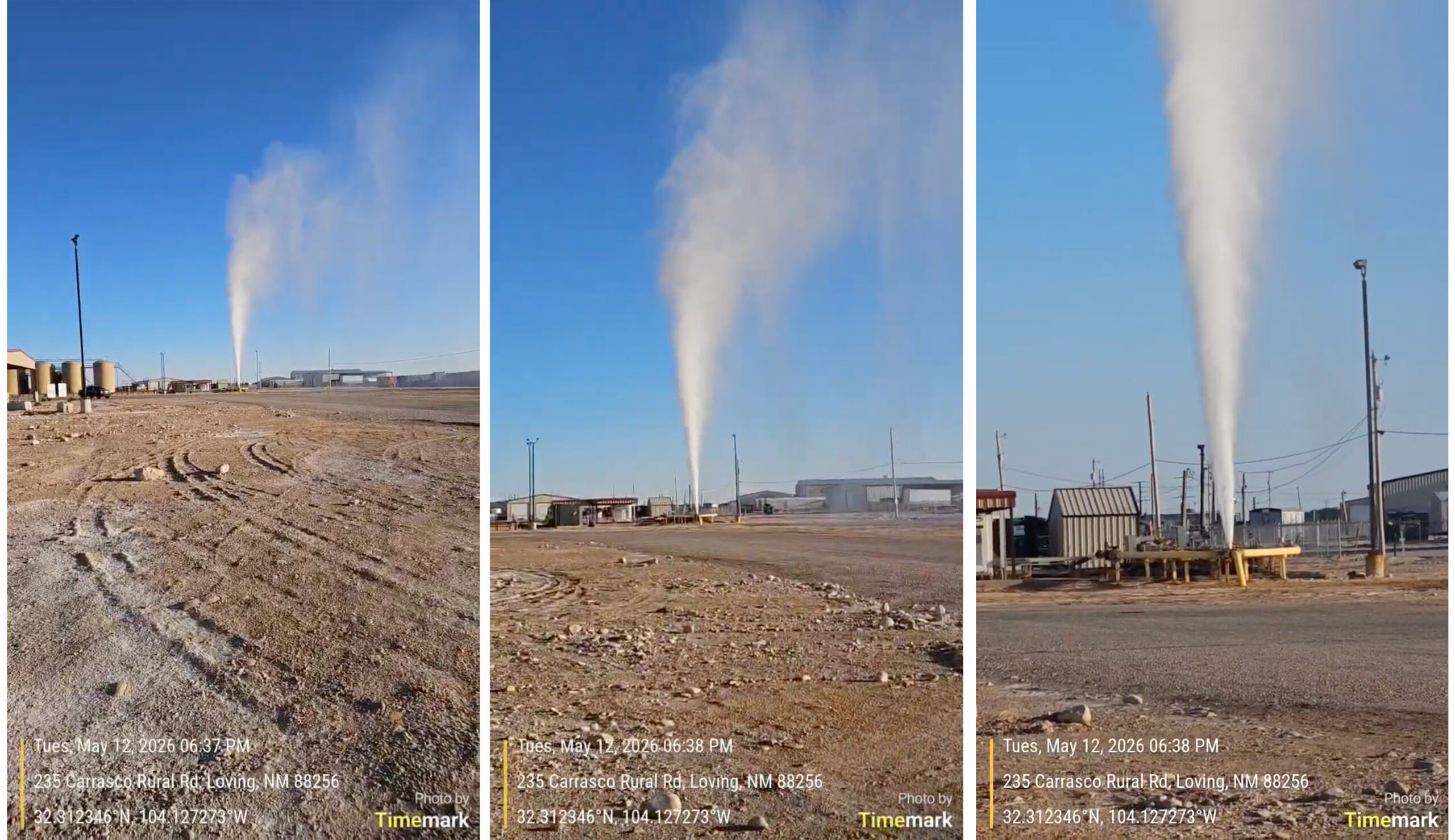
Jackie Onsurez was driving the bustling New Mexico highway between his home in Loving and nearby Carlsbad last Tuesday evening when he thought the smoke didn’t look right. As he pulled closer, he saw that the 70-foot plume was actually a roaring geyser of toxic oilfield wastewater, commonly called produced water, spewing from a pipe at a site operated by NGL Energy Partners. 

Onsurez, who until recently was running for the state’s lieutenant governor position, said he called NGL, 911, the New Mexico Environment Department and others. He was at the site for a few minutes when an oilfield roughneck arrived in a pickup truck and tried to stop the spraying water but couldn’t. 

Three photos of a geyser spewing

Stills from video footage of a geyser of oilfield wastewater at a site operated by NGL Energy Partners in southeast New Mexico. Courtesy of Jackie Onsurez

He said the man then “started to haul ass out of there. He said, ‘Get out of here. There’s gas coming out. I don’t know what’s there. Get out, get out!’”

Onsurez didn’t leave, though. He is an engineer and serves on the New Mexico State Emergency Response Commission — the day before, he had attended a commission meeting on hazardous materials spills. The serendipity wasn’t lost on him. 

“I was able to observe firsthand the equipment and the training and everything else that’s needed for here [in the oilfield],” he said. “The only people that had protective gear was the fire department when they arrived.”

The fire department cordoned off the area a few minutes after the roughneck fled. NGL representatives arrived soon after and shut off the shooting water. By that point, Onsurez had been at the site for about a half hour. He didn’t know how long it had been spewing before he arrived.

The contaminated water flowed across the road and ran into a nearby drainage ditch. Onsurez had also called Alisa Ogden, a farmer and rancher and member of the Carlsbad Soil and Water Conservation District, to let the group know of the spill. 

“I said, ‘Ms. Ogden, I hate to bother you, but it looks like this might be getting into your acequias,’” Onsurez said, using the common Spanish term for the traditional Southwest water system.

Read Next

“If you don’t know what happens, you can’t do anything about it,” Ogden said later. “Gratefully, Jackie let us know immediately when he saw it, and we got right on it and were able to keep the produced water … from flowing down towards the Pecos River,” she said.

“It doesn’t keep us up at night, but with the oilfields out here, it’s always a hazard that it could happen,” Ogden said.

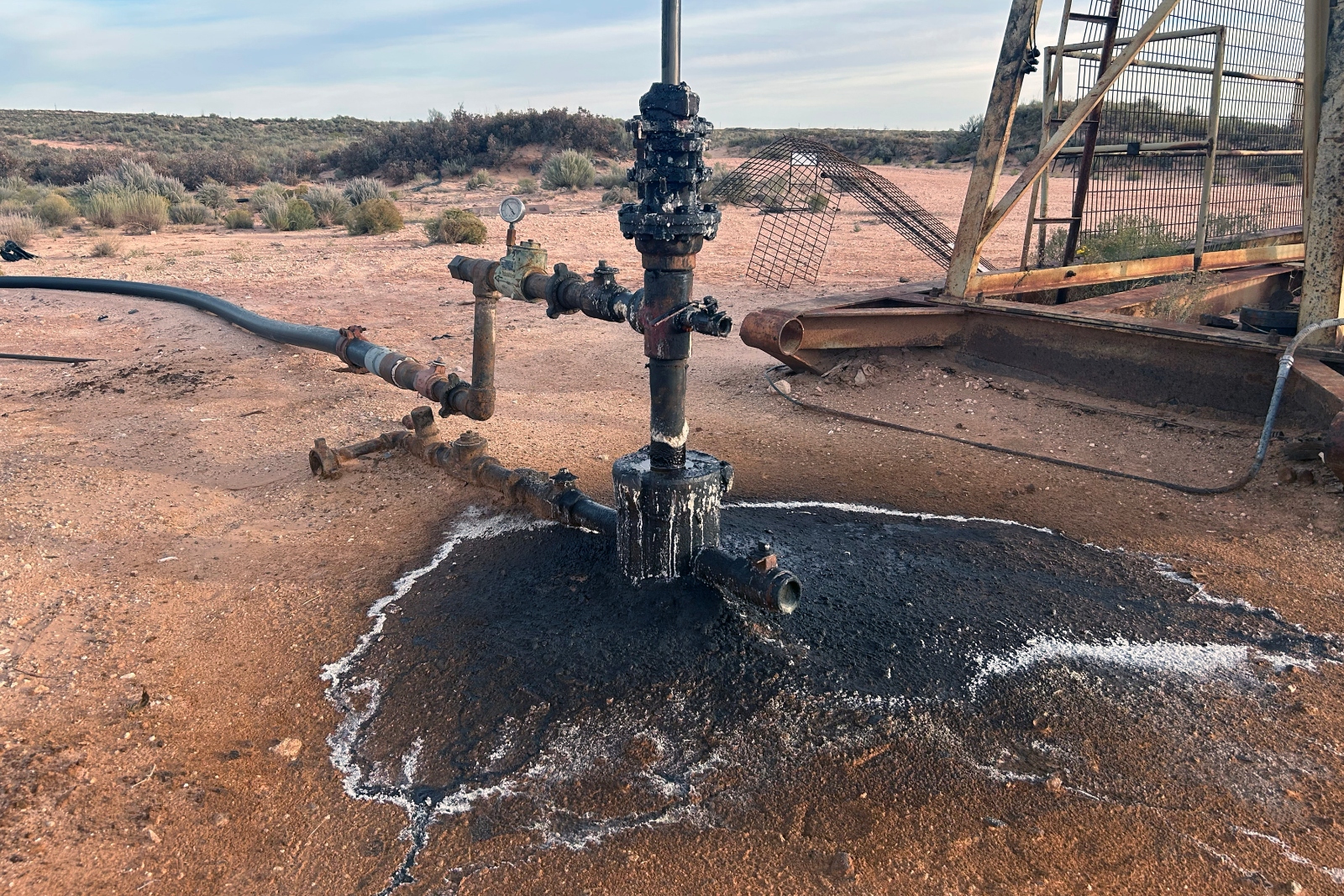
According to a report filed by NGL with the New Mexico Oil Conservation Division, a one-inch nipple broke on a high-pressure water injection line, leading to the blowout. The report said 40 barrels of produced water escaped, 10 of which were recovered. The remaining 30 flowed into the nearby ditch.

Sidney Hill, the public information officer at the New Mexico Energy, Minerals and Natural Resources Department, which oversees the Oil Conservation Division, said that NGL collected samples from the ditch, and “We expect to receive them sometime this week.”

“Accidents do happen,” Ogden said. “We’ve all had accidents occur. It’s how you react to ’em.”

She said NGL is responsible and has agreed to do the cleanup. “They did everything they could at the time,” she said. “Once we get all the samples back and everything, then we’ll come up with a plan on what they need to do.”

Read Next

NGL did not respond to phone and email requests for comment.

In December 2024, an inspector from the state’s Oil Conservation Division found a pump leaking wastewater on the wellsite’s cement slab. Asked by Capital & Main about a scheduled three-month follow-up visit that didn’t appear in the well files, Hill said, “Thank you for pointing out the past due compliance. We will investigate why it isn’t closed out, but it does not seem associated with the current release.”

NGL transports oil, gas, and wastewater around oil basins from the Gulf Coast, Oklahoma, Colorado, Kansas, and New Mexico. It also has a growing business disposing of produced water in deep injection wells like the one just north of Loving. In its annual report, the company claimed to be the largest independent wastewater transporter and disposal company in the U.S., handling nearly a billion barrels of the toxic water across its operations last year.

In the greater scheme of wastewater spills in New Mexico, NGL’s accident was notable for being visible, not for being big. Between Jan. 1 and May 19, 48 companies reported 356 spills, losing 15,335 barrels of wastewater across the state. The biggest was a 2,000-barrel spill in January by Hilcorp Energy Company, just 1,300 feet from a neighborhood in north Farmington. Devon Energy Corporation reported the most wastewater spills so far with 93, compared to three for NGL.

But last week’s briny geyser highlights one of the fastest-growing controversies in New Mexico’s oil and gas industry: what to do with produced water. In 2025, oil producers brought up more than 800 million barrels of oil and 2.7 billion barrels of wastewater in the state. Those barrels of wastewater increase as oil and gas production grows, and the total has doubled since 2020. There is little agreement on what to do with all of it. 

Read Next

The water occurs naturally in oil and gas formations and is highly saline, laced with petroleum-based chemicals. It is often radioactive and can include the chemical cocktails that companies inject into wells during the fracking and production processes. The recipes for those cocktails are often protected trade secrets and can differ radically from well to well. Basically, the water is toxic, and its use outside the oilfield for anything but testing is forbidden in New Mexico.

Wastewater can be used to drill new wells, but the most common disposal method is underground disposal wells — like the one near Loving — where the water is reinjected into rock formations under extreme pressure.

The report filed by NGL with the Oil Conservation Division said the broken nipple was on a pipeline charged to 2,600 pounds per square inch. But the state is running out of injection locations as the rock formations fill and shift under the intense pressure of the injections, resulting in swarms of earthquakes across the Permian Basin in both Texas and New Mexico. In addition, high-pressure wastewater deposits have breached old oil and gas wells, leading to brine leaks and geysers.

A proposal put forward by the industry group Water, Access, Treatment and Reuse Alliance to allow wastewater to be treated and used outside the petroleum industry is once again before the state’s Water Quality Control Commission. It was knocked down last year following a fracas where Governor Michelle Lujan Grisham appeared to pressure the commission to overturn a recently instituted ban on using the wastewater outside the oilfield. Earlier proposals argued that treated water could be used by other industries or possibly discharged into lakes and streams, a highly controversial use in a state that continues to suffer from a decades-long drought. 

Read Next

In separate interviews, lead lawyers from each side of the debate tackled each other’s arguments.

Matthias Sayer, co-founder of the alliance, said he views treated water as “a new source of water supply and as a reduced burden on the current management system.”

Sayer said, “Spills happen because oilfield [waste]water management is massive, constant, and operationally complex … That does not excuse spills, but it explains why a system built around moving very large volumes of high-salinity water will continue to experience [spills] unless the state improves infrastructure and creates better incentives for treatment, recycling, and beneficial reuse.”

Tannis Fox, senior attorney at the Western Environmental Law Center and a lead attorney against the reanimated wastewater proposal, said, “The main argument that industry is making is that reuse of produced water is one solution to the water scarcity problem. And with that, we disagree. It’s not a silver bullet.” 

Sayer said a “robust body of science” shows that oilfield wastewater can be treated and safely reused. “The question is not whether it can be done, but how to craft a rule that appropriately manages the risk,” he said. “That question is answered by engaging the science and the experts behind it.”

Fox said, “There is, of course, a significant debate about what the science is telling us.” She and others are skeptical that new water treatment processes can reliably clean what’s coming out of the ground. Water testing generally starts with looking for known, likely contaminants in the water. 

But, she said, “We don’t know all the constituents in produced water because the hydraulic fracturing fluids that industry uses are protected by trade secret rules.” In addition, basic water chemistry and salinity vary widely across the state. The lack of clarity about what’s in the water “is a problem for emergency response workers if you don’t know what’s in those fluids,” she added, with a nod toward the Loving spill.

In addition, Fox said there hasn’t been large-scale testing. “There have not been studies at scale. There has not been discharge at scale. There has not been treatment at scale. Reuse of produced water at an industrial scale is not there yet. So it is not a solution to water scarcity tomorrow,” she said.

“If the [Water Quality Control Commission] approves a rule, the system will necessarily ramp up organically,” Sayer said. “This is a runway, not a light switch.”

Fox said, “It is by its nature a dirty industry, and obviously the world needs energy, and the sooner we get to clean energy, the better.”

Copyright 2026 Capital & Main


Turkey’s Blue Homeland Legislation Challenges Israel-Cyprus-Europe Power Project

0
turkey’s-blue-homeland-legislation-challenges-israel-cyprus-europe-power-project
Turkey’s Blue Homeland Legislation Challenges Israel-Cyprus-Europe Power Project


Proposed Turkish legislation based on the country’s “Blue Homeland” doctrine could complicate plans to connect Israel, Cyprus and mainland Europe through a major subsea electricity link by expanding Ankara’s maritime claims across large sections of the Eastern Mediterranean, according to a report by Globes.

The legislation would formally incorporate Turkey’s maritime claims into domestic law. Under the proposal, Ankara would assert jurisdiction over nearly half of the Aegean Sea and extensive areas of the Eastern Mediterranean.

According to Globes, the proposed boundaries overlap with maritime zones claimed by Greece and Cyprus and have drawn opposition from both governments. The legislation is also reported to conflict with principles established under the United Nations Convention on the Law of the Sea.

A central element of the doctrine is Turkey’s position that Greek islands are not entitled to their own full continental shelf or exclusive economic zone. Greece rejects that claim, and the position has also been rejected by the broader international community.

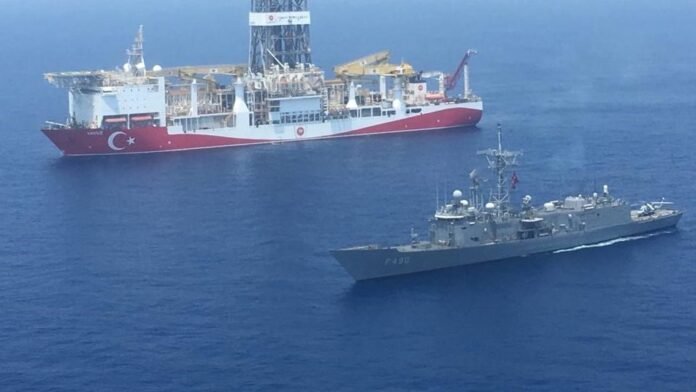
The dispute carries implications for regional energy and infrastructure projects. Turkey’s proposed maritime maps reportedly intersect with the planned route of the EuroAsia Interconnector, a 1,200-kilometer subsea electricity cable intended to connect the power grids of Israel, Cyprus and Greece.

Incorporating the claims into Turkish law could create legal and operational obstacles for projects that pass through waters contested by Ankara.

Greek officials have strongly opposed the initiative which treats any Greek move to extend territorial waters to 12 nautical miles as a “red line.”

Cyprus has also condemned the proposal, describing it as incompatible with international agreements and accusing Turkey of increasing tensions over maritime boundaries.

While Israel is not described as the primary target of the Blue Homeland doctrine, the report said the measure could affect Israeli interests in the Eastern Mediterranean. The proposed claims could complicate both offshore energy development and the construction of underwater infrastructure projects linking Israel with neighboring countries and European markets.

Along the river, before the fall: China pre-Renaissance city life

0
along-the-river,-before-the-fall:-china-pre-renaissance-city-life
Along the river, before the fall: China pre-Renaissance city life

A boat is about to hit the bridge.

That is where Zhang Zeduan’s Along the River During the Qingming Festival begins to reveal its secret. Beneath the great arched bridge, boatmen shout, ropes tighten, a mast is being lowered, and a heavy river vessel struggles through a crowded waterway. Above them, people lean over the railings. On the banks, shopkeepers, porters, travelers, monks, doctors, fortune-tellers, laborers and children press into the scene.

At first glance, the scroll appears to be a celebration of prosperity. Look longer, and it becomes something more unsettling: a portrait of a city so advanced that every part of it depends on everything else not failing.

The painting, now in the Palace Museum in Beijing, is usually attributed to Zhang Zeduan of the Northern Song dynasty. The Beijing scroll is widely accepted by scholars as the earliest surviving version of Qingming shanghe tu, while the National Palace Museum in Taipei describes Zhang’s original as an early 12th-century masterpiece of late Northern Song genre painting, depicting prosperity along the Bian River in Kaifeng, then the Northern Song capital.  

A detail from the Qingming Scroll Photo: ifeng.com

That date matters. This is not the world of Leonardo, Raphael or Michelangelo. In Europe, the early 12th century was still the age of Romanesque churches, sacred metalwork, biblical manuscripts and monumental Christian sculpture. Durham Cathedral was being built between 1093 and 1133 in the Romanesque style. The Cross of Cong, one of the great treasures of Irish church metalwork, was made in 1123 to enshrine a relic of the True Cross. The chevet of Saint-Denis, often associated with the birth of Gothic art, would only be consecrated in 1144.  

The comparison is not meant to diminish Europe. It clarifies the historical shock of the Chinese scroll. When much of Western high art still placed salvation at the center of visual life, Zhang Zeduan placed a city there.

Western readers often reach for the phrase “China’s Mona Lisa.” It is a convenient phrase, but it is wrong in spirit. The Mona Lisa is a face. The Qingming scroll is a system. It is not built around a single human mystery, but around the movement of an entire urban organism.

Within one narrow handscroll, Zhang presents the outskirts, the river, the bridge, the commercial district and the dense life of the city. The central section is organized around the great bridge, where a large boat is trying to pass beneath the structure as its mast is lowered and the crowd gathers in alarm. The whole scroll gives a concentrated image of 12th-century Bianjing at the height of Northern Song urban life.

This is why the painting still feels modern. It is not merely about architecture or costume. It is about logistics.

The Bian River is not a decorative river. It is an artery. Boats enter the city because the capital must be fed, supplied, taxed and sustained. Goods move by water, then by cart, then by shoulder, then by stall and shop. The city exists because movement continues. The scroll’s brilliance lies in showing that prosperity is not a static condition. It is a rhythm: loading, unloading, pulling, steering, selling, buying, waiting, crossing, turning, shouting.

The great bridge is beautiful, but beauty is not the point. The bridge is pressure.

Under it, the painting condenses the problem of a medieval metropolis. Too many people, too many boats, too many goods and too little margin for error meet at one point. The mast is not yet down. The boat is too close. The men on the vessel and the people on the bridge have already seen the danger. The scene is not ornamental animation. It is a near accident.

A detail from the Qingming Scroll Photo: ifeng.com

Palace Museum researcher Yu Hui has read this section not as harmless bustle but as part of a larger pattern of urban anxiety in the Song original. In his interpretation, the scroll contains signs of disorder: a fire-watch tower with no proper guard, slow and negligent officials, the dangerous bridge incident, weak city defense and commercial encroachment into public space. Whether one accepts every part of this reading or not, it is difficult to see the painting as innocent once these details are noticed.

The scroll does not denounce the empire. It observes it too carefully to be merely flattering.

One detail, almost invisible to casual viewers, changes the painting from a masterpiece of urban observation into a document of technical history: the yaolu, or yuloh.

Western viewers may notice the bridge, the crowd, the market stalls and the danger of the passing vessel. Fewer will notice the oar. Yet the large stern oar in the Qingming scroll is not a minor nautical detail. It belongs to the Chinese yaolu, or yuloh, a sculling oar worked by a lateral, rhythmic motion. It does not function like an ordinary rowing oar that is repeatedly lifted from the water. Nor is it merely a steering oar. Properly used, it gives continuous thrust and control.

The China Exploration and Research Society explains that a yuloh boat has a single sculling oar pivoting at the rear, propelled by a left-and-right or push-and-pull rhythm. The same source specifically notes that Along the River During Qingming Festival shows the stern section of a boat with several men maneuvering a large yuloh oar.  

The chronology makes this detail even more important. Western vessels had used steering oars and rowing oars since antiquity, so the comparison must be made carefully. But if the question is narrowed to the scull as a stern oar producing thrust through a transverse motion, the English lexical record is much later: the Oxford English Dictionary dates the noun scull to around 1345–1346, while Merriam-Webster defines scull as “an oar used at the stern of a boat to propel it forward with a thwartwise motion” and gives its first known noun use as the 14th century.  

By contrast, the Chinese yaolu is already documented in Chinese visual and technical history before that. Nanny Kim, in The Journal of Transport History, states that the yaolu is pictorially documented in the 10th century and may have been present much earlier. The Chinese yuloh also entered Western nautical scholarship as a distinct technical subject: D. W. Waters published “The Chinese Yuloh” in The Mariner’s Mirror in 1946 and later “The Straight and Other Chinese Yulohs” in the same journal in 1955.  

The point is not that the West lacked oars. It did not. The point is sharper: Zhang Zeduan’s 12th-century scroll clearly belongs to a Chinese waterborne world in which the yaolu was already mature enough to move large river craft through narrow, crowded, bridge-filled urban canals. In the West, the closest lexical evidence for the stern scull as a named propulsion device appears later. That difference gives the Qingming scroll a technical importance that is often missed.

This matters because the Qingming scroll is often admired for its human abundance, but its deeper intelligence lies in its attention to movement. In a crowded urban canal, sails become useless. Masts must be lowered. Bridges interrupt the waterway. Boats must be slowed, turned, held, released and driven forward. The yuloh is part of the hidden machinery of the city.

The yaolu therefore becomes more than an object. It is evidence.

It tells us that Song urban life depended not only on markets, officials and taxes, but on highly developed waterborne labour. The prosperity of Kaifeng did not float on poetry alone. It moved through ropes, trackers, boatmen, bridge clearances, lowered masts, stern control and the long sweep of the yuloh.

That is where Zhang Zeduan’s genius becomes most apparent. He did not paint technology as a diagram. He embedded it in life. The yuloh is not isolated, labelled or celebrated. It is simply doing its work, as indispensable tools usually do.

The painting also refuses to let power occupy the center. There is no emperor in the scroll. No throne. No palace ceremony. No celestial mandate descending from above. Civilization appears instead through ordinary acts: a man driving animals, a vendor arranging goods, a doctor receiving clients, a laborer carrying weight, a fortune-teller serving anxious examinees, a boatman trying to save a vessel from collision.

A detail from the Qingming Scroll Photo: ifeng.com

The scroll’s range of figures is one of its quiet achievements: gentry, officials, servants, merchants, cartmen, craftsmen, storytellers, barbers, doctors, fortune-tellers, women from wealthy families, monks, children and beggars. Their lives are not equal. Some are idle, some are exhausted. Some command, some carry. The scroll does not erase hierarchy; it records it in motion.

This is one reason the Qingming scroll differs so strongly from many great medieval works of Europe. The Bayeux Tapestry, nearly 70 metres long, tells the story of conquest, succession and war in 1066. It is one of Europe’s great secular narrative works. But Zhang’s scroll is interested in a different kind of drama: not the seizure of a kingdom, but the daily survival of a city.  

One work remembers the making of political power. The other remembers the pressure beneath prosperity.

There is also a strange humility in the artist’s own disappearance. Zhang Zeduan left almost no secure biography. He is known largely through later inscriptions and the survival of the work attributed to him. Unlike Leonardo or Michelangelo, he does not stand before us as a fully documented personality. He almost vanishes into the city he painted.

The painter disappeared. The city remained — not the physical city of Kaifeng, which history would wound and transform, but the city as memory: a living structure of movement, labor, commerce and risk.

The later fate of the painting adds another layer. Qingming shanghe tu became one of the most copied and reimagined subjects in Chinese art. The National Palace Museum notes that around a hundred versions exist today in private collections and major museums around the world, a sign of its extraordinary influence. Columbia University’s Asia for Educators also notes the abundance of later copies and variations, including Qing-dynasty versions that transform the urban world into something more colourful, orderly and courtly.  

A detail from the Qingming Scroll Photo: ifeng.com

That history of copying is not a footnote. It is part of the work’s destiny. For centuries, later artists did not merely reproduce Zhang’s image; they revised the idea of the city itself. In the Song original, the city breathes and strains. In later versions, it often becomes cleaner, brighter, more festive, more governable. The difference is revealing. Copies can flatter what originals expose.

The Song scroll survives because it is not satisfied with surface. It does not simply say: Here is a prosperous capital. It asks a harder question: what must hold together for prosperity to continue?

A bridge must be crossed. A mast must be lowered in time. A boat must be controlled. A shop must be supplied. A road must remain passable. A fire-watch tower must be guarded. Officials must work. Laborers must be paid. Goods must move. People must trust that the city will function when they enter it in the morning.

That is why Along the River During the Qingming Festival still speaks across cultures. It is Chinese in every line, yet its subject is universal. Every great city, from Kaifeng to Venice, London, New York, Hong Kong or Shanghai, lives by the same fragile miracle: millions of separate actions held together just tightly enough to feel like order.

The scroll endures not because it shows a perfect world. It endures because it shows a living one.

It lets us see civilization before it becomes history: crowded, ingenious, commercial, anxious, beautiful, vulnerable and unaware that the future is already approaching from beyond the frame.

Jeffrey Sze is Reichenau’s ambassador for arts, culture and tourism and chairman of Art Habsburg. He is also general partner of Archduke United LPF, focusing on fine-art research, collecting and the digitalization of cultural assets.

Olympic Gymnast, 41, Dies After Tragic Accident

0
olympic-gymnast,-41,-dies-after-tragic-accident
Olympic Gymnast, 41, Dies After Tragic Accident


Former Olympic gymnast Gaël Da Silva has died after a tragic car accident, according to multiple reports.

The French athlete, who represented Team France at the 2012 London Olympics, was just 41 years old.

Da Silva reportedly died on the morning of Tuesday, May 26, in a car crash, according to French outlet L’Equipe and The U.S. Sun. Details about what caused the accident, where it happened, or whether anyone else was involved have not yet been made public.

The sudden death has stunned the gymnastics world and left fans mourning a beloved athlete remembered for his talent, grit, and comeback spirit.

Da Silva is survived by his wife, Camille, and their three children: Hugo, 12, Jules, 9, and Lou, 6, according to the outlets.

The heartbreaking news came just days after Da Silva was seen at the French Team Championships in Amiens. According to L’Equipe, he had been there only ten days before the crash.

Da Silva, affectionately known by the nickname “Gaou,” had remained a familiar and respected figure in the French gymnastics community long after his Olympic career.

Tributes quickly began pouring in after news of his death spread.

International Gymnast Magazine posted a tribute on social media, writing, “We’re saddened to share that Gaël Da Silva, a 2012 French Olympian, passed away on May 26, 2026, at the age of 41. Rest in peace. RIP.”

Cécile Canqueteau-Landi, the former coach of Simone Biles, also reacted to the devastating news. She shared a photo of Da Silva on her Instagram Story and wrote, “Such sad news.”

Da Silva’s career included a major highlight in 2012, when he won a bronze medal in the floor exercise at the European Championships in Montpellier, France.

That same year, he went on to compete for France at the London Olympics. The French men’s gymnastics team finished in eighth place and did not medal, but Da Silva’s Olympic appearance marked a proud moment in his career.

His path to the top was not easy.

In 2004, Da Silva was hit by a car while riding his motorcycle. The injuries from that crash kept him away from gymnastics and threatened the sport he loved most.

But he refused to let the accident end his dream.

“From my hospital bed, I saw the gym slipping away, but I didn’t want to stop there,” he once said, according to L’Equipe. “Without it, I don’t know what I would have done with my life. That’s what motivated me to get out of there quickly.”

That determination became part of Da Silva’s legacy.

He fought his way back from injury, returned to elite competition, won a European medal, and earned a place on the Olympic stage.

Now, the gymnastics world is remembering him not only as an Olympian, but as a father, husband, teammate, and fighter whose life was cut short far too soon.

Instead of expanding gas, the UAE should help Indonesia build offshore wind

0
instead-of-expanding-gas,-the-uae-should-help-indonesia-build-offshore-wind
Instead of expanding gas, the UAE should help Indonesia build offshore wind

Within months, Mubadala Energy is expected to make a final investment decision on its Tangkulo development in Indonesia’s South Andaman block, where recent discoveries have revealed more than 2 trillion cubic feet of gas-in-place. Additional finds in the same basin could hold more than 6 trillion cubic feet. The project is being hailed as another milestone in Indonesia’s push to become a major regional gas supplier.

But the bigger story is not the gas beneath the Andaman Sea. It is the strategic choice facing the United Arab Emirates.

The UAE is now one of the world’s most influential energy investors. Through companies like Mubadala Energy and Masdar, Abu Dhabi is simultaneously financing two very different futures: one built on new fossil fuel extraction, the other on renewable energy systems designed for a decarbonizing global economy.

In Indonesia, the UAE should place its larger bet on the second.

Rather than doubling down on offshore gas development, Abu Dhabi should accelerate support for a Masdar–State Electricity Company (PLN) joint venture focused on offshore wind in eastern Indonesia, particularly along the Sulawesi–Maluku corridor. A 2-gigawatt renewable pipeline there would do more to strengthen Indonesia’s long-term energy security and economic competitiveness than another decade of gas expansion.

At first glance, the logic behind South Andaman is compelling. Indonesia’s energy demand is rising rapidly. Domestic industries need reliable power. Gas is cleaner than coal and remains politically attractive as a “transition fuel.” For Jakarta, projects like Tangkulo promise investment, jobs and export revenues.

But the economics of energy are changing faster than many governments anticipated.

Large offshore gas developments are increasingly expensive and slow to monetize. They require billions in capital expenditure, years of technical development and long-term assumptions about global gas demand that are becoming less certain as major economies accelerate decarbonization. By the time Tangkulo reaches first gas — currently targeted for 2028 — global energy markets could look dramatically different.

Renewables, by contrast, are moving in the opposite direction. Costs are falling. Financing pools are growing. Technology is improving rapidly, especially in offshore wind and battery storage.

And Indonesia has enormous untapped potential.

The waters around Sulawesi and Maluku possess some of Southeast Asia’s strongest offshore wind resources, particularly for floating wind systems suited to deep-water environments. Unlike western Indonesia, where energy infrastructure is already concentrated, eastern Indonesia remains underserved by fragmented grids and expensive diesel-based generation. Offshore wind could fundamentally change that.

This is where the UAE’s renewable ambitions should become more strategic.

Masdar already has an established relationship with PLN. Their collaboration on the Cirata floating solar project demonstrated that large-scale renewable partnerships between the UAE and Indonesia are commercially viable and politically feasible.

An expanded Masdar–PLN offshore wind venture would build on that foundation while addressing some of Indonesia’s most persistent structural challenges.

First, it would diversify the country’s energy mix beyond coal and gas. Indonesia remains heavily dependent on fossil fuels, even as it publicly commits to ambitious climate targets. Offshore wind would provide a long-term source of domestic power without exposing the economy to fuel price volatility.

Second, it would support more balanced regional development. For decades, Indonesia’s energy infrastructure has been concentrated in Java and western Indonesia. Eastern provinces have often been treated as peripheral markets rather than strategic growth centers. A renewable corridor stretching across Sulawesi and Maluku could help reverse that imbalance by bringing industrial investment, grid upgrades and employment opportunities to regions long left behind.

Third, it would align the UAE with the direction global capital is already moving.

Abu Dhabi understands this reality better than most hydrocarbon exporters. The UAE has spent years positioning itself as both a major oil producer and a global renewable investor. Yet there is a contradiction in promoting clean energy leadership abroad while simultaneously expanding long-cycle gas developments that may become less competitive over time.

Indonesia presents the UAE with a chance to demonstrate what a genuine energy transition partnership looks like.

Critics will argue that offshore wind remains too expensive for emerging markets. But deepwater gas was once considered prohibitively expensive as well. Technology evolves quickly when capital and policy align behind it.

The more important question is not whether offshore wind is currently cheaper than gas on every metric. It is which infrastructure will still look economically strategic twenty years from now.

A new offshore gas basin may generate revenues in the near term. But a large-scale renewable system integrated with manufacturing, battery storage and regional transmission could shape Indonesia’s competitiveness for decades.

The UAE has the capital, technical expertise and geopolitical influence to help build that future.

What Indonesia needs now is not simply another fossil fuel discovery. It needs partners willing to invest in the next energy economy before the old one begins losing its strategic value.

The winds off Sulawesi and Maluku may never attract the same headlines as a major gas discovery in South Andaman. But in the long run, they could matter far more.

The views expressed in this article belong to the author and do not necessarily reflect the editorial policy of Middle East Monitor.

On its 40th anniversary, we reassess 1986’s SpaceCamp

0
on-its-40th-anniversary,-we-reassess-1986’s-spacecamp
On its 40th anniversary, we reassess 1986’s SpaceCamp

Forty years ago, the future seemed just around the corner—and the vehicle that was going to take us there was NASA’s Space Shuttle. Originally envisioned as part of a larger integrated space transportation system, the shuttle was billed as a fully reusable vehicle, totally unlike the one-and-done capsules of the fading Apollo era, capable of making monthly (and perhaps even weekly) ferry flights to low Earth orbit.

The shuttle, it was hoped, would transform human space flight from extraordinary to mundane. Brands like Coke and Pepsi were quick to hop aboard and expand the Cola Wars into space, and there were even plans to blast Sesame Street’s Big Bird into orbit.

The loss of Challenger in January 1986—carrying educator Christa McAuliffe, who would have been the first private citizen in space—put the kibosh on all of that. The shuttle, while fantastically advanced, would never be the vehicle to help humankind slip all of our surly bonds, so to speak. Even operating at its most frantic peak in 1985 just before Challenger’s loss, the shuttle hardware managed a maximum of nine flights in one calendar year; for most of the 1990s, it performed at five or six flights per year. Civilians in space—to say nothing of Big Bird—would have to wait.

And into that post-Challenger disillusioned summer of 1986, Hollywood brought us SpaceCamp. It had all the right ingredients: A stacked cast with a solid leading duo (Kate Capshaw and Tom Skerritt), tons of real NASA location footage, and a big, brassy score by none other than John Williams. The film was completed before the Challenger disaster, leaving 20th Century Fox with something of a nightmarish choice on their hands—to shelve the film and lose millions, or send it to theaters and risk a PR disaster.

For better or for worse, Fox chose to release the film, which ultimately made about $9.6 million on a reported $25 million budget. Ouch. Audiences, it seemed, weren’t really interested in watching a bunch of kids in peril on a space shuttle. Today, on the rare occasions SpaceCamp comes up in film discussions at all—usually among geeks of a certain age who encountered it when they were younger—it’s often spoken of with derision. Kids! Robots! Thermal curtain failures! Preposterous!

But is it really a bad movie? It’s not currently available for streaming, but this is exactly the kind of scenario that physical media is made for. And so, with the movie’s 40th anniversary looming, Senior Space Editor Eric Berger and I grabbed the DVD and watched our way through it—and this is what we thought.

Lee: It’s been about 18 hours since we watched SpaceCamp, which is maybe just a bit longer than the kids spent in orbit. What did you think? Are we tearing the film apart here, or praising it?

Eric: We are bearing witness to it, I think. I had never seen the movie before, and as a 53-year-old who has read about and written about space for decades, the movie was clearly not made for me. But for what it was, an ’80s dramedy aimed at kids and teens, I think it did an admirable job of engaging its audience and building interest in the space program. You know, we decided to watch it because I wrote about the real Space Camp a couple of weeks ago, and we’re coming up on the 40th anniversary of the movie’s release in early June. All in all, it was fun to experience.

How about you? You watched it a lot as a kid and were right in the key demographic, a pre-teen in Houston. Does it hold up?

Lee: I damn near wore the VHS tape out watching it as a kid, so yeah, I was coming into this with a lot of old memories. It honestly held up a lot better than I was expecting it to! There’s epic levels of cheese—and we’ll get to that—but even in spite of the cheese, I don’t think anyone can deny that there was a lot of love put into this movie. For every huge detail they get wrong (why does the shuttle keep shaking after MECO?), there are countless minor details that they nail. Tiny stuff, that no one except insiders would notice—shuttle cockpit switch positions, authentic uniform patches, terminology. This was not a B-movie—money and care were spent, and that money and care are visible on-screen.

Still from SpaceCamp showing Kevin jettisoning the SRBs

Kevin (Tate Donovan) separates the SRBs during launch. The shuttle flight deck and mid-deck sets were extremely realistic and built to spec.

Image of the central control pedestal on board Crew Compartment Trainer 2 in the SVMF at JSC.

This 2013 image of shuttle Crew Compartment Trainer 2 at the Johnson Space Center shows that Kevin was more or less hitting the right buttons!

Eric: There were also some cringeworthy details they missed, though. One jarring example for me was a reference to a “180×33” orbit shortly after Atlantis reaches space. I mean, that’s definitely an orbit. But it’s not a stable orbit. 180 miles is pretty low for an apogee to begin with, and 33 miles is, umm, not great. At perigee the shuttle would experience pretty serious atmospheric breaking, rapidly lose energy, and would definitely not be going back up to its apogee. It would meet a bad end. Regarding it being a B-movie, all you have to do is look at the cast, a mix of established actors and young up-and-comers (Joaquin Phoenix, lolwut??!) to know that this was a serious effort. But it had poor timing.

Lee: Poor timing is the understatement of the (last) century. SpaceCamp made its theatrical debut on June 6, 1986, barely four months after the very public destruction of Challenger. A movie about a space near-disaster coming so soon on the heels of an actual space disaster proved to be box office poison—which is unfortunate, because there’s a lot to love about SpaceCamp. Especially if you’re a fan of both “space” and “camp.”

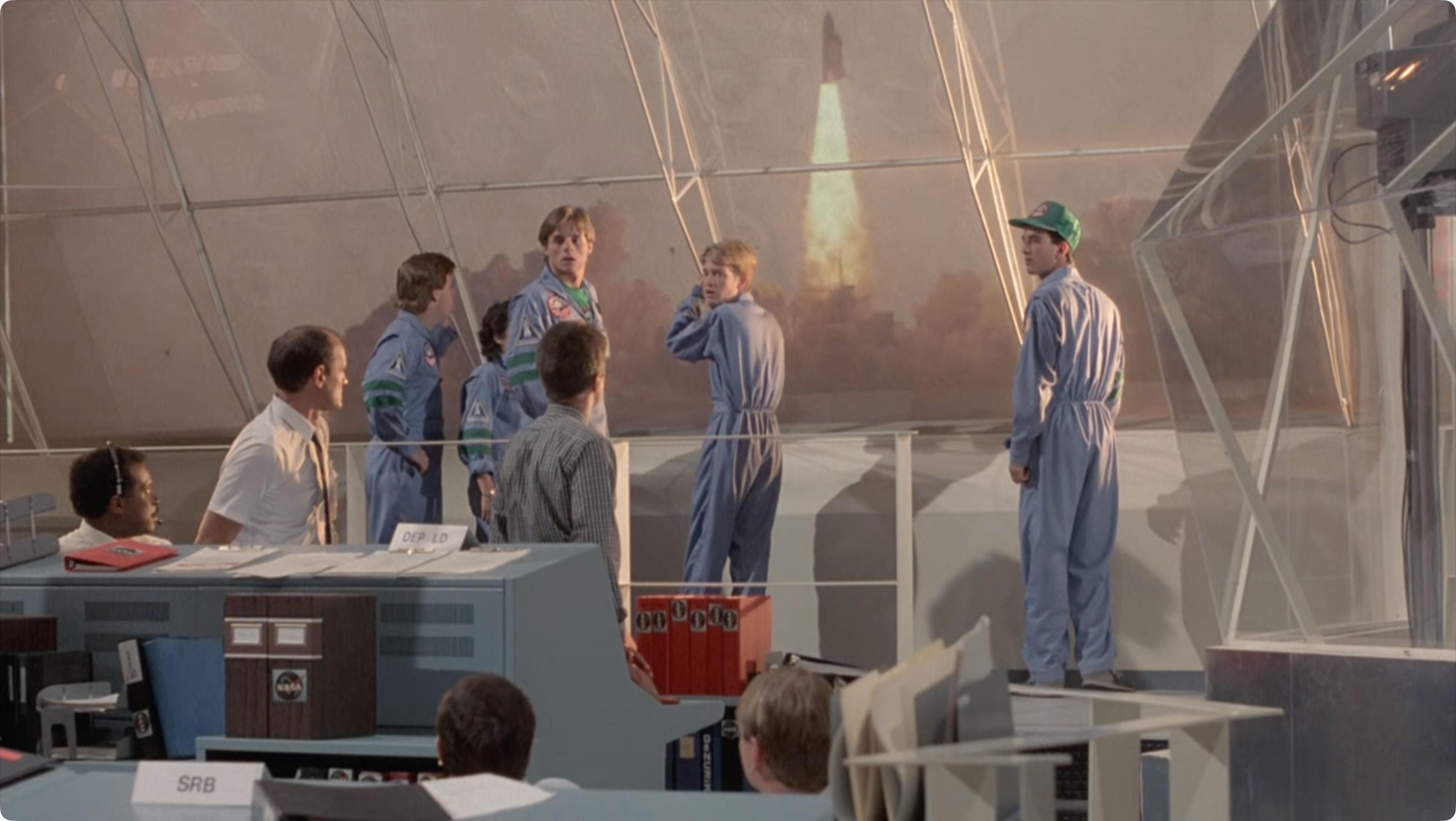
For folks unfamiliar, the film depicts a group of five kids and a rookie astronaut who are accidentally shot into space when a routine main engine test of the orbiter Atlantis goes sideways. (The root cause of the problem is Joaquin Phoenix’s robotic best friend Jinx, which…well, we’ll get to Jinx in a minute.) Stranded in low Earth orbit without a functioning space-to-ground voice link and with dwindling oxygen, it’s up to lone adult astronaut Andie Bergstrom (Kate Capshaw) and her husband, camp director Zach Bergstrom (Tom Skerritt) to bring the stricken shuttle home.

It sounds like an ’80s-flavored recipe for success! And, shot on location at the actual Space Camp facilities in Huntsville and the actual Launch Control Room at the Kennedy Space Center in Florida, it should have performed well—except for that pesky real-life shuttle explosion.

Still from SpaceCamp showing the shuttle Atlantis unexpectedly launching

“Welp.”

“Welp.” Credit: 20th Century Fox

Eric: What is striking to me is that, despite the movie’s poor timing, it has had a long shelf life. It only came out four years after the actual Space Camp opened in Huntsville, and I’ve spoken with more than one space enthusiast who watched the movie and then signed up for a week in Alabama. In its own way I think the film helped to fuel interest in the space program at a time, the late 1980s and 1990s, when quite frankly there was just not that much exciting happening in human spaceflight. The movie also correctly anticipates NASA having a large space station in orbit, called Daedalus, nearly a decade and a half before one exists. Man, I’ve got to tell you I could not get over the station’s truss design. There was so much metal for no apparent purpose, other than serving the plot I suppose.

Speaking of liberties taken by the writers, shall we talk about the biggest one? As an adult, what did you think about the mechanism by which NASA launched five kids into space?

Lee: THERMAL CURTAIN FAILURE! I’d have to leave it to you as the resident shuttle expert about whether or not there’s a thing called the “thermal curtain” that stops the shuttle’s solid rocket boosters from overheating during a Flight Readiness Firing—or maybe toss that to collectSpace’s Robert Pearlman, who basically knows everything about everything. I remember when I was younger scoffing at the idea that the SRBs would be fueled during a main engine test, but now that I’m older, I’m pretty sure that particular detail is accurate, and that the solid propellants are essentially “manufactured” into the boosters during their refurbishment between flights.

Of course, as noted above, the conversion of “FRF” into “actual launch” is the fault of Jinx, a spherical maintenance robot apparently exhibiting full artificial general intelligence (in 1986, no less!) and seemingly given unrestricted access to the entire space center. Jinx and Max (the aforementioned Joaquin Phoenix, credited as “Leaf Phoenix”) are friends forever, and Jinx conspires with the all-powerful NASA mainframe computer (another runaway AGI!) to arrange a “THERMAL CURTAIN FAILURE.” And just like that, Jinx puts Max in space, along with Bergstrom and four other campers chosen to ride out the FRF on board Atlantis.

I have to wonder if Jinx is supposed to be under the control of a project officer or a principal investigator somewhere, and if that person’s career survived this incident.

What’s your take on the FRF shown in the film? Did NASA do these kinds of tests on the shuttle fleet, and how often?

Still from SpaceCamp showing Jinx the robot

It wouldn’t be an ’80s adventure without a schlocky, dumb robot sidekick.

It wouldn’t be an ’80s adventure without a schlocky, dumb robot sidekick. Credit: 20th Century Fox

Eric: Yes, NASA did perform FRFs in the early days of the Space Shuttle program, igniting the main engines on the pad for about 20 seconds. This happened for the first time in February 1981, in advance of the first shuttle launch, and maybe before half a dozen other launches. It’s common practice for a lot of new rockets, but once engineers are comfortable with a vehicle, they typically stop doing them unless there are anomalies to resolve.

Astronauts were typically on board for these tests, so the idea that people would be on the shuttle during a flight readiness firing is plausible. However, I think you and I both know just how restricted access to the Space Shuttle was during the run-up to missions, so “campers” from Space Camp never would have been allowed near the vehicle, let alone on board during such a dynamic test. And don’t get me started on “thermal curtain failure.” The solid rocket boosters were, of course, never ignited during a test like this, and I can’t really see how one of them could be ignited. There are a lot of other plot holes (like the total loss of voice communication with a hapless “Mission Control” being run out of the firing room at KSC), but all in all it’s good fun.

One theme of the movie is the desire of Lea Thompson’s character to become a space shuttle commander, and as part of that she has to learn to rely on other teammates. She also has trouble learning to fly the shuttle during reentry. And this represents the climax of the film, when Thompson (Kathryn Fairly in the movie) must pilot the shuttle during peak heating. How did you feel about this?

Still from SpaceCamp showing Atlantis about to undergo FRF test

The movie uses real-life shuttle footage, including this shot of Atlantis about to undergo an actual real-life FRF, (possibly FRF 51-J). Note white FRF covers over the OMS engines.

Photograph of Columbia during FRF test

Columbia undergoes a real-life FRF in February 1981. Columbia sports white FRF OMS engine covers, similar to Atlantis.

Lee: I mean, it’s screenwriting 101: If we seen the gun (or in this case, the multi-axis trainer) on the mantlepiece in Act 1, then chances are that gun’s going to shoot someone by Act 3. We see Thompson’s Fairly struggle with spin recovery on the ground, and so of course Atlantis gets away from her just before re-entry. Contrived, silly, unrealistic, but definitely genre-appropriate!

But like you said at the outset, this movie wasn’t for us, the two old farts who can quote shuttle abort mode procedures at each other—it was for the kid I used to be in 1986, the kid who positively knew he could do a way better job in space than Phoenix’s Star Wars-obsessed Max, if only I’d been given the chance. The movie has faults, giant gaping faults, but it’s also trying to condense a ton of real (or at least reality-adjacent) space flight concepts into forms that are understandable by viewers who can’t tell an AJ10-190 from an RS-25. Which is most people! Some glossing over of the details is expected.

Still from SpaceCamp showing Atlantis approaching Daedalus station

Atlantis approaches “Daedalus,” a fictional space station resembling the early ’80s “Power Tower” station concepts.

Atlantis approaches “Daedalus,” a fictional space station resembling the early ’80s “Power Tower” station concepts. Credit: 20th Century Fox

…though I still don’t like the autonomous AGI-exhibiting robot who can infiltrate NASA systems and launch shuttles at will. Seriously seems like someone would get fired over that.

When the film was done, we talked for a bit about what the aftermath of SpaceCamp might be like, if something as ludicrous as happened in the film had happened in real life. In a lot of ways, gaming that out was as fun as watching the movie. As someone who actively reports on NASA policy, what do you think might have happened if the agency had in fact accidentally shot five American teenagers into LEO?

Eric: What I know for sure is that it would be one hell of a story to cover. Not that I want NASA to accidentally send kids into space, but whooboy that would be extremely fun to dig into as a reporter if they did.

If such a thing happened today, I have to believe the NASA administrator would be fired or resign, and similarly the launch director at Kennedy Space Center. Also whoever was responsible for the SRBs igniting. Then, as you say, there would be the program manager or PI responsible for a robot that, in 1986, can magically communicate wirelessly with NASA’s mainframe. Even R2D2 required a scomp link to plug into computers back in that era’s movies. That person may end up in jail.

It would be devastating for NASA in so many ways, and it would undermine the trust the public has long held in an agency known for having the right stuff. I wish we had seen how the movie handled this, but it cuts to the credits after the shuttle lands in White Sands, New Mexico.

Lee: I’d have to imagine that if anyone comes out of it unscathed, it’d be Capshaw’s Andie Bergstrom, the one adult on board Atlantis. She survived injury and nearly lost her life bringing her crew home; that’s a solid PR opportunity if ever there was one. I’d figure Andie ends up with the Presidential Medal of Freedom or something similar, presented in a big fancy White House ceremony. The presidential speech practically writes itself: “Astronaut Bergstrom represents the highest ideals of the astronaut corps and of America—bravery, dedication to duty, and unwavering resolve…” Also, I’d bet she never flies in space again—her name attached to any shuttle flight from then on becomes a lightning rod of media attention. They probably park her in a senior position where she can be paraded out as needed and otherwise kept quiet.

I also have to imagine that SpaceCamp 2: The Joint Congressional Inquiry would be fascinating, as such things go. Watching the chairman of the Senate Committee on Commerce, Science, and Transportation rip Tom Skerritt’s character to shreds on live TV would make for extremely spicy viewing.

Still from SpaceCamp showing Tom Skerrit's character staring at the shuttle launching

You think those flames are hot, Zach? Just wait until Congress comes for you…

You think those flames are hot, Zach? Just wait until Congress comes for you… Credit: 20th Century Fox

Eric: Skerrit’s character was, as best I can tell, an astronaut who had recently flown to space, the head of Space Camp, and also apparently the mission director. He had a lot going on. Safe to say he probably never would be going to space again. Conversely, the delight of the movie for kids of all ages is that it allows us all to imagine, however briefly, how we might act were we accidentally launched into space. Speaking for myself, I’d have to say I’d hope it would be on Crew Dragon, which flies autonomously, and does so very well.

Lee: Coming back to the movie after decades away, I enjoyed it a hell of a lot more than I thought I would. It’s fun, it’s silly, and the inaccuracies ultimately serve the audience and solve narrative problems. Could they have tried harder? Sure—but it was the ’80s, and the cinematic bar for realism in summer blockbusters-to-be was, shall we say, perhaps a bit lower than today. I give the movie a final rating of two flaming SRBs up (which is a good rating on the flaming SRB scale that I just invented). Any final words from our space editor?

Eric: The movie was campy fun—see what I did there? I’m glad to have finally watched it, and I’m glad I’ll probably never watch it again. If I’m going to spend a couple of hours with a space-based movie that stretches the bounds of reality, give me Gravity.

0FansLike
0FollowersFollow
0FollowersFollow
0SubscribersSubscribe
- Advertisement -
Google search engine

Recent Posts